These ideas range from peel-and-stick wallpaper to a custom name sign, and the right pick depends on whether you are renting or own the walls you are dressing.
A black accent wall with white furniture reads as modern and permanent; removable wooden decals and acrylic-framed prints leave no trace when the lease ends.
1. Woodland Wall Art
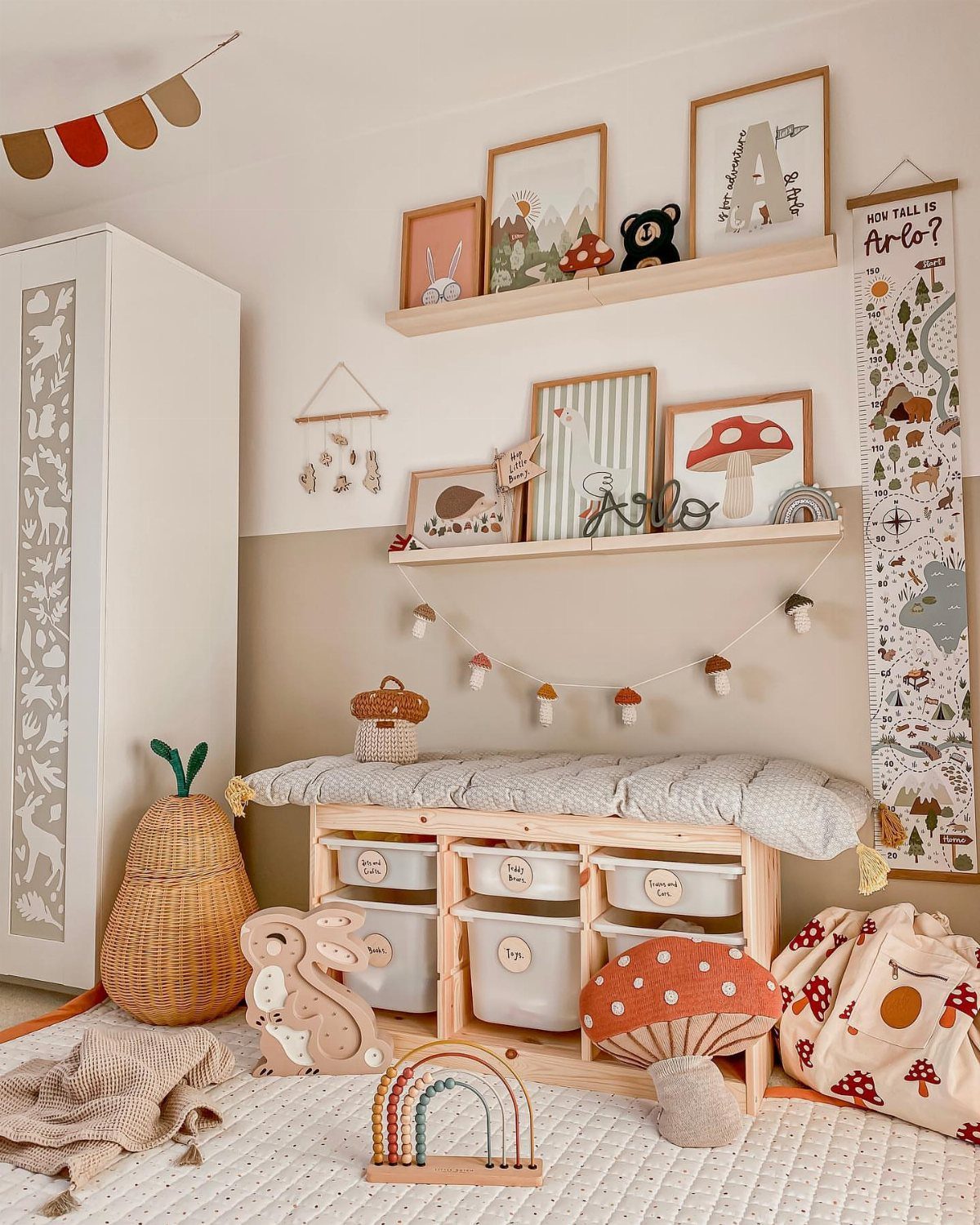
Framed woodland prints and a growth chart turn bare walls into something that feels lived-in from day one.
I would pick pieces that mix animals, plants, and at least one personalized element so the room does not look like a catalog spread. Wall shelves let you swap art as the child grows without filling nail holes.
Check that frames have acrylic instead of glass; lighter weight means safer hanging above a changing area. This approach suits renters or anyone who wants the theme without wallpaper commitment.
2. Woodland Nursery Lighting
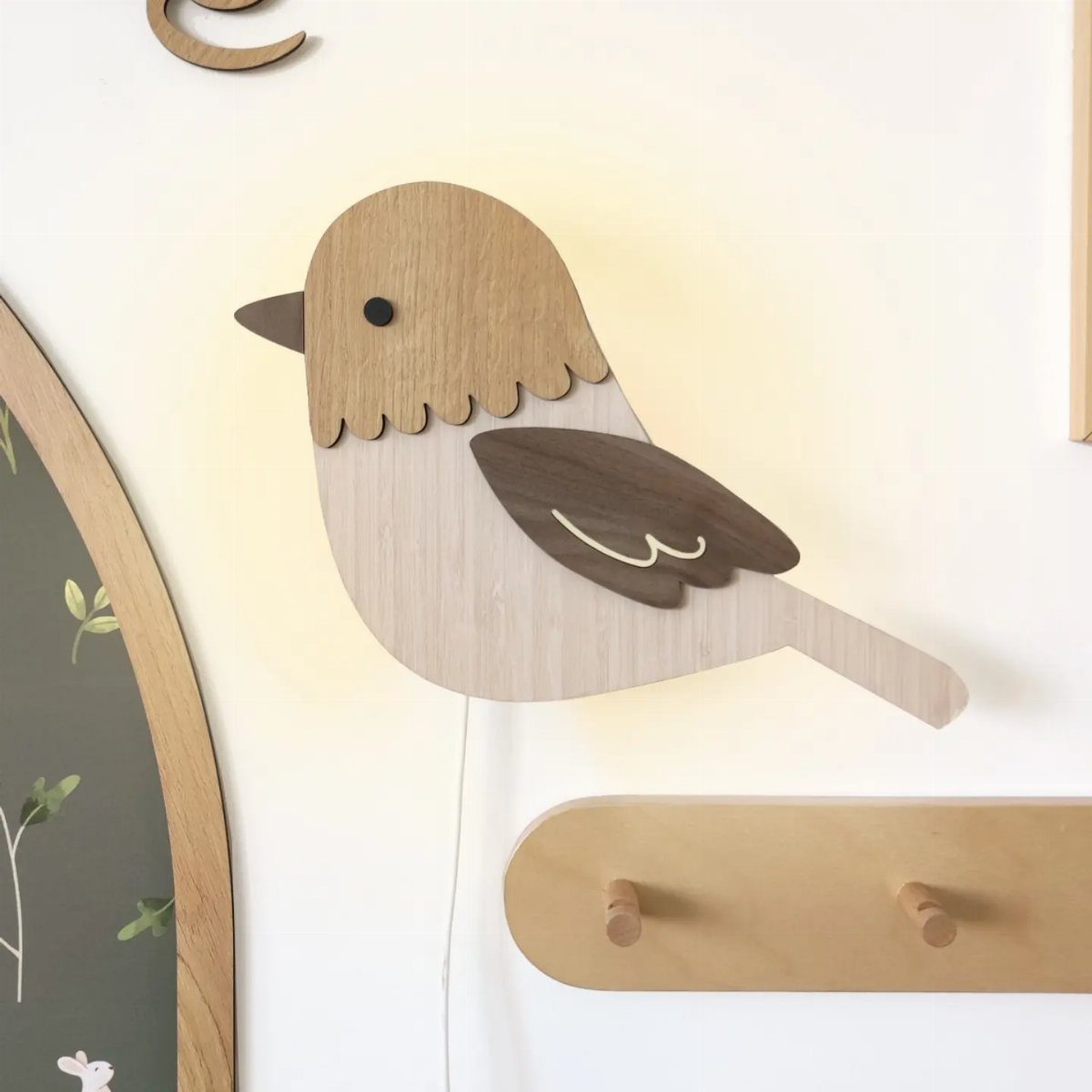
A bird-shaped wall sconce gives enough glow for midnight feedings without jarring anyone awake. I keep task lighting separate from overhead fixtures; a dimmable pendant or table lamp handles diapers and dressing while the sconce stays on all night.
Warm bulbs around 2700K read as firelight rather than clinic light. Skip anything the baby can grab or pull down once standing starts.
String lights look magical tucked behind a shelf, but only if the cord is fully out of reach.
3. Woodland Nursery Furniture and Storage
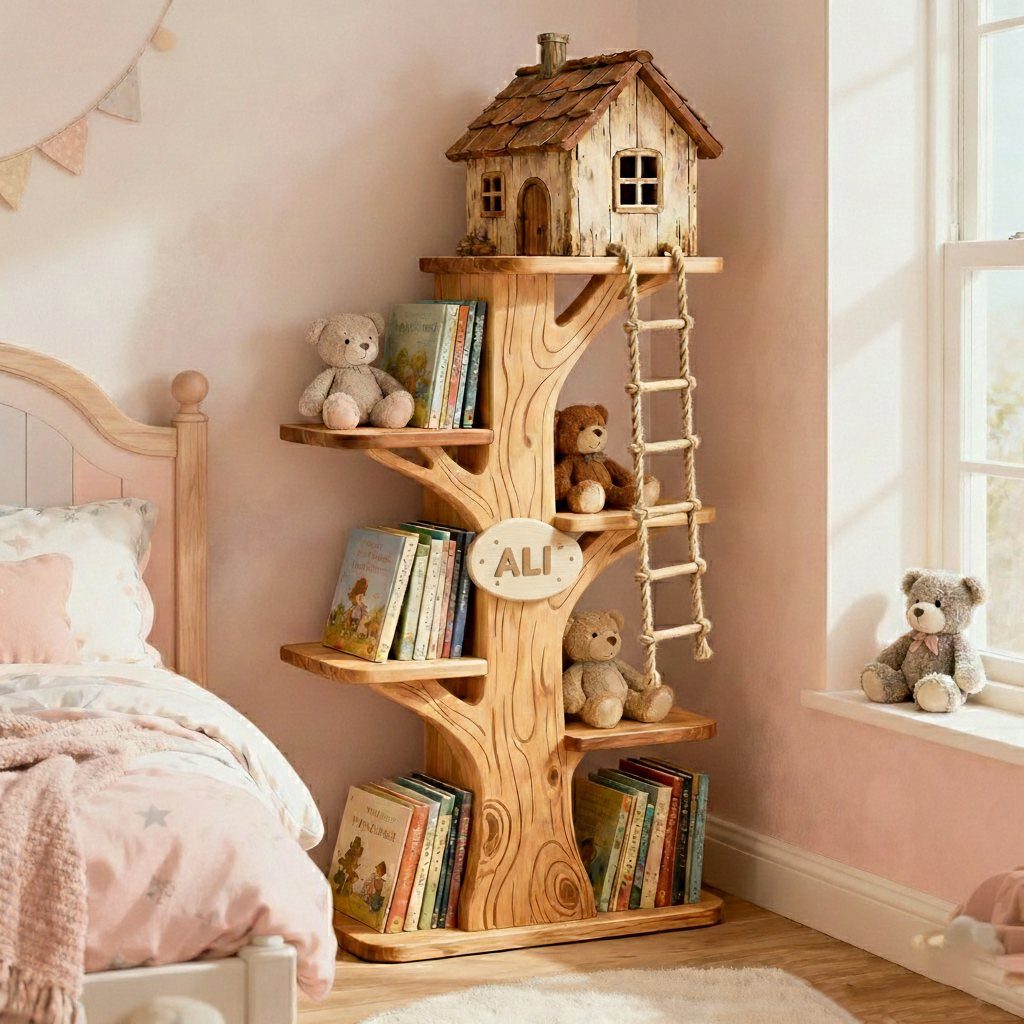
A tree-shaped bookcase does double duty as decor and toy storage, which matters in a small nursery where every inch counts.
Natural wood finishes hide scuffs better than painted ones, and open branches let small children see and reach their own books. I would anchor anything tall enough to tip to the wall before the baby is mobile.
Changing tables with woven baskets underneath keep supplies accessible but not visible. This style works best if you start with one statement piece and build around it rather than buying a full set.
4. Rugs
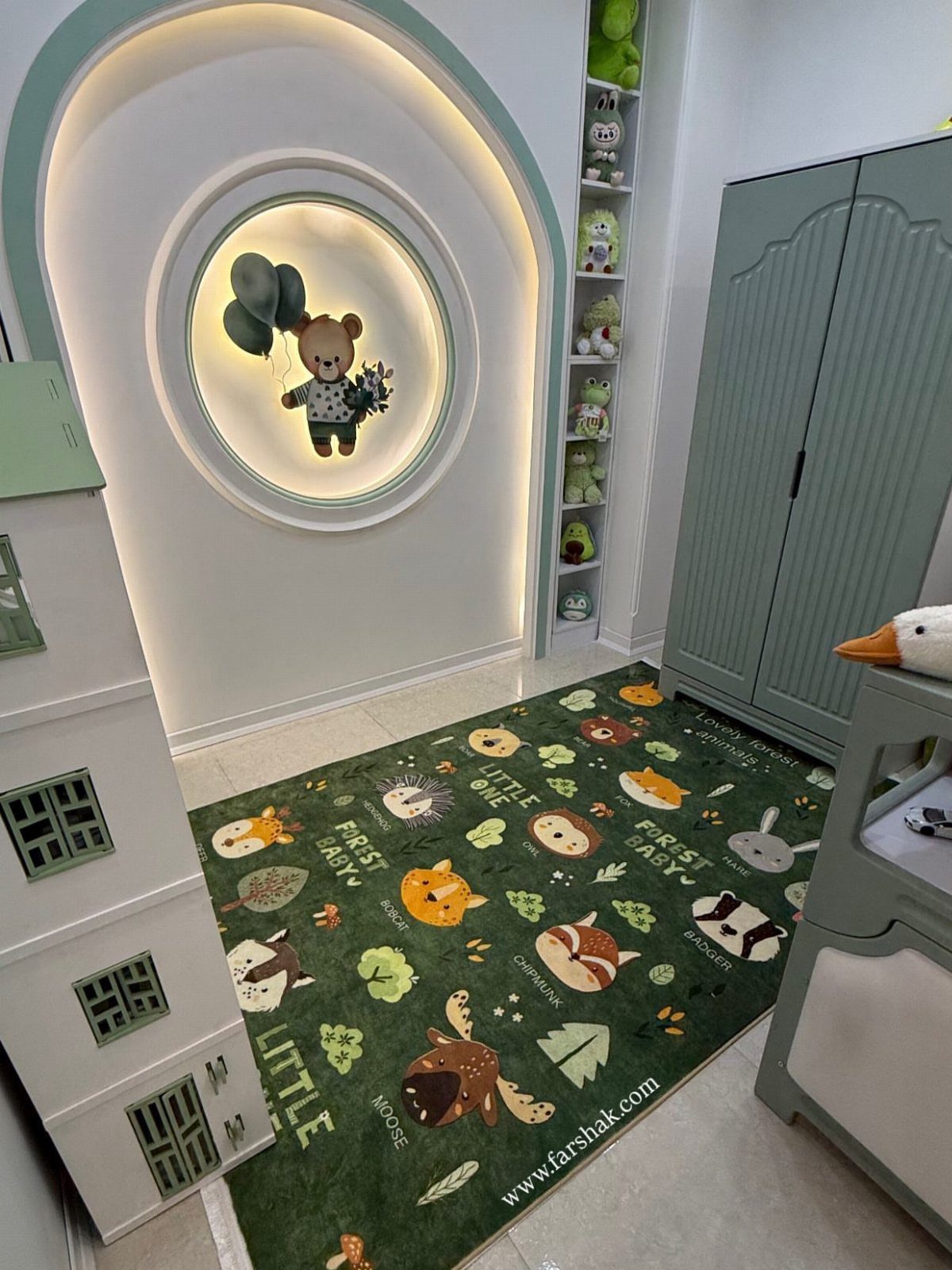
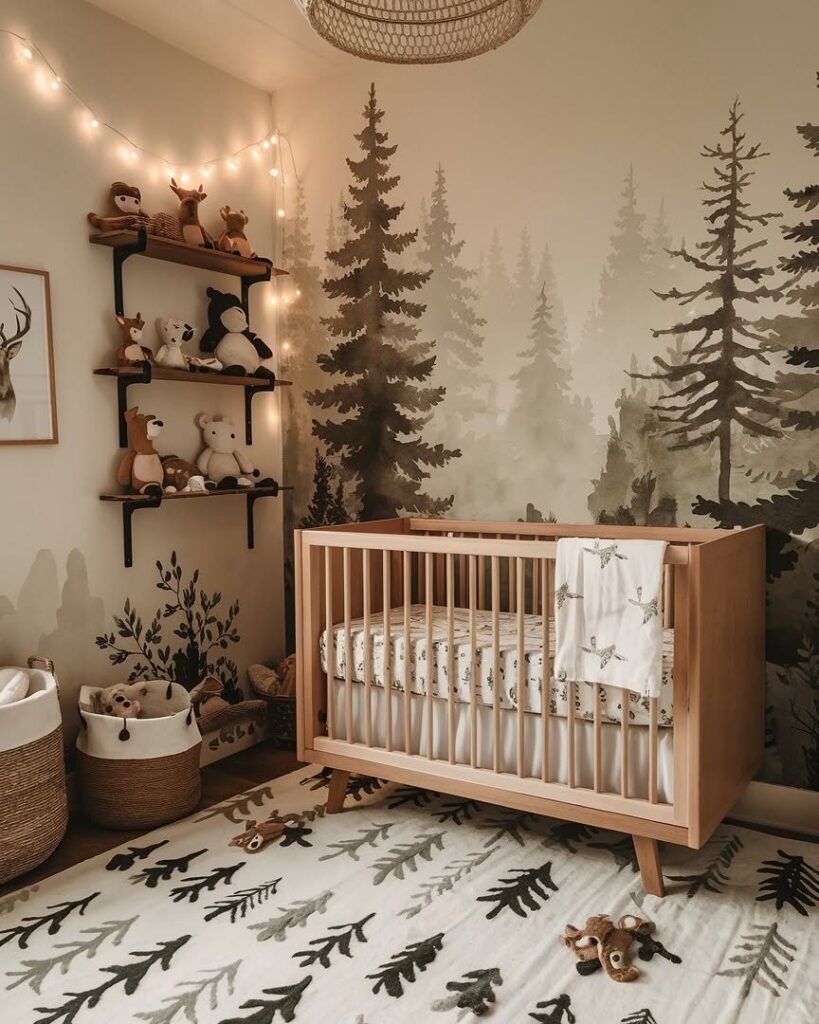
A dark green rug with scattered woodland creatures grounds the room and gives crawling knees something softer than hardwood. I look for low-pile or flat-weave versions; they vacuum clean and do not trap small objects the way shag does.
Size it so at least the front crib legs sit on the rug, or the whole crib plus a walking path around it if the room allows. Check the backing material if you have heated floors.
This is the fastest way to add theme and warmth when the rest of the nursery is hand-me-down furniture.
5. Woodland Nursery Wallpaper and Murals
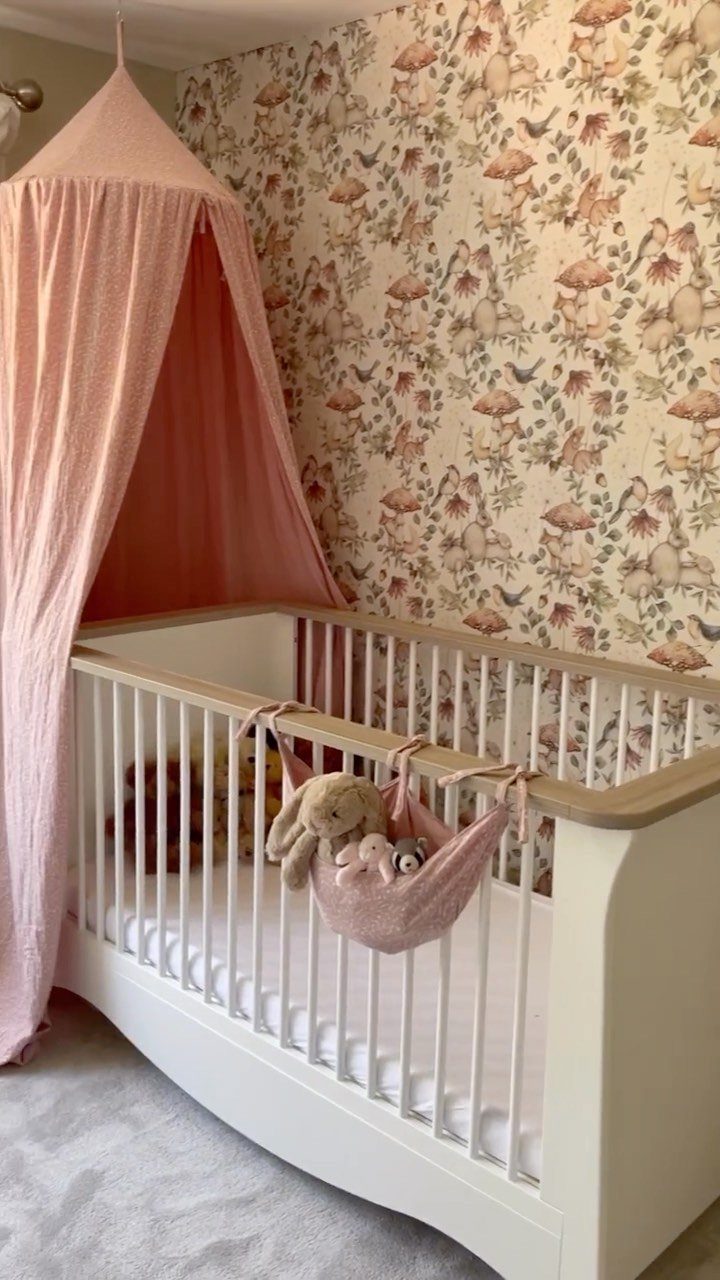
Peel-and-stick wallpaper with mushrooms and rabbits covers one wall without the mess or permanence of paste. I have learned to order one extra roll; pattern matching eats more paper than the calculator suggests, and discontinued prints are not replaceable.
A mural behind the crib reads as a headboard and needs no additional art there, which saves money. Test a corner first for a day or two to check adhesion and whether your paint finish resists pulling.
This option fits anyone who wants impact without hiring an installer.
6. Nursery Room with a Black Accent Wall
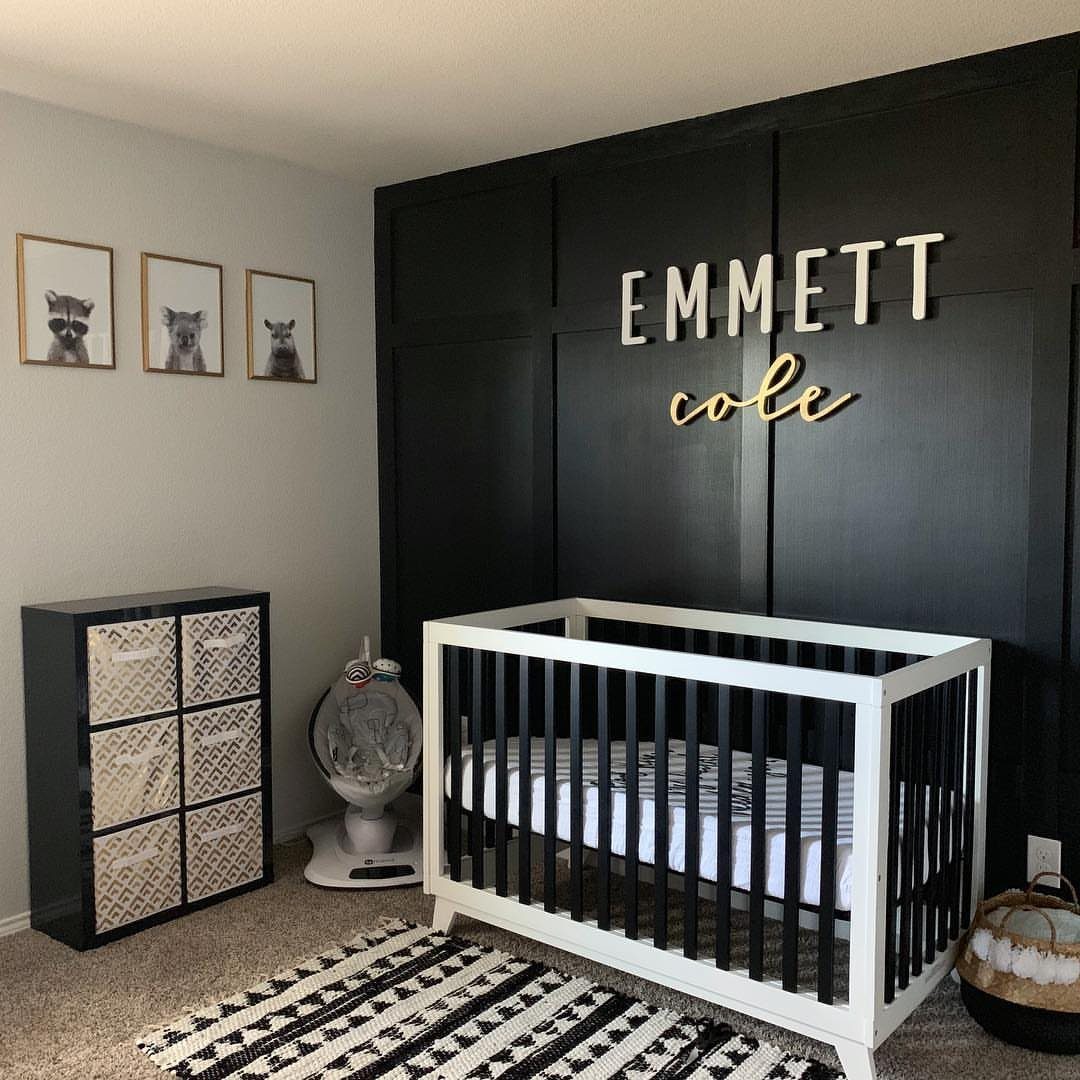
A black paneled wall behind white furniture and pale wood creates depth without closing in a small room.
I would keep the remaining walls light and add only two or three framed animal prints; the contrast does the work, so clutter fights against it.
Large-scale wallpaper on the dark wall reads as texture from across the room and up close reveals individual creatures. This suits parents who want modern and gender-neutral without defaulting to gray.
Touch-ups show more than on lighter colors, so buy a small pot of matching paint for later.
7. Gray and Green Nursery Room
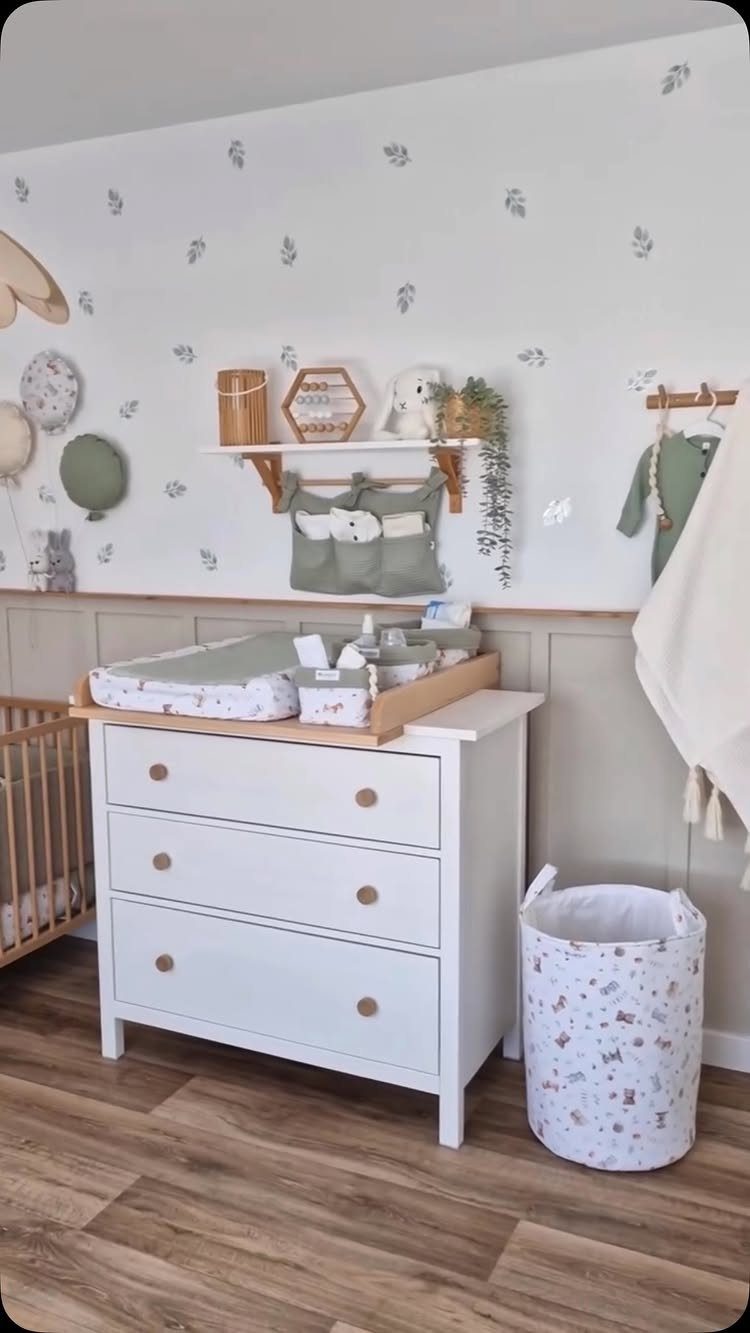
Gray walls keep a nursery calm without going cold, and green brings in the living part of a forest. The two together feel like morning light through leaves.
I like sage green for the soft goods: pillows, a changing pad cover, maybe a small storage bin. Against mid-tone gray wainscoting or a solid gray wall, it reads as nature rather than color for color’s sake.
Leaf decals or a simple leaf-print wallpaper above the chair rail finish the job without clutter.
Using more than one gray keeps the room from going flat. Charcoal in a frame, warm gray in a basket, cool gray on the wall: the room gains depth that a single shade flattens out.
Animal accents, a fox stool or printed bin, keep it playful without turning cartoonish.
This palette suits renters or anyone wary of bold color. It grows with the child longer than baby blue or pink.
8. Woodland Baby Mobile
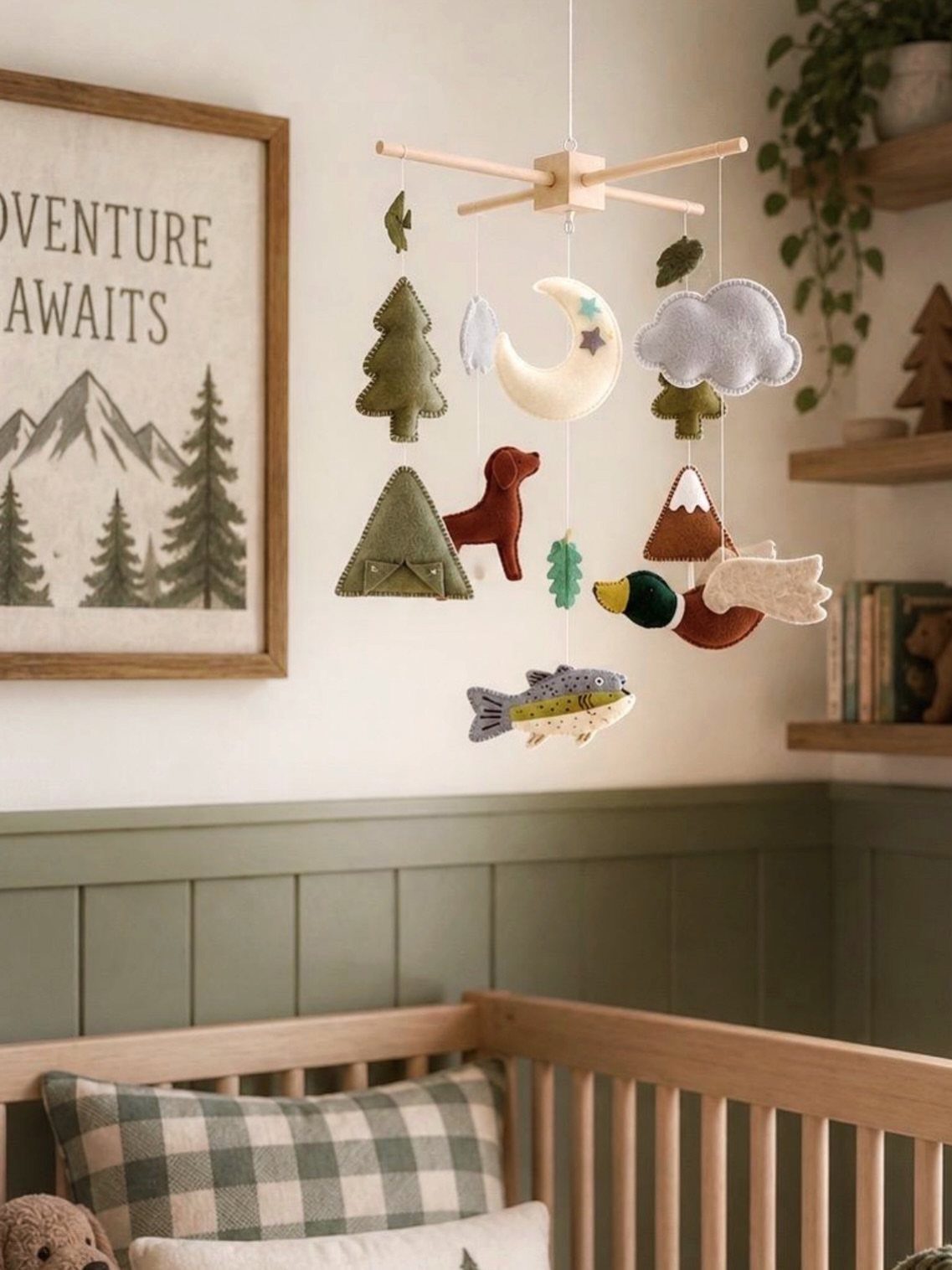
A mobile gives a newborn something to track before they can turn toward a window. Felt shapes in soft forest colors, trees and a small deer or fish, move gently with air currents and cast no hard shadows.
Hang it low enough to focus on, high enough that little hands grab nothing. The frame should be light wood or white, not plastic painted to look like either.
Felt holds up to staring; it does not glare or rattle.
"Adventure Awaits" on the wall behind is optional. The mobile itself carries the theme.
If you sew, wool felt sheets and embroidery floss are the cheap part. If you buy handmade, expect to pay more than materials would suggest.
Take it down once the baby pulls to stand. Every mobile becomes a hazard at that stage, no matter how charming.
9. Custom Mountain Name Sign

A mountain-shaped name sign turns the wall above the crib into a specific place: this child’s room, not a generic woodland display.
Painted white peaks, green trees, and small animal silhouettes give the cutout enough detail to read from the doorway.
I would order this in the exact width of the crib or slightly wider, never narrower. A small name over a large piece of furniture looks like an afterthought.
The paint matters more than the wood species; a smooth finish in matte or satin reads cleaner than glossy.
Check whether the maker drills keyhole slots or sends sawtooth hangers. A single nail on a larger sign will sag and tilt.
Two points of mounting, level, take only a little longer and save the wall.
This works best when the name is short. Shorter names sit comfortably; longer ones fight the mountain slope.
10. Woodland Animal Baby Gym
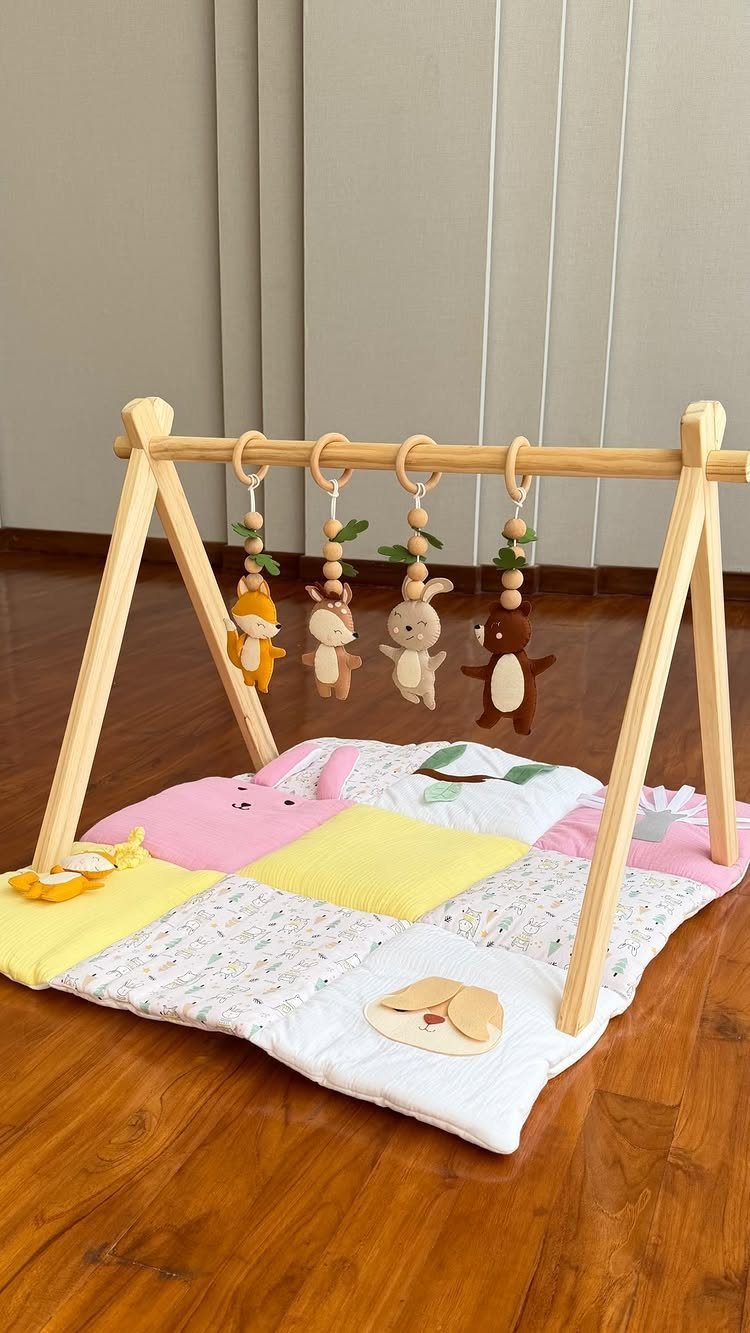
A wooden A-frame gym gives a newborn reaching practice and an older baby rolling motivation. Plush animals, a fox and deer among them, hang at heights the baby learns to bat, then grasp.
The frame should be unfinished or oiled hardwood, not lacquered. Babies mouth everything, and solvent-based finishes chip.
The toys detach for washing; check that the clips are wood or metal, not plastic that snaps with use.
The mat beneath matters as much as the gym. A quilted patchwork in muted colors defines the play zone and cushions a fall.
Size the mat to extend past the frame’s footprint on all sides; it needs more room than the gym itself takes up.
Handmade wooden gyms cost more than plastic equivalents. The wood lasts through multiple children, and the aesthetic suits a living room if nursery space runs short.
11. Custom Woodland Animal Name Sign
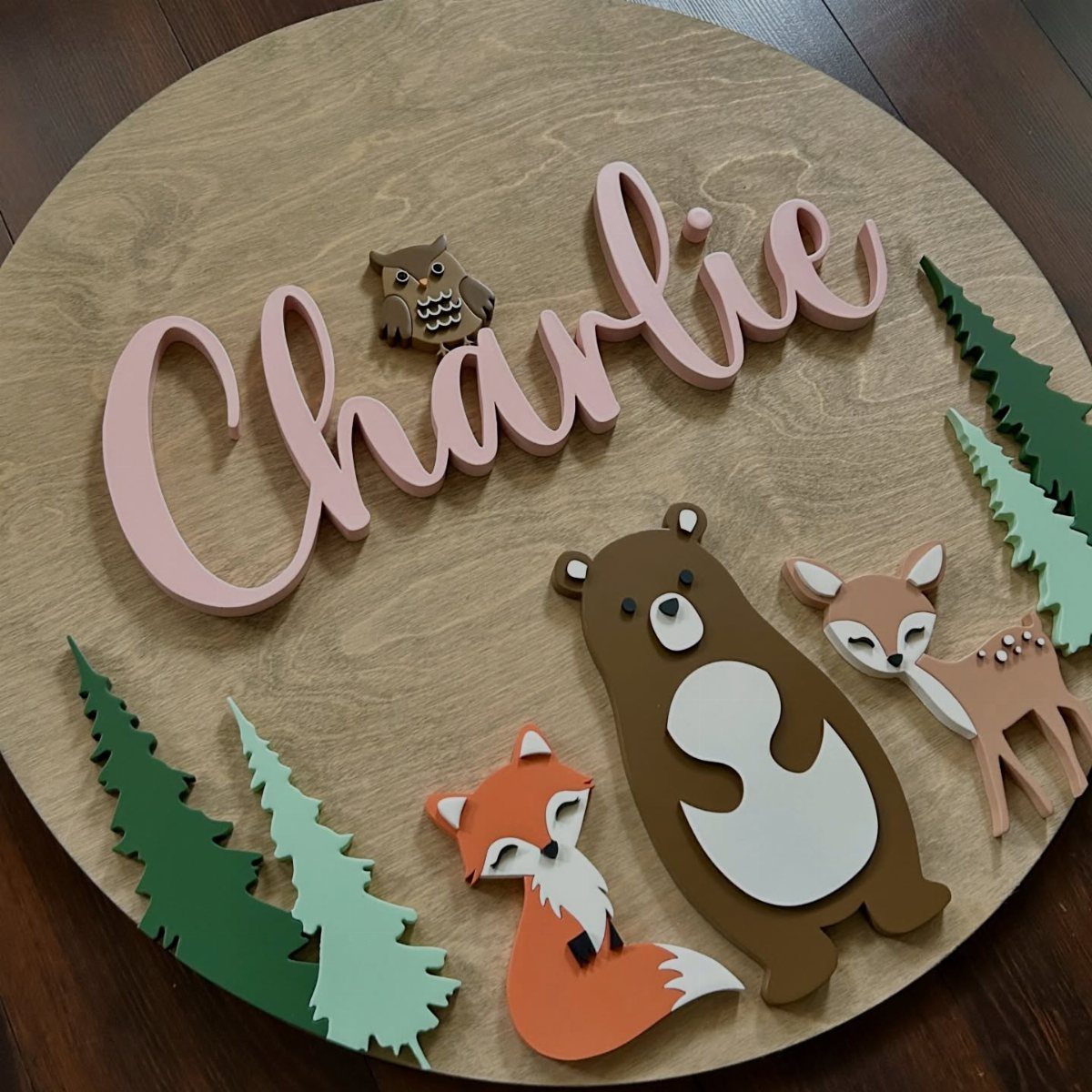
A round sign softens the geometry of a room full of rectangles: crib, dresser, changing table. Raised script and 3D cutouts of owl, bear, fox, deer, and pine trees catch light and cast small shadows that flat prints cannot.
Pink script works for any child; the color reads as warm against wood, not strictly feminine. I would ask the maker about stain options for the animals.
The natural tone is versatile, but a darker walnut or gray wash shifts the whole piece toward modern.
Mounting a circular piece takes planning. A single center hook lets it swing; two small nails placed high and to each side, hidden behind the owl and a tree, hold it steady.
Measure the diameter against your wall space; a smaller size fills a narrow gap between window and crib, while a larger one wants a central placement.
This suits parents who want the name prominent without vinyl lettering or painted murals.
12. Woodland Wooden Wall Decals
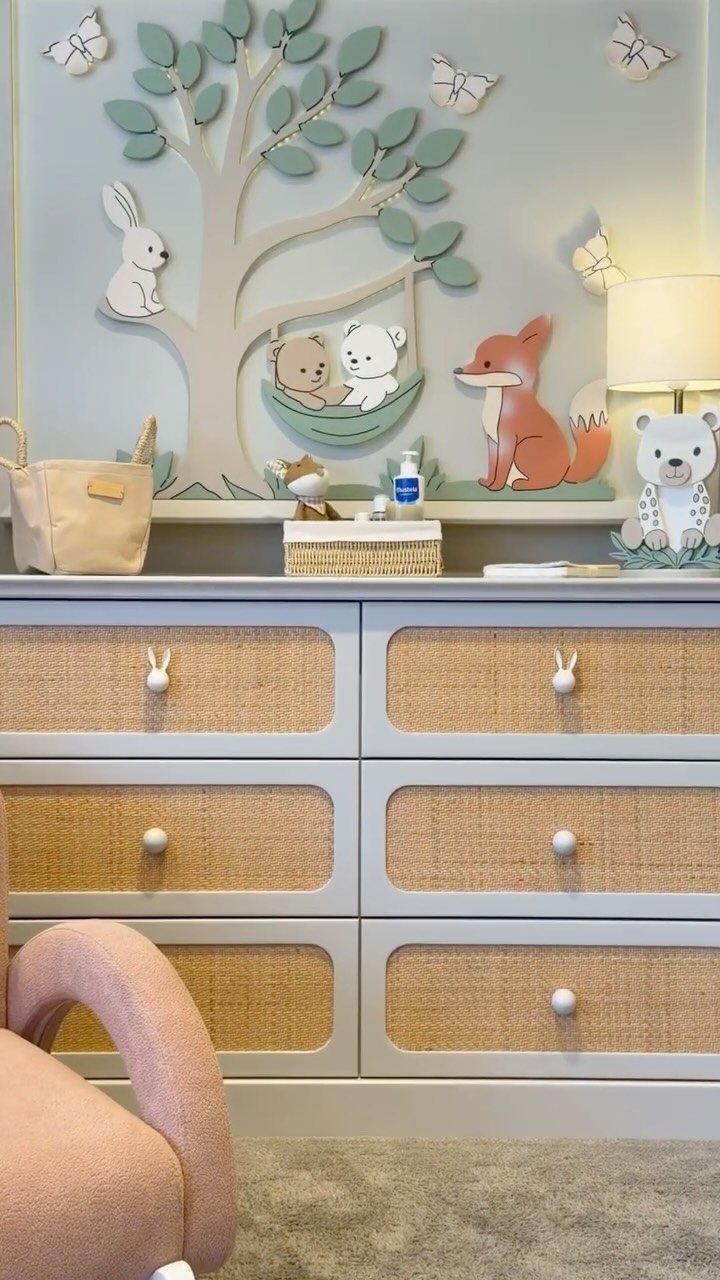
Wooden wall decals in light birch or maple give the silhouette look of wallpaper without the commitment. A tree with bears in a swing, a rabbit, butterflies, and a fox arrange at whatever scale your wall allows.
I would lay the pieces out on the floor first, using painter’s tape to test spacing.
The dresser with cane fronts shown sits low enough that the animals float above it; with a taller piece, shift the grouping higher or split it around a shelf.
The cutouts attach with removable strips or small nails through hidden points. Ask the maker which they intend; strips suit renters, nails hold better in humid climates where adhesive softens.
These vary in price depending on piece count and size. A set this large, six or more figures, fills a wall that a single large decal would not quite manage.
The light wood reads as texture in a white room, as deliberate contrast against gray or sage.
13. Woodland Nursery Reading Corner
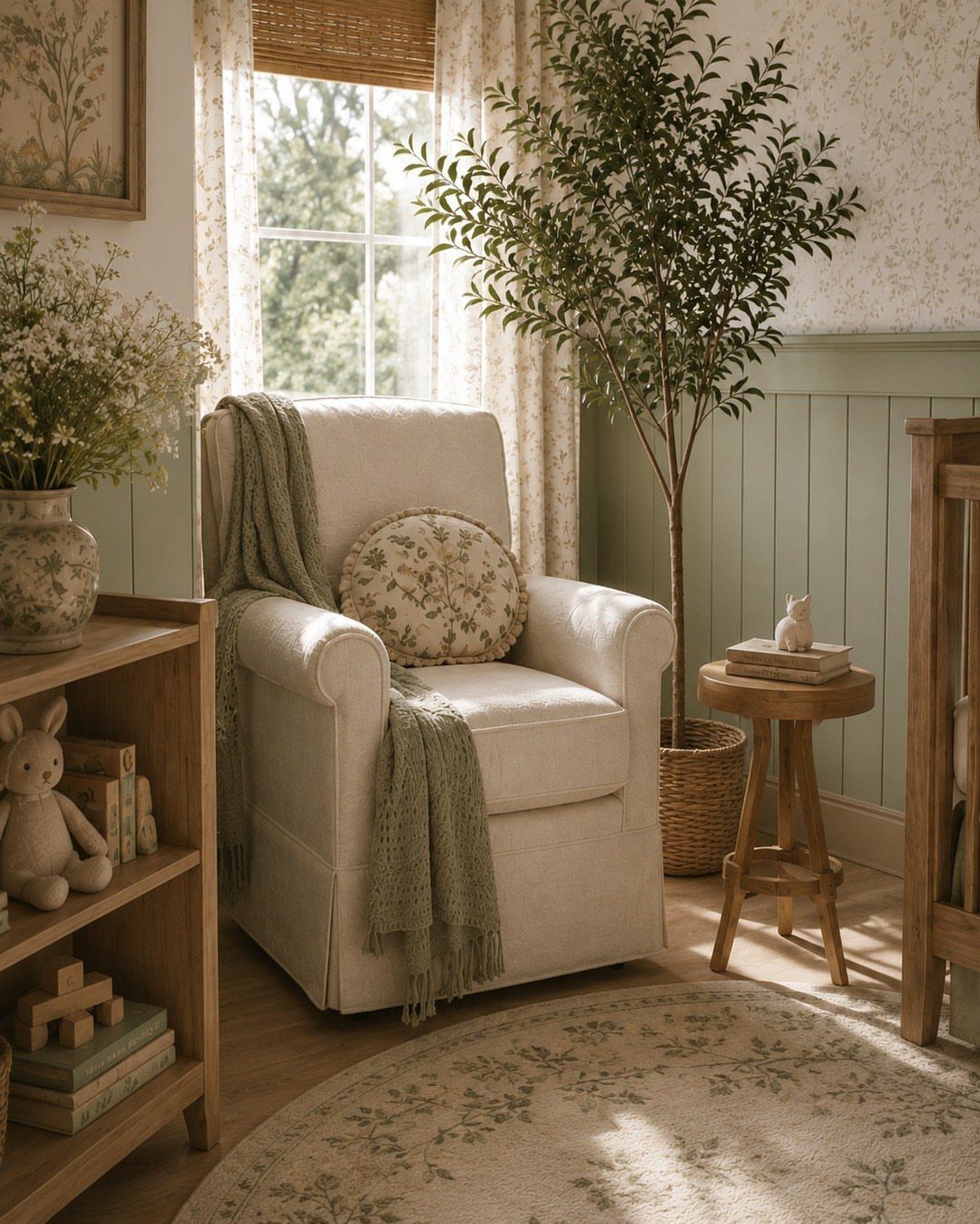
A reading corner gives the nursery a second center away from the crib, and in a woodland room that means materials that read as gathered rather than bought.
A cream upholstered chair keeps the corner light instead of fighting the theme with forest green; woven seagrass plant stands beat glazed pots, and low shelves let a toddler reach their own books later.
That last point matters more than it seems. Low shelves hold a small library now and become the child’s own storage once they are walking.
I would put the chair near a window if the room has one, since morning light makes the space inviting at the hour you will actually use it.
A small wooden stool beside it works harder than a matching side table; it lifts a cup of coffee, then becomes a step the child uses to climb up.
This suits parents who read to the baby before sleep and want that ritual to have its own place. This corner eats floor space; in a small room, the walking path around the crib gets tight.
14. Woodland Animal Bedding
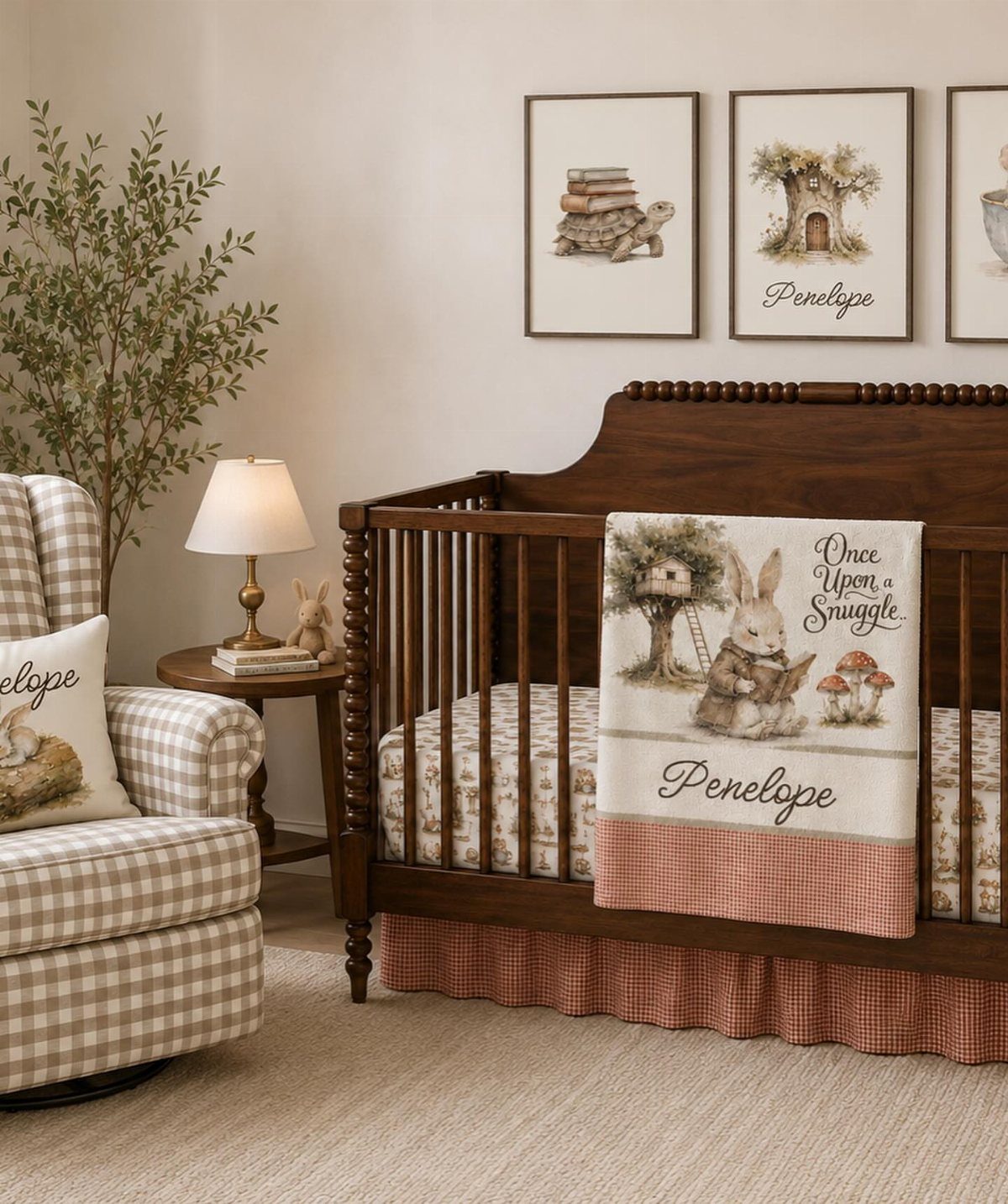
Bedding is where the woodland theme speaks most directly, and the risk is always the same: too many animals, too bright, and the room becomes a cartoon.
Small-scale prints and a palette of brown, cream, and soft green keep the crib area calm. The blanket with the rabbit and mushrooms is the single busy piece; the sheets underneath read as texture more than pattern.
That ratio is worth copying. One statement textile, quiet everything else.
Cotton or linen is the right fabric for breathability, and both soften with washing instead of pilling into something you replace. A personalized blanket adds cost but turns a generic piece into the keepsake that survives the crib.
I would spend there and save on the sheets, since fitted crib sheets take the real abuse and need replacing anyway.
This idea suits parents who want the theme clear but not loud, and who change the room as the child grows. Bedding swaps out fast; wallpaper does not.
Printed sets date faster than solids, so plan on new sheets once the child has opinions of their own.
Creating a Woodland Nursery
A woodland nursery works best when it feels like a forest floor rather than a gift shop.
Start with the walls and floors as the base layer: bark browns, moss greens, and the cream of birch bark set the tone without shouting a theme. Add animals and trees as accents, not wallpaper.
The research on early childhood and nature exposure is solid. Children who grow up with natural elements in their environment show lower stress markers and better attention later on.
A nursery cannot replace actual time outside, but it can keep that connection present during the hours indoors.
Earthy tones read as calm because they are what human eyes evolved to see at rest. Bright primaries do the opposite; they signal alertness, which is the wrong state for a room meant for sleep.
Keep the palette grounded and let the child supply the energy.
One theme that is both gender-neutral and lends itself to older children is a woodland nursery.
Choosing Furniture and Decor
Furniture in a woodland nursery has to survive two tests: does it look like it belongs in a forest cabin, and can it take daily abuse without becoming a hazard. Natural wood finishes pass both.
Painted pieces chip and show wear fast; a dent on raw or oiled wood just looks like more character.
Safety standards for nursery furniture are non-negotiable. Soft-close drawers prevent pinched fingers.
Mattress supports should have multiple height settings; the top position saves your back with a newborn, the lowest keeps a standing climber in.
Open storage beats closed while diapers and tiny clothes are still the main wardrobe. Baskets and low shelves let you grab a onesie or a burp cloth with one hand while holding the baby with the other.
Plan for that transition now and you will not rebuy in a year.