Entryway shoe storage runs from a quick PVC pipe build to a built-in bench with drawers, and the right choice depends on whether you own the wall or just the lease.
A hall tree or over-the-door hanger comes down in minutes; a bench with drawers or a built-in cabinet stays put. The expandable rack alone stretches from eighteen inches to thirty-three, hand-adjustable for boots one month and flats the next.
1. Hall Tree with Hooks and Shoe Storage
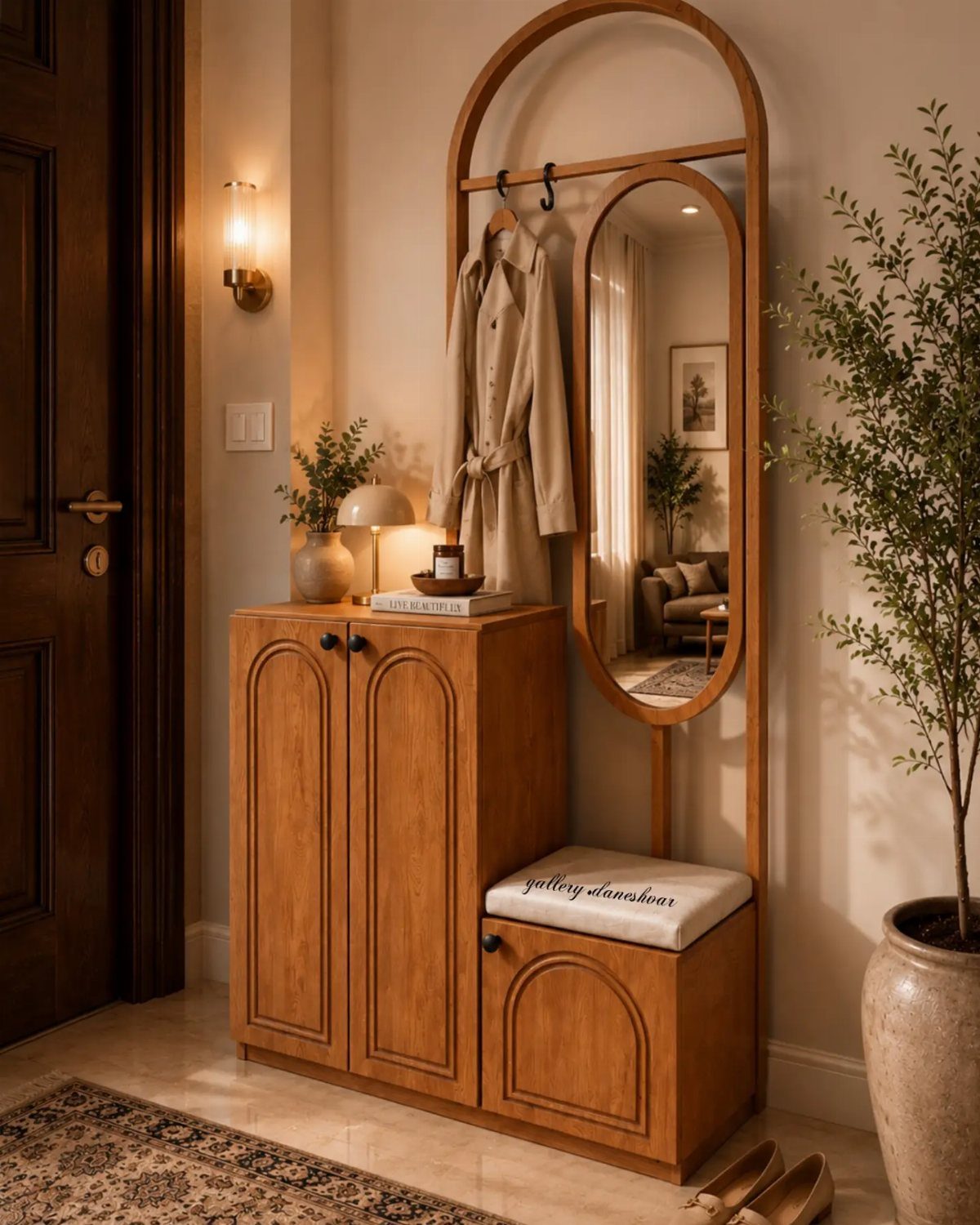
A hall tree turns one piece of furniture into a drop zone for coats, bags, and the shoes you kick off coming inside.
The bench gives you a place to sit while the hooks keep outerwear off chairs and the hidden drawers or open cubbies below swallow footwear.
I like the white finish for brightening a dark foyer, though black or navy reads more intentional in a space with moodier walls.
If you already own a solid old dresser, pulling the bottom drawers and fitting shelves underneath gets you the same footprint without the new purchase. Best for entryways where floor space is tight but wall height is not.
2. Hanging Over the Door Shoe Storage
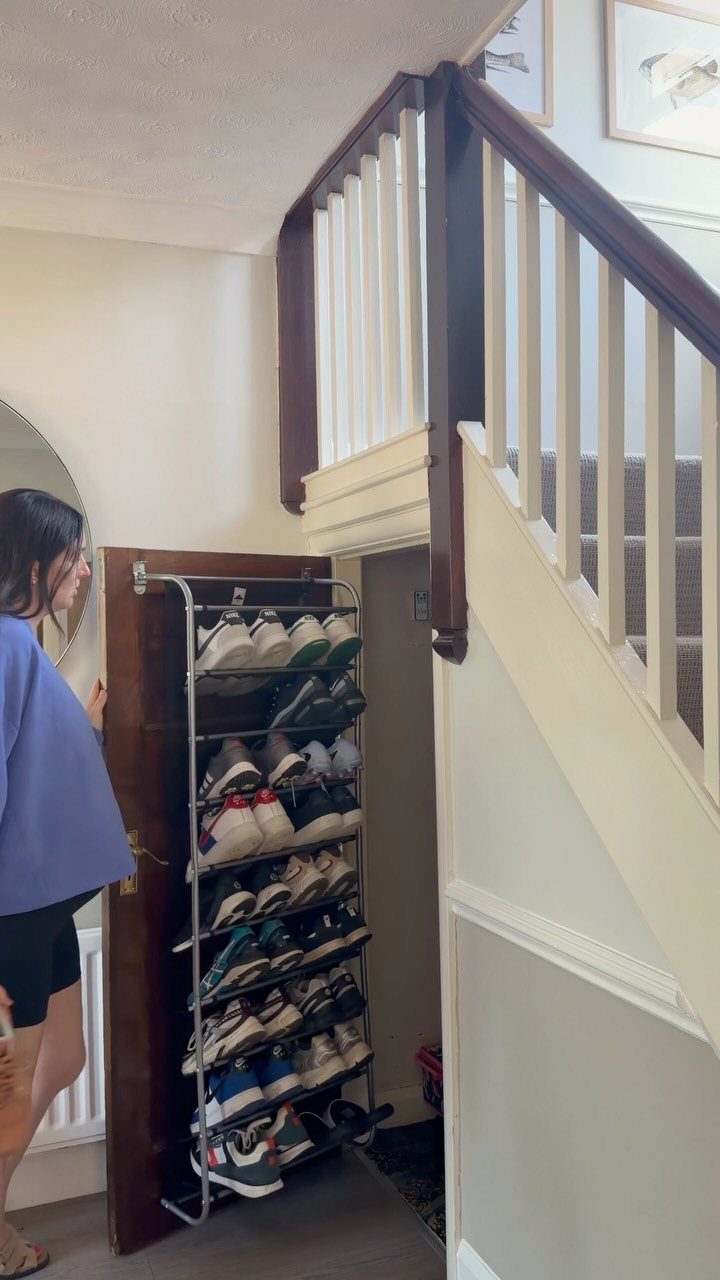
The back of a closet door is dead space until you hang a shoe organizer across it.
A wire rack with pockets or tiers takes zero floor area and still holds a dozen or more pairs, which matters when your entryway is really just a shallow coat closet with a door that swings shut.
I have used the pocket style for sneakers and the wire tiered kind for heels and flats; the tiered ones keep shoes visible so you grab the right pair in a morning rush.
Check that your door still closes flat once it is loaded, since a thick organizer can bump the jamb. This one suits renters and anyone who needs the closet floor free for the vacuum or a laundry basket.
3. Shoe Baskets
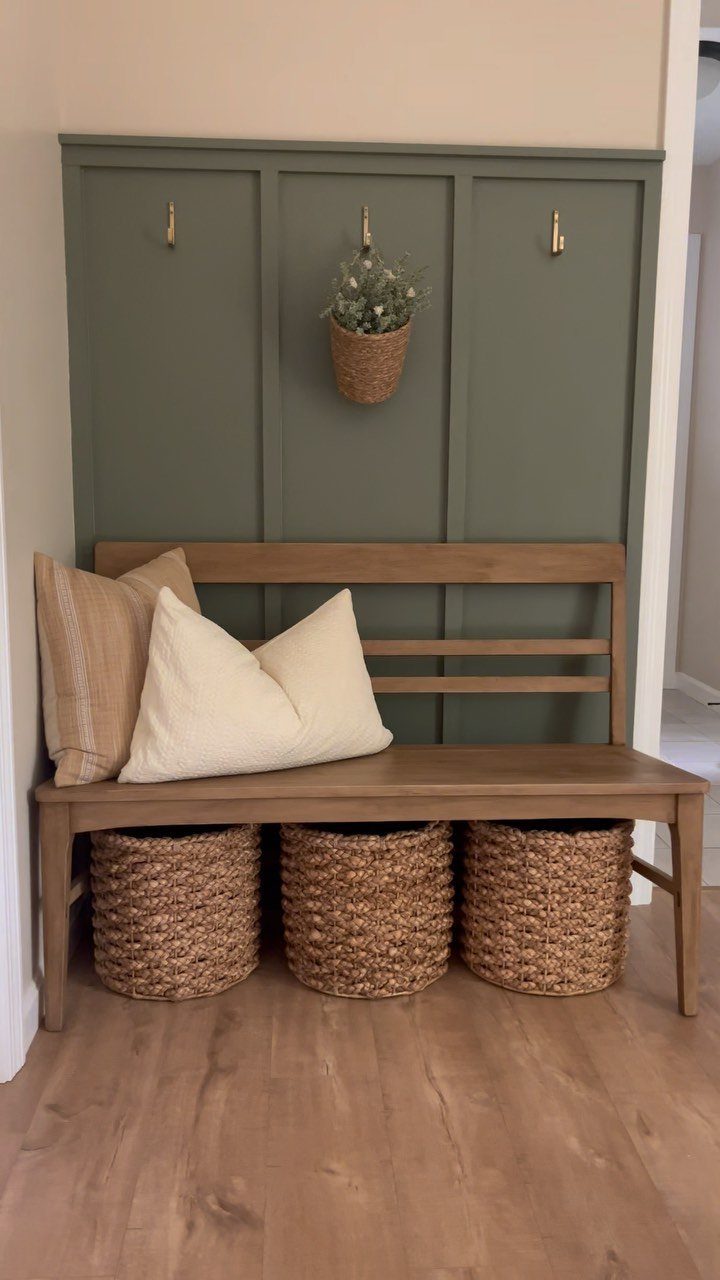
Three woven baskets slid under a bench keep shoes reachable but out of the sight line, which is half the battle in a small entryway.
Wicker baskets soften the look of shoe storage so the entryway still feels like part of the house.
I look for baskets with a metal frame inside so they do not sag once loaded with boots, and I size them so two pairs fit per basket without stacking, which defeats the purpose.
A lidded seagrass set works if you want to park off-season dress shoes on a closet shelf and keep the dust off.
This approach trades maximum capacity for speed; it is for households that would rather toss and go than line up pairs on a rack.
4. DIY Shoe Shelf
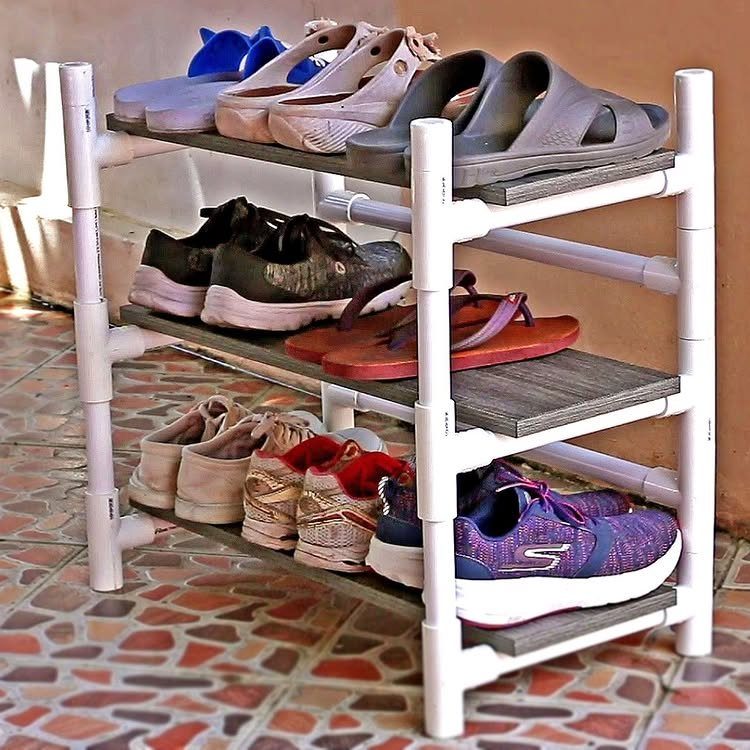
A corner as narrow as the one in your entryway can hold a custom shoe shelf built from PVC pipe and wood planks, the white pipes acting as uprights and the dark-stained boards as shelves.
Three tiers fill most corners neatly; a fourth works if you have the ceiling height.
I built something similar in an afternoon using a hacksaw for the pipe and a drill to pin the shelves; the contact paper lining is optional but keeps the wood from scuffing white soles.
Beginners should know that PVC cement is permanent, so dry-fit every joint before committing. This one wins for renters in a studio who need vertical storage that can disassemble and move.
5. Lazy Susan Shoe Shelf
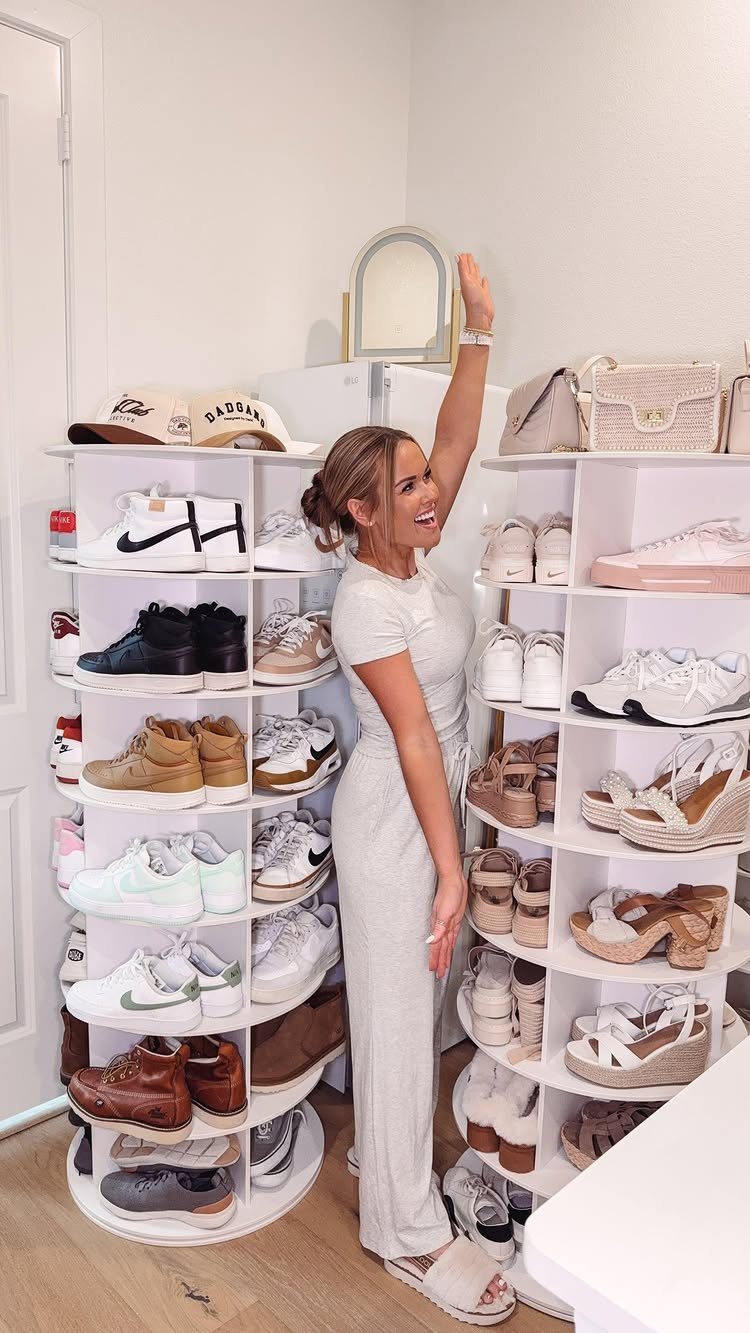
A rotating shoe tower spins so every pair faces you at once, which saves the shuffle and reach of a standard shelf.
Two towers flanking a narrow space hold a serious collection between their circular tiers, though flats stack tighter than boots stand.
I have seen these in white plastic and in plywood you could paint; the rotating base is the part that matters, and it needs a level floor or it will wobble.
In an entryway, I would place one tower in a corner rather than mid-wall, since the spun circle needs clearance.
This is the pick for a collector who wants to see everything at once and does not mind the vertical bulk.
6. Vertical Shoe Rack
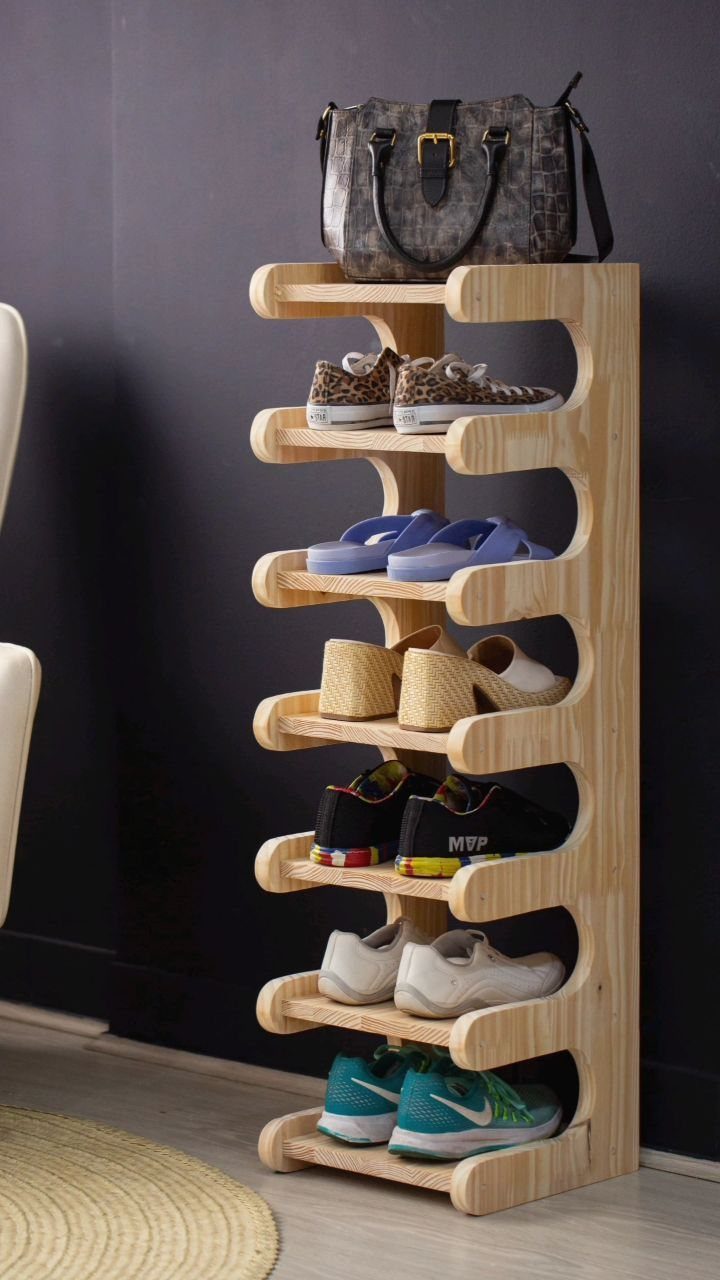
Eight curved shelves stacked in a single column turn a sliver of wall into storage for as many pairs of shoes, with the top tier free for a bag or a small plant.
The light wood and dark wall behind it show how the vertical line draws the eye up rather than out, which helps when your entryway is a hallway you still need to walk through.
Check the shelf depth against your largest pair; that curved lip looks shallow, and a men’s boot might overhang. The same unit works inside a closet if your entryway has no open wall.
Solid beech and MDF construction means it can take some weight, though I would not load the top with heavy books if you have small children pulling up.
This one fits the reader who has height to spare and wants the shoes visible, not hidden.
7. Entryway Bench with Drawers
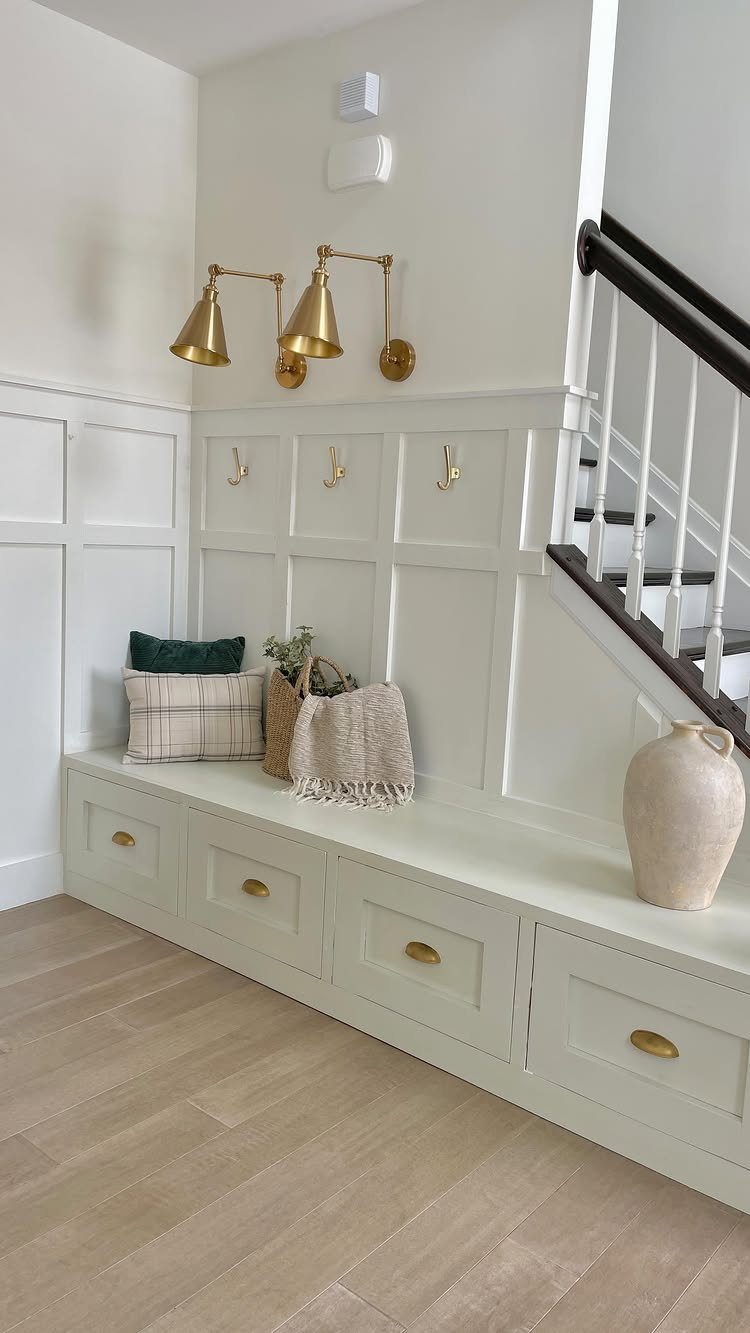
A bench with drawers underneath turns seating into hiding space. Three deep drawers below a built-in seat swallow the pile by the door without a second piece of furniture in the way.
You can build this into an alcove or buy a finished unit to butt against the wall. Either way, the seat stays usable for pulling on boots and the drawers keep pairs flat and out of sight.
Brass hooks above handle bags and coats; the whole wall works as one system.
A bench with drawers costs more than an open rack, and you are stuck with where you put it.
This suits renters only if they buy freestanding, but for a small house or condo with a permanent entryway, built-in drawer storage repays the effort in daily calm.
8. Shoe Storage Cabinet
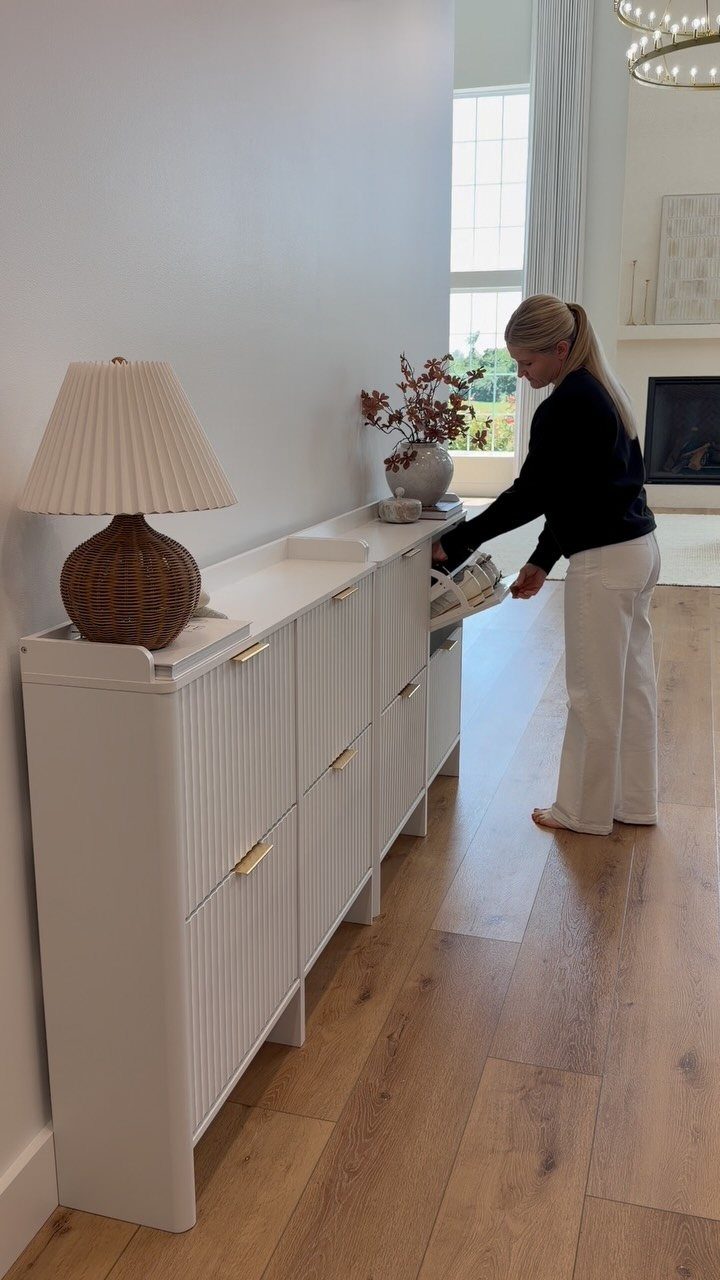
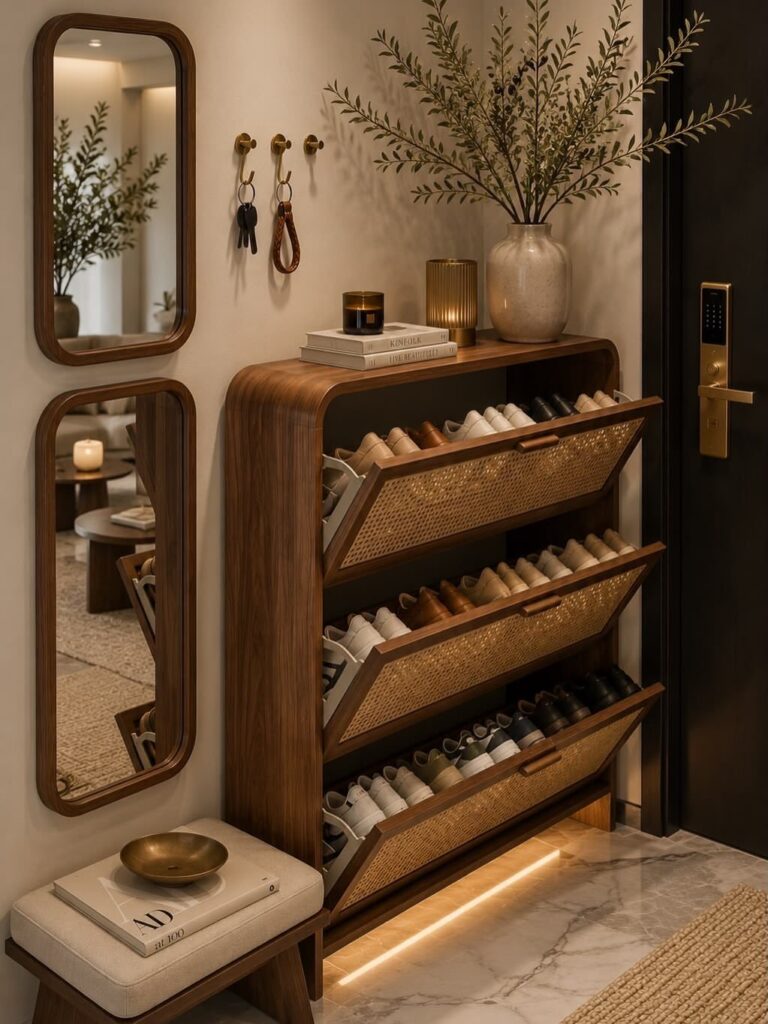
A cabinet built only for shoes keeps them behind doors that look like ordinary furniture. Tilt-out drawers or vertical compartments hold multiple pairs in a piece shallow enough for a hallway wall.
A slim cabinet that runs along the baseboard stays out of the way; choose a gray oak finish or add a small top drawer for keys and mail so it reads as furniture, not a closet pushed into the room.
Some cabinets hold twelve pairs, others less but hide slippers in an open bottom shelf.
This works best when you want the entryway to look finished, not merely organized.
The closed front costs more than open shelving and needs floor space for the door swing, but it also means never apologizing for the mess when someone rings the bell.
9. Expandable Wooden Shoe Rack
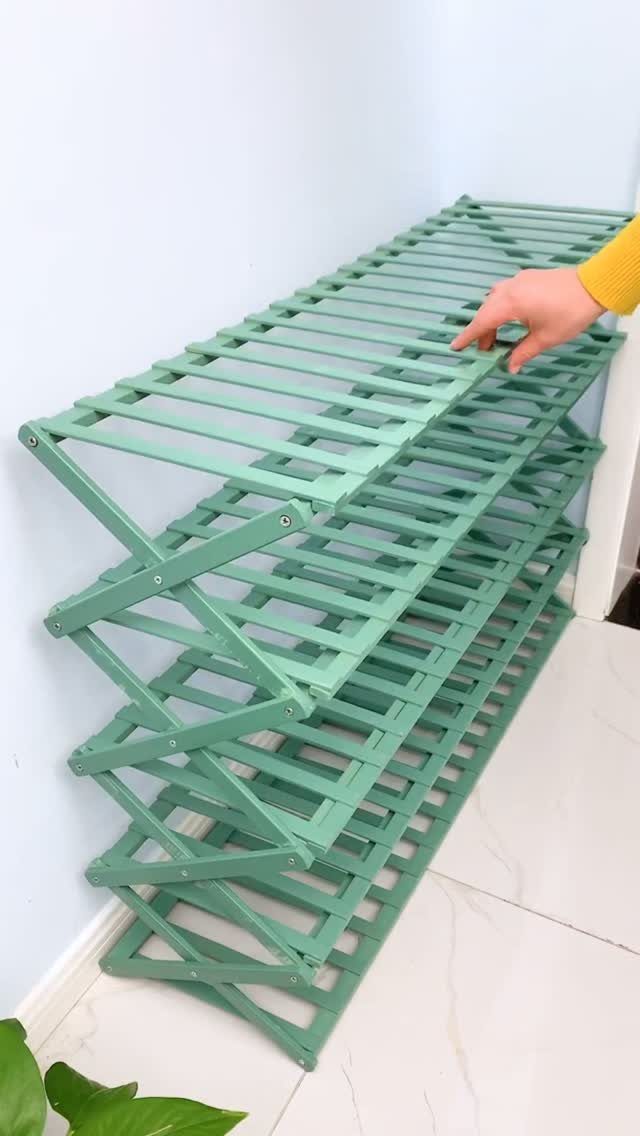
An expandable rack stretches or shrinks to fit the gap you have, from eighteen inches wide to thirty-three. Two to five tiers stack to match how many pairs you own this season, and slatted shelves let wet soles dry.
A coat of light green paint turns a basic wooden rack into something that sits out in the open without apology.
Set it against a wall or inside a closet; the hand-adjustable shelves mean boots one month, flats the next, no tools required.
This is the least committed option on the list. It costs less than built-in or closed storage, shows everything, and moves with you.
I would pick it for a rental or a first apartment where the only certainty is that the space, and the shoe count, will change.
DIY Options
A bench with an A-frame and an upholstered top gives you a seat plus a shelf underneath in one build.
I would paint the frame a color that reads against your wall and choose a fabric for the top that hides the dirt shoes track in.
An upholstered top in a neutral color lasts longer than something bright that wears on your eyes after a season or two.
PVC pipe and wood planks build a corner unit in an afternoon. Dry-fit every joint before the cement sets; there is no undoing that bond.
Line the shelves with contact paper if you want to keep white soles clean.
Aesthetic Considerations
A shoe rack left out in the open should read as furniture, not as storage you settled for.
Midcentury lines on a hall tree or bench signal intention. The finish matters as much as the function when the piece lives in the first room a guest sees.
I would rather spend less on the rack and more on the paint if the budget is tight.
Streamlined metal options speak to minimalist sensibilities like in this Beverly Hills home, where a rattan-paneled cabinet with hidden storage brings a breeziness to coastal or bohemian spaces. With a dash of good design, even an unassuming shoe rack can make a strong first impression.
Seasonal Storage
The entryway stays calmer when only this season’s pairs compete for space.
A window seat with a hidden compartment works for the swap if you have one. I would load winter boots there in April and trade them for sandals in October, keeping the active pairs by the door.
The closed front means never rushing to clear the mess when the bell rings.