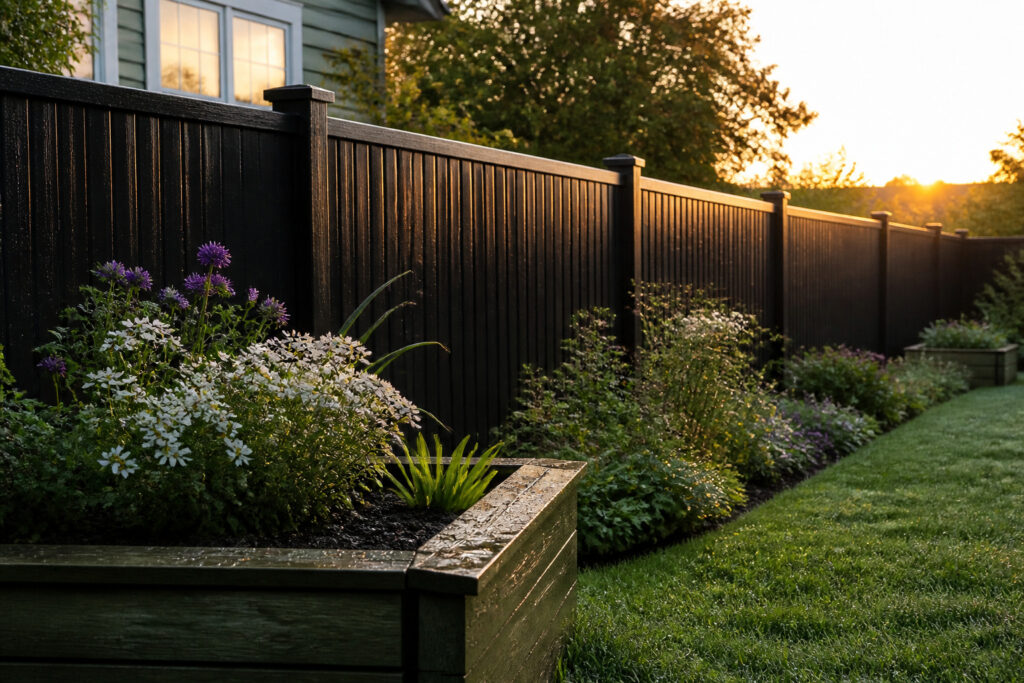
A black fence is any perimeter or garden barrier finished in black, whether that color comes from powder-coated metal, carbon-black vinyl, solid-through composite, or dark stain on cedar. The catch is that "black" behaves differently by material: aluminum carries it for decades without rust, while black paint on pressure-treated lumber can flake within a single season if the primer step gets skipped. At $8–$15 per linear foot installed, vinyl-coated black chain link remains the cheapest entry point, though privacy slats add wind load that open mesh avoids.
Metal Fencing
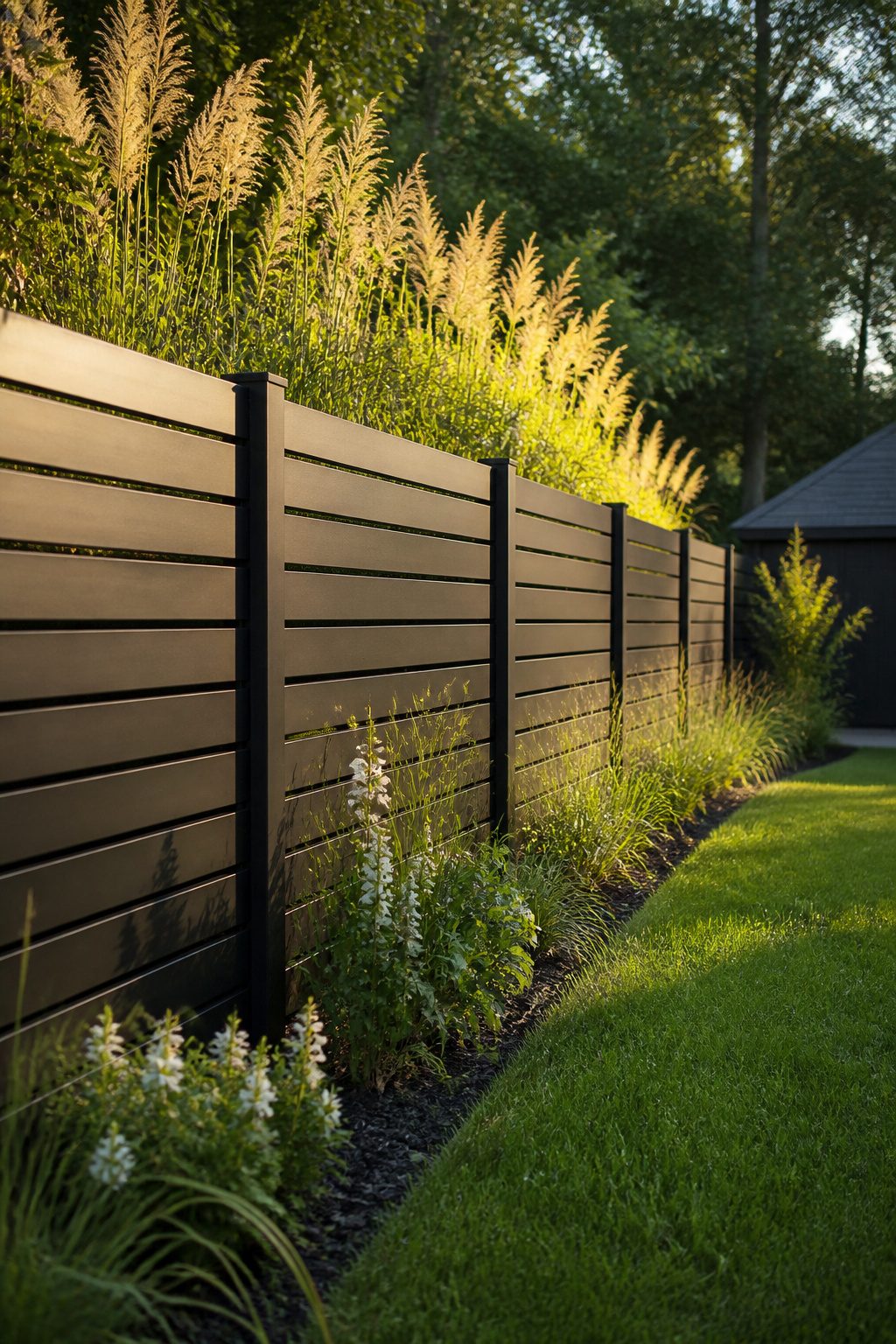
Black wrought iron still carries the weight people imagine when they picture a classic fence, but the maintenance will own your weekends if you live anywhere with real humidity. Aluminum gives the same silhouette without the rust, which is why most residential jobs I see now run that direction. Steel panels and ribbed metal sit heavier on the budget, typically $30–$50 per linear foot installed, but the clean planes read more contemporary than traditional. Corrugated metal hits a lower point, usually $10–$20 per linear foot, and the ridges throw shadows that read as texture from a distance rather than flat industrial sheet.
Hog wire and cattle panel variants have slipped from farm supply into small residential yards because the black coating tames the agricultural look. A black hog track kit runs about $90, with full panel kits closer to $450, and the open grid keeps light moving through tight spaces where solid fencing would wall you in. Cattle panel gates in the same black finish pair with these for entry points without breaking the visual rhythm.
Coastal climates punish anything ferrous, even powder-coated, so aluminum or 316 stainless wire (where offered) outlast steel by years. Inland dryness lets steel panels hold their finish with less grief. The black coating on chain link or mesh is nearly invisible against greenery, which is the effect most gardeners planting against it are actually after.
Vinyl and PVC Fencing
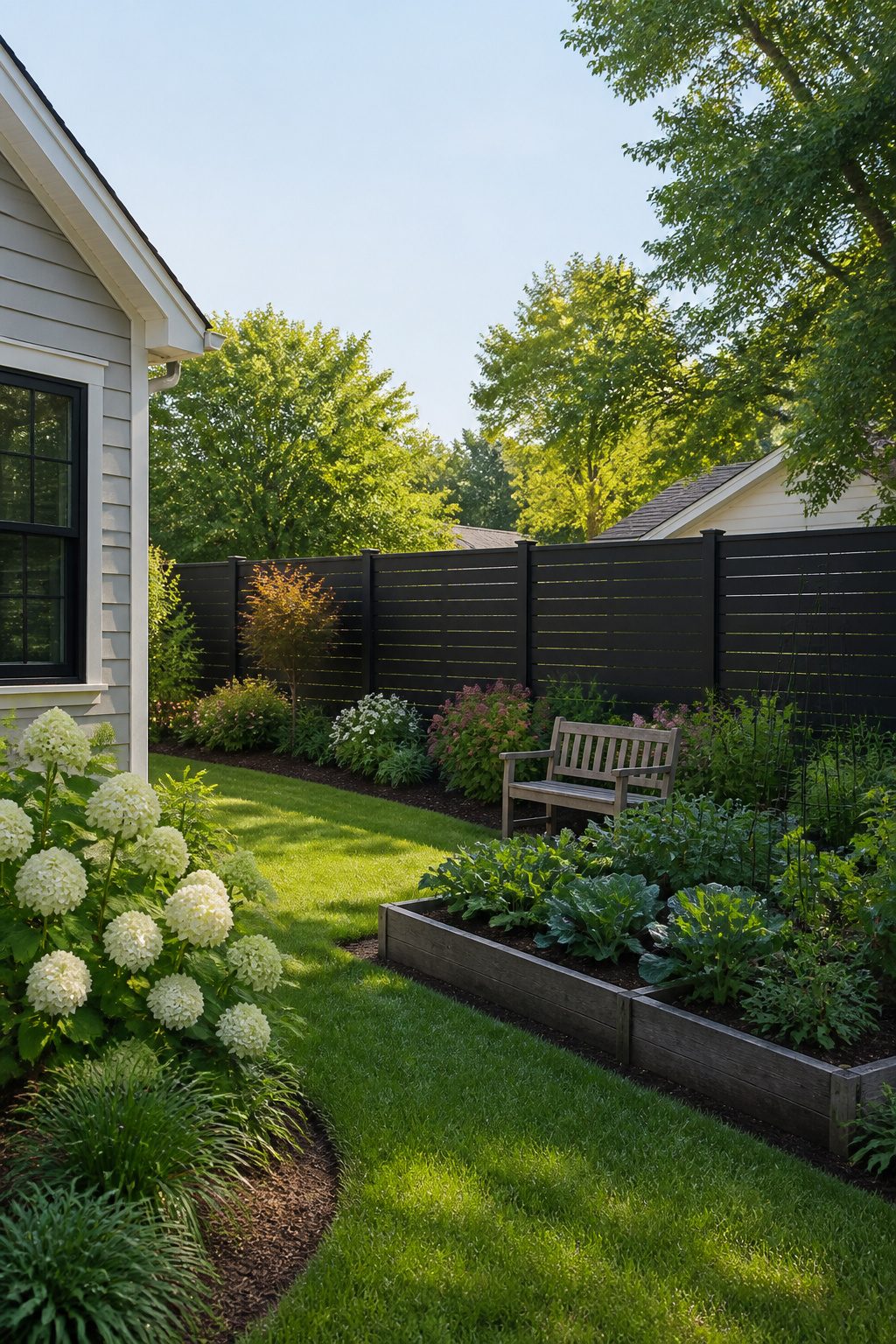
Black vinyl privacy panels run about twenty to thirty years if the posts go in proper gravel drainage and you avoid shimming them straight onto clay. The color goes all the way through the material, not a surface coat that chalks off, which is why they still read as black in direct sun after a decade where painted wood has gone to bare gray.
PVC and vinyl are not identical. Vinyl is the broader family, PVC is the specific polymer used in rigid fence extrusions. That molecular structure is what blocks UV degradation without the titanium-dioxide loading you see in lighter colors. Black formulations lean on carbon black pigmentation instead, which happens to be an excellent UV stabilizer in its own right.
Standard picket vinyl fencing in black tends to look flat, almost like a shadow cutout against green lawn. I spent longer than I should have deciding whether that was a feature or a problem. The slat style, installed horizontally or vertically, breaks up that solid plane and lets air move through; it also sheds wind load in open yards, which matters if your soil is loose or your season includes thunderstorms that test posts.
A system using U-channel framing with infill slats bolted in (no welding, no routed holes) ships as a four-piece panel assembled with four bolts. That infill can be PVC plank, composite, or even cedar if you want the warmth of wood behind black metal-look channels. The channels themselves take material up to one inch thick, so switching infill later does not mean replacing posts. When I priced it, the hardware ran roughly comparable to premium vinyl privacy panels; the labor was faster, since you are sliding and bolting rather than routing rails.
If your yard is small and the fence is the visual boundary, solid black vinyl can swallow the space. Slats or mixed infill read as more open while still giving you the color.
Composite Fencing
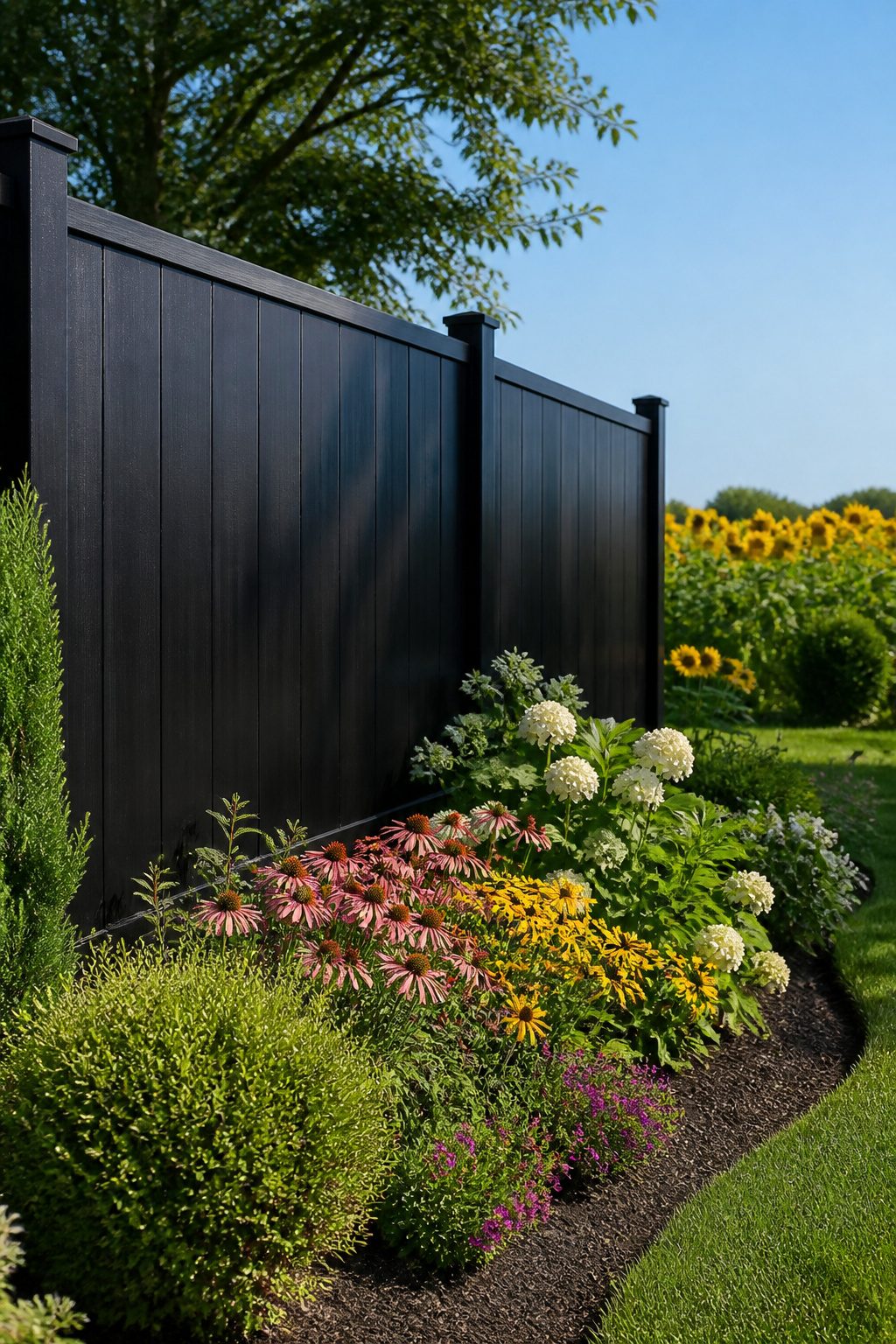
Black composite planks are built from wood fiber and plastic binders, and the upfront cost is higher than most fence materials. The tradeoff is real: you will not be sealing, staining, or replacing boards that have rotted out by year twelve, and the 25–30 year warranties that come standard make that promise explicit. Composite resists insects and rot by nature, so the fence does not weaken in the same hidden way pressure-treated wood eventually does. A black composite fence will not silver or check like natural wood in sun and rain; the color stays flat and engineered, which some people notice as plastic sheen after a few seasons and others prefer to weathered grain. That surface does collect grime differently than painted wood, and while a hose will usually clean it, the finish never quite refreshes to new. For the gardener working a small yard on a tight annual budget, the math is buying tomorrow instead of this season.
Wood Fencing
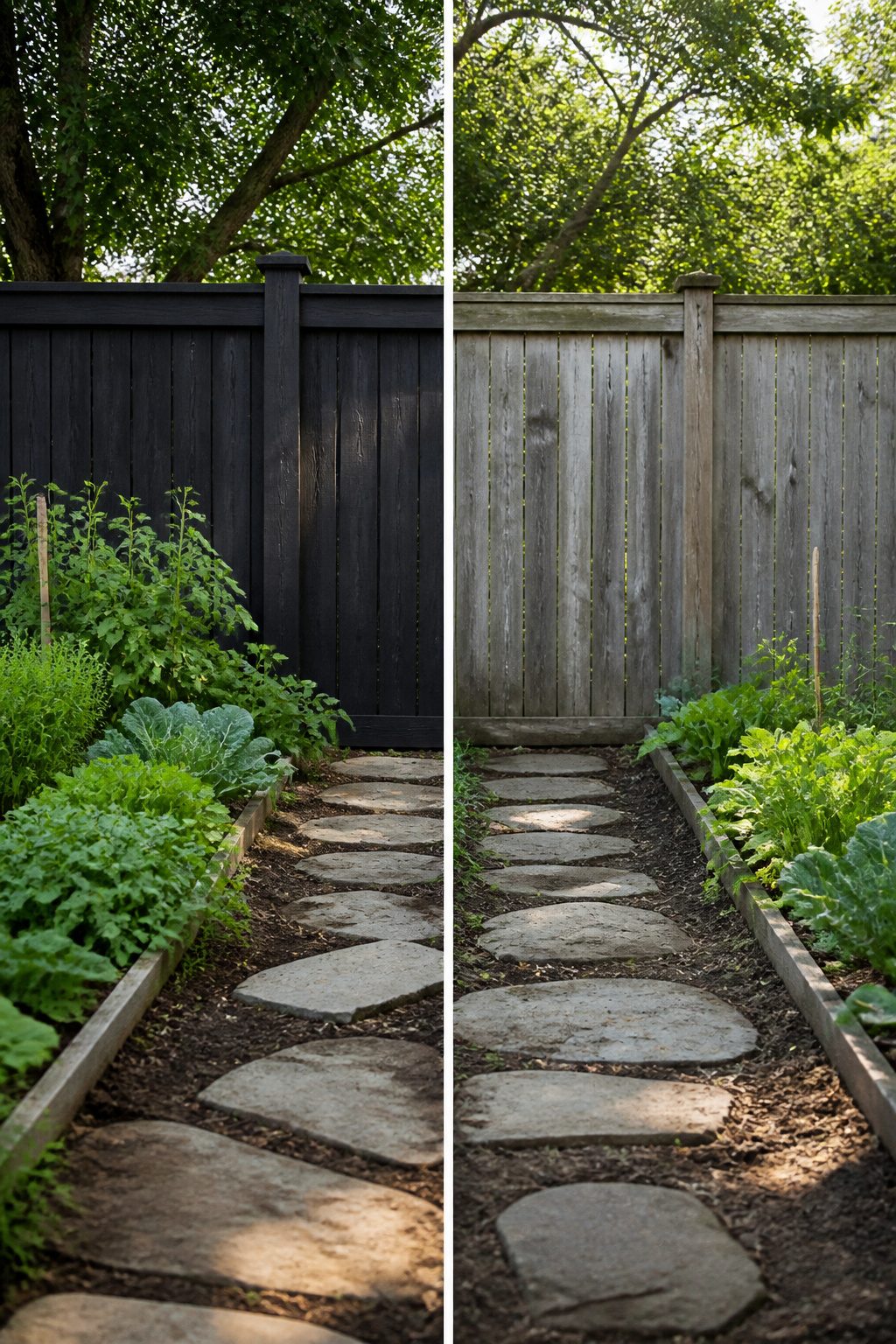
Cedar and pine take a dark stain with real depth, the grain still readable beneath the color. Pressure-treated lumber, by comparison, usually needs primer first; the chemicals that keep it from rotting also fight whatever finish you put on top. I learned that the hard way with a treated pine planter that blushed orange-brown through three coats of anything I tried.
Stain lasts longer than paint on fence boards because it soaks in rather than sitting on top. Paint chips where a rake hits it or a kid bounces a ball; stain just keeps aging. Either way, black wood needs a yearly inspection and touch-up at the gaps and nail holes where water finds a path. Two coats of exterior paint with UV blockers, or a semi-transparent stain with the same protection, buys you the most time between maintenance weekends.
The species that behave best are the ones low in tannins. Cedar is the clear winner; the same natural oils that make it rot-resistant also keep it from bleeding reddish-brown streaks down a black face. Redwood is similar. Ordinary oak or Douglas fir will weep through a dark finish for months, especially after rain, leaving stripes you cannot scrub away without taking the color with them.
Chain Link with Slats
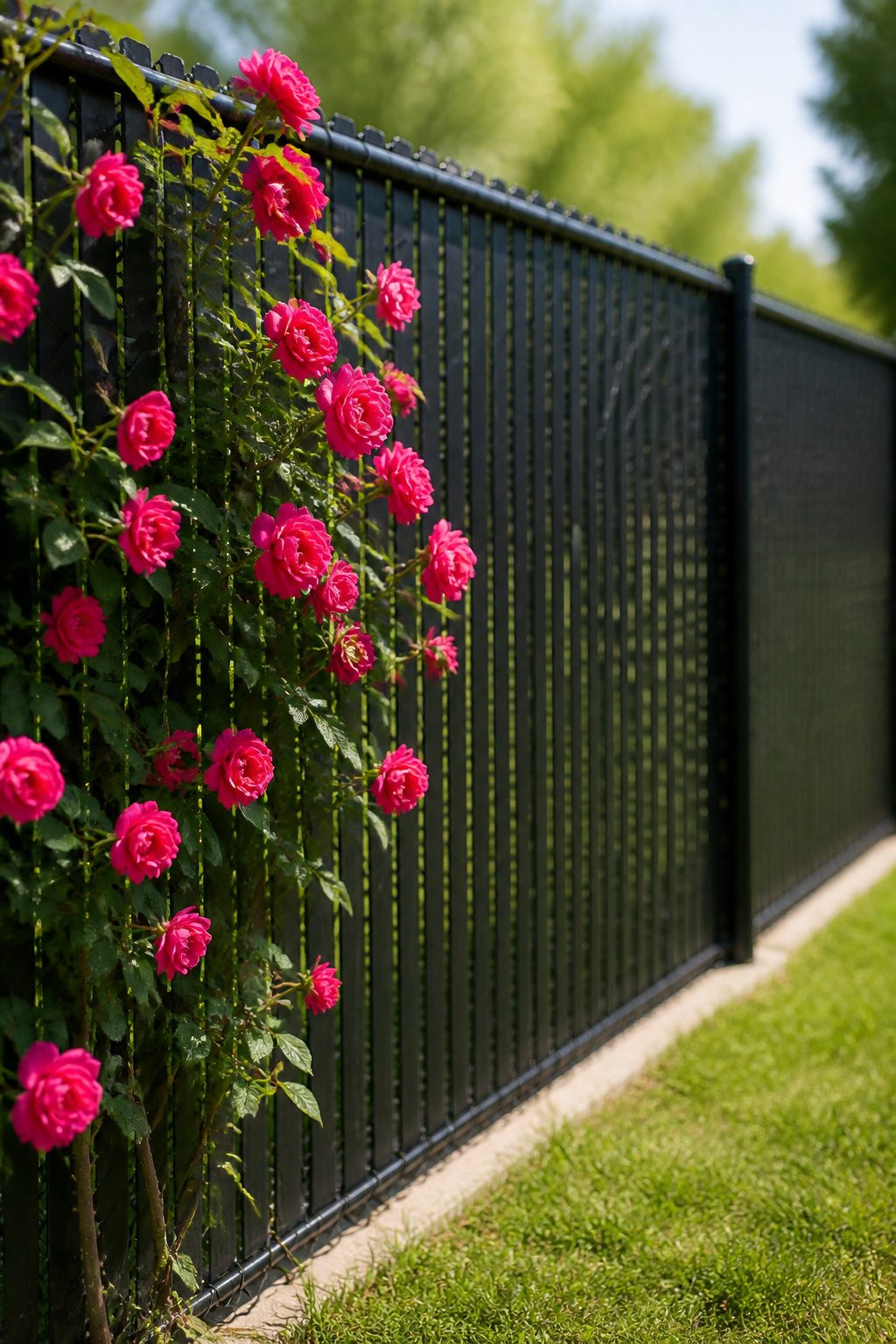
Black chain link with vinyl-coated mesh runs about $8–$15 per linear foot installed, which keeps it the cheapest black fence option by a margin that matters when you are working a long boundary on a tight budget. I found this out pricing out my own corner lot, where anything else in black would have swallowed the whole project before I reached the third side.
Privacy slats weave through the mesh in a top-to-bottom locking tongue. They turn see-through diamond into solid visual barrier from a distance, though up close you still get slit-shaped sight lines. That matters if your goal is true screening: slats help, but they do not create the same wall as a solid panel.
Wind load is the trade you make. A full-height slat acts like a sail where open mesh lets air pass through. In gust-prone stretches, the fence posts take more strain and may bow or lean over seasons. Lowering slat density, leaving every third row empty, bleeds off some pressure without losing the visual effect entirely.
Without slats, the black coating itself does the aesthetic work. It disappears better than galvanized silver against shadowed foundation planting or dark mulch, which is usually the point of choosing black in the first place.
Installed height typically stops at six feet for residential, and gates need the same slat treatment or they read as mismatched afterthoughts. The chain link industry has standardized around this range for decades; anything taller shifts into commercial-grade posts and pricing that breaks the budget logic that brought you here.
Wire and Mesh Fencing
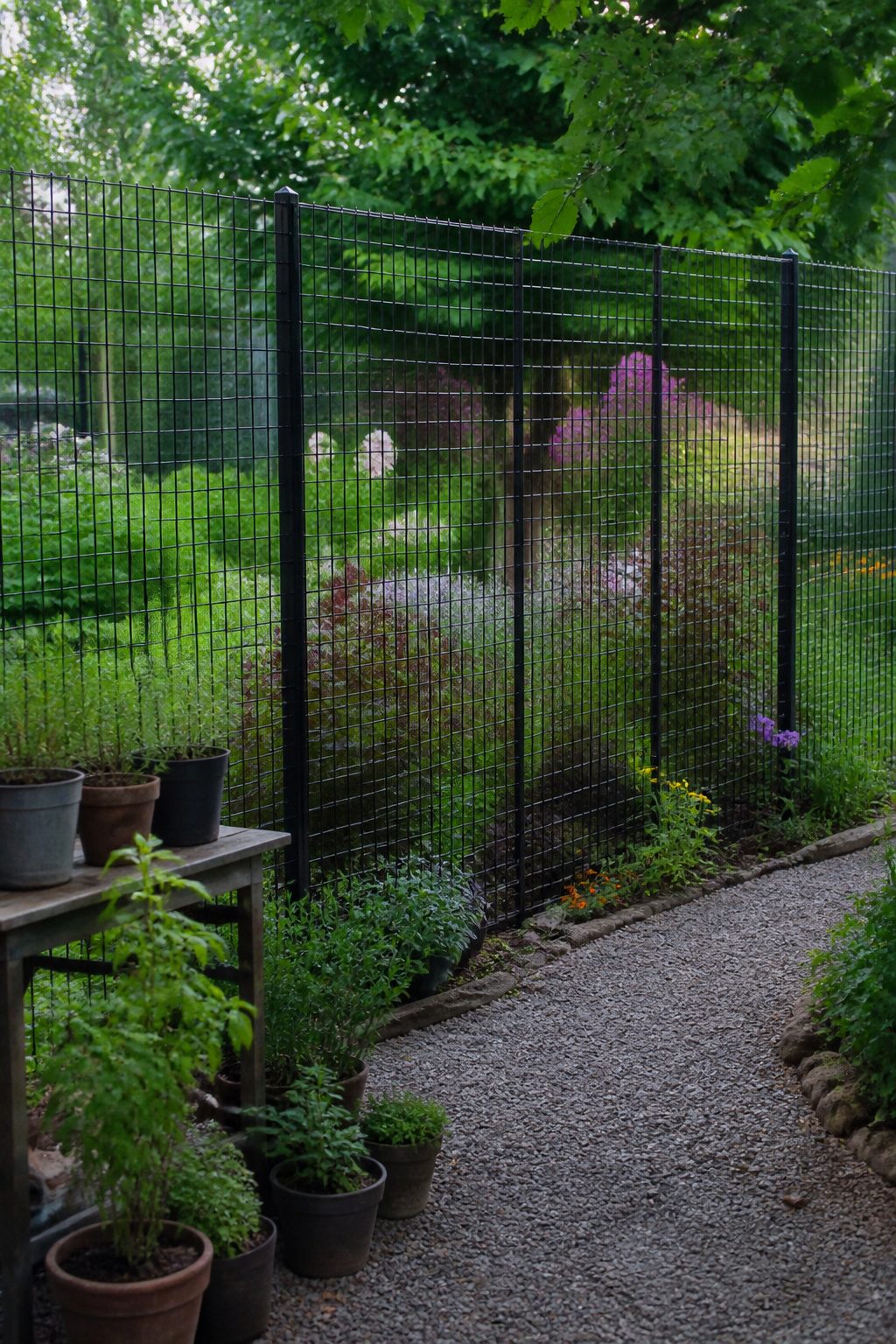
Black wire mesh came onto my radar when I needed something tall enough to stop deer but unobtrusive enough that the hydrangeas behind it still read from the street. The lower the gauge number, the heavier the wire, and for residential garden use the sweet spot sits where you can bend it by hand with effort but it springs back upright. I went lighter once on a tomato enclosure and watched a determined groundhog reshape it into a tunnel entrance overnight.
Galvanization gives you the silver-gray zinc layer that lasts decades but reads industrial against a cottage planting. Powder coating in matte black bridges that gap, though the coating adds cost and can chip where the fence meets a gate latch or where deer have pressed their chests repeatedly against the same wire square. I have seen that wear pattern on a neighbor’s border fence after three seasons; the rust starts pinprick-small and spreads fast once the galvanization beneath is breached.
Mesh size is the decision that actually matters. Two-inch squares contain most dogs and let climbing beans find purchase. Smaller mesh, down to one inch, excludes rabbits and keeps paw-pushing puppies from getting a purchase. For deer, height wins over mesh fineness; they will lean through and pop lighter wire off posts if the top is within their shoulder reach. Hog wire, the grid of horizontal wires welded to heavier verticals, was built for livestock pressure and translates well to garden corners where dog or deer impact concentrates. The vertical wires run closer together, so the panel does not belly out when something leans.
Garden and Decorative Fencing
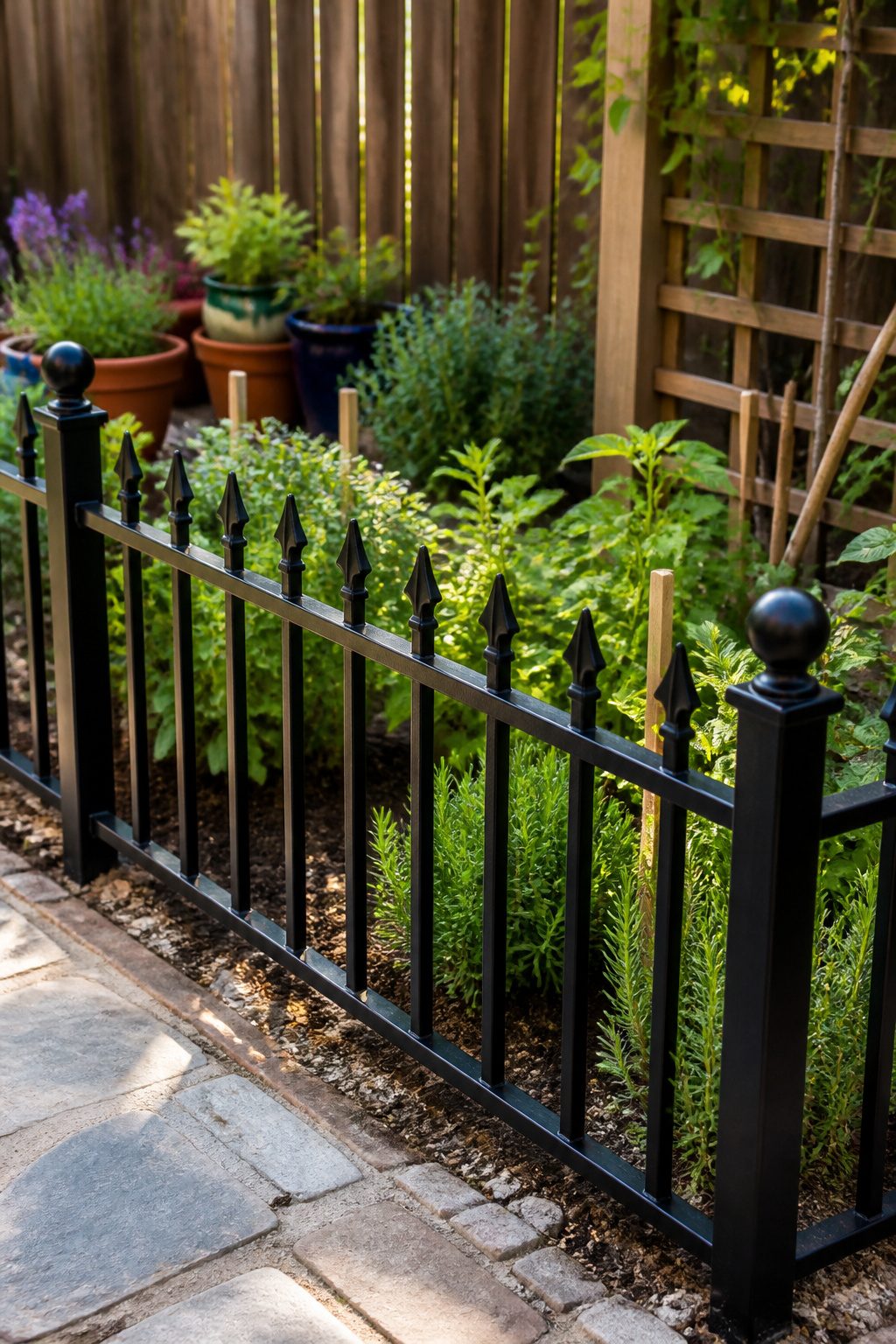
Black garden fence panels start around waist height, and that distinction matters before you buy. A 12–18 inch kit is enough to define a raised bed or keep a dog from cutting the corner; something closer to the 39 inch metal garden fence panels I see in stock this spring is what you need if rabbits are your problem. At that height the mesh or pickets block the hop-over, and the black finish does the work a white-painted fence never would. Everything planted against it reads brighter. White hydrangeas practically glow. The dark color drops back visually in evening light too, so the boundary marks your line without stealing attention from what you grew.
Three-foot panels arrive in five-packs with stakes, roughly 15 linear feet per box, and the no-dig install suits renters or anyone rotating crops yearly. Metal garden fence in black carries a one-year rust warranty typically; after that the coating holds or it doesn’t. Semi-permanent is the honest term. For ornamental fencing that stays year-round, aluminum ornamental styles with narrower uprights read as trellis fencing from a distance and support light climbers without the bulk of a privacy screen. The tradeoff is weight: these garden fence kits go in by hand in twenty minutes, but a large dog or determined deer will test the stakes. Two ways to play this: buy the kit for the season’s problem and move on, or sink proper posts and panels for a permanent border that happens to be black. The first wins on flexibility and loses on longevity; the second costs more and stays where you put it.
Post and Rail Fencing
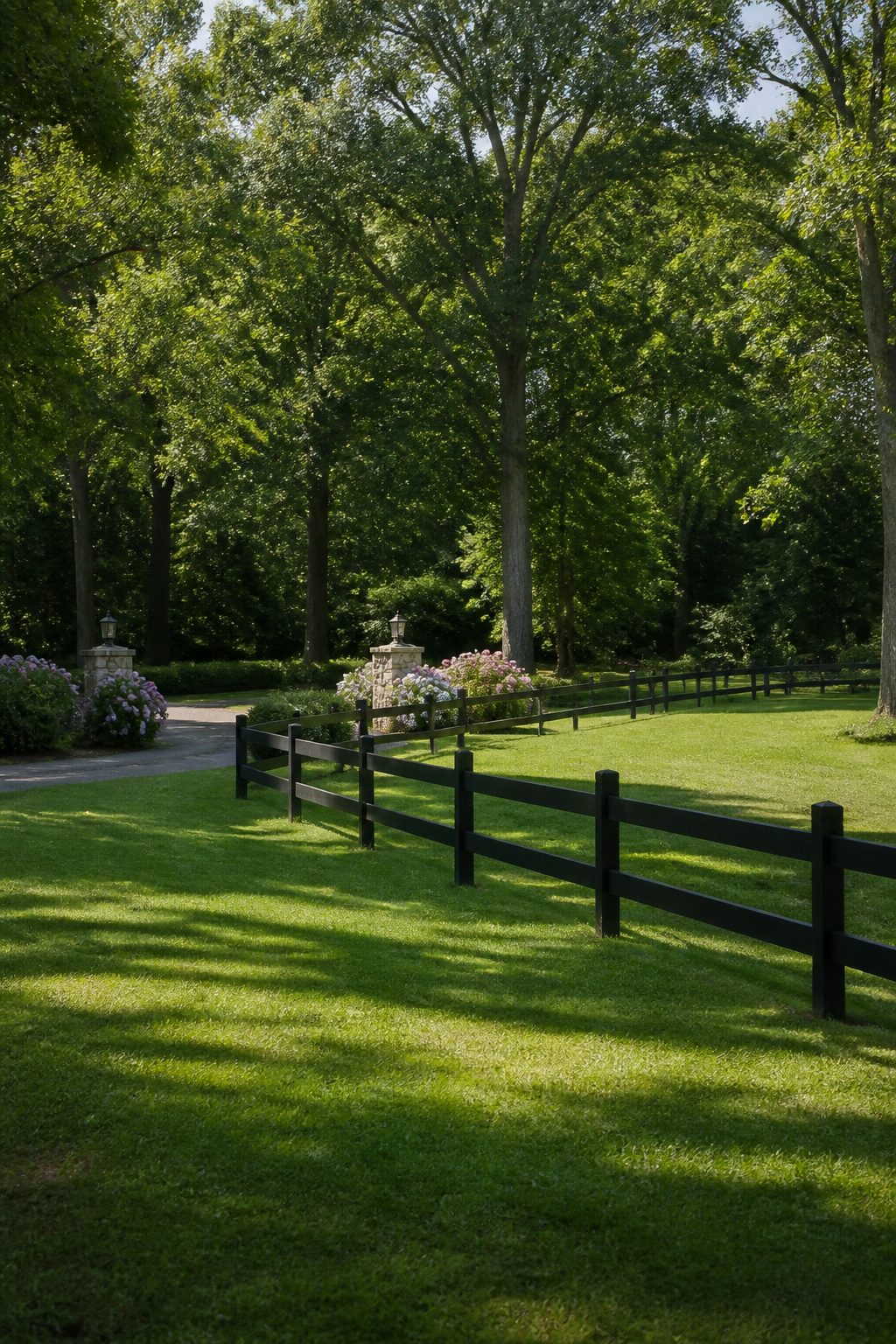
Two-rail and three-rail post and rail fencing in black tends to come in vinyl or pressure-treated wood, each reading very differently against green property. I went with vinyl on a boundary line last season because the black color came factory-mixed through the material, not painted on top; chips or scratches do not show a different color underneath. Wood versions need solid-color stain reapplied every few years to keep that same flat black from weathering to charcoal gray, but they cost less upfront and some gardeners prefer the slight grain texture that shows even under dark pigment.
Post spacing usually runs wider than privacy styles, often eight feet between posts, because the rail itself does not carry wind load the way a solid panel does. That wider spacing is what makes this style economical for large perimeters; you are buying fewer posts and less total material for the same linear distance. Rails typically sit at roughly knee height and hip height for the two-rail version, with a third rail added at chest height for properties that keep larger livestock or simply want the visual weight of an additional horizontal line.
What this style gives up in security it returns in sight lines. The gaps between rails keep views open across pasture or lawn, which matters when you have spent effort on layered perennial beds or a borrowed landscape beyond your own line. Black paint or pigment on thin horizontal rails tends to visually flatten, so the fence reads as a clean shadow rather than a solid interruption; from twenty yards back it almost disappears against dark soil or shaded ground. For a small patio or balcony gardener this is rarely the right fence, but for anyone working a half-acre or more who needs boundary definition without enclosure, post and rail in black solves the problem without dominating it.
Specialized and Temporary Fencing
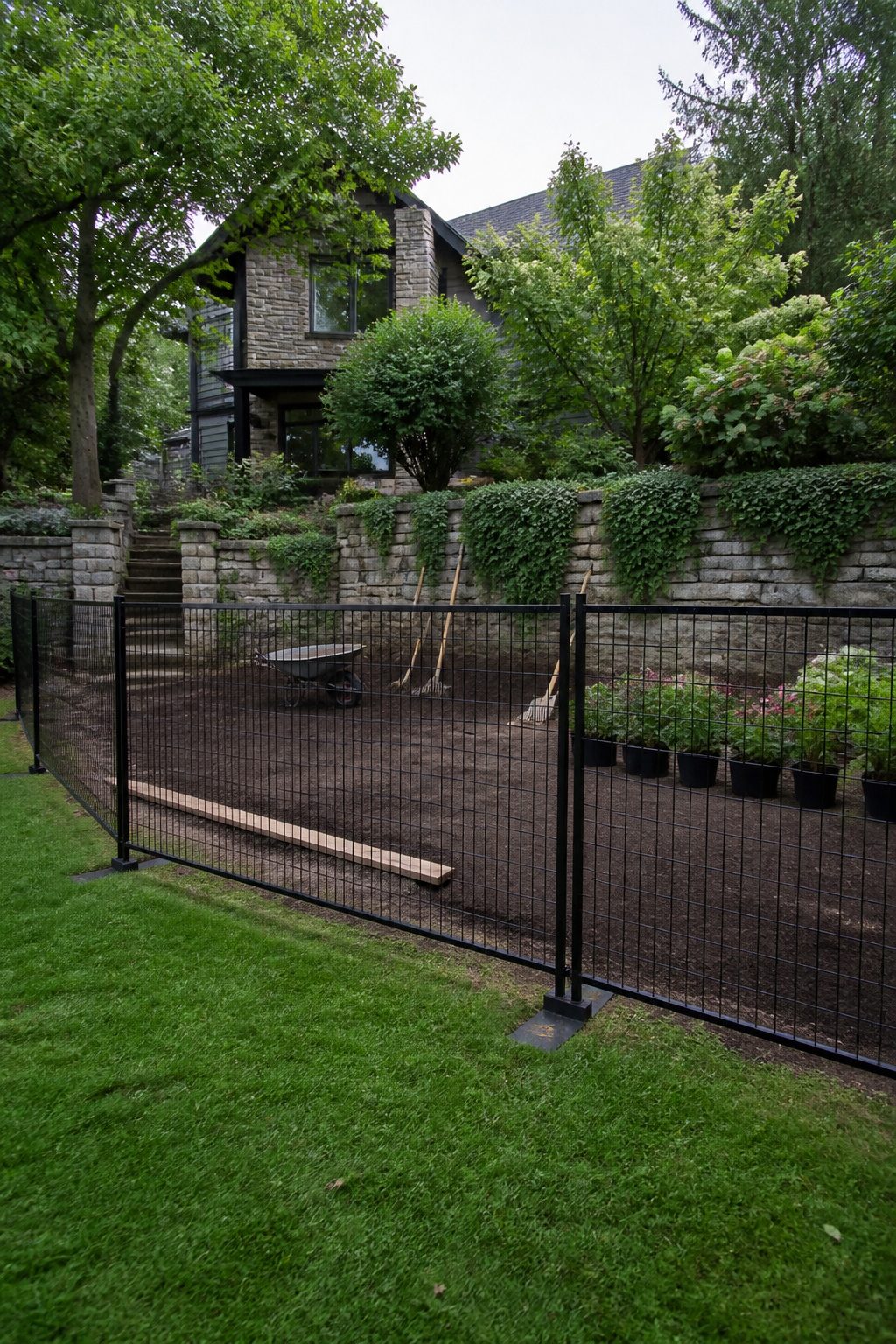
Black pool fencing has to satisfy local pool codes before anything else; the powder-coated aluminum styles that read as a design choice above the deck are still guardrails first, with latch height and spacing rules that vary by county. I looked into this for a friend last spring and the gap tolerances surprised her more than the color did. Black horse fencing swaps the tight spacing for visibility: the high-tensile polymer rail systems show up dark against pasture and give a running horse something it can see and avoid. Electric fencing in black finishes works the same way; the vinyl coating hides the wire without changing the shock function, and a dark line against green field is easier to track for breaks than the galvanized steel I grew up around. Temporary fencing in black is mostly construction rental stock, chain panels with black powder coat that keeps the rust down and photographs slightly better for residential job sites. Sound barrier fencing is where the color gets practical again; the absorptive panels come in dark tones as standard, and black hides the dirt and road grime that lighter colors show within a season. Each of these starts from a code or a hazard, and the color follows; you do not pick black pool fencing because it looks sharp, you pick fencing that meets code and then find it in black.
Security Fencing
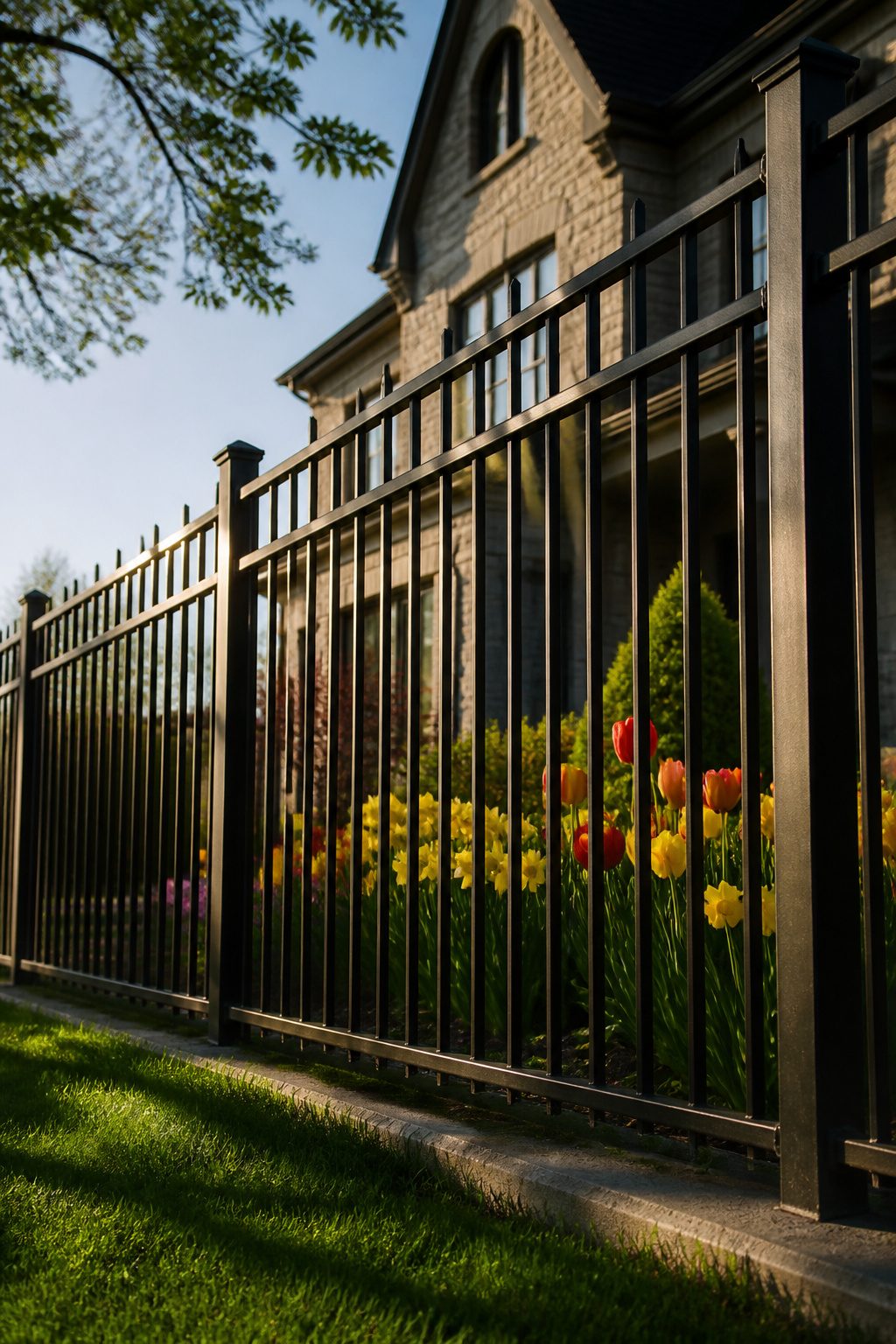
Black security fencing carries a different visual weight than the garden styles most of us started with. Six feet is the practical minimum for deterring casual entry; eight feet starts to read as institutional rather than residential, and the neighbors will notice. I have seen homeowners install the full anti-climb package, angled brackets and triple-pointed pickets, only to realize their lot now looks like a storage yard from the sidewalk. Residential use works when the house architecture is already angular and modern, perhaps with black window frames to echo the fence line; on a cottage or craftsman facade the same materials look like a hostage situation.
Barbed wire belongs to agriculture and industry, full stop. Concertina wire even more so. If you are in a rural zone with genuine livestock or equipment theft issues, a single strand at the top of a six-foot black pipe rail might pass local ordinance. In a suburb or city, the same installation violates most residential codes and every unwritten rule of streetscape courtesy. The anti-climb features that do belong in neighborhoods are passive: narrow vertical gaps too slim for a foothold, smooth surfaces without horizontal rails, and perhaps a slight outward angle at the top. These stop climbers without announcing that you expected them.
Height requirements vary by municipality, but the pattern holds: front yards face tighter caps than rear, and anything above six feet usually needs a permit check. A security-grade black fence in powder-coated aluminum runs roughly double the cost of standard residential grade; the welded construction and heavier gauge are the difference. Paying that premium makes sense for a property with recurring trespass issues or ground-floor windows vulnerable from the alley. For most of us, a well-built six-foot privacy fence with decent gate hardware stops the problems we actually have.
Fence Kits and Installation
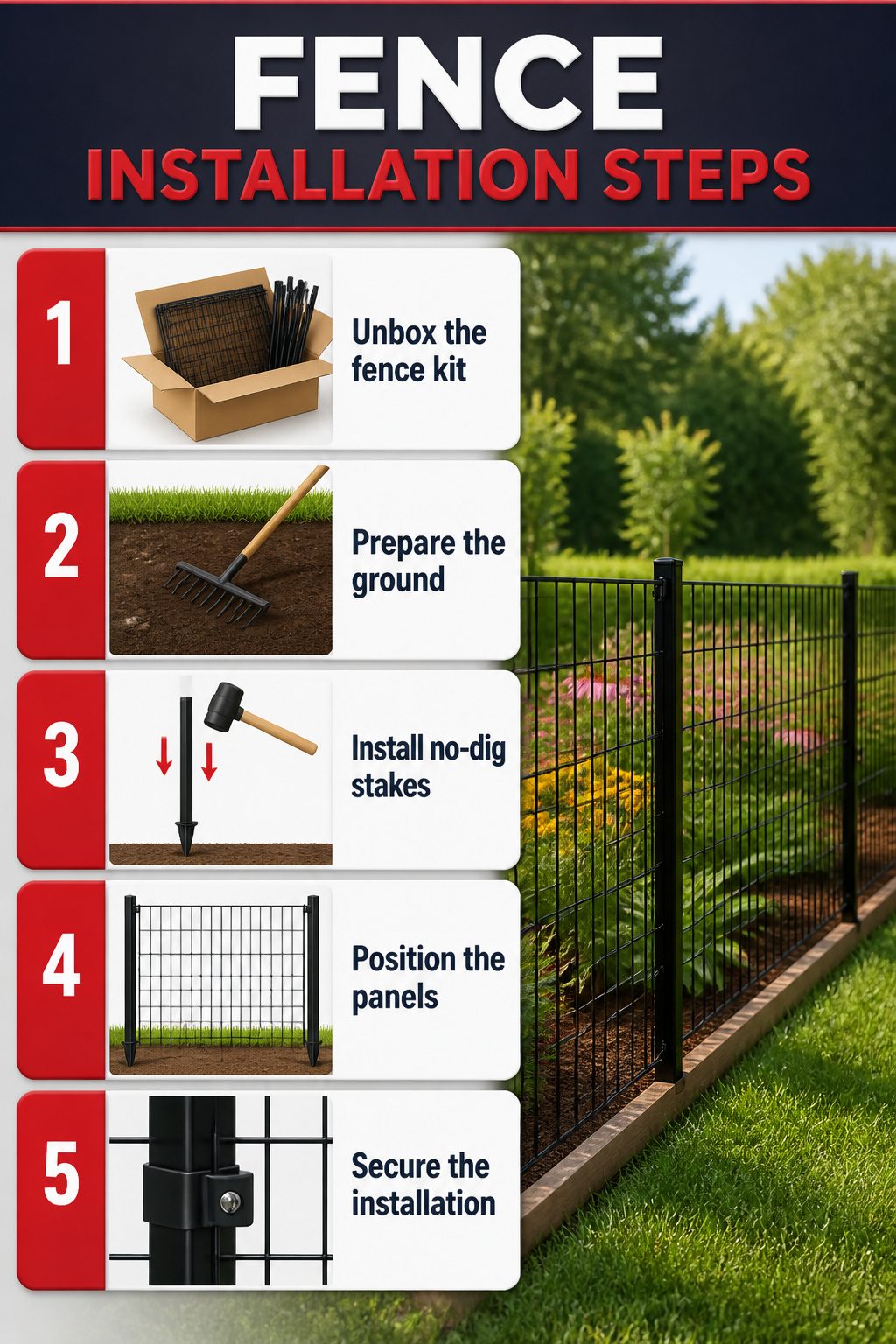
Fence kits take one of two approaches, and the difference matters before the box even arrives. Some black metal panel kits, like the 39-inch Zippity garden fence, ship with everything for a no-dig install: five panels, six stakes, and no concrete required. You press the stakes into soil and call it done. The whole box weighs 33.7 pounds and covers fifteen linear feet, which is enough to learn whether you actually want more fencing or just wanted to start.
Hog track kits and heavier panel systems move the opposite direction. A black hog track kit runs around $89.99 and gives you the frame rails; the wire panel drops in afterward. These need real posts, and real posts in black fence systems almost always mean concrete footings or at least driven ground sleeves. The lighter Zippity-style stakes flex in wind and lean if a dog pushes; the hog track assembly, properly anchored, does not.
What separates the two is permanence versus portability. The no-dig stakes pull up in minutes if you change your mind about bed placement or need the fence back next spring. Concrete footings, or even driven metal posts, commit you to that line for years. Most manufacturers state the requirement plainly, but the trick is reading past the product name: "kit" does not tell you which camp it belongs to. Check the hardware list. If the box includes no concrete but also no anchoring stakes, you are buying a frame and still need to solve the ground contact yourself.
For a small garden bed or a rental patio, the no-dig stake systems win on speed and reversibility. For anything taller than waist height, or any fence that might take a shove, skip the convenience and pour the footing.
Gates and Hardware
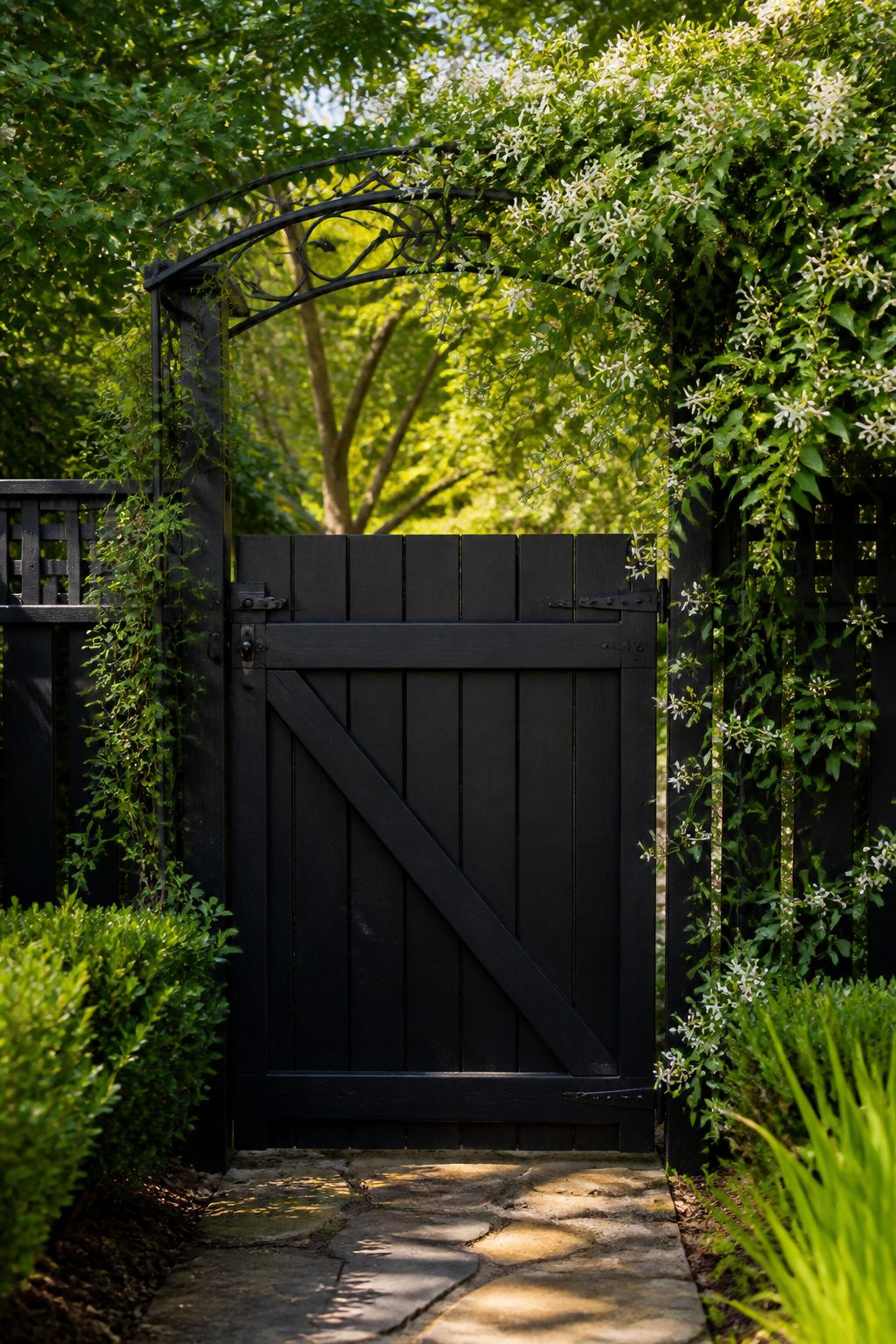
A gate in black fencing reads as a deliberate frame, not an afterthought. Post caps matter more than people guess; a flat aluminum cap on a hollow post turns rainwater into a drum, while a slight slope sheds it silently. Self-closing hinges and latches rated for pool code belong on any gate near water, not because inspectors always check, but because a gate that drifts open at the wrong moment is the wrong kind of surprise.
The standard 36-inch gate width fits garbage cans and wheelbarrows, but barely. My neighbor learned this after installing a black hog wire gate by the driveway: the lawn mower angled through, the garden cart did not. He rebuilt the opening to 48 inches the following spring, losing two fence panels he had cut too short the first time.
Latch choice follows material. A black aluminum gate wants a magnetic latch that does not rattle in wind. Wood gates in black stain carry surface-mounted hardware better than mortised, since the stain hides the screws and seasonal swelling already complicates tight fits. For metal frames, through-bolted hardware wins; the thin walls of tube stock strip thread-forming screws in a season or two of slamming.
Finishes and Maintenance
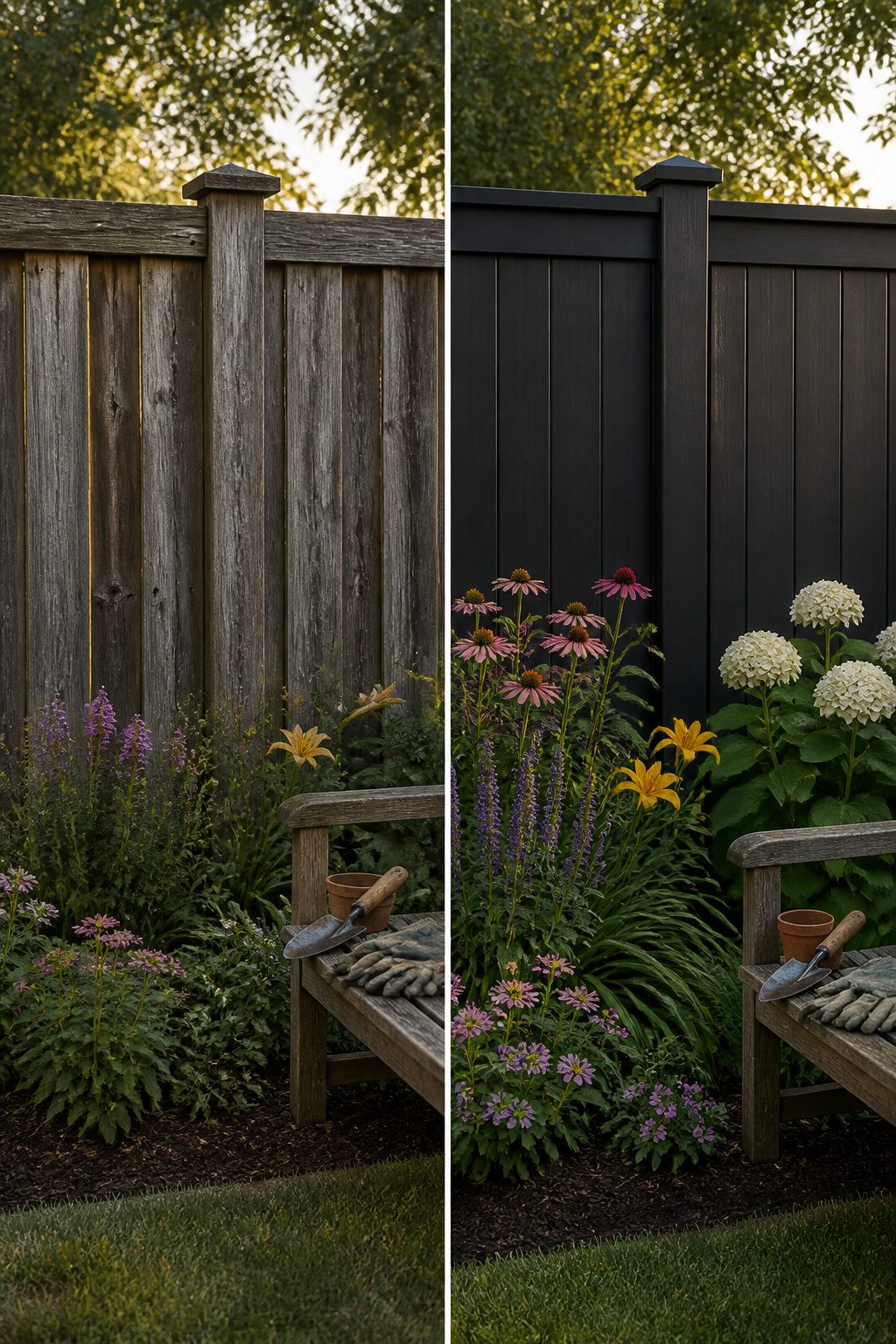
Black finishes on fences fail fastest where water sits. Horizontal rails, flat post caps, and the top edges of horizontal board patterns all trap moisture and UV in the same spot, so stain or paint there breaks down years ahead of vertical surfaces. I learned to look for this by checking the upper rails first on any weathered fence; the peeled or grayed band running along the top tells you reapplication is already overdue.
Stain on cedar or pine needs redoing every two to three years on those horizontals, and every four to five on vertical posts and pickets, assuming the wood was clean and dry when it went on. Pressure-treated lumber holds paint only if primed first; skip that step and black paint flakes within a single season. Metal fencing with factory black coating needs almost nothing, though scratches from a string trimmer or lawn mower expose raw steel that will rust through if touched up with the wrong paint. Vinyl in black carries color through the material, so reapplication is not part of the equation, which is the main reason it ends up on my own short list for busy years.
Preparation matters more than the product itself. Wood has to read below fifteen percent moisture on a meter, or the finish seals water inside and bubbling follows. A belt sander on horizontals, sixty-grit then one-twenty, gives stain something to grip and removes the UV-damaged fuzz that new coats would otherwise coat over and shed with. Wash finishes, even the ones labeled "deck" or "fence," still pool and peel on flat surfaces; oil-based penetrating stains perform better there but darken to near-black only on wood already dark by nature, so the color choice narrows.
Cost by Material
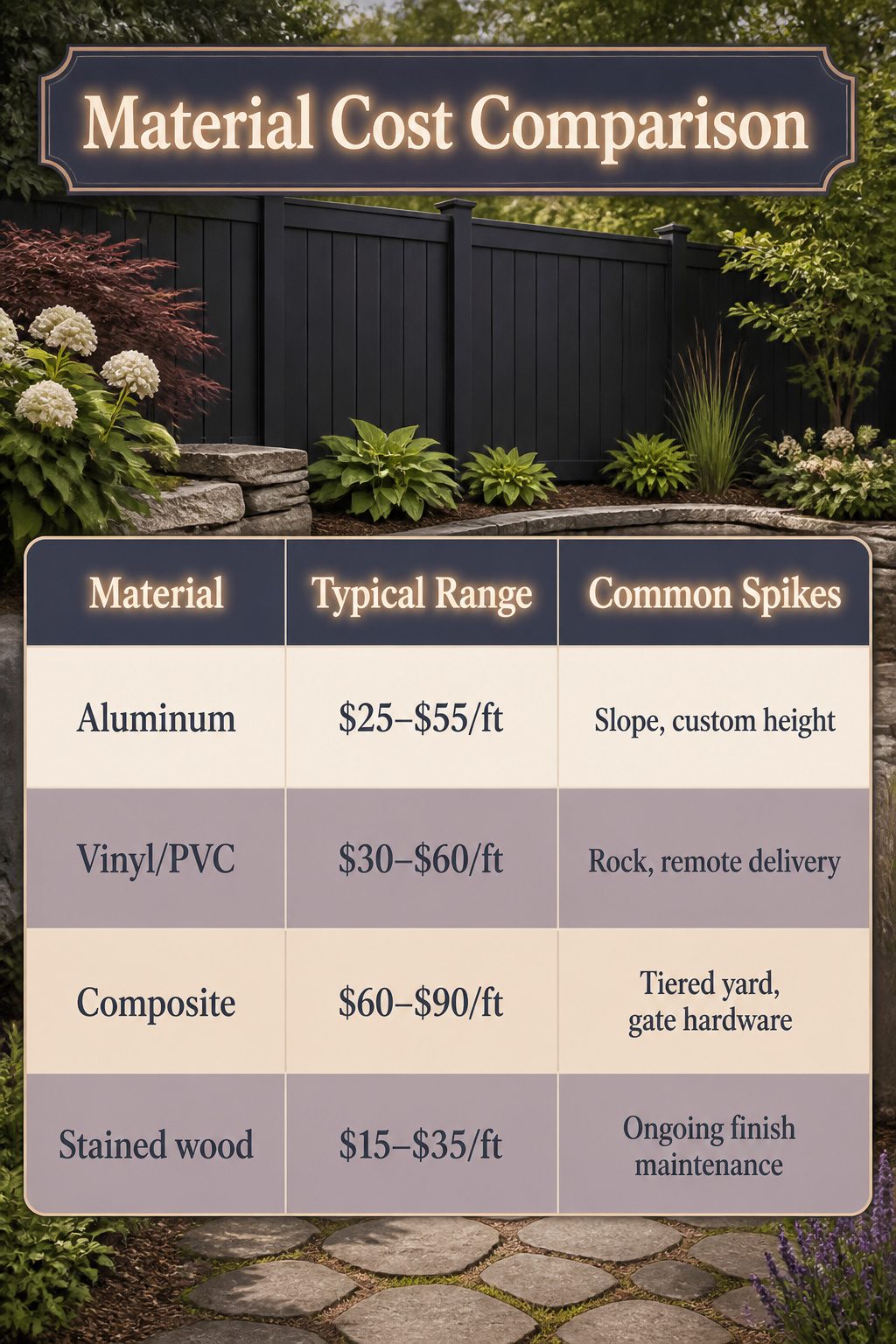
Black aluminum runs $25–$55 per linear foot installed, vinyl sits closer to $30–$60, and composite pushes $60–$90. Where the yard drops off or drags out bedrock, those numbers climb fast. Slopes mean stepped or racked panels, extra posts, and longer labor. Remote delivery tacks on mileage, and anything over six feet calls custom orders with longer lead times. Wood stained black looks cheapest on paper, but factor re-staining every few seasons and the gap closes.
| Material | Typical Range | Common Spikes |
|---|---|---|
| Aluminum | $25–$55/ft | Slope, custom height |
| Vinyl/PVC | $30–$60/ft | Rock, remote delivery |
| Composite | $60–$90/ft | Tiered yard, gate hardware |
| Stained wood | $15–$35/ft | Ongoing finish maintenance |
I priced my own corner lot two springs back. The grade fell six inches across the run, and one quote jumped forty percent before I found a crew willing to follow the contour closer. Worth asking three people, always. If your soil is nothing but shale, vinyl’s hollow posts still beat steel on auger wear, though you will pay for pre-drilled anchors.
Service Life and Warranty
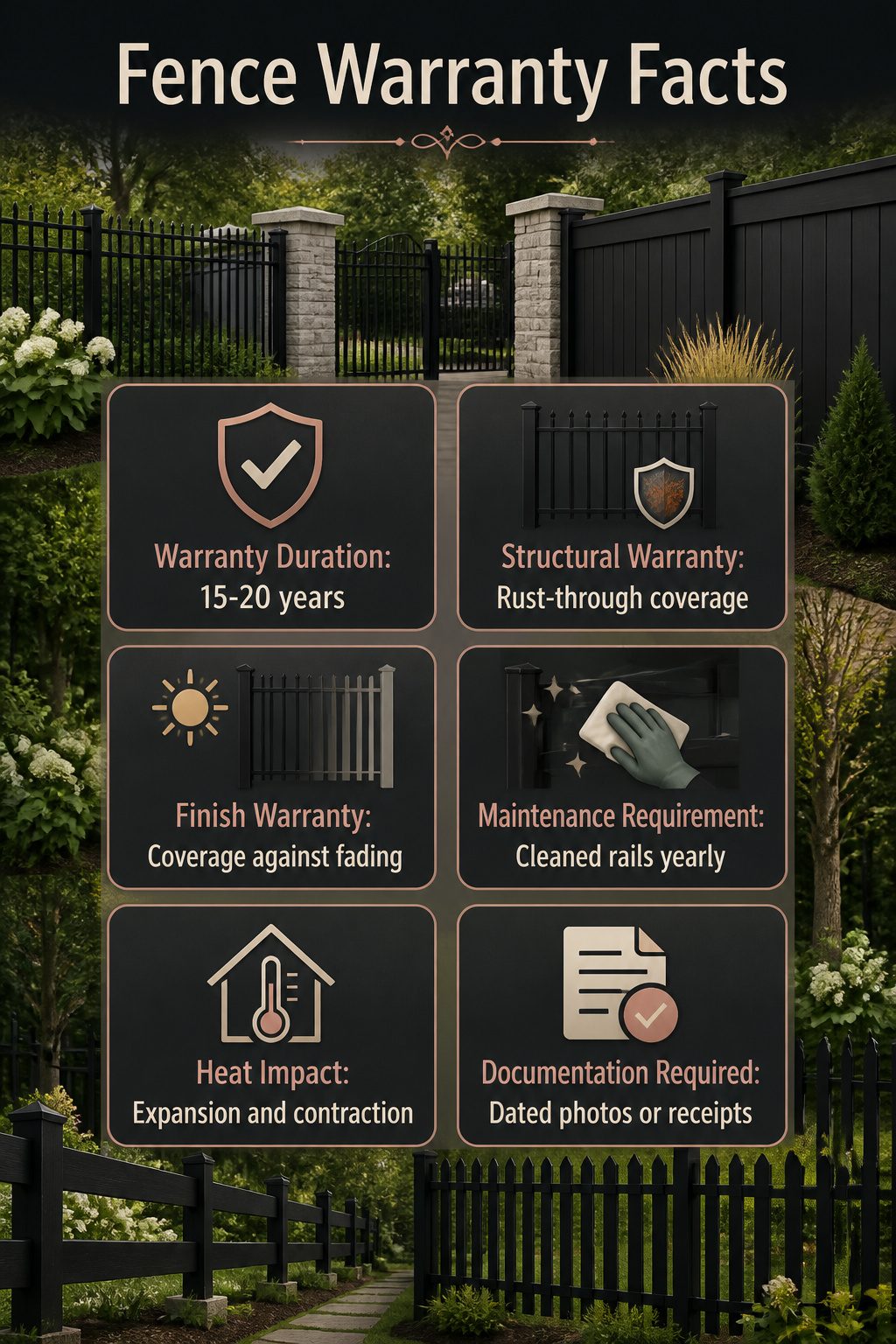
A black aluminum fence with a powder coat finish typically carries a warranty somewhere between 15 and 20 years, though that coverage usually splits into two parts. The structural warranty handles rust-through and bent posts; the finish warranty, which is the one you care about with black fences, covers fading and chalking separately, and the years are often shorter. I’ve seen finish coverage drop to just a few years on budget lines, with the color shift described as "up to a certain degree" rather than prevented outright.
Vinyl fencing in black is harder to find for exactly this reason. Dark pigments absorb more heat, and the expansion and contraction in direct sun can void a warranty if you live in a southern zone and did not follow the exact fastening pattern in the manual. The ones that do exist often require proof that you cleaned the rails yearly and kept vegetation trimmed back a foot or more.
Wood painted or stained black carries no manufacturer warranty on the color itself, only on the wood structure if you bought from a treated-lumber program. The finish is on you, and the repainting cycle is shorter than with natural stain because the pigment breaks down faster. I count on recoating every two to three seasons in full sun, not the five that some cans suggest.
What voids coverage across materials is fairly consistent: unapproved cleaners, pressure washing closer than the rated distance, and any modification like drilling holes for extra hardware. Documented maintenance means dated photos or receipts; start that folder the day of installation, not the day you notice a problem.
What to Check Before Building
I learned about fence color rules the hard way, and it wasn’t even the fence itself that caused the problem.
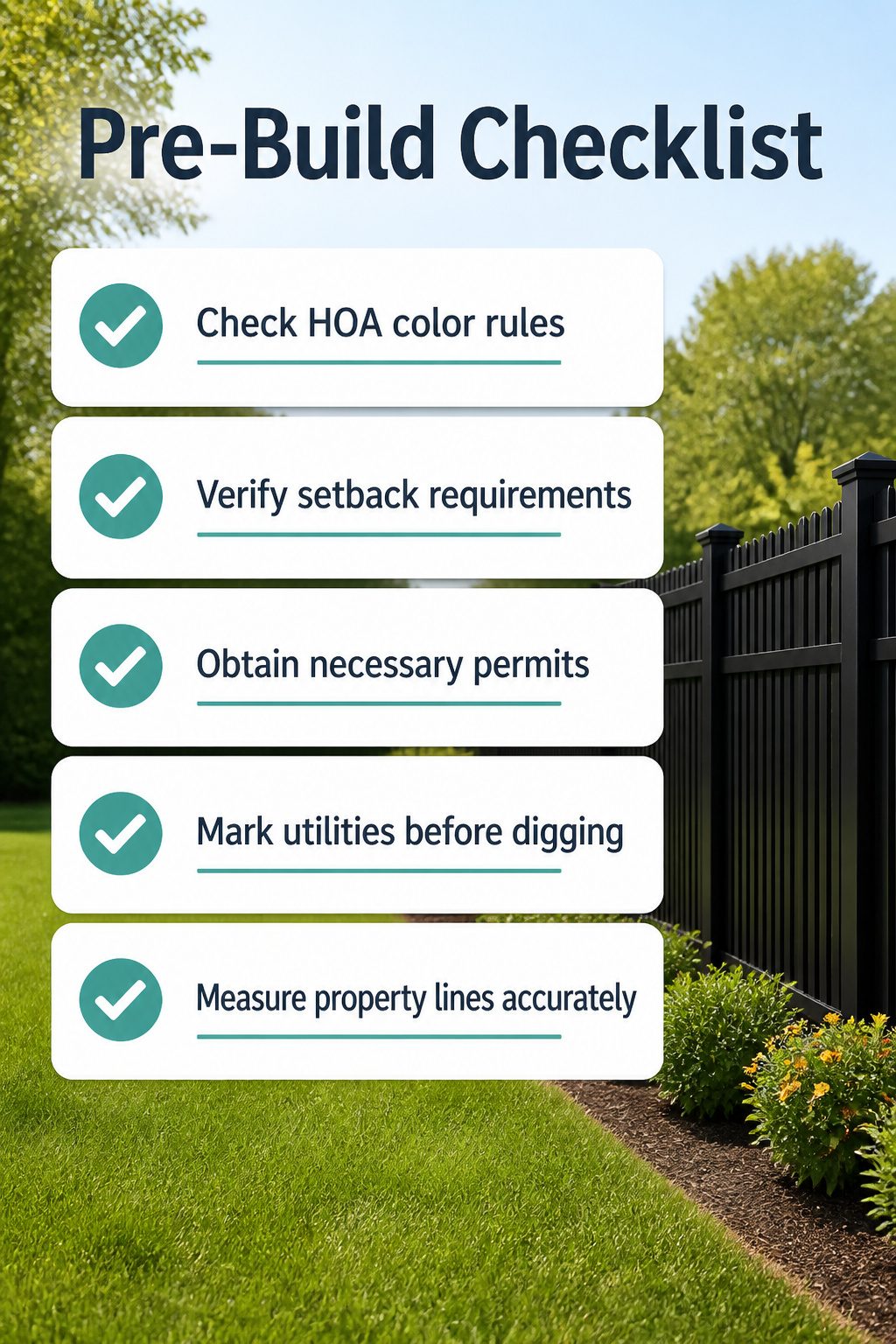
Black fences absorb more heat in direct sunlight than lighter colors, which can push surface temperatures high enough to soften vinyl or warp thin-gauge metal in some climates. That thermal load is why some HOAs restrict dark fence colors outright, treating black as a separate category from brown or green rather than a neutral default. HOA rules on color itself often sit in a design covenant you signed without reading, and enforcement typically triggers on a neighbor complaint rather than active patrols.
Setback requirements run by zoning district, not by fence color, though a 6-foot black privacy fence reads taller against light siding than weathered wood does. Most residential zones cap backyard fences at 6 feet and front yard fences at 3 or 4 feet; anything above that needs a variance with survey stakes and a public hearing. I always walk the property line with a tape measure before I call the permit office, because the setback is measured from the true edge, not the curb or the sidewalk crack that happens to run straight.
Permits themselves are location-specific. Rural unincorporated land often needs nothing at all. Suburban lots usually want a fence permit with a sketch and fee, plus separate HOA architectural review if one exists. Missing the HOA step means tearing down finished work, and black paint on installed pickets is not quick to reverse.
Some jurisdictions also require utility marking before any post holes, independent of fence type. The call is free and legally required; the fine for skipping it runs steep if you nick a gas line.