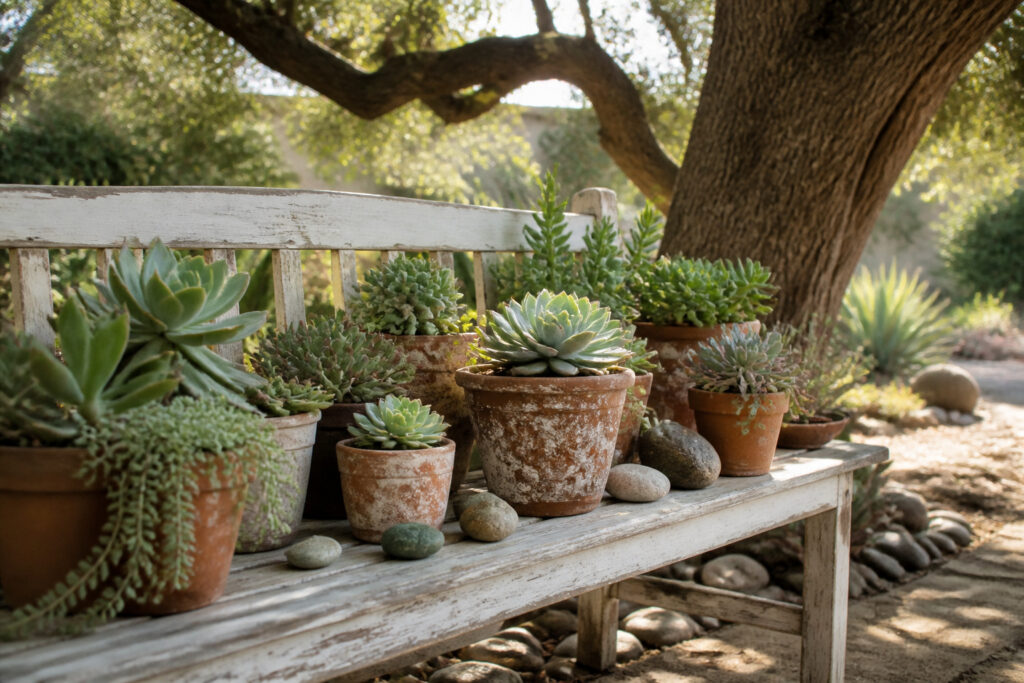
A finished succulent garden ranges from a drilled bread pan on a railing to a six-foot agave holding a whole bed, and the deciding factor is how much drainage you can build in.
The same soil that saves a rock garden will kill a container if it sits against glazed ceramic with no exit hole.
I learned that after a rainstorm left one terracotta pot dry in two days and another soggy for a week, both holding Sedum.
1. Rock Gardens with Succulents
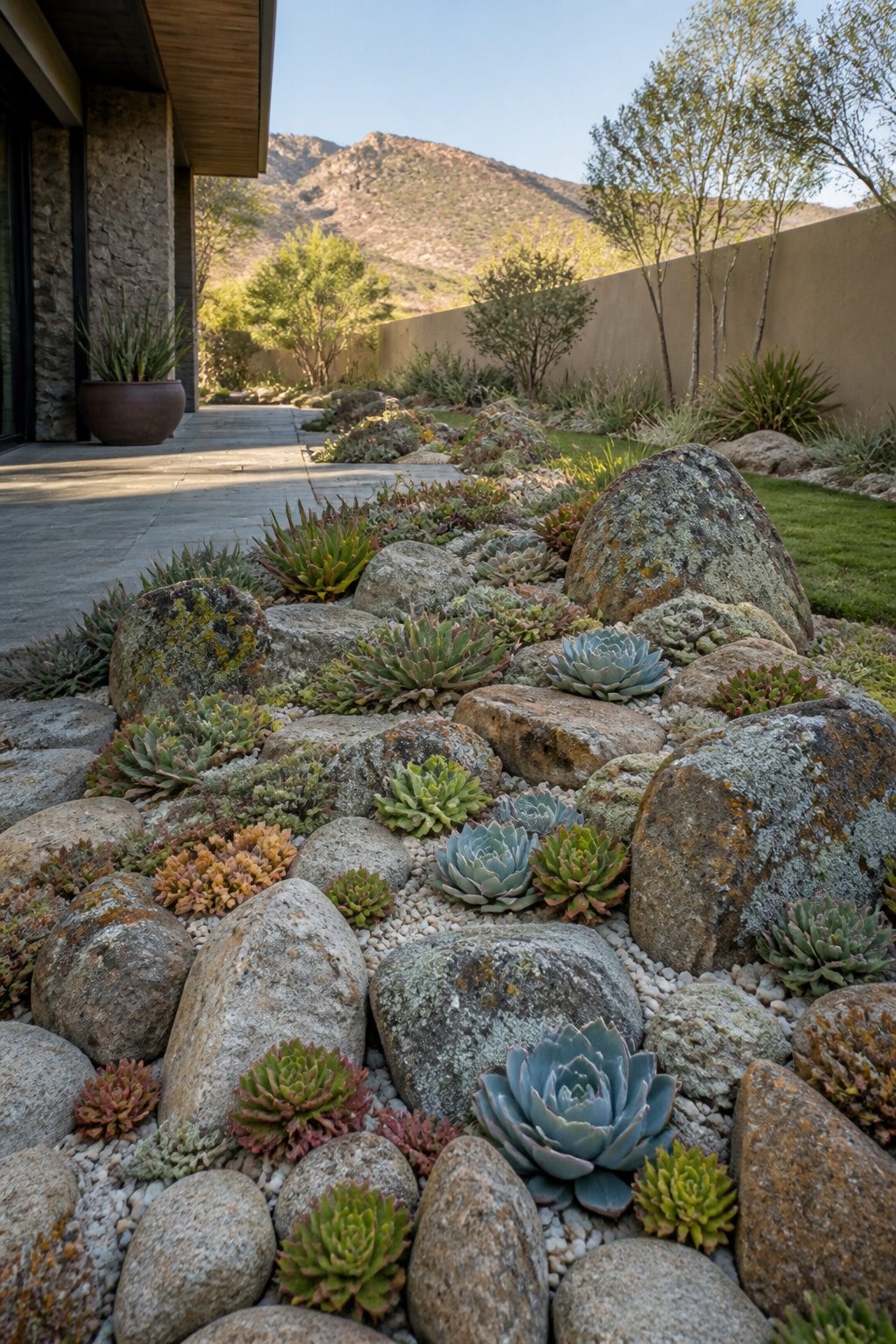
A rock garden lets succulents look like they planted themselves.
The trick is using rocks that actually create places for them to root: pebbles for ground cover, fist-sized stones for visual weight, and one or two boulders to break the flat line of a small yard.
Height builds itself when you nestle soil pockets between stacked stone rather than spreading everything level.
Drainage is not a layer you add; it is the whole soil mix.
Coarse sand, grit, and pumice should outnumber the organic stuff by a noticeable margin. I have killed Sedum by being generous with compost, thinking I was helping.
The roots sat wet, and the stems turned to mush. Now I mix in pumice until the soil barely holds together when squeezed.
Agave gives you the architectural spine, with broad leaves that catch shadow and throw it back. Sedum threads into the cracks where nothing else wants to grow.
Echeveria rosettes sit at eye level on raised pockets, their color shifting from blue-gray to pink-tipped depending on the stone behind them. Pair smooth-leaved Agave attenuata against something craggy or cylindrical; the contrast reads as intention, not accident.
2. Succulent Container Gardens
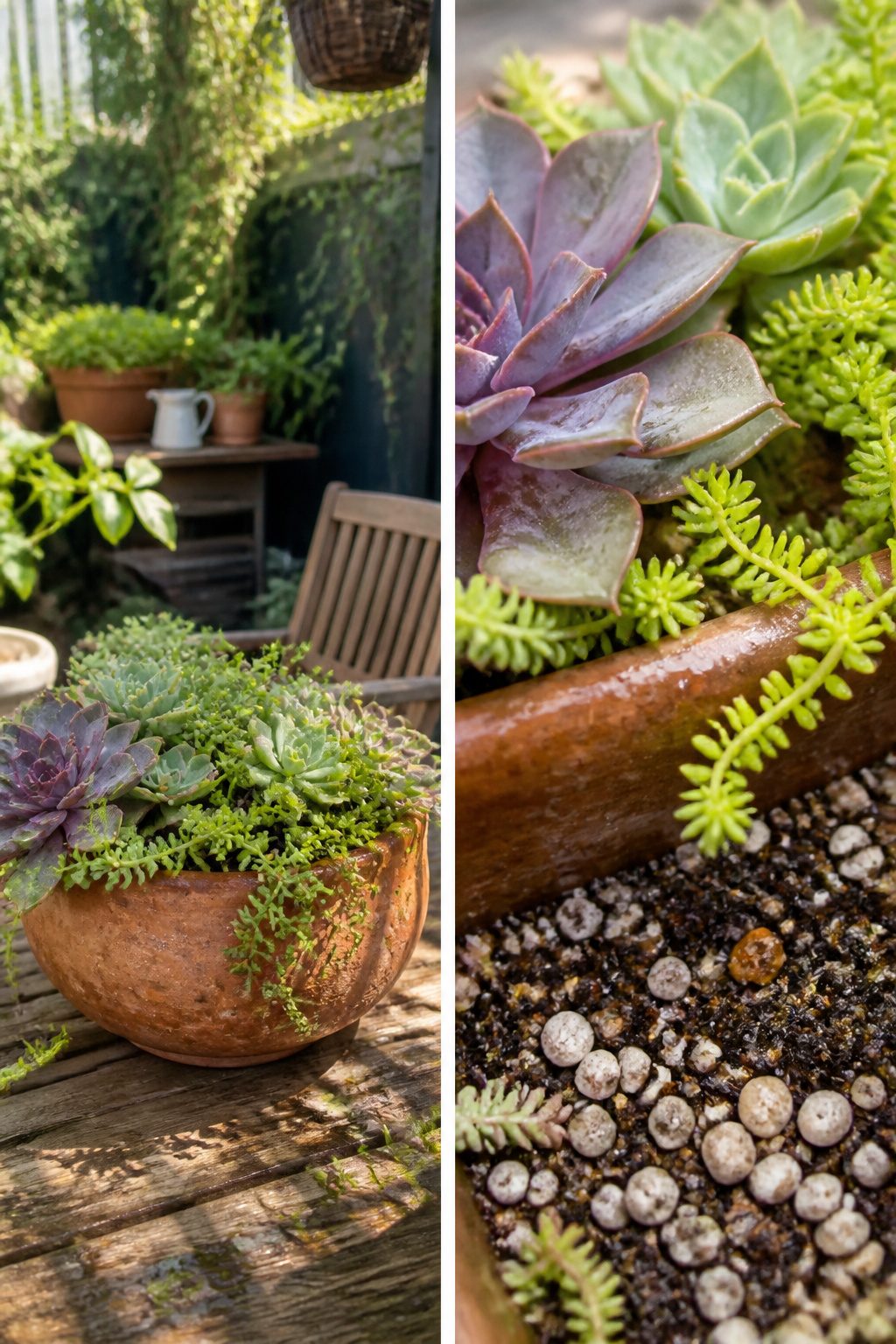
A clay pot left on my patio after a rainstorm taught me the first rule of succulent containers. The one with a single drainage hole dried out in two days.
The one without sat soggy for a week. Drainage holes are non-negotiable, and terracotta’s porous walls help even more than glazed ceramic.
Wooden planters work too, though I line them with landscape fabric to slow rot. The real advantage of any container setup is mobility.
Echeveria, Sedum, and Haworthia handle a summer on the balcony fine, but my zone 7 winters will kill them. I carry the whole arrangement indoors before the first frost rather than replant.
Watering once every one to two weeks is the standard, but the calendar matters less than your finger. The top two inches of soil need to feel completely dry.
I check, then wait another day. Succulents recover from dryness; root rot from damp soil, they do not.
Leaves go soft and translucent when overwatered, wrinkled when thirsty. The shriveled ones bounce back.
3. Minimalist Zen Gardens
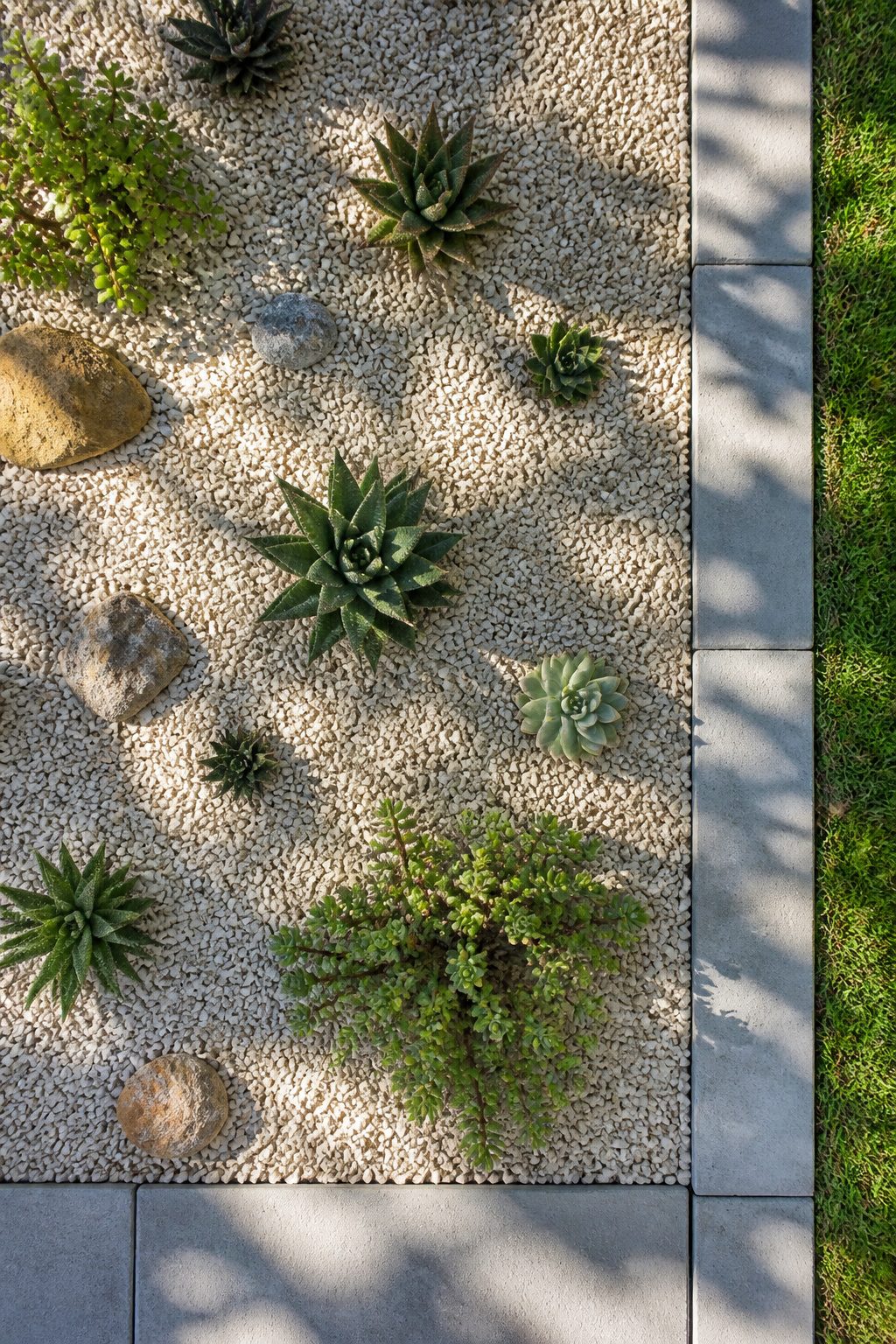
The tension in a spare succulent garden comes from what you leave out, not what you squeeze in.
Last spring I planted a narrow bed along my patio with Haworthia and a creeping Sedum, spacing them far enough apart that the pale gravel showed between.
The plants looked lost at first. By August the repetition of their geometric shapes read as intention, and the exposed surface caught morning light like water.
Restraint means one plant shape, repeated, with sand or fine gravel as ground cover. I skipped the Golden Barrel Cactus the sources all suggested as a focal point; for a quiet space, height breaks the horizon.
The gravel keeps root crowns dry, which matters more than the aesthetic: poor drainage rots succulents faster than sun does.
I mix in coarse pumice and small gravel until water sinks visibly, which took two test holes and one soggy patch to get right.
Negative space needs an edge.
Concrete pavers, set flush, contained the pale surface and gave the eye somewhere to rest. Without that boundary, the gravel drifts into lawn and the calm dissolves.
4. Mediterranean-Style Succulent Gardens
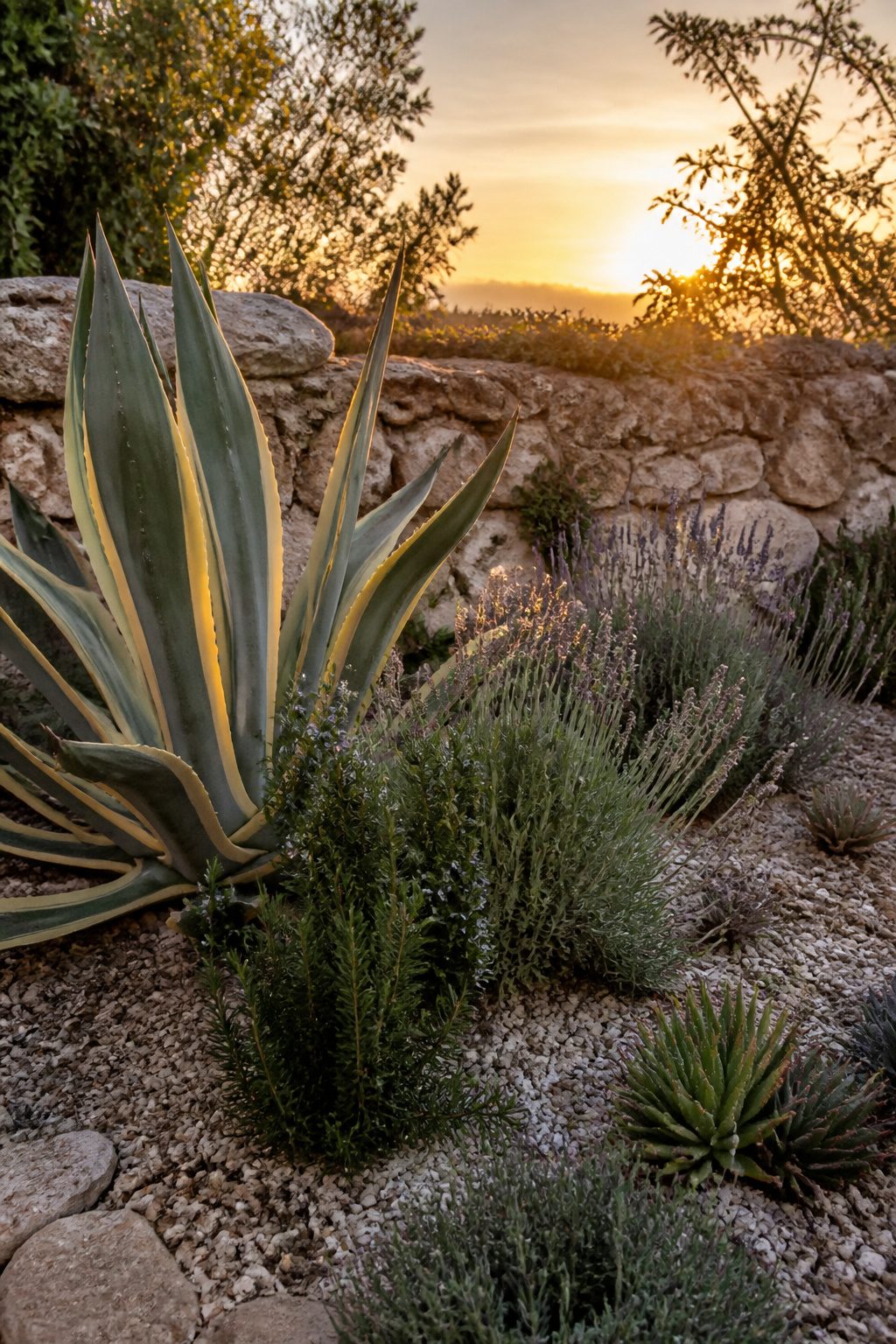
A Mediterranean-style succulent garden lives or dies on its soil. The mix needs sand and perlite worked in for drainage, not a token sprinkle.
Last spring I watched a neighbor’s new Aloe plicatilis turn to mush in a bed that looked gritty on top but held water like a sponge underneath.
Compost alone won’t save you; coarse material like pumice or crushed granite has to run through the full depth.
For anchors, Aloe and Agave give you the architectural weight that makes the layout read as intentional rather than accidental.
I set a variegated Agave americana slightly off-center in a bed that gets six hours of afternoon sun, then ringed it with rosemary and a compact lavender that had proven itself through the previous dry summer.
The companions share the same water needs, which matters more than matching color. A bed that mixes thirsty herbs with succulents means something drowns or something desiccates; neither failure is subtle.
Dry-climate design is as much about spacing as plant choice.
Leave bare ground or gravel between groupings. The eye reads that openness as heat, as coast, as the long dry spell that shaped these plants in the first place.
5. Succulents in Terrariums
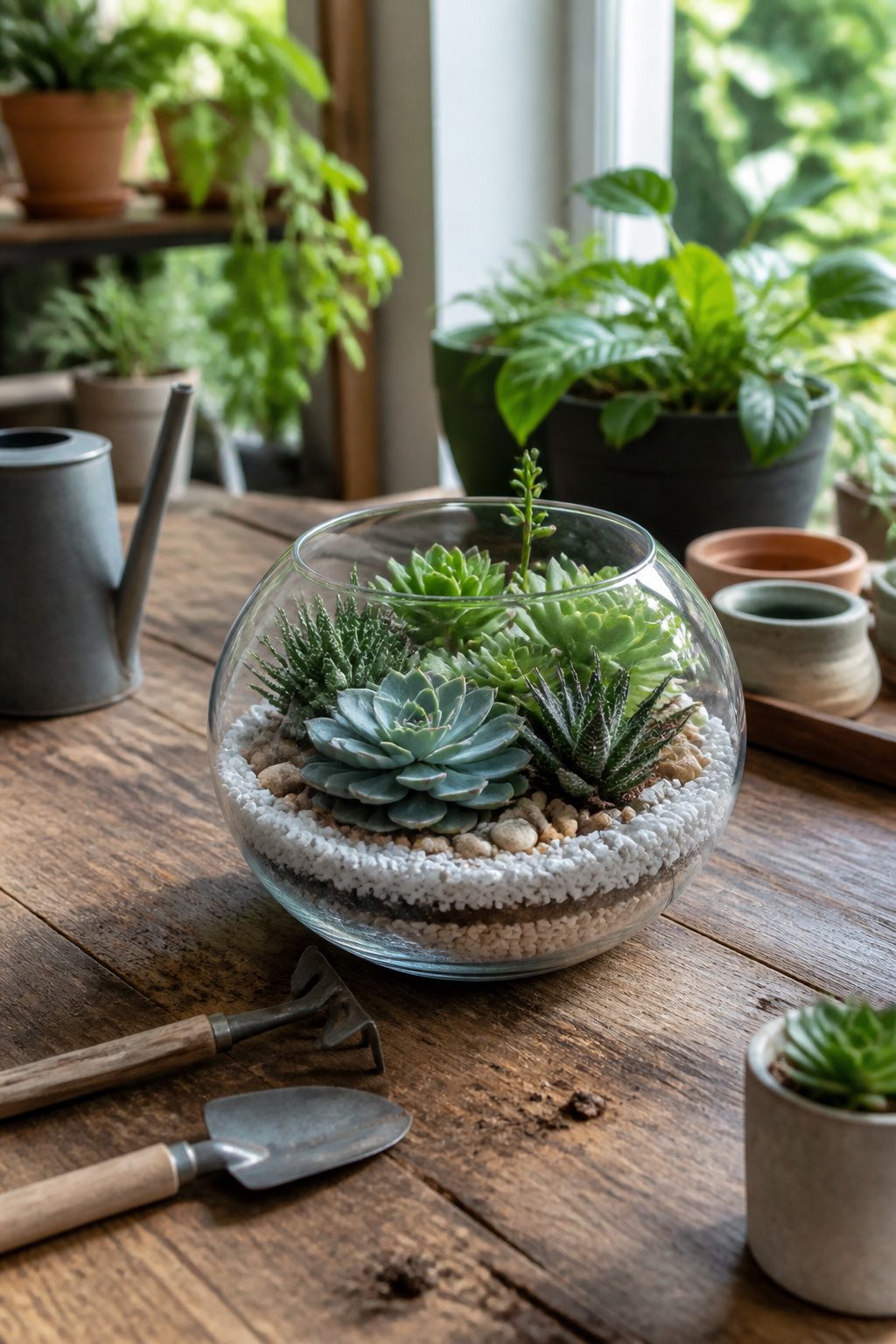
Glass vessels make seductive display cases, and an open one matters more than the shape.
Closed terrariums trap the humidity that rots succulent roots; open bowls or jars let moisture escape. I build the bottom layer from small gravel or crushed granite, enough to keep the soil from sitting in any drained water.
On top of that goes a mix heavy on perlite, the white granules that leave air pockets between soil particles.
Echeveria and Haworthia stay small enough to live inside without outgrowing the glass in a single season. The real risk is kindness given too often.
Water lingers in a container with no exit route, and root rot sets in faster than the plant shows distress. A dry period between waterings is not neglect here; it is the maintenance the design requires.
6. Desert-Style Succulent Gardens
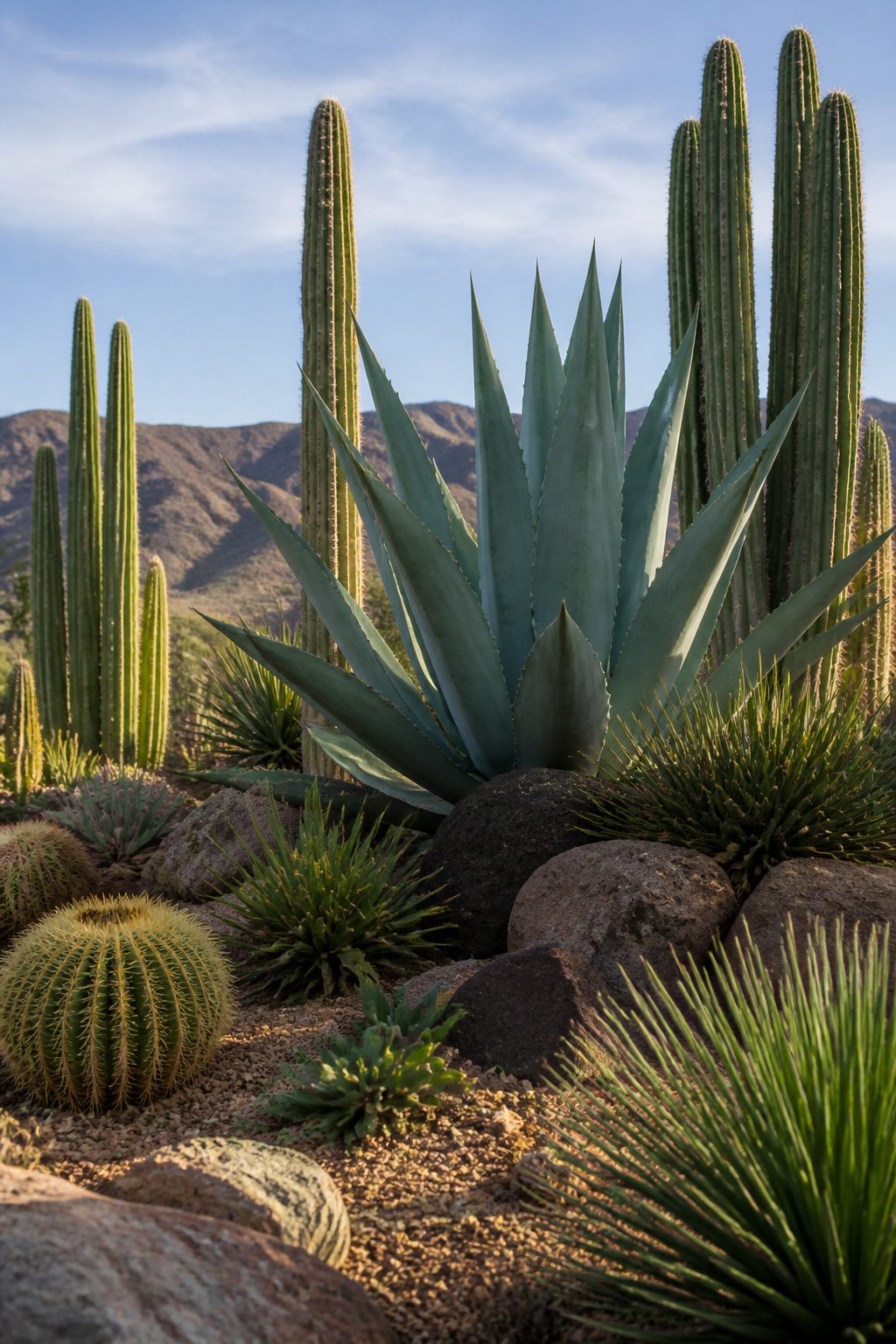
A desert-style succulent garden lives or dies on scale. Small plants read as clutter; one specimen plant with room to breathe carries the whole bed.
I learned this after crowding three young agaves into a corner that looked generous at planting time. By year three they were shoulder-height, fused together, and all three had to come out.
For soil, skip the bagged cactus mix unless you amend it heavy. What works is roughly half organic matter and half coarse drainage material: pumice, coarse sand, perlite, or crushed granite.
I run a quick percolation test before planting, filling the hole and timing how fast it drains. If water sits longer than a few minutes, the mix needs more grit.
Agave, large Aloe, and columnar cacti are the backbone plants. A single Queen Victoria agave or a mature Aloe ferox gives the garden its architecture; columnar cacti like Echinocereus coccineus add vertical lines that draw the eye through the space.
Spacing matters more than it looks in the nursery. These are not container arrangements; mature width on a big agave can run six feet across.
Heat adaptation comes down to root protection.
The same sun that succulents love will cook a root ball in shallow soil. I plant specimen cacti with the crown sitting slightly high, mounded so water runs off and the base catches afternoon shade from its own shadow.
In the worst heat, established plants need no water, but young ones take one deep soak monthly through their first two summers.
7. Upcycling for Succulent Planters
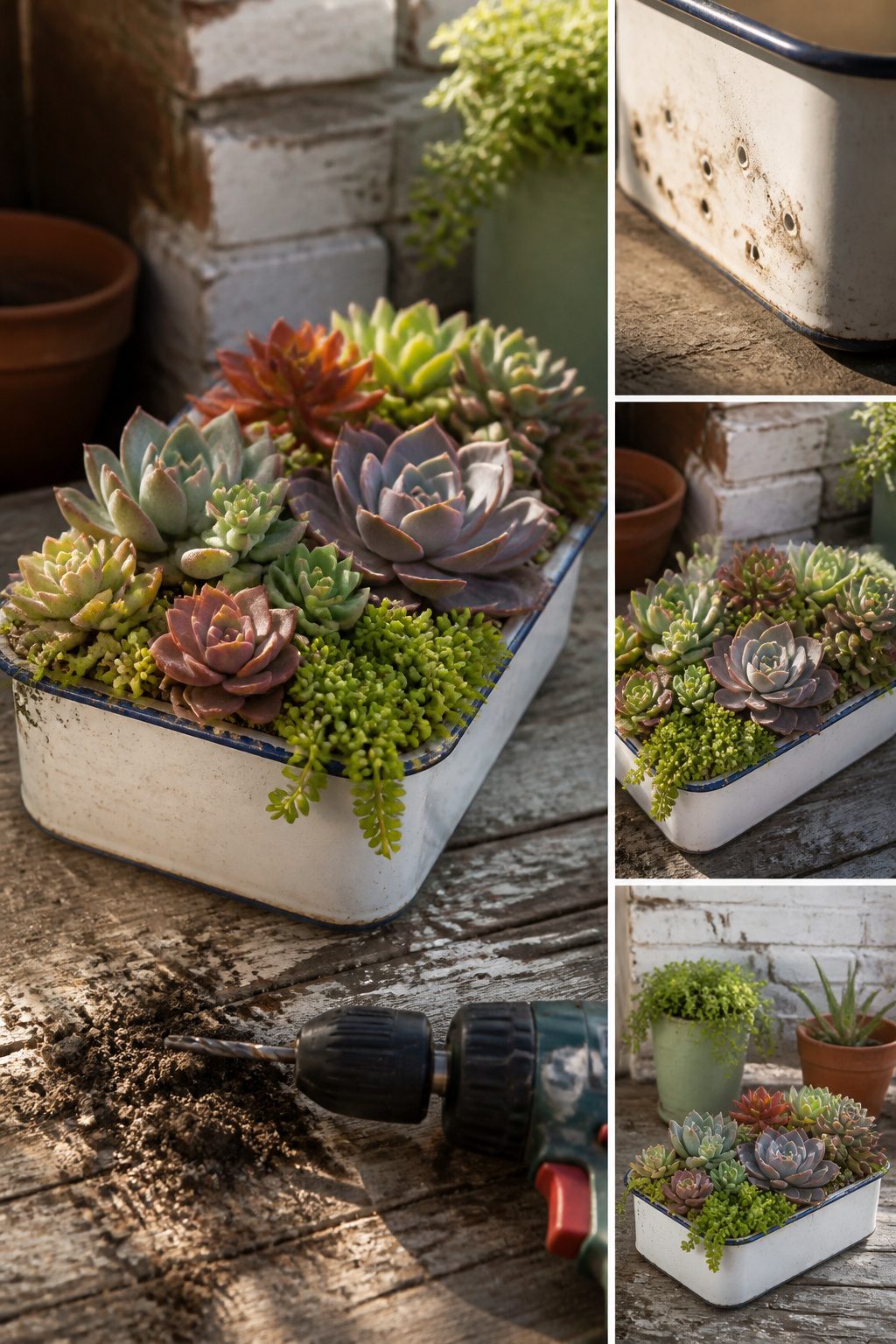
The best succulent garden ideas sometimes start in the recycling bin. Last spring, an old enameled bread pan caught my eye, just deep enough for a carpet of Sedum but shallow enough to look deliberate on the railing.
Drill drainage holes first, even in metal; that bread pan cracked by August because I assumed the shallow depth would dry fast on its own.
Now I angle-grind a few quarter-inch gaps in anything I upcycle, tin, ceramics, or the hollow log a neighbor left at the curb.
Soil volume limits what you can grow. Sempervivum and Sedum handle three inches of compost well enough, their spread topping out around 2 feet and their depth barely reaching the span of your thumb.
Anything hung on a fence, wired to chicken mesh stuffed with sheet moss, should stay with these shallow-rooted types; a chunky Echeveria will sulk and lean, then rot.
My iron mesh desk organizer, the vintage kind with flaking green paint, has lasted longer than galvanized buckets that rusted through the base in two wet winters.
The mesh itself holds the chicken wire frame; sheet moss hides the mechanics, and Sempervivum roots into the gaps within a month.
I had expected the organizer to be the weak link. The surprise failure was a thrifted ceramic mug, beautiful glaze, no drainage at all, the Sempervivum inside turning to mush in eleven days.
Drill the hole. Always drill the hole.
8. Living Walls
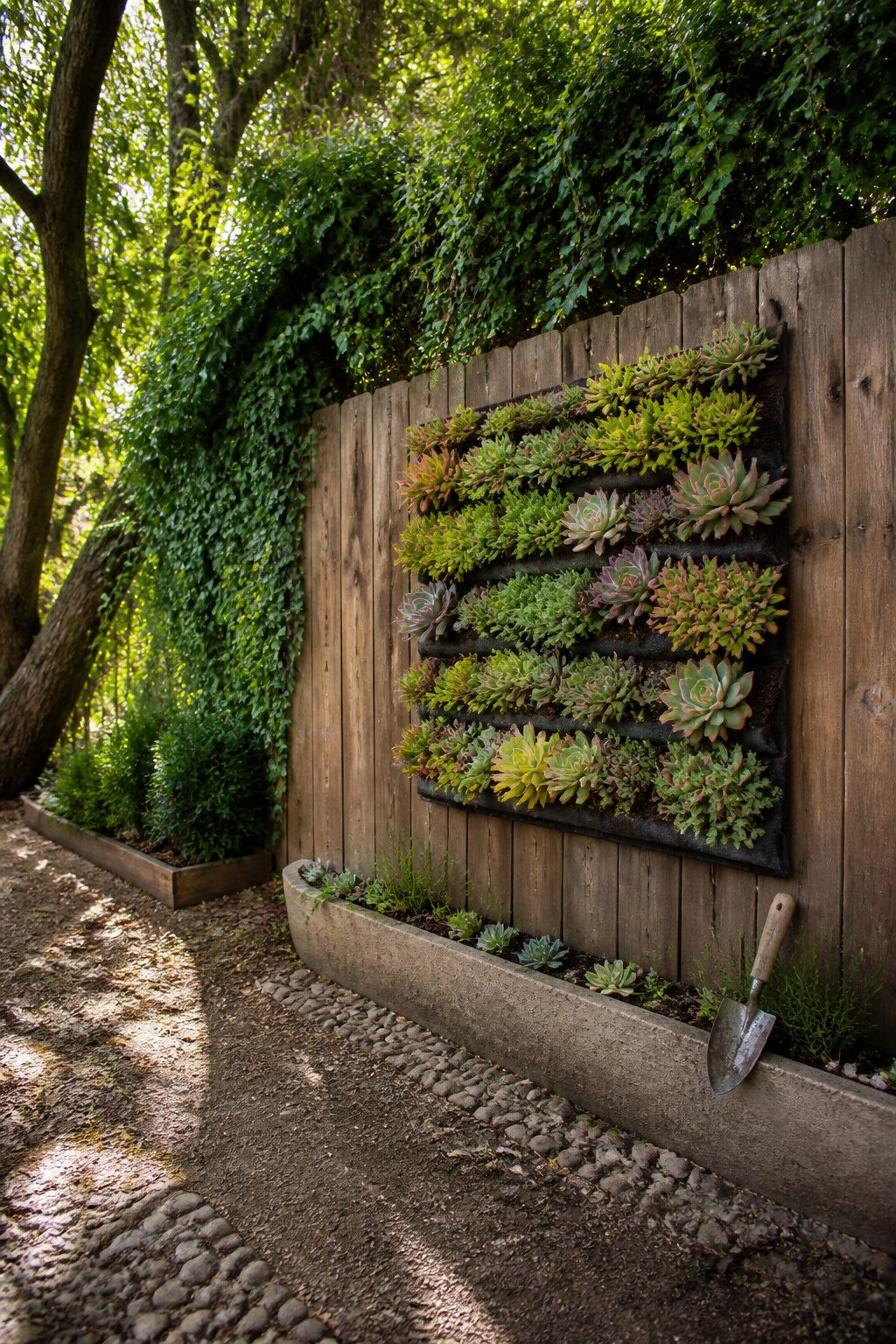
A vertical succulent planting can turn a bare fence or balcony rail into something that lives.
The shallow roots of these plants make them a natural fit: Sedum varieties with their trailing stems will soften the lower edge of a frame, while compact Echeveria holds a rosette shape that reads clearly from a distance.
The frame itself has to be built for weight.
Wet soil in a wooden box with chicken wire across the front is heavier than it looks, and the backing needs to be heavy plastic stapled tight so water does not seep into the wall behind it.
Watering is the part that taught me the hard way.
These plantings dry from the front and the back at different rates; the pocket systems that hang like fabric shoes look simple but the center pockets stay damp while the edges bake.
I now check the back corner of any wall piece with a finger before I add water. Let the soil dry completely, then water deeply enough that it runs through.
Overwatered leaves go soft and translucent; underwatered ones wrinkle. The first sign is easier to miss in a vertical arrangement because you are looking up at it.
Access matters more than aesthetics. A frame hung above eye level is a frame you will not maintain.
Leave a gap you can fit your hand through, or hinge the whole piece so it swings down for checks. My first attempt stayed up for six weeks before the lower plants etiolated from shadow and the top ones scorched.
I had not accounted for the microclimates in a single flat plane. Now I mount with a slight tilt, top back, so water sheds and light hits more evenly.
9. Succulent Wreaths and Art
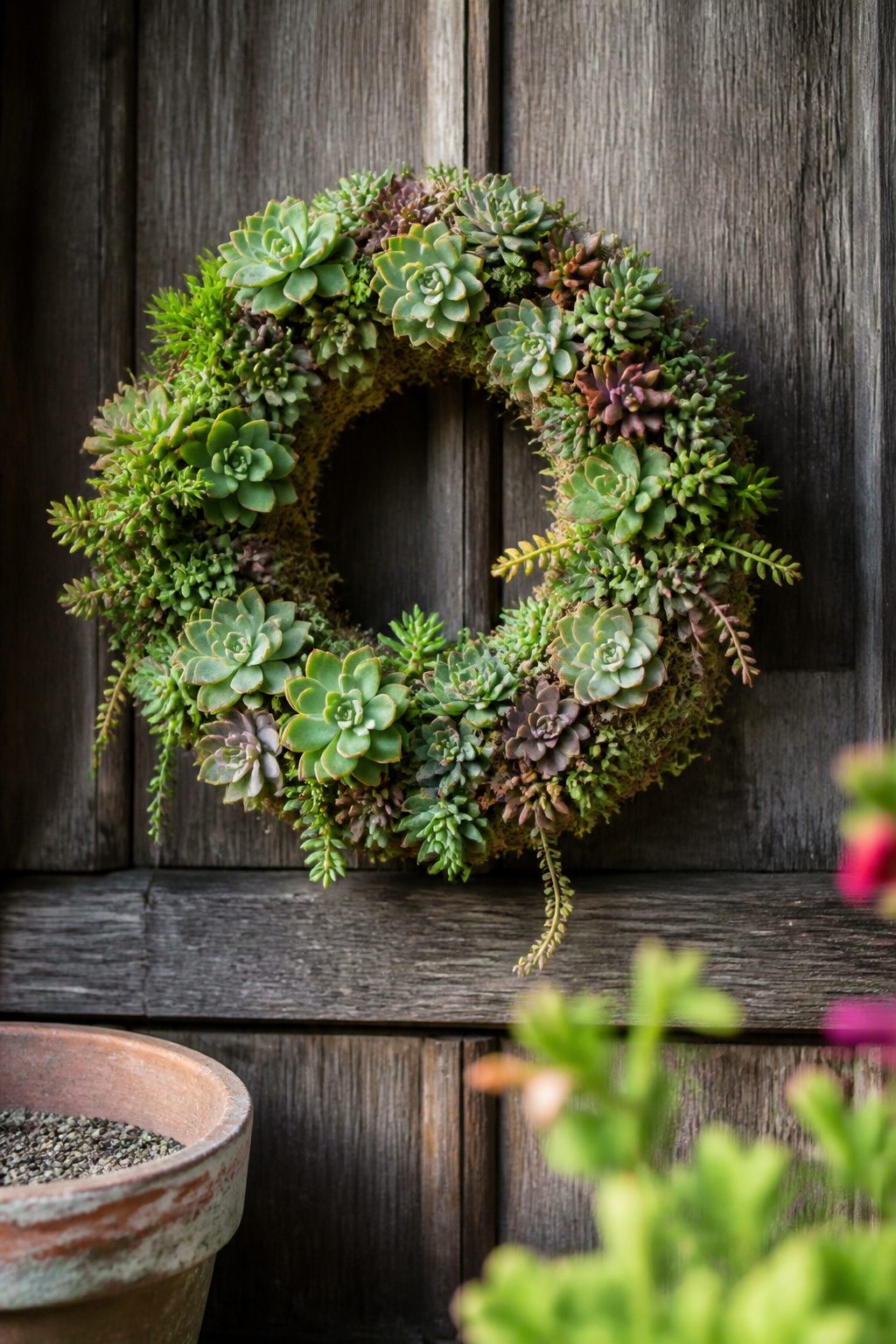
A sphagnum moss base wired into a frame will hold rooted cuttings of Sedum and Echeveria long enough to root in place.
I soak the finished wreath instead of spraying it, let it drain, then hang it where the afternoon sun hits.
Sempervivum works too, though the sources do not name it first for wreaths; its year-round color and willingness to root after division make it forgiving if your cuttings are small.
The arrangement lives one season looking tight, two if you are lucky and the weather stays dry.
After that the stems elbow each other, the frame disappears under growth, and the whole piece starts to read as an overgrown cushion rather than a wreath.
I pull the healthiest rosettes then and start another frame, or plant them out into a container where they have room to stack and offset.
The wire form itself is reusable once you strip it. Echeveria will give you the clean rosette shapes that read from a distance; Sedum trails and fills faster but wants more light to keep its color.
Soak until the moss feels heavy, not damp, then wait until it lightens again before the next watering. Root rot from misting is the usual killer; underwatering shows as thin, puckered leaves you can still fix.
10. Layered Planting
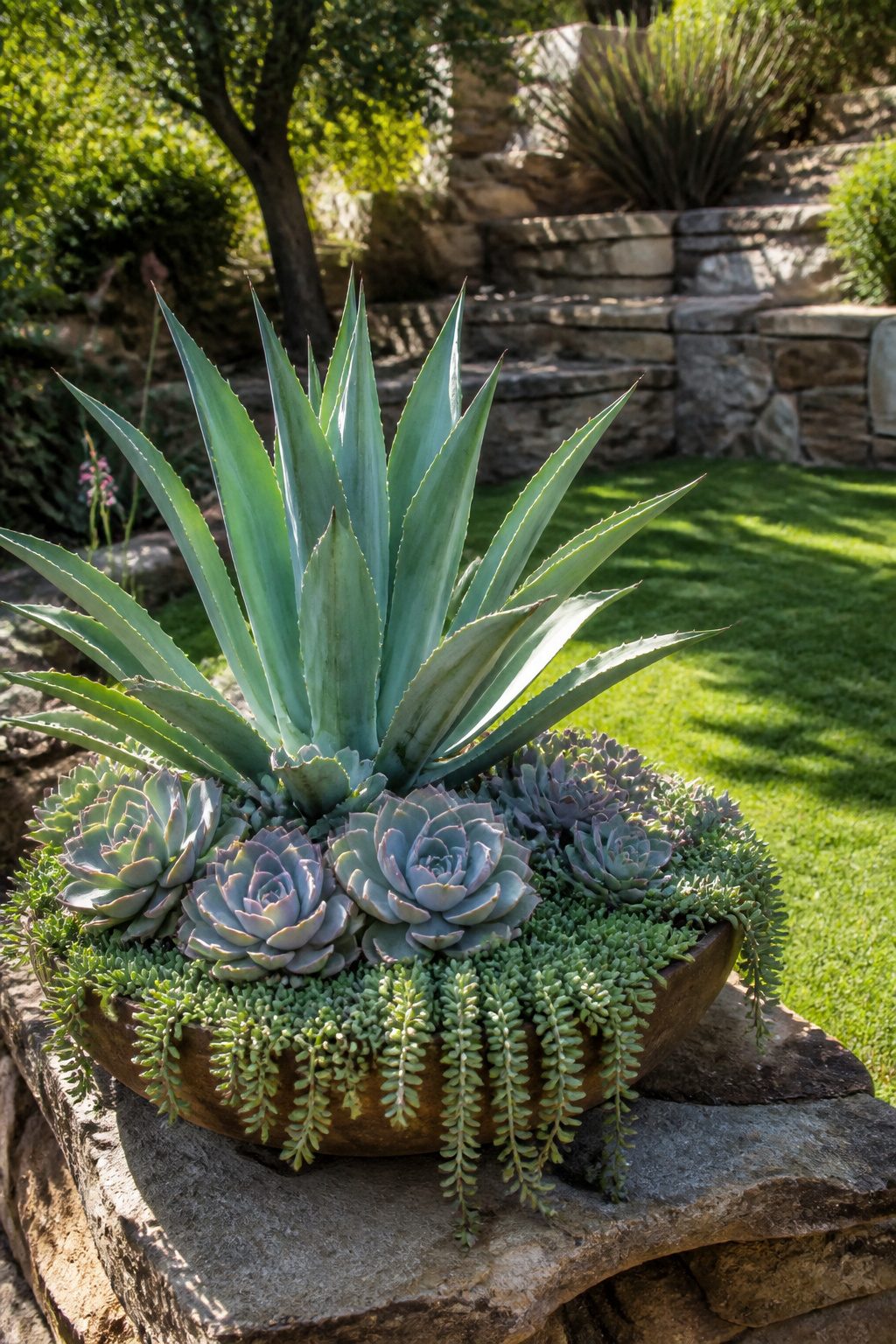
A flat tray of the same-height rosettes reads like a parking lot. The eye needs something to climb, so I build in three bands and let them fight a little.
Tall structural plants go in back or center, depending on whether the bed is against a wall or free-standing.
An Agave americana or Aloe ferox gives you that spine of height; in my zone 9 bed last spring, a single variegated Agave made everything in front of it look intentional rather than scattered.
Mid-height Echeveria ‘Lola’ or Graptoveria fill the middle band, their softer leaves catching light differently than the stiff swords behind them. For the front edge, Sedum nussbaumerianum or Sempervivum arachnoideum spill forward and knit the layers together.
The spacing is where I learned the hard way. Echeveria need roughly a hand’s width of air on all sides at planting, more for Agave that will eventually spread two feet across.
Crowding looks lush for a month, then rot sets in where leaves touch and humidity lingers. I lost a whole row of Sedum to that mistake two summers back.
Color works the same way vertically. The blue of Senecio mandraliscae against copper spoons Kalanchoe orgyalis gives you that contrast without having to think about it; the tall plant frames, the middle one performs, the ground cover finishes the sentence.
Indoor Succulents for Low Light
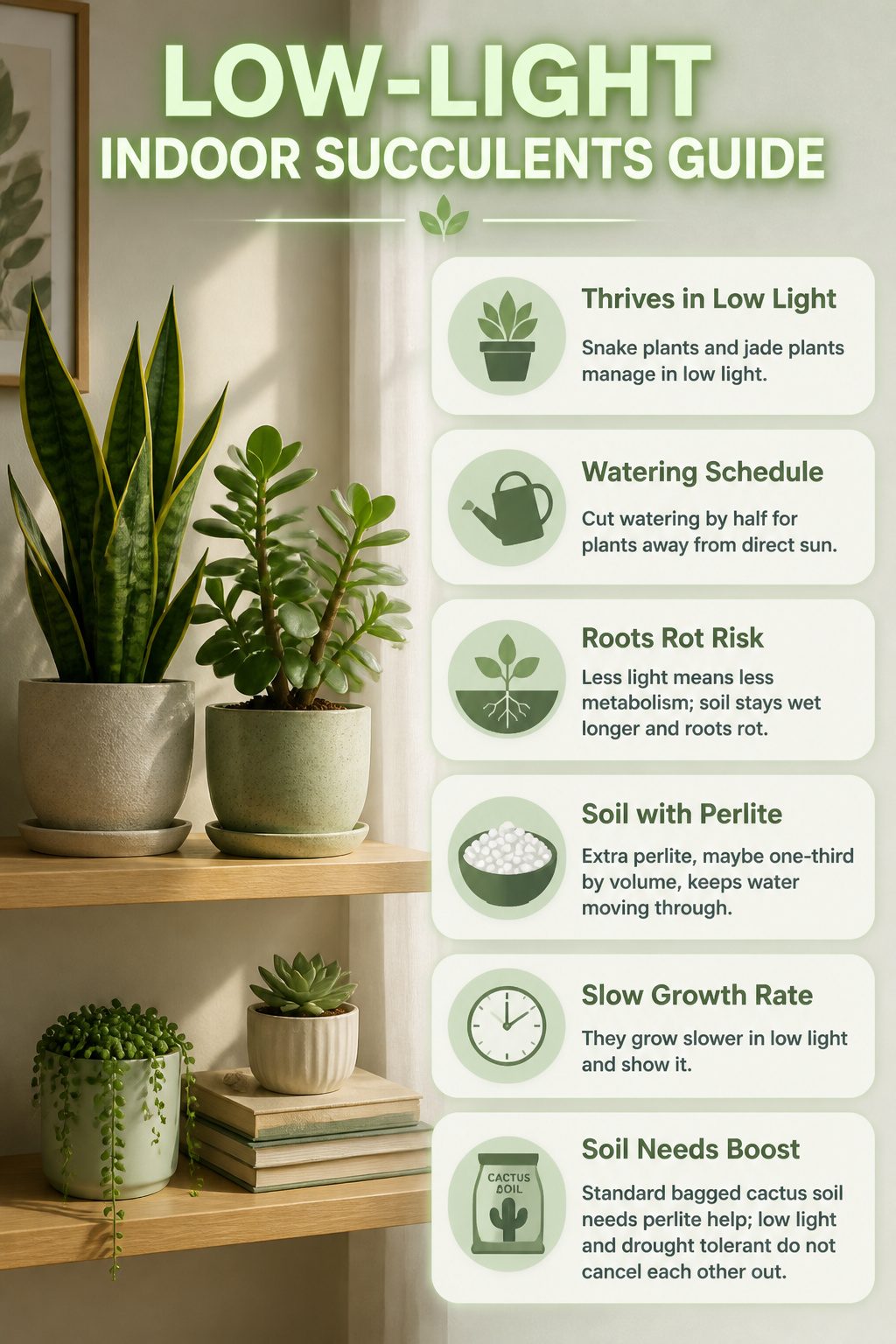
Not every succulent needs a south-facing window. Snake plants and jade plants both manage in the lower light of a room that never quite gets direct sun, though they grow slower there and show it.
The real mistake is buying them on autopilot, then watering on the same schedule you’d use for a cactus on a bright sill.
Less light means less metabolism, which means the soil stays wet longer and the roots rot before you notice.
I cut my watering by half for anything pulled back from the glass, and I still check the pot weight with my hand before I pour.
Extra perlite in the mix, maybe one-third by volume, keeps water moving through instead of pooling around roots that are already working in slow motion.
A standard bagged cactus soil usually needs that help; without it, you are gambling that "low light" and "drought tolerant" somehow cancel each other out. They do not.
Cold-Hardy Succulents for Freezing Zones
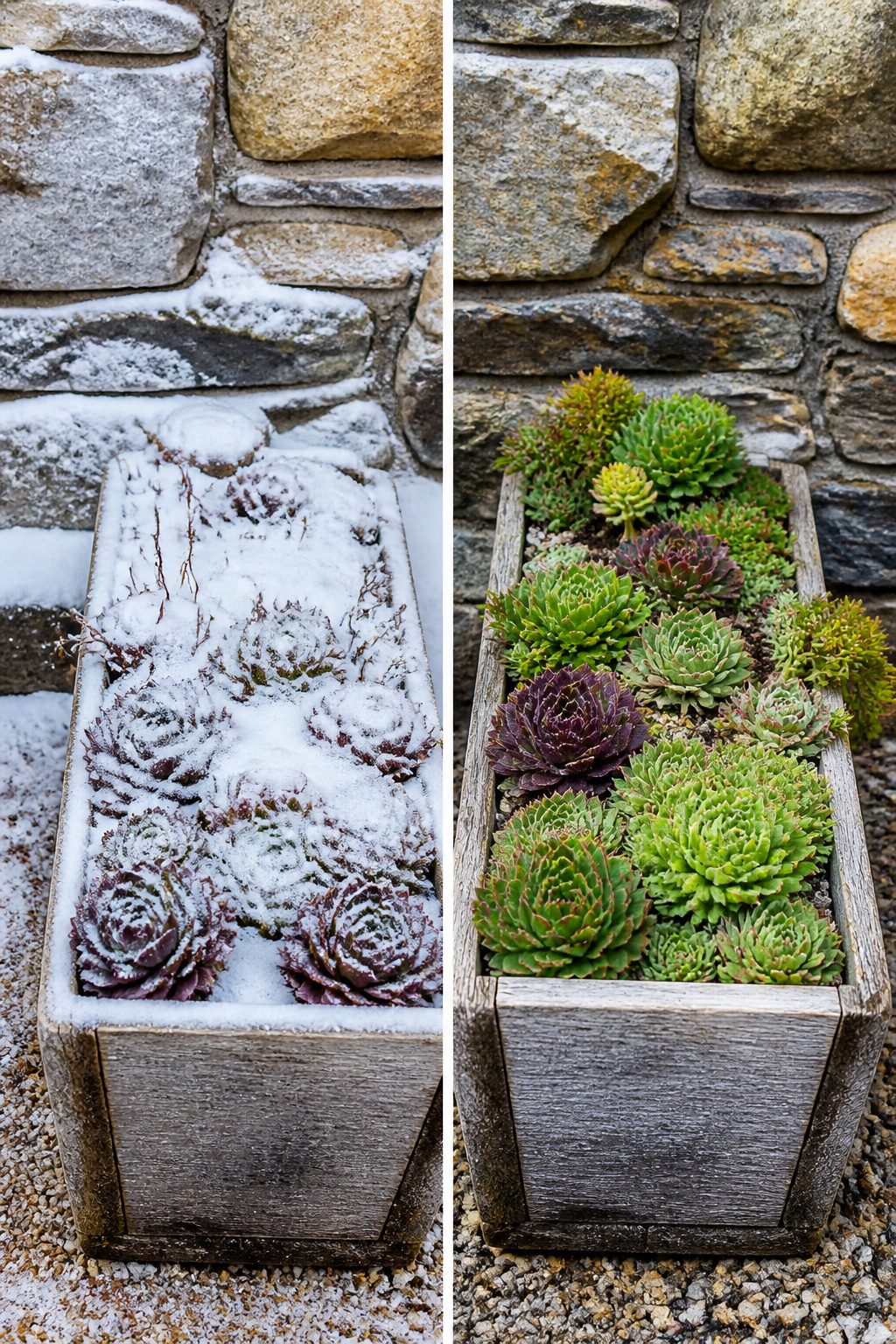
Sempervivum and Sedum are the two genera that reliably handle freezing temperatures without a greenhouse or garage shuffle. Hens and chicks will sit under snow for months, go dormant, and resume growth as if nothing happened.
Sedums do the same, with varieties ranging from 3 inches to 2 feet in height and spreads between 6 inches and 2 feet, so the scale works for most small beds or containers.
Drainage matters more than the cold itself. Ice forming around roots in saturated soil is where I have lost plants.
A south-facing wall creates a warmer microclimate that can push your marginal zone by half a number or more. Under the eaves also helps, though you still need water to escape the root zone fast.
I have had Sempervivums survive sheet ice on a porch container when the soil mix was gritty enough, and I have lost them in open ground where clay held winter moisture.
The difference was not the temperature. It was whether the roots sat in frozen water.
Miniature and Fairy Gardens
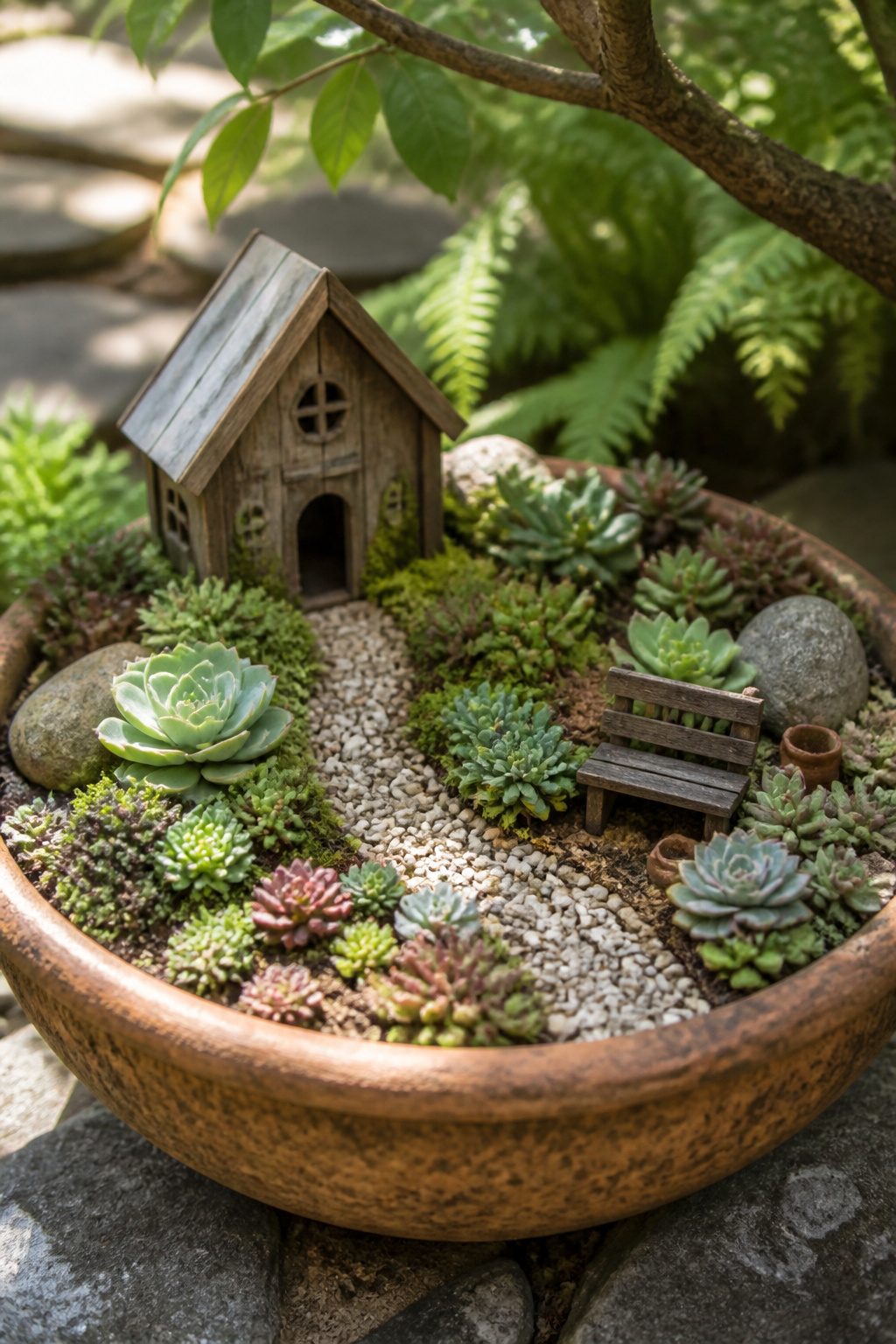
Miniature gardens let succulents stand in for full-sized trees and shrubs, but the illusion only holds if you respect container depth under three inches.
Anything deeper and the root crown sits wet too long; most of these plants evolved for shallow, mineral soils where water passes in hours.
Slow growers matter more here than anywhere else in succulent design. A two-inch Sedum that triples in one season wrecks the scale of a fairy cottage and buries the flagstone path you laid.
I learned this watching an Echeveria run to bloom in a teacup arrangement; by August it looked like a cabbage crashed a dollhouse.
The fix is either replacement or pruning with no sentiment attached, and replacement is usually cleaner. Cut stubs on succulents brown and sit visible for weeks.
Proportional accessories finish the trick. A one-inch bench reads right with half-inch plants; scale it to the container rim instead and the whole scene reads as toy, not forest edge.
Pea gravel reads as boulders, sifted coarse sand as path fines. The materials cost almost nothing against the plant price, maybe eight dollars for a bag each, but they do the visual work.
Soil Mix That Actually Drains
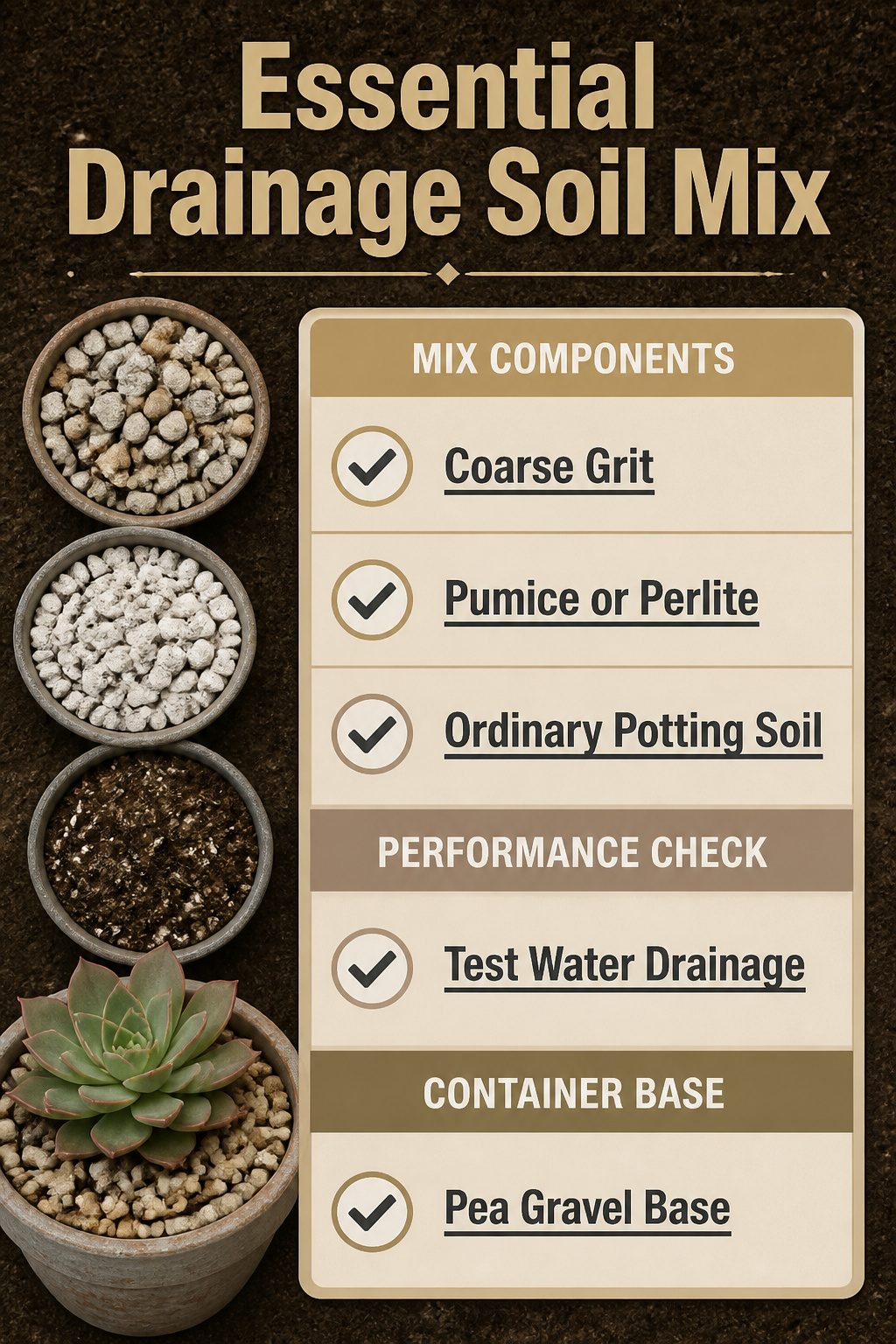
Sand will do in a pinch, but grit is what keeps a succulent alive through a wet week. When I built my first boxes, I used play sand from a hardware store and watched water pool for hours.
Switching to horticultural grit, the coarse stuff sold in 50-pound bags where contractors buy masonry supplies, let the same mix drain in minutes.
A working mix is two parts grit or coarse sand, one part pumice or perlite, and one part ordinary potting soil.
Pumice holds a little air itself and does not float to the top the way perlite tends to, though perlite costs less and shows up in every garden center.
Crushed granite screenings or pea gravel at the bottom of a container give roots a dry shelf above any trapped water; half an inch is plenty for a pot, an inch or two for a window box or raised bed.
Test the batch before you plant.
Water should run through a filled container in under sixty seconds. If it hangs longer, add more grit.
The components run about $6 for the grit, $5 for pumice or $4 for perlite, and you already own the soil. Each batch fills roughly four six-inch pots.
Frequently Asked Questions
What types of succulents are best for indoor gardens?
Snake plants and jade plants handle lower light indoors better than most succulents, though they grow slower there.
The real challenge is adjusting your watering: less light means less metabolism, so soil stays wet longer and roots rot before you notice.
Cut watering by half for anything pulled back from the glass, and check pot weight with your hand before pouring.
How often should I water my succulents?
Water once every one to two weeks as a baseline, but the calendar matters less than your finger. The top two inches of soil need to feel completely dry; check, then wait another day.
Succulents recover from dryness, but root rot from damp soil they do not. Leaves go soft and translucent when overwatered, wrinkled when thirsty.
Can succulents survive winter?
Sempervivum and Sedum reliably handle freezing temperatures without protection; hens and chicks will sit under snow for months and resume growth as if nothing happened.
Drainage matters more than the cold itself, since ice forming around roots in saturated soil kills where temperature alone would not. A south-facing wall or spot under the eaves can push your marginal zone by half a number or more.