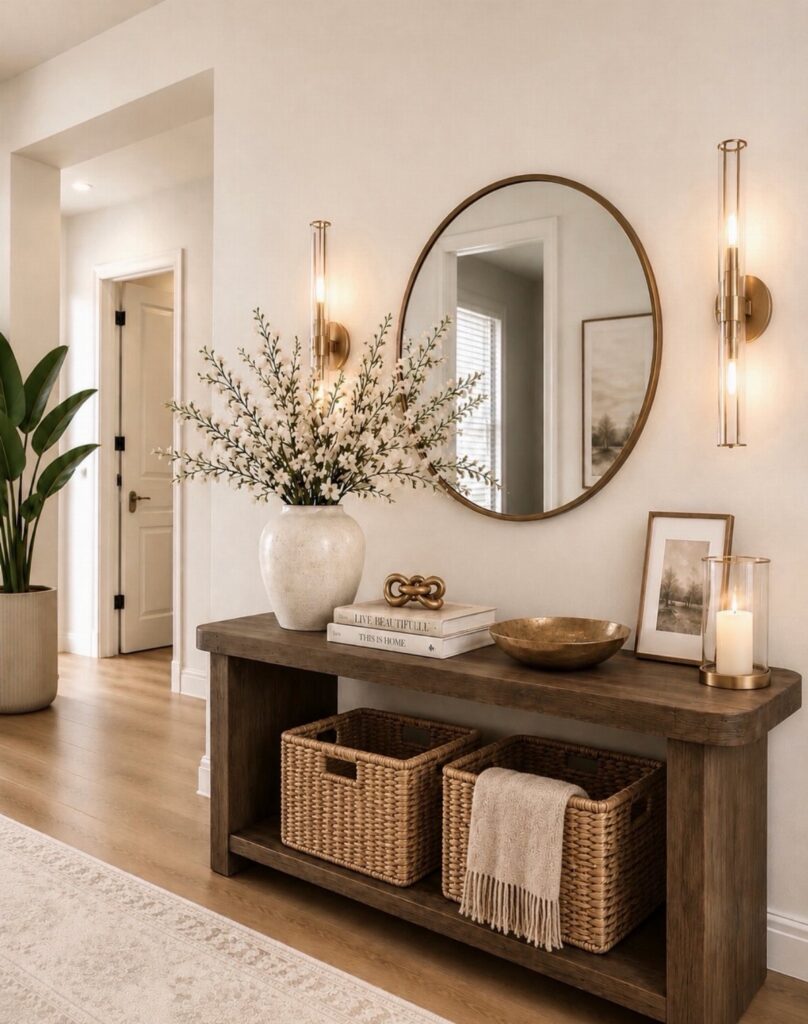
Entry table decor runs from forced branches in a jar to a brass candlestick pair that costs more than the console itself.
The deciding factor is not budget but patience: some of these ideas stay put for years, others need replacing when the season turns.
I would pick the catch-all tray first, stone or ceramic, no larger than a paperback, because every single entry shares the same daily problem of where the keys land.
1. Round Mirror Above the Entry Table
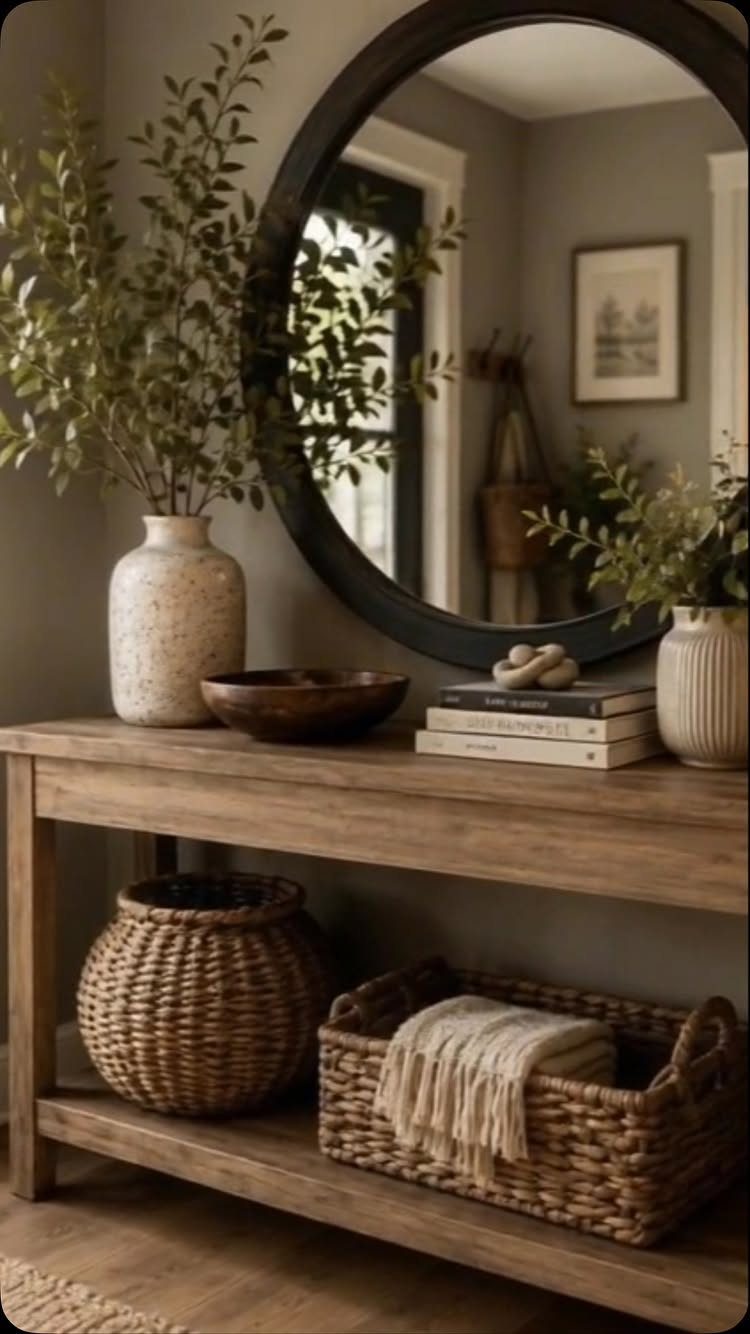
A round mirror hung above the entry table bounces light back into the room and fools the eye into reading the space as larger than it is.
For a narrow hallway or small foyer, this shape wins over rectangular because the curve softens the edges of the architecture. I like a black frame against light walls, though a thin gold one warms up cooler paint.
Lean it instead of hanging it if the wall is rental and holes are a problem; the casual tilt reads modern.
Pair a round mirror with a rectangular console, or flip it: a rectangular mirror above a curved table keeps the composition from going flat.
2. Incorporate Wicker Baskets
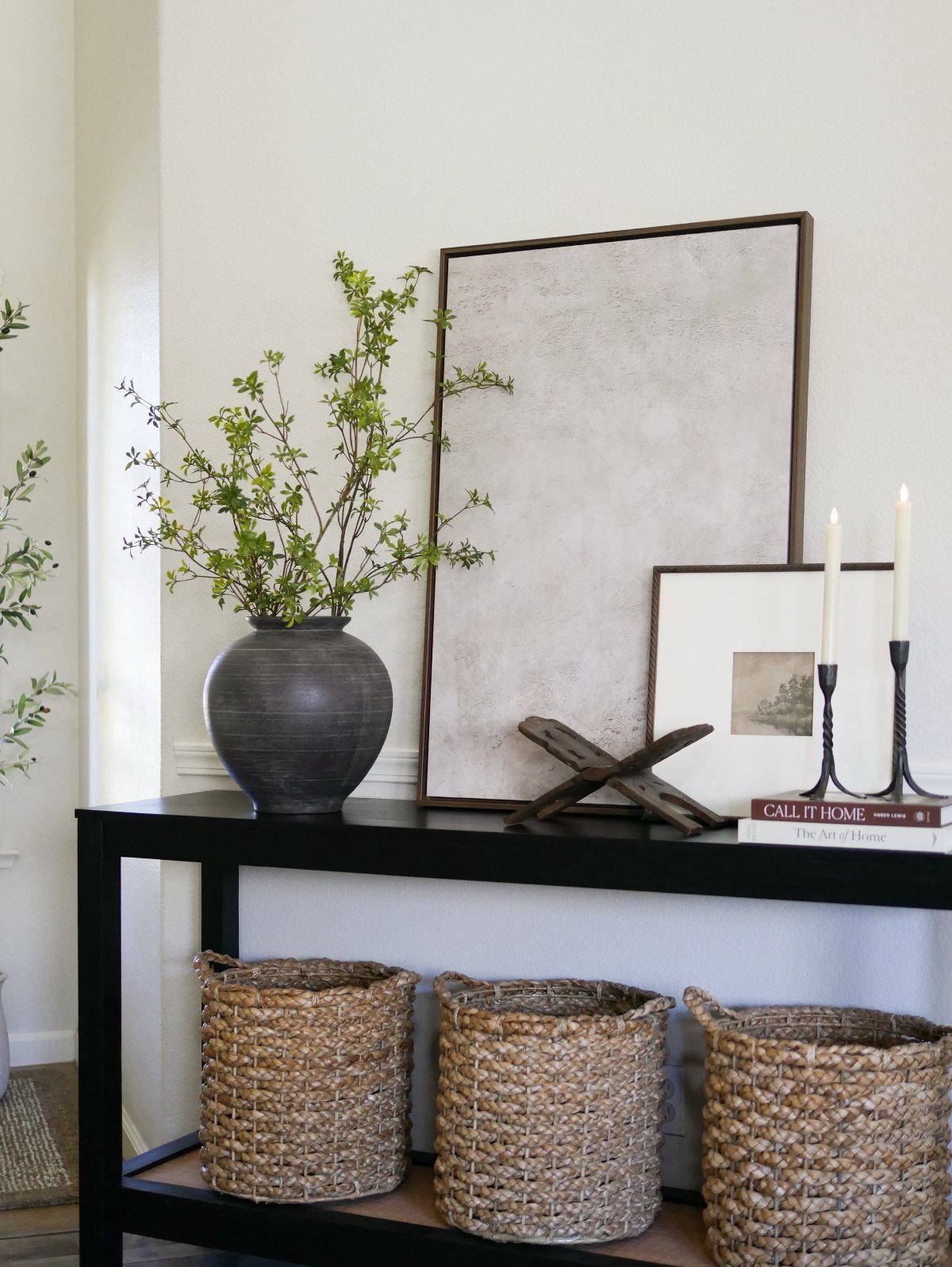
Wicker baskets slid onto the bottom shelf turn open console tables into storage without killing the look.
I use them for shoes I want hidden, for reusable grocery bags I grab on the way out, for dog leashes that otherwise migrate to every surface.
The weave matters: a loose rattan reads beach house, a tight seagrass reads more tailored. Match the basket tone to another wood in the room so it does not float alone.
Check your shelf height before you buy; a basket that skims the floor looks considered, one that hovers looks like a mistake.
3. Stacks of Books
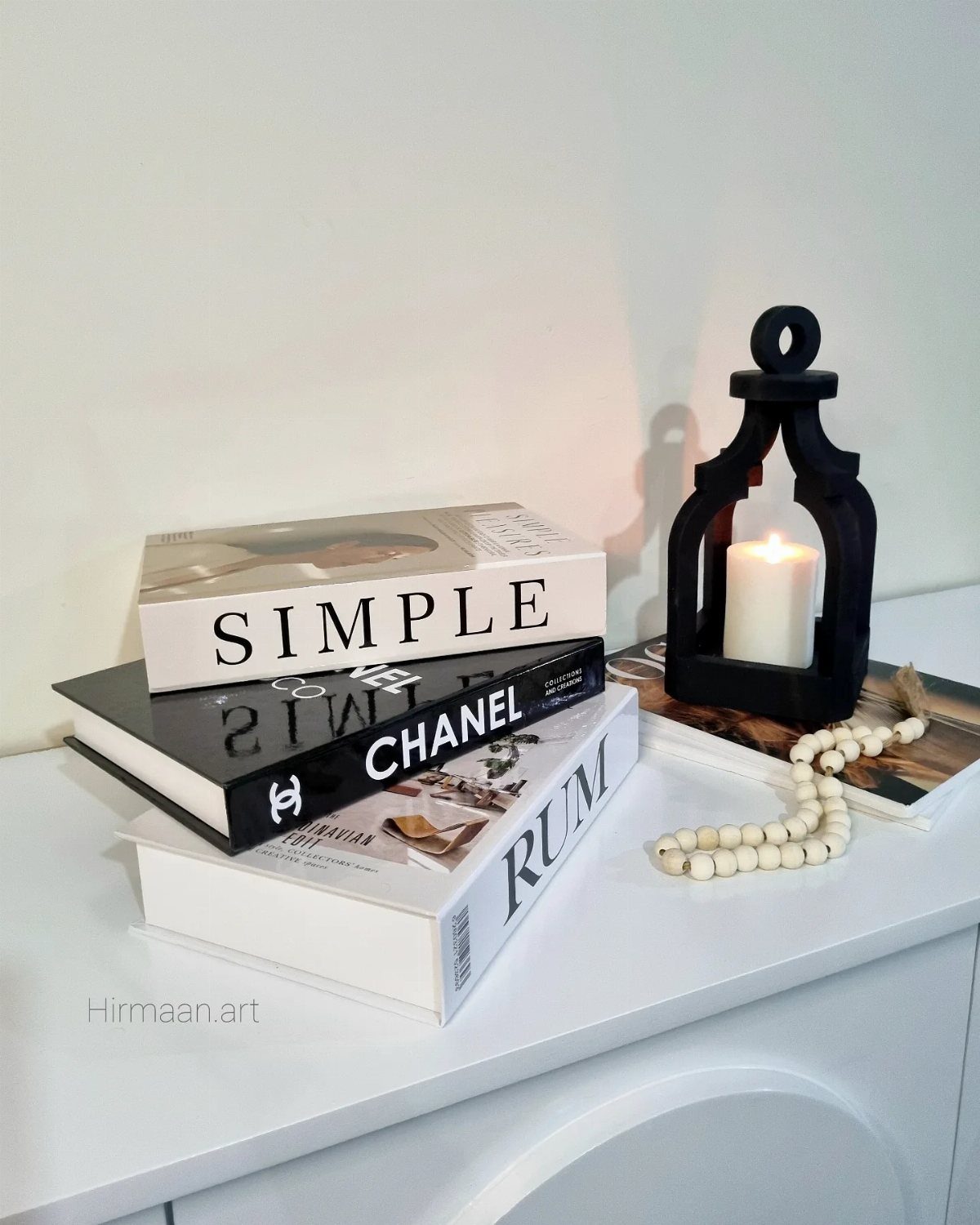
Three books stacked spine-out give a small table instant height and somewhere to park a candle or a bud vase so it does not get lost.
I rotate mine by season: garden books in spring, travel books before a trip, the ones with good color blocks when I need a jolt against neutral decor.
The titles say something about who lives here, so pick ones you have actually opened. If the cover clashes, a simple fabric wrap, no sewing, turns any book into a color block that matches the room.
Two books under a candle holder raises it to where the eye lands naturally.
4. Decorative Vases
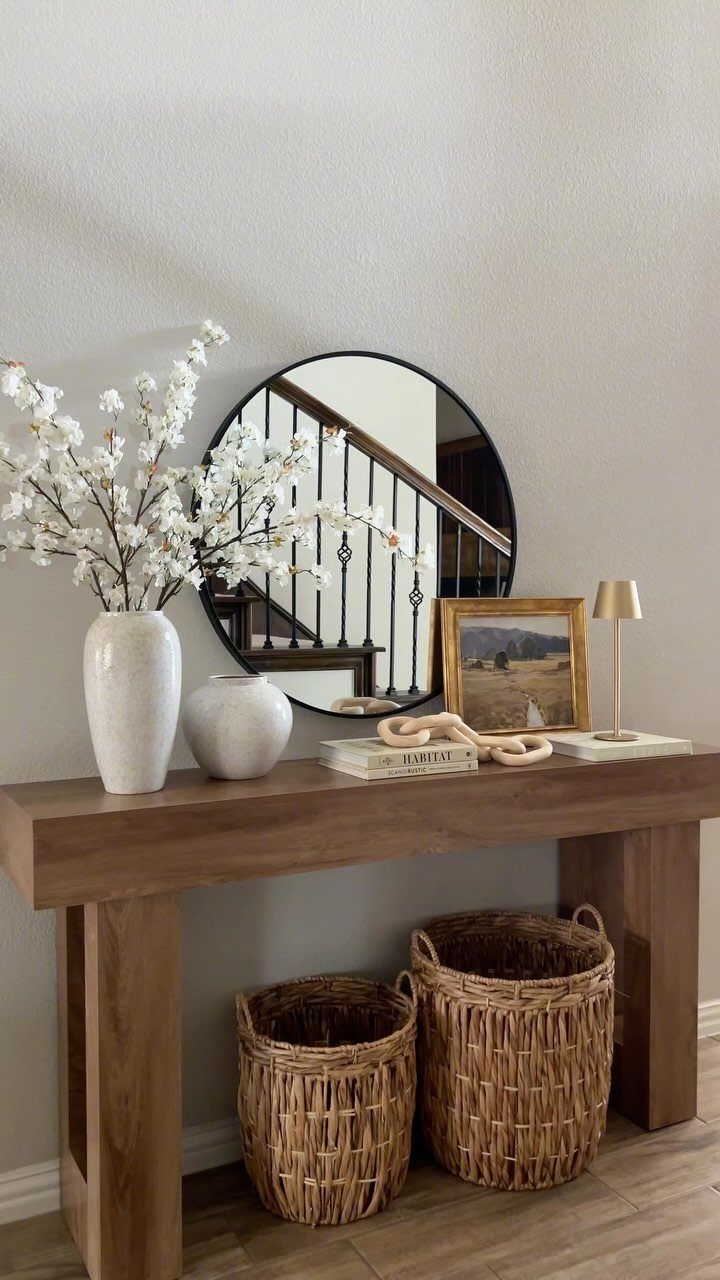
Two vases, one taller than the other, grouped on the entry table pull the eye to a single spot instead of scattering it.
I keep one narrow and one rounded, or both cylindrical but with different neck widths, so the silhouettes contrast even in the same glaze. Ceramic with a little texture catches afternoon light.
Branches work longer than cut flowers and cost less over a season; white blossom branches in early spring, bare dogwood in winter.
If the table is small, a single vase with a strong shape does the same job without the footprint.
5. Cohesive Color Scheme
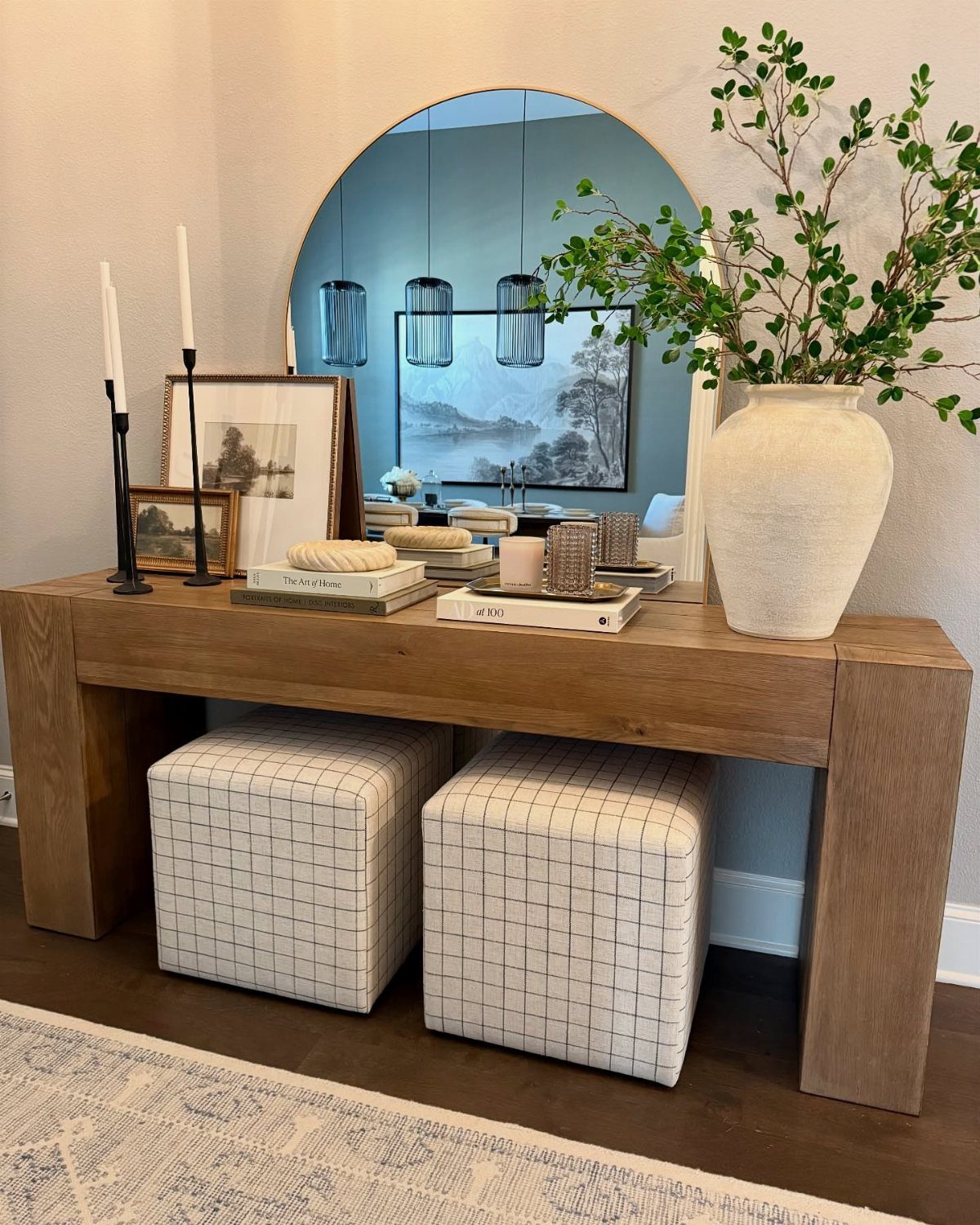
Sticking to two or three tones across the mirror, the table objects, and anything tucked underneath keeps an entry from feeling like a junk drawer with ambition.
I start with the wall color and the wood tone of the console, then add one metal and one textural color, maybe black and cream or brass and sage.
White ottomans earn their place when they pick up white somewhere else in the vignette, not by matching each other. A unified palette lets you add one odd piece, a found object or a hand-me-down, without it reading as chaos.
6. Statement Artwork
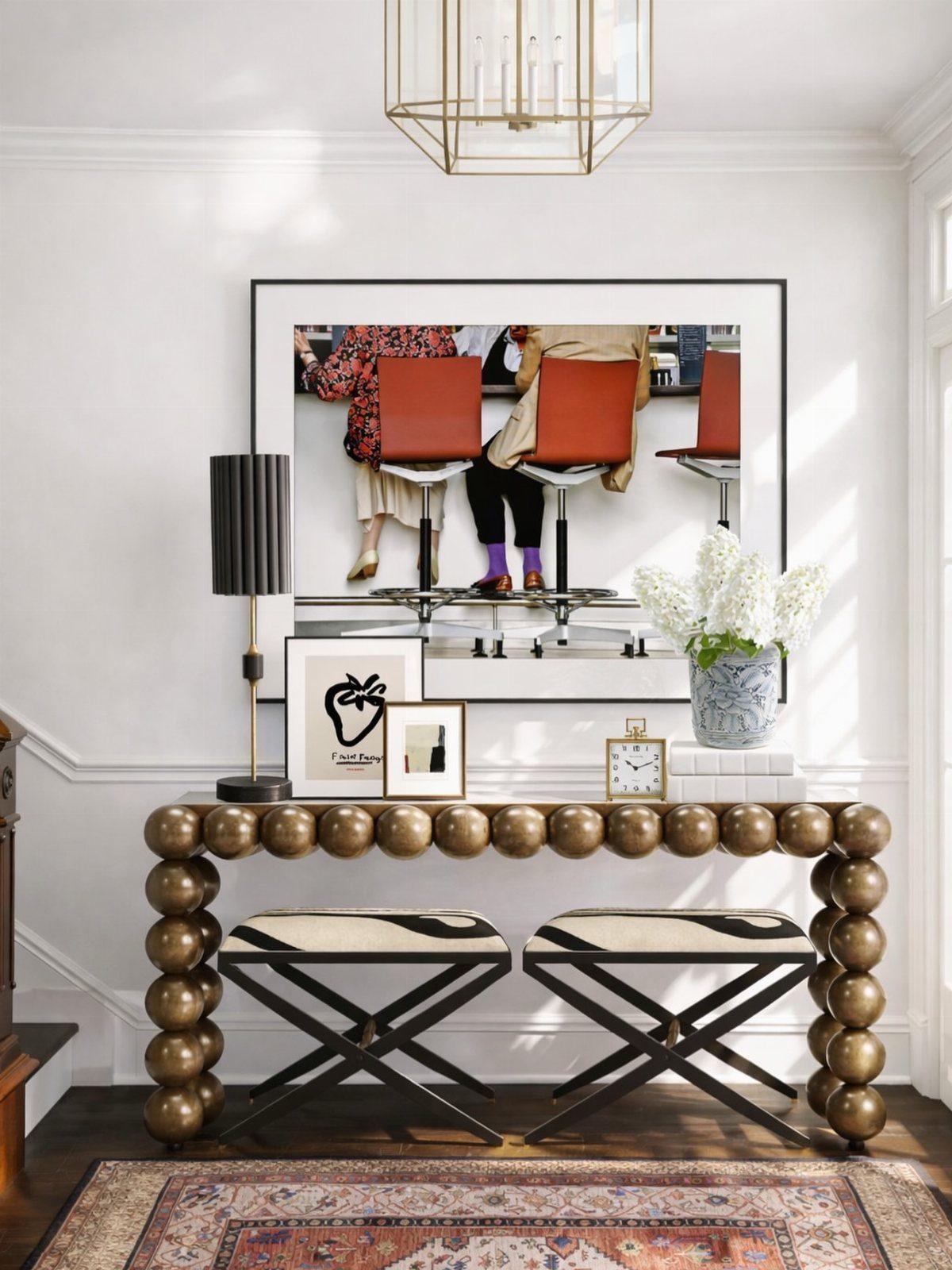
One large piece above the console gathers the eye from the door and keeps the wall from turning into a scattered grid.
I lean toward photography or a single bold print over a gallery wall here; the entry is a passing space, not a place where people stand to study.
A map works especially well, it gives guests something to step toward and breaks the ice. If the art is loud, keep the table objects quiet: a small lamp, a clock, one vase.
The trade is that a statement piece needs the wall to itself, so this suits entries with enough width to breathe.
7. Add Wall Hooks
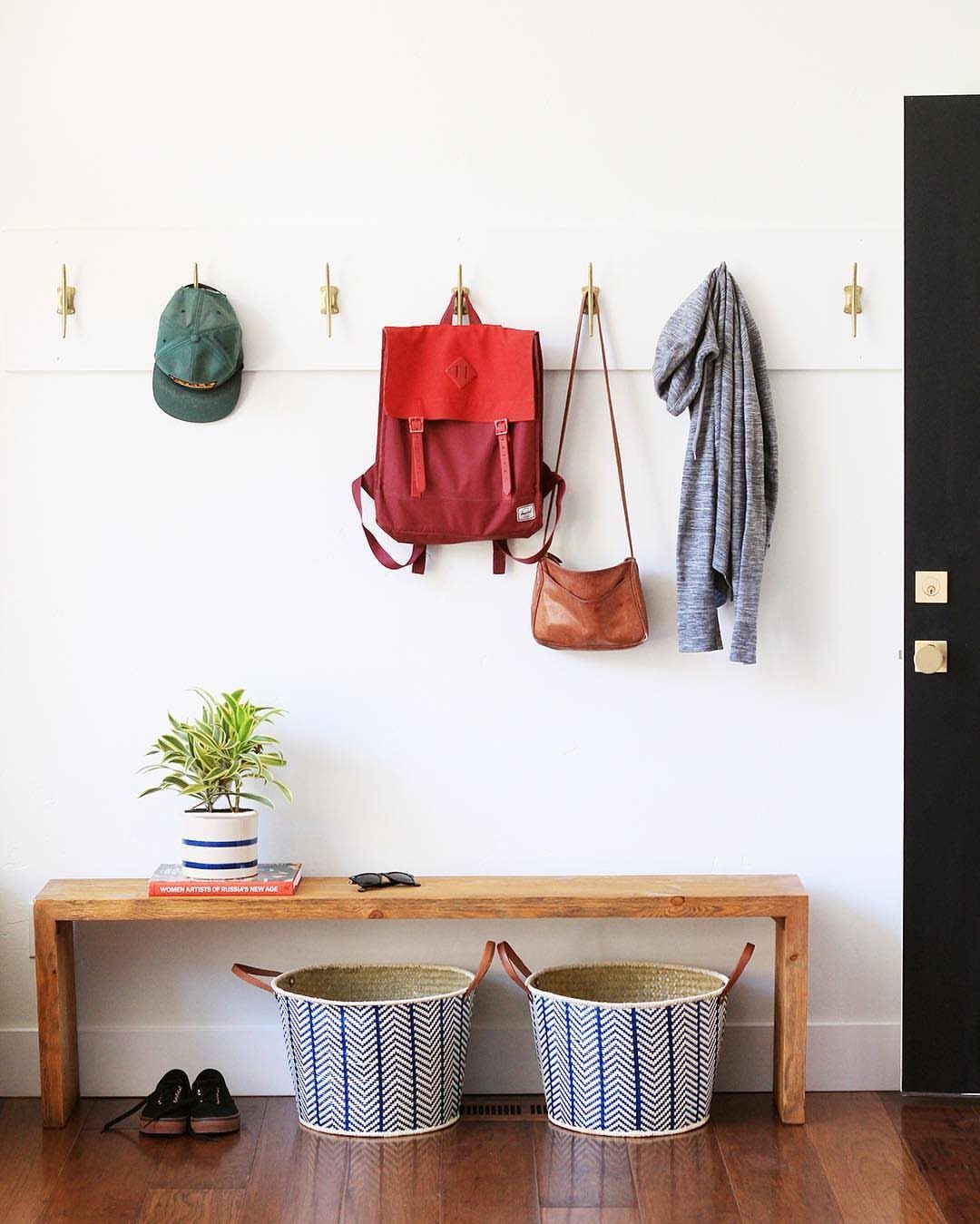
Hooks turn the wall above your entry table into usable storage. Brass or black metal finishes pair with most console styles, and mounting them at eye level keeps bags, hats, and dog leashes off the table itself.
For narrow spaces, this keeps the floor clear without adding width. A row of hooks staggered at different heights lets adults hang coats high and children reach their own.
I would skip this in a formal foyer where coats stay hidden in a closet, but for a busy back entry or a small apartment with no coat storage, wall hooks earn their space fast.
8. Display a Wall Clock
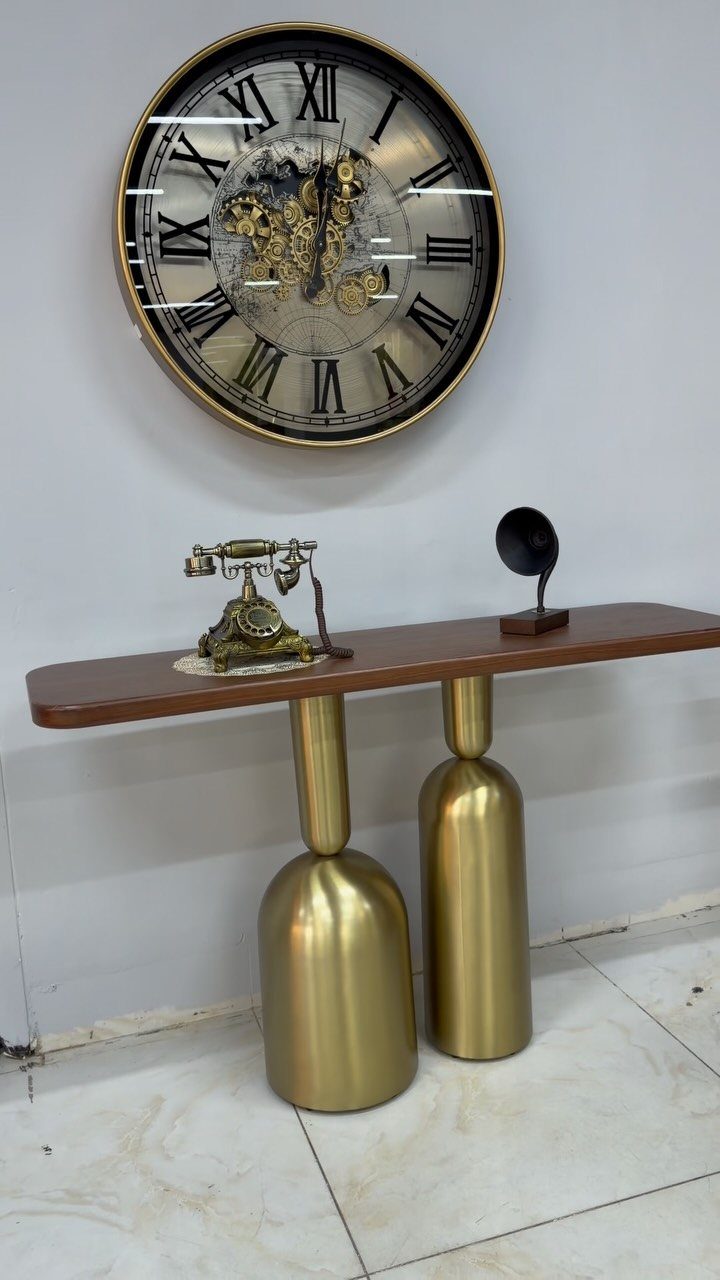
A clock above the table gives guests one less reason to pull out a phone. A gear-style clock with a warm metal rim reads industrial without going cold; Roman numerals keep it readable from the door.
Tabletop clocks work too, though they compete for surface space. Wall-mounted clocks keep the table clear for smaller pieces you can pick up and handle.
Choose metal finishes that echo your console legs or mirror frame so the clock ties in rather than floats. For renters, a leaning mantel clock avoids holes entirely.
9. Showcase a Wreath
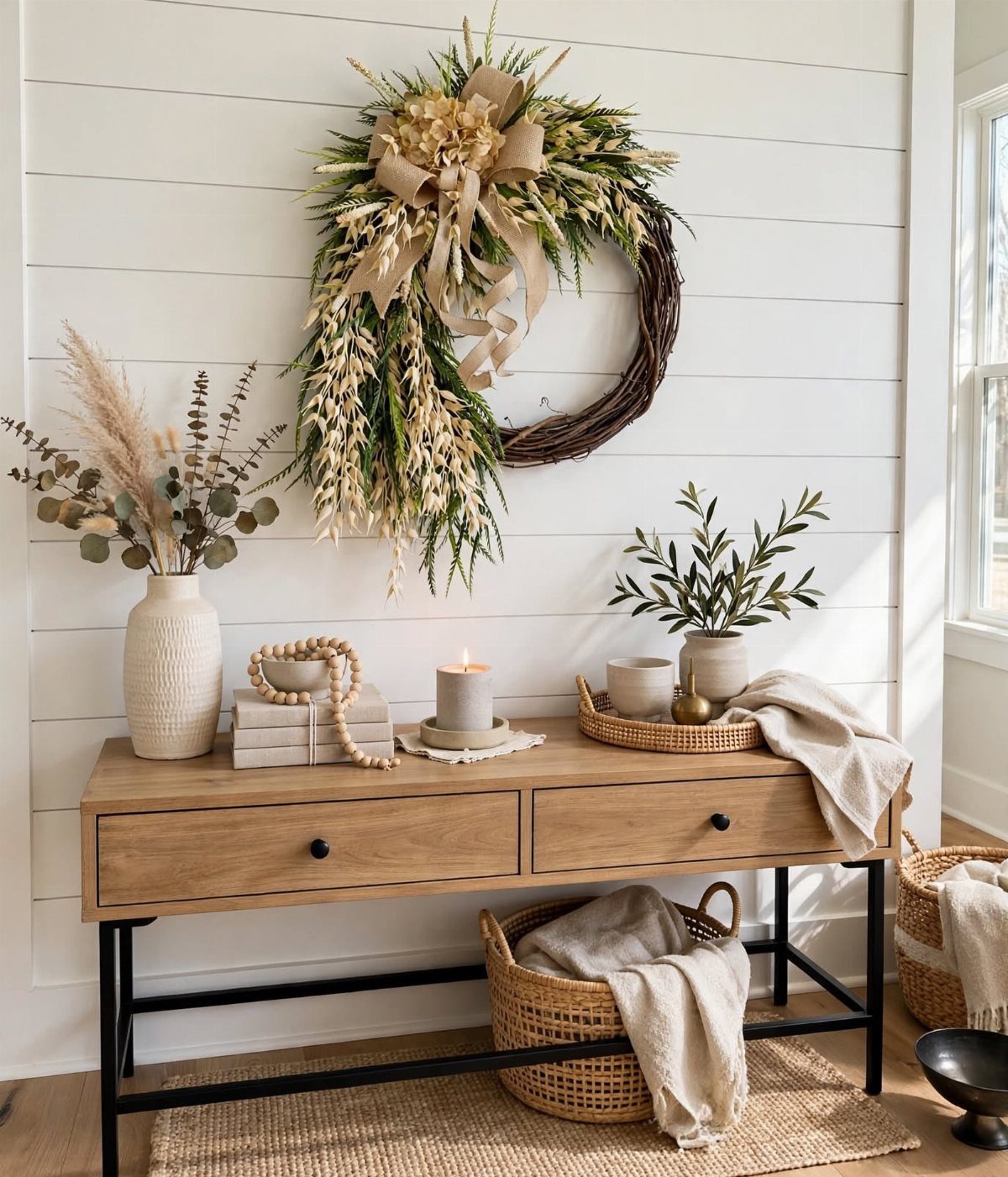
A wreath brings round softness to the straight edges of a console and mirror. Grapevine bases with dried grasses suit year-round display; swap the bow or add seasonal elements as months change.
Leaning works for a temporary look, but I would hang it centered above the table for stability in a high-traffic entry. Keep the diameter in proportion: anything wider than your table overpowers the piece below.
This suits readers who already rotate pillows or candles by season and want one more easy swap. Skip it if your entryway runs humid; dried materials wilt fast near bathrooms or kitchens.
10. Personal Items or Family Heirlooms
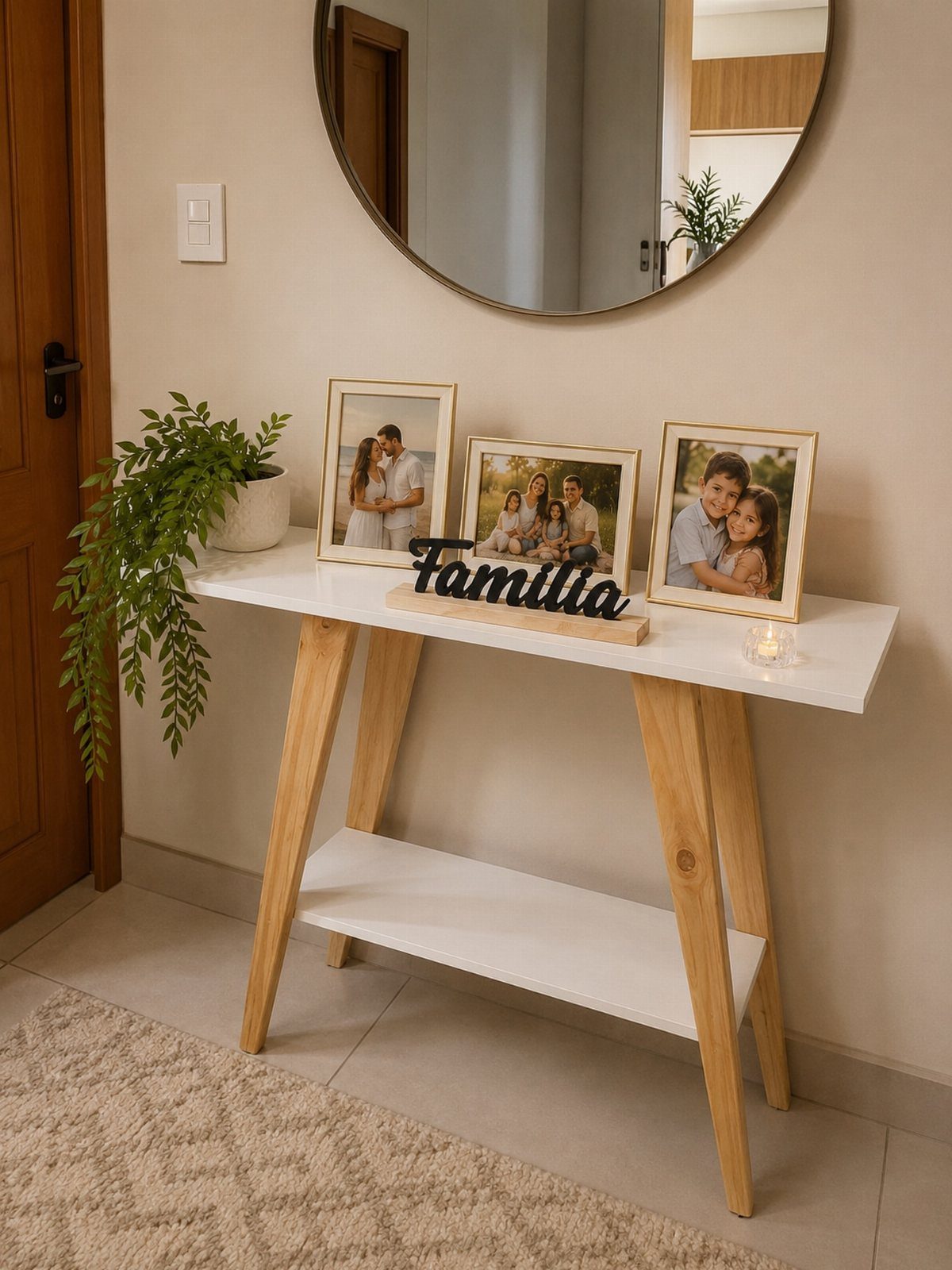
A console table is the right place for the sugar bowl or framed photo that usually lives in a drawer.
Small items grouped together add up to a story; a carved block, a potted cutting, a found shell each carry weight.
I would limit heirlooms to two or three pieces so the display stays intentional, not cluttered. Mix old with new: a handblown jar beside a store-bought candle keeps the table from reading antique shop.
This idea trades some flexibility, since these pieces stay put, but it suits anyone tired of generic styling. If an item feels too precious for daily dusting, a shadow box or high shelf protects it while still showing it off.
11. Create a Balanced Display
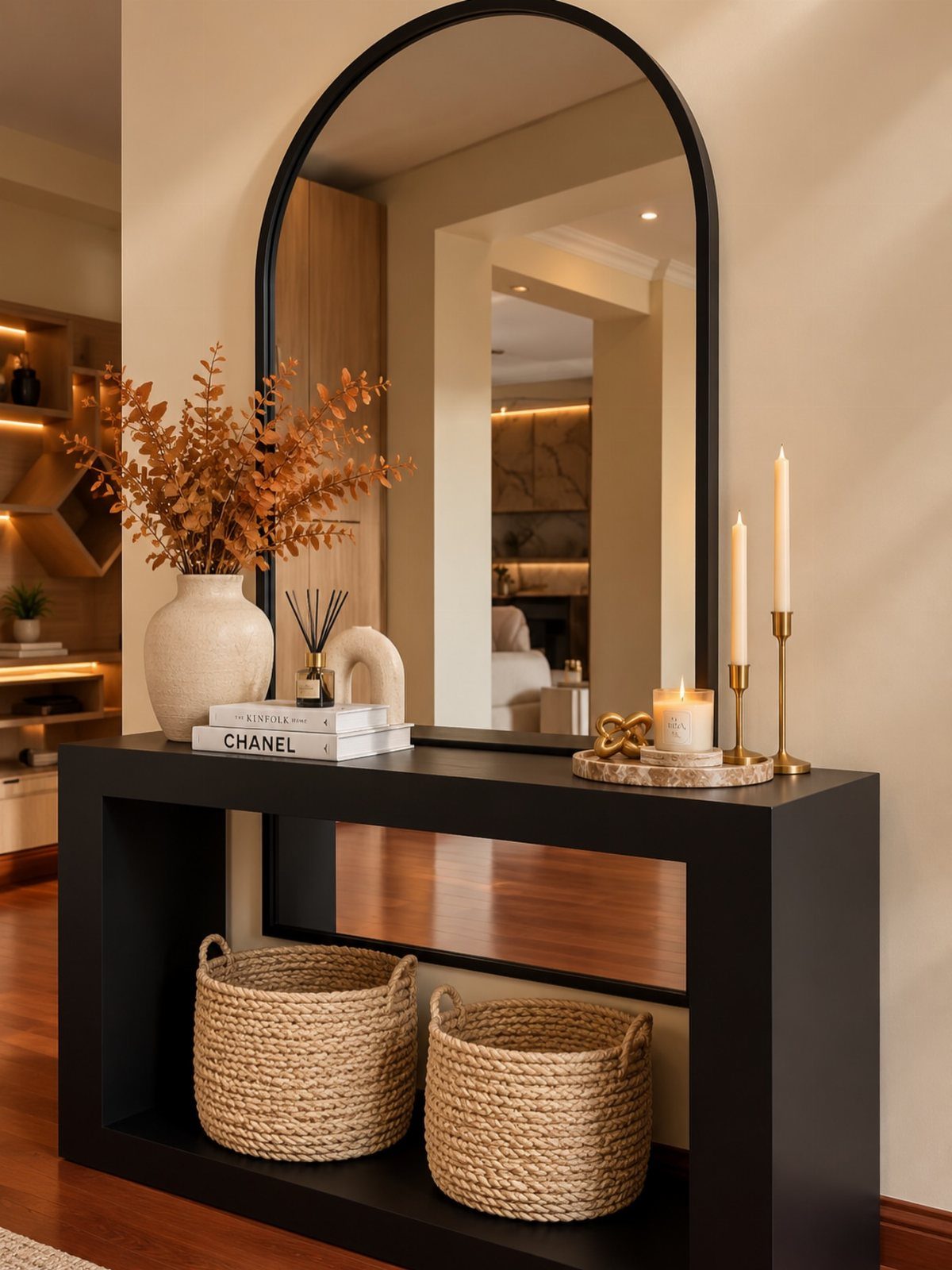
Balance does not mean matching. A dark console grounds the look when you place a tall vase off center and balance it with lower candles on the other side, an arched mirror overhead splitting the difference.
Start with one tall piece on either end, then fill the middle lower. Books, a short candle, or a small tray bridge the gap without competing.
I would avoid putting every item dead center; that flattens the eye. This approach costs nothing extra and works in any footprint, though it takes a few minutes of shifting before it clicks.
For very small tables, two pieces per level is plenty.
12. Plants & Greenery
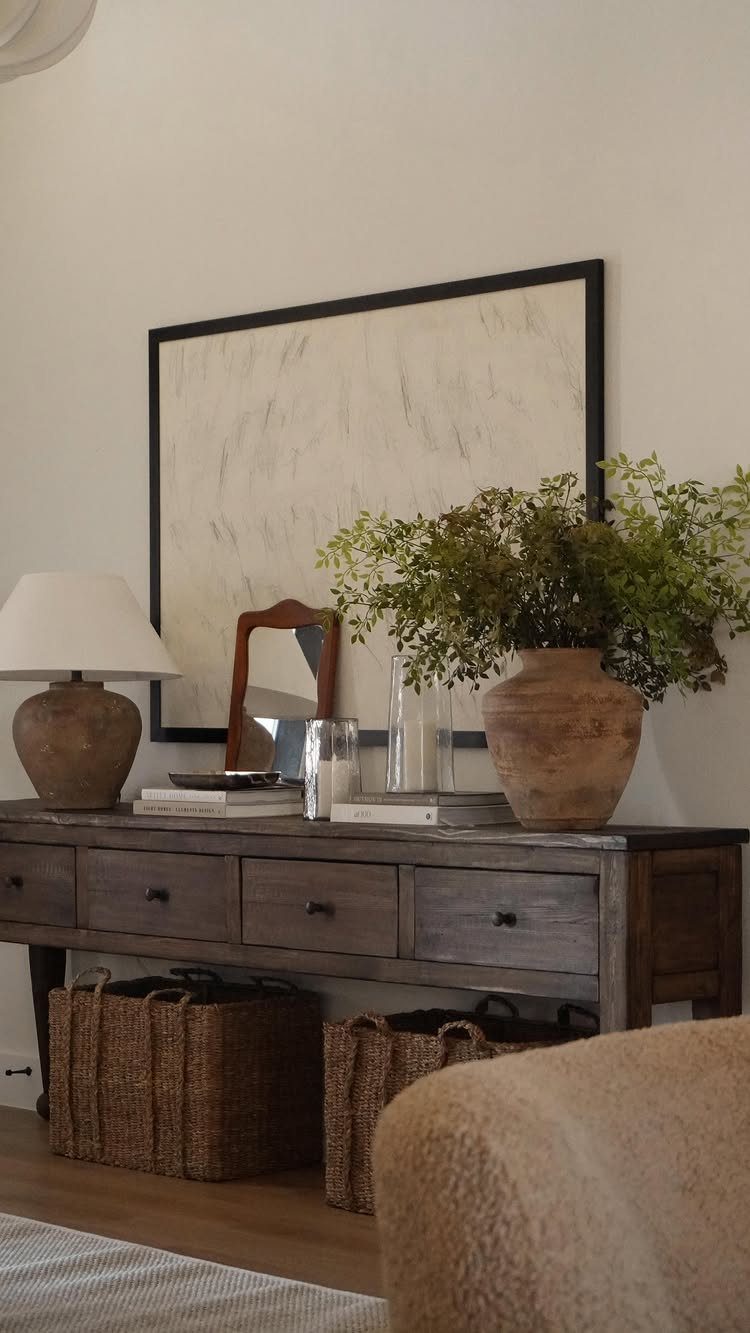
Real or faux, a single large stem arrangement does more than three small pots scattered around. Leafy branches contrast with a console’s straight lines and add height without blocking a mirror hung above.
Faux olive branches hold their shape and need no water; I would use them in a dark entry or for anyone who travels often. Fresh cuttings from yard trees cost nothing and give that slight droop live stems have.
A flare-neck or footed glass vase elevates either choice. This is the fastest way to soften a modern console, though trailing plants suit bohemian spaces better than the structured look here.
13. Framed Photos
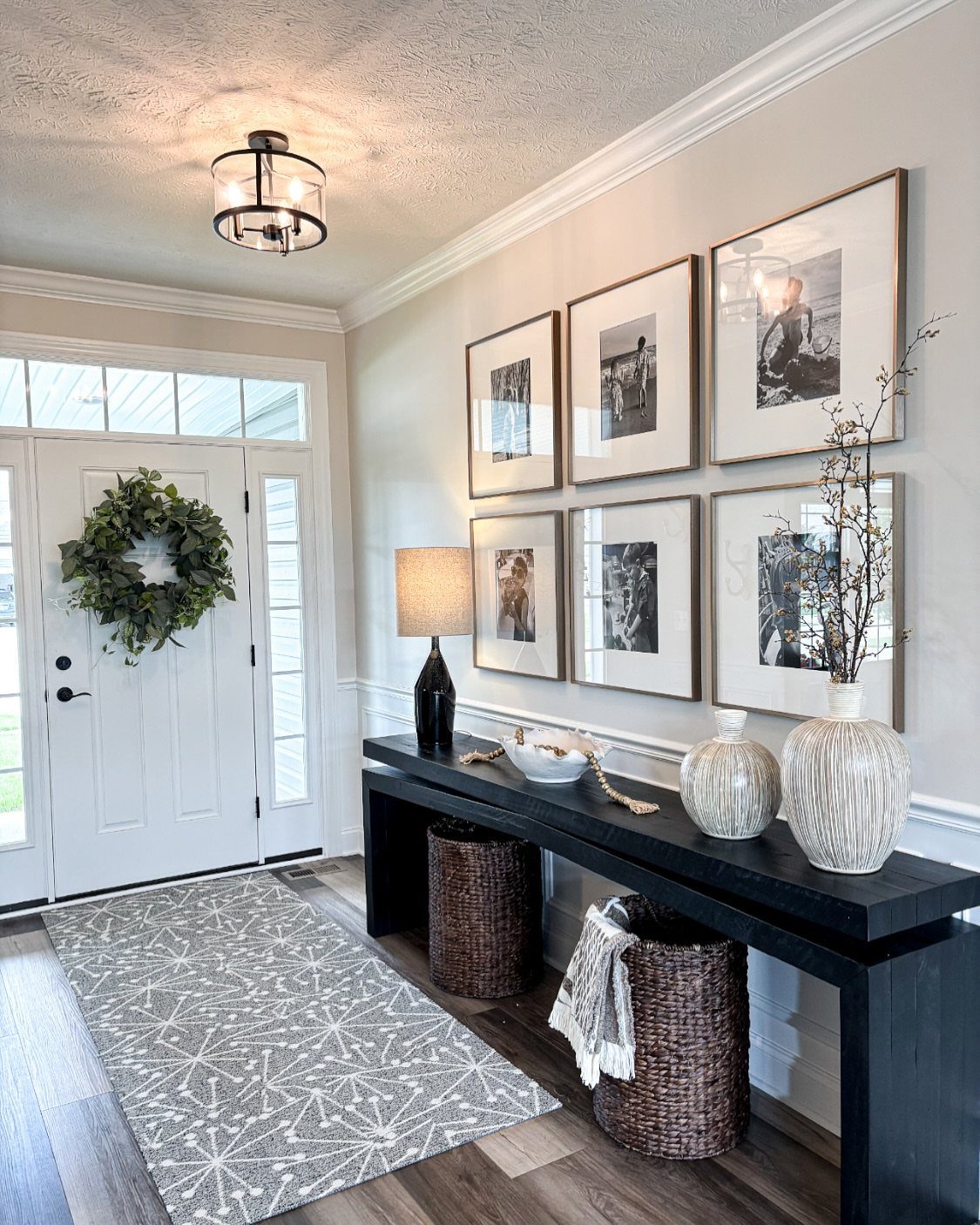
A grid of black-and-white family photographs above a console table turns the entry wall into something no guest can miss.
I like six matching frames in two rows for a clean look, though mixing frame colors works if you prefer a collected feel.
The photos themselves matter more than the arrangement. Pick shots that hold up at large sizes; small prints get lost from the doorway.
Standard 11 x 14 inch frames or larger keep the impact visible across the room.
This suits anyone who wants the entry to feel lived-in rather than staged. Changing photos means pulling six frames off the wall, so pick shots you will not mind keeping up for a while.
For renters, a single large ledge with frames leaning against the wall gives the same effect without nail holes.
14. Add Fresh Flowers
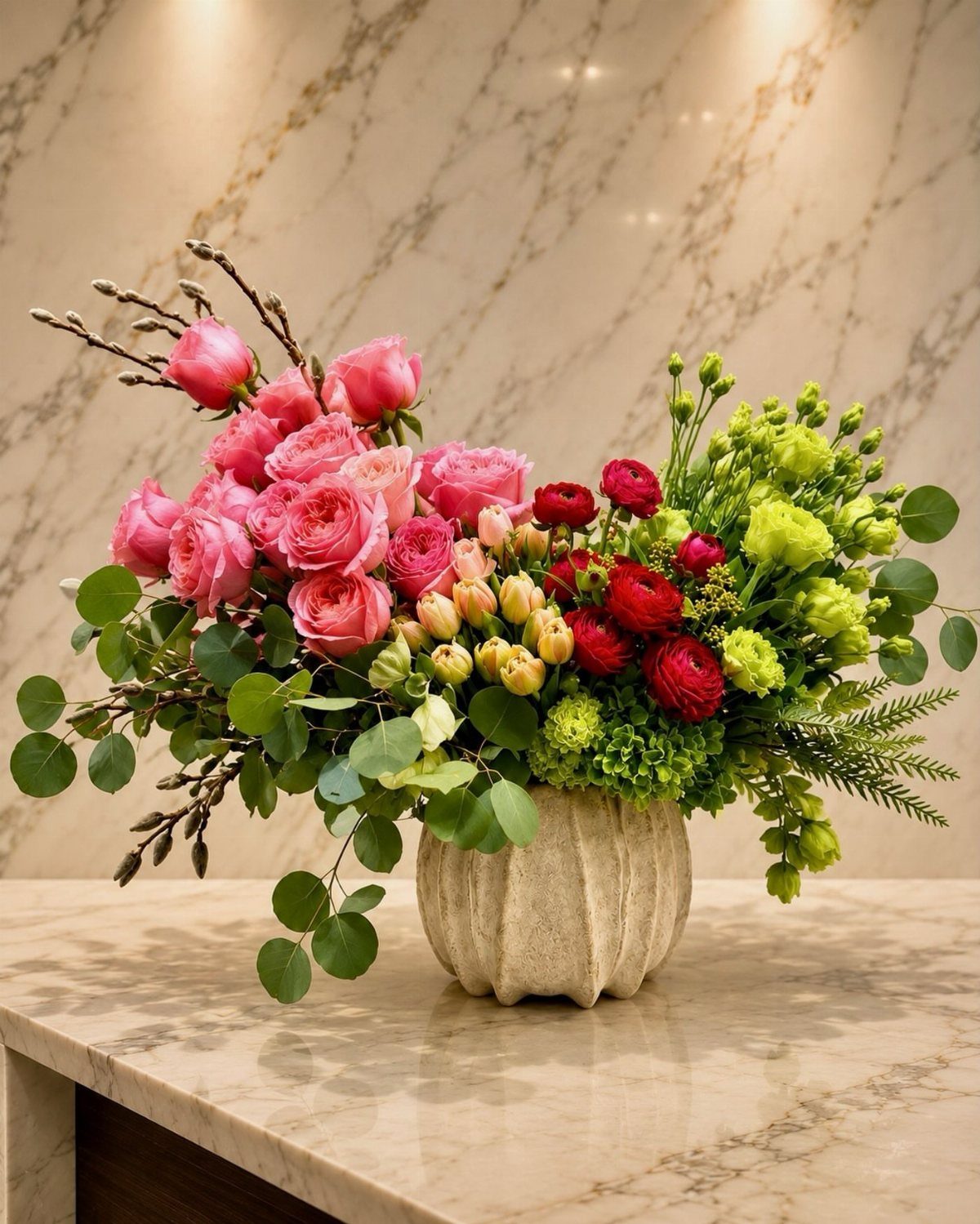
A grocery store bouquet in a textured ceramic vase costs less than a greeting card and lasts the week.
I pick mine up with the milk and bread; most chains carry roses, ranunculus, or hydrangeas that look expensive even when they are not.
The vase matters as much as the flowers. A round, heavily textured cream piece hides stems that would look messy in clear glass.
Cut stems at an angle and change the water regularly; a few minutes of care keeps them going much longer.
This is the fastest way to shift a neutral entry into something seasonal. Skip it if your table sits in direct sun, though.
Heat wilts fast and the water grows cloudy by day two.
15. Tall Candlesticks or Vases
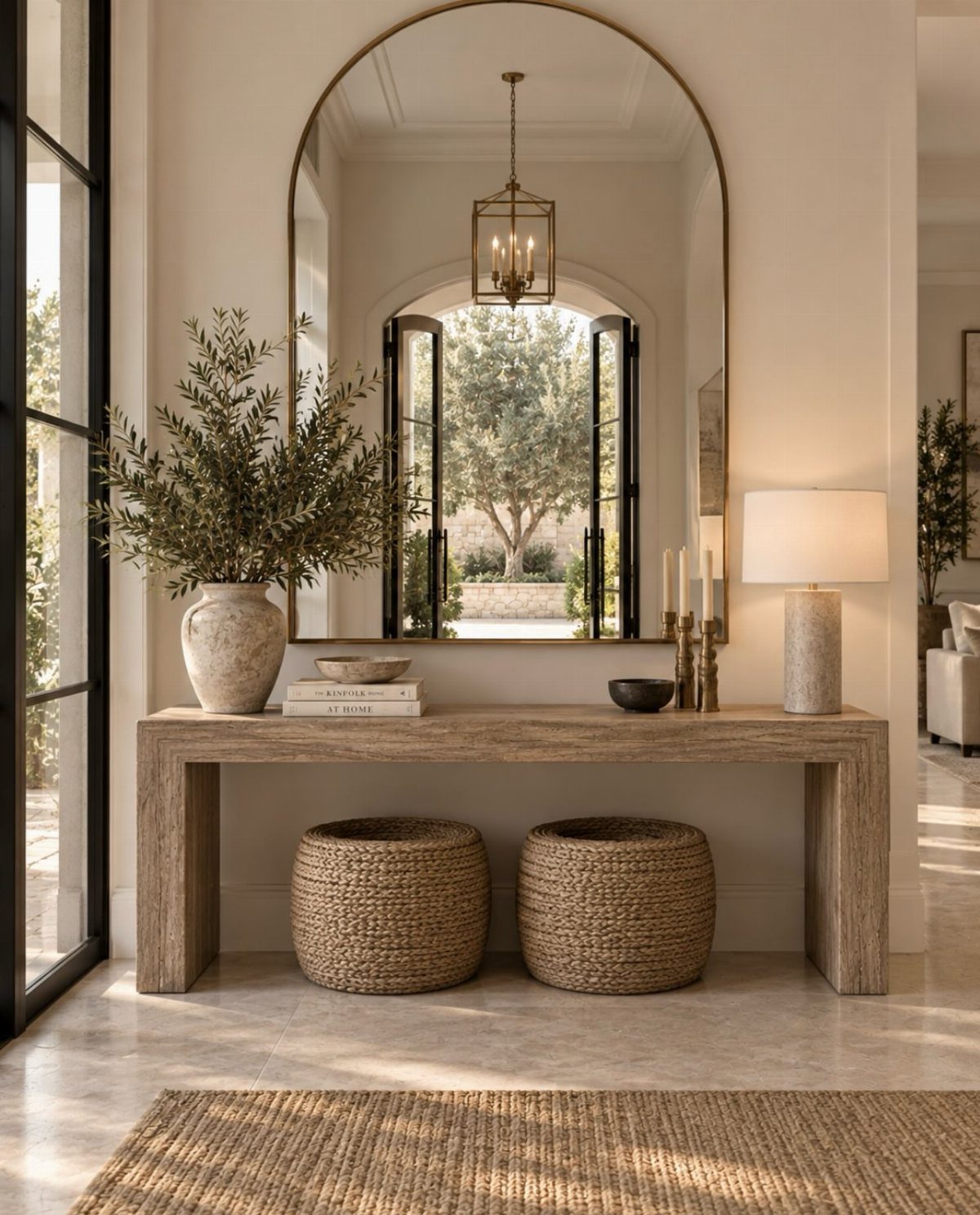
Tall brass candlesticks or a ceramic vase reaching above the mirror line pull the eye up and make a low console feel grander than its dimensions.
I place mine at one end, never centered; centering reads like a altar, off-center like a room someone actually uses.
Olive branches or leafy stems in a large vase last weeks longer than flowers and need no water changes.
For candlesticks, iron tapers hold up to drafts better than thin brass, though brass wins on looks if your entry stays still.
This works best in entries with standard ceilings; in a two-story foyer, the scale gets swallowed. There, hang a pendant low or skip tall table pieces entirely.
16. Catch-all Tray
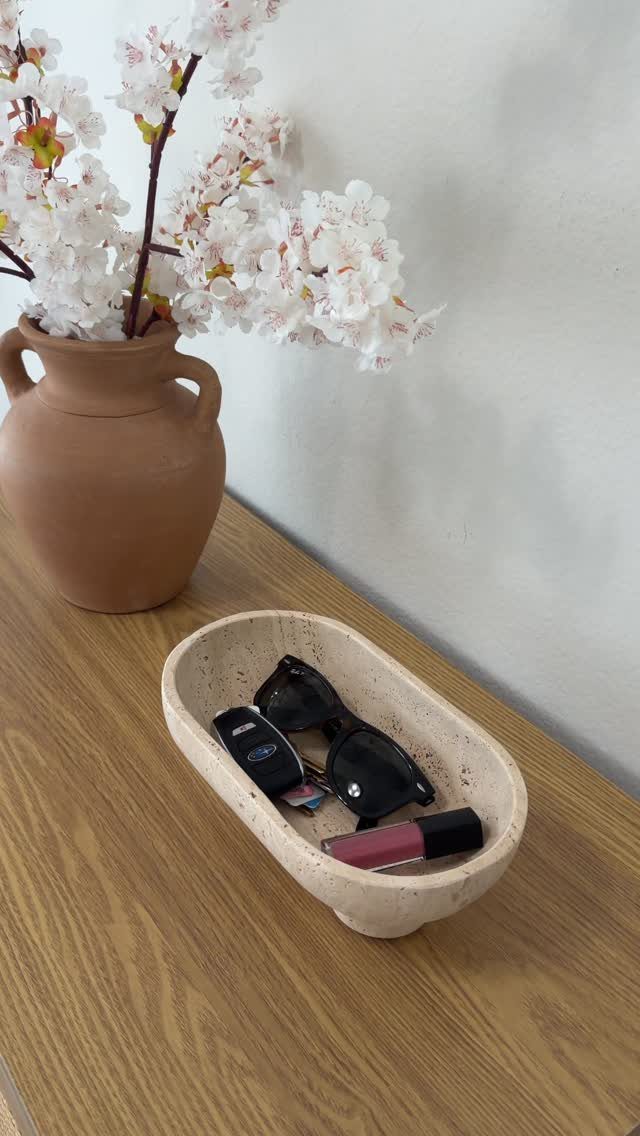
A stone bowl or textured ceramic tray by the door saves morning hunting for keys and mail. Sunglasses, keys, and the lip gloss that always rolls under the sofa find a home before they disappear.
The material shapes how it reads. Stone feels permanent and cold; woven or ceramic warms the space.
I keep mine small, no larger than a paperback, so it cannot become a dumping ground for mail and receipts. The discipline of a tiny tray forces me to empty it nightly.
This is non-negotiable for anyone with a household of grabbers and goers. The only downside is the habit it requires; without nightly clearing, even the prettiest tray becomes clutter with a rim.
17. Different Heights
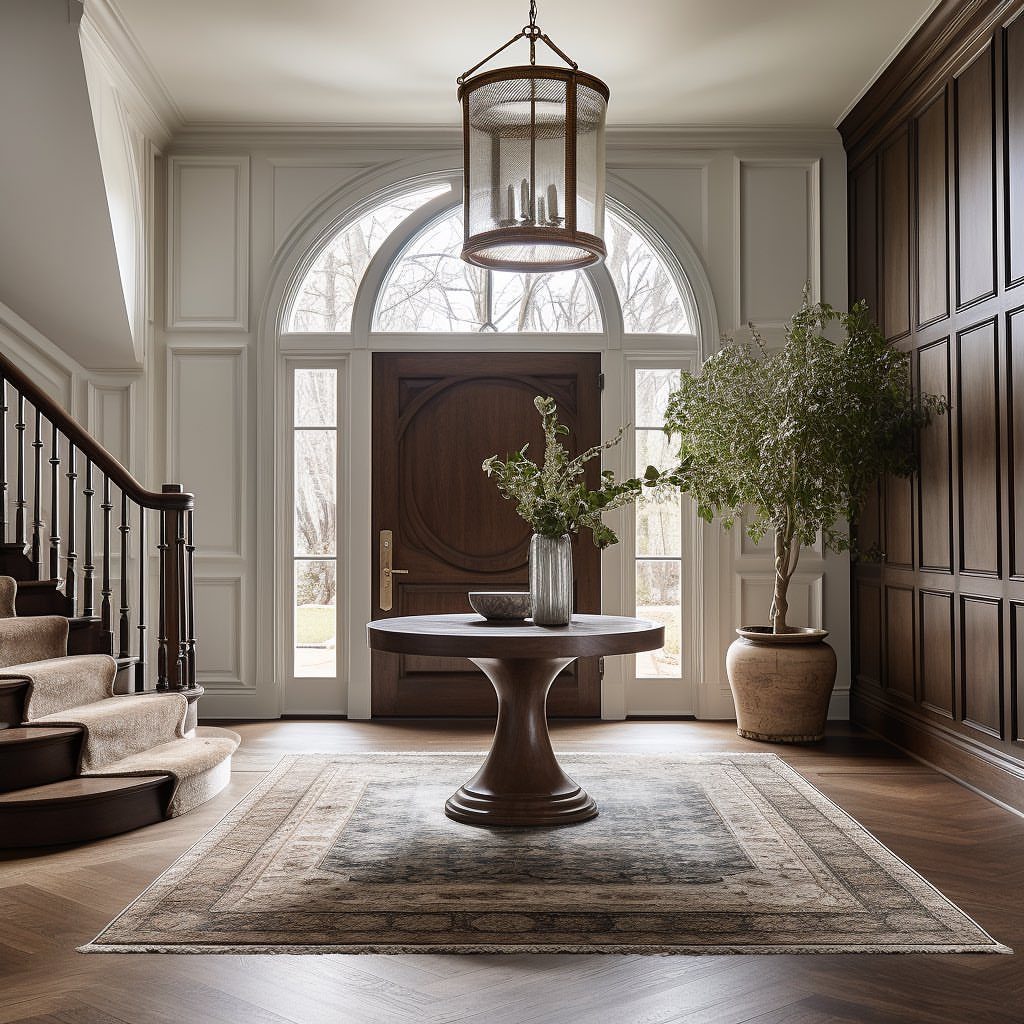
A low bowl paired with a tall glass vase of greenery on a round pedestal table creates movement without noise. The eye travels up and down instead of skating across a flat line.
Keep the tall piece narrow so it does not block the view or crowd the surface.
A wide tall vase blocks the mirror or wall behind it; a slim cylinder or single branch in a bud vase gives height without bulk.
The low piece should sit below the table’s midpoint, the tall piece reaching at least to your elbow when you stand at the table.
This matters most on small surfaces. A long console has room to breathe; a round table or narrow shelf collapses into clutter without deliberate height variation.
Skip the third height unless your table is wide; two is enough for most entries.
18. Colorful Vase or Artwork
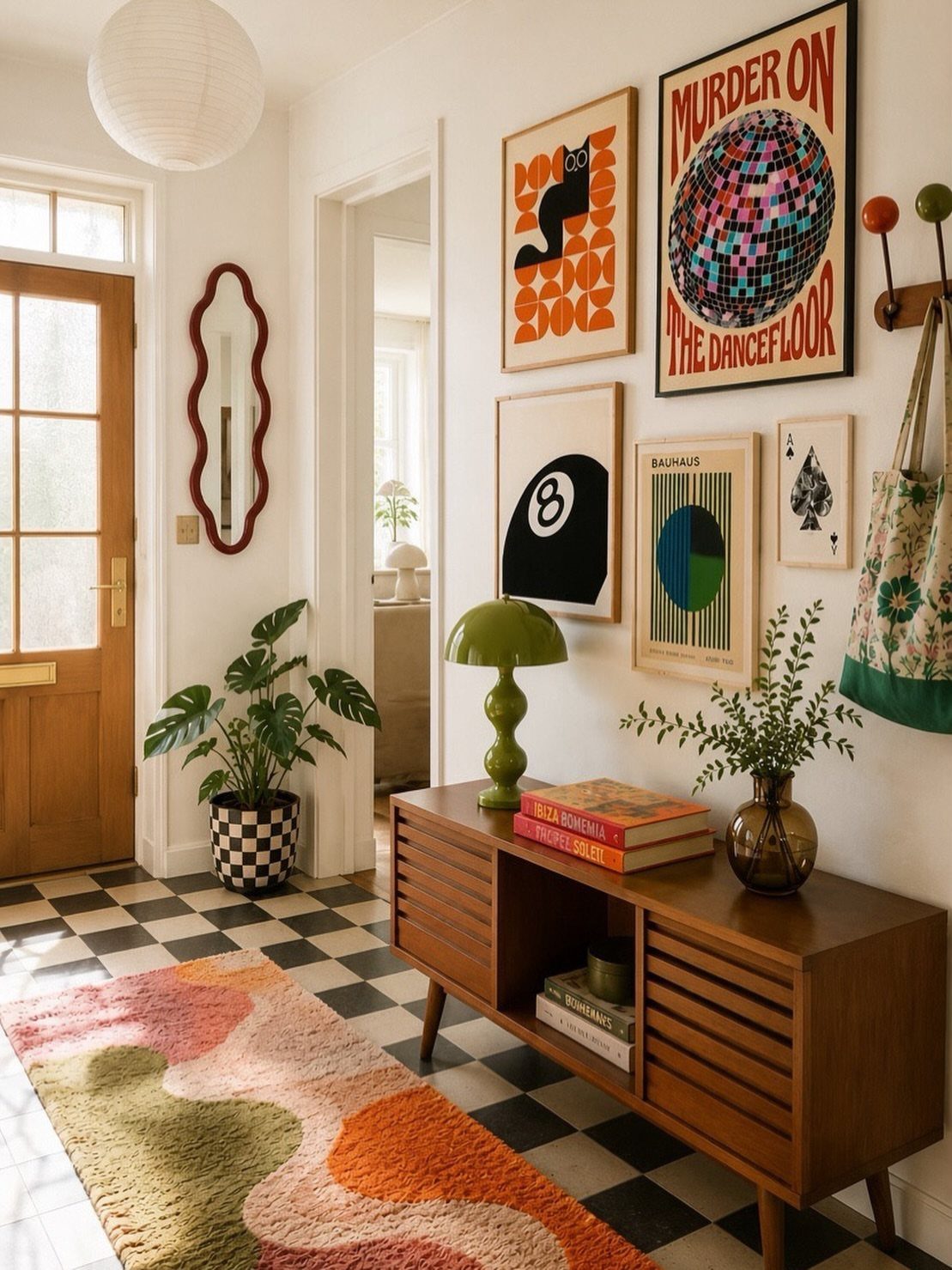
A green mushroom lamp or a single bright vase against neutral walls does what a whole painted room cannot: it shifts the mood in an afternoon, not a weekend.
I add color where the light hits it. A lamp glows through its own shade; a vase catches sun from the door.
Posters or framed prints work too, though they need more commitment than a single object you can swap in October.
This suits renters and the chronically indecisive. One green lamp or a stack of books with a bright spine costs little and moves to the bedroom when you tire of it.
The risk is overdoing it; one color pop per entry, two at most, or the eye has nowhere to rest.
19. Antique or Vintage Items
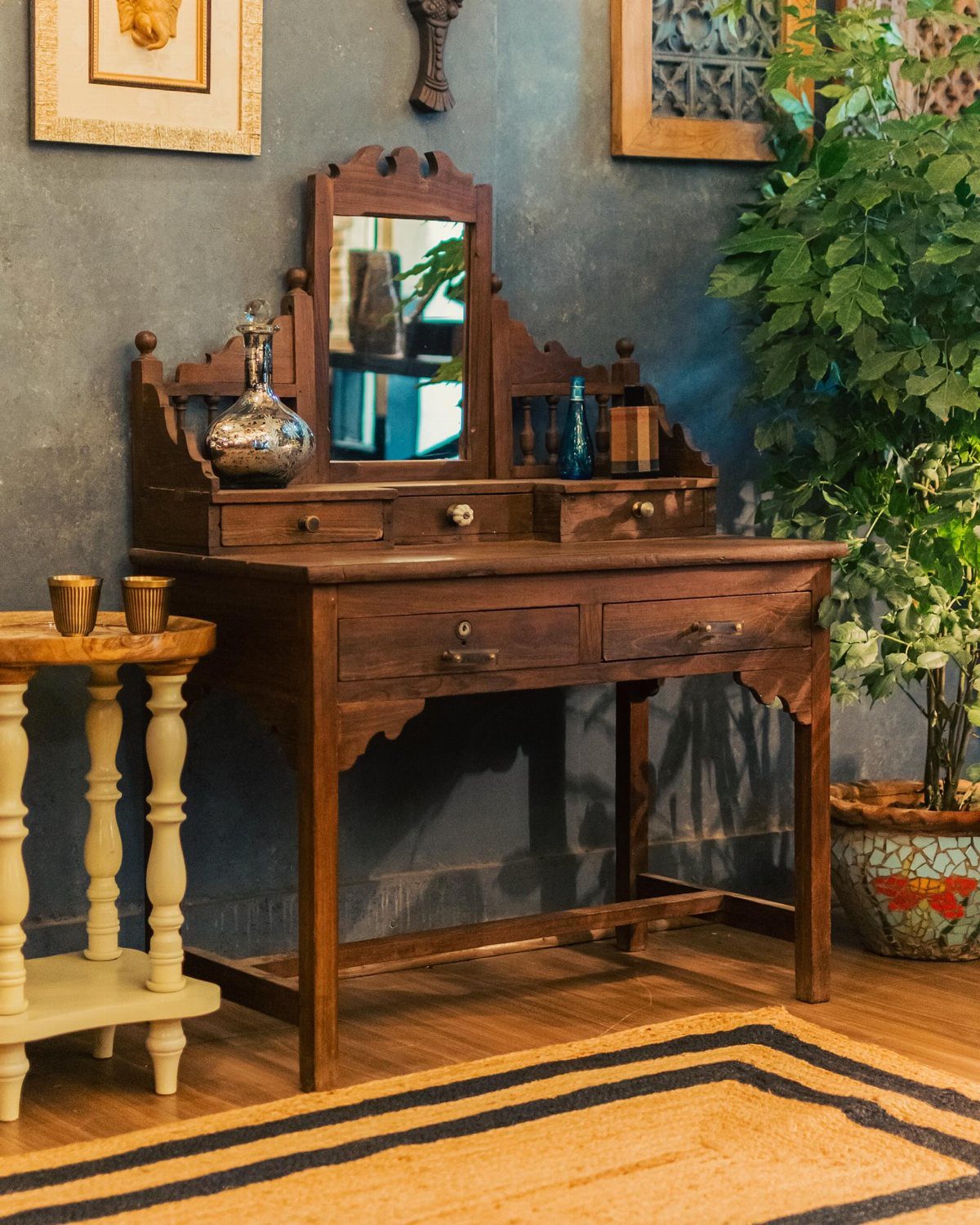
A single old piece does more storytelling than a whole table of new buys.
Nicks and patina read as history, not clutter; a mercury glass bottle or a worn vanity with small drawers carries the same weight as something new and polished.
Estate sales and thrift stores beat antique shops for a yard budget. I look for one strong piece: a tarnished silver vase, a chipped ceramic, a wooden box with hardware that no longer matches.
Restraint matters. One vintage item against clean neighbors reads as found treasure; three compete and turn the table into a curio stall.
Small entry tables suit this especially well. A narrow surface forces the choice to one object, and that object gets the attention it deserves.
I place mine slightly off-center, not dead middle, so the eye travels to it naturally.
Best for renters and newer homeowners who want character without committing to a full vintage room. The tradeoff: real old pieces need gentle cleaning and sometimes repair.
A cracked decanter stays decorative; a cracked basket handle means a future fix.
20. Rotate Decor for Seasons
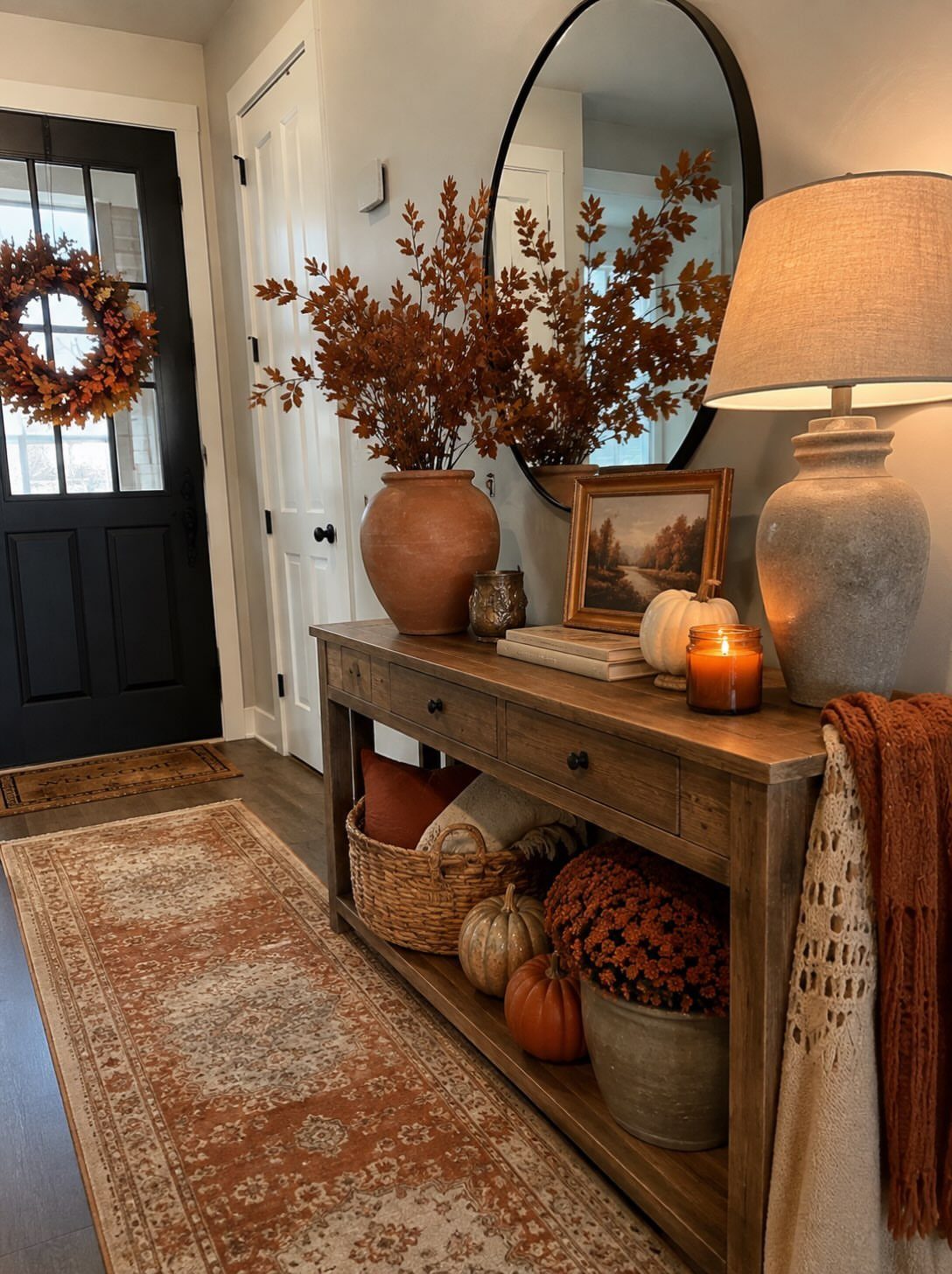
Swapping a few items changes how the whole house feels when you walk in. Nothing here is expensive or stored year-round; the vase holds summer wildflowers come July.
I keep a single bin labeled "entry" in my hall closet. October through November it runs gourds and dried stems.
December adds a small pine arrangement and a red berry spray. January through March I go bare: just the lamp and a clean tray, which reads as intentional rest rather than emptiness.
Spring gets forced branches from the yard, summer a bowl of lemons or a single sunflower.
The round mirror and basket stay constant; they are the furniture, not the decor. This keeps costs low and storage minimal.
One reader with a balcony garden can dry her own stems in September and have free autumn filler. Another with no storage rotates just the candle scent and a grocery-store bouquet.
Not for the collector who wants a perfected, permanent display. A table that acknowledges the month you are actually living in greets you differently than one that does not.
21. Layer for Depth
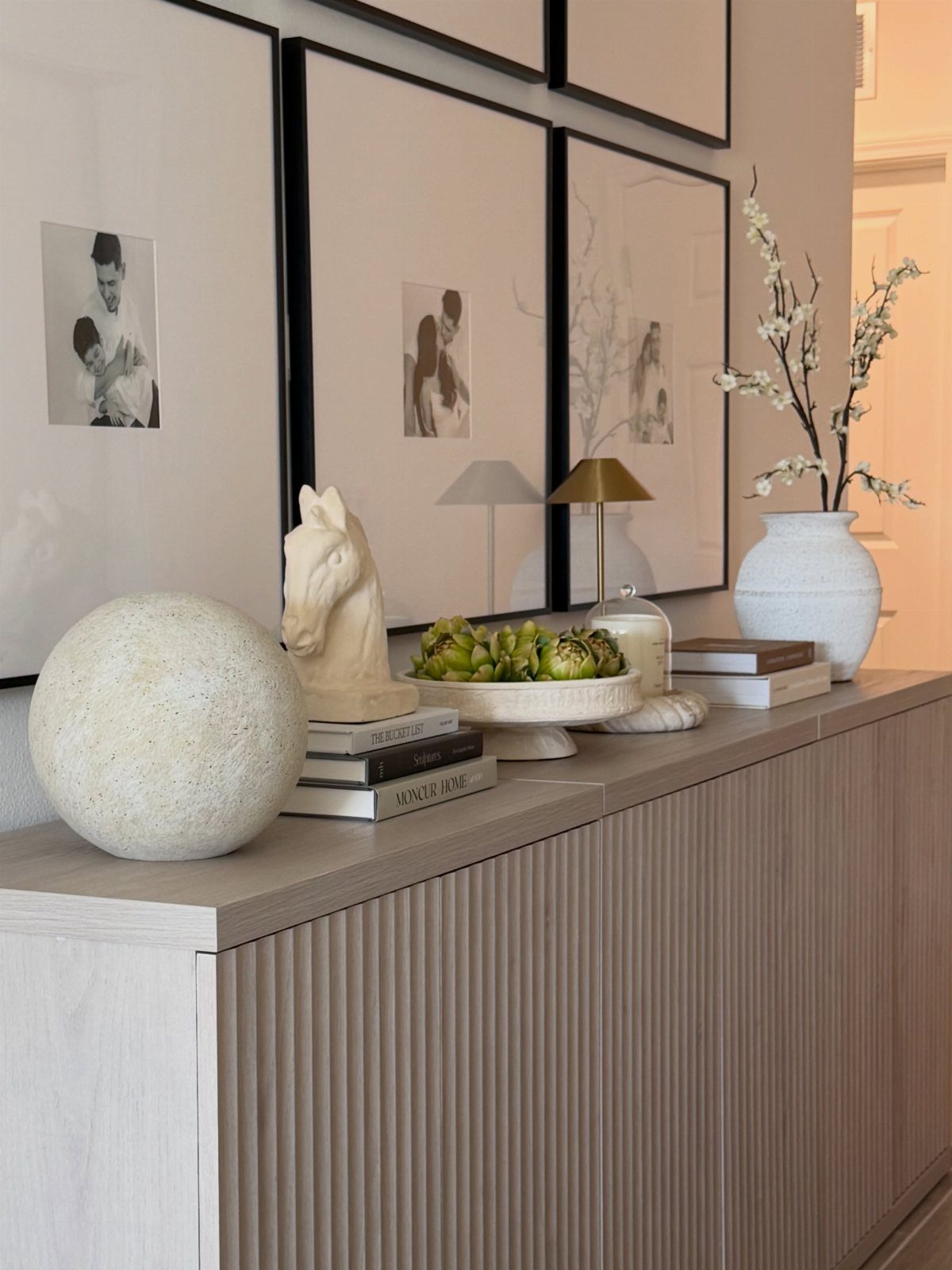
Depth comes from overlap, not from owning more. A horse bust forward of stacked books, those books forward of framed photos behind, builds depth without crowding.
Nothing lines up on a single plane. Your eye reads back to front in three distinct moves.
To build this on a small entry table, I start with a back layer against the wall: a mirror, a framed print, or a tall vase with branches. The middle layer holds the working pieces: lamp, books, a medium bowl.
The front layer gets the small, the odd, the single decorative object that rewards close attention. A sphere, a tiny dish, a found stone.
Varying shapes matters more than varying heights alone. The round stone against the vertical books against the organic horse head: this is what keeps the eye traveling.
Two round objects at different depths compete; a round against a rectangle collaborates.
Small tables need tighter editing. I limit my objects across all layers and leave bare surface visible.
The reader with a narrow console gains more from this technique than the owner of a wide sideboard, because the compression forces the overlap and makes the layers readable at a glance.
Balance and Scale in Decor
Two tall pieces, lamps or vases, set at opposite corners anchor the whole length and give the eye a place to rest.
A mirror centered above splits the difference and holds the arrangement together.
The mirror is the guide, not the ruler: symmetry around it works, but so does a tall lamp on one side balanced by a vase of eucalyptus or trimmed branches on the other.
The stems should reach near the mirror’s height so nothing shrinks.
Shift pieces an inch or two, step back, shift again. The right arrangement usually clicks after three or four tries.
Functionality in Design
An entry table earns its space faster when it handles the daily mess.
Cabinets or drawers in the table itself hide what trays cannot. Open shelves below suit wicker baskets for shoes or grocery bags.
The table does not have to choose between pretty and useful; it simply has to decide which job comes first in your house.
A decorative entryway table can adapt to whatever your entryway needs the most, blending style and practicality effortlessly.
Seasonal Updates
A single swap shifts the whole entry without rearranging furniture. The base stays, the accent moves.
Grocery store bouquets do the same on a smaller scale.
Color pops work the same way.
Frequently Asked Questions
How can I style an entry table?
Start with a mirror or artwork hung above to anchor the look, then add a lamp for light and a tray or basket for the keys and mail that collect there.
A stack of books gives height, a vase with branches or fresh stems softens the lines, and one personal item makes it feel like yours rather than a store display.
I shift pieces around until the heights vary and nothing sits dead center; that flatness is what makes a table look staged instead of lived-in.
What are some good ideas for decorating an entryway in 2026?
The same principles hold: a mirror to bounce light, a tray to catch daily clutter, and a basket underneath for shoes or bags.
This year I am seeing more wall hooks mounted above the console instead of hidden coat closets, and more single bold artworks replacing gallery grids in tight spaces.
A round mirror still wins for narrow halls, and rotating one or two seasonal items keeps the look current without a full redesign.