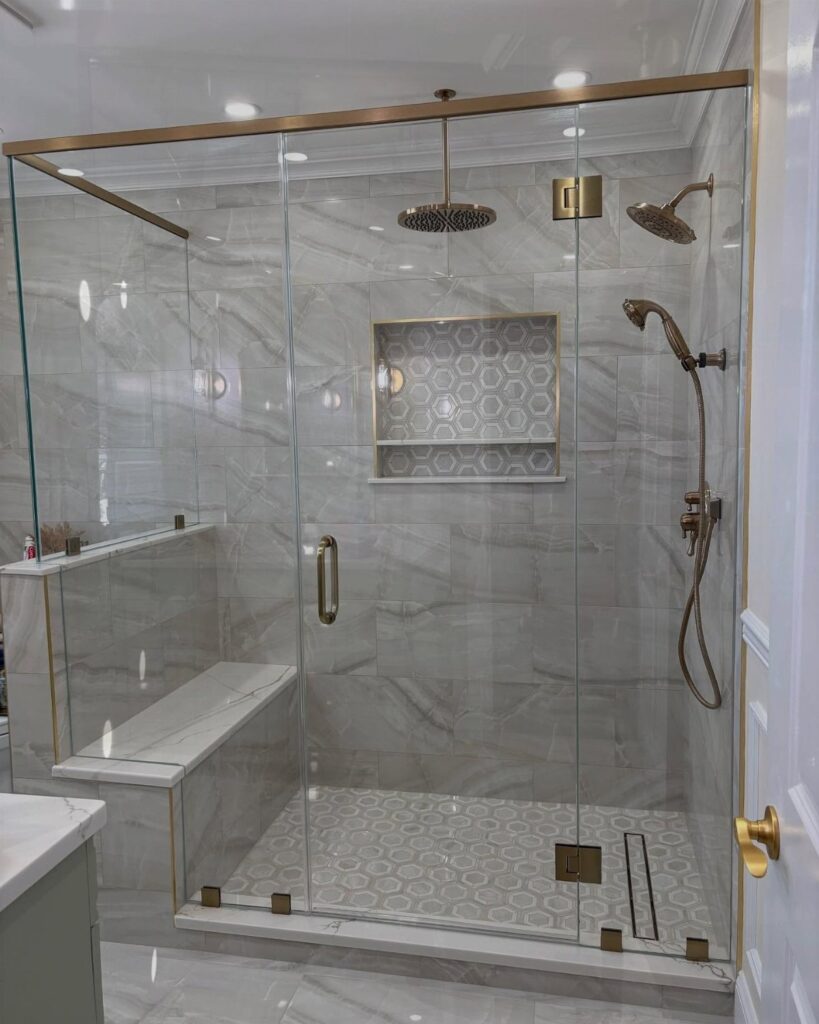
These ideas run from a herringbone layout change to full stone-and-glass installations that need professional setting and sealing.
The deciding factor is how much daily friction your bathroom sees: a powder room that guests duck into and out of can hold glass that shows every fingerprint, while a family bath needs terrazzo or large-format porcelain that forgives water spots and hurried cleaning.
The Sloane 2×2 in Pearl, pre-sealed porcelain, sits near the middle of both cost and effort, and it appears twice in this list because it solves two different problems.
1. Herringbone Tile Layout
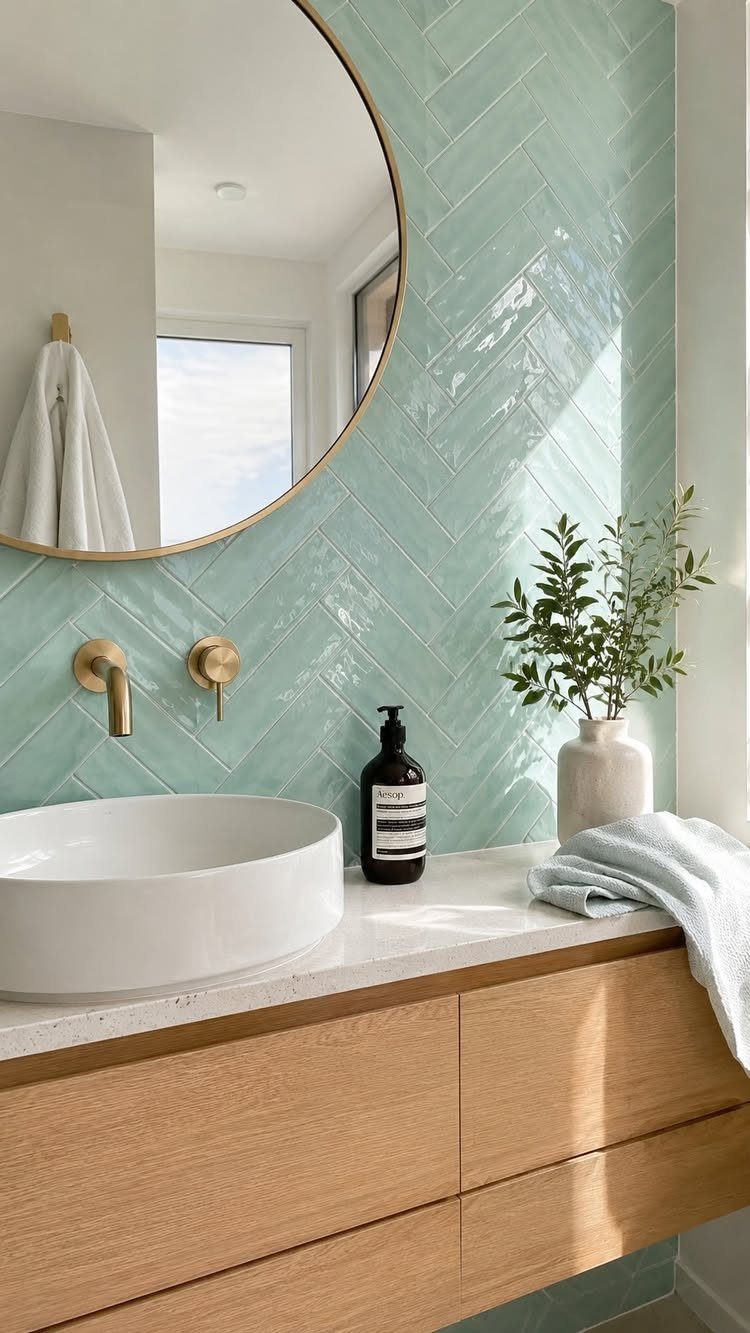
A herringbone backsplash behind a vanity catches light differently than straight subway tile, each angled edge throwing a small highlight.
The zigzag draws the eye across the wall instead of letting it stop, which helps a narrow bathroom feel wider than it is.
I have seen this work with 3-by-12-inch subway tiles cut to the same angle, or with small herringbone mosaics if you want tighter repetition. Porcelain holds up longest near a sink where water splashes daily.
White grout sharpens the geometry; matching grout softens it into texture. I’d pick white grout for a small powder room where the pattern is the whole show, and matching grout for a busy family bath where the eye needs rest.
2. Zellige
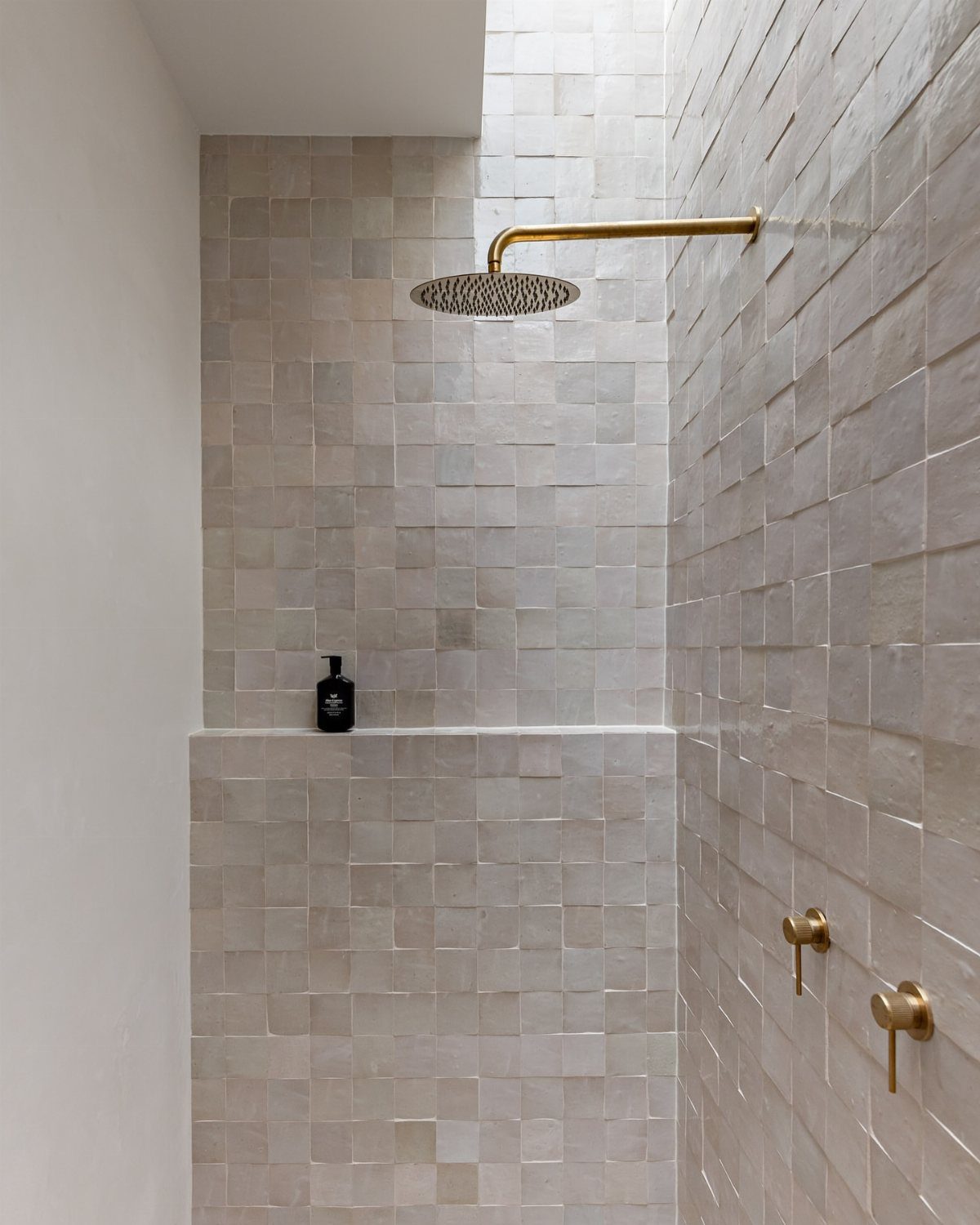
Square zellige tiles look uneven on purpose, each one carrying thumbprints of glaze thickness and slight warp from the kiln. A wall of them reads as water or sky rather than grid because each tile carries its own color shift.
The glaze catches light unevenly, so the same wall changes hour by hour. I would use these in a shower or behind a single vanity, not both in one small room, or the effect tips into too much.
Handmade zellige costs more than machine-pressed tile and needs a skilled setter who knows how to let the irregular edges breathe. If the budget or the installer is uncertain, a handmade-look ceramic gives similar color variation with more uniform edges.
3. Artistic Patterns
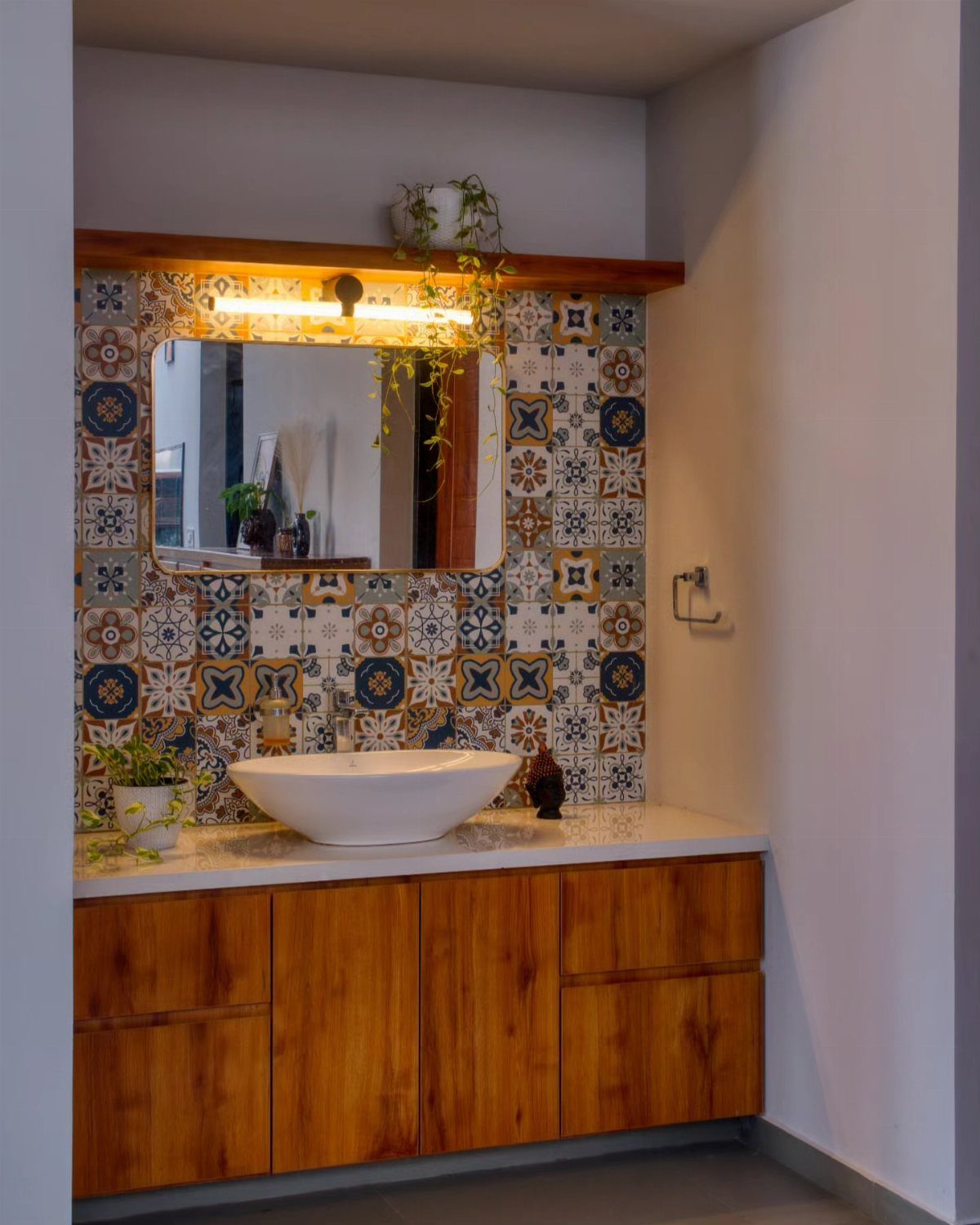
A wall of painted-pattern tile turns the bathroom into the room you remember from a house tour.
The designs borrow from watercolor brushwork or encaustic geometry, and they work best when the rest of the room goes quiet: white vanity, simple mirror, no competing wallpaper.
I would treat this as one feature wall, or a floor with plain walls, never both. Porcelain versions now replicate cement-tile looks without the sealing regimen, which matters in a steam shower.
The pattern you choose has to be one you can live with for years; bold color reads as joy on day one and can read as noise by year three if it does not match your daily mood.
4. Neutral Graphic Patterns
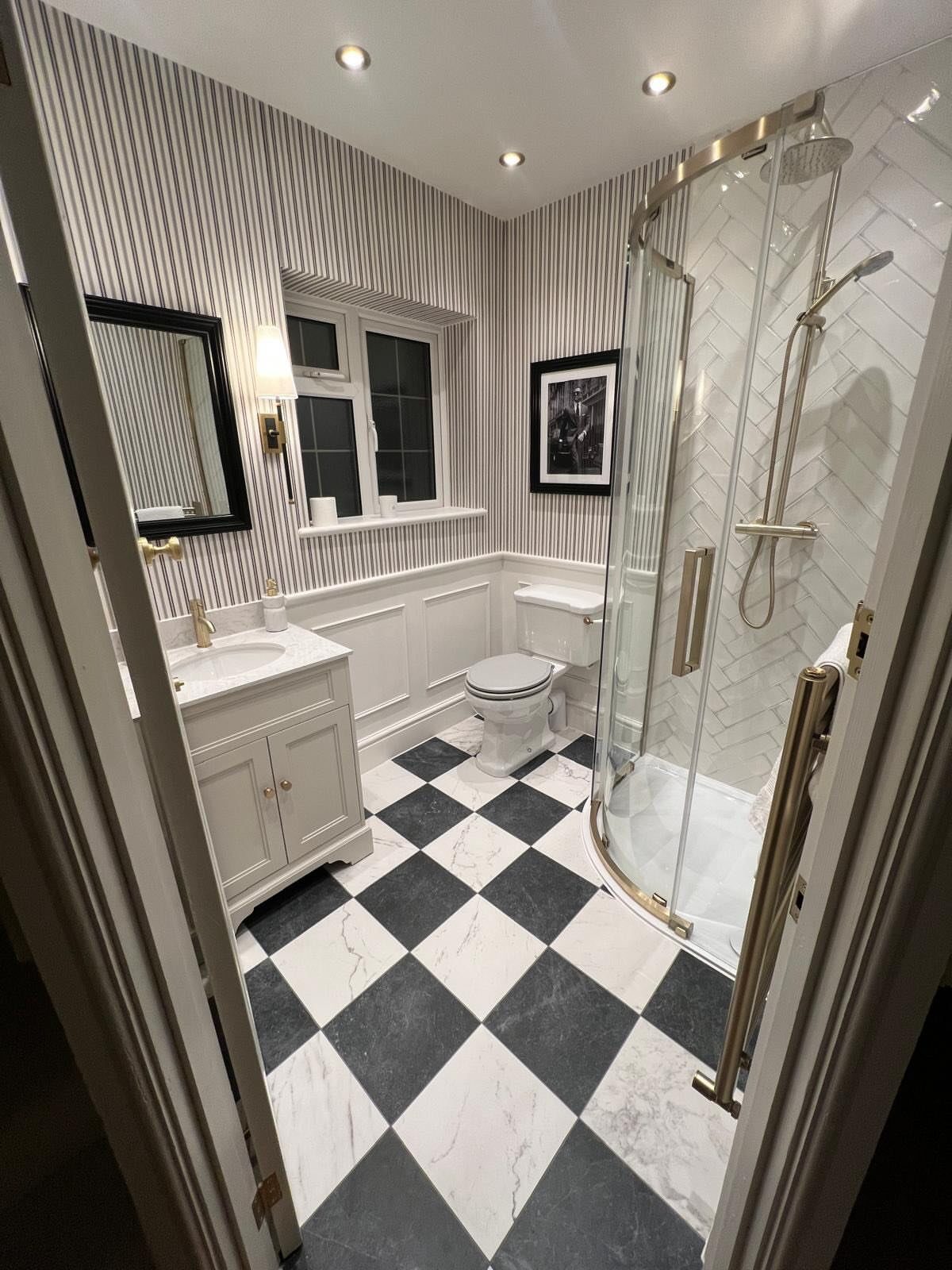
Black-and-white checkerboard floors carry a graphic punch that needs no color to shout. The same principle works in beige and cream if you want warmth without losing the pattern energy.
I would check the scale against your room size: large squares in a small bath feel like they are eating the floor, while small squares in a large master read as busy texture.
If you are drawn to this, test one box against your existing fixtures before committing; the pattern changes character under warm versus cool light.
5. Geometric Floral Patterns
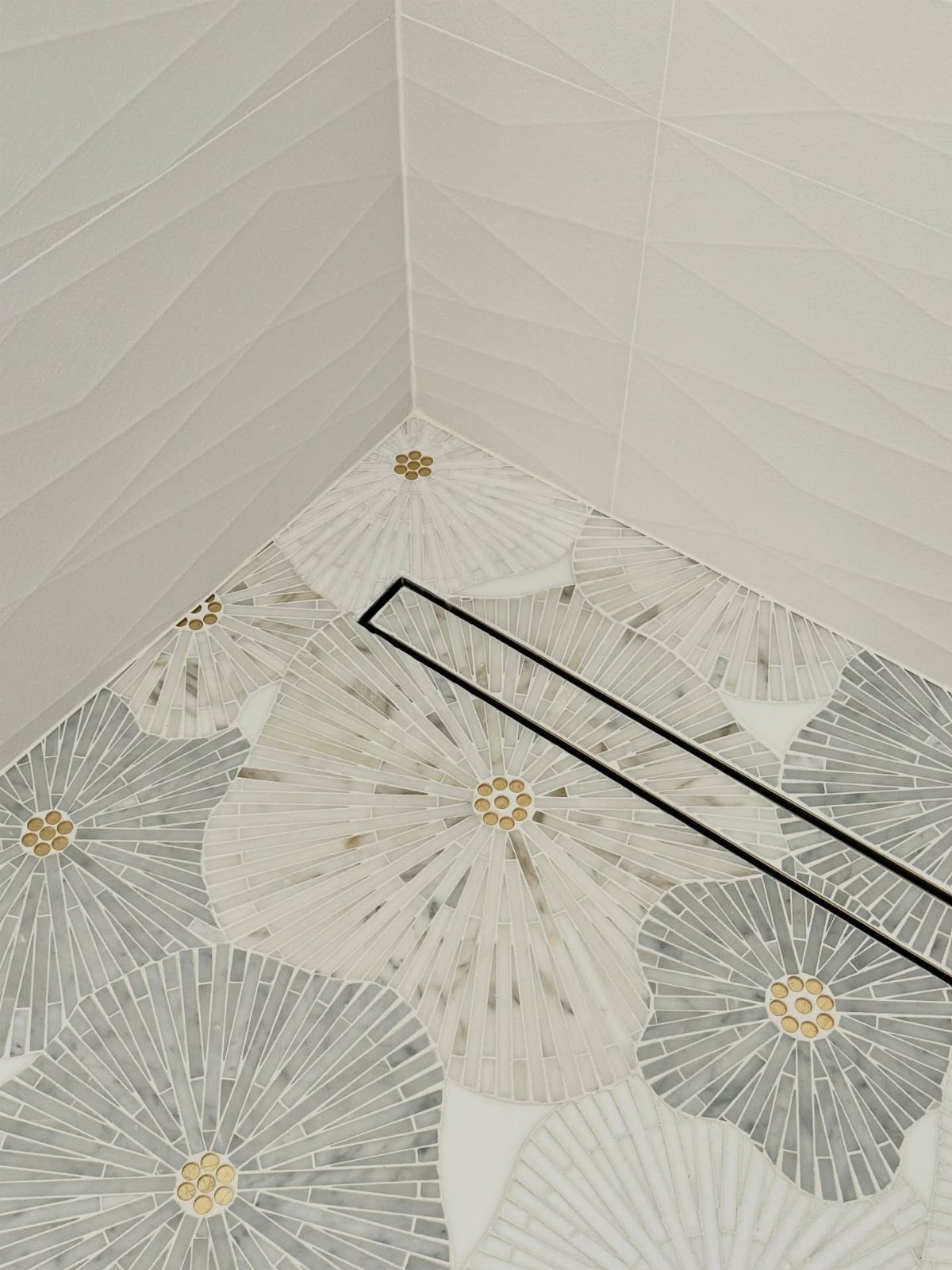
Floral tile does not have to mean your grandmother’s roses. A geometric floral renders petals as radiating rectangles or concentric circles, giving nature a graphic haircut that suits modern bathrooms.
I have seen this work best on a shower floor or as a single accent strip, where the pattern gets space to breathe.
Alignment during installation is the hard part; one shifted tile throws off the whole bloom, so this is not the place to rush the setter or to DIY unless you have laid mosaic before.
If the pattern calls to you but the install quote stings, consider a smaller application: the back of a niche, or a single vertical panel beside the mirror.
6. Striking Geometric Designs
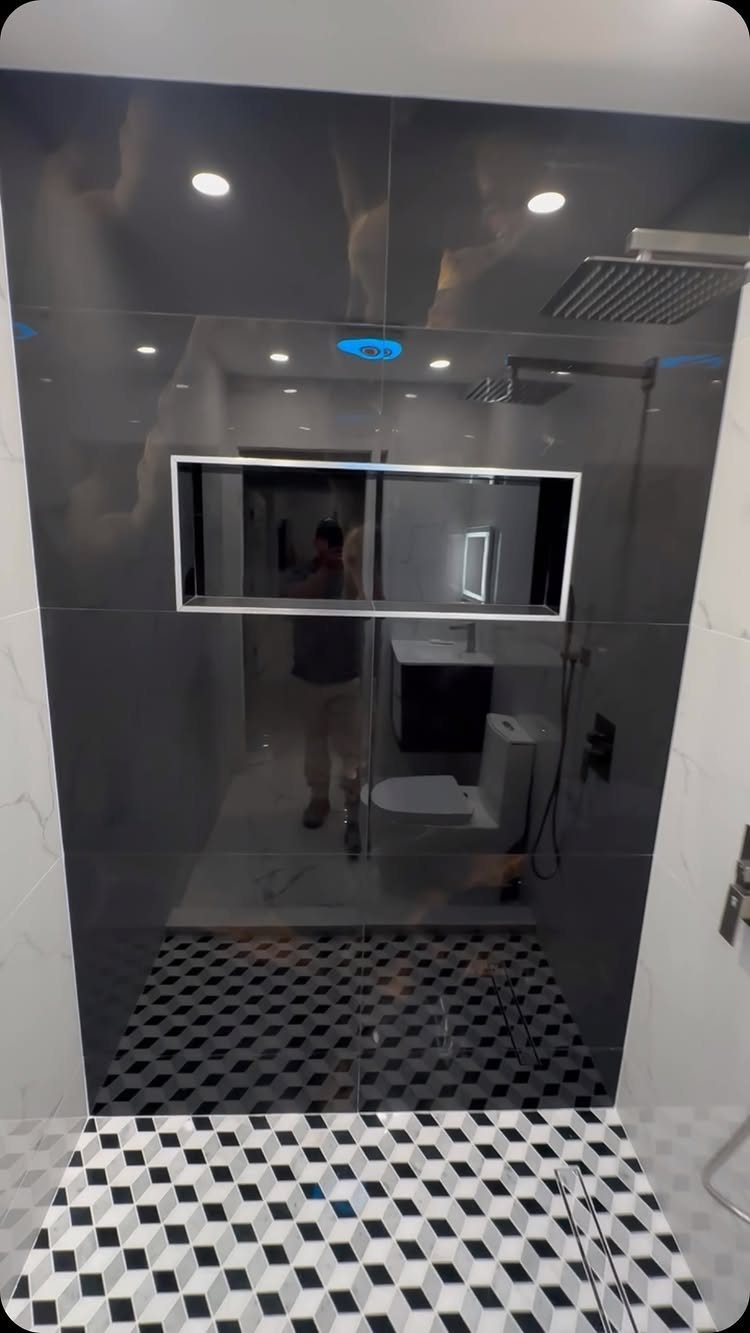
A 3D cube pattern on the floor reads as depth underfoot, almost a visual trick. The effect depends on precise alignment and on grout color that matches the darkest tone in the pattern; otherwise the cubes flatten back into diamonds.
Keep the walls plain and dark so the floor becomes the single statement. This suits a secondary bath or a powder room where guests see it briefly and remember it, less so a master you stumble into half-awake.
The pattern also collects dust in its recesses, so plan on more frequent mopping than plain tile demands.
7. Terrazzo Tiles
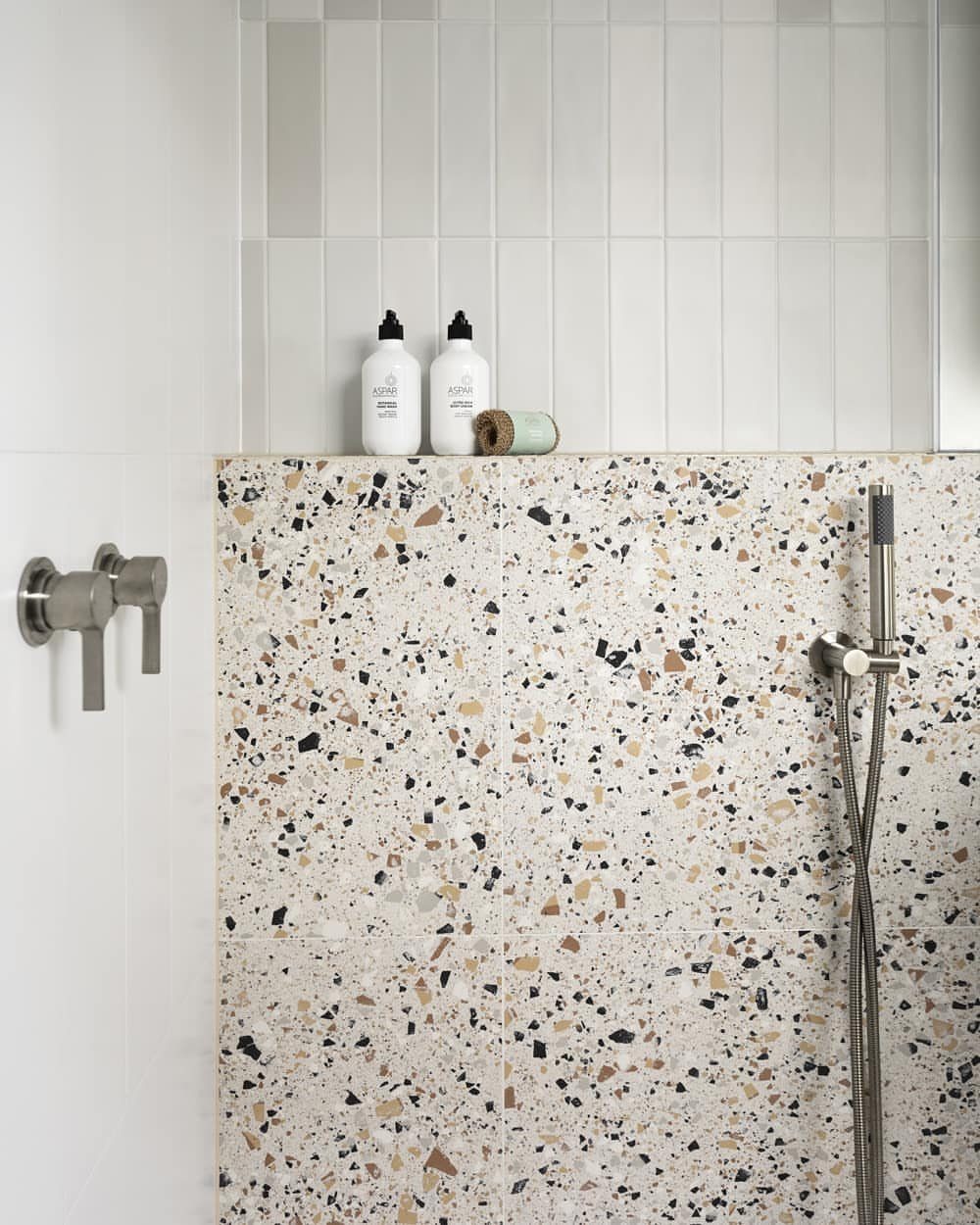
Terrazzo tiles hide water spots better than almost any other surface. The scattered chips break up droplets and soap residue before they become obvious, which matters more than I expected in a bathroom that gets daily use.
Porcelain versions now come pre-sealed, so the old hassle of sealing cement-based terrazzo is gone.
The Sloane 2×2 in Pearl gives the speckled look without the weight or upkeep, and its pale tone pairs well with light wood and soft greens.
Genuine terrazzo still works on walls, but skip large slabs for floors; they get slick when wet. For a small bathroom, terrazzo-look porcelain on the floor and real terrazzo on one wall hits the balance.
8. Midcentury Modern
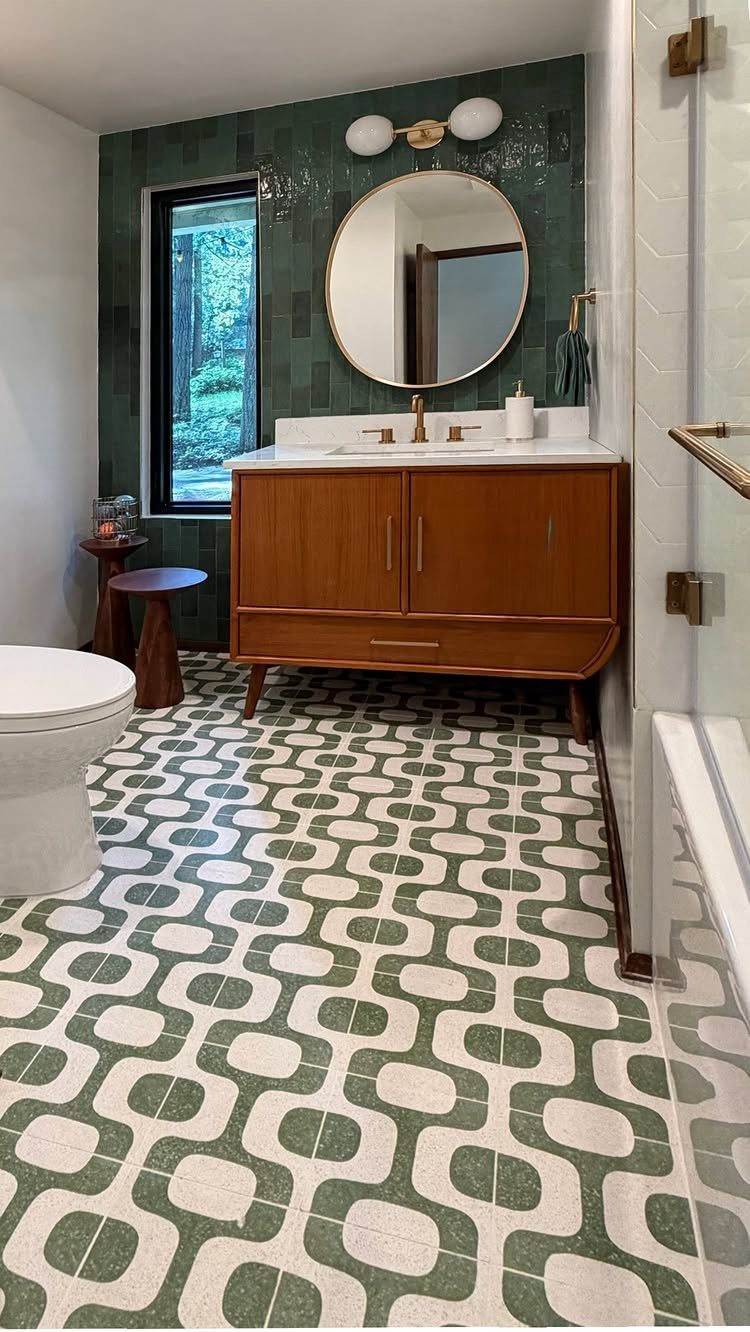
Green and white geometric floor tile with a wooden vanity and round mirror is the midcentury modern combination that keeps working. The palette pulls from nature, and the clean lines keep it from feeling dated even now.
The Stoneware collection runs earth tones with a speckled finish that nods to pottery. Indigo Spruce or Rainwashed green suit bathrooms with some natural light; Linen Brick works better in windowless spaces where you need warmth without gloom.
Small mosaic tiles in 1×1 size let you designate wet areas with the same material, which keeps the design coherent. This style suits someone who wants character without clutter; the minimalism is the point, not a blank slate to fill.
9. Large-Format Tiles
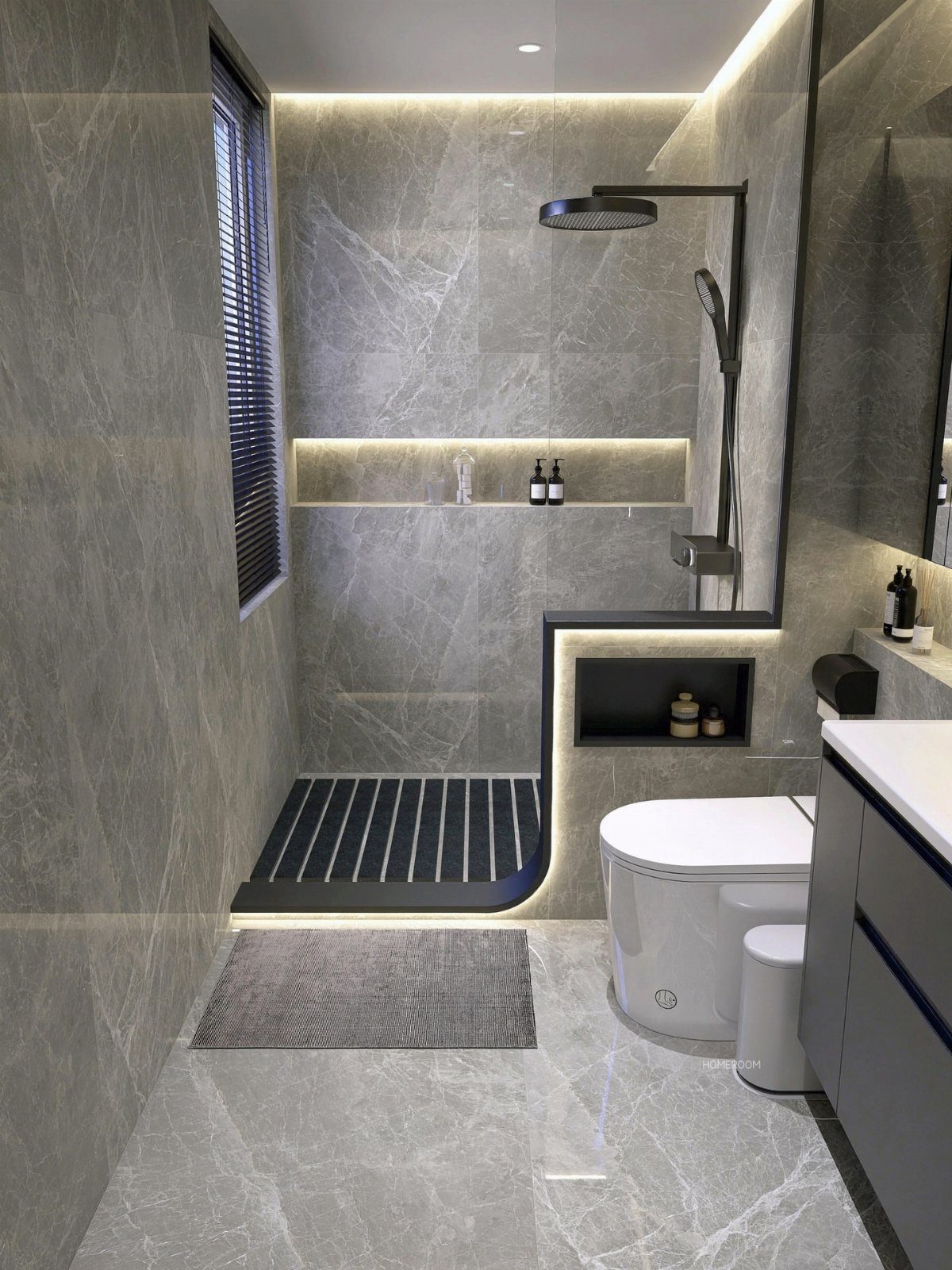
Fewer grout lines mean less scrubbing, and large-format tiles take that to the limit. A 24×48 tile like Shea in Dune turns a compact bathroom into something that reads as open and continuous, not chopped up by grid lines.
The weight stays manageable with porcelain, so installation does not require reinforced walls. Epoxy grout keeps the surface flat and mold-resistant, which matters in humid conditions.
Backlit niches and a floating vanity extend the same unbroken logic. This approach trades pattern and texture for calm; if your bathroom is already busy with fixtures or a bold mirror, the quiet floor and wall become the relief.
10. Glass Tile
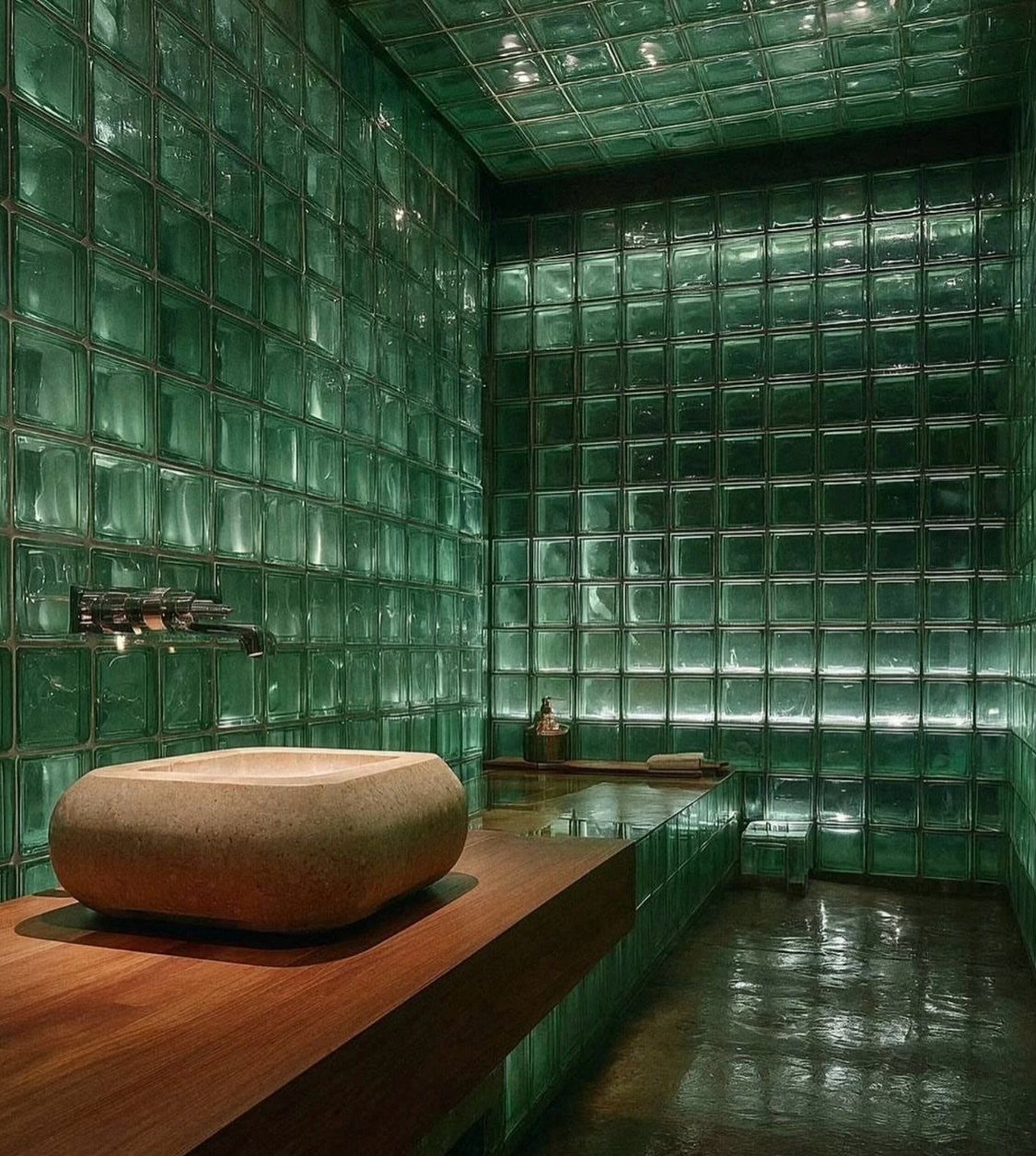
Glass tile lives on reflection. In a bathroom with limited natural light, emerald green squares across walls and ceiling turn what window you have into something that moves around the room.
The color shifts as the light changes, almost aquatic in the way it behaves.
Glass tile can run as saturated as lagoon water on a gray day. Matte finishes in blue, set herringbone, soften the effect if full gloss feels too bold for daily use.
The trade is maintenance: glass shows every water spot and fingerprint, so it suits a powder room or a shower you wipe down routinely, not a kids’ bath. The material gives atmosphere no paint or ceramic achieves.
11. Black Tiles
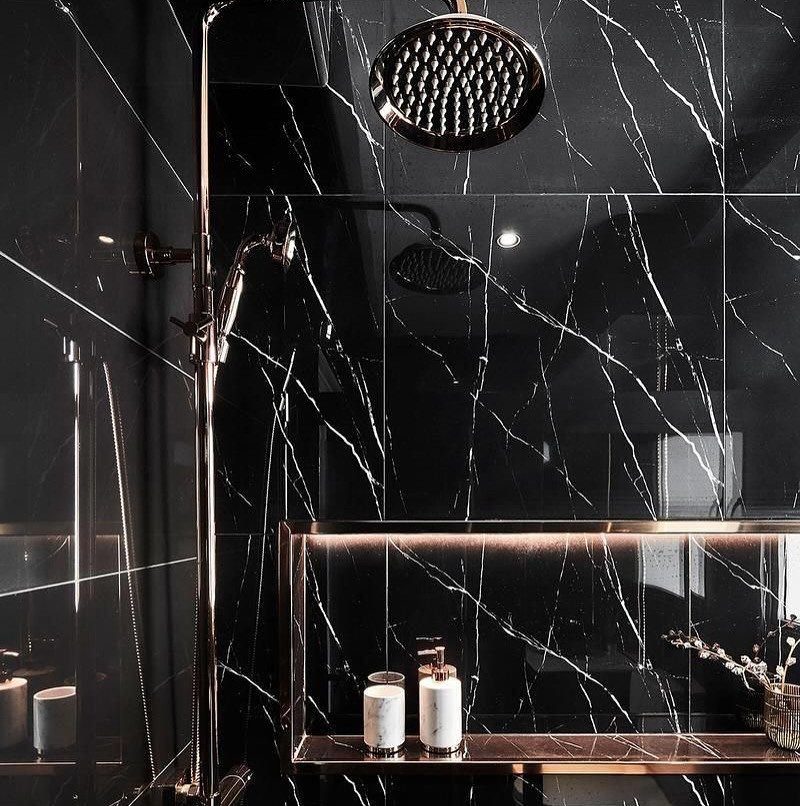
Black tiles read as deliberate, not default. Black subway tile meeting white at a shower corner gives the sharp contrast that defines the whole room without extra decoration.
Finishes matter more with black than with lighter colors. Glossy reflects and opens; matte absorbs and quiets.
The Leona 3×3 hex mosaic in Nero Marquina, matte, works on floors or feature walls where you want depth without glare. Copper or rose gold hardware adds warmth and keeps the space from feeling cold.
Black demands confidence in your lighting plan. A dim bathroom goes cave-like; one with good fixtures or a window gains drama.
This is for the reader who wants the bathroom to feel designed, not just finished.
12. Brick Look Tiles
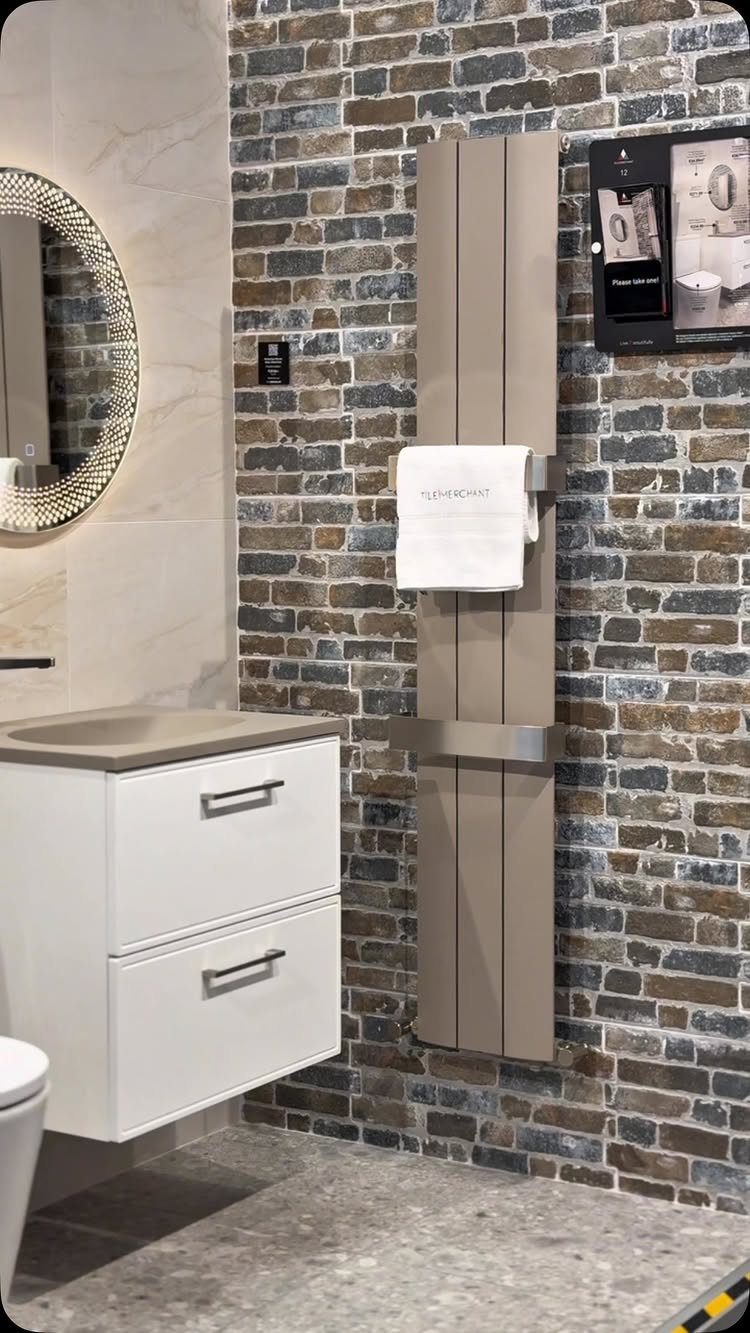
Brick-look tile gives the warmth of exposed masonry without the porosity that ruins real brick in wet rooms. The Marsden 3×10 in Almond, set herringbone, runs light terracotta brown that pairs with neutral walls and natural light without fighting it.
Options range from classic red through whitewashed to industrial gray, so the style adapts: rustic, coastal, or urban. The texture adds grip underfoot compared to polished surfaces, a subtle safety gain.
For a small bath, one brick-look wall is enough; more reads as theme park.
13. Eucalyptus Tile
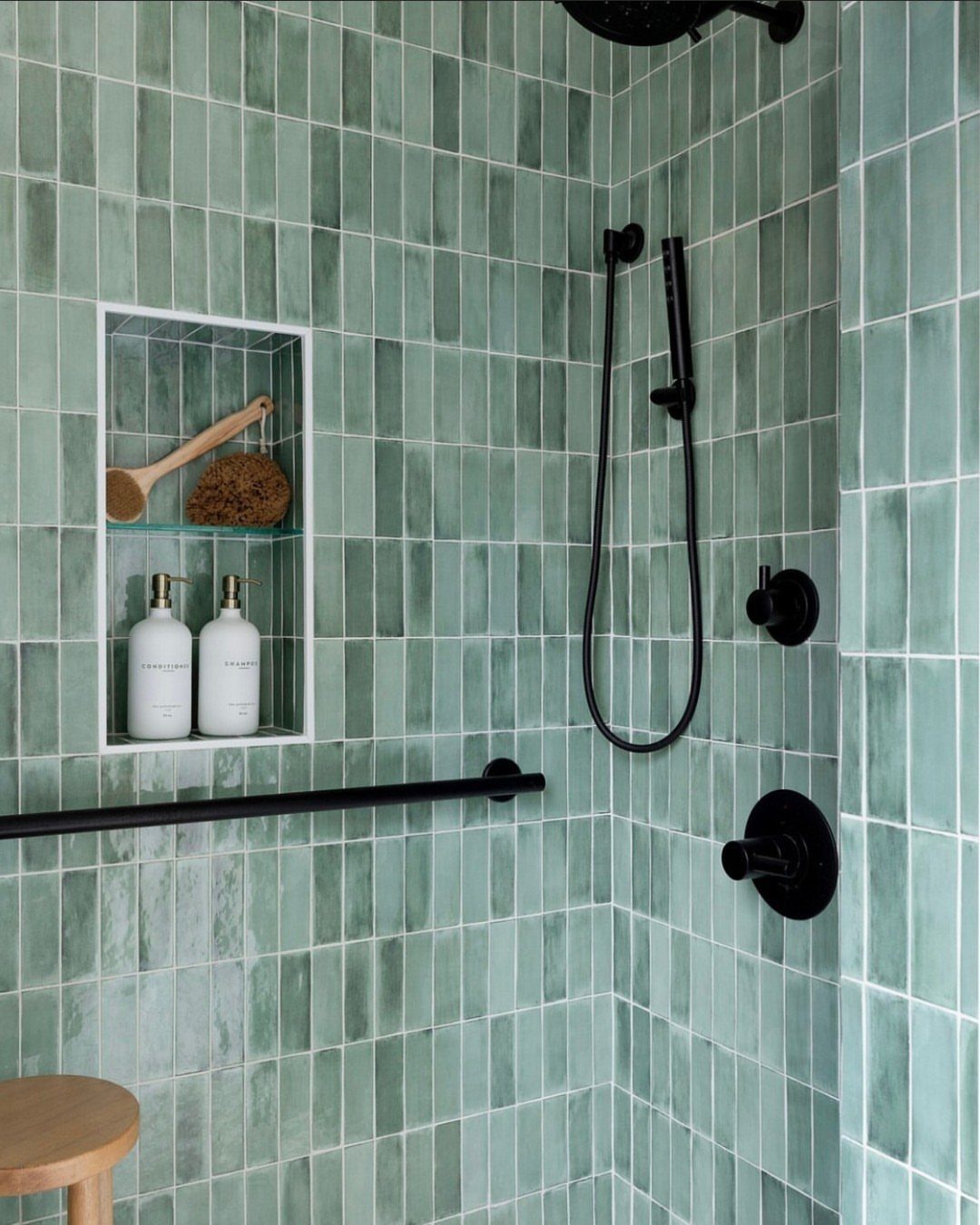
Eucalyptus green reads as color therapy in a bathroom, not a bold statement. Running 4×4 matte tile floor to ceiling, including the tub surround, keeps the tone quiet and continuous.
This shade works because it pairs with matte black hardware without looking staged; the contrast feels found, not decorated. A single wet-area wall in this tile gives the effect without the commitment of a full room.
The Lake Placid Lodge installation went full coverage, but at home I’d stop at the shower and let white or pale wood carry the rest. That keeps the cost down and the green from turning the room into a leaf.
14. Vertically Stacked Tiles
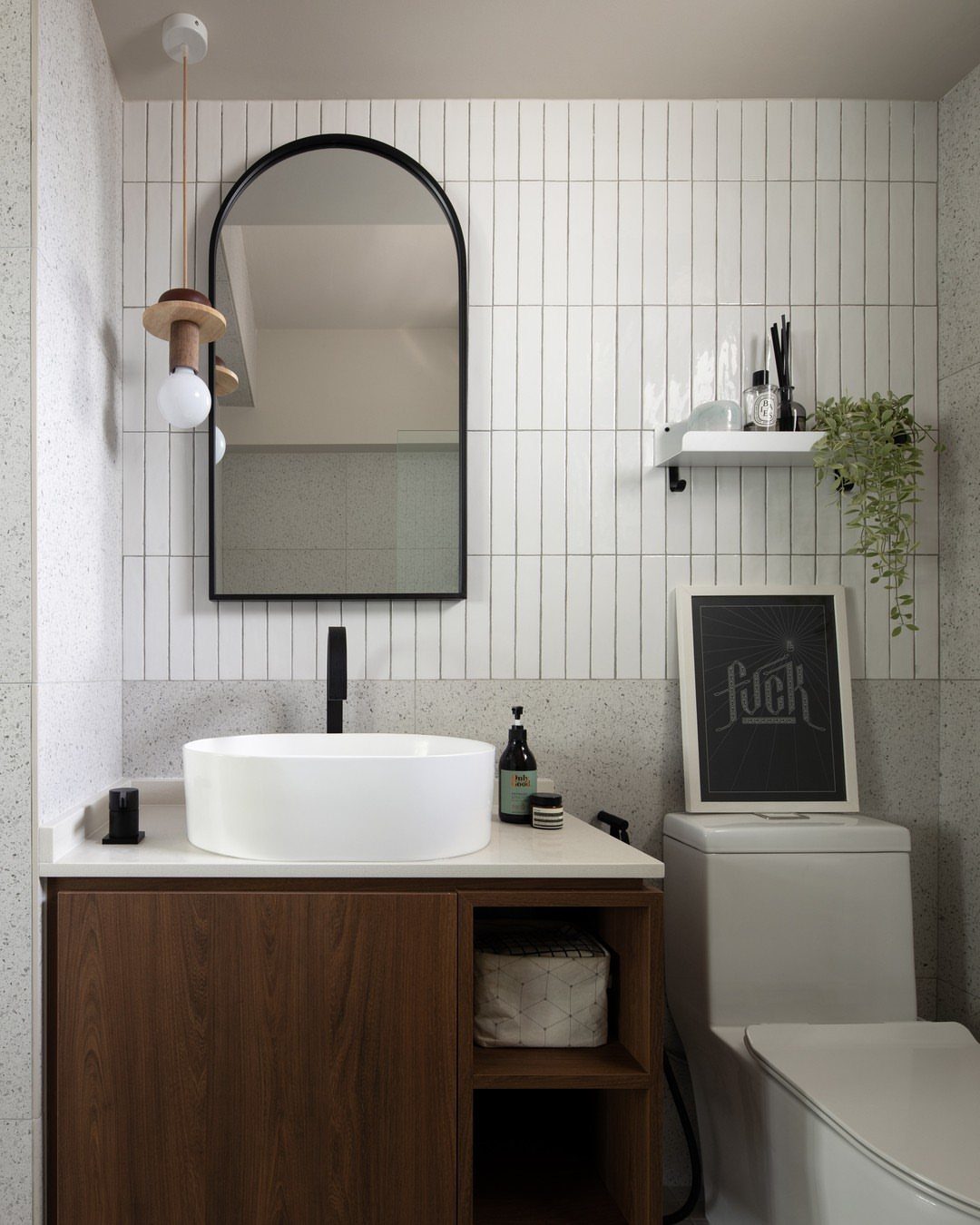
Vertical stacking turns subway tile into something tidier than its usual running bond. White rectangles aligned in clean columns above a wood vanity read more cabinetmaker than contractor.
This layout suits anyone sharing a bathroom with people who leave towels on the floor; the walls look intentionally ordered even when nothing else is. Warm white below and cool above works if you want to add depth without pattern.
Installation takes more care than offset subway; the lines show every plumb mistake. I’d hire a tiler for this one, or practice on a powder room first.
The payoff is a Scandinavian calm that reads as designed, not decorated.
15. All-Over Marble
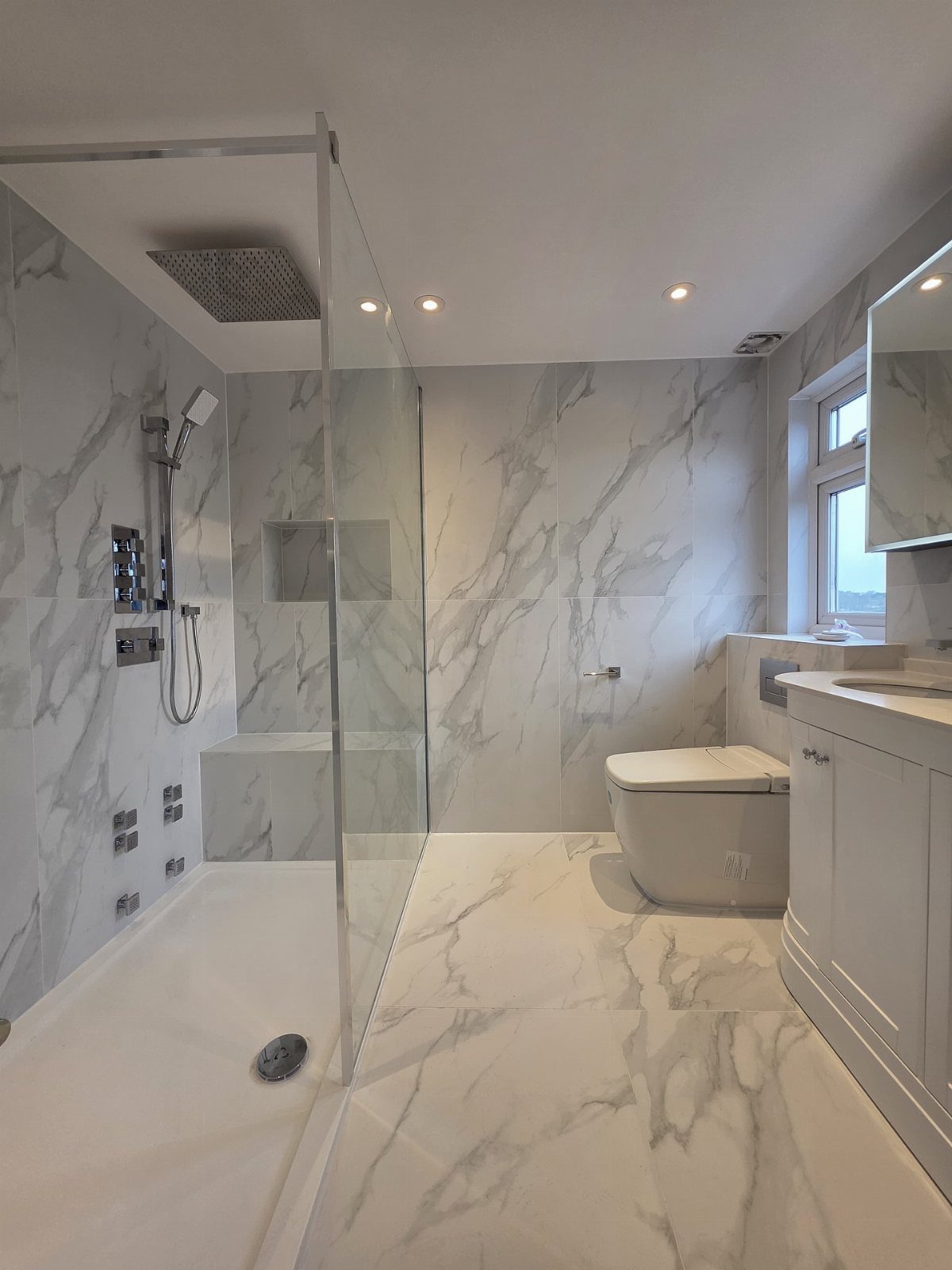
All-over marble is the hotel look that homeowners keep trying to recreate. Large white-and-grey veined tiles on every surface make cohesion the point, not contrast.
Natural marble means no two pieces match, which is either the appeal or the anxiety. Porcelain copies now mimic closely enough that most visitors won’t clock the difference, and the upkeep drops to wiping.
Porcelain marble-look tile stands up to toothpaste and hair products where real stone would etch fast.
For this reader’s budget, porcelain wins. Save natural marble for a powder room with no shower steam, or for the day your annual garden budget quadruples.
16. Leafy Motifs
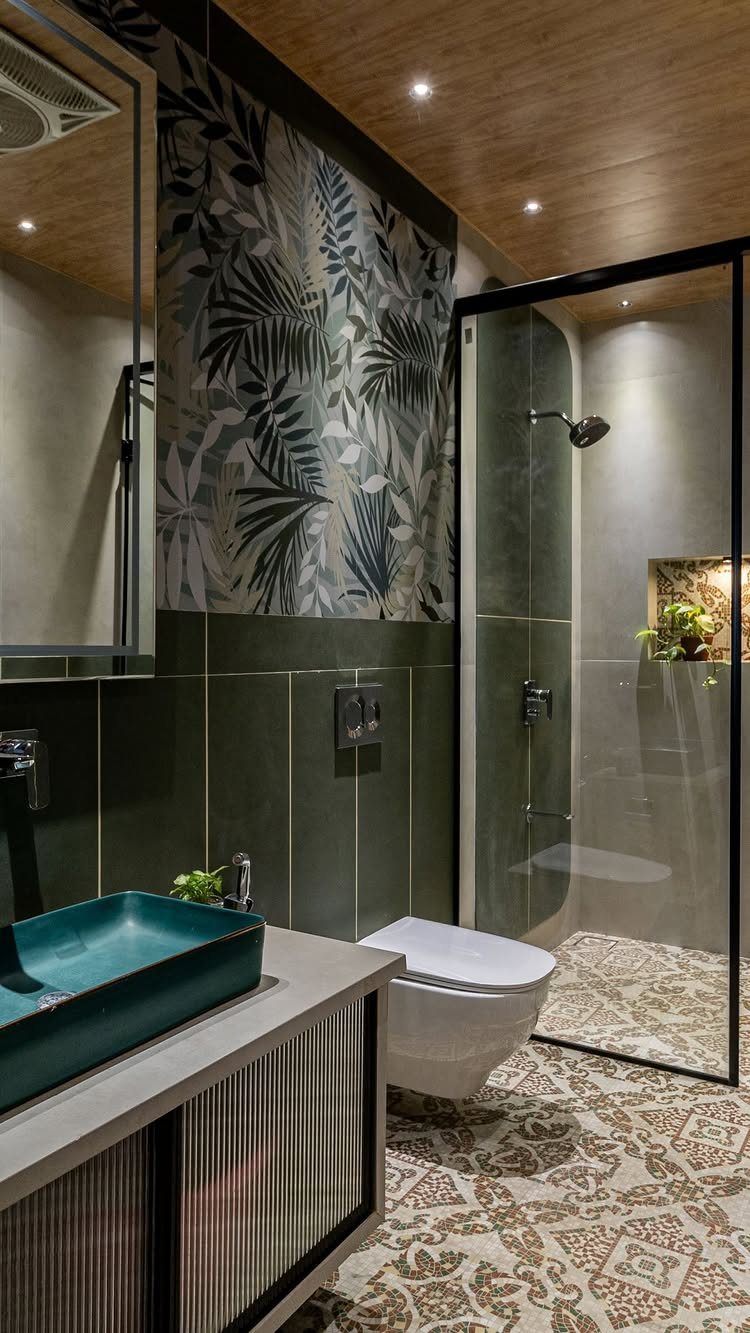
Leafy motifs bring the garden inside without the maintenance.
The photo layers them as a feature wall above dark green vertical tile, with a green vessel sink picking up the lower tone; the wallpaper or tile panel does the decorative work so the rest stays simple.
This is Japandi in practice: Japanese restraint plus Scandinavian comfort, nature referenced not reproduced. The Morris & Co.
Willow pattern fills space without clutter because the motif repeats calmly and the color stays muted.
I’d use this in a small bathroom where a full plant collection would mold and a single window limits light.
The tile or wallpaper gives the biophilic hit, the dark green base grounds it, and the glass shower keeps the room from feeling divided. One patterned surface only; two and the room becomes a conservatory.
17. Handmade-Look Tiles
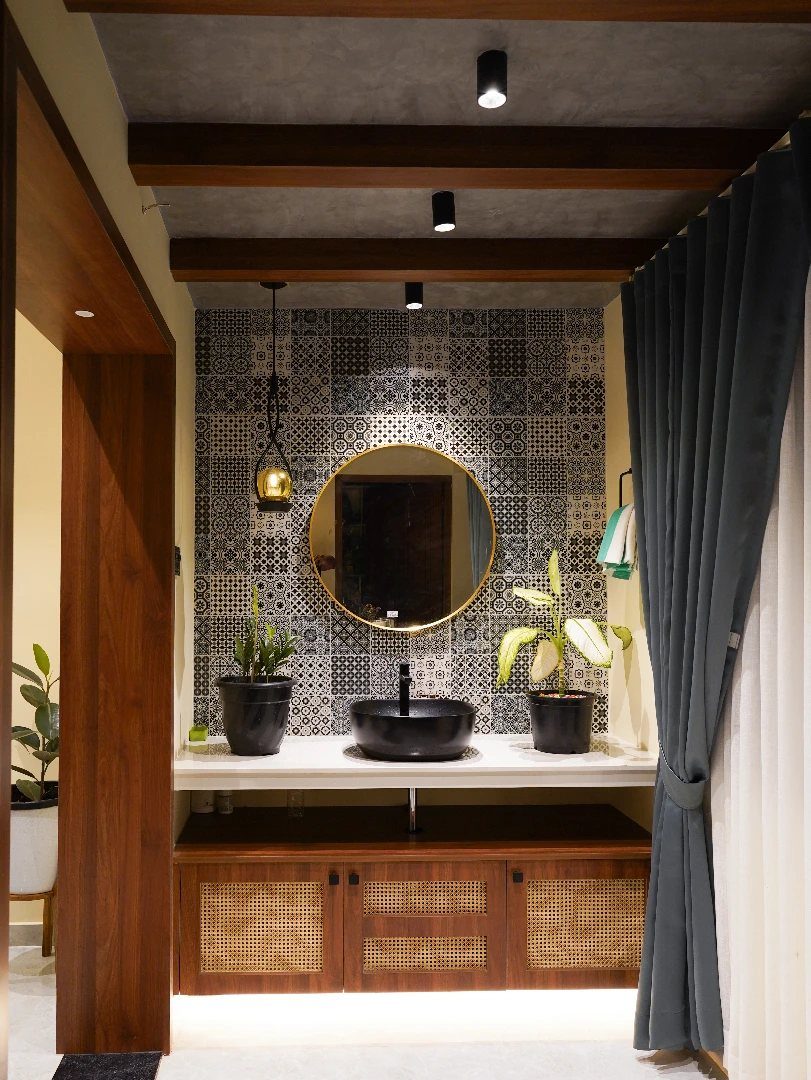
Handmade-look tiles carry the irregularities that machine-perfect ones edit out. Blue and white patterned tiles in a checkerboard arrangement, with a gold mirror and wood beams overhead, look collected over time, not ordered at once.
Marrakesh-style patterns in a modern layout, like this checkerboard, keep the tile from reading as theme-park Morocco.
Off-white paired with blue is the safer combination; I’d add the dark vessel sink only if your light is strong, since the contrast can go muddy in a windowless room.
These tiles cost more per square foot than plain ceramic and the variation between boxes means you must mix before laying. Order extra tile and open every box before your installer starts.
18. Travertine
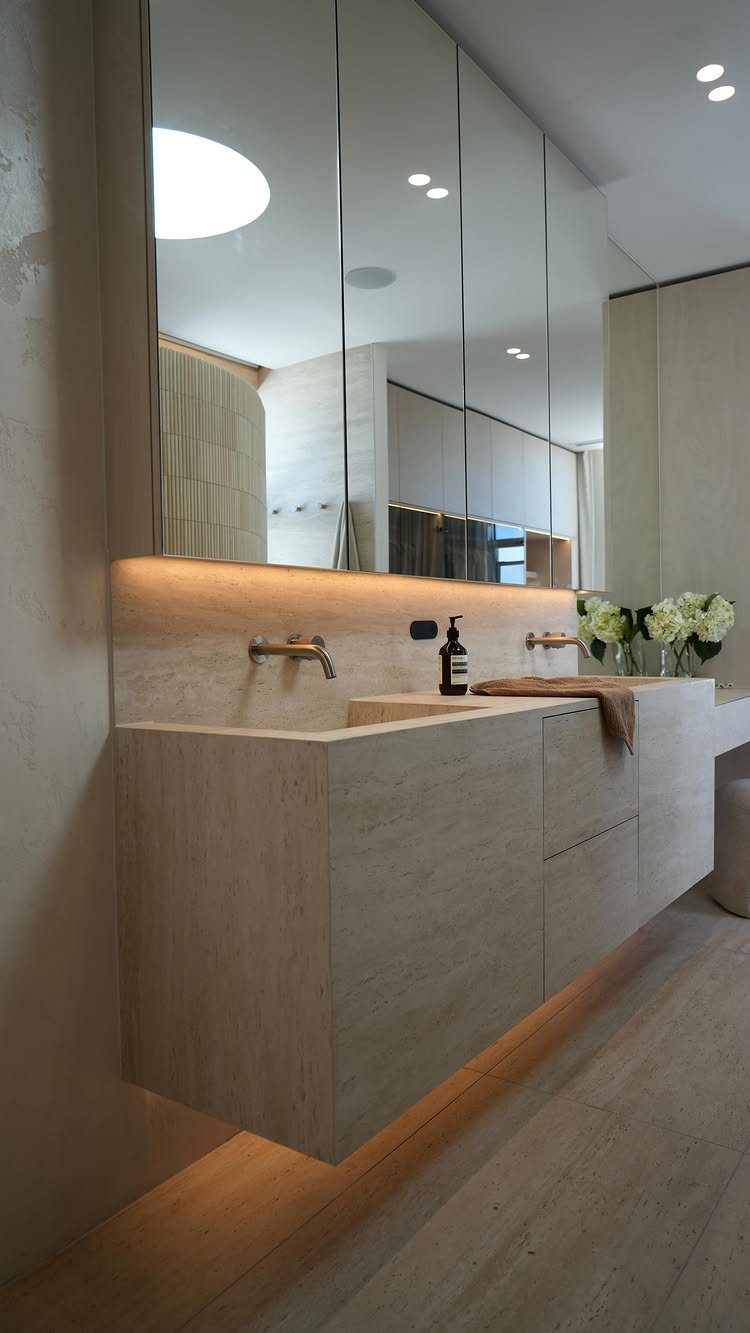
Travertine is limestone that formed in mineral springs, and the pores and pits are the point. Stone running counter to floor without a break makes the room feel carved from one material.
Each tile varies in color from warm brown to cool grey, so ordering from one batch matters. Matching trim and mosaic pieces let you carry the stone into shower niches or floor transitions without a jarring shift.
Sealing is non-negotiable; unsealed travertine in a bathroom stains from conditioner drips and toothpaste splatter. Seal before install and again half a year later.
Travertine-look porcelain exists for cost watchers, but real stone under warm LED lighting has a depth the copies rarely reach.
Best Tile Materials
Porcelain and ceramic tiles are the practical choice for bathrooms that see daily use. Porcelain absorbs less than half a percent of water, which keeps it from swelling or staining in a steam shower.
The PEI rating on the box tells you how much foot traffic it can take; a 3 or 4 suits most residential baths.
Porcelain tile has gotten better at pretending to be something else.
You can find it in wood grain, stone texture, and prints that look hand-painted, so the floor that holds up to wet feet and dropped hair dryers doesn’t have to look like a locker room.
The Leona 24×24 in Marfil is one example of a stone-look porcelain that reads as elegant without the upkeep.
Ceramic is lighter and easier to cut, which matters on walls where weight adds up.
Current Tile Trends
Oversized tiles are the clearest trend in current bathroom design.
Subway tile has shifted vertical. Stacking white rectangles in columns rather than offset rows reads as intentional and calm.
Soft sage grout against white tile gives a muted color hit that does not fight the fixtures.
Neutral palettes dominate, but the neutrals have warmed. Beige and cream checkerboards replace the stark black-and-white of earlier years.
Geometric designs stay current when they are precise: 3D cube floors, herringbone layouts, and grid-stack installations that show every plumb line.
The subtle sheen avoids the sterile feel that full gloss can give, and it hides water spots between cleanings.
Unique Tile Ideas
Mixing tiles takes more discipline than mixing colors. What ties a bathroom together is repetition.
White grout in a stacked subway wall can pick up the white lines running through a patterned floor, and a hexagon shower floor can repeat the same shape from that pattern at a smaller scale.
Four different tiles in one small room only works when something connects them.
Color drenching, running one hue across every surface, needs a tone that holds up to repetition.
Texture mixing is the quieter way to add interest. A glossy hex beside a matte subway, or a textured wall tile against smooth floor porcelain, gives contrast without pattern clash.
The risk is that textures compete; limit yourself to two finishes per room, and let one dominate.
Decorative tiles, like the Ellie 5×5 in Moss, work best as a single accent wall or niche back. Full coverage of a bold pattern turns the bathroom into a gallery you cannot leave.
Benefits of Fully Tiled Bathrooms
A fully tiled bathroom is easier to clean than one with painted walls and a tile skirt. Water splashes, steam condenses, and hair products overshoot; on tile, you wipe and move on.
On painted drywall, the same splatter stains or softens the finish over time.
The cohesive look is a side benefit. Large-format tiles extend that logic by cutting the visual grid to almost nothing.
Moisture protection is the structural argument. Tile with proper backing and grout resists the rot that hides behind walls in half-tiled baths.
The upfront cost is higher, but the repair you avoid, the one that opens a wall to fix mold, costs more and disrupts longer.
For a small bathroom, full tiling is often the right call. The surface area is limited, so the material cost stays reasonable, and the gain in durability and calm is immediate.
Frequently Asked Questions
What is the current trend for bathroom tiles?
Oversized tiles, neutral palettes, and geometric designs are the directions I see most often now.
What are some unique bathroom tile ideas?
Zellige tiles with their deliberate warp and uneven glaze read as water or sky rather than grid, each tile carrying its own color shift.