
The ideas below range from a quart of paint and an afternoon to built-in carpentry that ties into wall studs, so the deciding factor is how long you plan to stay and what your lease allows.
A Murphy bed buys back floor space for a studio that hosts guests twice a month, but making it every morning gets old fast if you sleep there nightly.
1. Beds with Storage Drawers
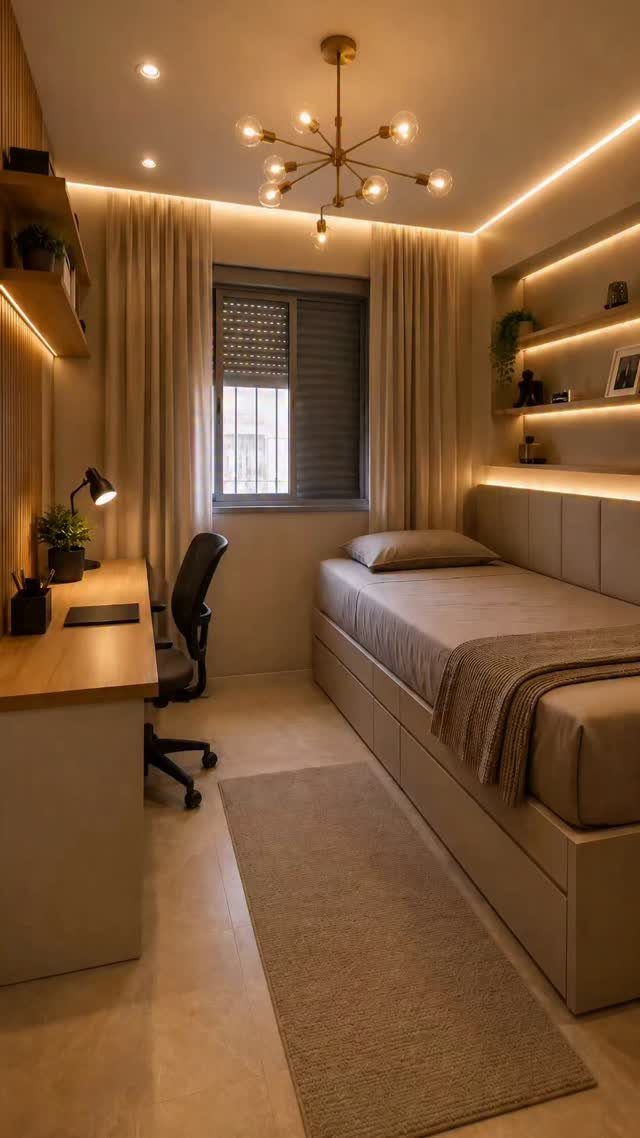
Storage drawers under the bed turn dead space into the most useful square footage in a small apartment.
I look for frames where the drawers run on metal glides, not fabric bins that sag and snag, because a drawer that sticks gets ignored and turns back into clutter.
A bed with side-facing drawers works best against a wall with a desk tucked beside it; check the frame’s orientation before you buy so the drawers actually open into the room.
A captain’s bed with drawers underneath replaces a small dresser entirely, and you lose no walking space.
I’d skip this if your bed sits in the middle of the room with circulation on three sides; the drawer access fights the layout.
2. Large Mirrors
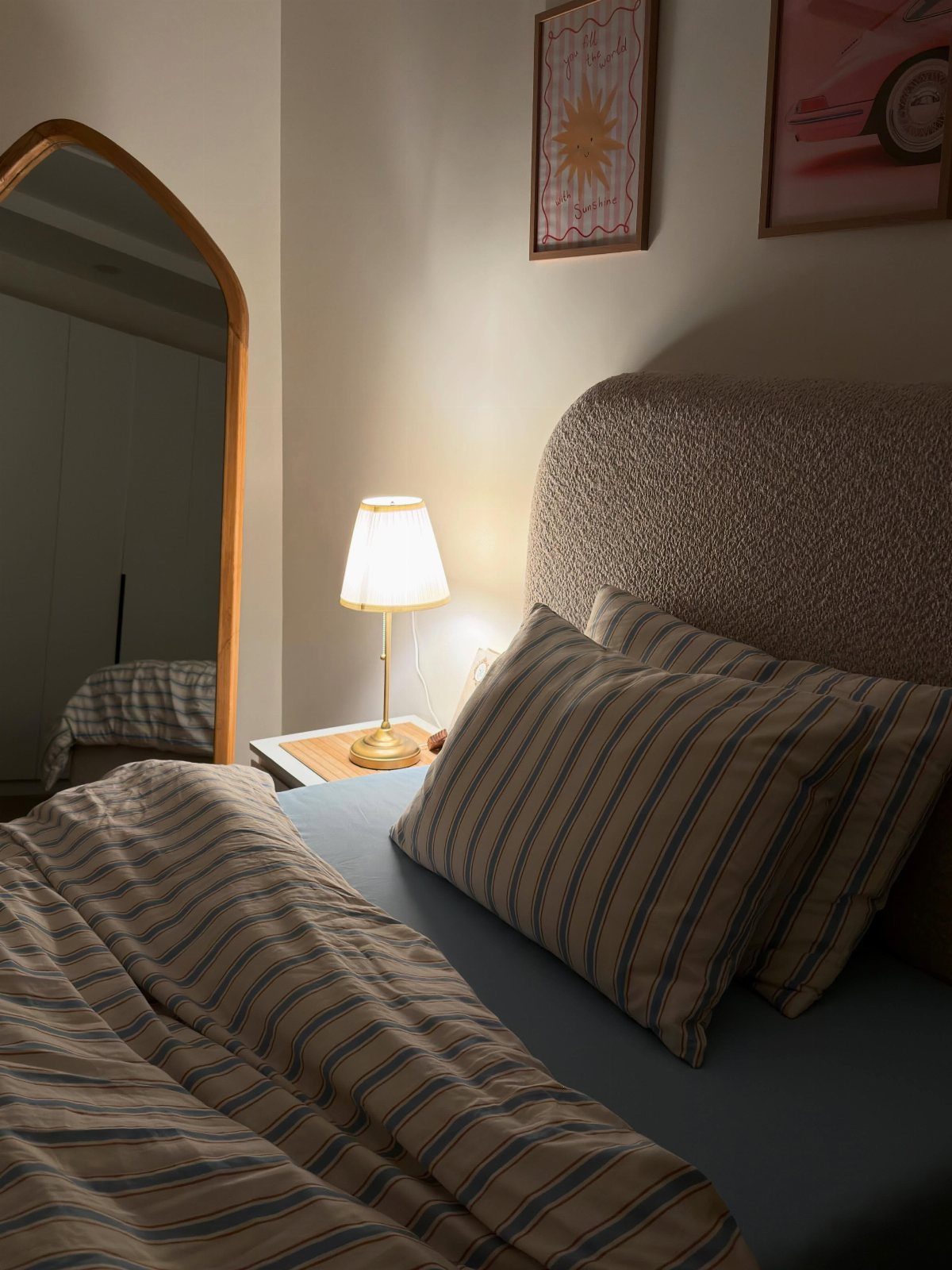
A mirror bounces the light you already have and doubles whatever view the window gives, which matters when the window faces a brick wall or an air shaft.
An arched floor mirror that leans rather than hangs lets you shift it as the sun moves or as you rearrange furniture, and it spares you finding wall studs in rental plaster.
I place mine where it catches morning light and reflects the bed, which sounds odd until you realize it gives the room depth from the doorway.
A mirror opposite the window works better in theory than in practice in a narrow room; you end up with two bright spots and a dim middle.
For apartments where the bed has to face the window, try the mirror on the adjacent wall instead.
3. Sheer Curtains
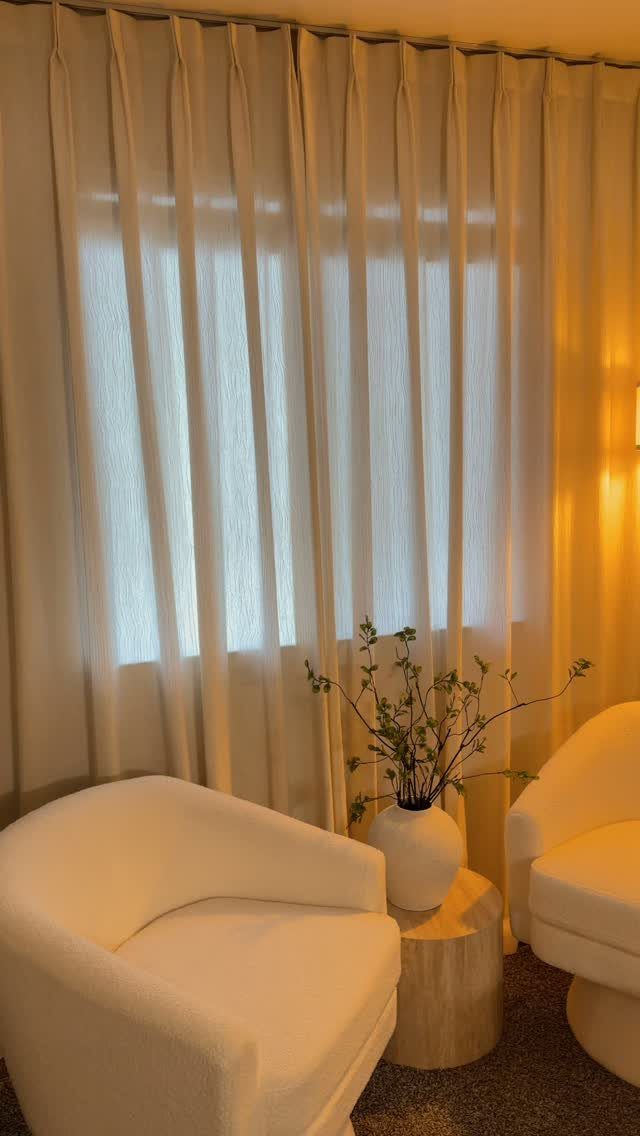
Sheer curtains filter light without blocking it, and in a small bedroom that makes the window feel larger than its actual frame.
Pleated panels that pool slightly on the floor only work if you have baseboard heat or radiators set back enough; otherwise the fabric blocks convection and the room stays cold.
I hang mine from a rod mounted a few inches below the ceiling, not at the window frame, because that extra height draws the eye up and stretches the wall.
Privacy after dark is the weakness; sheers glow like a lantern with a light on inside.
I layer a blackout roller behind mine for sleeping, or just accept that this setup suits bedrooms where you change elsewhere and sleep with the door closed.
4. Tall Bookshelves
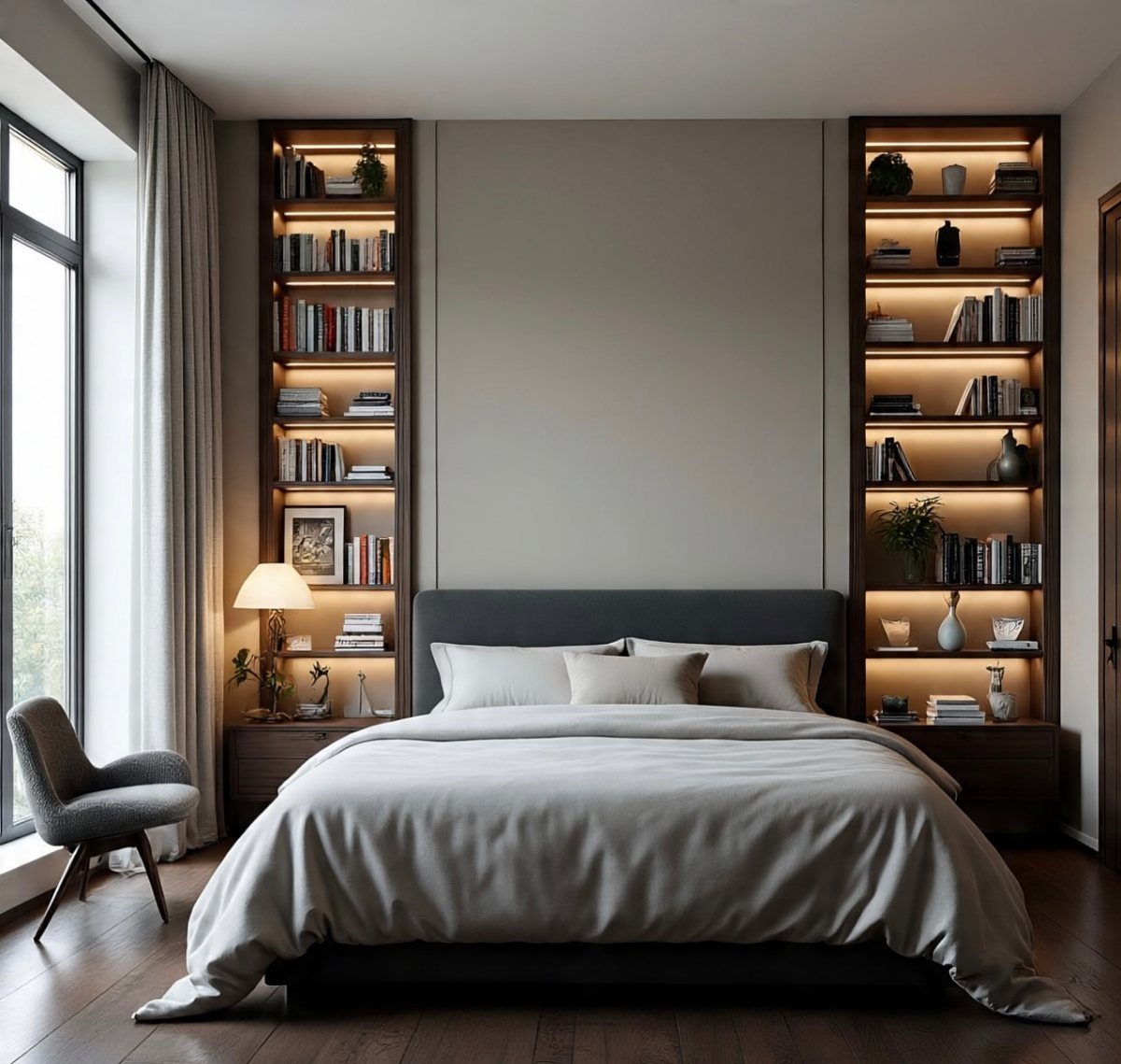
Tall bookshelves draw the eye up and keep the floor open, which in a small bedroom matters more than the storage they actually hold.
Built-in bookshelves flanking the bed like towers, with lights tucked into each shelf, let you skip bedside lamps and gain back the table surface.
I measure ceiling height before I commit, because a shelf that stops a foot short looks apologetic, and one that scrapes the crown molding traps dust you cannot reach.
Freestanding units need anchoring to the wall, non-negotiable in earthquake zones or with any child who climbs. For renters, a single tall narrow shelf in a corner gives most of the effect without the built-in commitment.
5. Light Colors on Walls
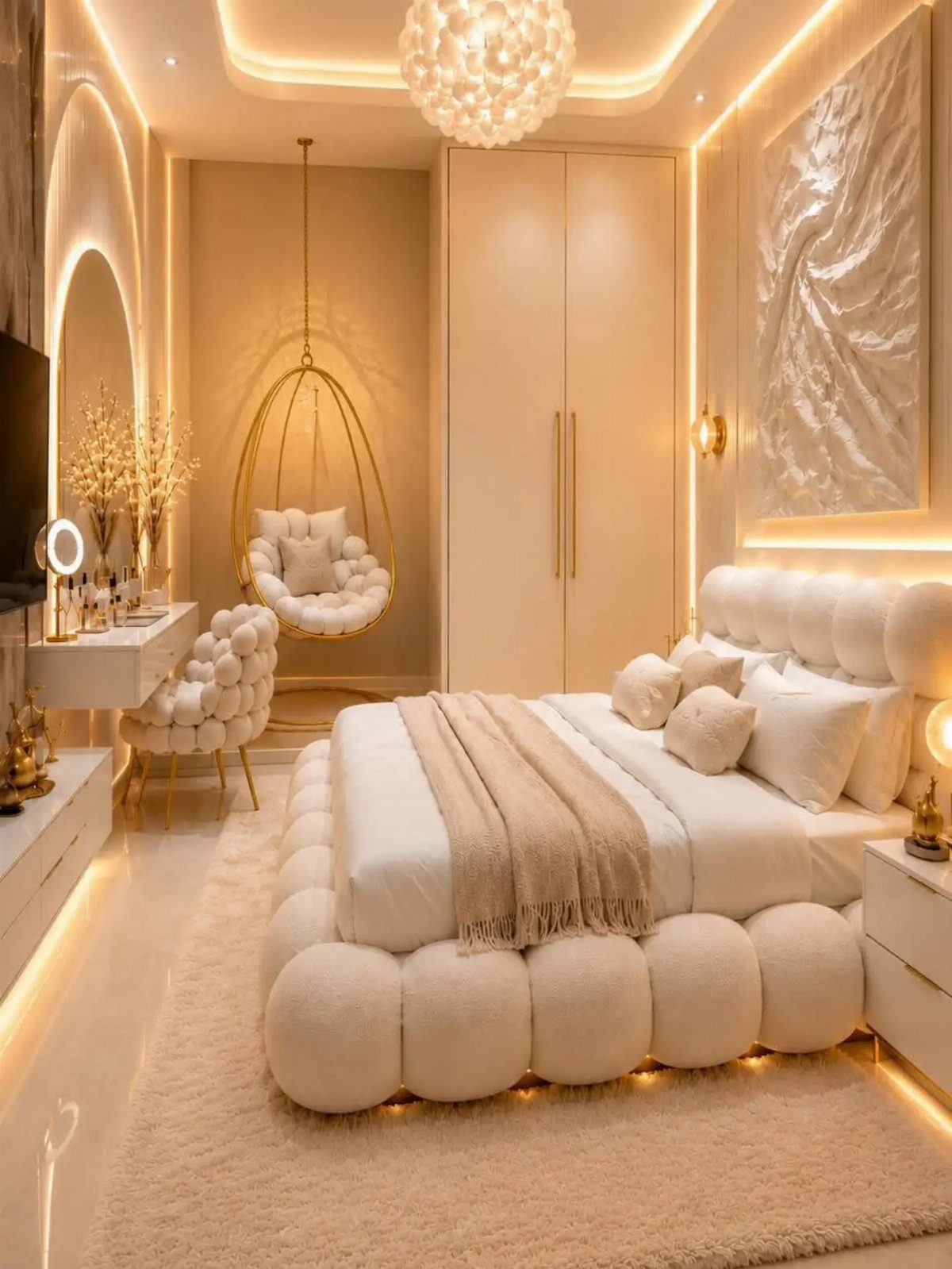
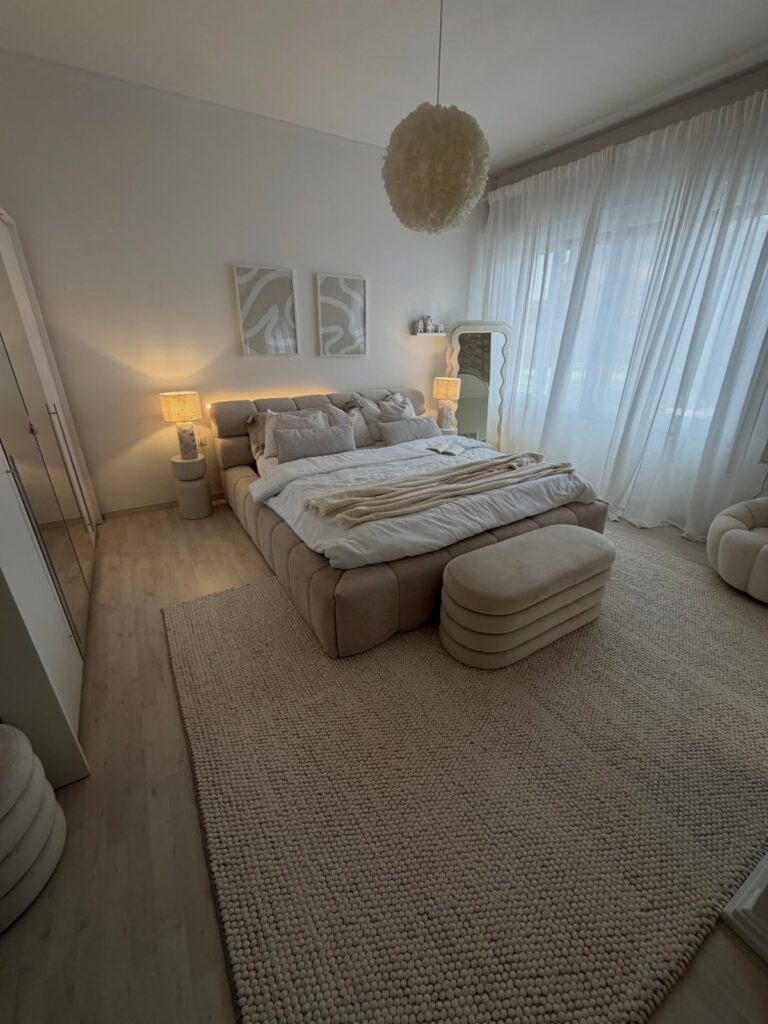
Light walls recede and let the room breathe, but an all-cream bedroom works because the textures vary: tufted velvet, woven swing seat, plaster relief. Without that variation, pale reads as institutional.
I start with the floor when I choose a wall color; warm oak calls for cream with a yellow undertone, gray vinyl wants something cooler, and the wrong pairing makes both look dirty.
A ceiling that matches the walls flattens the box and helps low ceilings feel higher.
Dark paint on a ceiling can work too, but only when the walls stay lighter and the room gets strong natural light; otherwise you live in a well.
For north-facing apartments or ones where the bedroom window faces another building, I’d stay in the warm off-whites and add the interest through textiles instead.
6. Built-in Units Around Beds
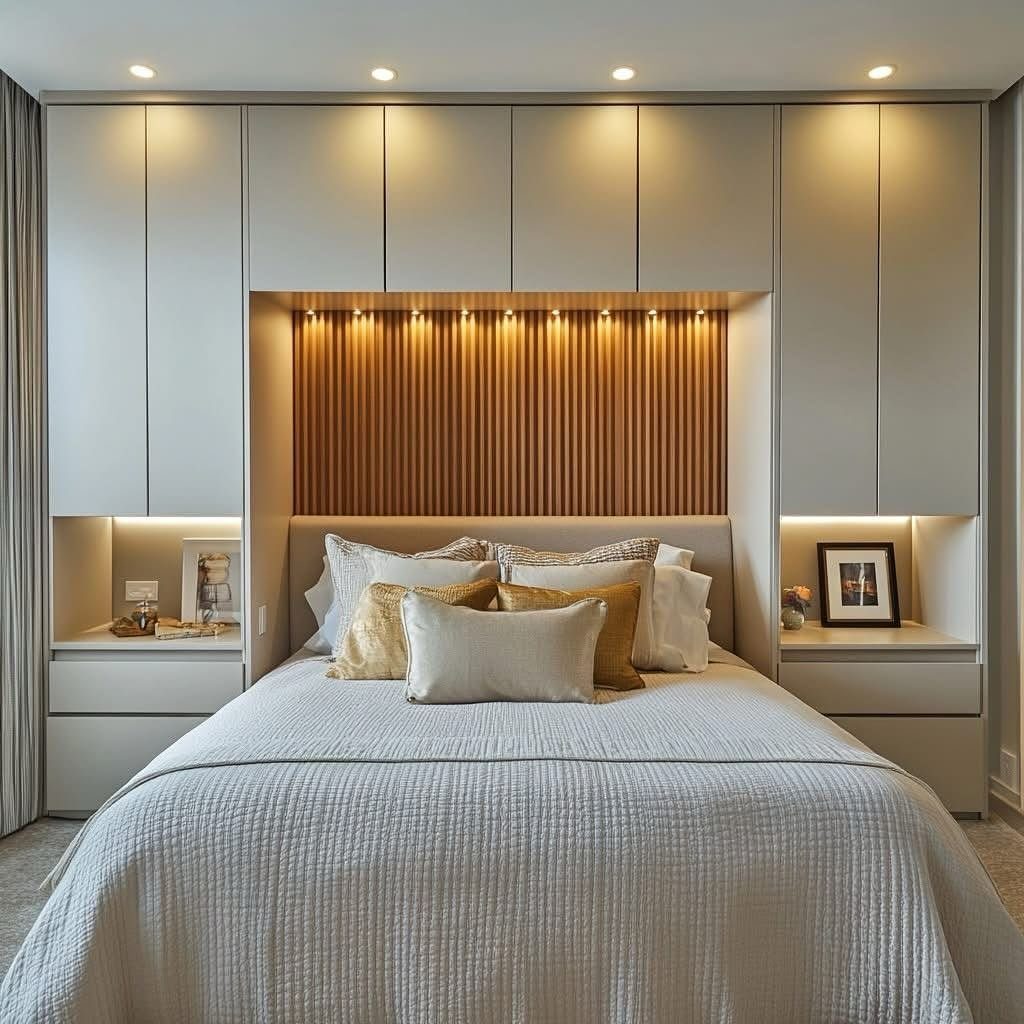
Built-in units around the bed turn the whole wall into furniture, so nothing projects into the room to break your shin on a midnight trip to the bathroom.
Overhead cabinets, side niches, and a slatted headboard panel let air move behind the bed, which matters if you sleep hot and the mattress sits against a solid backing.
Built-ins fix your bed position; you cannot rotate the room when you tire of the layout.
For renters or the indecisive, a modular system that bolts together but comes apart fills the same wall without the permanence, though it rarely looks as settled.
7. Voluminous Drapery
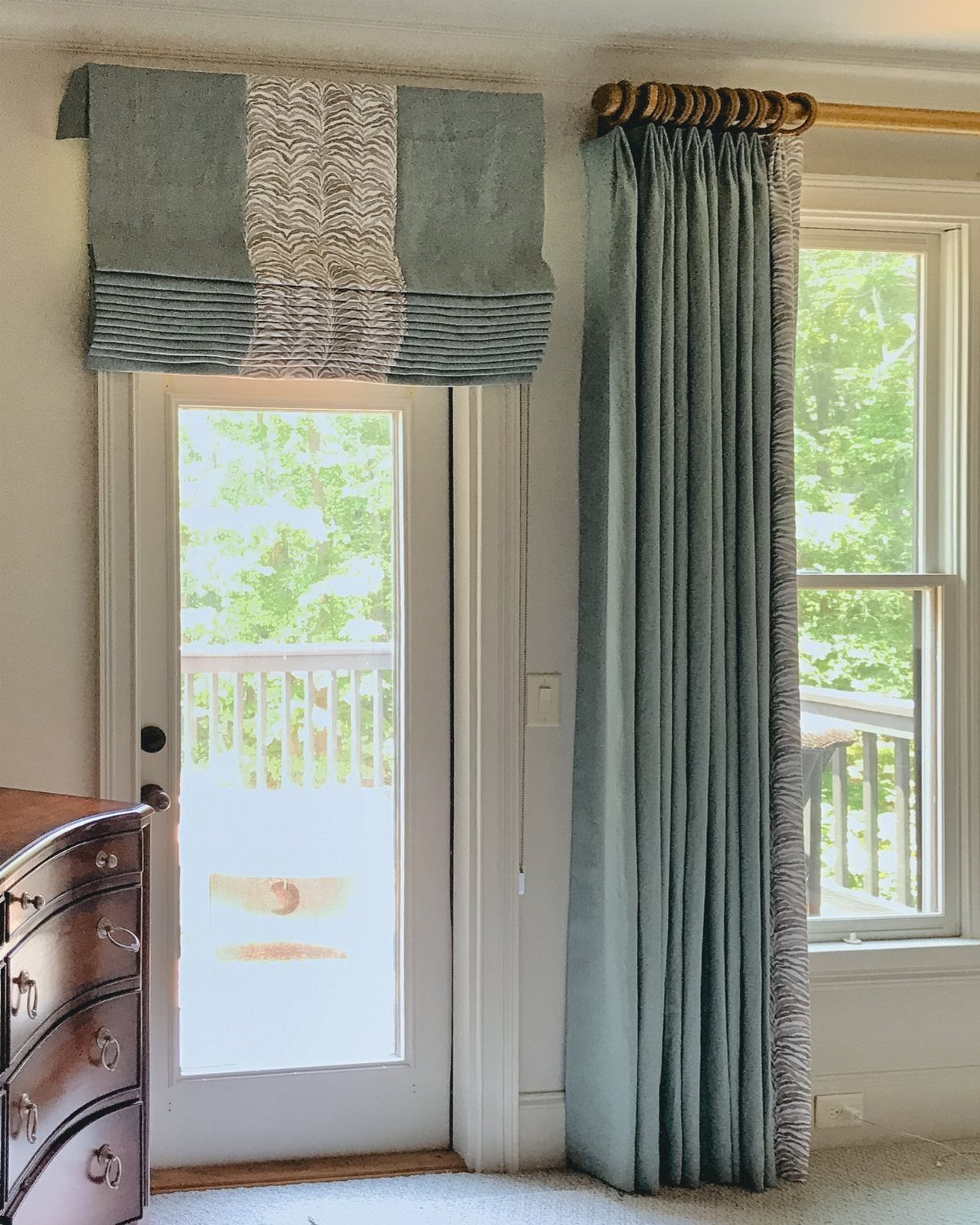
Voluminous drapery turns a basic window into the room’s main event. Layering matters: start with a woven shade for privacy, then add full panels on top that puddle slightly at the floor.
Mount the rod several inches above the window frame and wider than the glass itself; the trick makes both the window and the ceiling feel taller than they are.
Patterned fabric reads richer than solid, but keep the scale large enough that it does not turn busy in a small room.
This suits renters who can patch a few screw holes later, and anyone whose bedroom faces another building rather than a view. Cleaning these takes more work than blinds, and dry cleaning adds up fast.
8. Try a Murphy Bed
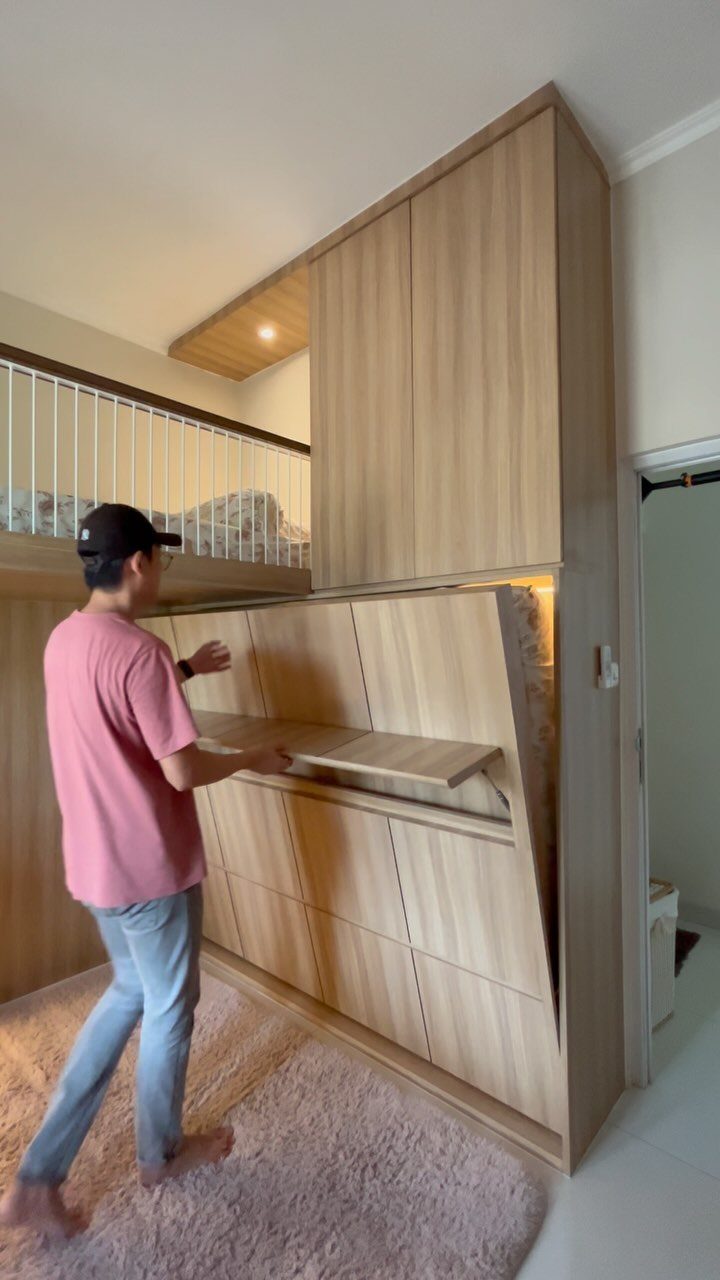
A Murphy bed buys back your floor space on demand. The cabinet folds flat against the wall by day, then drops down for sleeping.
What changes the answer is what else the wall must do: some units integrate a desk or shelving that stays in place, others clear everything when the bed descends.
Check ceiling height first. Wall-mounted units install easier than floor-mounted ones, which need to tie into studs or subflooring.
A basic kit costs far less than custom cabinetry with matching hardware.
Best for studios where the bedroom is also the living room, or for a home office that hosts guests twice a month. If you sleep there nightly, making the bed every morning gets old fast.
9. Headboard with a Pattern
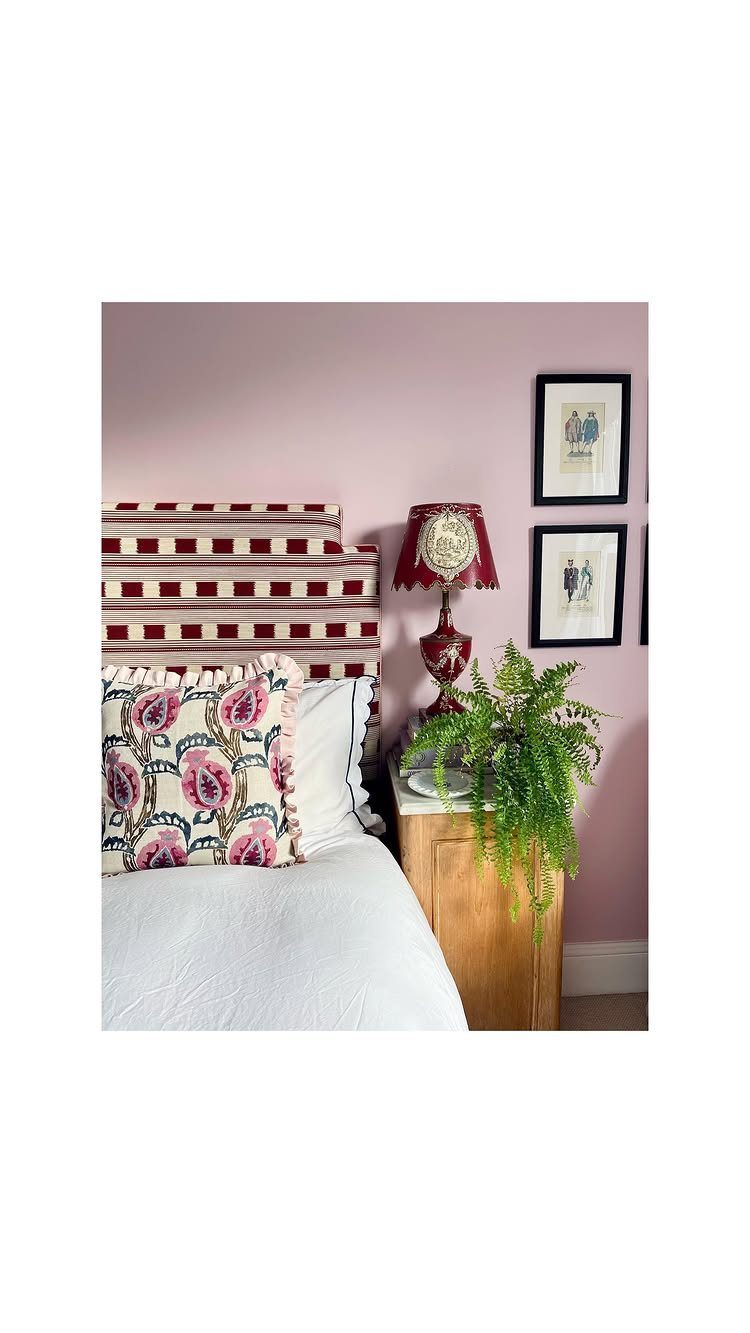
A patterned headboard carries the whole room so nothing else has to. The eye travels upward, which helps a low ceiling feel less pressing.
Upholstered works better than wood for this; fabric takes print cleanly where grain fights it. Keep the bedding simple, white or solid, so the headboard stays the one statement.
Scale matters: a bold large repeat reads calmer than a tiny busy one in tight quarters.
This solves the problem of a rental with beige walls you cannot paint. It also suits anyone who tires of a look fast; recovering a headboard costs less than reupholstering a sofa.
The hard part is finding the right textile. Order samples and live with them in morning and evening light before committing.
10. Bedding and Upholstery
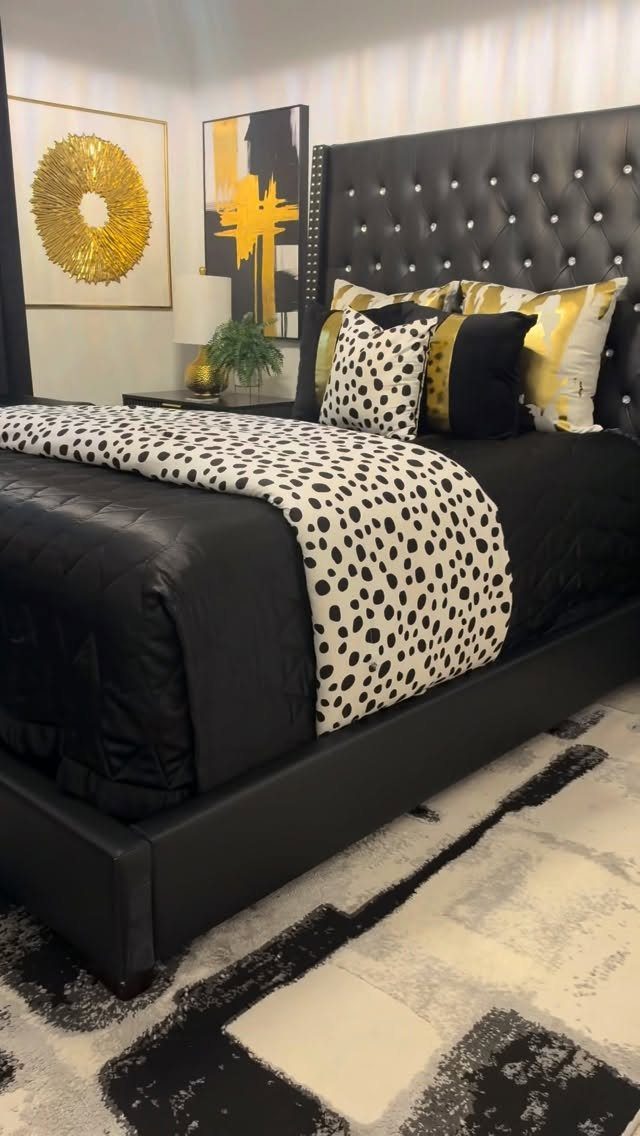
Bedding and upholstery do the heavy lifting when the architecture offers nothing. Black against white, a spotted print mixed with gold: the bed becomes the whole design in a room with plain walls and standard shades.
Start from a neutral base, white or cream, then layer in two or three fabrics that share a color but differ in scale.
A large geometric print on the duvet, a small one on a pillow, a solid velvet for the bench at the foot. The mix reads intentional, not accidental, as long as the palette stays tight.
This approach costs less than replacing furniture and moves with you. The limit is laundry: interesting fabrics often dry-clean only, and a bed you cannot wash easily is a bed that smells like sleep fast.
I’d pick cotton percale with print for anyone with pets or a tendency to breakfast in bed.
11. Bold Light Fixture
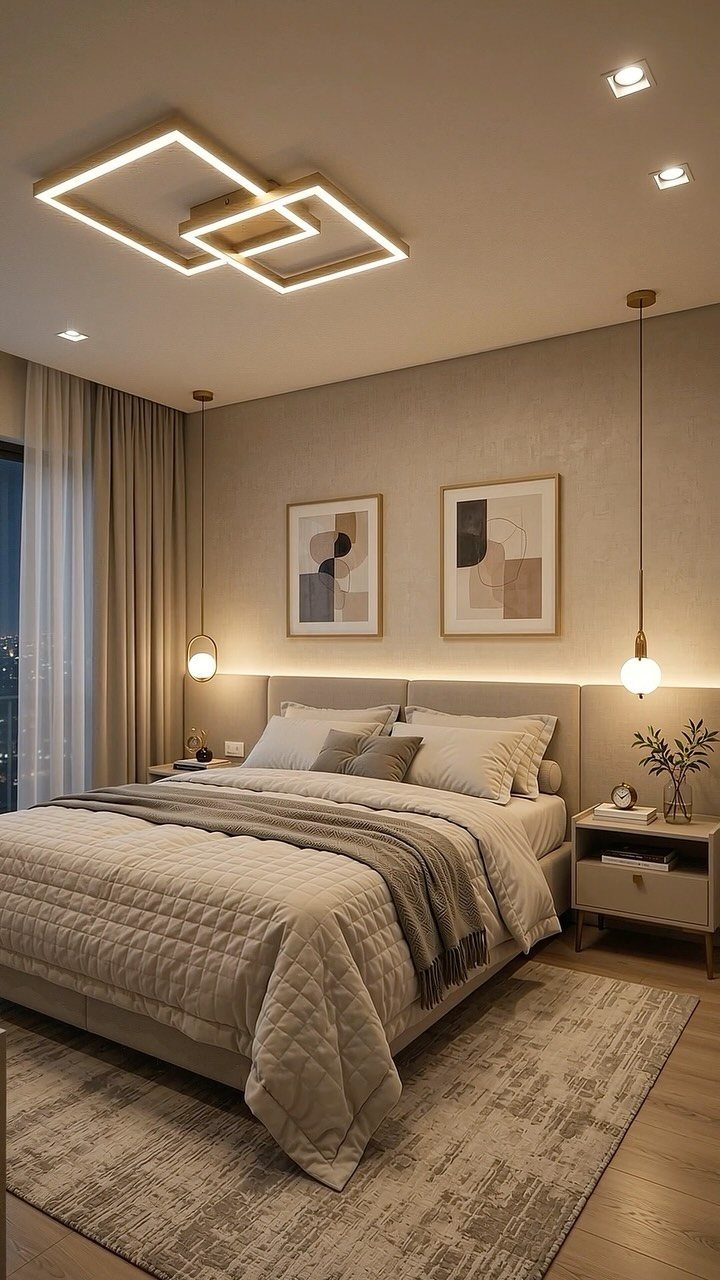
A bold ceiling fixture raises the line of sight and stretches the walls outward. The eye goes up first, so the room reads larger even when the floor area stays the same.
Sculptural shapes work harder than flush mounts; a geometric LED or a cluster of globes gives the brain something to linger on.
Height sets the choice. In a standard ceiling, a flush or semi-flush fixture keeps headroom; only go pendant if you walk under it safely.
Dimmer switches matter more here than with recessed lighting, since a statement piece at full blast becomes a spotlight, not atmosphere.
Renters can swap a ceiling fixture and store the original to reinstall later. The electrical box must support the weight, though; a heavy chandelier needs bracing beyond what a simple crossbar gives.
For a weekend project, I’d pick plug-in sconces or a floor arc instead.
12. Headboard with a Unique Shape

A headboard with an unusual shape, curved or wavy or arched, does the work of art without needing a frame on the wall. The bed becomes sculpture, and the wall behind it stays clear, which reads as more space.
Upholstery softens the silhouette and keeps the look from going too architectural for a bedroom. Velvet or a heavy linen holds the shape over time; cheap foam collapses and the curve goes lumpy.
The wall color matters less than the lighting: backlighting the paneling, as in this room, doubles the drama but requires planning during wiring, not after.
This suits someone with one long wall and no room for nightstands on both sides; the headboard carries the visual weight so the asymmetry does not feel empty. The downside is cost.
A flat wall and a can of paint in an arched shape behind a simple bed fakes the idea for the price of tape and patience.
13. Black Accents
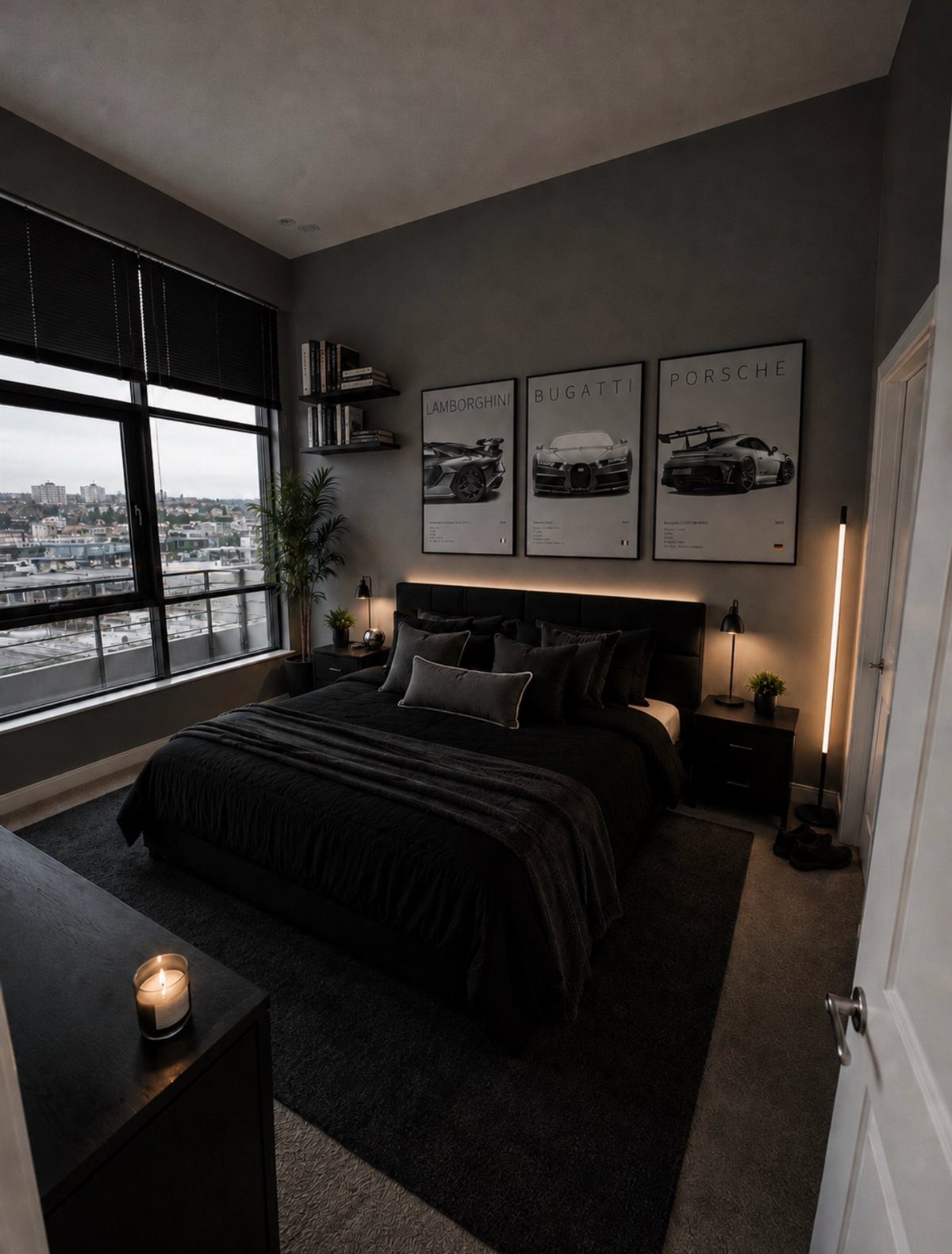
Black bed frames, nightstands, and rugs read as intentional rather than heavy when they sit against lighter walls or floors. A grey wall keeps the room from feeling cave-like while still letting black pieces anchor the space.
Concentration matters: one or two black items look like an accident, but a small group registers as a decision. Car posters or graphic prints in black frames reinforce the scheme without adding color clutter.
This suits renters who cannot paint but want a designed look. Black shows dust and pet hair immediately; a quick-dust schedule matters more than with wood or white.
14. Bedside Sconces
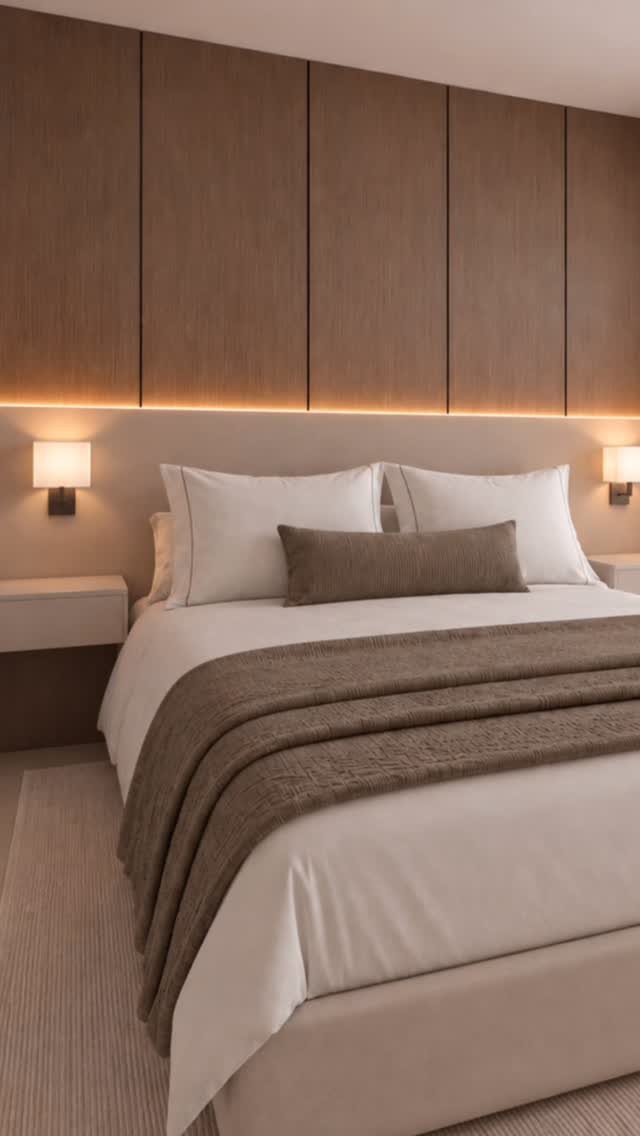
Wall-mounted sconces free the nightstand surface for a book, a glass of water, or nothing at all. In tight bedrooms, reclaiming the space a sconce frees up can be the difference between a cramped passage and a walkable aisle.
Small square shades on short arms cast light downward for reading without glare across the pillow. Hardwired sconces need an electrician; plug-in versions with a cord channel down the wall suit renters and cost less upfront.
I’d pick plug-ins for anyone who might move soon. The cord is visible, but so is the money you did not spend on wiring.
15. Built-in Window Seat
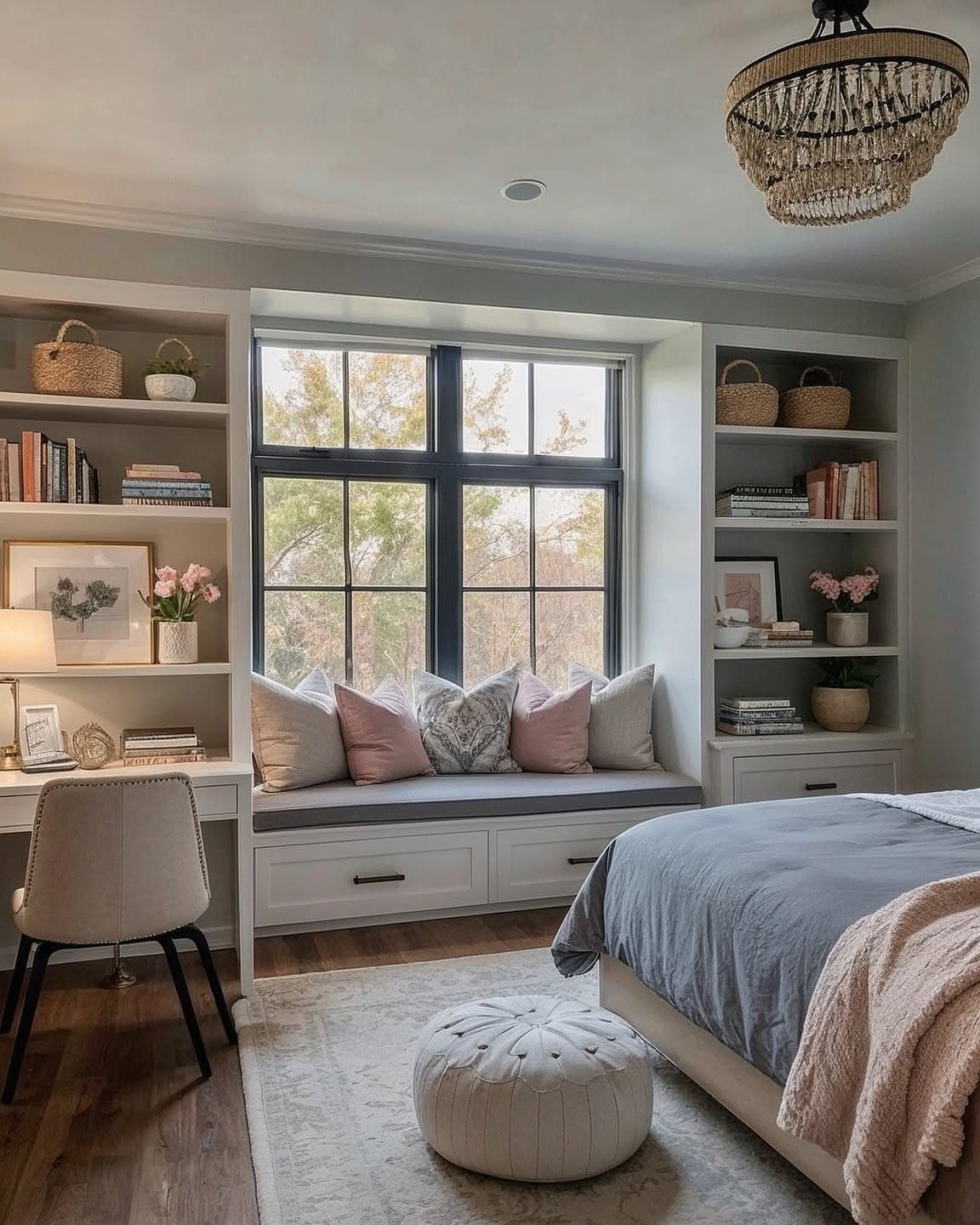
A window seat with drawers underneath turns a view into usable square footage. A bench between built-in shelves turns the whole wall into storage and seating in one gesture.
Custom carpentry runs high, but a simple box bench on locking casters, topped with a cushion from an upholstery shop, achieves a similar function for less.
The critical measurement is depth: a shallower bench supports sitting, a deeper one allows curling up. Anything deeper blocks window light and walkway.
This works best in bedrooms where the window is already the natural focal point. If your view faces a brick wall or air shaft, skip it and spend the money on better curtains.
16. Floral Wallpaper Behind the Bed
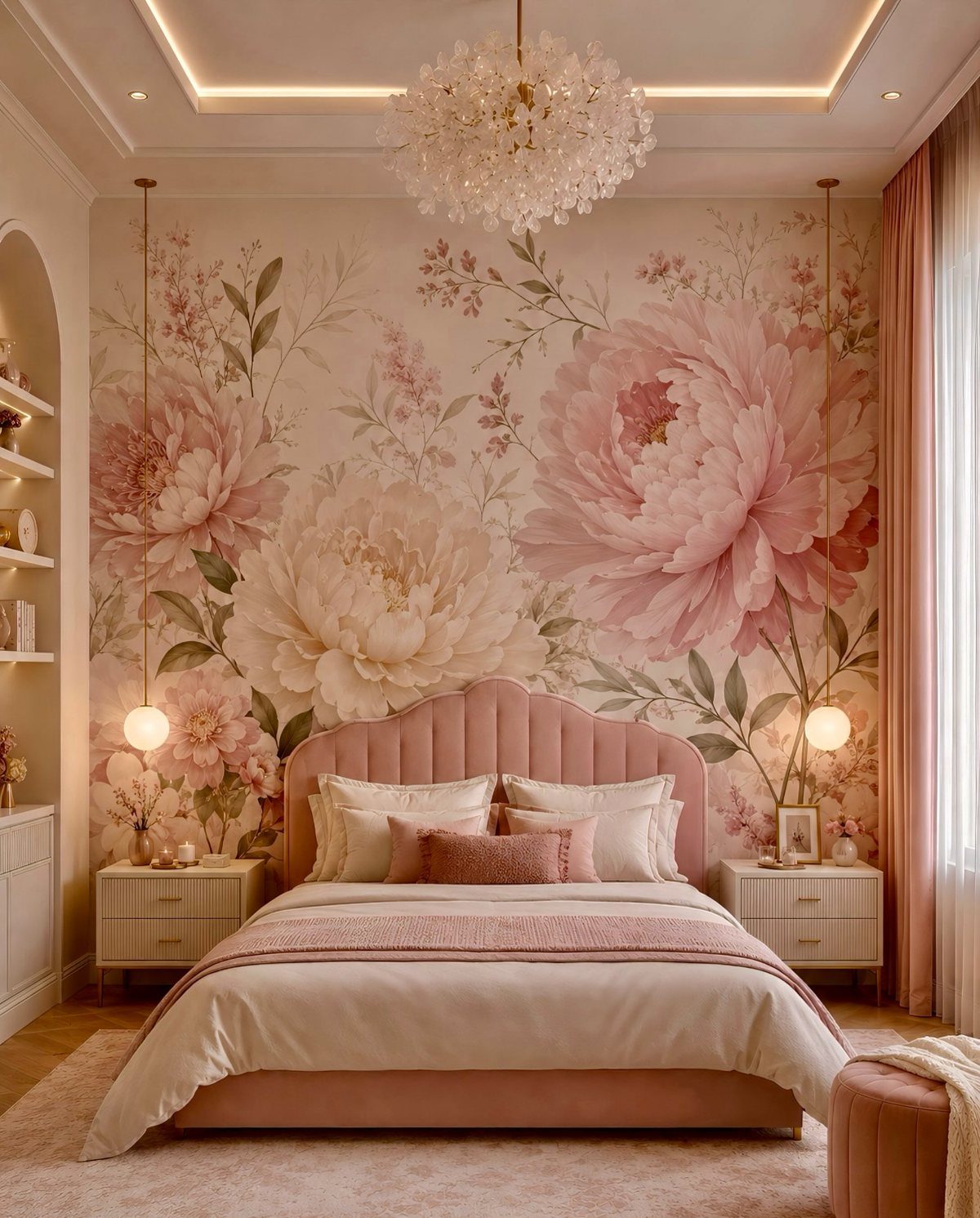
Floral wallpaper behind the bed replaces a headboard and gives a small room its single moment of pattern. Mural-scale flowers read as art, not granny; pink tones tie to the upholstered bed without matching exactly.
Peel-and-stick rolls have improved enough that renters can use them without landlord negotiations. A single accent wall needs only a few rolls; the cost stays modest for most beds.
The risk is visual weight. Large florals in a small room can feel like the wallpaper is leaning on you.
In that case, a smaller repeat or a border at ceiling height carries the idea without the overwhelm.
17. Compact Bedside Tables
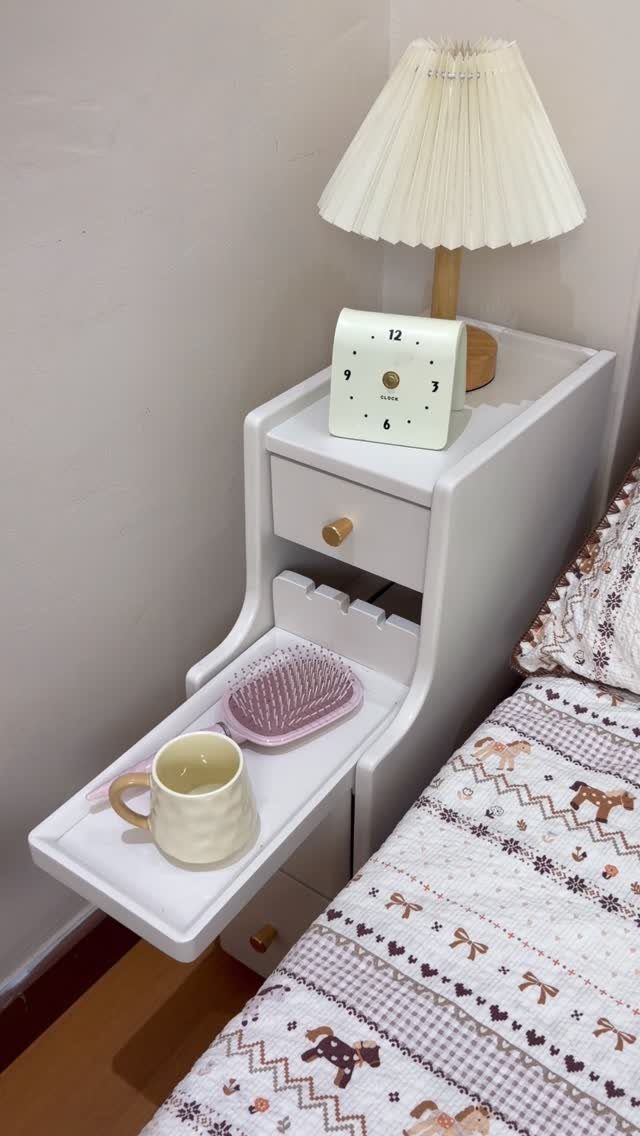
A narrow bedside table still holds what you actually need: a lamp, a clock, a place for your phone. A pull-out tray for morning coffee is smarter than a drawer you cannot reach while lying down.
Look for one open shelf or tray plus a single drawer for eyeplugs and lip balm. Two drawers stack too high for the footprint; the proportions go wrong and the top surface shrinks to nothing.
This is the right move when the bed fills the wall and leaves only a slim gap. If you have more room, a standard nightstand with a lower shelf gives more function for similar money.
18. Wooden Slatted Accent Wall
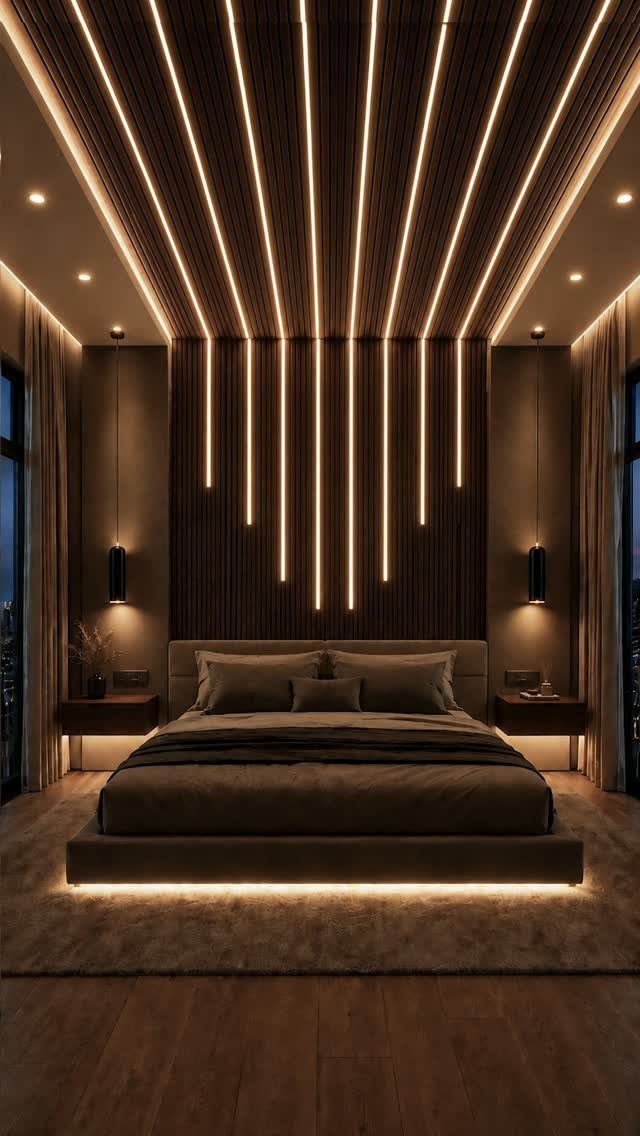
Vertical wood slats with integrated lighting turn a flat wall into architecture. Strips running floor to ceiling, with LEDs recessed between them, let light graze the wood grain and cast soft shadows.
You can build this with furring strips spaced apart, screwed to a plywood backing, and LED tape tucked into the gaps.
Slats and ceiling treatment stained to match read as one idea; paint would shift the mood entirely, more Scandinavian spa than urban hotel.
The project takes a weekend and stays reasonable in materials for a queen-width wall. It demands a drill, a level, and patience; the slats must read as parallel from bed height or the whole effect collapses.
19. Painted Wall Arch
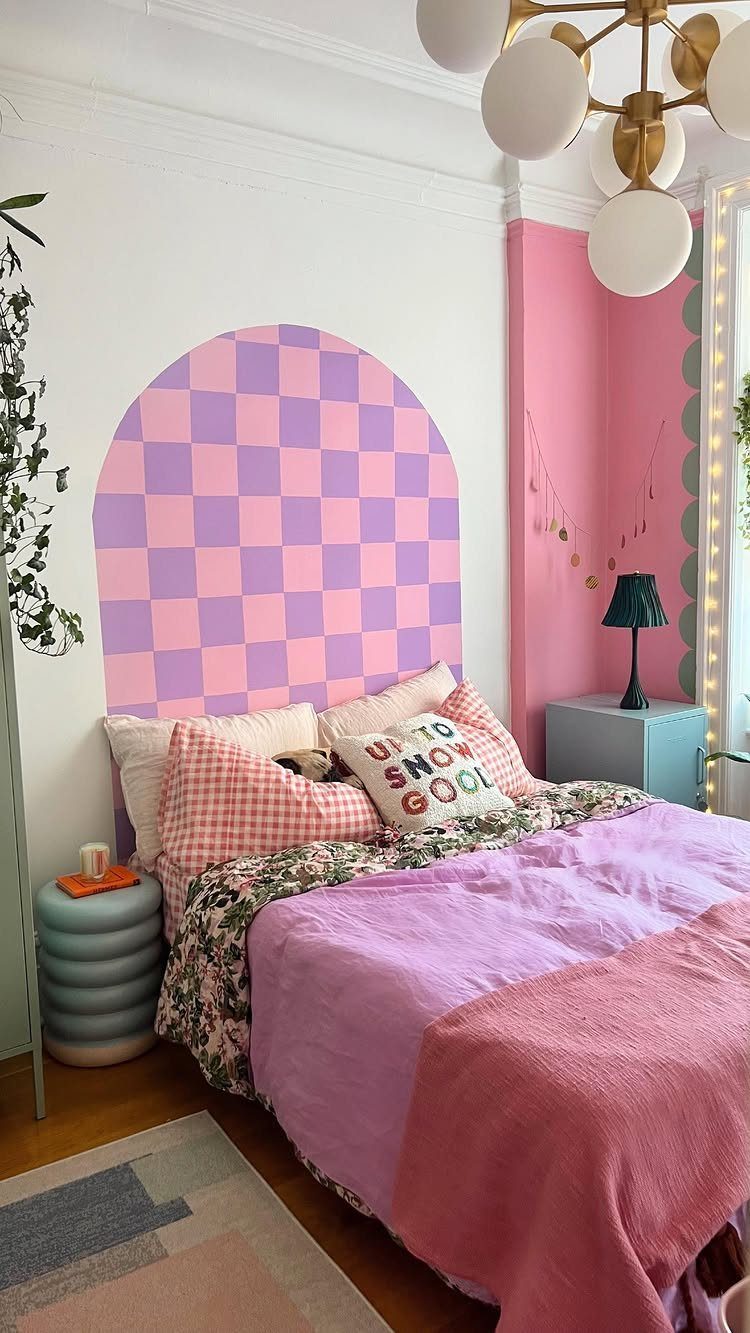
A painted arch turns the wall behind your bed into a headboard without buying one. A checkered pattern in pink and purple against white shows the technique, but any two colors that match your bedding work just as well.
One creator who did this in her own apartment combined a lilac arch she’d loved with a checkered wall she’d left behind; the whole project took one day.
You’ll need painter’s tape, a level, and a plate or string to trace the curve. Mark the arch shape first, tape the edges, then fill in your pattern.
It costs the price of a quart or two of paint and an afternoon. Best for renters who cannot install anything permanent and for anyone whose bed sits against a wall too short for a standard headboard.
Precision matters: wobbly lines read as sloppy, not handmade. If your hand is unsteady, stick to a solid-color arch with clean edges.
20. Wall-mounted Floating Shelves
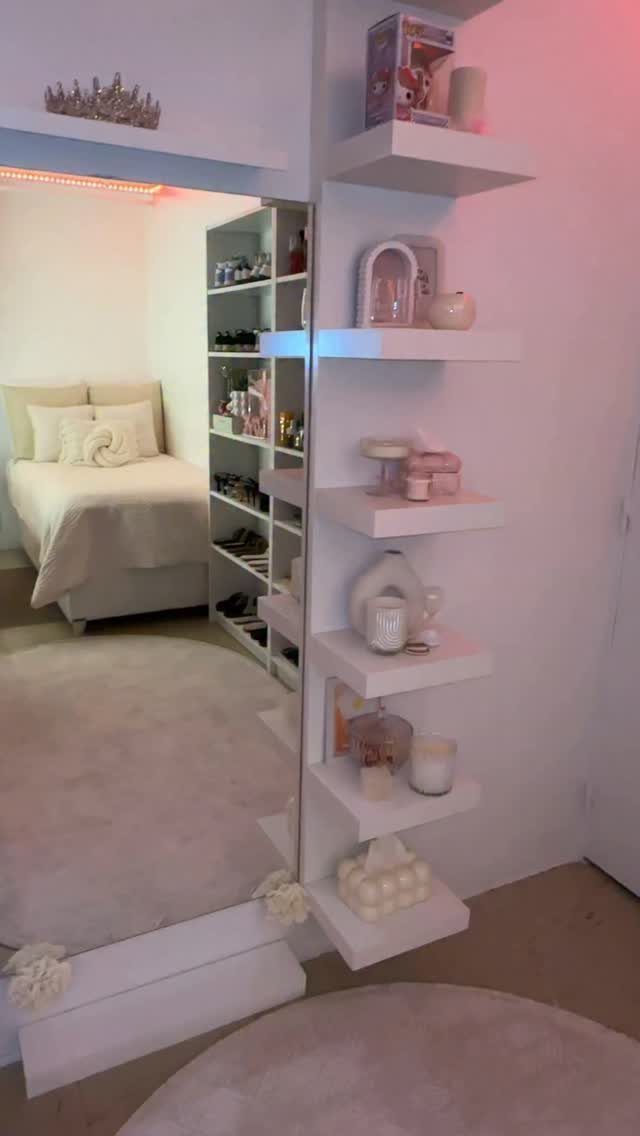
Vertical floating shelves run up a narrow strip of wall that would otherwise stay empty. Mount them in a column rather than a row to keep the footprint slim; standard brackets are hidden, so the shelves appear to hover.
A small bedroom gains storage without a bookcase jutting into the walking path. Pair two or three shelves with a slim wall desk and you have a workspace that folds back into the room when the laptop closes.
The look stays light because shallow shelves leave wall showing between them. Skip this if you collect heavy hardcovers or need to hide clutter; open display is the whole point.
For a renter, the holes are small and high, easy to patch later.
Maximizing Small Spaces
Annie Downing sees the same mistake repeatedly: too much furniture crammed into rooms that cannot hold it. Fewer pieces that work harder beats more that merely fill space.
A desk pressed against the bed replaces both nightstand and separate workspace; the lamp still reads by, but the surface now holds a laptop too. Wall-mounted sconces and floating shelves keep the floor open for walking, not dodging.
Jennifer Press, who works in New York City, names the bed as the usual culprit. A king in a queen-sized room leaves no wall wide enough for proper nightstands, and the room becomes a mattress with aisles.
The opposite error, furniture scaled down until it looks temporary, reads as a dormitory rather than a bedroom. The right piece fits the footprint and earns its place by doing two jobs.
But fear not, there are, indeed, decorating ideas that make it possible to achieve an inspiring living space, squeeze in those storage solutions, and get a comfortable night’s sleep at the end of the day, too—no matter how small your square footage is.
Creating a Cohesive Look
A small bedroom looks settled when the large surfaces agree. White walls, simple shades, and a quiet floor let the smaller pieces carry the interest without competition.
Cortney Bishop takes the opposite path and makes it work: patterned wallpaper, painted ceiling, patterned rug. Commit fully so the room reads as intentional, not crowded.
When every surface carries something, the eye travels and the space feels complete rather than cramped.
The safer route for most renters keeps walls and floors neutral, then builds warmth through bedding, curtains, and a single upholstered piece. Both approaches succeed when the palette stays disciplined.
A honey-toned room with grass cloth, velvet, linen sheers, and scalloped wood reads rich because every texture falls within the same warm family; introduce a cool grey and the cohesion breaks.
Layering Textures
Layering texture works only when the color family stays tight. Karin Bohn used woven grass cloth, rich velvet, scalloped wood, and linen sheers, all in varying shades of honey.
The result feels luxurious in a small condo bedroom because the eye registers difference without conflict.
Start with the largest surface and keep it quiet. White paint and simple shades leave room to spend attention elsewhere.
Then add one woven element, one plush, one with structure: a nubby throw, a velvet pillow, a crisp cotton sheet. The mix reads as depth, not clutter.
Neutral bases reward this approach most. A grey wall or pale oak floor recedes while the textiles advance.
The common error is introducing texture without a plan for color; three interesting fabrics in three unrelated tones fight each other and shrink the room.
Importance of Storage Solutions
Horizontal bookshelves mounted high suit books and objects you reach for occasionally; keep daily items low. Floating shelves above a desk gain surface area without footprint.
Full-height furniture, whether built-in or freestanding, draws the eye up and uses the wall’s full dimension.
A single overhead light presses a small space flat; spread the light around and the walls open up. A lamp on the dresser or nightstand, paired with wall sconces, builds layers of light that let the room breathe after dark.
Multifunctional pieces organize without multiplying. A bed with drawers underneath, a desk that serves as vanity, a bench that holds linens: each piece earns its square footage twice.
The discipline is storing only what belongs in the bedroom. Overflow from other rooms defeats the system and the calm it was meant to protect.
Frequently Asked Questions
What are the golden rules for bedroom design?
Every piece should earn its place by serving the mood you want.
In a small apartment bedroom, that means storage drawers under the bed instead of a dresser that blocks walking space, and mirrors placed where they catch real light rather than opposite windows in narrow rooms.
Light walls recede, but they need texture, velvet or woven fabric, to avoid looking institutional. The bed is usually the biggest object in the room; orient it so the storage and circulation work with it, not against it.
How can I make the most of my small bedroom?
Each piece should earn its place by how it makes the room feel, not just what it does. Sheer curtains hung high stretch the wall, but layer a blackout shade behind for sleeping.
What are the bedroom trends for 2026?
Pattern-drenching and hand-painted wallpaper borders are showing up in bedrooms now, signs that people want the space to feel like theirs. Canopy beds are returning in new forms, from four-posters tented with pattern to cleaner half-tester shapes in solid textures.
For apartment bedrooms specifically, the emphasis stays on maximizing space and style within a limited footprint through built-in storage, bold single statements like a patterned headboard, and light colors that let textures carry the interest.