These breakfast nook ideas run from a roll of wallpaper and an afternoon’s work to a contractor-installed skylight, with most falling somewhere on a stretched kitchen budget.
What separates one idea from another is how permanent your living situation is: renters stick to paint and small tables, while owners can build in benches and banquette corners that stay through resale.
The proof is in the details, like the bar stools that tuck fully under a peninsula so traffic still flows behind, or the clearance a pulled-out chair still needs even when the table itself shrinks.
1. Built-In Bench
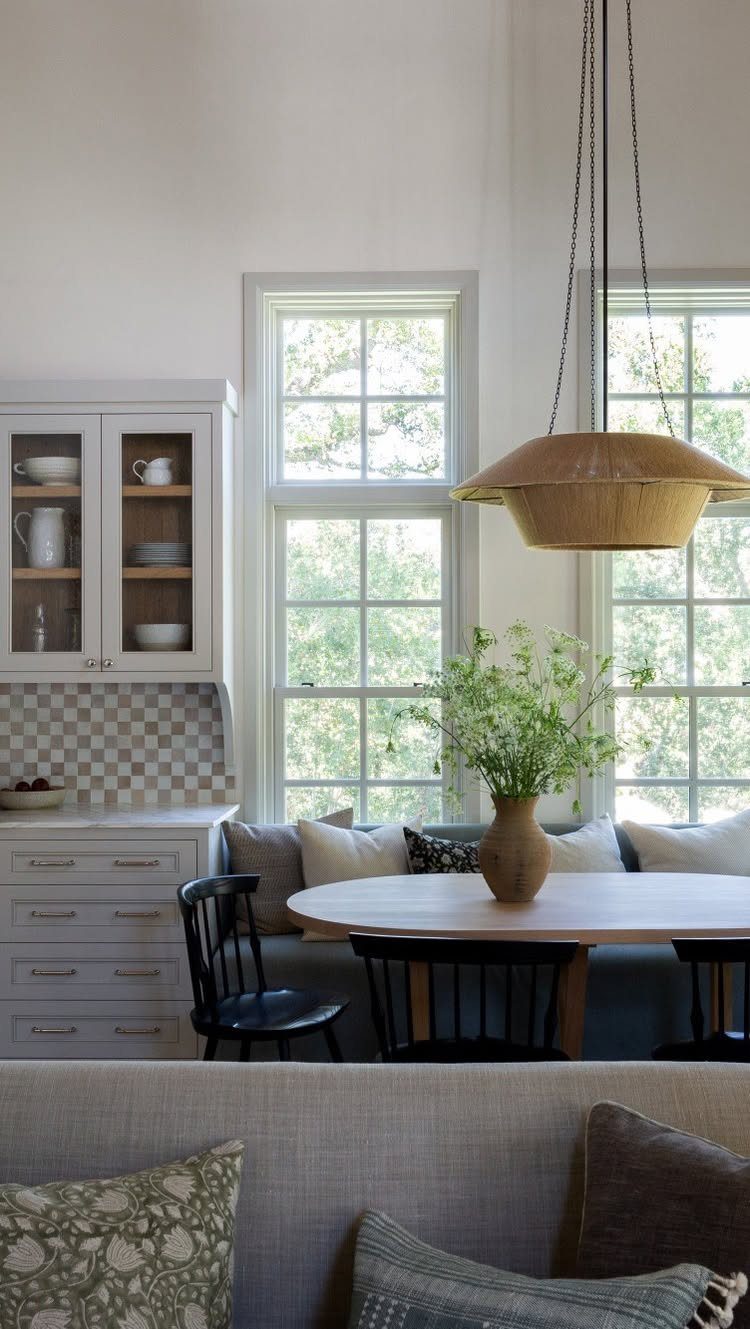
A built-in bench turns a corner or wall into seating that does not budge when someone squeezes past.
For a small yard budget stretched to the kitchen, the storage underneath pays the rent: seasonal dishes, extra napkins, or the dog’s leash.
Custom work fits the exact angle of your space, but a painted flat-front bench screwed to the wall reads built-in for less. I would mount a bar behind the back cushion to keep pillows upright through breakfast and after.
The trade is permanence; this corner stays a dining spot until demo day.
2. Pendant Lights
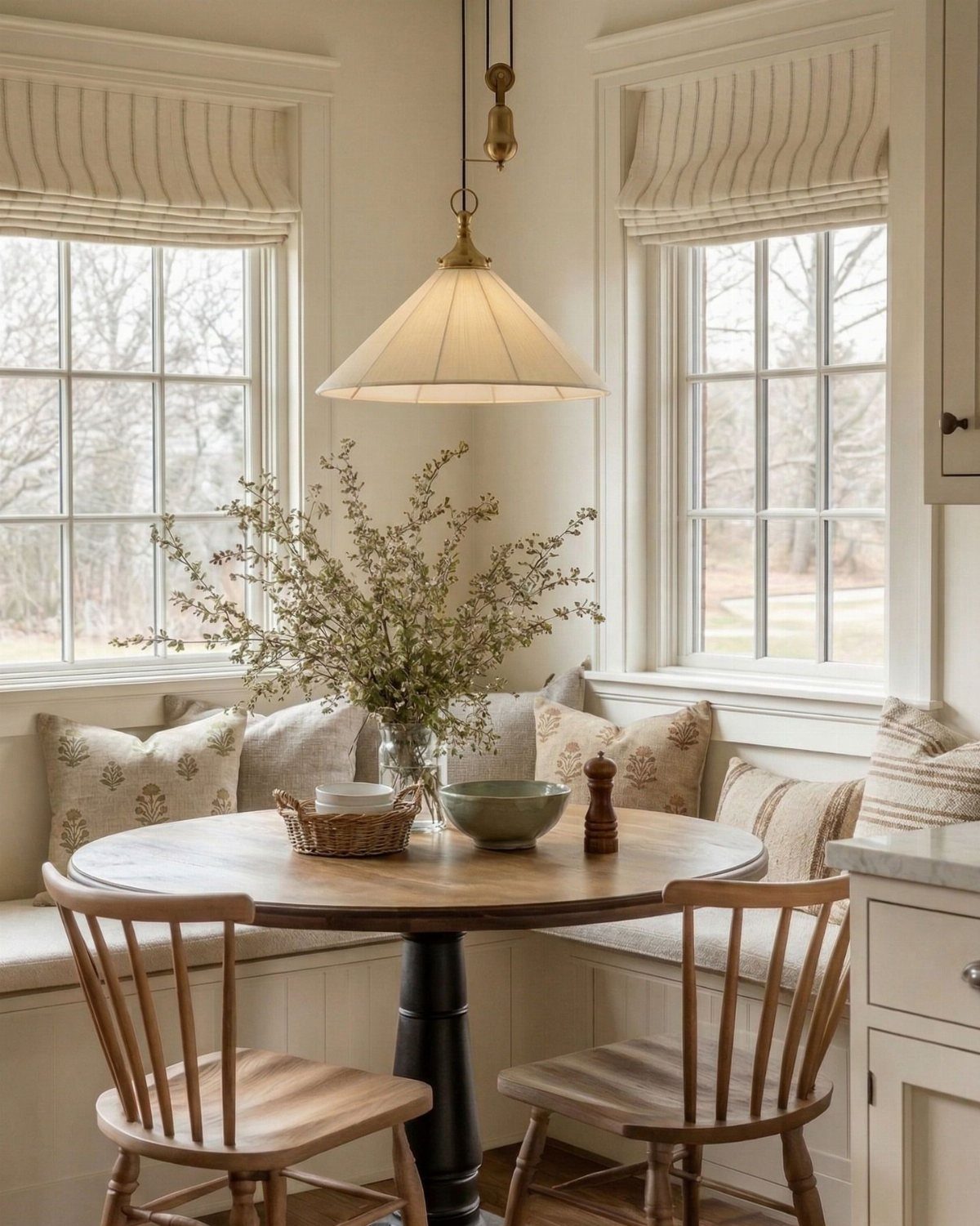
One pendant over a table tells the eye where the room ends and the meal begins. In a nook that shares walls with the kitchen, that boundary matters.
Dimmable is the detail worth paying for: full light for homework, low for coffee and the paper.
A single oversized cone or cluster of three small globes both work; scale to the table, not the room, and go larger than your first guess.
The only wrong choice is a fixture so small it disappears against the window light.
3. Bay Window Nook
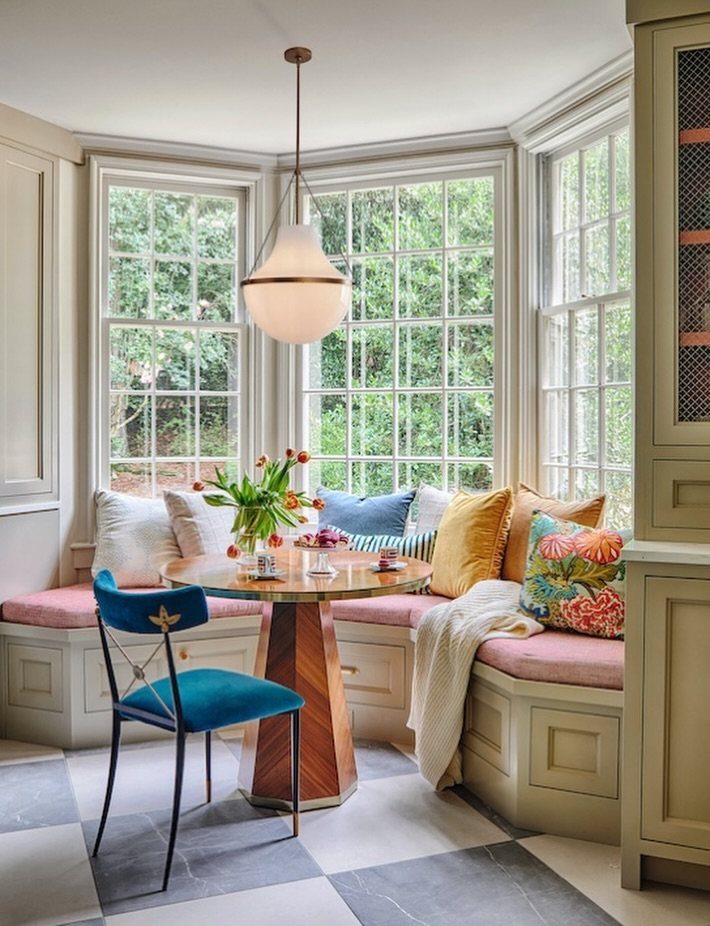
A bay window already carved out the space; the bench only follows its curve. Custom seating that contours the glass earns every inch of that ledge, and morning light from three angles means plants on the sill actually survive.
Roman shades add function without blocking the view when drawn. A bench built to that specific curve needs measuring twice, or you pay for the rebuild.
For renters, this one is mostly wishful thinking unless your landlord is unusual.
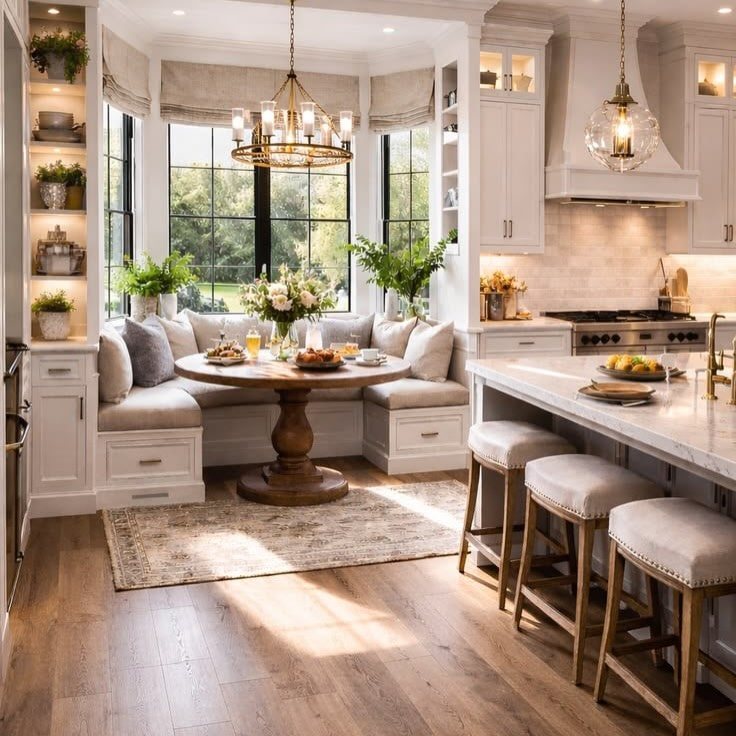
4. Bar Stools at a Breakfast Bar
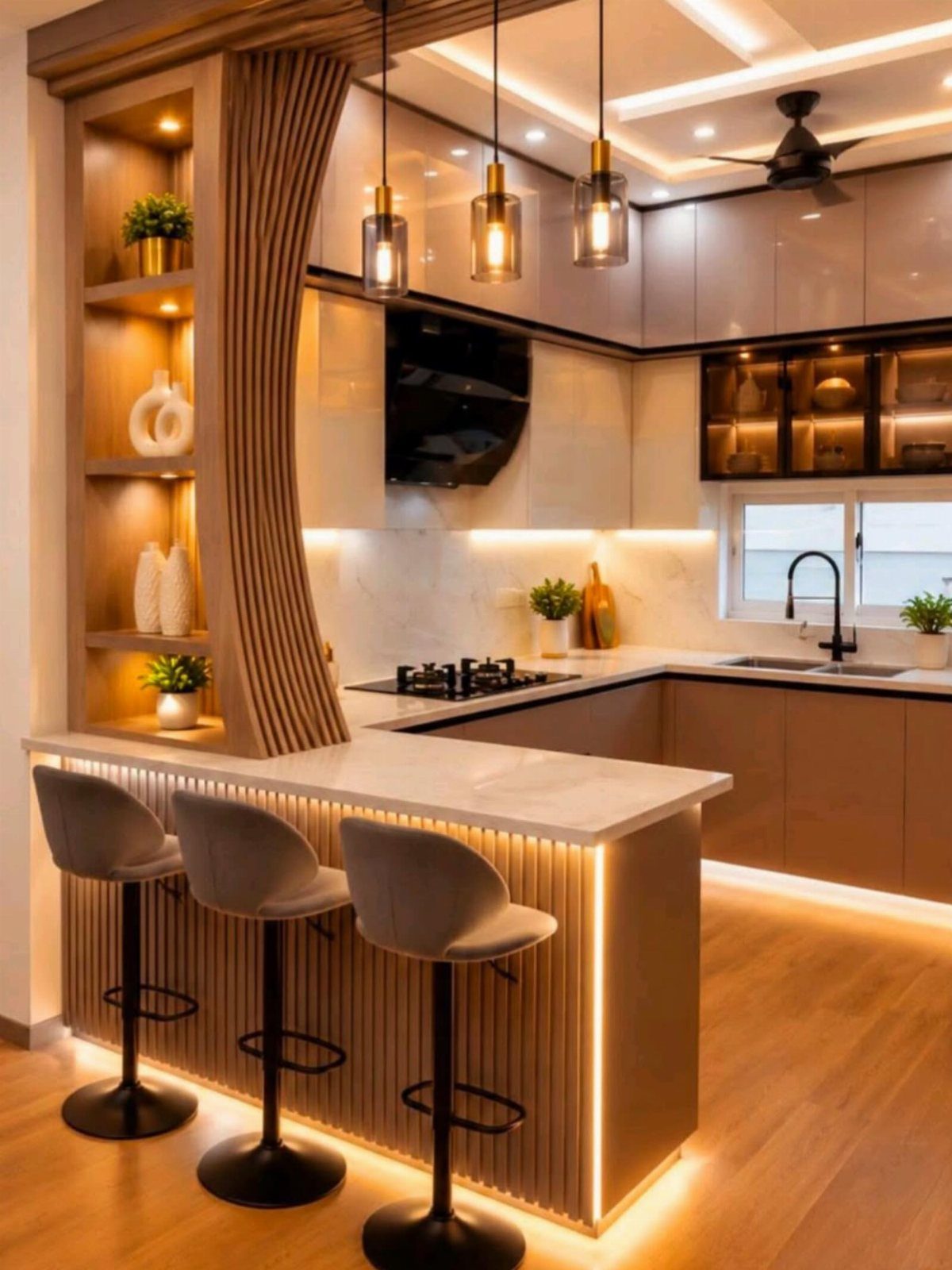
Bar stools suit the cook who eats in shifts and the household that treats every meal as casual. Three stools at a peninsula let one person chop while another sits with coffee; no one is stranded at a separate table.
Choose stools that tuck fully under the overhang so traffic flows behind. Skip the LED strip under the bar if your budget is tight; decent stools matter more than the glow.
This setup trades the tucked-away feeling of a corner nook for openness and speed.
5. Round Table Design
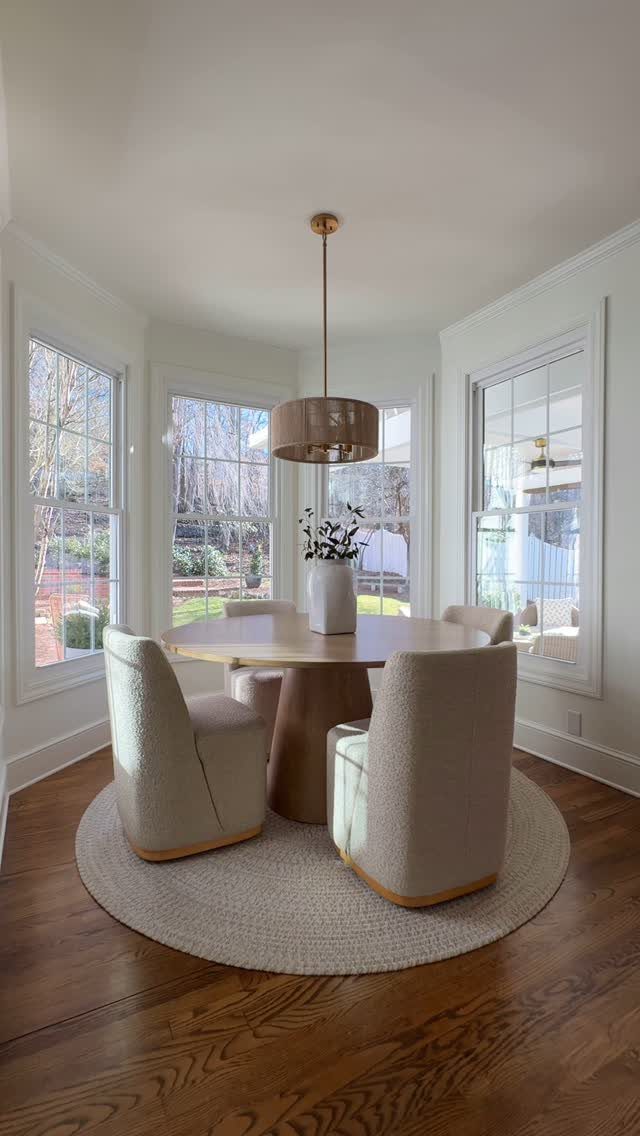
Corners on square tables catch hips in tight nooks; a round pedestal table leaves the walkway clear on all sides. Four upholstered chairs fit where a rectangle would force two against the wall.
The pedestal base matters as much as the shape: legs at the corners block chairs and feet alike.
Check your rug size against the table diameter plus pulled-out chairs, or the front legs land on bare floor every time someone stands. This is the shape for anyone who measures their dining space in inches, not feet.
6. Cozy Pillows and Cushions
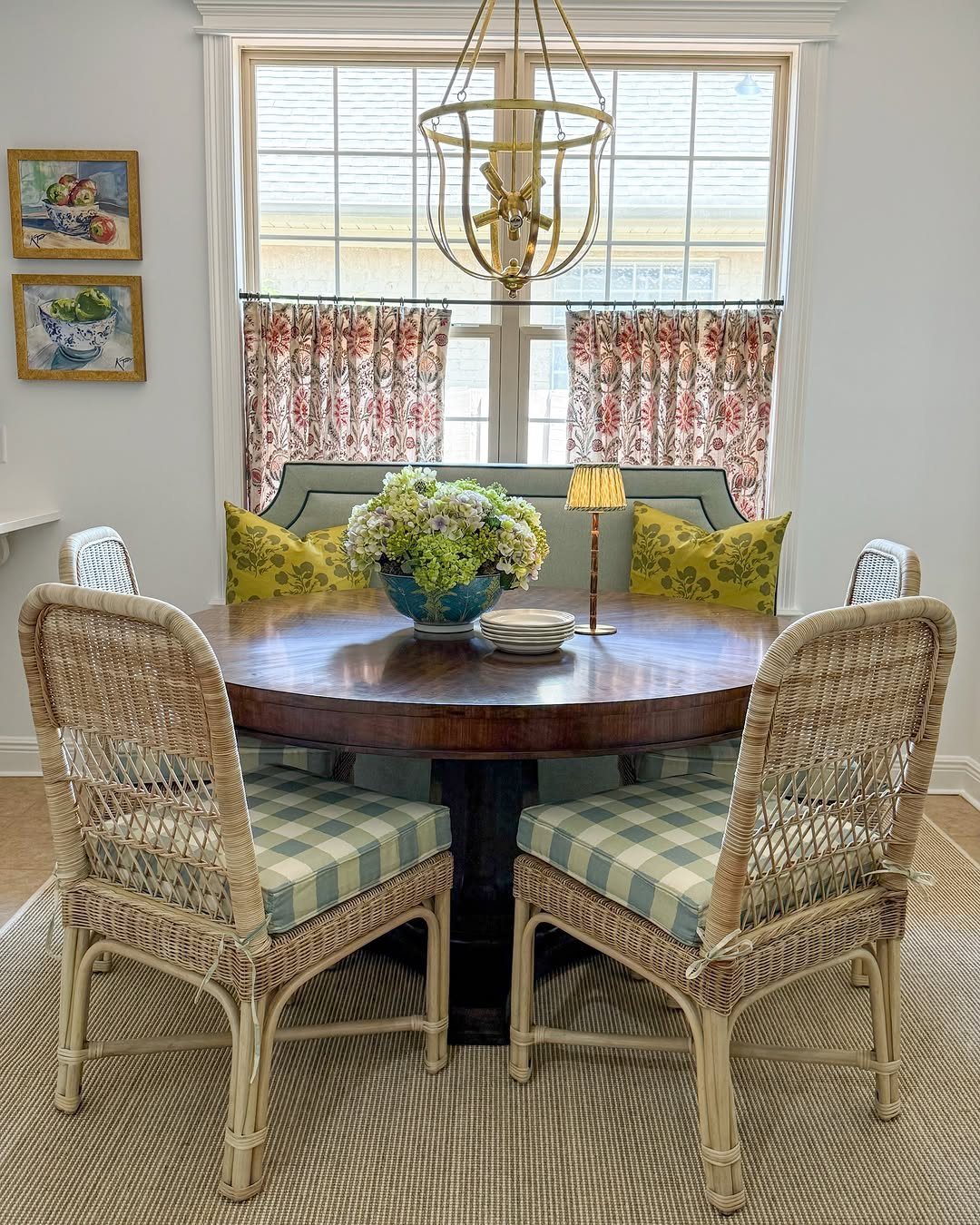
Pillows and cushions are the cheapest way to make a bench you built last Sunday look finished by Thursday.
Patterned fabric hides the crumbs that plain velvet broadcasts; indoor-outdoor stuffing survives the occasional coffee splash without a trip to the dry cleaner.
I change mine with the seasons, not for trend but because new covers read like a new room. The limit is too many pillows: two per seated adult, max, or no one fits at the table.
Wicker chairs with checkered pads carry the same logic to freestanding seating.
7. Gallery Wall
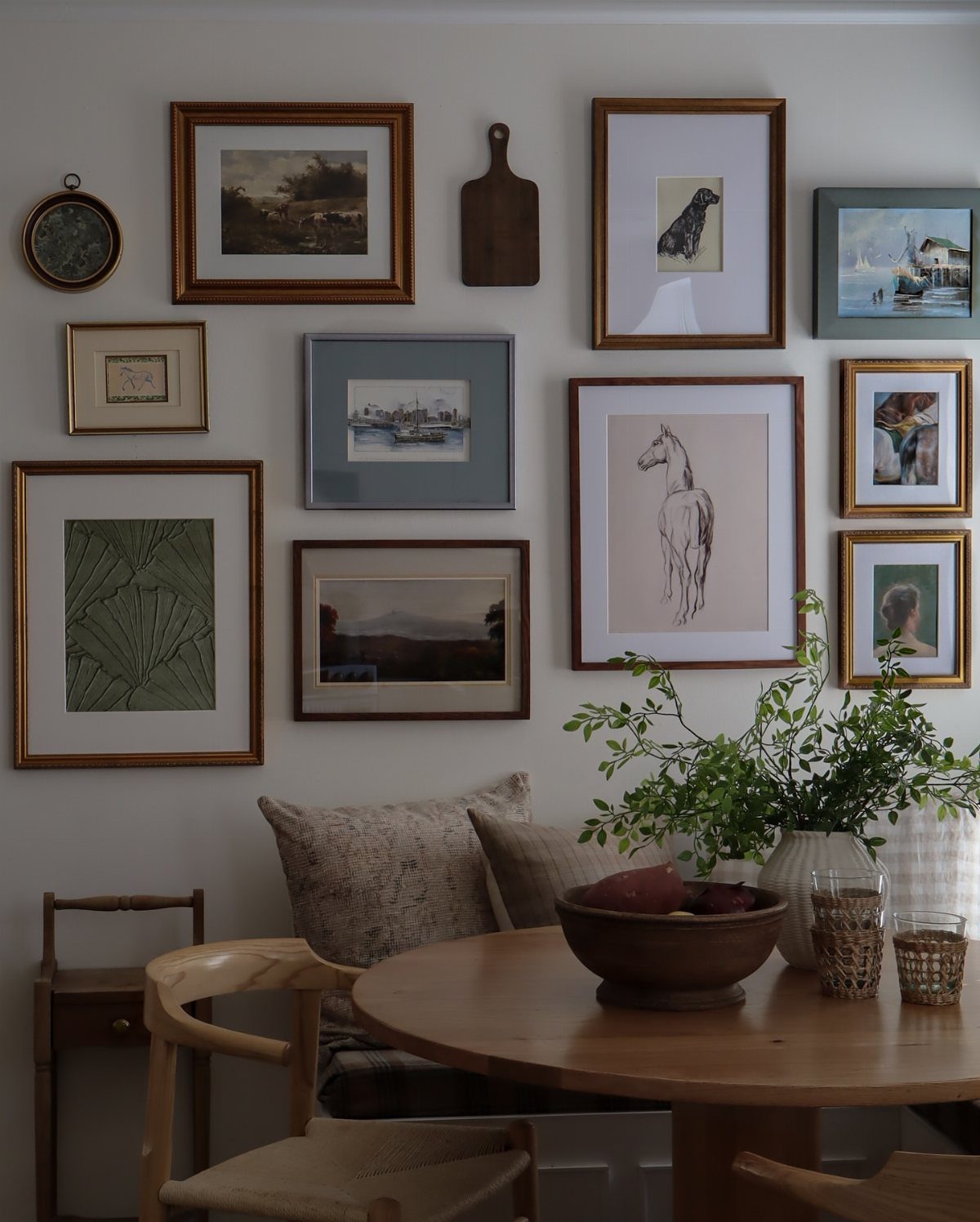
A gallery wall turns the dead space above your seating into something that actually belongs to you. For a small nook, a handful of pieces in mixed wood frames fills the wall without crowding the room.
I lean toward old photographs hung salon-style, tight together with no matching required. The frames can be thrifted in different sizes and stained to warm the white wall behind them.
A decorative cutting board slipped in among the prints breaks up the rectangles.
This works best if you already have a collection going: ticket stubs, postcards, family snapshots.
If you are starting from nothing, a single large framed print costs about the same as a cluster of small frames from a craft store and takes far less time to arrange.
8. Utilize Natural Light
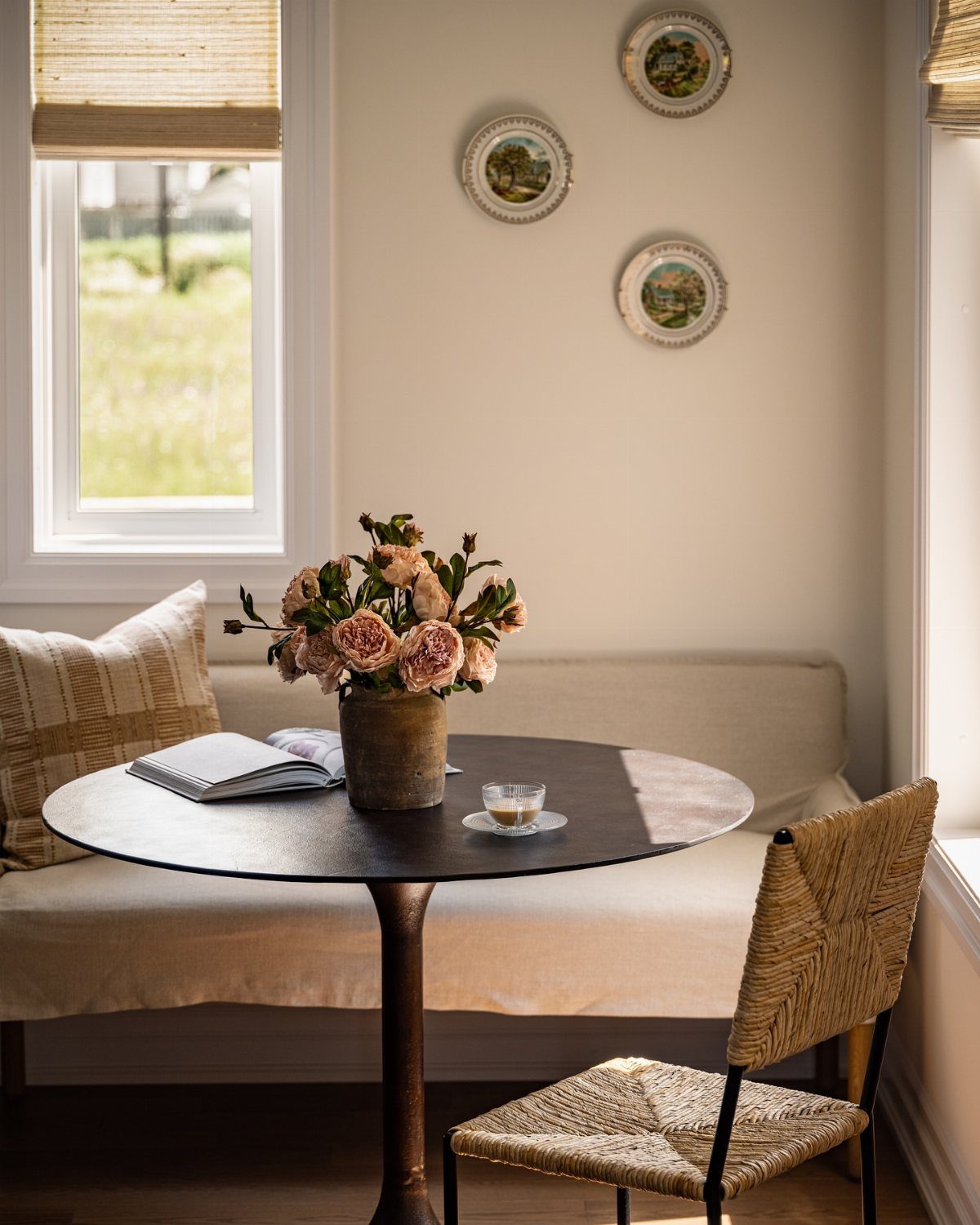
Sunlight does more than any paint color to open up a tight breakfast nook. Windows flanking the seating bounce light across the table all morning.
If your wall faces east, you get direct sun until noon; west-facing means afternoon light and a different mood entirely. Light-filtering bamboo shades let you lower the privacy screen without turning the room dim.
A skylight changes everything if your roof line allows it, though that is a contractor job and not a weekend project.
Check whether your windows are actually usable: a previous owner may have painted them shut, or the sashes might be too small for the wall. The real test is sitting there early with coffee and seeing where the light lands.
9. Floating Shelves
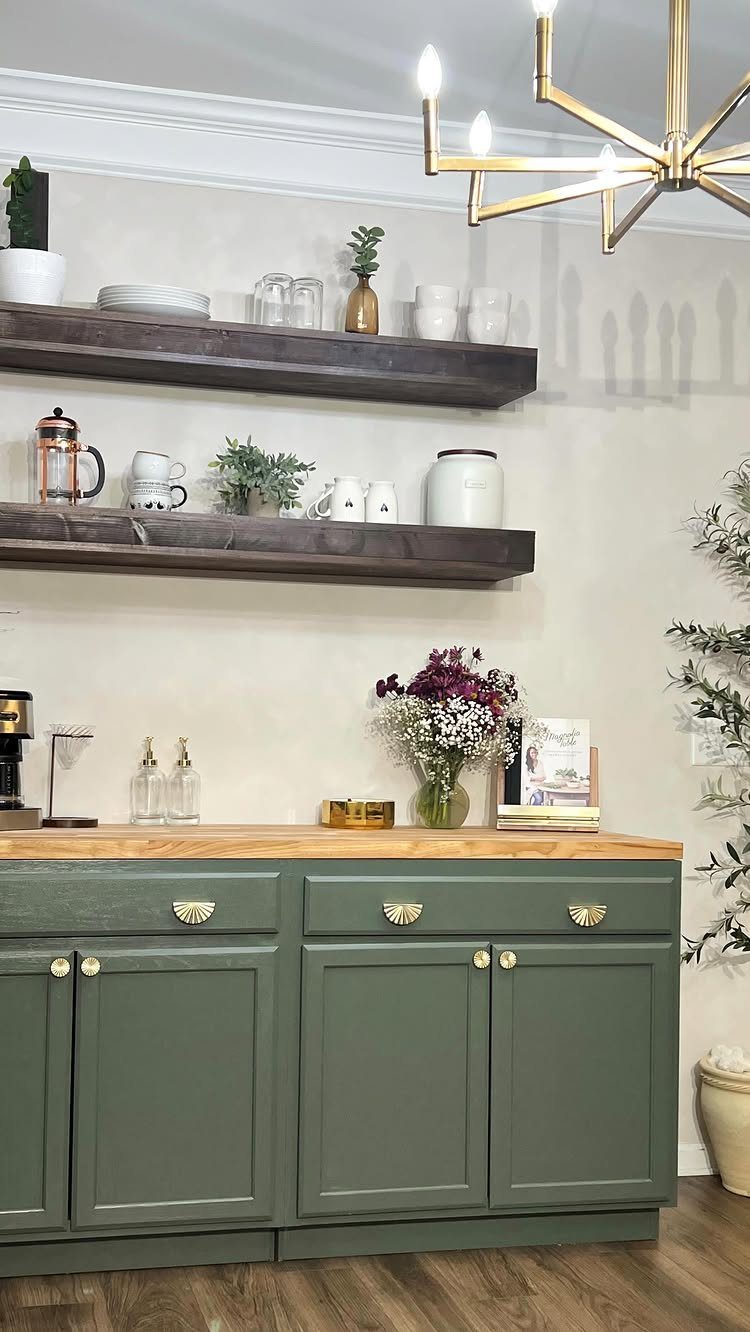
Floating shelves above the nook keep mugs, small plants, and the morning’s coffee supplies off the counter and in arm’s reach.
Dark wood against a light wall works in a kitchen with warm cabinets or butcher block; painted shelves suit a cooler palette.
Mount them into studs, or use toggle bolts rated for heavy loads, because ceramics are heavier than they look.
Leave enough headroom between the shelf bottom and anyone sitting at the table. I have seen a shelf hung too low and watched a tall guest duck every time he stood.
10. Patterned Wallpaper
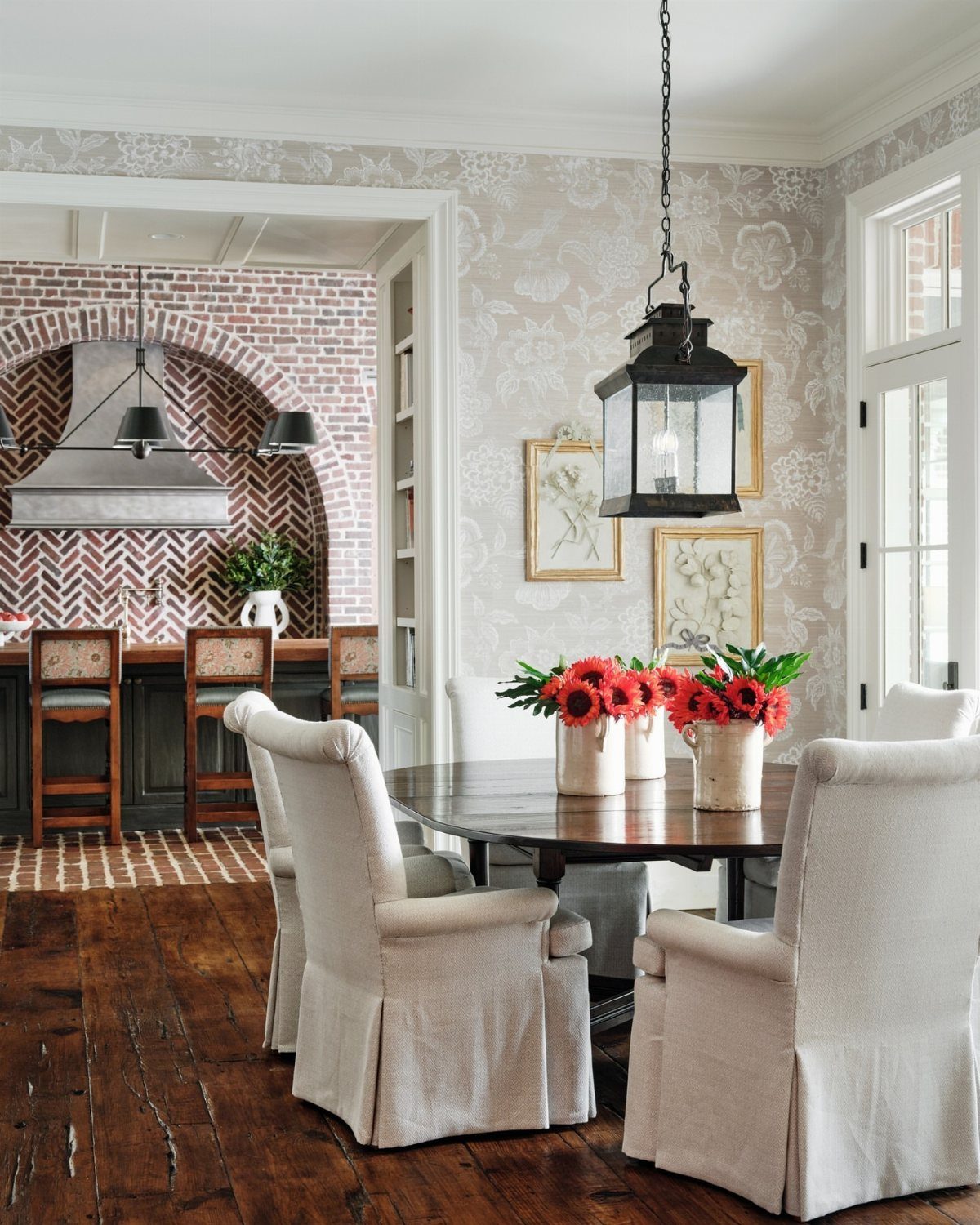
The light grey ground in the visible version keeps it from darkening a room that already has a dark wood table.
If your nook opens directly into the kitchen, carry the paper under any arch or alcove ceiling so the transition reads as intentional, not accidental.
Small-scale florals read traditional; larger geometrics or botanicals feel more current. The cost runs about the same as a single gallon of good paint per wall, plus a day’s labor if you are not steady with a brush.
I would not attempt this in a rental unless you are committed to stripping it later.
11. Vintage Pieces
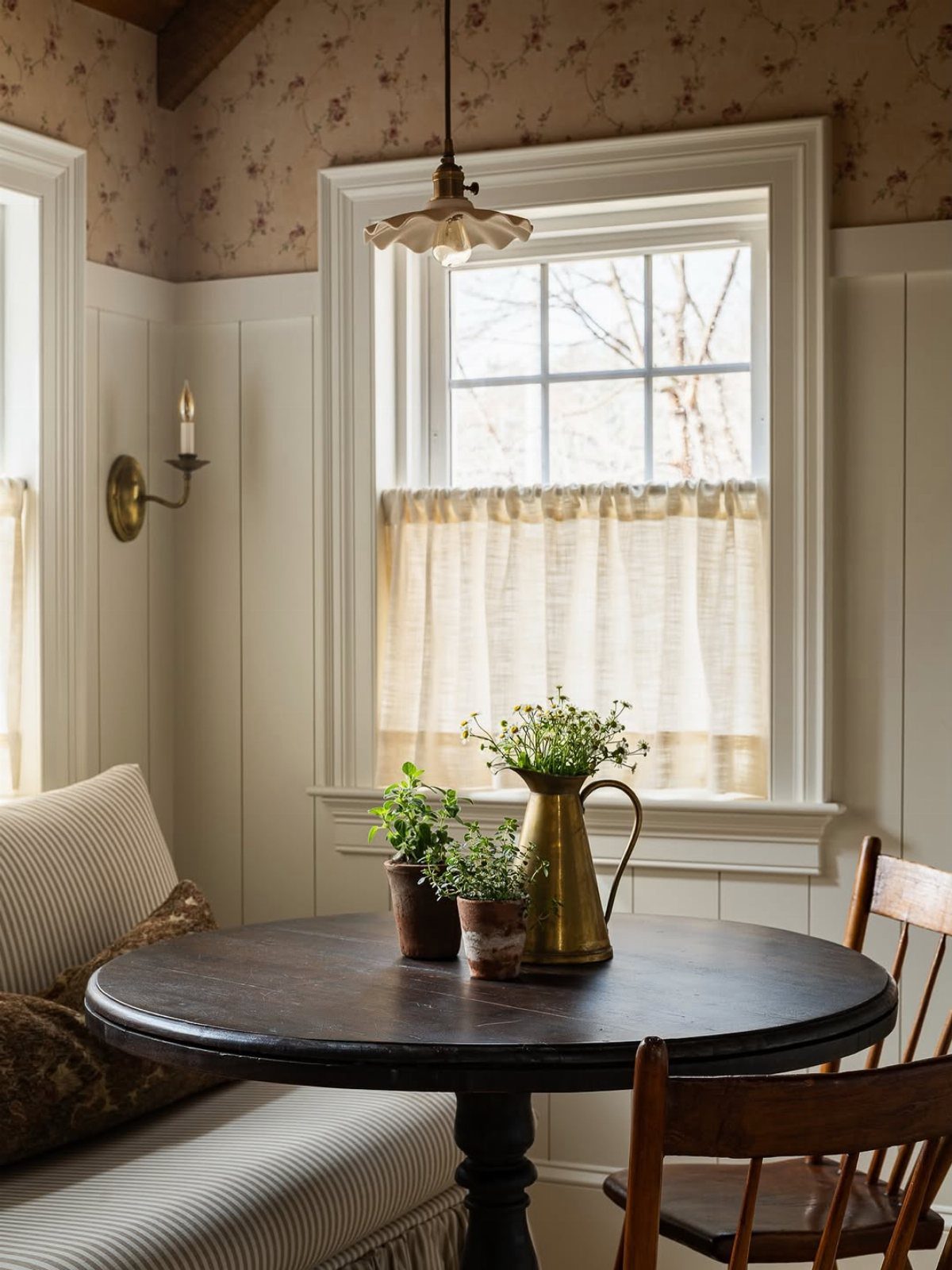
One genuine vintage piece, even a brass pitcher on the table, shifts a new build toward something with memory.
A striped bench and floral wallpaper already nod to another decade; a thrifted pendant light or cafe curtain rod completes the story without requiring every item to be old.
I look for solid brass hardware, wooden chairs with wear on the arms, and anything with a maker’s mark I can barely read.
The risk is making the nook feel like a set. Balance one old piece against two new ones: a vintage light over a table from a big-box store, or a found bench against fresh paint.
Flea markets on Sunday mornings in my town carry small metal pieces for pocket change, and chairs that need no repair for a bit more. Check the seat height before you buy; people sat lower decades ago.
12. Use of Natural Elements
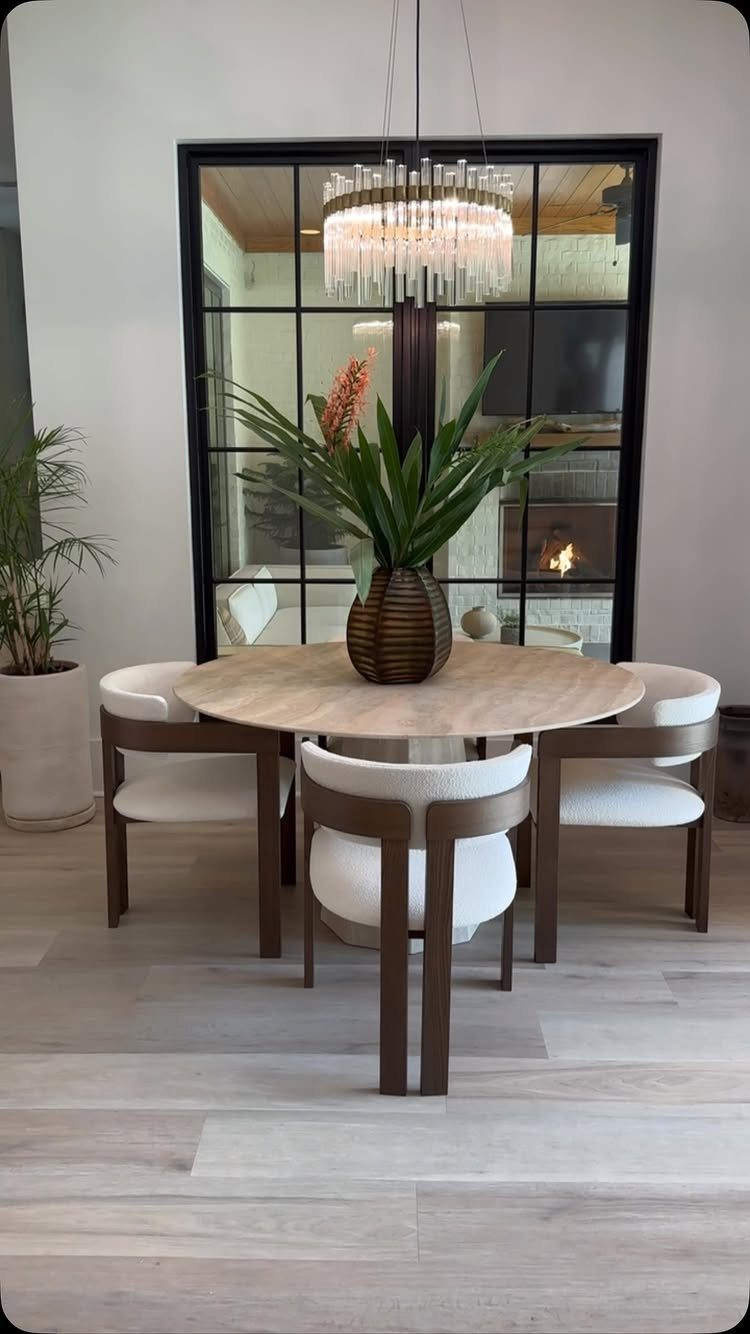
A single large vase of leafy cuttings on the table brings in what the windows frame.
Tropical leaves suit a room with glass doors and actual outdoor access; in a city apartment, a potted fern or trailing pothos on a floating shelf gives the same effect with less maintenance.
Natural materials here means rattan, unfinished wood, stone, or linen: anything that would weather if you left it outside.
Choose a stone table top for your breakfast nook: it’s practical, cool to the touch, and heavy enough that you won’t move it. That weight is the tradeoff.
If you need flexibility for holiday seating, stick to wood.
Check your light before committing to living plants: a north-facing nook will sustain a ZZ plant or snake plant, but not the flowering specimens that need long stretches of direct sun.
13. Banquette Corner Nook
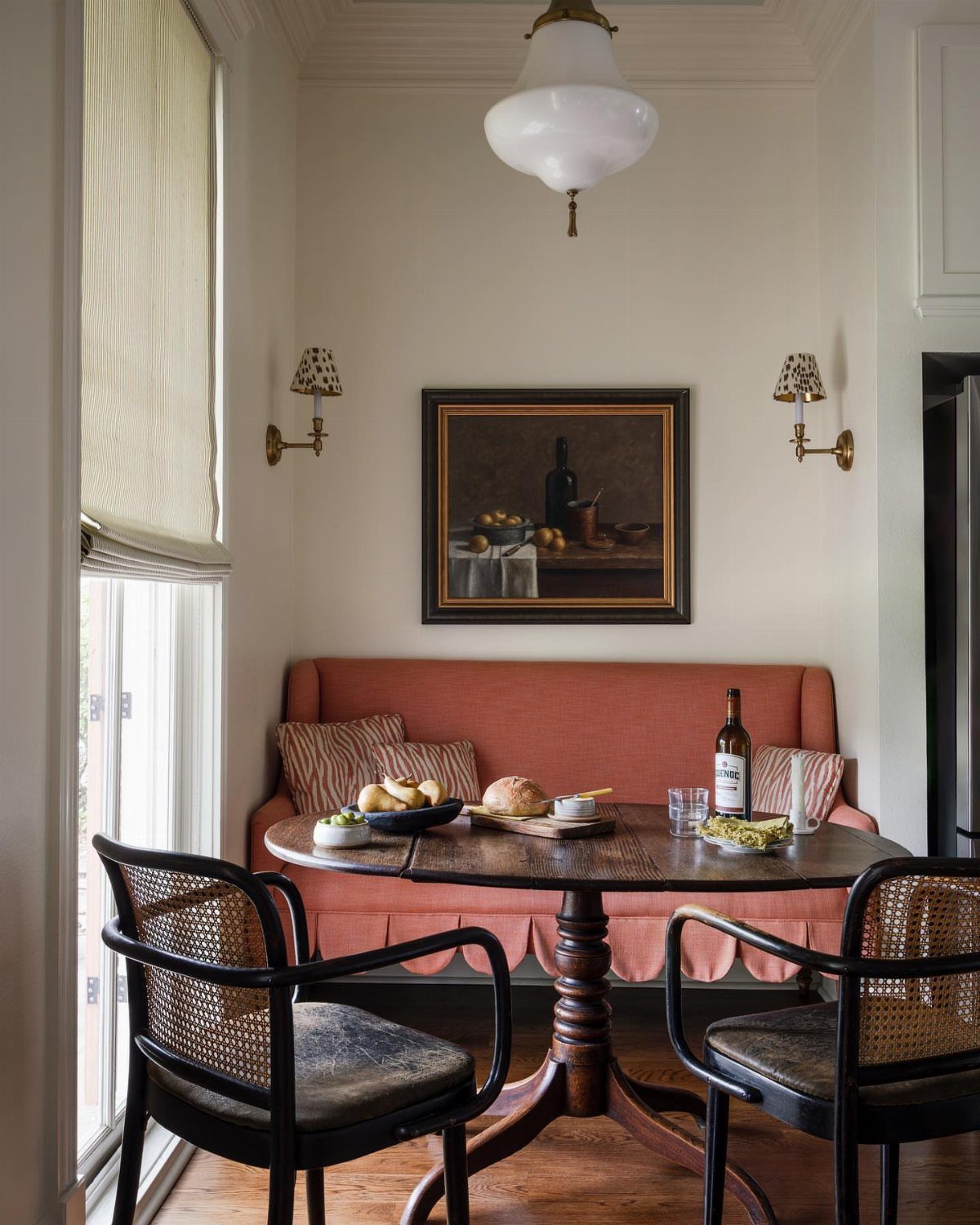
An L-shaped banquette turns a dead corner into the most wanted seat in the house. The bench runs along two walls, leaving the center open for a round table that everyone can reach across without shouting.
The shape works in kitchens too small for a full table and chairs on all sides.
A corner banquette squeezes more people into the same footprint than standard chairs, and the storage lift-top versions hide the stuff that otherwise clutters counters.
Fabric matters more here than with straight benches; a stripe or small pattern forgives the crumbs that collect in the crease where the two sides meet.
Best for households with kids who treat meals like contact sport, or anyone who hosts brunch and needs to pull up a chair from the living room when the group grows.
14. Small Breakfast Nook Table
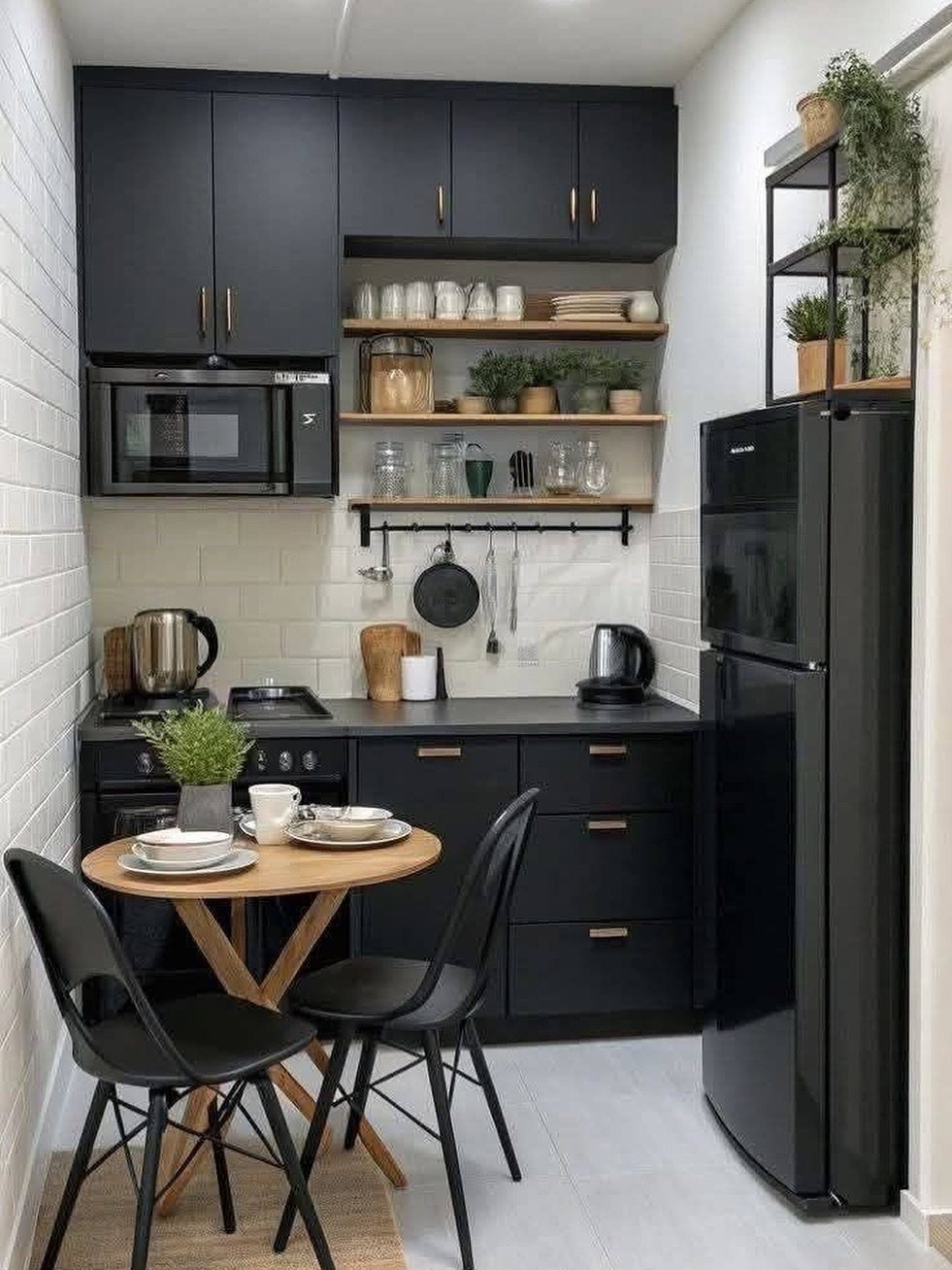
A table barely wider than a dinner plate can still anchor a room if the stuff around it has weight.
Proportion matters more than size; slim black chairs and open shelves keep sight lines moving so the eye reads the whole kitchen, not just the furniture block in the middle.
I would measure twice before ordering.
The clearance you need behind a pulled-out chair stays the same no matter the table size, so a small round with walk-around space on three sides beats a bigger round that traps someone against the refrigerator.
Wall-mounted lighting frees the surface for actual eating.
This setup suits renters who cannot rebuild and cooks who use every counter inch until the food hits the table.
15. Sofa as Banquette Seating
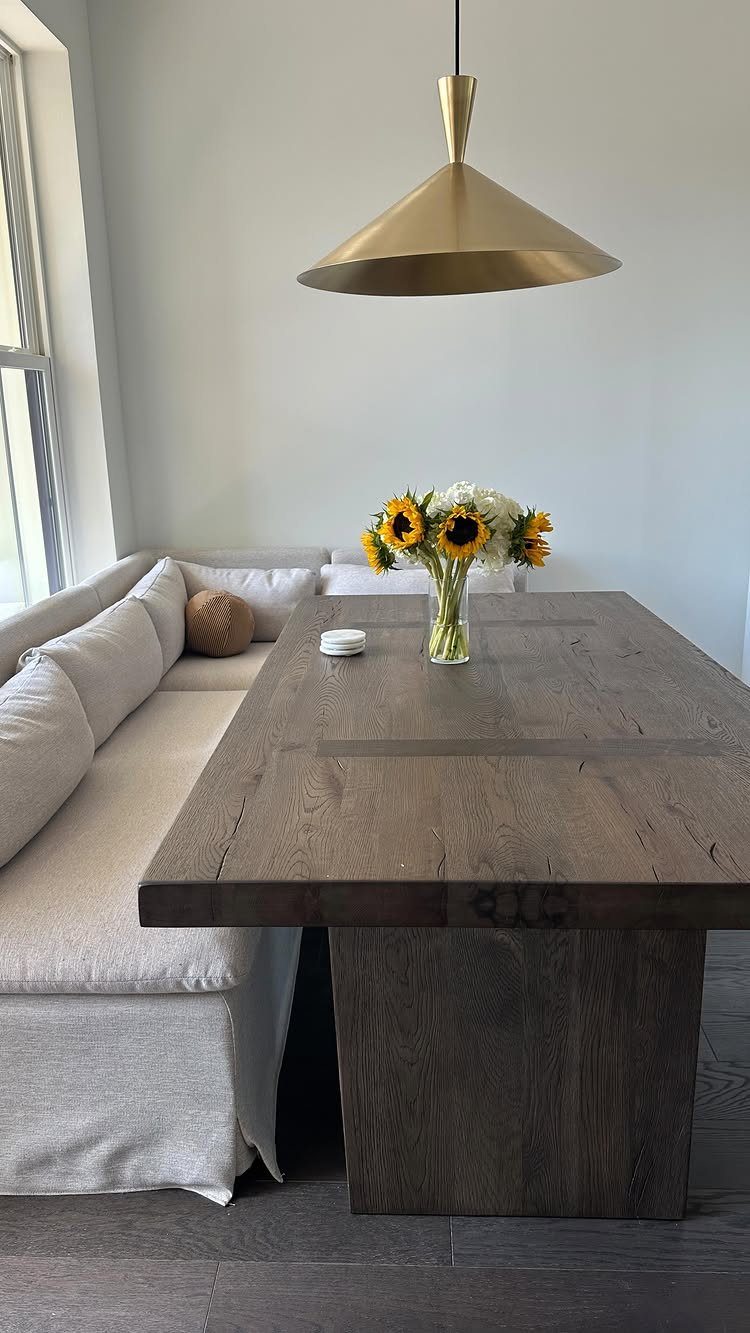
A sofa at the table trades the posture of dining for the posture of lingering.
The back stays low enough that faces stay visible across the surface, and the depth lets someone fold a leg under or lean an elbow while coffee goes cold.
Upholstery choice splits the difference between living room and kitchen. A slipcover in canvas or a tight-weave linen takes spills better than velvet, though a heavier corduroy holds up fine in a no-kid house.
Seat height matters; standard dining chairs sit higher than most sofas, so either find a table to match or accept that knees angle up a bit.
For readers who eat breakfast at 10 a.m. on a Sunday and stay through the crossword.
16. Wallpaper Accent Wall
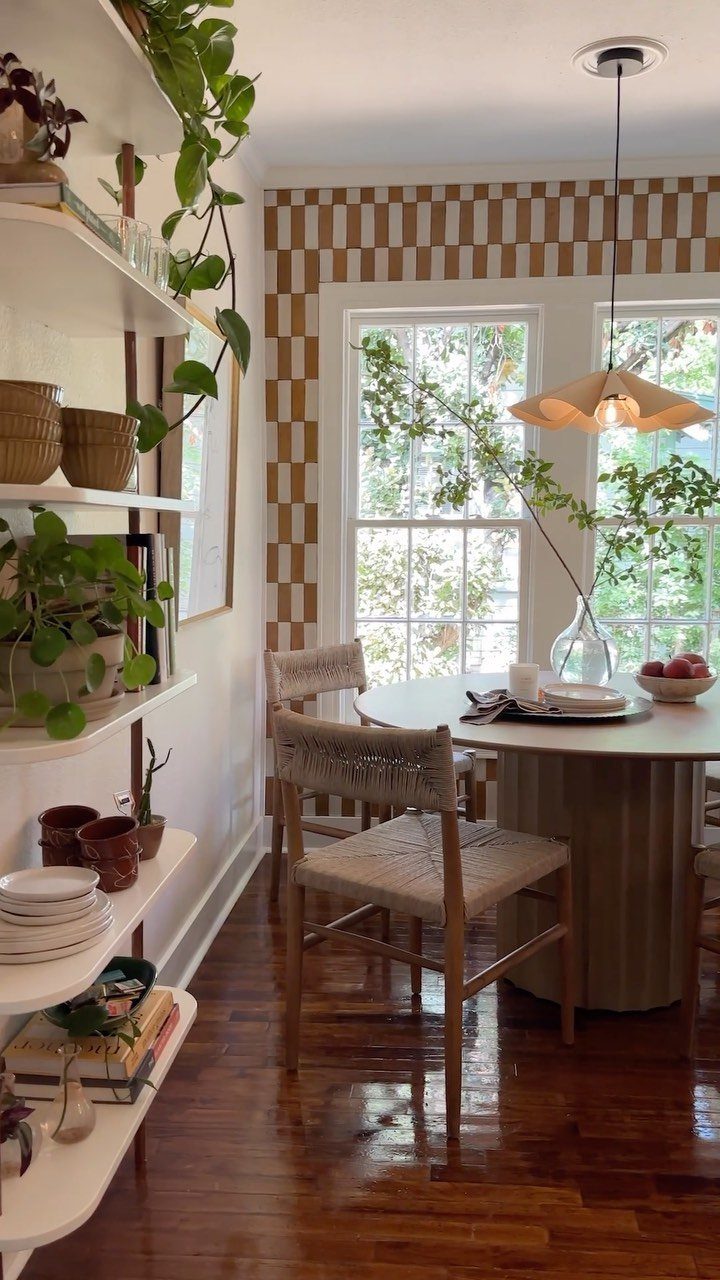
One patterned wall behind the table does the work of a room divider without stealing floor space. The geometry draws the eye in and sets a boundary the furniture then fills.
Smaller repeats can turn busy fast in a nook with multiple doorways opening into it.
Paint is the cheaper route and easier to change, but paper gives you texture that flat color cannot; a grasscloth or subtle metallic under the print catches morning light differently than matte latex.
I would put this behind the seating, not opposite it, so the pattern frames the people rather than confronting them across the table.
17. Colorful Art Pieces
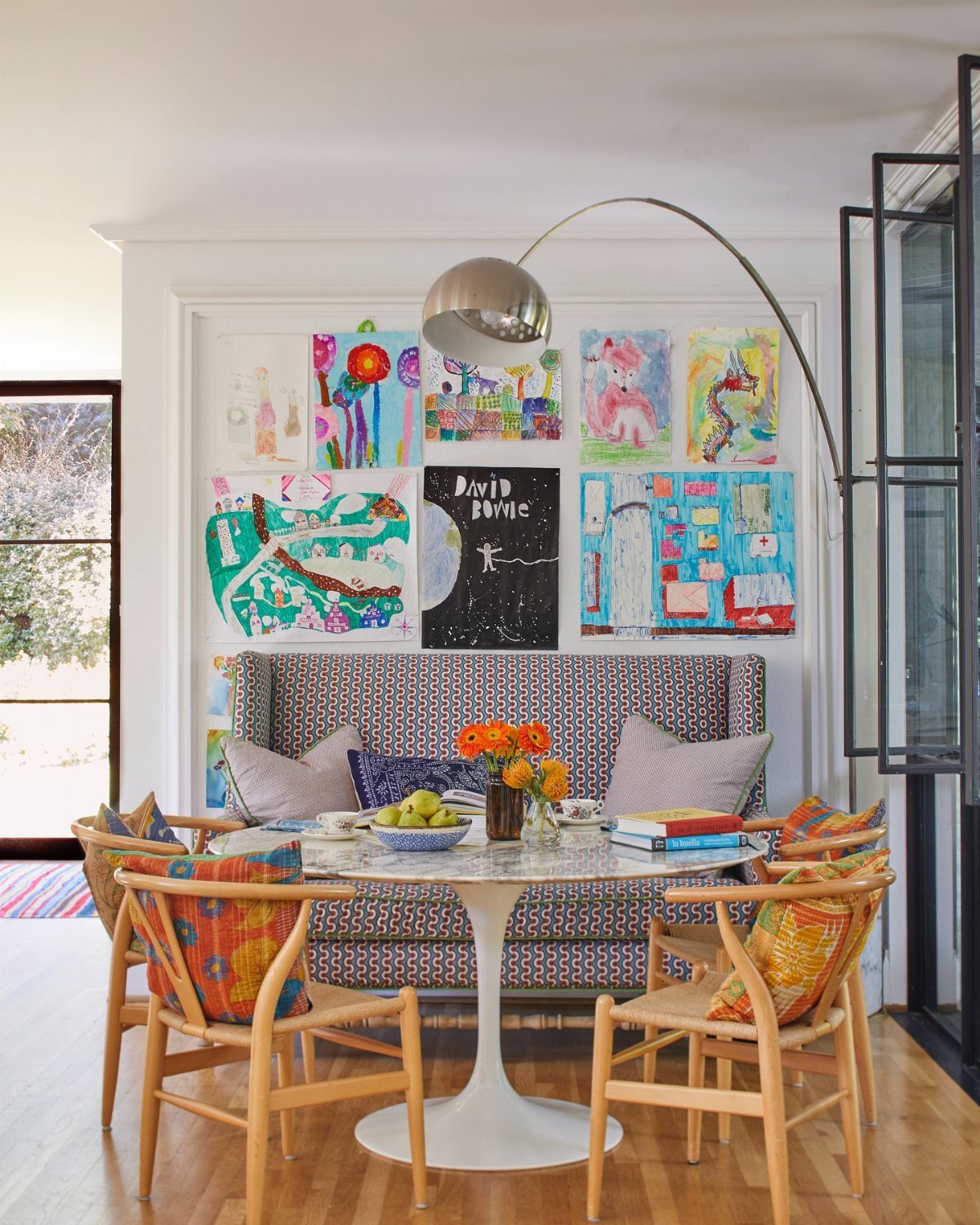
Children’s art on a breakfast wall makes the room feel inhabited by actual humans, not a staging crew. Unframed pieces, pinned or taped in a loose cluster, can grow or shrink as you find new favorites or retire old ones.
The color palette sorts itself if you let it; navy and gray-green in one room, bright primaries in another, both work because nothing else in the room competes at the same saturation.
I would keep the table and seating neutral if the wall shouts, or reverse it for a calm wall and one yellow chair that picks up the sunflowers.
This one suits households with young kids, or adults who still draw outside the lines.
Maximizing Small Spaces
Round tables matter in small nooks because the walkway does not change width as you pass. A pedestal table with a small footprint seats four where a square table of the same width would push two chairs against the wall.
Multi-functional furniture in a nook means storage you can reach from the seat. Lift-top banquettes hide seasonal dishes or the dog’s leash.
Designing for Functionality
A breakfast nook works if the kitchen already has a crowd that gathers but nowhere comfortable to land. The same space serves breakfast, homework, board games, or two adults chopping vegetables while a third sits with coffee.
That range of use is the point; a nook that only holds morning cereal earns less of its footprint.
Consider who sits and for how long.
Breakfast nooks come in all shapes and sizes. There are massive 15 foot long breakfast nooks, but most are squeezed into much more compact spaces.