

A dark brown couch can anchor a room or sink it, and the difference comes down to how much light and texture you let in.
These ideas run from swapping in a lighter rug and cream pillows to building a full moody living room around a fireplace, so the right match depends on whether you rent, own, or just need the sofa to stop looking like a mistake.
Warm bulbs keep the brown from going flat; I run mine at 2700K or lower once the afternoon light fades, and I set them at three different heights so the glow layers instead of pooling in one spot.
1. Deep Brown Wall
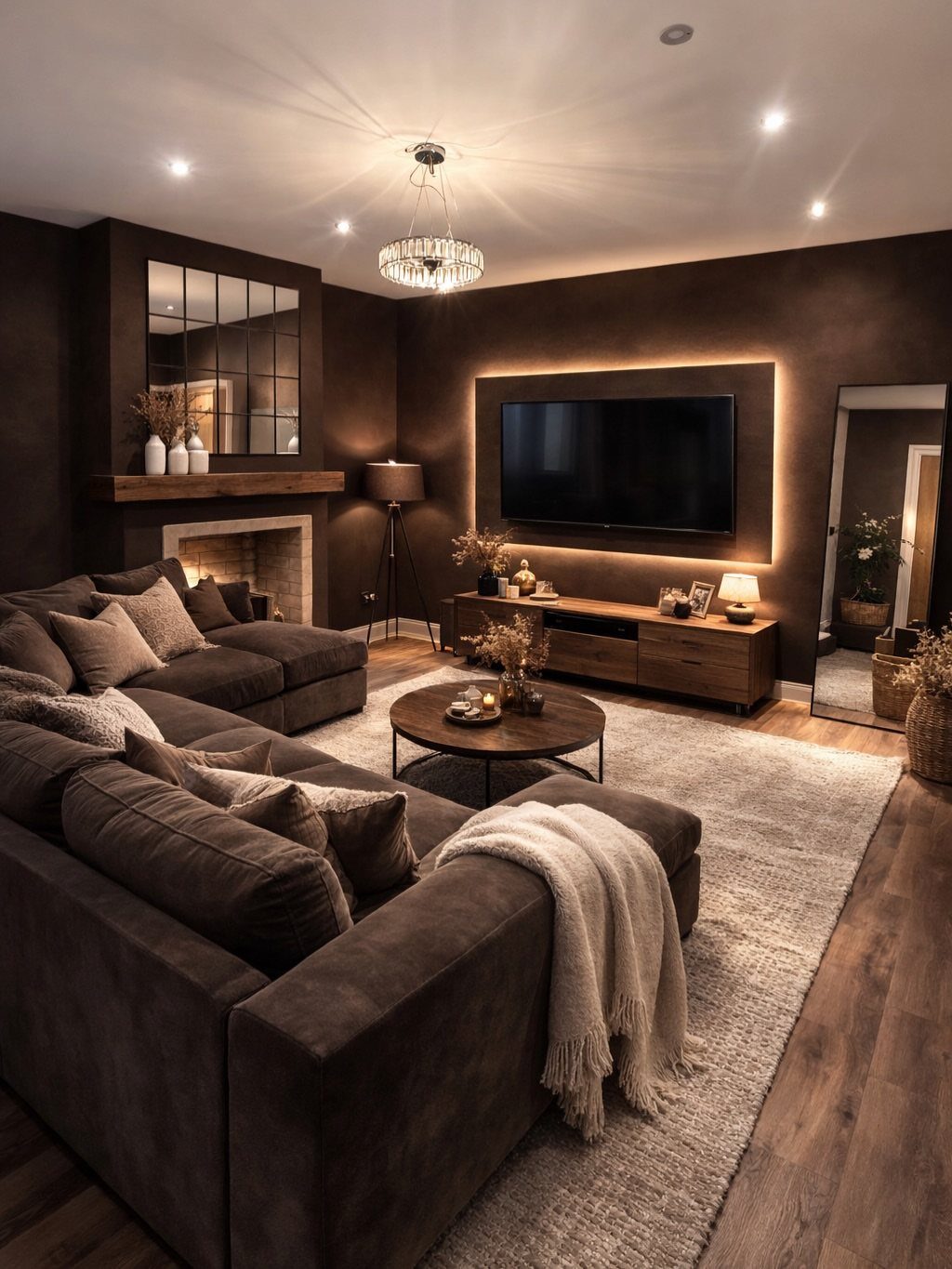
Painting one wall deep brown turns the couch into a deliberate anchor rather than a heavy accident.
The light rug underneath keeps the floor from going cave-dark, and a backlit TV or single oversized piece of art gives the eye somewhere to rest.
This works best when you can dim the room with lamps on warm bulbs; overhead daylight will flatten everything into mud. I would not try it in a narrow room unless the brown wall is the short one.
Seasonal color, bright pillows or a throw, reads as interruption rather than accent; if you change decor often, keep the walls neutral instead.
2. Patterned Rugs
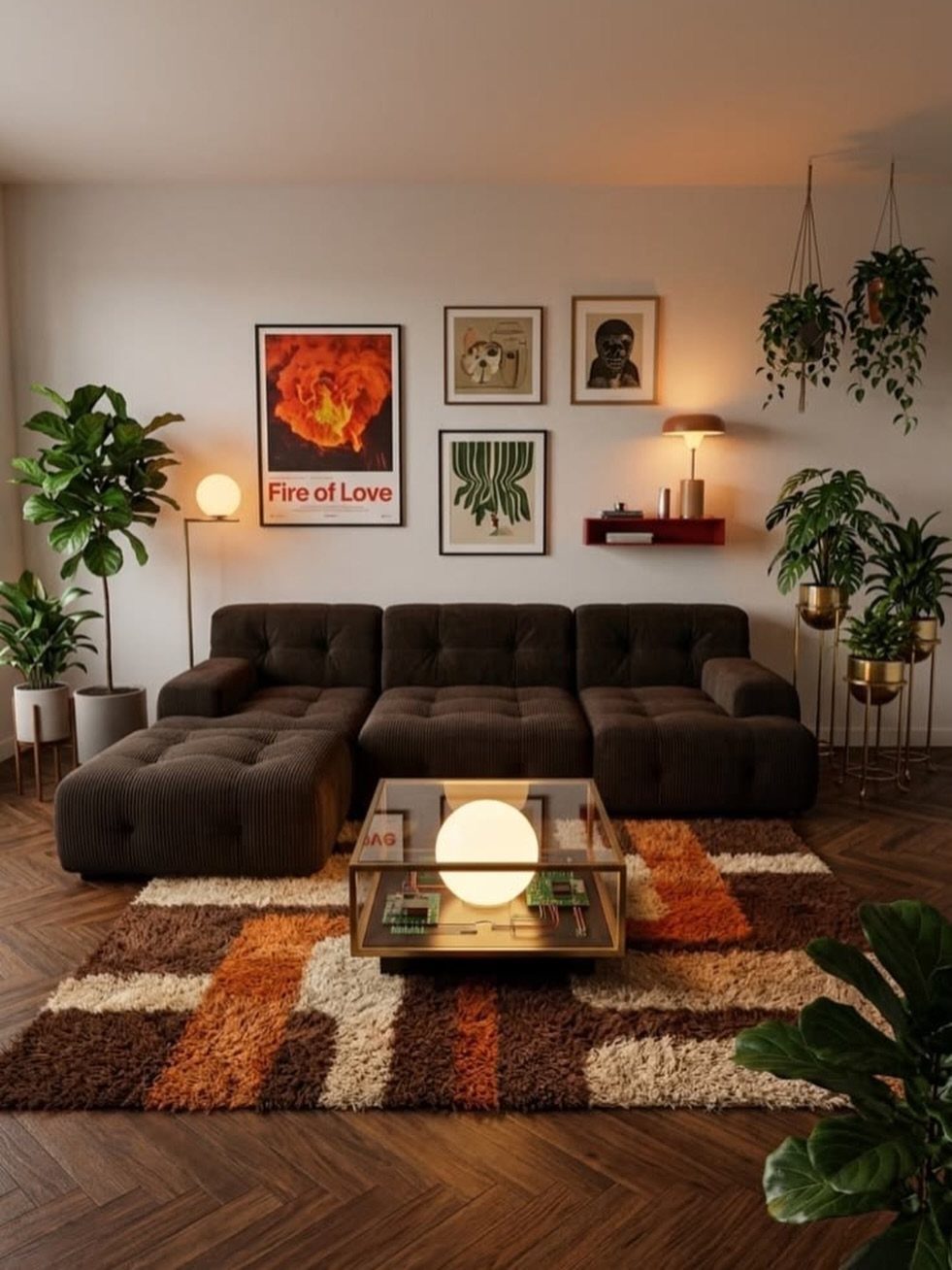
A brown couch swallows solid color without much to show for it. Patterned rugs, curtains, and cushions let the same brown read as ground rather than void.
Geometric blocks or small florals both work, but the prints need to share at least one color with each other or the room turns into a yard sale.
Check scale against your rug: a 5×8 can handle one bold pattern, an 8×10 or larger can layer two. A shag rug that carries brown, cream, and orange is enough; adding a fourth color in the pillows would tip it.
This suits renters and the indecisive, since swapping prints costs less than replacing the sofa.
3. Gallery Wall
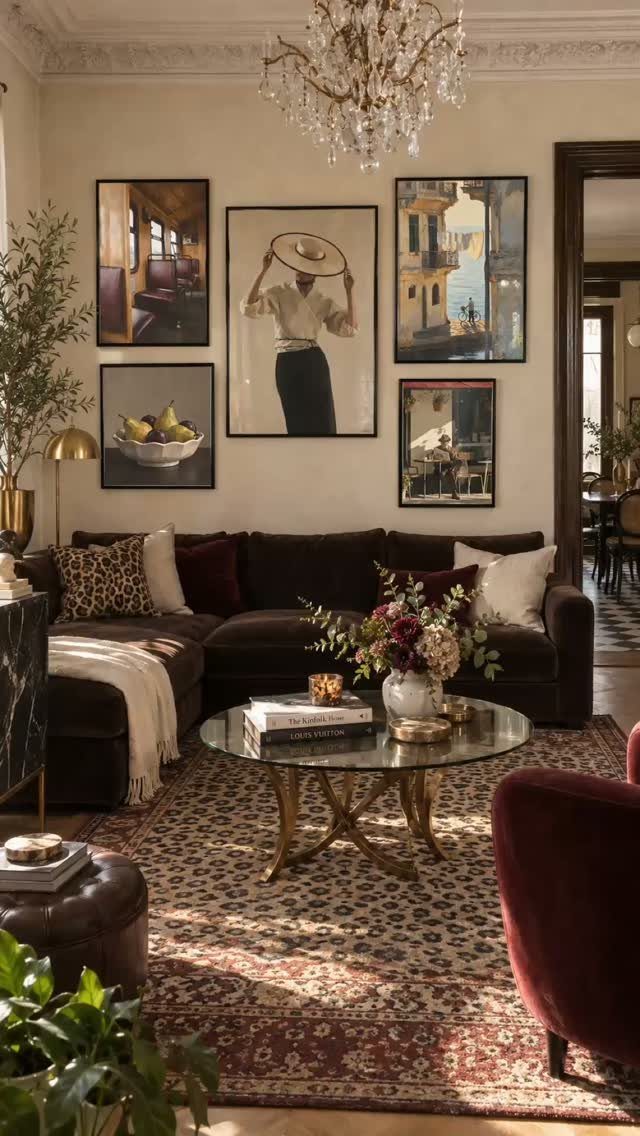
The wall behind a dark couch is usually the largest blank surface in the room, and leaving it empty makes the seating feel marooned. A gallery wall pulls the eye up and gives the brown somewhere to belong.
Five frames of different sizes, finished in wood tones or thin black metal, keep the arrangement from looking catalog-perfect.
Mix photos, prints, and one mirror if the room needs light; keep the mat widths similar so the chaos reads as intentional. Start by laying the arrangement on the floor, then transfer it up with paper templates and painter’s tape.
This takes an afternoon and a stud finder, and it suits anyone who collects art slowly rather than buying sets.
4. Cream Pillows and Light Rug
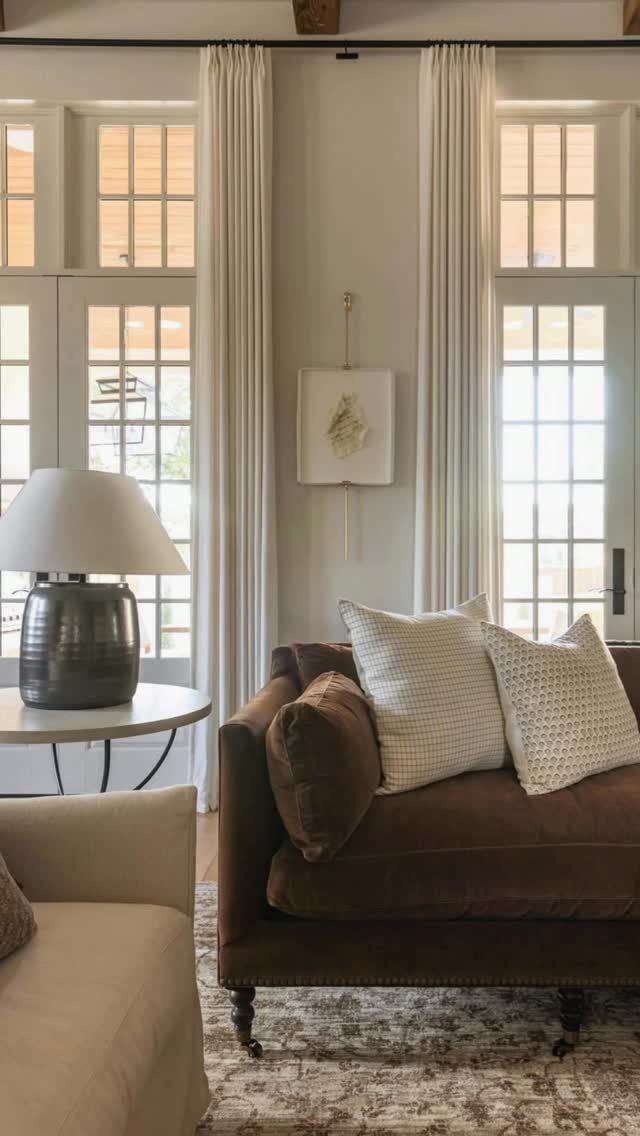
Cream against chocolate is the oldest trick for a reason: it works in every light condition and reads as intentional even when the rest of the room is still coming together.
Two textured cream pillows and a light rug with a quiet pattern are enough; the eye registers the contrast and stops before the setup turns into a beige avalanche.
Brass or gold nearby, on a lamp or side table, keeps the cream from looking institutional.
The risk is that cream shows soil fast in a house with dogs or small children; if that is your situation, oatmeal or wheat reads almost as light and forgives more.
5. Floor Lamps and Table Lamps
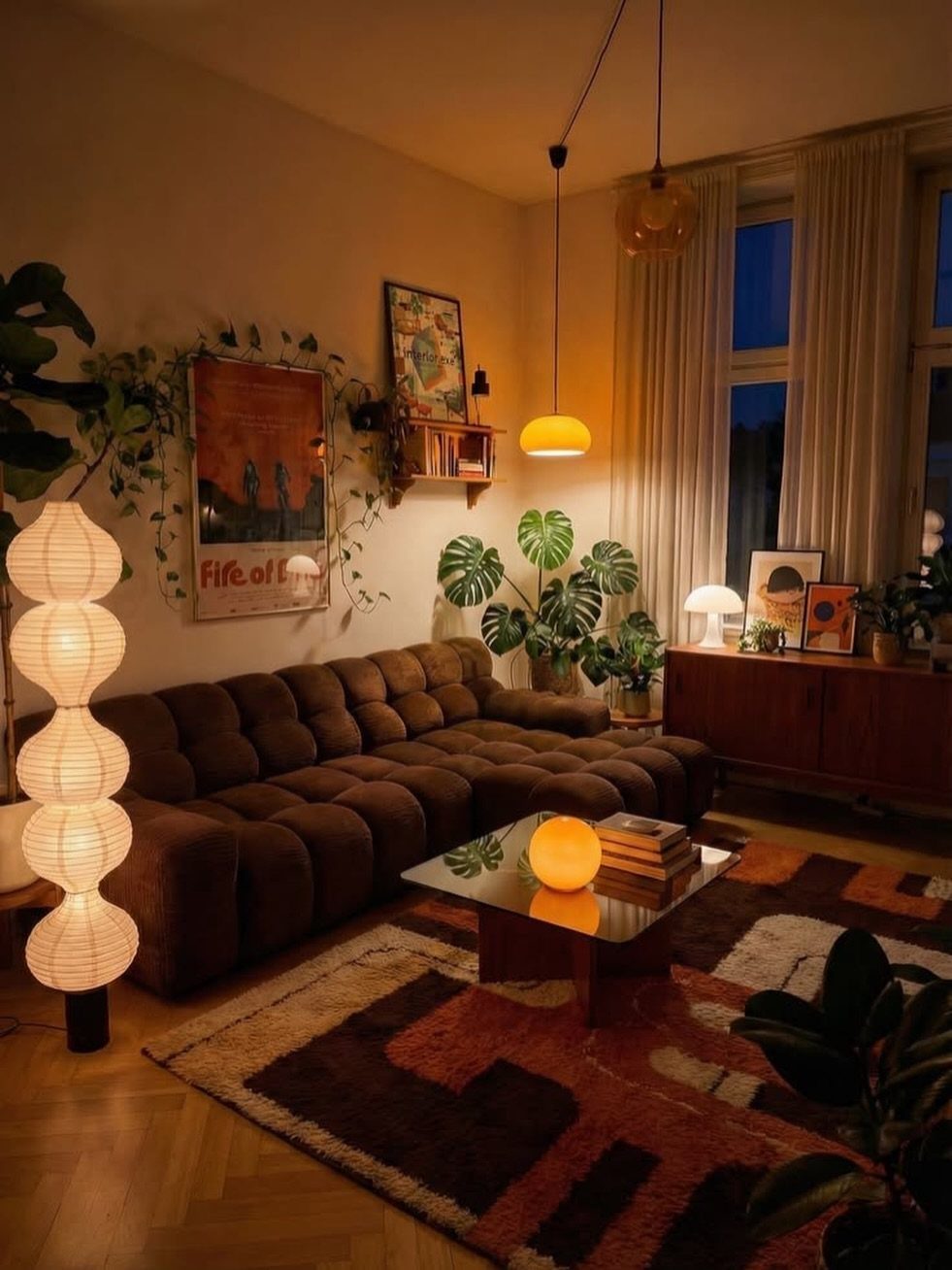
A brown couch in a dim corner can disappear after four in the afternoon. Layered lamps, floor and table both, bring it back into the room.
A paper lantern floor lamp gives diffuse height, a small table lamp warms the immediate seating circle, and any overhead should be on a dimmer so it does not blow out the glow.
Three sources at three heights, all under 2700K, keep the brown warm; anything cooler turns it gray and the room clinical. This matters most in north-facing rooms or winter months, when natural light is scarce.
A floor lamp and two table lamps are enough, and the couch becomes a place you actually sit in the evening rather than pass through.
6. Chocolate Velvet Sectional
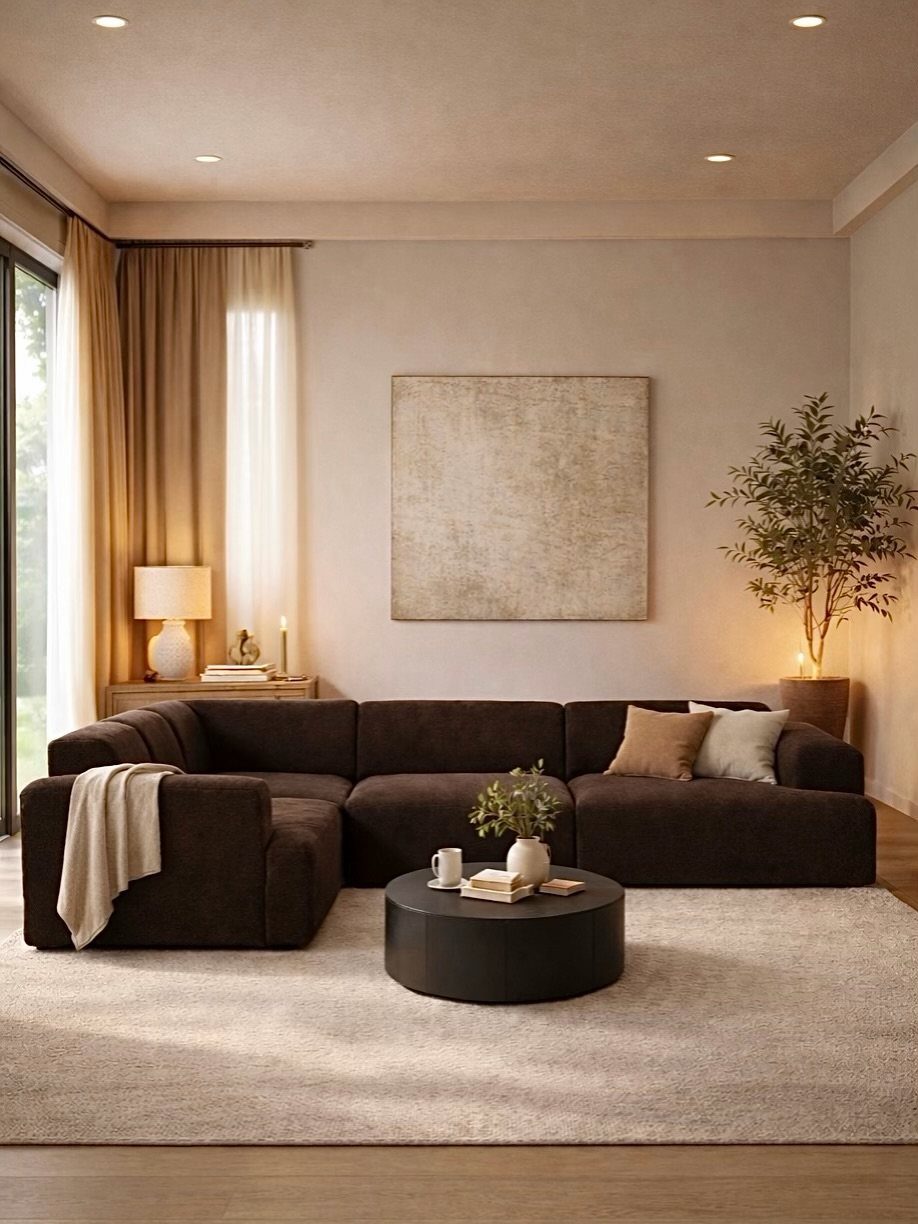
Chocolate velvet is a statement fabric that demands clean surroundings; too many competing textures and the room turns bordello. A chocolate velvet sectional needs quiet walls with one large abstract piece and minimal small clutter.
Boucle or ribbed accents nearby are fine, but keep them in solid creams or rusts, not additional patterns. Velvet shows every crumb and cat hair, so this suits adults without shedding pets or the diligent.
The depth of color means the couch will dominate a small room; in tighter spaces, a chocolate velvet loveseat or two chairs split the impact.
I would choose this for someone who entertains at night, when the pile catches lamplight and the room looks designed rather than accumulated.
7. Plants and Leafy Accents
A dark brown sofa can swallow light faster than you’d expect. Green plants and leafy accents pull the room back toward the living side of things.
A tall Monstera Deliciosa beside the couch arm fills that awkward corner gap and gives the eye something to rest on besides all the brown. The broad split leaves read as organic shape against the straight lines of upholstery.
Wipe those broad leaves monthly with a damp cloth; household dust blocks light absorption and the plant dulls faster than you’d think.
Smaller pots at varying heights keep the arrangement from looking like a single grocery-store purchase. A textured neutral rug underneath softens the transition between all that green and the sofa’s warmth.
This one suits renters and new plant owners who want a lot of visual return without a conservatory’s worth of care.
8. Stack Greenery and Graphic Rug
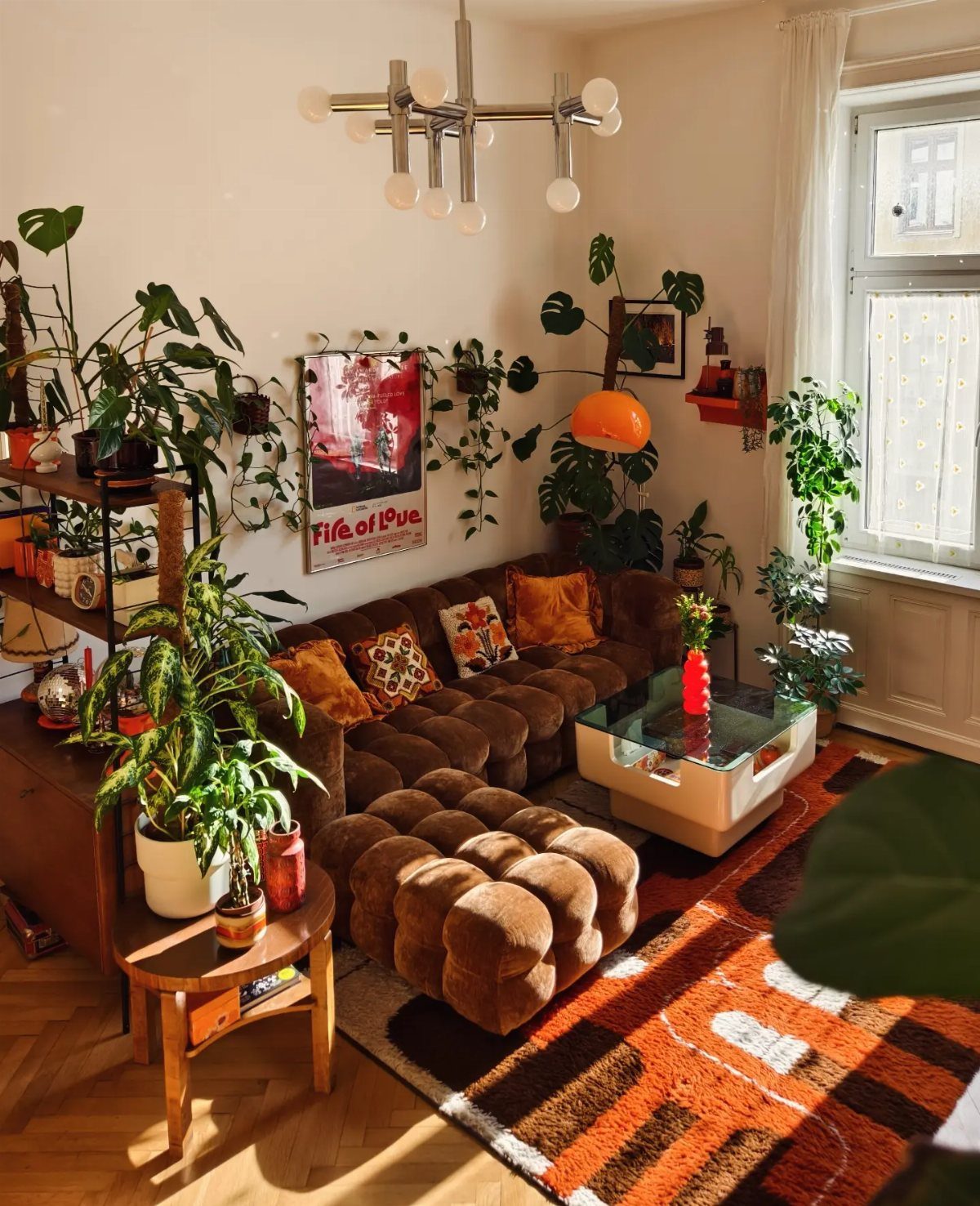
Stacking greenery at different heights turns a flat room into something that reads as intentional. A brown tufted sofa and matching ottoman can sit against a graphic orange-and-brown shag rug without the whole thing feeling dated.
A glass coffee table is the quiet hero here. It keeps all that texture, the plants, the patterned rug, from crowding each other while the sofa stays central.
The transparency lets light move through instead of stopping at another solid surface.
The rug does the heavy lifting on pattern; the plants add the living element. Together they keep a dark brown couch from reading as heavy or dated.
I’d aim this at someone who likes color but wants the sofa to stay the star. Shag rugs collect more than flatweave, and clustered plants need a watering routine you actually follow.
9. Moody Living Room with Fireplace
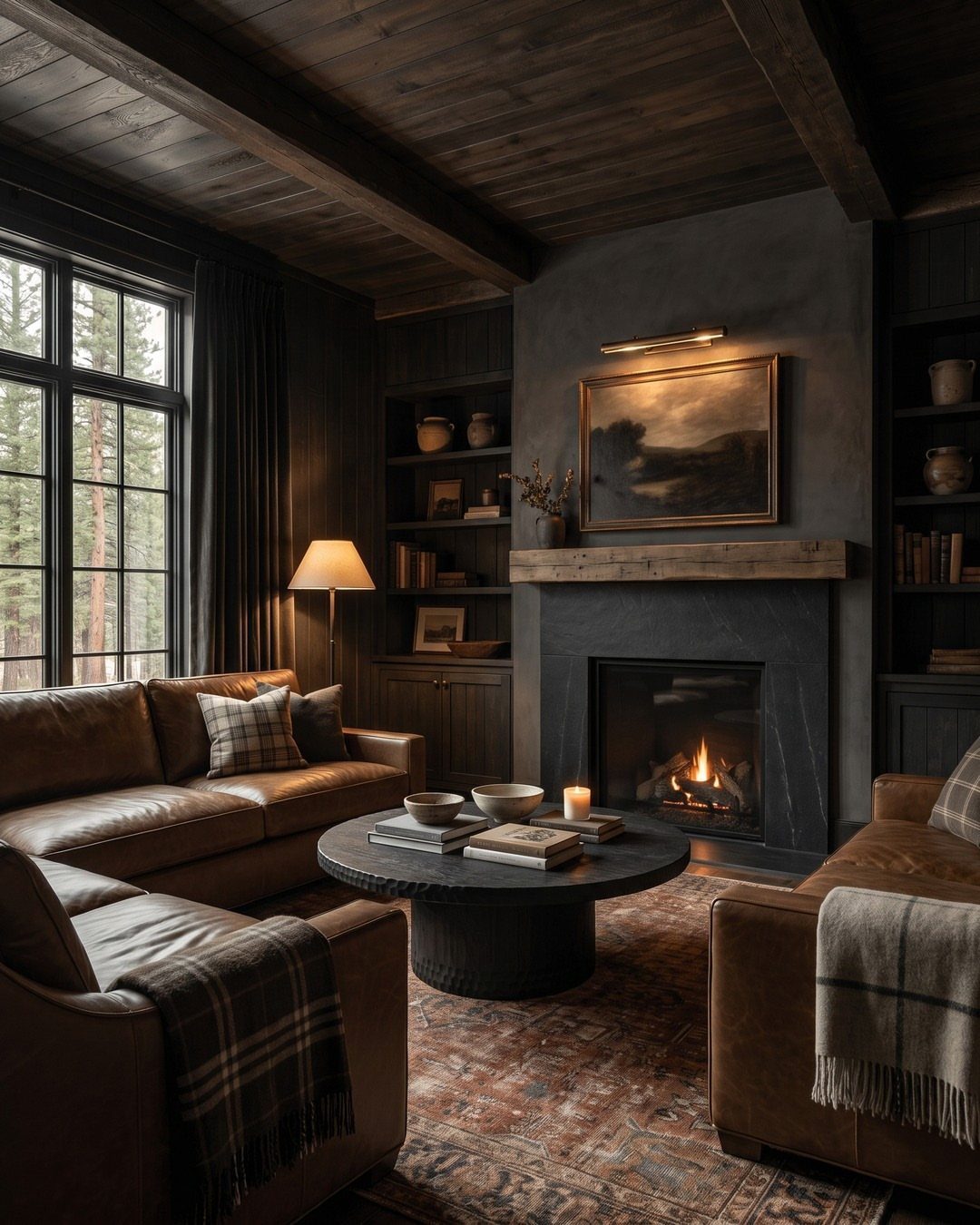
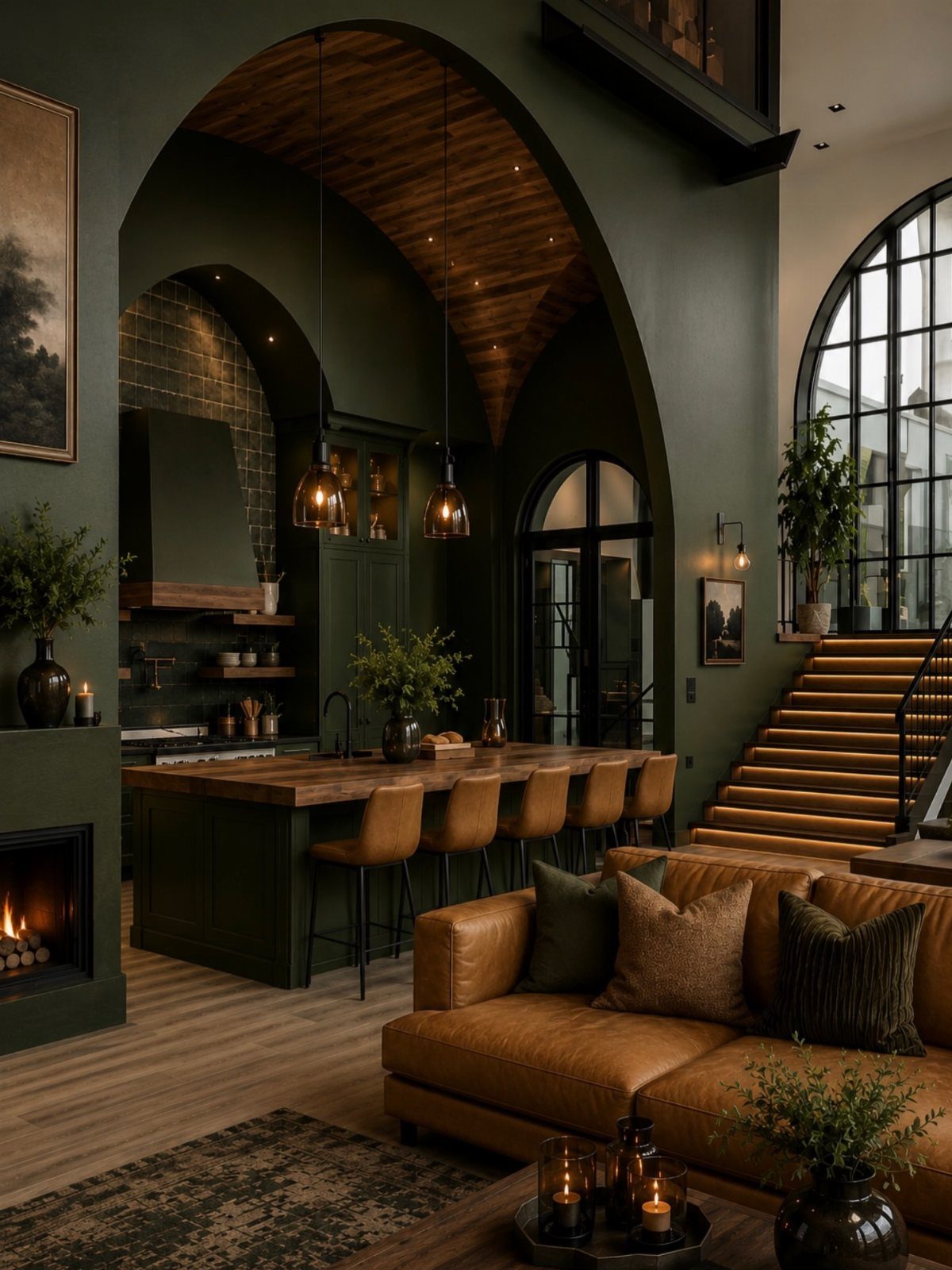
Deep brown leather against charcoal walls and dark wood paneling sounds like a cave until you see it with a lit fireplace and a patterned rug breaking up the floor. Layering matters more than matching.
Warm lamps with warm bulbs matter more here than in lighter rooms; without them the shadows win.
This setup asks for space. Larger living rooms let you control where the light falls and keep the eye moving between the built-in shelves, the framed landscape, the fire.
In a small room the same colors box you in.
One wall deep brown works as a test if you’re unsure. Keep the rug light, add one oversized art piece, and see how the light behaves at different hours before committing the whole room.
10. Cognac Sofas with Faux Fur Rug
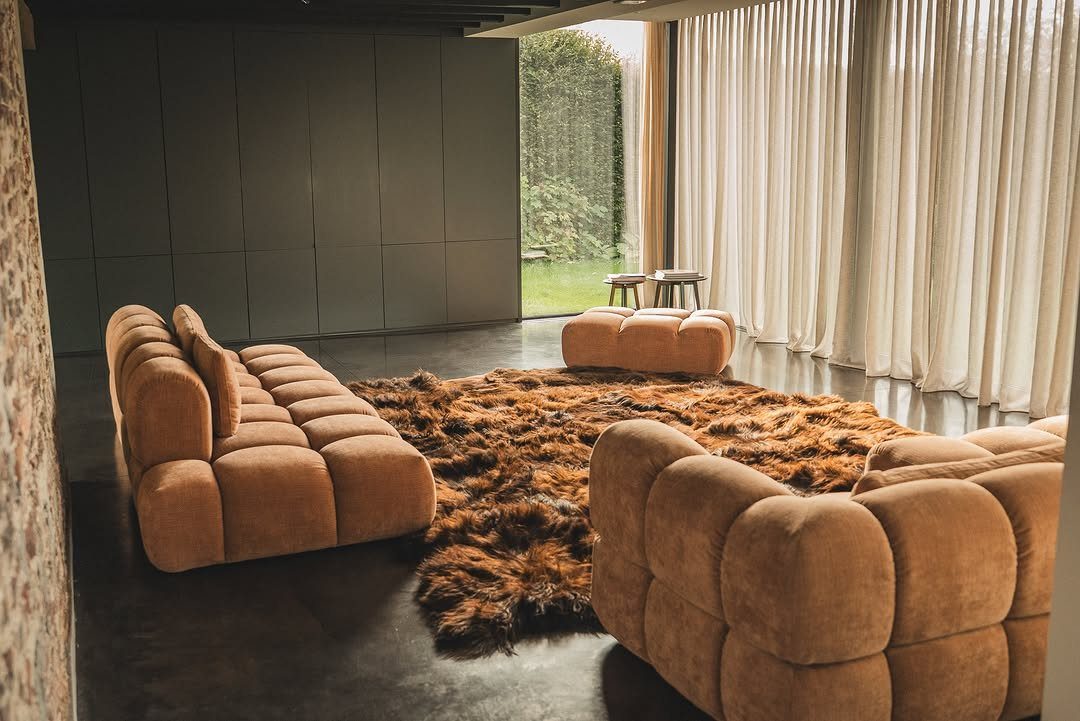
Cognac velvet reads lighter than chocolate brown, and against a large faux fur rug the whole room tilts toward lounge rather than formal living.
The texture contrast carries this: smooth tufted velvet against shaggy pile underfoot, sheer drapes softening the window light.
A modular sofa lets you rearrange as the room’s use changes. The ottoman in the same fabric keeps the look intentional rather than matched-set stiff.
The rug is the statement here, not a neutral foundation. That warmth works best with natural light; in a darker room the same palette can feel muddy instead of rich.
I’d put this toward someone who wants the sofa to feel like the inviting center of the house, not a piece to keep pristine.
Faux fur collects pet hair and needs regular shaking out; the tactile return every time you walk across it barefoot is the reason people keep it.
11. Textured Knits and Earth Tones
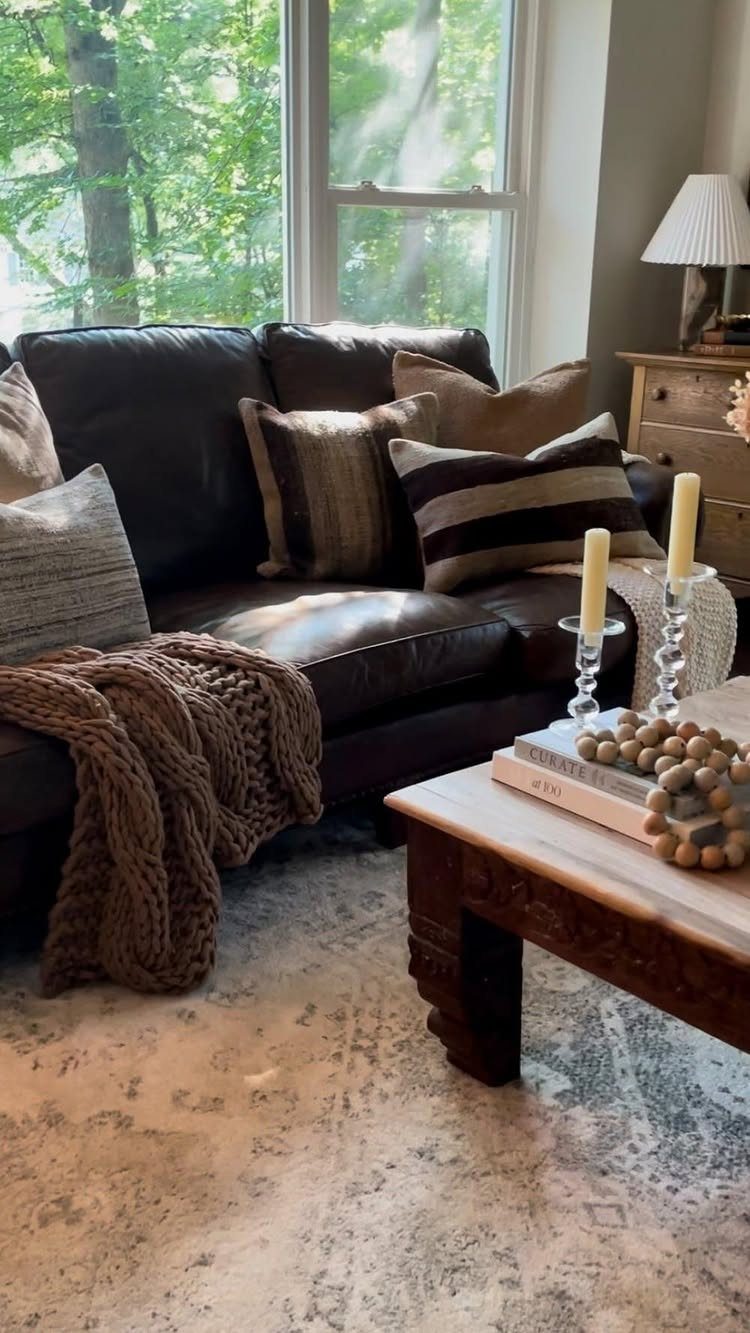
Chunky knits and earth-toned pillows on dark brown leather give the sofa a worn-in, collected-over-time feeling that reads as personal rather than purchased.
Brown and beige patterns stay quiet enough to live with; nothing here demands attention the way a bright accent would.
A textured throw over the arm, not folded, signals that someone actually uses this room. The knit weight matters: too thin and it disappears against leather, too heavy and the sofa becomes storage.
Natural materials and leafy accents nearby would push this toward the relaxed atmosphere the photo hints at, though the visible version keeps it simpler.
This suits readers who want their brown sofa to feel like home base, not a design statement. The limit is how much texture your eye can handle; if the pillows already have pattern, keep the blanket solid, and vice versa.
12. Dark Brown Corduroy Sectional

Corduroy ribs catch light differently than flat upholstery, which keeps a dark brown sectional from reading as a single dark mass. Against light wood-look flooring and plain off-white walls, the sofa becomes the room’s texture source rather than its weight.
Felt protective pads under every leg matter more than you’d think. A large sectional concentrates a lot of weight on small contact points, and light laminate or oak floors dent easily under that pressure.
Check the pads twice a year; they compress and pick up grit that scratches.
Minimal surrounding treatment, white walls, no competing patterns, lets the corduroy’s vertical lines do the visual work. Patterned pillows or aged brass accents would add depth if the room starts feeling too bare.
I’d steer this toward someone who wants one strong piece and the freedom to change everything else seasonally. The ribbed fabric shows wear patterns over time; that reads as character to some, tired to others.
What Colors Go with a Dark Brown Couch?
Warm whites, soft beige, olive green, and deep blue all lift a dark brown couch without turning the room cold. The contrast comes from keeping walls and rugs lighter than the sofa; that single switch changes the whole mood.
Cream or ivory throws and woven jute rugs keep the weight from settling. Rust, camel, and light greige read as intentional against chocolate upholstery rather than accidental.
A soft clay shade on one wall works if you want more than neutral without going bright.
The mistake is matching brown with more brown and hoping depth carries it. What actually carries it is the step between tones: the lighter textile against the darker seat, the green leaf against the warm wall.
Those gaps are what the eye registers as design.
How to Brighten a Room with a Dark Brown Sofa?
If you own one thing to offset a dark brown sofa, make it a pale rug that eats up floor space. It catches the eye first and keeps the sofa from reading as a hole in the floor.
Layer lighter textiles on top of that: creamy pillows, a pale throw, sheer or unlined curtains if the room gets any sun at all. Floor and table lamps at different heights do more than one overhead fixture.
Plants add the living element that brown upholstery alone can flatten. A tall leafy shape beside one arm, smaller pots clustered on a side table, breaks up the horizontal line of the sofa back.
Warm beige walls behind the green keep the whole setting soft rather than staged.
Are Brown Sofas Still in Style?
Brown sofas are back, but the styling around them is what changed. The old gray-everything look shifted toward warm, layered, cozy spaces, and brown fits that direction without forcing it.
Brown leather felt oppressive in the 2000s because everything around it was: espresso trim, burgundy walls, windows you could miss if you blinked.
Pull the same sofa into a room with white or soft gray walls, slim legs on the tables, one or two pieces that read as now, and the brown stops looking like a leftover and starts looking like an anchor.
Warm neutrals cycled back around, and dark brown lands as refined when the room has enough light to show it off.
The problem was never the color. It was the pairing.
How to Style a Living Room with a Brown Sofa?
Lighter walls are the starting point, but the balance comes from texture and tone together. Wooden furniture nearby keeps the look natural and grounded; wicker baskets or a woven side table push that further without adding another color.
Olive green, beige, and rust layer in as earthy accents that read warm rather than loud. If the walls stay neutral, the textiles can carry the variation; if one wall goes deeper, keep the fabrics quiet.
The room feels inviting when no single element shouts. The brown sofa is the anchor; everything else answers it at lower volume.
Whether you choose to blend or contrast your brown sofa into your living room, there are so many ways to make this functional piece a real design moment — it comes down to what you like and what works best for your space.
Frequently Asked Questions
What sofa colors will look outdated in 2026?
What dates a sofa is almost never the color but what surrounds it. Brown sofas are back in style for 2025 and 2026, especially when paired with lighter walls, clean lines, and warm layered spaces.
The old gray-only look is what feels dated now; rich, warm neutrals read as grounded and current. If your brown sofa looks tired, swap the rug and pillows before you blame the couch.
How to style a living room with a brown sofa?
Start with lighter walls and a light rug to give the brown something to push against. Layer in patterned textiles that share at least one color, and add lamps at different heights with warm bulbs under 2700K.
Plants or leafy accents keep the room from going too dark or too still.
Are brown sofas still in style?
Yes. Pair it with modern accents and the same sofa looks current rather than inherited.