
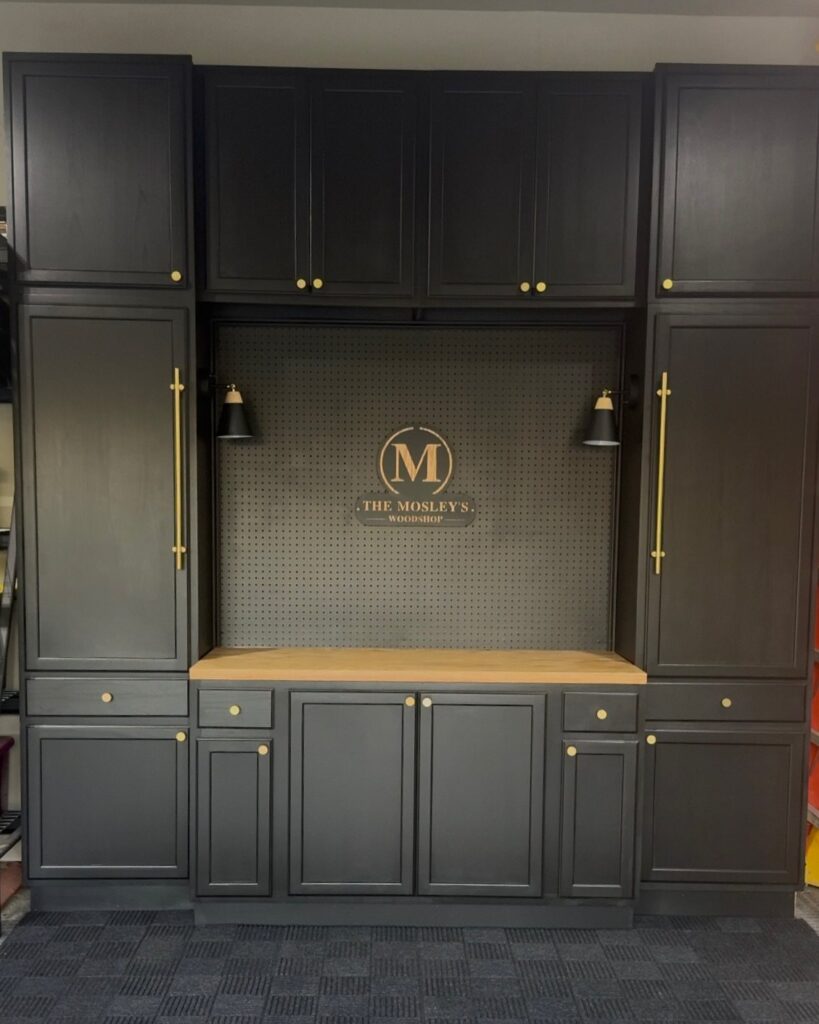
These garage storage ideas run from a $132 mudroom built with stock lumber to ceiling racks that lag-bolt into joists, so the right pick depends on whether you own the space or answer to a landlord.
A slatwall system moves with you; lag-bolted ceiling racks and a high shelf above the garage door do not.
Jim White’s PVC rod rack, built after commercial options failed his ceiling and his budget, is one of several solutions here that leave wall space free for workbenches or parking.
1. Overhead Storage Racks
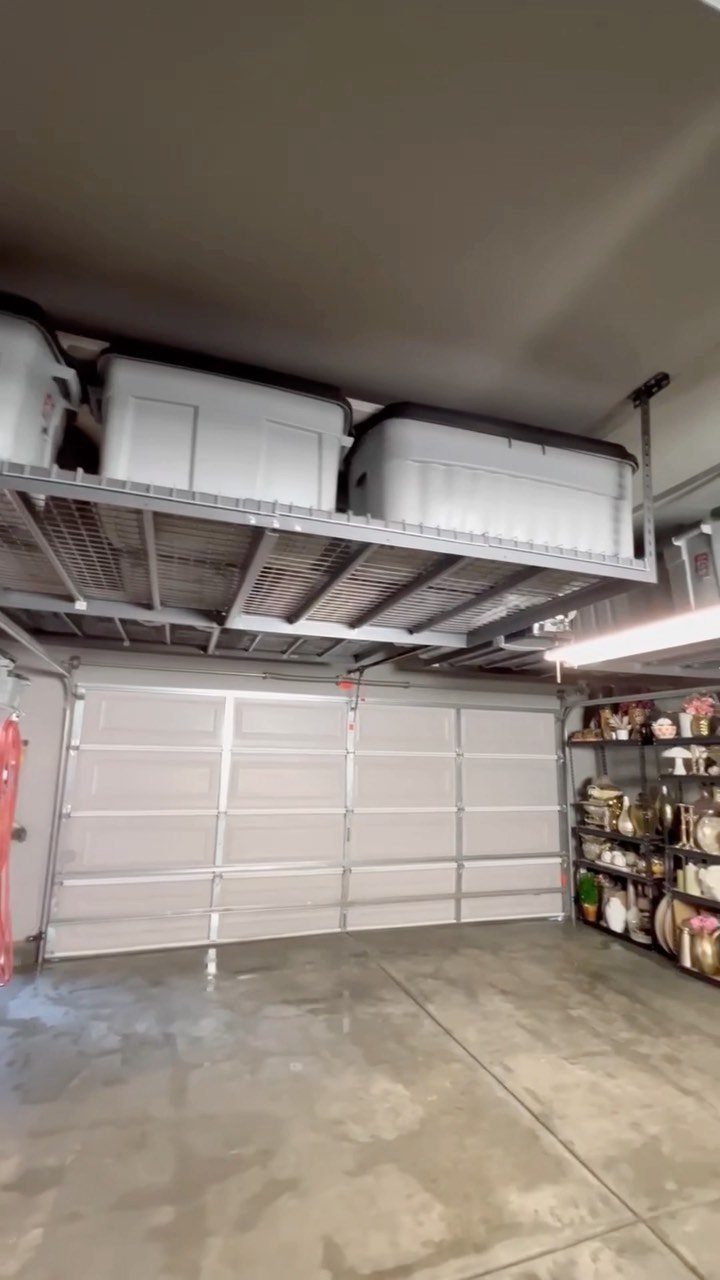
Ceiling racks turn the empty zone above a garage door into storage for holiday decorations or camping gear. The rack bolts to joists, not drywall, so a stud finder is worth bringing out before you buy hardware.
I would check the weight rating against what you actually own; most hold plenty for bins and boxes, but that drops fast if you stack snow tires or paint cans.
A white rack against a white ceiling disappears visually and keeps the space from feeling boxed in. This suits anyone whose floor is spoken for by a car, a workbench, or kids’ bikes.
2. A Mudroom
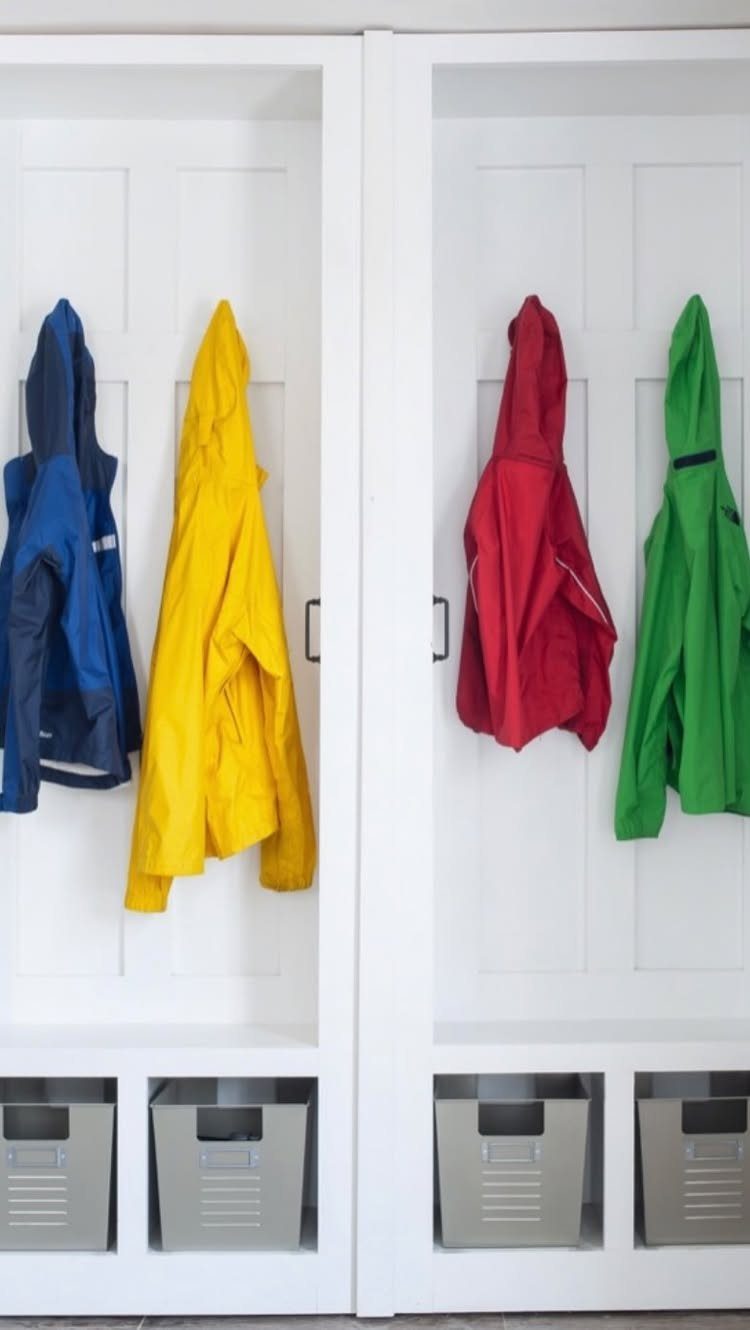
A mudroom inside the garage catches the mess before it reaches your kitchen floor. A mudroom setup uses locker-width bays with hooks at adult height and open cubbies below for bins of gloves, hats, and dog leashes.
A bench seat would be my next addition, since lacing boots while standing gets old fast. Anna Carter built hers for $132 using stock lumber and hooks from a hardware store, so this does not require a contractor.
I would put it on the wall between the house door and the driveway, where traffic is already headed. Best for households with kids, dogs, or anyone who gardens in real shoes.
3. Custom Cabinets
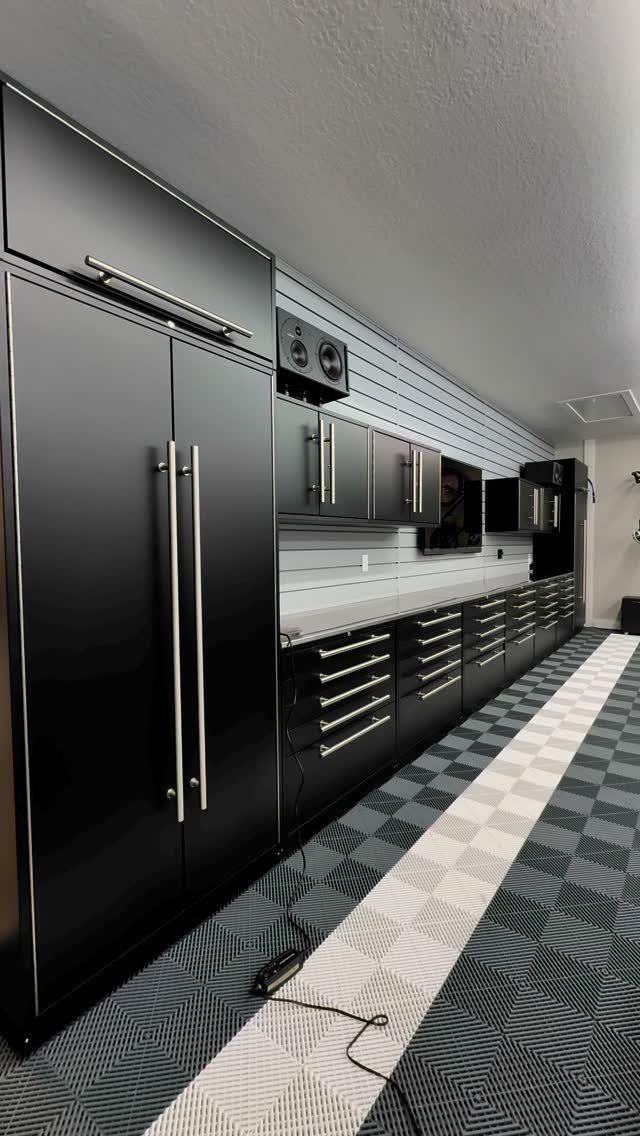
Black cabinets against a checkered floor read as deliberate design, not afterthought storage. The run mixes tall lockers for mops and golf bags, drawers at counter height for small tools, and uppers that keep paint cans away from curious hands.
Custom means you choose the depth; a shallower base cabinet leaves more aisle width in a narrow garage. NewAge and similar lines ship in flat boxes and lock together, so the cost lands between DIY plywood and full millwork.
I would spring for the countertop if you work on projects out here; otherwise, drawer bases alone get you most of the function.
4. Slatwall Systems
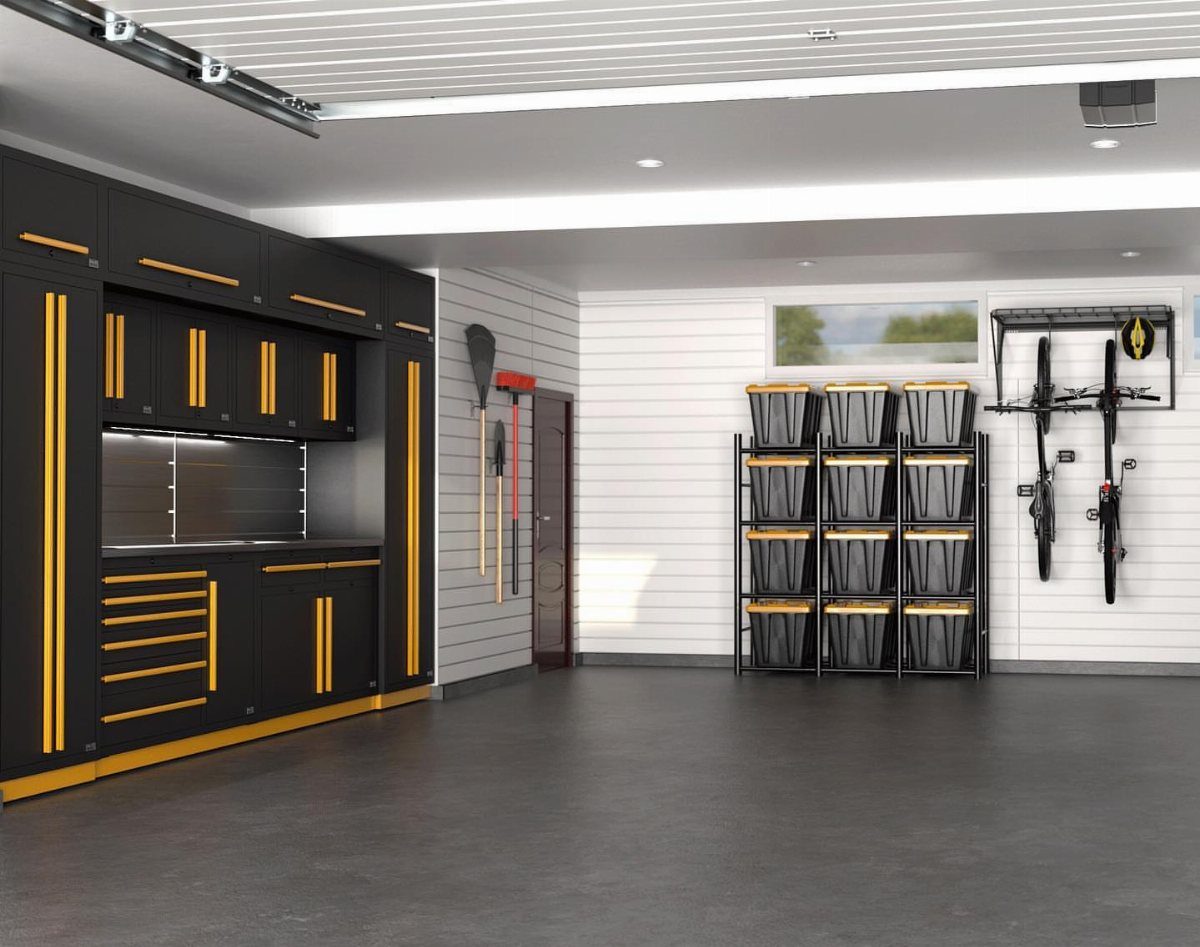
Slatwall turns any garage wall into something you can rearrange without drilling new holes. White panels carry garden tools, bikes, and wire baskets that move up or down as the season changes.
Hooks clip in at any point; baskets and shelves use the same slot. I would run it high enough behind where bikes lean, since handlebars catch on everything.
The panels come in standard sheet sizes and need to screw into studs, so plan around outlets and switches.
This system wins if your storage needs shift every few months, or if you rent and want to take it with you.
5. Bike Hooks
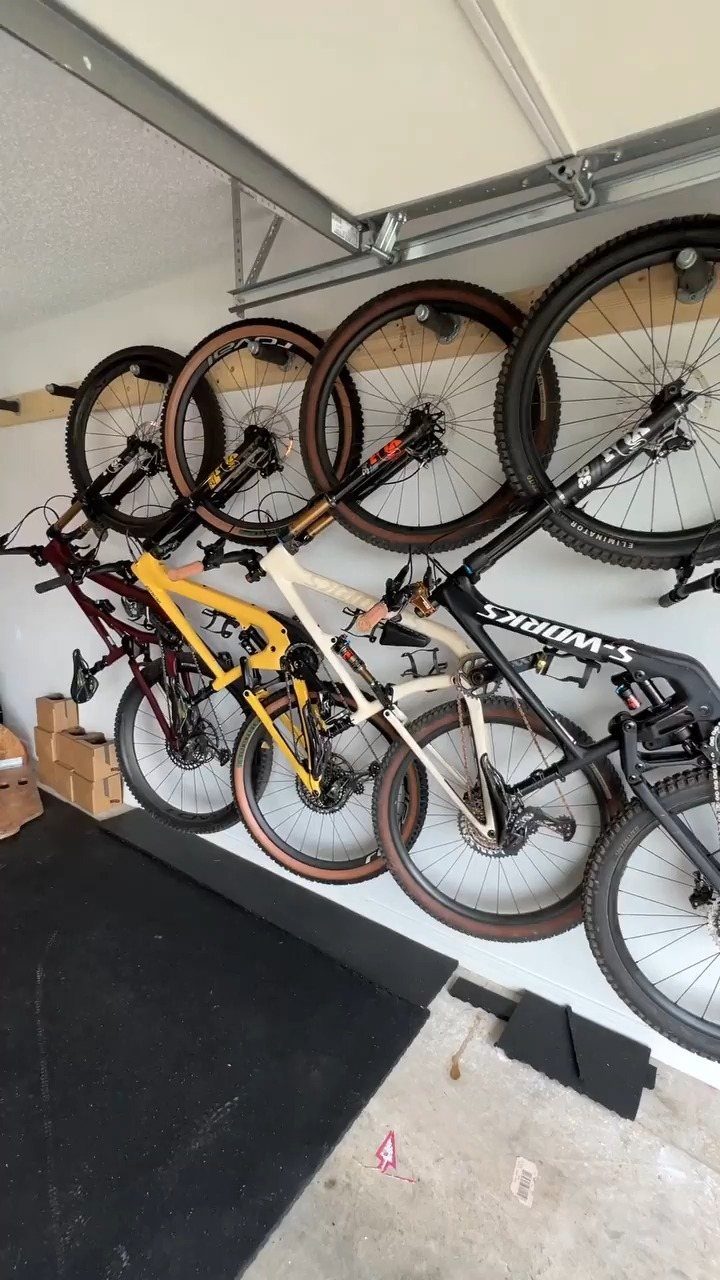
Four bikes on one wall, hung by their front wheels, leaves the floor clear for a car or a trash can. The hooks are simple J-bolts with rubber coating; you lift and drop, no straps or pulleys to fight.
I would mount them at alternating heights so handlebars do not collide, and keep the heaviest bike lowest to save your shoulders.
Vertical hanging works for most mountain bikes, but a road bike with narrow tires may need a hook with a smaller gap.
If you ride daily, this beats a ceiling hoist because you are not wrestling with a ladder first thing in the morning.
6. Hanging Baskets for Sports Equipment
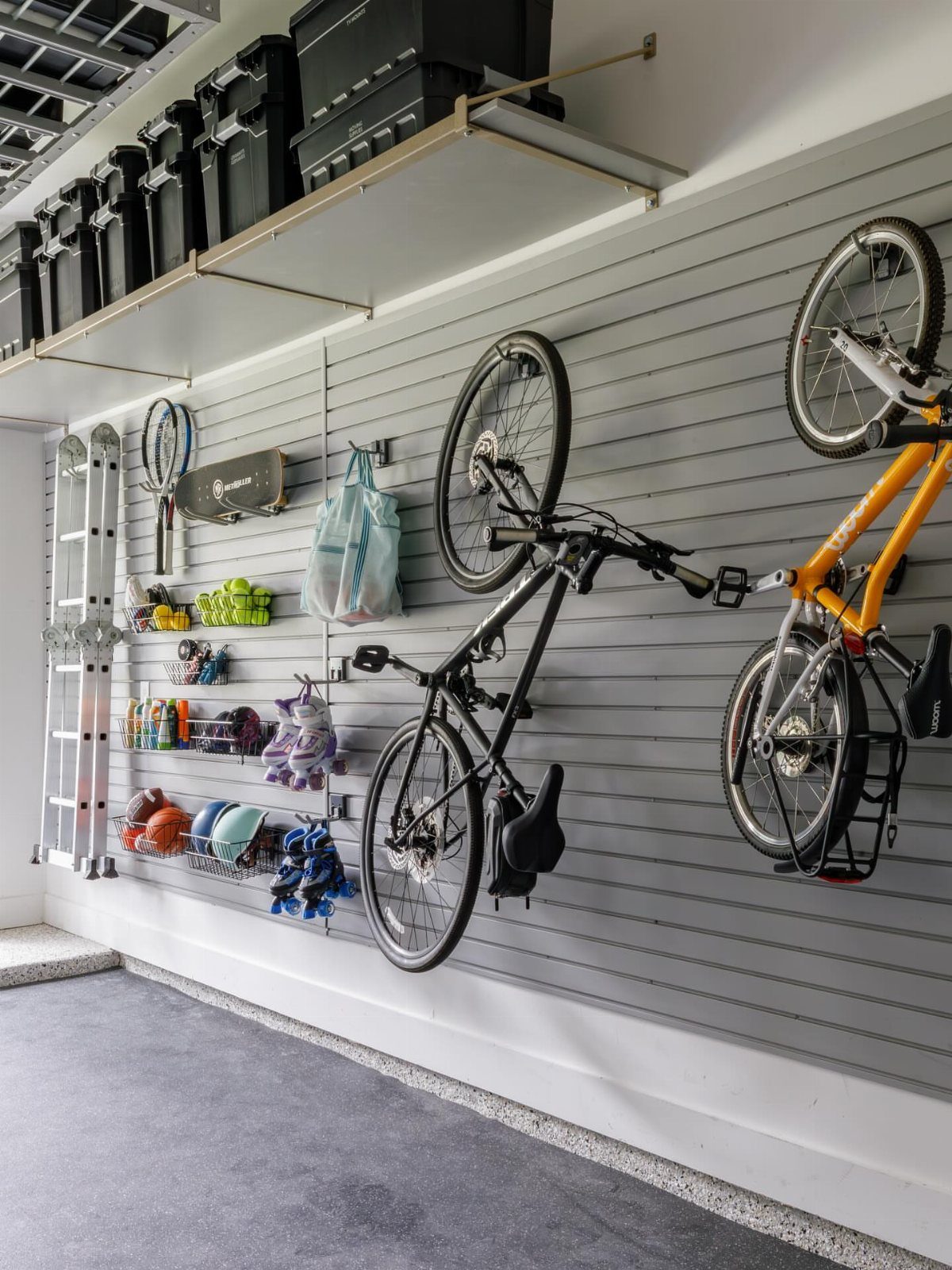
Two baskets sized for loose gear, with tennis rackets hung on hooks beside them, keep sports equipment sorted and within reach. I would label each basket by sport or by child, since "miscellaneous" becomes a black hole fast.
For young kids, mount the baskets low enough that they can reach in without climbing; for teenagers, put them at eye level or the gear will migrate to the car trunk instead.
This is the cheapest entry on the list if you already have a slatwall run; baskets and hooks are both inexpensive add-ons.
7. Fishing Rod Storage Rack
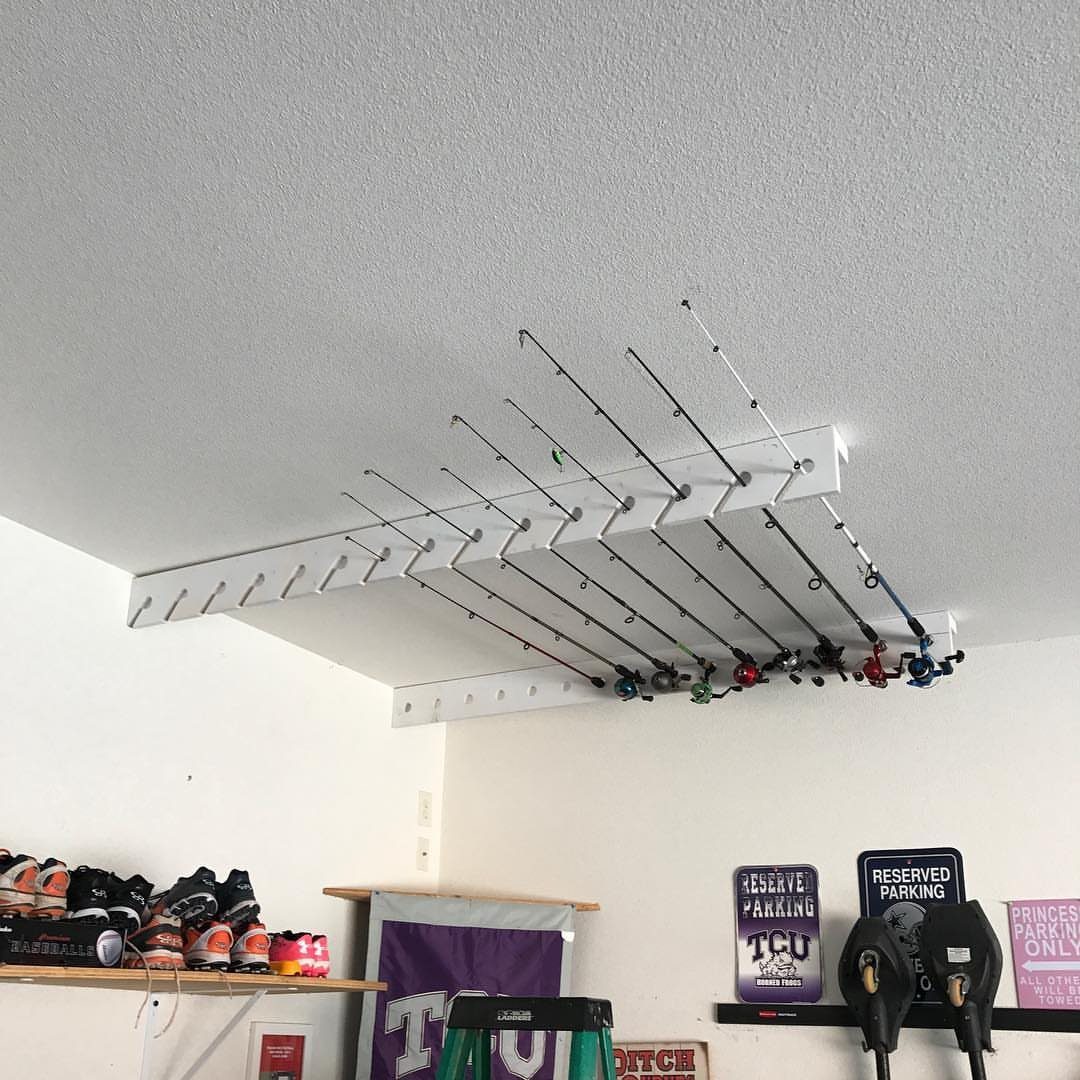
PVC pipe cut to short lengths, spaced along a ceiling-mounted board, keeps rods horizontal and reels protected.
Jim White, a retired angler in Tennessee, built his own after failing to find anything compact enough for his collection without costing too much. His design fielded over a hundred requests from other fishermen wanting the plans.
The pipes cradle the rod blank without gripping the reel or the tip. Mount the board to ceiling joists, not drywall alone; a loaded rack pulls downward more than you’d think.
I’d put this in a garage that doubles as a workshop, since the wall space underneath stays free for benches or slatwall.
8. Sliding Door Storage Closet
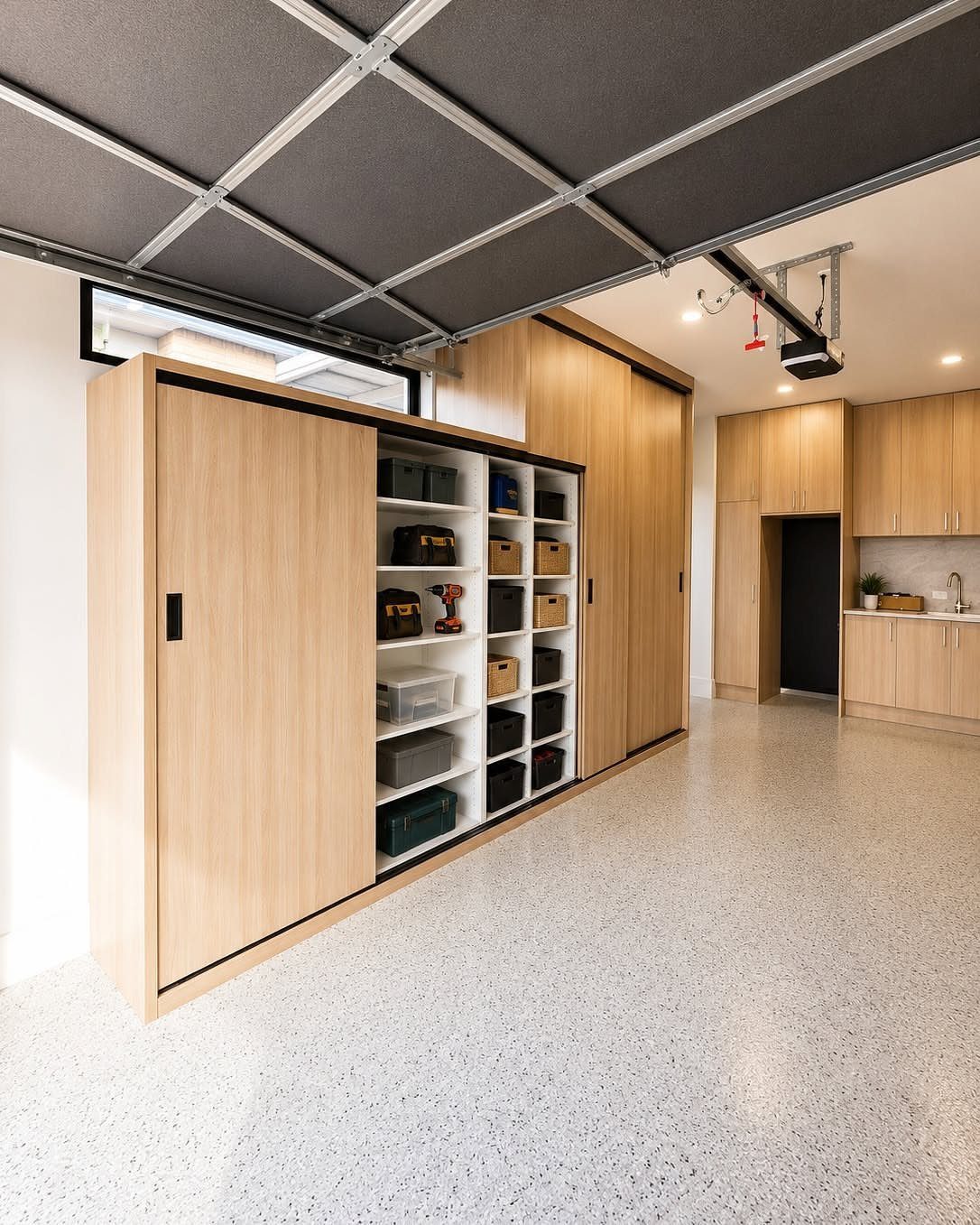
Sliding doors on a garage closet hide the mess without the swing radius of hinged panels. That matters when you park two cars and still want to walk between them with grocery bags.
Top-hung track hardware tolerates a slightly out-of-level header better than bottom-roller hardware. Built-ins behind the doors need depth: plan for plastic bins at minimum, and extra if you store paint cans upright.
I would build the carcass from plywood and face it with the same wood as the doors so the frame disappears.
9. Metal Shelving with Labeled Totes
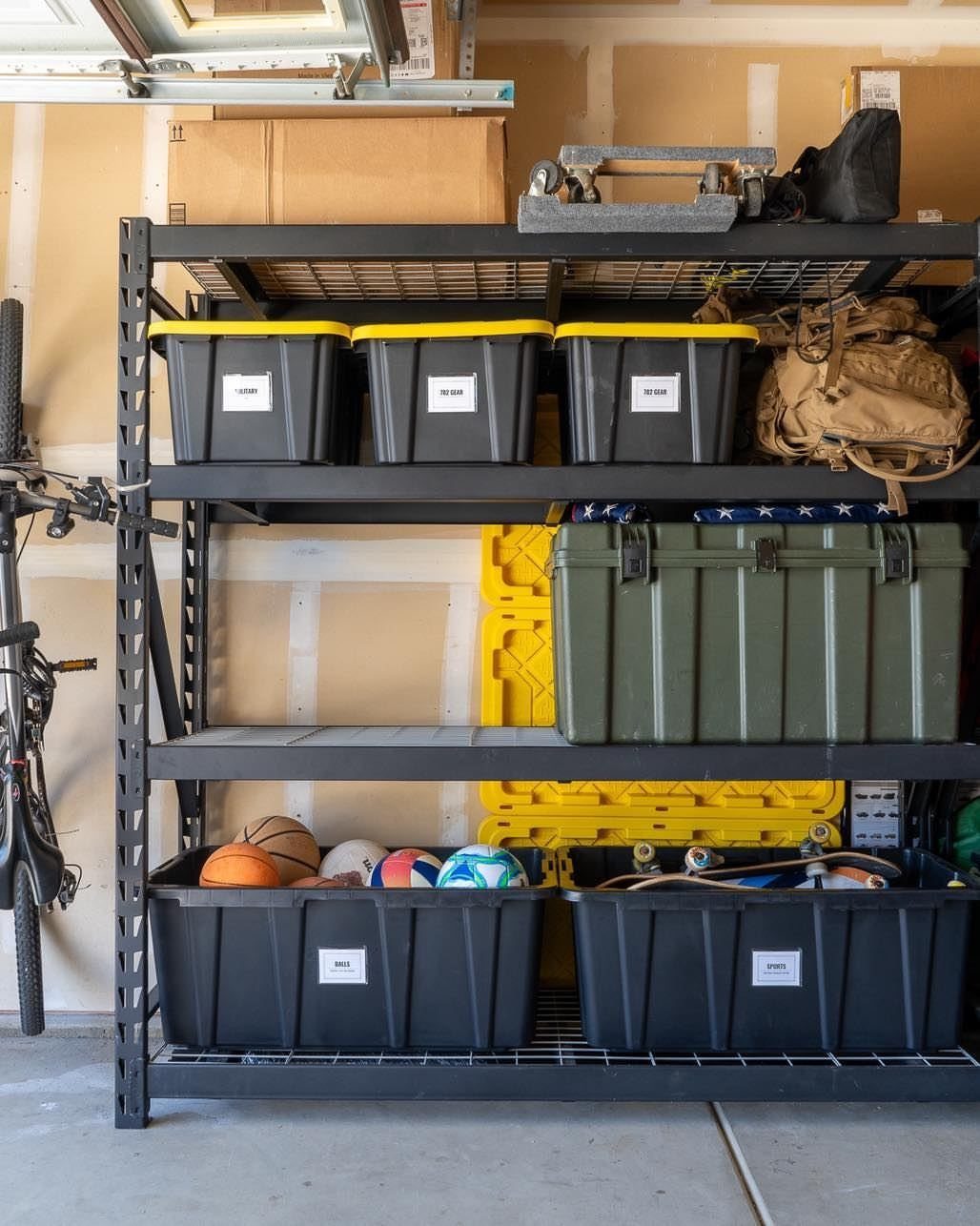
Black metal shelving with matching black totes looks intentional; mismatched colors read as clutter even when everything is sorted.
The labels here are white on black, readable from across the garage, and specific enough that someone else can put the football back in the right bin.
Five-tier units run tall, so measure your ceiling before you buy. Check your garage door track before buying; the top shelf needs clearance when the door rolls up.
I would bolt tall shelving to the wall at the second shelf height, especially in earthquake country or if kids climb.
The green trunk on the bottom shelf is doing the work of a heavier bin; anything that heavy belongs on the floor, not overhead.
10. Power Tool Cubby Station
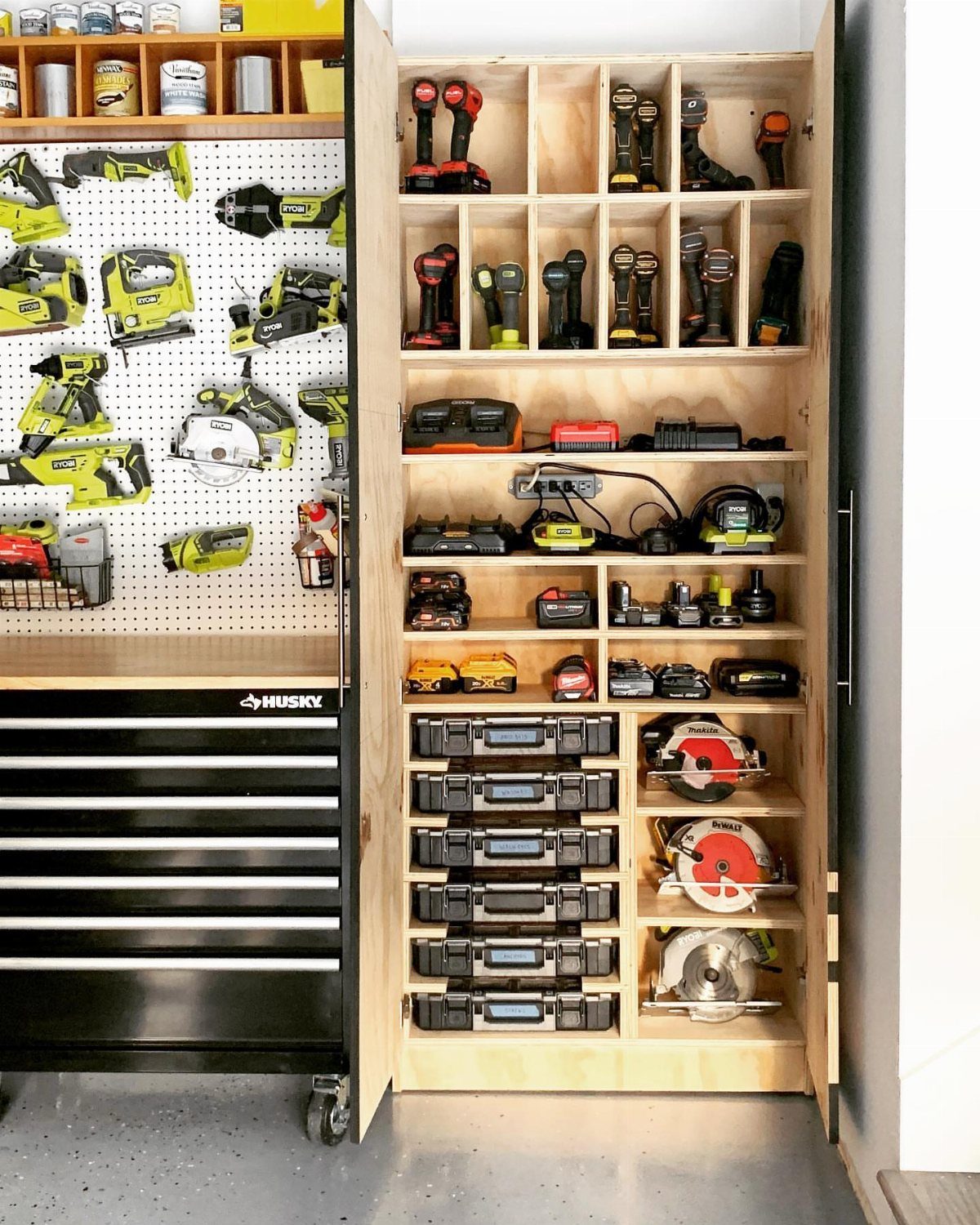
Cordless tools multiply fast, and their batteries age faster when they rattle around in a drawer. A cubby per tool, with the charger mounted nearby, means you grab the drill and know the battery is full.
The cabinet sits beside a pegboard, not in place of one. Hand tools and fasteners still belong on the wall; power tools need the deeper storage and the protection from dust.
I’d size the cubbies to your largest tool plus an inch, and I’d add a shelf above for manuals and blades.
If you own only a drill and a circular saw, this is overbuilt; a shelf with two chargers suffices until your collection grows.
11. Rolling Tool Chest Workbench
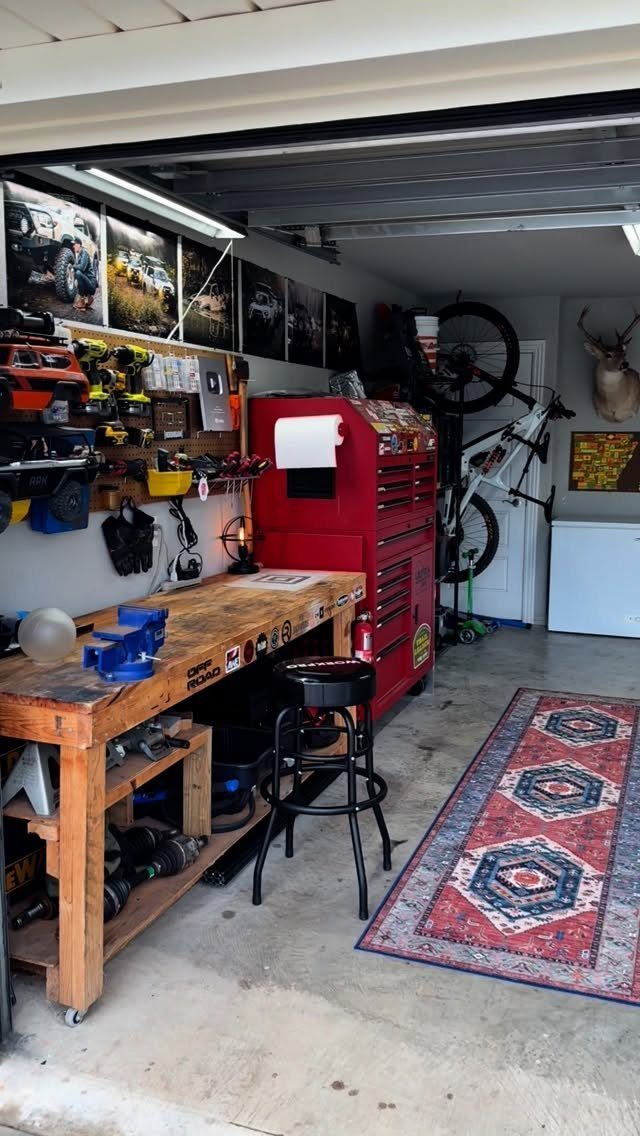
A rolling chest lets you pull the tools to the project, not the project to the tools. A tall chest with shallow drawers means you do not stack wrenches three deep to fill the height.
The wooden workbench beside it is doing the heavy work: clamping, cutting, assembly. Chest plus bench costs less than a custom cabinet run and adapts when your projects change.
I would put the chest on a mat, not bare concrete, so it rolls smoothly and the casters last.
If you work on cars, the chest lives at the front of the garage; for woodworking, it moves to the bench side.
12. Ceiling Bin Track System
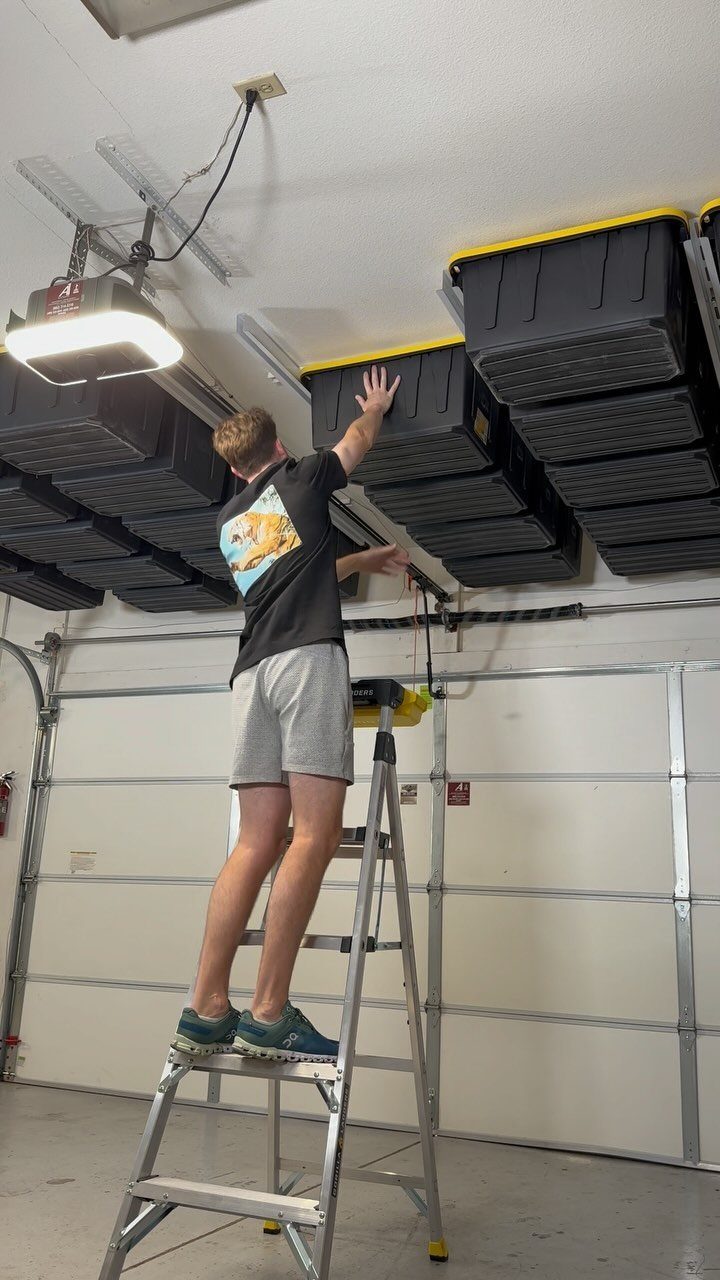
Bins on ceiling tracks slide along like curtains, bringing holiday lights or camping gear to the stepladder instead of carrying the ladder to each bin.
The tracks mount to joists, and the bins hook in from below. Weight rating matters more than bin volume; a thirty-gallon bin full of decorations runs heavy.
I’d load the forward track with lighter, oft-used items and the rear track with once-a-year storage.
13. Golf Bag Organizer Stand
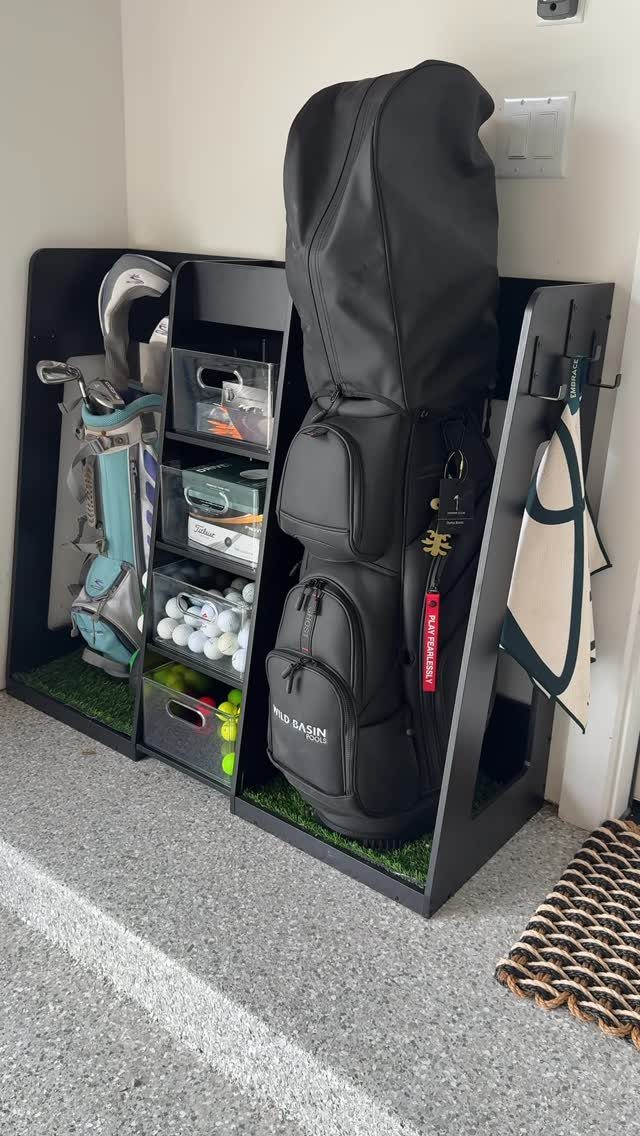
A golf bag organizer stand keeps clubs upright and off the floor so grips stay dry and shafts don’t warp against concrete.
A black metal frame splits into two slots for bags, a rack for shoes, and open shelves that take clear bins of balls, tees, and gloves.
I would not buy a short one if you carry a full set; cart bags run tall and topple from low stands. Add a small shelf above for rain gear if your garage sees humidity.
14. High Shelf Above Garage Door
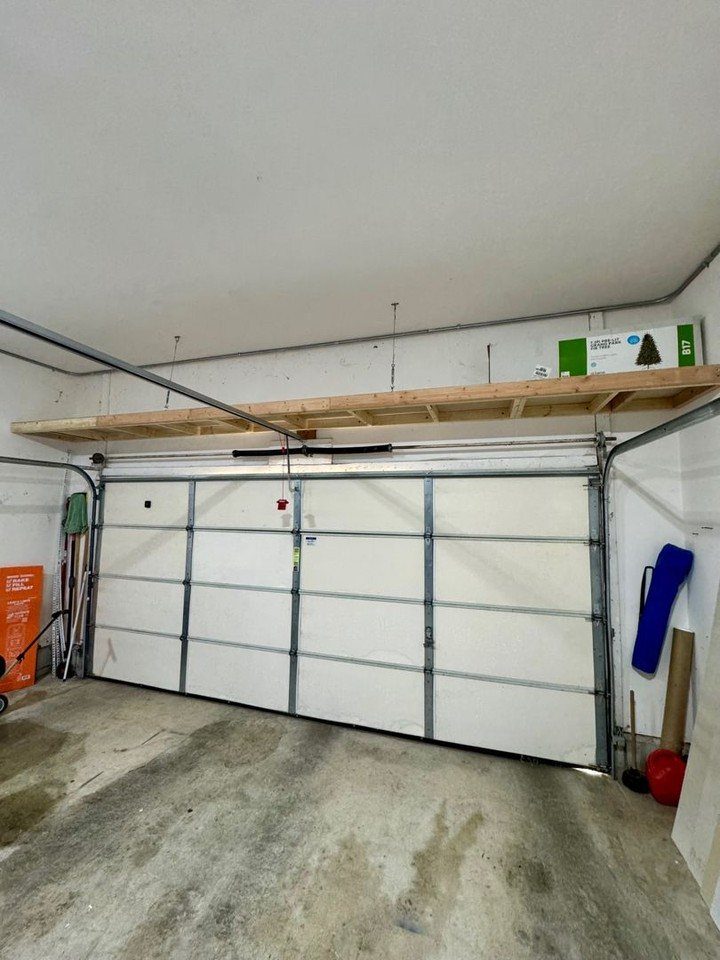
That dead zone above a garage door is long enough for seasonal storage most people never touch.
A single plank of stained pine lag-bolted into studs is nothing more than a ledge wide enough for labeled bins or a boxed artificial tree.
I built one like it with a 1×12 board and heavy-duty brackets; check your door track first, since some openers roll back nearly flush and leave no room at all.
A shelf here suits lightweight, bulky items you need maybe twice a year: holiday decorations, camping chairs, spare luggage.
Do not load it with paint cans or anything you reach for monthly; the ladder work gets old fast, and a falling bin from that height will dent a car hood or worse.
Maximizing Floor Space
Floor space in a garage disappears faster than most people expect. A car, a workbench, and a few bikes fill it without ceremony, and suddenly you are walking sideways with grocery bags.
Vertical storage is the only way back. Cabinets against the back wall, racks above the door, slatwall on the sides: these keep the floor for what actually needs it.
Overhead racks handle the seasonal bulk that otherwise becomes a wall of bins you squeeze past.
Mix the heights. Counter space between cabinets is worth preserving if you work on projects out there; otherwise the tools end up on the car hood.
A triathlete and mountain biker shares 8 of the best garage bike storage solutions.
Custom Solutions
Off-the-shelf cabinets come in standard depths and colors that may not match your garage’s width or your tolerance for beige.
Custom lines let you choose the finish and the configuration, and the difference in cost is narrower than it used to be.
Flat-pack systems lock together without a contractor, though you will still need a level and a Saturday.
Slatwall panels carry the same idea of adaptability.
Seasonal Storage Tips
Seasonal items are the quiet killers of garage floor space. Holiday decorations, camping gear, the artificial tree: they sit untouched most of the year and block everything you use daily.
Overhead racks handle the bulk. Clear bins let you identify contents from below without dropping the ladder twice.
Label specifically. "Christmas lights" beats "holiday" when someone else is putting the football back, and "miscellaneous" becomes a black hole in any system.
For anything monthly or more often, find wall-level storage instead. The repetition of climbing will erode your patience and eventually your safety.
Safety Considerations
A storage system that stores more than it secures is a hazard waiting for a busy morning.
Heavy items belong low.
Tote labels matter for safety too.
A bench seat in a mudroom setup is not just comfort. Lacing boots while standing is a fall risk on wet days, and a seated person is a stable person.
Frequently Asked Questions
How can I organize my garage cheaply?
Repurpose what you already own before you buy anything. Metal planters hold loose hardware better than they hold plants, and a muffin tin sorts screws and bolts into compartments that cost nothing.
Slatwall panels and wire baskets let you rearrange without drilling new holes each time, so you are not rebuying brackets or shelving as your stuff changes.
What not to store in your garage?
Keep paint cans and anything with a liquid component out of temperature swings; freezing and heat cycles split seams and ruin the contents.
Do not load overhead racks or the shelf above your garage door with anything heavy enough to dent a car hood if it falls.
Batteries age faster in dusty, rattling drawers, so cordless tools belong in a protected cubby with their chargers instead. Food, wine, and photographs also suffer in garages that hit summer highs and winter lows.
What is the best garage storage layout?
Mix tall lockers, counter-height drawers, and wall-mounted systems so every shape of item has a slot.
Ceiling racks and high shelves pull storage up above doors and cars; slatwall or pegboard keeps the tools you grab most often within arm’s reach at the workbench.
Rolling storage, like a tool chest or bin track, adapts when your projects or seasons change.
Is it cheaper to build or buy garage shelving?
Building your own shelving from plywood and 2x4s costs less than pre-made metal units if you already own the tools and the time.
A single 1×12 plank with heavy-duty brackets for the shelf above your garage door runs cheaper than any manufactured system for that awkward zone.
Factor in your skill level and whether you value the hours; a bolt-together kit assembles in an afternoon where a plywood build stretches across weekends.