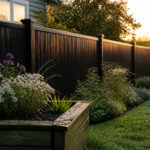
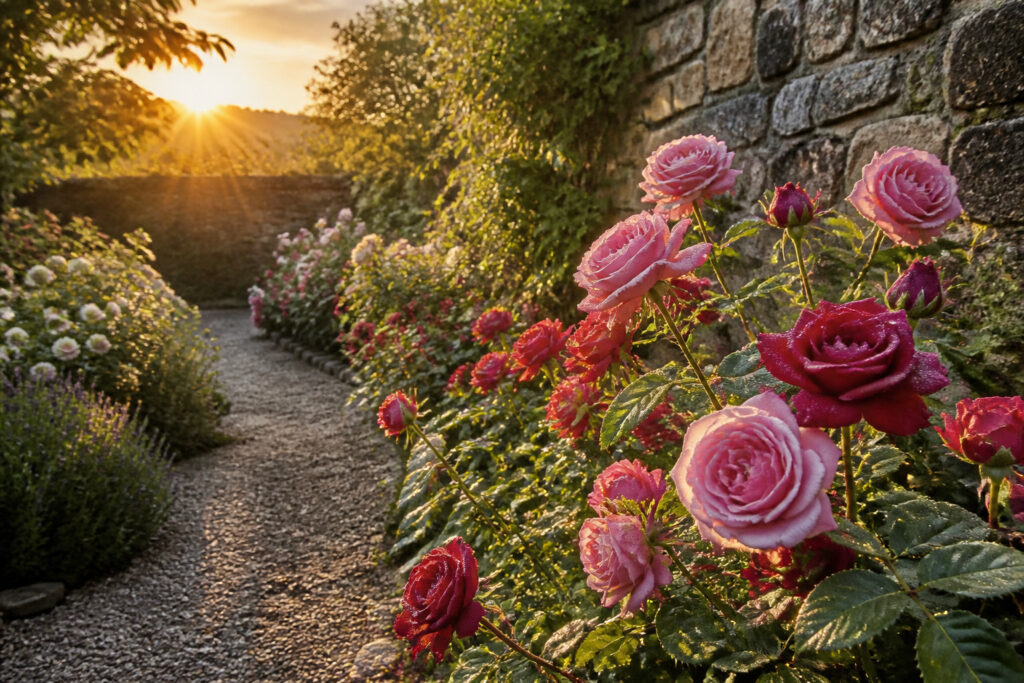
A rose garden is a planted bed or collection of beds where roses grow as the dominant shrub, and the difference between one that thrives and one that struggles comes down to placement before a single root goes in. Six hours of direct sun is the minimum, but morning light matters most; it dries dew fast and gives the afternoon to petal building. My first attempt sat behind a garage that threw shade by mid-July, and the canes stretched thin, bloomed once, and sulked until frost.
Site and Light
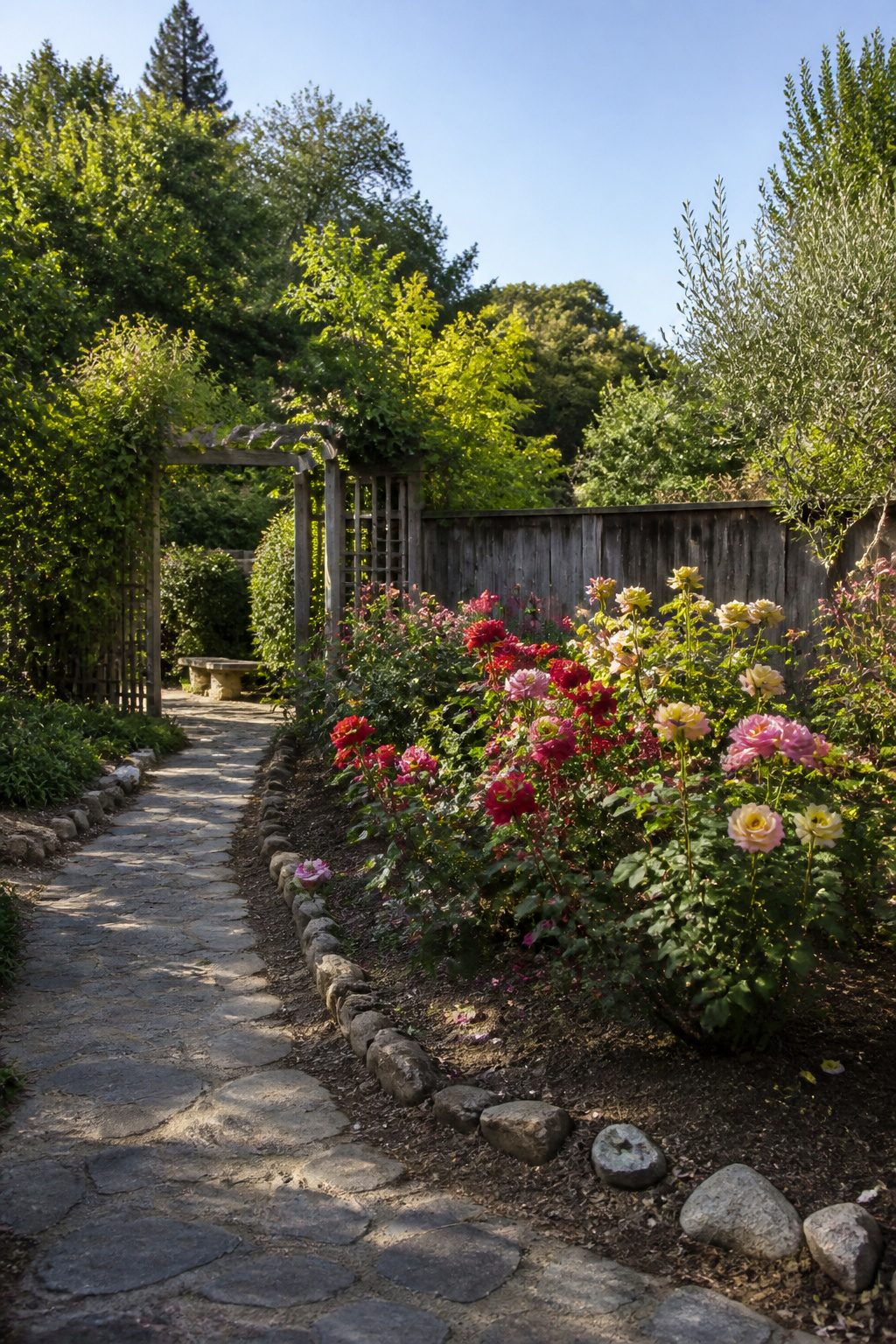
Roses burn through sun like few other shrubs, and a rose garden positioned wrong never recovers the season. Six hours of direct light is the floor, eight hours is where the stems stiffen and the blooms stack up. Morning sun matters most; it dries dew fast and leaves the afternoon heat for petal building. My first attempt sat behind a garage that threw shade by mid-July, and the canes stretched thin, bloomed once, and sulked until frost.
Air movement matters just as much. Leave 2–3 feet between bush roses so leaves dry quick and black spot spores settle somewhere else. Crowded plantings looked lush in May that year; by August every leaf underneath was spotted yellow and falling. Climbers need 6–10 feet along a fence or arbor, not for politeness but because fungal disease rides still air and wins in cramped quarters.
A Plan on Paper
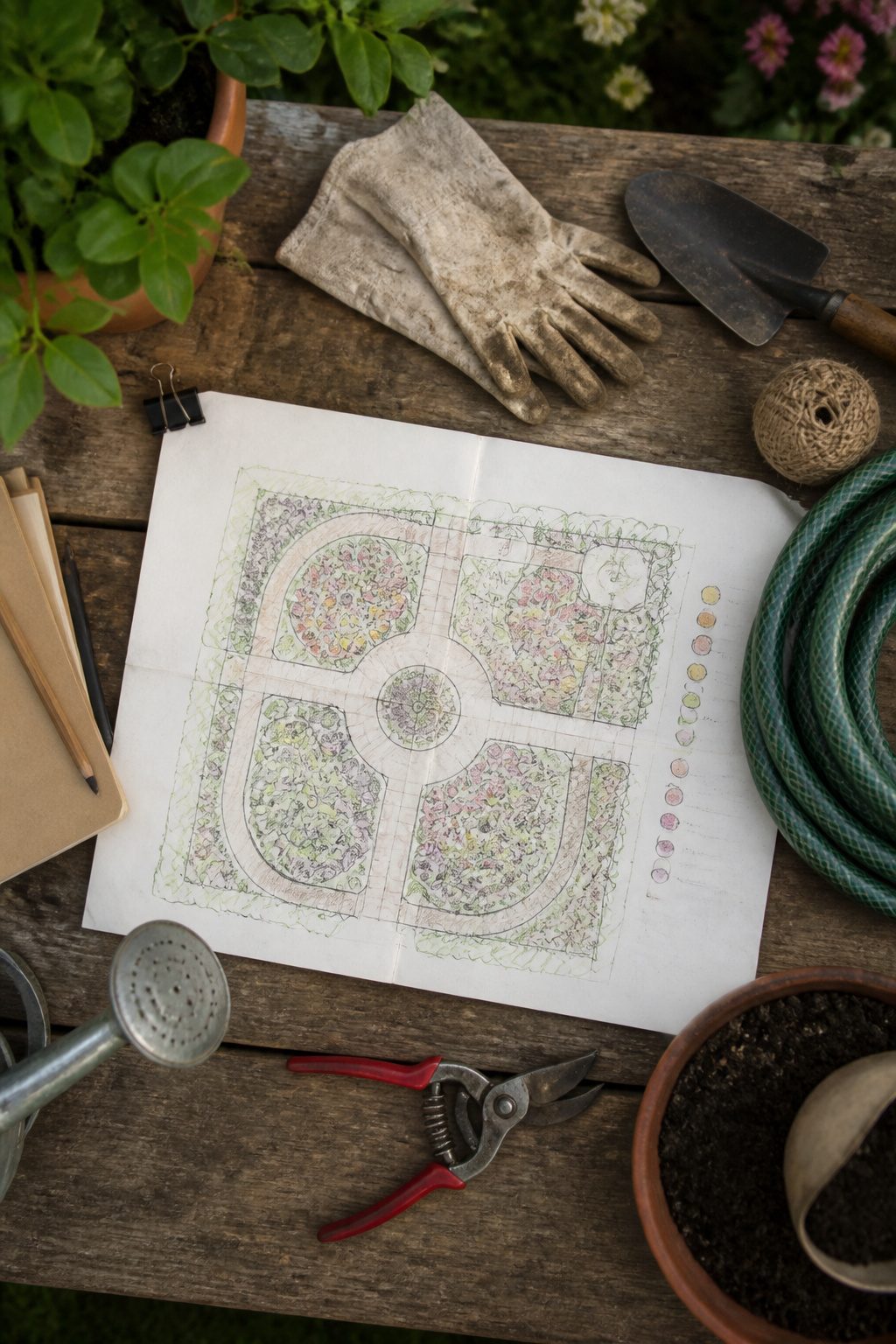
My first rose bed sketch looked fine until March pruning proved I had edged myself against the fence with nowhere to stand. Thorns caught my sleeve as I stretched inward, and I cut badly that day because my feet had no purchase. The revision moved every bed edge thirty inches from any barrier, fence or wall, which is room enough to kneel or park a small stool and still face the plant squarely.
Paths need to clear a wheelbarrow too, or you will be carrying mulch and spent blooms by armload. I drew mine at a width that let the wheel pass without grazing canes on either side, and I traced the hose route in pencil to be sure it reached the farthest bush without straining. Beds stay small enough that the center of each is within an arm’s span from the path; maintenance beds that ask you to step inside compress the soil and break roots. Structures came later in my plan, a simple arbor at the entry once I saw where shade actually fell in June, but the walking and working space had to solve itself first.
Formal or Loose
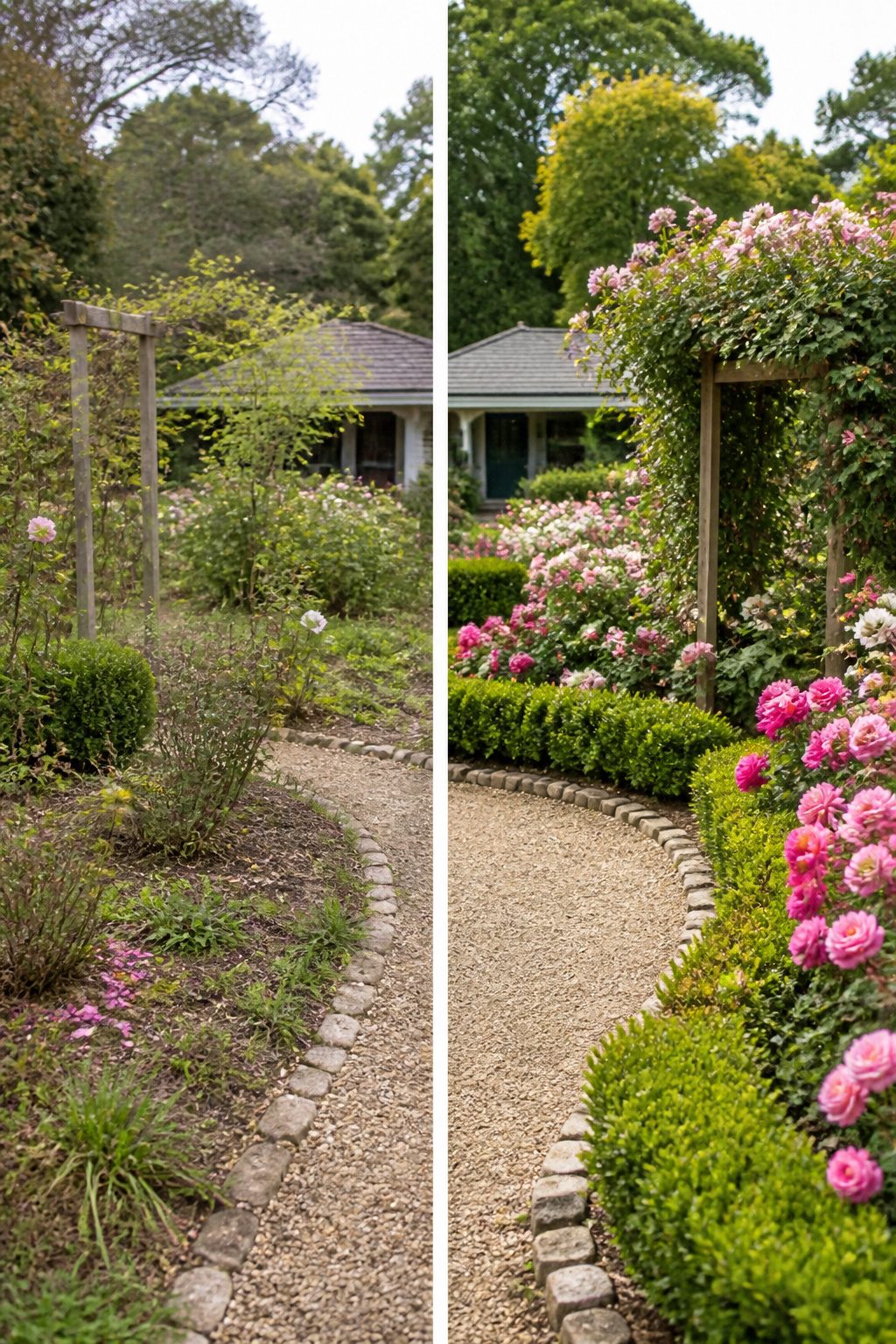
Geometric rose beds look wrong pressed against a 1940s bungalow with a low roofline and a front porch that spreads sideways. I tried it anyway: boxwood hedges cut to knee height, two matching rectangles of ‘Double Knock Out’ roses, a path bisecting the middle like a manor house axis. The house shrank behind all that order. The shapes fought each other.
A formal rose garden needs the architecture to match—symmetry wants columns, a centered door, a driveway that arrives dead on. Cottage mixing works when the house already leans that way: uneven roof planes, windows at different heights, a lime-washed chimney that tilts slightly. Scatter the same ‘Double Knock Out’ through perennials and nepeta at the edges; let the grass thin between stepping stones. The garden reads as floor space the house leaked outside.
My bungalow settled only when I ripped the hedges out and let the beds meander. One side hugs the porch steps, the other drifts toward the driveway with no matching twin. Roses at the back, shorter perennials forward, a clump of ornamental grass catching afternoon light. The Municipal Rose Garden in San Jose, with its 5.5 acres of geometric beds and 200 varieties, proves formal can dazzle if the scale is there. At one-fortieth that size, my yard needed permission to stay small and slightly messy.
Color Choices
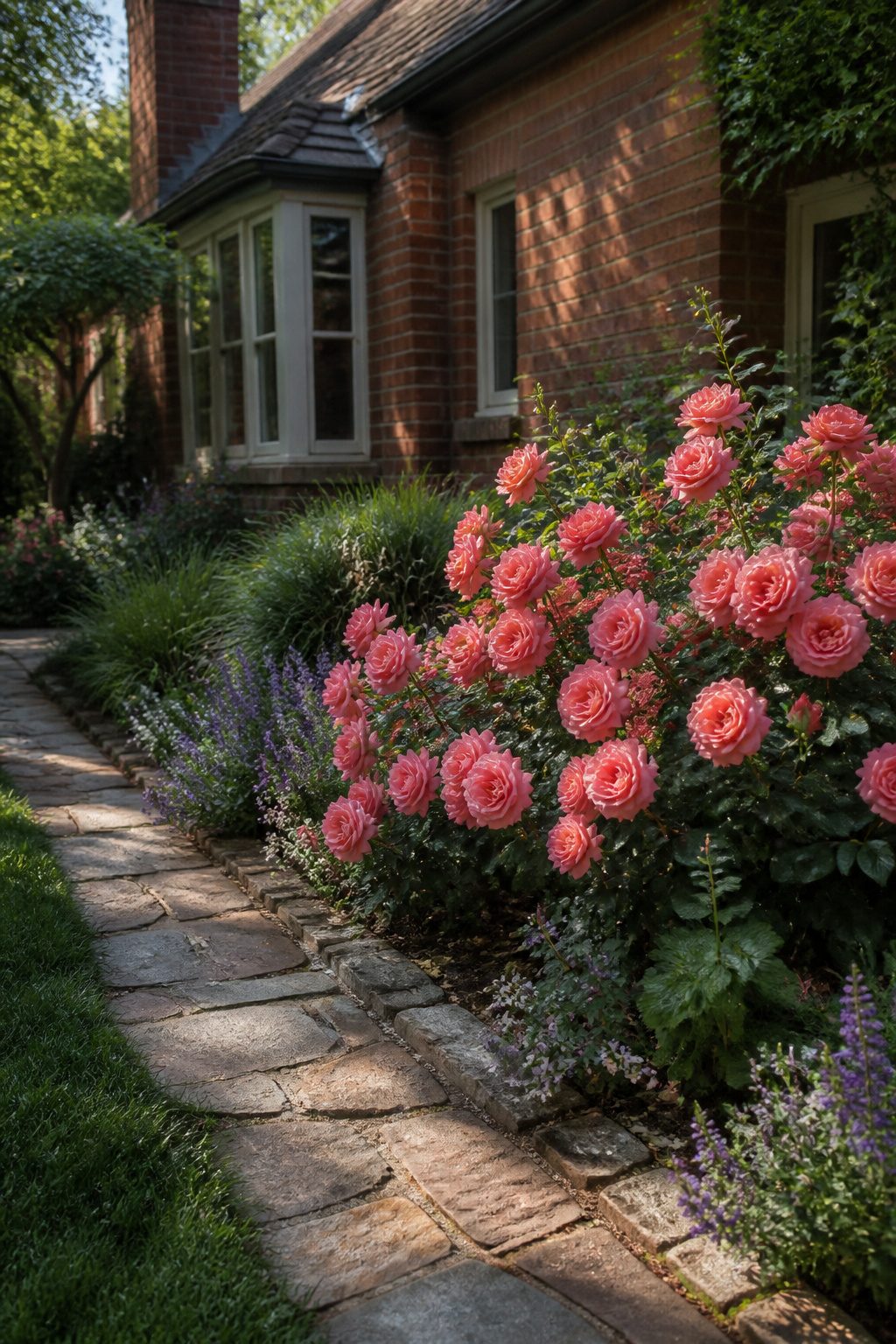
The first thing to register is the siding, then the roofline, then how the garden sits against both. My house is warm brick with cream trim, and the coral-pink roses I hauled home in April looked fine on the nursery bench. Against that brick, they turned orange in afternoon light and sat there like a warning sign.
Warm colors advance. Cool colors settle back. Peach, yellow, and true orange roses pull the eye straight to the bed and hold it, which works if the house is already quiet paint or gray shingles. Against warm brick or yellow siding, the same roses fight for attention and both sides lose. Blue-magenta and clear pink, even white with a cool undertone, step back visually and let the house read as the architecture it is.
A single-color bed reads as intention. Last May I told myself intention was boring and planted one each of apricot, scarlet, cream, lavender, and that coral-pink. By June it looked like a clearance rack. No single bloom was visible for more than a second because the eye kept sliding to the next argument. Plant one color per bed, or two that share a temperature, and both the roses and the house get the moment they deserve. I pulled three of those five out by October.
Soil Work
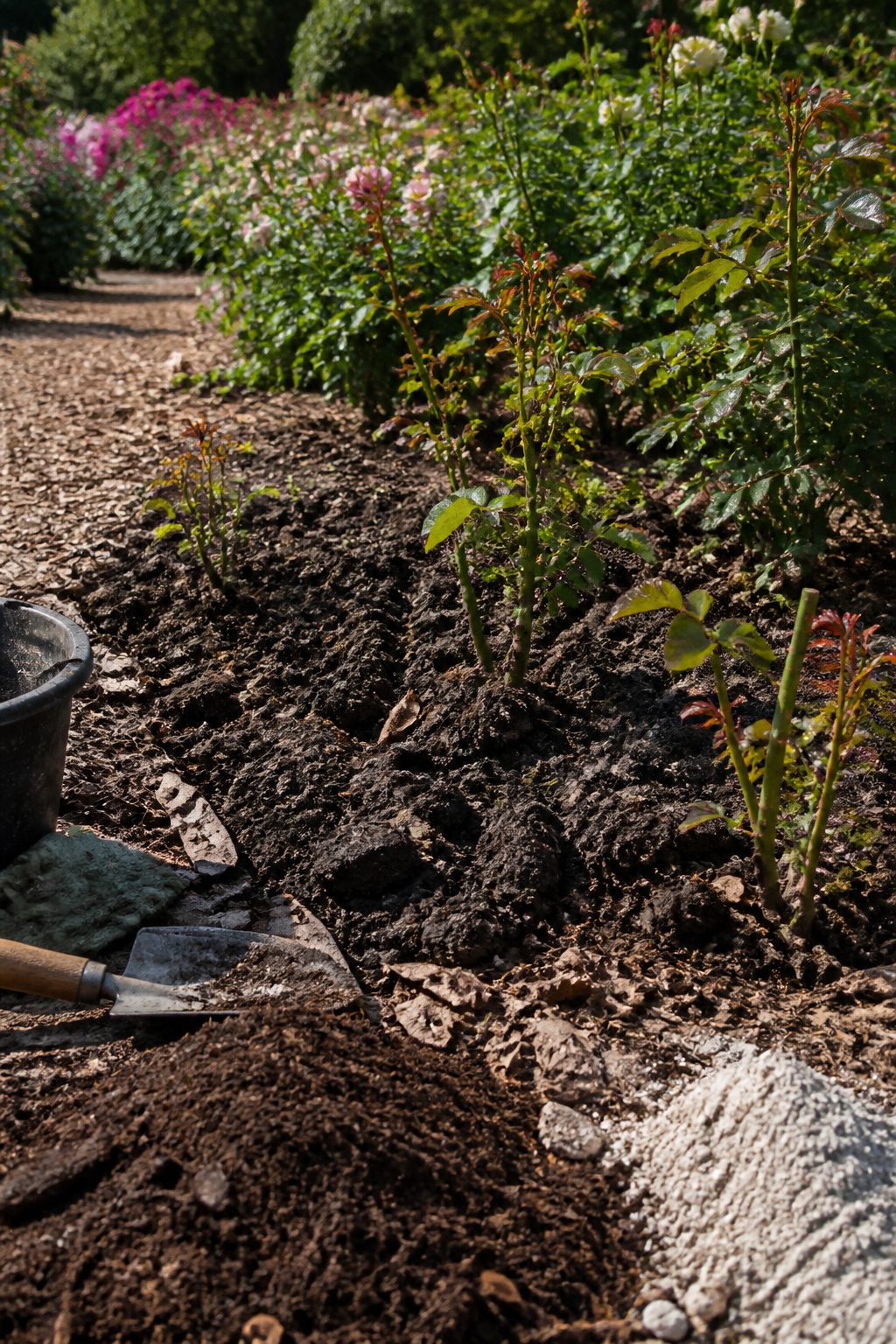
Roses need a pH between 6.0 and 7.0, slightly acidic to neutral, and the only way to know where your soil sits is to test it. A cheap kit from the hardware store is enough; send it to a lab if you want the full nutrient readout. Mine started at 5.2, which explained the stunted canes and the yellow leaves I kept blaming on weather.
Clay holds water like a bowl, and my yard was mostly clay. The drainage test is simple: dig a hole twelve inches across and deep, fill it with water, and see how long it takes to drain. More than four hours means roots will sit wet and rot. I added coarse sand and gypsum the first season, then leaf mold the second, and the drainage finally improved enough that new growth stayed green past July. Two seasons of leaf mold was what it took before the chlorosis stopped.
Compost is the amendment everyone agrees on, whether your soil drains too fast or not at all. Work it in deep, a full spade’s depth, so roots have room to run. Sandy soils need the organic matter to hold moisture; clay soils need it to break the structure open. Either way, the compost pays out slowly, and the roses notice.
Which Roses to Plant
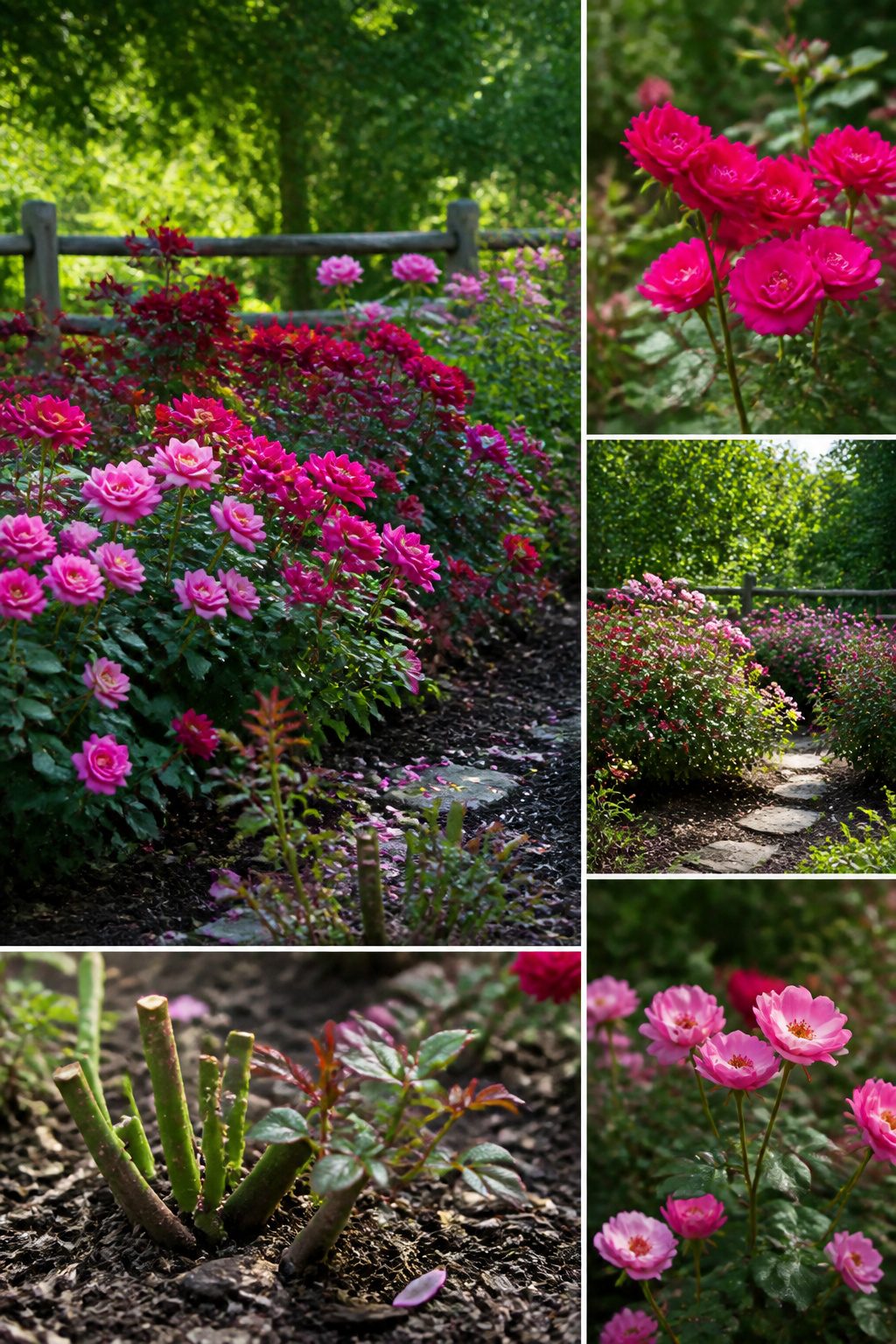
A new rose garden lives or dies on the first three plants you choose. I spent my first two seasons learning that the hard way, replacing one after another until a neighbor pointed me toward Knock Out roses, which shrugged off the black spot that killed everything else and bloomed from May through October in my zone 7 postage-stamp yard.
Size matters more than beginners expect. Hybrid teas give you the long-stemmed single blooms florists use, but they ask for more spraying and coddling than my $600 annual budget allowed. Floribundas cluster five to fifteen smaller flowers on one stem, so a single bush reads like a bouquet; they suited the border along my driveway where passersby actually stop. Shrub roses fill the gap if you want a hedge that mostly tends itself, and climbers turn a bare fence into a wall of color by the second year.
Repeat bloom is the trait I refuse to compromise on now. Once-blooming varieties like Constance Spry perform for three gorgeous weeks, then sit green the rest of the season. The newer disease-resistant repeat bloomers, including Knock Out and others bred for vigor, keep color coming until hard frost with half the maintenance older types demand. My sunniest spot gets a floribunda; the trouble corner where air sits still got the shrub rose that could take it.
Color is personal, but start with one. I mixed pink, apricot and crimson my first spring and the garden looked like a florist’s cooler exploded. Two shrubs in a single tone, planted six feet apart, gave the calm I actually wanted to sit beside.
Planting Day
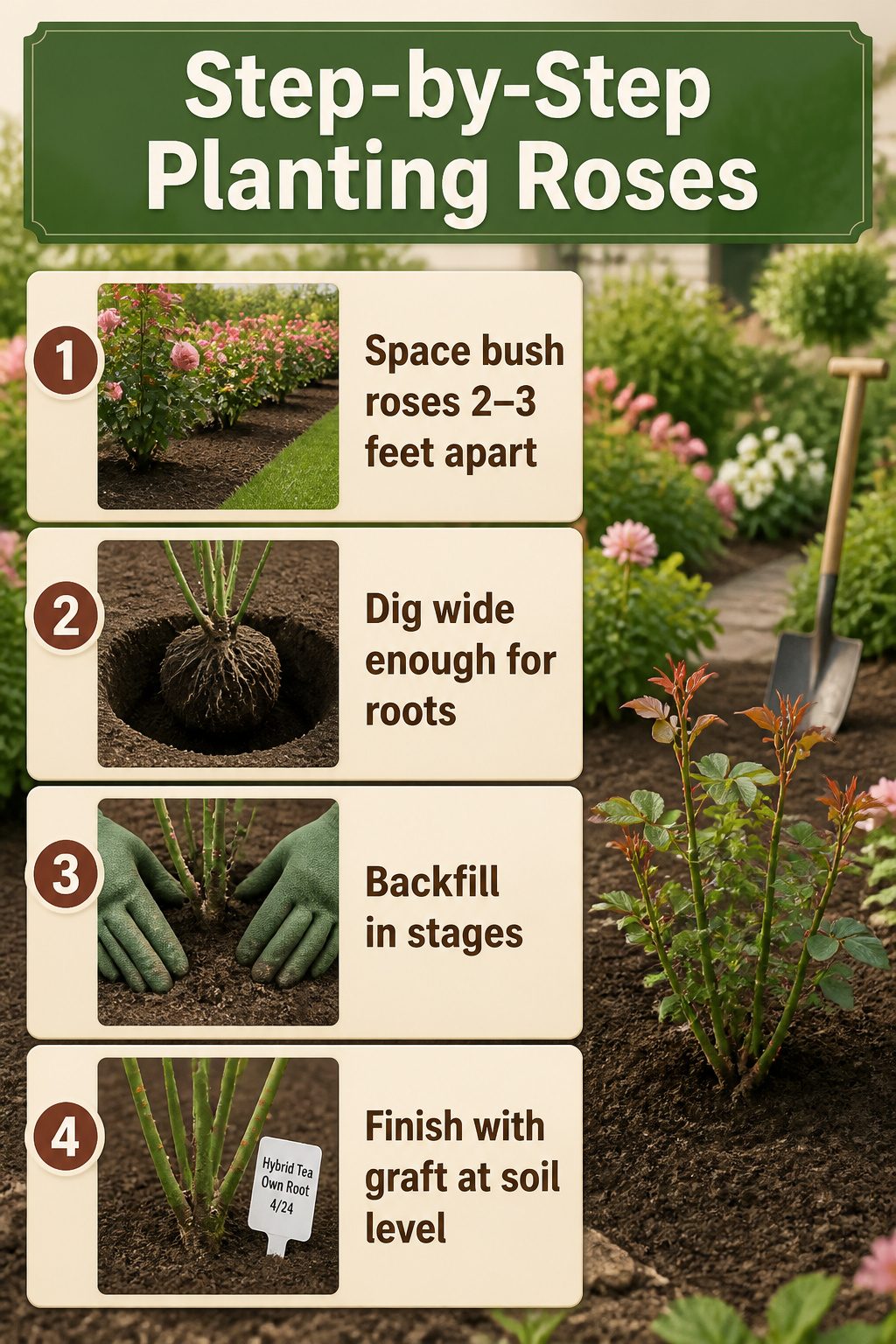
- Give bush roses 2–3 feet and climbing roses 6–10 feet; the gap matters more than I thought at first. Tight planting looks lush the first season, but still air is what keeps black spot from spreading through the whole row by July.
- Dig the hole wide enough that roots can spread outward without bending. I set the plant in dry, checked the graft union height or the own-root flare, lifted it back out, ran water into the hole, and set the soaked root ball in wet soil rather than watering after.
- Backfill in stages, firming each handful to push out air pockets. Roots in hollow gaps dry out in a single hot afternoon, and the plant stalls before it ever leafs out properly.
- Finish with the graft at soil level for budded roses, or the top of the root crown slightly exposed for own-root plants. Covering the graft too deep hides rot; leaving an own root too shallow risks desiccation. The label says which you have, and the label is worth keeping.
Water and Feed
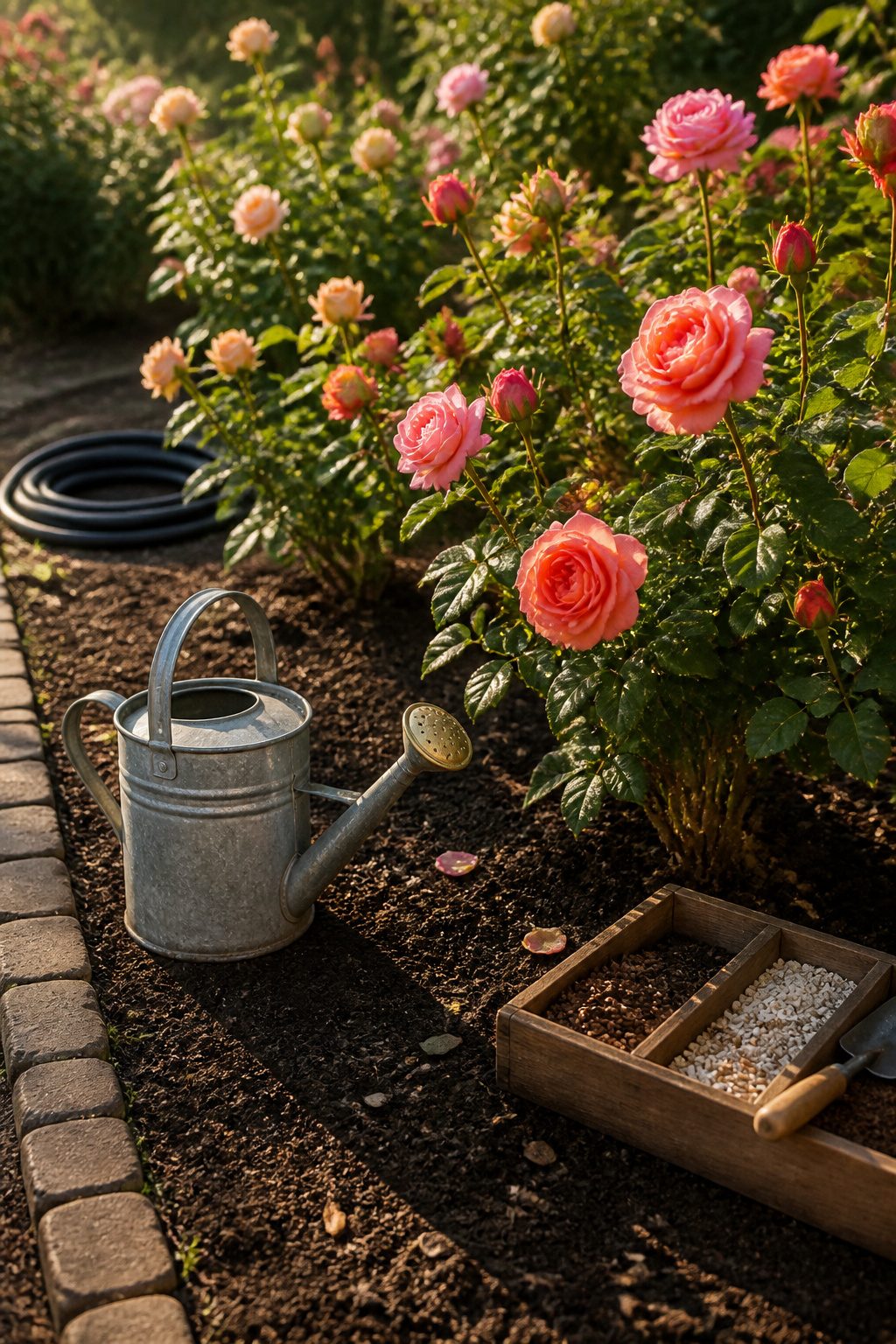
Deep watering keeps rose roots alive in July, and the way you deliver it matters as much as the amount. Water at the soil line, not overhead. Wet foliage invites black spot and powdery mildew; a soaker hose or a steady watering can aimed at the base keeps leaves dry and sends water 10–12 inches down to the root zone. I water early, between six and eight in the morning, so the little that splashes has time to dry before evening. In dry spells that means once or twice a week, never a light daily sprinkle that only teases the surface roots.
Feeding follows the same rule: regular beats dramatic. A balanced fertilizer every four to six weeks through the growing season is enough. I learned that the year I pushed it to every three weeks, sure that more would mean earlier blooms. The leaf edges browned and curled by late June, classic nitrogen burn, and the plant spent two months recovering instead of flowering. Roses want rich soil, slightly acidic between 6.0 and 7.0, but they cannot process a glut. Now I mark feeding dates on the calendar and treat the interval as a minimum, not a suggestion to beat.
Pruning and Deadheading
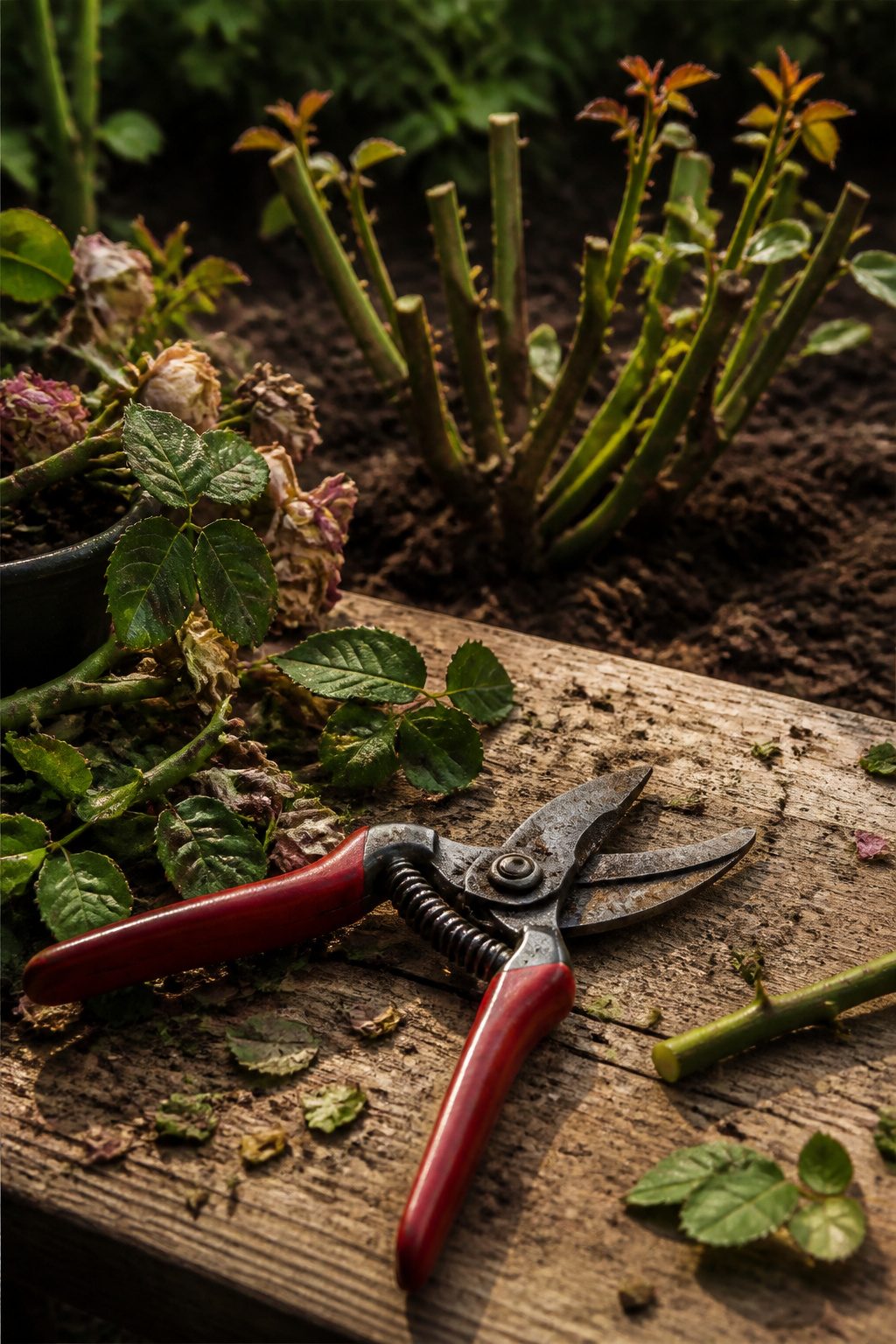
Pruning waits for early spring, when the buds just begin to swell and you can see where the living wood starts. Dead canes snap clean, brown all the way through, and come out first. Crossing branches go next, anything growing inward toward the center, so air moves through the bush and dries the leaves faster after rain. Cut at a 45-degree angle above an outward-facing bud; the new growth opens away from the middle, not back into it. Shrub roses take a lighter hand, just enough to shape them. Hybrid teas need harder cutting if you want fewer but larger blooms.
Deadheading matters just as much through the season. Spent blooms pull energy the plant could spend pushing new flowers, so I snap them off at the first five-leaflet leaf below the flower. The rose redirects, and another bud forms faster.
I pruned three weeks too late the spring after my daughter was born, distracted by sleepless nights, and lost the first flush entirely. The canes leafed out before I touched them, and the plant sulked until June. That bush survived, but I marked the calendar earlier ever since.
Rose Types Compared
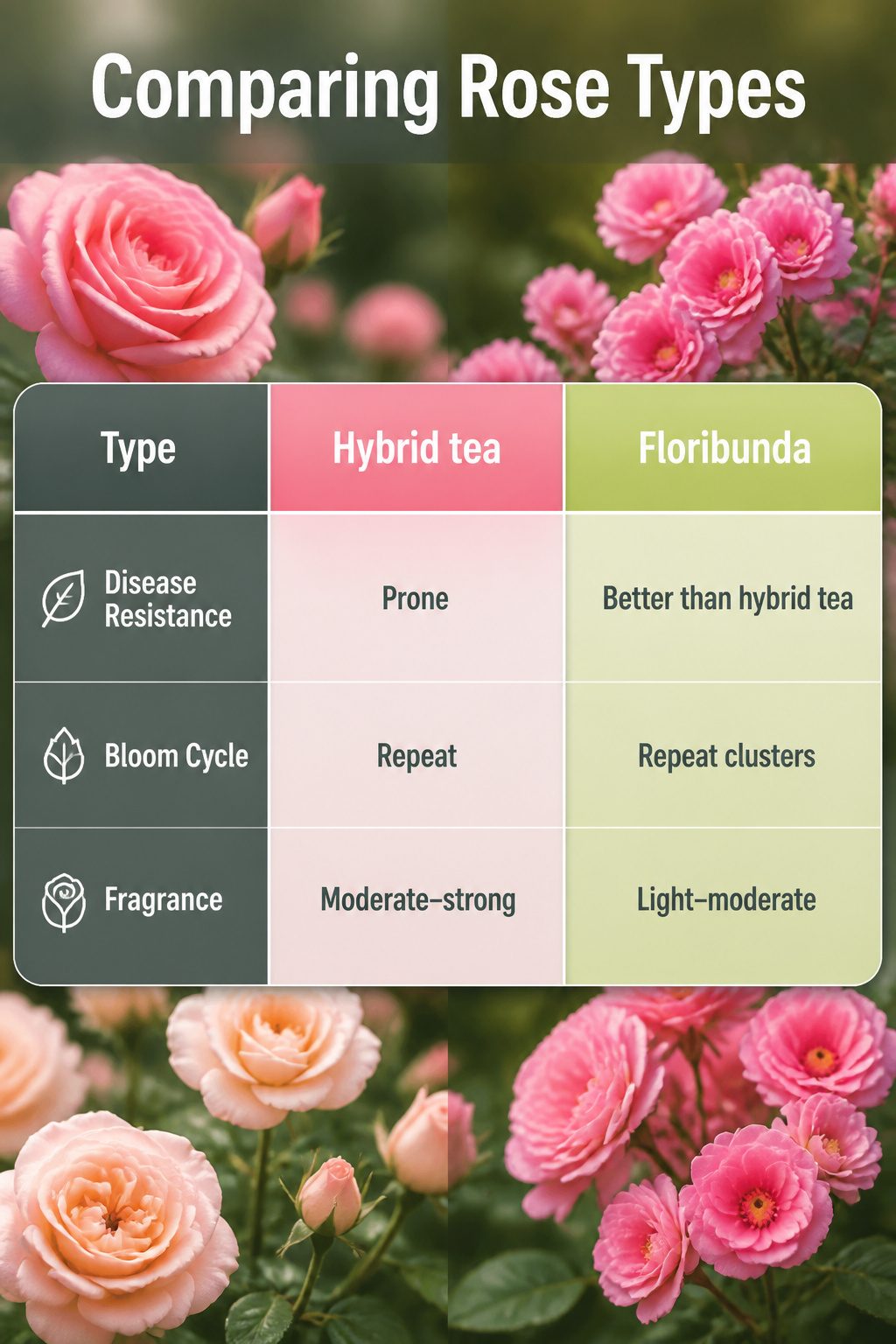
The first roses I ordered were hybrid teas because the catalog photo looked like what a rose should be. They bloomed twice that summer, then sat there with black spot until October. I had not understood the trade.
| Type | Disease Resistance | Bloom Cycle | Fragrance | Hardiness Zones | Growth Habit |
|---|---|---|---|---|---|
| Hybrid tea | Prone | Repeat | Moderate–strong | n/a | Upright, single stems |
| Floribunda | Better than hybrid tea | Repeat clusters | Light–moderate | n/a | Rounded bush |
| Grandiflora | Between the two | Repeat, large clusters | Moderate | n/a | Tall, upright |
| Climber | Varies by variety | Once or repeat | Moderate | n/a | Long canes, vertical |
| Shrub | Hardy, generally good | Repeat or continual | Light–strong | n/a | Wide, bushy |
| Groundcover | Good | Repeat | Light | n/a | Low, spreading |
| English rose | Good | Repeat | Strong, old-rose | n/a | Variable, rounded |
Shrub roses and English roses are where most beginners should start. The former takes neglect, the latter gives back fragrance that justifies the whole garden. Hybrid teas demand the spraying and feeding regimen I was not prepared for; the climbing roses I later planted on a fence needed trellis work I did not do in year one and sulked for two seasons after. Grandifloras split the difference on flower form but still want attention. Groundcover varieties filled a slope adequately where nothing else would grow, though their blooms are smaller than the catalogs suggest.
What matters is matching the type to the hours you will actually spend, not the ones you imagine in March.
What to Plant Nearby
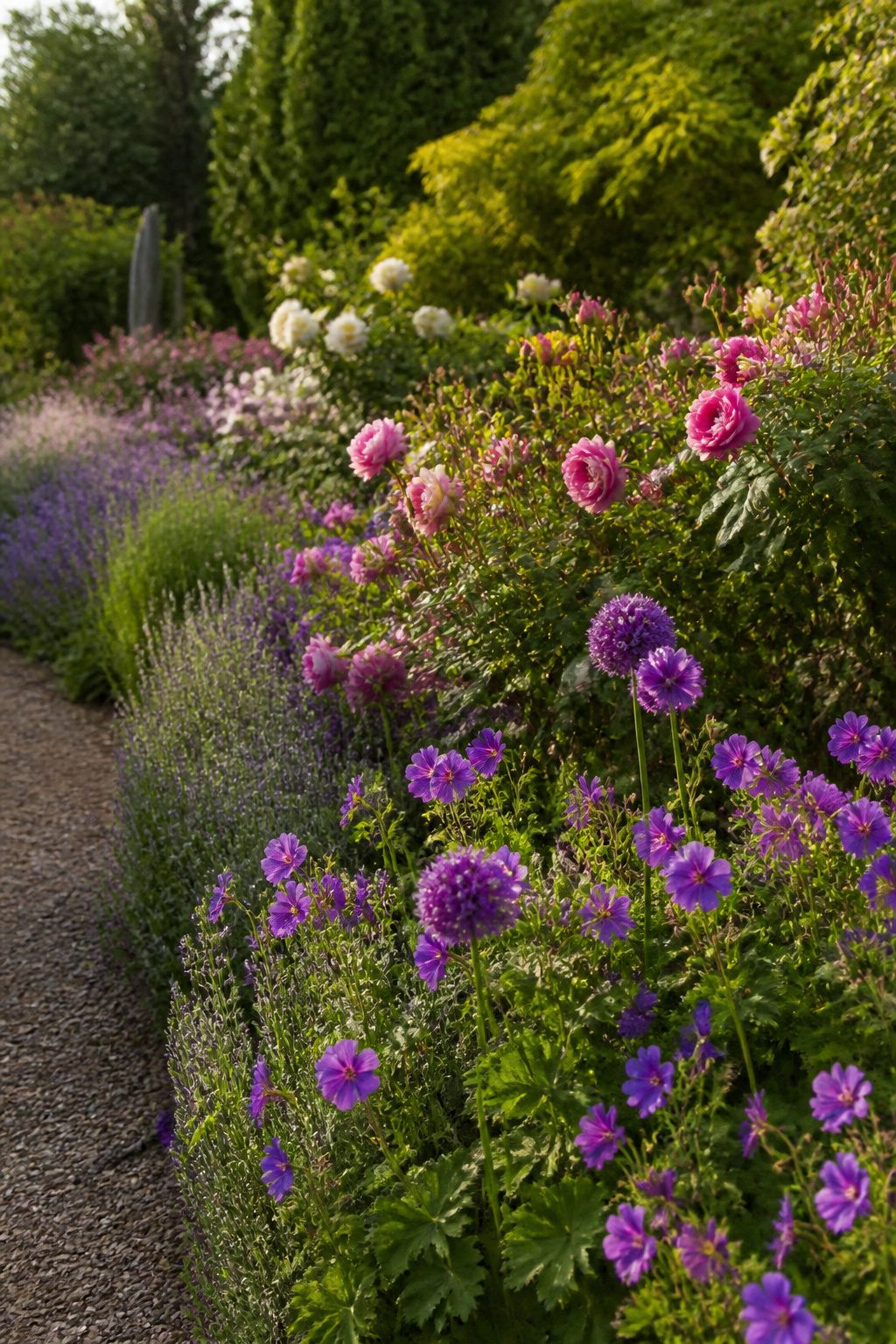
Lavender threads through my rose beds in June, and the reason is practical rather than pretty. Its strong scent confuses the aphids that would otherwise settle on new growth, a trick I picked up after watching them bypass a whole row for the plainer roses beyond. The gray foliage sets off the heavier blooms without competing for attention; it also stays low enough that I can reach the canes for deadheading without fighting through stems.
Geraniums extend the color when roses rest between flushes. I use the zonal types with their louder reds and pinks because they keep blooming through heat that shuts my Hybrid Teas down. They also repel Japanese beetles, which meant I could finally grow ‘Peace’ without the skeletonized leaves that ruined it my first two seasons.
Alliums give vertical contrast in early spring before the roses even leaf out. The spherical heads on tall bare stems catch light that lower foliage would waste, and they deter aphids with sulfur compounds in their own tissue. By the time the allium foliage yellows and flops, the rose canopy has risen to hide it.
One companion I tried and abandoned was thyme, planted as a ground cover between widely spaced bushes. It rotted out in two humid Julys, first at the center where air never moved, then along the edges where I had hoped for better drainage. Creeping thyme wants dry Mediterranean conditions; my clay soil and August dew points gave it something closer to a terrarium. I replaced it with nothing in those spots and simply mulched heavier, and the roses have done better for the reduced root competition.
Gardens to See
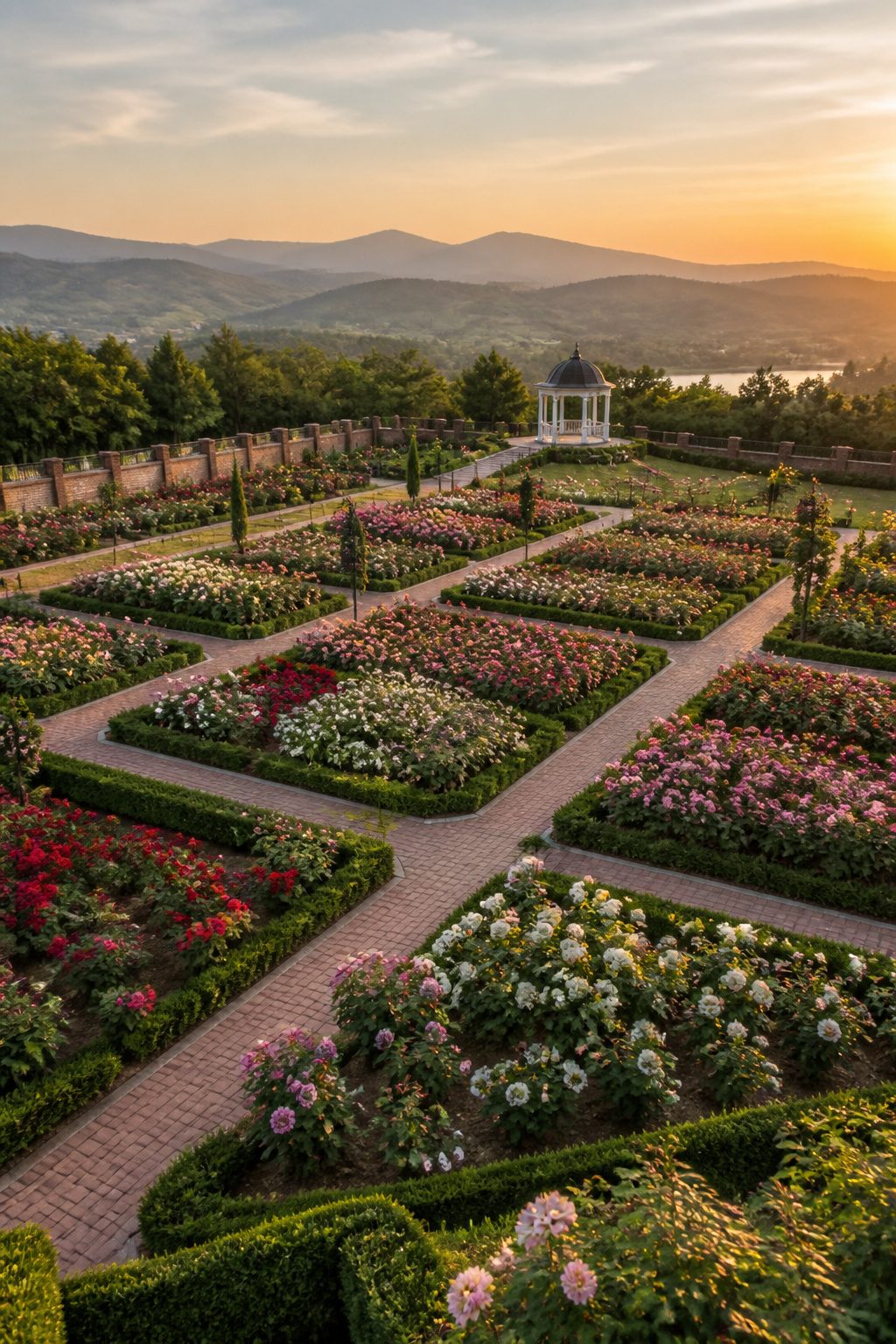
I go to other people’s rose gardens to steal layout ideas, not varieties. Ten thousand bushes spread across Portland’s International Rose Test Garden taught me that scale hides in repetition, not variety. Their 610 varieties group into blocks by color, and the effect reads as rhythm from the path, not chaos. That is the takeaway I copied into my own borders: mass one color, then switch.
The Peggy Rockefeller Rose Garden in the Bronx packs 4,000 plants and close to 600 varieties into a tighter footprint, and the beds there run in long parallel strips with low boxwood edges. The geometry forces your eye down the rows, so a single off-tone rose actually registers as punctuation. I borrowed that linearity for a side bed where I had been planting in circles, and the whole thing started reading as intentional instead of accidental.
San Jose’s 11 acres sit on flat ground, which means the beds themselves become the topography. Wide, sweeping curves there hold the eye longer than straight lines would on level terrain. I have 800 square feet and a slight slope, so I split the difference: one curved bed against the fence, one straight path cutting across. The contrast between them gives each shape more presence than either would alone.
Cost runs zero if you walk and look. I spent an afternoon in San Jose with a notebook and came home with three sketches that reshaped my summer plantings.
Beginner Roses That Forgive
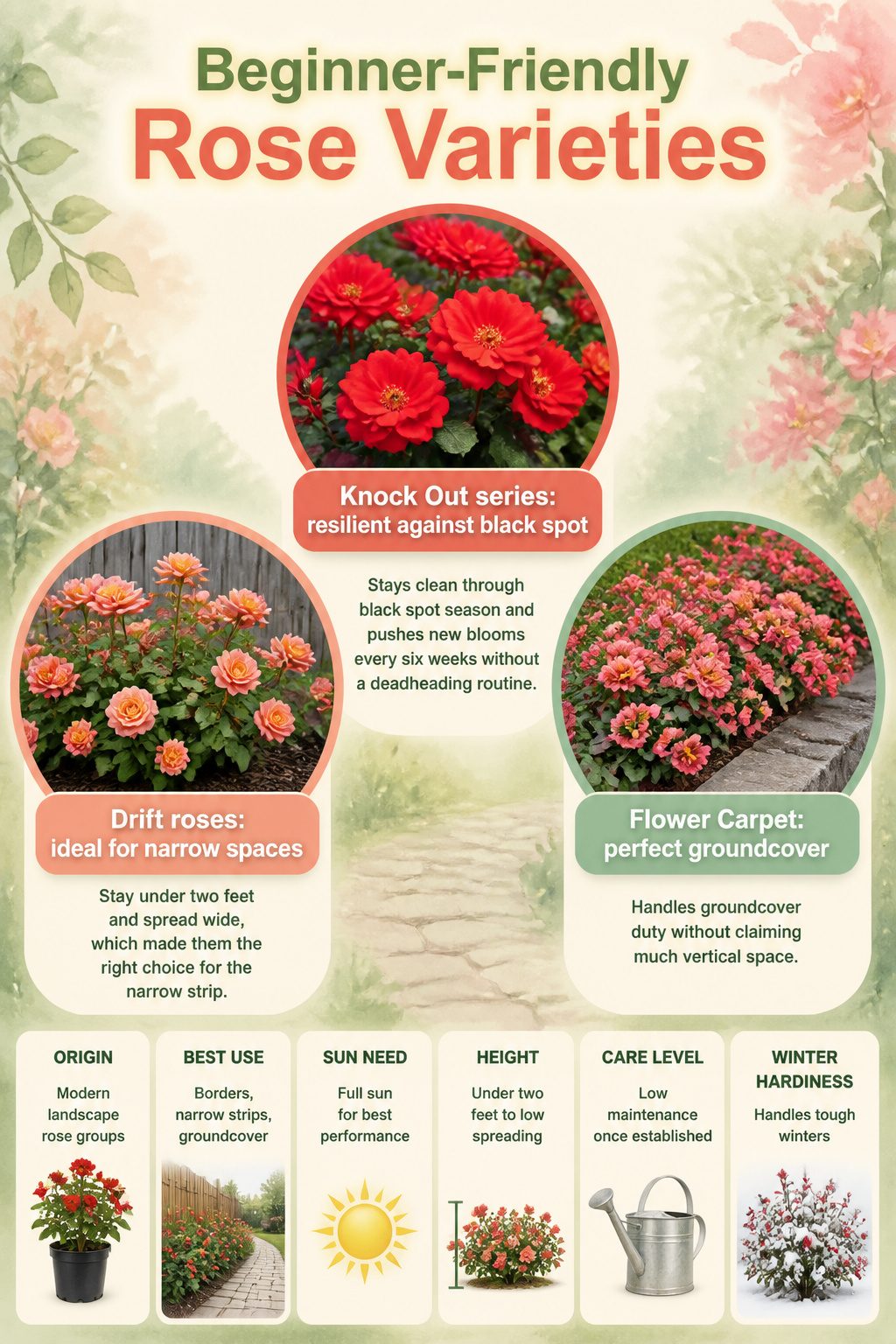
Some roses ask for more skill than a first-season grower has time to learn. These three gave me room to figure things out while still carrying color.
- Knock Out series stays clean through black spot season and pushes new blooms every six weeks without a deadheading routine. I started with the classic red, moved to Pink Double, and eventually settled on just one: the original red, because it kept its foliage cleaner than the doubles in my humid summers.
- Drift roses stay under two feet and spread wide, which made them the right choice for the narrow strip between my walk and the neighbor’s fence. Coral and Peach worked as a pair, though Peach outlasted Coral after a rough winter.
- Flower Carpet handles groundcover duty without claiming much vertical space. Coral held up to the same black spot pressure that speckled my hybrid teas, and it recovered faster after I let watering slide one July.
Of those three, only the original Knock Out red still grows here. The others taught me what scale I actually had room for, then made way once I knew.
Frequently Asked Questions
How do I care for my rose garden?
Water at the soil line, not overhead, using a soaker hose or watering can aimed at the base to keep leaves dry and send moisture 10–12 inches down. Feed with a balanced fertilizer every four to six weeks through the growing season, but treat that interval as a minimum; more frequent feeding causes nitrogen burn and sets plants back for months. Prune in early spring when buds just begin to swell, removing dead canes first, then crossing or inward-growing branches, cutting at a 45-degree angle above an outward-facing bud.
What are the best roses for beginners?
Start with shrub roses and English roses for the easiest path to success. The Knock Out series stays clean through black spot season and pushes new blooms every six weeks without demanding deadheading. Drift roses stay under two feet and spread wide, making them right for narrow strips. Flower Carpet handles groundcover duty without claiming much vertical space and recovers faster if watering slips. Hybrid teas ask for more spraying and coddling than most beginners have time for.
What is the best time to prune roses?
Prune in early spring, just as buds begin to swell and you can see where living wood starts. Dead canes snap clean and brown all the way through, so remove those first. Cut crossing or inward-growing stems next, at a 45-degree angle above an outward-facing bud so new growth opens away from the center. Shrub roses take a lighter hand, just enough to shape them; hybrid teas need harder cutting if you want fewer but larger blooms. Pruning even three weeks too late costs you the first flush entirely.
How do I choose the right location for a rose garden?
Six hours of direct light is the minimum, eight hours is where stems stiffen and blooms stack up; morning sun matters most because it dries dew fast and leaves afternoon heat for petal building. Leave 2–3 feet between bush roses so leaves dry quickly and black spot spores settle elsewhere; climbers need 6–10 feet along a fence or arbor because fungal disease rides still air and wins in cramped quarters. Sketch beds with every edge thirty inches from any fence or wall, leaving room to kneel or park a stool and still face the plant squarely.