
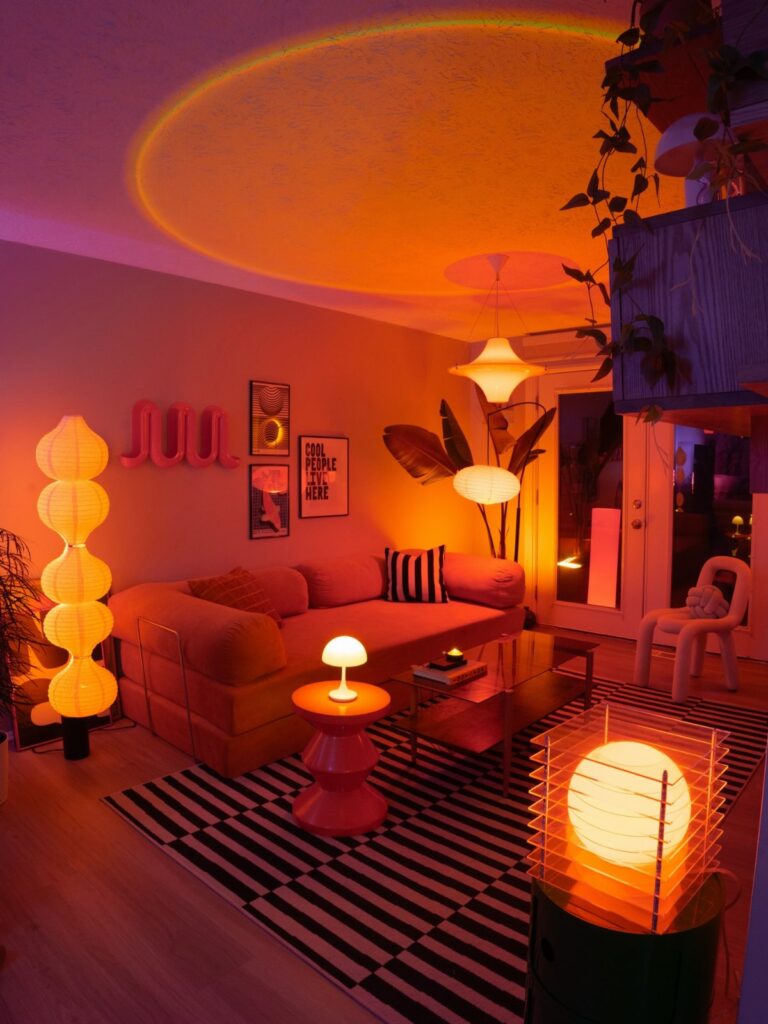
These ideas run from a free furniture rearrangement to a ceiling install that eats most of a small-room budget in one go.
Renting or owning, staying a year or settling in, living with dust for a weekend or a month: the right idea depends on what you can handle.
A single roll of peel-and-stick wallpaper for a dark accent wall costs little and removes clean, which suits the hesitant exactly.
1. Floor Lamps, Table Lamps, and Candles
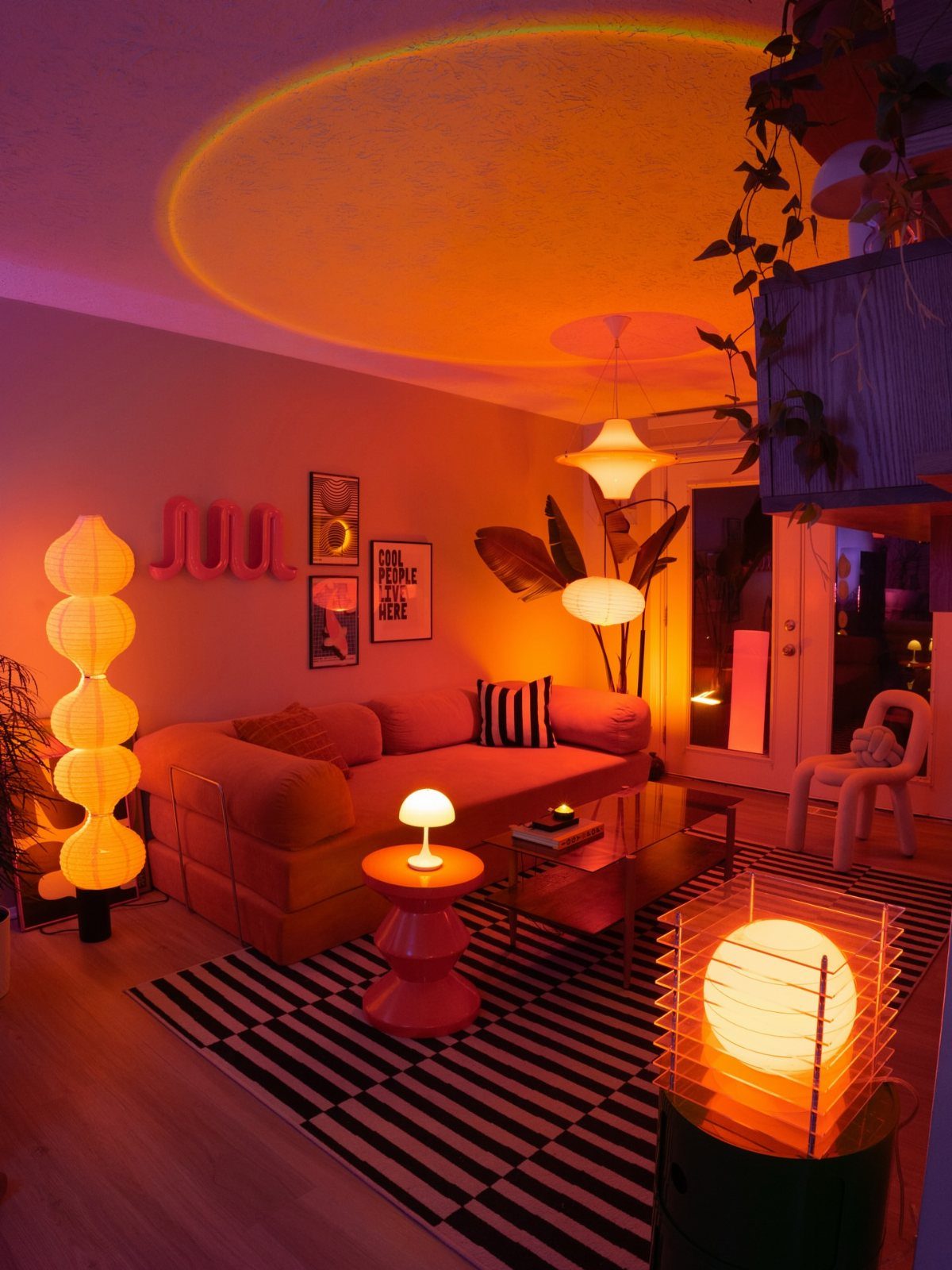
A room feels warmer when the light comes from several directions instead of one harsh ceiling fixture.
I set floor lamps in corners that would otherwise fall into shadow, add a table lamp where someone actually sits, and keep candles on the mantel or coffee table for evenings when the overhead light stays off.
Dimmable bulbs matter more than the fixture style; being able to drop the brightness after dinner changes how the room feels to sit in. Metallic finishes on lamp bases catch and spread that lower light around.
Wall sconces work if floor space is tight, especially flanking a sofa or fireplace with fabric or frosted shades that filter rather than beam.
2. Oversized Armchairs and Low-Profile Sofas
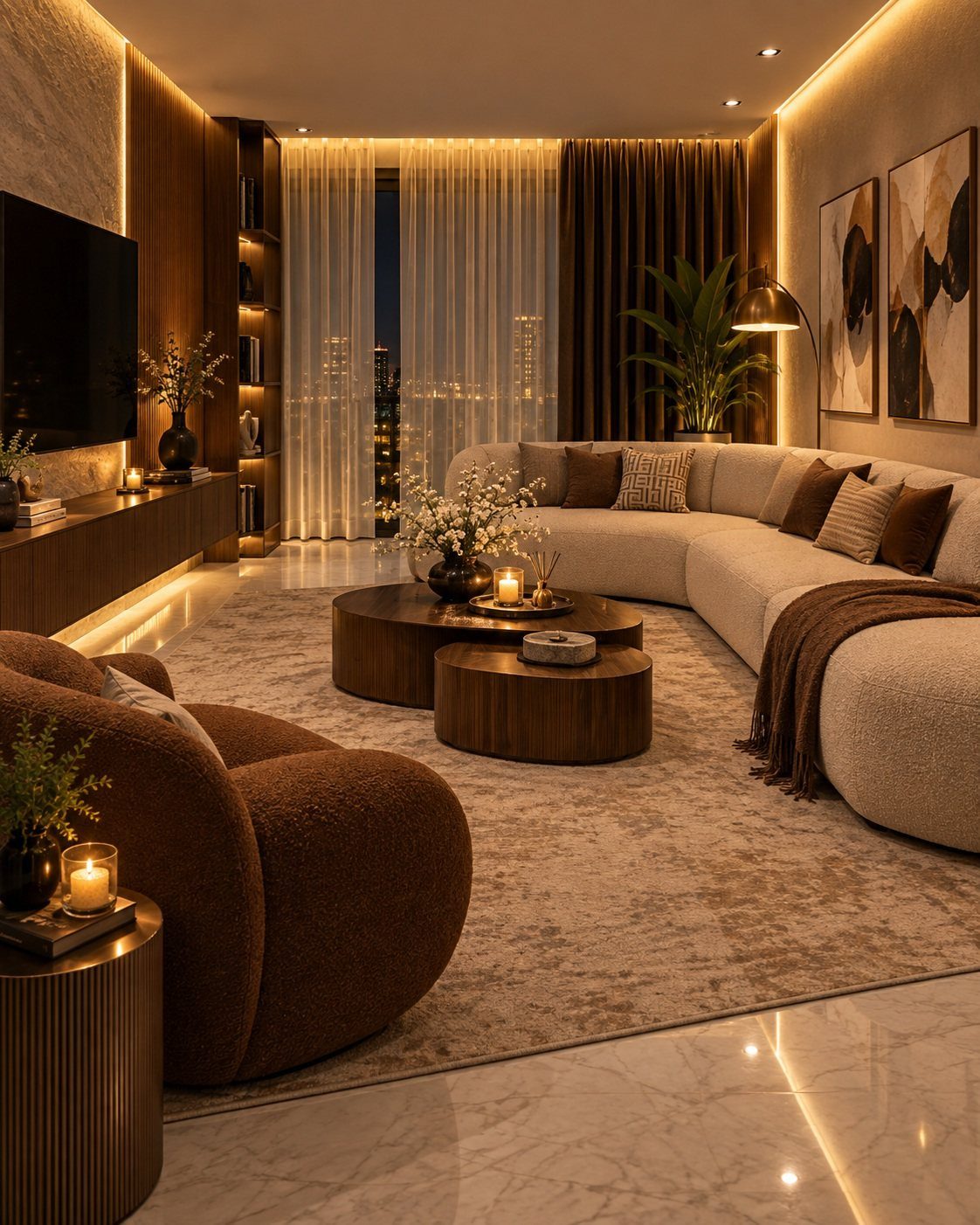
Low-profile sofas sit closer to the floor, and that lower sightline makes a ceiling feel higher while the room itself feels more settled.
I like an oversized armchair paired with one; the chair invites curling up with legs over the side, and the sofa stretches out for actual napping.
A loveseat and ottoman mixed in gives you options when the room needs to hold more than two people, or when someone wants to put their feet up without claiming the whole couch.
Clean lines keep even plush pieces from looking sloppy, which matters in smaller rooms where bulky furniture can crowd the walls.
Place the coffee table close enough to reach your mug; the layout should pull people toward each other, not line them up to face a screen.
3. Tall Indoor Plants
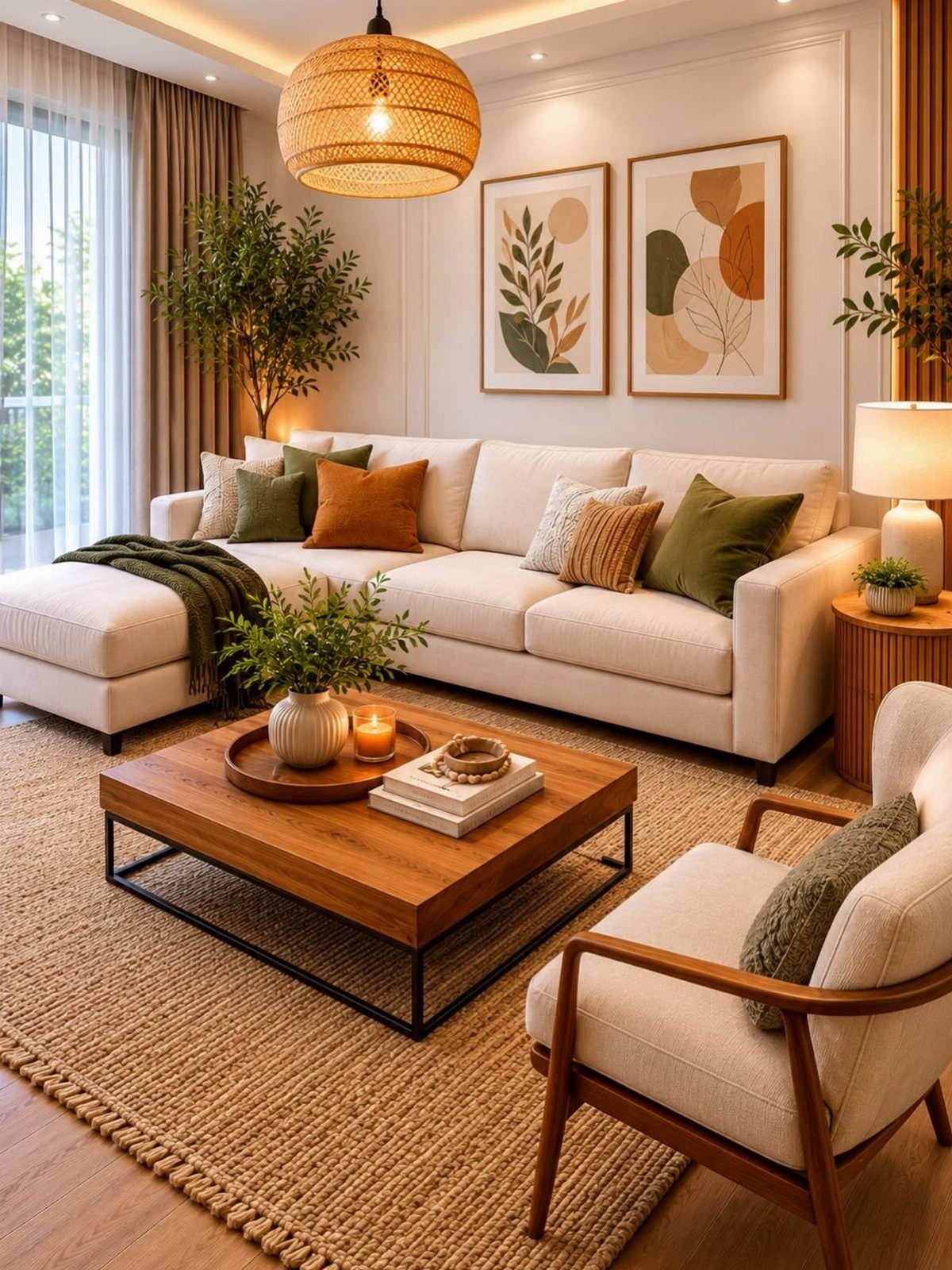
A tall plant in an empty corner does what a floor lamp cannot; it softens the vertical space and gives the eye somewhere alive to rest.
I have used a fiddle-leaf fig where a wall met the ceiling with nothing to say, and smaller plants on shelves where the surface was already there.
The pot matters almost as much as the plant; textured ceramics in quiet colors blend with most rooms without fighting the furniture.
Fresh flowers on the coffee table last a week and rotate with the season, though dried arrangements suit travelers or anyone who kills living things. A single potted tree anchoring one corner changes how the whole seating area breathes.
4. Sofas and Chairs Facing Each Other
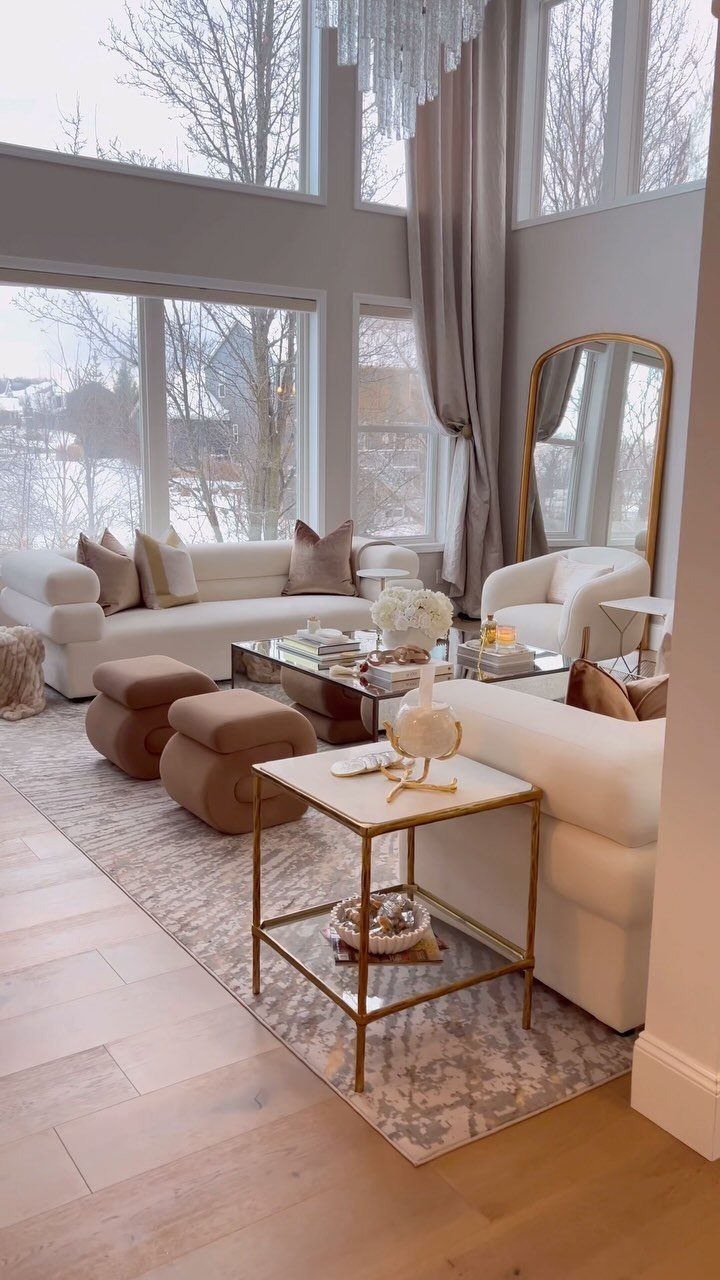
Two sofas facing each other across a coffee table turns a room into a place for talking instead of watching. I arrange the seating so no one sits far from anyone else; that distance keeps voices low and private.
The coffee table in the middle holds the space together and gives you somewhere to set down a cup without leaning.
A fireplace behind one sofa anchors the setup, though a large window or even a piece of art can do the same work.
The creator of the visible room moved existing furniture into this layout, turned the rug, and restyled with what she already owned; the change cost nothing and made the room feel new.
5. Soft Throws, Linen Curtains, and Velvet Cushions
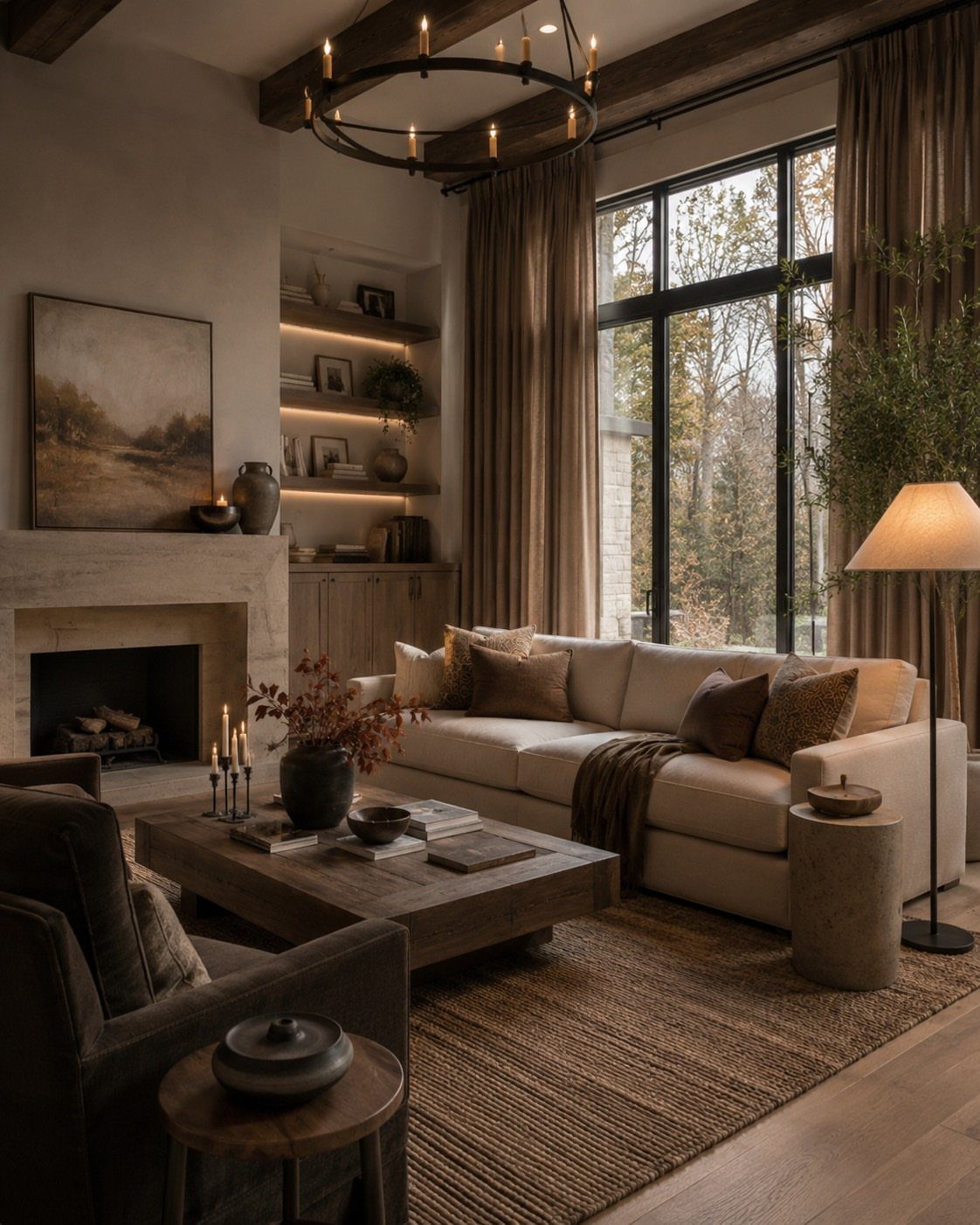
Texture does the work of color in a neutral room.
I keep a soft throw folded over the sofa arm where someone will actually reach for it, and I choose velvet cushions that hold their shape through months of being leaned on.
Linen curtains filter light rather than block it, and their slight irregularity keeps a polished room from feeling too staged. A chunky knit against a sleek sofa makes both more interesting; the contrast is the point.
Leather accents or bouclé pillows add their own grain if the starting pieces feel too flat.
The cost stays low because these are small items that swap out; one new cushion or a different throw changes the room for little money.
6. Cozy Rugs
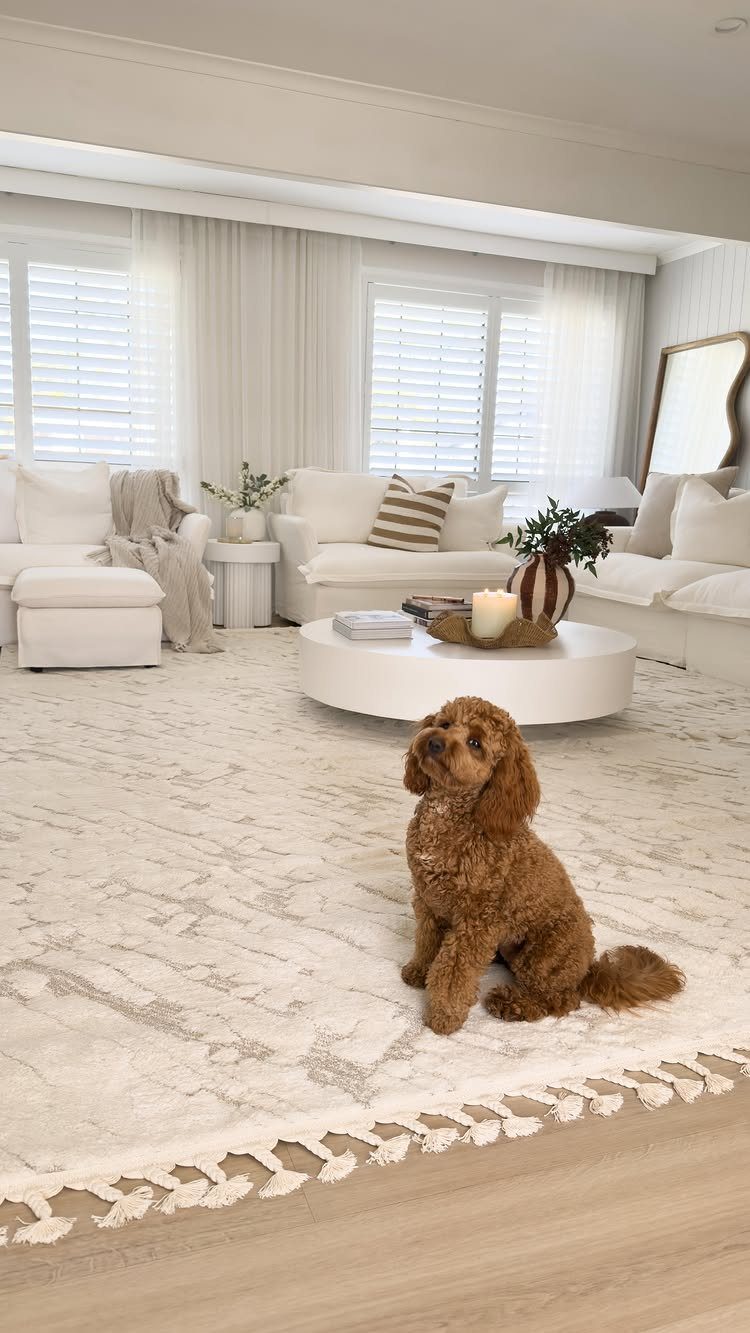
A rug underfoot changes how a room sounds and feels to walk into. I size it so at least the front legs of every major piece rest on it; anything smaller floats in the middle and looks accidental.
Layering a smaller patterned rug over a larger natural-fiber base works in open plans where one rug needs to define the seating area against the rest of the space.
Darker hues pull the walls in and suit rooms that already get plenty of light; lighter rugs brighten a dim space but show coffee drips faster.
Shag or thick pile adds actual softness underfoot, which matters on hardwood or tile that stays cold through winter.
The fringe and texture visible here would feel at home in a room that reads modern or coastal depending on what sits above it.
7. Embrace Dark Walls
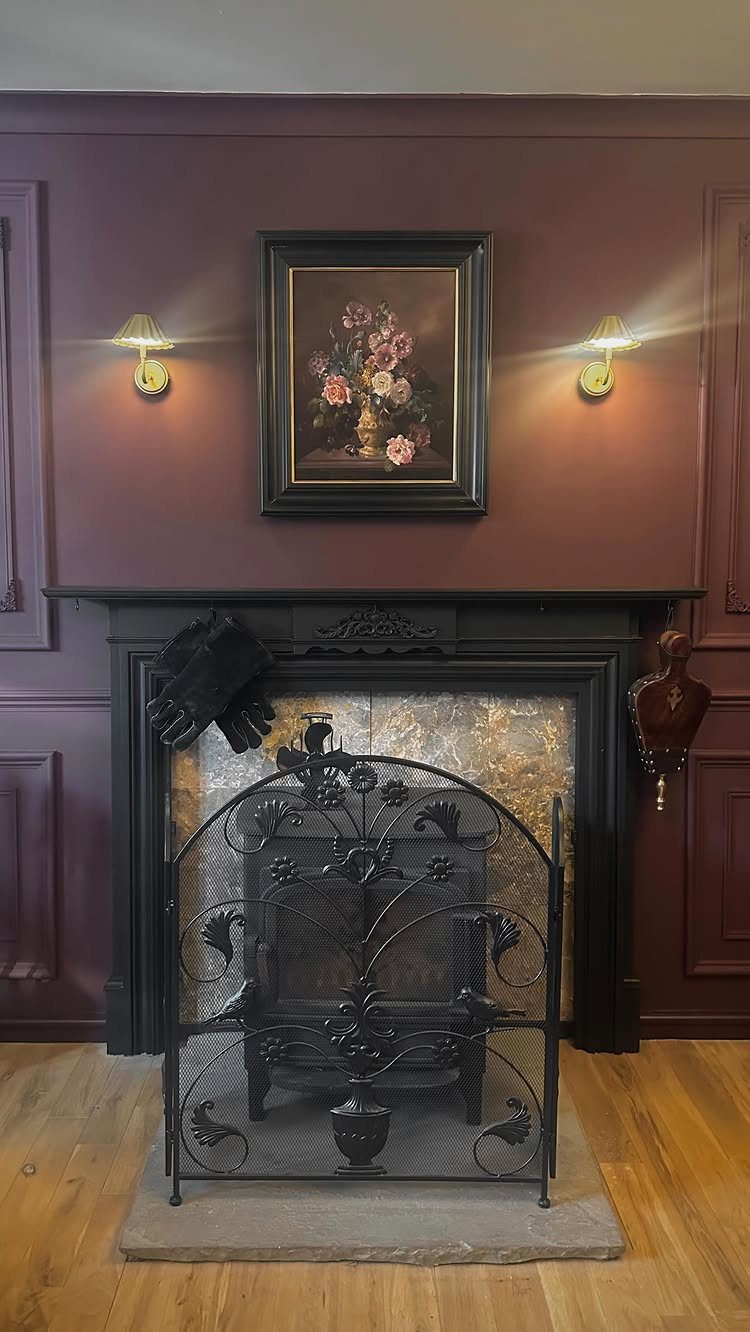
Dark walls swallow light and give it back slowly, which is exactly what makes a room feel held together rather than scattered open.
A deep plum or charcoal gray works best in a space that already gets some natural light; in a dim north-facing room, the same shade can turn flat and cold.
I used peel-and-stick wallpaper for my first dark accent wall, and that easy removal mattered more than I expected.
Dark walls read as cozy in winter and dramatic in low light, though I find them heavy once the days grow long and I’d rather open the room up.
Balance comes from crisp white fixtures, light gray textiles, and at least one piece with a smooth concrete finish to keep the mood from turning theatrical.
This suits renters and the hesitant alike. Commitment is low, impact is high, and the cocoon effect arrives the evening the last panel goes up.
8. Blankets, Sheepskins, and Ethnic Fabrics
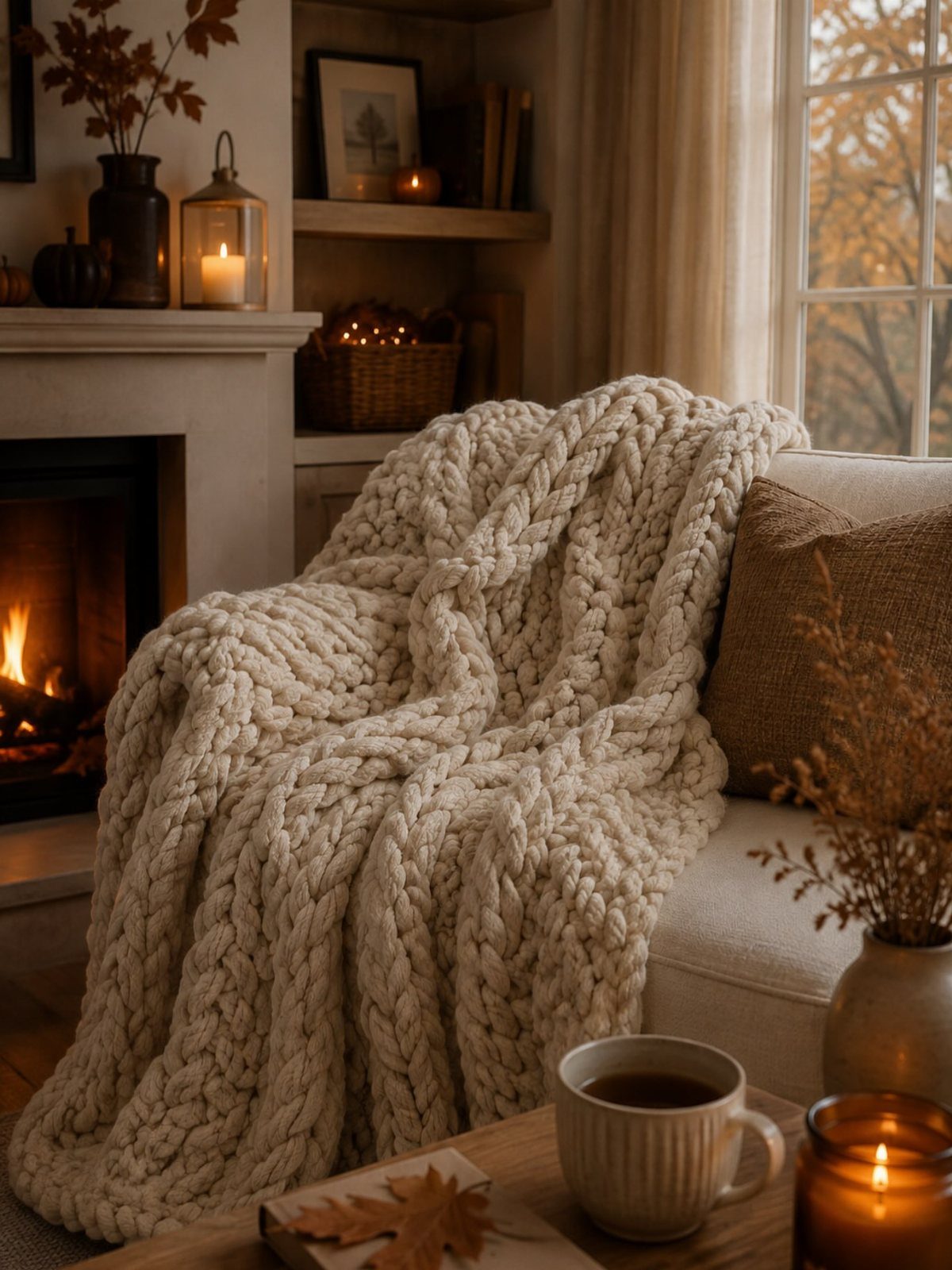
Texture does more than color for warmth. A chunky knit throw over an armchair catches light differently than the same chair bare, and that difference is what reads as inviting from across the room.
Sheepskins work anywhere you sit or step: draped over a sofa back, layered on a hardwood seat, or dropped beside a bed as a morning landing.
Ethnic fabrics, kente or suzani or ikat, bring in pattern that doesn’t depend on a print trend cycle. The mix matters more than any single piece.
I pair something smooth with something nubby, something woven with something shaggy, and stop before the room turns to costume.
This is the fastest, cheapest shift on the list. A single blanket change rewrites the feel of a whole corner.
9. Incorporate Books
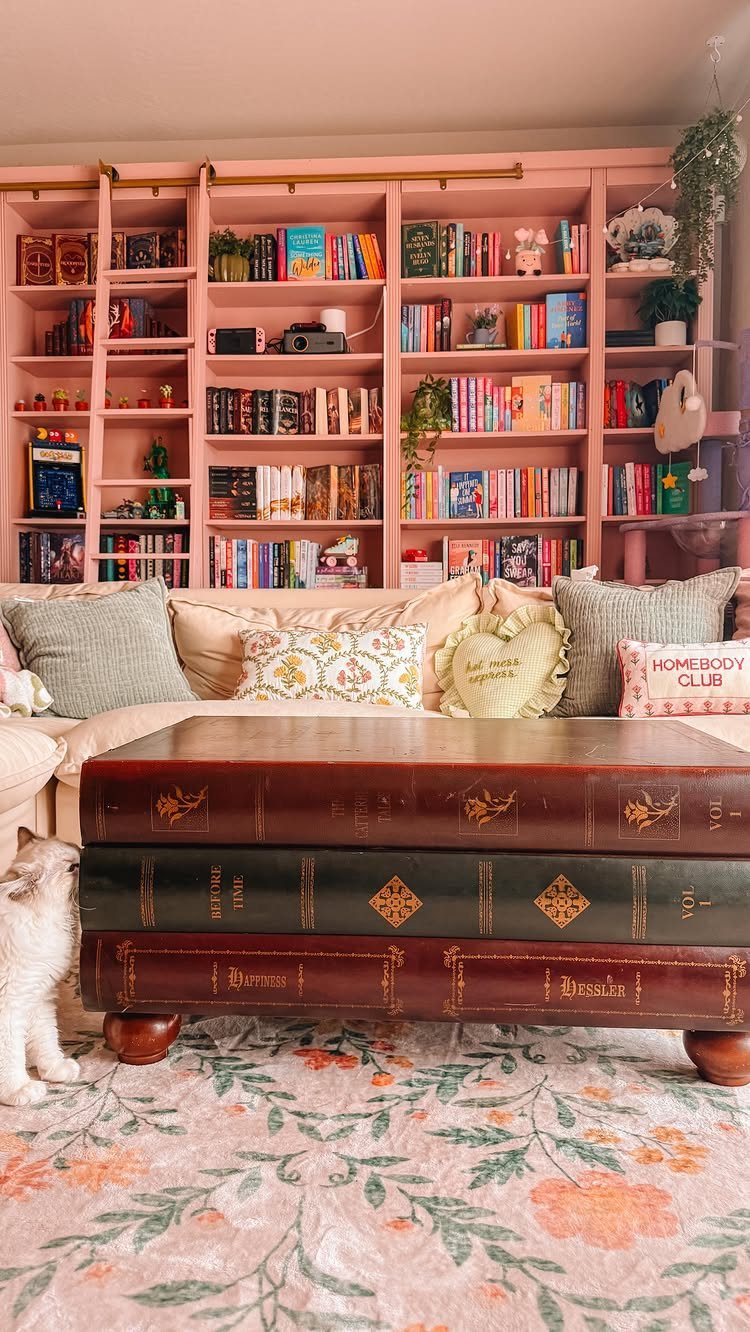
A wall of books is color and texture and something to do on a long evening, all in one rectangular footprint.
The spines create a rhythm no single paint color matches, and the variation softens a room in a way built-in panels cannot.
Floor-to-ceiling shelving works best when it reads as architecture, not storage. I leave gaps: a small object every so often, a horizontal stack breaking a vertical run, a single shelf left half empty.
The books you actually open stay within arm’s reach of where you sit; the rest can live higher or deeper in the stack.
For renters, tall standalone units against a painted wall give most of the effect with zero construction. A plain surface with two or three real volumes left open does the same work without the gimmick.
10. Furniture with Soft Edges
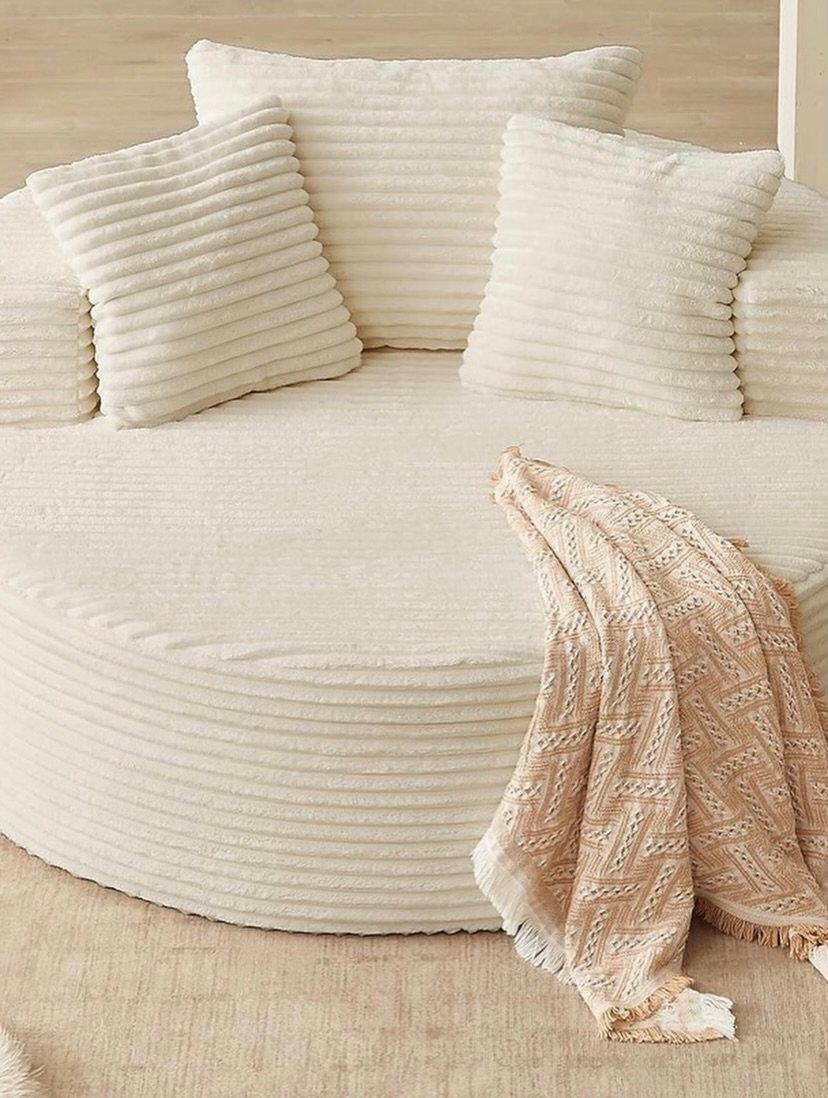
Rounded furniture removes the small stress of bumping sharp corners in tight space. A circular daybed or curved sofa invites sprawling in a way angular frames resist; the eye relaxes too, following curves more easily than edges.
Ribbed texture adds interest without pattern, and a fringe throw softens the silhouette further. I find one rounded anchor piece per room is enough; pair it with straighter lines elsewhere or the space turns to bubble.
A round coffee table can hold its own against a rectangular sofa; the contrast in geometry keeps the eye moving. Two curved sofas facing each other rarely does.
Cost runs higher for custom curves, but IKEA and Article both stock rounded sectionals now at mid-range prices. Check seat depth before ordering; some curved styles sacrifice lounging length for the silhouette.
11. Large Art Pieces
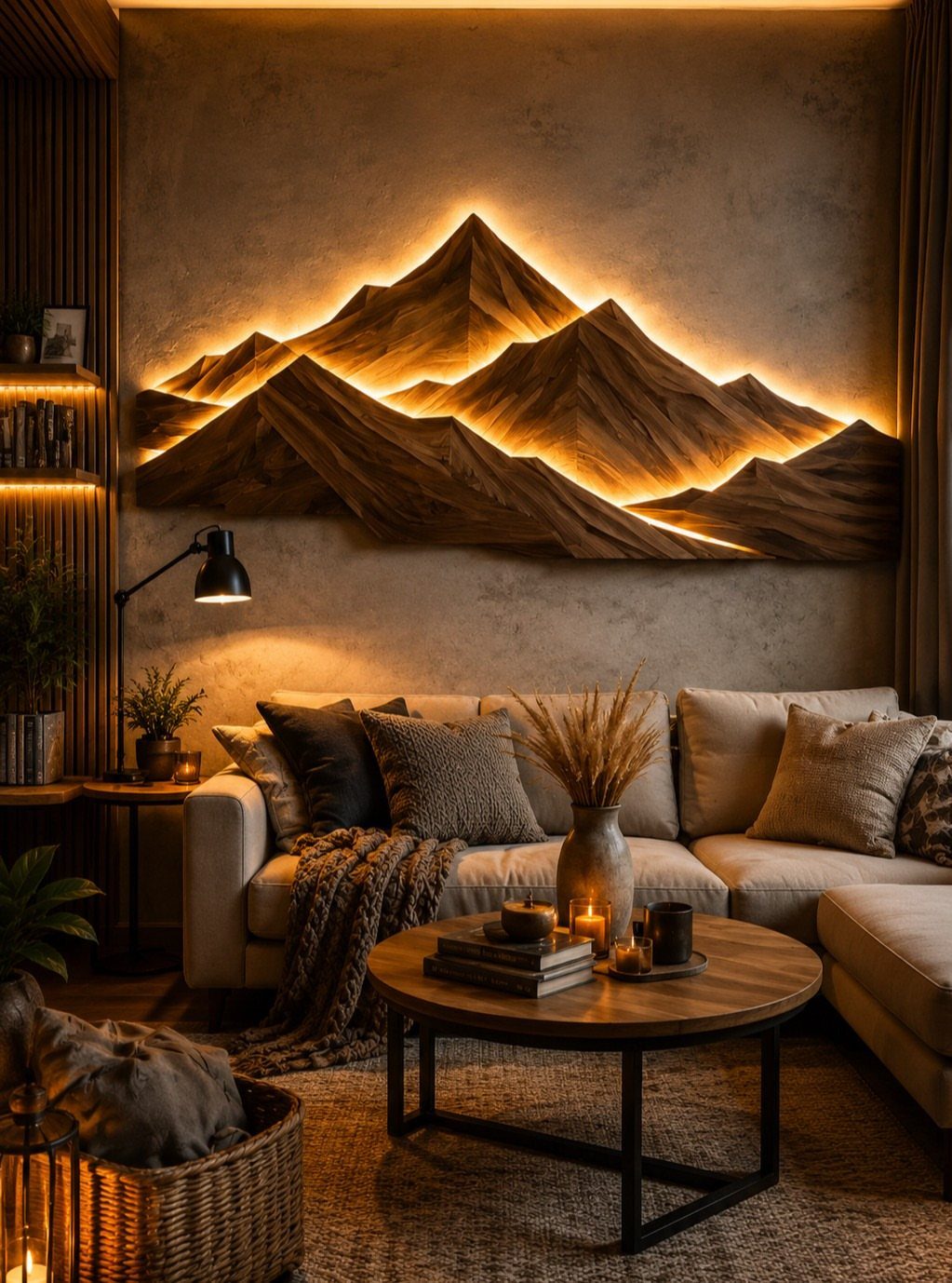
One large piece of art commands a wall more calmly than a cluster of small frames fighting for attention. A backlit piece uses its own light source, which means it holds presence even when the room’s lamps are dimmed low.
Scale is the common mistake. I measure the wall, subtract furniture height, and aim for the art to fill most of what’s left without crowding the edges.
Too small floats; too large crowds. Subject matters less than mood: a landscape you know, an abstract in colors that repeat your textiles, a photograph with personal weight.
A piece that reads as sculpture as much as image is one way to make natural materials feel contemporary.
A single oversize print in a simple frame from a local shop or online framer outperforms gallery walls that cost far more to assemble.
12. Built-In Under-Stairs Seating Nook
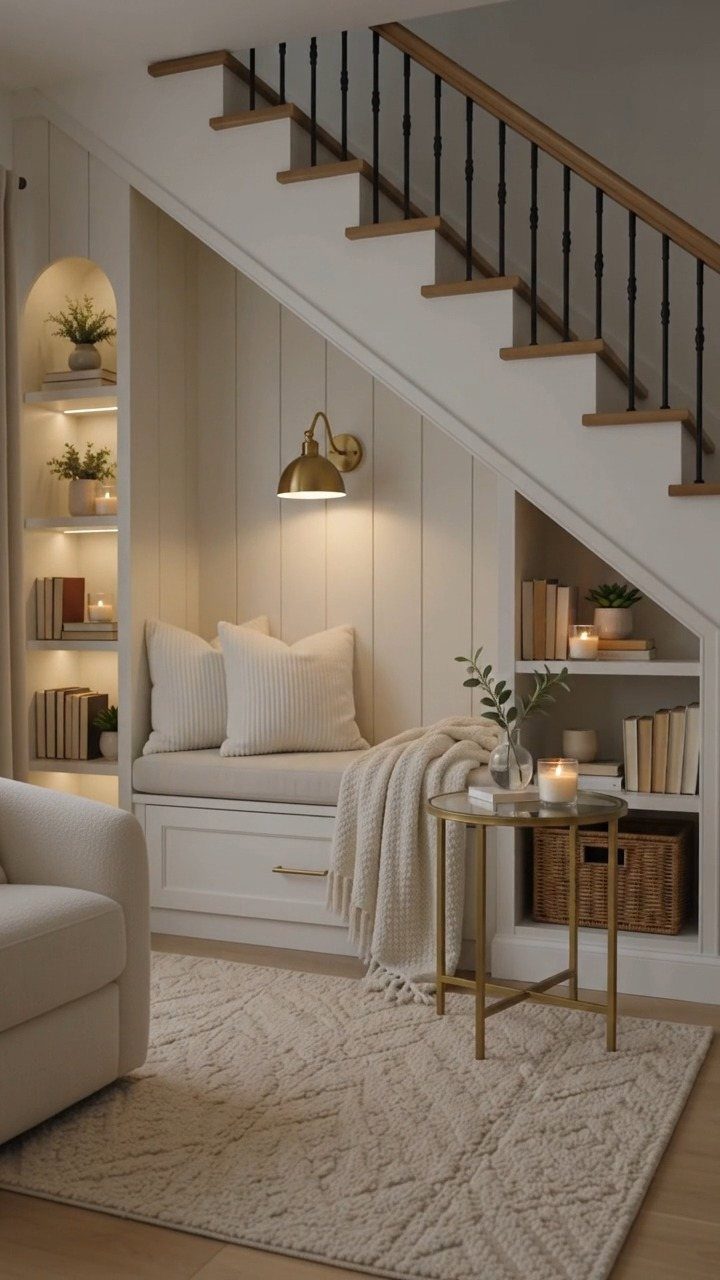
The triangle under a staircase is usually dead storage or awkward closet. A built-in bench turns it into the most fought-over seat in the house.
The depth of the tread sets your headroom; I wouldn’t build seating where the ceiling drops too low to sit upright comfortably. A drawer beneath the bench catches the items that otherwise migrate to the coffee table.
A hardwired sconce looks built-in, but plug-in versions from Schoolhouse or Rejuvenation give the same glow without an electrician. Shelving beside the seat, not above it, keeps books reachable without ducking.
This takes a carpenter or serious DIY confidence. For a faster version, a low bench slid into an open under-stair space, with a small round table and a battery-powered sconce, gives the mood without the construction.
The permanent build suits households that read daily; the temporary version works for occasional escape.
13. Fireplace Media Console Setup
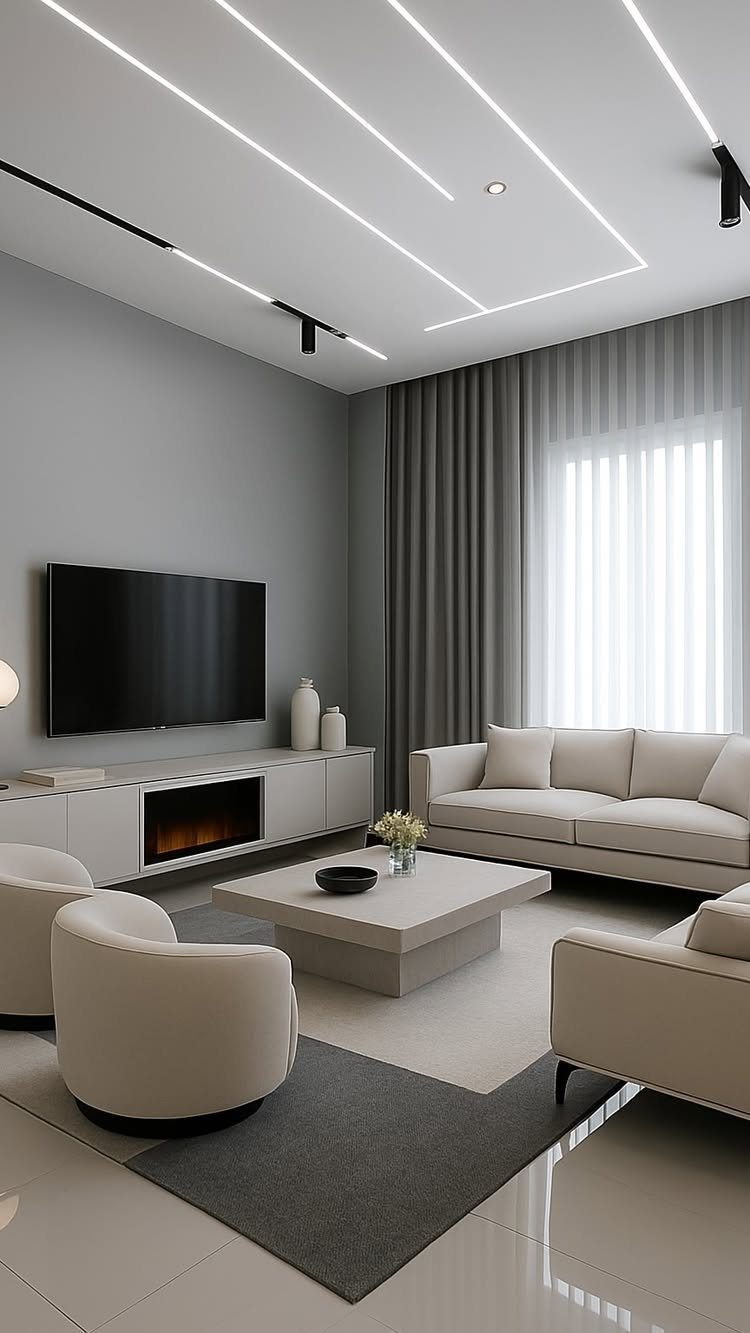
A media console with a built-in electric fireplace lets you keep the TV as the room’s focal point without giving up the warmth a flame brings.
The unit sits low, so sight lines stay open across the seating area, and the fire glow fills the lower center of the wall where a traditional fireplace would stand.
A fireplace media console needs more wall width than some rooms can give, so measure before you commit.
Leave enough width for the console, the surround, and open space on each side; a cramped wall makes the whole room feel smaller.
Ventless electric units plug into a standard outlet; no chimney or gas line matters, which keeps installation to a single afternoon.
Built-in console fireplaces give less heat than standalone units, which matters if you want real warmth and not just atmosphere. Most built-in console fireplaces warm the seating zone well enough but struggle to push heat across an open plan.
If your living room flows into a kitchen or hallway, the warmth pools where you sit and leaves the edges cool.
For atmosphere and gentle warmth near the sofa, the lower output is plenty; for heating the whole house, it is not. Check the unit’s BTU rating against your ceiling height before you buy.
In rooms with very high ceilings, the heat rises past sitting height before you feel it.
14. Starry Night Ceiling Lighting
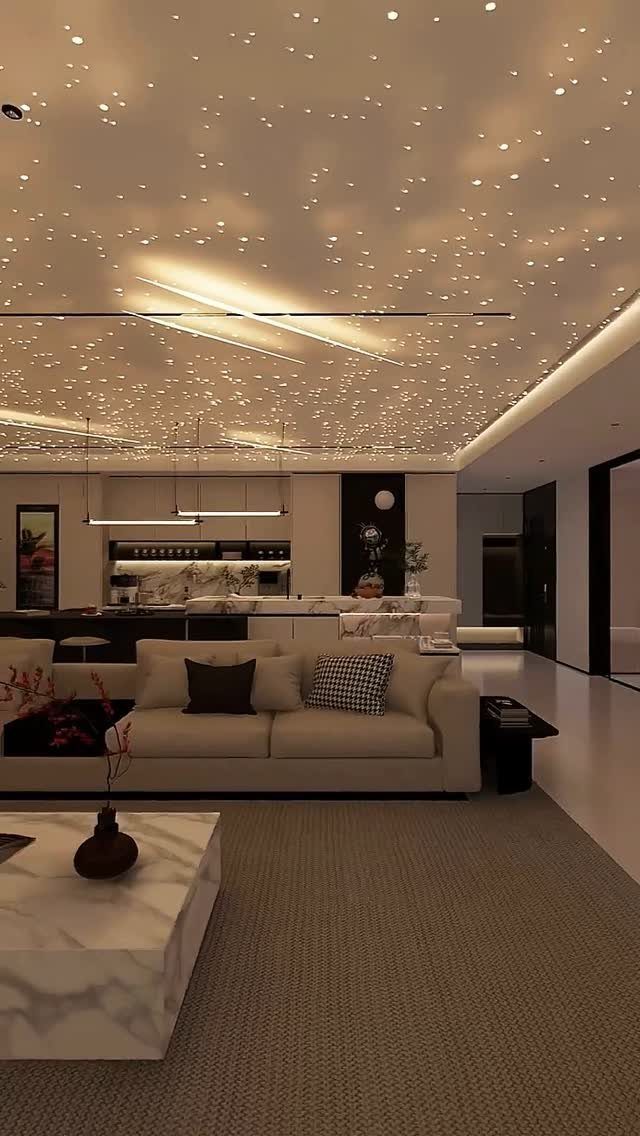
Fiber-optic star ceilings belong in rooms where you actually lie back: a sofa with a chaise extension, a daybed, a floor-level seating arrangement.
The pinholes read as stars only from below, so the payoff depends on where you put your body, not just your eyes.
Installation runs through drywall into the ceiling cavity, or you panel over the existing surface with a dropped assembly. Pricing out both methods matters before you start; retrofit and panel systems land in very different budget ranges.
Retrofit through drywall means patching holes everywhere, while ceiling panels keep the room usable during install but eat some headroom. The panel won.
Dimming matters more than brightness. A slow fade to black lets the ceiling shift from evening light to sleep light without reaching for a switch.
Some kits include a shooting-star mode; I find it distracting quickly, but guests always comment.
This idea eats budget fast. Renters should stop here.
The ceiling is the one surface you cannot take with you.
15. Festive Holiday Fireplace Decor

Holiday fireplace decor works because the fire itself does half the job. Light the grate, step back, and every stocking, nutcracker, and greenery arrangement gains a light source no plug can copy.
Stockings hung only on burning nights leave the hearth looking finished; the empty look on dark evenings is a reminder to use what the room was built around.
A heavy stone surround carries the visual weight, so trimmings stay light: a garland draped, not wrapped; stockings hung from simple hooks, not heavy holders.
A red sofa opposite the fire gives the eye a second warm point and keeps the room from feeling like a diorama viewed from one angle.
Lanterns on the coffee table extend the firelight after the logs turn to embers. Battery candles inside avoid the soot risk of real flames near fabric, and they stay lit while you leave the room.
A timer on the lights means the room is already welcoming when you walk in from the cold.
The whole setup stores in two bins by January 2. If your holiday collection sprawls across closets, this focused approach saves space and decision fatigue both.
Importance of Lighting
Warm bulbs do more than dim fixtures; the color temperature itself changes how skin and wood and fabric read under light. I aim for 2700K in living rooms, the point where incandescent used to sit before LEDs let us choose.
Anything cooler starts to feel like an office or a clinic.
Multiple sources matter because shadows are what make a room feel flat and cold. A single overhead fixture erases the depth under a chin, the hollow of a collarbone, the texture of a plaster wall.
Floor lamps and table lamps at different heights restore that modeling.
Dimmability is non-negotiable if you use the room past six o’clock. The ability to drop from full brightness to a pool of light around one chair changes the room’s scale and its purpose.
Candles do the last work, below dimmer reach, where the flicker itself signals that the day has ended.
Role of Textures
A room built from one material reads as finished in a photograph and dead in person. I mix velvet with wool, leather with cotton, bouclé with linen, because each catches light differently and the eye keeps moving between them.
Vel-upholstered furniture holds warmth and reflects it back softly; it is the first surface I touch when I enter a cold room. Wool throws add weight and a slight resistance that reads as shelter.
Leather accents provide the smooth counterweight, the cool hand against all that fuzz. Sheepskin or faux fur on a hardwood seat changes the body’s experience of sitting down, not just the look of the chair.
The rug is where texture matters most because it is underfoot and constant. Knitted cotton throws on the sofa arm invite being gathered up; alpaca blankets do the same work with less bulk.
The mix succeeds when no single texture shouts and none disappears.
Color Psychology
Warm neutrals work because they carry color without demanding attention. Cream, peach, beige, and soft gray let the eye rest; they do not pin a room to a season or a trend cycle.
I use these as the ground and bring earthier tones through objects that move: a deep green throw, a muted blue vase, terracotta in a ceramic bowl.
Dark walls are a different choice, not an opposite one. The risk is heaviness; I balance it with lighter upholstery, with white or pale gray textiles, with at least one smooth concrete or light wood surface that refuses the drama.
Accent colors through wall art or throws let you test a mood without painting. A neutral room with a single deep tone repeated in three places reads as considered; the same color once reads as an accident.
Functional Design
A living room that looks right but moves wrong becomes a room you pass through instead of living in. Pathways need enough width that people don’t edge past each other; that cramped feeling never leads to settling in.
Furniture should shift without a second person; a sofa that needs two to drag is a sofa that stays where the movers left it.
The layout should match what you actually do in the room. If you entertain, seating clusters where voices carry without shouting.
If you work there, the light source sits to one side of a screen, not behind or in front.
If the room holds both functions, the pieces need to rearrange quickly, which means nothing so heavy that one person cannot angle it.
Clear pathways and movable furniture sound like basics because they are; most rooms fail on what was obvious once someone points it out.
Frequently Asked Questions
How do I make my living room look cozy?
Set light sources in several directions instead of relying on one overhead fixture; floor lamps in corners and table lamps where people sit make the biggest difference.
A nubby wool throw tossed over a leather couch, or linen pillows that soften as you wash them, give a room the kind of contrast that reads as lived-in rather than staged.
When the sofa, the chairs, and the loveseat all have their front feet on the same rug, the room quiets down and the furniture reads as one conversation instead of several.
What is the 3-5-7 rule in decorating?
The 3-5-7 rule means grouping objects in odd numbers: three, five, or seven items per arrangement.
Odd groupings look more natural and less staged than even pairs, and they keep the eye moving around a surface rather than locking in one spot.
What is the 2/3 rule for living rooms?
The 2/3 rule says an object should fill about two-thirds of the space it occupies.
Hang art so it fills about two-thirds of the open wall above a console or sofa: measure the gap between the furniture top and the ceiling, then look for a piece that covers most of that without touching either line.