

Corner cabinet ideas run from a plate stand you can set on any counter to full custom carpentry with curved doors and fabricated countertops.
What separates one choice from another is whether you own the kitchen or answer to a landlord, whether you are remodeling or retrofitting, and whether the corner faces the room or hides against a wall.
1. Corner Drawers
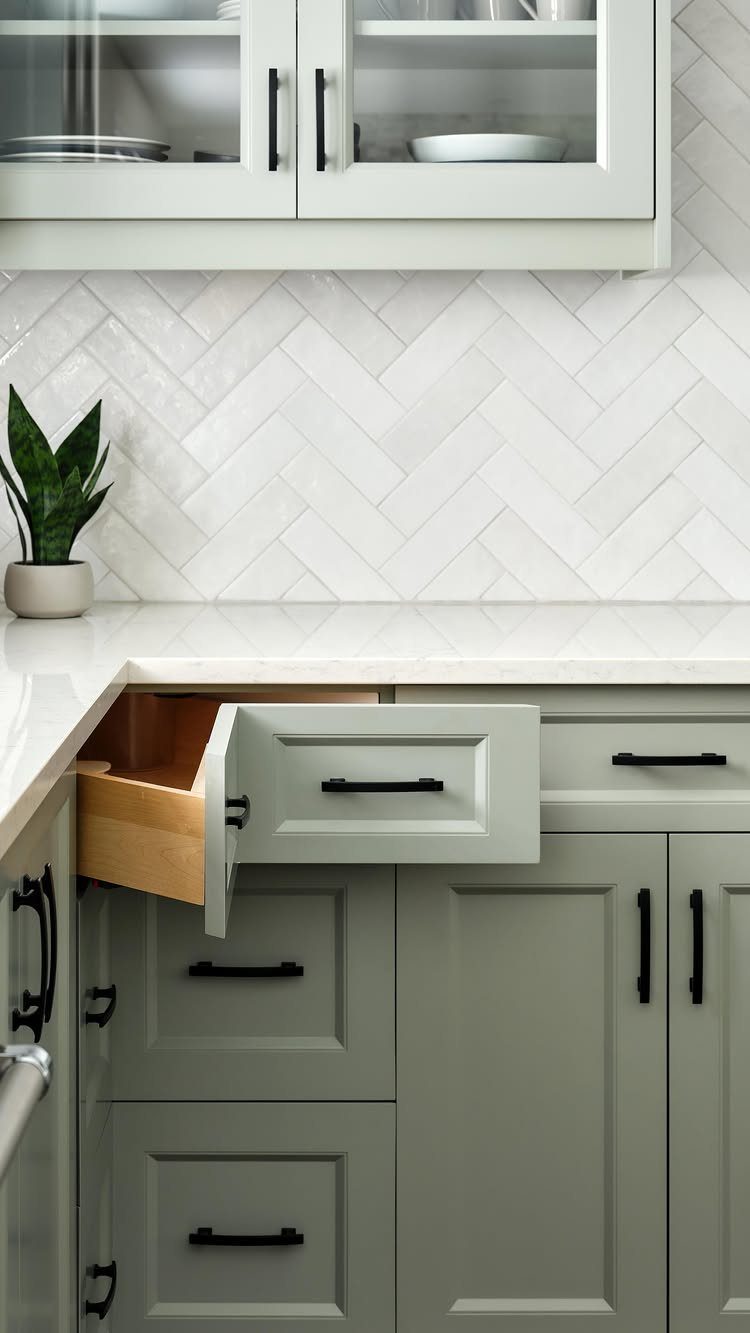
A V-shaped drawer pulled from the corner at an angle turns dead space into full-depth storage you can actually reach. I would spec this for anyone tired of losing pans to the back of a blind cabinet.
The diagonal front means the drawer face reads as a design detail, not a workaround.
Custom work drives the price up; this is the most expensive corner solution I know. The examples that look off usually read smaller than standard cabinets, so proportion matters.
I would check that the finished front matches the width of neighboring drawers before signing off.
Utensils, linens, and spice jars sit well here. Pots and pans need the deeper versions.
2. Pull-Out Shelves
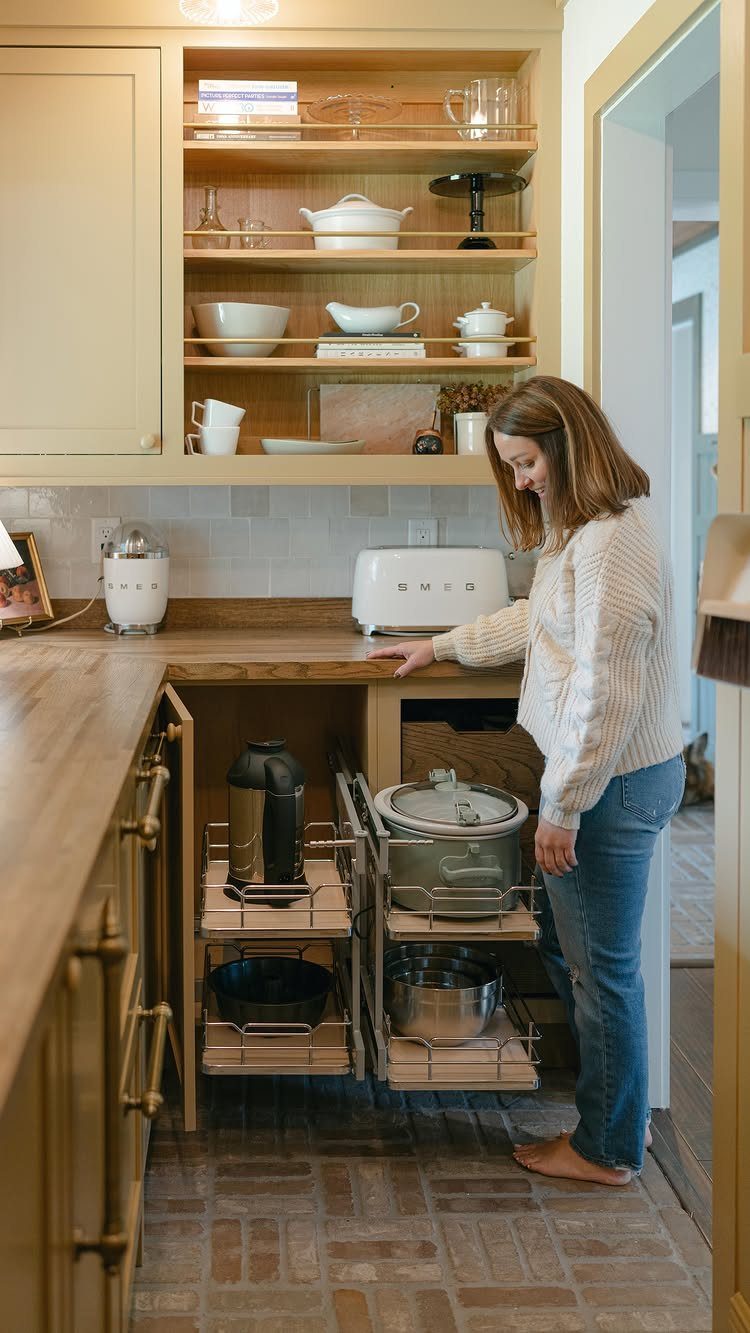
Tiered metal shelving on full-extension slides brings the entire corner out to you. I have watched someone pull out two wire levels and reach a coffee maker without kneeling or rearranging anything in front.
This suits the reader working with standard cabinetry who wants function without a full remodel. The shelves install into existing openings; no custom cabinet box needed.
I would measure the interior depth twice, since corner cabinets vary and a shelf that binds on the slide is useless.
Cookware, small appliances, and dry goods all fit. The wire versions ventilate well for pots that go in damp.
3. Open Corner Shelving
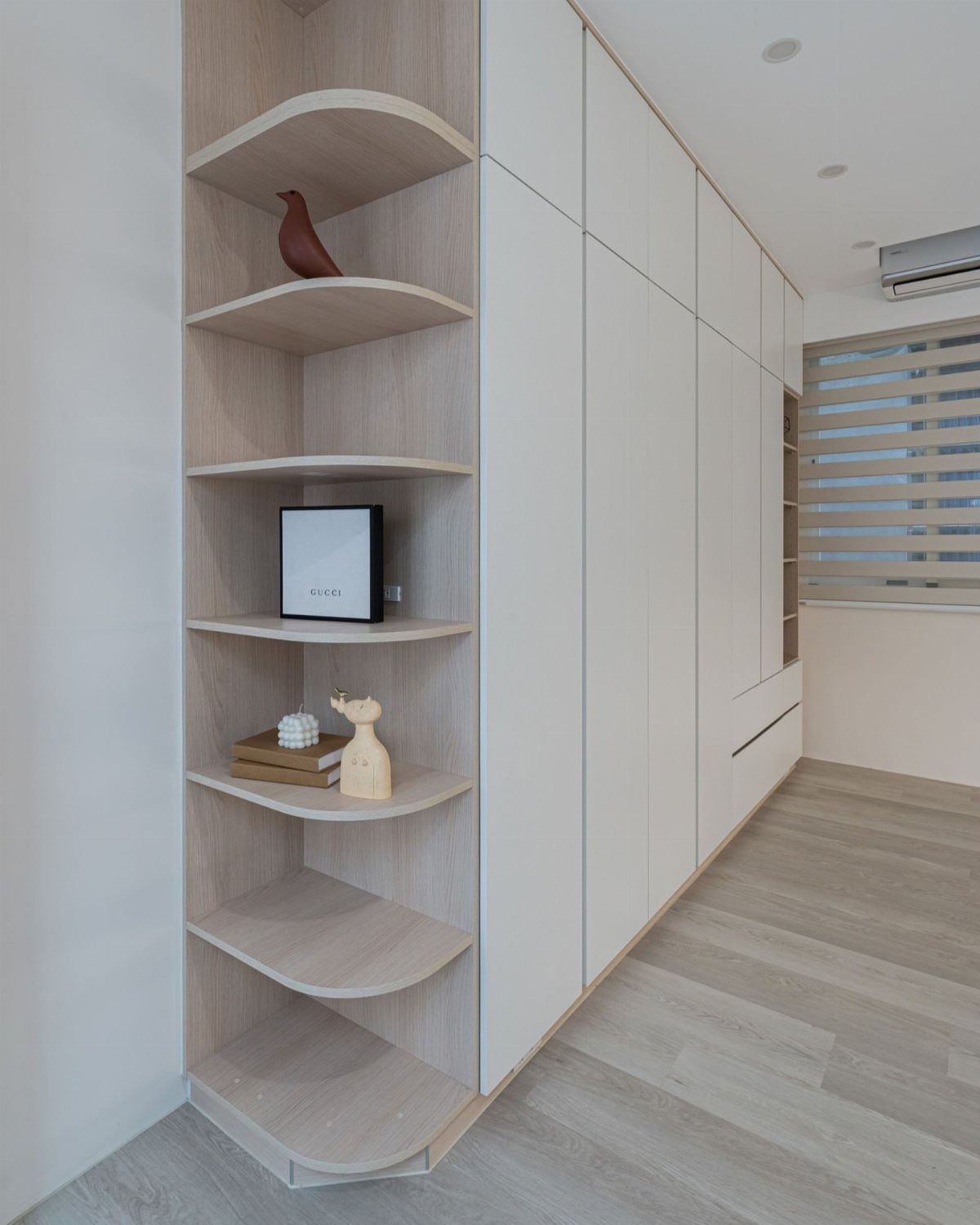
Floating or bracketed shelves in a corner trade enclosed storage for air and visibility. A curved profile reads as built-in furniture rather than afterthought.
I would use this where the kitchen opens to a living area and solid cabinets would block sightlines. Plants, cookbooks, and everyday dishes earn their keep here; anything you use weekly belongs on the lower levels.
Higher shelves collect dust and demand a step stool.
The half-wall detail visible in some installs gives enough definition to separate a pantry zone without full enclosure. Wood adds warmth against white surrounds.
4. LED Lighting in Corner Cabinets
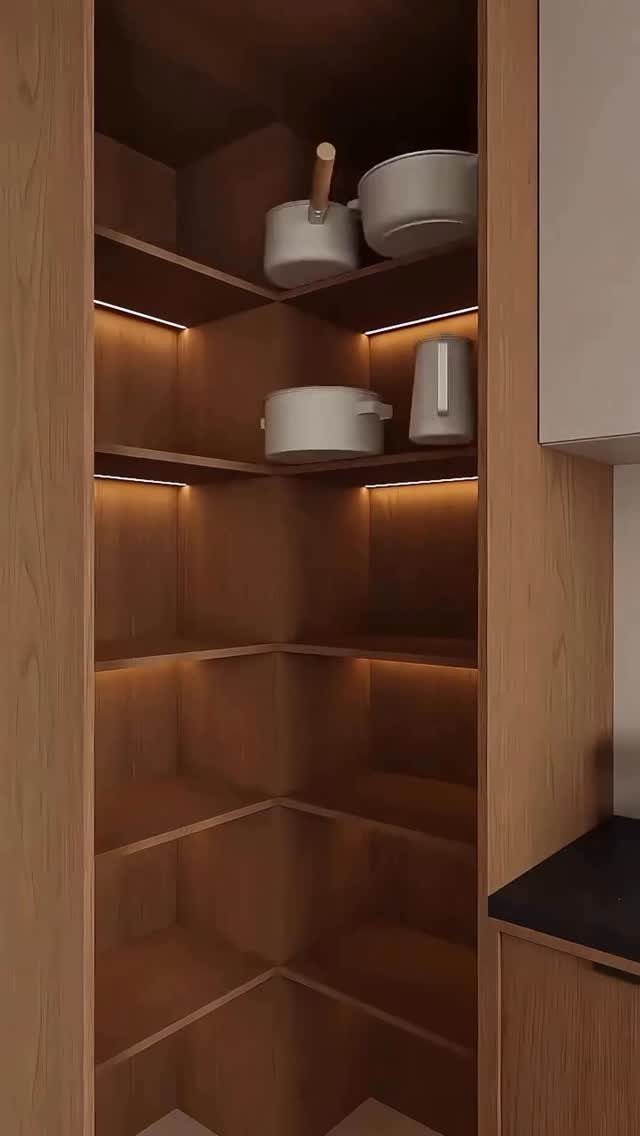
Warm LED strips tucked into the interior of a corner cabinet turn a cave into usable space. L-shaped shelving lit from above casts a glow that catches white ceramic and makes the contents readable at a glance.
Motion-activated versions save the hunt for a switch when your hands are full. Battery-operated rechargeable options now run long enough that hardwiring is optional, which matters in a retrofit.
I would place the sensor where the door swing triggers it, not where you stand.
This upgrade matters most in deep corner cabinets and blind corners where natural light never reaches. Pair it with glass fronts or open shelving and the light becomes part of the room after dark.
5. Corner Pantry Cabinet
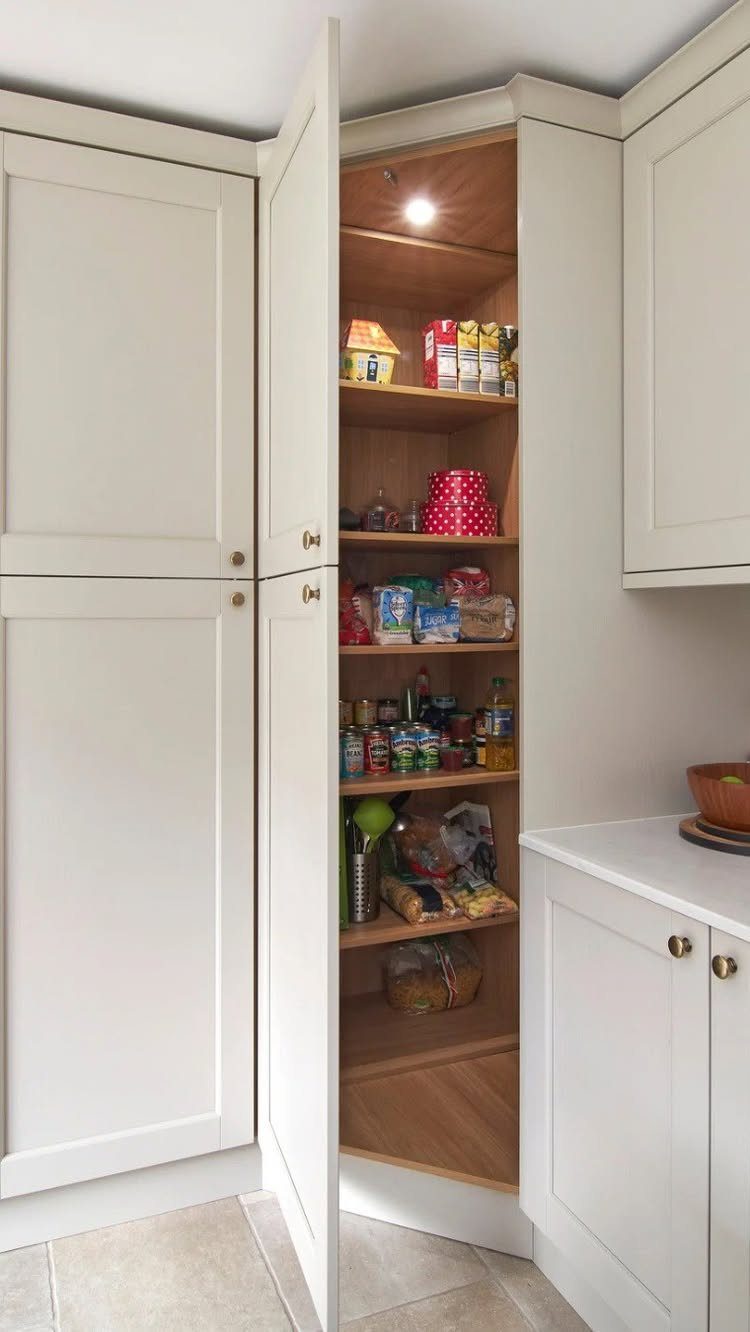
A tall corner pantry stacks vertical storage where no wall run exists. Wooden shelves inside, stocked with jars and cans at working height, keep everything within reach.
I would check ceiling height first; these cabinets run tall and need headroom. The footprint is compact, but the swing radius of a full-height door can crowd an adjacent run.
A bi-fold or pocket door solves that, and I would price both before committing.
Dry goods and small appliances store well here. The reader lacking a dedicated pantry wall gets the function without the square footage.
6. Angled Appliance Garage Cabinet
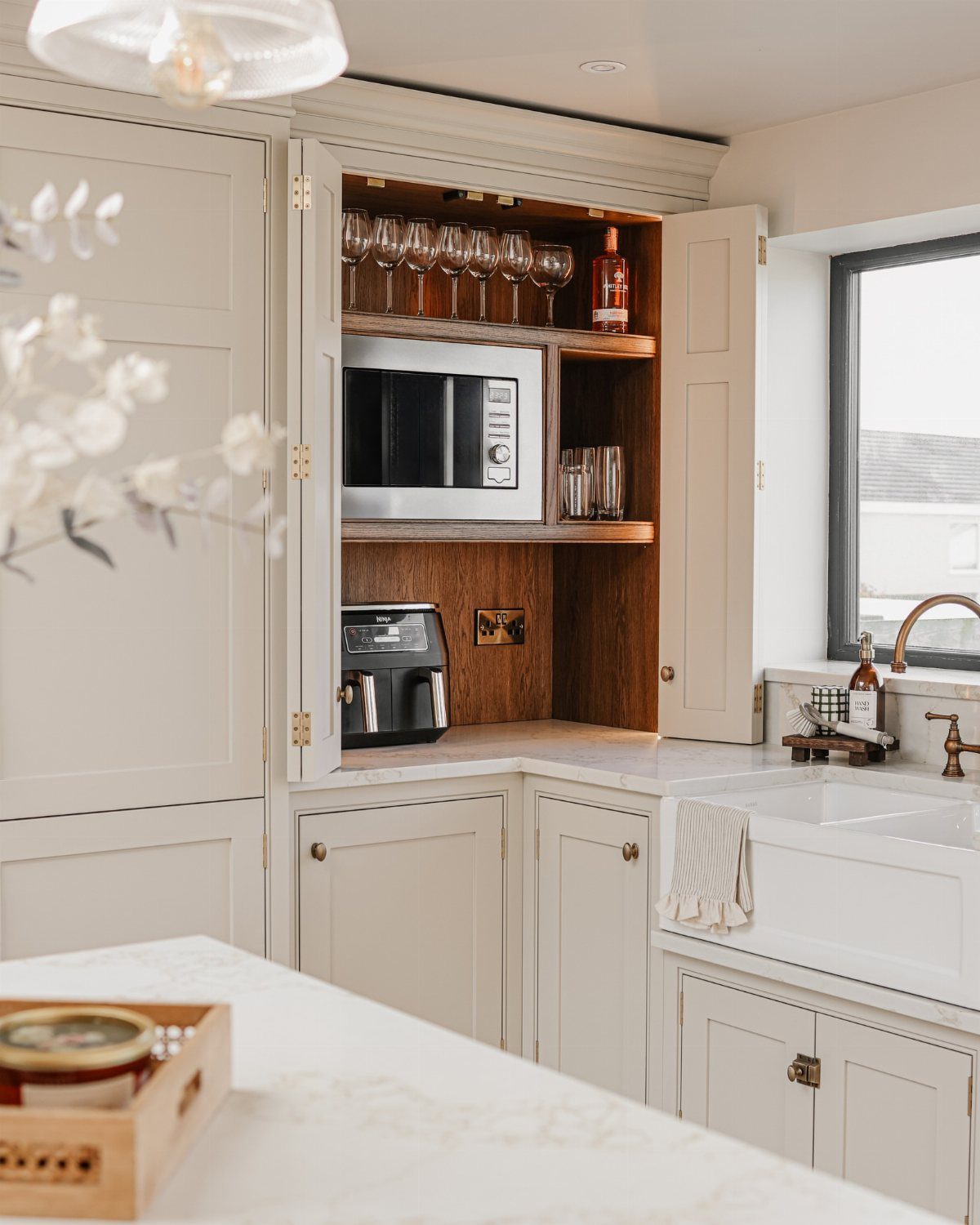
An angled cabinet that steps out past standard depth creates a pocket for appliances you want hidden but handy. Bi-fold doors fold back to reveal a microwave, air fryer, and glassware in wood-lined quarters beside the sink.
I would verify the extra depth against your traffic lane; even a small projection into a galley kitchen changes the flow. The custom look comes from that projection, so skimping here defeats the purpose.
Tambour slides work instead of bi-fold where clearance is tighter.
Coffee makers, blenders, and toasters earn this spot. I would reserve upper closed cabinets above for items used less often, using the full corner height.
7. Corner Wine Rack Cabinet
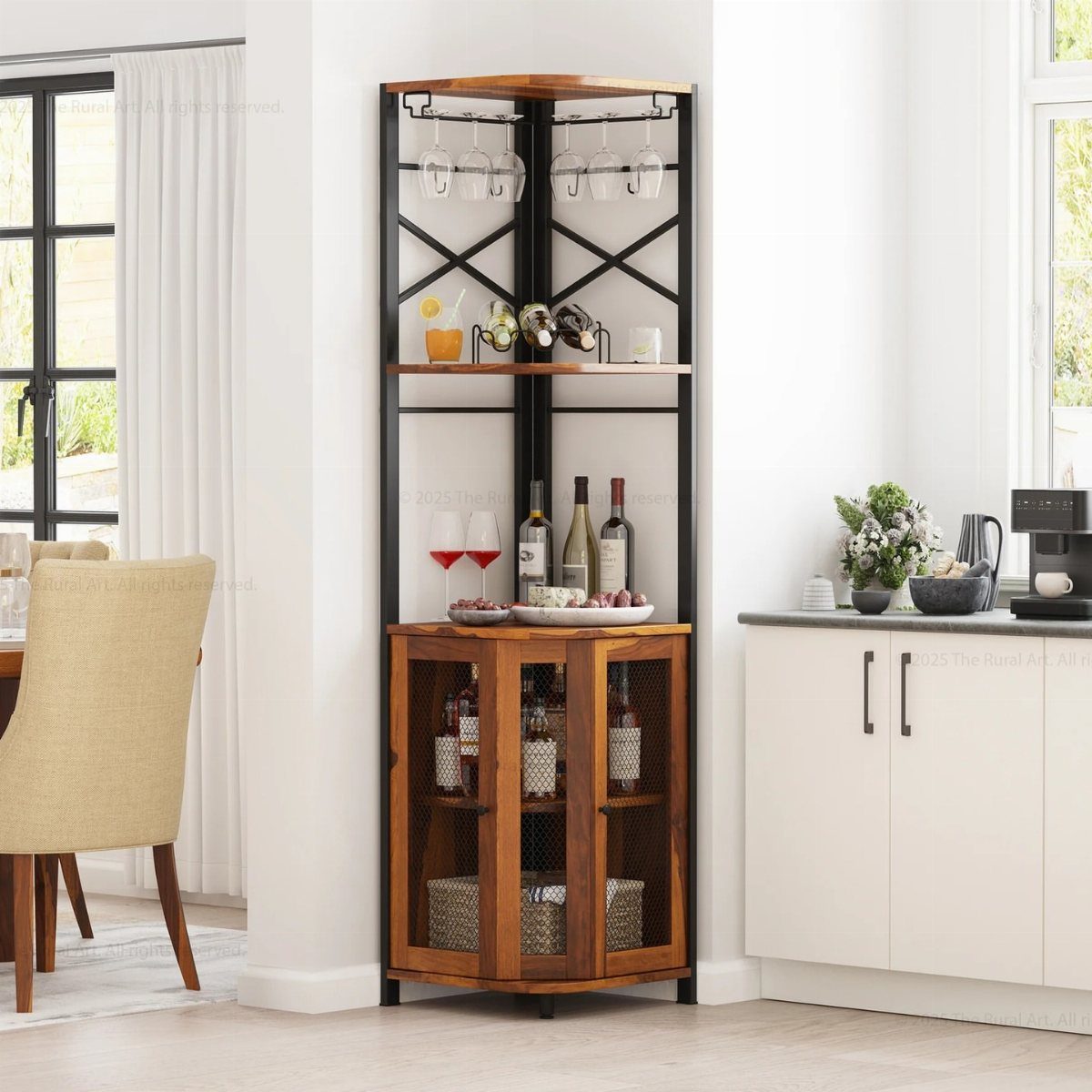
A corner wine rack cabinet turns dead kitchen space into a bar station that guests actually notice. Open metal shelving for bottles sits above a lower wood cabinet with glass doors; the lower half hides glasses and corkscrews.
I would put this where the kitchen meets the dining area, since it serves both rooms. The hanging stemware racks up top keep glasses dust-free and within reach.
For a finished look, run a small tile backsplash behind the open shelves and add a puck light above the top shelf.
This trades some storage depth for display. If you collect more than about a dozen bottles, you will need a second zone for the rest.
8. Corner Plate Rack
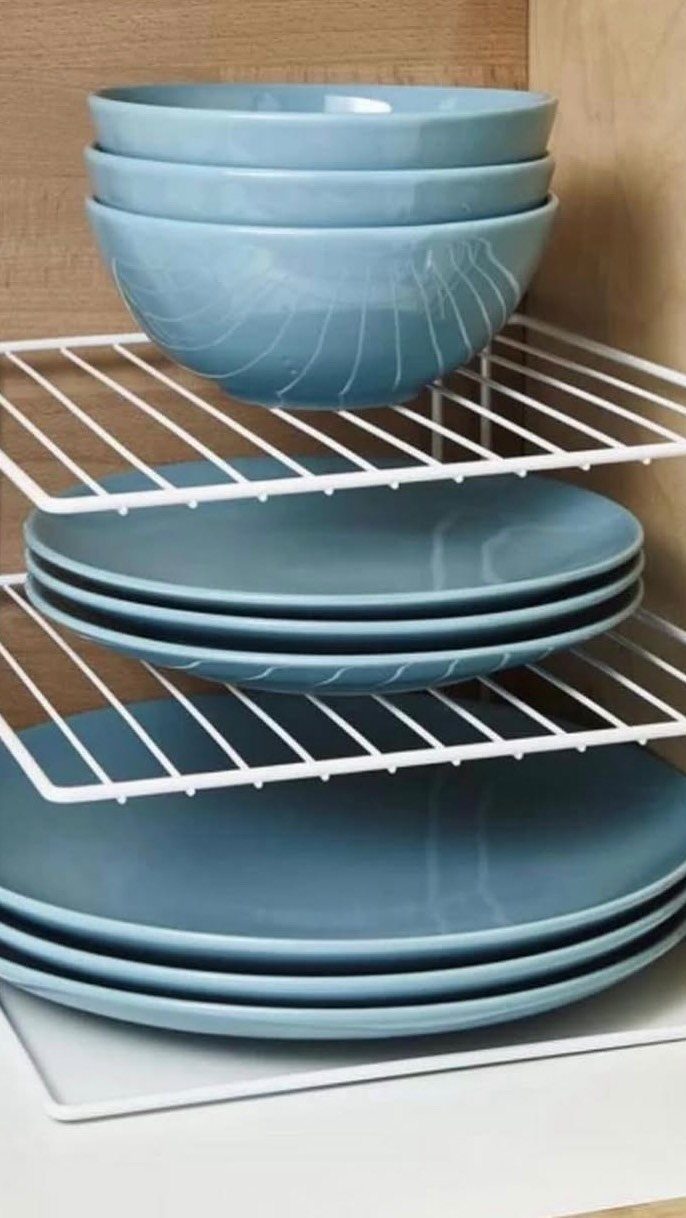
Upper cabinets with plate grooves built into the shelf face let you stand dishes upright like a shop display. A wire rack works in lower cabinets too, though pulling it out beats reaching deep into a corner for heavy plates.
For uppers, open shelving with grooves keeps everyday dishes accessible and gives the kitchen some color from the pottery itself. In lower cabinets, a pull-out rack saves your back.
Match the rack finish to your cabinet hardware and run the same tile behind open shelves so the corner does not look like an afterthought.
This idea suits anyone who owns dishes worth showing. If your plates are mismatched hand-me-downs, keep the cabinet doors.
9. Curved Corner Cabinet
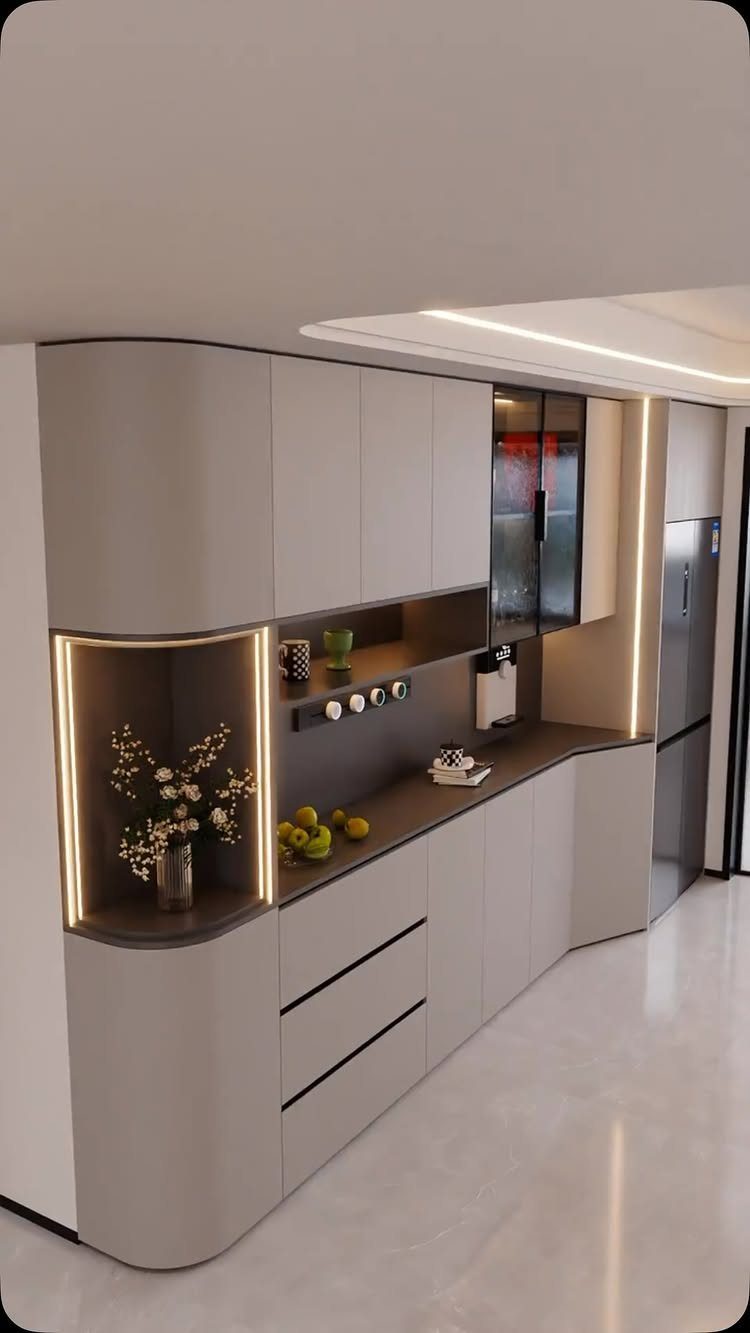
Curved corners cost more than angled ones, but they read as intentional architecture rather than a cabinetmaker’s compromise.
A soft arc finished in the same matte tone as the surrounding cabinets carries the eye around the room instead of stopping it at a sharp corner.
This choice depends on your cabinet line. Stock cabinets rarely offer curves; you are ordering custom or semi-custom, and the upcharge is in the door, the box, and the countertop fabrication.
Check whether your countertop supplier can handle the radius before you commit.
I would only do this in a kitchen where the corner faces the main entry or the breakfast table, since the payoff is visual.
In a galley kitchen you work facing the wall, the curve disappears and the money is better spent elsewhere.
10. Countertop Corner Plate Organizer
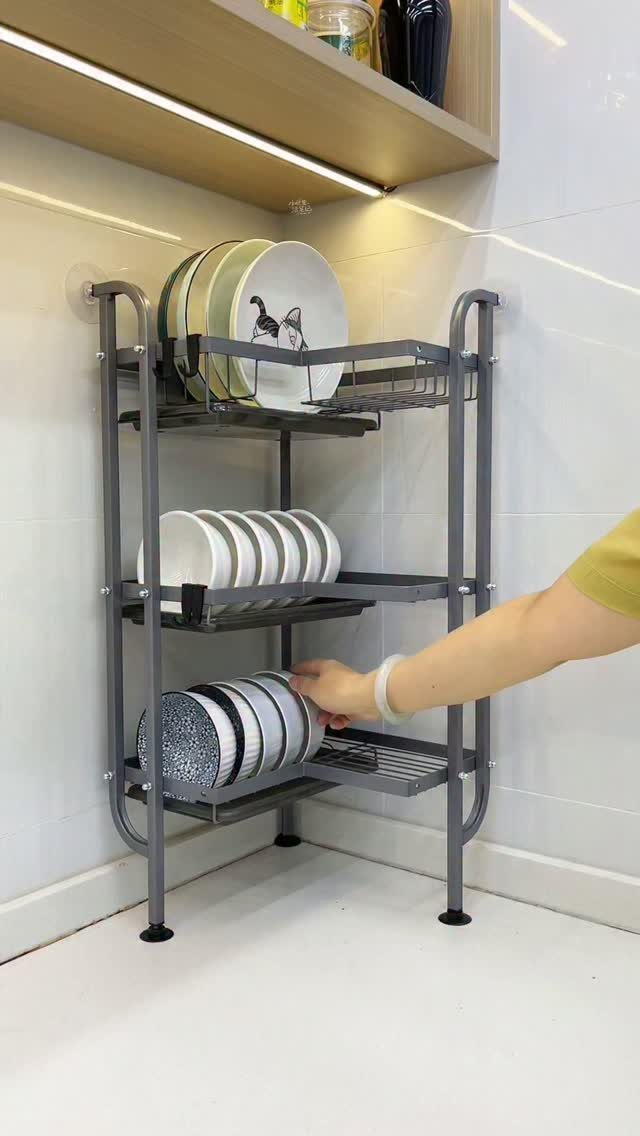
A countertop corner plate organizer buys back the triangle of counter that every L-shaped kitchen wastes. A three-tier metal stand sits tight to the backsplash and holds a full stack per level without the footprint of a cabinet.
This is rental-kitchen territory: no install, no permission, and you take it when you leave. I would use it for the plates you reach for daily and keep the holiday platters in the cabinet below.
The vertical stack also dries dishes if you lack a rack by the sink.
You give up clean counter space for the convenience. In a kitchen with open shelving elsewhere, this blends in.
In a minimalist space, it reads as mess.
11. Lazy Susan Corner Cabinet
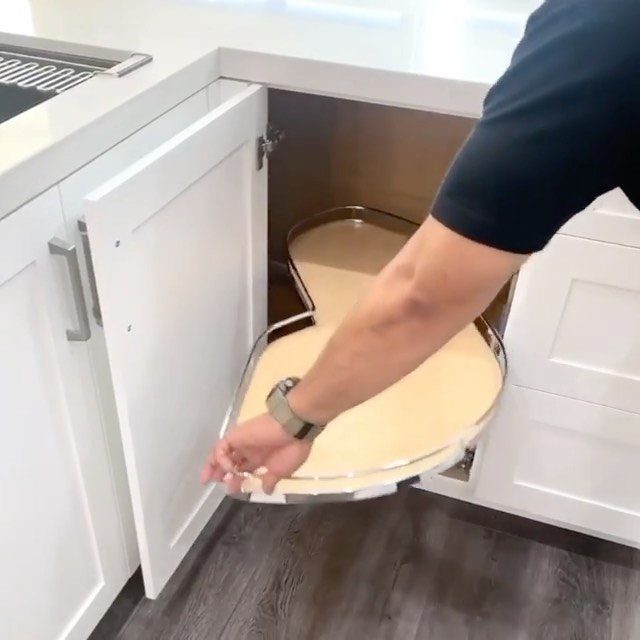
A kidney-shaped lazy Susan swings out on a curved track so you can reach the back corner without kneeling and groping. Wood shelves spin on a center pole; the whole unit retracts when you close the door.
Adjustable-tier models let you reconfigure for tall stockpots or low spice jars. I have loaded one with cast iron and the mechanism still turned, though it groaned.
For spices and snacks, it is overkill; for heavy cookware, the bearing quality matters more than the tier count.
This is the safest choice in a corner base cabinet if you are ordering new. Retrofitting an existing cabinet means measuring the opening against the unit’s collapsed width, and some older doors are too narrow.
12. Built-In Corner Wall Unit
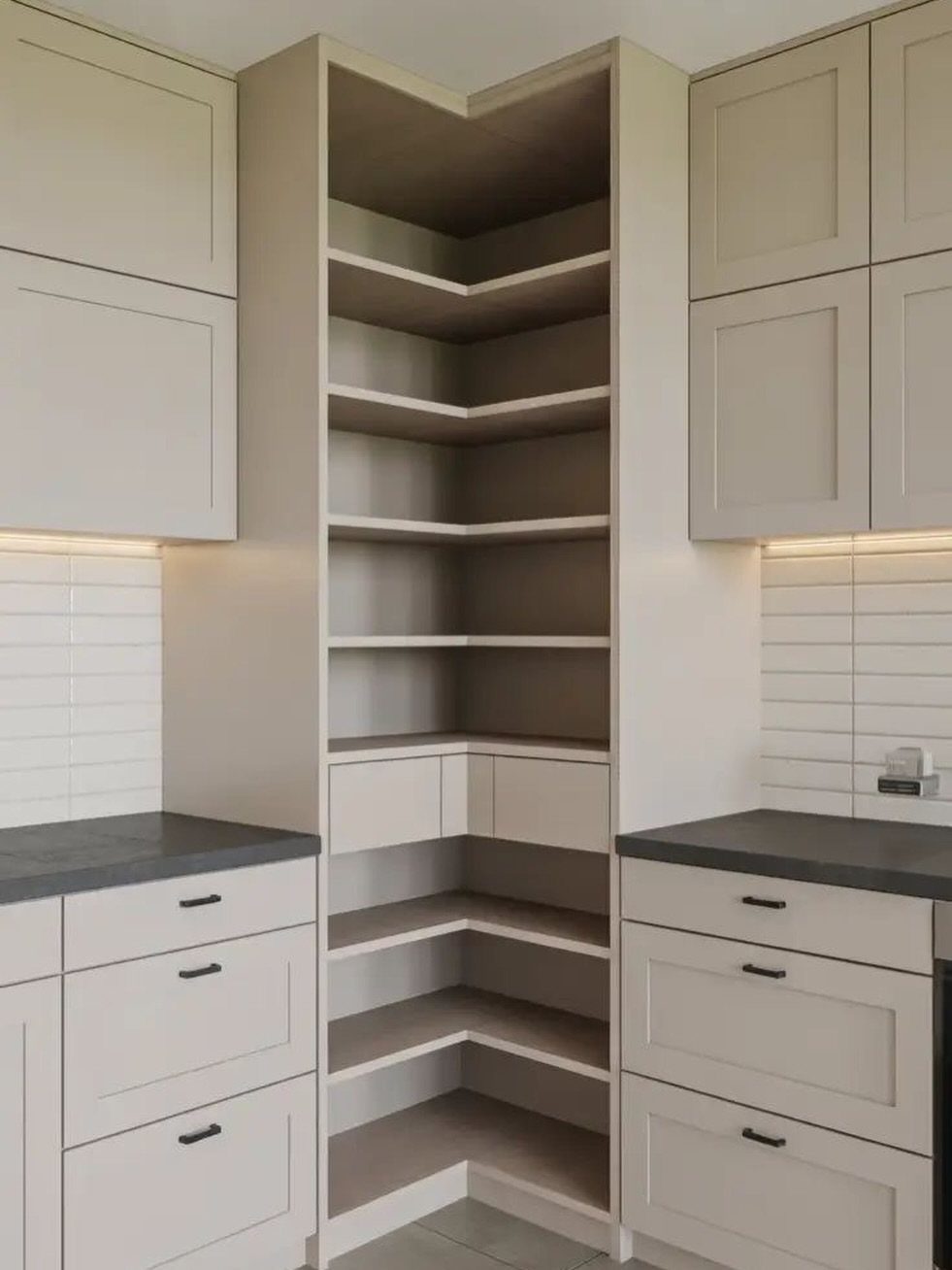
A built-in corner wall unit reaches from counter to ceiling and turns the corner into a hutch that anchors the whole kitchen.
Empty shelves wait for dishes, glasses, or a vase of whatever is blooming; in use, it reads as furniture dropped into an open floor plan.
Match the paint or stain to your island or base cabinets so it does not look collected. Vary the shelf depths: dinner plates need the most room, glasses less, and a top shelf for display can be shallow.
I would wire one shelf with a small LED if the corner lacks task lighting.
This sacrifices the closed storage of a standard cabinet. It suits kitchens with a pantry elsewhere or owners who would rather look at their dishes than hide them.
Maximizing Corner Cabinet Functionality
Pull-down shelving systems suit upper corner cabinets where a lazy Susan cannot fit. The whole shelf lowers to counter height on a hinge arm, bringing the back corner within reach without a step stool.
Check the weight rating before loading it with heavy serving pieces; most handle everyday dishes fine, but a full set of stoneware may strain the mechanism.
Adjustable shelves inside a corner cabinet let you reconfigure for tall vases or stacked plates as your storage shifts. Specialized corner organizers, including swing-out trays that pivot outward from a central post, replace fixed shelving entirely.
These trays pull the back corner out to you, though they need clearance to swing.
Magic corner units use a two-part slide: the front basket pulls out, then the rear basket swings into the open gap.
I would test the motion in a showroom first; some versions bind if the cabinet box is not perfectly square.
Design Considerations for Corner Cabinets
Accordion doors fold back in sections and work well where a standard door would block an adjacent cabinet or traffic path.
I would verify the track hardware is rated for daily use; cheaper folding systems sag after a year of opening and closing.
Double doors need hinges that open a full 180 degrees to clear the opening. The cabinet doors themselves must be wider than standard to meet in the corner and still leave an accessible gap.
Door swing matters more than looks. A hinge that stops short of full extension leaves the back corner sitting there empty, no matter how pretty the front looks.
Glass doors on a corner cabinet only make sense when the cabinet is angled or diagonal, so the interior faces the room. On a true blind corner, glass shows nothing but the side wall of the neighboring cabinet.
I would skip them unless the geometry supports the display.
Lighting for Corner Cabinets
Puck lights, single directional discs, suit a corner cabinet with one dark zone rather than a full perimeter.
They mount with a small hole bored into the shelf underside and aim straight down onto a stack of plates or a blender base.
Battery-operated rechargeable pucks now last months between charges, and the magnetic or clip base means no wiring.
Some units stay on for thirty seconds after motion stops; others run until the door closes. I would test the delay in the store aisle, since a light that shuts off while you are still reaching is worse than none.
The glow carries into an adjoining room and softens the space without a separate fixture.
Frequently Asked Questions
What are some good options for corner cabinets?
Lazy Susans, pull-out shelves, and corner drawers are the most reliable choices. Custom corner drawers cost the most, while pull-out shelves install into existing openings without a full remodel.
Are corner cabinets still in style?
Yes, though the specific style matters. Curved corner cabinets read as intentional architecture and carry the eye around the room, but stock lines rarely offer them and the upcharge hits the door, box, and countertop fabrication.
Corner pantries get mixed signals from designers; some see them as a 1990s holdover that eats openness, while others still specify them for compact storage.
The safer bet is a lazy Susan or pull-out system in a standard cabinet, which looks current and functions better than older blind-corner designs.