
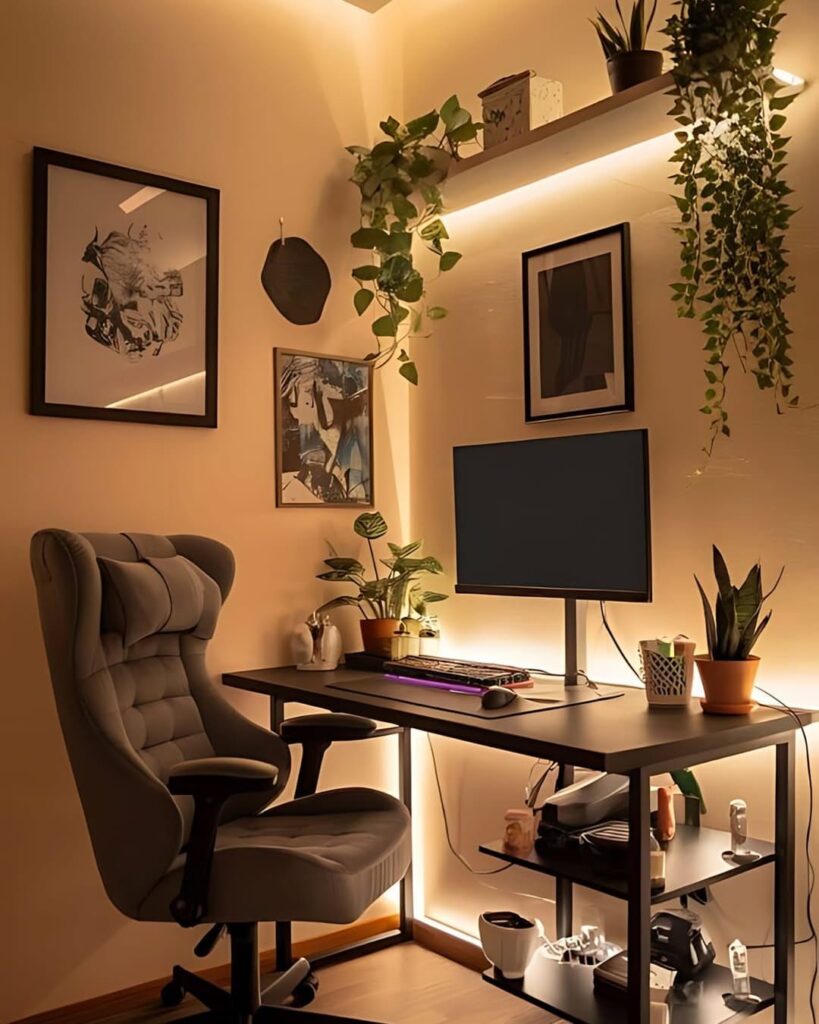
Desk decor runs from a small succulent in a thrifted mug to a wall of framed prints and a string of lights, and the right choice depends on whether your desk faces a window or a wall.
1. Desk Plants or Flowers
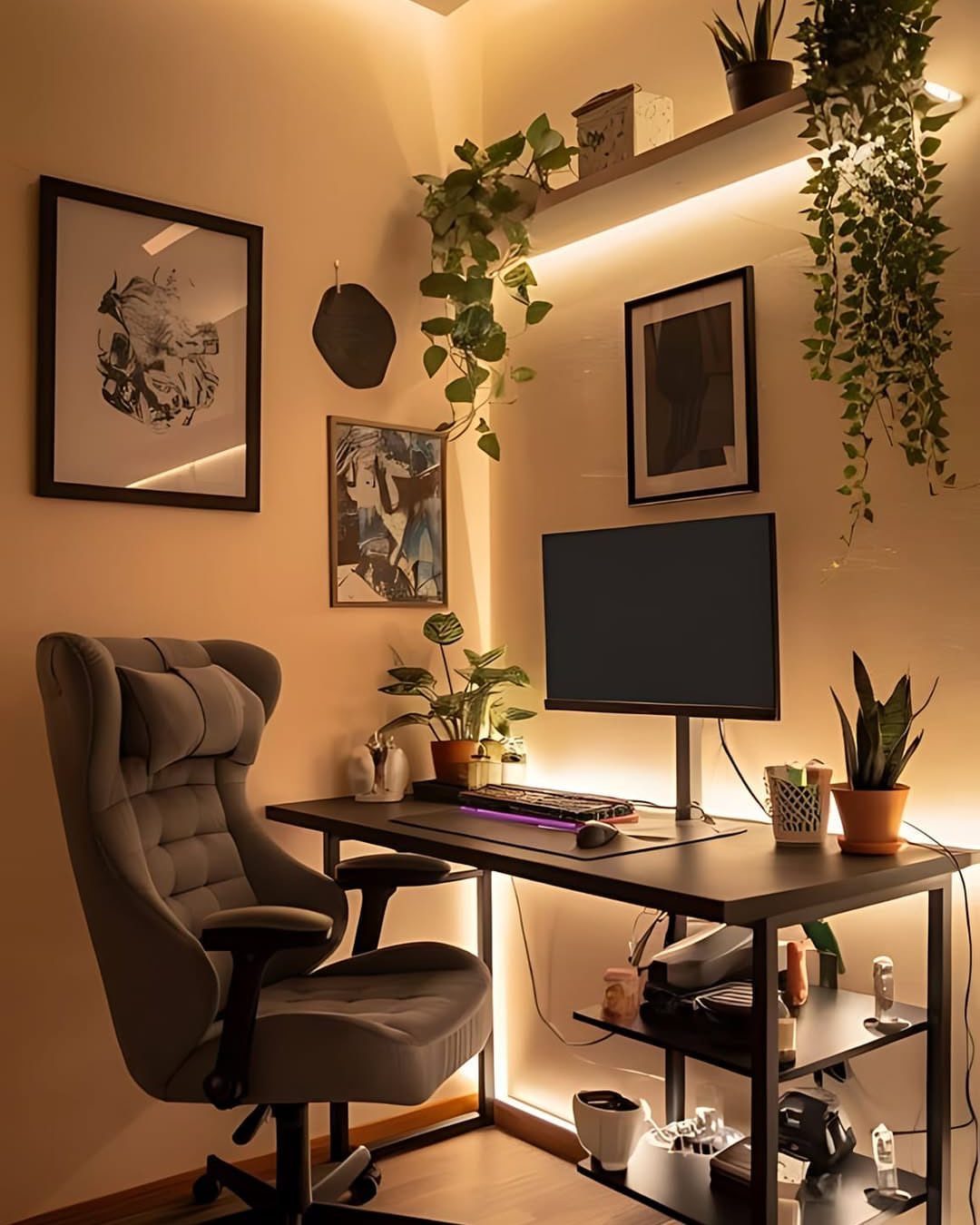
A pothos cutting in a small ceramic pot costs less than a latte and will trail down your monitor by summer.
Succulents work too if your desk gets direct sun; shade means a pothos, a snake plant, or a peace lily instead. Water when the soil dries, not on a schedule.
I killed three plants with kindness before I learned that.
The greenery itself matters more than the pot. A single desk plant does more than look nice; it actually lowers stress in a way you can feel by mid-afternoon.
I keep mine where I glance while thinking, not where it blocks my keyboard. One plant suits a small desk fine; three is the point where you start calling it a garden.
2. Desk Organizers and Trays
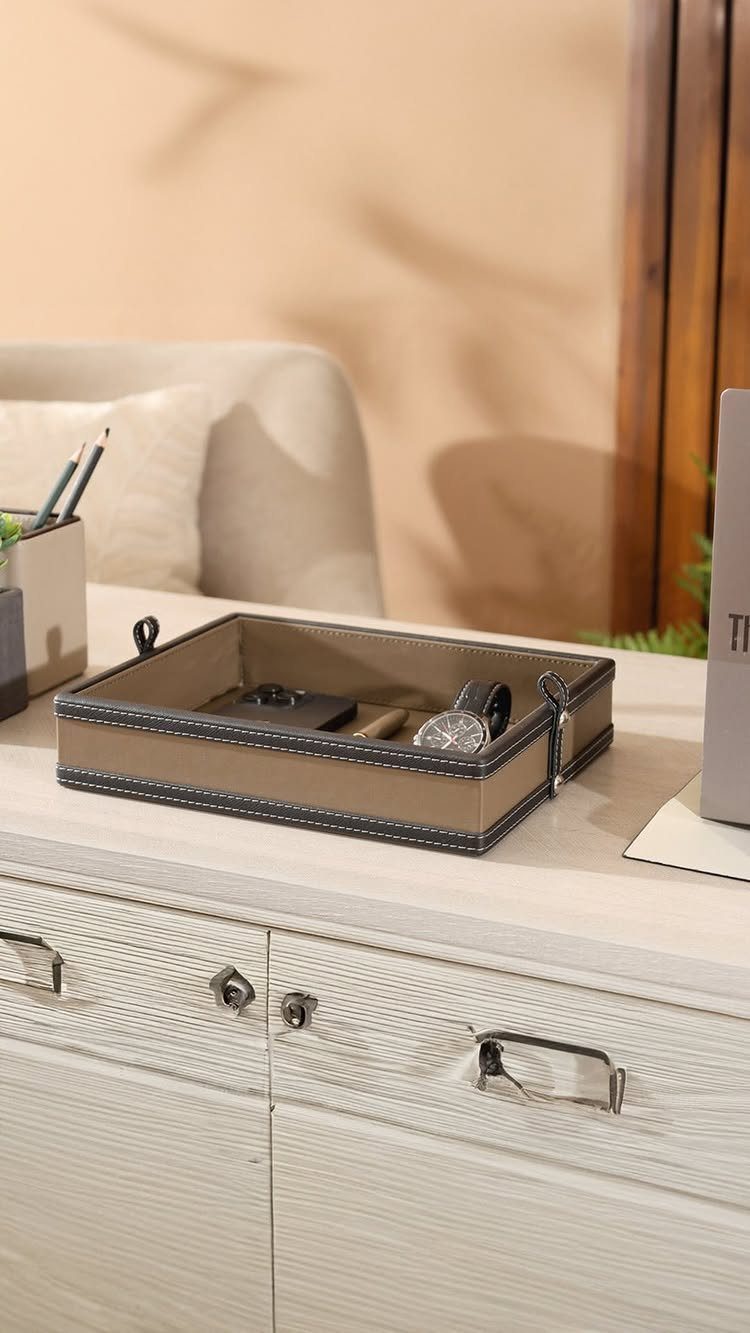
Leather trays age better than plastic and cost about the same if you skip the brand name. I use one for the three things that wander: phone, watch, the pen I actually like.
Everything else lives in a box with a lid.
The size of your tray should match what you handle daily, not what you own. A shallow catchall for keys and earbuds; a deeper one if you stack notebooks.
My rule is that anything that sits out overnight goes in the tray by morning. What stays on the desk permanently is the question: if you haven’t touched it in a week, it belongs in a drawer or gone.
3. Desk Lamps
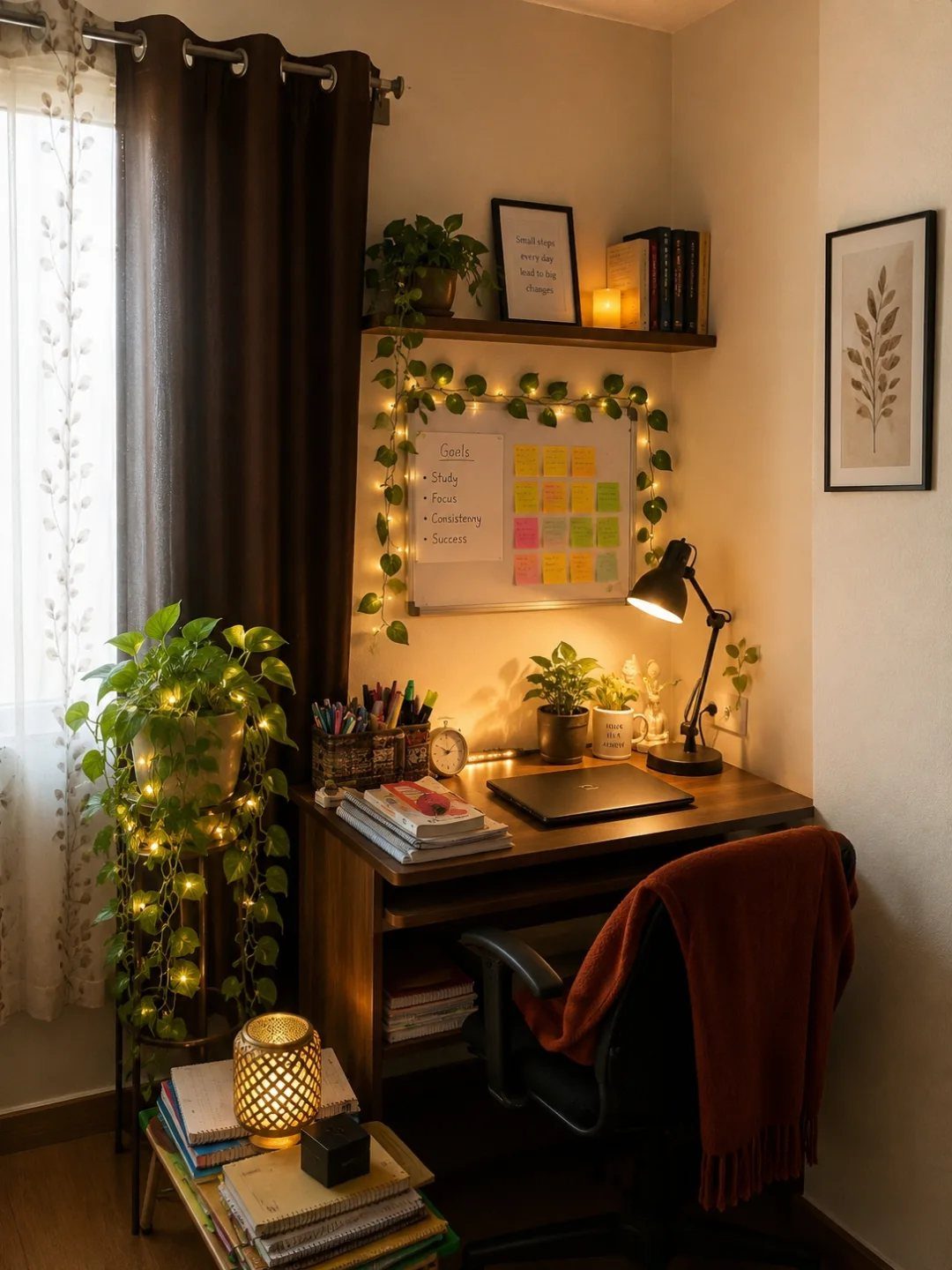
A desk lamp with a warm bulb beats overhead fluorescents for reading comfort, but the real win is positioning. I angle mine to the left if I’m right-handed, so my hand never shadows what I’m writing.
A hooded lamp throws light down, not across; that shape matters more than wattage for cutting glare.
Natural light is better when you can get it. Moving my desk closer to the window stopped my afternoon headaches; the direction of light matters as much as the amount.
If your only window faces a brick wall, a daylight lamp set to 5500K fools your body clock enough to matter.
Dim bulbs in the evening if you sleep poorly; bright ones in the morning if you drag through the first hours.
4. Framed Photos or Artwork
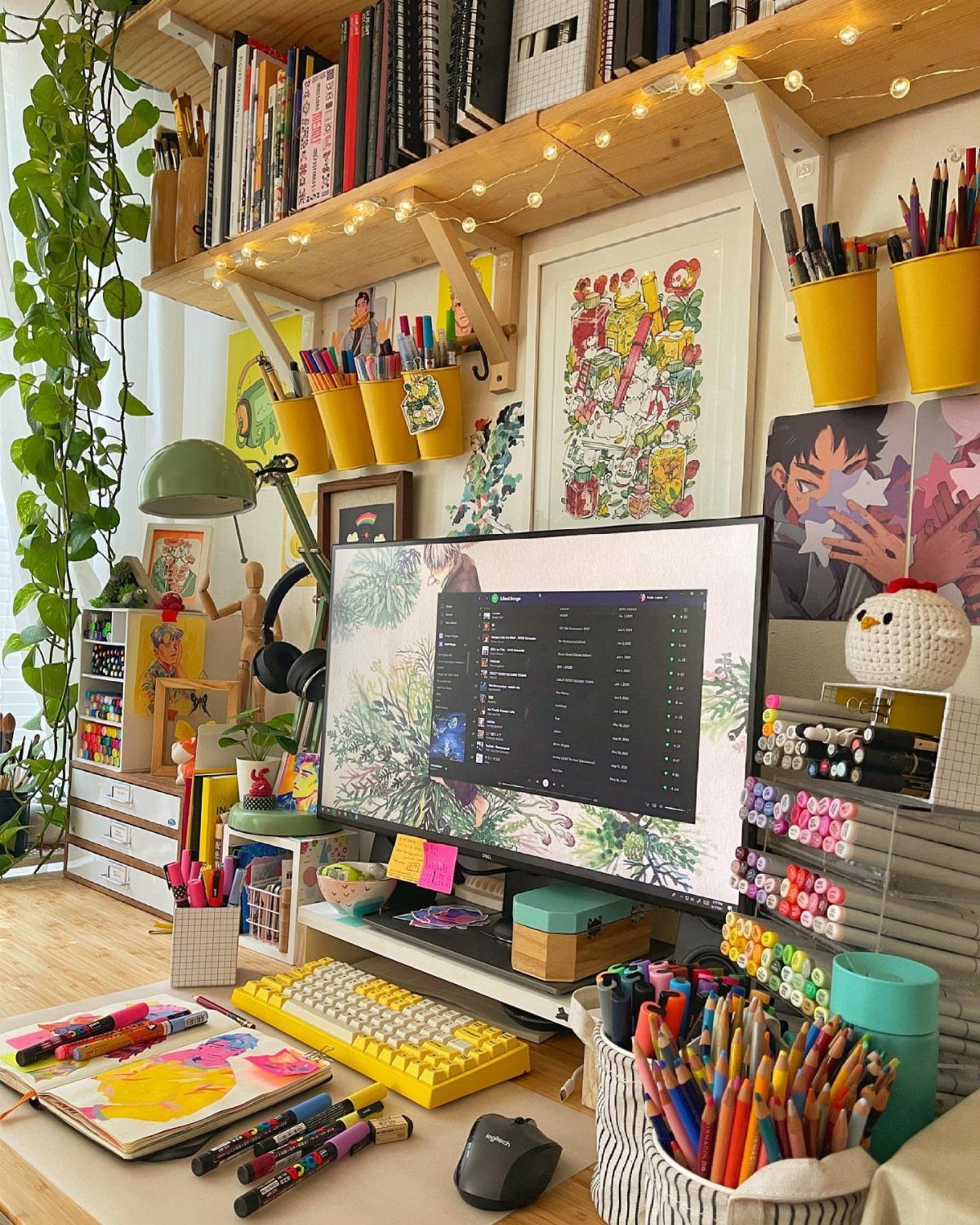
A single framed print behind your monitor beats a gallery wall you never look at. I rotate mine seasonally: a botanical print in spring, a seascape when February drags.
Thin black metal frames disappear against most wall colors and let the art do the work.
A pinboard works if you generate paper: receipts, sketches, the note from your kid. Cork with a fabric cover looks less dorm-room than raw cork.
Keeping artwork to the side, not center, keeps it a source of inspiration rather than another surface for to-do lists. Art you made yourself hangs better here than over the sofa; the desk is where you forgive imperfection.
5. Desk Calendar
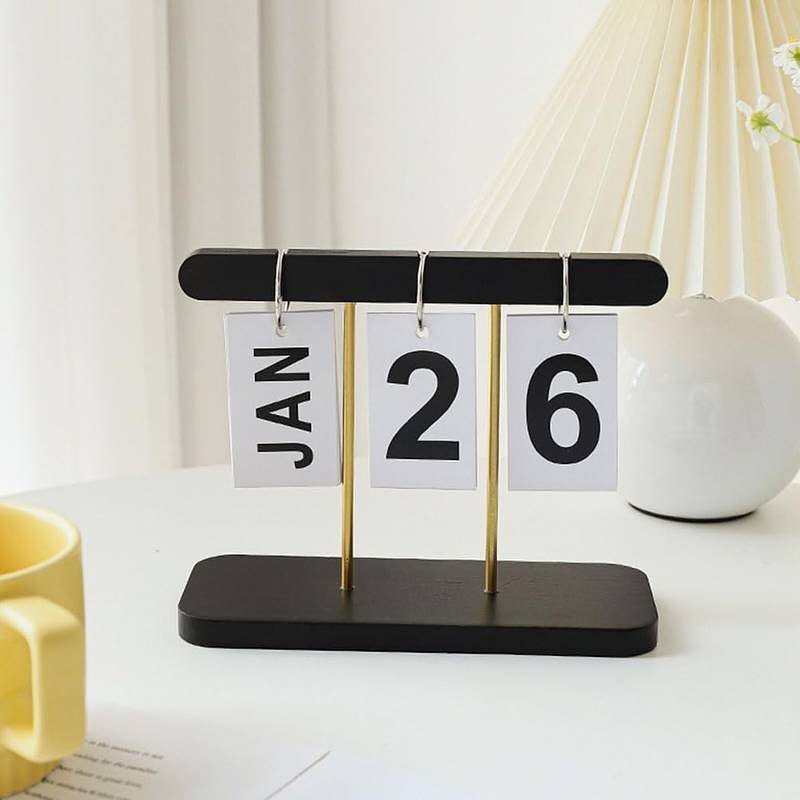
A perpetual flip calendar never needs replacing; buy once and flip the pages year after year. I prefer it to paper blocks because I see the date without moving anything.
The black and gold here reads as intentional, not office-supply beige.
For actual scheduling, I use a weekly pad that lives under my keyboard. The desk calendar handles the glance: is this week or next?
Appointments go on the pad, deadlines on the calendar where I see them every time I sit down. Paper calendars fail when they become scrapbooks of crossed-out plans.
Mine gets rewritten clean each month.
6. Custom Mouse Pads
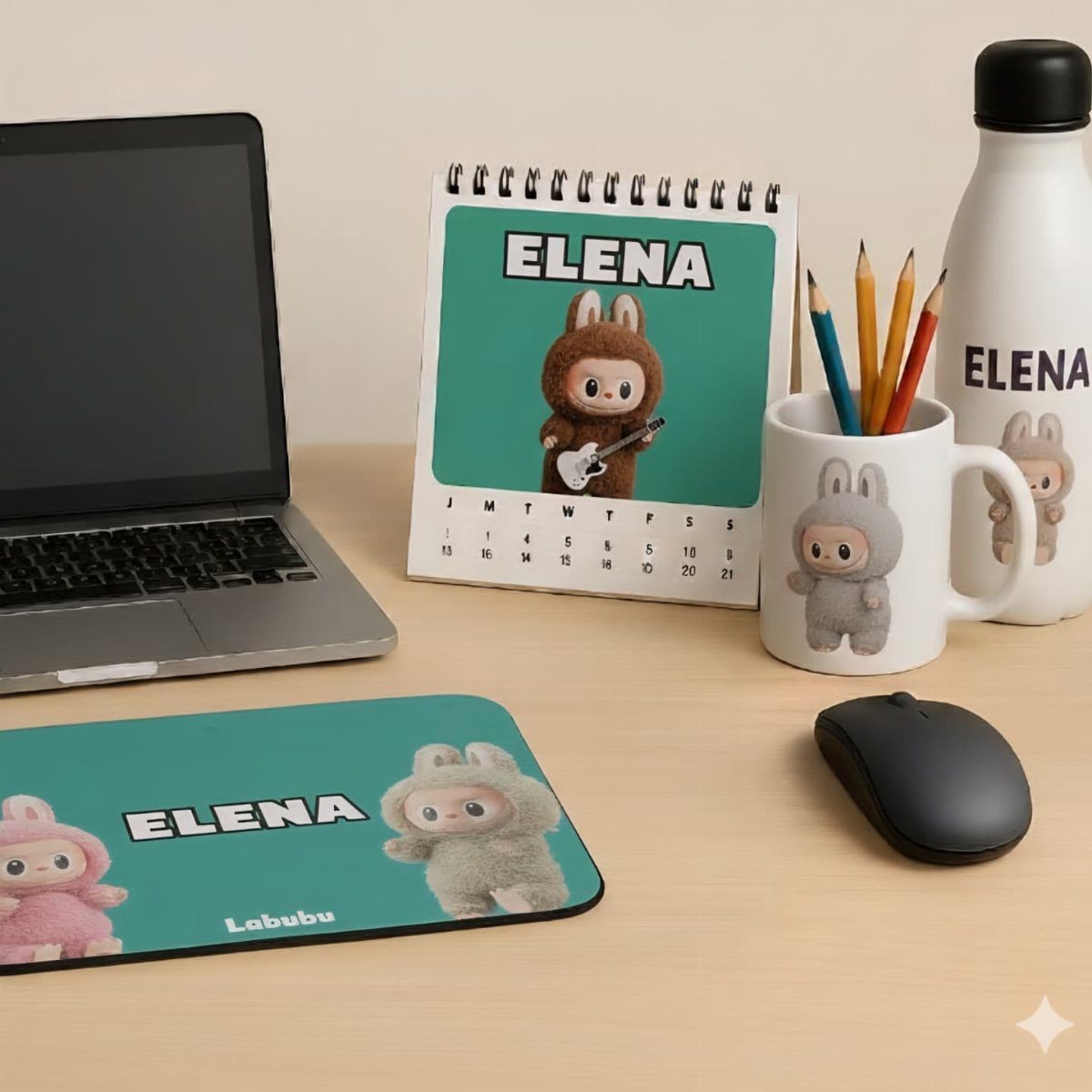
Cork and leather mouse pads wear in, not out. The material choice matters more than the print: cork grips, leather slides, both beat fraying fabric in the long run.
A plain cork pad ages well; mine still looks new after years of daily use.
Custom printing works best on fabric or neoprene, which is why gaming setups use them. For a home office, I’d pick the material first and the design second.
A monogram or single initial on leather looks grown-up; full illustrations read young. The matching mug and water bottle are a step too far for me, but the pad alone is enough personality without clutter.
7. Make the Right Use of Colors
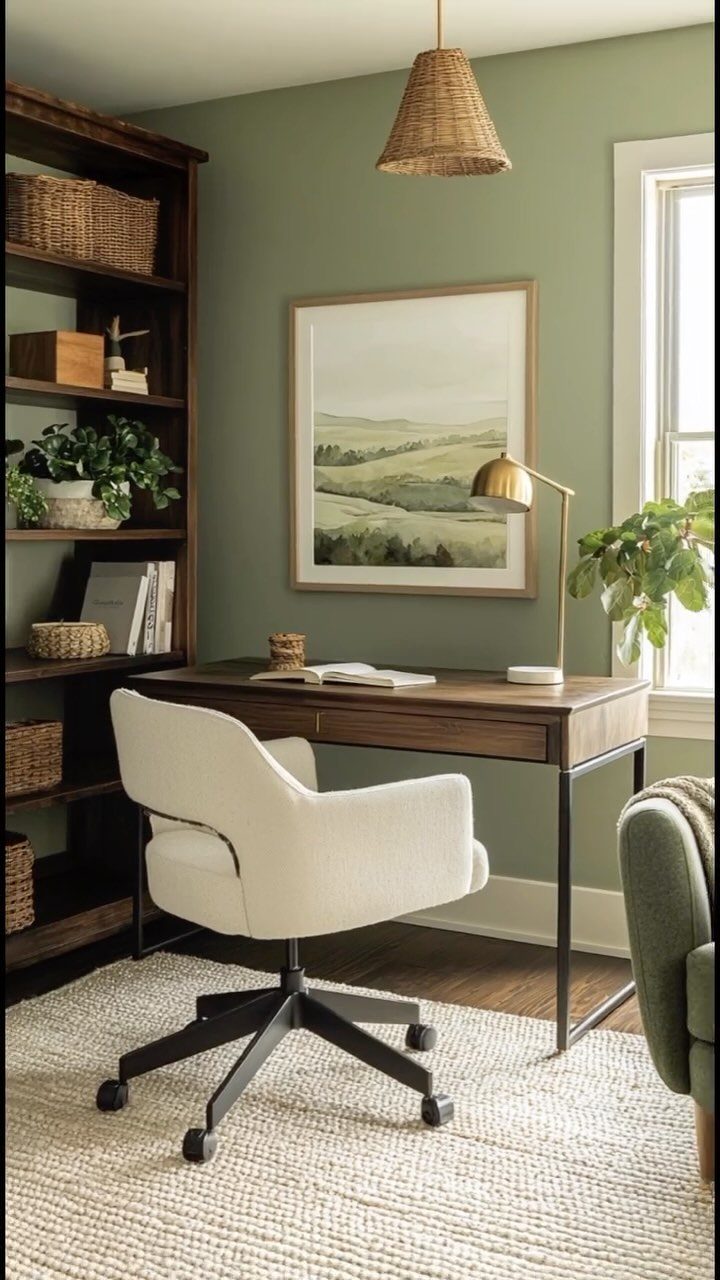
Olive green walls and brass accents warm the room without shouting for attention.
That balance is what color choice is about: some people lose focus in dark tones, others find them settling, and light shades read as open air to almost everyone.
The only way to know is to test a swatch where you actually work, at the hour you usually sit down, and notice whether your shoulders drop or your jaw tightens.
I would start with one wall rather than committing to four, especially in a rental where command hooks and a painted panel can stand in for permanence.
If your desk faces a window, the outside greens already do half the work; add a tone that picks them up rather than competing.
8. Pencil and Pen Holder
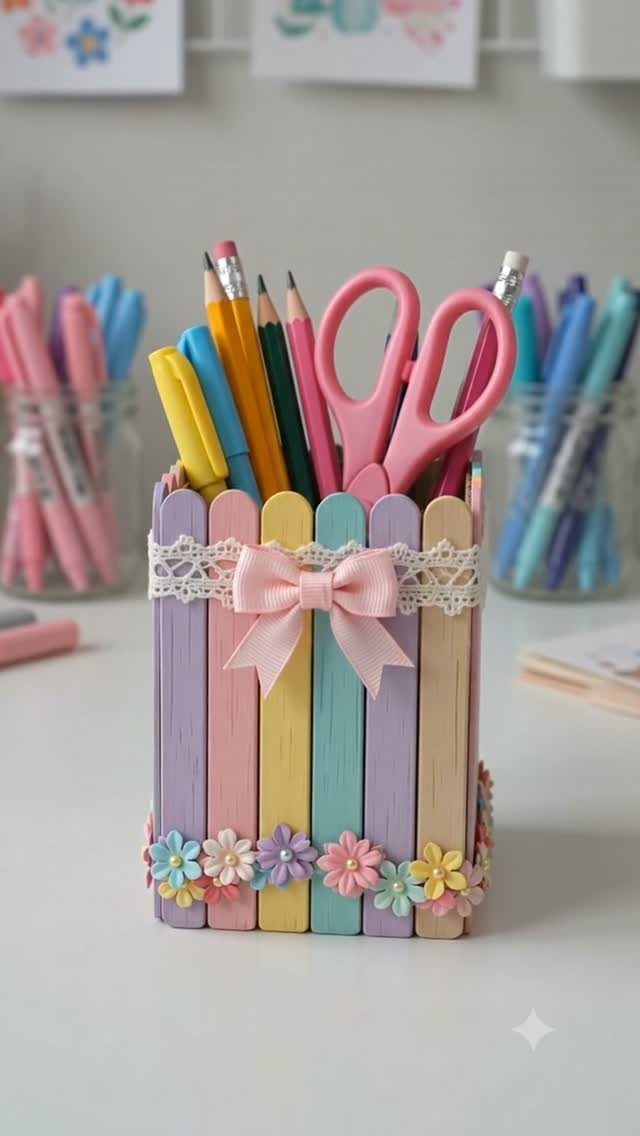
A holder built from popsicle sticks and a glue gun takes an afternoon and costs the price of a popsicle box.
Painted sticks laced with ribbon and weighted with a few artificial flowers at the base make a simple holder; the structure is glued layers, no joinery needed.
Interior width decides whether this works: too narrow and scissors jam, too wide and everything tilts. A shallow holder lets you see every pen at a glance; digging defeats the purpose.
For a cleaner look, a single tin can wrapped in kraft paper does the same job with less fuss.
9. Framed Quotes
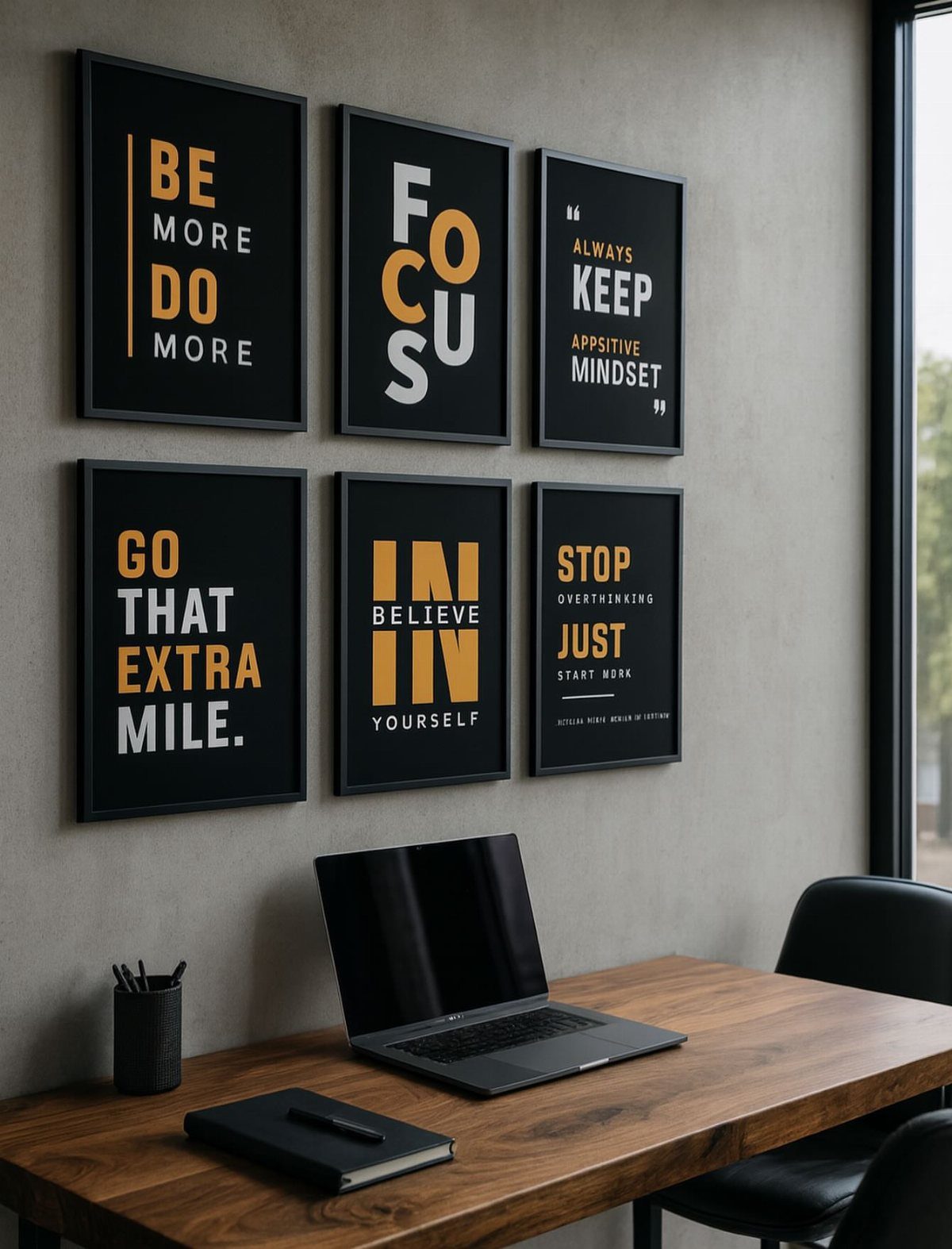
"FOCUS" in bold type above your monitor works only if the word still means something to you on a Thursday afternoon.
Some quotes go invisible fast, and others catch you at the right low moment every time; the difference is worth testing. The difference is personal history, not typography.
Frame something you heard from a manager who believed in you, or a line you wrote yourself when a project finally clicked.
Black frames against grey wall, six in a grid, keep the arrangement from feeling like a dorm room; the uniformity does the editing for you. Change them when they go dead.
No quote earns permanent residency.
10. Floating Shelves
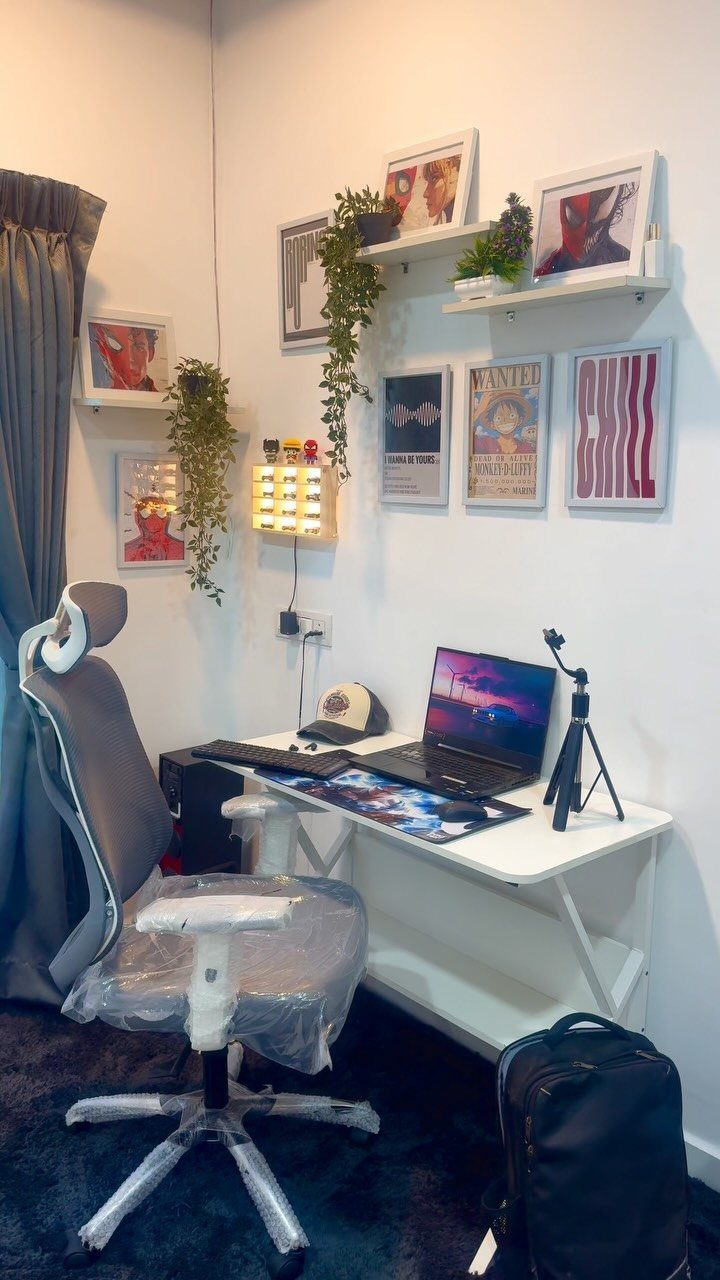
Vertical space is what you have when floor space is gone. Shelves sitting close above the desk top, high enough that a monitor arm still clears, low enough that a small plant does not need watering with a step stool.
Eye level, roughly five feet from the floor, is where the eye lands first; put your better pieces there and let the upper shelf hold books you reach for monthly.
Shelves crammed with so many small objects leave the desk below feeling busier, not calmer. Three items per shelf is my limit.
White brackets against white wall let the objects read as floating; painted brackets make a stronger frame that suits darker rooms better.
11. Cozy Elements
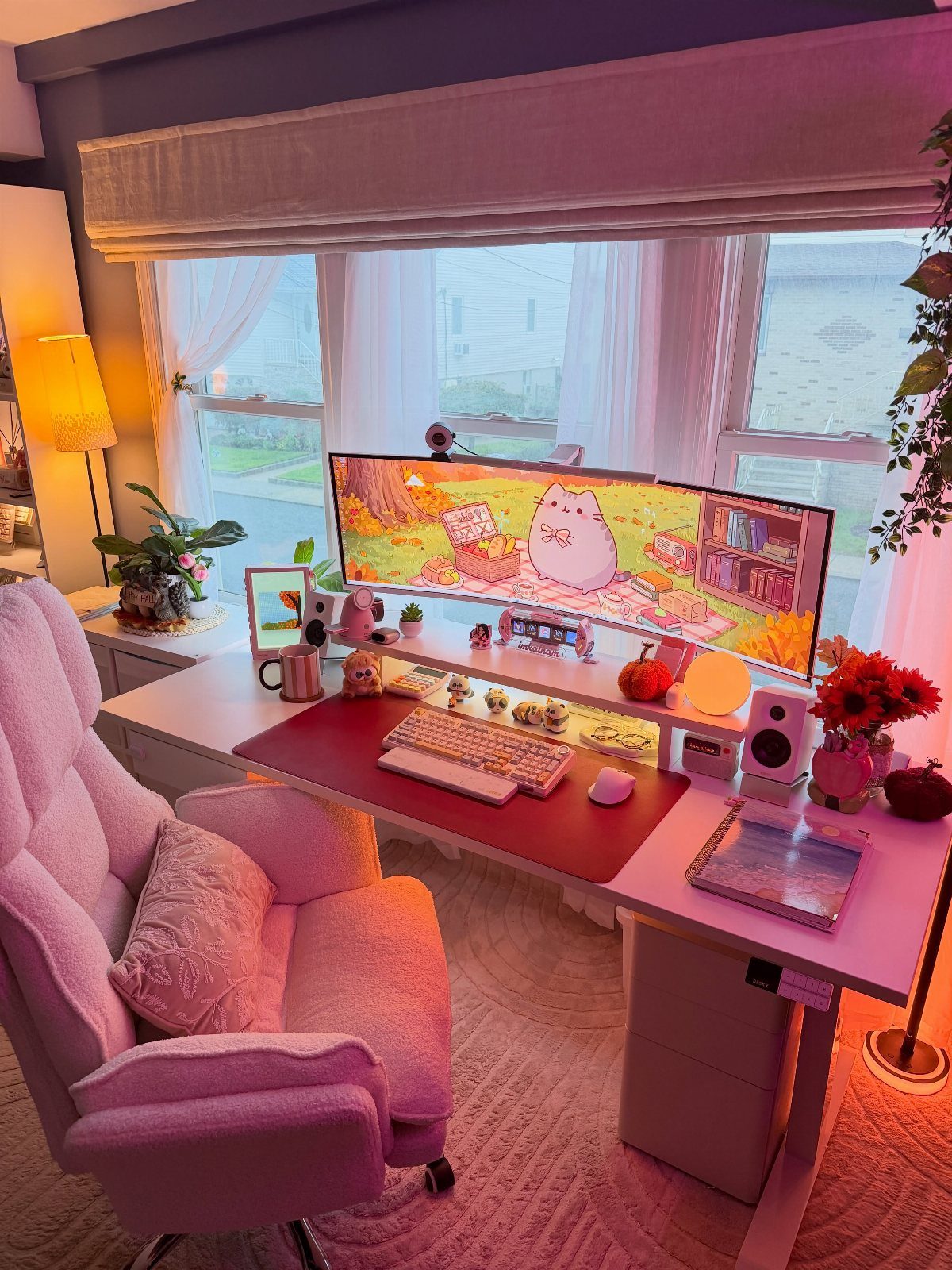
A pink chair with a lumbar pillow turns a corner desk into somewhere you want to sit.
The textiles matter as much as the shape: a sherpa throw over the back adds texture without demanding a whole new furniture budget, and a small lamp with a warm bulb does more for atmosphere than overhead lighting ever will.
I draw the line at candles near electronics; a battery-powered taper in a glass holder gives the same flicker without the risk. Small figurines and dried leaves work as seasonal placeholders you swap out rather than permanent clutter.
What stays year-round is the chair that fits your height and the throw you actually use when the office chill sets in.
12. Fairy Light Photo Wall
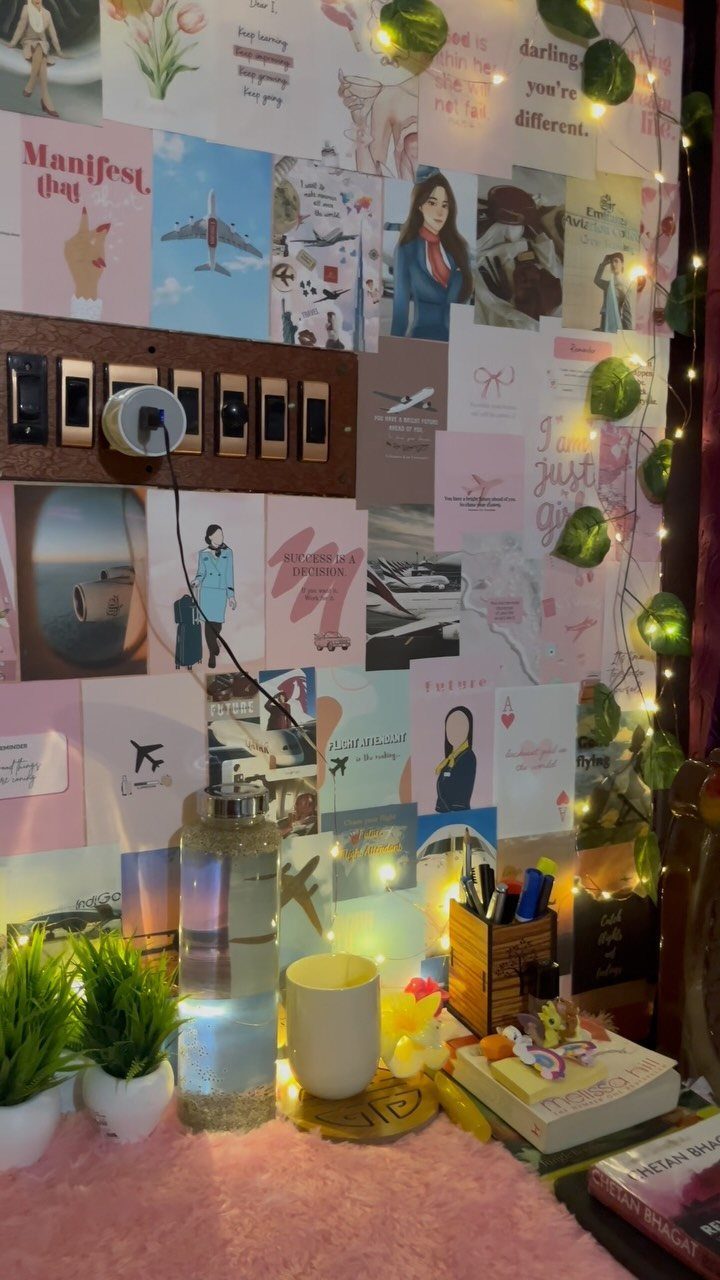
Fairy lights wrapped through artificial vines turn a blank wall into a soft backdrop for late hours.
Aviation prints pinned among the leaves are one option, but the technique works with any collection: postcards, concert tickets, botanical drawings clipped from old calendars.
The lights are the structure; the paper is what you change when you tire of it. I run the strand on a dimmer, bright enough to find a pen but not so sharp that it competes with the monitor.
Battery-powered strands avoid the cord descent down the wall, though they need more frequent tending. Plastic vines read greener than dried under lamplight and survive the dry air near a desk heater.
Importance of Desk Decor
What sits in front of you shapes how your brain works. A desk aligned to your actual preferences, not a default setup, makes the workflow state easier to enter and more pleasant to stay in.
The books you reach for, the paper you like, the art that catches your eye when you look up: these are not distractions. They are the specific surroundings that let you work the way you want.
A decluttered desk and a reflection of your own style are the same thing, not opposites. The point is not minimalism for its own sake; it is arranging what you need so your mind does not fight the space.
When your tools are a hand’s reach away and the wall holds something that makes you feel good when you glance at it, the desk becomes easier to sit down at.
Creating a Comfortable Workspace
Comfort in a workspace is built, not bought all at once. A chair that fits your height is the foundation; everything else layers on top.
The setup belongs to you, not to an office standard.
Books where you want them, stationery you actually like within reach, art or photos that catch you at the right moment: these personal touches are what make a space feel like somewhere you want to be.
Maintaining Organization
A messy desk costs attention before you start.
The clutter does not need to be dramatic; even a few objects in the wrong places split your focus the way random words scattered across a page would split your concentration while writing.
Treat the surface as a blank document. Remove what does not belong to today’s work, and what remains goes into the system you have chosen: organizers, trays, lidded boxes, whatever you actually maintain.
The tools for this are simple and do not need to be expensive; the discipline matters more than the brand.
A weekly reset keeps the system alive. What sits out overnight goes to its proper place by morning.
A desk that looks good in a photo but slows you down is no win; what you want is a surface that stays out of your way.
Frequently Asked Questions
How can I decorate my desk nicely?
Start with one plant, a tray for the three things that wander, and a single framed print you rotate seasonally.
A small plant belongs in your line of sight when you look up from the screen, not behind your hands where it crowds the keys; the tray is for the notebook and coffee cup you set down at six so they don’t own the desk by morning.
Tape a paint sample where the light hits at the time you usually sit down, then pay attention to your neck and hands over an hour.
What are the latest desk decor trends?
Greenery, personalized items, and stylish stationery are current directions, though I would pick material over trend every time.
Cork darkens and leather scuffs with use, which is part of the point; printed designs hold up on fabric or neoprene, the same surfaces that hold up to hours of sliding a mouse in gaming setups.
For a desk at home, I start with what the surface feels like under my forearms and worry about the pattern last.