A coffee bar can squeeze onto a wheeled cart you roll into a closet, or it can spread across a floating shelf, a kitchen hutch, a lower cabinet, or a converted pantry or bookshelf.
Renters and small kitchens need something that moves; spare walls, underused corners, or the space under the stairs can hold something fixed in place.
A cart that rolls away mid-brew is a mess waiting to happen, so I check the brakes or the feet before anything else.
1. Coffee Bar Carts
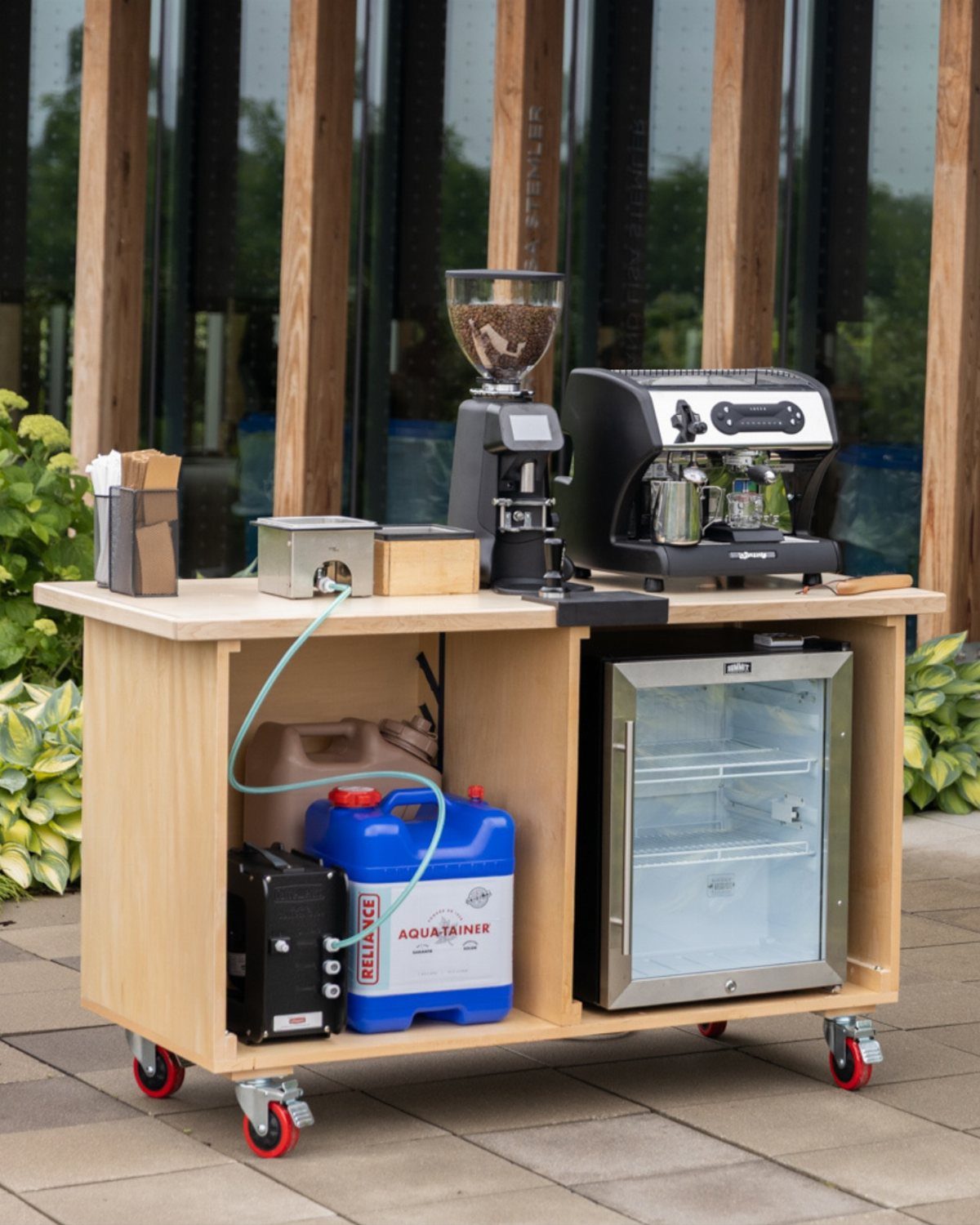
A cart on wheels turns any corner into a morning station without committing floor space permanently.
Pick one with a solid top shelf for the machine and grinder; vibration matters more than you’d think, and a wobbly cart will drift across the floor while it works.
Lower tiers hold water jugs, backup beans, the mugs you reach for daily. Red wheels or brass, wood grain or painted metal, the cart’s finish sets the tone for the whole setup.
Roll it out with breakfast, park it by the couch on Saturday, roll it into a closet when company comes. No drilling, no landlord to ask.
The trade is stability: a cart moves when bumped, and heavier machines need checking before each brew.
Best for renters, for kitchens that switch jobs by the hour, for anyone who treats coffee as a ritual rather than a fixture.
2. Floating Shelf Coffee Bar
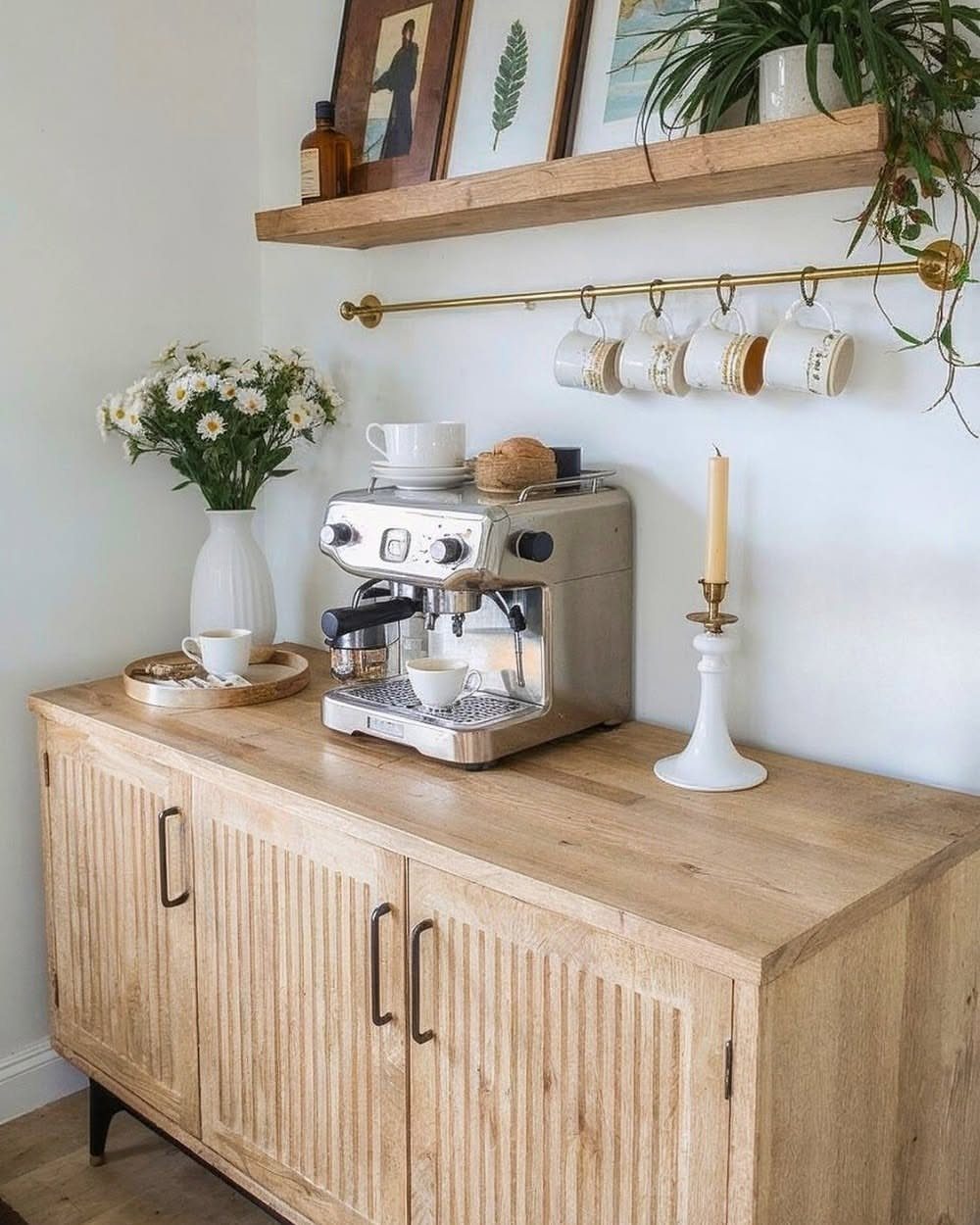
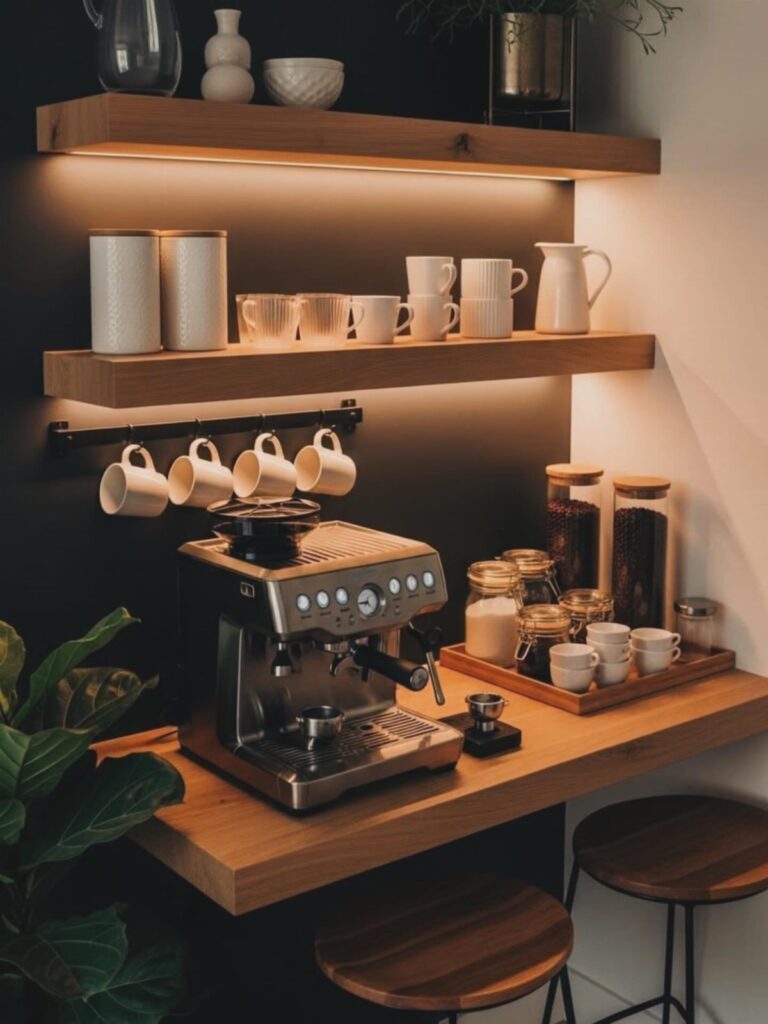
Vertical space above a counter or narrow table keeps the floor clear and the essentials in reach.
A brass rail underneath turns the shelf itself into mug storage.
The open display means everything earns its place. Hide the ugly stuff elsewhere or embrace it; there’s no cabinet door to close.
Suits small apartments, galley kitchens, anywhere floor space is already spoken for. The cost is dust and the discipline of keeping it tidy.
3. Cute Countertop Coffee Bar
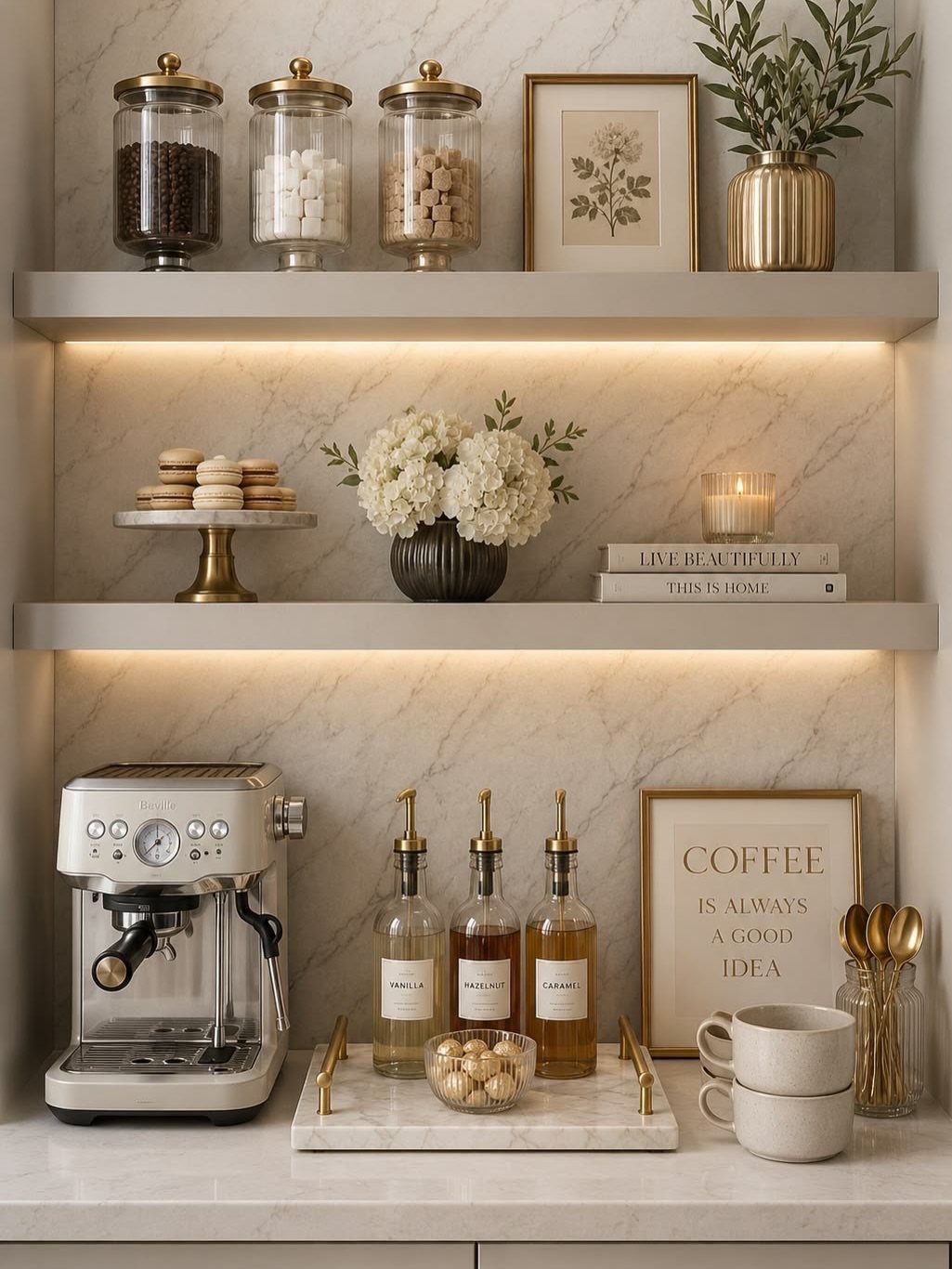
A dedicated slice of counter, even a narrow one, signals that coffee here is not an afterthought.
The surface needs to be stable and at comfortable working height; you’ll stand here half-awake most mornings. A tray corrals syrup bottles and spoons so they read as intentional, not clutter.
Stack mugs where you can grab one without thinking.
Marble or butcher block, the material should match what the kitchen already has; this is a designation, not a renovation.
Best for those with counter to spare and a machine too pretty to hide. The risk is encroachment: a coffee bar that grows until there’s no room left for actual cooking.
4. Kitchen Hutch Coffee Bar
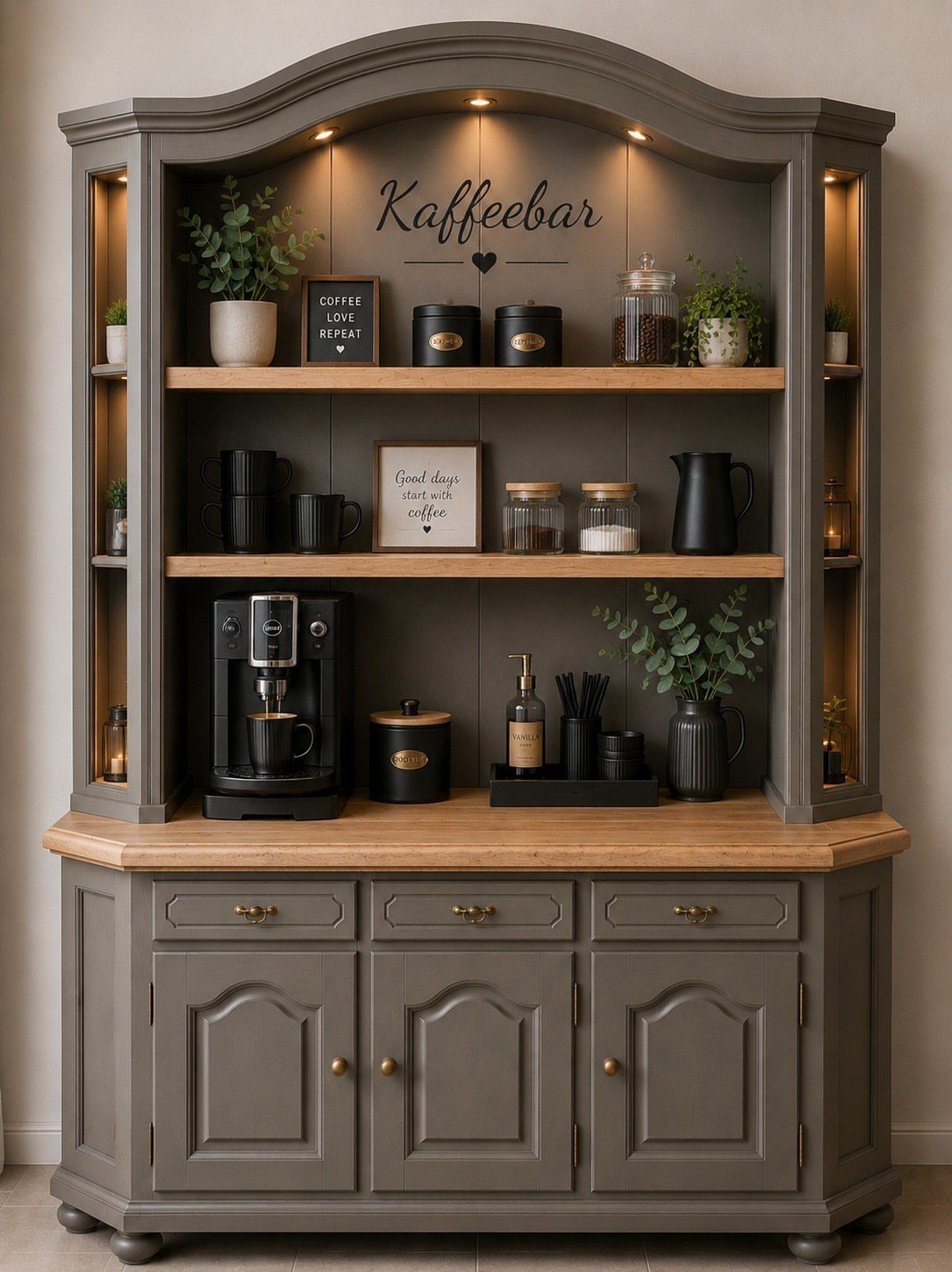
A hutch gives coffee its own furniture: counter below for the work, shelves above for the personality.
The lower cabinet hides the utilitarian bulk, filters and backup bags behind doors or a curtain.
The open upper shelves are where the glass canister of beans sits, where favorite mugs line up, where a small plant that tolerates occasional steam can live. Built-in lighting means the display works even before dawn.
This is a longer-term commitment than a cart; the hutch anchors a wall and asks to be styled. Grey paint with wood tones reads modern without trying too hard.
Suits someone whose habit has outgrown the counter and who wants the ritual to look like part of the house, not a temporary encampment.
5. Lower Cabinet Love
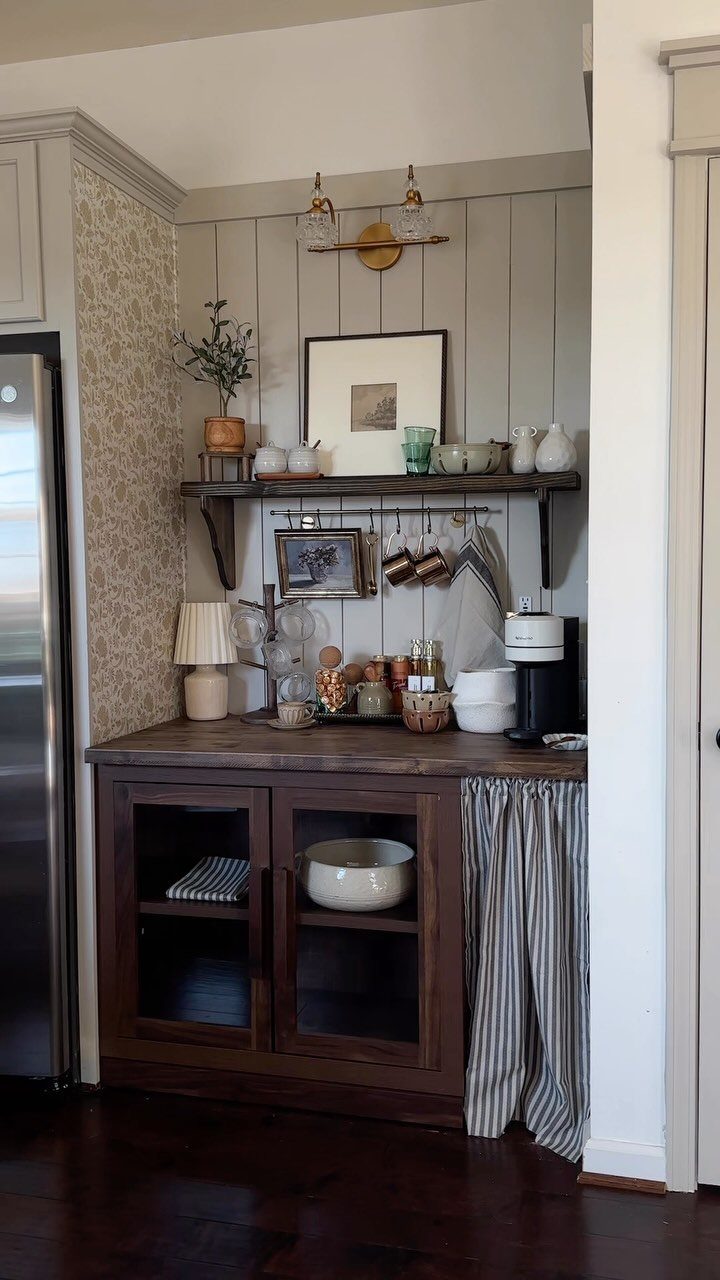
A base cabinet with a wood countertop carves out a permanent nook without touching the main kitchen workflow.
Zoe Feldman chose wood over the kitchen’s marble shelving here to warm the morning moment; the material matters when this is where the day starts.
Glass doors on the cabinet show off the stock, or a fabric curtain hides the machine entirely when the day is done.
A bureau or any low cabinet with drawers can work the same way; the key is the counter height surface for brewing and the storage below for everything else.
Best for those with a spare wall or an awkward corner, anyone tired of the machine dominating the main counter. The trade is square footage you won’t get back.
6. Closet Coffee Bar
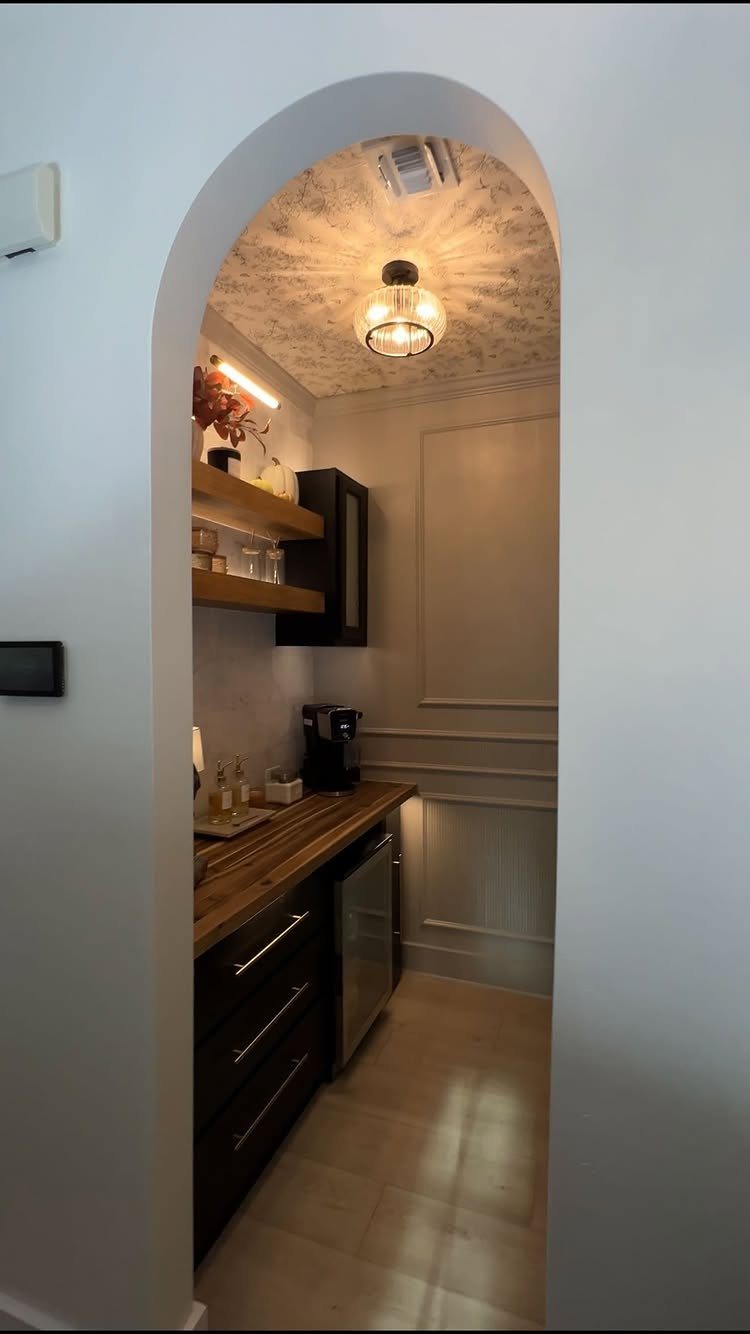
A closet with a door closes on the whole operation: the 17-step ritual, the morning mess, the equipment that otherwise colonizes a room.
Install a deep shelf at waist height for the working surface, or add a small countertop if the closet allows. Hooks on the inside of the door hold filters, spoons, anything that hangs.
Battery-powered lights or an LED strip make the space workable and keep it from feeling like a cave.
An arched opening is architecture you either have or you don’t, but the principle holds: a closet is already defined space, already overhead, already easy to retrofit.
Suits apartments where every square foot earns its keep, anyone who prefers their coffee out of sight when the day moves on.
7. Barista-style Coffee Setup
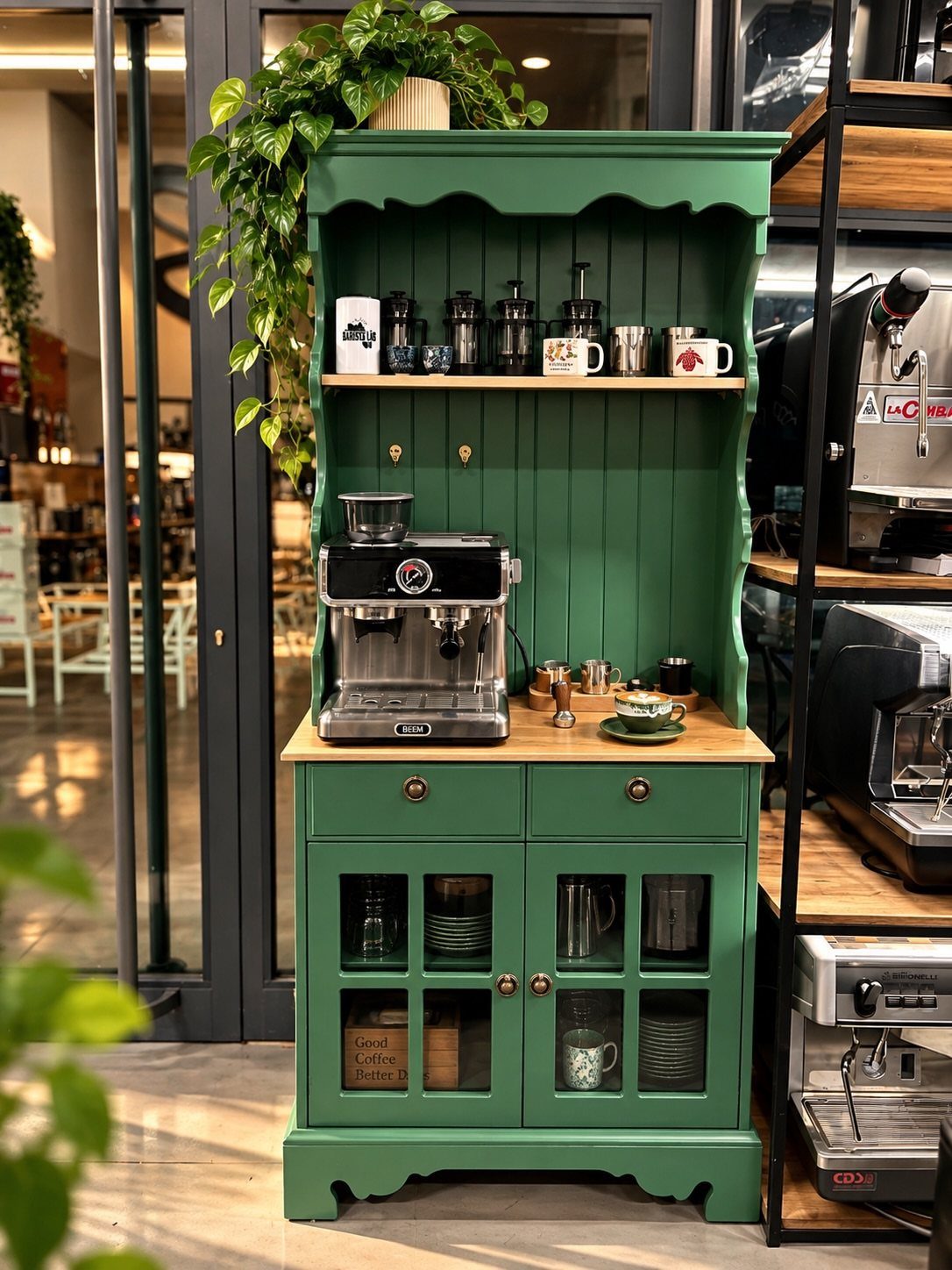
A brass pour-over rig or a full espresso station with burr grinder and gooseneck kettle changes how morning feels. A hutch painted green keeps gear at working height and stores cups on open shelves where you grab without thinking.
Start with one quality piece, not four. A pour-over setup needs only a kettle you likely already own.
Espresso demands more counter space and a grinder that costs more than the machine itself. Check your outlet placement before you commit; hiding cords against a backsplash keeps the café look intact.
This suits someone who slows down for the ritual, not someone who hits a button and runs.
8. Decorative Trays
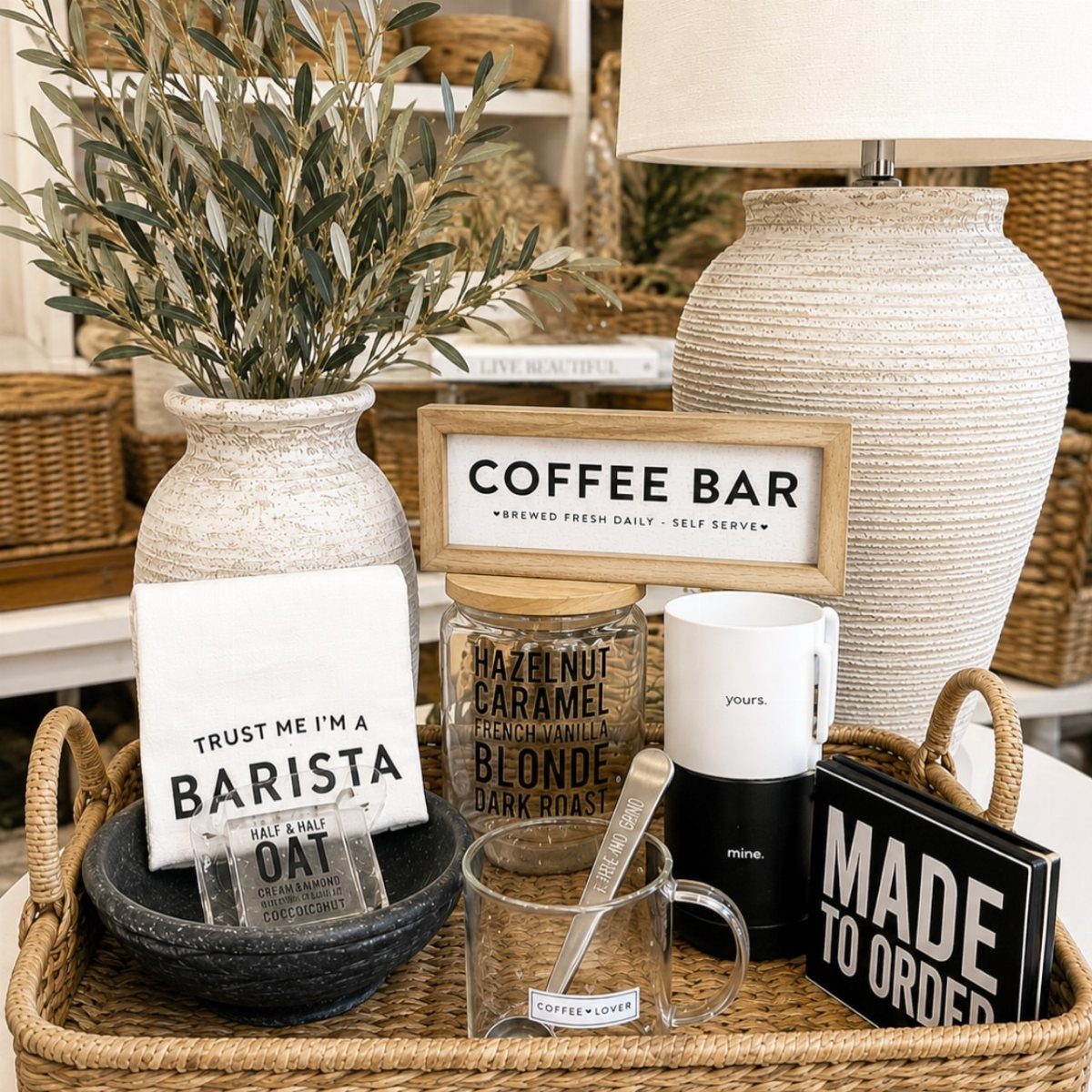
Layering mugs, sweeteners, and a small jar onto a woven tray turns scattered items into one deliberate moment. A tray corrals the coffee part so the rest of the surface can breathe.
A footed wooden tray works on any surface, even a temporary one. Matching mugs help, though mixing two shapes in one color also reads as intentional.
Add a small potted plant or a framed print behind if the wall is blank.
This is the cheapest upgrade here, and the most forgiving. Move the tray to the dining table when you need the counter for prep.
9. Mug Rack
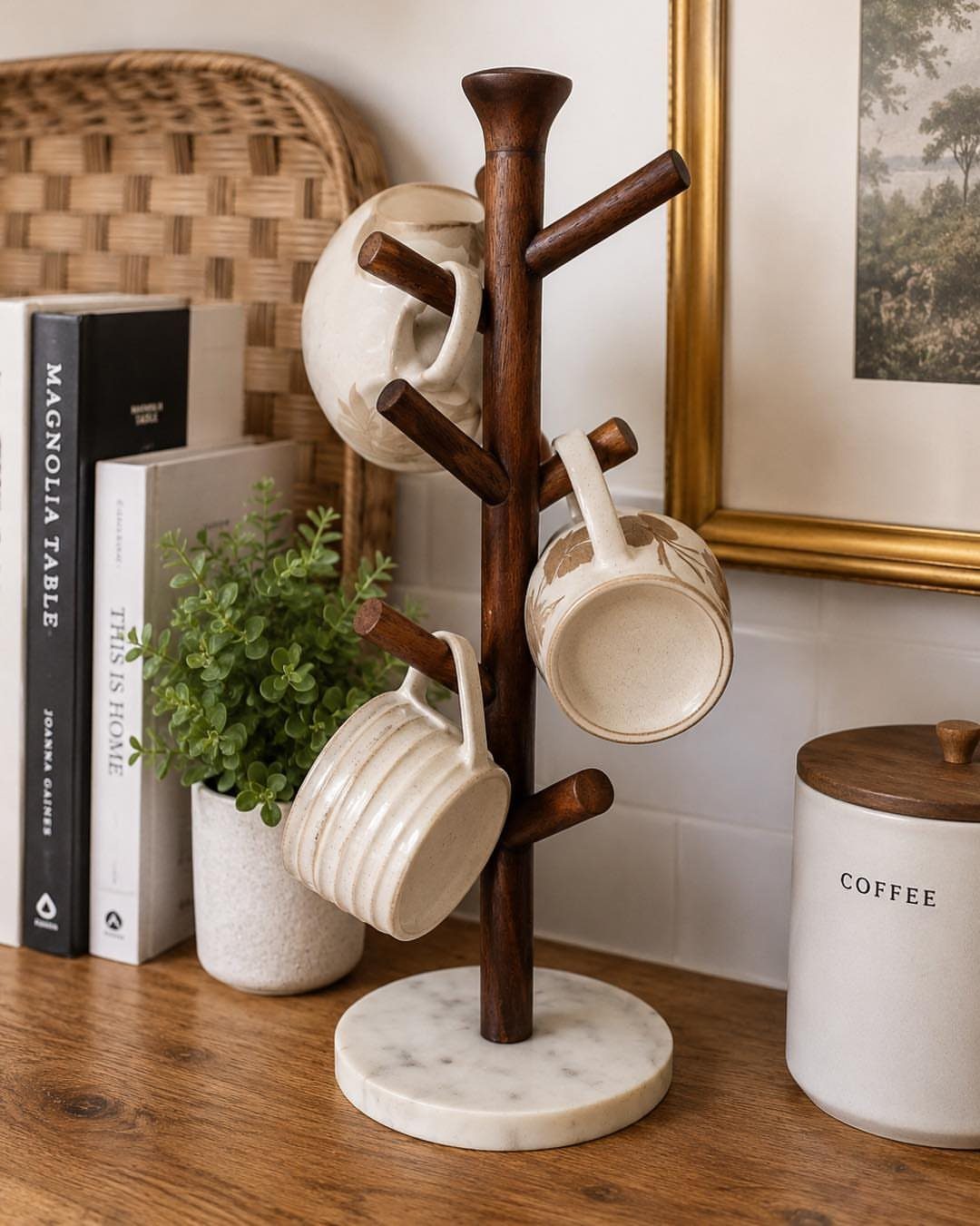
A peg rack on the wall frees counter entirely. Wall-mounted hooks keep favorites at eye level and dry faster than stacking in a cabinet.
The dark wood and white marble here suit traditional kitchens; painted metal or raw brass fits others. Check your stud spacing before you buy; a rack that needs two anchors and hits only one will sag by spring.
This works best for collections you want to see. If your mugs are mismatched hand-me-downs, a closed cabinet might serve you better.
10. Use of Natural Elements
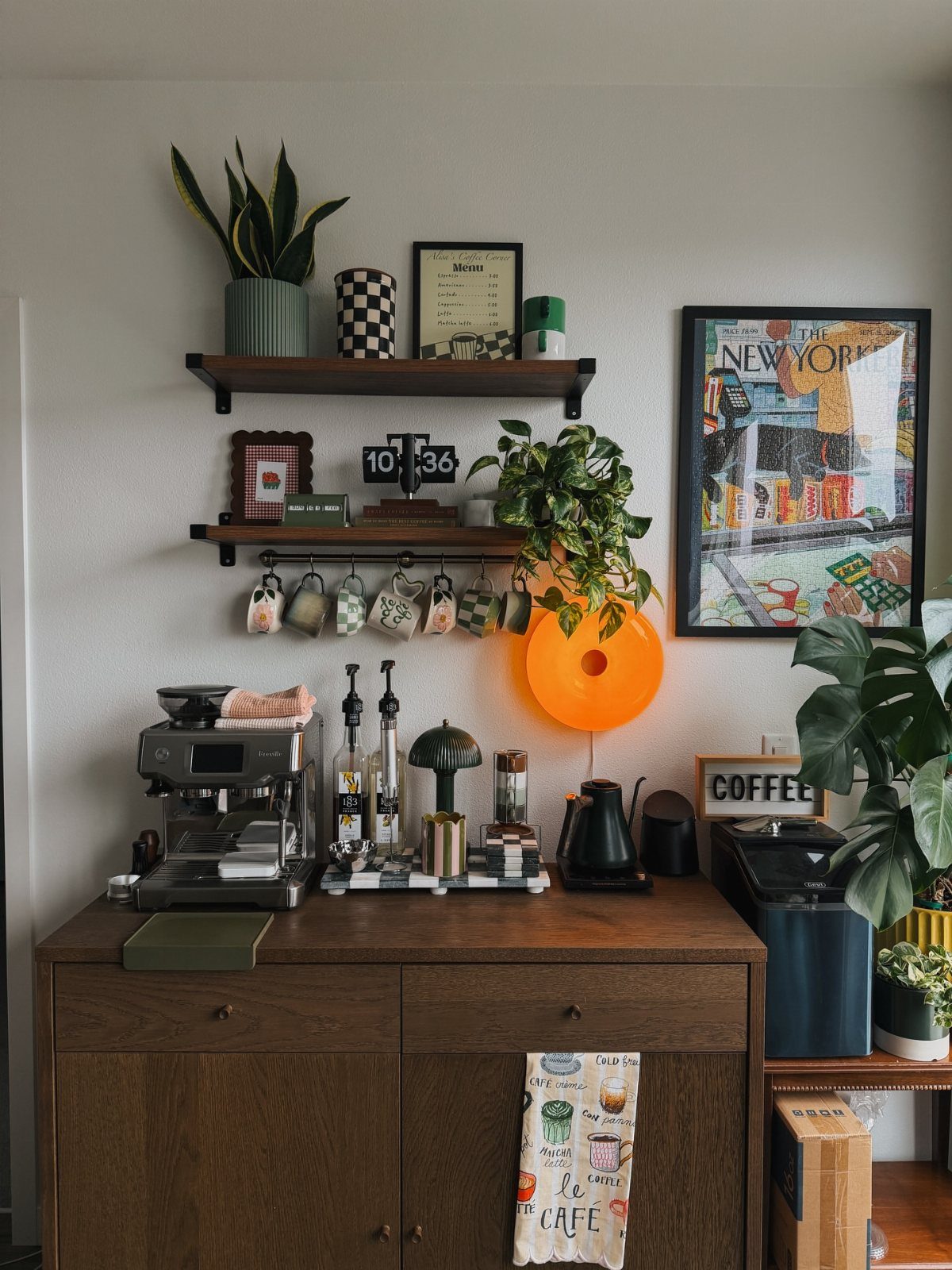
Snake plant, pothos, and monstera all tolerate the low light that coffee corners often get. A small sign reading "COFFEE" or "NEW YORKER" adds human scale between the leaves.
Start with one trailing plant on a shelf and one upright on the floor. Overwatering kills more coffee-station plants than darkness; choose pots with drainage and saucers that protect the wood.
The flip clock and syrup bottles already compete for attention, so greenery should sit at the edges, not the center.
This suits renters and anyone who wants the space to feel less like a utility and more like a room.
11. Coffee Bar with a Coastal Vibe
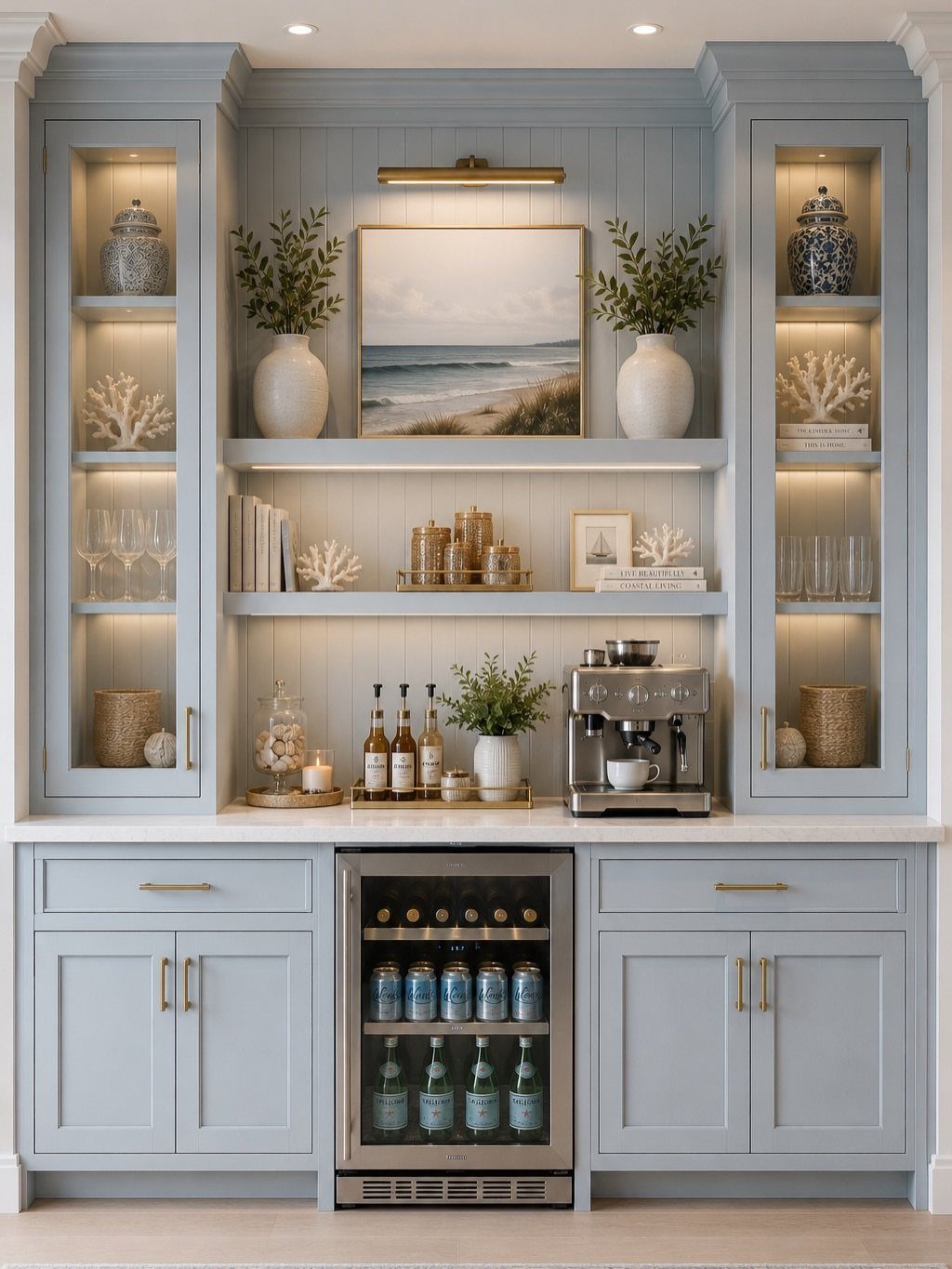
Weathered wood paneling behind the bar and a waterfall counter edge give this light-blue niche its coastal weight.
A picture light over one piece of art beats overhead lighting for morning mood. If your space lacks built-ins, a freestanding cabinet painted in a muted aqua with natural wood top gets close.
The small beverage fridge tucked under the counter is optional; the feeling comes from the materials, not the appliances.
This trades the crisp modern look for something softer. It suits anyone who wants their coffee moment to feel like a weekend morning even on Tuesday.
12. Pantry and Cabinet Coffee Bar Conversions
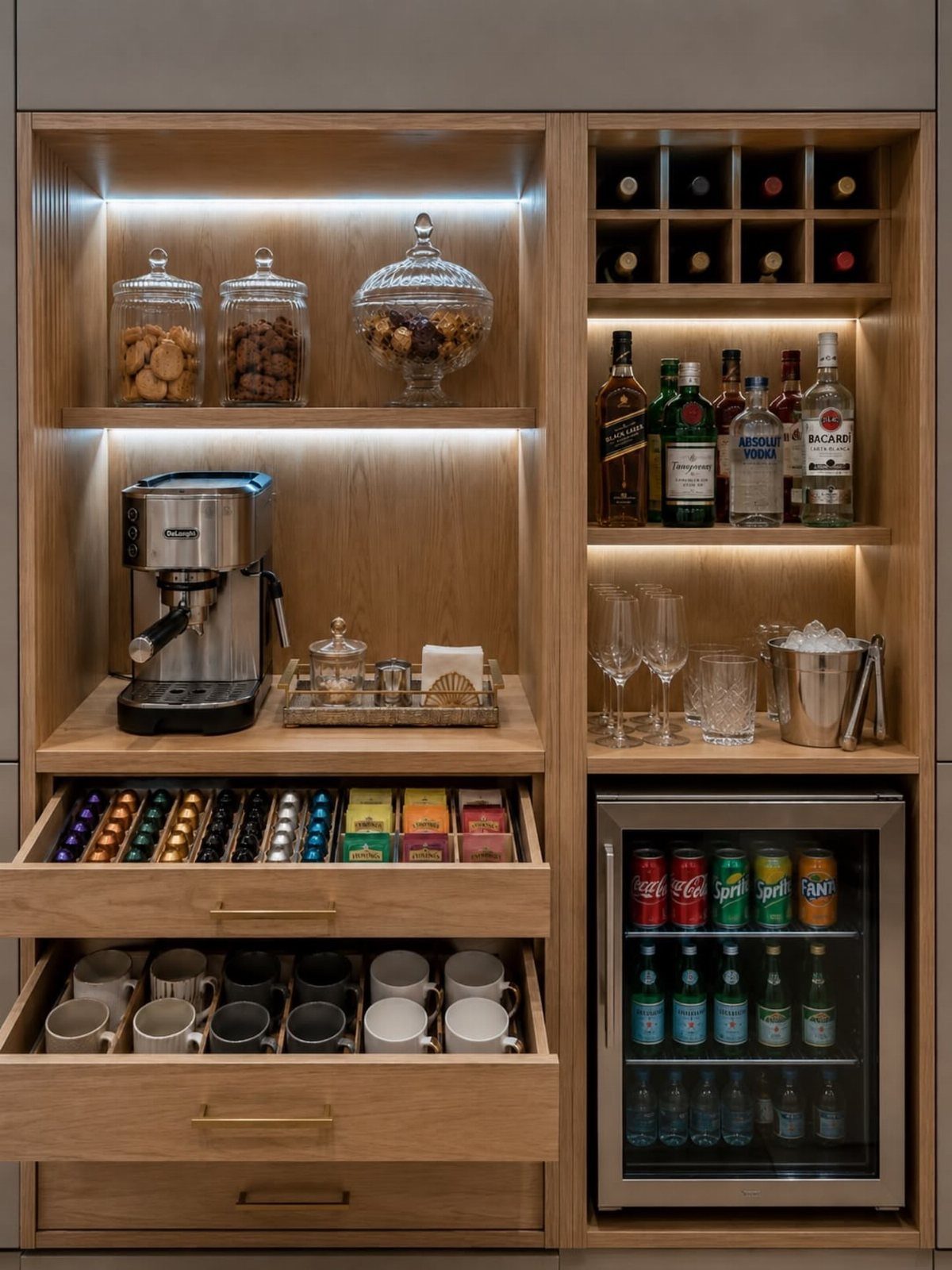
A butler’s pantry already holds the plumbing and storage that a coffee bar needs, so a built-in unit can fit an espresso machine, cookie jars, pod drawers, and a mini fridge without looking crowded.
If your pantry has a prep sink, filling the reservoir becomes a non-event. Without one, you haul water or buy a plumbed machine, which costs more but ends the chore.
This conversion suits older homes with underused pantries more than open-plan kitchens where the pantry is already the hardest-working cabinet.
13. Bookshelf Coffee Bar
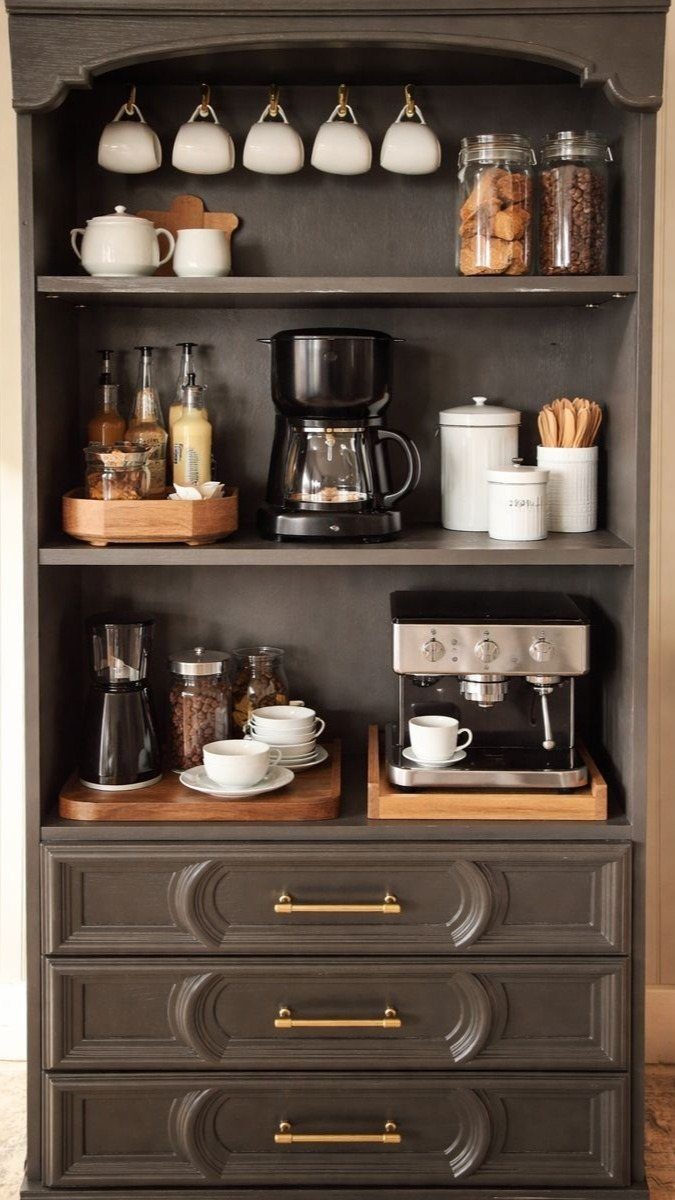
Bookshelves with lower drawers give you hidden storage most carts cannot match. I would set a small tray on one shelf to corral the grinder and machine, then line jars of beans along the next.
Measuring first saves the headache: a tall espresso maker needs real clearance, and built-in shelves rarely forgive a mistake. If your unit has drawers below, filters and backup mugs stay out of sight.
This suits renters who already own the shelf and want the bar to disappear when they move.
14. Mini Coffee Bar
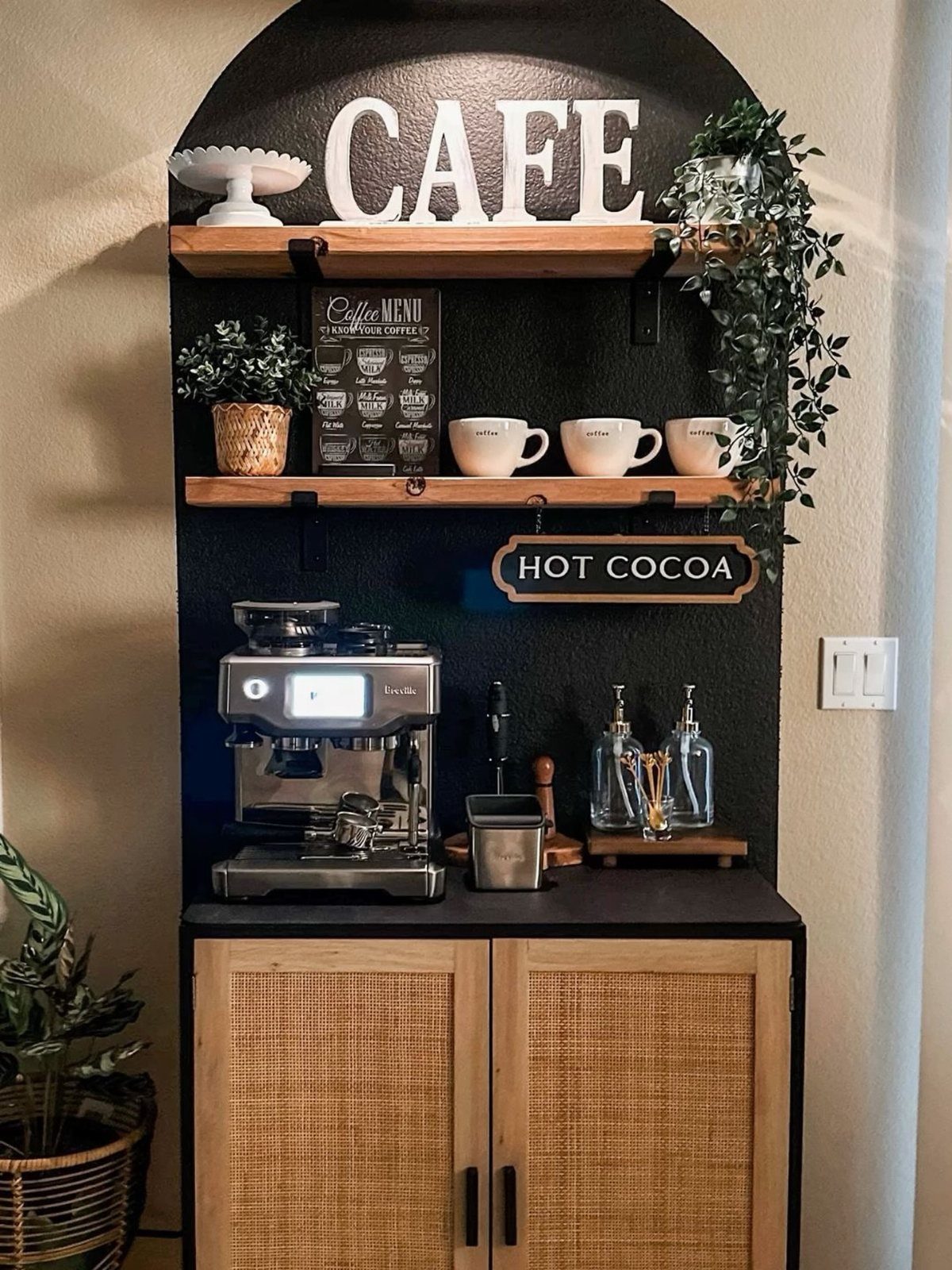
A nook no wider than a bathroom vanity can still hold a full ritual. An arched cutout keeps the station from feeling tacked-on; paint it dark and the machines recede.
Two floating shelves above carry the visual weight so the counter stays clear for tamping and pouring. I would add hooks under the shelves for two or three mugs rather than stacking.
For anyone working with a narrow slice of wall, this is the proof it can work.
15. Coffee Station Under Stairs
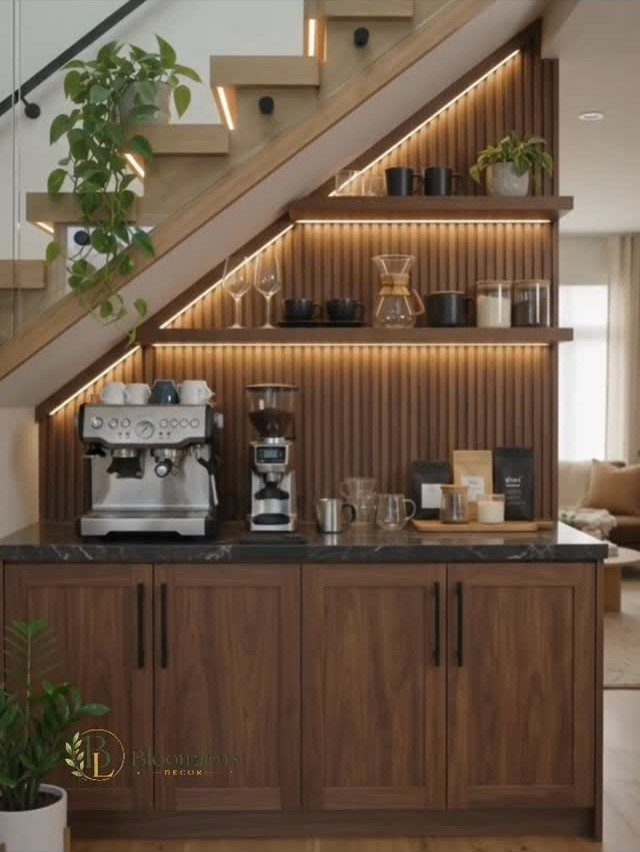
The angled ceiling under a staircase forces every decision. Custom cabinetry follows the slope, but open shelving costs less and reads lighter against that slatted wall.
A small refrigerator tucked beside the grinder keeps milk cold without kitchen trips. Layered lighting matters most in a recessed spot like this: backlit panels turn a cramped corner into somewhere you want to pause.
I would not try this in a high-traffic hallway; the pause is the point.
16. Coffee Bar with a Mini Fridge
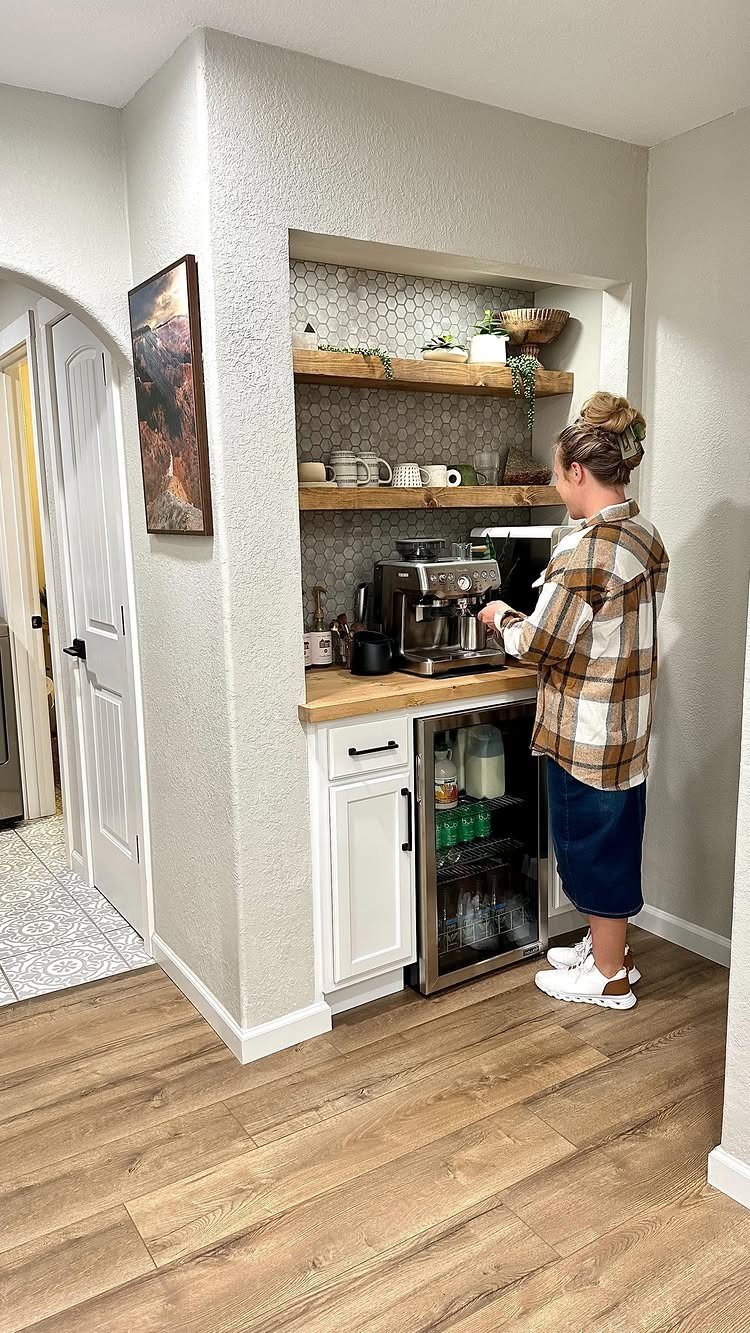
A mini fridge under the counter changes what you can offer. Creamers stay fresh, alternate drinks stay cold, and the whole station quits depending on the kitchen.
The same compact fridge holds medications or backup beverages, so the square footage earns its keep. A glass door invites restocking; a solid panel hides clutter but demands you remember what is inside.
For households where more than one person drinks something different, the fridge is the upgrade that matters.
17. Coffee Bar with a Rustic Feel
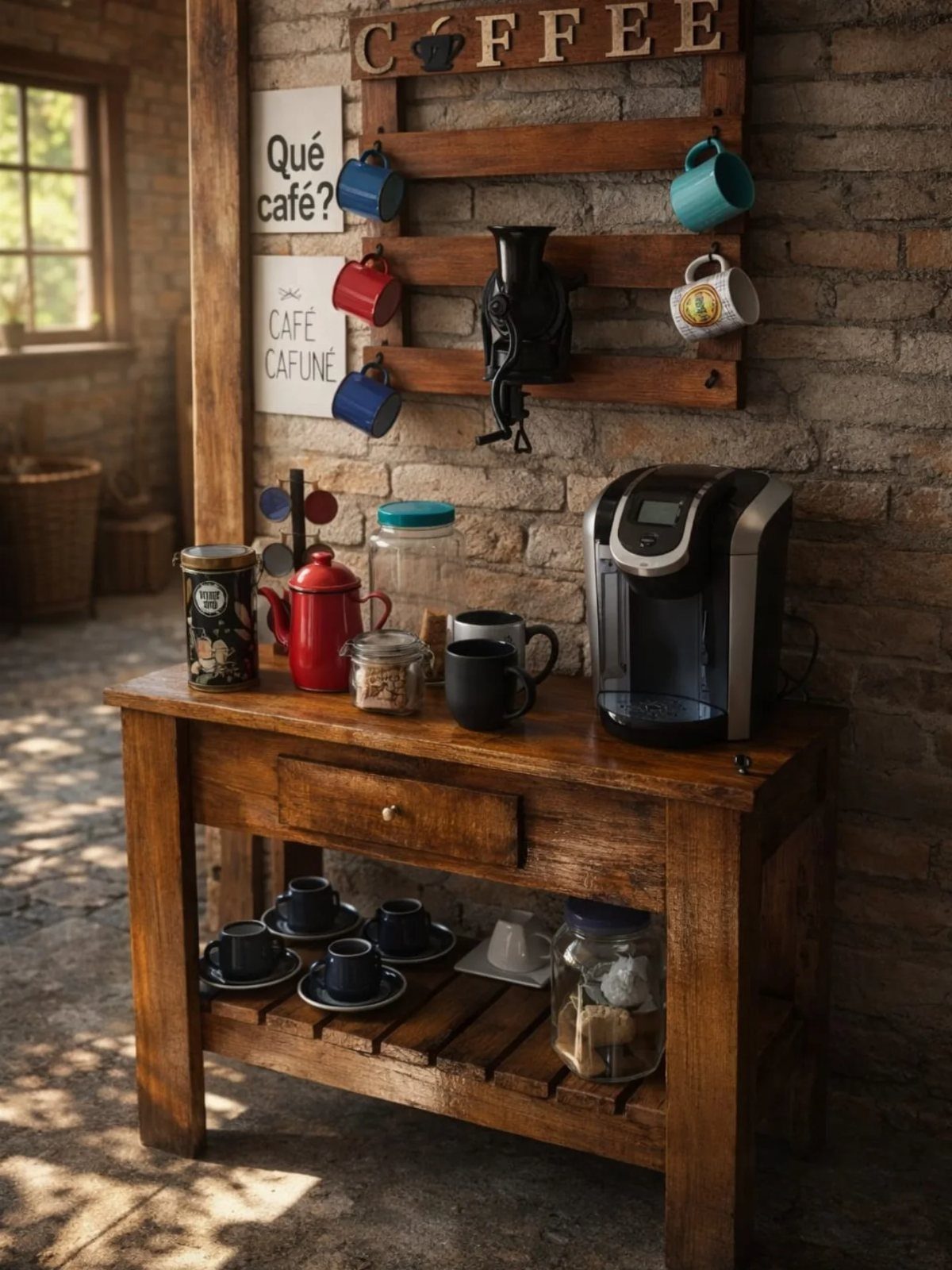
Rough wood against brick does the heavy lifting here; no paint color to choose, no finish to second-guess. A salvaged-looking console table sets the mood: dings and grain variation read as history, not wear.
A wall-mounted rack for mugs keeps the surface free for the grinder and machine, which matters when your total depth is tight.
I would skip the lace runner that appears in some farmhouse versions; on raw wood it fights the texture instead of framing it. This one is for readers who want their bar to feel found, not installed.
Budget-friendly Coffee Bar Tips
Start with the furniture you already own. That lower shelf on the bookshelf you stopped using, the closet corner where junk collects, the console table that just holds a lamp: any of them can anchor the station.
Glasses from the cabinet and the supplies you reach for every morning are enough to start. Repurpose canisters, baskets, or bins from elsewhere in the house to hold filters and beans.
This keeps costs down while you learn what the setup actually needs.
Buy one versatile, quality appliance first: an electric kettle, a pour-over rig, something that earns its counter space. Add one or two organizing pieces after the basics are working, not before.
That second purchase is where most budget overruns happen, when the cart or the matching canisters arrive before you know how you move through the space.
“A coffee bar is one of those destinations in your home that can be designed to fit any budget,” says Rhode Island–based interior designer Lindy Lowney.
Organizing Your Coffee Bar
Risers at the back of the setup lift cups, syrups, or pods so you can see what you have. A metal riser works; so does a cake stand.
The raised back row doubles your usable depth without crowding the front.
Group like items upright in containers: acrylic bins for pods, baskets for extra filters and napkins, a small vase for stirrers. Pullout drawers or turntables bring the back row within reach without unstacking everything to get there.
Square away the appliances first; they eat the most space. Then assign homes for mugs, canisters, bowls, and the silverware you actually use.
A small bin for grounds and a hook or tray for travel mugs keep the routine moving. The rest is display.
Creating a Cozy Atmosphere
A towel or napkin in a seasonal color warms the look without adding clutter. Line a basket with it, or let it hang off the edge where spills are likely.
A tiny vase with one bloom from the yard, or a bigger container with clipped greenery at the back, gives the eye something living to rest on.
Festive to-go cups from a discount store swap in for a month or two; collectors can rotate mugs the same way.
A piece of art propped against the wall behind the machine adds height and something personal.
One plant that tolerates low light, one framed piece you already own, one seasonal textile: the restraint is what keeps it from reading as a craft project.
Functionality in Coffee Bar Design
Keep the tools you reach for most within arm’s length. Leave enough clearance to brew without shifting things mid-pour.
Overcrowding the surface costs more time than it saves.
Mugs, canisters, bowls, and silverware come after the appliances are placed. Pods, loose tea, sugar packets: all of it goes into canisters with lids.
Extra mugs, filters, napkins: a basket keeps these within reach but out of sight.
Favorite mugs, a small plant, a framed print: these go in last, and only if the work space still breathes. The station has to function before six in the morning; everything else waits on that.