
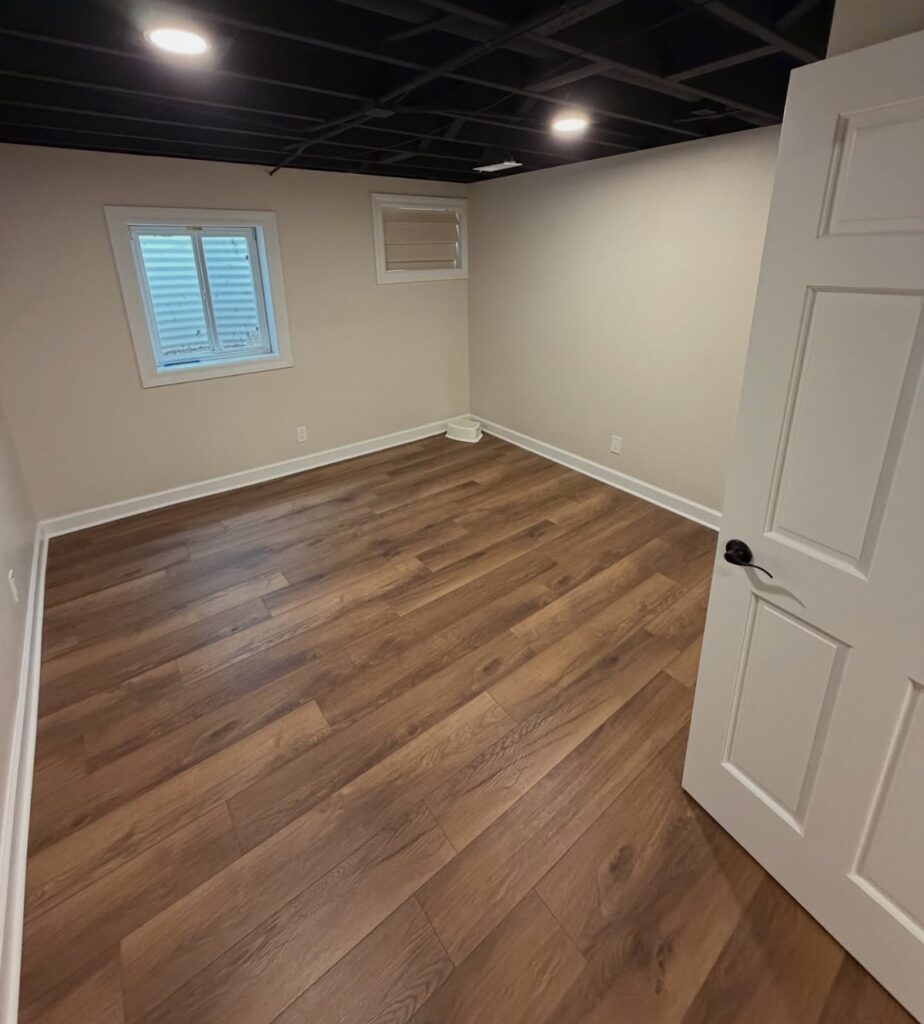
The range runs from a weekend of click-lock vinyl to a professional epoxy pour, and the cost gap between them is as wide as the labor gap.
What settles the choice is not taste but moisture: whether your slab stays dry year-round or breathes like a Gulf Coast morning.
Every option below faces the same test: can it survive below-grade conditions where humidity swings and the occasional seepage are normal, not exceptions.
1. Luxury Vinyl Tile/Plank
Wide plank vinyl in a mix of natural wood tones grounds a basement room without the coldness of real stone or the risk of real wood.
Click-lock SPC rigid core goes down over concrete with minimal prep and handles damp better than most alternatives.
I would pick this for a small group: anyone who wants the job done in a weekend and the floor to survive a sump pump failure. The subfloor has to be level enough that the joints stay locked.
Budget brands cut corners on the wear layer, so check the mil count before you buy.
2. Engineered Hardwood
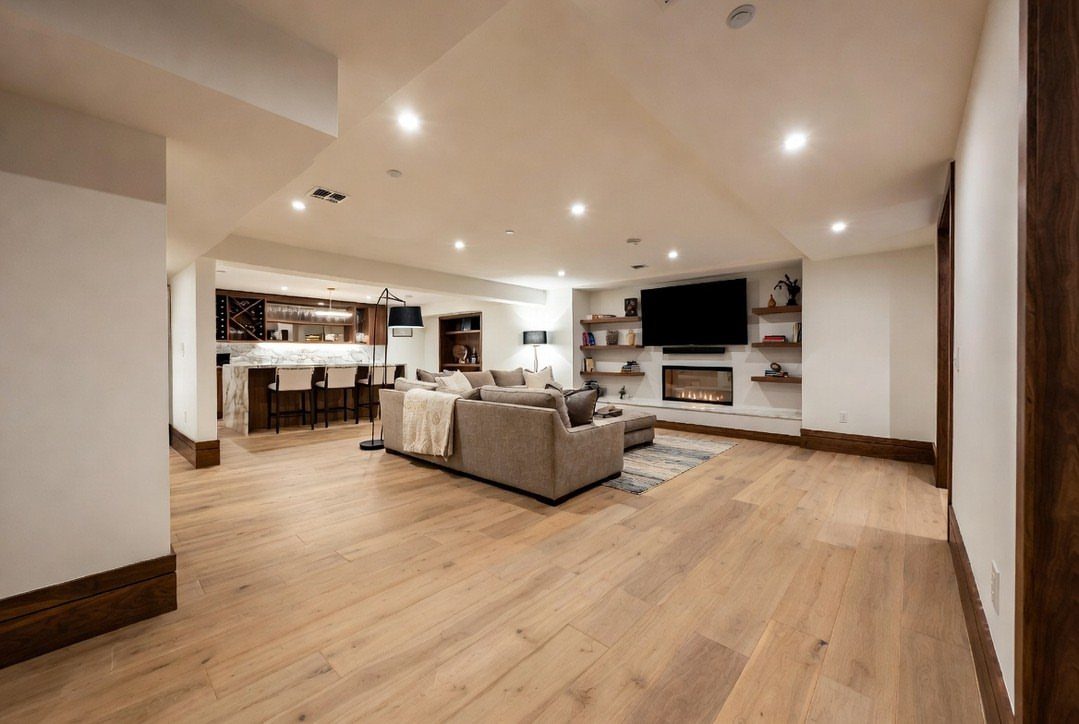
Real wood veneer over plywood layers gives you the look of solid hardwood without the swelling and cupping that ruins it below grade.
This choice depends on your climate more than most. Dry basements in the Mountain West can handle it; Gulf Coast readers should probably stop reading here.
If you run radiant heat underneath, engineered is compatible where solid hardwood often isn’t. Check the manufacturer’s warranty for below-grade use; some exclude it entirely, and that is the detail that changes the answer.
3. Laminate Flooring
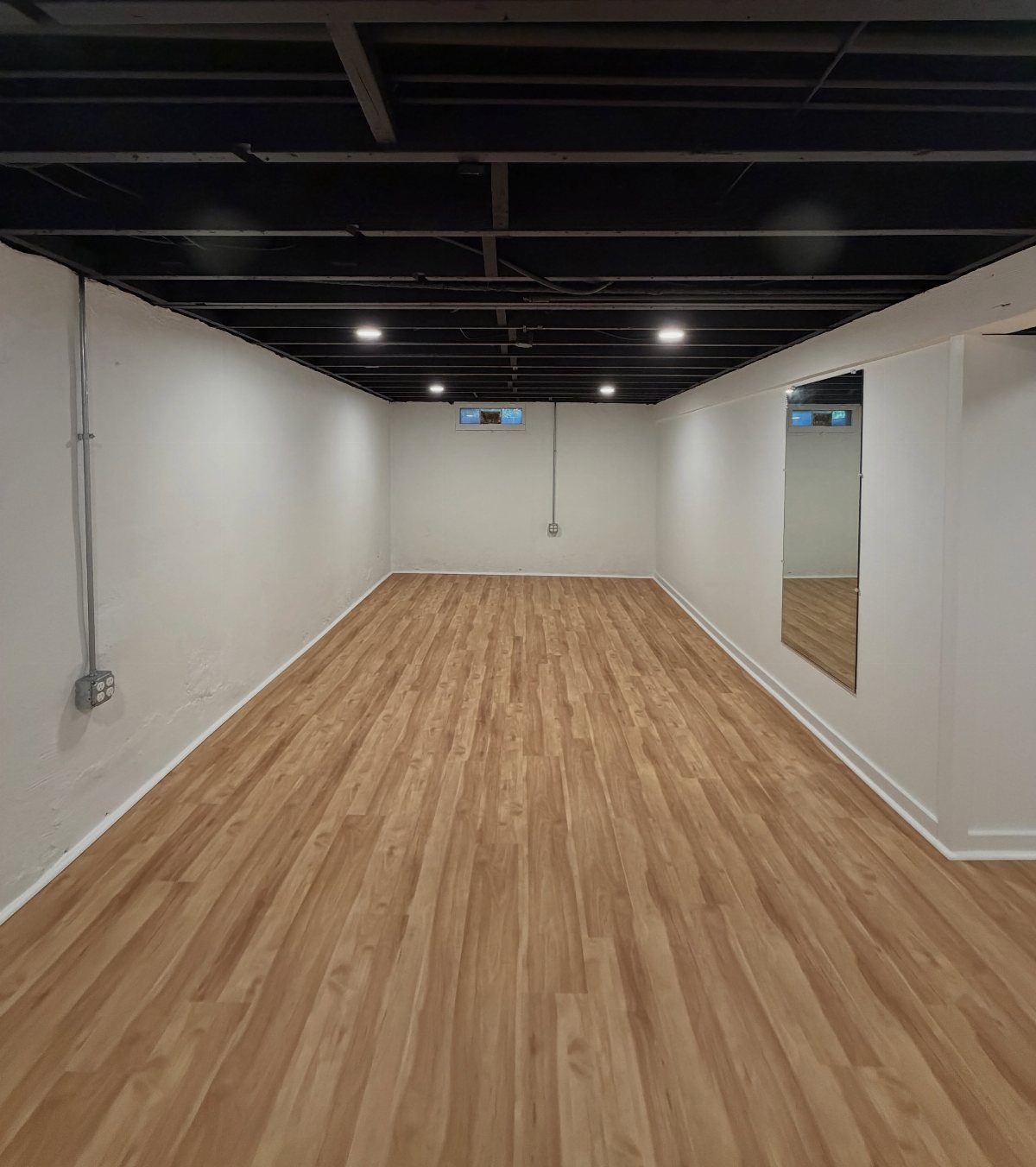
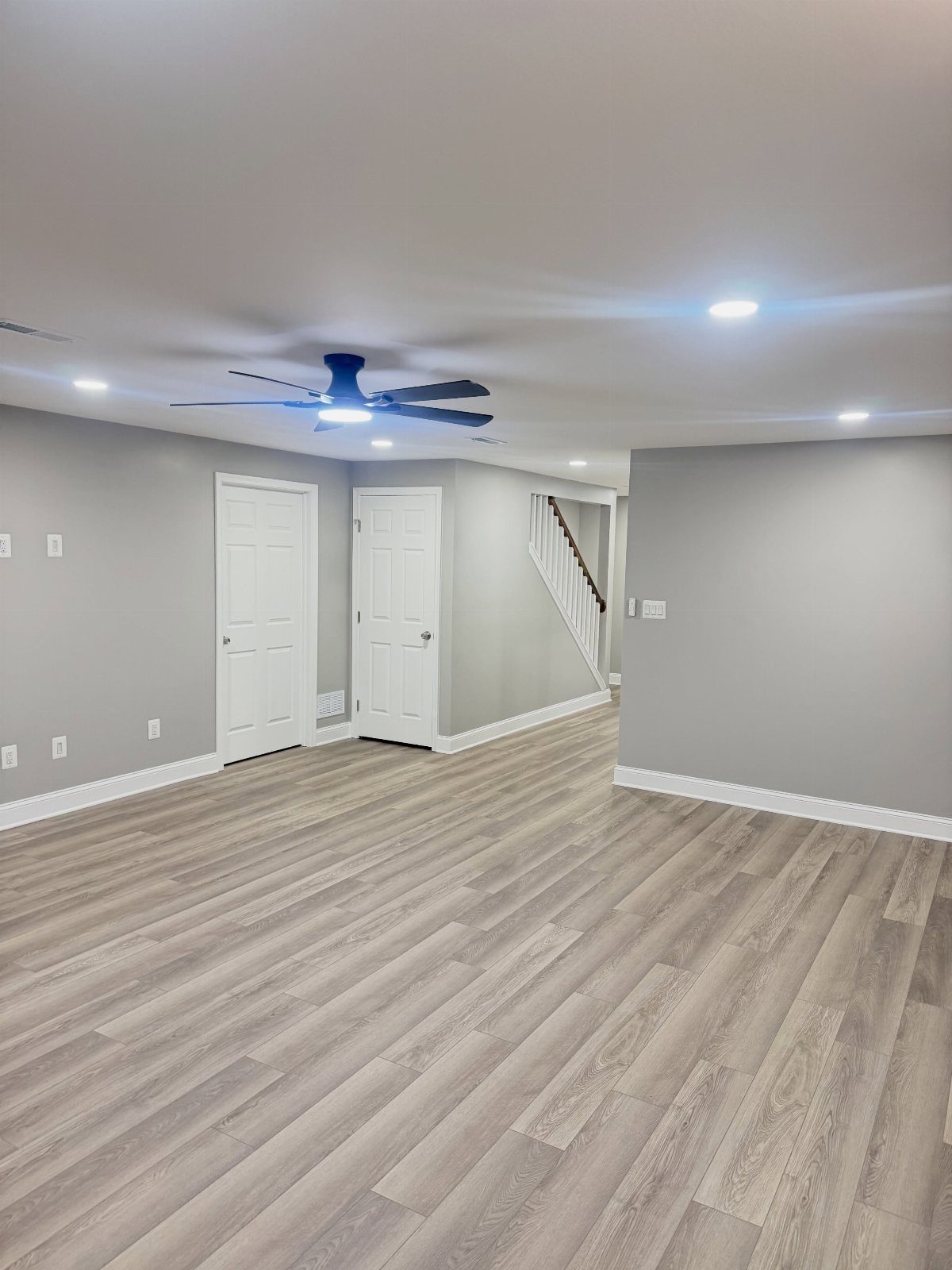
Modern waterproof laminate hits a price point that vinyl and engineered wood cannot touch, and the wood-look planks prove how far the printing has come.
The black exposed joist ceiling above it shows the kind of raw space this material suits: a basement that needs finishing fast and cheap.
Not all laminate labeled "waterproof" handles standing water the same way. Read the fine print on the core; some survive a spill, some survive a flood, and the price difference between them is real.
For a workshop, a rental, or a first basement project, this is where I would start.
4. Polished Concrete
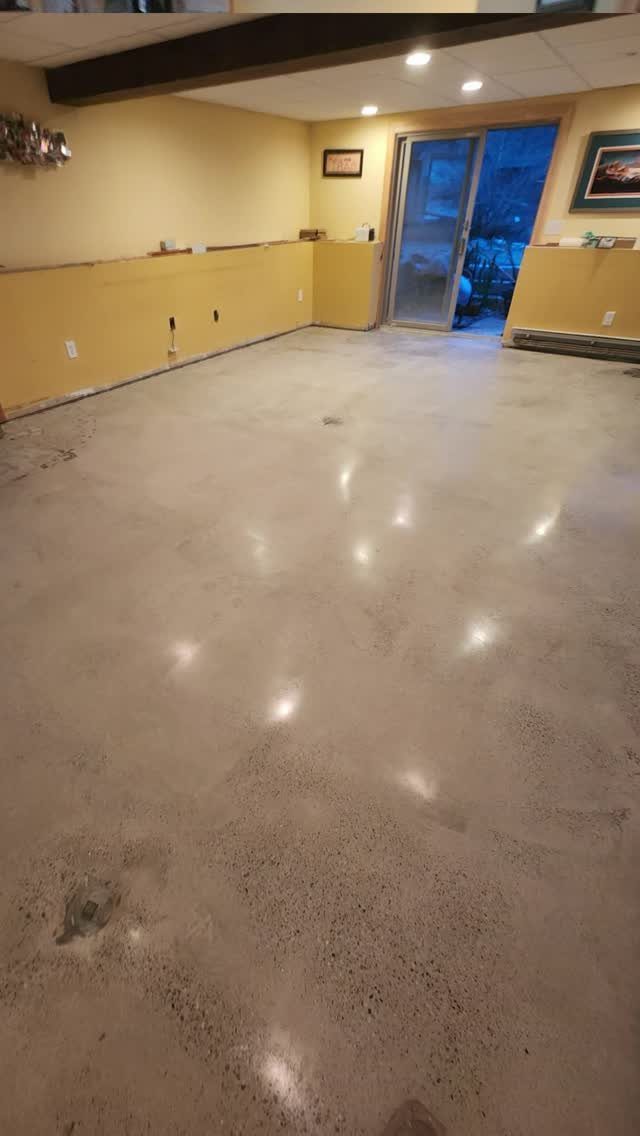
A polished slab reflects daylight from a glass door and bounces it deep into a basement that might otherwise feel closed in. Warm yellow walls work because the floor stays neutral; concrete this smooth reads as intentional, not unfinished.
Sealing is what separates a floor that lasts from one that stains. Acid staining adds color variation for a slightly higher cost, though honest gray concrete with nothing more than polish and seal has its own appeal.
This trades away warmth underfoot and acoustic softness; add a rug where you will stand, and keep the rest bare for the industrial base it gives.
5. Painted Concrete Flooring
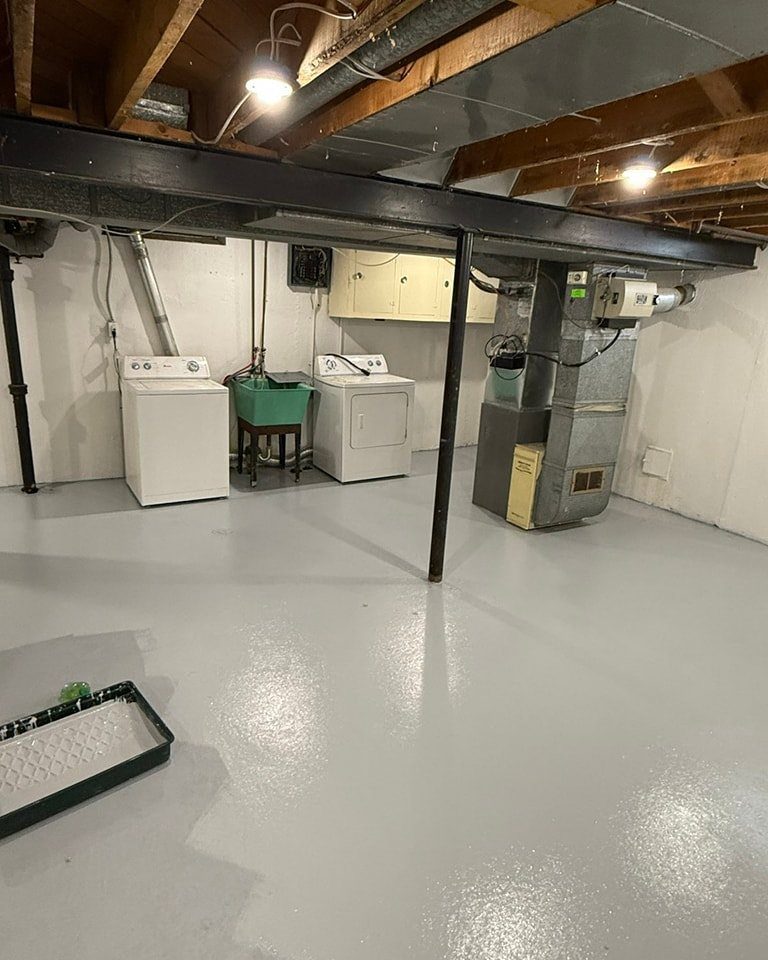
A laundry room, a furnace room, a workshop: places where you need durable and you do not need warm.
Prep means etching or grinding so the epoxy bites; skip this and the paint lifts before long. Two coats of a quality garage-grade epoxy, not porch paint, is the minimum.
For a basement that floods occasionally, this is also the easiest to dry out and touch up.
6. Ceramic/Porcelain Tile
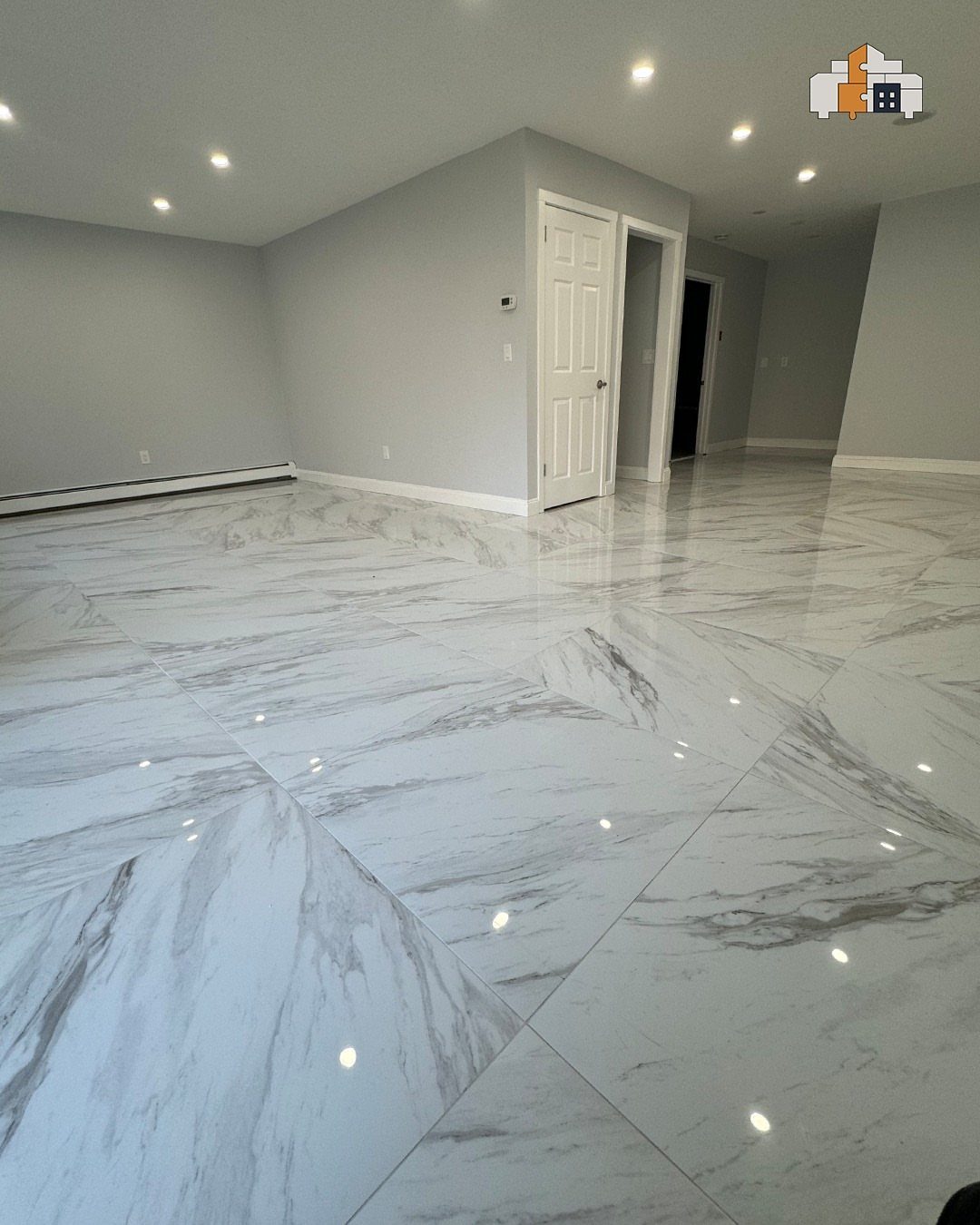
Large-format marble-look tile in a glossy finish does what paint and vinyl cannot: it shrugs off water as if water were the point.
Mortared directly to the slab with proper grout, this is the floor for basements that see actual moisture, not just the fear of it.
Tile is cold, hard, and loud; it suits a guest bath, a utility space, or a basement kitchen more than it suits a TV room where you will sit for hours.
Porcelain absorbs less water than ceramic, and the price gap between them has narrowed enough that I would default to porcelain unless I found a ceramic I could not replace.
7. Rubber Flooring
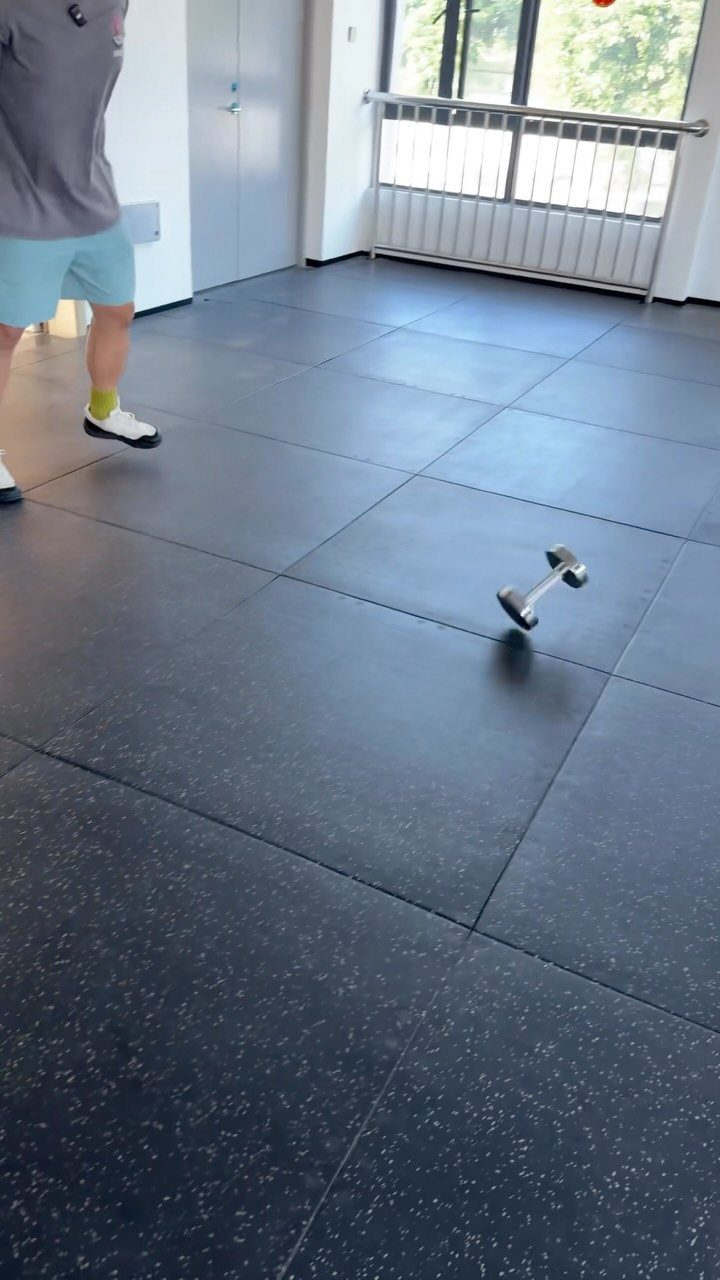
Rubber flooring takes the impact so your joints don’t have to. I put interlocking tiles in my brother’s basement gym last spring, and the dropped dumbbell that used to crack him up now just bounces.
The speckled surface hides dust and chalk better than solid black. Rubber tile prices spread wide; Great Mats lists enough varieties that you will find something in your range, and the material holds up to drops and dampness.
Water won’t hurt it; neither will a kettlebell. The look reads "utility room," not "lounge."
Best for a dedicated workout zone or a kids’ play corner where someone is always falling down. If you need the basement to feel like upstairs living space, I’d spend the money elsewhere.
8. Chevron Pattern Flooring
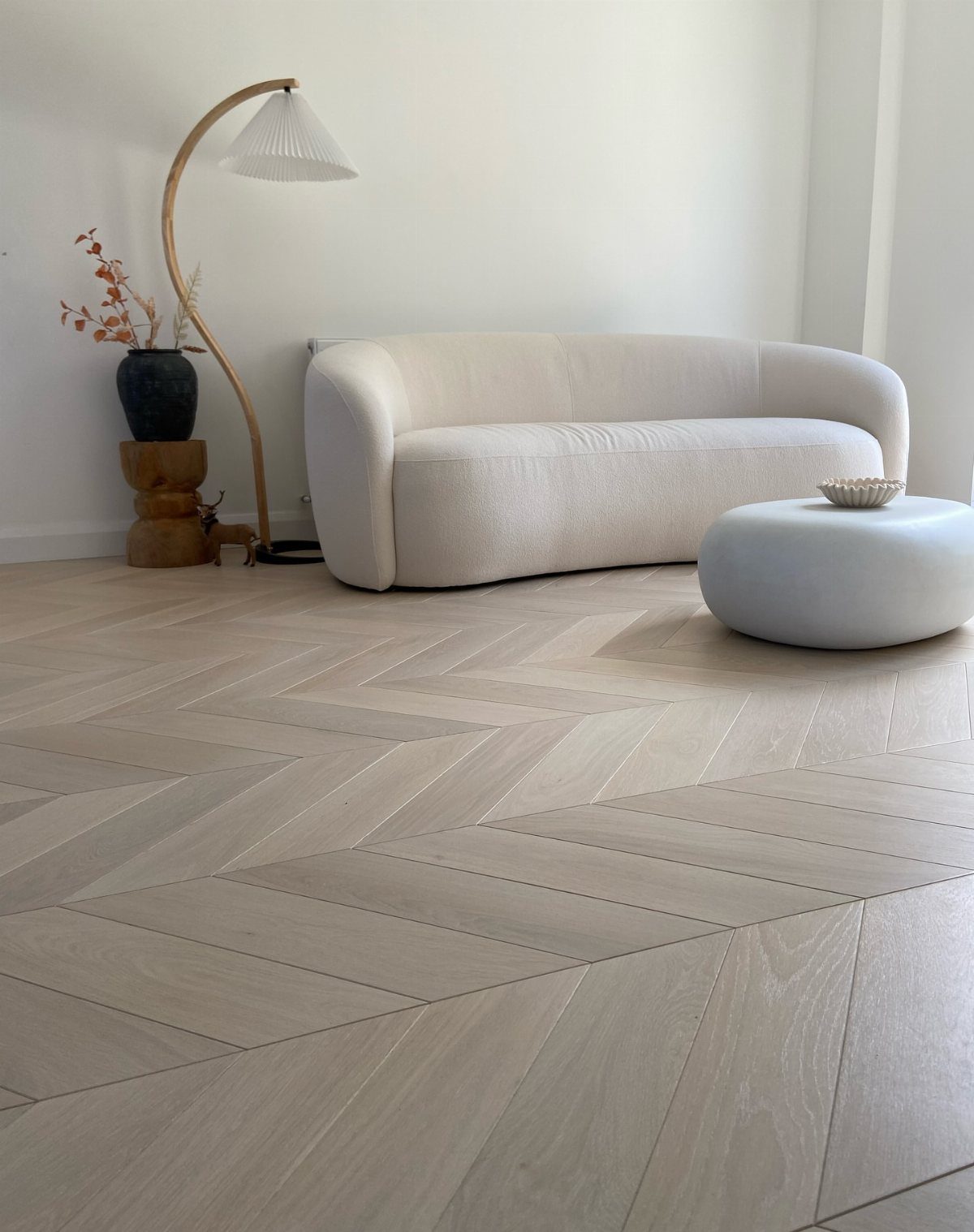
Chevron planks meet at a precise angle, forming a continuous V that pulls the eye through a room. Light oak against white walls makes the pattern readable; dark trim or furniture would ground it further.
Luxury vinyl plank handles basement moisture better than wood, and several brands now print convincing chevrons. Real hardwood works if your slab stays dry year-round, which most don’t.
I laid chevron LVP in a friend’s basement, and the install ran longer than straight plank because every cut is angled.
The pattern suits modern spaces best. In a traditional room it can feel like a costume.
9. Herringbone Pattern Flooring
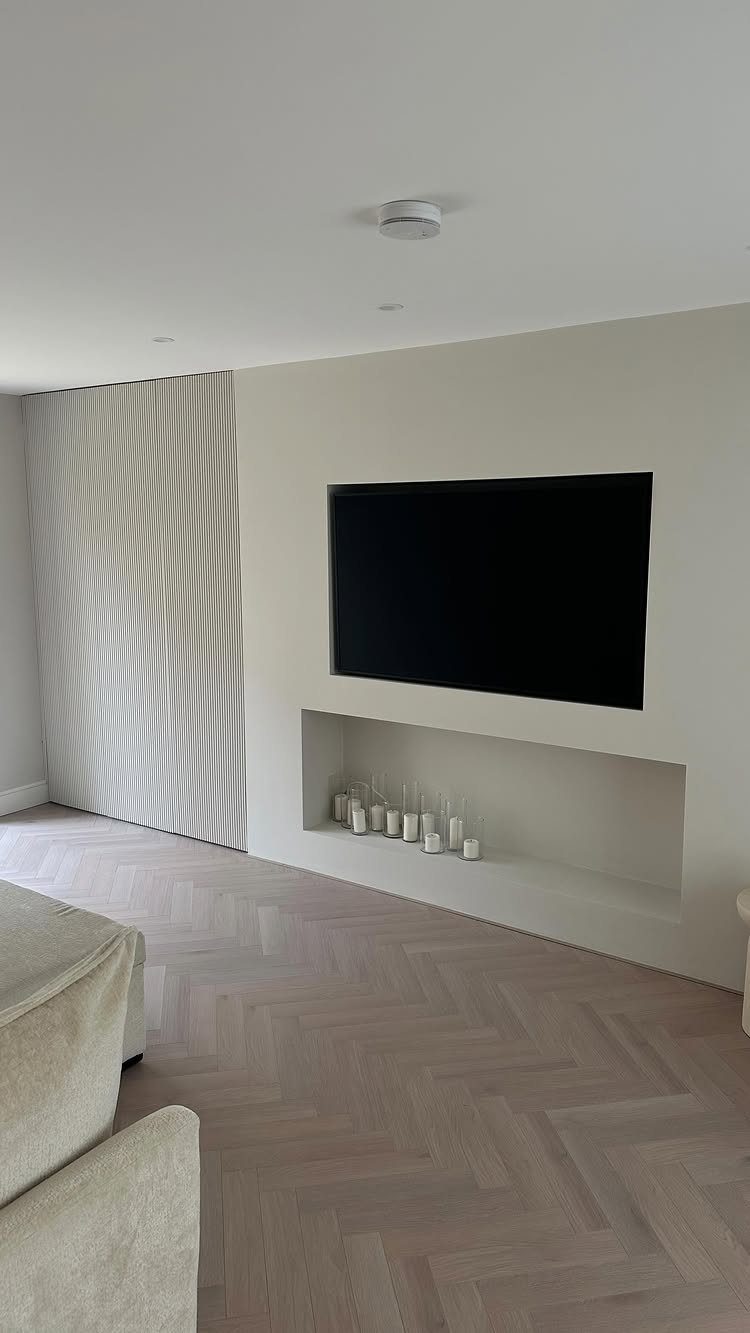
Herringbone breaks a plank into short rectangles, then staggers them so the grain zigzags. It reads as texture from across the room and rewards a closer look, which is exactly what a neutral basement with a TV wall needs.
Pale wood reflects daylight or recessed bulbs upward, and that matters in a room with small windows. Hardwood herringbone is the classic choice, though I’d check moisture history first; engineered or LVP versions exist for slabs that breathe.
The pattern costs more in material and labor than straight lay, and waste runs higher because of all those angled cuts.
For a basement movie den with beige walls and soft seating, this adds the detail the room would otherwise lack.
10. Metallic Epoxy Flooring
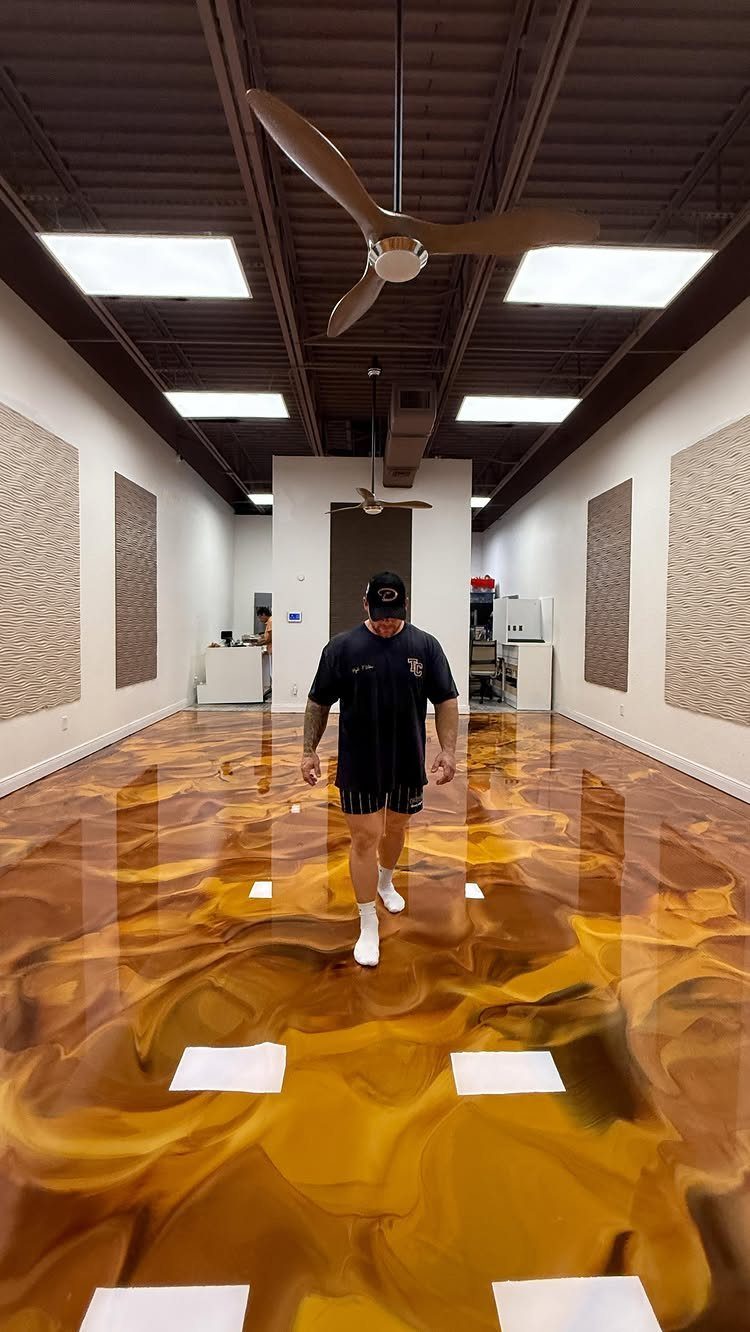
Metallic epoxy starts as a liquid resin poured over bare concrete, then swirled with pigments while it cures. The result is a floor that looks like molten stone and reflects ceiling fixtures like still water.
Prep is everything. The slab must be ground clean, cracks filled, and moisture tested; epoxy lifts if vapor pushes through.
Professional metallic epoxy runs high, and DIY kits exist but the color mixing takes practice. The gloss shows every footprint until the topcoat hardens.
This is for someone who wants their basement to start conversations. It does not apologize for being underground; it turns that into the point.
11. Wall-to-Wall Carpeting
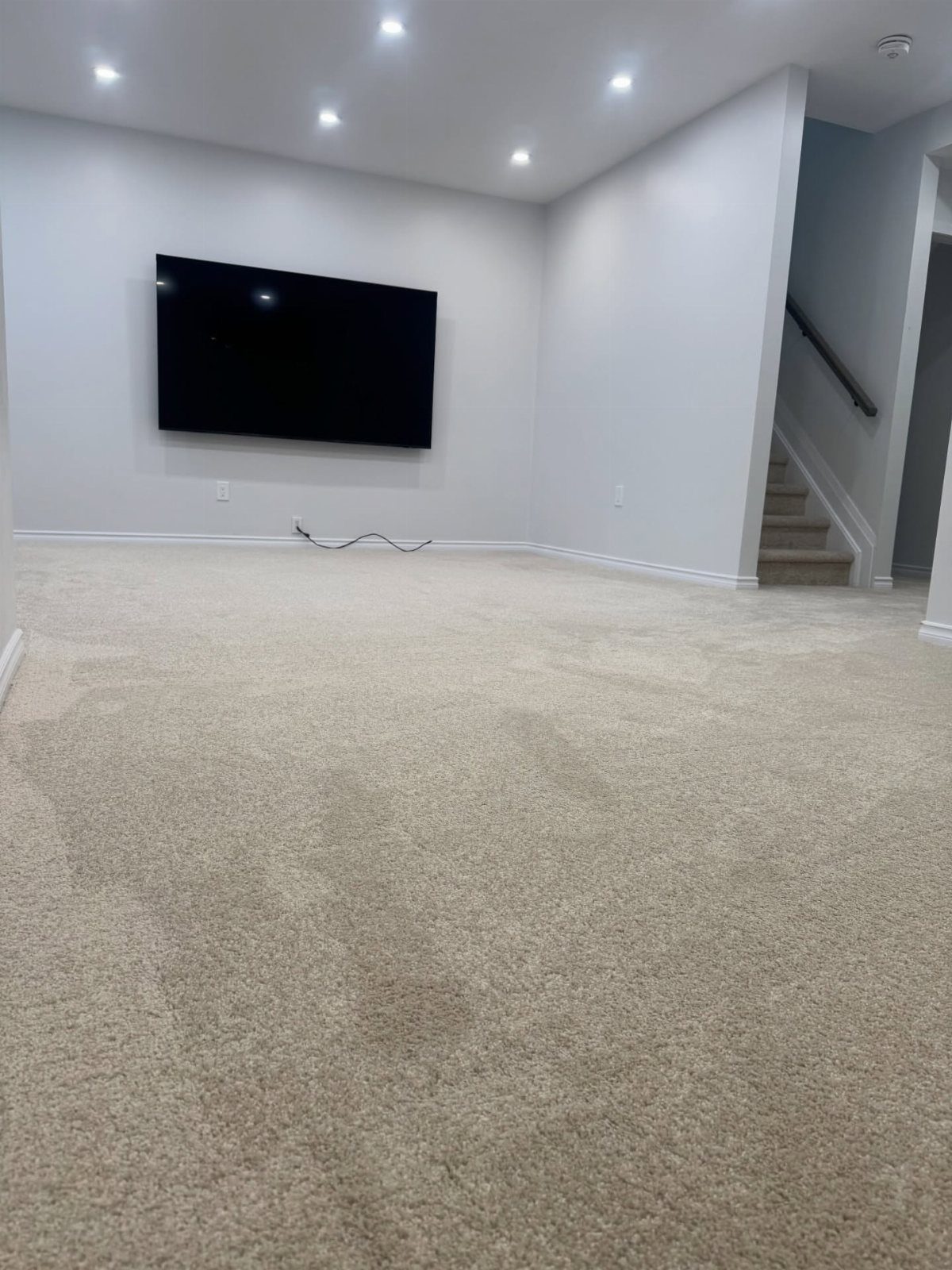
Wall-to-wall carpet still wins for a basement you actually live in. Beige brightens the room and softens the acoustics, which matters when the furnace kicks on.
A moisture barrier pad is non-negotiable, and I’d spend extra on synthetic fiber that won’t mold if humidity spikes. Light neutrals show less lint than cream and keep the space feeling open.
This suits families with small children, anyone who stretches out on the floor, or a rental where you need maximum comfort for minimum fuss. One unnoticed leak ruins the pad.
Moisture Management Importance
Concrete wicks moisture upward even when the surface looks dry. Water vapor from below passes through the slab, and over time that migration damages whatever sits on top.
Laminate swells, wood cups, adhesives fail, and mold grows underneath.
A damp proof membrane belongs under any floor that isn’t already waterproof. Sheet or liquid, it blocks vapor before it reaches the material.
Leveling compound fills dips and cracks first, because a floor is only as good as what it rests on. Skip either step and you are buying the same floor twice.
Installation Considerations
Most floating floors go down directly on clean, level concrete. Vinyl and laminate need only that, though a thin foam or cork underlayment adds insulation and slight give underfoot.
Planks need a flat slab so the locking joints hold and the floor stays still underfoot. Self-leveling compound covers the problem in an afternoon; the bag is the biggest part of the cost.
A damp proof membrane adds another layer but costs less than replacing a failed floor.
Some materials demand more. Tile needs mortar beds that handle slight unevenness; epoxy needs grinding or etching so it bites.
Check what your chosen floor actually requires before you budget the weekend.
Durability and Maintenance
Basement floors take spills, humidity, and the traffic of a whole house funneled into one level. Porcelain tile survives all three and wipes clean without sealing.
Grout is the weak point; epoxy grout matches the tile for stain resistance.
The wear layer thickness, measured in mils, determines how many years of traffic before the print shows through. Budget brands cut this corner.
Rubber hides dust and takes impact but reads utility, not living room.
Cost Considerations
The spread between cheapest and most expensive basement flooring runs wide enough to change the whole project budget.
Material is only part of it. Subfloor prep, leveling compound, damp proof membrane, and underlayment add cost before the first plank goes down.
Skipping them is the expensive choice.
For rentals or first projects, start where the material and the prep are both forgiving.
For a basement you plan to live in for years, the premium options earn back their cost in longevity and in how often you think about the floor after it is in.
Frequently Asked Questions
What type of flooring is best for basements?
Luxury vinyl plank goes straight over damp concrete with almost no prep work, and it outlasts real wood where moisture creeps in. Engineered hardwood works only in dry climates, and porcelain tile shrugs off actual water where a basement floods.
The real question is how honest your slab is about staying dry; some basements earn trust, others only wish they could.
What is the most affordable way to cover a concrete basement floor?
Paint or epoxy over the existing slab costs the least and uses what you already have.
A garage-grade epoxy, not the porch paint that peels in a year, takes two coats after you etch or grind the concrete so the finish actually grips.
Polished or acid-stained concrete costs slightly more but still beats laying any new material.