

These desk organization ideas run from a pegboard that hangs on the wall to a craft cabinet that replaces half a room’s furniture, and the right one depends on how much space you have and how long you plan to stay.
A freestanding pegboard on legs, a rolling cart, and a clamp-on lamp all assume the same thing: you need your surface back without drilling into the wall.
1. Pegboard for Vertical Space
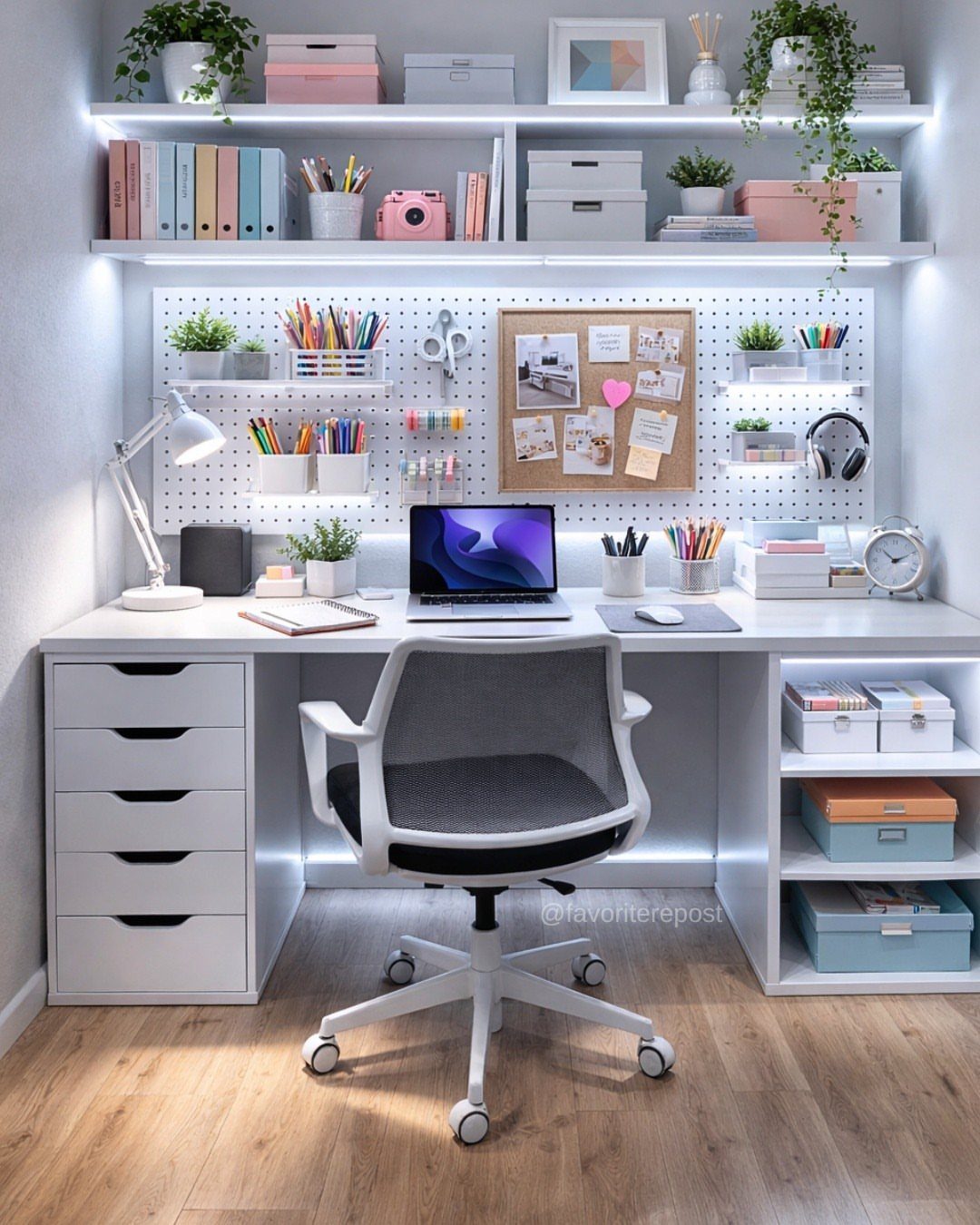
A pegboard turns wall space above your desk into storage you rearrange whenever your work changes. Small bins catch tape and labels, and a corkboard square pins up the notes I used to lose under coffee cups.
The whole setup keeps essentials at eye level without sacrificing a foot of desk surface. If your workspace sits in a corner or against a short wall, measure before you buy; standard pegboards need breathing room around the edges.
For renters, a freestanding pegboard on legs leans against the wall and travels with you.
2. Drawer Dividers and Organizers
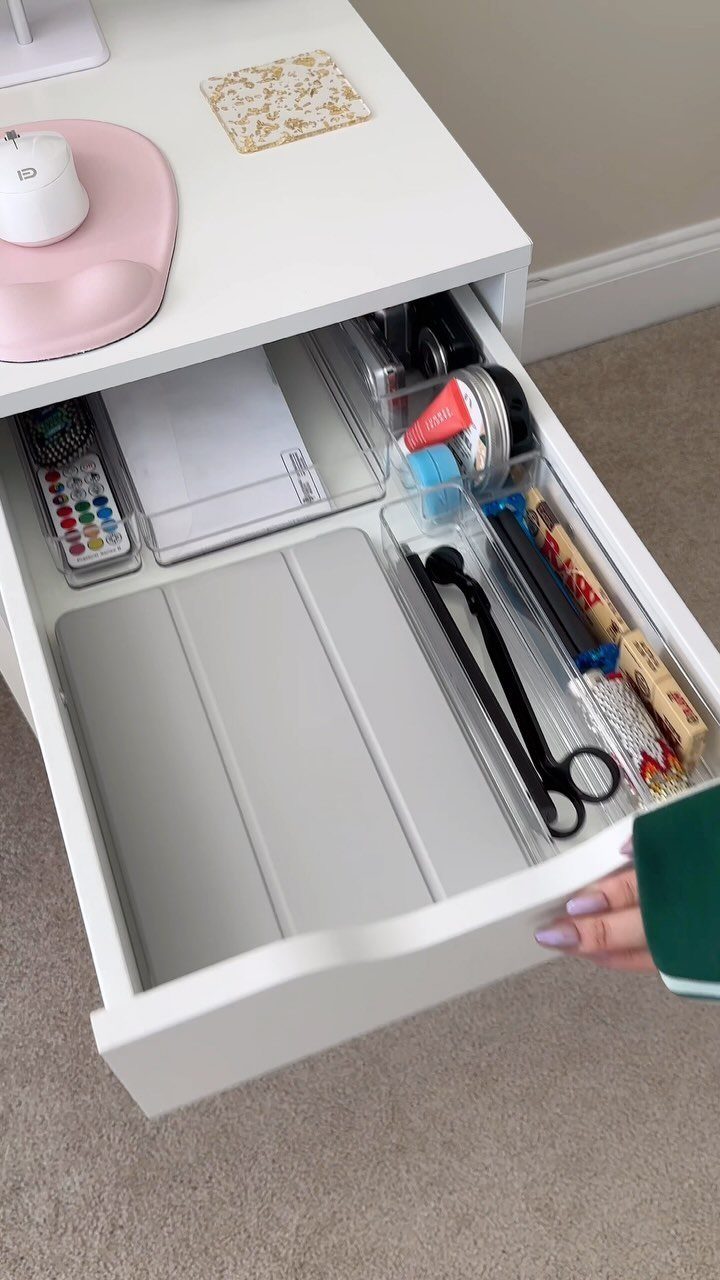
Drawer dividers turn the chaos inside your desk into compartments that stay put.
I use clear plastic trays in my top drawer, sized so pens sit in one slot, paper clips and binder clips in another, and sticky notes in a third; the trays slide apart when I need to fit something larger, which happens more often than I expected.
Kitchen utensil organizers work here too, and cost less than office versions. Stackable trays help in deep drawers where one layer wastes half the height.
The real trick is reserving the top drawer for what you touch daily and banishing the rest downward.
3. Use Filing Cabinets
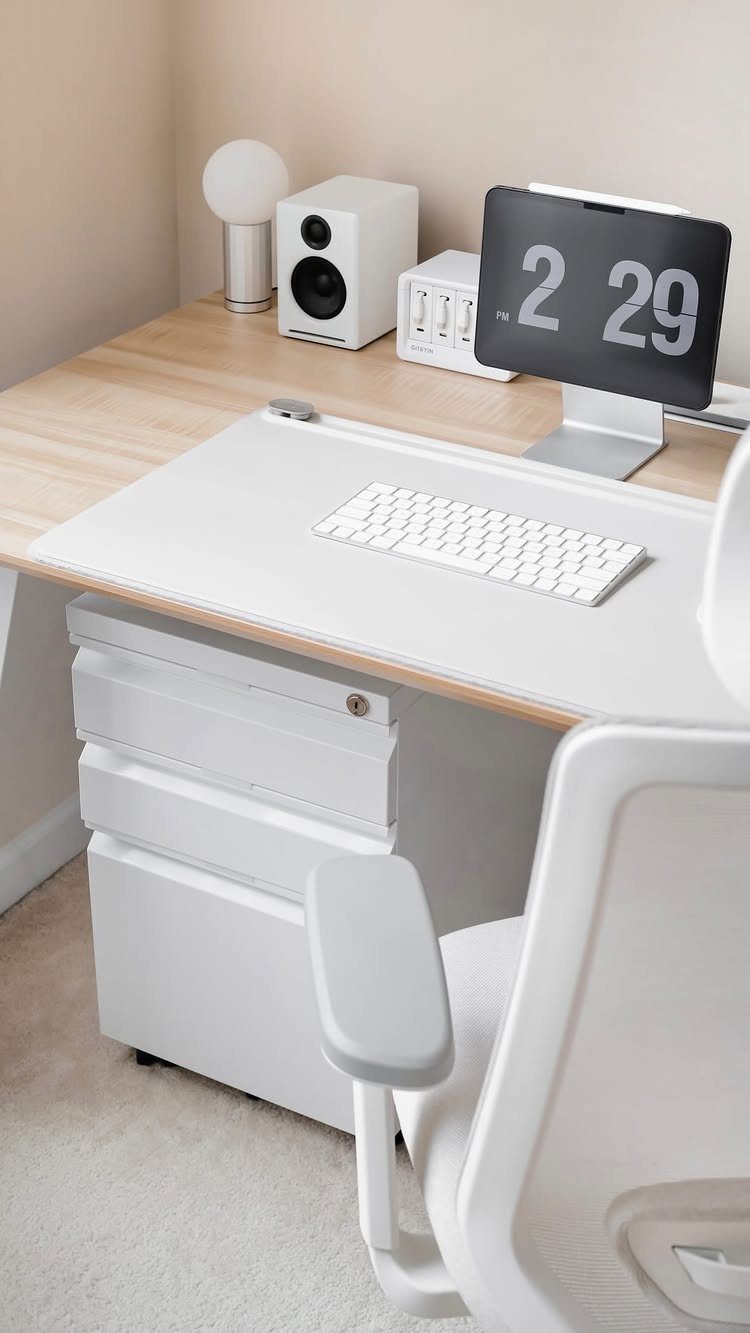
A filing cabinet under your desk corrals the papers that otherwise colonize every flat surface. I keep mine to three drawers: incoming on top, active projects in the middle, and reference files below.
File folders inside each drawer let me pull a whole category out when I need it. On wheels, the cabinet rolls out for access and tucks back when company comes.
If your paper load is light, a single drawer on a rolling cart substitutes.
4. Use Clear Storage Boxes
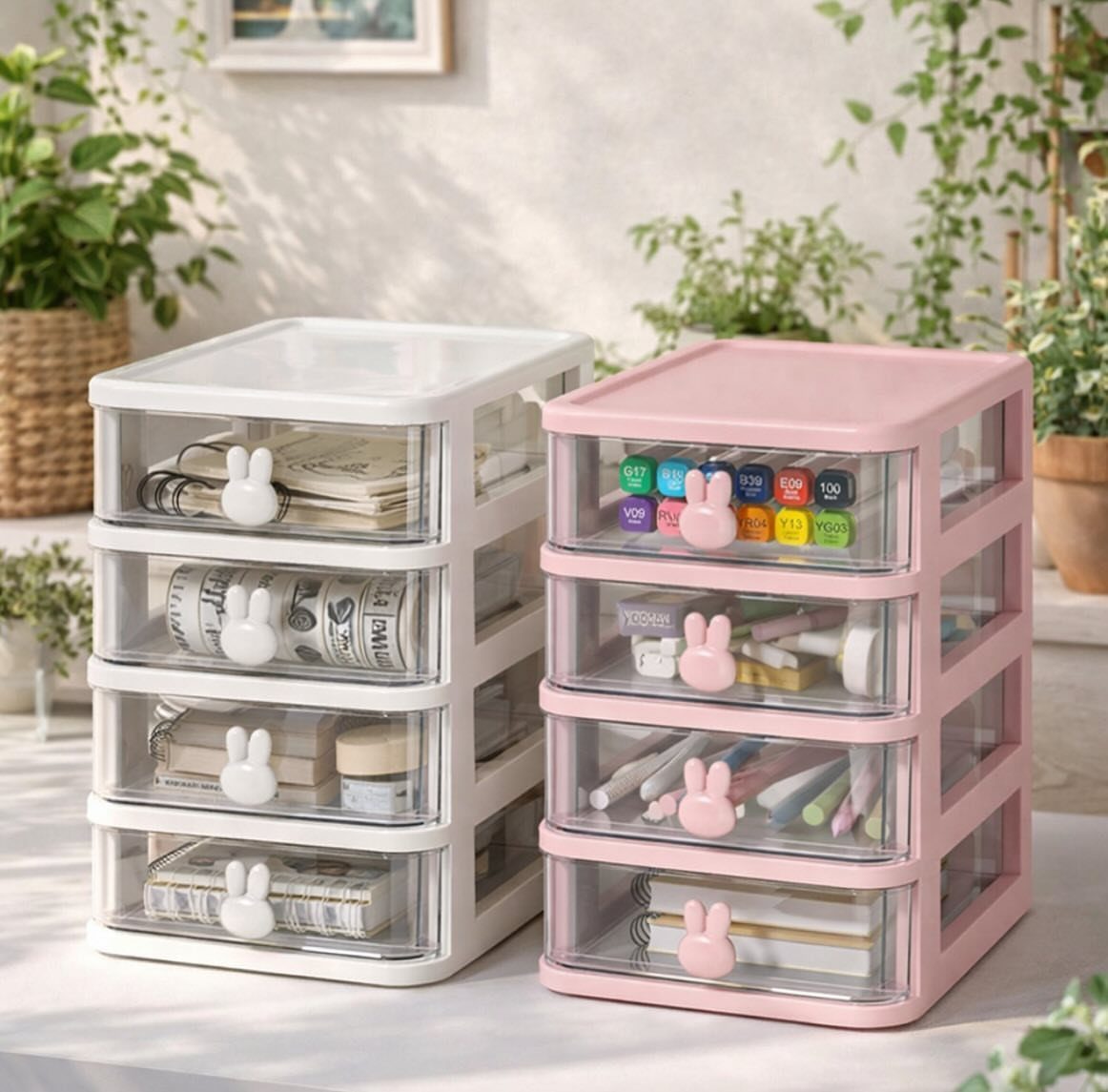
Clear drawers let you spot the marker or notebook you need without pulling out box after box. Bunny-shaped handles aside, the principle is visibility: when you can see contents, you remember what you own and stop buying duplicates.
Label each drawer anyway; transparency helps at a glance, but text confirms where the backup tape lives. These units stack if you outgrow one, and they fit on a windowsill or shelf when desk space runs short.
5. Use a Clamp-On Lamp
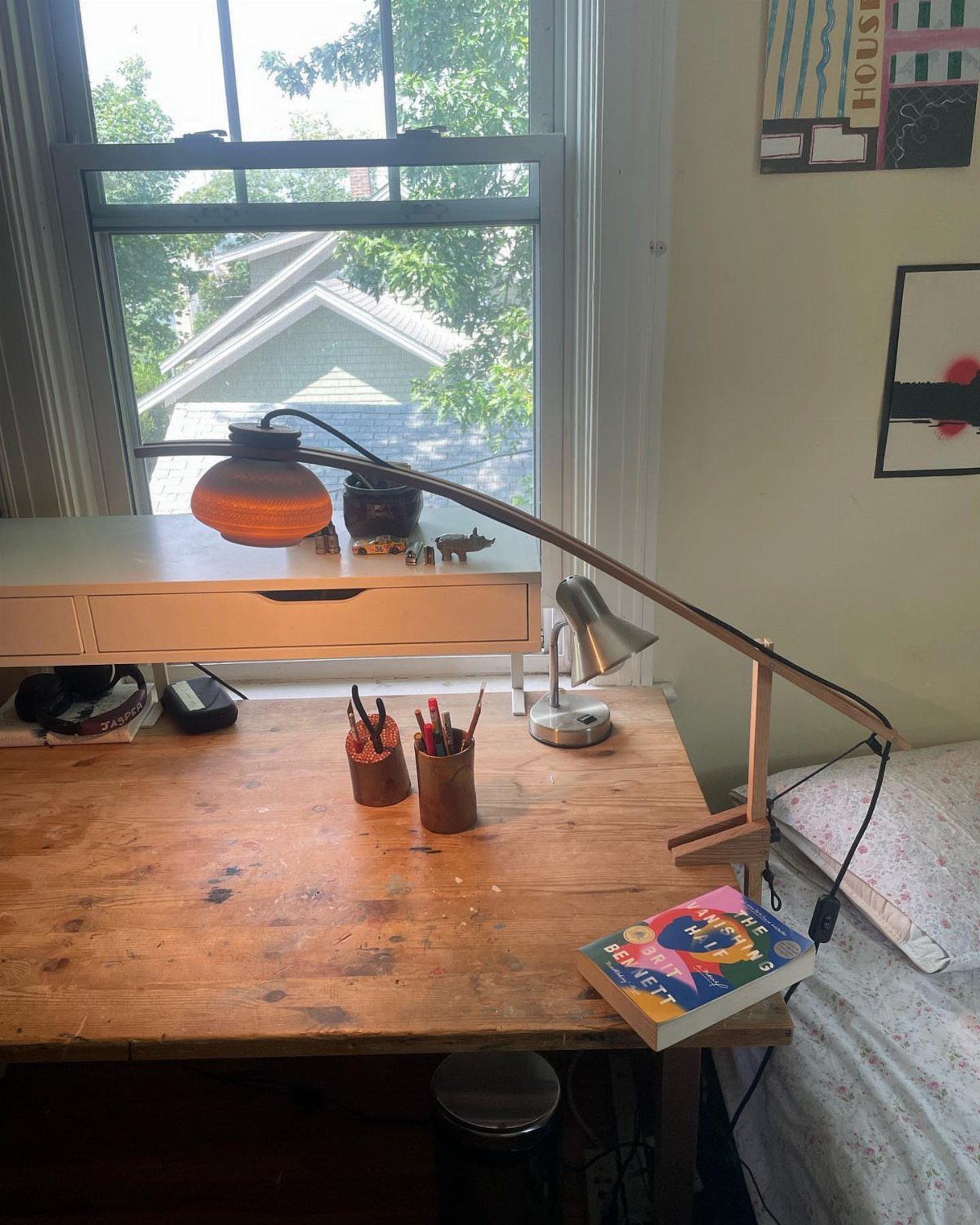
A clamp-on lamp screws to the desk edge or a monitor arm and throws light from above instead of eating your work surface.
A clamp stays put, and the arm adjusts without sliding, which beats base-heavy lamps that shift when you reach for coffee.
Check your desk thickness before ordering, since clamps open only so wide, and confirm the light reaches your keyboard without glare on your screen. A wooden finish warms up a plain setup, but metal versions cost less and bend tighter.
If your desk has no front overhang, clamp to a shelf above instead.
6. Bookcases and Shelves
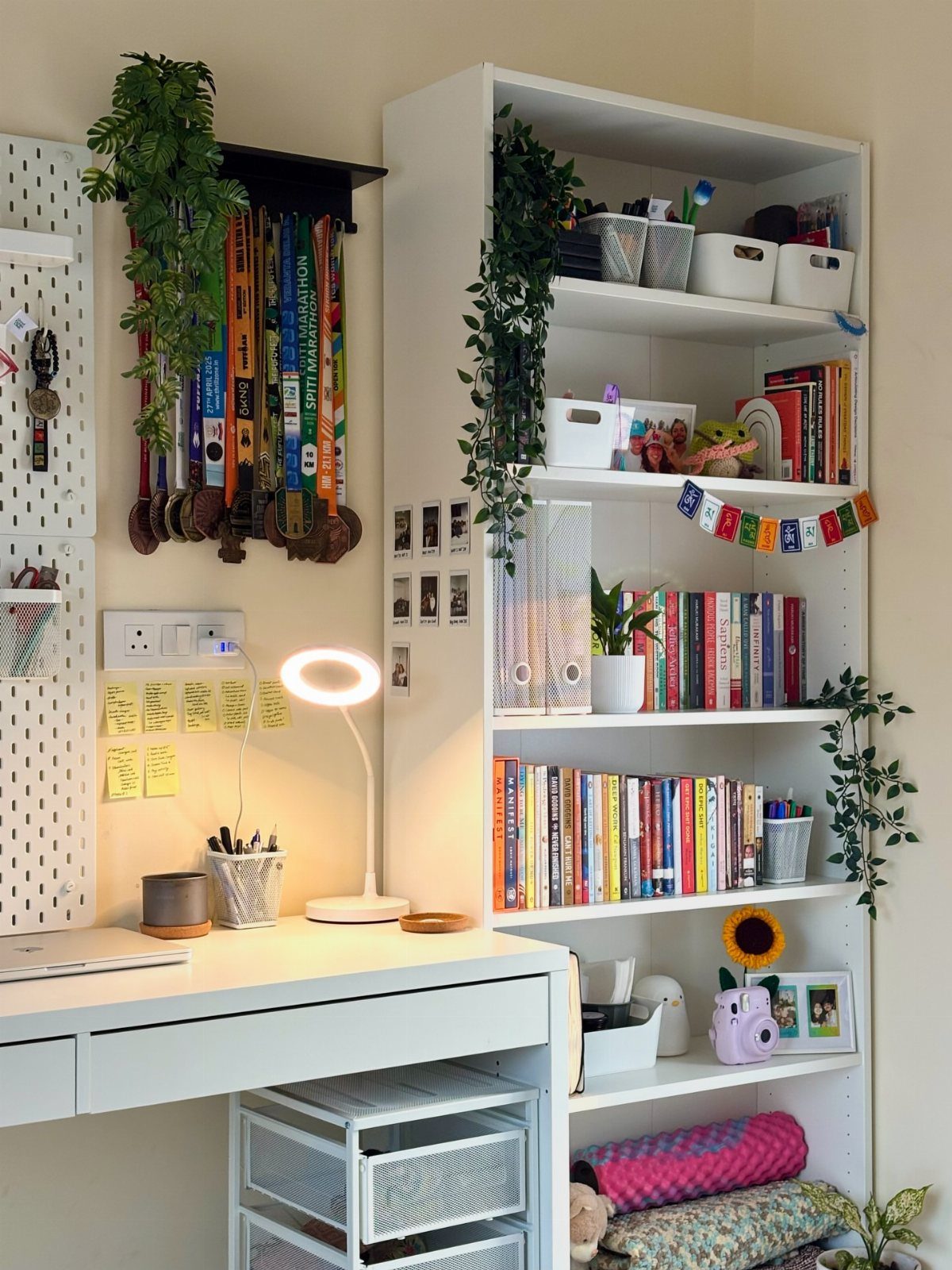
Bookcases beside your desk swallow the binders, folders, and books that otherwise pile on the keyboard. Tall, narrow shelving about the width of the desk keeps everything within arm’s reach without crowding the work surface.
Bins on the lower shelves hide supplies I use weekly; the upper shelves hold references I touch monthly and a few plants that tolerate neglect.
If wall mounting is an option, boxes above the desk free floor space entirely, though you sacrifice the easy rearranging that standing shelves allow. For renters, this is the compromise: freestanding units travel, mounted ones stay.
7. Labeled Boxes, Drawers, and Files
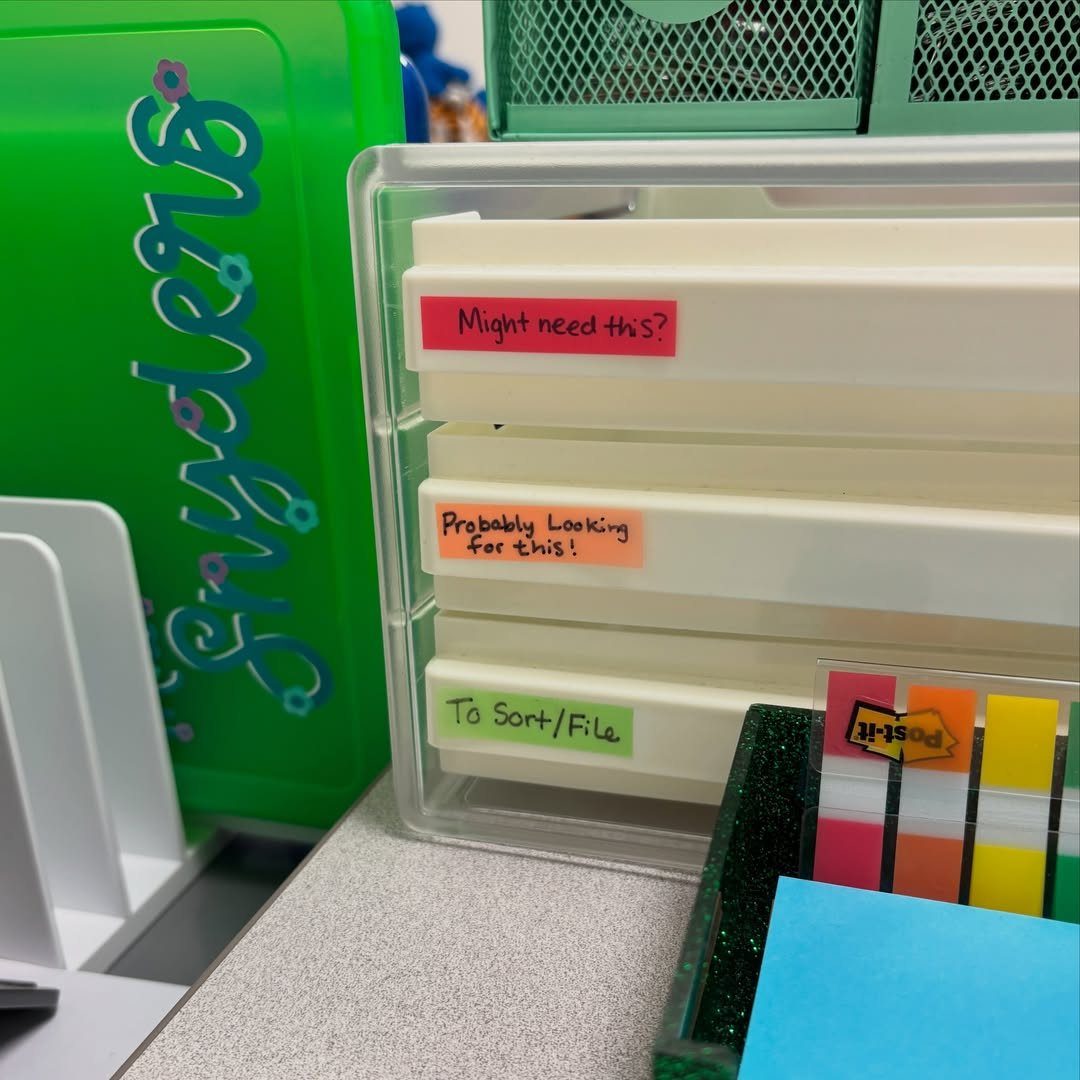
Handwritten labels on colored tape turn a set of plain drawers into a system that actually gets used. The real trick is writing what you would actually search for: "receipts," "pens that work," "client contracts."
A label maker pays for itself the first time you do not buy a third tape dispenser because the other two are buried somewhere.
If your storage is clear plastic, labels still matter. Looking through bins to find the right one wastes the minute you were trying to save.
This suits anyone who shares a desk or puts things away for more than a week.
8. Minimalist Desktop Approach
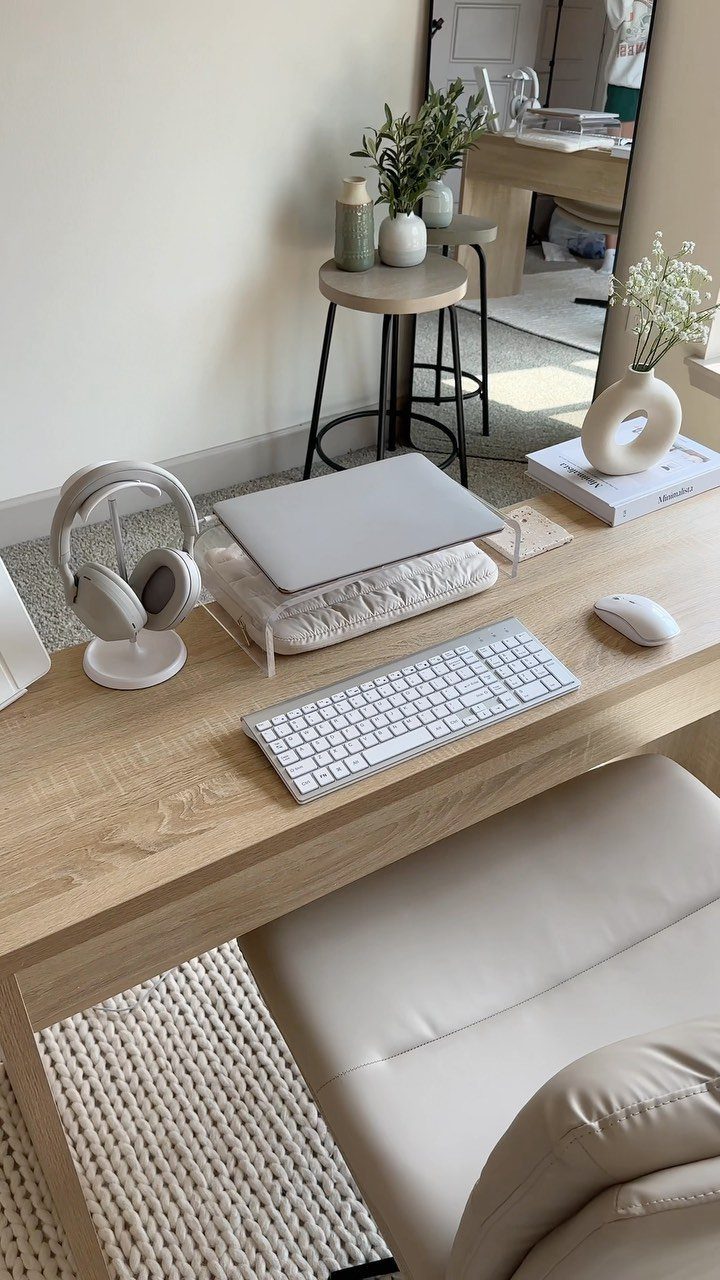
The laptop riser and headphone stand are not decorative objects; they are the only things that earned the right to stay on the surface.
Everything else, the spare pens, the paper stacks, the charger you might need later, goes in a drawer or off the desk entirely. That is the whole method.
This works best for people who get visually overwhelmed, and it costs nothing. You must actually put things away, not just move them to the edge.
A clear surface is easier to maintain than expected, but harder to start than most people want.
9. Device Charging Station
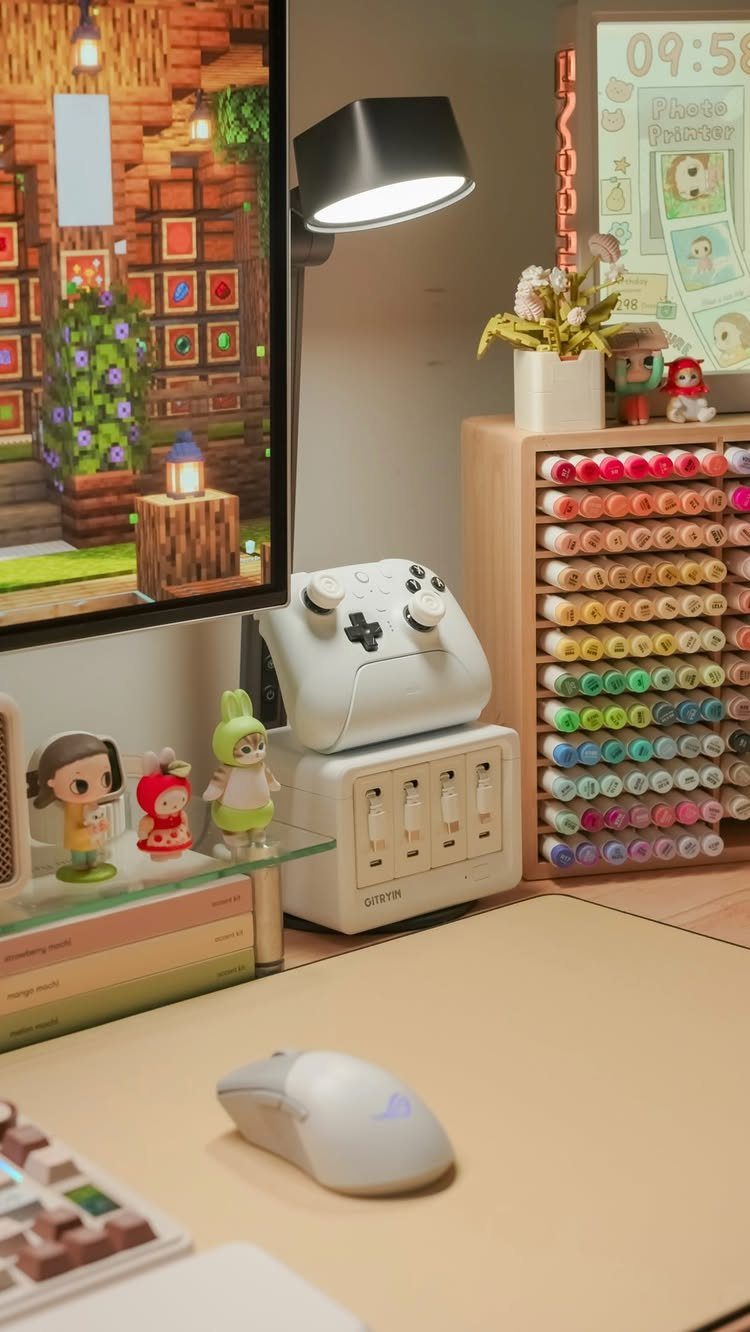
One multi-cable station corrals the phone, tablet, controller, and headphones in a single footprint instead of adapters snaking across the desk.
The upright version that holds a controller on top turns out to be a good test: if the station can manage that bulky shape, your phone will fit fine.
Tether the cables with Velcro or a sleeve so they do not slide behind the desk when unplugged. This matters most for people who charge daily and work in a small space where every cord competes for room.
10. Personal Photos or Decor
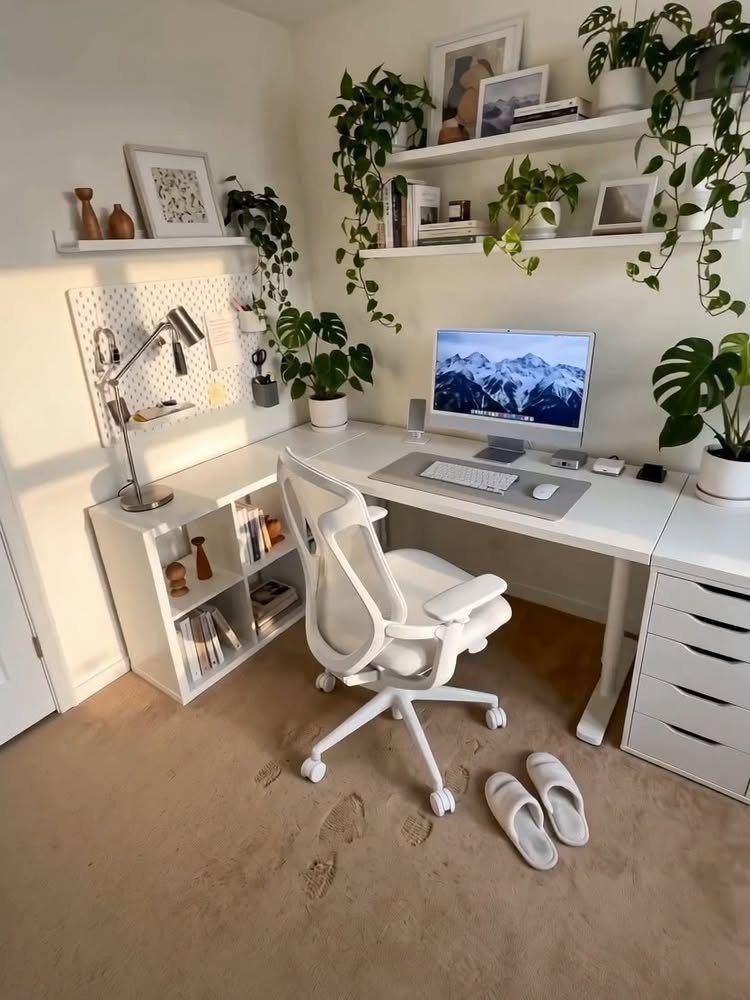
A desk without anything personal on it reads like a hotel room: functional, but not somewhere you want to spend a full workday.
Framed photos, a few plants, and books that are clearly chosen, not random, give a desk its character. That is the standard: one or two things that mean something, not a gallery wall creeping onto your workspace.
The pegboard behind handles the functional stuff, so the shelves stay uncluttered. This suits people who need their space to feel like theirs but tend to let decor become more distraction than comfort.
Stop at three items within your direct sightline.
11. Use a Rolling Cart
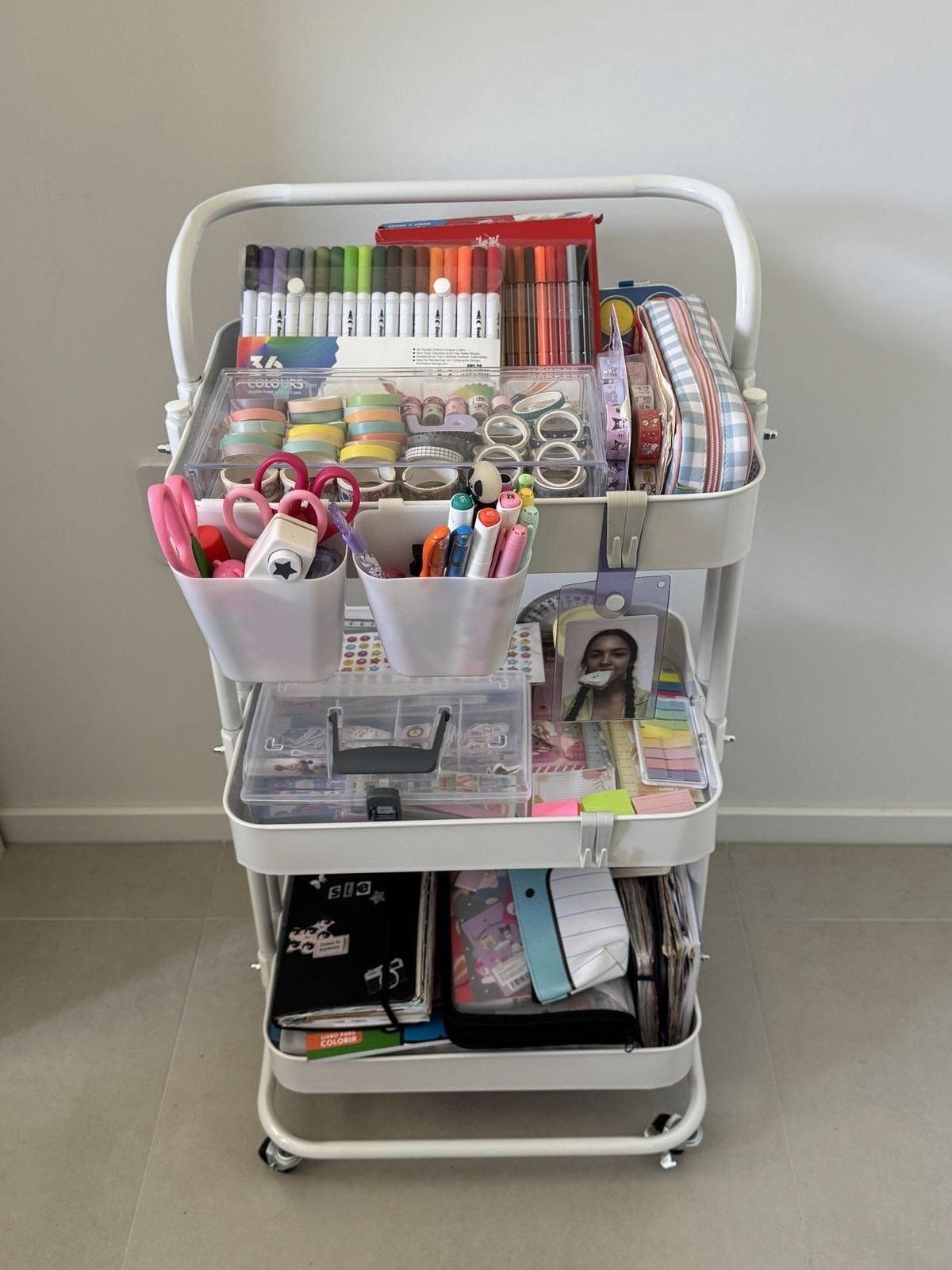
A rolling cart gives you the storage of a small bookcase with the option to roll it out of sight when the project ends.
The metal cart, three tiers, is packed with pens, tape, and notebooks that would otherwise colonize the desktop. A rolling cart works as a mobile inbox, a craft station, or a plant hospital at different times of year.
It works best when the top tray holds what you reach for daily and the lower shelves hide backup stock. Floor space is the cost; in a cramped room, measure before you buy.
Most utility carts run narrow and fit gaps a bookcase would not.
12. Packing Supplies
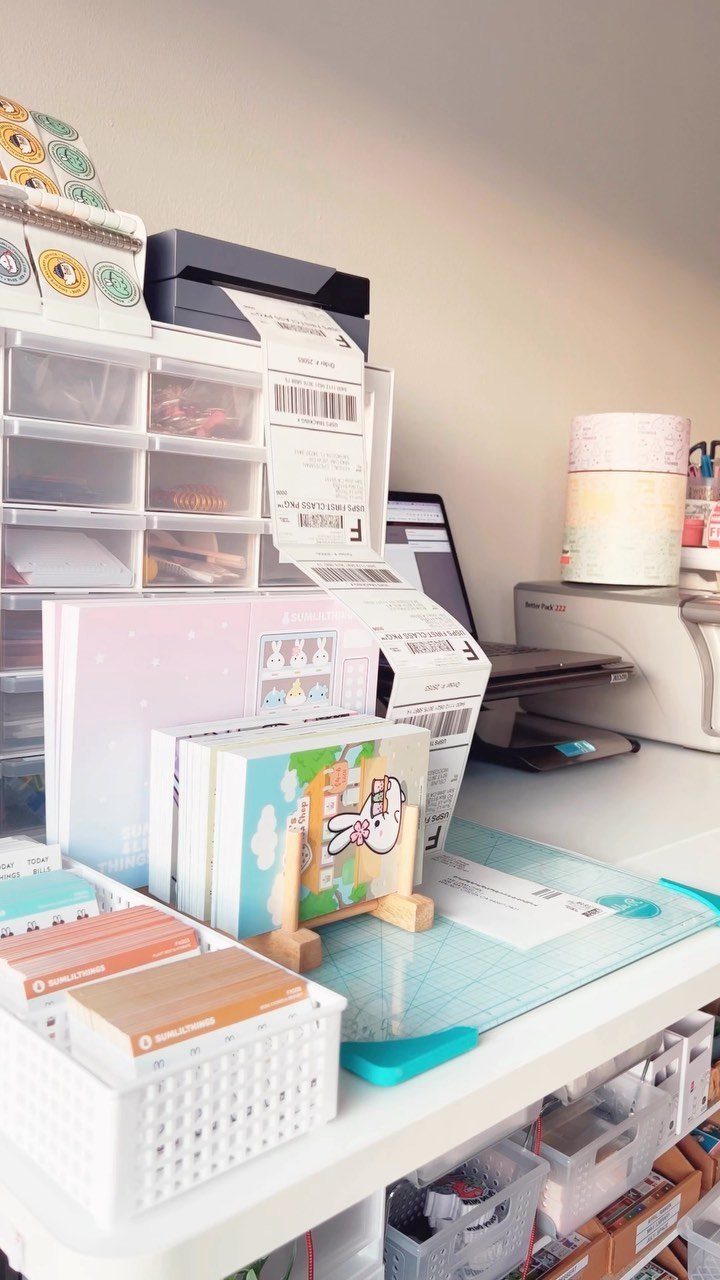
A thermal printer and labeled bins turn shipping from a scramble into a station you walk up to and walk away from.
The printer feeds labels directly into your hand, with envelopes, tape, and cards sorted into clear bins beside it. That visibility matters: if you cannot see the mailers, you will overbuy them or run out mid-batch.
Set this up if you sell online, mail gifts regularly, or just hate the post office enough to batch your errands.
The upfront cost of a label printer stings, but the time saved adds up fast during holiday season or a product launch.
13. Notebook at Your Desk
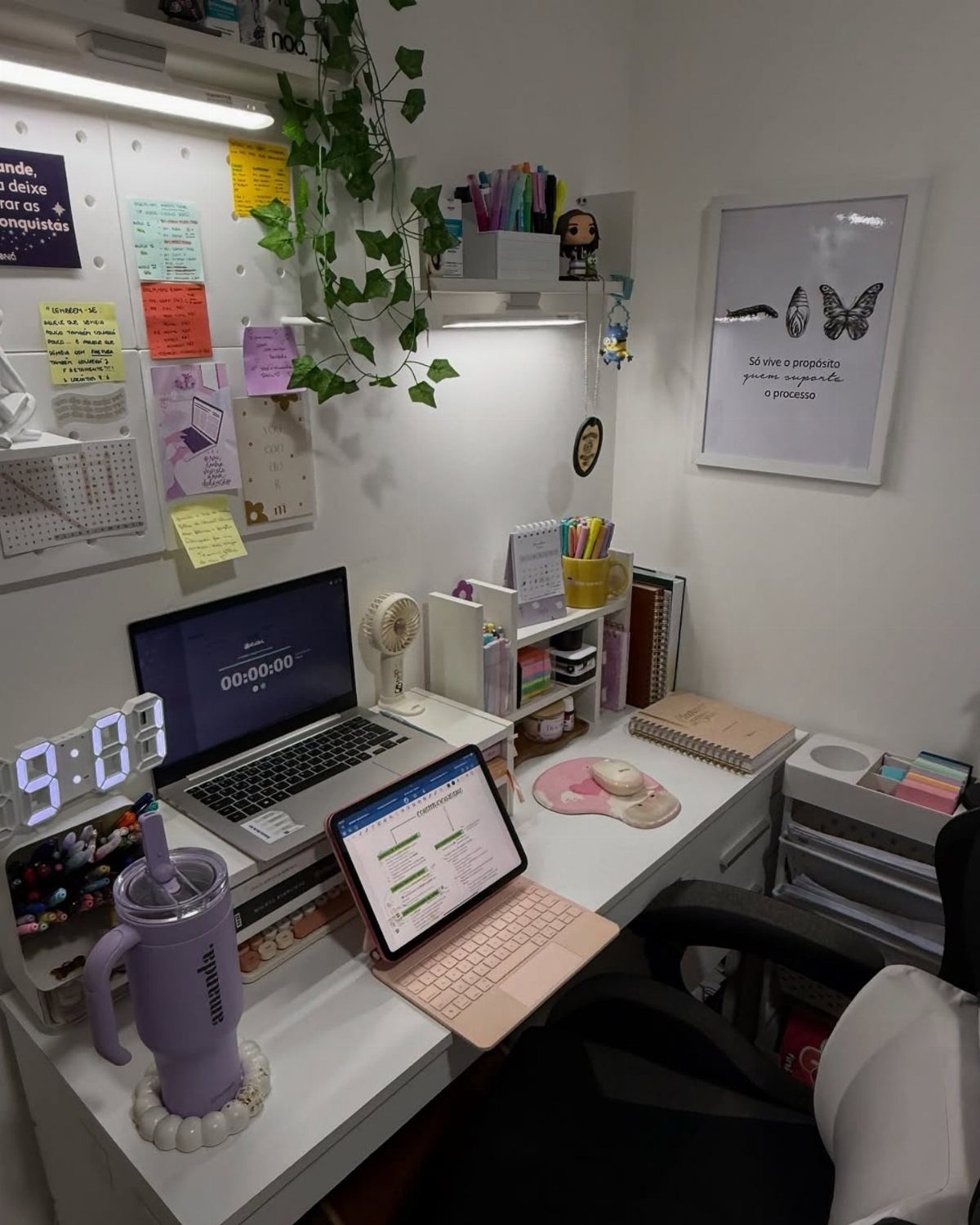
A spiral notebook on the desk catches stray thoughts before they disappear into browser tabs. Paper still wins for half-formed ideas, phone numbers from quick calls, and tomorrow’s tasks that do not belong in a digital calendar yet.
The reader working from a small corner without room for extra systems needs this most. One notebook, one pen, no charging.
An open notebook stays in use; closed, it becomes another object to open, and most people skip it.
Any cheap spiral bound book works. Write the date at the top of each page so you can find that note from Tuesday.
When the book fills, shelve it and start another. The pile becomes an accidental archive of what actually happened this season.
14. Wire Grid Wall Display
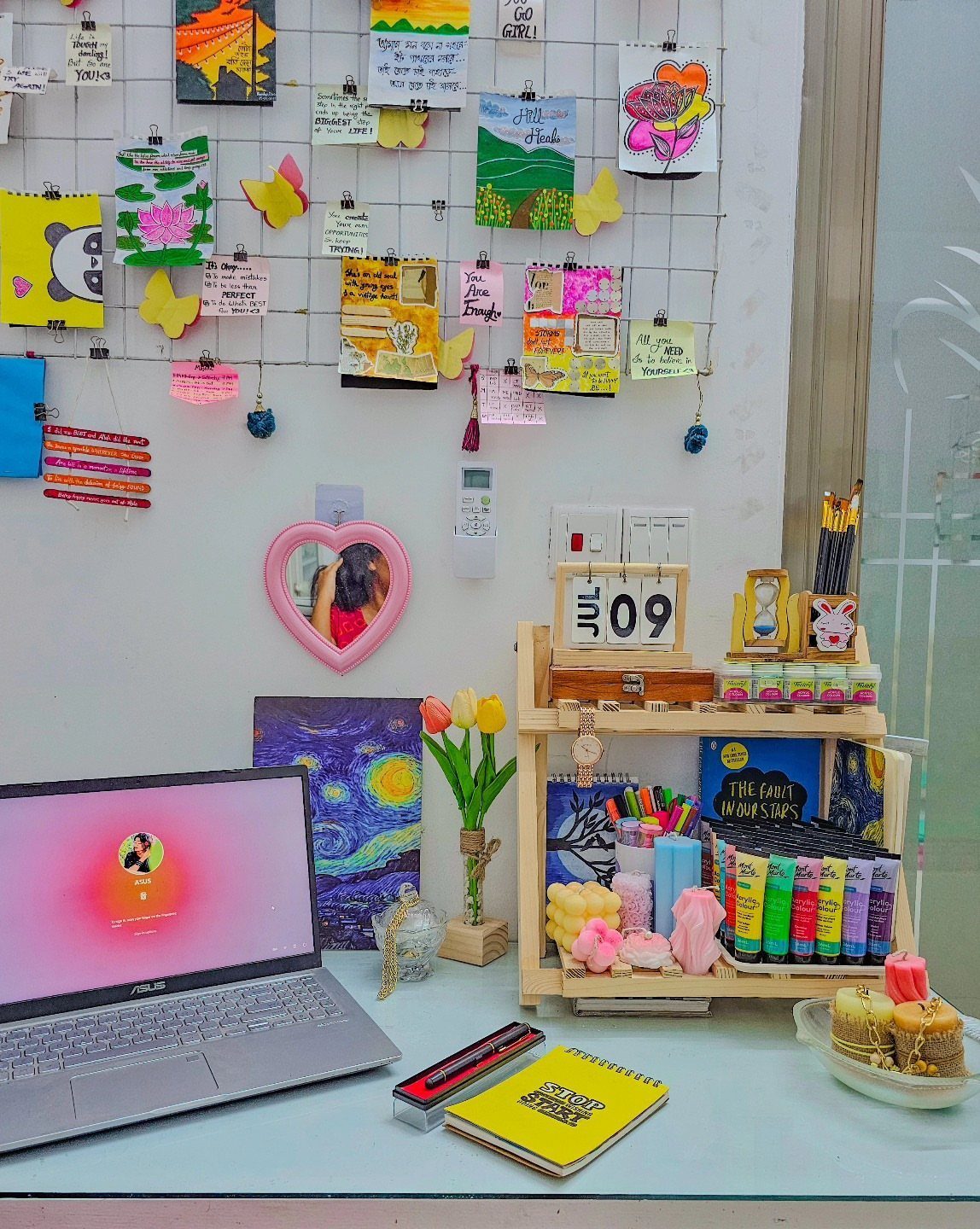
The wire grid mounted behind the desk moves photos, reminders, and the odd paper butterfly off the surface without hiding them in a drawer.
It suits renters who cannot drill for shelves and anyone whose walls stay bare from caution, not choice.
Small clips or clothespins hold items; the grid itself needs two nails or adhesive hooks rated for a few pounds.
White grids disappear against pale walls and let the contents read as the decor; black and brass read as the grid itself.
Plants do not belong on the grid itself; they tip, they drip, they want light the wall rarely gives. A small stand beside the desk handles greenery better, or a shelf mounted higher if your lease allows.
15. Desktop Wire Book Rack
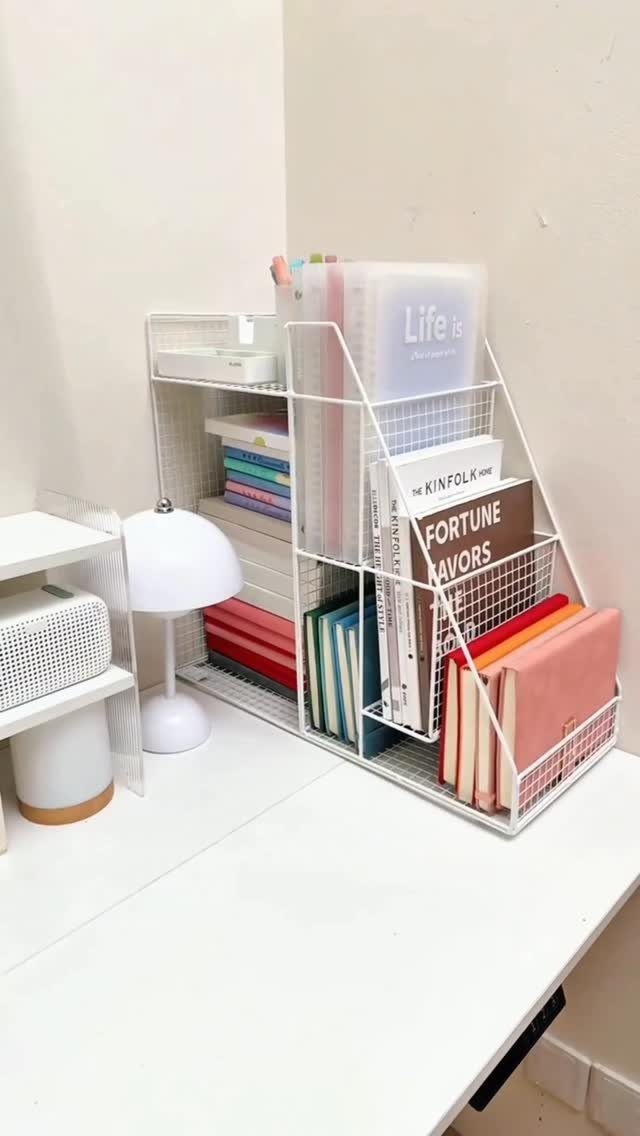
A wire rack standing on the desktop keeps notebooks and folders upright and visible, turning a stack into a row you can read at a glance.
This trades surface depth for vertical order. A shallow desk leaves the rack crowding your elbows; measure before you buy.
The reader with several active projects gains more than the minimalist working from one notebook.
Load it with what you touch today and this week. Reference files and completed work belong in drawers or shelves; the rack is not storage, it is staging.
I shift items out every Friday or the upright row becomes another pile standing on end.
16. Desktop Caddy Organizer
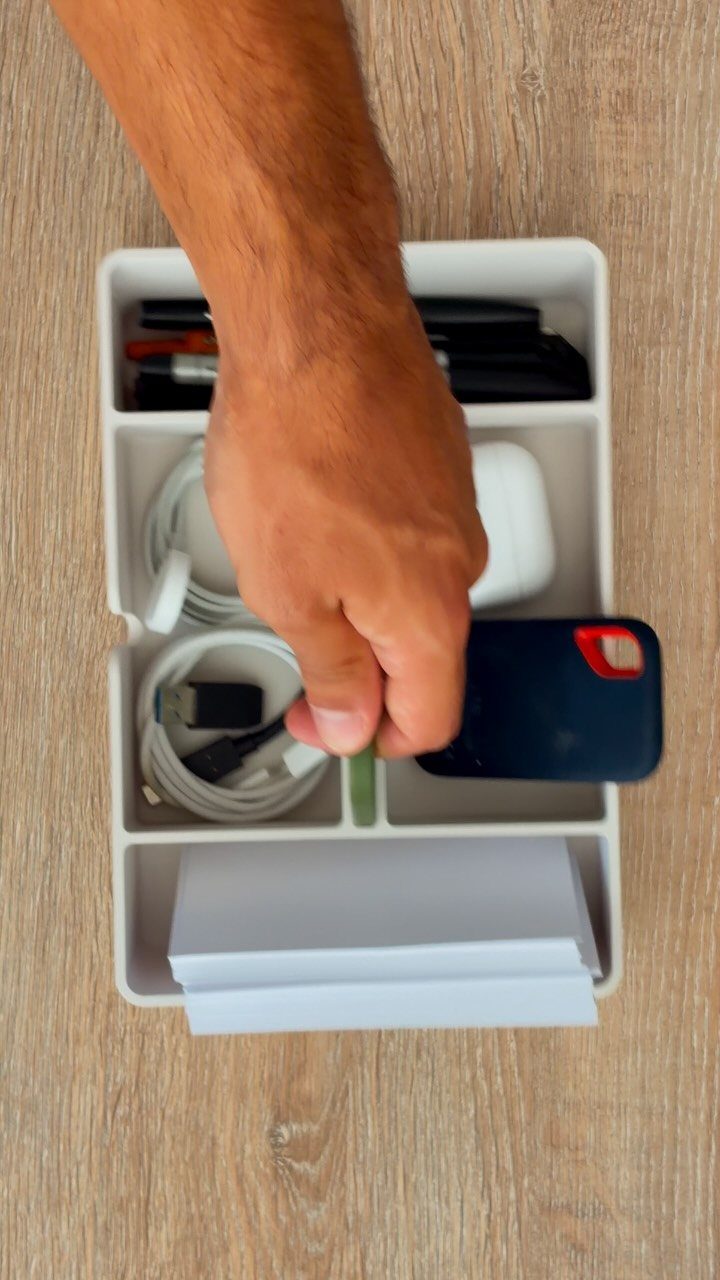
The compartmentalized caddy on the desk surface corrals cables, pens, and the small accessories that otherwise scatter into a thin layer across the whole workspace. One grab moves the whole system to a drawer when you need the surface clear.
Thrifted toolbox lids, small baskets, or vintage dishware handle the same job with more character than white plastic. A wooden silverware tray splits charging cables from stationery without looking like office supply catalog pages.
What stays out depends on what you touch before noon. The rest belongs in a drawer, not in the caddy.
A full organizer reads as clutter from across the room; a half-empty one signals that you have a system.
17. Craft Storage Desk Cabinet
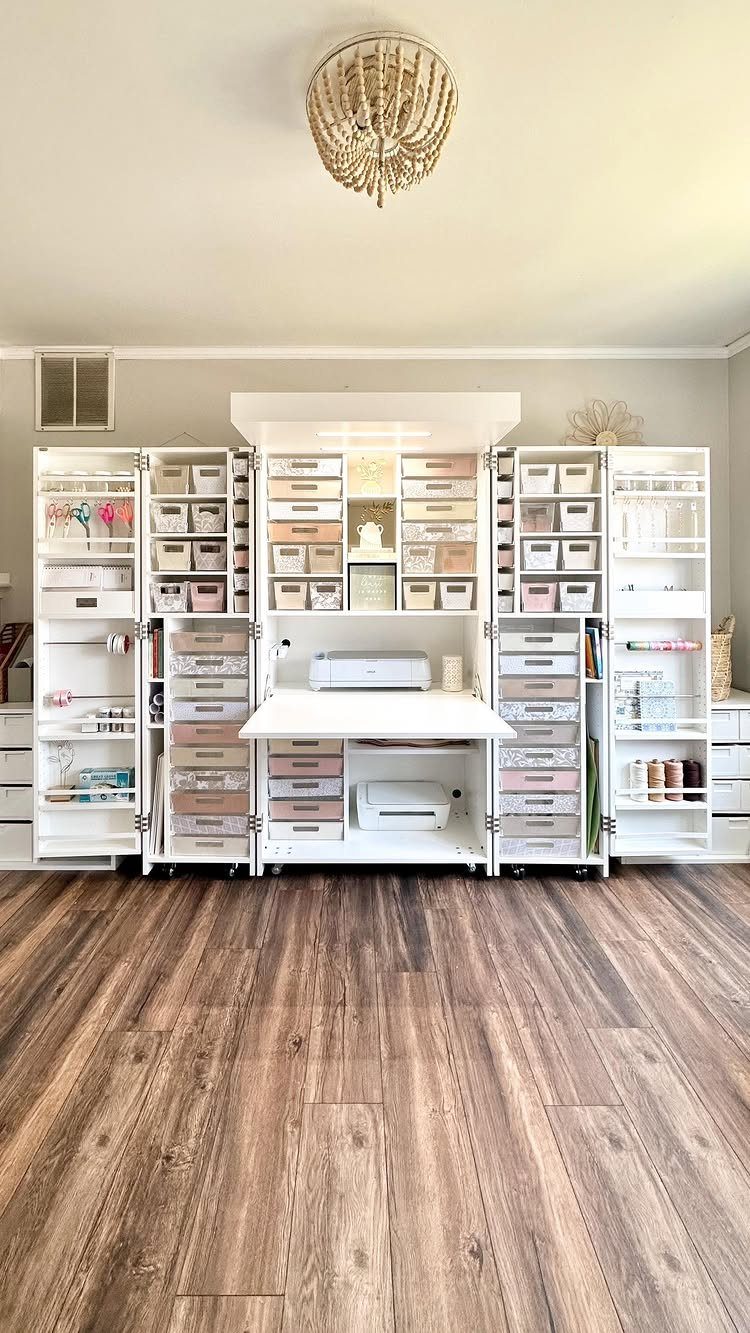
The craft cabinet with its fold-down desk and surrounding shelves frames a complete workspace that closes into a white panel when the project ends.
This is not desk organization; it is room organization for the reader whose hobby has colonized the dining table.
The side shelves hold bins at eye level, drawers below for tools, and the back panels hide less attractive supplies.
I would add wall pockets to the outer sides for paper and works in progress that do not fit the interior grid.
This unit asks for floor space and a dedicated corner. The apartment gardener with a balcony, not a yard, probably lacks the square footage.
For the reader in a small house with a spare bedroom, it replaces a desk, shelves, and filing cabinet in one purchase.
Label every bin before you fill it. Unlabeled storage becomes mystery storage, and mystery storage gets opened or ignored, never used.
18. Decorative Wicker File Basket
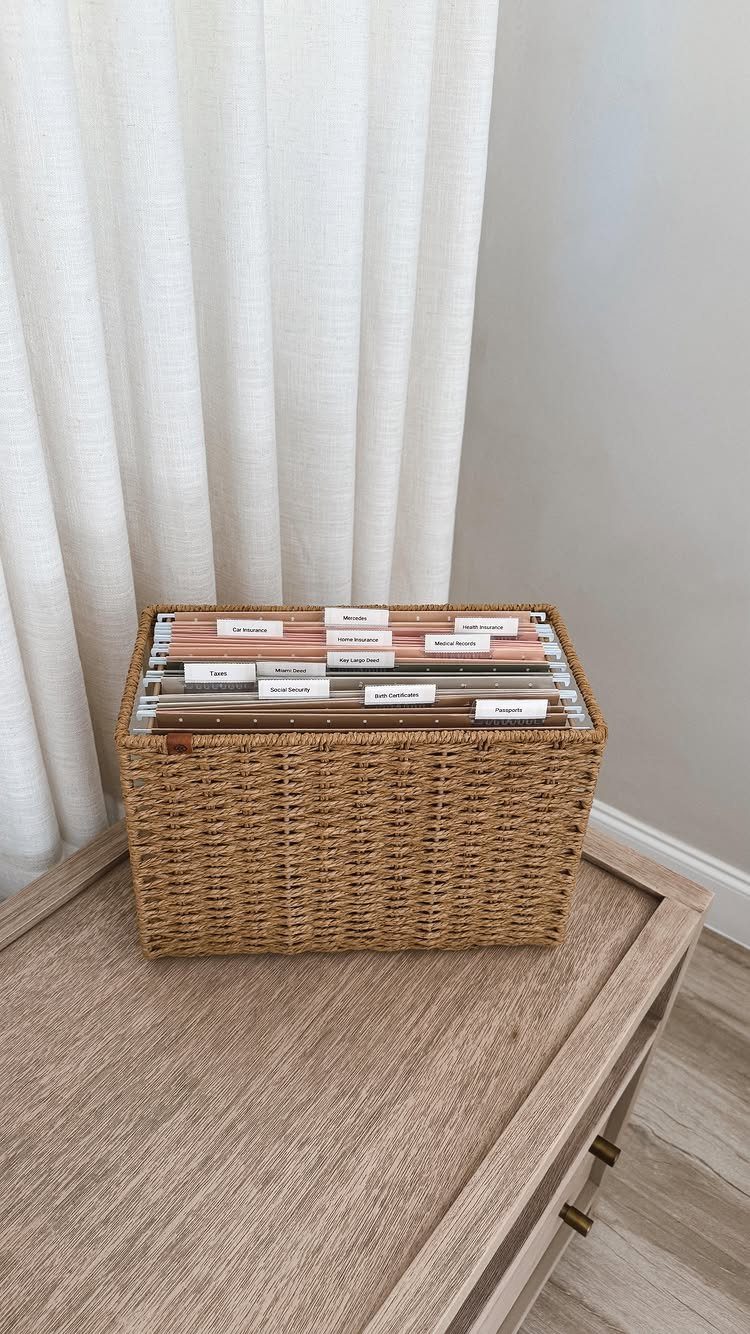
A woven basket with hanging files inside brings document storage out of the metal cabinet and into the room as an object you do not mind seeing.
Wicker reads warmer than plastic, less clinical than the office; it belongs in a living space that doubles as workspace.
The folders inside need labels that face forward, not the color-coded chaos of a busy accountant. Visible tabs for taxes, passports, and household papers suggest few enough categories that one basket suffices.
The reader with deep client files still needs the filing cabinet; this is for the personal paper that drifts onto kitchen counters.
Check that the basket base stays flat under the file frame weight. Cheap wicker sags, tilts, and eventually dumps.
A tight weave and rigid rim matter more than the particular stain.
19. Laptop Stand and Desk Mat
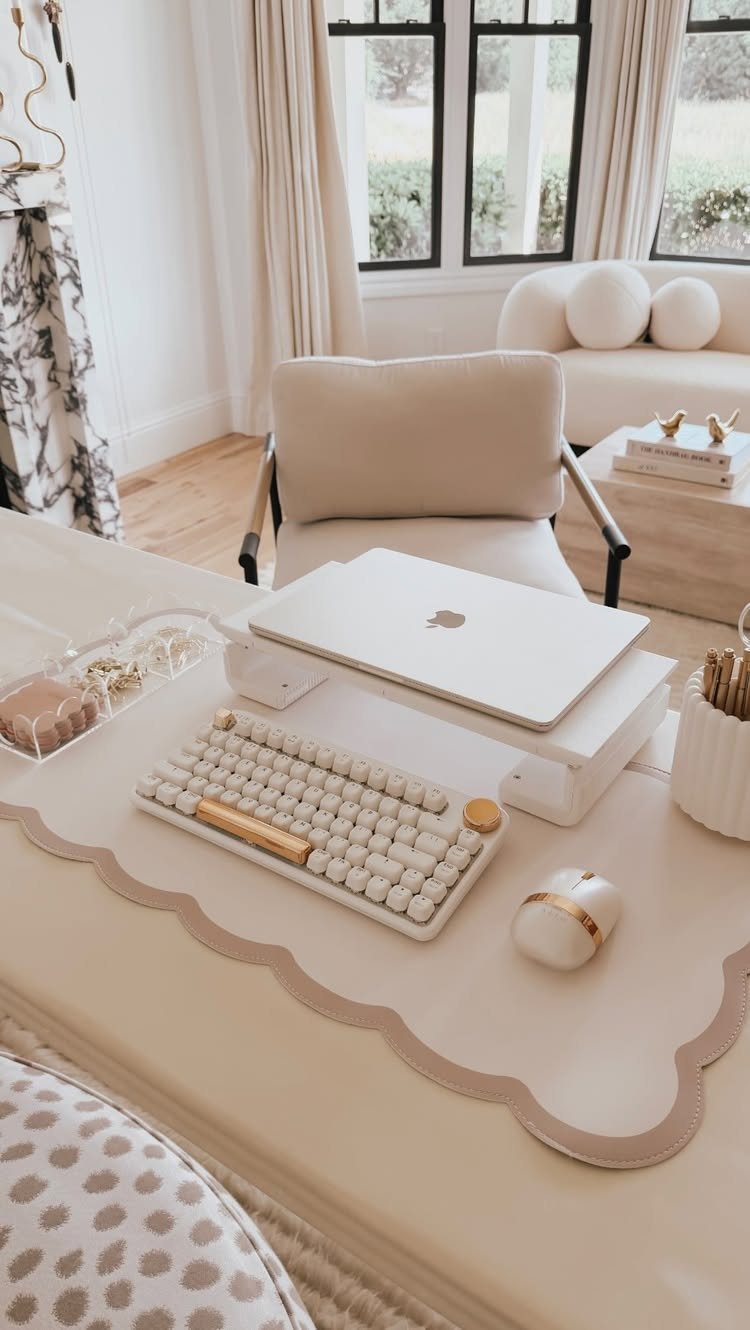
A laptop stand paired with a desk mat turns any flat surface into a proper workstation without eating the whole desktop.
The stand lifts the screen to eye level, which saves your neck during long sessions, and the mat underneath gives your keyboard and mouse a clean, defined home.
This setup suits anyone working from a kitchen table or a shallow desk where permanent changes are not an option. The stand folds flat for travel, and the mat rolls up if you need to clear the space for dinner.
You will need an external keyboard and mouse, since typing on a raised laptop wobbles.
A basic metal stand is cheap enough that the upgrade feels minor; leather or vegan leather mats cost about the same and do more for the look.
For a tighter budget, a stack of thick books and a cutting board gets you most of the way there.
I would pick the mat in a tone that hides coffee rings, and I would size it to leave some bare desk on one side for a notebook or a cup.
Importance of Desk Organization
An organized desk saves the time you lose hunting for a pen or a paper you just had. When everything sits where you expect it, the work starts faster and the mental load drops.
The stress reduction is real: a clear surface signals a clear task, while clutter competes for attention and wins. This matters whether your desk sits in a spare bedroom or a corner of the living room.
The desk should match how you actually work, not some ideal version of yourself. If you grab sticky notes all day, they live on the surface.
If you touch the stapler once a month, it belongs in a drawer. The system only works when it reflects real habits.
Your desk should be organized by what you use most every day,” says Carly Cicero, principal at Cicero Design Group in Youngstown, Ohio. “If you use an item daily, it should be within reach from your desk chair.
Maintaining Organization
The reset at day’s end pays back every morning. Return each item to its slot, wipe the surface, and tomorrow starts clean.
A weekly check catches what drifted; a deeper reassess every few months finds the organizer you stopped using or the drawer that became a junk pile. Dust builds faster than you notice.
Lift everything, wipe underneath, and the desk feels new again. The habit matters more than the schedule.
Miss a day, fine. Miss three and the pile returns with interest.
Personalization of Workspace
One framed photo, a plant that survived the move, a book you actually open: these mark the space as yours. Your style shapes the choice.
A minimalist wants one clean object with meaning. Someone who collects needs a box or two to contain the impulse, not eliminate it.
Beyond that, decor becomes clutter with better lighting.
Digital Vs. Physical Storage
Moving documents to cloud storage cuts the paper stack and the time spent thumbing through it. A keyword search finds the contract in seconds; a filing cabinet takes minutes and only works if you filed it right last month.
The calendar app replaces the wall grid, the scanner app replaces the receipt envelope. The shift saves square footage and the cost of folders and labels, though it needs discipline: digital clutter is harder to see and easier to ignore.
Back up what matters in two places. A hard drive fails, an account locks, and the paperless system suddenly matters more than the paper ever did.
Frequently Asked Questions
What is the best way to organize your desk?
Keep what you touch daily within reach from your chair and store everything else in drawers, shelves, or bins.
Mounting a pegboard on the wall above your desk keeps tools and notes within arm’s reach without eating up the space where you actually work.
The real discipline is putting things back in their homes instead of pushing them to the edge.
What are some minimalist desk organization ideas?
A laptop riser and headphone stand are the only objects that earned the right to stay on my surface; everything else lives in a drawer or off the desk entirely.
Wall-mounted shelves, a small filing cabinet, or that same pegboard setup give supplies a home so they do not drift back onto your work area. This costs nothing but the habit of actually putting things away, not just moving them.
What are the latest trends in desk organizers?
Multifunctional pieces that read as decor are replacing pure office supply catalog looks.
A woven file basket turns paper storage into something you might actually want to look at, and a wooden silverware tray separates cords from pens with more warmth than the usual white plastic dividers.
Clamp-on lamps and laptop stands that collapse flat fit the person who works from a kitchen table or moves between rentals.