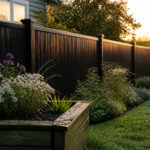

Painted rock ideas run from a 15-minute ladybug to a 90-minute owl with layered feathers, and the difference is almost always the paint pen, not the painter. The same tool that dots a bug’s spots lets you letter crisp quotes or draw Snoopy’s ear on a curved stone. The catch is drying time: wet acrylic underneath pulls and smears detail work, so every layer needs patience before the next begins.
1. Animals
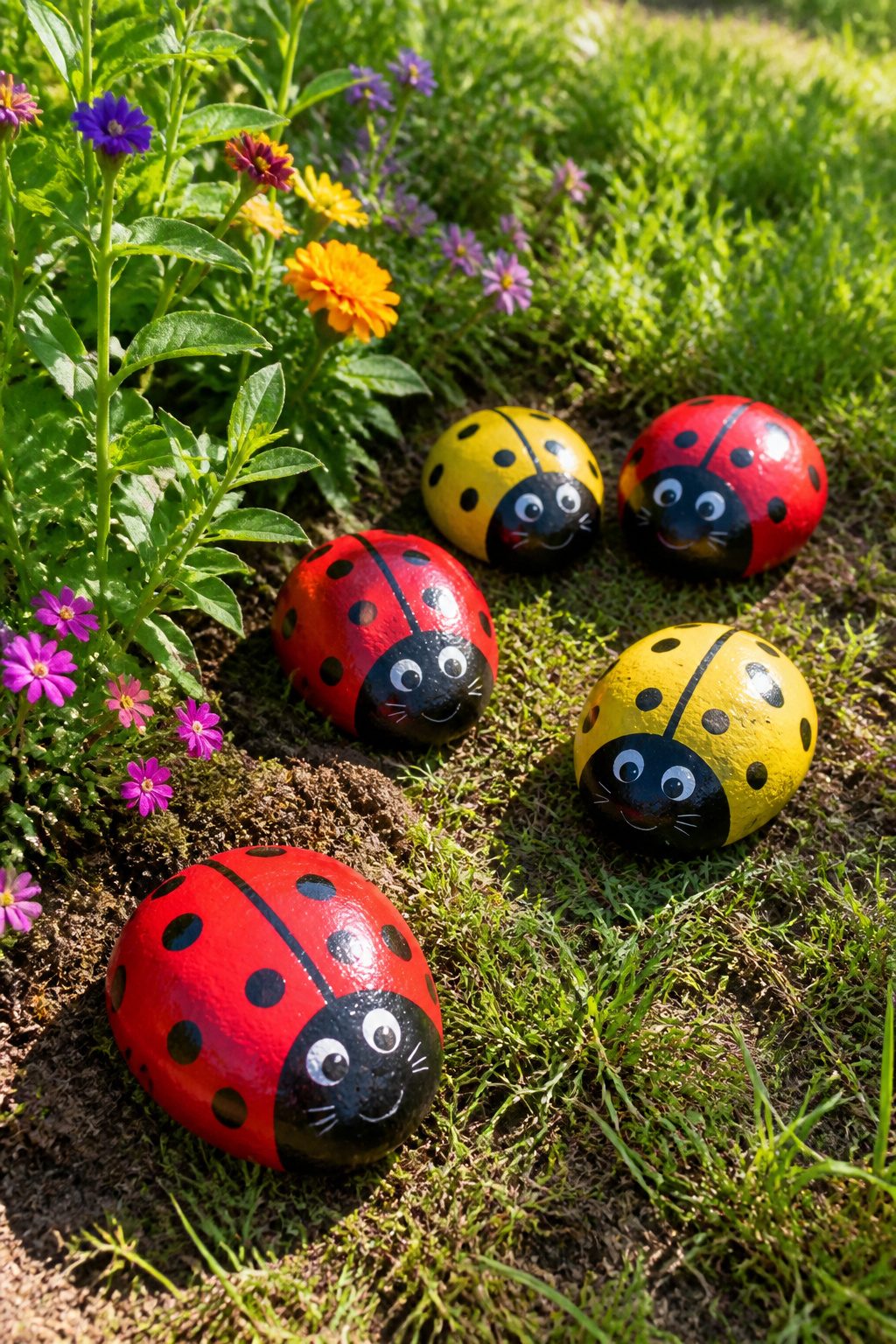
Ladybugs make the natural starting point because the body shape is already halfway painted. A round stone, flat-bottomed so it does not roll, takes black acrylic for the base coat and then a red or yellow wing pair across the top half. I add dots with a 1mm acrylic paint pen after the color layer dries; the pen keeps each spot the same size, which a brush rarely does. For whiskers and the small white eye highlights, the extra-fine tip on a Posca or Artistro pen is the only tool that does not blob.
Owls and foxes take the same supplies up a step. The owl needs feather texture layered in muted browns with a fine brush, then yellow or white eyes drawn in with a pen once the base is fully dry. A fox face is mostly orange fill, black ear tips, and a white muzzle triangle—except the muzzle’s edge wants a Micron pen or a fine black paint marker, not a brush, or the line goes wobbly.
Simple bugs run about 15 minutes once the base coat is dry. A full owl with layered feather colors and proper eyes runs closer to 90. The paint pen is what lets the detail happen at speed.
2. Nature Scenes
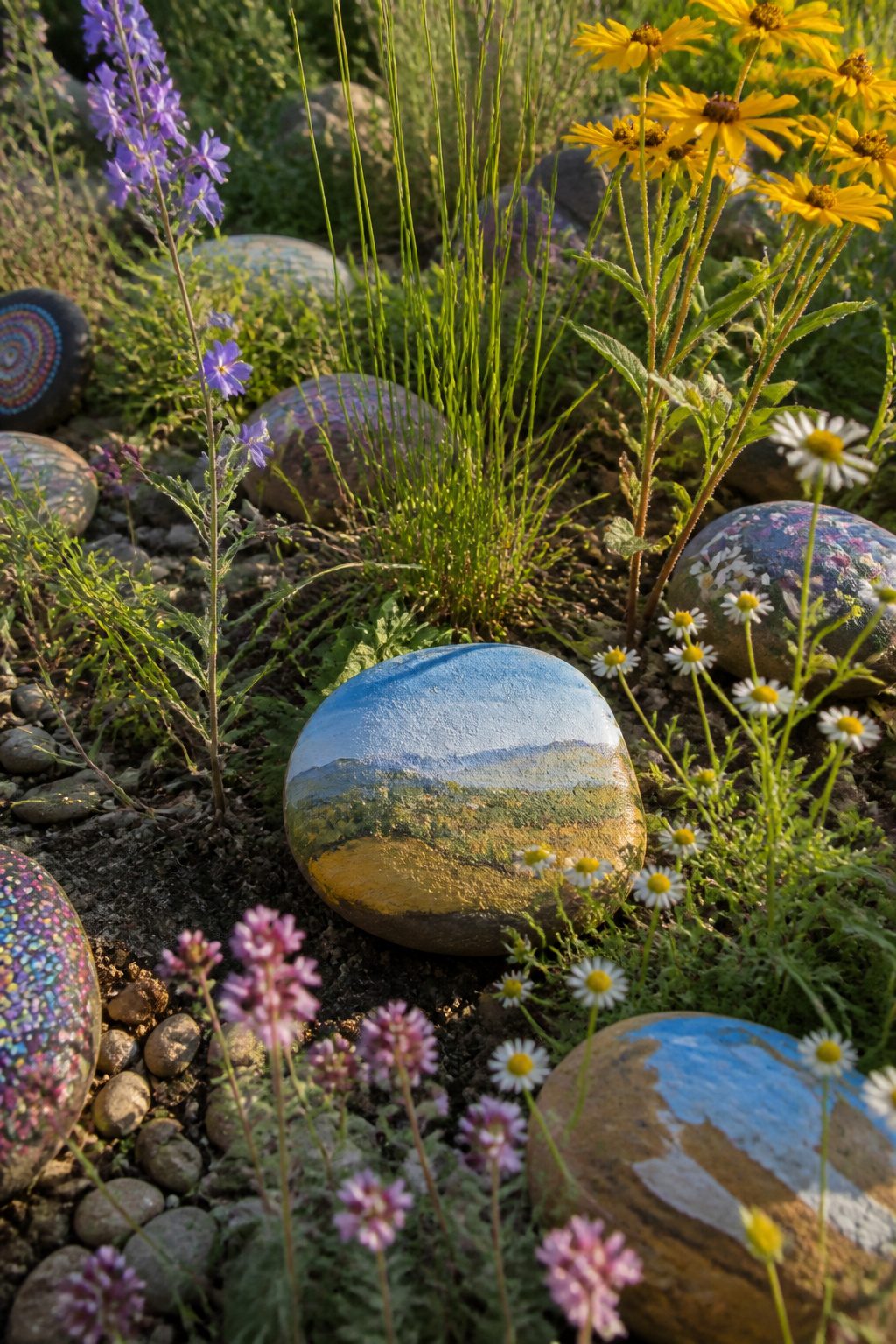
Flat-topped river rocks earn their keep on landscape pieces. The flat plane gives you a natural horizon line: pale blue acrylic across the top third, a band of raw sienna or olive ground below, and the rounded edge of the stone itself becomes a distant hill. Layering works best in thin, even coats. Sky dries first, then ground, then the fine stuff, grass blades or petal edges, with a liner brush or paint pens.
For garden display, outdoor acrylic paint holds up to rain and sun better than standard craft paint. A base coat of white gesso keeps colors from going muddy on dark stone, especially the gray-green river rocks common in craft stores. I skip the gesso when I want the stone’s own color in the scene, but the trade is real: colors read duller, and small details disappear.
Trees need shadow. A dark trunk painted straight onto light ground looks pasted on. Underpaint a thin wash of burnt umber where trunk meets earth, let it dry, then lay the detail color over. Same for flower stems: a stroke of darker green where stem disappears into grass reads as root, not float.
Sealer matters less than the paint itself. Stones left out will weather regardless. Indoor display keeps the work intact longer, but a well-painted landscape rock by the back step, touched by morning light, is worth the eventual fade.
3. Inspirational Quotes
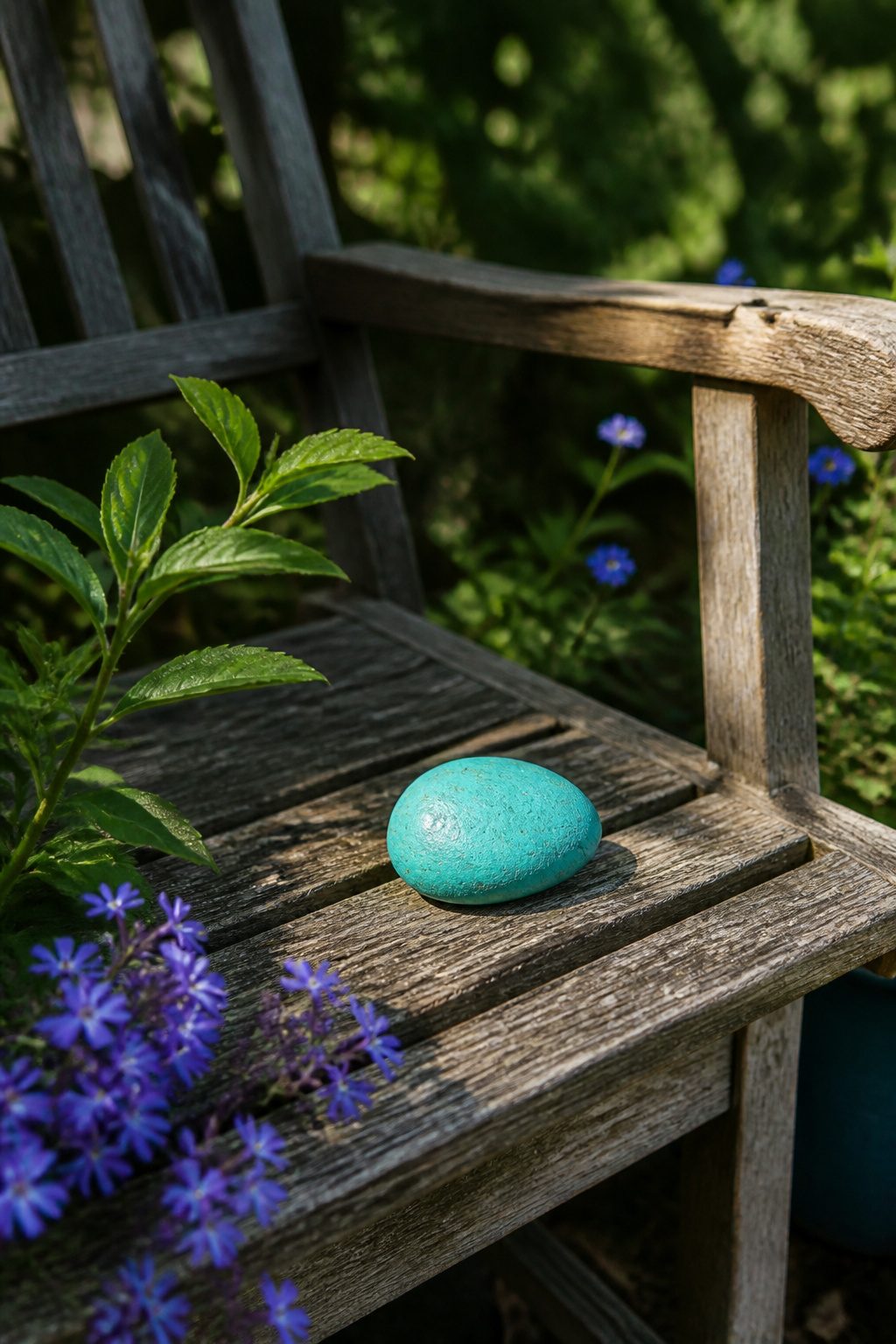
Short phrases read better on small rocks than long ones. Three to five words, maybe seven if the surface is flat and palm-sized, and you avoid the cramped look that keeps these from sitting well in a garden bed or on a windowsill. I sketch the lettering first with pencil, working out the line breaks before any paint touches stone. Paint pens beat brushes for crisp text. Oil-based paint pens or acrylic markers like POSCA give that clean edge, and the fine tip keeps letters readable at garden distance. Let the base coat dry fully first; wet acrylic underneath will pull and smear.
White pens over a color block pop hardest against soil and mulch. An affirmation like "Grow on" or "Be here now" fits most tumbled stones without crowding. These make easy gifts; the flat, smooth ones from riverbeds or craft bins take lettering best, though a little roughness helps the paint bond. Seal them before you write, then again after, or the garden weather blurs the message within a season.
4. Food Items
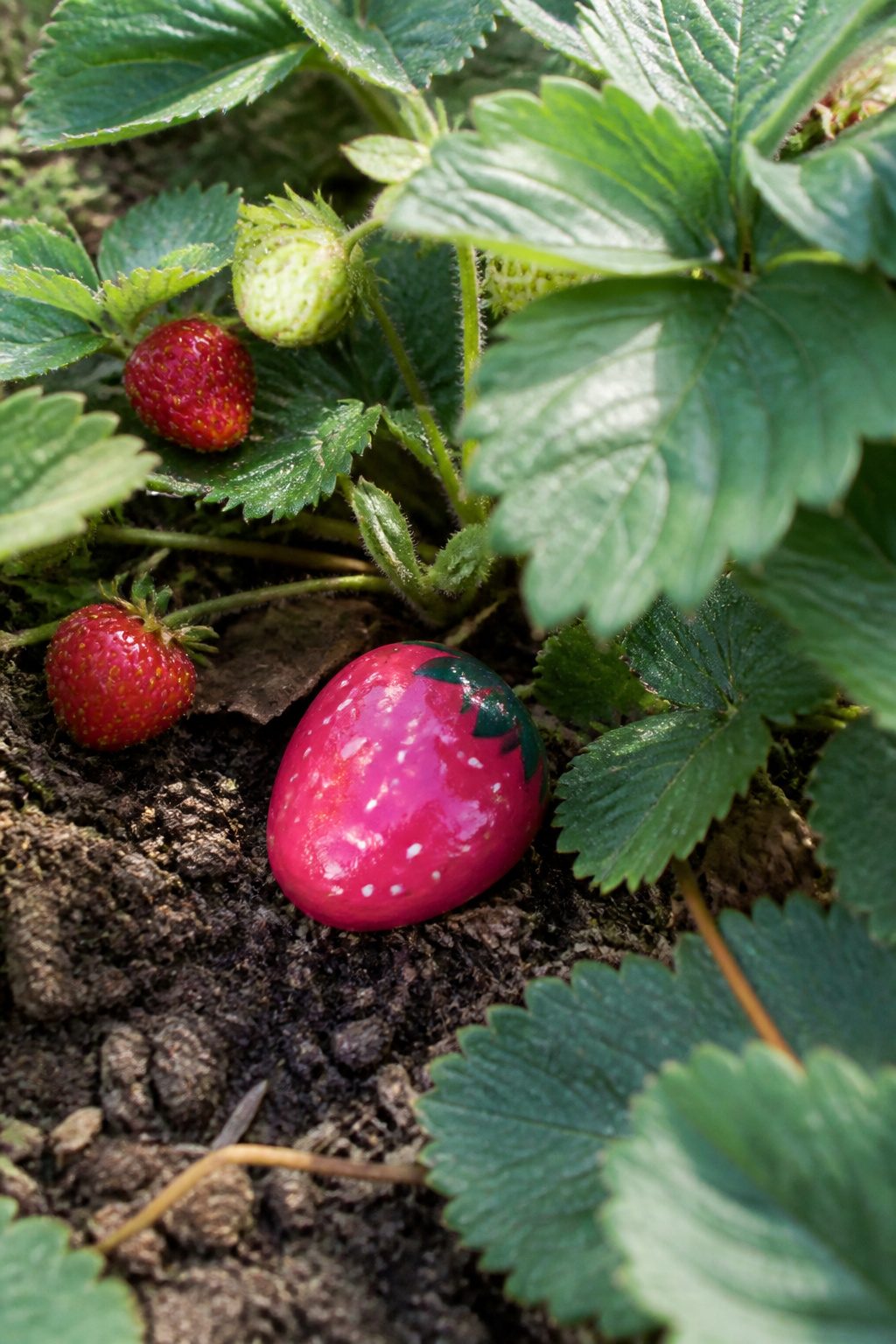
Oval rocks left in the strawberry patch last June still trip me up on watering day. Painted bright pink with that narrow white seed line and a ruffled green cap, they looked real enough from the porch that I stooped to check if any had ripened. The watermelon rocks do the same from a distance: a bright pink interior, dark green rind, and tiny black seed dots, with the crisp rind line the only giveaway that you’re not looking at a slice someone dropped.
The trick is the color saturation. Muted paints read as stone no matter how accurate the shape. You want the pink almost fluorescent, the green deep enough to look wet. A gloss sealer over the top half helps, catching light the way real fruit skin does. I learned that after the first batch dried matte and sat in the garden looking like faded pottery.
Frosted cupcakes and pizza slices work the same way, though the shape hunt takes longer. A flat-topped oval with one curved edge becomes a slice; a rounded triangle with a flat base reads as a cupcake from above. The humor lands when someone spots one from five feet away and reaches before their brain catches up. I leave the food rocks clustered near the hose or tucked beside the porch step, where believability matters and the double-take is the whole point.
5. Holidays
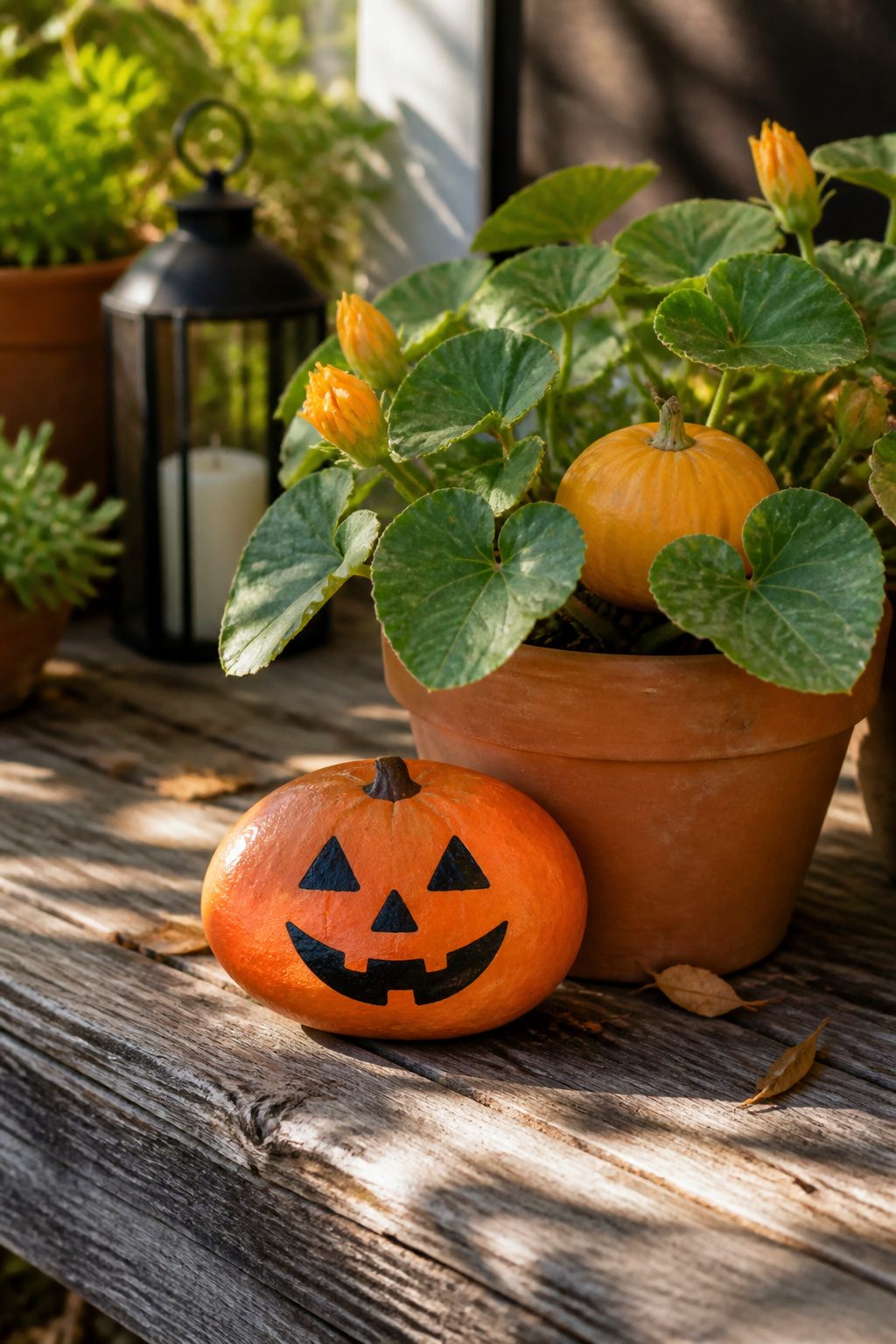
Painted rocks pull double duty as holiday decor: they stand up to rain and sun, and when January or November rolls around, they slide flat into a shoebox while wreaths and inflatables eat up shelf space.
For Halloween, oval river rocks make convincing jack-o’-lanterns with an orange base, black triangle eyes, a jagged mouth, and a brown stem. Pastel stripes, dots, and zigzags turn the same shape into Easter eggs; dimensional paint in squeeze bottles builds that wax-resist texture without the actual wax. Snowmen take longer because the white needs two coats to cover stone, but once sealed they survive front-porch duty through freeze and thaw.
A basket of painted Easter eggs works as a non-candy hunt that kids collect year after year. The same rocks can wear new faces next season if you sand gently and repaint.
6. Games
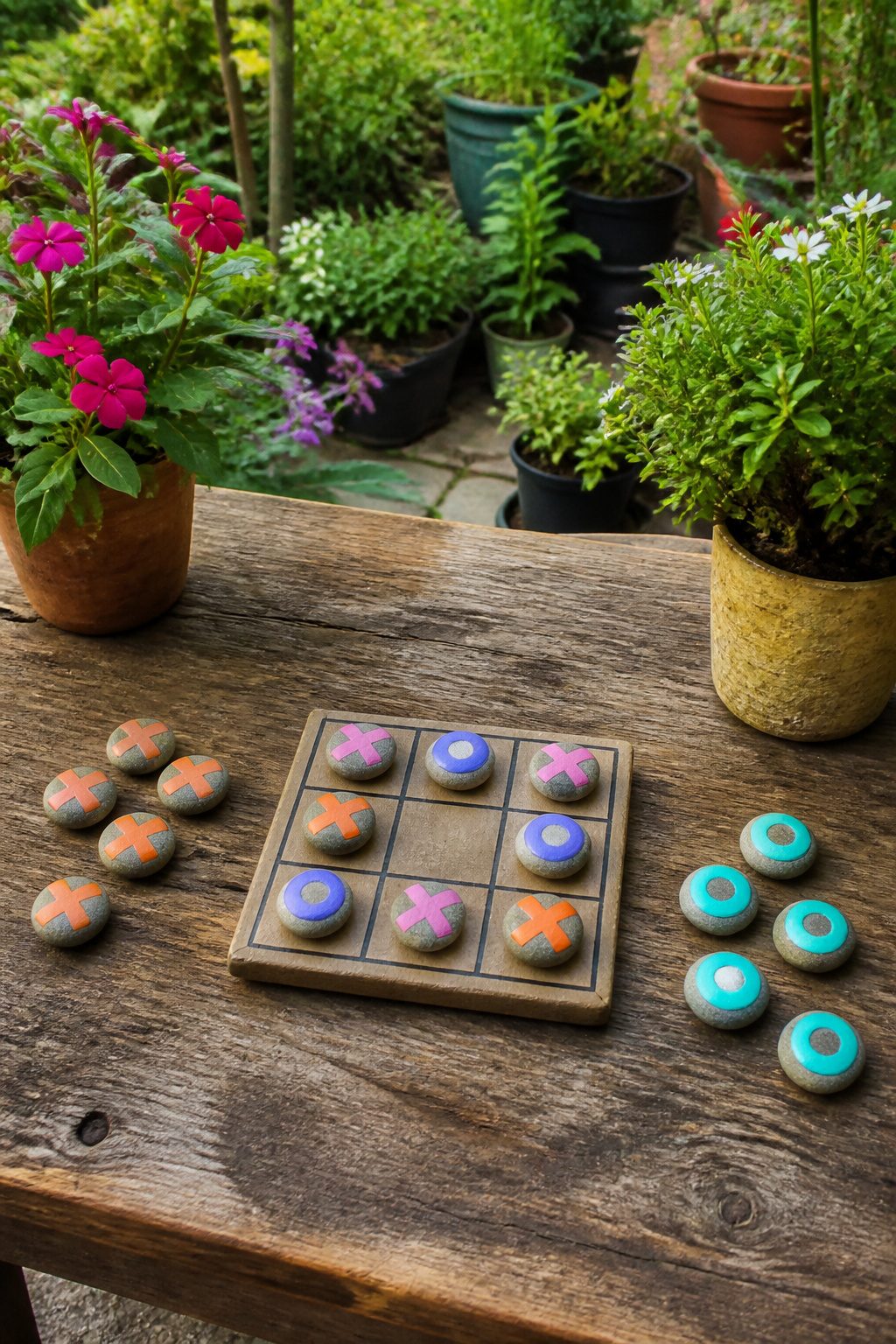
A tic-tac-toe set painted on rocks survives spilled juice and backyard dew far better than the cardboard box version my kids flattened inside a month. Five X rocks in one color and five O rocks in another make a game that stores in a drawer or a garden shed without splitting corners or losing pieces under the couch.
The carry bag doubles as the playing board, which matters more than it sounds. A fabric pouch takes up the space of a rolled napkin; the boxed game it replaces needs a shelf. For younger children, the same logic works with numbers or shapes painted in matching sets, turning a handful of stones into a sorting game that fits in a jacket pocket.
Painting the symbols is simpler than most people expect. Acrylic craft paint in the little $1 bottles holds up fine on stone, though a coat of polyurethane sealant keeps the paint from chipping when the rocks knock together in the bag. The enamel versions give a glossier finish if that matters to you; either way, the game outlasts the commercial version at about a quarter of the cost.
7. Mandala Designs
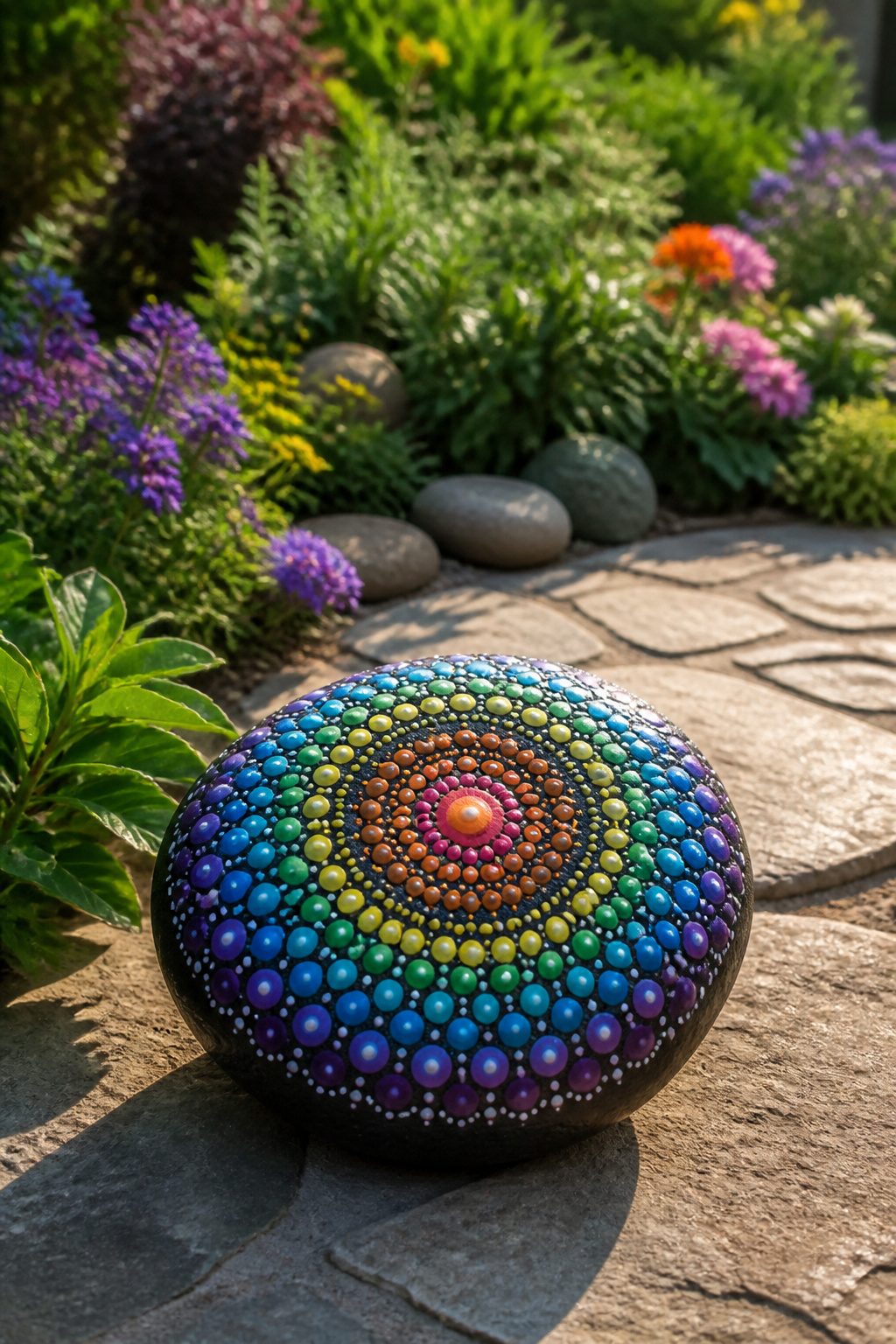
A mandala rock starts from a single center point and grows outward in concentric rings of dots. The pattern demands radial symmetry, and a slip at any ring shows up in every repetition, so working outward slowly is the only way to keep the design intact.
Dotting tools keep the circles uniform in size. Many painters use the eraser end of a pencil for larger dots and toothpicks or a stylus for smaller ones. Switching colors every three to four rings builds the gradient effect without overcomplicating the color plan. Acrylic paint markers at 1mm work well for the base marks, though fine-tipped white pens add the last sharp highlights.
The meditative part is real. Repetitive dot placement quiets the hand and the head in about the same way weeding a row of seedlings does: the task narrows, the mind stills. Several painters describe it as the main reason they return to mandalas rather than more varied designs. The finished rock does carry that calm with it, enough that people often pick mandala stones up and hold them longer than they’d intended.
8. Kindness Rocks
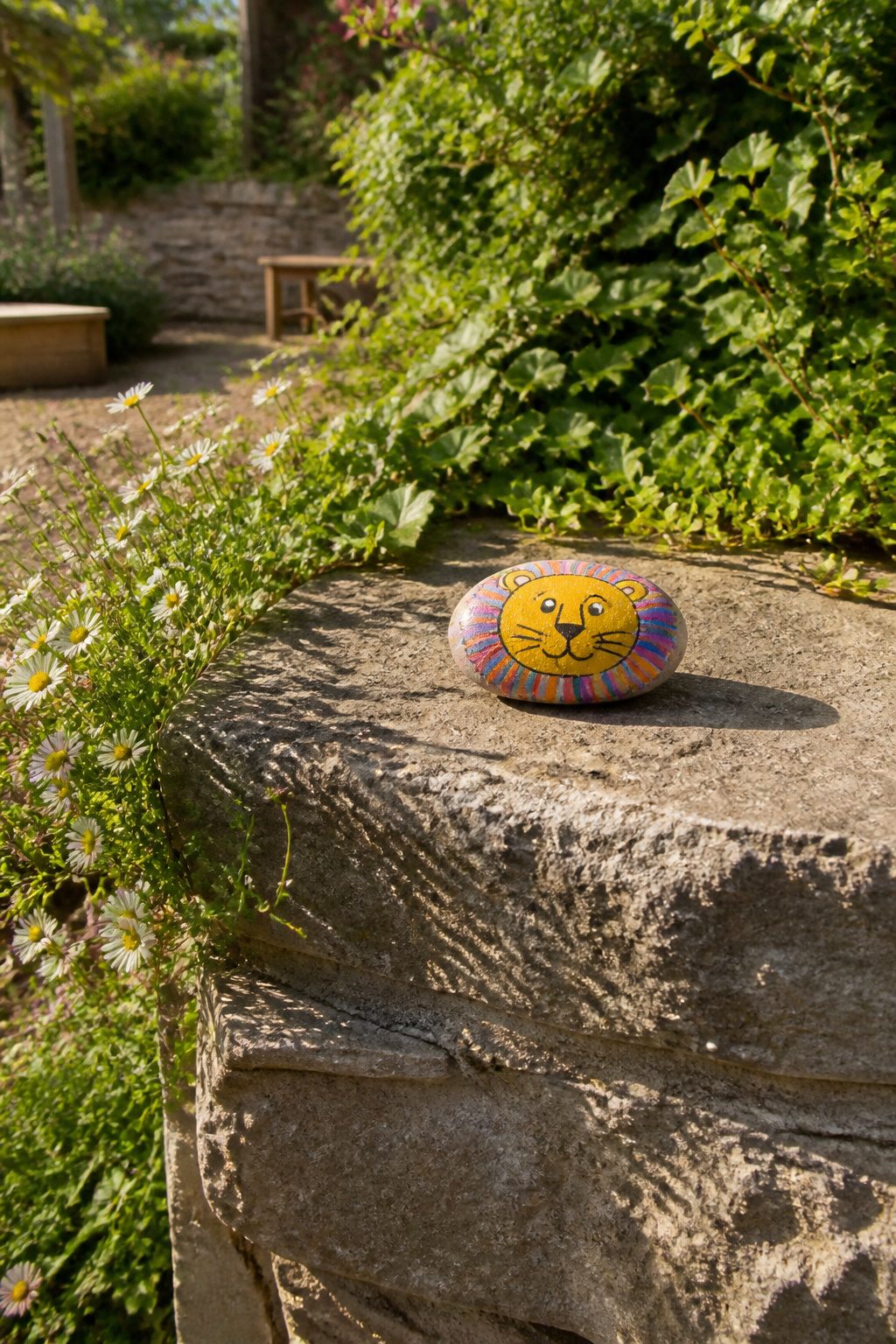
A painted rock with "No Lion, I Love You!" turned up in my town a few years back, and it sat on my desk for months. That is the whole appeal of kindness rocks: someone spent twenty minutes on a joke, hid it on a park bench, and a stranger carried it home. Online groups track these finds with hashtags, though rules vary by town and park.
The part worth getting right is where you leave them. National parks and natural habitats are off limits; painted rocks disrupt ecosystems and can be straight-up illegal there. Your own garden, a community trailhead board, or a library planter are the better choices. Moderation matters too. A single bright stone on a bus stop is a gift. A dozen scattered through a creek bed is litter with extra steps.
9. Cartoon Characters
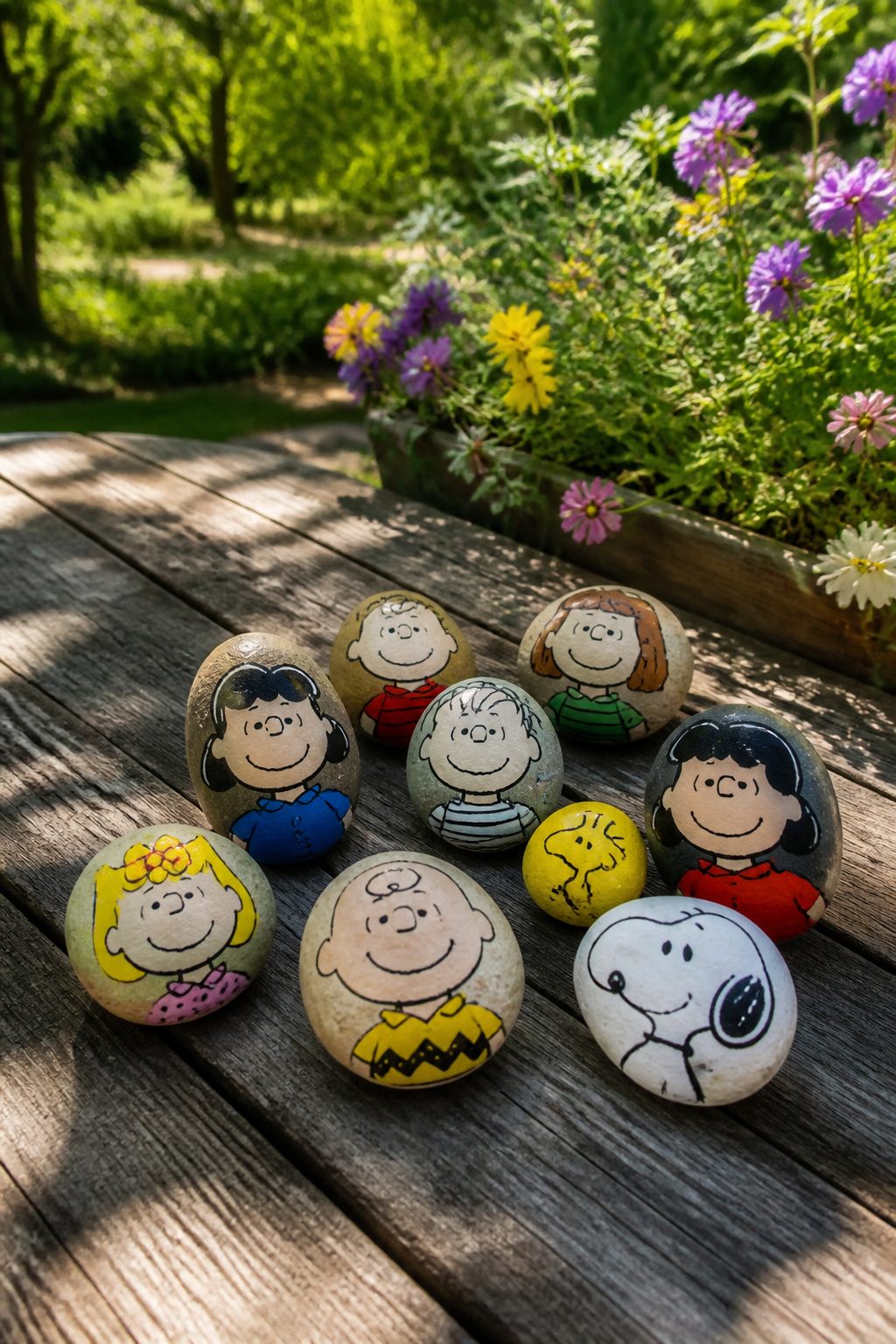
Charlie Brown’s round head and single curl of hair, Snoopy’s floppy ears and black-and-white coloring: these classic shapes already fit the curves of a smooth stone. The Peanuts style is clean and minimal, which helps when you’re reducing a full character to a few inches of surface. Yellow oval rocks work the same way for Minions. A solid base coat, then paint-pen details for goggles and that grin, and the kid across the street knows exactly who it is.
Simplifying a complex character to a small surface means choosing one signature trait and letting the rest go. You can’t fit every whisker on a rock Patrick or Bob. Pick the silhouette, the color block, the one prop that reads instantly from five feet away.
Selling these is where it gets complicated. Copyright law protects recognizable characters, and commercial use without a license carries real risk. If you paint a Minion rock and list it on Etsy, you’re gambling on the rights holder’s tolerance, not on any legal safe harbor. Painted rocks are safer as gifts, classroom surprises, or your own garden markers.
Children gravitate to these faces for the same reason adults do: recognition is its own pleasure. A child spots a painted stone and already knows the story attached to it. No explanation needed, no setup, just the flash of "I know that one." That immediacy is what makes the cartoon rock worth the brushwork.
10. DIY Garden Markers
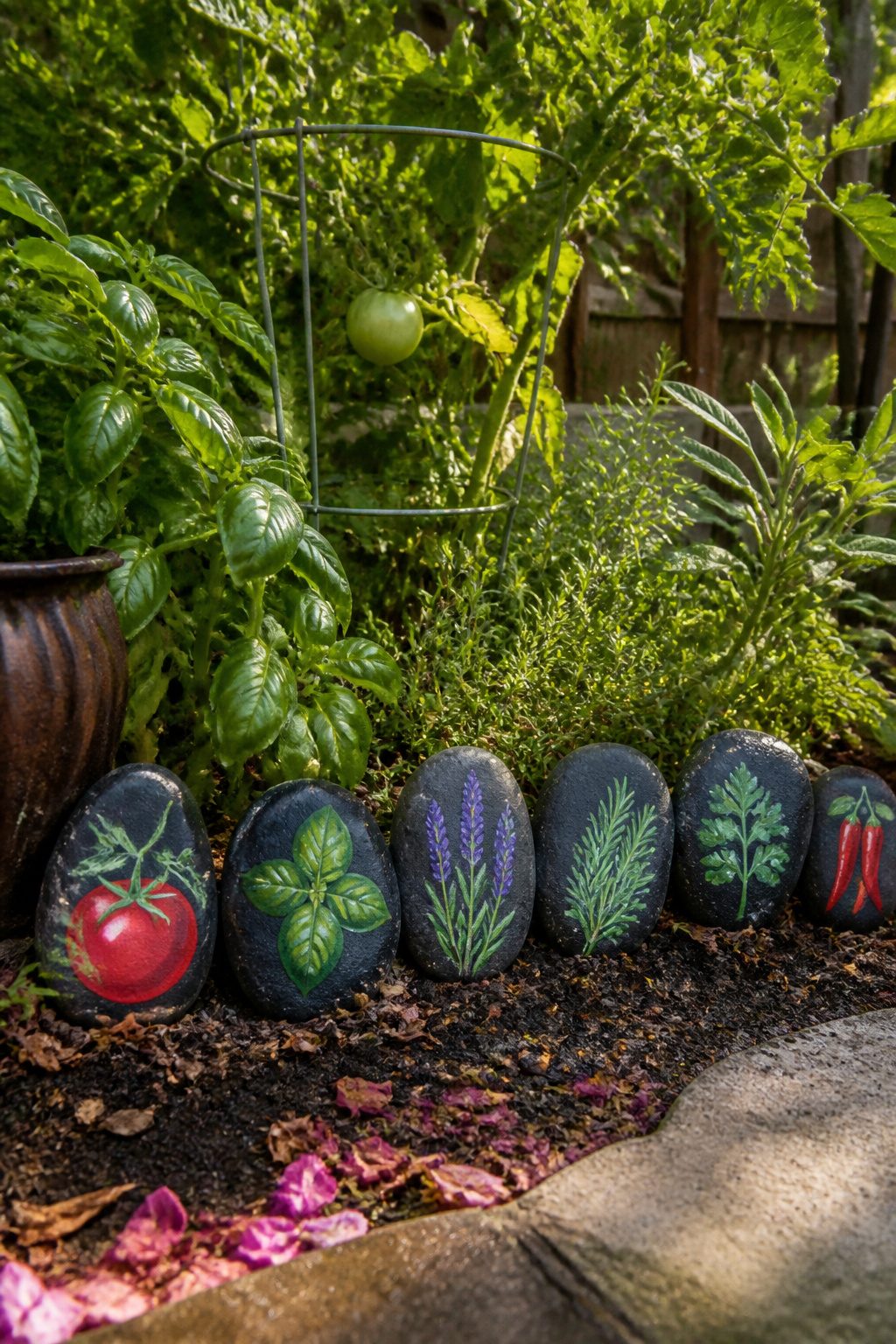
A flat rock the size of your palm makes a marker you can read from three feet away without bending. I ran a 15mm jumbo acrylic paint marker across the face in one stroke per letter, white against dark stone, and the names stayed legible even after the peppermint and Roma tomatoes grew up around them. Outdoor acrylic paint or those same jumbo markers work for the artwork too: a simple sprig of thyme or a tomato silhouette next to the word, painted directly on the rock or sketched first with a regular Sharpie if you want guidelines without the mess of brushes.
Sealing matters more for garden markers than display rocks, because soil contact and sprinkler spray will lift unprotected paint. A clear acrylic sealer over the cured artwork buys you a season, maybe two, before the sun wins. That is still longer than the wooden markers I used before, which rotted at the ground line by August and left me guessing which string bean row was which. Heavier stones stay put in wind and do not walk off with the mulch. If a painted stone weathers faster than you like, the passage of a year will tell you which bed it belongs to even when the paint fades; the wood just disappears.
Supplies and Preparation
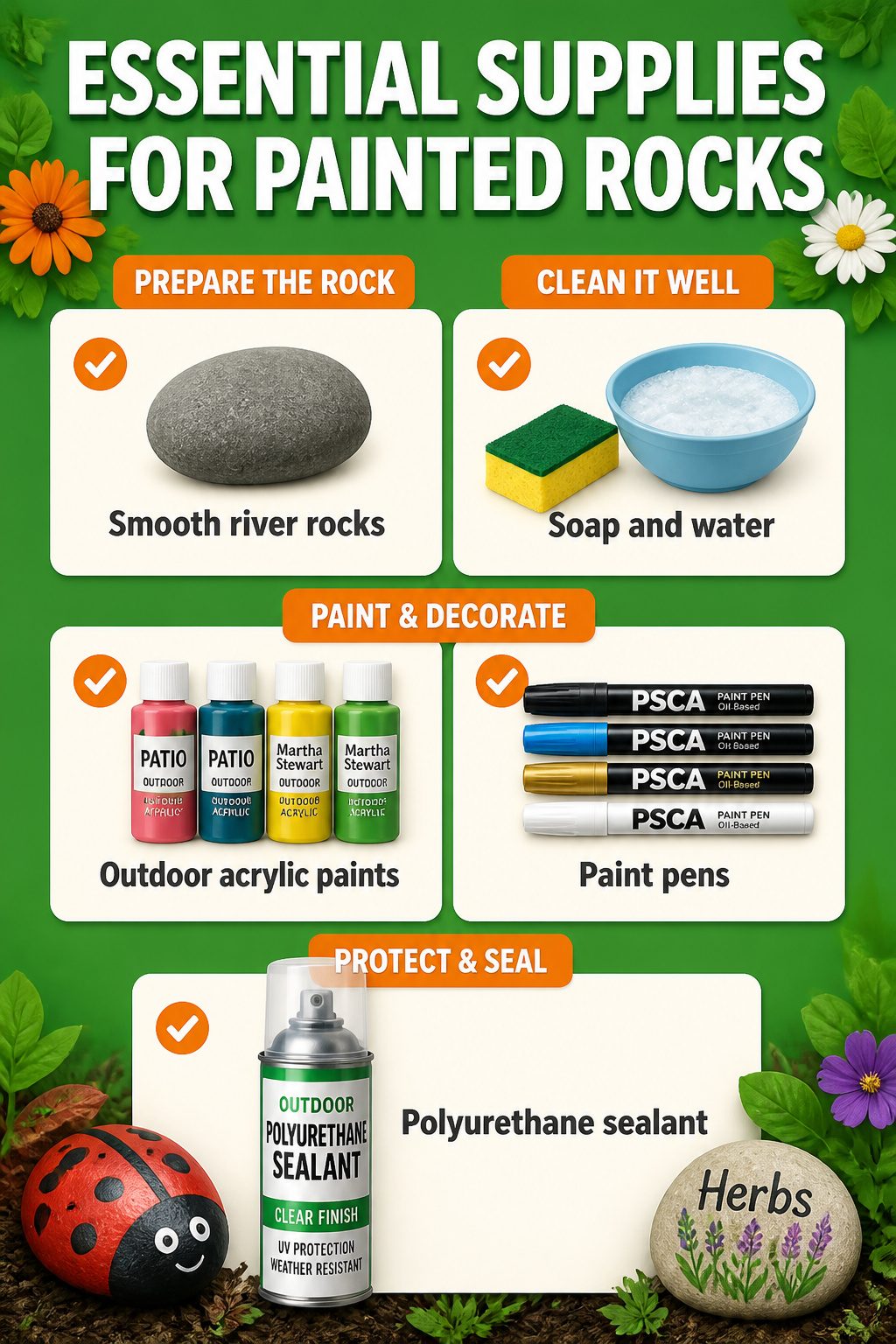
Smooth river rocks take paint better than rough ones, and the stones I see hold up better are the ones washed clean first. A quick scrub with soap and water removes dirt and oils that keep acrylic from gripping. DecoArt Patio and Martha Stewart outdoor acrylic craft paints sit on that surface longer and brighter than standard craft paints, which matters once the rock spends a season outside. Some painters like a white primer undercoat to make pencil lines visible and those patio pops really sing; others prefer the muted effect of paint straight on stone. Either camp needs patience between layers. Let each coat dry fully before adding detail, or the colors muddy in ways that frustrate a whole afternoon. Paint pens, especially oil-based markers made for rocks, handle fine lines and lettering after that base is completely dry. PSCA paint pens come up repeatedly for this job. A few thin coats of outdoor polyurethane or acrylic sealant, brushed or sprayed, finish the piece. Skip the sealant and your ladybug or garden marker faces the elements bare.
Sealing for Weather
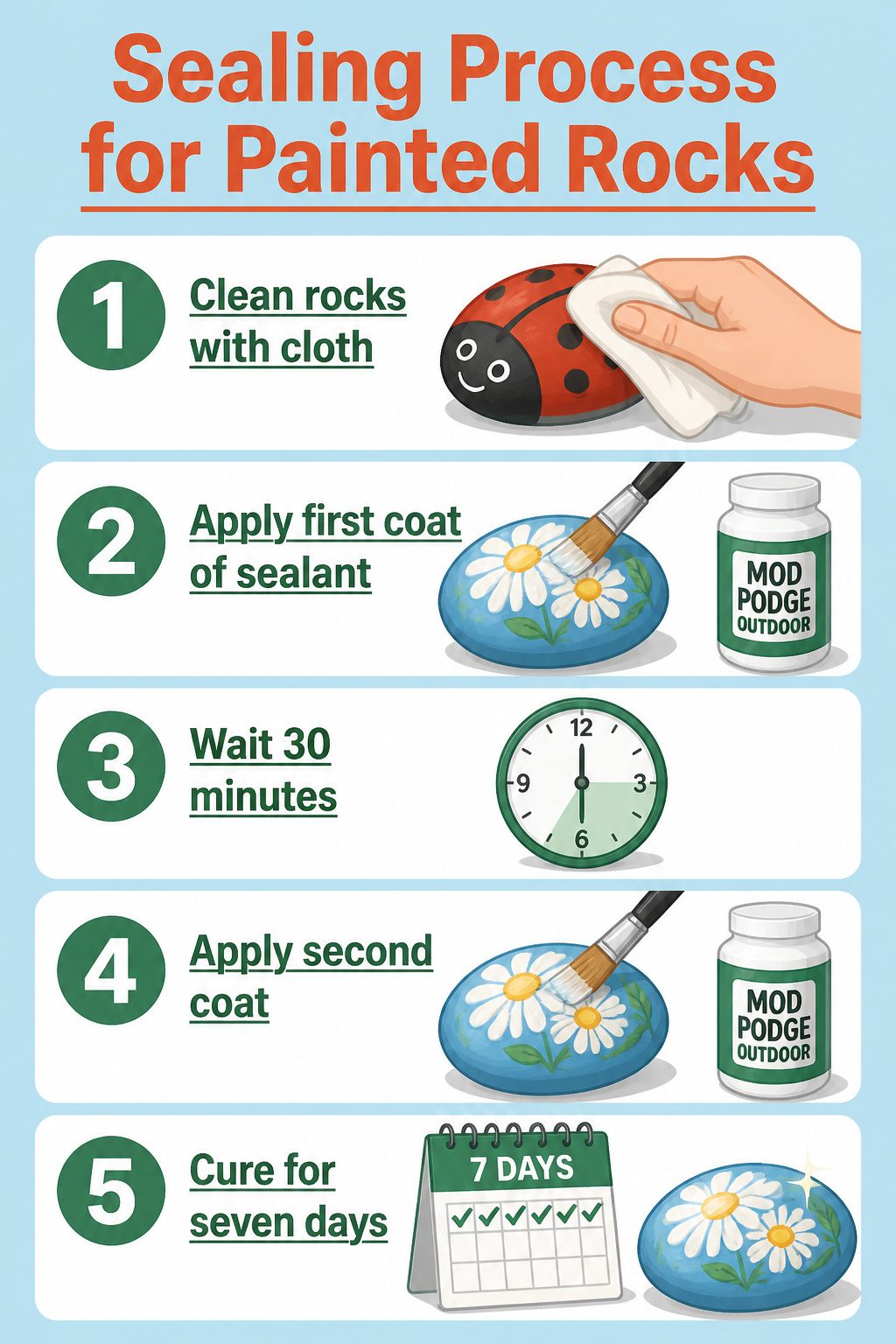
Paints that look bright on the porch dull fast under sun and sprinkler. A 24-hour cure before sealing means the difference between a finish that lasts and one that clouds up milky white under clear coat.
I brush off every rock with a soft cloth first. One trapped speck becomes a permanent lump under sealer. Two coats of Mod Podge Outdoor or Krylon Clear Coating Spray, with thirty minutes between them, gives a shell hard enough for garden life. Brush-on works where wind makes spraying sloppy; either way, the coat needs seven full days before it meets direct rain.
Skip this and you will repaint by next season. Freeze-thaw alone cracks unsealed acrylic after a single winter. The whole project sits under thirty dollars in supplies. An extra can of sealer is the cheapest insurance in that box.
Where Rocks Belong and Do Not
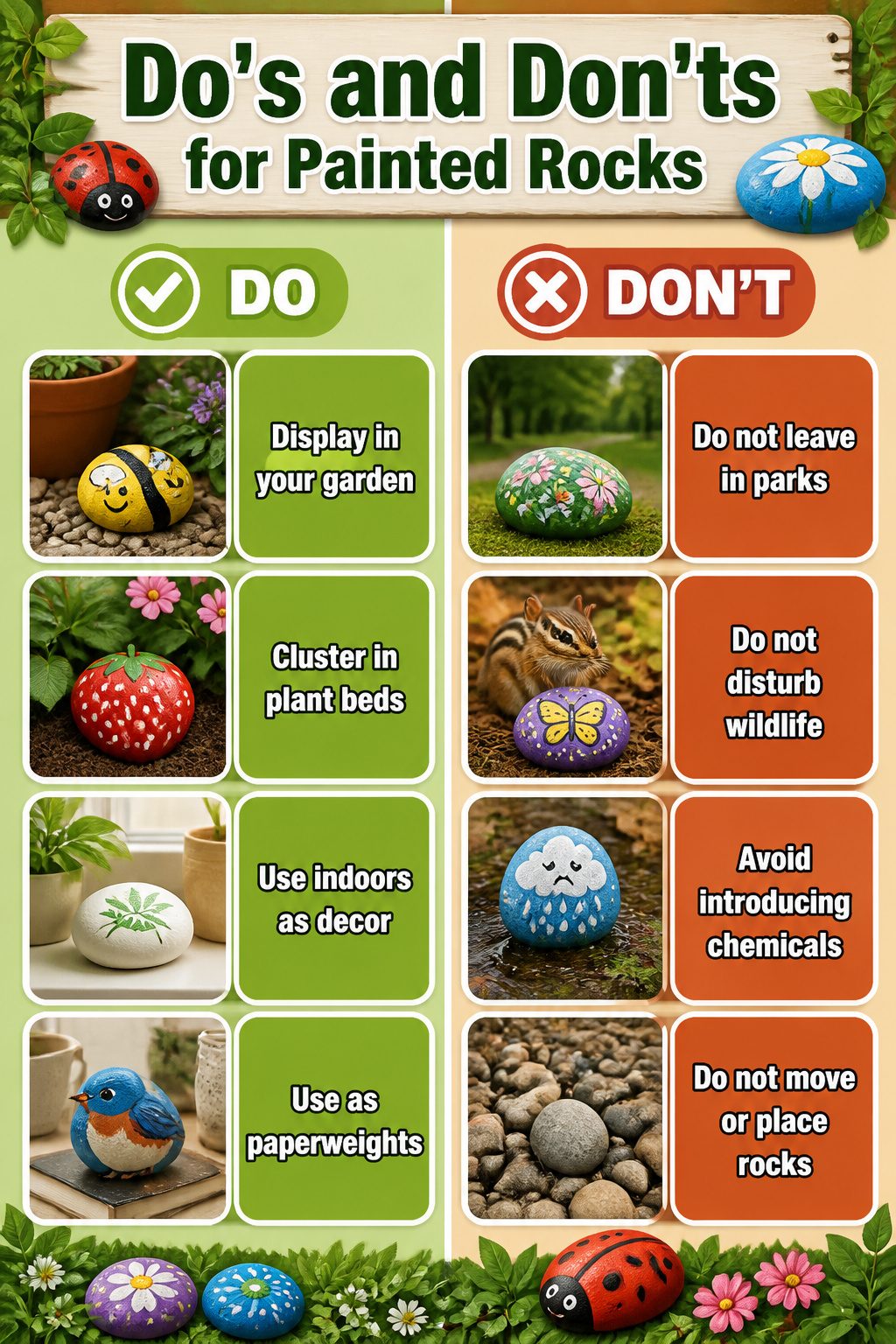
Do not leave painted rocks in parks or wild land. Most state parks prohibit moving or placing rocks at all. Painted or not, it disturbs habitat, moves possible nesting spots or insect shelters, and introduces paint and sealant chemicals into waterways when it rains.
If you want your work seen outside, your own garden is the place for it. Set stones among container plantings, line a patio edge, or cluster a few in a bed where they stay yours and the weathering is your choice. Indoor collections work too. A windowsill line of painted stones catches light without the sun damage that fades even sealed work over a season. Heavier pieces do well as paperweights on a desk or kitchen counter.
The "take only pictures" ethic is not about spoiling fun. It is about keeping the few spaces we have not arranged for ourselves clear of our arrangements. Paint the rocks. Keep them where you live.
Frequently Asked Questions
What paint is best for rock painting?
Acrylic paint works best because it grips stone and stays bright over time. Outdoor acrylic formulas like DecoArt Patio or Martha Stewart outdoor craft paints outlast standard craft paints once a rock sits outside. Paint pens, especially oil-based markers made for rocks, handle the fine lines and lettering that brushes often blob or wobble.
How do you seal painted rocks?
Wait twenty-four hours after the last paint coat, brush off any dust with a soft cloth, then apply two coats of Mod Podge Outdoor or Krylon Clear Coating Spray with thirty minutes between them. The sealer itself needs seven full days to cure before it meets direct rain. Skip this step and freeze-thaw cycles will crack unsealed acrylic within a single winter.
What types of rocks are best for painting?
Smooth, flat river rocks take paint better than rough ones and give you a natural horizon line for landscapes or a stable surface for lettering. Wash them first with mild soap and water to remove dirt and oils that keep acrylic from bonding. The flat-bottomed, round stones common in craft bins work especially well for designs like ladybugs that should not roll.