Backyard decor in 2026 runs from a $4 seed packet to a $5,000 paver patio, and the deciding factor is not budget but permanence: whether you own the dirt beneath it or will be patching holes before a landlord in two years.
A fully saturated wall planter weighs forty or fifty pounds per square foot; hit a stud, or watch the bracket rot by August.
1. Layered Textiles and Linens for Outdoor Dining
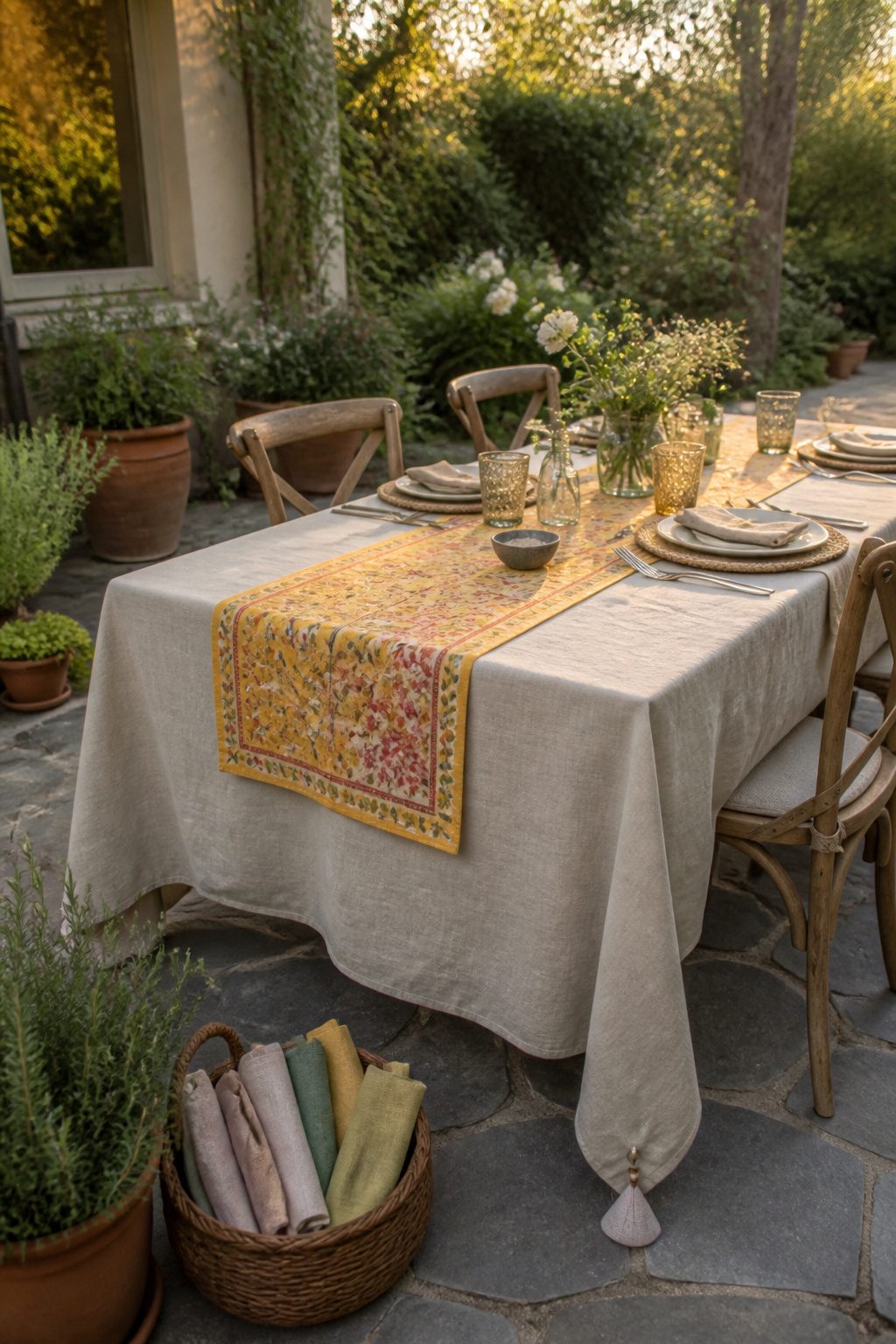
A tablecloth that actually belongs outside changes how the whole meal feels. Weighted corners or grommets keep fabric from lifting at the first breeze, and a runner down the center adds color without committing the whole surface to one pattern.
I swap cotton for linen when the evening might stretch; it creases more but breathes better against bare arms, and the rumple looks intentional by dessert.
Cloth napkins are the detail that cost almost nothing and signal the most.
A napkin ring, a folded pocket with silver, or just a rolled stack in a basket: the reader who came for backyard decor ideas should spend their first dollars here, before any planter or lantern.
The layered effect works because the materials themselves are soft against hardscapes and wood grain, not because the colors match.
Cheap polyester tablecloths in bright prints read exactly that: cheap and bright. Stick with natural fibers in muted tones, since sun bleaches everything anyway, and a faded terracotta or olive only improves with a season’s wash cycles.
2. Unique Seating Arrangements
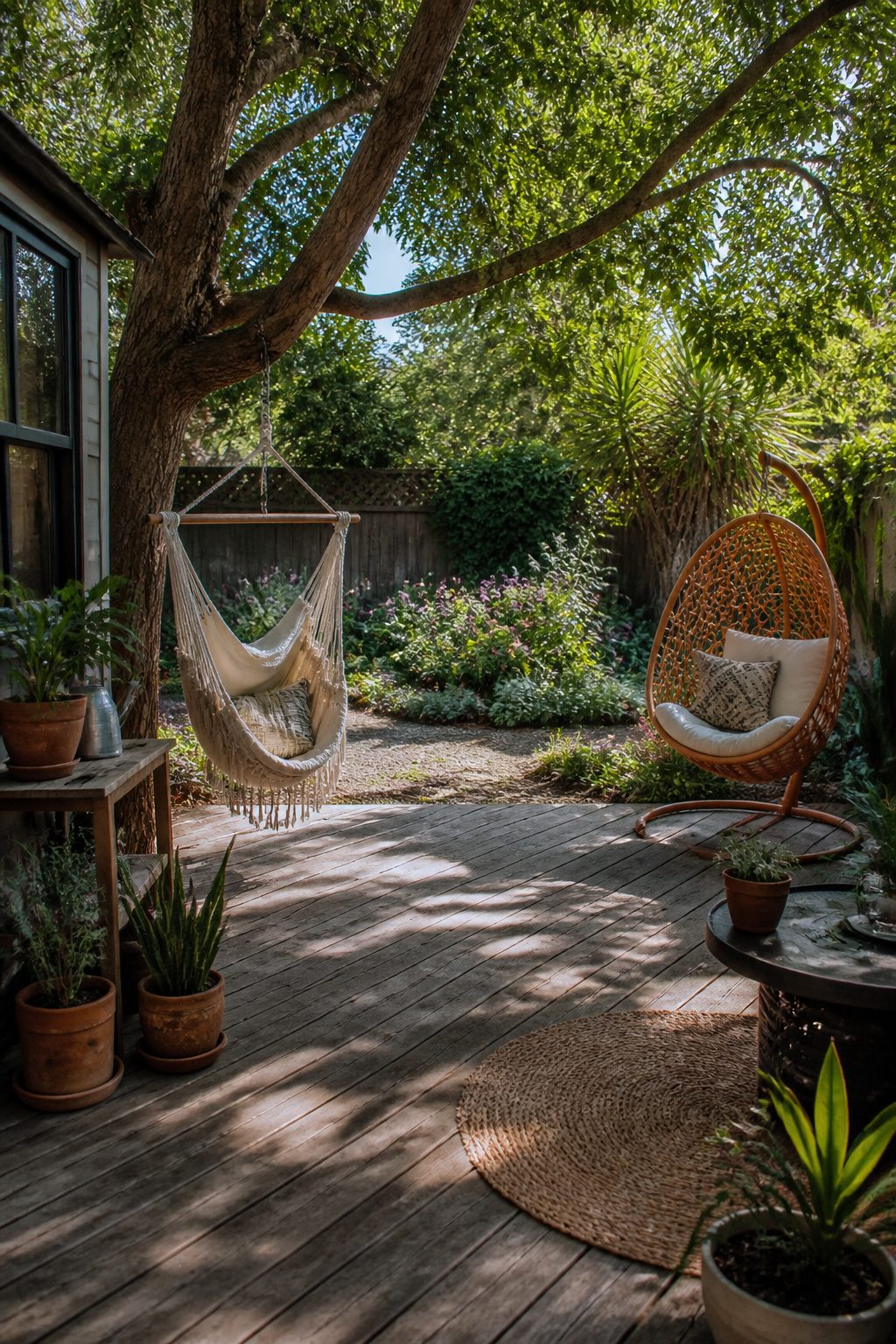
Hammocks, swings, and hanging chairs pull a backyard away from the standard patio set toward something you actually want to settle into.
A hammock chair strings up faster than a full hammock rig and sits lighter on a small yard or balcony; the Sand and Stable Hammock from Wayfair matches the boho look that keeps surfacing in photos, and egg chairs serve the same floating feeling with a bit more enclosure.
Porch swings ask for a sturdier mount, usually a beam or aframe rated for dynamic weight, but they repay the effort with a slow motion no standard chair offers.
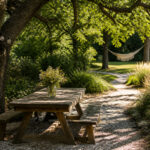
If you are renting or working with one tree and not two, a swing hung from a single limb eats less real estate and still holds lights above it for evening use.
The real mistake is assuming all hanging hardware ships with the chair.
Most load-bearing springs and eye bolts come separate, and the distance between hanging points needs to match the spread of the spreader bar exactly, or the fabric bunches and the sit tips.
For a zero-pressure fallback, zero gravity chairs fold flat and move where the sun does, though they lose the vertical drama that makes a corner feel like a destination rather than a seating chart.
3. Fire Pits for Cozy Gatherings
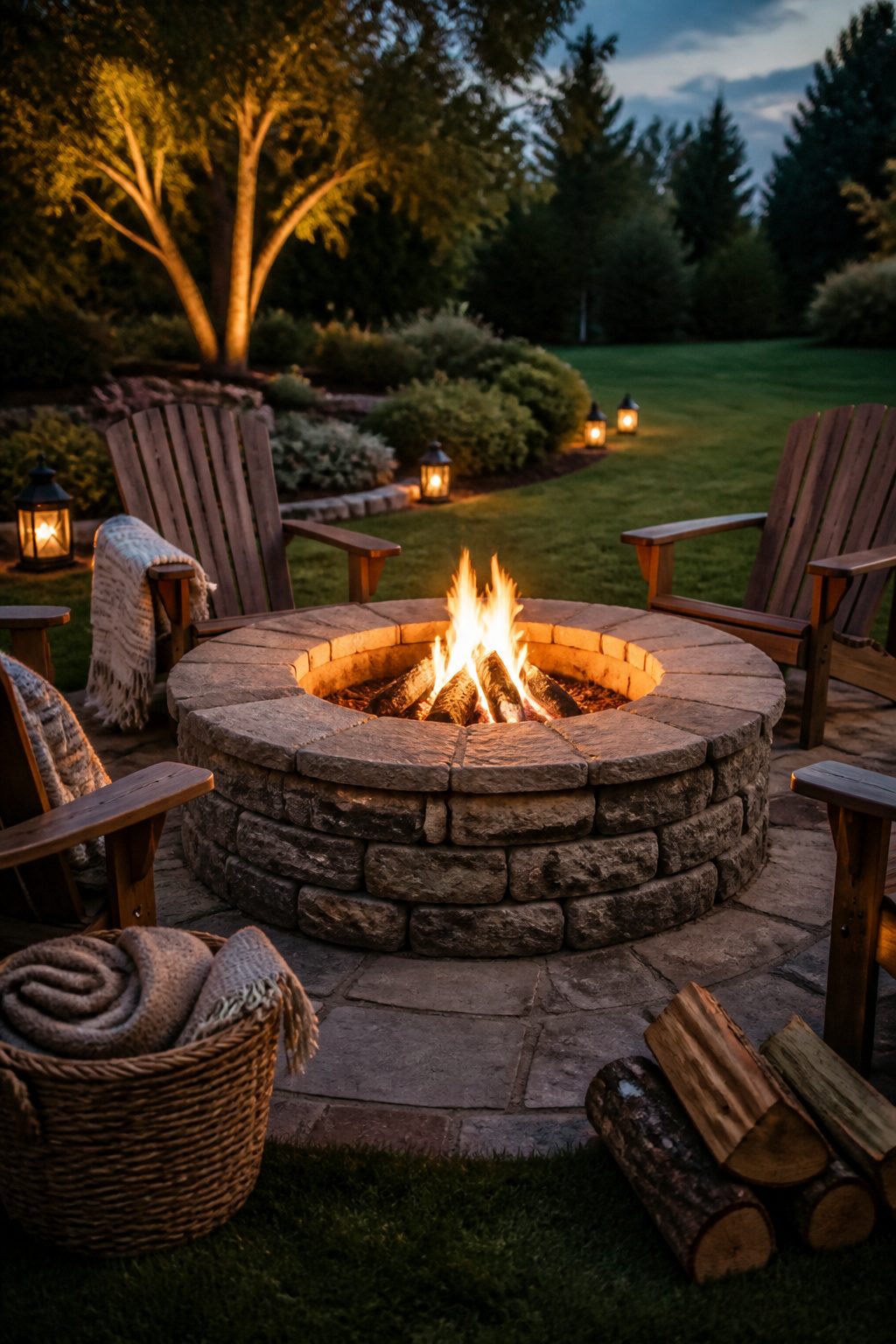
A fire pit pulls evening gatherings toward it the way a stove pulls people cold days.
Robert and Lauren of Blesser Home built theirs by stacking layers of stone in a circular configuration, stripping out the grass center, and circling it with chairs so guests sit inside that glow rather than outside it.
That circular stack is the DIY route if you want the thing rooted in your yard, permanent and heavy, not sliding around every time someone bumps it.
For a lighter move, the Sol Outdoor Fire Pit from Wayfair carries over 900 five-star reviews and sets down same-day.
I lean toward the stone version if your yard is small enough that one fixed piece dictates the rest of the layout, and toward portable if you rent or expect to shift where people sit year to year.
Fire makes some nervous.
Outdoor lanterns give light without the commitment, though they do not warm hands or melt marshmallows. On summer nights when the temperature drops after nine, the fire pit earns its space.
4. Vertical Gardens or Wall Planters
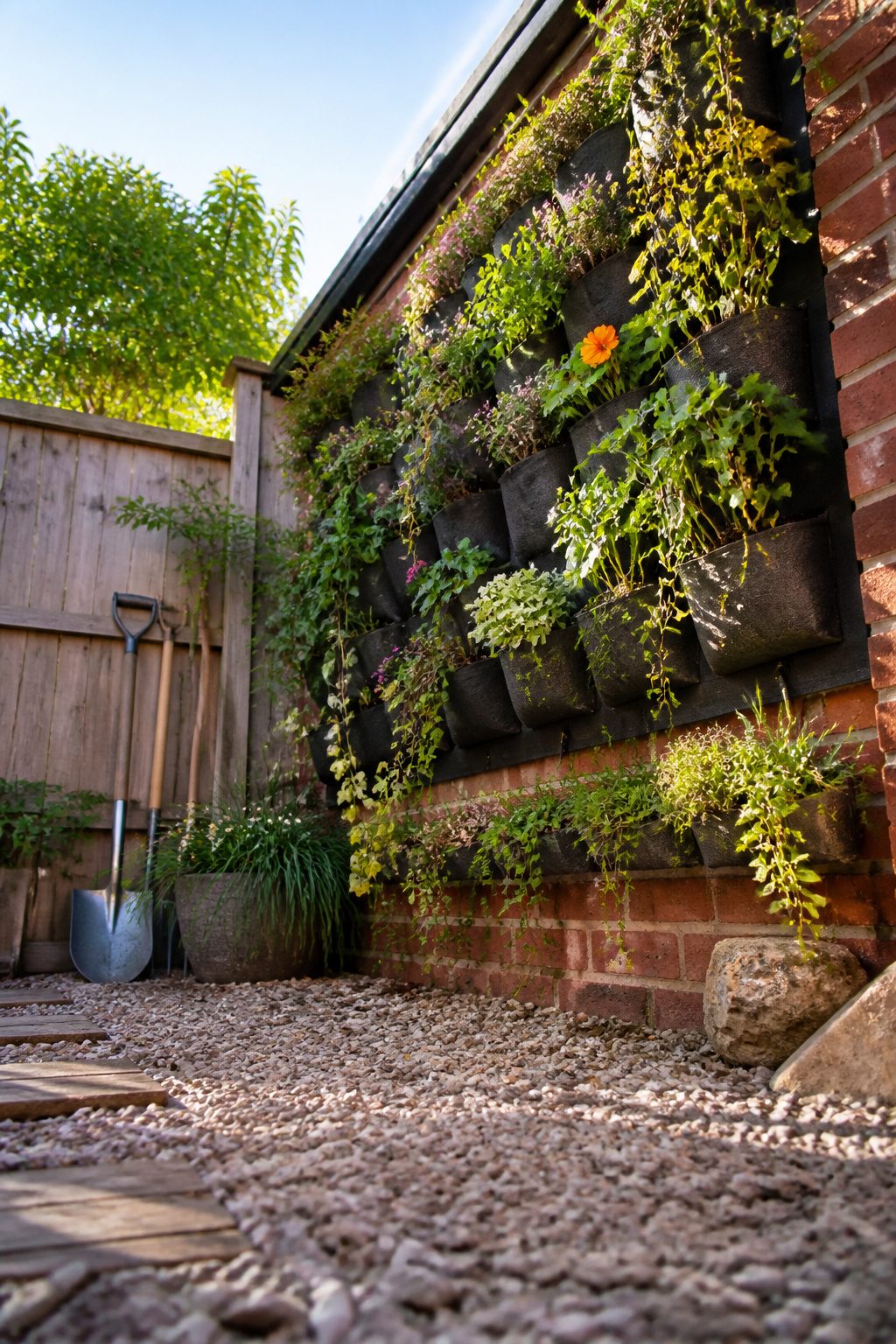
A south-facing wall that gets too hot for most containers is exactly where a vertical system earns its keep.
Wall planters and trellises move the planting surface off the ground, catching light that would otherwise bake bare brick or reflect heat onto a patio no one uses in July.
I started with pocket planters meant for apartment railings, hung on a cinderblock wall where nothing else survived. The pockets held maybe six inches of soil, which dried out faster than I’d expected.
Lettuce wilted by noon the first week. Switching to a drip line running along the top row fixed that, and the second season I had herbs through September.
Trellises need more planning.
A cucumber or morning glory vine will cover six feet of wire mesh in a season, but the mesh has to sit an inch or two off the wall or you lose airflow and invite the problems that come with it.
Most people mount trellises direct to siding and wonder why mildew shows up by August.
The real limit is weight.
A fully saturated wall planter can run forty or fifty pounds per square foot. Your hardware needs to hit a stud, not just drywall anchors, and water-soaked wood rots the bracket the second year if you used something cheap.
For renters, tension-based systems exist that hook a rod under the eaves and hang planters in rows. You patch two small holes when you leave instead of explaining a dozen drilled anchors to a landlord.
5. DIY Decor Projects
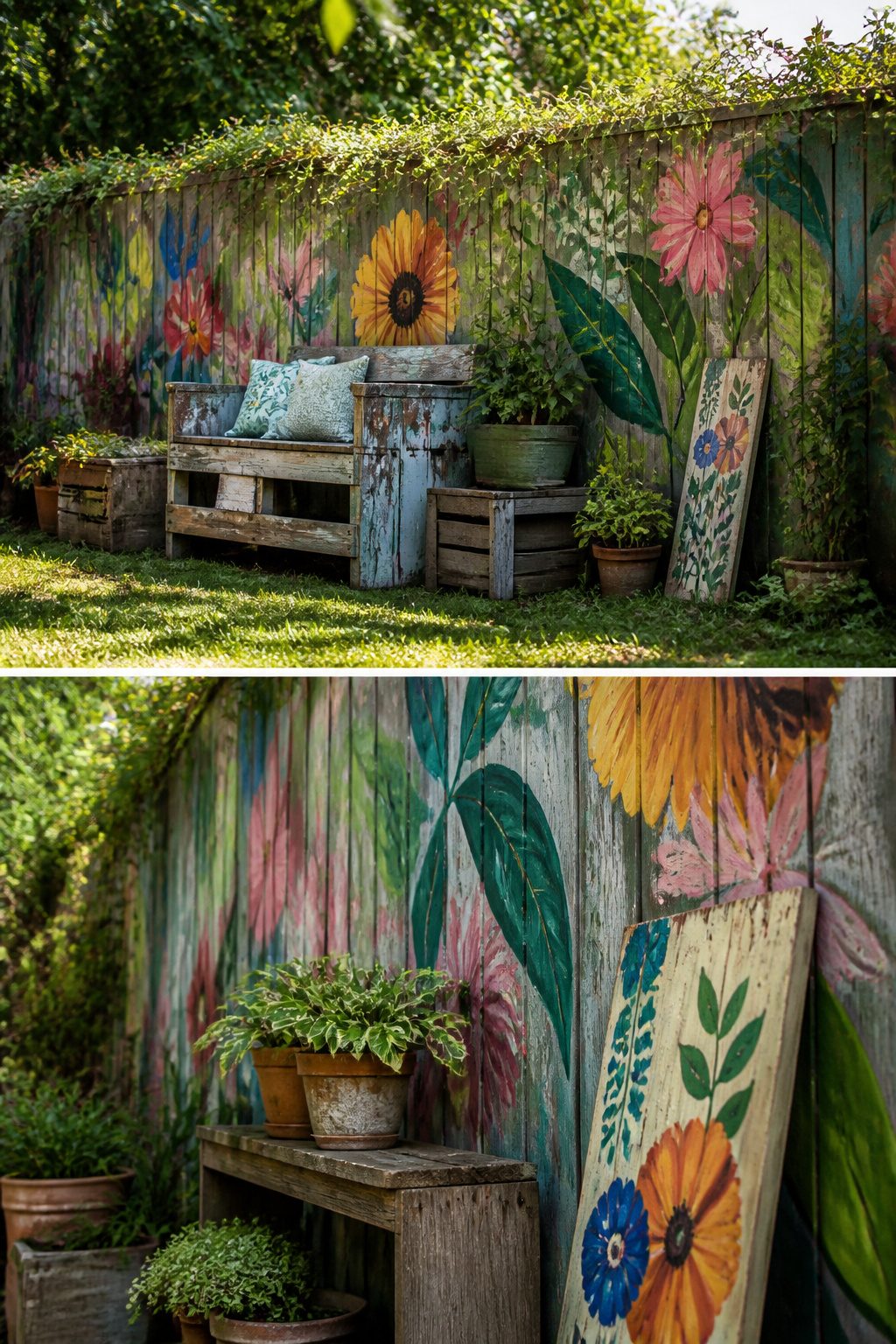
Painted murals turn a fence or garage wall into something that stops you mid-step.
The first one I tried came out wobbly, and that was the lesson: exterior paint and a cheap projector let you trace a blown-up image rather than freehanding the whole thing.
Upcycled items carry the same satisfaction without the same risk.
A wooden ladder becomes a tiered plant stand with nothing more than sanding and exterior sealant; thrifted crates bolted together make a shelving unit that costs the gas to go pick it up.
The sources that back these backyard decor ideas note more than one project finishing under $100, which matters when your annual garden budget sits around $500–$800 and every dollar competes with soil amendments and replacement perennials.
Custom work does not have to mean large.
A hand-painted house number on a slice of reclaimed wood, a wind chime from mismatched vintage spoons bent with pliers and drilled with a cheap bit kit, a small sign for the herb bed: these are the details that read as yours rather than catalog.
The mistake I watch for now is making the piece too precious to leave outside. Exterior-rated materials, exterior-rated finish, or the rain will reclaim your weekend by August.
6. Lighting Options
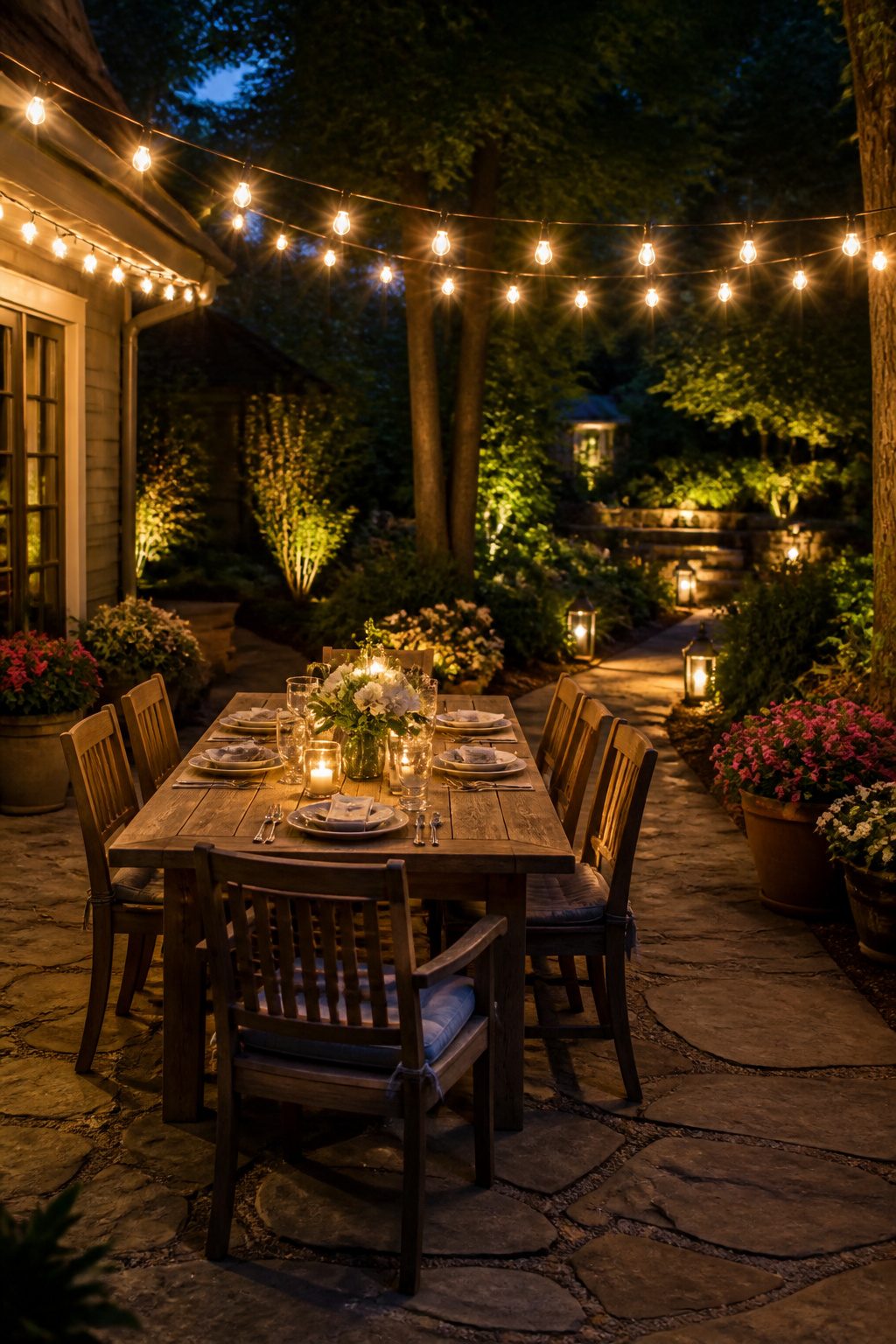
String lights build the backbone of most backyard lighting plans for good reason.
Drape them above a dining table and the space reads instantly like an outdoor restaurant; run them across planters and the whole garden picks up a scattered, serene glow.
Festoon-style bulbs are the specific type to look for, not the tiny fairy-lights version, because they throw enough light to eat by without tipping into glare.
Brightech’s Waterproof Lights were the ones recommended in several roundups, and waterproofing matters more than most first-timers think, since a surprise evening storm will kill an unsealed strand in one soaking.
Solar options answer the budget worry that wiring brings. Pathway versions need no electrician; they charge through the day and switch on automatically, which solves both the installation cost and the running cost.
A thrifted brass chandelier retrofitted with a small solar panel turns up in some of the more inventive examples, though that takes more patience than the standard stake-it-and-leave-it path lights.
Lanterns fill the gaps string lights cannot reach.
Set a few on the ground beside steps or hang them from shepherd’s hooks where a tree branch is missing. The mix is what saves it from looking like a catalog display, too even and too planned.
Three sources mentioned solar string mini lights as the cheap fallback when the mains-powered festoon strand stretches the budget too far. They are dimmer, but they work.
7. Decorative Planters and Pots
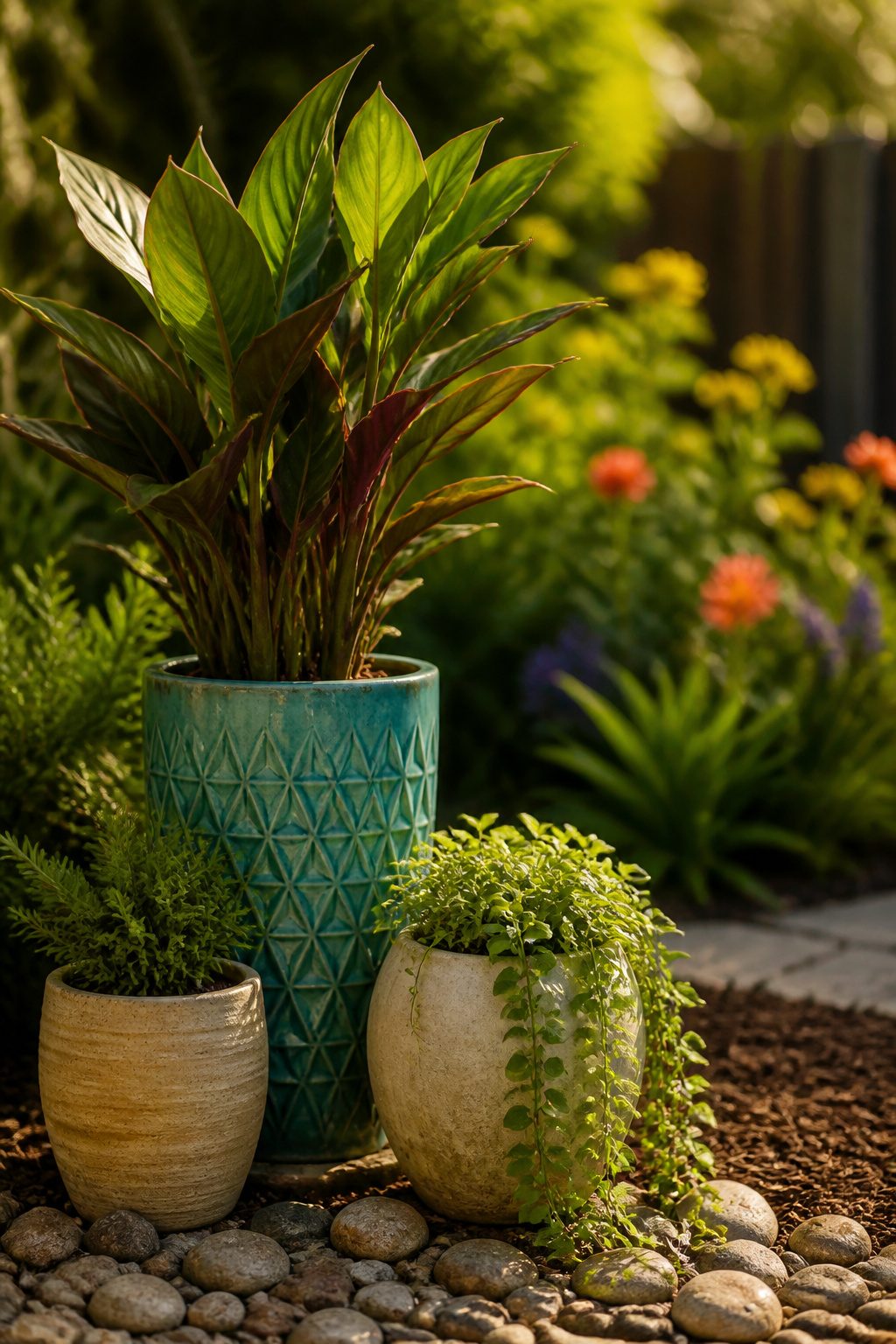
A cluster of varied containers does more work than one long border ever could.
Upright growers paired with trailing stems in a tall planter give you that layered height without waiting three years for a shrub to establish. I move mine around every few weeks, which keeps the whole layout from going static.
Material matters more than people think. A raw metal birdcage turned trellis reads entirely different from painted tin, and that difference either carries your backyard’s mood or breaks it.
The Dollar Tree containers I have used were cheap enough to experiment with, but their finish wore to something steadier after two seasons outside. You get to decide whether that weathering belongs or whether you repaint.
Eclectic mixing beats matching as long as one element repeats. Maybe three pots share a color, or metal shows up in at least two spots.
Outside, the space is generous enough that a clash just reads as range. My own yard has never looked better than the year I stopped trying to unify it.
8. Outdoor Rugs for Comfort and Style
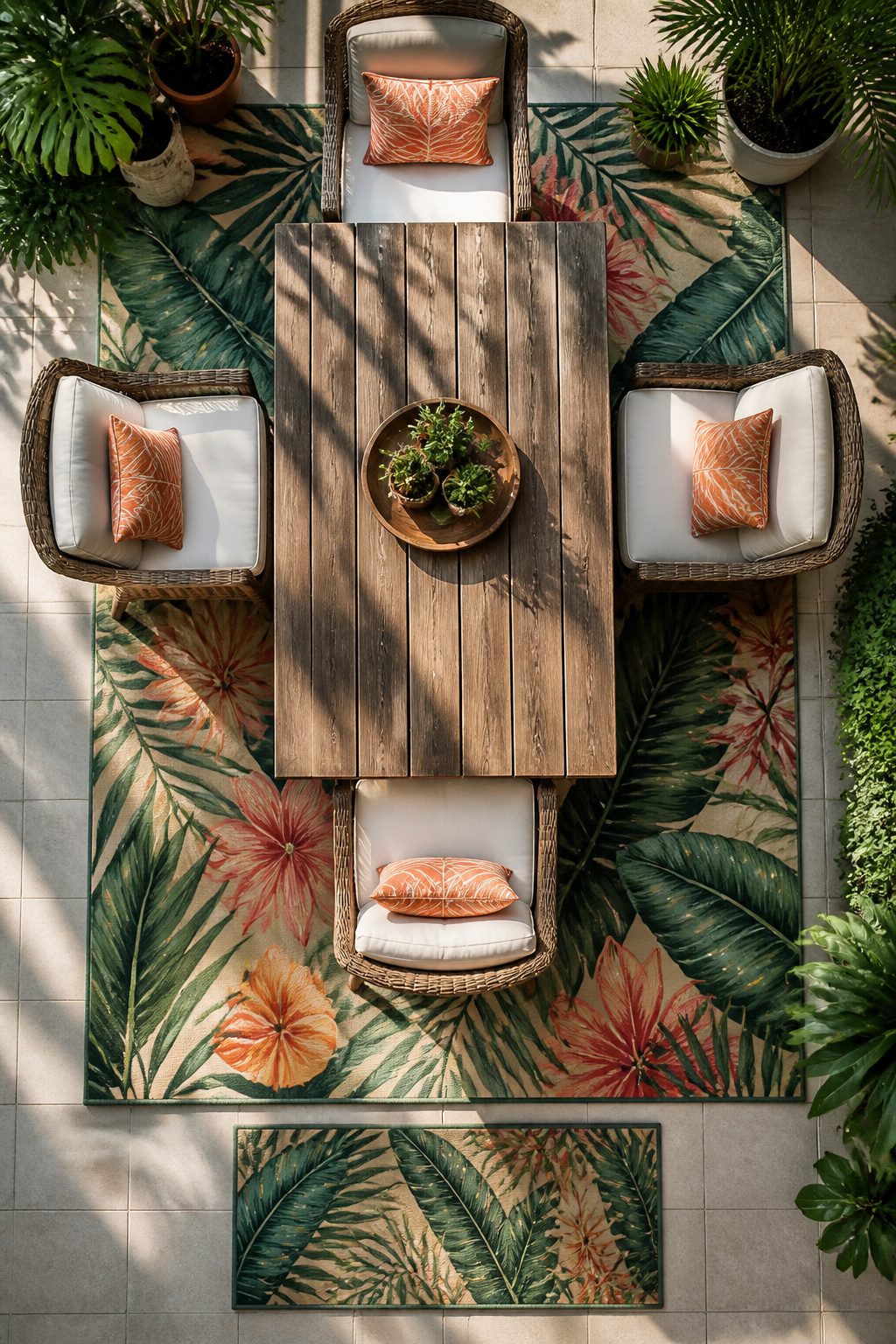
An outdoor rug turns raw deck boards or patio stone into a room.
A jazzy patterned piece from a brand like Ruggable’s Outdoor Filifera Palm Pink Rug draws the eye to a spot for chairs, creating a centerpiece where there used to be empty space.
Fiber technology has caught up. These things drain and dry and do not turn to sodden pulp the first time it rains.
Layering is where the comfort shows up, and where the budget either holds or breaks.
Start with the one large rug to anchor the seating area, then add a smaller throw or a second low-pile layer where bare feet land most often.
That shift from one flat surface to two subtle levels is what takes a modern setup from bright afternoon to evening when the temperature drops and people stay longer than they planned.
I have seen the mistake a dozen times: a rug so thin it skids, or so dark it stores heat until it is unpleasant to stand on.
The fix is straightforward. Put a pad underneath for grip, choose a weave rated for direct sun if your spot lacks shade, and go lighter on the color than your living room instinct suggests.
The same layered textile logic that works inside, mixing old and new, expected pattern against plain ground, applies here with fewer rules and more forgiving results.
9. Water Features
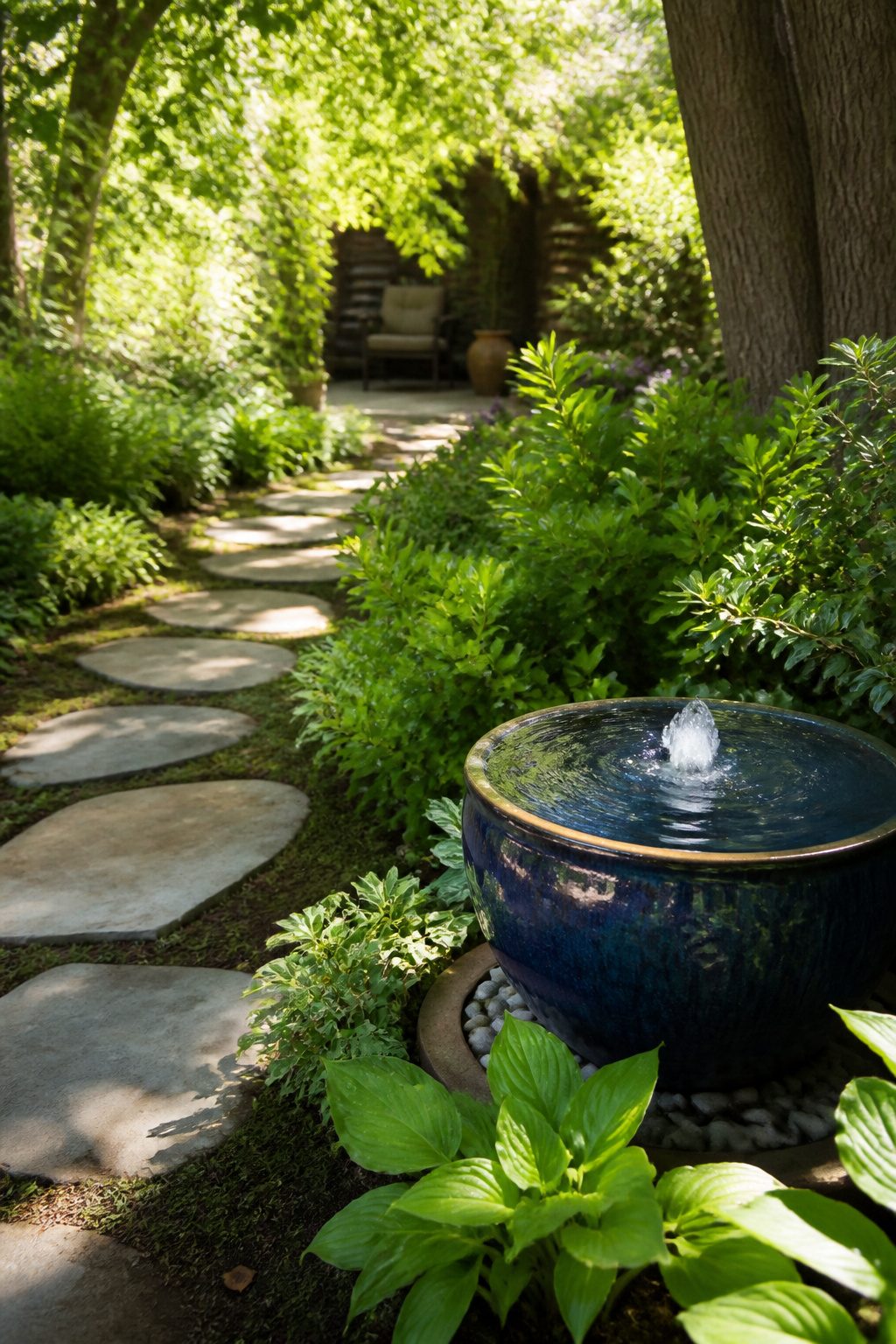
A water feature changes a backyard from something you look at into something you feel. The sound of moving water masks traffic, cools the air around it, and draws birds in faster than any feeder I have watched.
For a postage-stamp-sized patio, a small recirculating fountain running on a quiet pump sits on a table or tucks against a wall without needing a dedicated circuit.
A glazed ceramic bowl with a spout in the center cost me less than a decent outdoor planter and has survived three winters stored in the garage.
Ponds read grand but scale down fine. A preformed rigid liner four feet across holds enough water for a few goldfish and a miniature water lily if it gets six hours of sun.
The real limit is depth: less than eighteen inches and the water heats too fast in July, algae blooms, and the balance collapses.
I saw this on a 14-inch-deep trial I tried the first summer, skimming green film every morning until I pulled the plug.
Stone fountains against the house wall, with lush florals lining the base, give that secret-garden effect even when the "garden" is six feet of foundation bed.
The recirculating kind needs only a ground-fault outlet and topping off during hot weeks. For a balcony, a wall-hung spout dripping into a narrow trough uses vertical space and leaves the floor free for the one chair that actually fits.
10. Garden Paths and Walkways
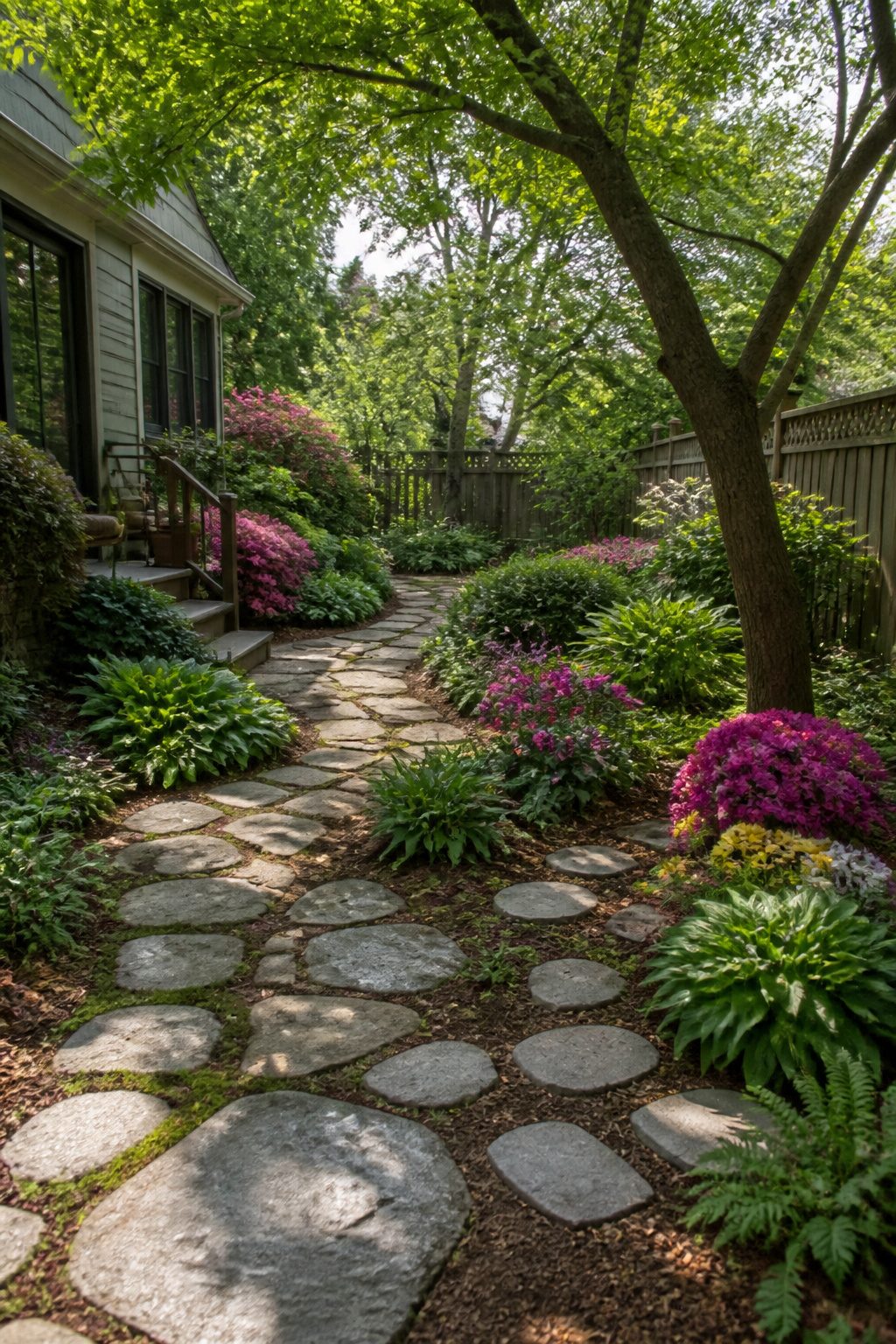
A garden path breaks up open lawn into distinct zones, and it does not need professional installation to work. Gravel runs about the cheapest route; pea-sized stone laid over compacted soil handles foot traffic well and drains fast after rain.
Stepping stones set in mulch suit tighter budgets and can shift as the yard changes, a friend of mine replotted her vegetable edge three times last summer without lifting concrete.
The Worth Garden Wooden Pathway (Amazon’s Choice) offers a ready-made strip for those who want structure without the math of spacing.
Keep the surface two inches below any adjacent grass line, or the edge swallows your material in the first season.
A sloped yard needs that small retaining wall the first source hinted at; on flat ground, mulch alone at three inches deep stays put and suppresses weeds between stones.
Melissa’s teardown took 2.5 years and roughly $2,700 for a full-yard overhaul. Her gravel choice worked because she committed to it across the whole surface; a patchwork of cement and stone would have read as leftover, not planned.
11. Cozy Outdoor Dining Areas
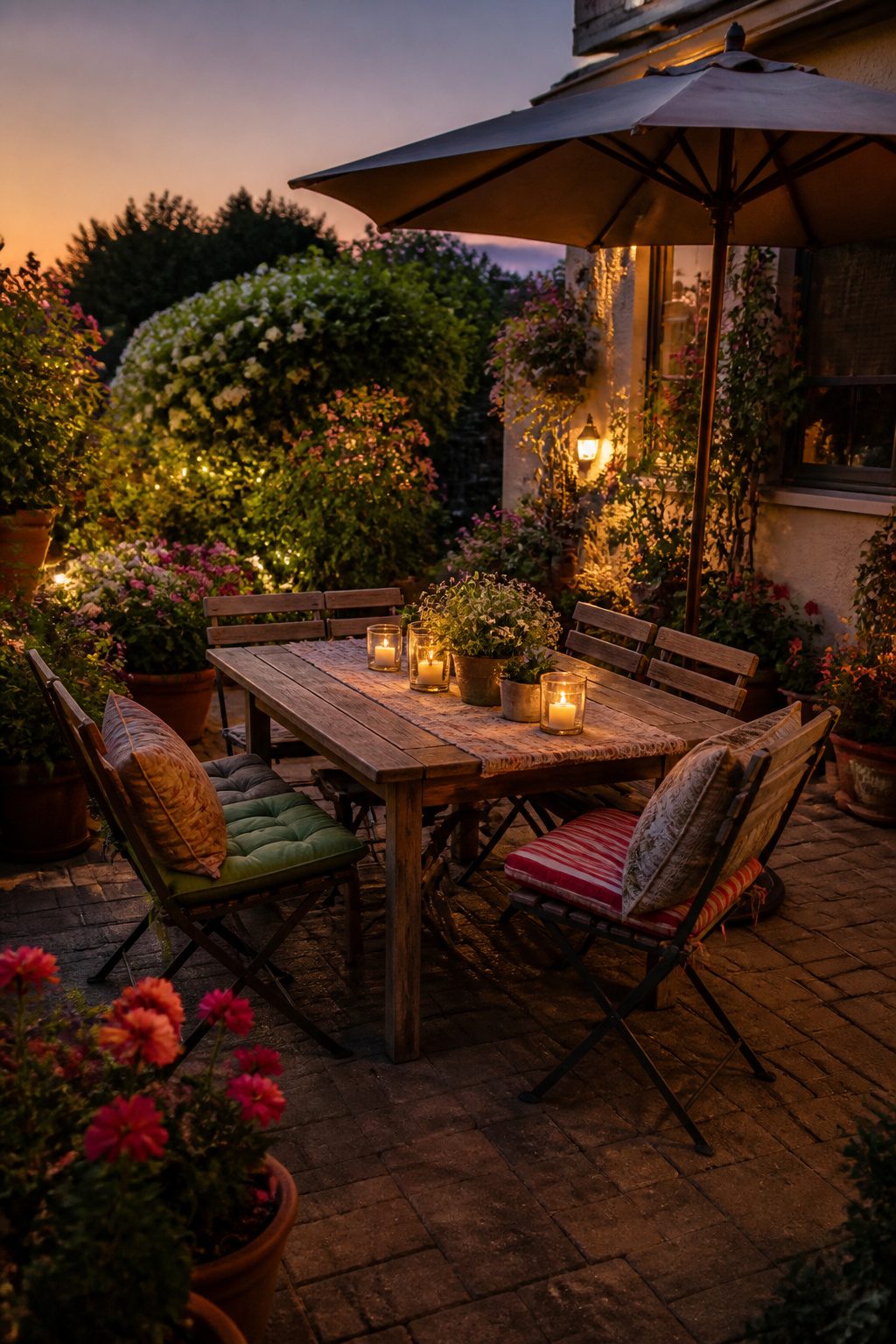
A meal outside only works if the table stays level and your back stops complaining before dessert. My second summer on a 10-by-12 patio, I learned that the hard way with a folding IKEA set that rocked on every paver.
A dining umbrella or pergola beam overhead buys you about two extra hours before the sun drives everyone inside.
On stone or concrete, the same footprint that holds a bistro pair can stretch to a four-top if you skip the bulky arms and look for folding wooden chairs that store flat against a wall.
The passages show stone decks with small sets billed as "intimate," which usually means seat four at most, and that honesty saves you from cramming in a sixth person who never fits.
Woven or rattan chairs look generous but leave no flex for the unexpected guest.
My current setup runs a $380 metal-frame table with a slatted top, no umbrella hole (I anchor a cantilever stand off the corner instead), and three stacking chairs plus a bench that tucks underneath.
The bench was the fix: two people sit there without the elbow wars that four individual chairs start.
Potted plants around the legs, not centered on the table where plates compete, are what the small patios in the sources repeat.
One climbing vine on the nearest wall, one pot at the footing, and you have a room border without losing the square footage you actually need.
12. Colorful Accents
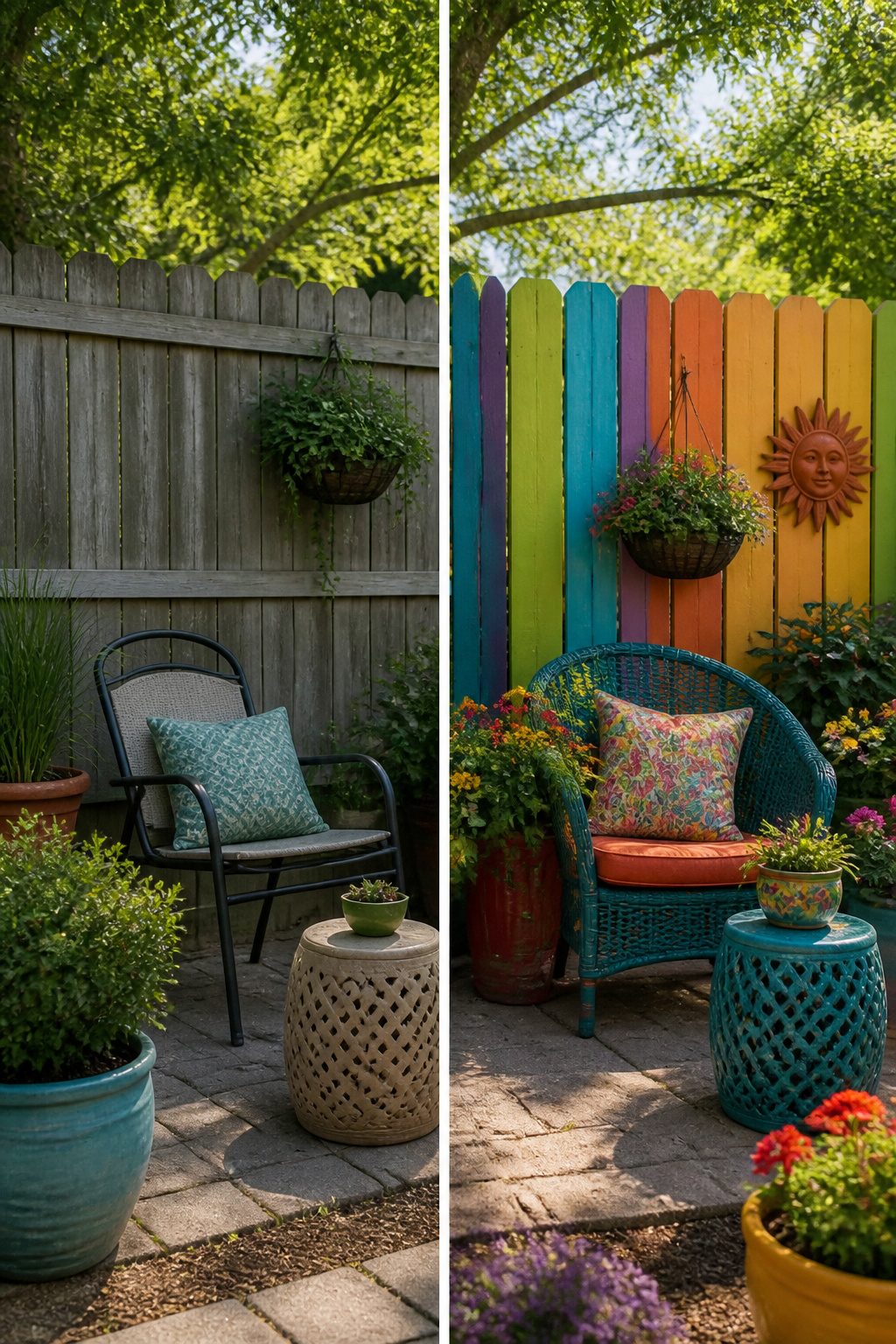
A colorfully painted fence or backyard mural can turn an ordinary outdoor space into a playful focal point full of personality. That single bold surface does the heavy lifting so the rest of the yard can stay simple and cheap.
Vibrant furniture and accessories build from there without demanding everything match.
I like the freedom this gives a small space. The Bayou Breeze Cece Patio Chair runs $99.99 for two in wicker and metal, sized at 30.25" H × 27.5" W × 24.5" D, and works against a bright wall or a plain one.
Add a Threshold Small Brass Planter at $10.50, 5" H × 5.5" W × 5.5" D, leakproof, for a small luxe detail that holds its own.
Mix styles at thrift stores, paint what you find, and the eclectic pile holds together because the mural or colored wall grounds it all.
For extra color after dark, Enbrighten makes outdoor string lights that keep the same energy going. Pyonic Outdoor Pillows, $14.99 for two in 5" × 5" polyester, add softness somewhere to sit without committing to a full suite of matching cushions.
13. Natural Elements
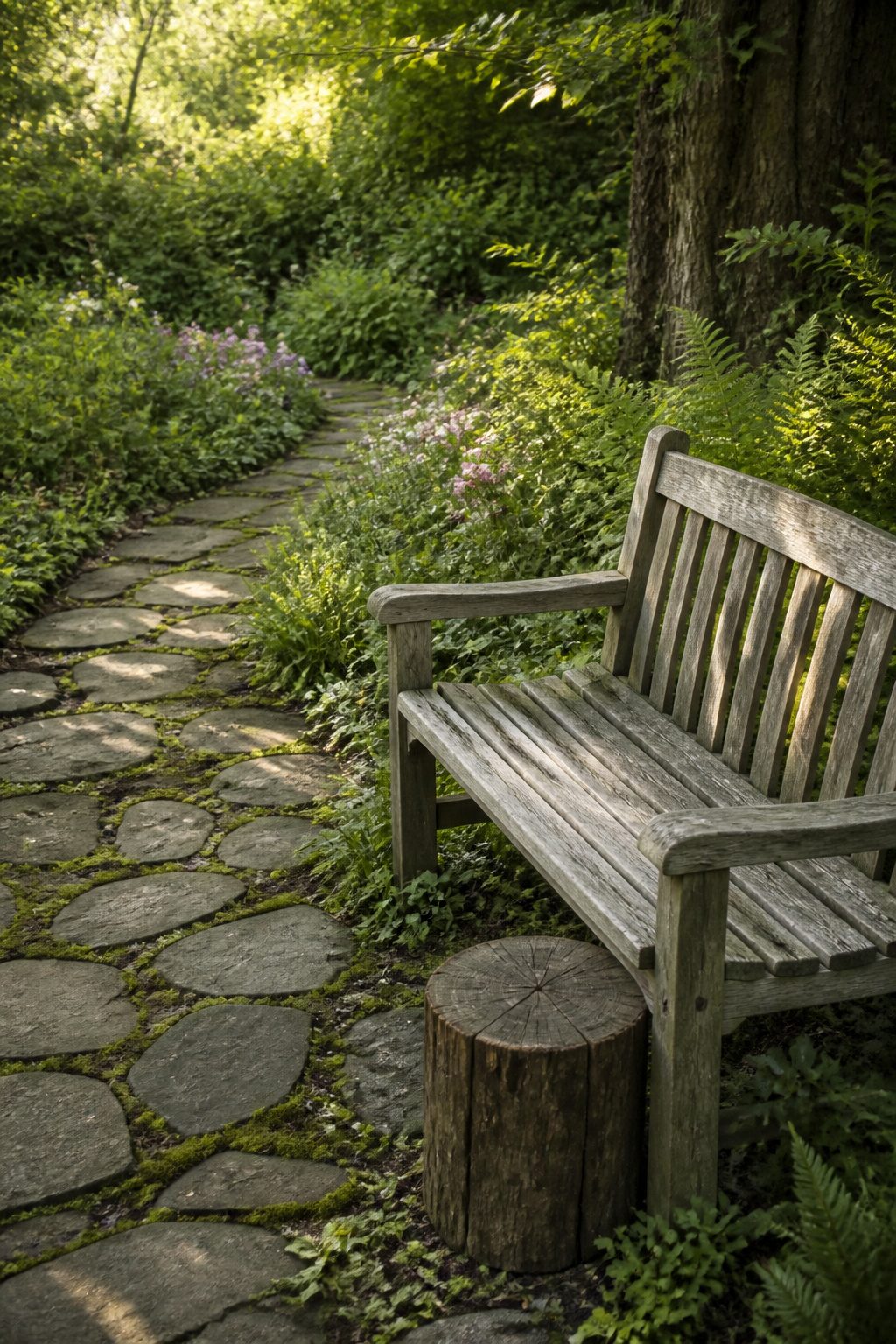
Weathered wood does more for a backyard than most new finishes ever could. A silvered teak table or bench carries the soft gray of seasons spent outside, and that color only deepens as the lignin bleaches and the grain raises.
The mistake is sealing it too soon; varnish traps moisture that wants to escape, and the result is flaking within a single humid summer.
Let it silver, or oil it twice a year if the original tone matters more than the patina.
Stone follows the same logic. Irregular flagstone with moss in its joints, or a path laid from mismatched bricks and flat stone pieces, grounds the space in something that was already in the ground.
The variation in surface draws the eye down and slows movement through the garden, which is the point of a path.
Raised beds or sitting platforms built from untreated lumber will check and crack; that is not failure, only the material adjusting to wet and dry cycles.
Where rot is a worry, cedar or Black Locust lasts longer than pine, though no wood survives forever against soil contact.
I have learned to place stone and wood where their aging becomes the feature, not the flaw.
A dark stained deck against pale gravel, a tree stump pulled up as extra seating around a fire pit, bamboo growing up through the slats until it needs cutting back.
These choices ask you to accept weathering as the design itself.
14. Seasonal Decor Changes
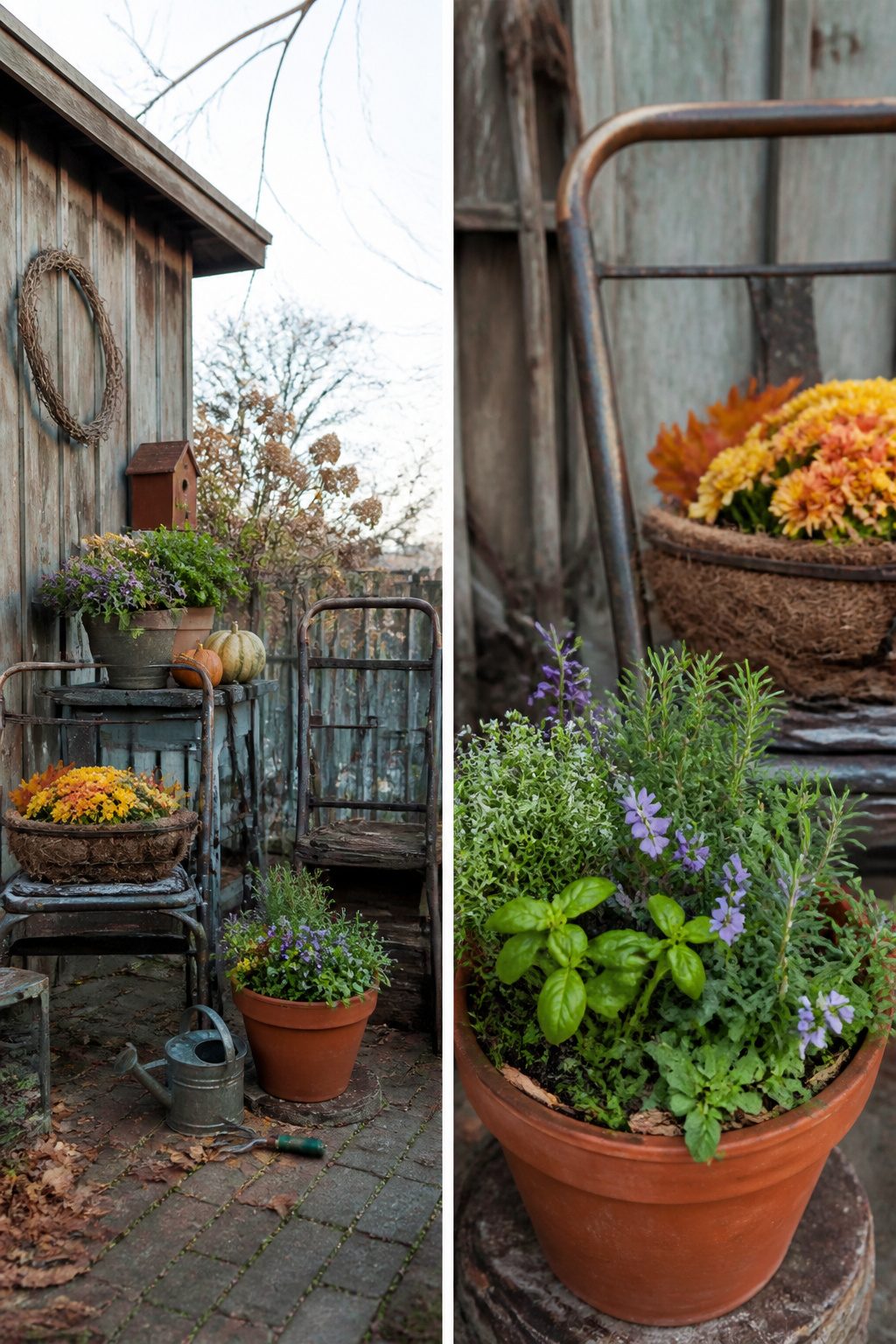
Rotating a few pieces seasonally keeps a small backyard from feeling tired by August. The trick is to spend almost nothing on storage.
Chair planters built from damaged flea-market seating, like the ones my neighbor keeps swapping between spring herbs and fall pansies, cost only the soil and a $4 seed packet. A lightweight terracotta pot or wire basket lifts out in minutes.
For the budget this readership works with, roughly $500–800 a year, I would rather see one good set of chairs get recovered twice than two mediocre sets fighting for closet space.
Facebook Marketplace turns up cushions and small tables cheap if you stalk it, and the rental trucks at Home Depot run about $20 when you need to haul something larger.
A paver patio runs closer to $5,000, so I skip that conversation entirely and move what I have.
Late summer is when I wash everything, let it dry bone-dry, and stack the resin pieces in a corner of the garage.
The wood items that cost more get the indoor closet. What stays out is the one piece that looks deliberate against bare branches: a single galvanized planter, a weathered chair frame with nothing in it.
That is the winter look. Change comes with the mud, not the calendar date.
15. Wildlife-Friendly Plants
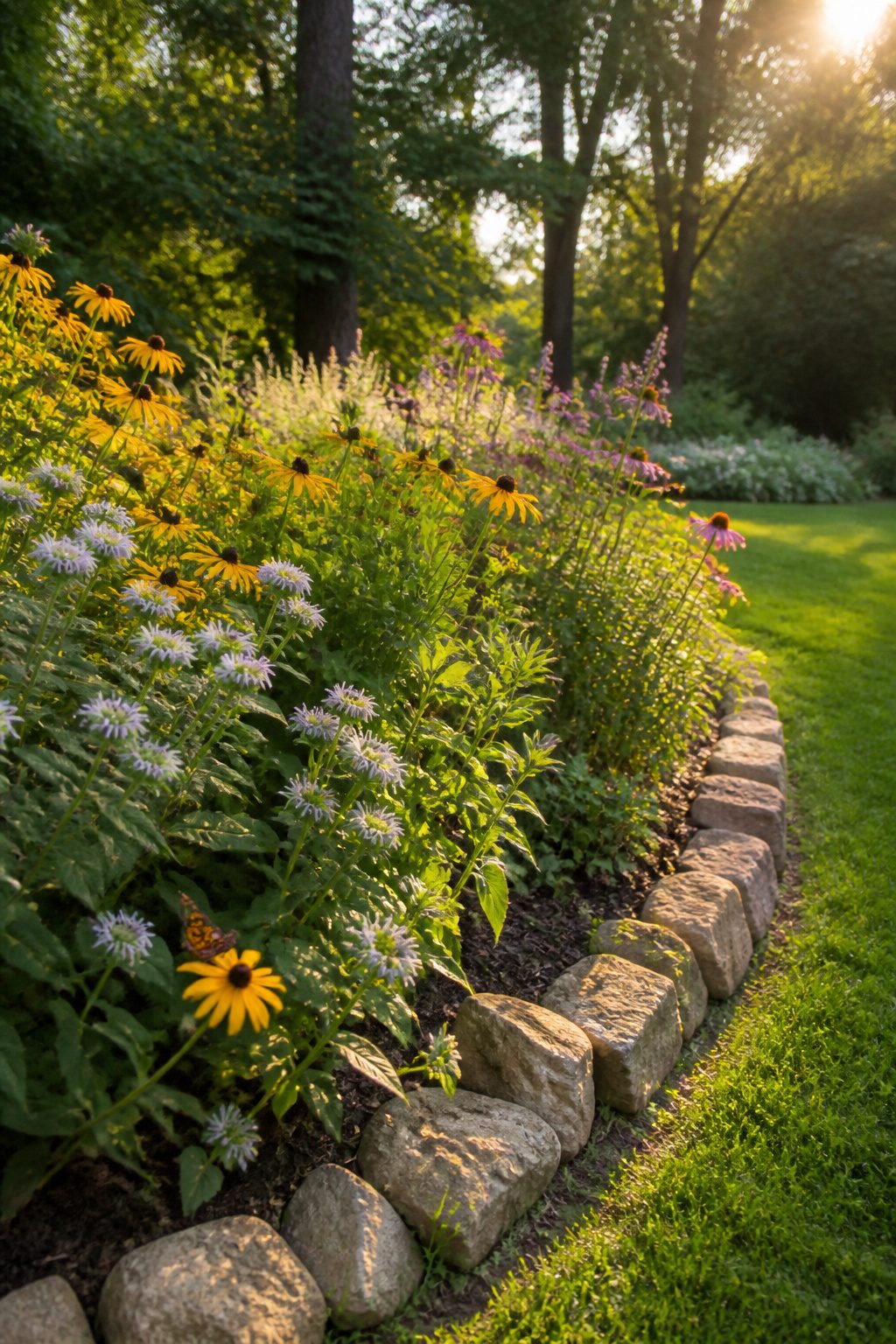
I swapped my usual trophy plants for a mix of rudbeckia, solidago, and native mountain mint two summers ago.
Within one season, the number of bees and predatory wasps on that strip of bed changed so completely the space felt like a different yard.
Wildlife-friendly plants pull in the creatures you actually want around: pollinators for the tomatoes, lacewings for the aphids, birds to pick caterpillars off your brassicas.
The payoff is pest control without the spray schedule. Native species do the heaviest lifting because local insects evolved alongside them.
A patch of medium-height flowers with successive bloom times, roughly spring through frost, keeps the benefit steady rather than giving you one loud week in June and silence after.
Design-wise, this reads as intentional rather than messy.
A defined border, even an informal one, keeps the look deliberate. Group plants in odd-numbered clumps of three to five so pollinators can move efficiently.
Let the back edge go slightly taller than the front. The color shifts through the season, which is more interesting than a static display.
The limit is light and soil, not acreage.
A bed eight feet long and three feet deep can support this. A cluster of pots on a balcony, with a small pollinator-attracting shrub like buttonbush in the largest one and shorter perennials around it, works nearly as well.
Water regularly the first year while roots establish; after that, these plants are generally the ones that survive my neglect during a July trip.
I still keep the double knockout roses because my mother likes them. The pollinator strip sits at the opposite end of the bed, no harm done, and the beneficial traffic between them is the compromise I live with.
Budget-Friendly Decor
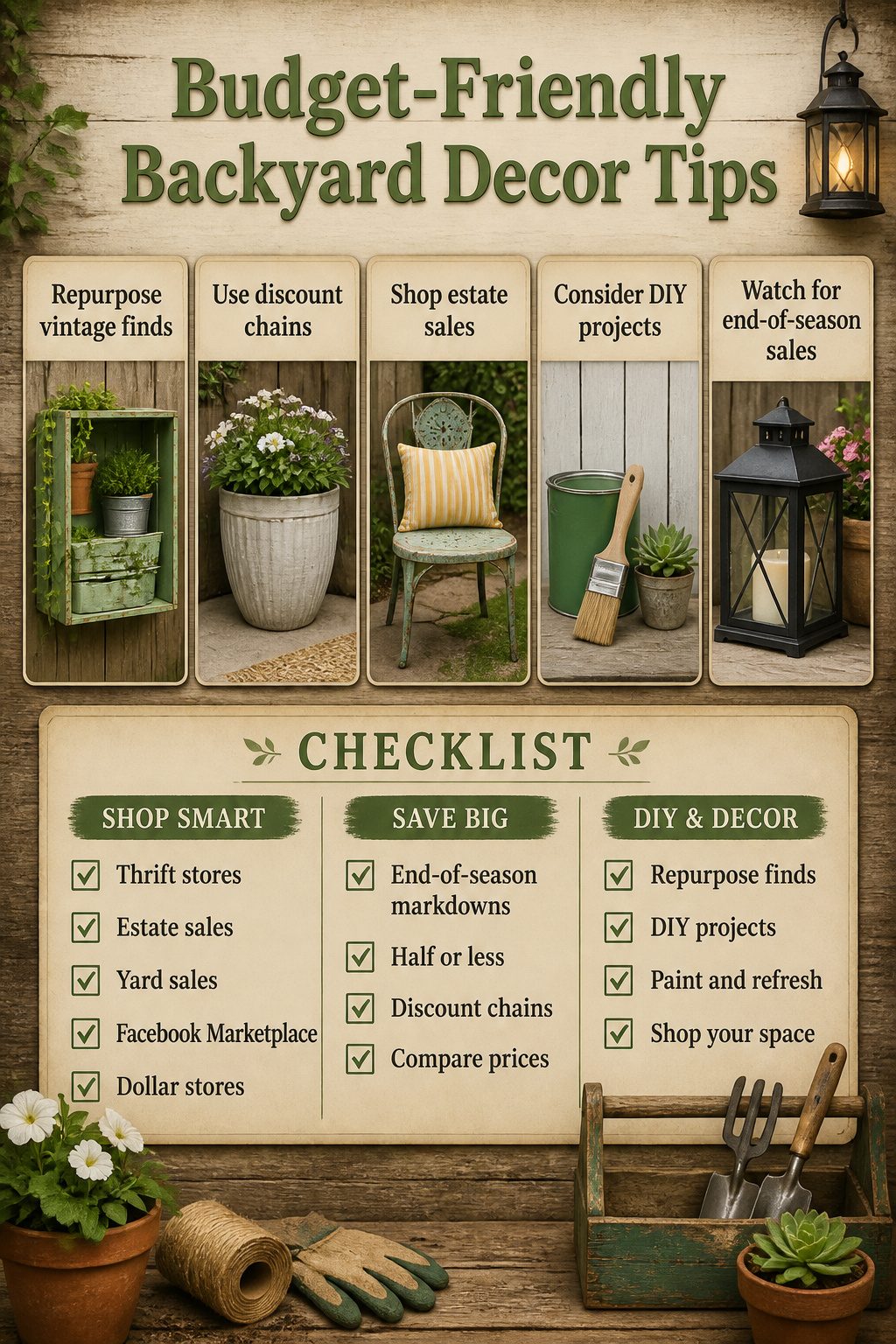
Decorating a backyard does not require a catalog budget. Most of my favorite pieces started as something else entirely.
A vintage chicken crate bolted to a fence becomes a wall-mounted plant shelf after a quick scrub and maybe a coat of exterior paint.
Thrift stores, estate sales, and yard sales turn up wood crates, metal planters, and sturdy furniture that outlasts anything shipped flat.
I repurpose what I find; a little sanding and outdoor paint converts a tired side table into a potting station that lives on the patio year-round.
Facebook Marketplace runs about $20 for a Home Depot truck rental if the seller has no delivery, and that single trip can haul home enough to furnish the whole space.
Big box stores and discount chains move their outdoor inventory fast; I watch end-of-season markdowns for lanterns, planters, and textiles at half or less.
Dollar stores yield surprising raw material: wire baskets, glass votives, and plastic planters that read expensive once they are grouped and filled.
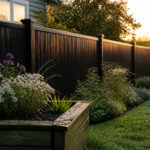
A painted wall mural costs only the price of exterior paint. One solid white base coat, then freehand stripes or blocks in colors that echo your pots, and the fence stops looking like a fence.
DIY tutorials cover almost any expensive look.
I find one I trust, add up the materials before starting, and skip projects where the supply list creeps past ready-made prices. The mistake is falling for "savings" that eat a weekend and still look homemade.
Outdoor Lighting Basics
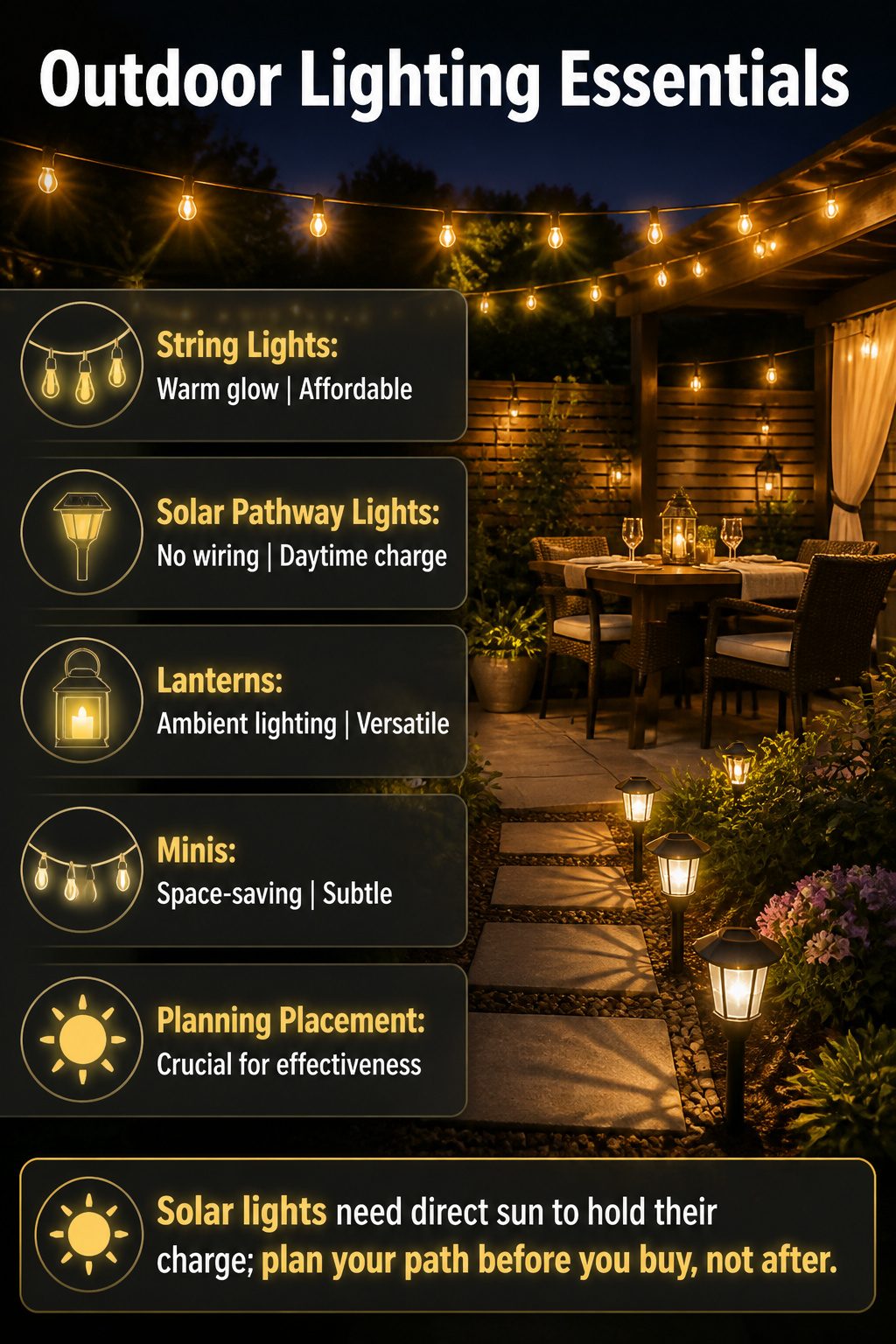
String lights have a way of turning an ordinary Tuesday evening into something you want to stay outside for.
I ran Brightech Waterproof Lights above my container beds last summer, and the glow they cast after dark made the whole patio feel like borrowed scenery from somewhere more expensive.
Festoon-style bulbs threaded over eating areas also give that loose, restaurant-yard effect without the reservation fee.
Solar pathway lights do quieter work. They charge through the day and switch themselves on when the light drops, which means no wiring and no electrician bill.
The tradeoff is placement: anything under heavy tree cover or north-facing shade won’t get enough sun to last past dinner.
I have used them along a narrow side yard where afternoon light still hits, and there they stay bright until close to midnight.
White string minis and lanterns fall into that same low-cost tier, and both beat tiki torches for anyone tired of smelling like citronella. Brighter is not always better here.
The most usable yards I have sat in mix one strong overhead source with smaller points of light lower down, so you can see the person across from you without losing the night sky overhead.
Solar lights need direct sun to hold their charge; plan your path before you buy, not after.
Comfortable Seating Choices
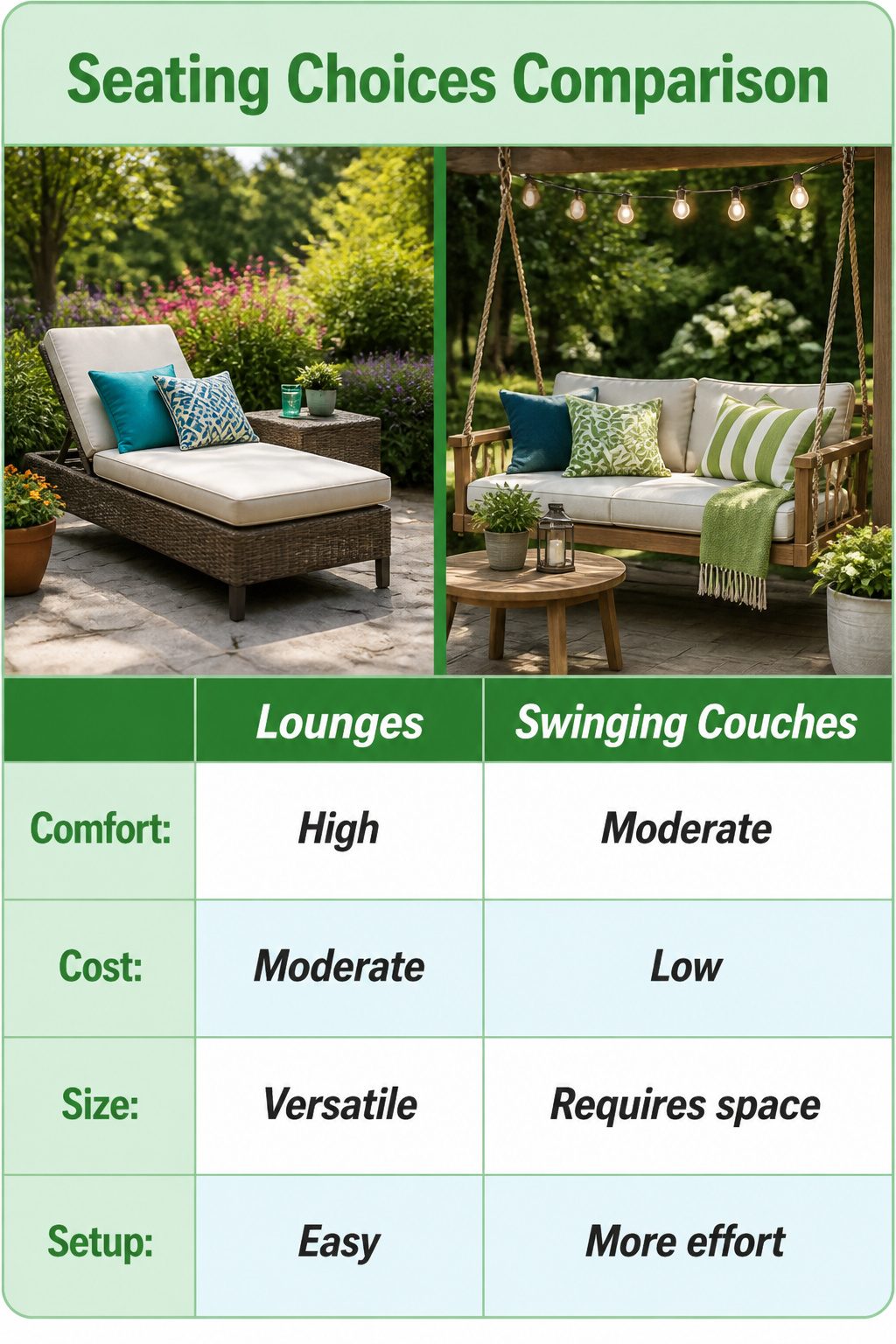
Lounges, chaises, and sectionals have become the real backbone of how people actually use their yards now, which is to say the living room moved outside and stayed there.
I watch Facebook Marketplace for these, checking most mornings because the good posts vanish within hours and the best deals never sit overnight.
Late summer brings the deepest discounts if you can wait that long; stores need that floor space for holiday stock.
A swinging couch changes the whole feel of the space, though it demands more room than most balconies allow.
Layer it with pillows that can handle rain, add a small outdoor coffee table, and the spot stops looking staged and starts looking lived-in. String lights overhead pull double duty once the sun drops.
An inflatable hot tub in one corner, towels within arm’s reach, and simple seating nearby turns into a retreat without the renovation bill.
Check your deck load limit first, or plan for ground level. The setup costs far less than built-in spa work but still needs that practical check before you commit.
Plants and Gardening Integration
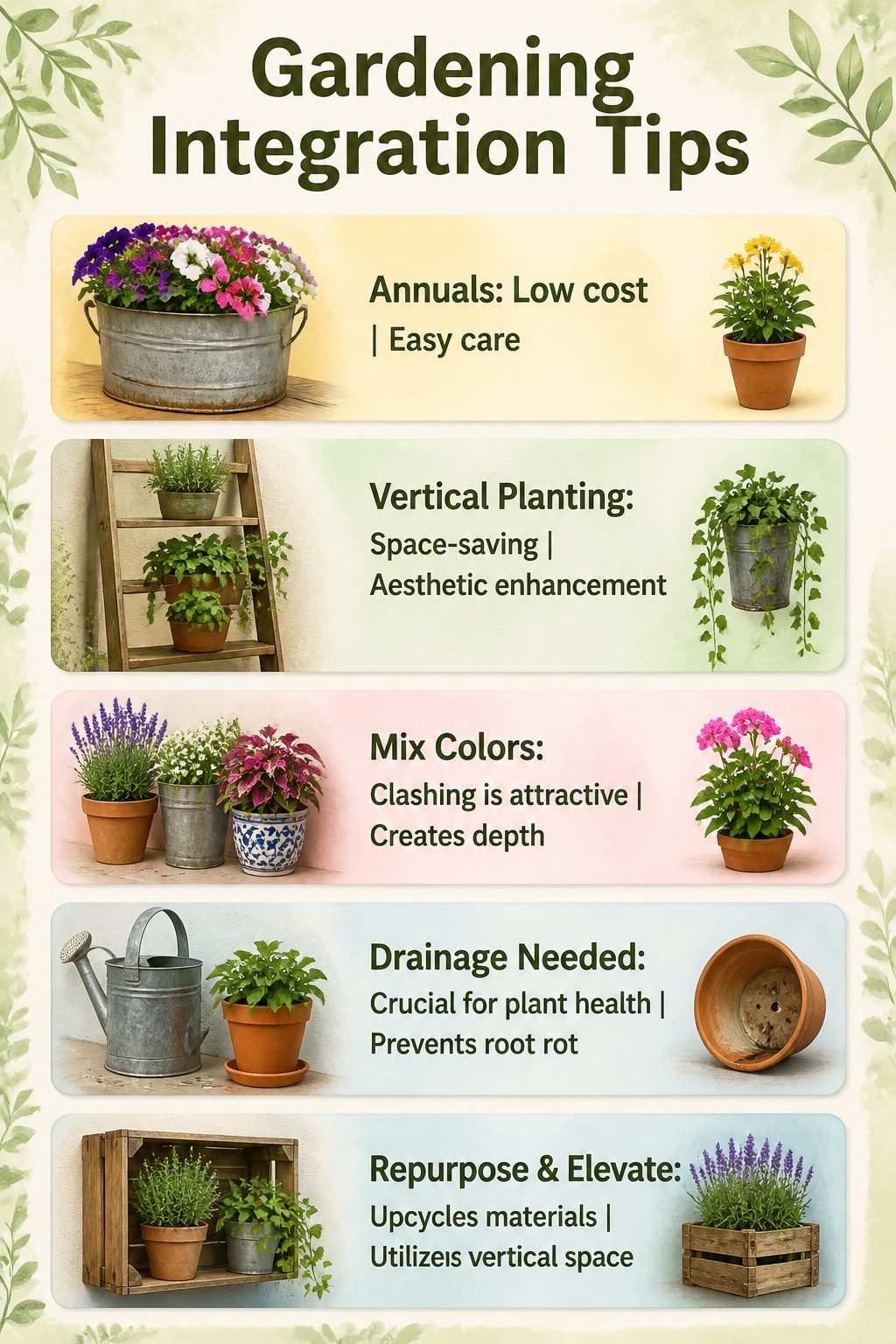
Annuals run just a few dollars apiece, and almost anything with drainage holes becomes a planter.
I used tin containers from Dollar Tree one season. They rusted faster than I expected, but they held petunias through July before the bottom gave out, and for that price I did not mind replacing them.
A leaning ladder solves the floor-space problem if you are working a narrow patio or balcony. Potted herbs or trailing ivy on three rungs give the forest-floor density without consuming square footage you do not have.
Interior designer Michael Plater points out that adding a curtain or trellis vine turns the same ladder into a privacy screen, which matters more than people admit when you share fence lines with neighbors ten feet away.
Vertical stands against a wall do the same work with more permanence.
A slatted wood backdrop with tiny shelves, or a repurposed crate mounted like a shadow box, lifts pots to eye level and keeps the ground clear for actual living.
The crate idea in particular reads rustic without requiring a farmhouse aesthetic; paint it or leave it beaten, and it still performs.
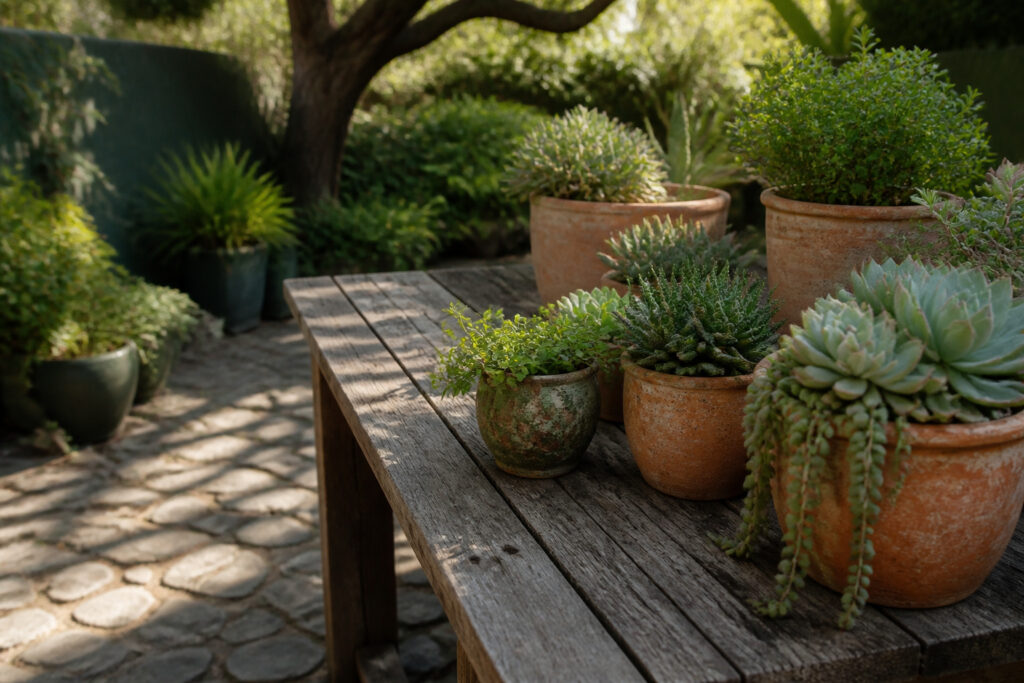
Color comes from mixing rather than matching. Terracotta beside galvanized metal beside a ceramic pot you found secondhand: the clash is the point, and outdoor space is forgiving enough to absorb it.
My only rule after a few seasons is to cluster plants by water need, not by pot style. Dry-loving lavender in the same container grouping as thirsty coleus means one of them dies looking guilty, and no arrangement survives that.
DIY Personalization
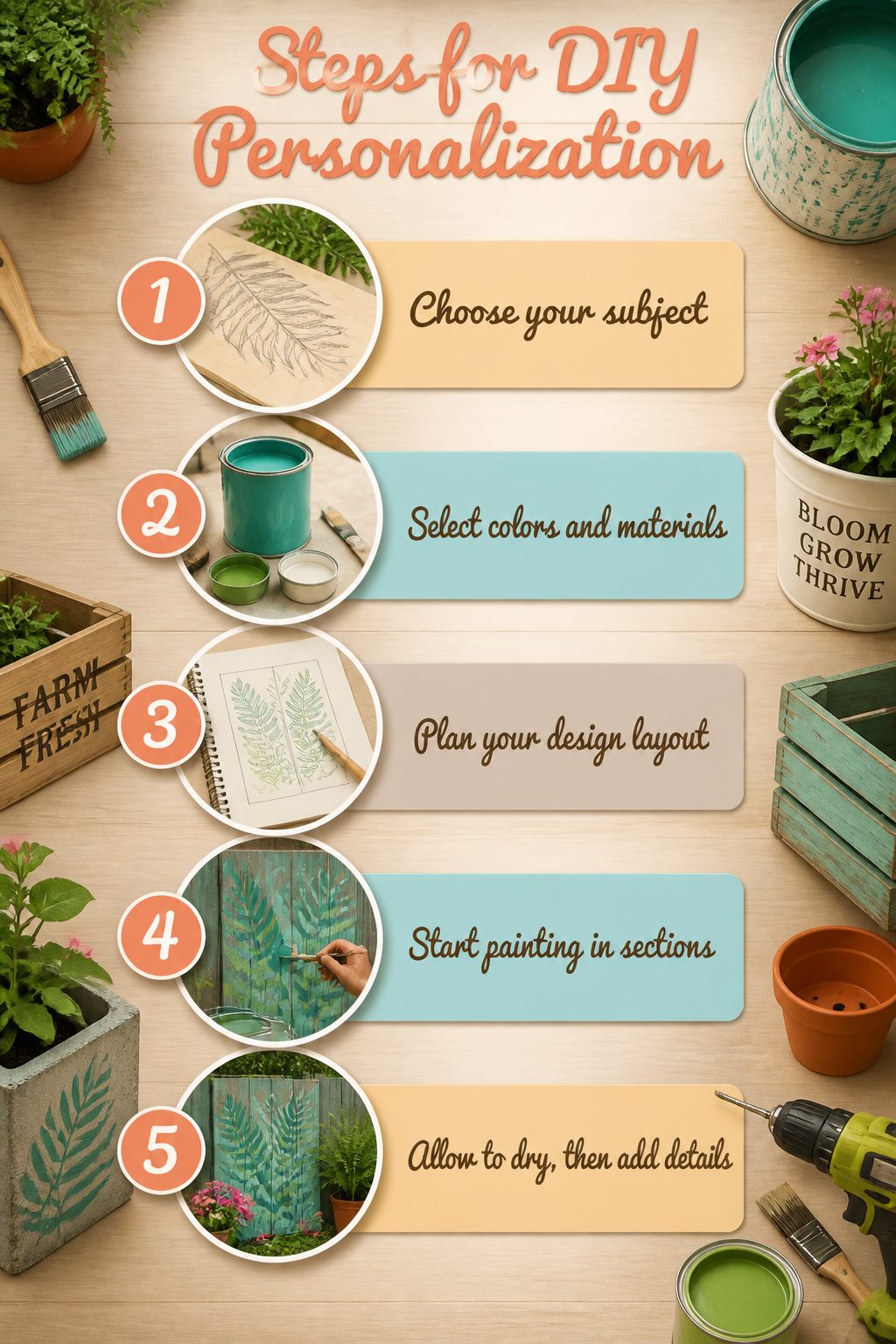
Painted murals on an exterior wall or fence turn blank siding into something that belongs specifically to your yard.
I started with a single oversized fern frond on reclaimed plywood because a full fence felt like too much commitment, and two summers later that panel still stops people mid-step.
A quart of exterior acrylic runs $15–$25 and covers more area than you would think; work in sections so the image grows at your pace rather than demanding a single weekend.
Upcycled furniture carries the same principle further out into the space. Sources kept returning to thrift-store finds and yard-sale pieces redone with outdoor paint or left to weather, deliberately, into something no store sells.
A $20 Home Depot truck rental, mentioned often, solves the transport problem for bulky items: split it across several weekend finds and the per-piece cost drops fast.
The most convincing examples were not meticulous restorations but clear-headed choices about what reads as charm versus what reads as broken.
Custom planters sit at the overlap of those two ideas. Painted cinder blocks, wooden crates lined with plastic, retired containers from elsewhere on the property: the container becomes the statement before the plant ever arrives.
One source noted that Dollar Tree and Family Dollar stock pots heavy enough to modify with drill holes and exterior sealant, a route that lets you test shapes before investing in anything permanent.
The gardens that read as personal, not staged, tend to accumulate these pieces over seasons rather than install them all at once.
Frequently Asked Questions
How can I make my backyard more attractive?
Layer soft textiles against hard surfaces, hang string lights overhead for evening atmosphere, and cluster varied planters at different heights rather than lining plants in single rows.
A painted fence or mural does the heavy lifting on color so the rest of the yard can stay simple.
What is the cheapest way to landscape a backyard?
Gravel paths over compacted soil run about the cheapest ground cover, and pea-sized stone drains fast after rain.
Stepping stones in mulch cost even less and can shift as the yard changes. For vertical interest, tension-based wall systems hang from eaves with only two small holes to patch later.
What are some creative DIY backyard projects?
Trace a blown-up image onto a fence or garage wall using a cheap projector and exterior paint, or sand and seal a wooden ladder into a tiered plant stand.
Thrifted crates bolted together make shelving for the cost of the gas to collect them, and most of these projects finish under $100.