These basement furniture ideas run from a quick swap of pillow covers to a full built-in wall, and the right pick depends on whether your basement is a finished room or a concrete box you are still figuring out.
A tight-weave performance fabric on a sectional survives basement humidity better than velvet, and a breathable rug pad, or none at all, keeps mold from starting underfoot.
1. Cozy Atmosphere with Colors
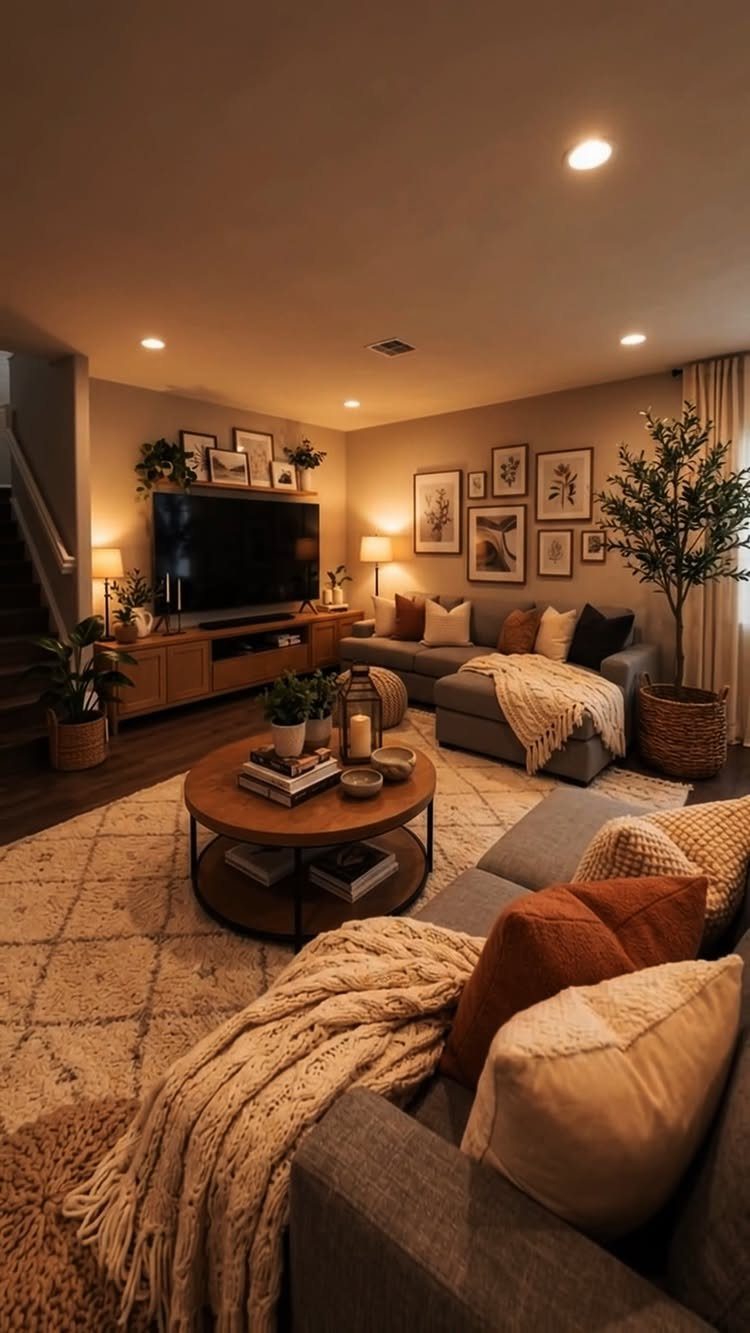
Terracotta and cream against grey upholstery turn a basement into somewhere people linger. Layering starts with a warm neutral on the largest surfaces, then richer tones through pillows and throws you can swap when the mood shifts.
A chunky knit in oatmeal or camel does more than color; it adds the texture that makes a basement feel finished rather than forgotten.
I have seen rooms where the walls stayed plain white and the warmth came entirely from textiles; it works if the fabrics are thick enough.
This suits anyone starting from scratch with a sofa already in mind. If your existing pieces run cool, a set of rust-colored pillow covers costs less than repainting and changes the whole temperature of the room.
2. Reading Nook
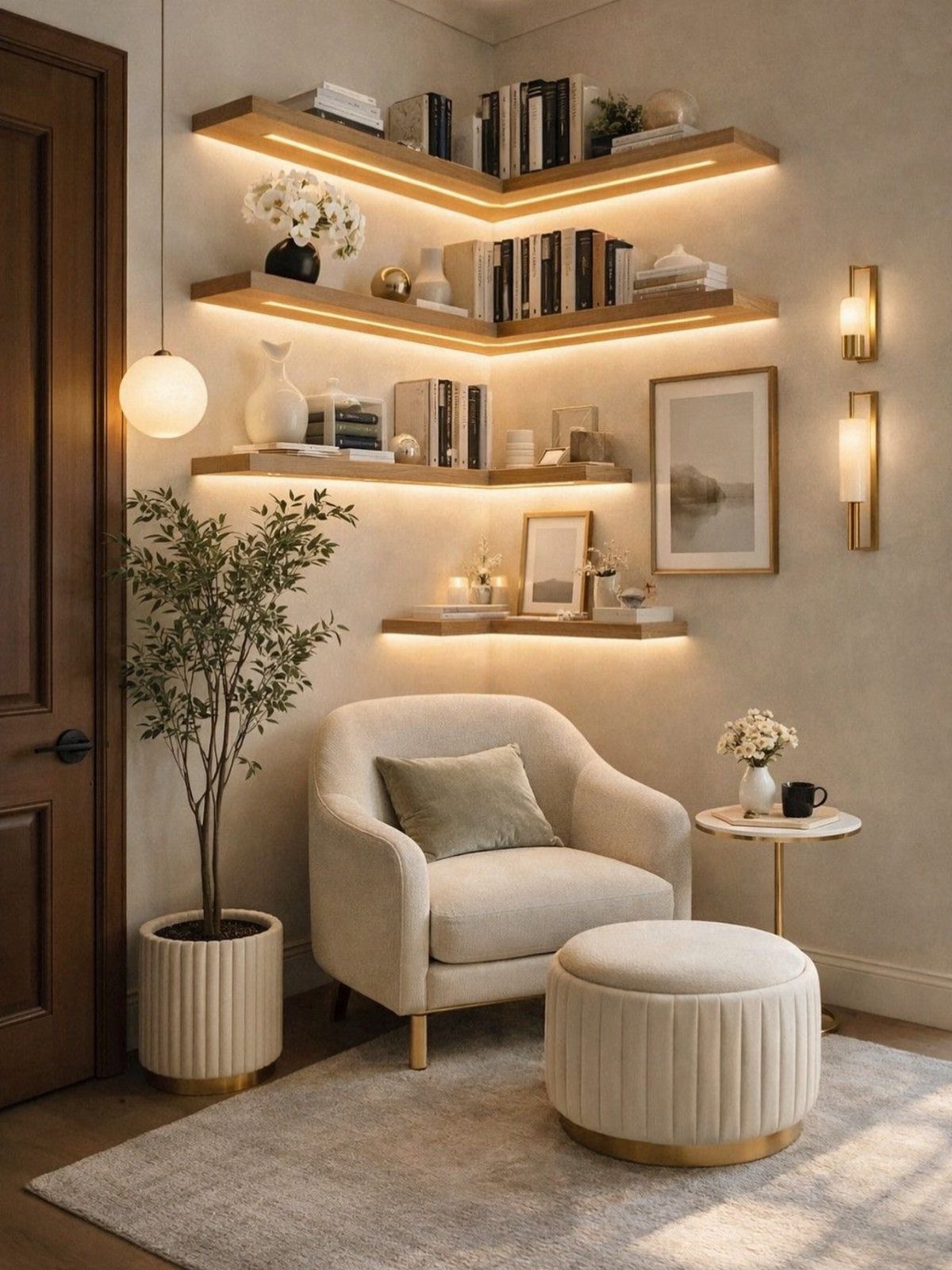
A reading nook needs three things: a chair you sink into, light that falls over your shoulder, and a surface within arm’s reach for a cup to rest on. The rest is spacing.
I would place the chair out from any wall so air circulates; basements hold damp and upholstery suffers in corners. Floating shelves above keep the floor clear and put titles where you can read the spines without standing.
Integrated lighting is worth copying if you are already running electrical; otherwise a floor lamp with a warm bulb angled over the back of the chair does nearly the same work.
This idea suits basements large enough to lose a corner without losing the room. In an open plan, the chair and its light define the zone without walls.
3. Accent Chairs and Poufs
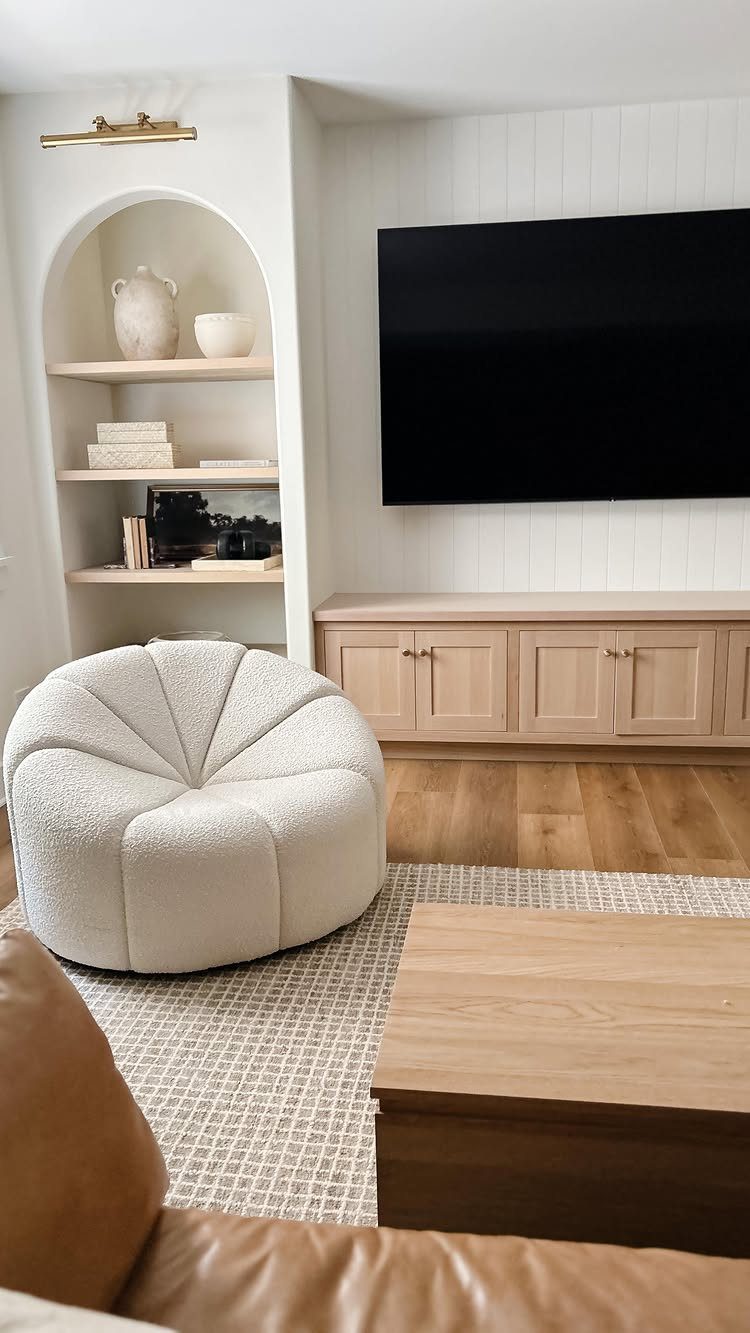
Bouclé poufs and rounded accent chairs fill gaps a sectional leaves behind. They move where the crowd moves, which matters in a basement that serves as theater one night and conversation space the next.
White texture reads clean against darker basement walls; in a lighter room I would choose charcoal or olive to hide the scuffs that come from feet-up seating.
Poufs store flat if you buy the unfilled covers and keep the stuffing bags elsewhere; I learned this after owning three that took up half a closet.
This works best when your main sofa is spoken for and you need extra seats that do not commit to a layout. Bean bags cost less but read younger; floor cushions suit low tables and casual meals.
4. Warm Lighting
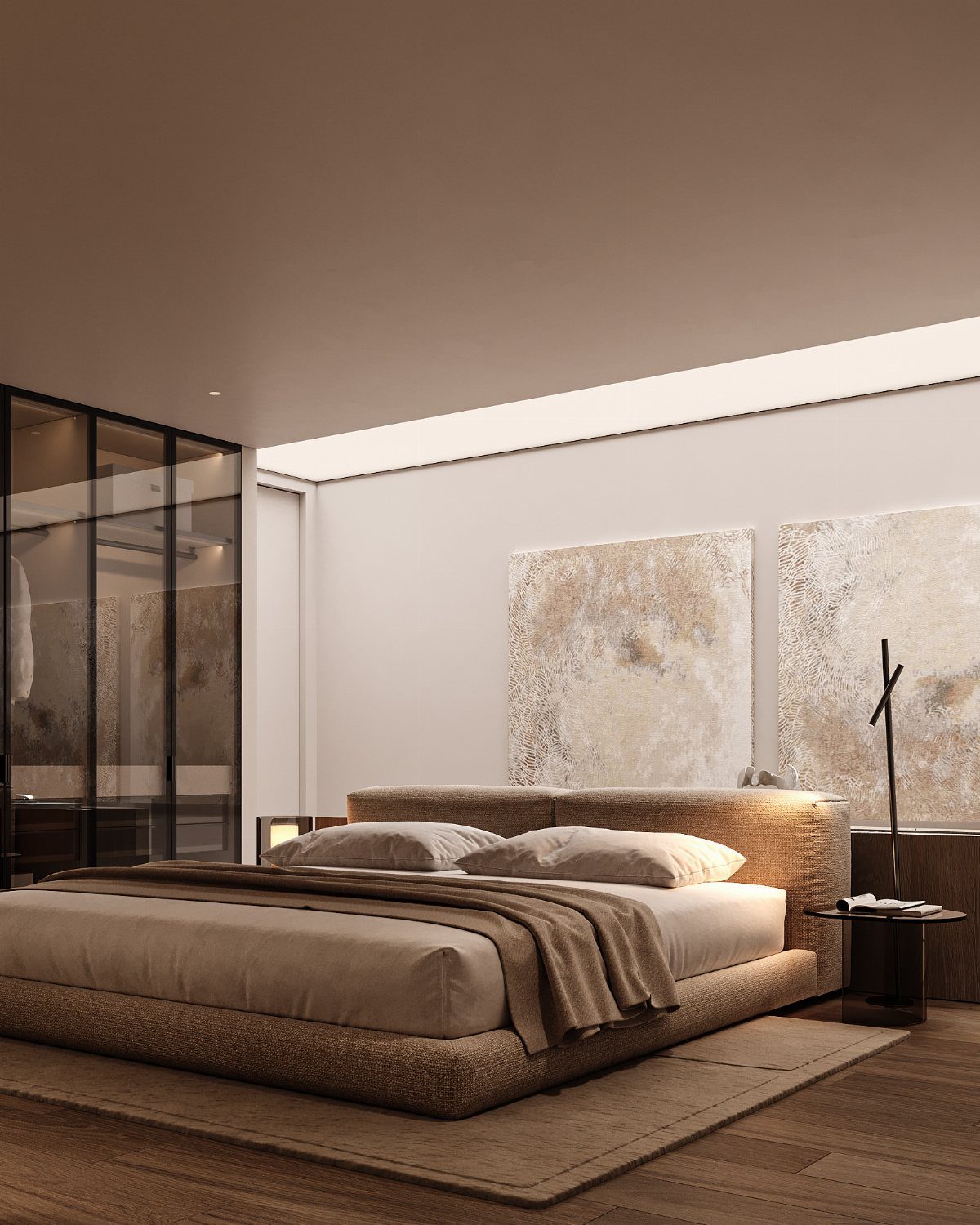
Basements start with no natural light, so every source you add has to earn its place.
Ambient light from a cove or recessed fixture gives overall shape; task light lets you read a label or deal cards; accent light picks out a painting or a plant and gives the eye somewhere to rest.
In a basement without architectural details to hide strips, wall sconces at shoulder height bounce light back into the room more effectively than ceiling fixtures alone.
I would avoid pendants where headroom is already tight; check the floor-to-fixture clearance, because many basements fall short.
Layering costs more than a single overhead solution but prevents the cave effect that makes people want back upstairs.
5. Repurpose Existing Furniture
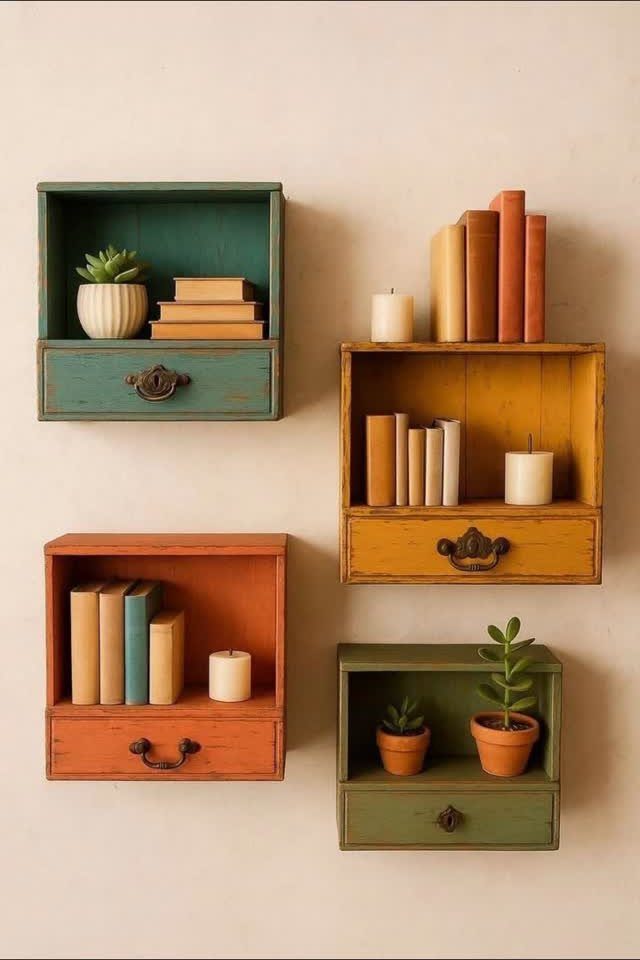
Old drawers mounted as shadowbox shelves keep useful depth for small pots and votives that would slide off a flat ledge.
Slipcovers on a tired sofa or chair follow the same logic. I have used heavy painters’ drop cloths held with upholstery pins for a summer, then bought proper covers once I knew the color held up to basement light levels.
Paint works on wood, metal, even laminate if you scuff first and prime; the cost is in hours, not materials, and the result outlasts a throw draped to hide damage.
This is the path for anyone whose budget is mostly spoken for. The limit is structural: wobbly frames stay wobbly, and no paint fixes a sagging seat.
6. Bar or Kitchenette
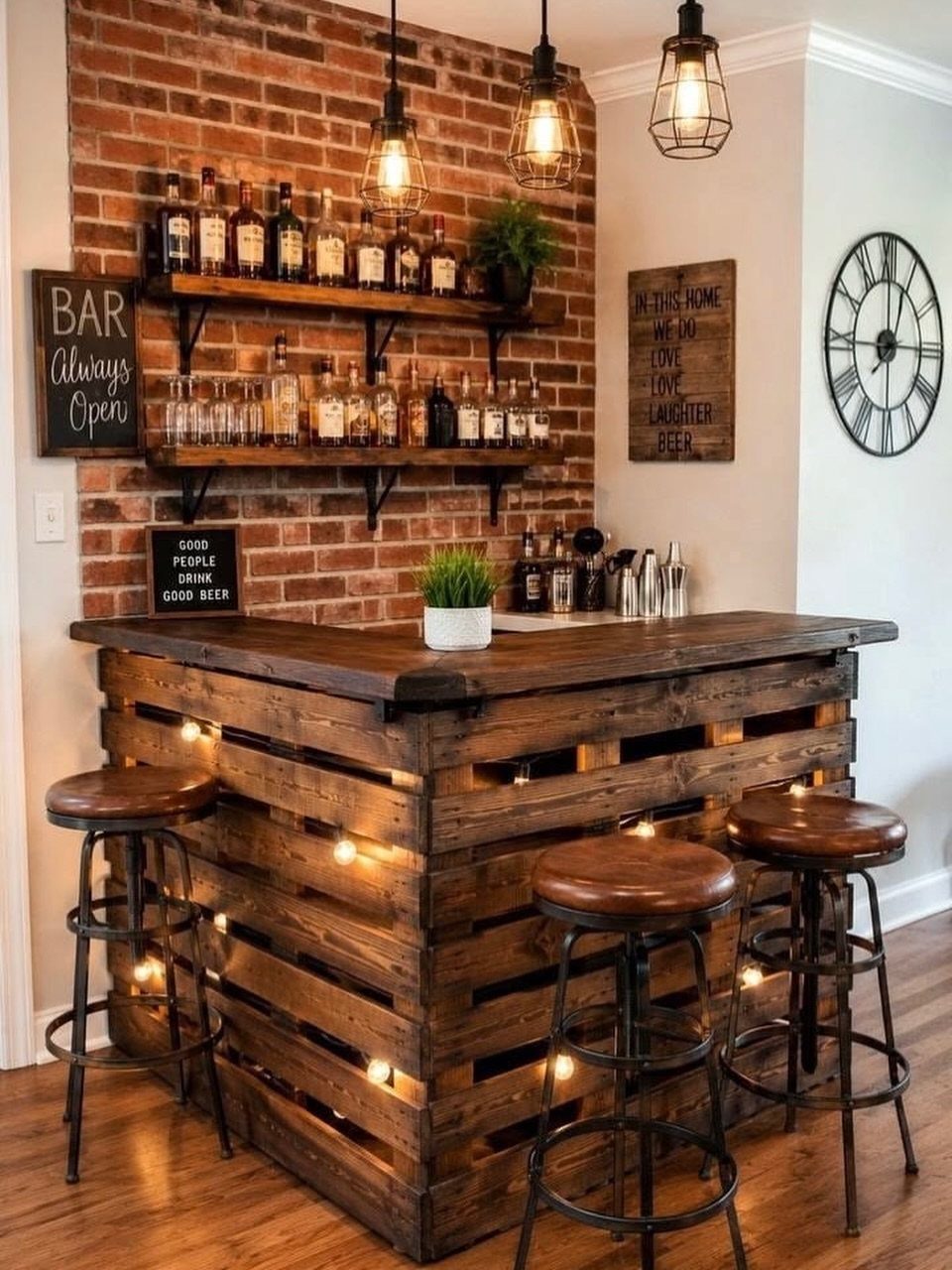
A pallet bar with a dark wood top and leather stools turns a basement corner into the last stop of the evening.
Brick behind a bar is doing heavy work; without it, a dark painted wall and open shelving carry the same mood for less.
Storage for glassware needs to be close enough to reach without leaving the stool; I would put shelves at arm height behind the counter, not above it where you silhouette yourself against the light reaching up.
String lights are festive but dim; add a small LED strip under the counter lip so you can actually see what you are pouring.
This suits hosts more than quiet households. The trade is square footage: a four-stool bar eats the space a small desk or cabinet would use, and the social return only matters if you gather regularly.
7. Built-in Storage Cabinets
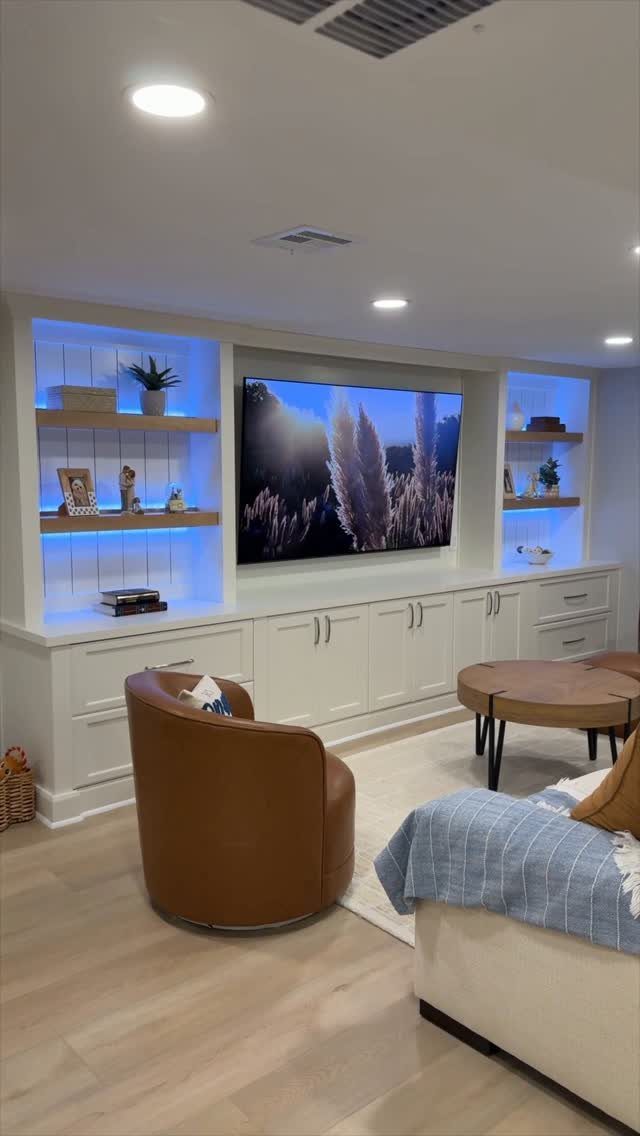
Built-ins turn a basement wall into storage that does not eat floor space. I like them for the seasonal clutter that otherwise ends up in cardboard boxes: holiday bins, spare bedding, the vacuum you use twice a month.
White cabinetry with lit display shelves works if you want a TV wall that also holds books or glassware. Drawers below hide what you do not want to see; cupboards above the screen handle board games or cables.
LED strip lighting behind the shelves costs little and keeps the room from feeling like a cave.
Custom work runs higher than freestanding units, but it uses every inch of an irregular basement wall, and there is no gap where dust collects.
Check your wall for moisture first; built-ins are a pain to move if you get that wrong.
8. Home Theater Setup
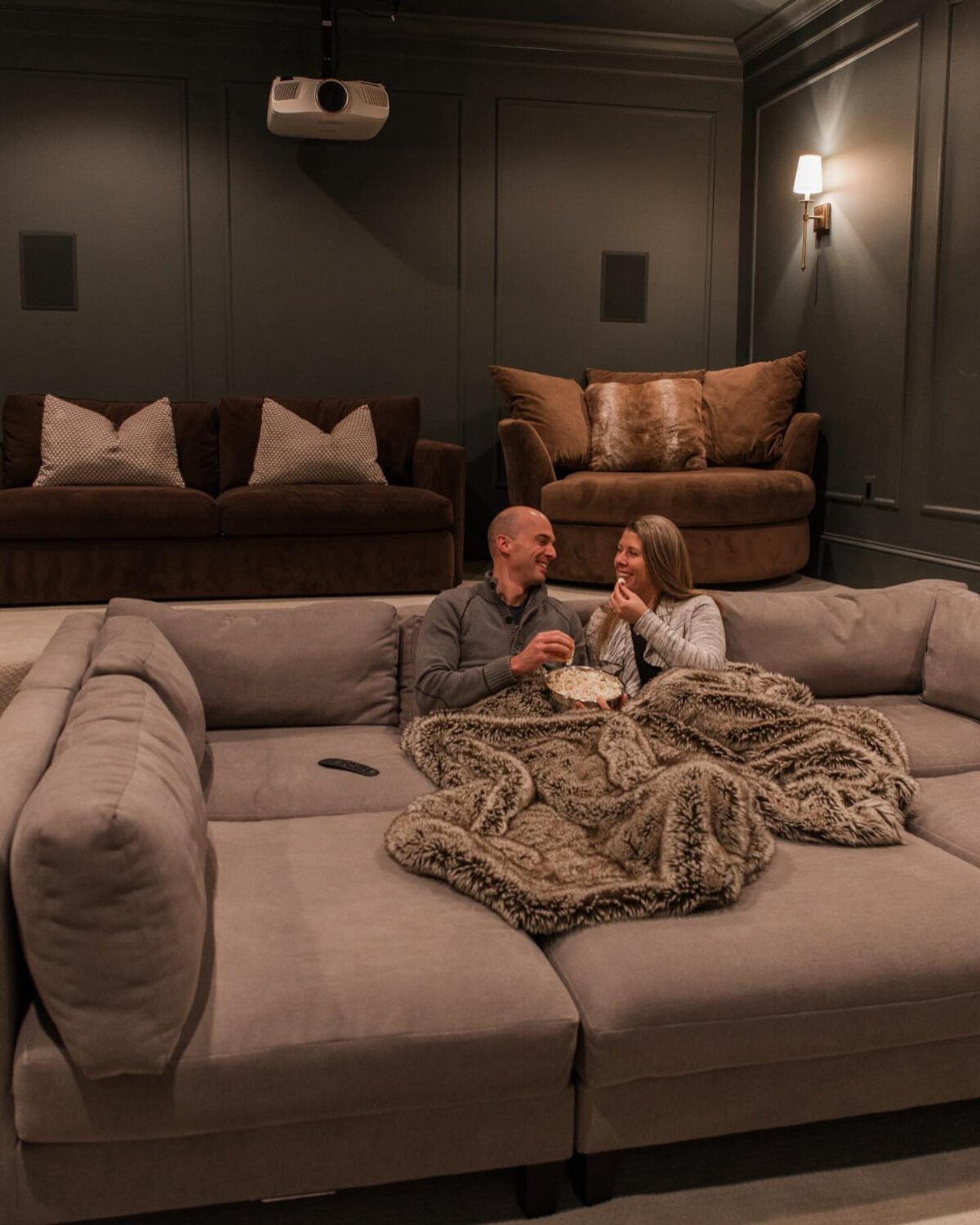
A projector and a deep couch turn a basement into the room people actually want to watch movies in.
Tiered seating, even informal with a second sofa and armchair behind the main one, keeps everyone facing the screen without neck strain. I would spend on the seating before the screen.
A projector on a blank wall gives you scale cheap, and basements are already dark. Sound matters more down here; concrete walls bounce noise, so add soft panels behind the speakers or let the couch backs absorb some of it.
A dedicated theater eats the whole room. If your basement also needs to be a guest space, a sleeper sectional and a smaller screen on an articulating mount let you switch uses.
9. Area Rugs
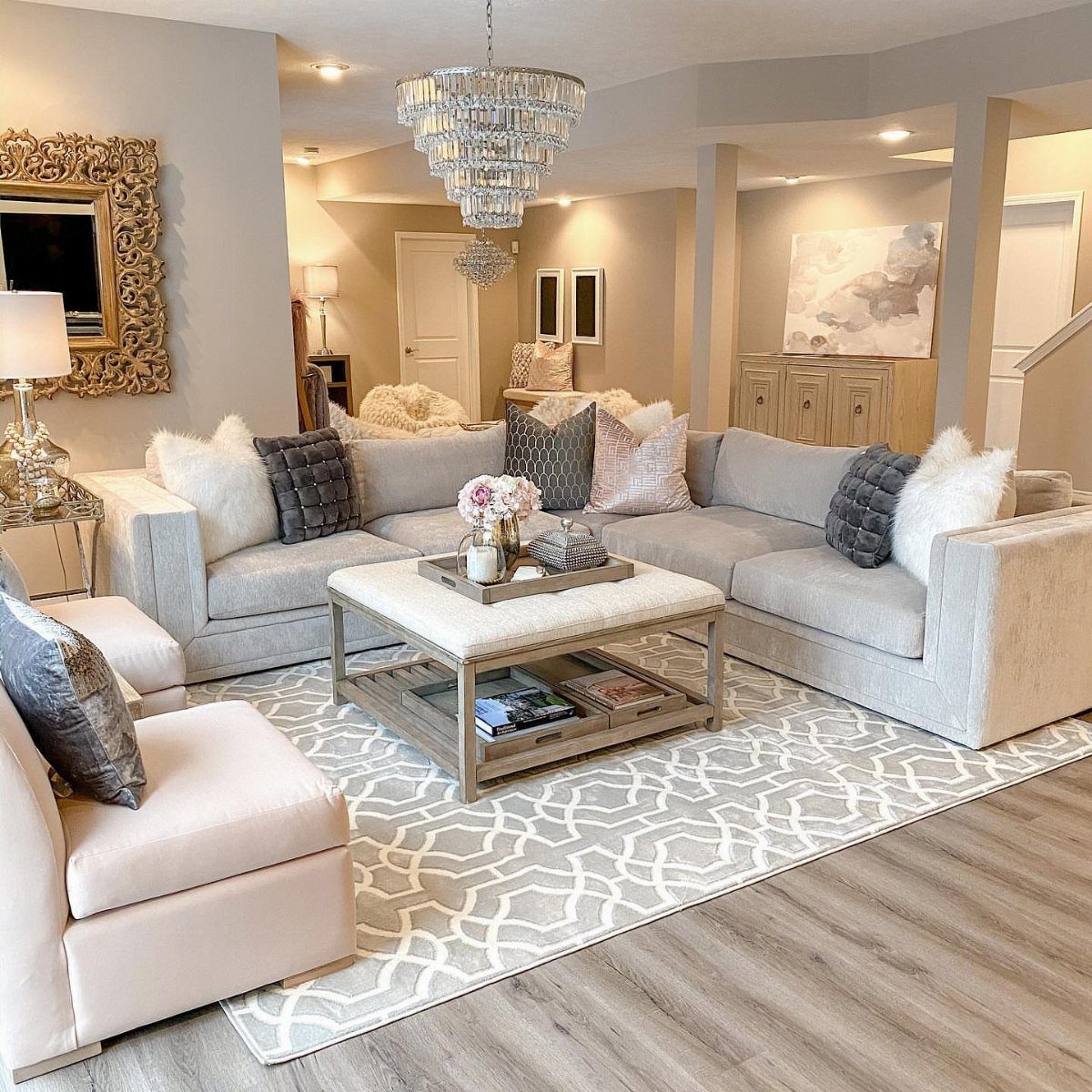
Concrete basement floors are cold and loud; a rug fixes both. A patterned rug under a full seating group is the move for open plans: the rug becomes the wall that is not there.
I size mine so every front leg of the sofa and chairs sits on it. That anchors the group without looking like a postage stamp.
Synthetic fibers hold up to basement humidity better than wool, and they cost less. A low pile is easier to vacuum and less of a trip hazard on stairs nearby.
If your basement floods even rarely, keep the rug pad breathable or skip it; a trapped pad molds fast.
10. Large Sectional Sofas
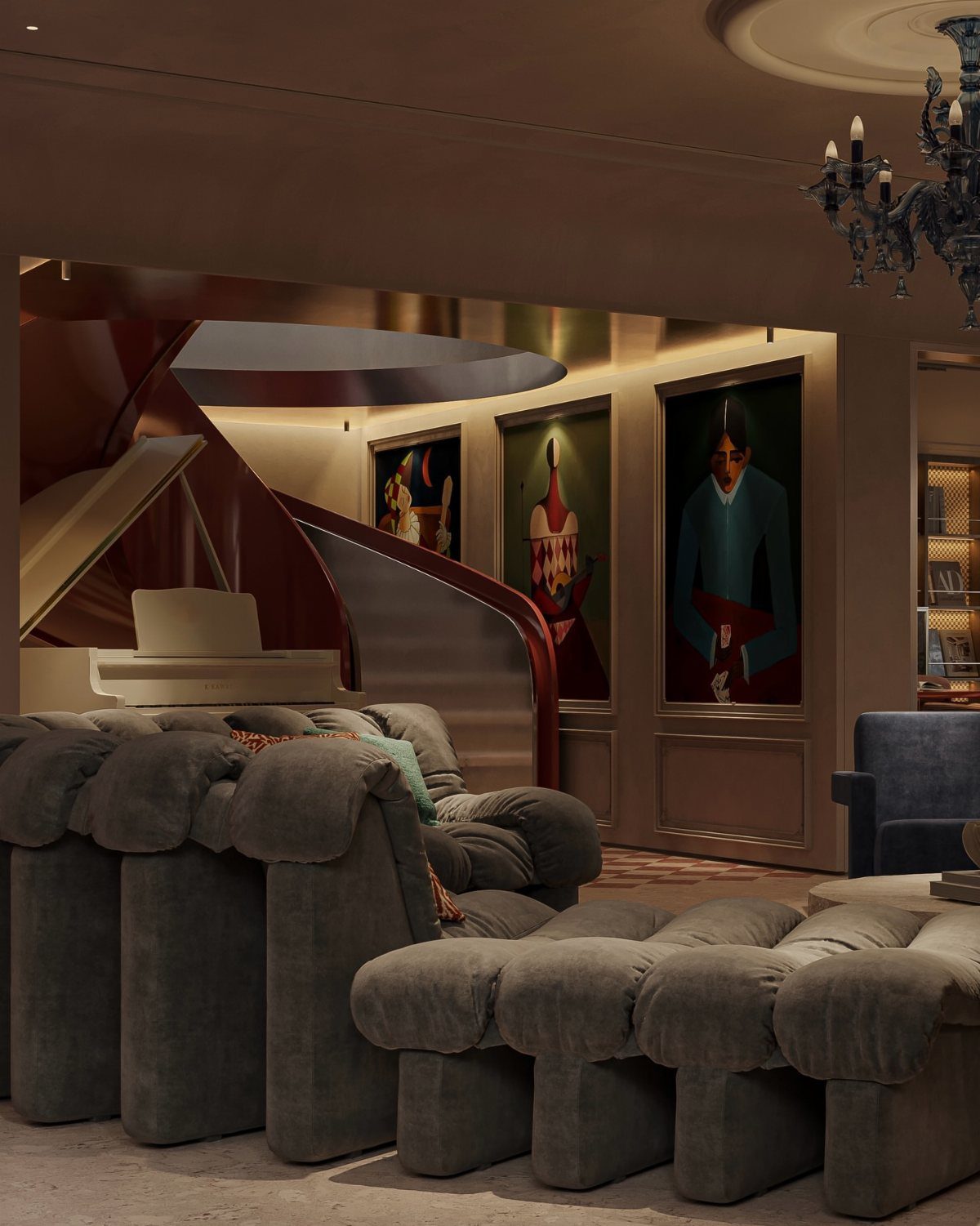
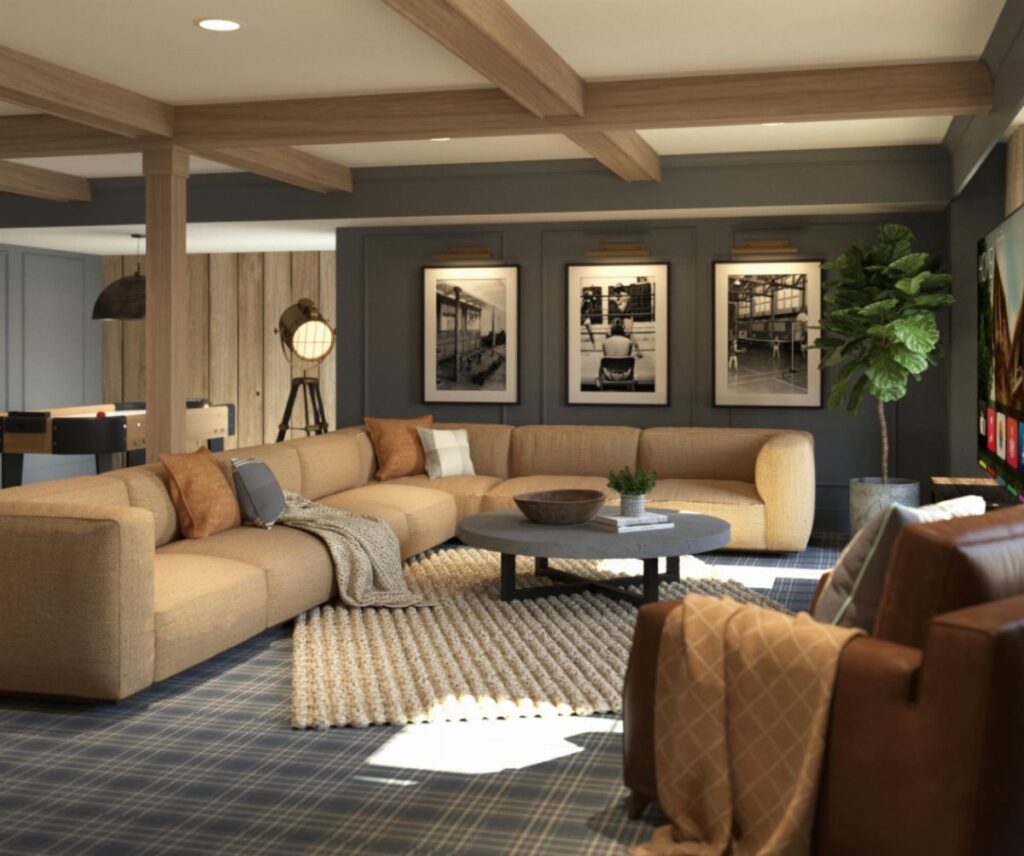
A sectional is the right shape for basements because it seats more people than the same length of sofa and chairs, and it hugs walls instead of floating in the middle of the room.
Deep seats let someone lie down without stealing the whole couch. Modular sectionals come apart, so you can thread pieces around support columns or staircases that break up the floor plan.
I would check door measurements before ordering; a piece that does not bend will not make it down narrow basement stairs. Fabric matters more than color down here.
Velvet reads as luxe but collects dust; a tight-weave performance fabric hides wear and wipes clean.
11. Dining Table with Bench
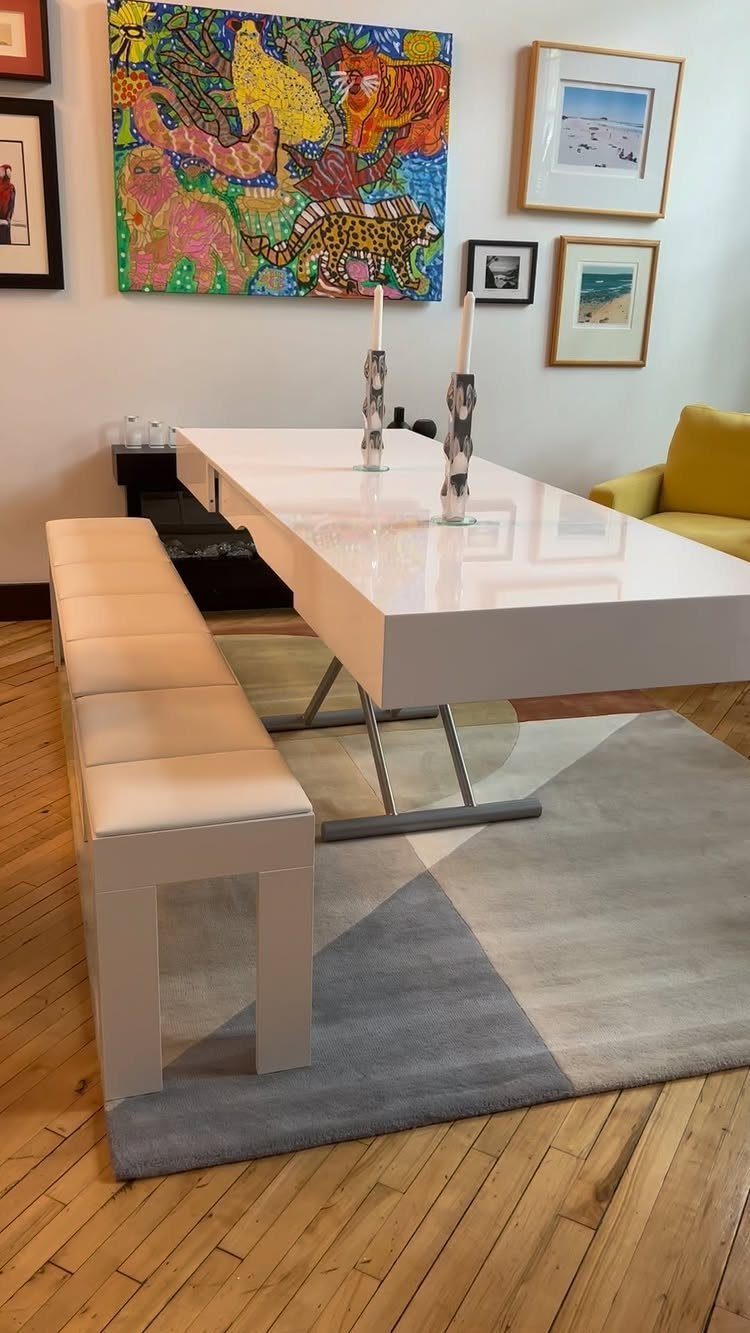
A bench tucks more bodies around a table than individual chairs, and it slides under when the meal is done, which keeps walkways clear in a basement that serves multiple purposes.
A long upholstered bench in cream against a glossy white table brightens a room with small or no windows.
I would use this setup for the basement that becomes a dining room only on weekends; the bench stores board games or linens in its hollow, or you buy one with a hinged lid.
The tradeoff is comfort for long sits. A padded backless bench works for a meal, not an afternoon.
If your basement dinners run late, mix chairs on the ends where people linger, bench along the sides where they come and go.
12. Counter Seating with Bar Stools
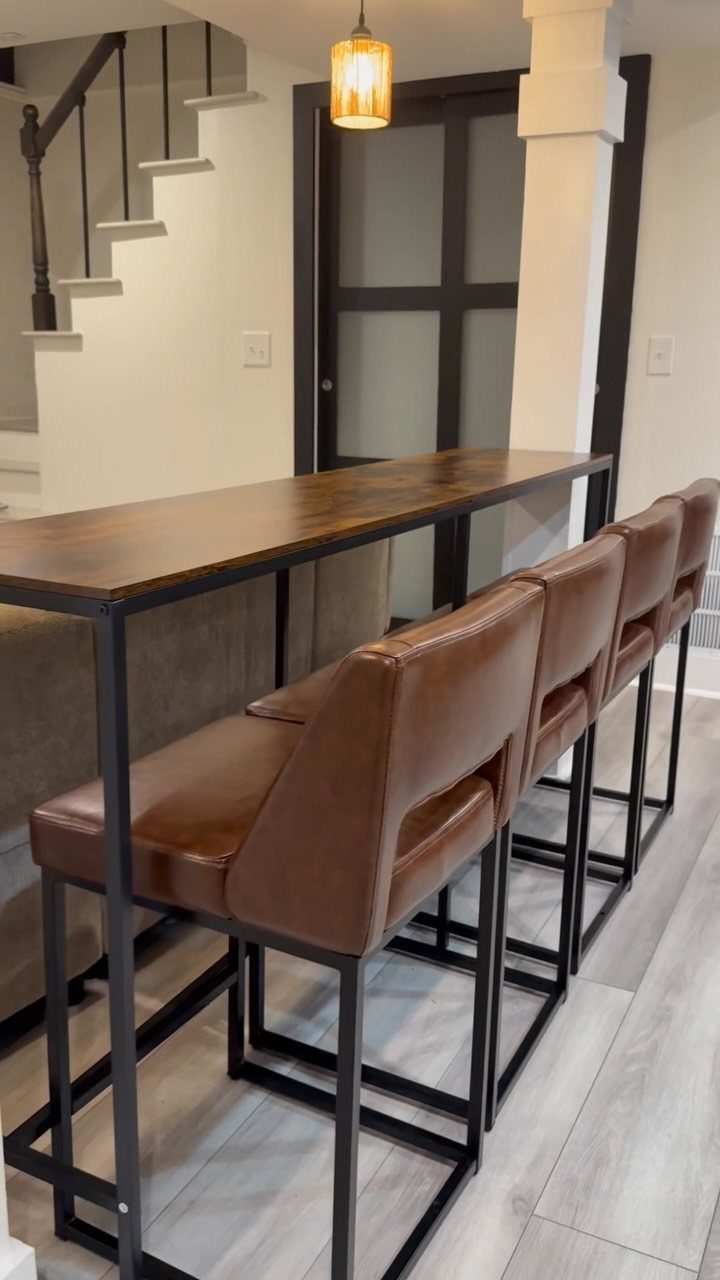
Bar stools at a counter turn a basement into a place where someone can eat while someone else watches the game across the room.
Leather stools with black metal frames at a wooden counter behind a sofa is the classic two-zone trick: the counter faces the kitchenette or a wall with a TV, the sofa faces the other direction, and neither group feels stuck in the same conversation.
I like backless stools for tight spaces; they slide under completely and do not block sight lines. Leather or faux leather wipes clean, which matters if this is where teenagers do homework with snacks.
Check the seat height against your counter; lower stools for a standard counter, taller ones for a bar. A footrest is not optional for taller guests.
13. Storage Sideboard Credenza
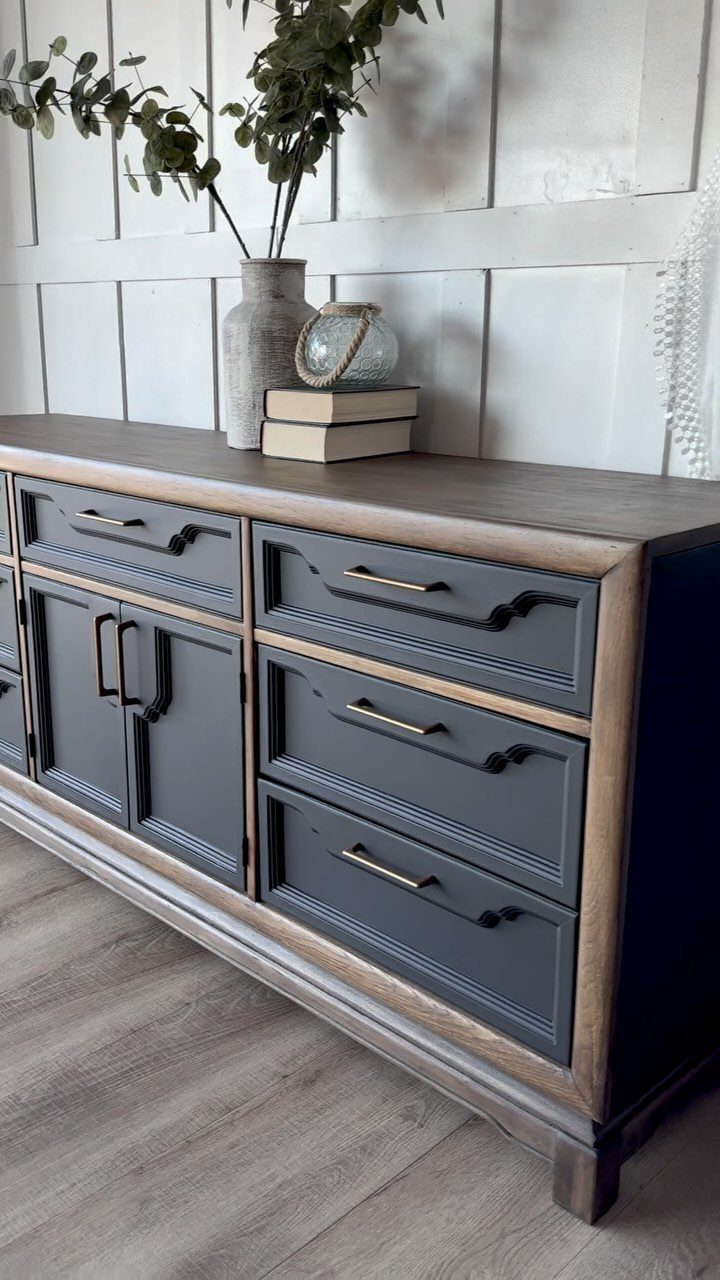
A sideboard credenza turns a basement wall into storage that does not look like storage. The dark grey piece with gold pulls above hides board games, spare linens, or holiday dishes behind doors that read as furniture, not utility.
Basements tend to collect the stuff you use twice a year. A credenza keeps it reachable but boxed in, and the top holds what you actually want to see: a lamp, a plant, a stack of books.
A long, low credenza suits the horizontal lines most basements already have from their foundation walls.
Check the depth before you buy. Some credenzas run surprisingly deep, and a basement walkway can shrink fast with a protruding piece.
I would measure the intended wall, then subtract enough room for comfortable passing. Shallower credenzas exist; they sacrifice some storage, but they keep the traffic flow.
This idea suits anyone whose basement doubles as guest overflow or seasonal storage. The trade is surface space: you lose wall area that might have held shelves or a desk.
For a basement that needs to feel finished without a full build-out, the credenza is the middle path.
Wood trim warms up painted cabinetry. If your basement reads cold, that detail matters more than the hardware finish.
Planning and Measurement
Measure length, width, and height before buying anything. Watch the corners, the nooks, and the spots where the ceiling drops; a sofa that fits the floor plan can still get stuck on the stairs or jam against a bulkhead.
Small basements are not a problem to solve. A tight footprint forces a clearer purpose: one theme, one seating group, one light source that does the work of three.
I would let the restriction choose the furniture rather than fight it.
Budget-Friendly Tips
A stylish basement does not require new furniture. Shop secondhand for solid wood pieces with good bones; paint and hardware updates cost less than particle board that warps in basement humidity.
Affordable decor finishes the look. You pay in hours, not cash, and the piece lasts longer than a throw tossed over stains.
Lighting Considerations
Downlights, wall sconces, and festoon strings save headroom where ceilings run low.
Lighting is not the place to cut. One overhead fixture flattens the room and makes it feel like a bunker; adding layers of light keeps the space from pushing people back toward the stairs.
Functionality Focus
A guest bedroom needs a sleeper sofa and blackout option; a playroom needs wipeable surfaces and open floor; a theater needs seating facing one direction and soft panels to absorb sound.
One interest can anchor the whole plan. Music, crafts, or fitness each demands different spacing, storage, and durability from the same square footage.
I would build around the activity that currently has no room upstairs, not the one that might happen someday.
A mixed-use basement divides into zones without walls: a rug defines the seating group, a lamp defines the reading corner, a counter with stools separates eating from viewing.
The furniture does the partitioning; permanent walls close off options you may want later.
Frequently Asked Questions
How do I decorate my basement?
Start by deciding what the room is for, then pick furniture that serves that purpose.
What furniture is best for a basement?
Sectional sofas, sleeper sectionals, and storage pieces like ottomans or sideboard credenzas work best because they seat more people in less space and hide what you do not want to see.
I would check door measurements before ordering anything that does not bend.