
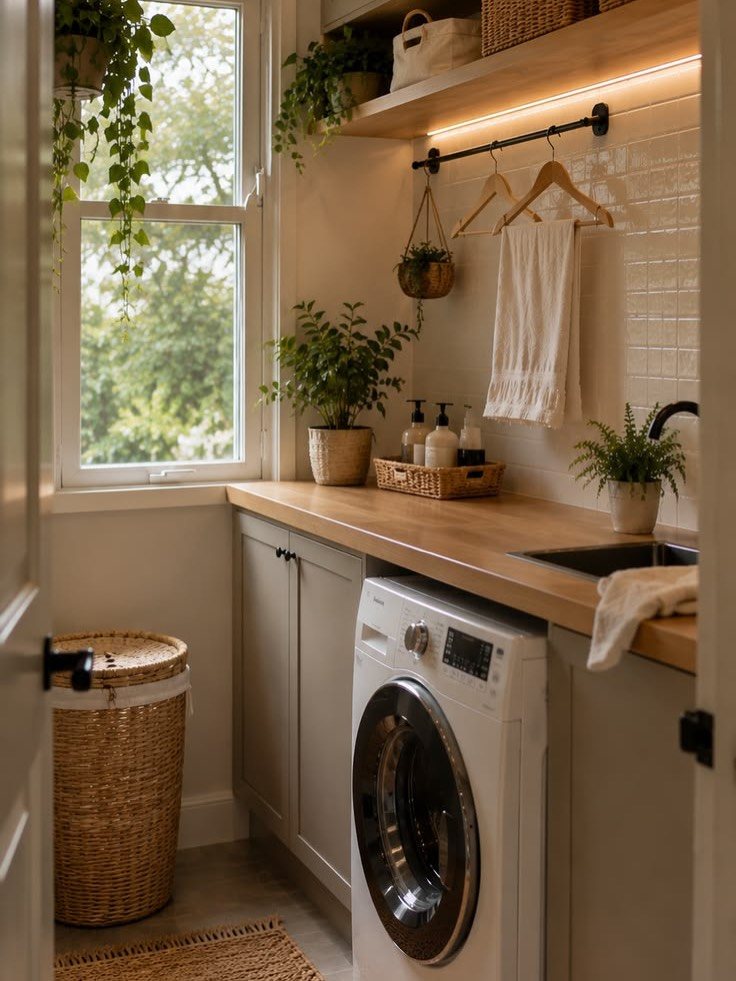
These ideas range from a screwdriver and an hour swapping cabinet pulls to floor-to-ceiling tile and a full mudroom build, so the real question is how much say you have in the room: do you own it, or do you answer to a landlord?
1. Clever Storage Solutions
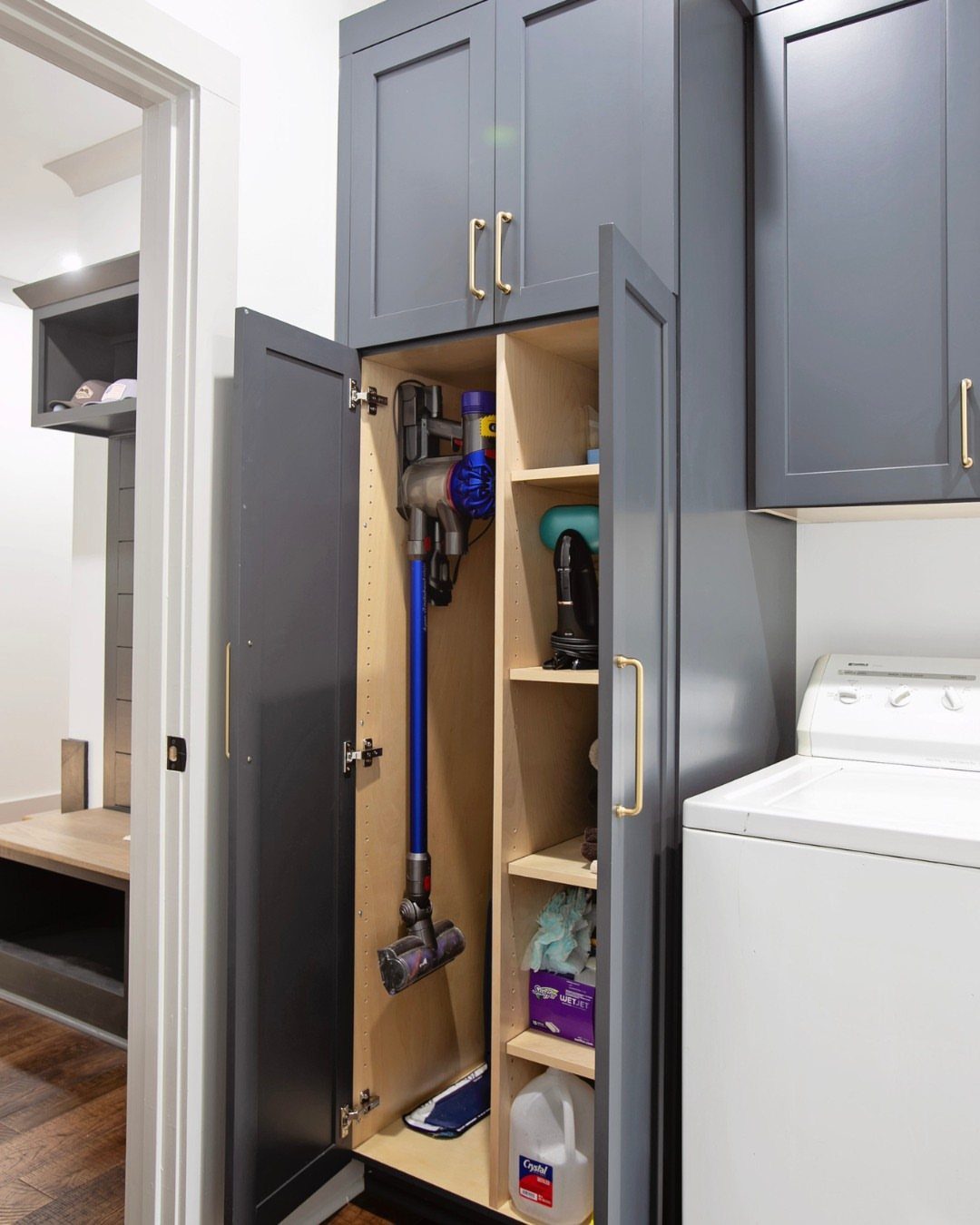
A tall cabinet built around your machines turns dead space into storage that actually hides the mess. Upper cabinets keep detergent and bleach off the washer top; a lower cupboard with a pull-out hamper gets dirty clothes off the floor.
If your ceiling height allows, run cabinetry all the way up. The extra foot or two costs little more and stores linens you reach for twice a year.
This suits anyone whose laundry room opens off a hallway or kitchen, where clutter shows to every guest.
2. Countertop Workspace
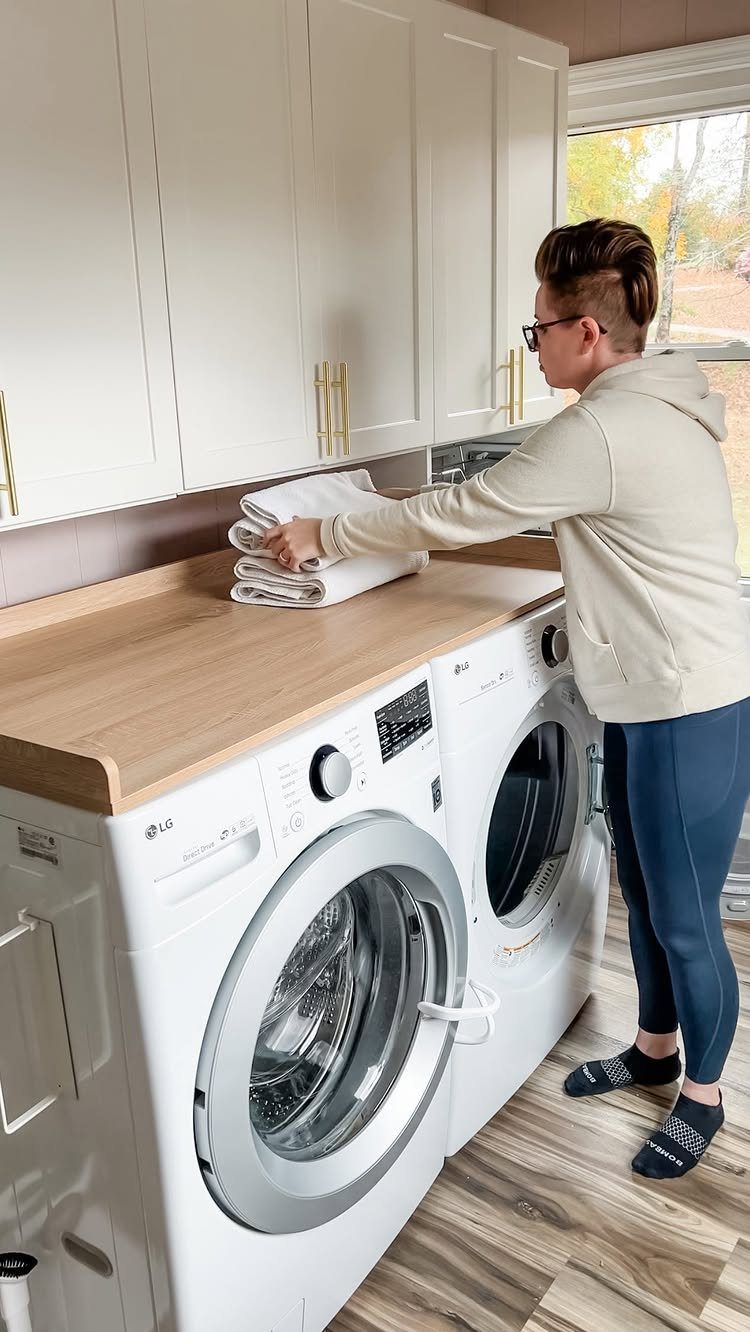
Butcher block laid across front-loading machines gives you a solid surface for folding and treating stains without giving up floor space.
Wood warms up a room that can feel purely industrial, and it forgives the occasional bleach splash better than laminate.
Wipeable counters and a tiled backsplash behind make cleanup faster, which matters more than it sounds when you’re sorting muddy soccer uniforms.
The wood runs front to back; I’d go deep enough that your machines sit flush with the counter, or you’ll be chasing socks into the gap.
A small sink at one end is worth the plumbing cost if you hand-wash delicates or rinse paintbrushes. Skip it if you’re strictly a machine-only household.
3. Wall-mounted Drying Rack
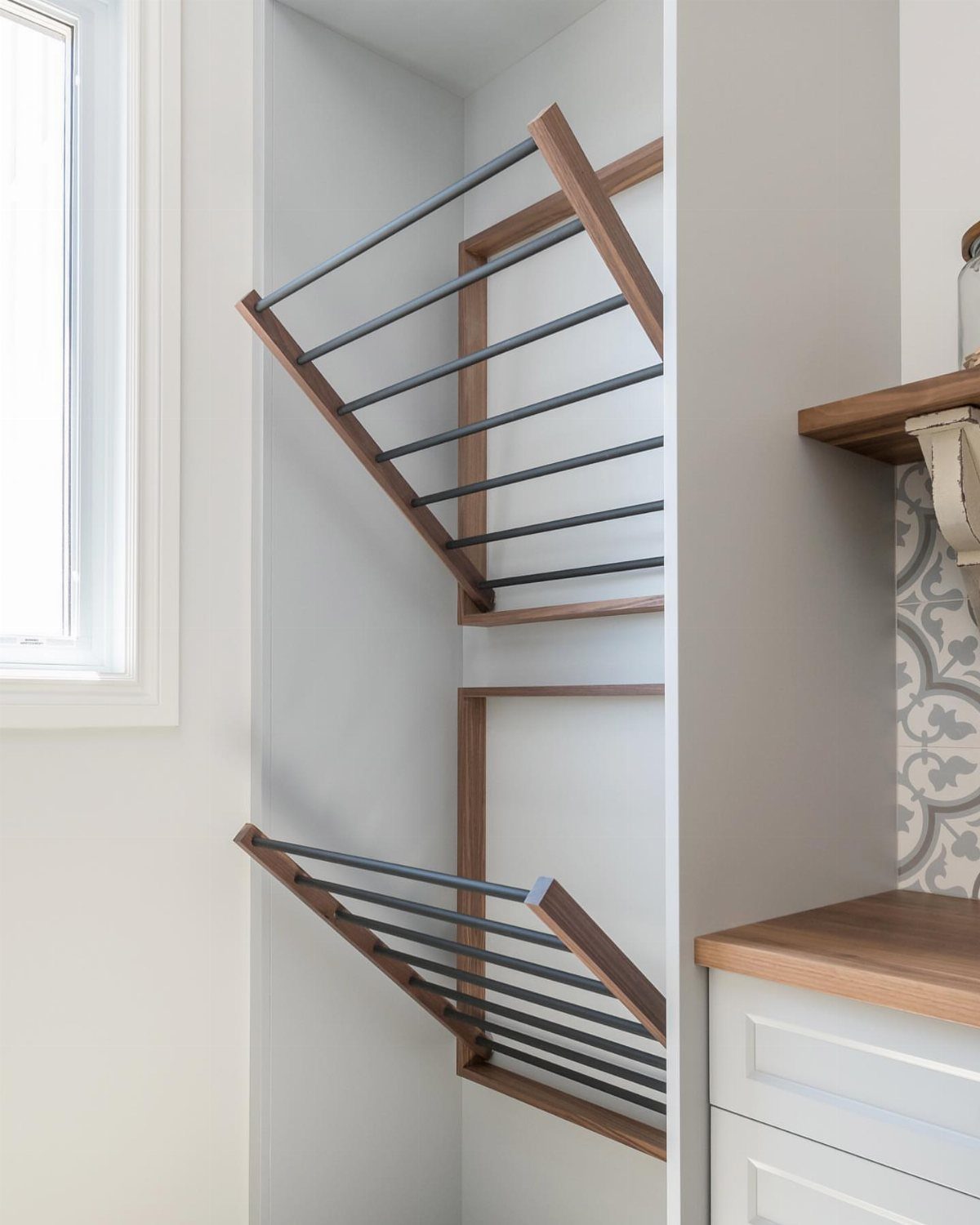
Two wooden racks folded into a wall niche give you twenty linear feet of hanging space that disappears to a 1.5-inch profile when empty.
Dark metal rungs handle wet jeans without sagging; brass rails work too and pick up other hardware in the room.
Mount at a height where you can reach the top rod without a step stool, or you’ll never use it.
A recessed niche keeps the racks from projecting into walkways, but a flat wall works if you have the clearance to fold them flat.
This is the right choice for air-dryers working a narrow galley laundry room where a floor rack blocks the door. The tradeoff: you won’t fit a king-sized sheet without creative draping.
4. Cabinet Pulls and Knobs
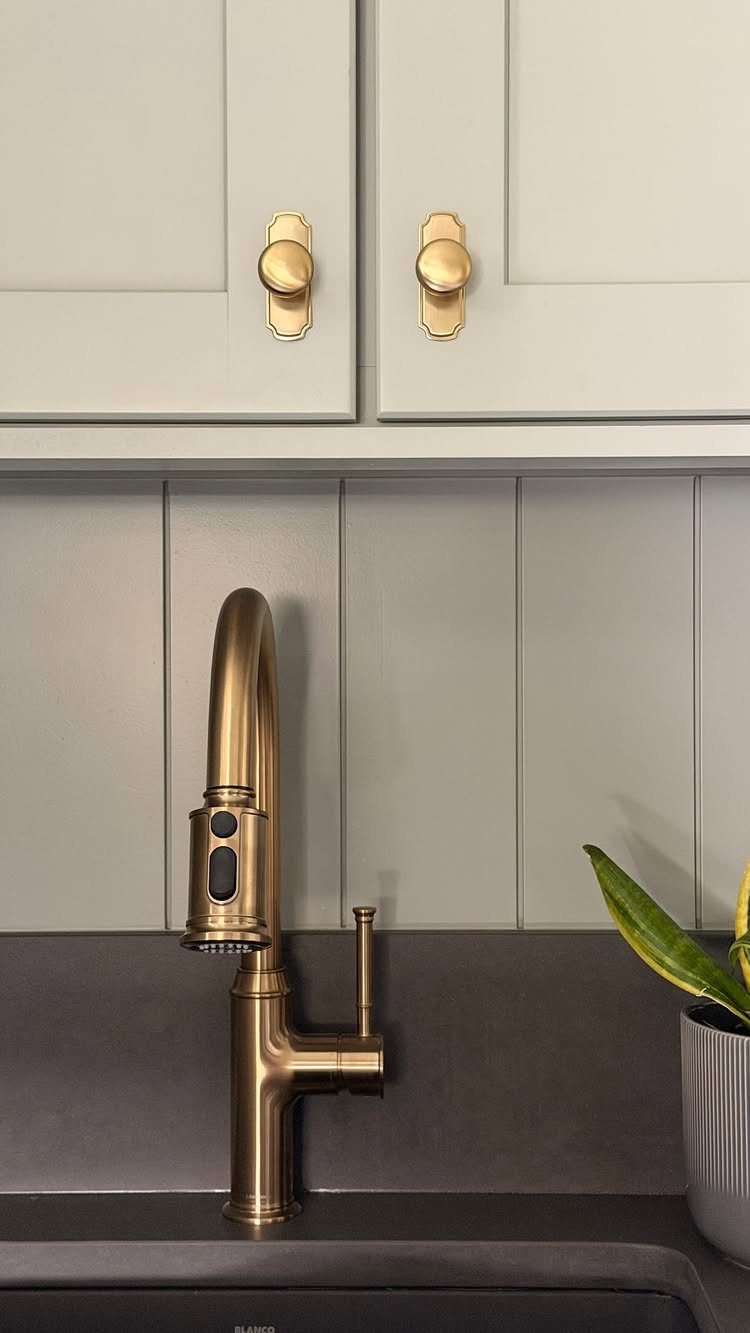
New hardware on existing cabinets is a small job in most laundry rooms, so you can spend per piece what kitchen budgets forbid.
Brass knobs with backplates turned basic light-grey doors into something intentional; the same treatment lifted inexpensive cabinets to look custom elsewhere.
I prefer backplates on painted or flat-panel doors where the knob alone would look stranded. For shaker-style cabinets, a simple pull reads cleaner.
Match your faucet finish or deliberately contrast it, but don’t mix three metals in a room this small.
A screwdriver and an hour is all it takes. Do it if your cabinets are sound but the builder-grade brass has gone dull and depressing.
5. Add Color with Paint or Wallpaper
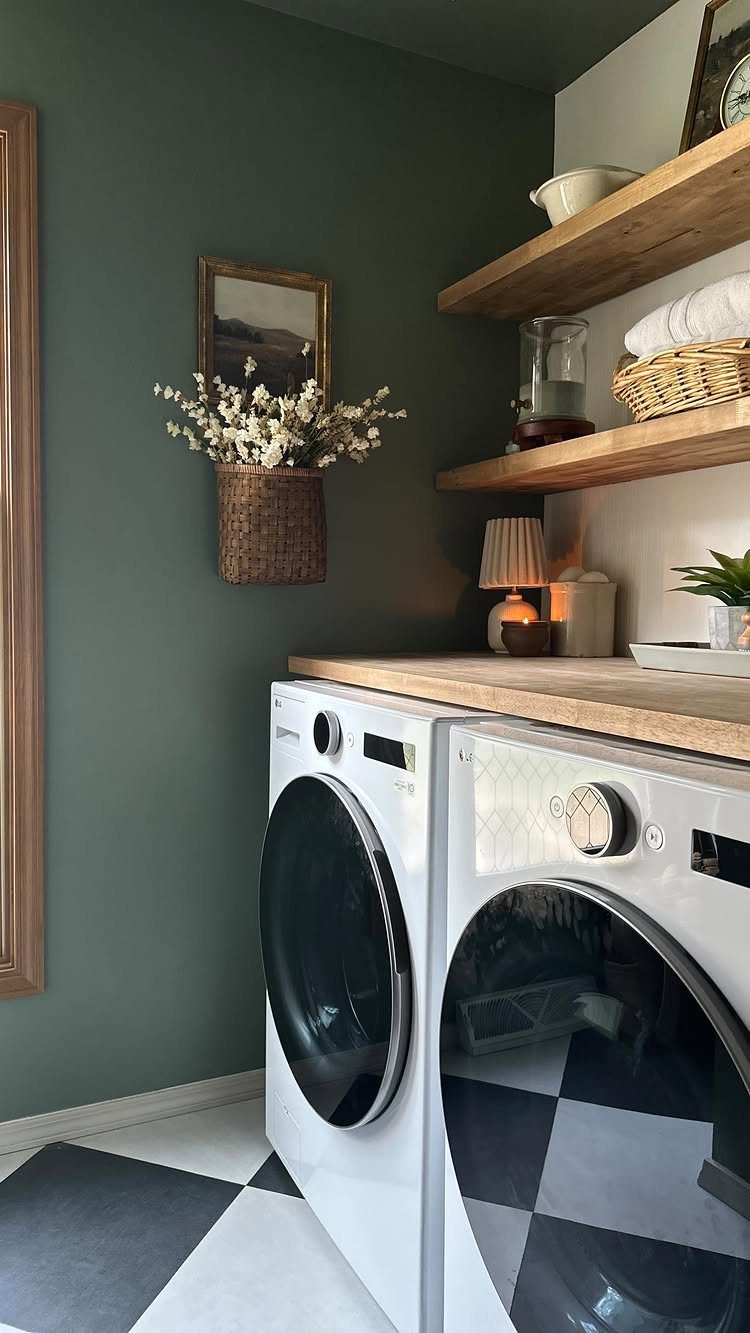
A laundry room is the right place for that wallpaper pattern you love and fear. The space is small enough that bold reads as fun, not overwhelming, and guests don’t linger long enough to tire of it.
Deep green paint, carried onto the ceiling, makes a windowless room feel enveloped rather than boxed.
Checkered floors already bring pattern, so the solid wall keeps the room from vibrating. Reverse it: a busy paper above wainscoting with a quiet floor below.
Either way, laundry rooms forgive experimentation your living room won’t.
I’d paint before I’d paper if the room lacks a vent fan; humidity peels paper at the seams.
Zoë Feldman opted to cover this laundry room’s walls, ceiling, and millwork in a citrine tone. The color “gives the room depth and presence,” says the founder of Zoë Feldman Design in Washington, DC.
6. Stackable Washer and Dryer
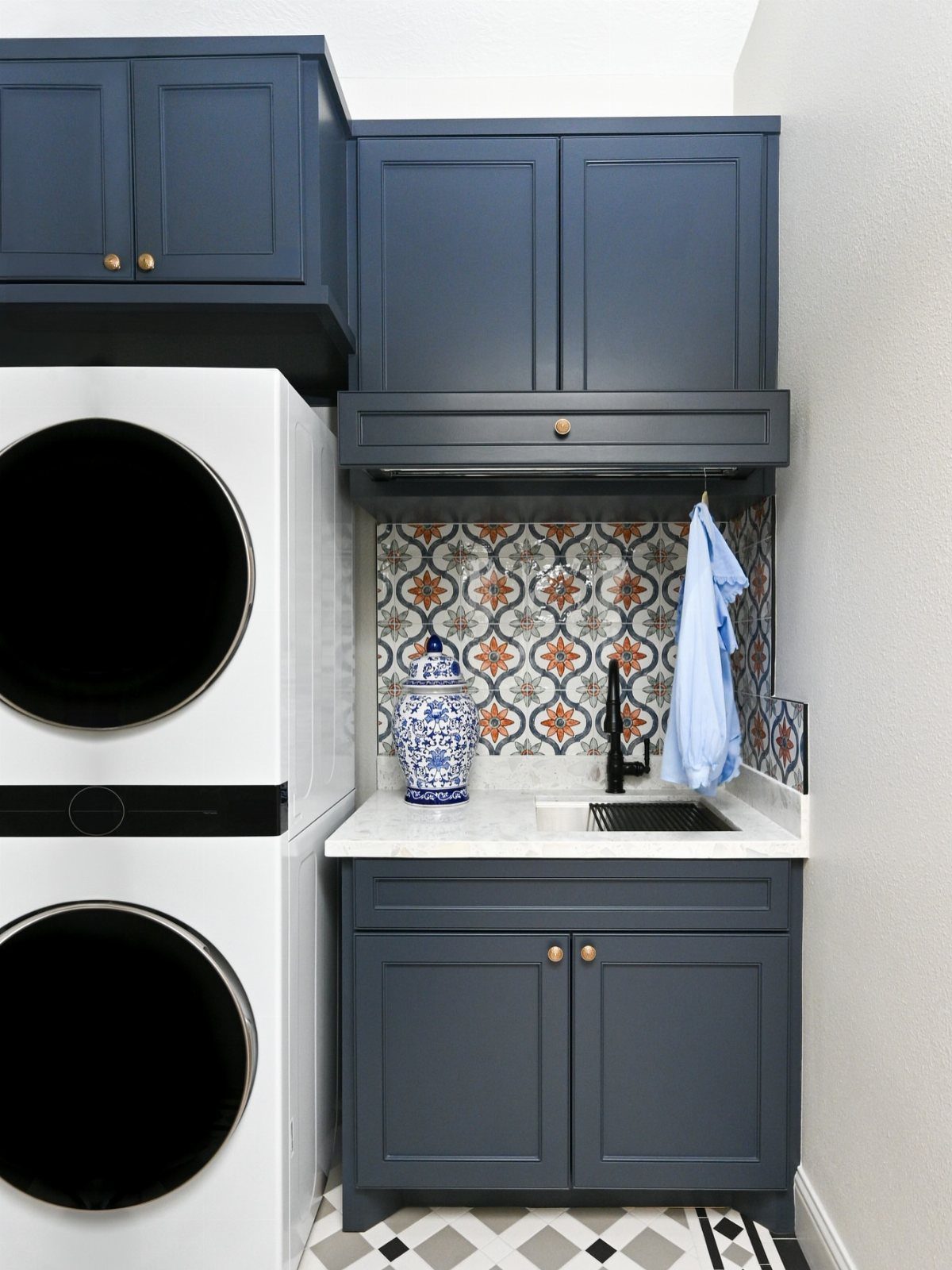
Stacking frees up the footprint beside your machines for a sink, a folding counter, or floor-to-ceiling storage that a side-by-side layout can’t fit.
A stacked pair sits next to a full vanity with blue-grey cabinets; that pairing only works because the height of the stacked pair matches the vanity counter.
Measure your ceiling first. You need enough vertical clearance to open the dryer door fully, plus room to stand in front and unload.
Front-loaders stack; top-loaders don’t, so this is a replacement decision, not a rearrangement.
I’d stack for any laundry room where floor space is tight and you need room to move. The tradeoff: no more countertop over the machines unless you build around the stack, which costs the floor space you just gained.
7. Real or Faux Plants
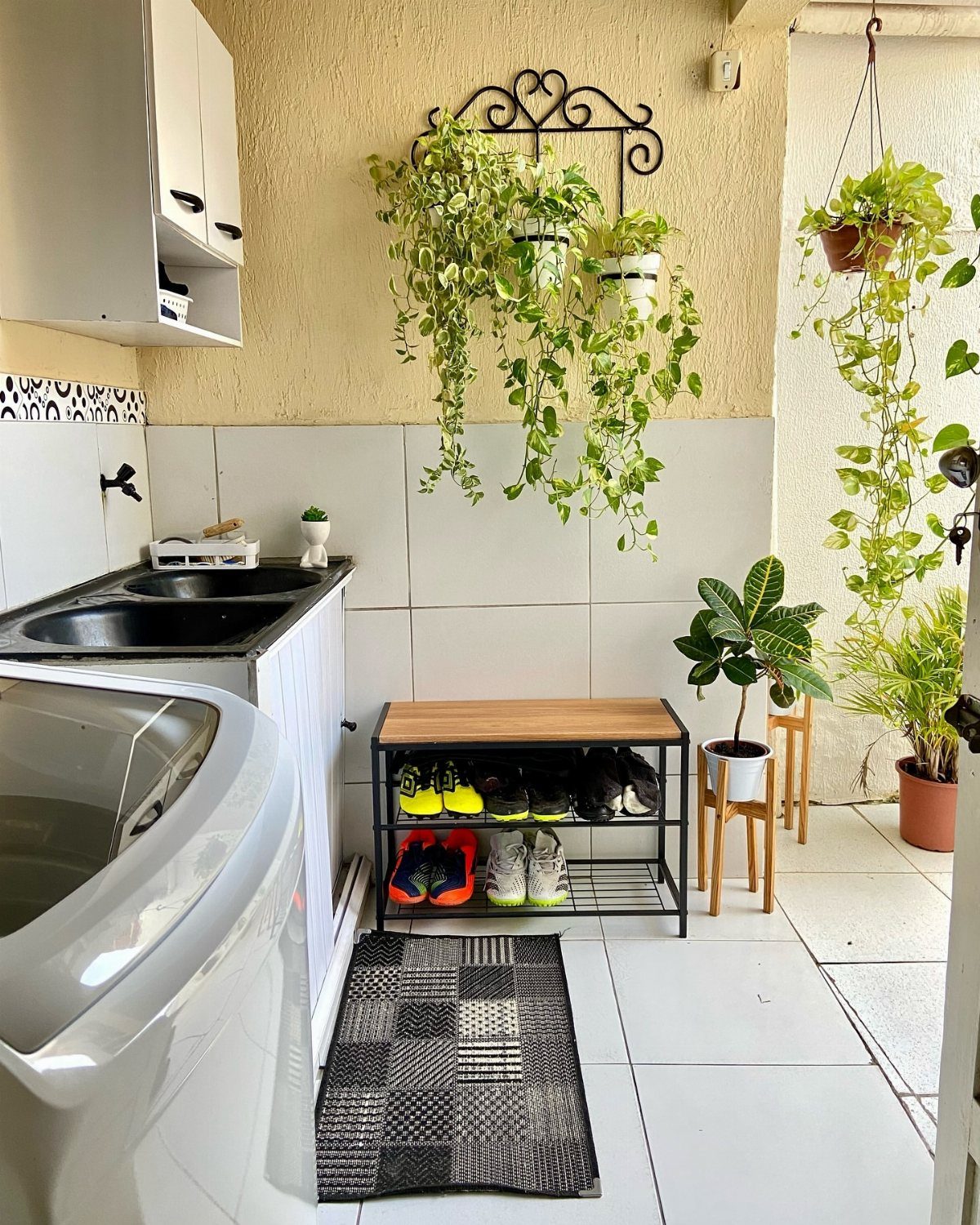
A trailing pothos or a few faux stems on a wall hook turns a laundry room from purely functional into somewhere you do not mind spending a little time.
Real plants do need some light; a north-facing windowless room calls for a snake plant, ZZ, or convincing artificial greenery instead. The warmth and humidity from the dryer actually help most real options thrive.
Faux versions are cheap and need no care at all. For anyone who kills houseplants reliably, that is the smarter money spent.
8. Decorative Accents
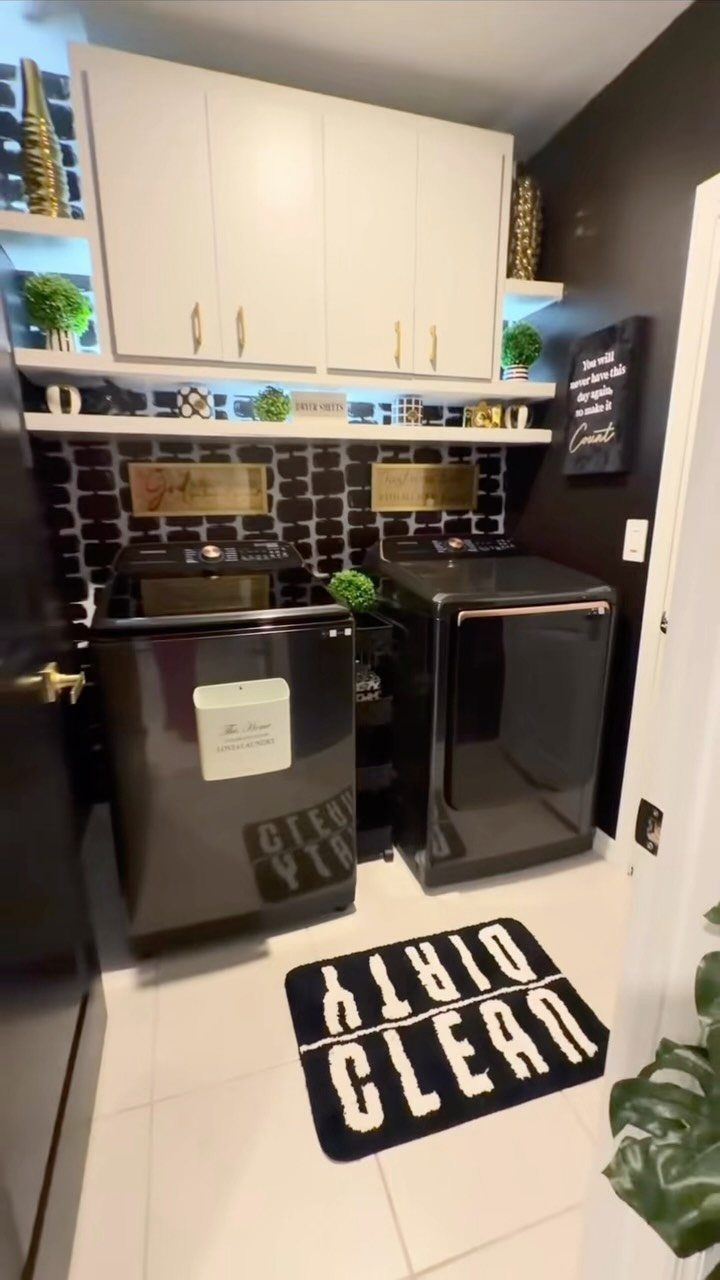
A flatweave rug underfoot, a framed print at eye level, and a lidded basket that actually looks good sitting out: these three pieces do more to warm a laundry room than any appliance upgrade.
The rug catches drips and muffles the machine hum. The basket hides the odd sock pile when company drops by.
Glass jars for detergent pellets or dryer balls keep the counter neat and let you buy in bulk. Gold or brass accents against white cabinetry read as intentional, not accidental.
A plain striped or geometric rug works just as well if wordplay is not your style.
9. Statement Wall
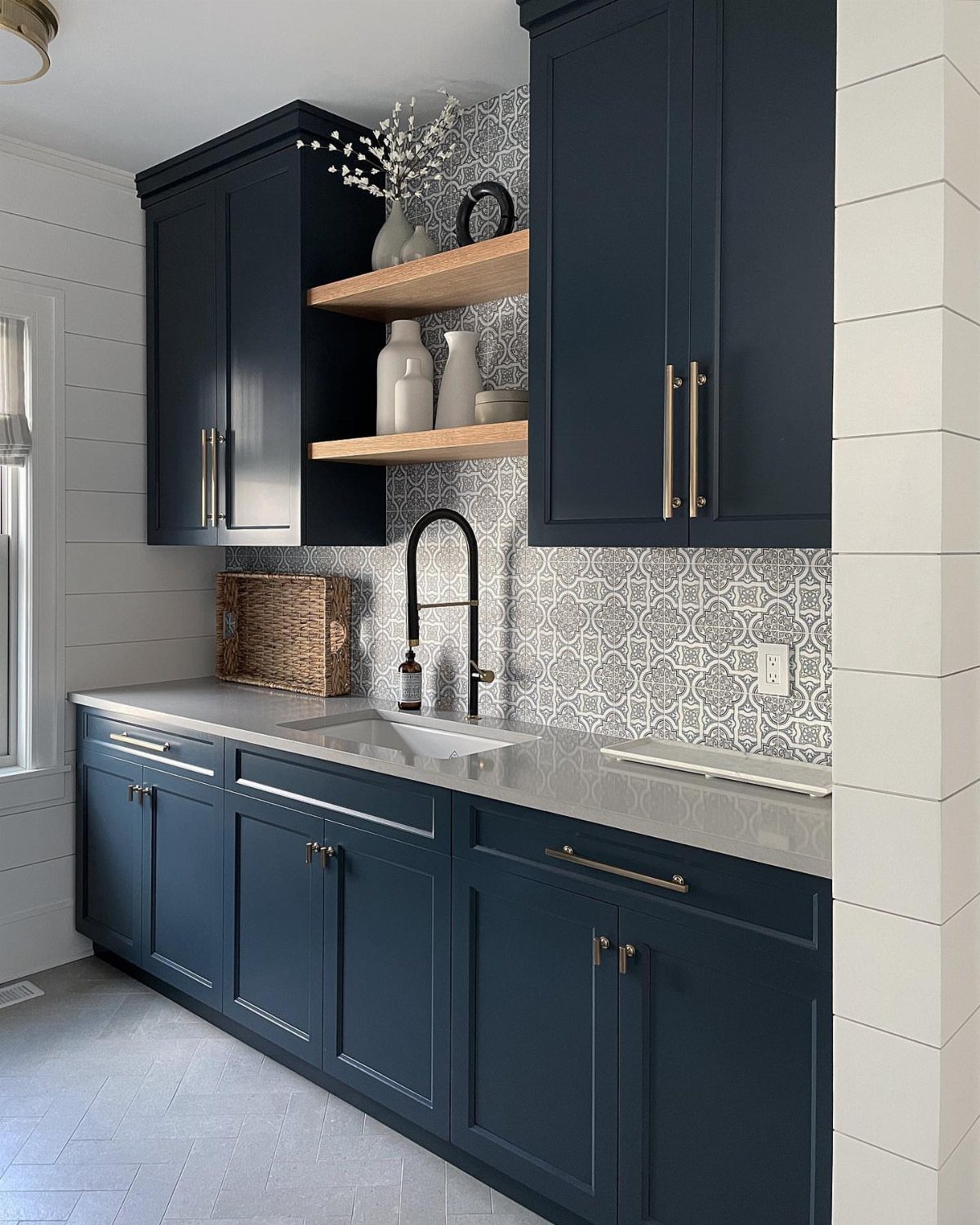
Tile that runs floor to ceiling, laid vertical to stretch the height, gives a small laundry room its one moment of drama without the cost of a full renovation.
Glass mosaic catches light from a single fixture and bounces it around a windowless space. A bold wallpaper or a painted mural achieves a similar effect for less labor and less money.
Wallpaper or paint stays where you put it; tile comes out easier if you change your mind later. Paint you can change in a day; tile or wallpaper is a weekend project and a longer-term choice.
For renters or the chronically indecisive, peel-and-stick tile panels have improved enough to fool a casual glance.
10. Mudroom and Laundry Room Layout
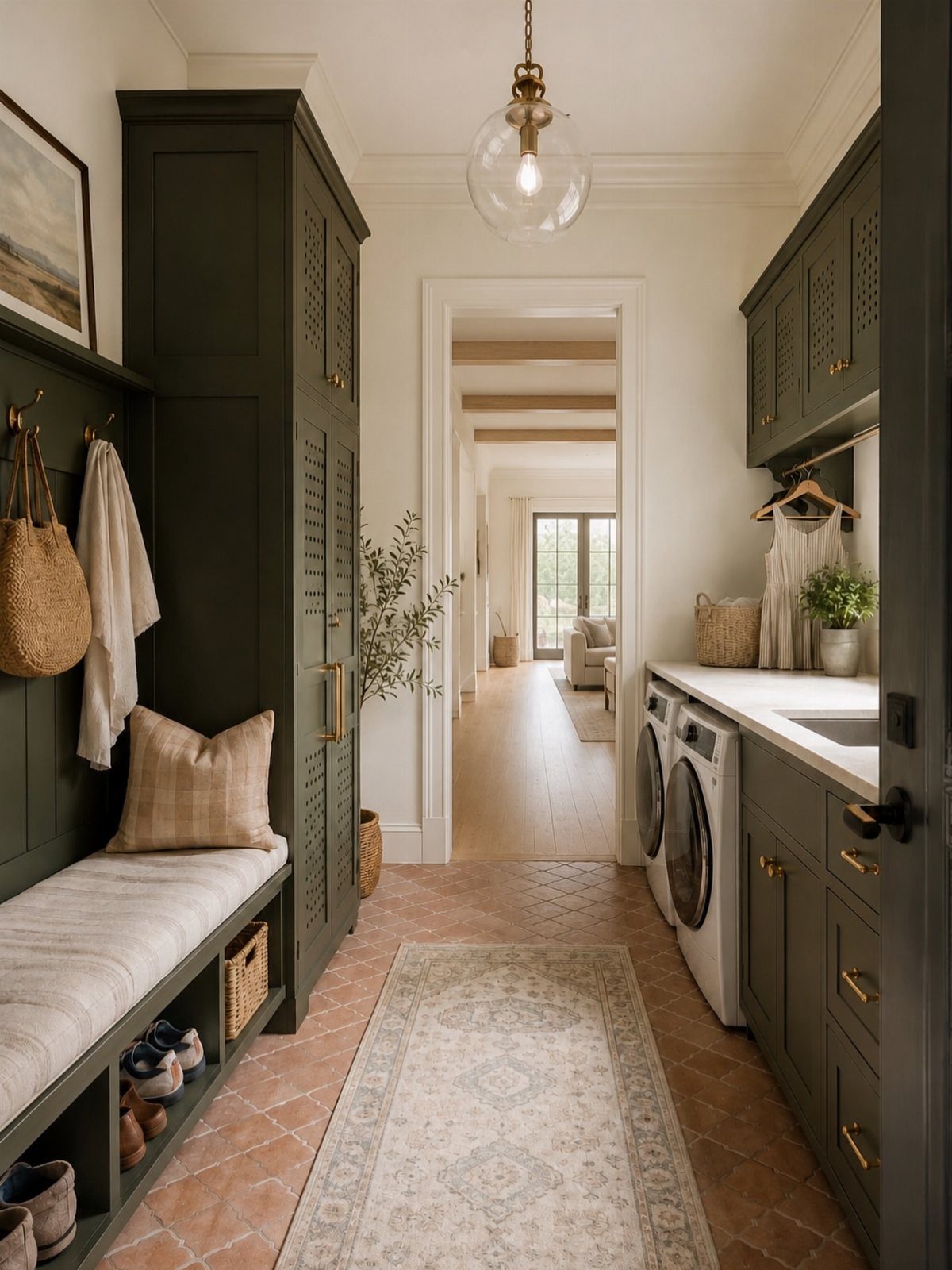
Combining mudroom and laundry into one narrow run makes sense when you enter through a garage or side door with muddy boots and wet jackets.
The bench with shoe cubbies sits near the machines so dirty clothes hit the hamper before they track through the house. Dark green cabinetry hides scuff marks better than white or pale wood.
The layout demands enough width to pass comfortably with the dryer door open. A countertop spanning both machines gives folding space and a place to set a basket while you lace up.
Terracotta tile floors handle water and grit; a thin runner softens the look without trapping moisture underneath.
11. Closet Laundry Area
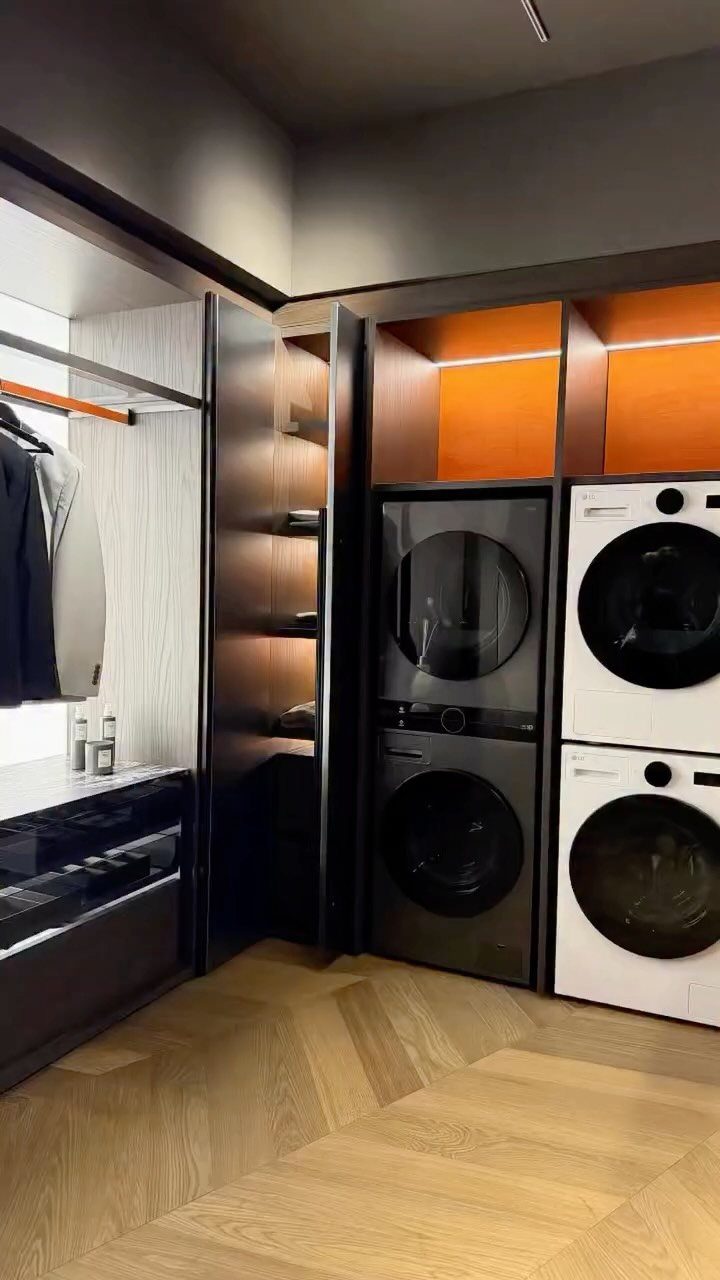
A closet conversion is the answer when square footage is the limiting factor and the budget is tight. Two sets of stacked front-loaders fit into a standard walk-in with room left for hanging rods and shelving.
Louvered doors or a gap at the ceiling prevents the space from turning into a steam box.
Sliding doors or what the builder called "ghost doors," flush panels that blend into wardrobe fronts, keep the laundry out of sight when not in use. This suits apartment dwellers or anyone whose laundry currently lives in a hallway corner.
The stacked setup does require reaching up for the dryer, which some find awkward; side-by-side only works if the closet is deeper than most.
12. Utility Sink
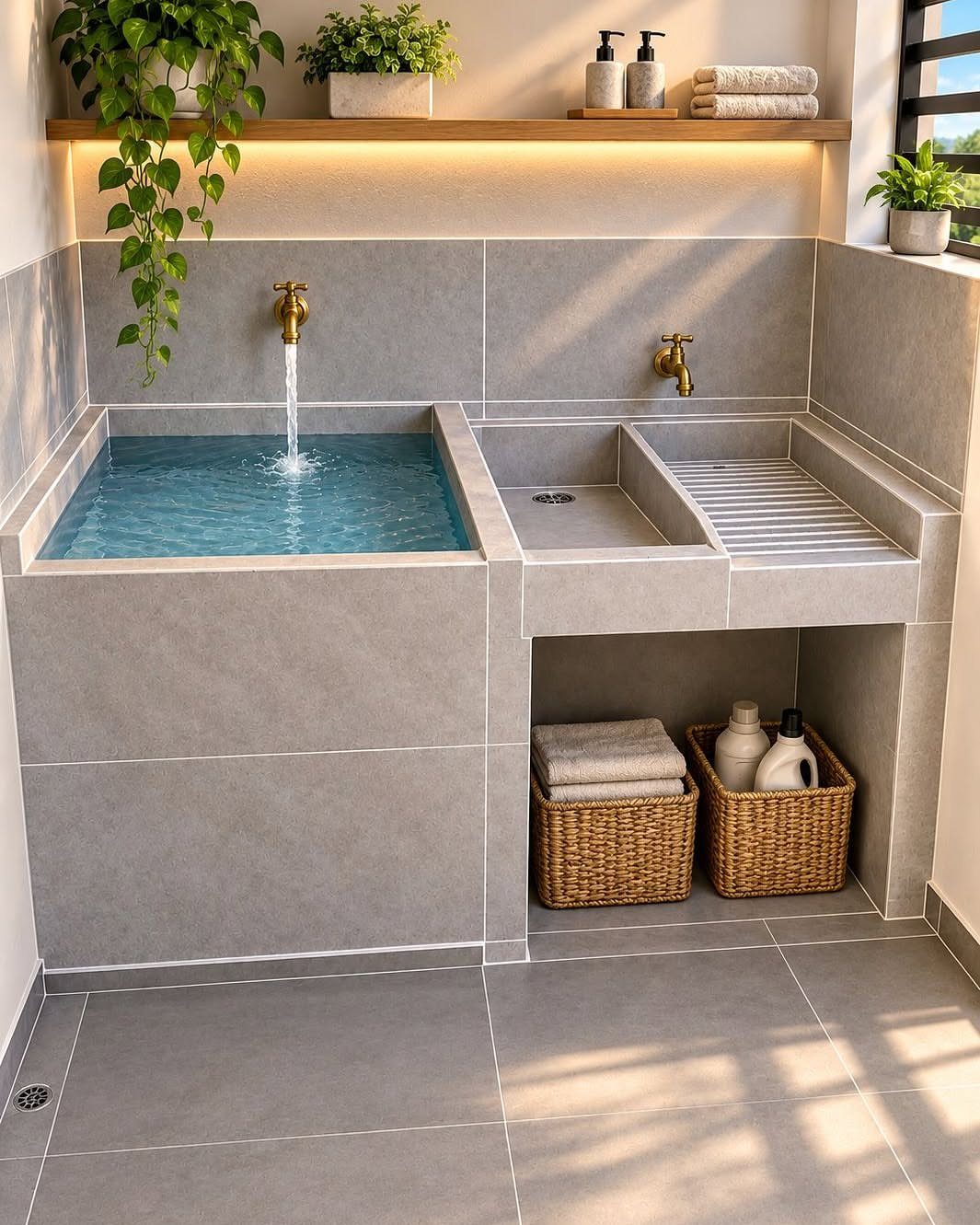
A deep basin sink, the kind with a slatted side drain or an old washboard surface, earns its floor space if you hand-wash delicates, pre-treat stains, or rinse muddy garden gloves.
A basic white utility sink from any hardware store performs the same function for far less.
The wicker baskets underneath keep supplies accessible and hide the clutter of spray bottles and stain pens. A wooden shelf above, at chest height, holds what you reach for most often.
For a small laundry room, this is the one splurge that repays itself in daily convenience. Skip it only if you never soak or hand-wash anything.
13. Clothing Rod Above the Washer and Dryer
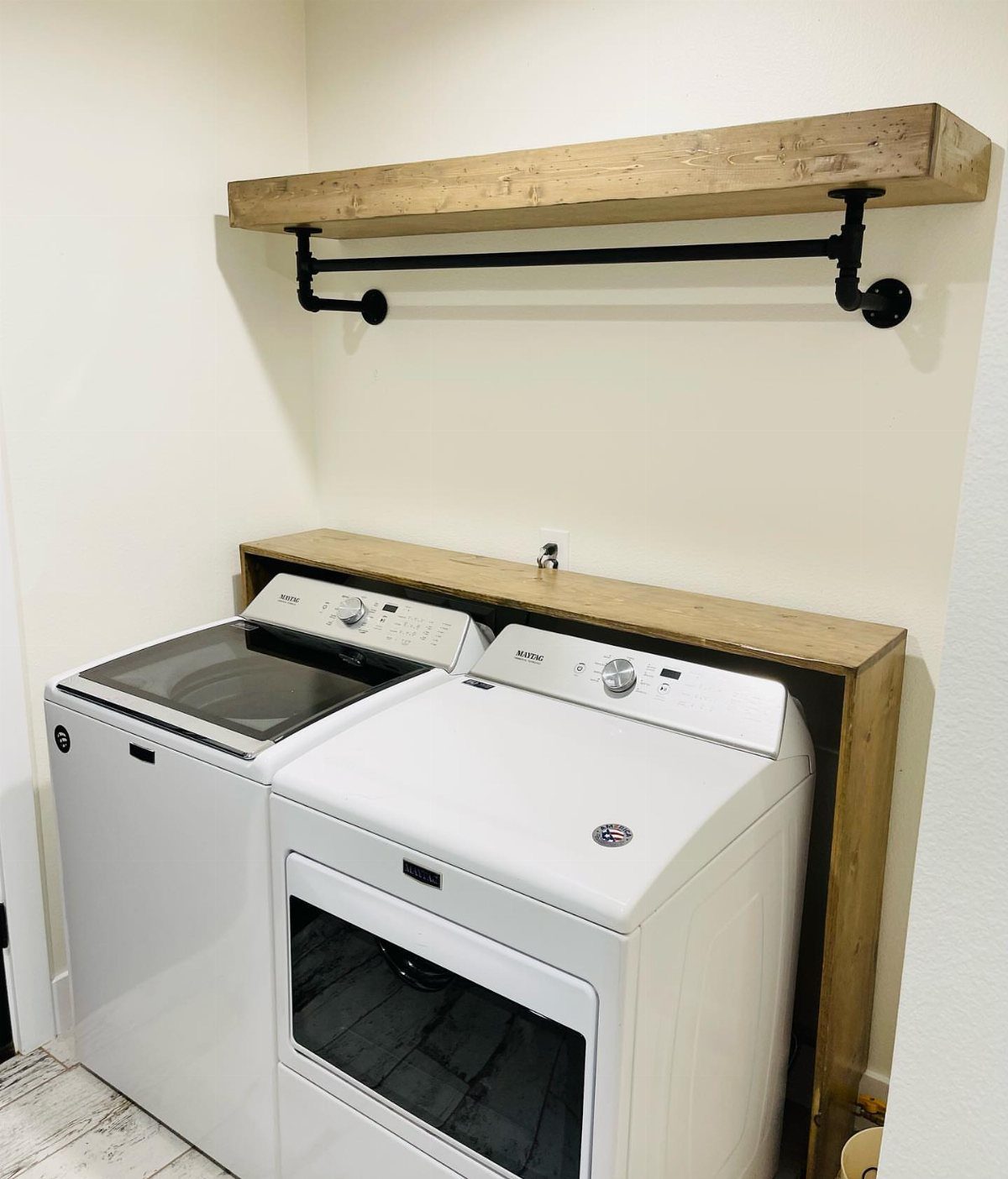
A black pipe rod bolted to a thick wooden beam turns the dead zone above your machines into usable hanging space. The depth back there is usually wasted anyway; this fills it without stealing floor space you do not have.
I would mount the rod to a solid beam or ledger board screwed into studs, not drywall anchors, since wet clothes run heavy.
A beam thick enough to give the brackets something real to bite will hold the rod steady through a full load of wet shirts.
A plain closet rod works too, but the industrial pipe tolerates moisture better and needs no finish upkeep.
If your machines sit in a closet or narrow nook, this is probably your only shot at air-drying without a rack in the way.
Leave enough clearance above the rod so shirts hang free of the ceiling and you can still reach the back of each machine.
14. Art in the Laundry Room
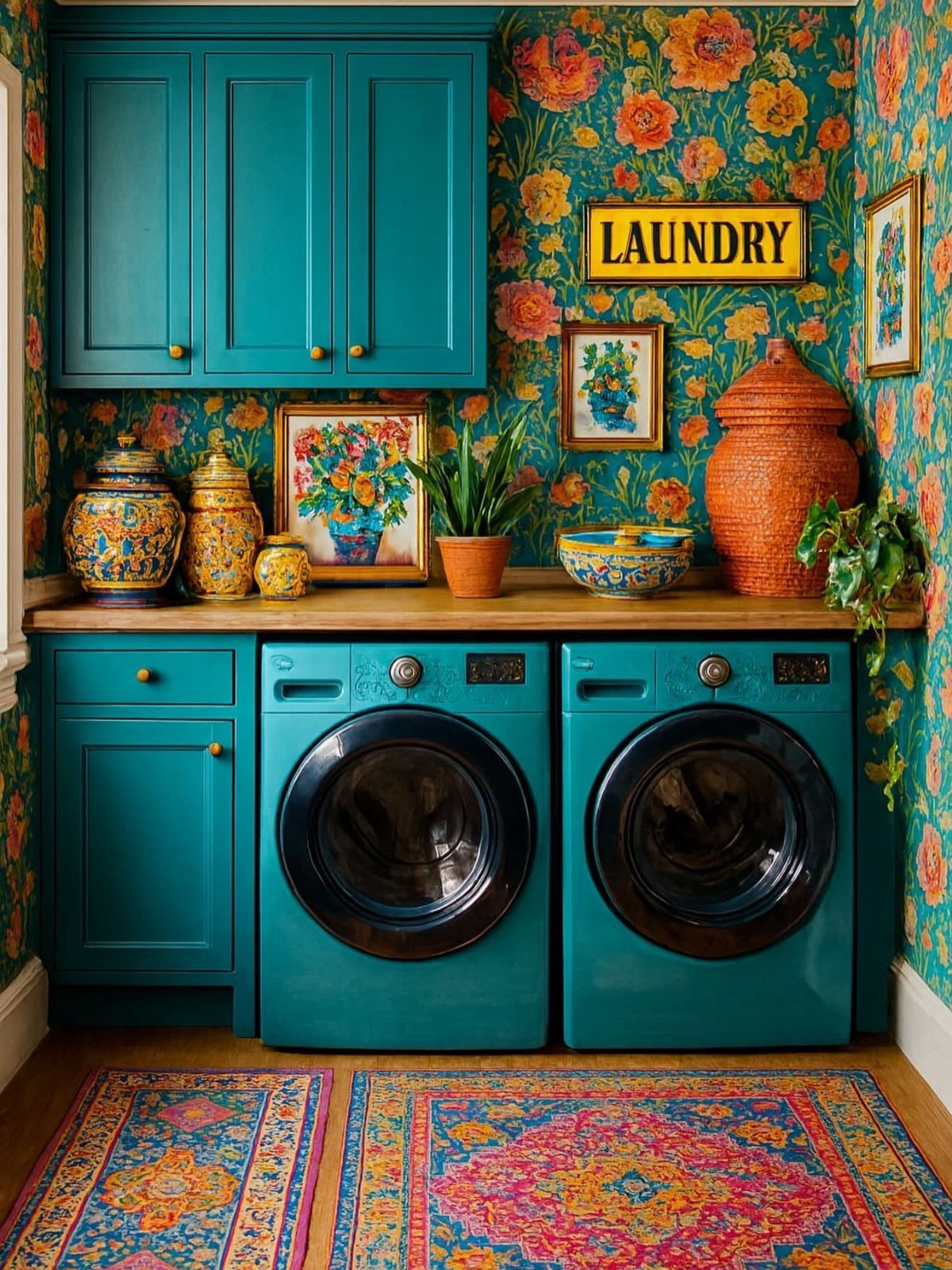
Framed florals above the washer turn a room you endure into one you almost notice.
I lean toward pieces with some color saturation, since laundry rooms tend toward dim basements or windowless corners where pale prints disappear. A single oversized piece reads bolder than a gallery grid, and one nail beats four.
If you are renting or commitment-shy, a narrow shelf above the rod or behind the sink lets you prop frames and swap them without patching holes.
The wallpaper here does half the art’s job already, so the frames stay small and conversational. In a plain white box of a room, I would go bigger and hung lower, around eye level while you are folding.
Cost can stay low: thrifted landscapes, printed botanicals, even a framed tea towel. Choose something you would not mind staring at for the length of a spin cycle.
Maximize Vertical Space
Upper cabinets that stop a foot short of the ceiling waste the easiest storage in the room. A step stool lives inside the tallest door; you will use it more than you expect.
Create a Cohesive Look
A laundry room reads as intentional when the metal finishes agree. Three turns accidental fast.
Deep green does this well; so does a bold paper you would not risk in a living room.
The contents become part of the color story.
Incorporate Luxury Elements
Luxury in a laundry room is sensory, not structural. A scent you actually chose matters more than a scent you tolerate; a clean, crisp fragrance with herbal notes works without announcing itself to the rest of the house.
A plug-in diffuser with scheduling keeps it consistent and avoids the open flame of a candle near lint and chemicals.
Detergent packaged well enough to sit out earns its counter space. Decant it into a ceramic jar or glass container with a clean lid and the room looks considered rather than cluttered.
The same for fabric softener if you use it.
These are small swaps. The cost is not in dollars but in attention: choosing the soap that smells right, finding the jar that closes tight, placing the diffuser where you catch it as you load.
The routine stays the same; the experience of the routine changes.
Focus on Lighting
A single overhead fixture in a laundry room casts your shadow onto the stain you are trying to treat. Three bulbs in one flush mount, or two sconces flanking a window, put light where your hands actually work.
A star-patterned flush mount adds style without the dust-collecting complexity of a chandelier.
Sconces beside a window are the best option if you have one; they balance the natural light and keep the wall interesting after dark.
In a windowless room, the fixture itself carries the design weight, so choose one you would not mind looking up at.
Dim basements and interior corners swallow pale art and faint colors. A print with real saturation, hung at eye level while you fold, stays visible under limited light.