
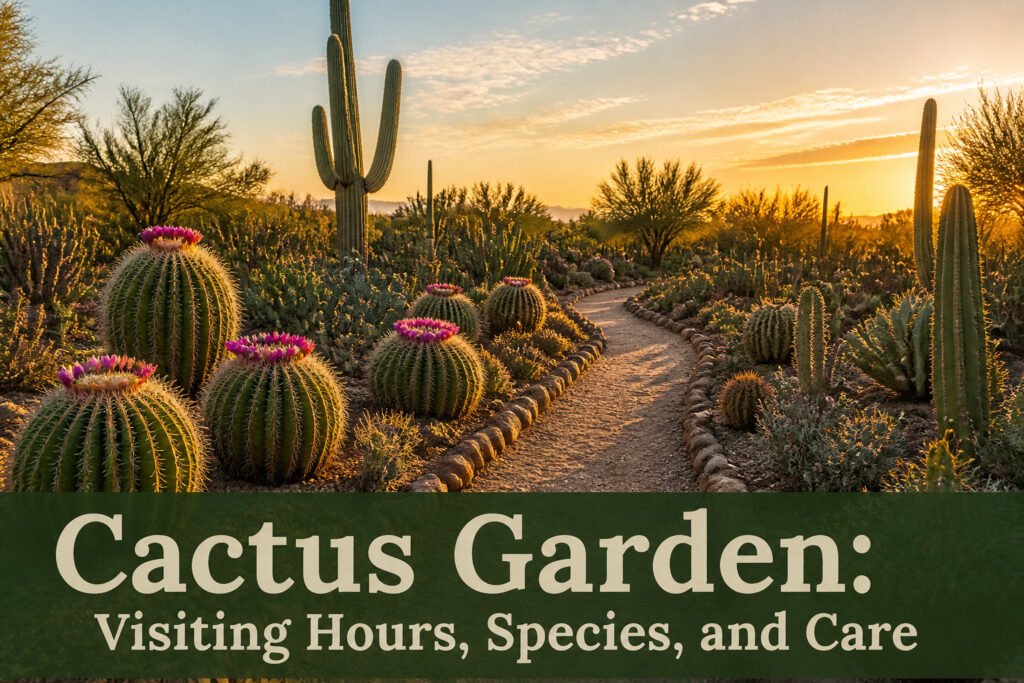
A cactus garden is a garden built around cacti and other desert plants, ranging from a few balcony pots to a full outdoor bed shaped by gravel and sun angles. The catch is sunlight: without at least six hours of direct sun daily, the plants stretch, pale, and rot from the inside out even if you never water them. The Ethel M Botanical Cactus Garden in Henderson, Nevada grows more than 300 species across three acres using exactly that rule, choosing every plant for how it flowers and whether it can handle the Mojave without coddling.
Ethel M Botanical Cactus Garden
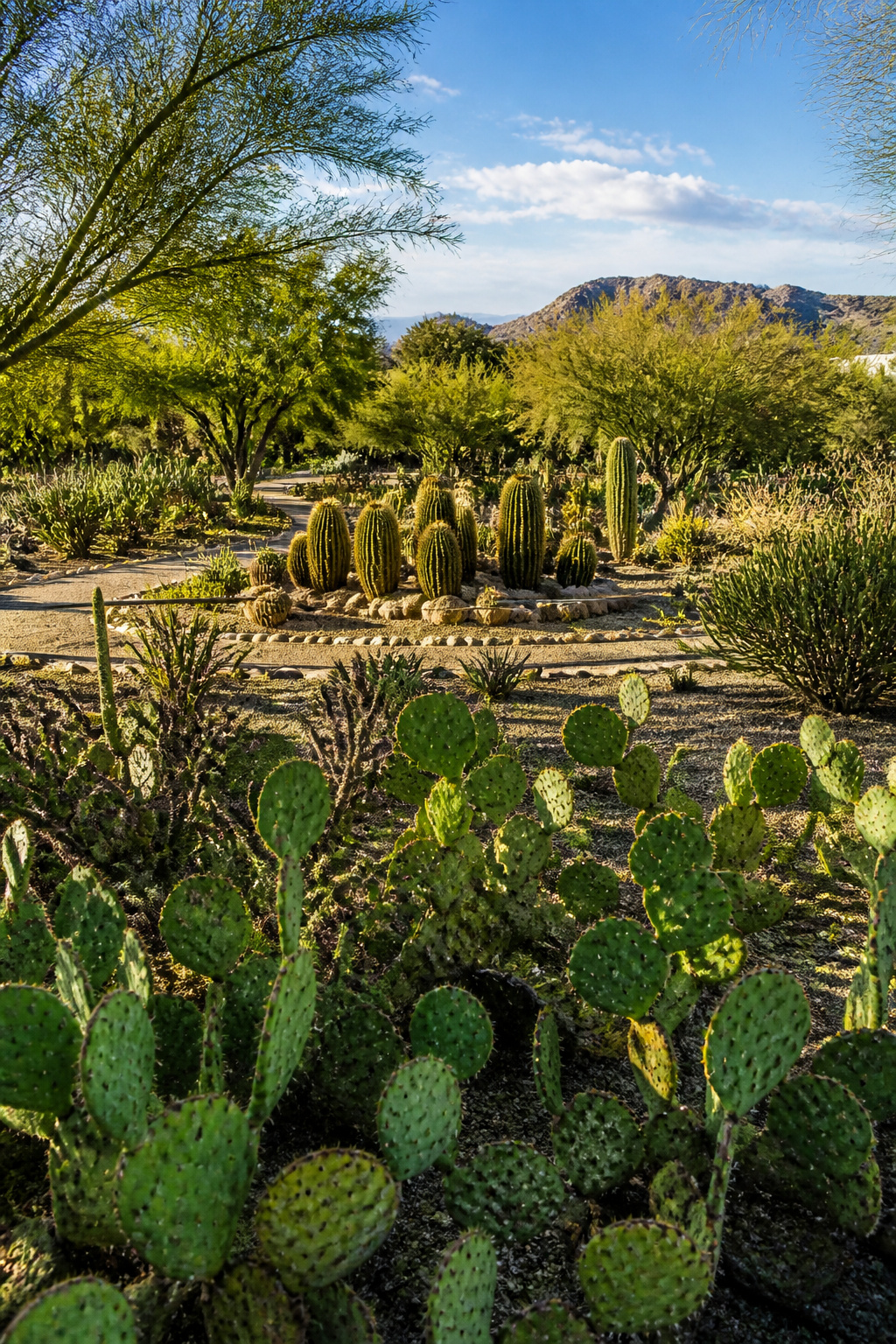
The Ethel M Botanical Cactus Garden in Henderson, Nevada spreads across three acres and holds more than 300 species of cacti and succulents alongside desert trees and shrubs pulled from the American Southwest, Australia, and South America. Every plant was chosen for how it flowers and whether it can handle the Mojave Desert without coddling, which is exactly the kind of pressure-testing a home grower wants to see at scale.
The garden flips to holiday mode in early November, stringing up over a million lights and bringing in Santa and hot chocolate. That same infrastructure gets reused come February for the Lights of Love event, a Valentine’s walk with chocolate-dipped strawberries that also doubles as a Galentine’s outing. Both run free and open to the public daily from 9 a.m. to 7 p.m. at 2 Cactus Garden Drive.
For anyone planning their own cactus garden, the layout here is worth studying. The collection is dense enough to read as landscape rather than specimen row, and the species mix shows how Southwest natives sit next to imports from similar climates without looking mismatched. The factory tasting and chocolate shop attached are Mars-owned operations, so the visit pairs botanical research with a sugar stop whether you planned it or not.
Desert Museum Cactus Garden

The Cactus Garden at the Arizona-Sonora Desert Museum in Tucson, Arizona organizes its regional collection by growth forms and specific genera rather than scattering species at random. Walking through, visitors encounter Opuntias (prickly pears and chollas) and Ferocactus (barrels) grouped where their shared forms become obvious, alongside Agaves, Columnar cacti, and Echinocereus (hedgehogs). Mammillarias (pincushions) are slated to join soon. This layout turns a casual stroll into something more useful; the eye learns to read shape before reading label, and the difference between a cholla and a hedgehog stops being arbitrary. For anyone building a small cactus garden at home, the museum’s method offers a working model: sort by what a plant does, not just where it came from, and visitors (or your own morning self, coffee in hand) will find what they are looking for without a map.
Fort Worth Botanic Garden Cactus Garden
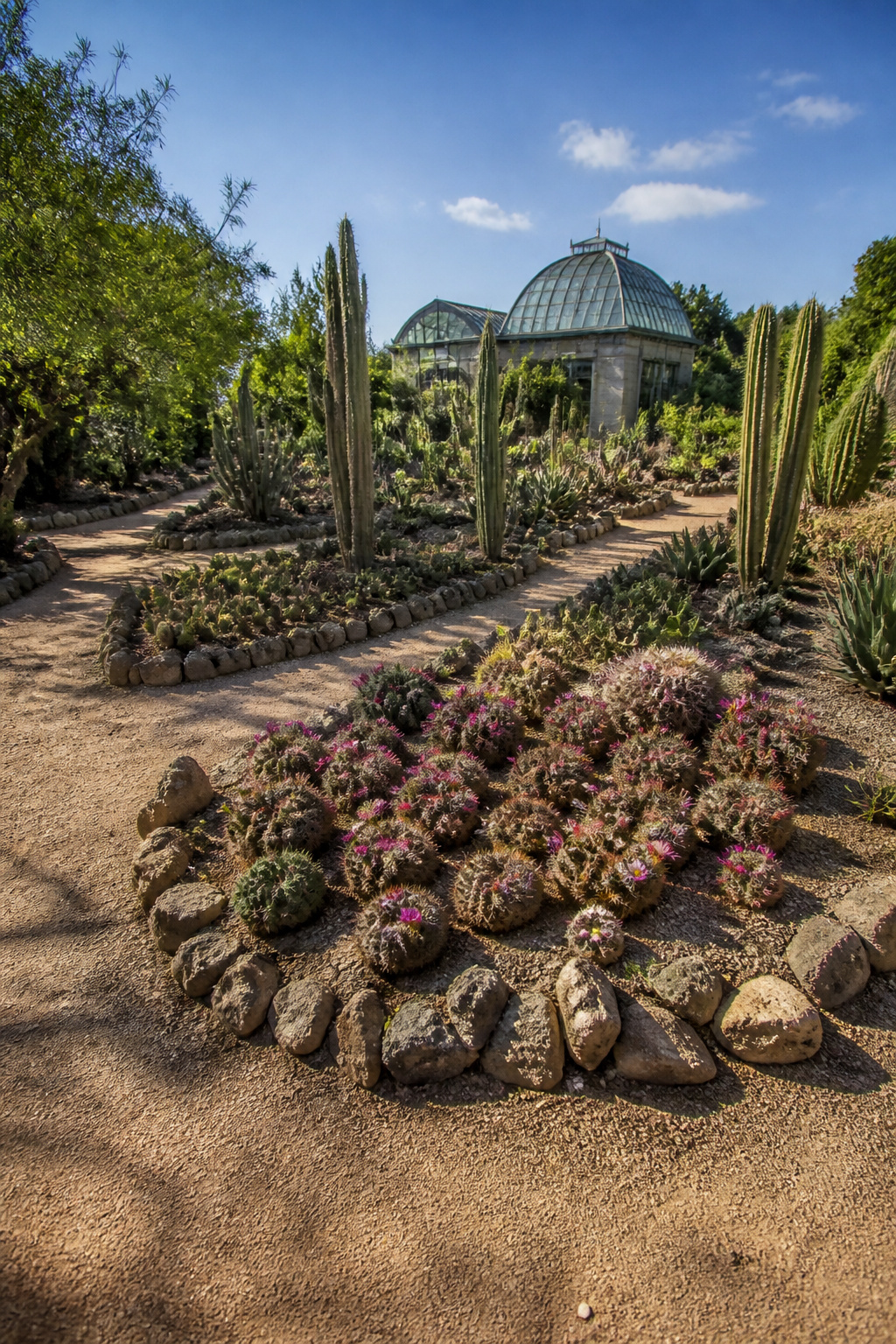
The Fort Worth Botanic Garden Cactus Garden was established in 1935, making it one of the older dedicated cactus collections in American horticulture. That date matters because it shows cactus gardens were not a passing trend brought in by social media; they have been tended in the United States for nearly ninety years. The garden holds an extensive collection of native Texas cacti and succulents, with a regional focus that would have served gardeners working the same hardiness zone and soil conditions the collection grows in. Alongside the in-ground plantings, a greenhouse houses rare and threatened cacti, which suggests the garden functions partly as living conservation for species a home gardener would not otherwise encounter. The mix of native regional plants and protected greenhouse specimens gives two different ways to study what thrives in Texas heat and what needs shelter from it.
Joshua Tree National Park Cholla Cactus Garden
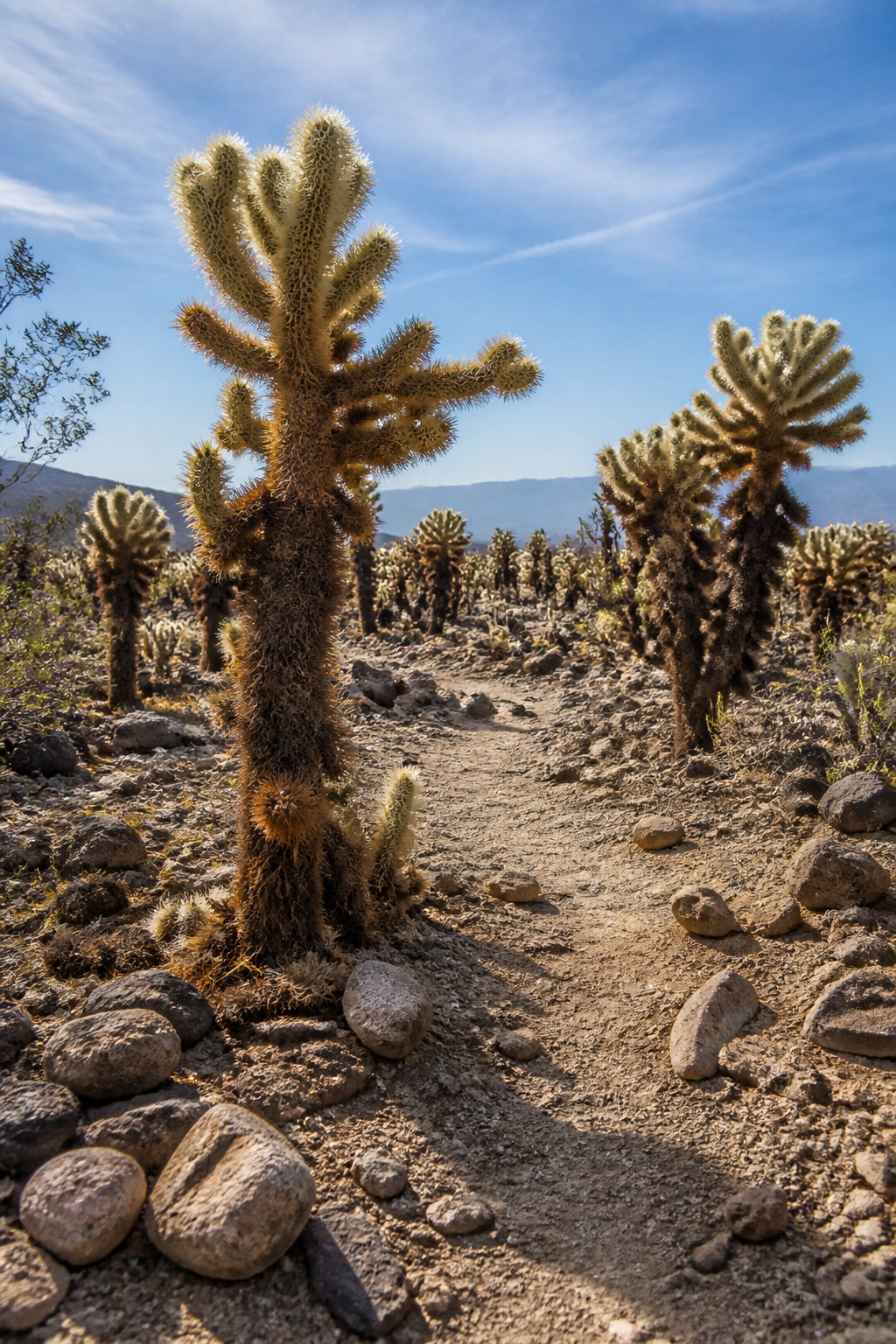
The Cholla Cactus Garden at Joshua Tree National Park spreads across nearly 10 acres of wild, uncultivated ground. A flat 0.25-mile loop trail runs through it, threading between dense stands of teddybear cholla that colonized this patch of the Pinto Basin on their own. Creosote bush and burrobush fill the surrounding alluvial fans for miles, which makes this particular concentration of cholla unusual. The park contains very few stands like it.
The 0.25 mile Cholla Cactus Garden Nature Trail leads hikers through nearly 10 acres of landscape dominated by the teddybear cholla.
This is not a garden someone planted and tends. The cacti arrived, established, and spread by their own rules, which is worth studying if you are trying to read how desert plants claim territory. The teddybear cholla here carries the same hazard as its relative the jumping cholla: the segments detach at a touch, bristling with barbed spines that seem to leap onto clothing or skin. I would keep pliers in the car and check my boot soles before getting back in.
Cactus Garden Care
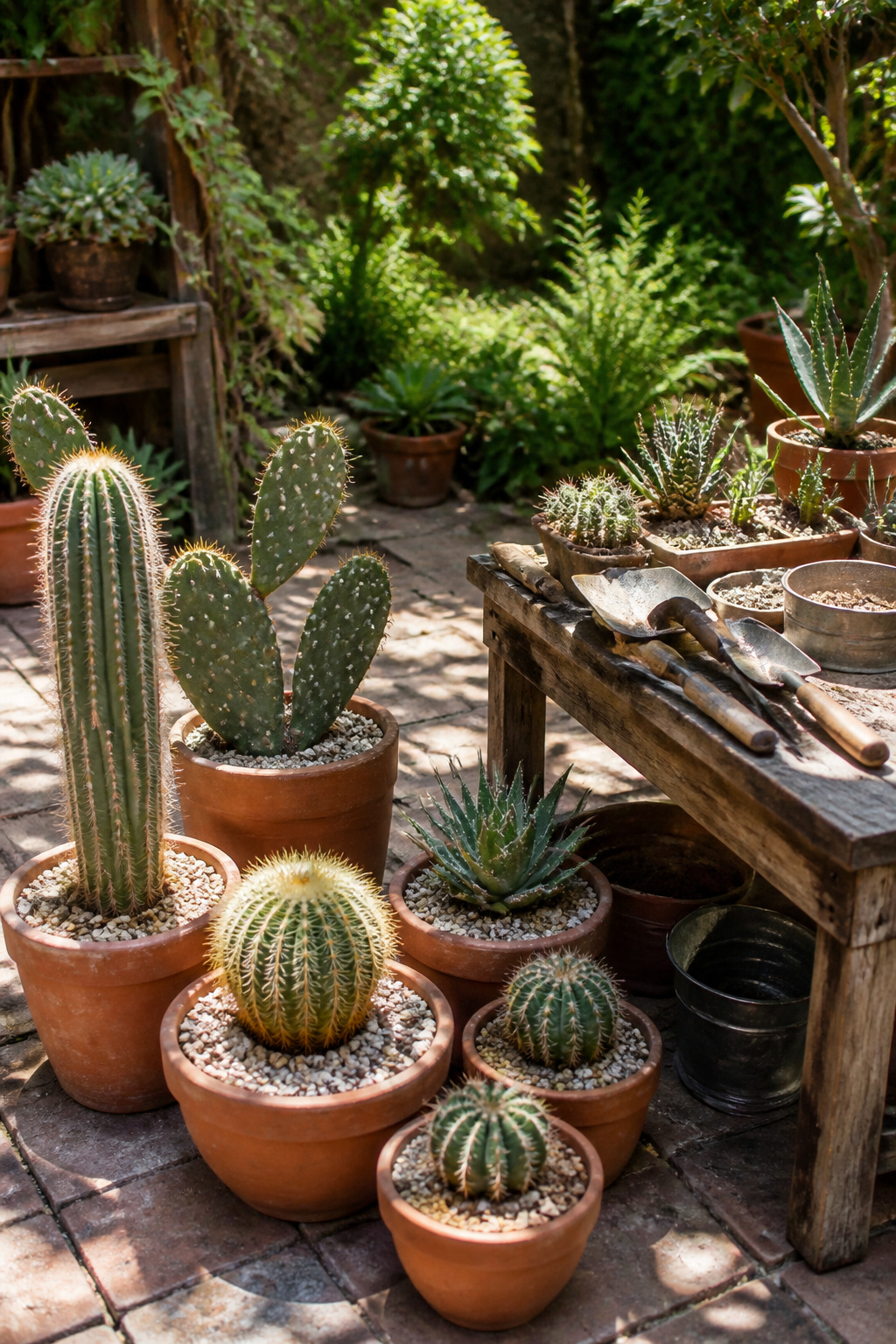
Sunlight is the single thing you cannot compromise. A cactus garden needs at least six hours of direct sun daily; anything less and the plants stretch, pale, and eventually rot from the inside out even if you never touch a watering can.
The soil mix is one-third horticultural sand, one-third cactus compost, and one-third grit. I use pumice for the grit, though perlite or porous gravel work the same. The point is drainage, not nutrition. Regular potting mix holds moisture too long; cactus roots sitting wet develop the kind of rot you smell before you see.
Watering follows the same rule of restraint. I let the soil dry completely, then wait another week. In winter, some species go six weeks without a drop. The cactus body stores what it needs; the gardener’s job is mostly to stay out of the way.
For terrariums, start with a bottom layer of gravel before the soil mix goes in. The Fort Worth Botanic Garden beds use crushed brick, carpenter’s sand, and decomposed granite for the same drainage principle, adapted to Texas clay. Your own mix will vary with what your yard holds, but the proportions stay: one part binding, one part organic, one part open space for water to pass through.
Indoor Cactus Varieties

Small cacti fit balcony railings and windowsills better than most houseplants ever will. Mammillaria species, the pincushion plants, stay under six inches and carry their flowers in tidy rings around the crown. I keep mine in a six-inch terracotta pot where it gets afternoon sun through glass; the roots dry fast enough that overwatering takes real effort. Crown cactus, Rebutia, grows in clustered balls with thick, almost hairy spines and ranks among the easiest indoor cacti for a beginner.
Hedgehog cactus, Echinocereus, sprawls more than the others and throws magenta blooms in late spring. The stems clump upright, so it still reads as contained on a small patio table. Christmas cactus, Schlumbergera bridgessii, breaks the usual rules: it wants indirect light, drops its branches over the pot edge, and flowers at the branch tips when days shorten. That drooping habit suits a hanging planter where a windowsill ends.
What a Cactus Garden Is
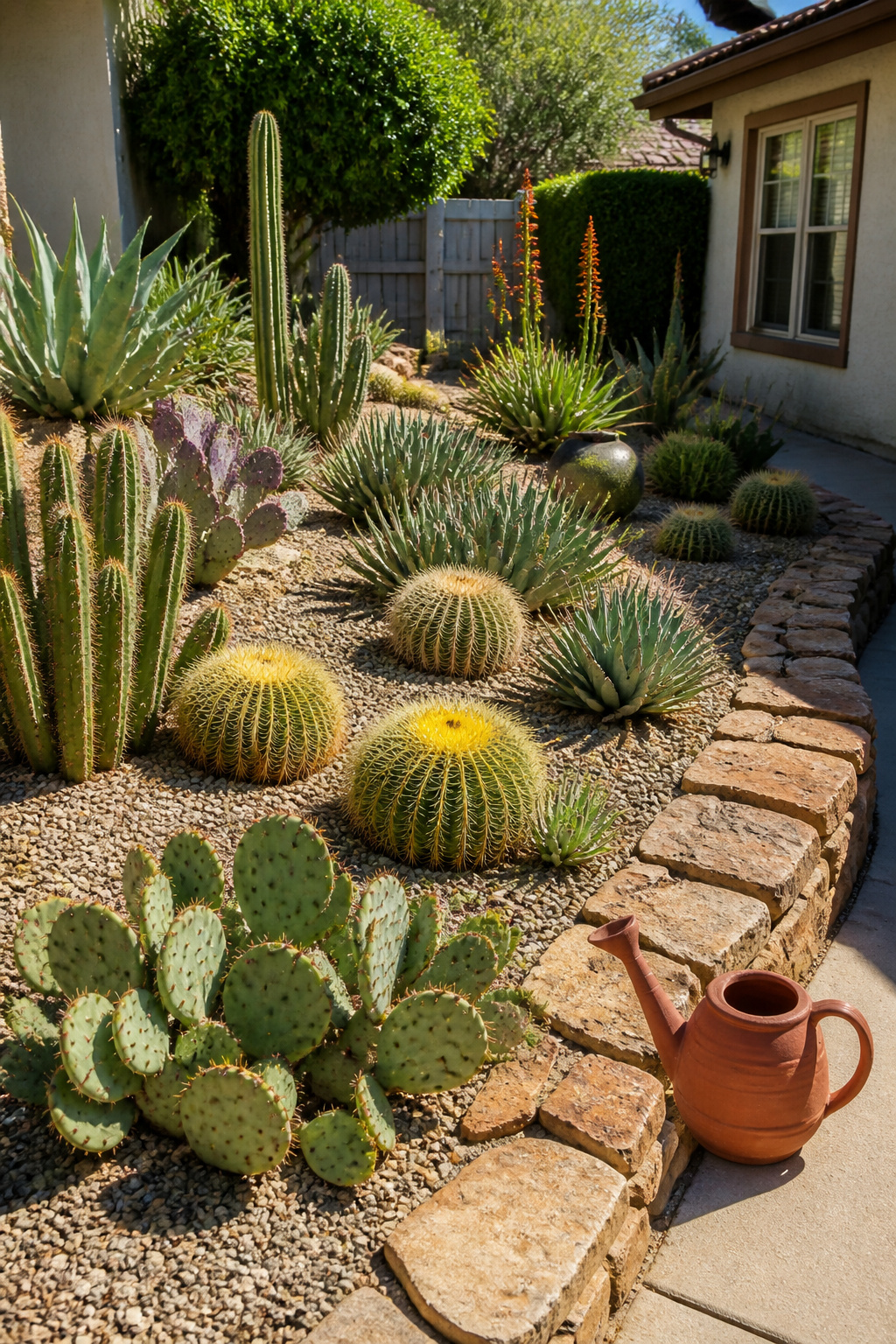
A cactus garden is a garden built around cacti and other desert plants, not just a corner where one or two pots sit. The term covers everything from a few clustered containers on a balcony to a dedicated outdoor bed shaped by gravel and sun angles.
Cacti reached Europe as ornamental plants in the 16th century, carried back by colonizers who had never seen anything like their swollen stems and spines. The first known collection was assembled in London by a pharmacist named Morgan in the second half of that century. Their popularity grew steadily, helped along by traits that still matter today: tolerance for infrequent watering, easy vegetative reproduction, and the fact that many indoor types can move outside in summer pots and all.
Botanical gardens across Europe built significant collections, and private greenhouses followed. The dry-air requirement that made them practical for room culture back then is the same constraint that shapes where you can site them now.
Design Ideas for Small Spaces
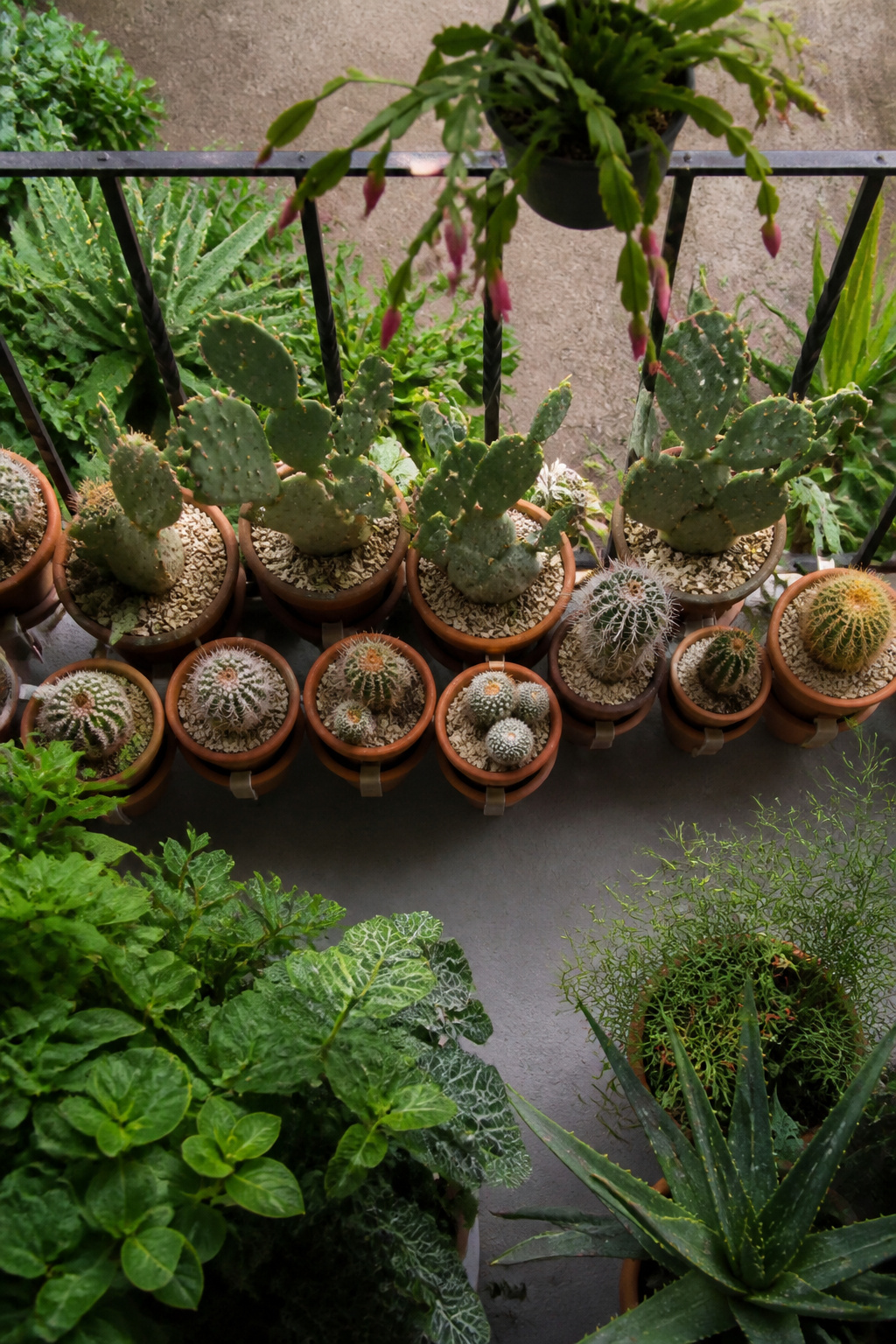
A cactus garden fits a small footprint better than almost any other planting. Most species stay under two feet across for years, and a dozen plants in six-inch pots can fill a balcony rail without crowding. The trick is spacing for air, not for show. I learned that the hard way the first season I clustered everything shoulder to shoulder for a photograph and watched rot set in where the spines touched.
Leave two inches minimum between pots, more for barrel types that swell after rain. Ground-level beds need the same thinking: a 4 x 6 foot strip holds five to seven mature plants if you mix heights, fewer if you plant all globes. A tall columnar cactus at the back, two mid-size opuntias, three low echinocereus in front, and you have a composition that reads like a garden instead of a collection.
Containers matter for budget. Glazed ceramic looks finished but eats $40–60 each; unglazed terracotta at $4–8 drains better anyway and weathers to the same dusty palette as the plants. One glazed statement pot for a centerpiece, terracotta for the rest, keeps a $500 year under control. Saucers are non-negotiable on a balcony unless you want stained concrete and an angry landlord.
Color comes from gravel, not flowers you wait all year for. I top-dress with local crushed granite, about $8 for a fifty-pound bag at any landscape yard, enough for twenty pots. It reflects heat, which these plants use, and it hides the soil line so the pots look tended even when you have not watered in three weeks.
What I Got Wrong Starting Out
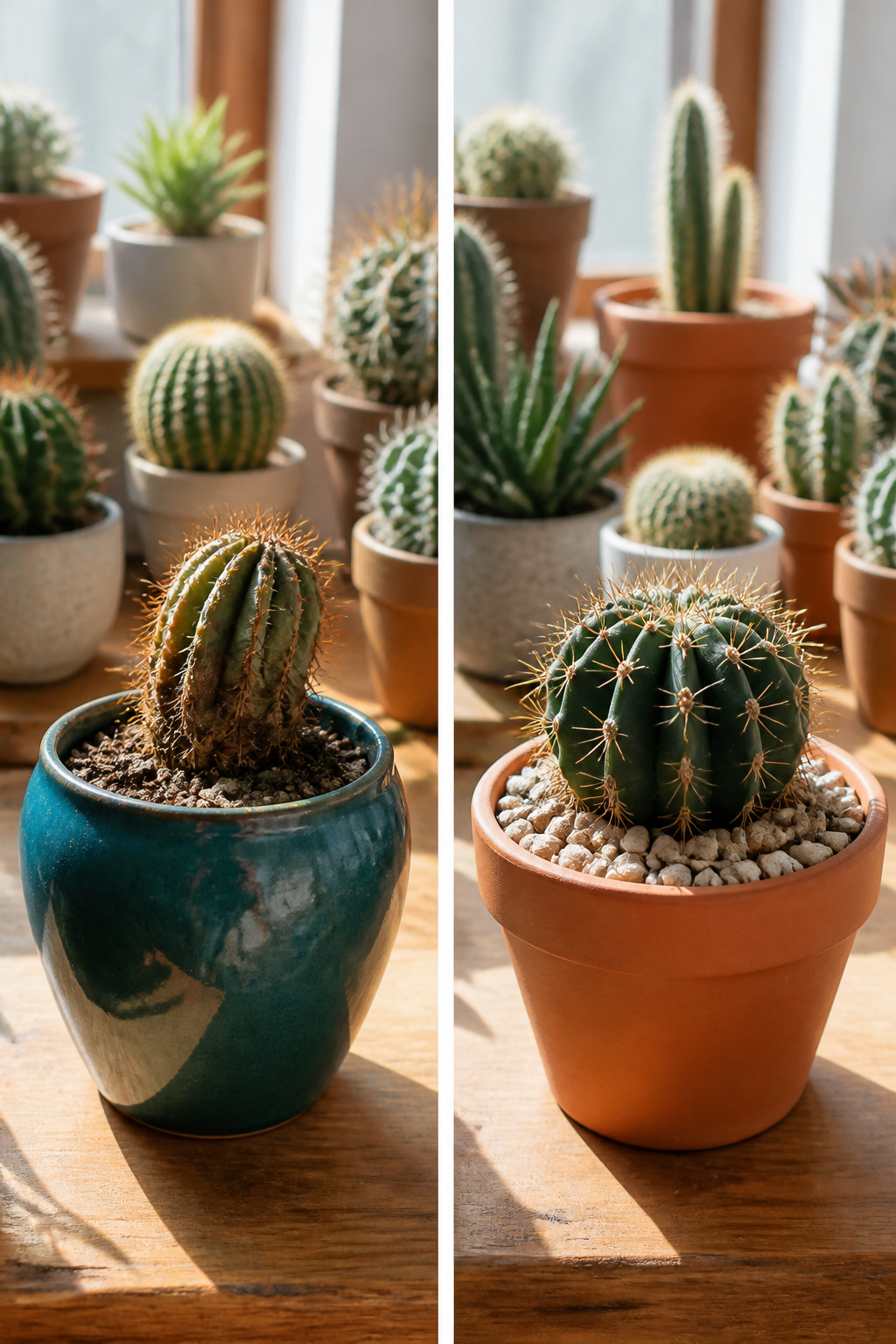
The first cactus I killed sat in a glazed ceramic pot with no drainage hole, in regular potting mix I had left over from a tomato project. I watered it on the same schedule as my herbs, about twice a week, and the stem went soft and pale in under a month. Root rot sets in fast when the mix stays wet, and standard potting soil holds moisture far longer than cactus roots can tolerate. A proper mix needs one part horticultural sand, one part compost or sifted potting soil, and one part grit like pumice or perlite. I learned that after replacing the plant, not before.
Light was the second mistake. I kept a Mammillaria on a desk six feet from the nearest window, thinking the room felt bright enough to me. It stretched tall and thin, losing its compact ball shape. Cacti want at least six hours of direct sun daily; anything less and they etiolate, which is the technical term for that pale, stretched growth that never reverts even after you move them.
Winter watering finished off another plant. I kept the same schedule year-round, not knowing cacti in cool indoor air might need water only every couple of weeks, sometimes less. The roots sat in damp, cold soil through December and January. Now I let the mix dry completely between waterings, and I water even less when the plant is not actively growing.
Frequently Asked Questions
What is a cactus garden?
A cactus garden is a garden built around cacti and other desert plants, ranging from a few clustered containers on a balcony to a dedicated outdoor bed shaped by gravel and sun angles. Cacti first reached Europe as ornamental plants in the 16th century, brought back by colonizers who had never seen their swollen stems and spines. Their popularity spread because they tolerate infrequent watering, thrive in dry air, and reproduce easily from cuttings.
How do you care for a cactus garden?
A cactus garden needs at least six hours of direct sun daily; less light causes plants to stretch, pale, and eventually rot from the inside. Use a soil mix of one-third horticultural sand, one-third cactus compost, and one-third grit such as pumice or perlite so water drains fast rather than sitting around the roots. Let the soil dry completely between waterings, then wait another week; in winter, some species go six weeks without water as their bodies store what they need.
What types of cacti are good for indoor gardening?
Mammillaria species, the pincushion plants, stay under six inches and flower in rings around the crown, doing well in small terracotta pots with afternoon sun through glass. Crown cactus, Rebutia, grows in clustered balls with thick spines and ranks among the easiest for beginners. Hedgehog cactus, Echinocereus, clumps upright with magenta late-spring blooms and stays contained on a patio table. Christmas cactus breaks the usual rules: it wants indirect light, droops over the pot edge, and flowers when days shorten, making it ideal for a hanging planter.