
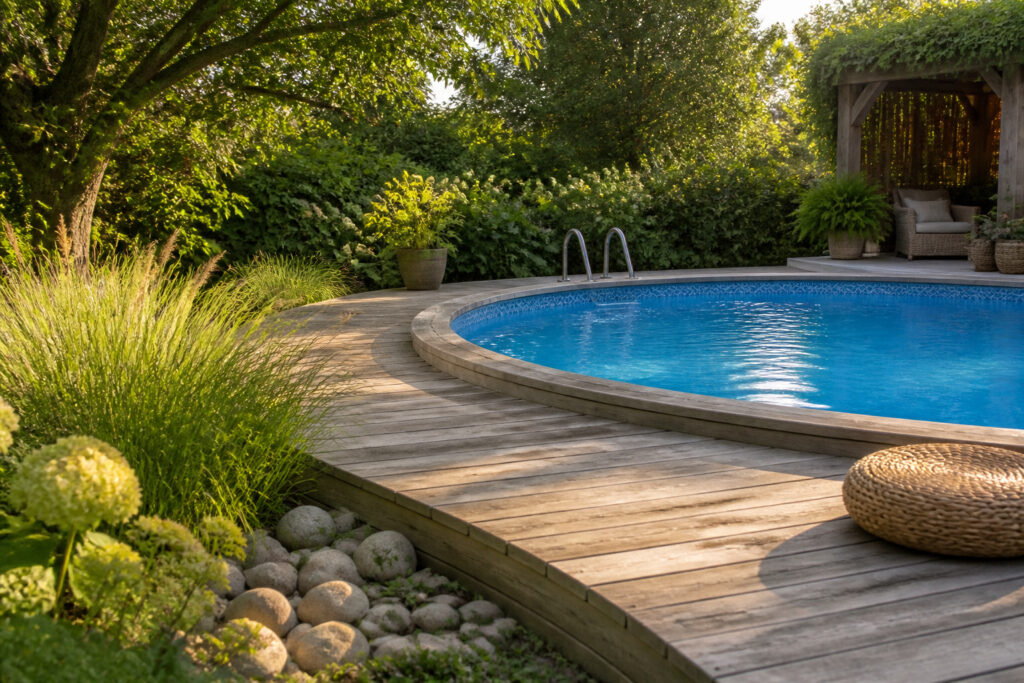
The right above ground pool deck idea depends on whether you want to hide the pool wall entirely or work with it.
A full-surround deck runs the highest material cost but erases the above-ground look by wrapping every side in matching boards.
For tighter budgets and yards, a side deck needs only four to six feet of depth to give swimmers a place to stand and the structure a finished face.
1. Full-Surround Decks
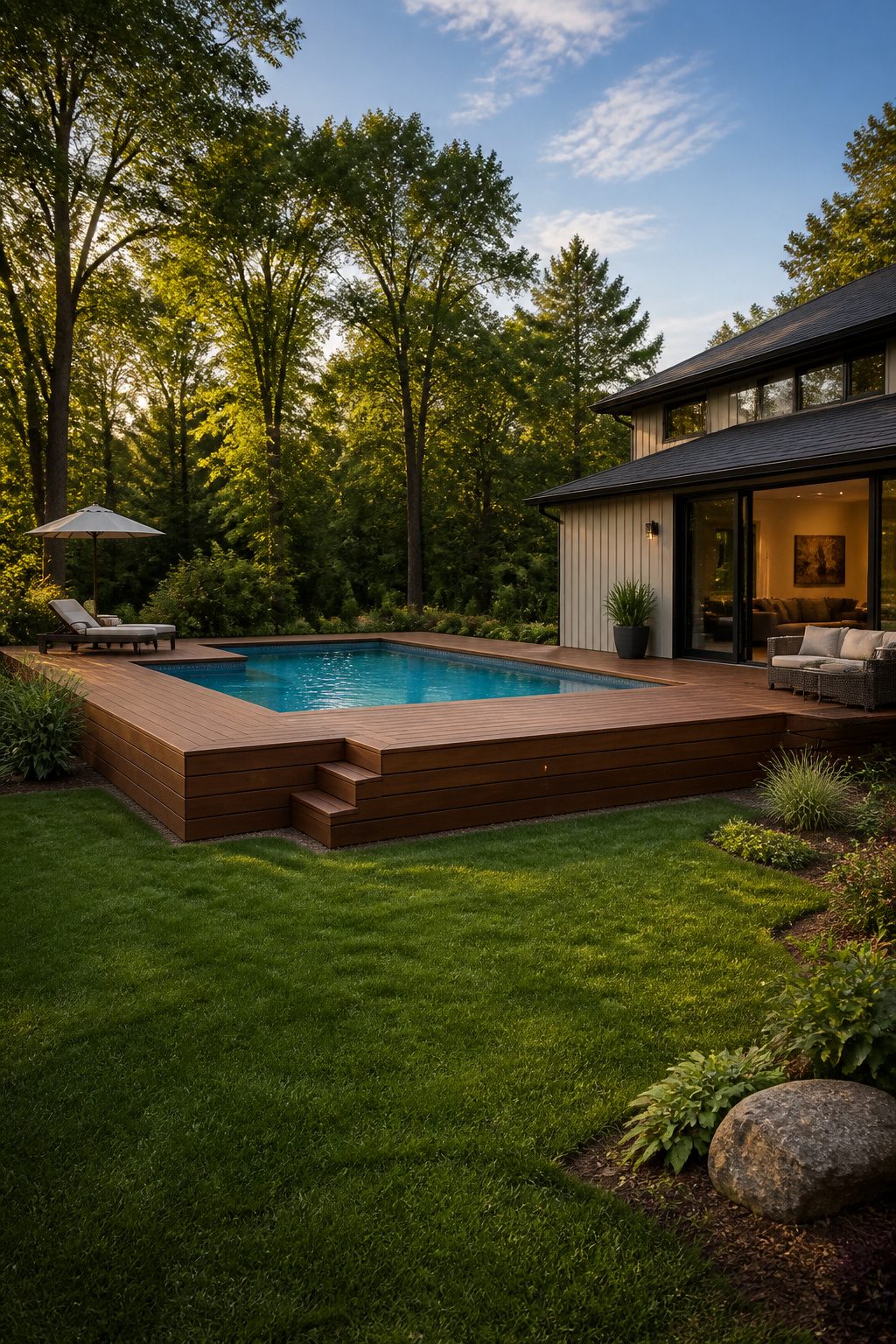
A full-surround deck wraps the pool on all sides and hides the walls completely, which is why it reads as built-in rather than bolted-on.
The decking comes flush to the top rail, so the pool looks like it was set into the structure instead of dropped beside it.
Wood is the usual choice, though composite or PVC hold up longer if your summer humidity runs high.
What sold me on this style, reading through a dozen builds, is the continuous walking space.
You do not have to step off, walk grass or pavers, and step back on; the deck flows around the full perimeter and often ties straight into the house for a single level surface from door to water.
McMillan Builders took this a step further and faced the exposed pool siding in the same deck wood for one continuous skin.
Cover whatever material sticks out from the surface in the same wood that makes up the deck.
That matching skin is the detail that makes a full-surround deck look intentional rather than improvised. Without it, the eye will catch the original pool wall every time.
2. Side Decks for Tight Yards
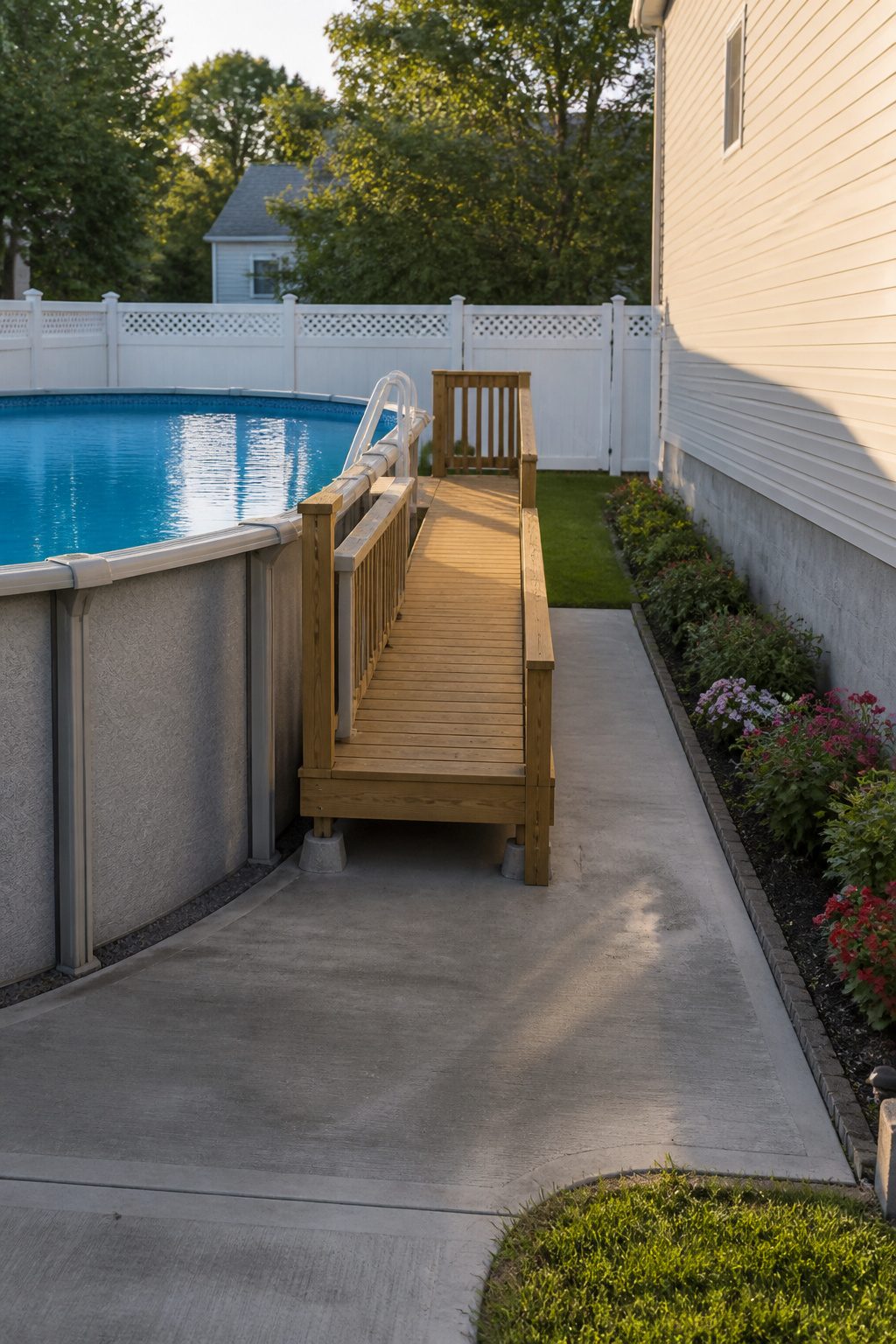
I sized my first side deck for the only stretch of yard that wasn’t concrete, a 10-foot strip between the garage and the property line.
The pool went in first, and the deck followed on the long-straight side facing the house.
A side deck needs only enough depth for a ladder and a person to stand, maybe 4 to 6 feet, which keeps lumber bills down and leaves the rest of the yard for what it was already doing.
Wood reads as the high-end choice, but PVC, aluminum, and composite all hold up without the annual staining I failed to stay on top of.
I used pressure-treated pine because it was what the lumber yard had in 10-foot decking boards; two years later the cupping started, and I understood why people pay the composite premium.
The finished look matters more than the footprint.
A bare above-ground wall collects algae at the splash line and looks like equipment sitting in grass. Running deck boards right to the top rail hides that siding and gives swimmers a place to perch.
Johnson notes that customers move from skipping the pool to making it the summer focal point once that deck goes on, and the value shift comes at a fraction of in-ground cost.
For tight yards, the decision is really between encasing the pool on one side or leaving it bare.
The encased bench style, where deck boards wrap the pool wall itself, turns the whole structure into seating. Either way, a partial deck beats no deck if the yard won’t forgive a full perimeter.
3. Combination Deck Styles
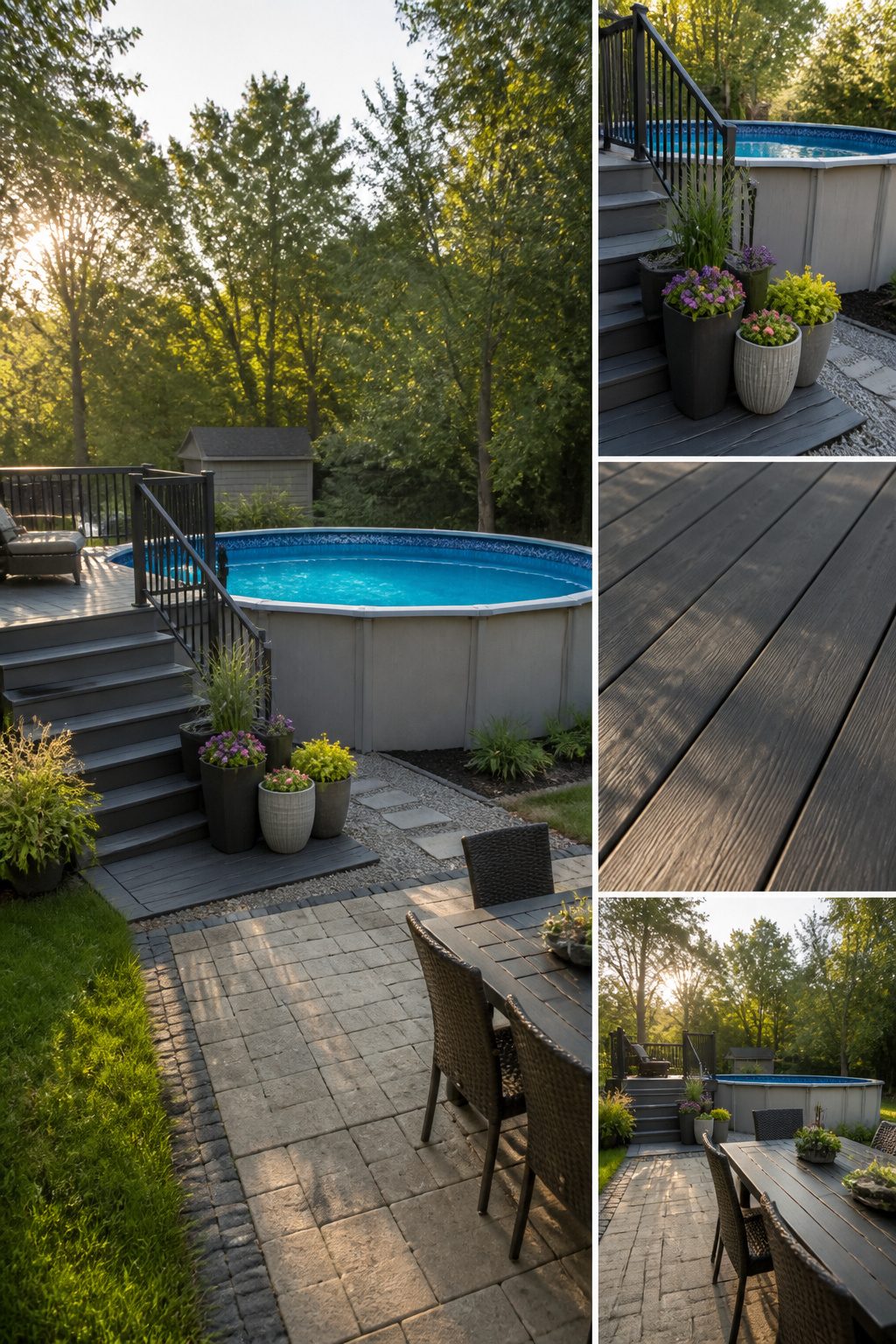
A small side deck can feel like an afterthought until you tie it into something else.
One build I kept returning to while sketching my own layout paired that modest entry platform with a paver patio set at ground level, joined by a short gravel walkway.
The materials did the work of defining separate zones without any one element having to carry the whole design.
Three levels is the number that kept appearing in the builds that actually looked settled into a yard, not bolted on.
One swim-spa installation stepped its composite decking up to a shaded sitting area, with each riser helping the pool sink into the surroundings rather than perch above them.
The composite boards by TimberTech carried a warranty against cracking and staining, which matters when plumbing access sits beneath the planks.
Terracing reads as custom because it is custom.
You decide where the grade asks for a bridge, where a wraparound makes sense only on the sunny side, and where the budget stops. That stop point is honest information, not a failure.
I have seen combination decks that looked ambitious on paper and cramped in person because every idea made it in. The ones that worked left something out.
4. Multi-Level Decks
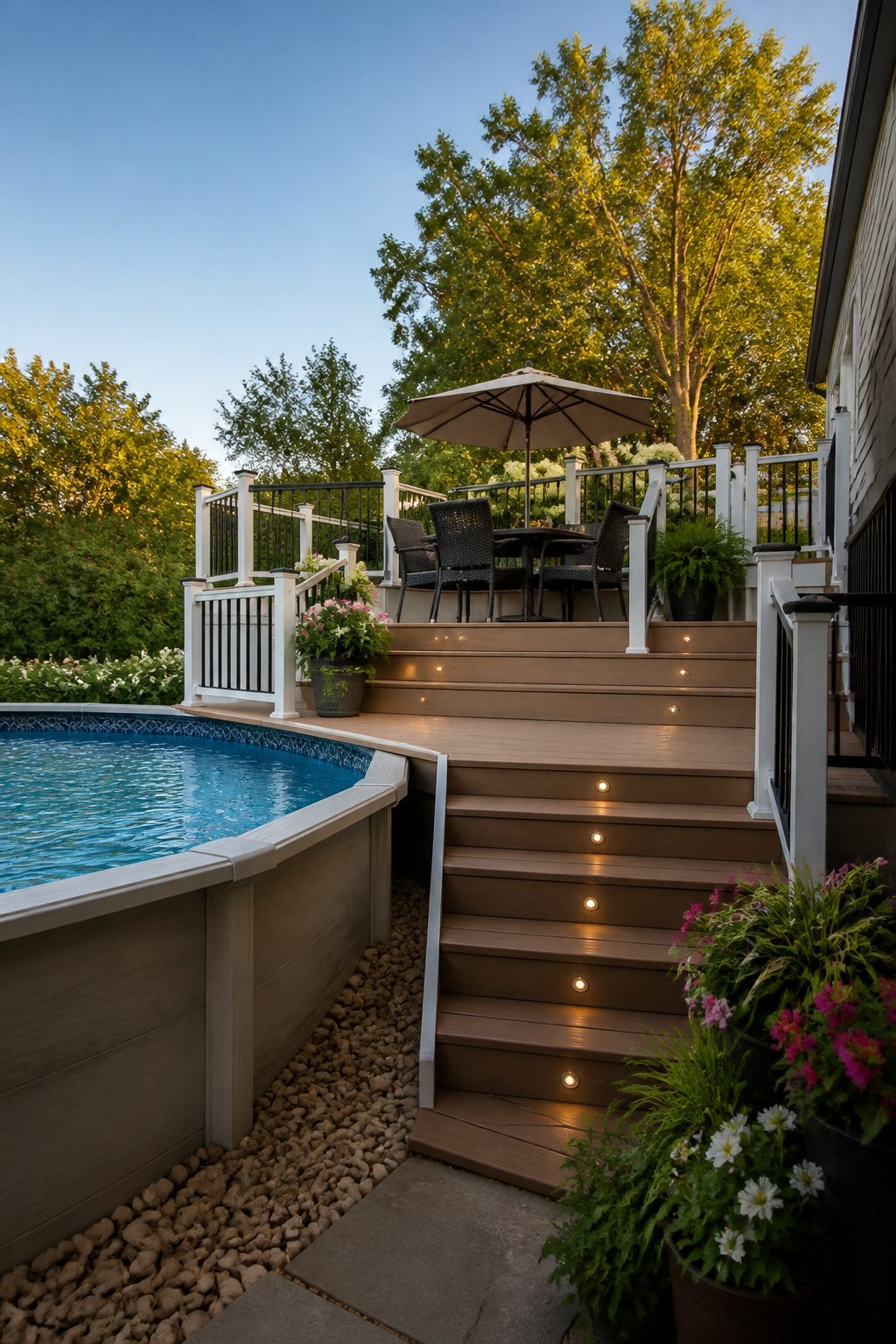
Multi-level decks give an above-ground pool room to breathe. One plane around the water’s edge handles entry, while a step up separates a shaded sitting area or a dining spot from the splashing and chemical traffic.
The change in height does the work that walls or railings usually try to do, and the whole yard reads as larger because your eye travels.
Composite boards by TimberTech suit this geometry well.
The material handles the joints and seams of a tiered frame without the warping that can make stepped wood look rickety after a season, and the warranty matters more when three different levels mean three different exposures to sun and drainage.
White railings threaded between the tiers keep the structure legible from a distance, marking where pool ends and patio begins.
I would spend the money on three levels only if the yard slopes or if the family actually entertains enough to need the zones. Two levels, built wide, cover most households.
What convinced me, reading through builds that overreached, is how often the middle tier became a catch-all for wet towels and nobody sat there. Build the tier you will use, not the tier that photographs well.
5. Built-In Seating and Lounges
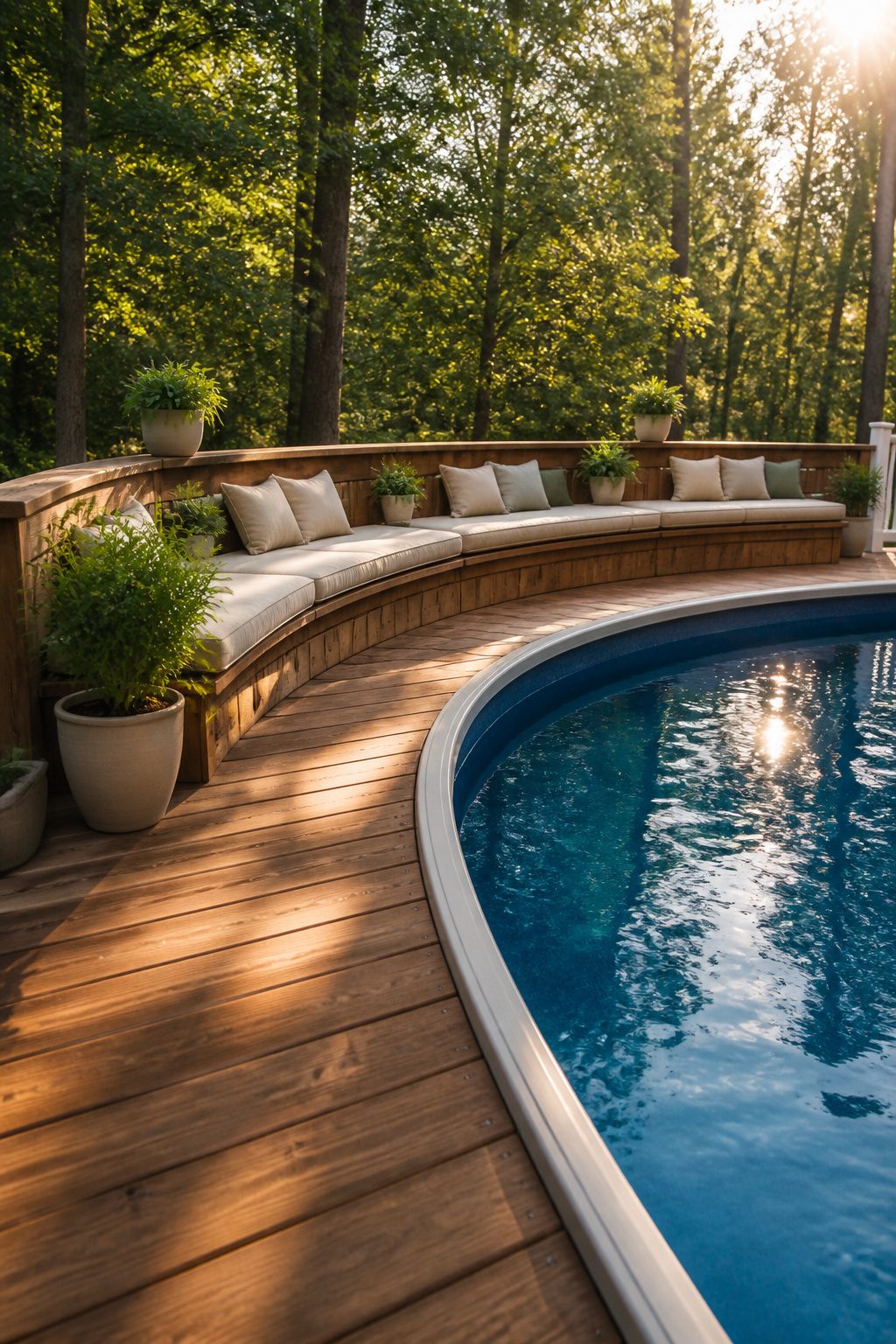
Built-in seating turns the deck itself into furniture, which matters more than it sounds when every square foot of a small yard already has a job.
A wraparound bench following the pool’s curve keeps the footprint tight; you are not negotiating around chair legs or storing loungers in a shed come October.
Low cushions on timber planks sink the whole area by a step or two, and that small drop changes the posture of the space from yard-with-pool to something closer to a private terrace.
The semicircle builds I have studied do this most cleanly for the round tanks people are buying now.
The bench wall doubles as privacy screening, and the pool reads as permanent because the deck treats it that way. Separate daybeds and modular lounges can go in later if the budget loosens, but they rarely need to.
What you save on furniture is money that can go toward better timber or a more forgiving stain, and the walking space you get back is harder to price but easy to feel on a Saturday afternoon.
6. Decks With Planters and Greenery
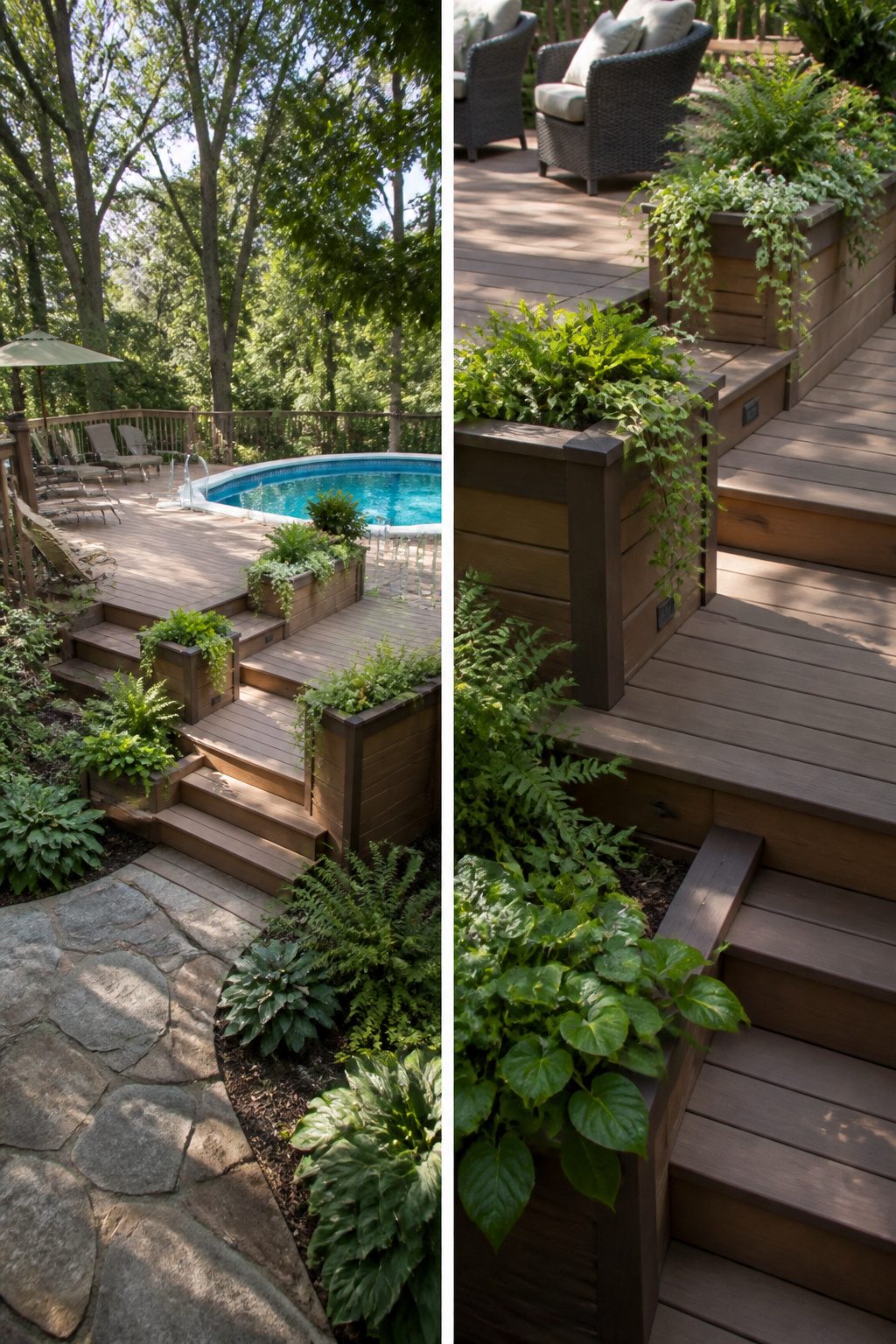
Hardscape around a pool ages fast if nothing alive breaks it up. Planters built into the deck edge, trellises for climbing vines, and containers staged on level changes all soften the geometry without eating the space you paid for.
Multi-level designs handle this best. A raised planter at the transition between an upper lounge zone and the lower pool surround gives greenery a base that reads as architecture, not afterthought.
The same layout can frame a dining area with hanging planters kept lush enough to work as a partial screen.
Keeping them dense matters more than what you plant; a sparse vine on a trellis just highlights the rail behind it.
Rustic wood builds lean into the natural look with rougher timber and plants tucked into every corner, but the principle holds for cleaner styles too.
One risk worth naming: soil and irrigation add real weight. A planter integrated during construction sits on framing meant for it.
A container dragged out in June and forgotten through a wet week stains decking and can warp boards if drainage pools. Set saucers or design for runoff from the start.
7. Composite Material Decks
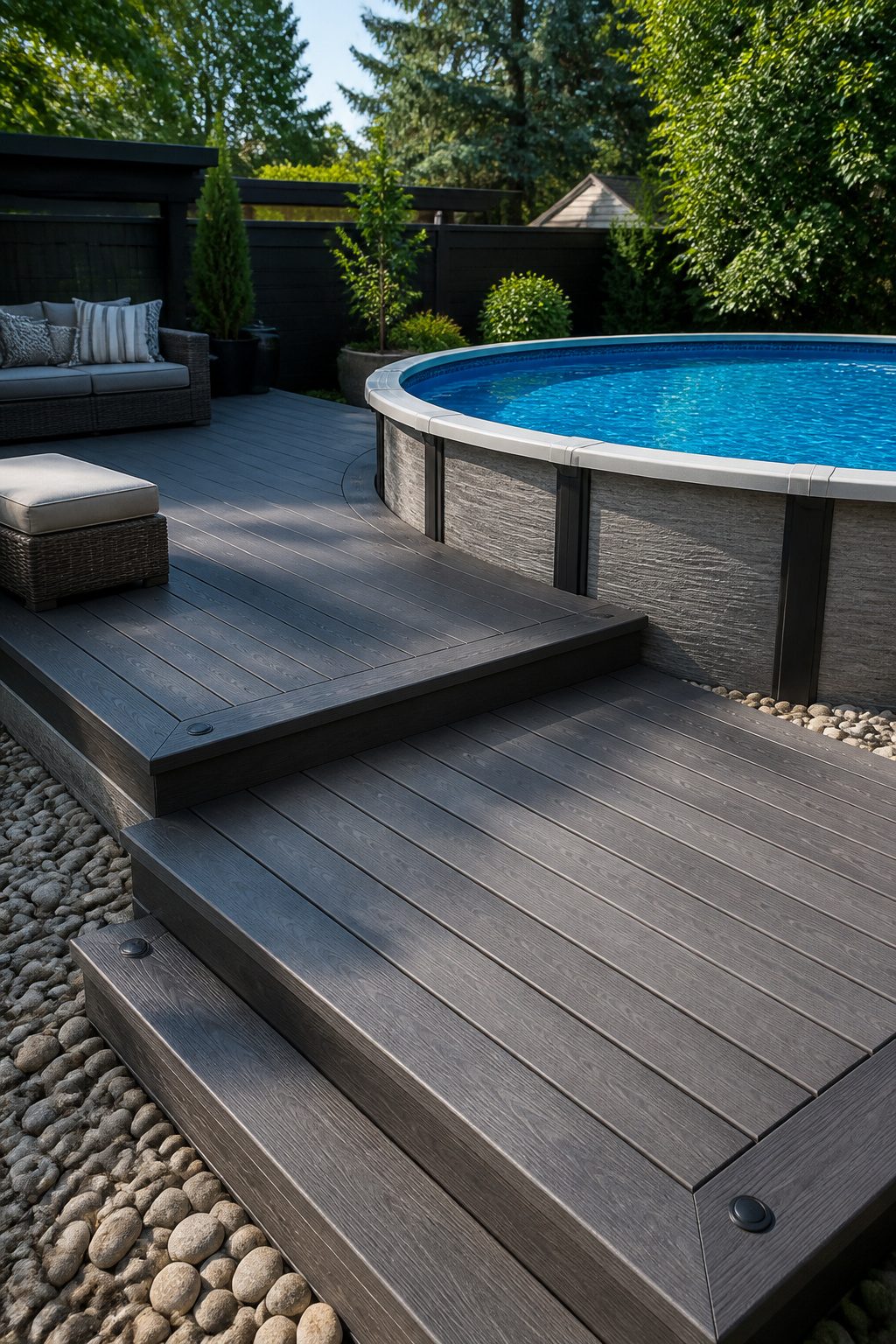
Composite decking resists fading, staining, and moisture damage in ways wood simply cannot match around a pool. A periodic wash with soapy water keeps it looking consistent; there is no annual sanding, staining, or sealing to budget for.
That simplicity costs more upfront than pressure-treated lumber, but the higher initial price erodes quickly when you subtract five or ten years of maintenance labor and supplies.
PVC and aluminum framing extend the same logic further.
Both shrug off weather and pool chemicals that chew through lesser materials, and neither warps, splinters, or invites insects. The trade is plain: you pay sooner to avoid paying repeatedly.
For someone working a small yard on tight annual funds, that calculation matters. A composite deck built now leaves the $500–$800 garden budget intact for actual plants instead of deck repair.
Multi-level composite designs, like those built with TimberTech, demonstrate how manufactured decking boards solve practical problems too. Cracked concrete, hidden plumbing, and permanent stains drop off the list of concerns.
Water runs off naturally since the surface does not demand perfect leveling. That installation flexibility matters for retrofitting an existing above-ground pool where the yard already slopes or settles.
8. Classic Wood Decks
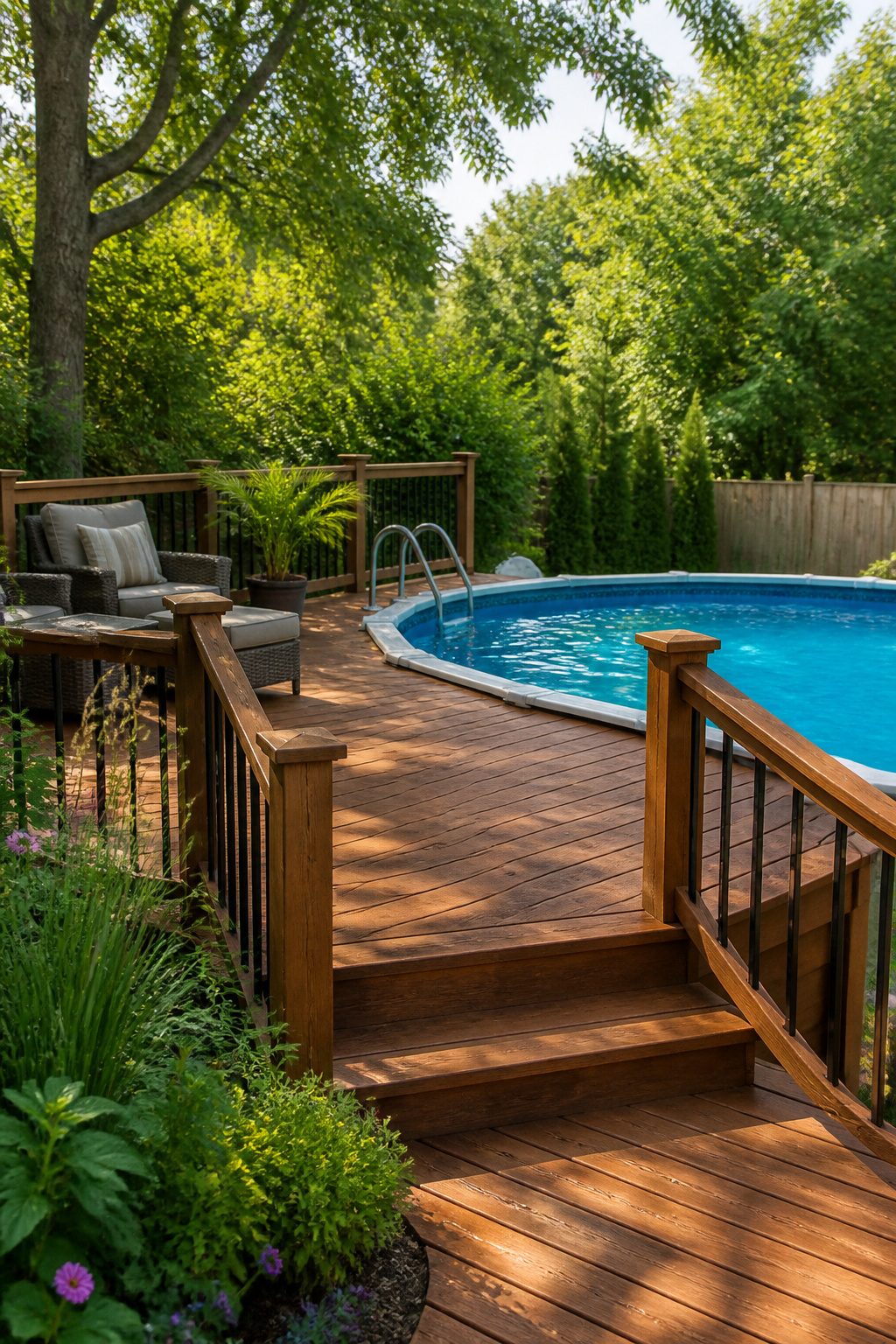
Treated lumber or cedar still reads as the classic pool deck for good reason. The warm, rustic look fits most backyards without trying hard, and the boards take stain in ways that read as intentional rather than apologetic.
What convinced me, looking through a dozen maintenance logs, is how much of the work is annual cleaning and sealing, not the dramatic rot-rebuild cycle people fear.
The reality is closer to routine housework than to carpentry.
Sweep debris before it grinds into the grain, wash with mild detergent, and reapply sealant before the boards gray out. Check for splinters where bare feet land and for soft spots where water pools against the pool wall.
Cedar resists insects better than pine, but both need the same rhythm. Skip a season and the wood weathers fast, though it rarely fails catastrophically in a single summer.
9. Railings, Gates, and Safety Features
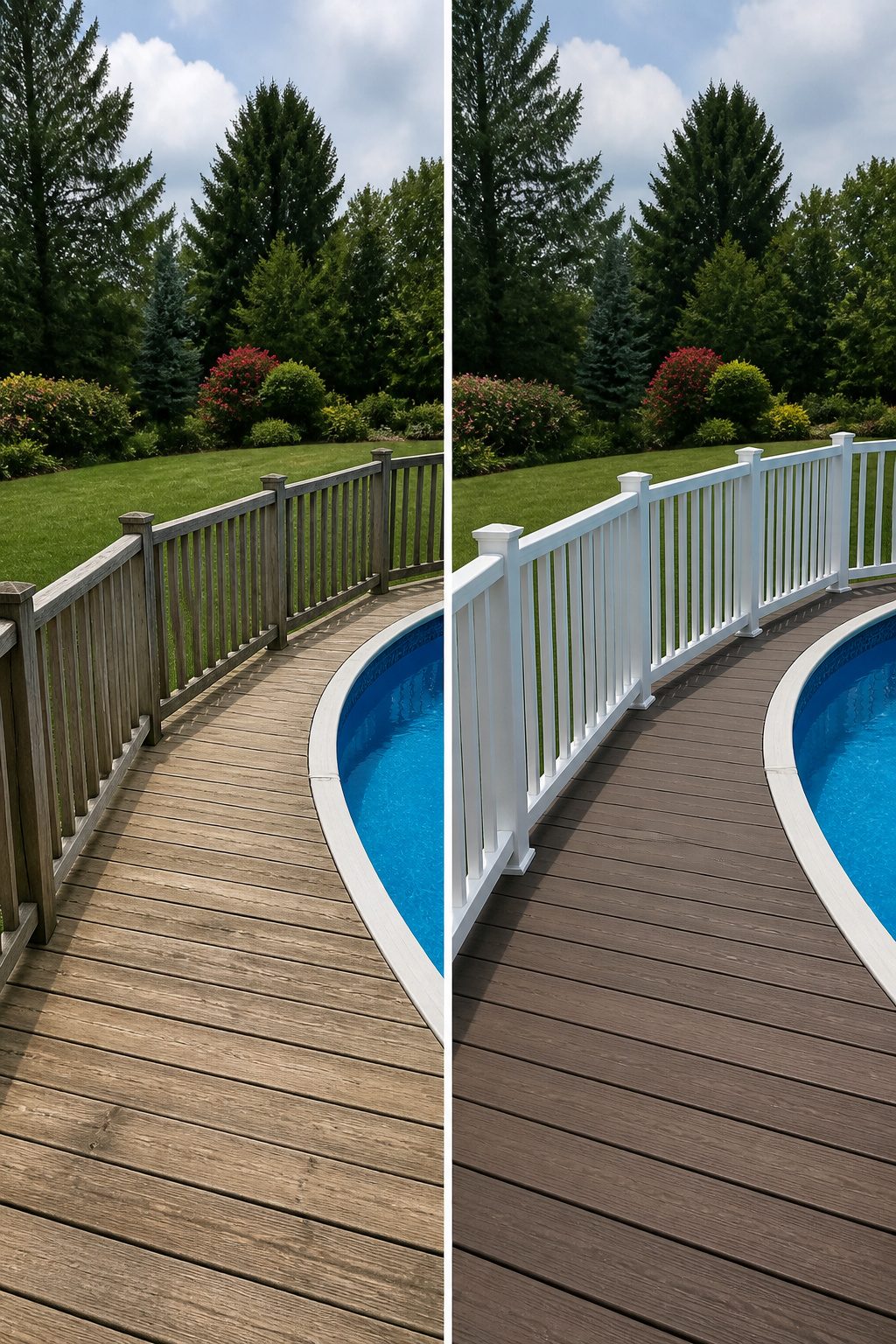
The gap between deck boards and pool coping is where small feet find trouble.
Align the top edge of the coping just above the deck surface so the two meet flush; any lip or void catches toes and collects debris that turns slick.
I have seen decks where this was treated as an afterthought, and the resulting seam needed constant sweeping to stay safe.
Railings need to run the full perimeter, not just the obvious fall sides. Gate hardware matters more than gate style: a spring-loaded hinge that slams is useless without a latch a child cannot reach.
The latch should sit high enough that a determined five-year-old standing on a chair still cannot thumb it open. Non-slip finish on boards is worth the extra coat every season, especially where spray from swimmers keeps the surface wet.
Building codes set the actual heights and spacing, and they vary enough that checking your local requirements before cutting lumber saves a rebuild.
The same codes usually specify tread depth and riser height for any stairs, which is why I stopped guessing and started measuring against the printed sheet.
Pool decks sit in a strange zone between residential deck rules and pool enclosure rules; sometimes both apply.
Decking Materials Compared
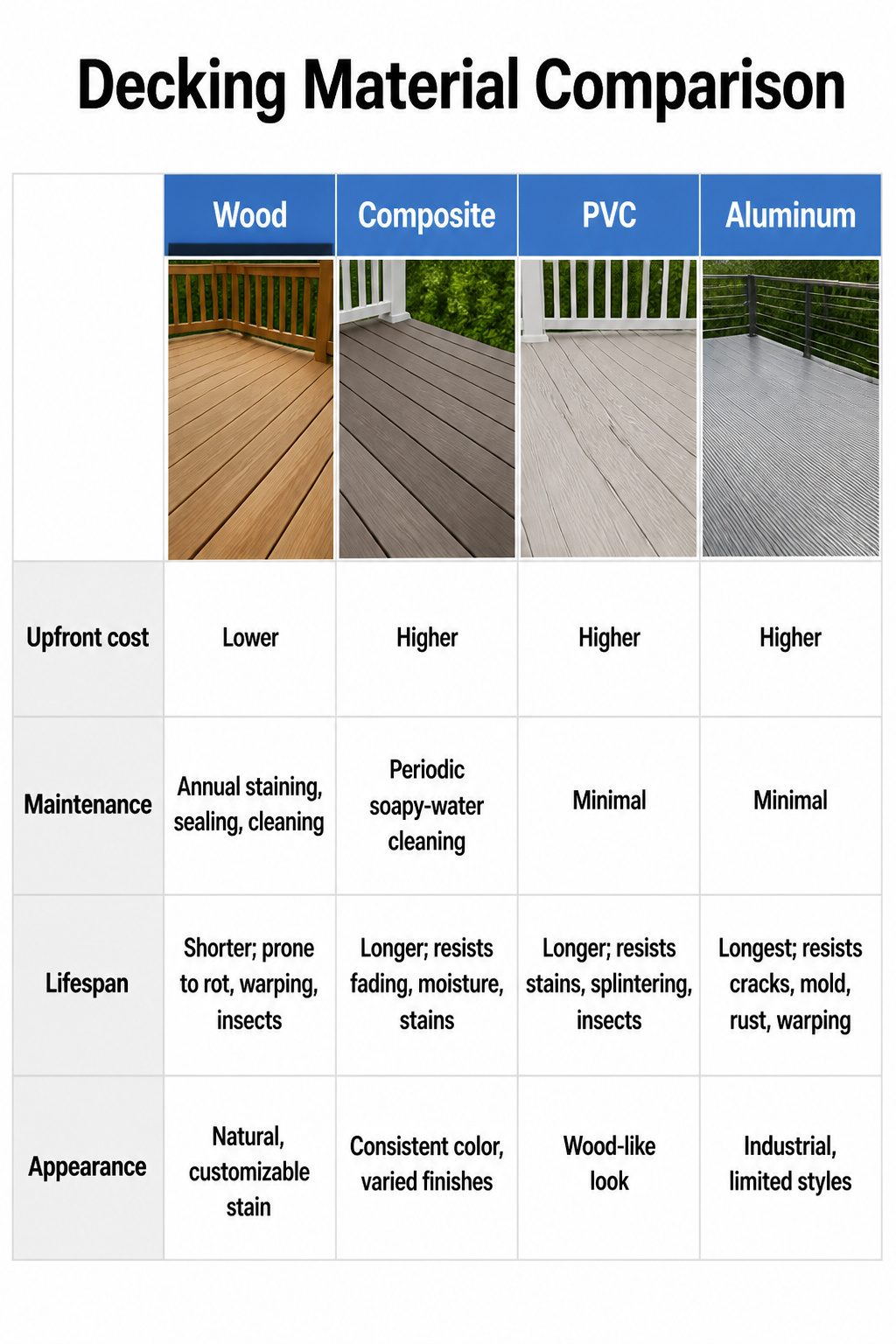
Wood still wins on upfront cost, but the math shifts once you factor in the weekends spent staining and sealing.
Composite asks more at purchase and then mostly leaves you alone: soapy water and a brush a few times a year.
PVC and aluminum are less common for above-ground pool builds, which tells you something about how widely stocked they are, though both skip the maintenance entirely.
| Wood | Composite | PVC | Aluminum | |
|---|---|---|---|---|
| Upfront cost | Lower | Higher | Higher | Higher |
| Maintenance | Annual staining, sealing, cleaning | Periodic soapy-water cleaning | Minimal | Minimal |
| Lifespan | Shorter; prone to rot, warping, insects | Longer; resists fading, moisture, stains | Longer; resists stains, splintering, insects | Longest; resists cracks, mold, rust, warping |
| Appearance | Natural, customizable stain | Consistent color, varied finishes | Wood-like look | Industrial, limited styles |
If you are working from that $500–800 annual yard budget, composite’s higher ticket price may eat the whole pile in one season. Wood spreads the hit but keeps taking bites forever.
My read: rent the stain sprayer once and you have become the maintenance department. For a small deck you actually want to use, the extra hundred square feet of freedom might be worth paying for at the start.
Design and Fit Basics
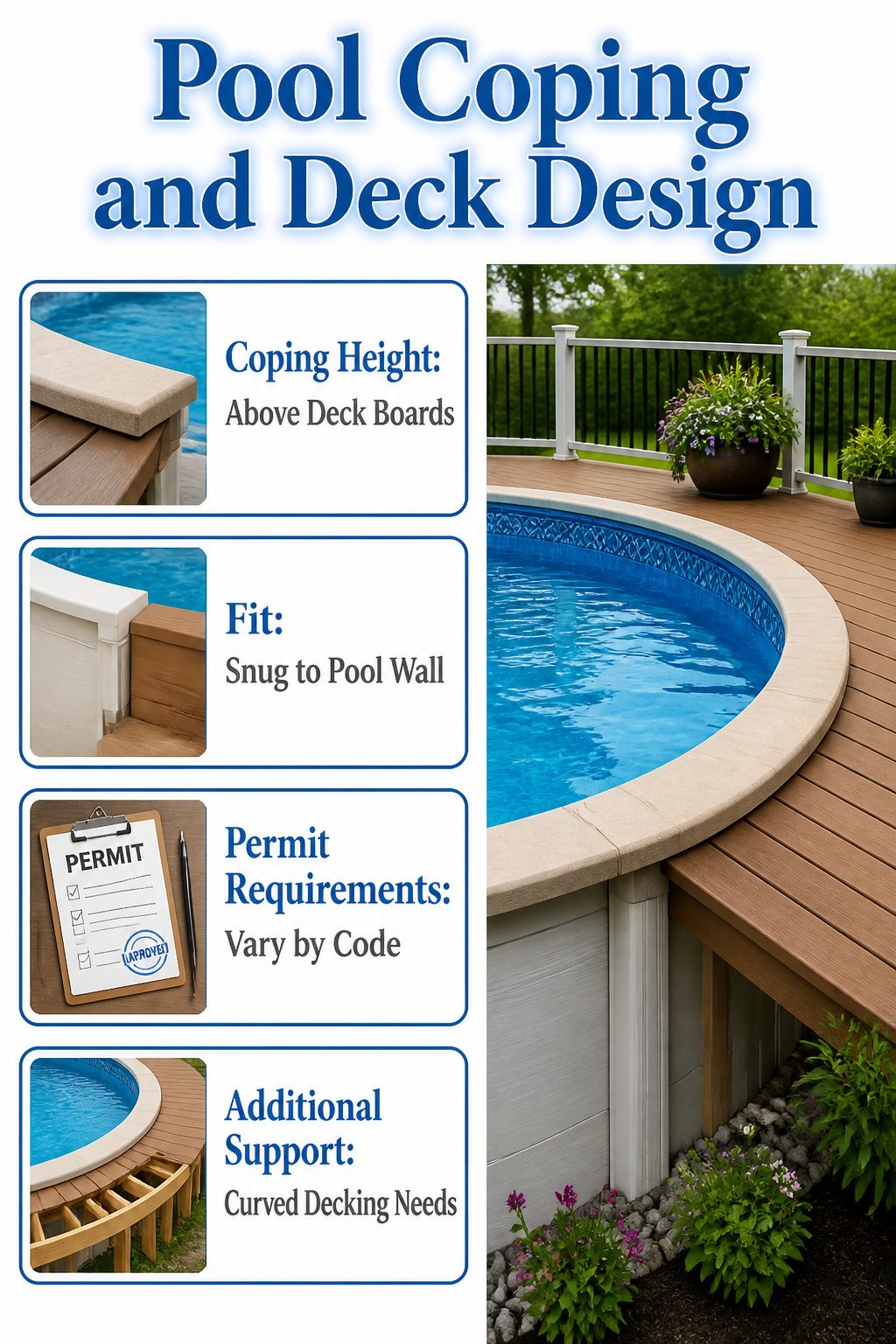
Pool coping should sit just above the deck boards, not flush with them and not below.
That slight overhang is what lets the deck flow into the pool edge without the dark gap that collects leaves and shows every bit of debris.
I learned this distinction only after noticing how many builds get it backward; the coping casts a small shadow line that reads as intentional, while decking run too high leaves you staring at unfinished rim.
A snug fit matters for more than looks.
Even a few inches between deck and wall becomes a trip point where feet catch on entry, and worse, a space small enough to lose a sandal but wide enough to twist an ankle.
Framing tight to the pool curve takes extra blocking, especially on round pools where the deck board overhang needs support underneath every arc. That labor and material jump is real; I would not plan a curved surround without expecting it.
Before any of this, the permit office gets a say. Local codes set the height allowance between coping and deck, the required slope for drainage, walkway width minimums, and whether you need railings or a self-latching gate.
Footing depth and spacing also vary by jurisdiction. A call or plan review early costs nothing and resets expectations before lumber gets ordered.
What DIY Budgets Actually Cover
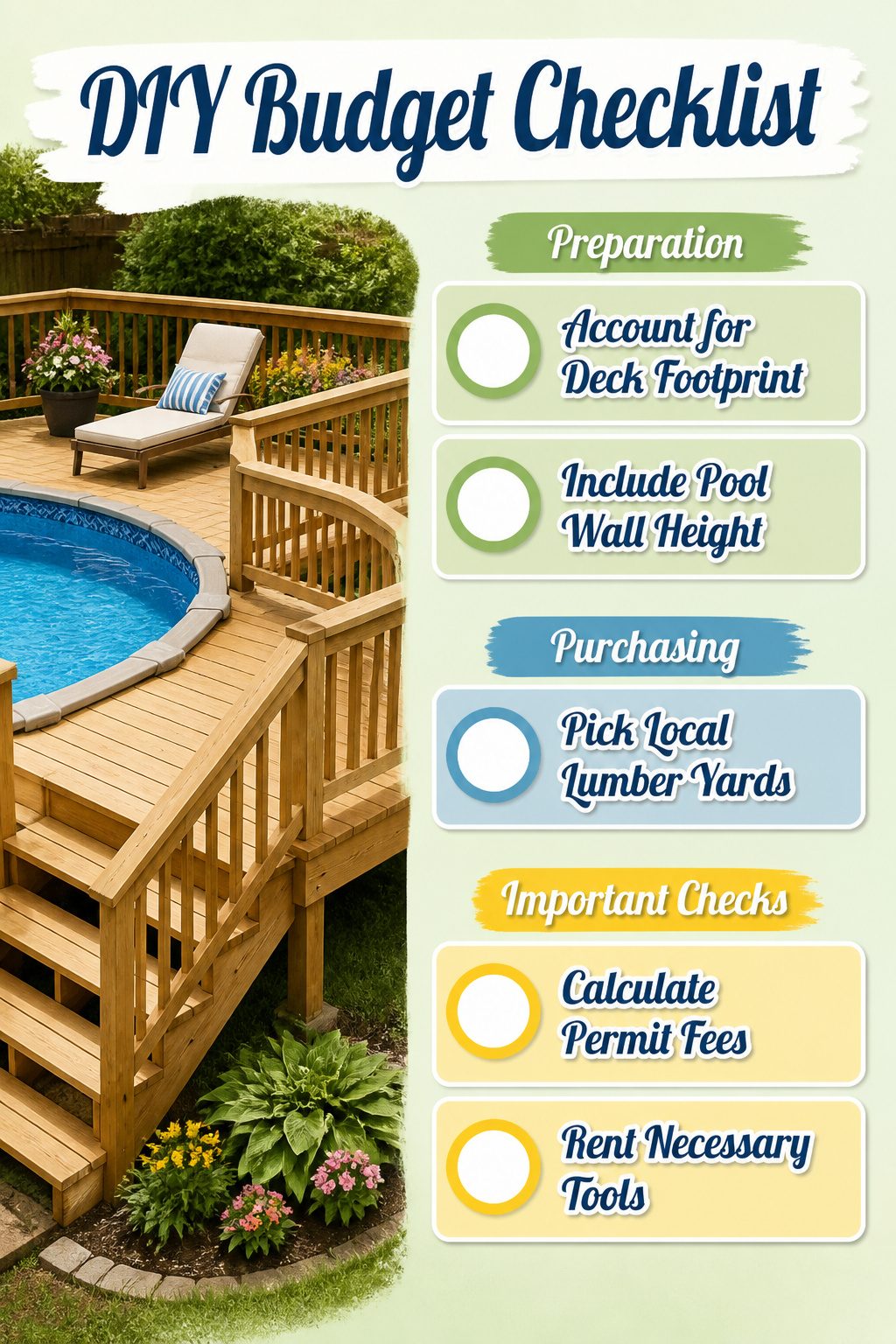
A DIY wooden deck built around an above-ground pool does more than save labor costs. It also shifts how buyers see the pool from a temporary fixture to a permanent backyard destination.
Treated lumber runs cheaper than composite orPVC alternatives, and the availability of that material at most home centers makes it the entry point for homeowners working by themselves.
What you spend in the end will depend on the deck’s footprint, the height of your pool wall, and what regional lumber yards are charging that season; there is no single figure that covers every build across zones with different snow loads and different code requirements.
The time investment is real too.
Renting a cement mixer, a power saw, and a level adds to the total, and one delayed permit or one footing that does not pass inspection can stretch a two-weekend project across most of a summer.
Still, the finished deck usually returns more than the cost of materials in perceived property value, especially in markets where an in-ground pool is not practical.
The tradeoff is between the sweat you put in and the polish a crew would deliver, with warranties and faster completion on the professional side.
For a gardener already comfortable with a drill and a level, the DIY route is not the cheapest way to own a deck; it is the way to own every decision about where the stairs land and how the sun hits your lounge chair at four in the afternoon.
Maintenance by Material
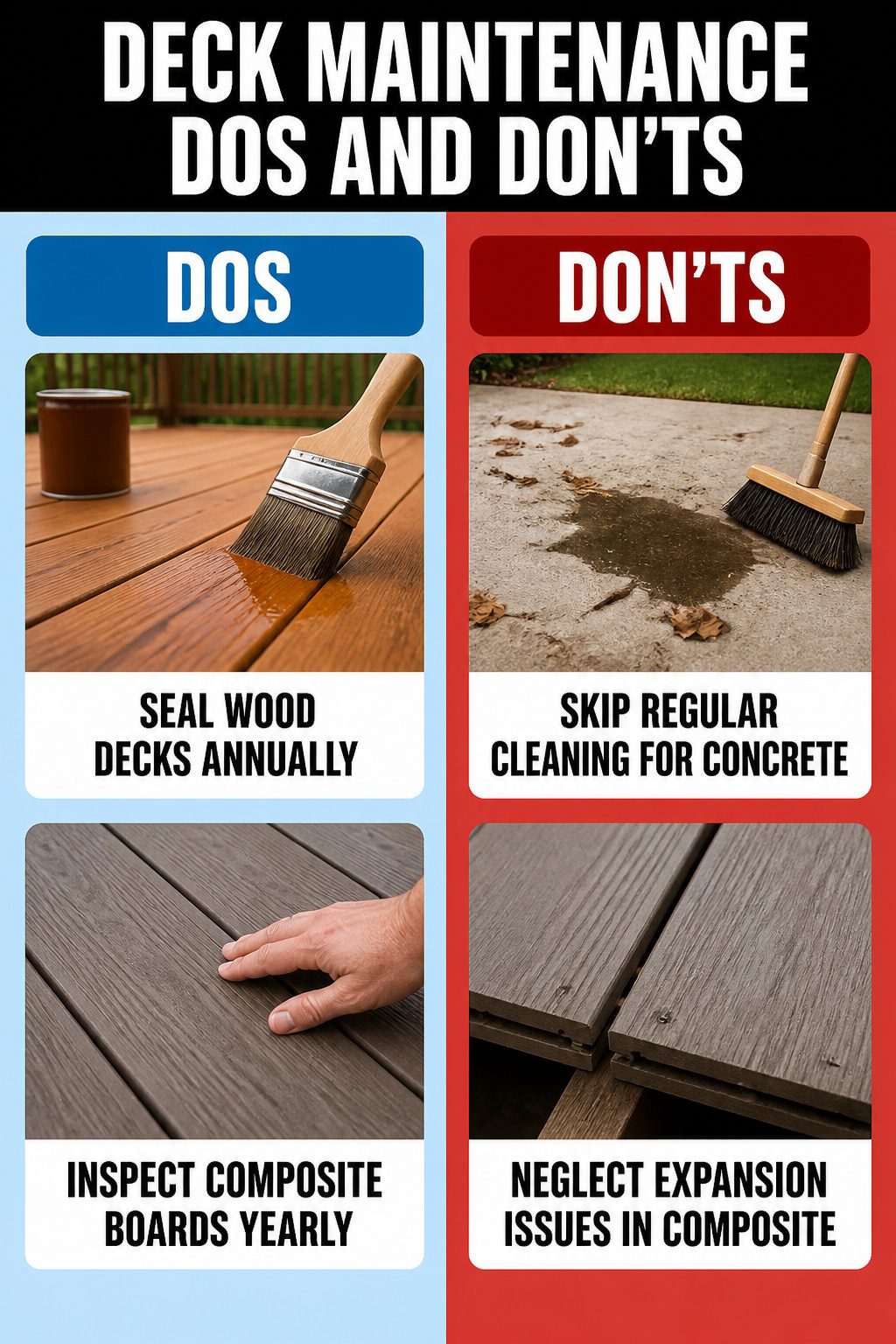
Different materials ask different things of you. Wood takes the most time, composite the most attention, concrete mostly just patience.
Wood decks need sealing against the elements, and that sealant wears away faster around a pool than in a dry yard.
I reapply every other spring, sometimes sooner if the previous winter was rough. Before sealing, I sweep thoroughly and spot any lifts or splinters where bare feet will land.
Composite resists weather damage and stays clean longer, but I still inspect it.
Expansion from summer heat can stress the fasteners, and trapped moisture behind the boards leads to trouble the manufacturers’ warranties rarely cover. A yearly walk across the surface, listening for hollow sounds, catches most problems early.
For concrete or precast cement pavers, regular cleaning is the entire job: sweep debris before it stains, hit spills the same day.
No sealant ritual, no hidden fasteners to worry about. The trade is weight and cracked slabs if your ground shifts, neither of which maintenance prevents.
Frequently Asked Questions
Do above-ground pools need a deck?
You can use an above-ground pool without a deck, but the exposed walls collect algae and read as temporary equipment sitting in grass.
A deck hides the siding, gives swimmers a place to perch, and shifts how the whole pool registers from skipped-over feature to summer focal point.
What is the best material for an above-ground pool deck?
Wood, composite, PVC, and aluminum are all common choices, and the best one depends on what you are optimizing for. Wood costs less upfront but needs annual sealing and staining.
Composite resists fading and moisture with only soapy-water cleaning. PVC and aluminum skip maintenance almost entirely but cost more at purchase and may be harder to source.
How can I make my above-ground pool look more permanent with deck options?
Pressure-treated wood helps, and the real trick is matching details. Facing any exposed pool siding in the same deck wood creates one continuous skin, so the pool reads as set into the structure rather than dropped beside it.
A full-surround deck that wraps all sides and runs flush to the top rail completes the built-in effect.
What are some budget-friendly above-ground pool deck ideas?
A DIY wooden deck built from pressure-treated lumber is the typical entry point, since the material is stocked at most home centers and costs less than composite or PVC.
Partial platforms and side decks that cover only one edge keep lumber bills down while still hiding the pool wall and adding usable space.
Paver patios paired with a small entry deck also spread cost across materials instead of decking the whole area.