
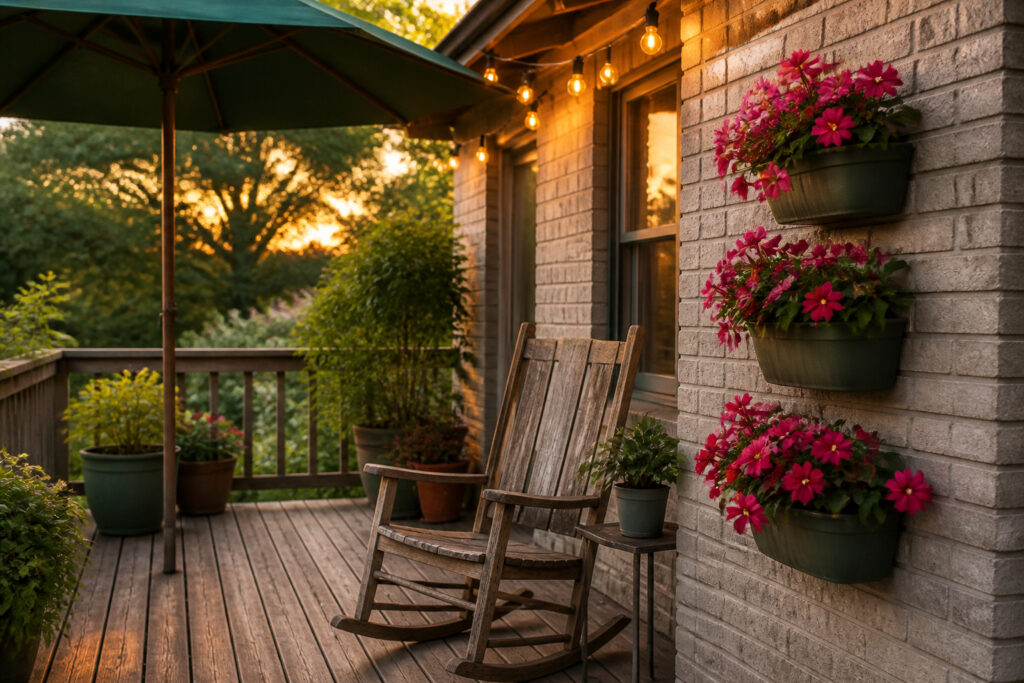
Back porch ideas in 2026 range from a $7 flat-backed planter to full conversation sets and fixed awnings, and the right choice depends on whether you need shade at three o’clock in July or just want to stop your open porch from feeling like a tunnel.
The flat-backed hanging planters that clip to brick without drilling, with their self-watering wick and sub-$7 price, are what turned one bare wall into a season-long bloom of Rio dipladenias.
1. Bring It to Life with Plants
Plants do what paint and furniture cannot: they fill a porch with motion, color, and the slight chaos of living things.
On my covered porch, every potted plant sits in a basket with a drip tray tucked underneath. The basket dresses up the utilitarian pot, and the tray saves the floor.
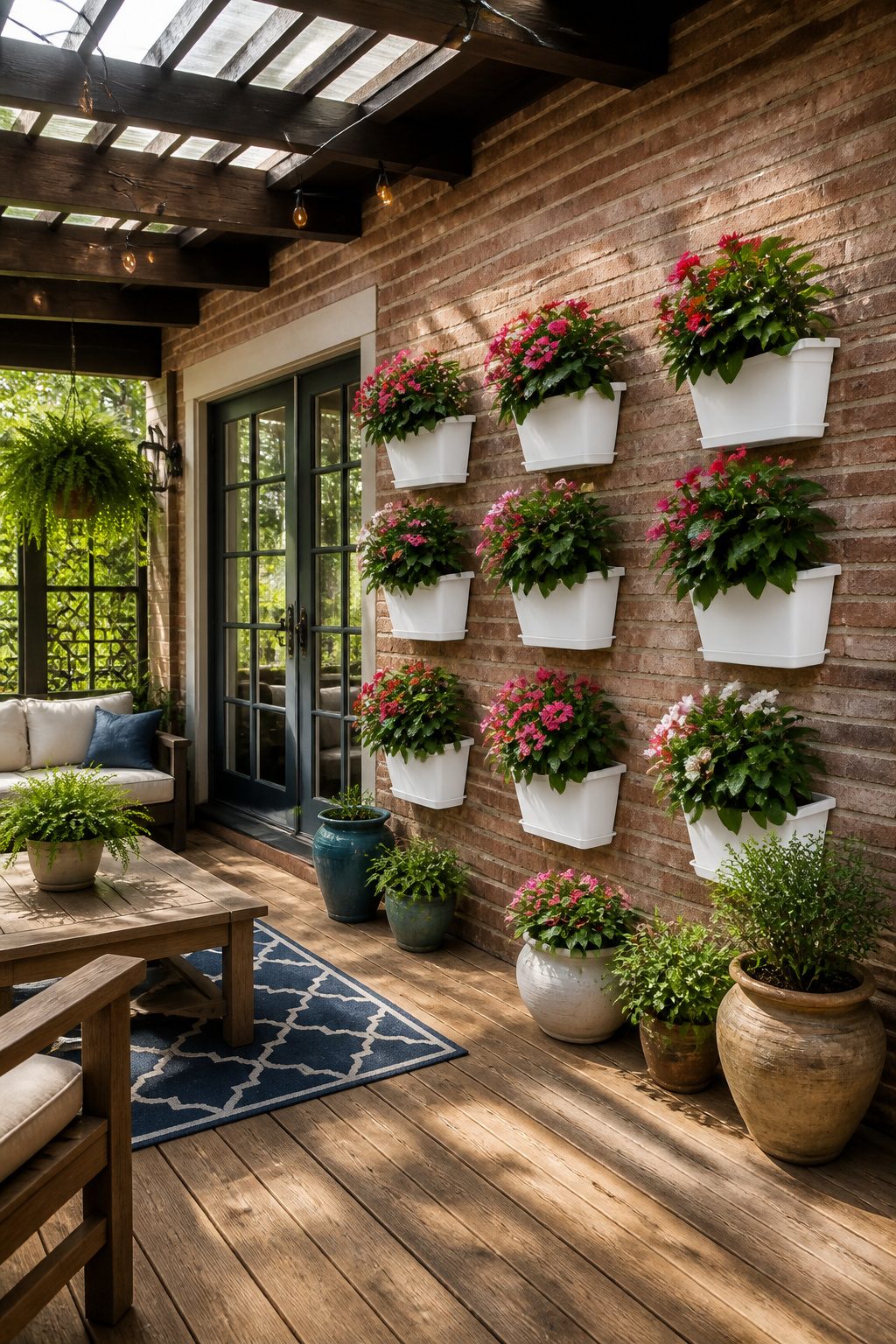
Flat-backed hanging planters changed what I could do with a bare brick wall. Spring-loaded hangers clip to the mortar without drilling; they held steady through a full season of wind and watering.
The planters themselves are plastic, not ceramic, which matters when one eventually falls. At under $7 each versus over $30 for ceramic, filling a wall stops being a splurge and becomes a project.
The self-watering design is genuinely useful: an inner black container with a wicking string sits inside the outer white shell.
Excess water drains down, then the string draws it back up as the soil dries. I split large Rio dipladenias among six baskets for continuous bloom against the wall.
A run of those same flat-backed planters at rail height, turned toward the light, makes a compact herb garden. Basil, thyme, and mint stay reachable from a chair and give the porch its smell as much as its green.
2. Add Style and Pattern With an Outdoor Area Rug
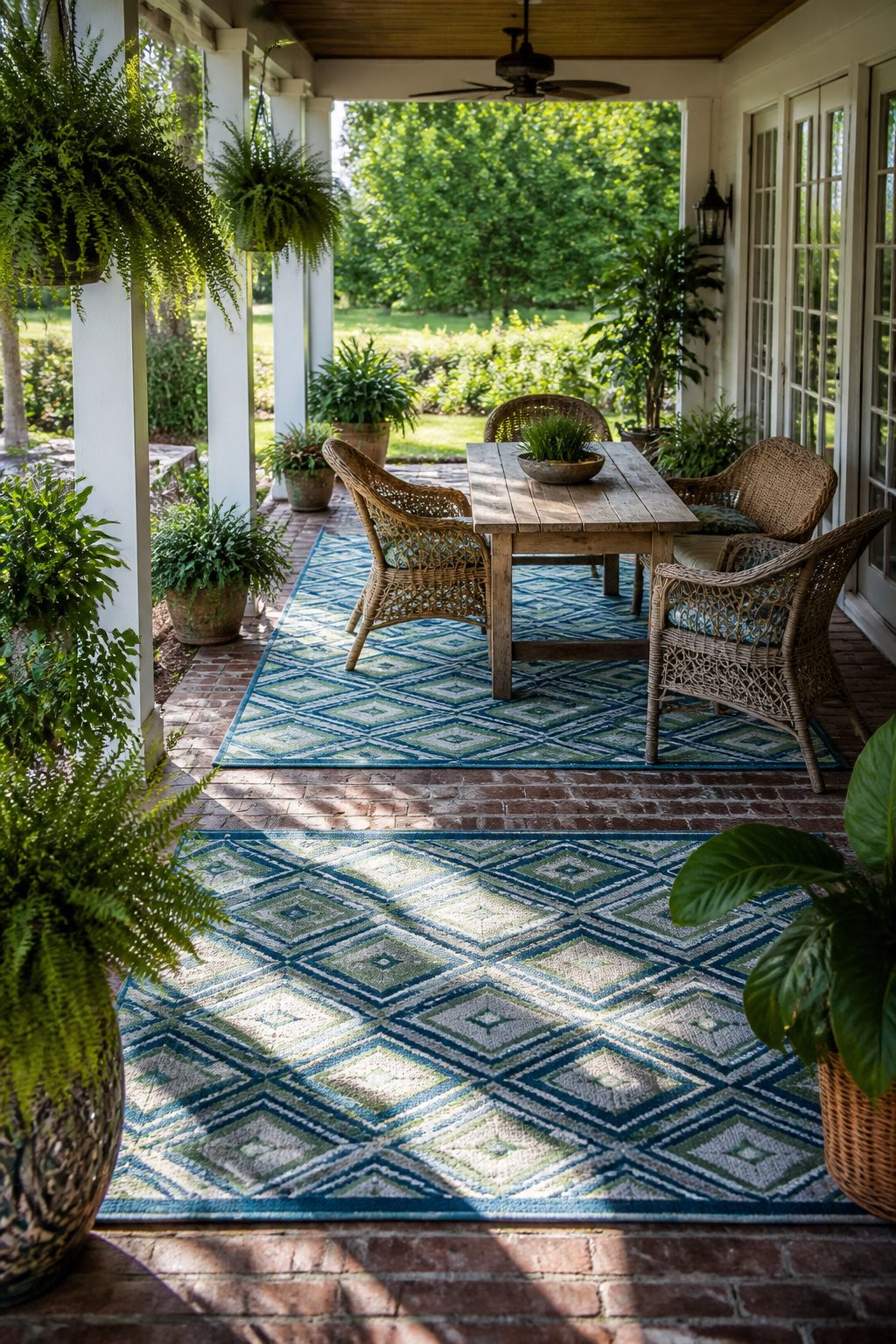
An outdoor rug pulls the whole porch together for less than most indoor rugs cost, which makes it one of the easier ways to stretch a budget.
The brick floor on my back porch runs the same color as the walls, so the space used to feel like a tunnel until I laid down two patterned rugs. Three years later, they still look new.
Outdoor rugs are typically much less expensive than indoor rugs, and that price gap means you can afford bolder patterns than you might risk inside.
Blues and greens work well against garden backdrops, though most lines come in enough colorways to match whatever your furniture already suggests.
A geometric or medallion print underfoot does what bare concrete or brick cannot: it gives the eye somewhere to rest, and it tricks the space into reading as finished.
3. Create a Conversation Area
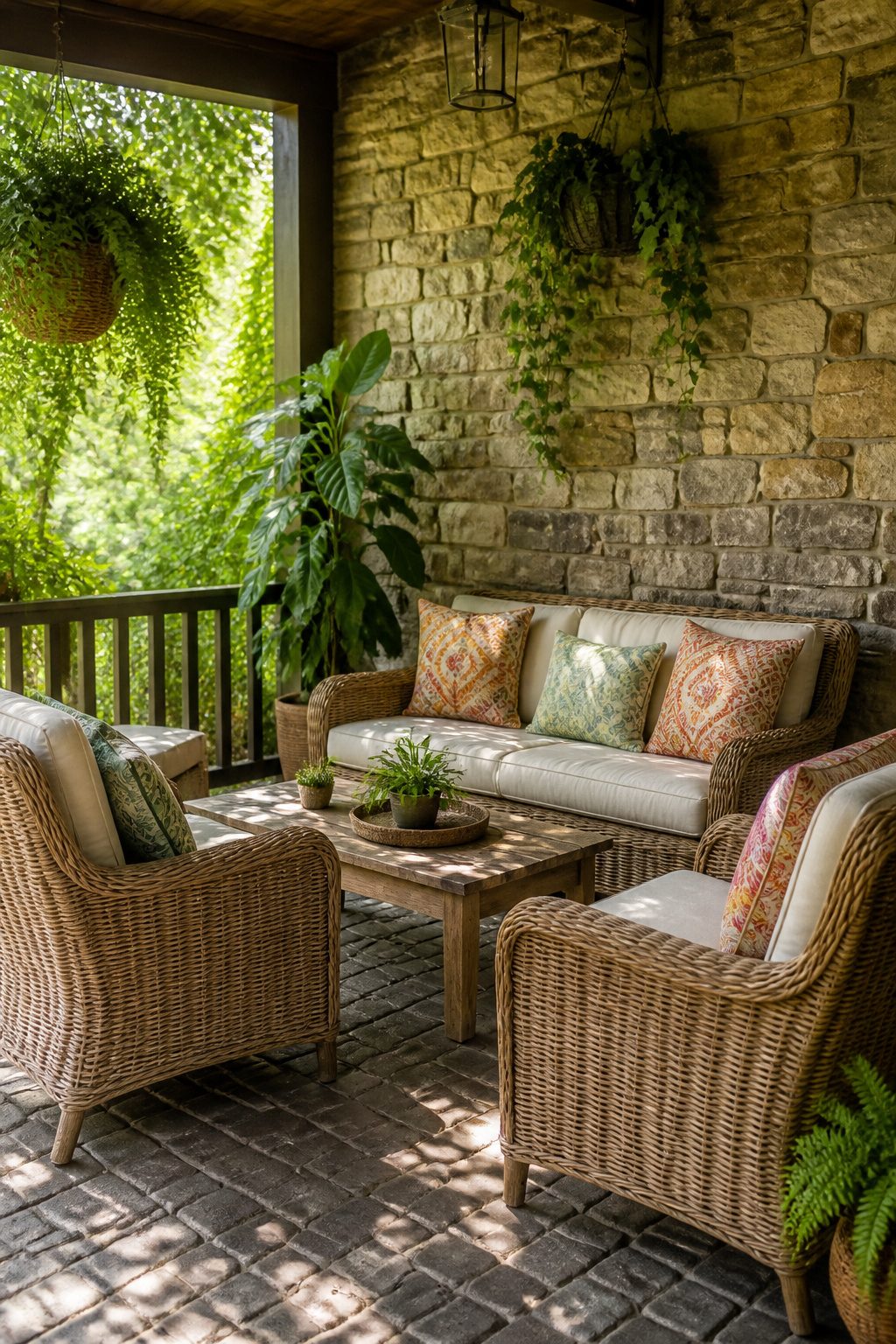
Two chairs, a loveseat, and a coffee table make up the classic conversation area, and the combo can push past $1,000 fast.
The hunt for a four-piece set under $500 with solid ratings narrows the field quickly; the woven rattan conversation set in natural comes in near that mark, and the assembly took about two hours.
I placed the two chairs at the far end, near the plant wall, then faced them with the loveseat and centered the coffee table between.
The cushions are thinner than pricier sets, but the seats use a supportive weave instead of wood or metal slats, so the sit stays comfortable.
Thinner cushions have practical upsides: they take less space when you bring them inside during pollen season, and they dry fast after rain. The zippered covers also come off for washing.
Store them when heavy weather hits and the set should hold up fine.
4. Give Old Outdoor Furniture a New Look with Patterned Pillows
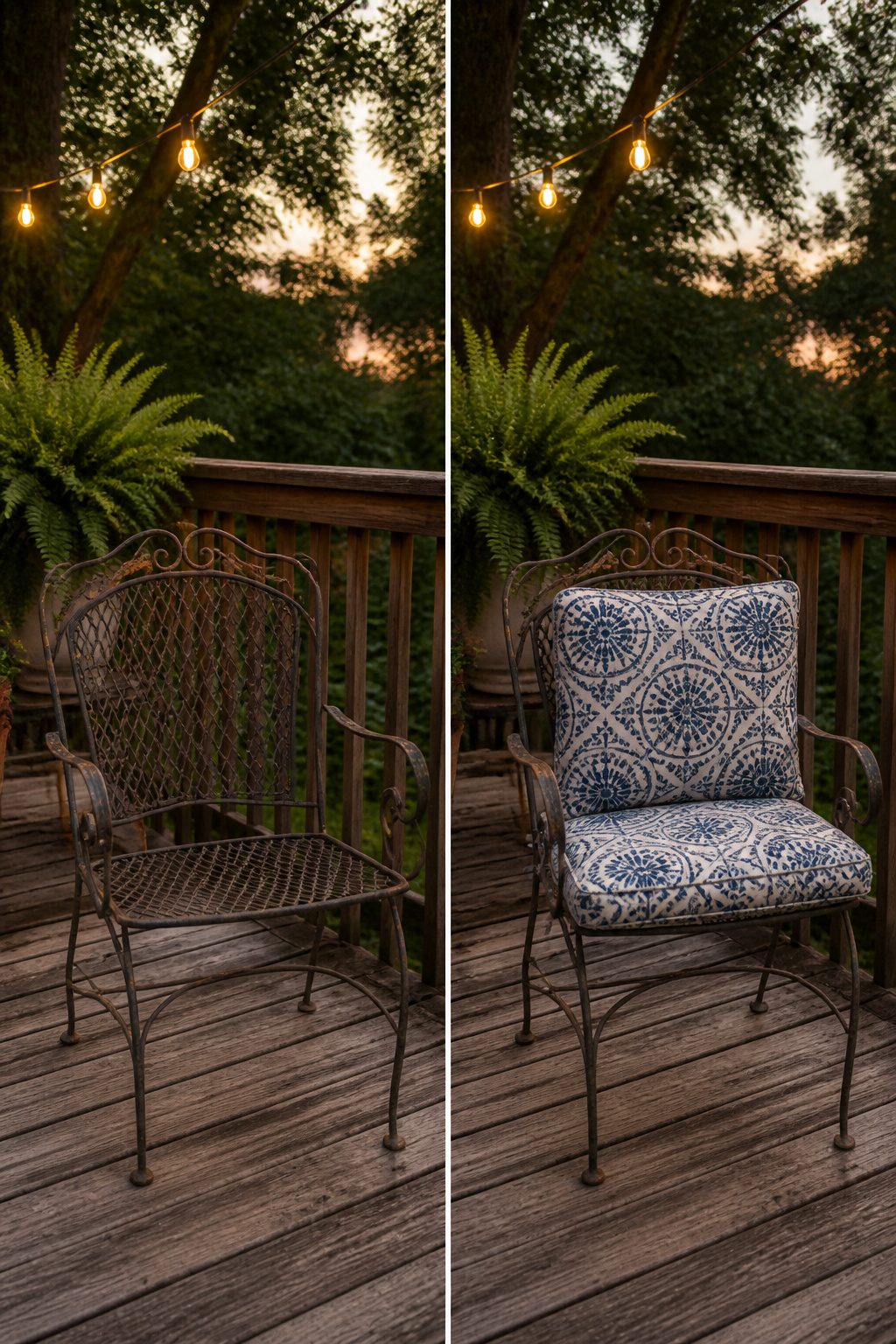
Patterned pillows run about $18 for an 18-inch square, which makes them the cheapest seat at the table for back porch ideas when the furniture underneath still has seasons left in it.
Last spring I watched my neighbor drag the same wrought-iron set she’s owned since 2019 onto her concrete pad, then drop four blue medallion cushions on the seats.
The frame looked no newer, but the whole arrangement read fresh from ten feet away.
Sunbrella fabric holds up against rain and sun without the stiffness of cheaper outdoor fills, and the edging details, navy with green piping or a simple contrast border, do more than solid color to distract from scuffs on old metal or faded wicker.
Wayfair stocks enough prints, green palms, blue fish, ikat, paisley, that matching is not the point. Clash within a single color family and the porch looks intentional rather than inherited.
Swap them out in under five minutes, or rotate two sets seasonally and wash the spare batch on gentle.
The furniture stays. The look doesn’t.
5. Bring Shade to Your Space
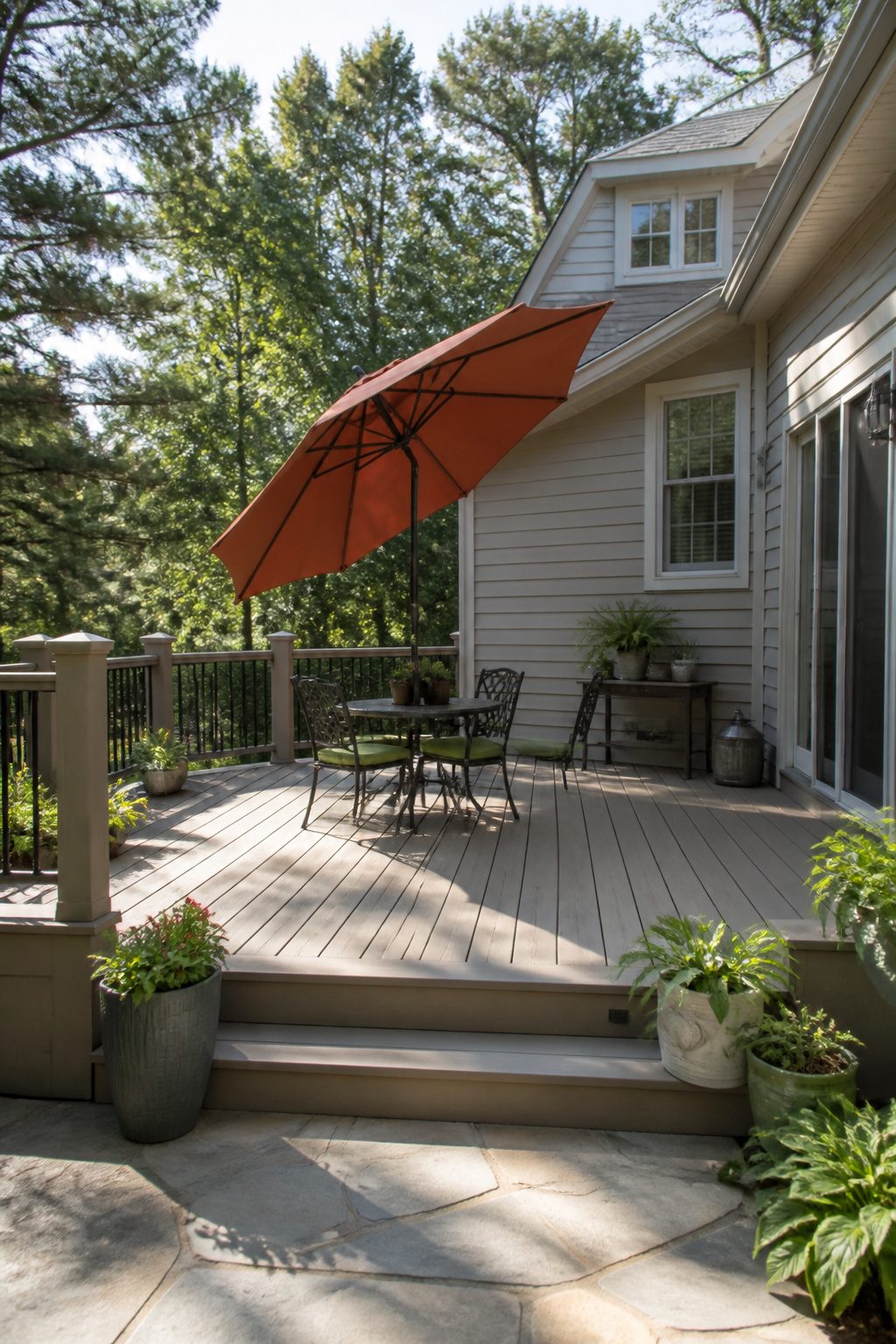
Shade rewired how much time we actually spend outside. Our previous porch was open to the sky, and three o’clock in July sent everyone back indoors.
A 9-foot patio umbrella with a tilt mechanism changed that. The tilt matters more than the fabric pattern, because the sun moves and a fixed angle leaves you squinting by dinner.
Sizing runs simpler than the stores make it look. An umbrella stretched over a small bistro set can be 7–9 feet and handle two seats.
A full dining table wants that 9-foot span or a little more, and if the table has no center hole, a cantilever umbrella on a side pole keeps the shade where you need it without leaning around a pole.
Fixed awnings handle the daily routine better if the porch faces south or west and you are always out there at the same hours.
They cost more upfront and stay put, which is either a relief or a regret depending on whether you like to rearrange.
Two seasons in, I still move the umbrella to follow the light. Either way, the porch gets used.
6. Move Indoor Furniture Out
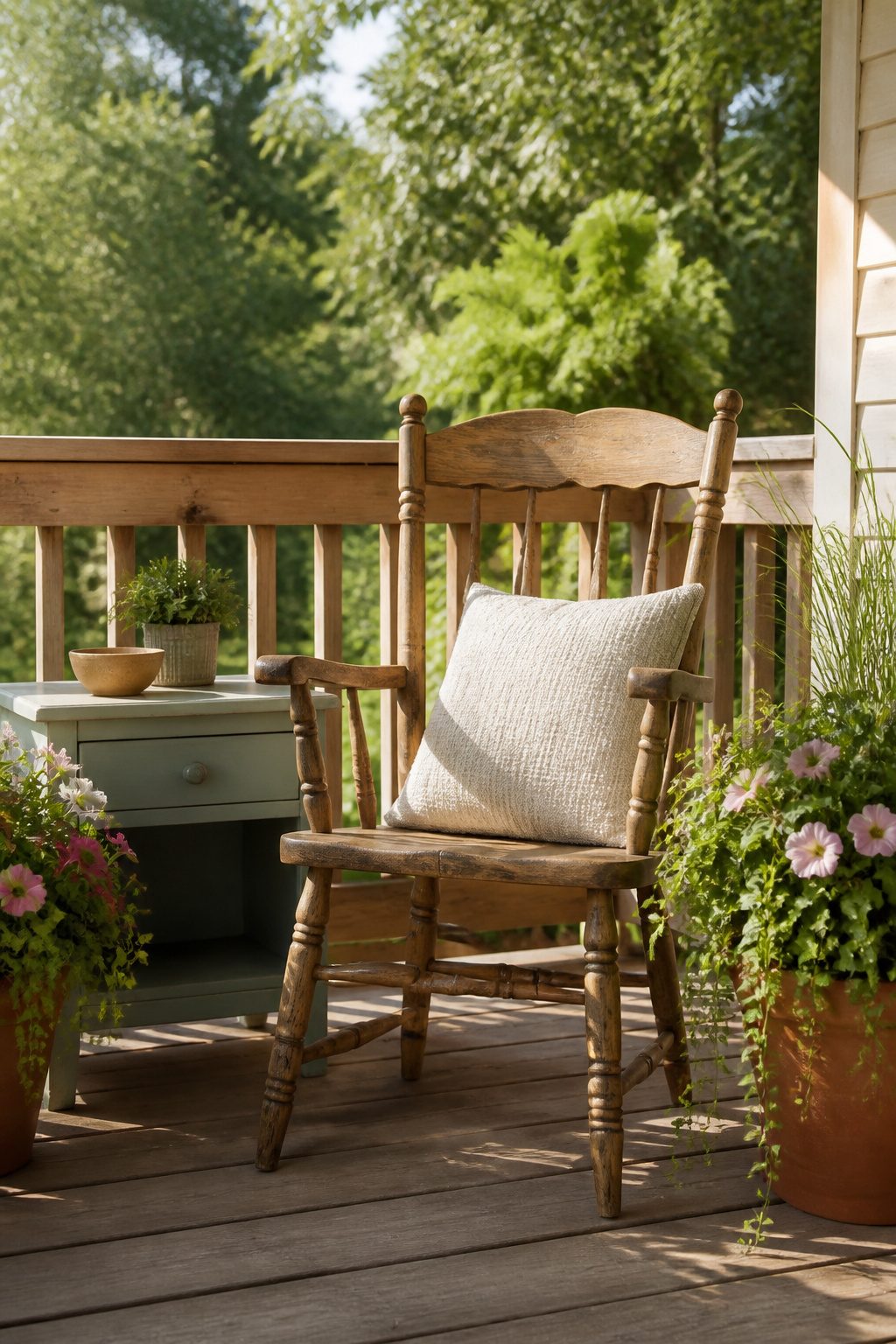
A worn wooden dining chair on my back porch has lasted three summers now.
The trick was choosing a piece that was already beat up. Polyurethane sealant on the legs and underside keeps ground moisture from wicking up, though I reapply every spring where the finish has gone thin.
Upholstered pieces are riskier. My neighbor tried a velvet armchair; it held through one dry season, then molded after an August storm she missed.
If you want that look, outdoor-rated fabric exists, but slipping a waterproof cover over a thrifted indoor chair costs less and fails more gracefully.
Side tables are the easiest entry point. A painted pine nightstand sits by my door with a quart of sealant on its surface and felt pads under the feet to lift it off the damp boards.
The drawers store citronella and hand tools. Just check that any piece you drag out has solid joinery—particleboard swells and splits inside a month, and by then it’s landfill.
7. Create Ambience with Outdoor Lighting
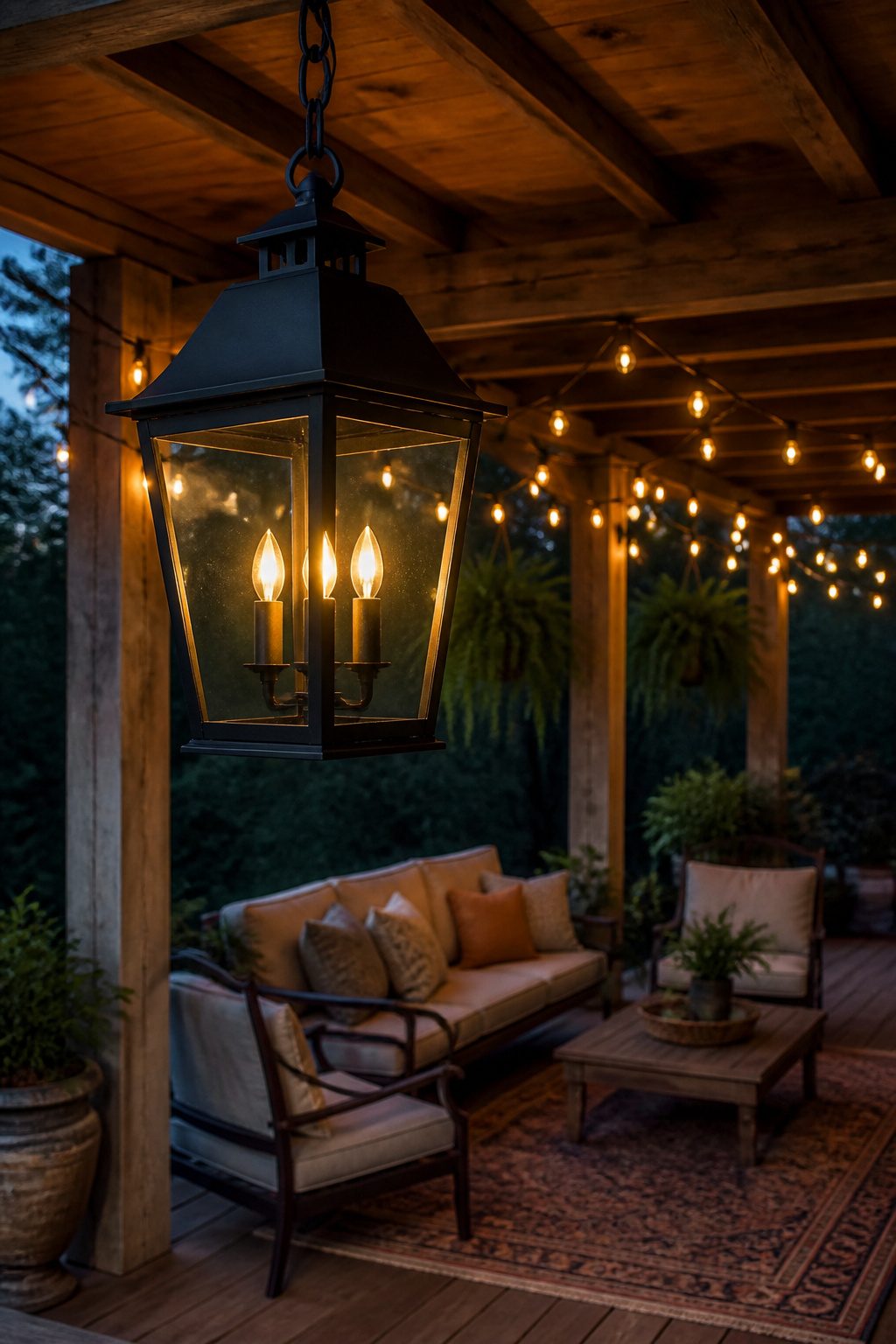
Old porch lights corrode faster than you think, and the grime reads as neglect even when the rest of the space is tidy.
Swapping a dated fixture for something clean-lined, like a matte black lantern under $100, changes the whole wall. It is a ten-minute job with a screwdriver and the breaker off, and the payoff lasts for years.
String lights do the work fixtures cannot. Globe string lights in particular cast a softer, wider pool than LEDs with more spread between bulbs.
What makes the effect read as magical rather than yard-sale is height: across a covered porch, run them at least nine feet up so the glow drops rather than blares.
Cluster them too low and you are eating in a spotlight; high enough, they disappear into the dusk and leave only the light behind.
One fixture plus two strands, hung properly, is usually the better choice than three fixtures or five strands of the wrong bulb.
8. Keep It Ground-Level
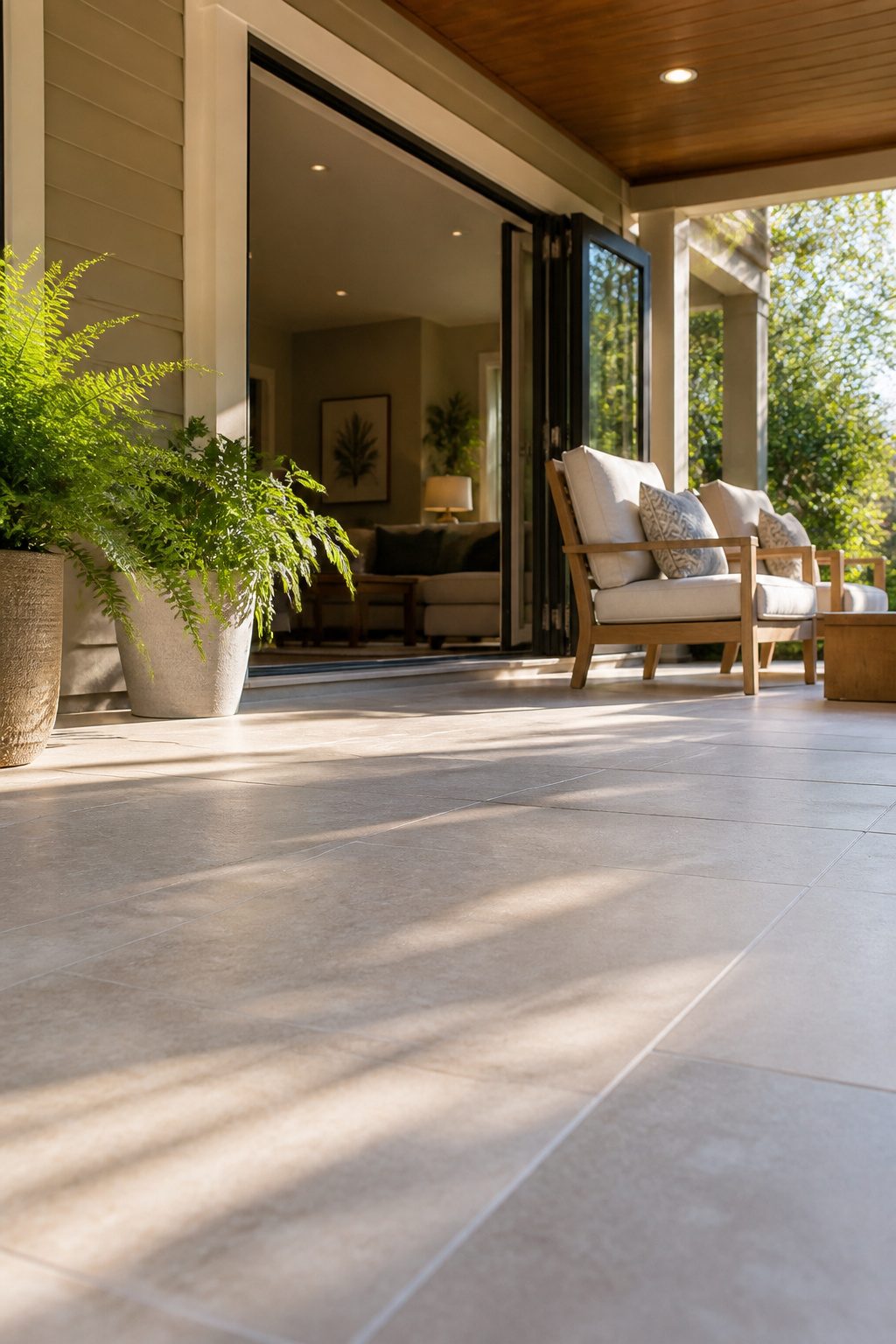
Ground-level back porches have one advantage that outweighs most others: you walk out without thinking.
One step from the kitchen or living room and you are outside. No stairs to navigate with a tray of tomatoes from the garden, no wondering whether aging knees or a visiting parent with a walker will manage the descent.
The threshold becomes a non-event, which is exactly what a threshold should be.
The same flat plane lets you run flooring material straight through. A kitchen tile that extends onto the porch, or a composite deck board matched to interior hardwood, erases the border between inside and out.
Windows and doors read as larger because the eye travels uninterrupted. I have watched friends pause at a raised porch’s edge, subconsciously calculating the drop; ground-level invites them forward instead.
The catch is drainage. Water needs somewhere to go, and a flat slab without slope collects it.
A minimum one-eighth inch per foot away from the house is the figure that matters, whether you pour concrete or lay pavers on sand. Skimp this and you will grow algae instead of ground cover.
9. Frame the View
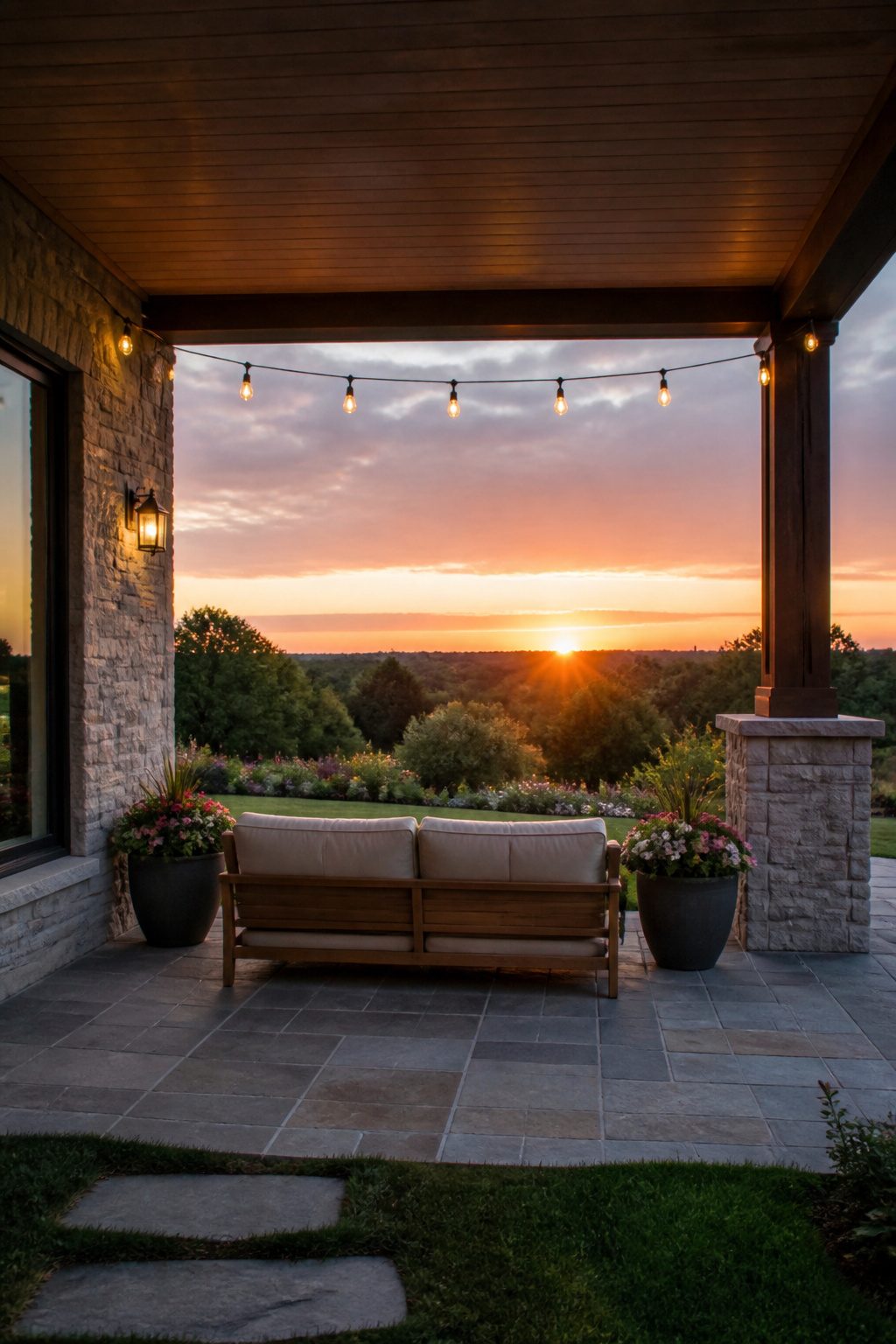
The first thing to check is what your porch actually points at. Stand at the threshold and look past where the chairs would sit: a hedge, a shed roof, a neighbor’s gutter line, or something worth keeping in the picture.
On an elevated back porch, a low-backed sofa guarantees the sightline stays open even when people are seated. Without that low line, the backs of standard outdoor chairs block half the window for anyone behind them.
A pair of angled chairs works better than a straight row. Point them toward a sunset, a tree line, a garden bed, whatever the asset is.
The angle feels less like a waiting room and more like a spot someone chose to be in. Plants can do the same framing job.
A taller container at each end of a sightline acts like a soft pillar, while low ground cover in front keeps the base clean so the eye travels to the back. A view dies when the middle height is cluttered.
Drapery at the edges, as designers used in a 2024 Whole Home project, turns the porch into a true extension of the interior and gives the windows a deliberate border.
Draw them back and the outside becomes the art; close them and the room feels finished on its own.
10. Leave Room to Entertain
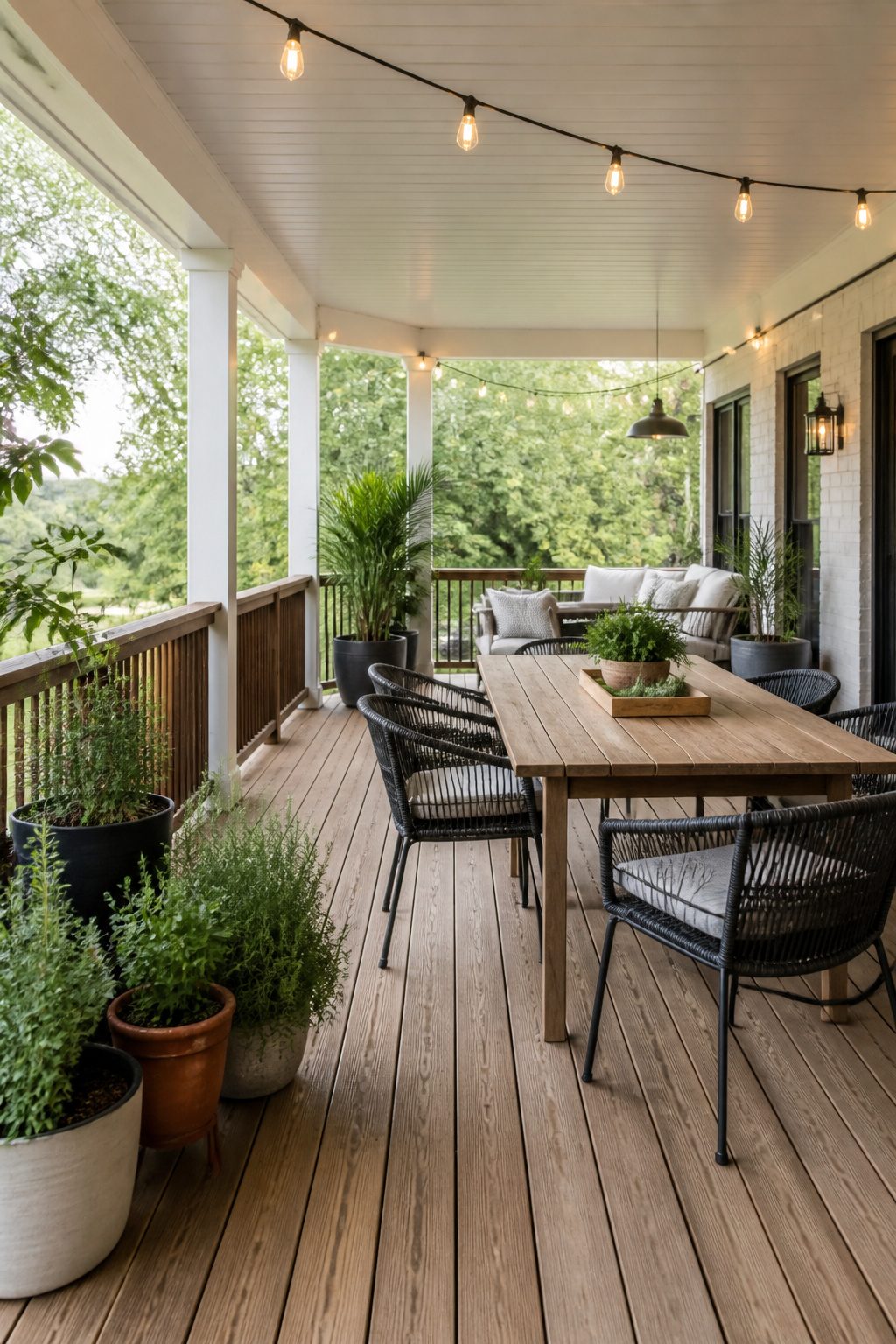
A long back porch can swallow guests whole if zones wander into one another without thought.
The ones that work keep the dining table dead center, anchoring the gathering, then ring it with what the evening actually needs: a spot to drop a drink, a place to land after the meal, somewhere to linger when others head inside.
Traffic has to skirt the edges; nobody crosses through the middle of a conversation to reach the kitchen.
That kitchen, the lounge, the screen for late movies—each one earns real estate only if there’s enough room left to move between them without apology.
Four feet between seat backs is the difference between a porch that flows and one that traps.
Flexible seating wins here: benches that face the table at mealtime and swing toward the fire later, chairs light enough to drag but heavy enough to stay put.
The best party I read about ended with the movie-watching area pulled apart into four separate nooks because the host saw the drift of the night and let the furniture follow.
11. Layer Textures
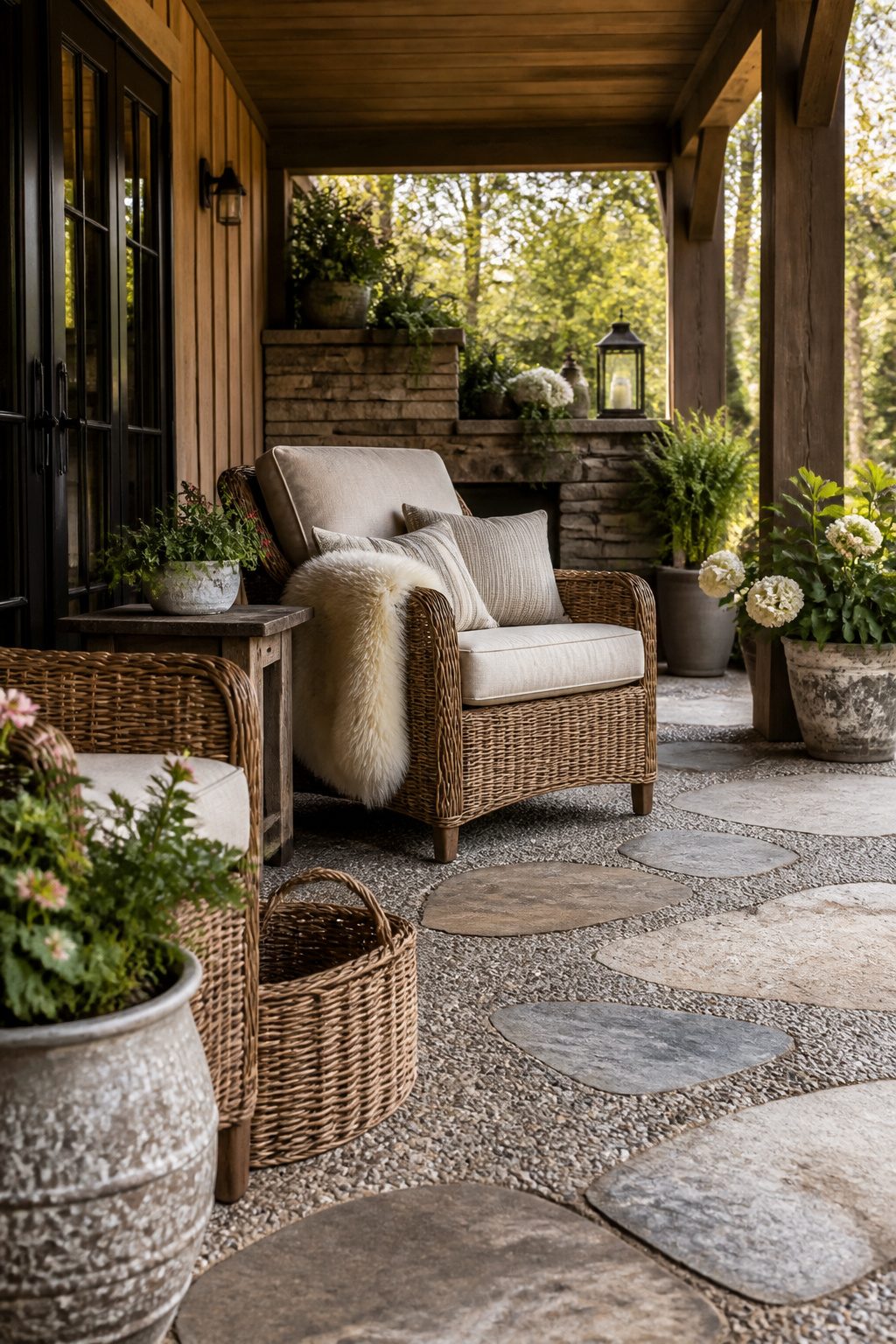
A back porch flatters the eye when nothing matches too closely. Wicker furniture against stone pavers, a metal side table catching the light beside a soft throw, each material reads as itself and the contrast builds depth without clutter.
The flooring sets the stage: a mix of pavers and pebbles set in concrete gives the ground its own texture before anything sits on it.
Against that hard surface, fabric softens the sitting area: tapestry-inspired pillows, a sheepskin thrown over a chair arm.
Even small moves register. Metal legs on a wood seat, a woven basket tucked beside cast iron, the porch becomes a collection of things that happened over time rather than a single purchase.
Natural stone can echo what borders the garden: one designer kept a porch low and ground-level with stone pavers that matched the rock retaining walls beyond it.
The porch and the yard read as continuous because the material speaks across both.
The weight of each texture matters more than the count of them. One soft layer against two hard ones holds the eye better than equal portions of everything.
Start with what you already own: the wood of the railing, the concrete or brick underfoot. Add one different finish, step back, and add again only if the space still asks for it.
12. Create a Seamless Transition
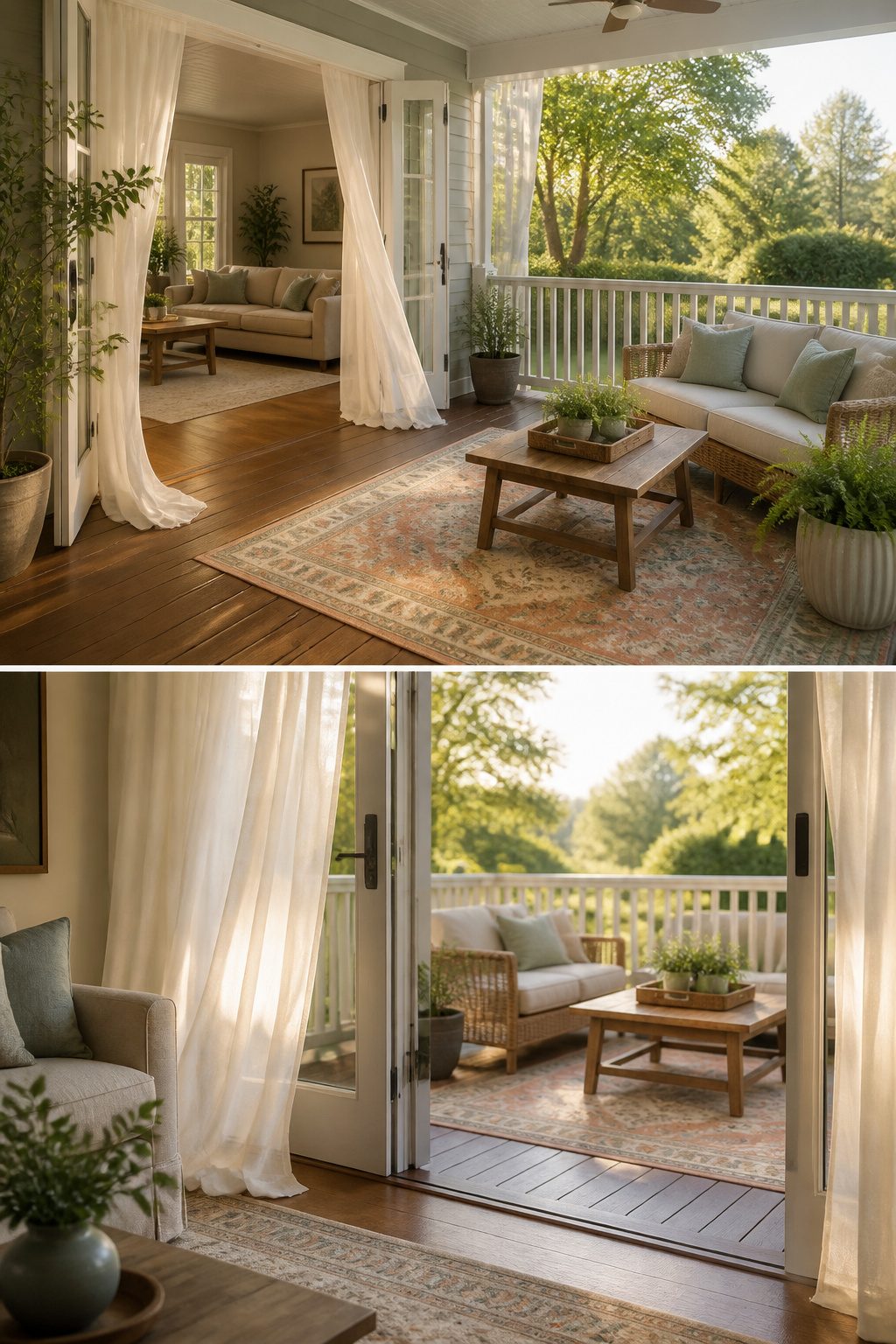
Back porches work best when they read as another room rather than a separate appendage.
The simplest move is to carry your interior flooring straight through the doorway, whether that means running the same hardwood, tile, or even a convincing mimic of it underfoot.
Houseplants and sheer drapery do the softening work from there, so the threshold feels like a continuation rather than a departure.
Color discipline matters more than matching every material.
One designer pairs neutral furniture frames outside with the same bone-white or charcoal used indoors, then layers pattern through outdoor rugs and throw pillows that talk to interior textiles without quoting them exactly.
Those rugs cost much less than indoor versions, which makes replacement painless when a style drifts out of favor.
The rug is where most people break the spell: go too small and it floats like a postage stamp, go too vivid against a quiet interior and the porch announces itself as an afterthought.
Two better approaches present themselves. Use the same palette inside and out but shift the ratio, quiet indoors becoming bolder outside.
Or reverse the dominant color so navy walls inside meet cream upholstery and a navy geometric rug on the porch. Either way, the eye registers familiarity before it notices any difference.
13. Face the View
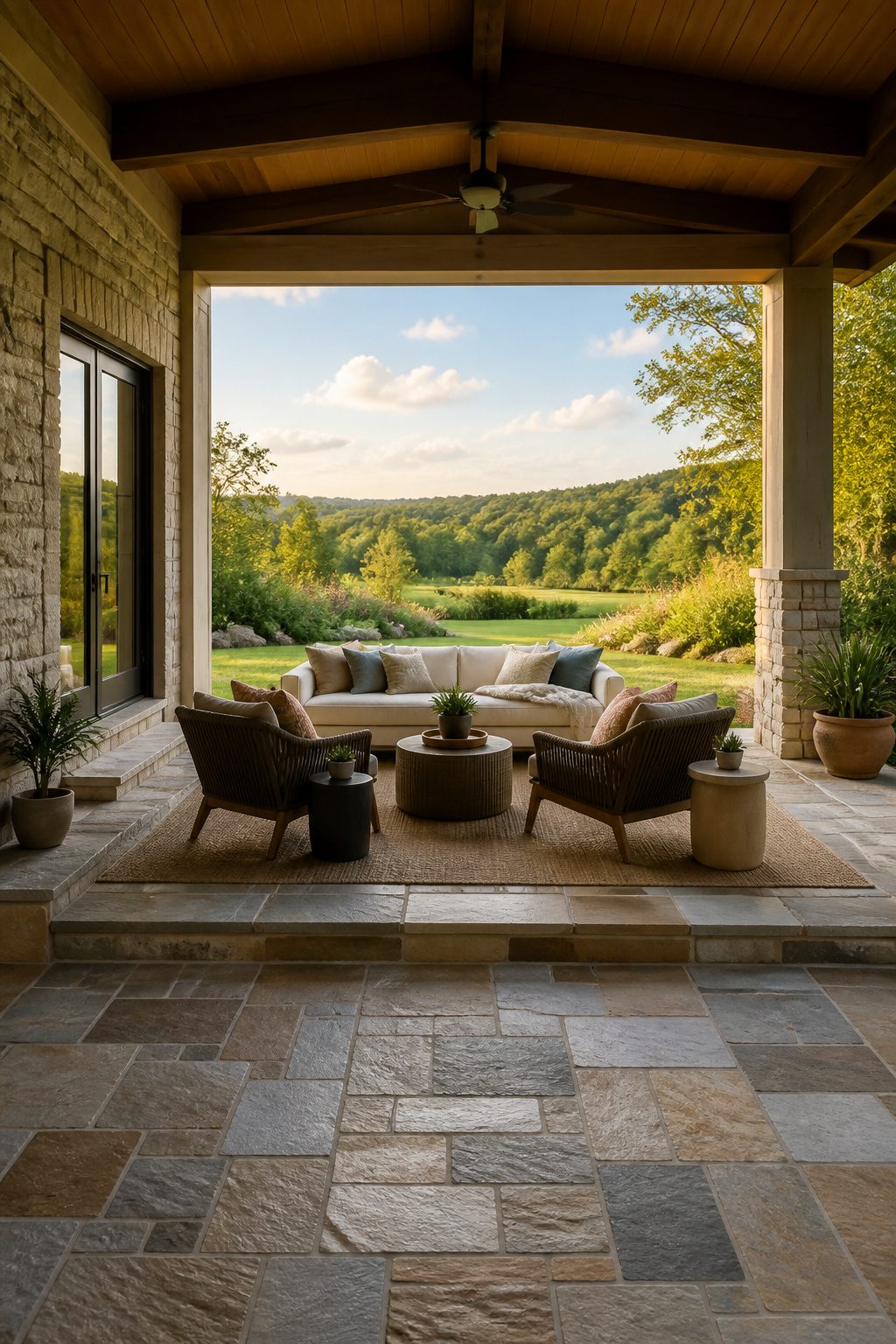
The best back porch ideas I have found treat the view as the anchor, not the seating plan. On a floating home in Sausalito, California, a low-backed sofa sits opposite a pair of chairs angled toward the sunset.
A back lower than fourteen inches clears sightlines standing or seated, and angling two seats at roughly forty-five degrees to the main piece lets both occupants face the same vista without craning necks.
I used to measure porches from the door outward and settle furniture where it fit.
Walking the property in late afternoon showed me the fault: a neighbor’s shed got the best light while my table faced a fence. Now I mark where the eye actually lands at the hour I will use the space.
Then I set the longest seat or the broadest chair back to that point and let everything else fall in behind it. A clear view costs nothing beyond the willingness to turn a sofa around.
14. Opt for Oversized Furniture
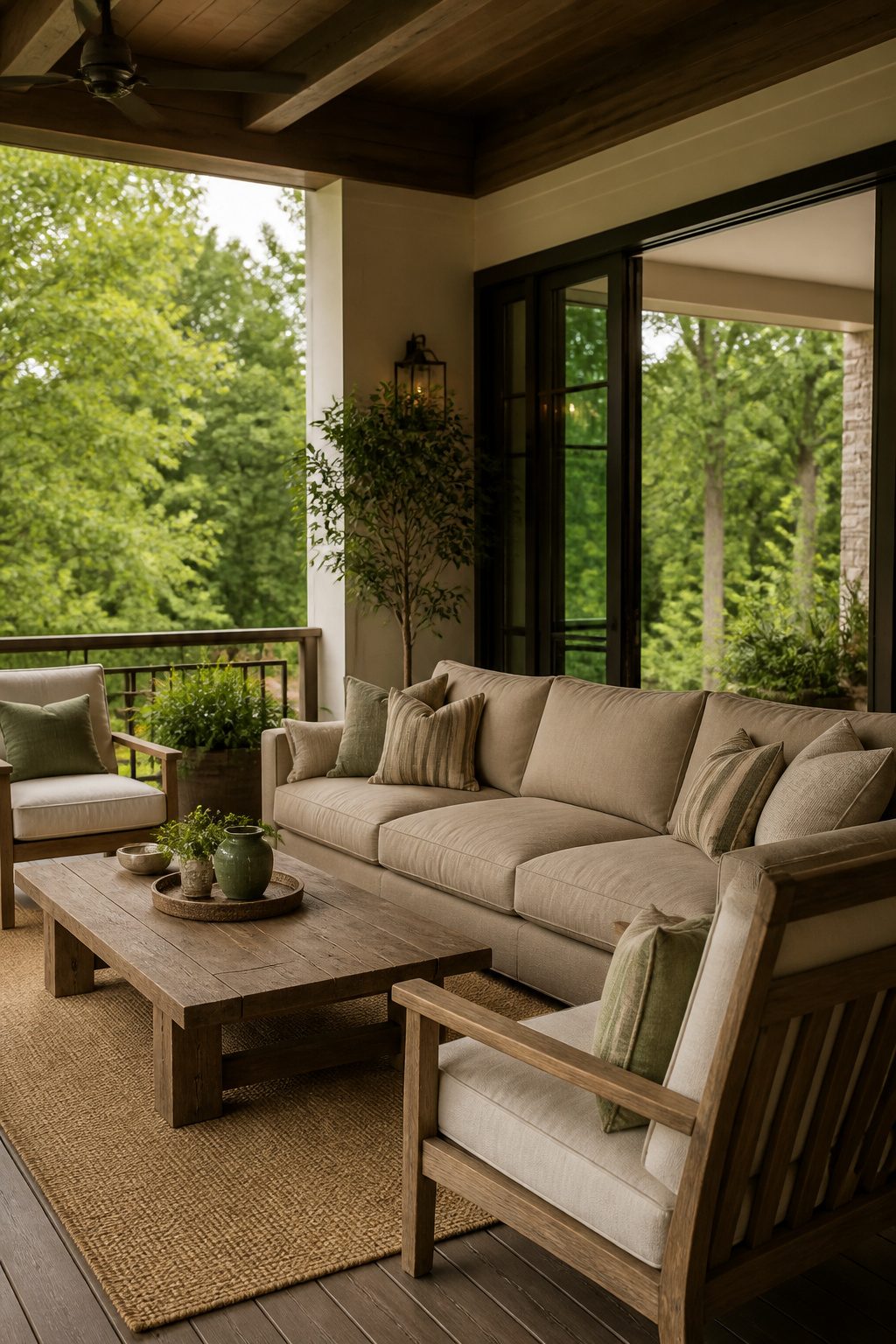
A deep seat you actually sink into changes how long you stay outside.
Last season I tired of perching on narrow café chairs and started looking at pieces with 80-inch sofas and armchairs wide enough for two on my own eight-foot porch.
The swap meant fewer seats total but far more people choosing to stay.
Scale is where this idea lives or dies. A 36-inch square table barely clears a doorway on most porches; push it against the rail and no one walks past.
What convinced me, paging through a dozen catalogs, was measuring the footprint while there was still room to walk behind and pull out a chair.
My porch lost two seats but gained what the previous setup never had: someone actually lying down with a book at four in the afternoon.
15. Give Guests Their Own Space
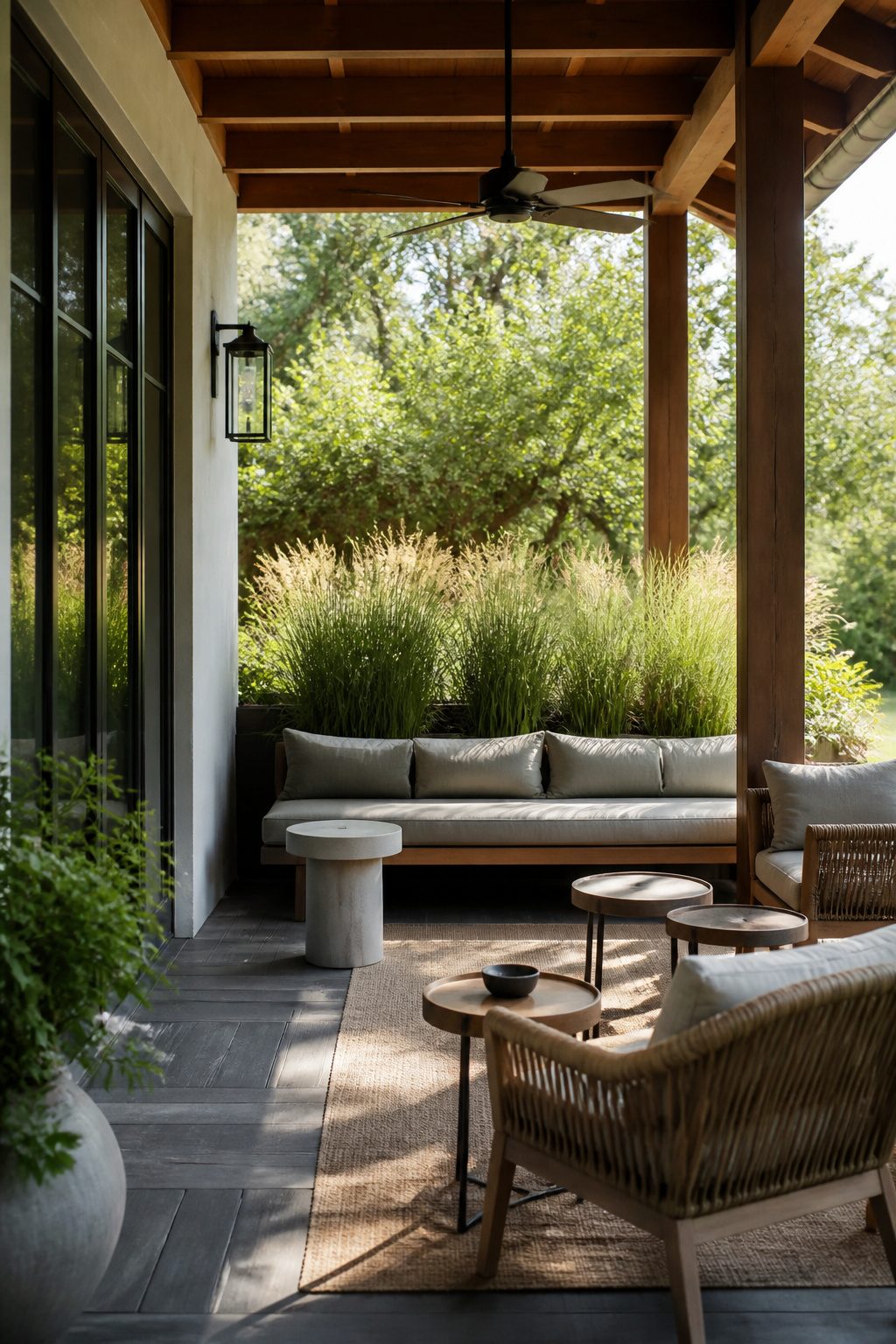
A porch built for twelve quickly empties when one loud conversation takes over. I learned this hosting a birthday barbecue that sent half my guests inside to the kitchen, not for food but for quiet.
The fix is carving the open rectangle into two or three smaller territories with something more than furniture placement.
A low bench backed with a planter of tall grasses does the actual work of a wall without blocking breeze or sightlines. The greenery absorbs sound, and the physical back lets a pair of people face each other without craning.
I angle mine about forty-five degrees off the main rail so whoever sits there gets the garden view instead of staring at the smokers around the grill.
A swing or hammock at the far end reads as invitation to one person, maybe two, and the motion itself keeps groups from collapsing inward.
Add a small table sized for a drink and a phone and someone will settle in for an hour.
Light finishes the job. A pendant over the eating table keeps that crowd in place; a dimmer sconce or two toward the edges lets the peripheral nooks go darker earlier, which people naturally read as privacy.
The wiring costs more than the furniture if you do not already have it, but a good solar wall lamp has come far enough to suffice for zoning.
16. Stick to a Single Color
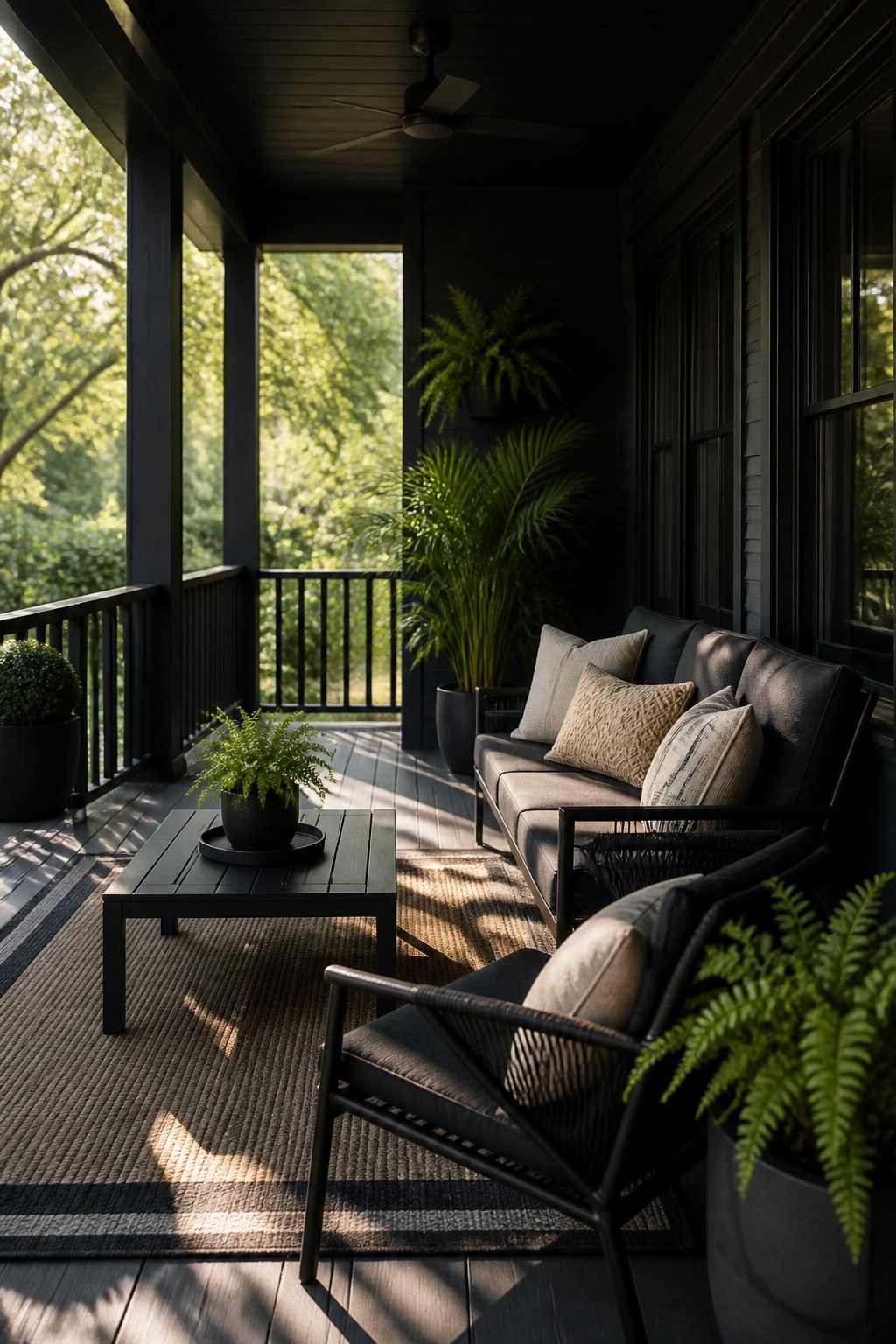
A single color used everywhere sounds flat until you see it done right. The Brownstone Boys in Fort Greene ran matte black through doors, railings, window frames, furniture, lighting, and planters, all painted in Sherwin-Williams Tricorn Black.
The staircase paint and the softer black on a planter are far enough apart in tone that your eye moves without the space feeling busy.
The same rule works in reverse.
Amanda Lindroth once built an entire back porch around bright orange, from outdoor rugs to sconces. The color stayed loud, but the materials changed, so the orange read as a decision rather than an accident.
Vary the finish, not the hue. Gloss paint against matte metal against woven textile gives the single color its layers.
Two tones of the same color, maybe three, keep it from looking like you ran out of ideas. The limit forces you to think about texture, which is where most porches fall short.
17. Echo Your Surroundings
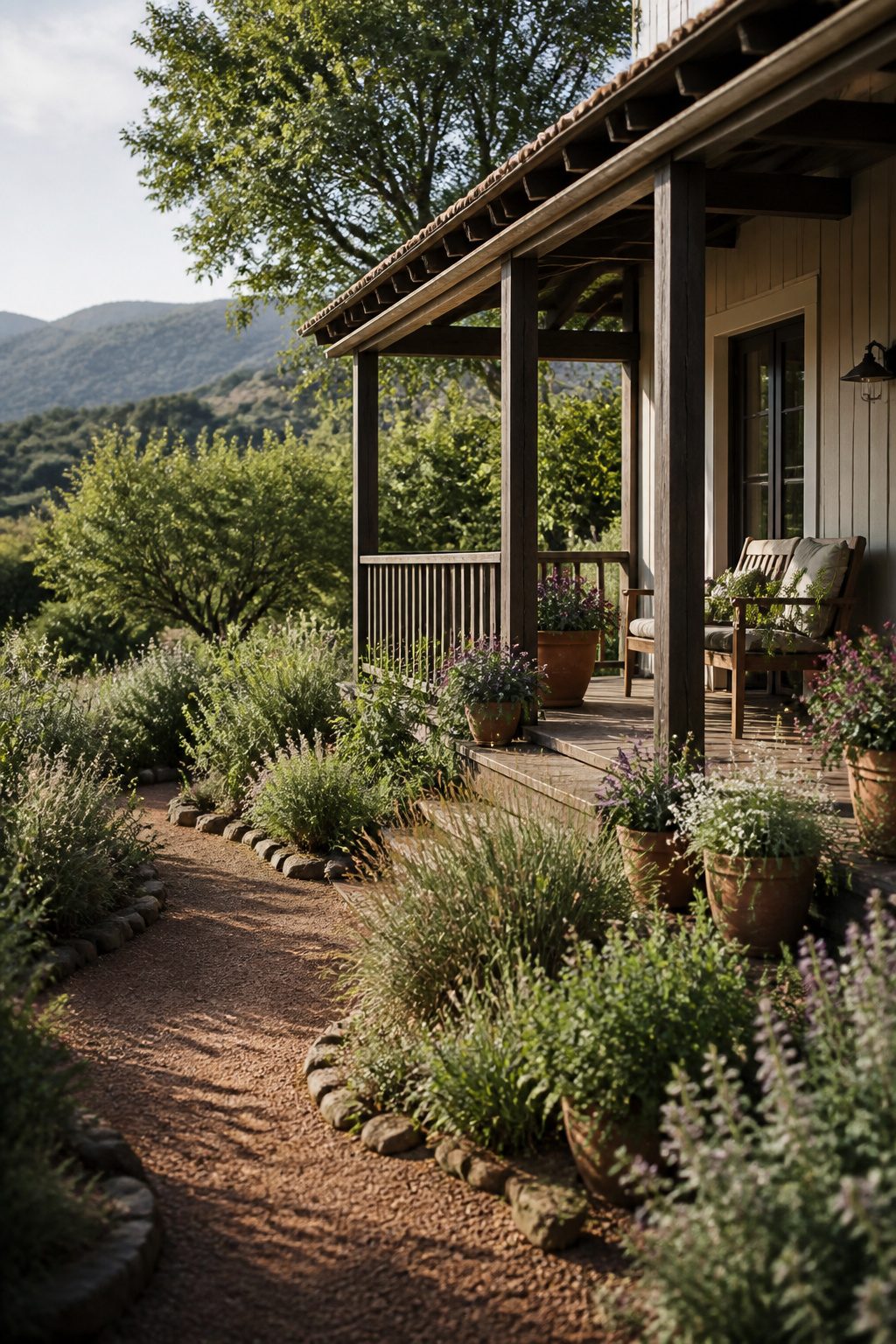
The best back porches look like they grew out of the ground already finished. Susannah Charbin pulled this off on Long Island by planting ornamental grasses around her terrace that read native even though they were fully landscaped.
The color and movement of those grasses echo what grows wild along that stretch of coast, so the porch settles into its spot instead of shouting over it.
You can do the same without a landscape architect.
Walk to the edge of your property and note what is already there: the clay or limestone in your soil, the gray-green of sagebrush, the rust on old barn siding if you are rural, the brick tone of neighboring row houses if you are not.
Pull one color or material from that list and repeat it on your porch. A warm terracotta pot against warm brick reads intentional; the same pot against cool painted clapboard fights for attention.
One color pursued this way does more than a palette of three.
Amanda Lindroth built an entire elegant outdoor space around bright orange, from outdoor rugs to sconces, because that orange answered something specific in the house and landscape around it.
The pop worked because it was grounded, not random. Pick the color your porch already faces, not one from a magazine, and let it carry the whole design.
18. Put Screens in the Windows
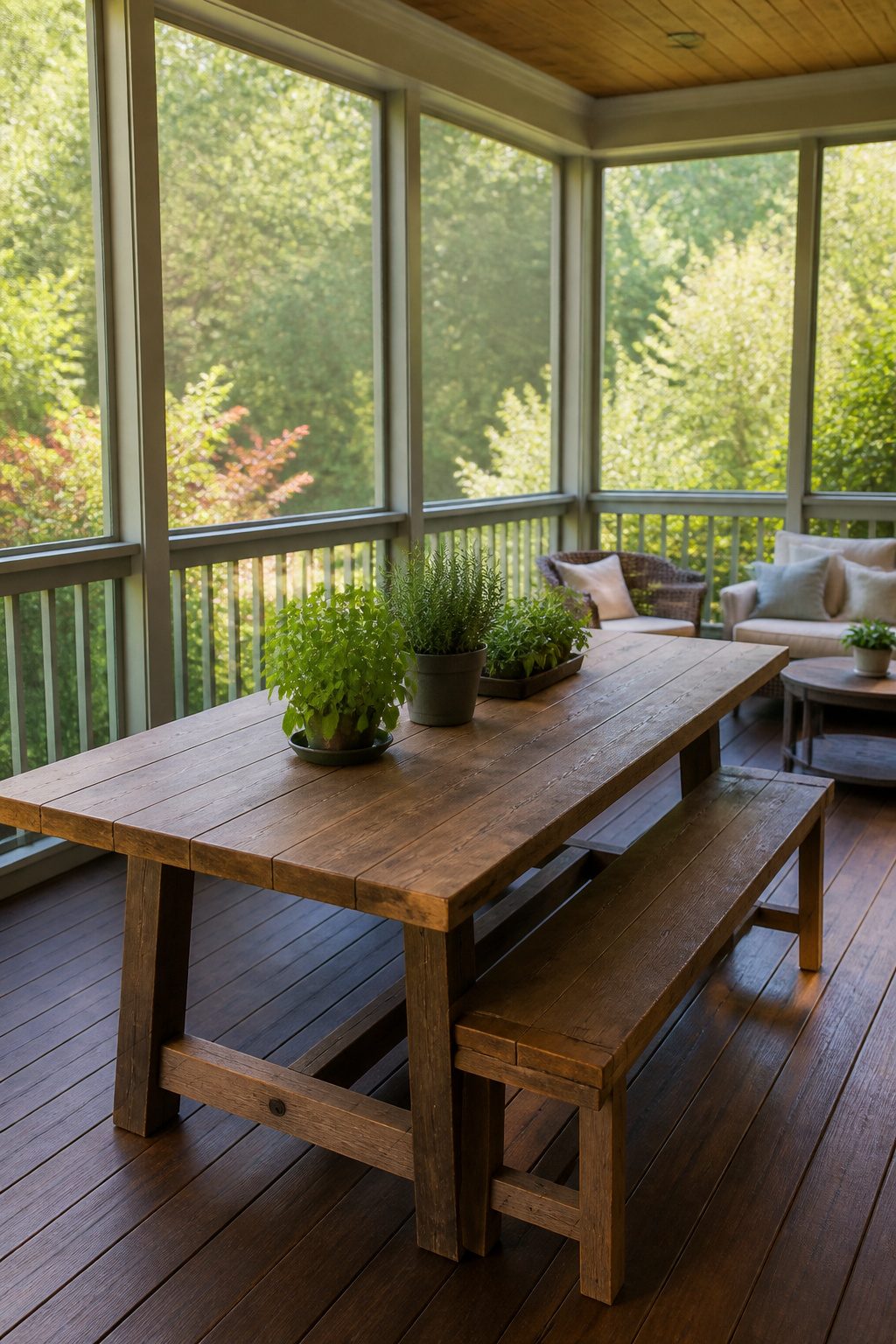
A screened porch buys back the hours when mosquitoes and no-see-ums dominate the yard. I stopped eating dinner outside in July until I framed in the openings, and the difference was almost immediate.
The mesh still lets breeze through, but it keeps the bugs on the other side of the wire, which matters more than any citronella candle I have tried.
In a Lake Michigan home with a fieldstone fireplace, the screens let that outdoor room run deep into the season past the point where unprotected neighbors have retreated indoors.
The real gain is time. You sit down, you stay down.
Costs scale with the opening count and whether you build fixed panels or hinged units you can swap for glass come winter, but even a single screened wall changes how usable the porch feels after dusk.
19. Lean Into One Color
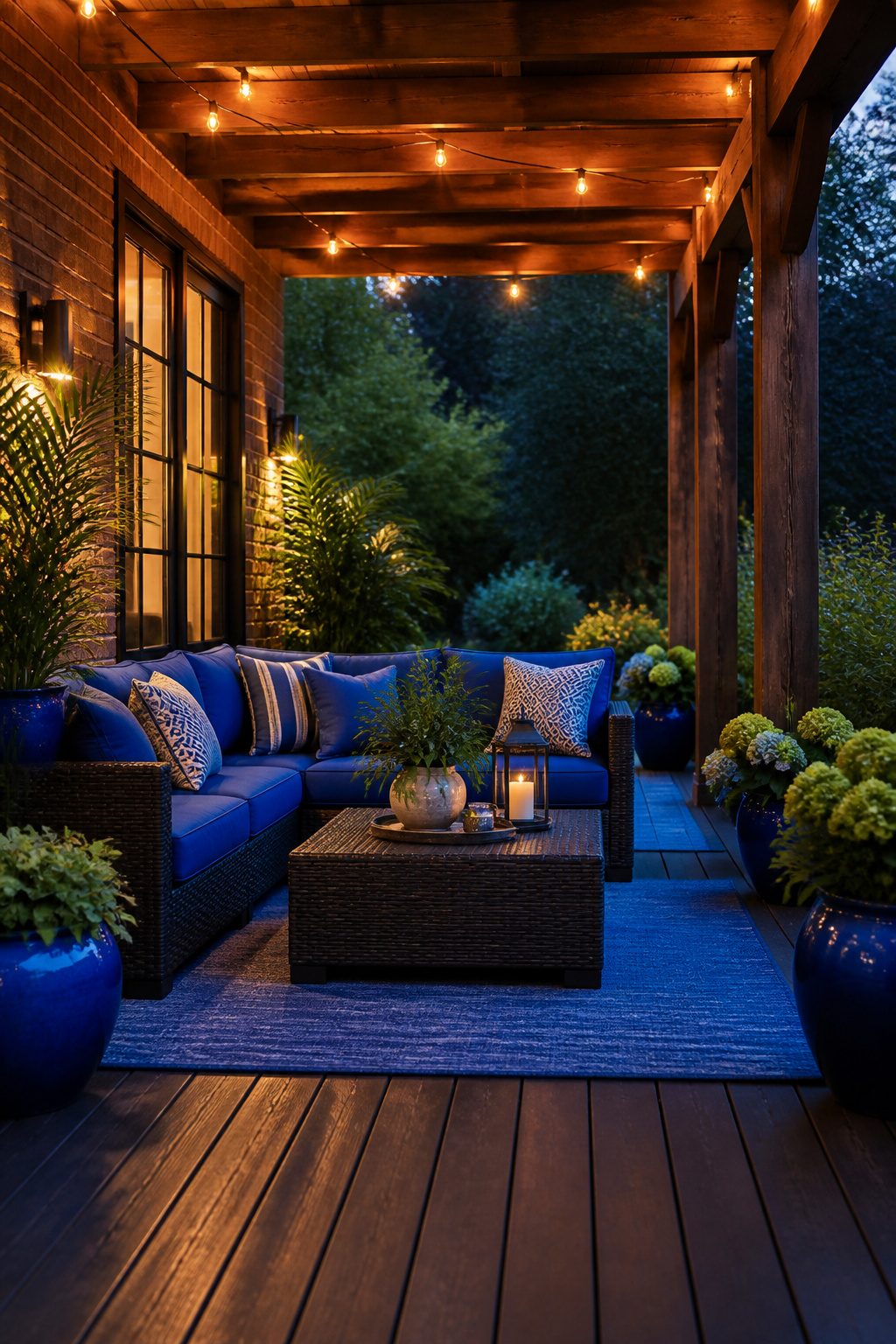
A color limit is not the same thing as committing to one color.
Limiting yourself to two or three gives you options. Choosing one and pushing it everywhere is what makes a back porch feel designed rather than decorated.
Sarah Lindroth’s orange porch, published in design coverage, is the example I return to: orange in the outdoor rug, orange in the sconces popping against the house siding, nothing competing with it.
The color does the work of pattern, punctuation, and movement across the space. In Fort Greene, the Brownstone Boys took the opposite approach with matte black, running Sherwin-Williams Tricorn Black through doors, stair railings, window frames, furniture, lighting, and planters.
A true soft black, not a harsh utility shade, and the unifying effect is architectural rather than color-stamped.
Both porches read as intentional because neither hedges. Either builds a world the eye enters cleanly, without having to sort competing focal points.
For a small porch especially, the discipline pays back in perceived size. One color lets the boundaries dissolve.
20. Go With Faux
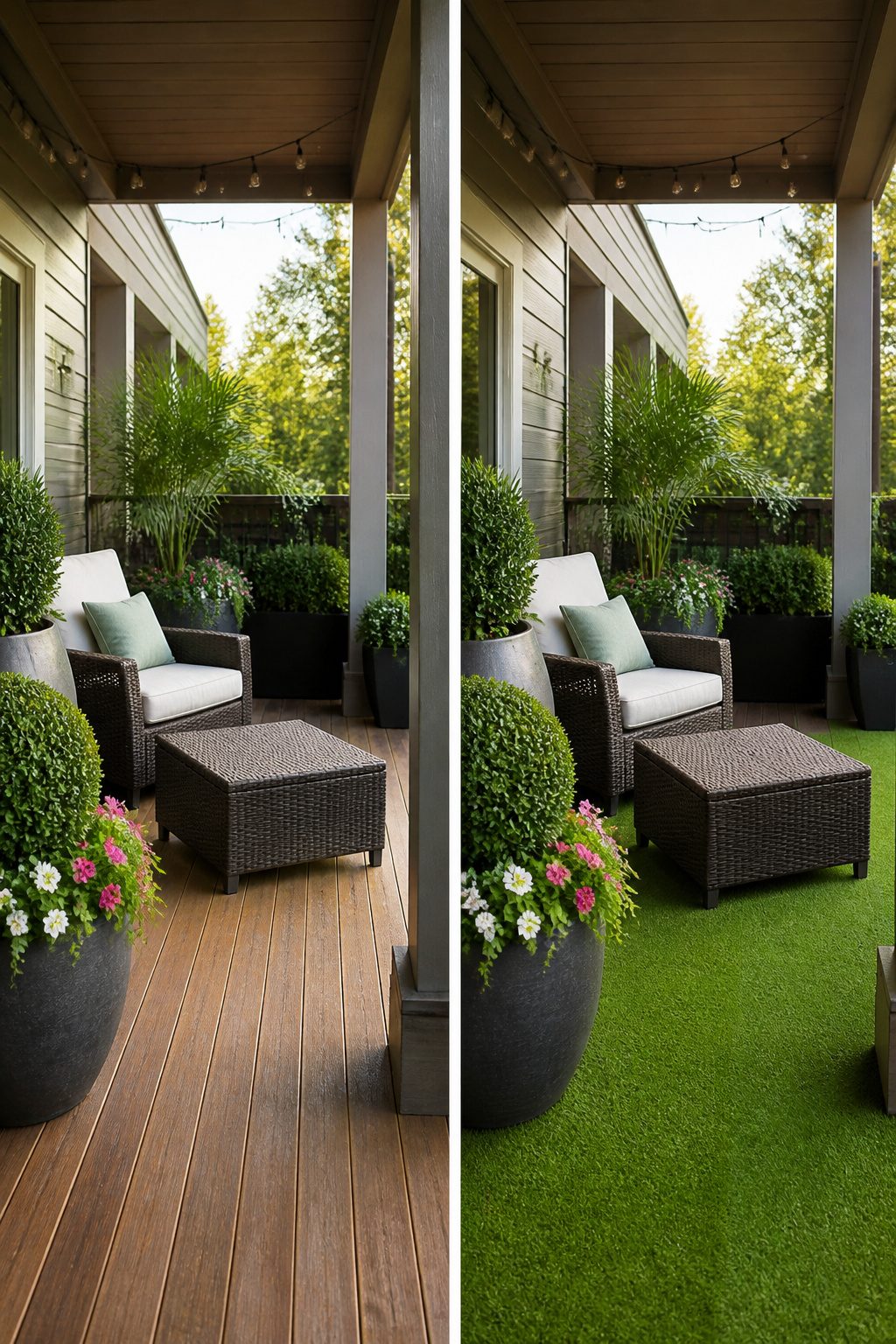
A tiny Palm Beach balcony reads as a sweeping tropical porch with faux turf underfoot and large planters framing the space. The grass never browns in August, and the containers never need drainage mats ruining the floorboards below.
That is the trade: the bit of life you lose in texture, you gain back in not lugging bags of potting soil up stairs or replacing sun-scorched sod every June.
Flat-backed hanging planters at under $7 each, clipped to brick with spring-loaded hangers, let you build a wall of greenery without drilling.
Ceramic would run over $30 per pot and shatter if one fell; the plastic versions carry a self-watering inner pot where a string wicks drained moisture back upward. You still water, but you buy time.
I would skip faux flowers if the porch gets any real sun. They fade to a color not found in nature, and the dust shows.
Faux turf and sculpted topiary in matte resin hold up better and read, from five feet, as the thing they are copying. The trick is buying the dullest, most weathered green on the rack, not the brightest.
21. Keep It Simple
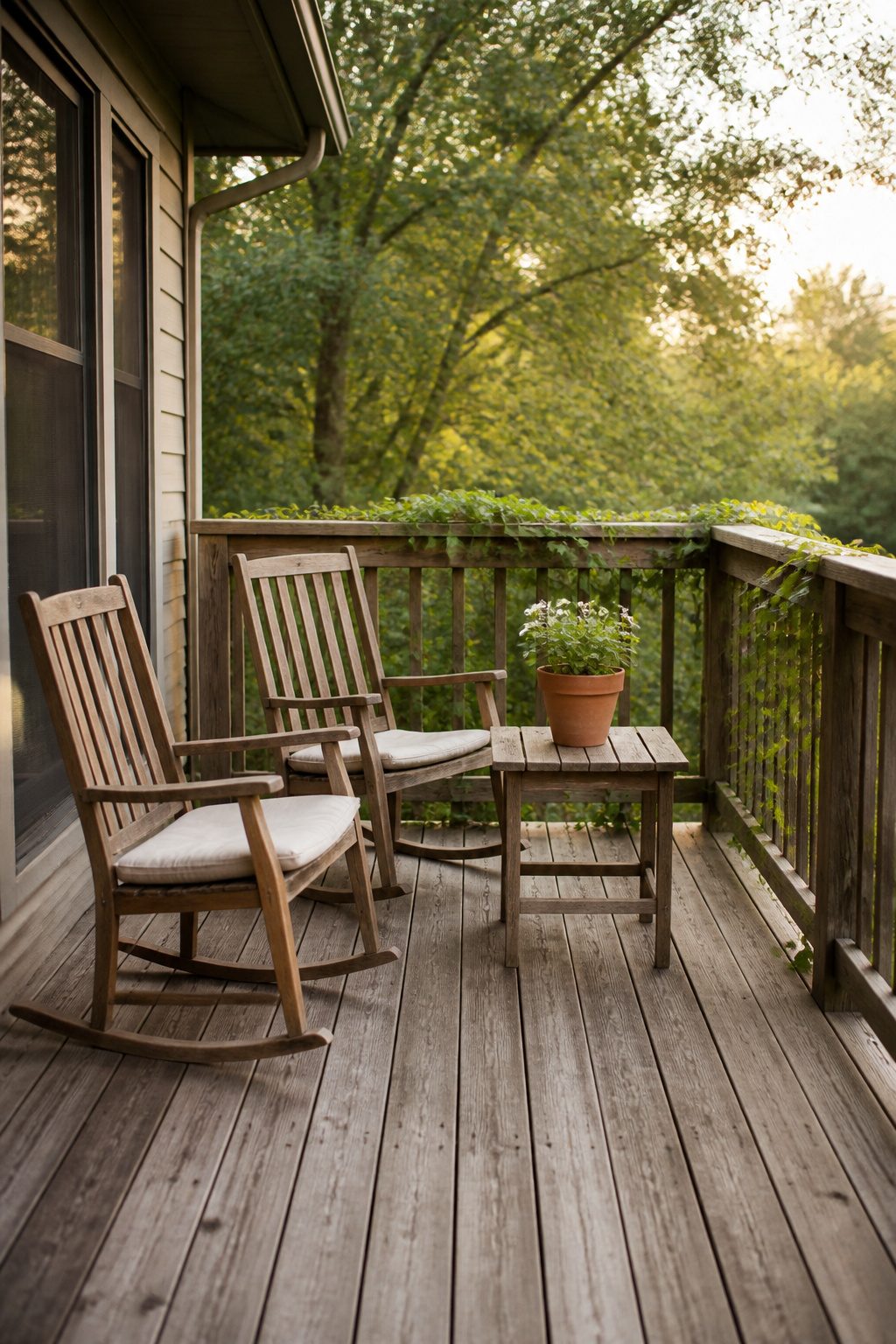
The best back porch ideas often start with taking something away. Two chairs and a small table against a railing cleared for the yard will do more living than a fully staged set that never invites sitting down.
Each piece earns its place by the sitting it creates, not the look it adds to a photograph.
A plain pine bench left to weather gray, one good cushion in a solid color, and a terracotta saucer for coffee cups gives permission to stop moving.
Overfill it with lanterns and throws and a side table for every seat, and the same porch becomes another room to maintain.
I’ve watched mine shrink that way across a season, each added item pulsing with quiet guilt until I cleared it back to bare boards and use returned.
Resist kits.
The matched sets with their proportional ottomans and tiered plant stands sell a completeness that sits heavy once assembled. One lighter, older, slightly wrong chair beside a newer one carries more Conversation than compliance ever did.
Let the mismatch show. It proves someone chose this, not bought it solved.
22. Focus on the Fireplace
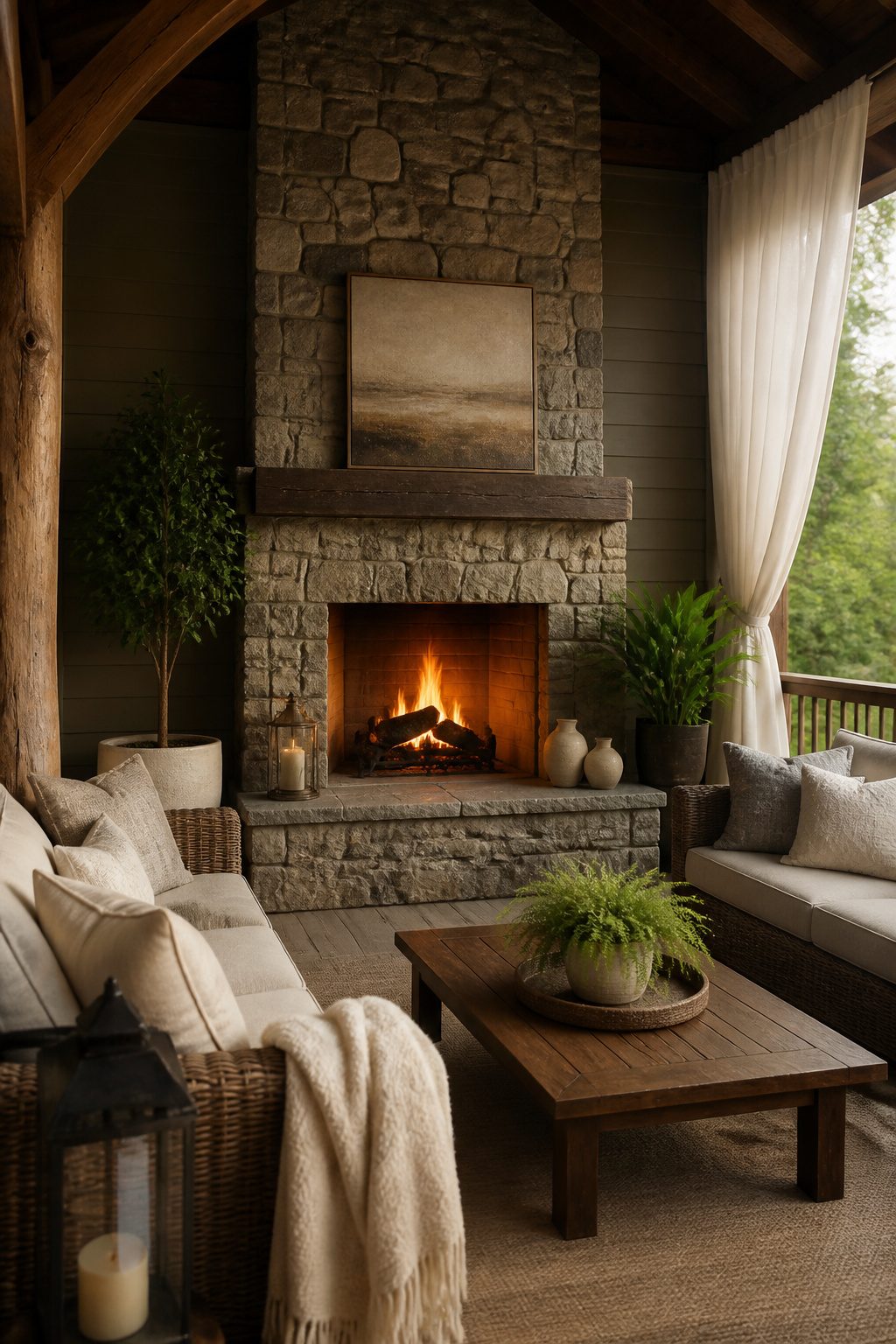
A fireplace on the back porch pulls the whole seating arrangement toward it without anyone planning to. The limited color palette of the surrounding space keeps the mood warm and calm rather than competing for attention.
Weather-resistant materials matter here more than anywhere else, since the hearth and its surrounds take both heat and rain. Paint in a vibrant color on the mantel or firebox surround can anchor the seating without adding clutter.
Outdoor rugs, throw pillows, and seating radiate naturally from the heat source, and sheer drapery nearby helps the porch feel like an extension of the indoor rooms rather than a separate zone.
The restraint keeps the gathering point clear. Houseplants placed to either side soften the hard edges without blocking the view of the flames or the conversation across them.
Even a small porch gains a sense of purpose when one element does the heavy lifting of defining where people land.
23. Create an Outdoor Lounge
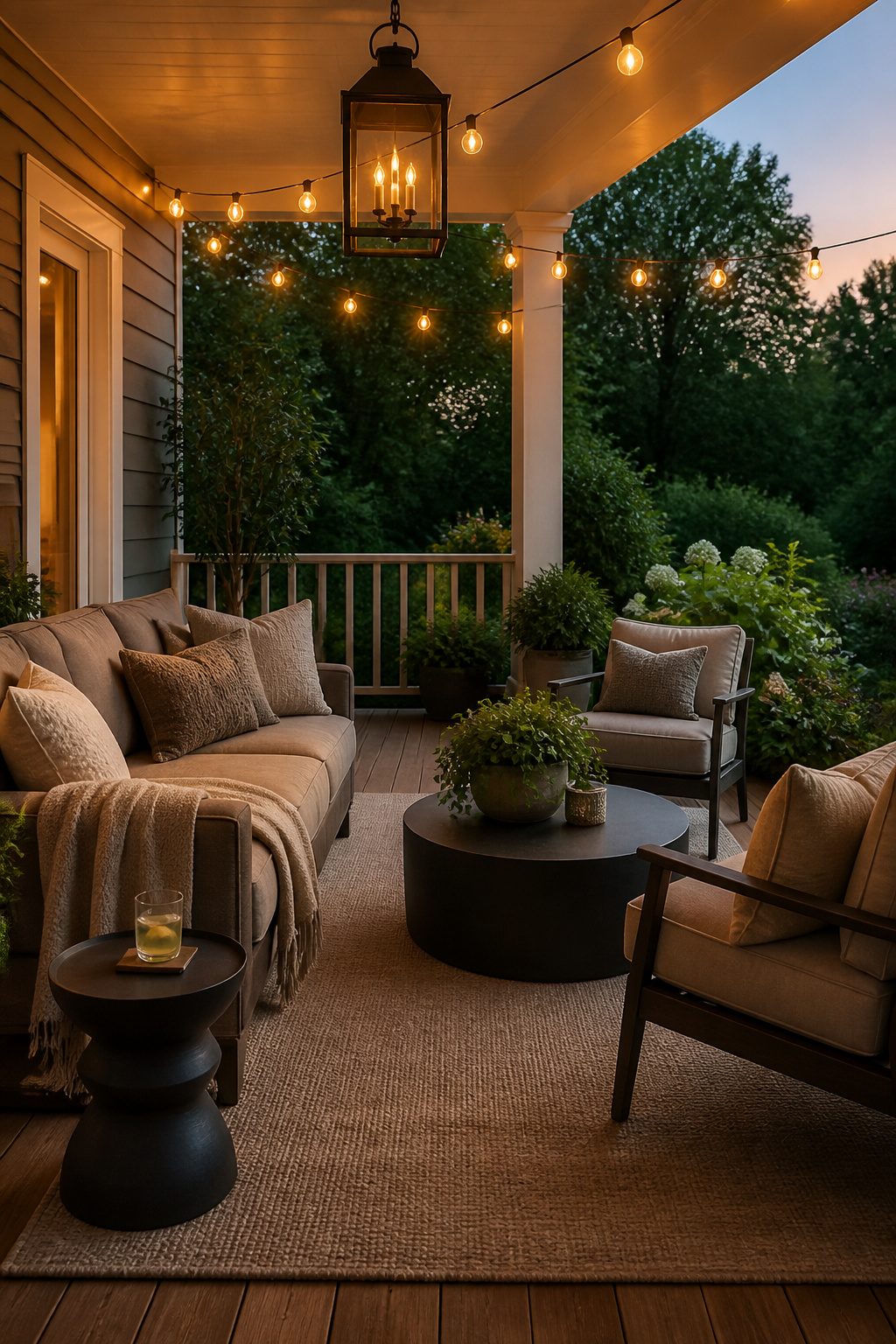
A back porch becomes a lounge only when the seating invites you to stay. I start with a deep outdoor sofa or a pair of cushioned armchairs arranged to face each other, close enough that conversation does not carry.
The cost stays reasonable if you keep the frame neutral and spend on the three-year rugs that still look like new, the ones in navy geometric or herringbone patterns that run far less than indoor rugs and anchor the room like a proper floor.
Lighting follows once the furniture is set. Swapping a corroded fixture for a clean-lined matte black lantern, wall-mounted and under $100, gives enough lumens for reading after dark.
I add rounded globe string lights overhead because the moment they switch on the porch shifts from leftover space to intentional room.
The trick is hanging them with enough slack that they curve rather than pull taut; a covered porch makes this easier than you would think.
Indoor-comfort amenities come last and cheapest.
A small side table holds the coffee cup, a basket of throws sits within reach for October evenings, and an outdoor-rated lamp on a dimmer bridges the gap between the fixture overhead and the dark yard beyond.
24. Hang a Mirror
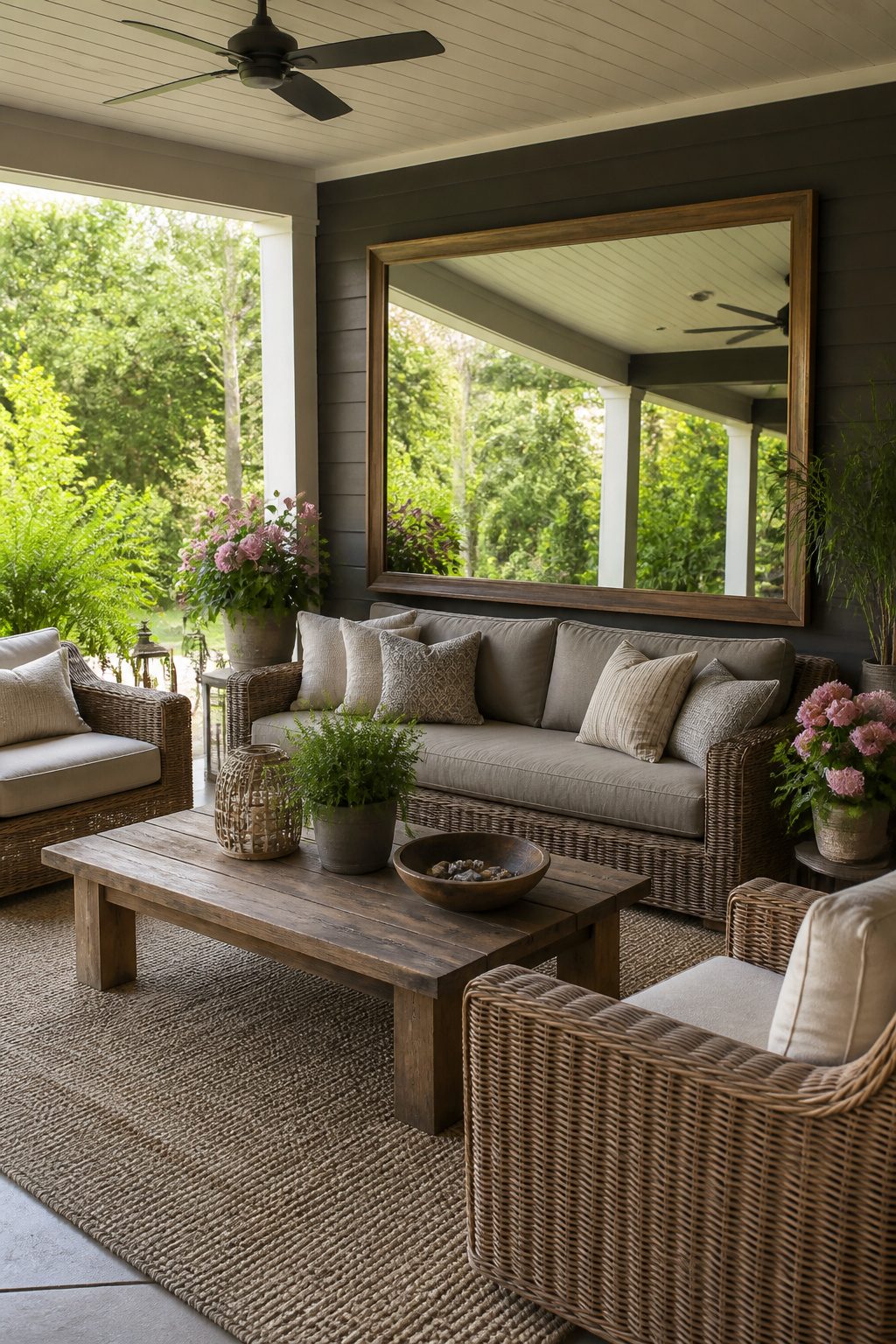
A mirror hung on the back wall works the trick interior designers use in pool houses: the reflection opens the space visually so the porch reads larger than its footprint.
Light bounces back across the seating and into corners that would otherwise sit dim, which matters on a shaded porch or one that only catches morning sun.
Carrier & Company placed one at the back of a pool house to push the walls outward in reflection, and the same move translates to any covered porch.
Framed iron or sealed wood holds up to humidity better than an interior frame, though even those need checking after hard winters. The glass itself fogs less than you’d expect under a roof overhang.
What size earns the effect? The pool house example suggests scale that fills a back wall or spans the width above a console, not a small accent piece that reads as decoration.
The reader walking out the door should meet their own reflected garden behind them, not a portrait-sized rectangle. Position it to catch what you want doubled: a planting bed, a yard beyond the railing, or the brightest hour of daylight.
25. Up the Romance
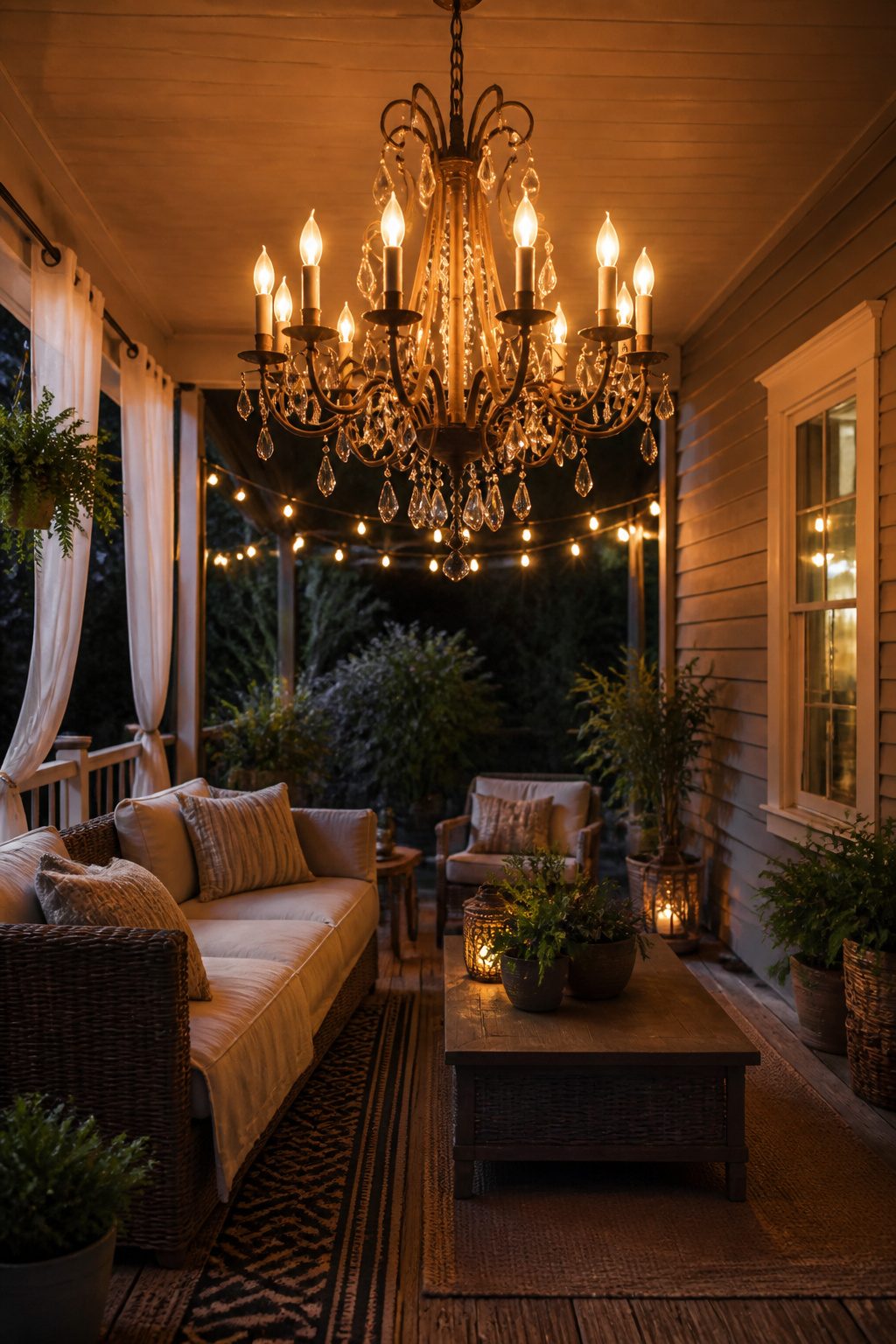
A rustic chandelier casts amber light that flatters faces after sunset. Ashley Gilbreath’s choice for her back porch proves the point: one dim fixture overhead shifts the mood from outdoor room to private evening.
String lights along a covered rail or between posts cost under $100 and string light globe versions are what most people picture first, but rounded globe string lights keep the scale right for a porch ceiling under eight feet.
The mistake is over-brightening.
A back porch lit like a parking lot kills the intimacy these spaces promise. Outdoor area rugs help here too; they absorb sound and soften the floor underfoot, which matters more than most people notice.
Two rugs arranged down a narrow porch cost less than one indoor equivalent and they muffle conversation so it stays close.
Sheer curtains on rod pockets, mosquito coils in terracotta, a playlist kept low. The romance is in what you remove: glare, noise, the sense of being watched from the kitchen window.
26. Hang Draperies
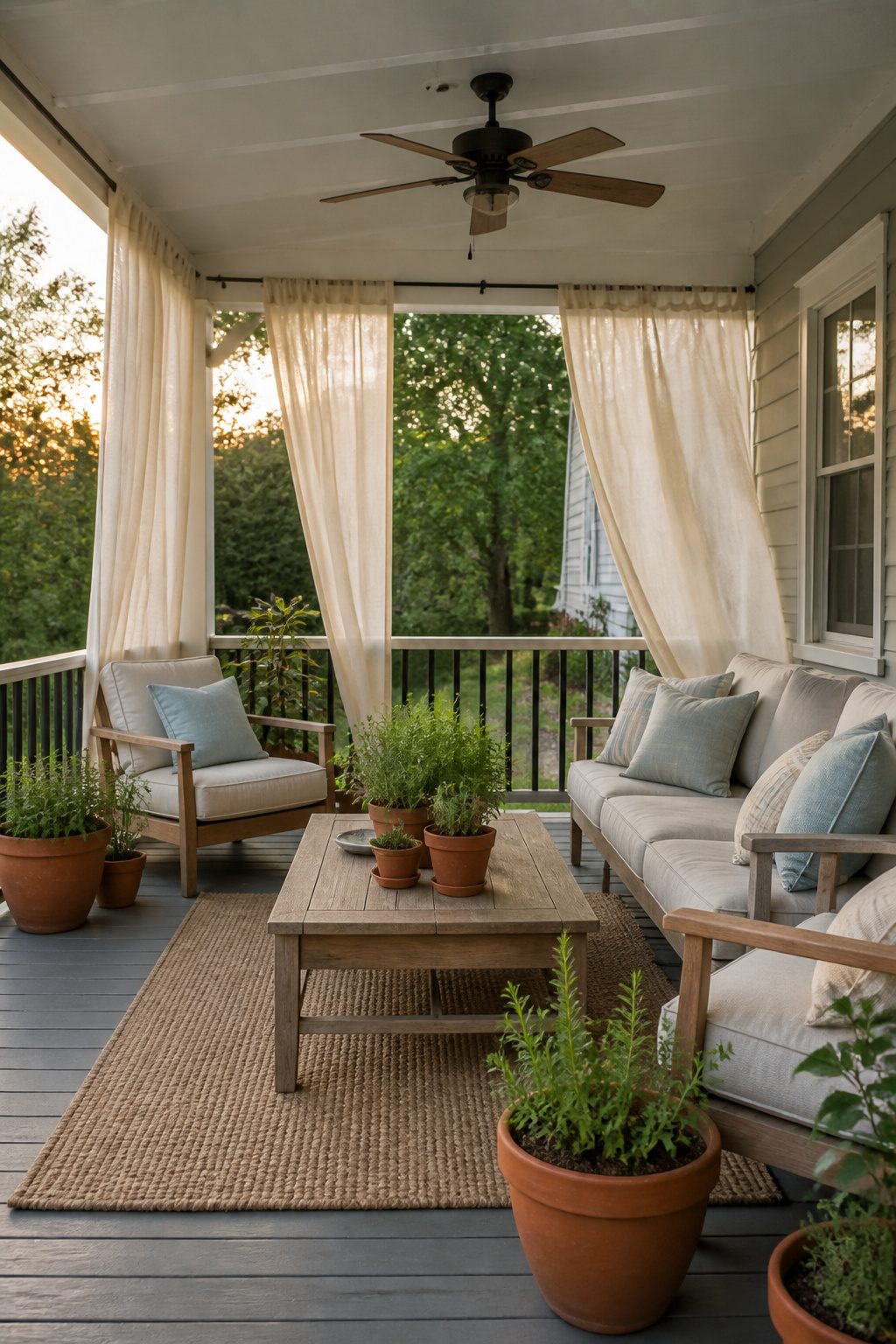
Outdoor curtains turned out to be the cheapest shade structure I considered.
A standard 52-inch drapery panel hung on a galvanized steel rod blocks late-afternoon sun well enough that you can sit outside without squinting, and the fabric moving in the breeze does more for atmosphere than any umbrella ribs overhead.
The hardware matters more than the heading suggests.
A rod mounted with standard brackets will torque outward the first time a panel catches wind. Use a center support bracket on anything over six feet, and check that your wall material can take the load.
Brick or wood siding holds fine; vinyl siding needs a mounting block behind it or the bracket will work loose by midsummer.
Fabric choice is where most people stall. Polyester olefin or solution-dyed acrylic last outdoors without growing mildew, but any synthetic with a tight weave works for two or three seasons.
Pull the panels down before hard frost if you want a fourth year out of them. Liner-less panels dry faster after rain and weigh less on the rod, so I skip the blackout layer even for west-facing porches.
Privacy is the quieter benefit. A neighbor’s second-story window that lines up perfectly with your seating area disappears behind a cream-colored panel, and the light still comes through.
Solid colors read calmer than prints from the yard; if your porch already has patterned cushions or a rug, curtains are where to let things rest.
27. Add a Ceiling Fan
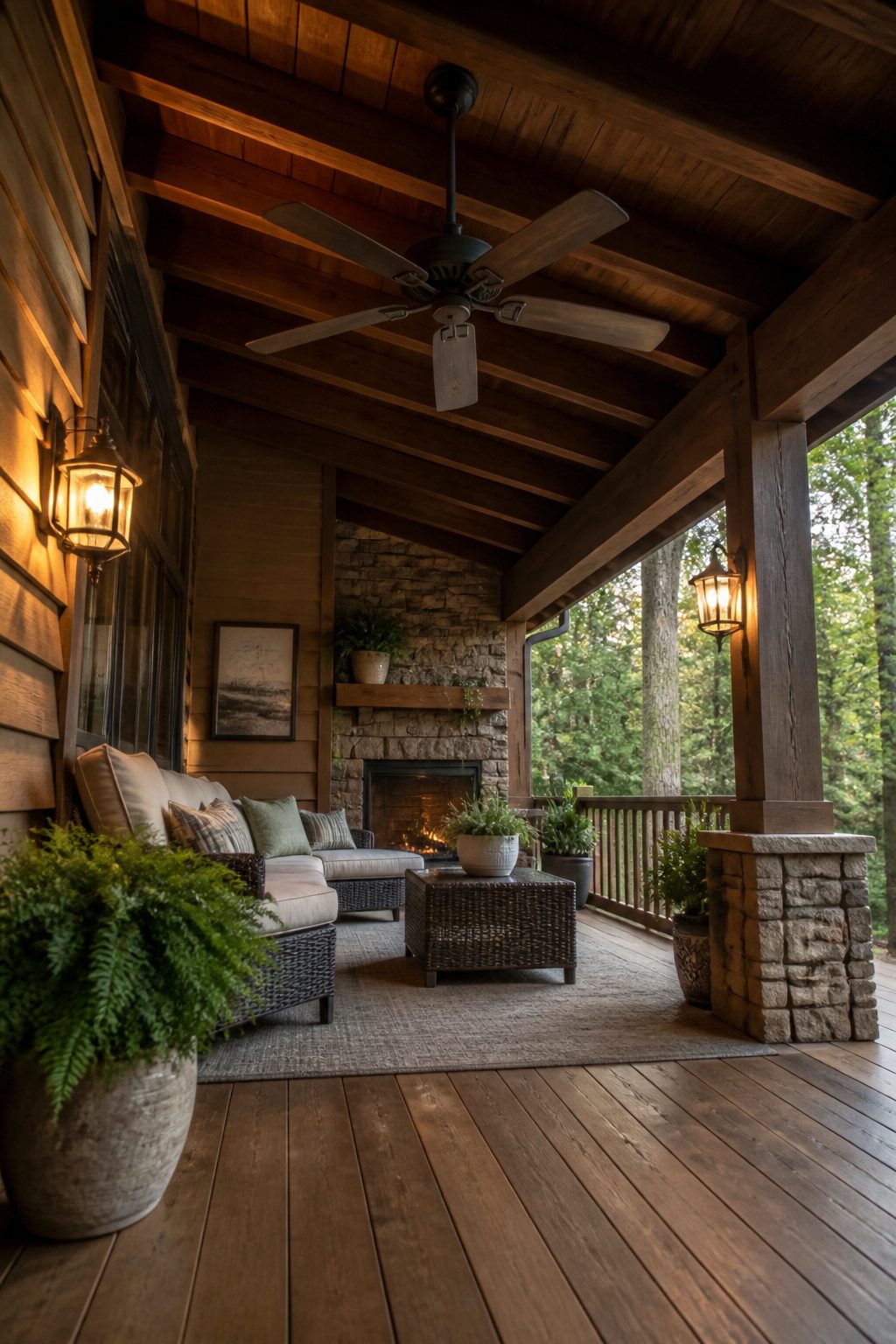
A ceiling fan on the back porch does two jobs that nothing else manages at once.
It moves air enough to drop the felt temperature by several degrees, and that same steady motion makes it harder for mosquitoes to find a landing.
I have watched a porch go from tolerable to actually pleasant once the blades start turning, especially on evenings when the air would otherwise hang still.
The trick is choosing one that reads as part of the architecture rather than an afterthought.
A damp- or wet-rated motor is non-negotiable for outdoor exposure, and the blade span should suit the space you have. Go too small and you get noise without breeze; go too large and the proportions look wrong.
Finishes move with current exterior trends, but a matte black or aged bronze housing against wood or painted beadboard tends to outlast them. Some models now include built-in light kits or smart controls, which saves adding separate fixtures later.
Designer Ty Larkins used one exactly this way on a traditional home’s back porch, mounting it to stir a breeze on hot days and keep the room comfortable enough to actually use.
The ceiling fan became something the space was built around, not patched over.
Budget-Friendly Porch Projects Under $50
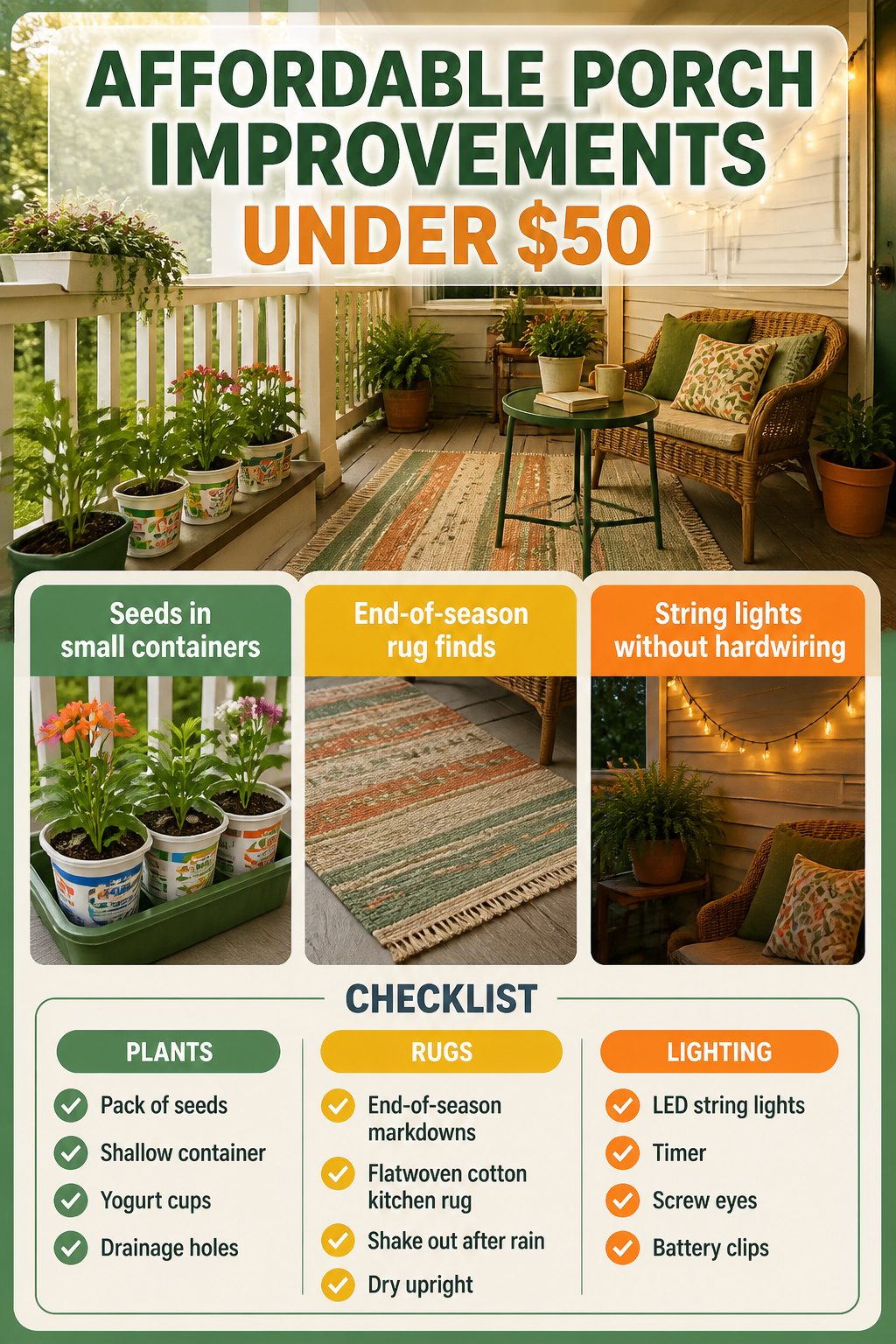
A small budget stretches further than most people expect on a back porch. Three kinds of updates will keep your spending low and still change how the space feels.
- A pack of seeds in a shallow container works better than one big potted plant for covering railings or steps. I start mine in yogurt cups with drainage holes punched through, then transplant once the roots hold the soil together. A six-pack of annuals costs about the same and fills in gaps while the seeds catch up.
- Outdoor rugs run cheap if you shop the end-of-season markdowns at big-box stores, or skip the outdoor label entirely and grab a flatwoven cotton kitchen rug. Mine faded to a softer color after two summers, which looked intentional by the third. Shake it out after rain and let it dry upright against the wall; it lasts longer than the care tag suggests.
- String lights need no hardwiring. A strand of LEDs on a timer, hung from screw eyes I already owned, gave me enough evening light to read by without adding to the electric bill. Battery-operated clips exist if your porch has no outlet.
What Works in Small Back Porches
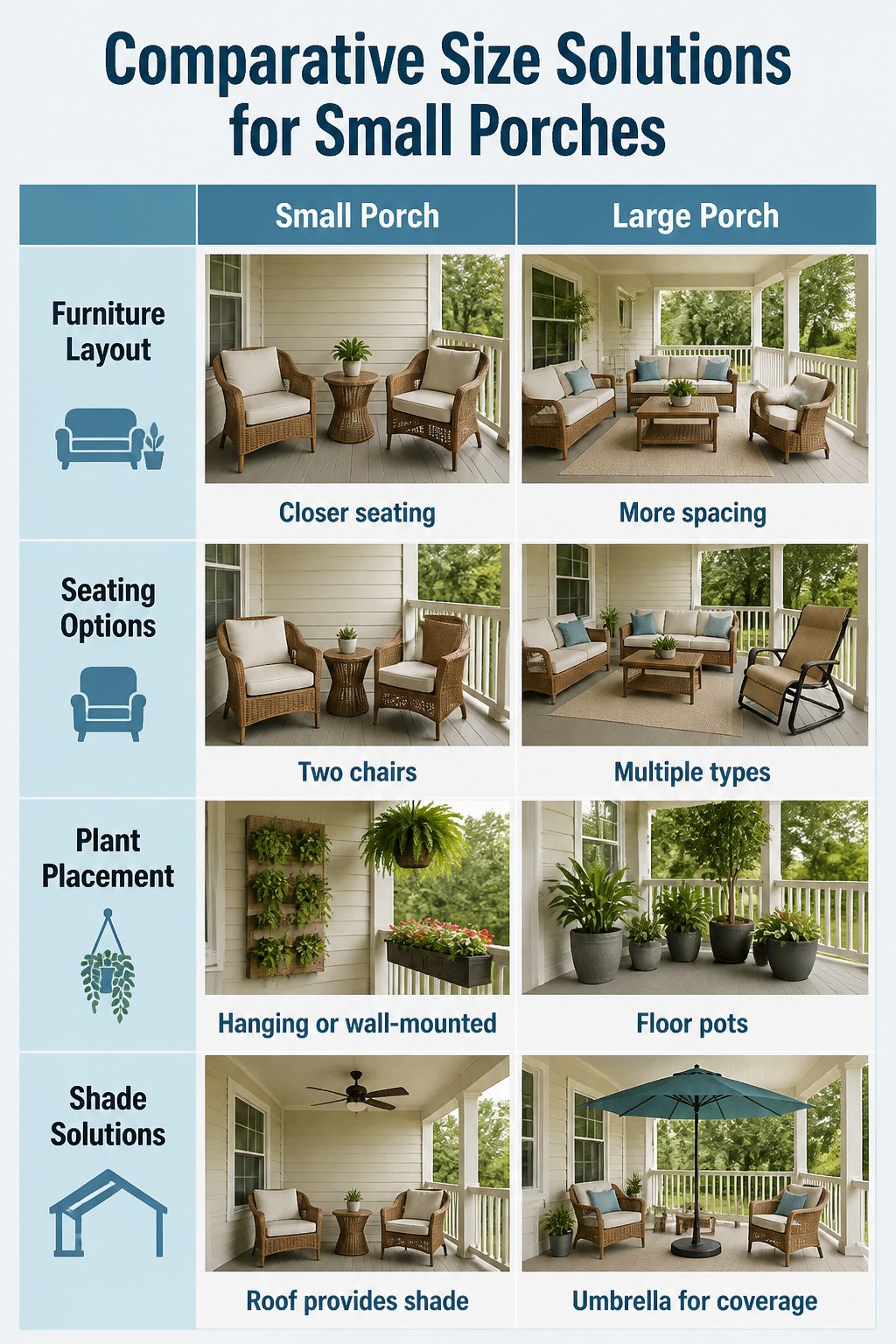
The physics of a small back porch change everything.
On my neighbor’s twelve-foot-deep covered stoop, two chairs and a narrow side table eat up the usable floor; move the same set to a twenty-foot deck and it vanishes into leftover space.
That difference means a small porch needs furniture that does one job precisely, not furniture scaled down from a larger plan.
A conversation area on limited square footage works when the pieces sit close enough that you do not raise your voice.
The four-piece sets that run under $500, with two chairs, a loveseat, and a coffee table, squeeze onto patios tighter than you’d guess because the woven seats support without thick cushions stealing depth.
I have seen the same footprint hold a pair of zero-gravity loungers fail; the recline angle shoves the user into the railing and the chair becomes border instead of seating.
Plant placement follows the same tightened logic.
Floor pots claim the same real estate a chair would. Small porches reward things that climb or hang: a plant wall mounted at seated eye level, hooks under the eave, a railing box that does not project past the post.
The shade solves itself if the porch already sits under roof.
Where it does not, an umbrella with a slim base leaves more floor open than a cantilever that swings over from the yard; the pole anchors between two chairs rather than commanding center stage.
These adjustments are not compromises. They are the design, made for the space you have.
When to Choose Real Plants Over Faux
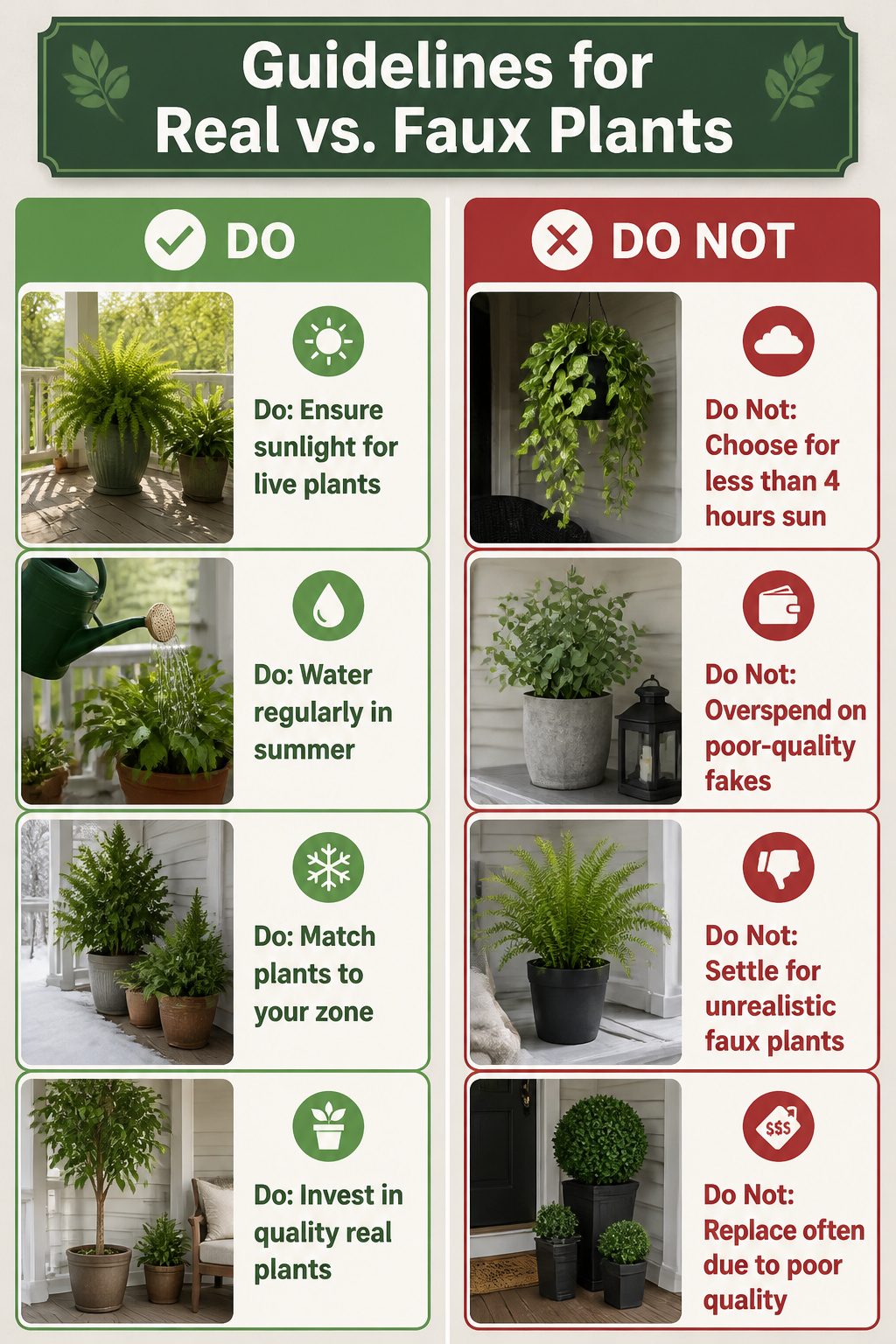
Living plants on a back porch are worth the maintenance only when three conditions line up: enough direct light for what you want to grow, time to water at least twice a week in summer, and a zone where the plant can survive winter without heroic measures.
Faux greenery makes sense for a shaded north-facing porch, for anyone who travels in July, or for zone-pushing experiments that die anyway.
My first summer on a covered porch, I tried to keep a Boston fern alive in mostly reflected light. Six weeks of browning fronds taught me what the tag should have said.
The test is simple: if a plant needs more than four hours of direct sun, a covered porch will need supplemental light or it needs to be fake.
Artificial options have improved enough that a decent faux trailing pothos costs about what a replacement live one runs through three times in a season.
Zone matters less for annuals, but perennial pots on a back porch need hardiness matched to your winters or a plan to haul them inside.
A beginner with a small budget often does better buying one quality faux tree and spending the plant money on a single container they can actually maintain.
Shade and Light Pairings That Work
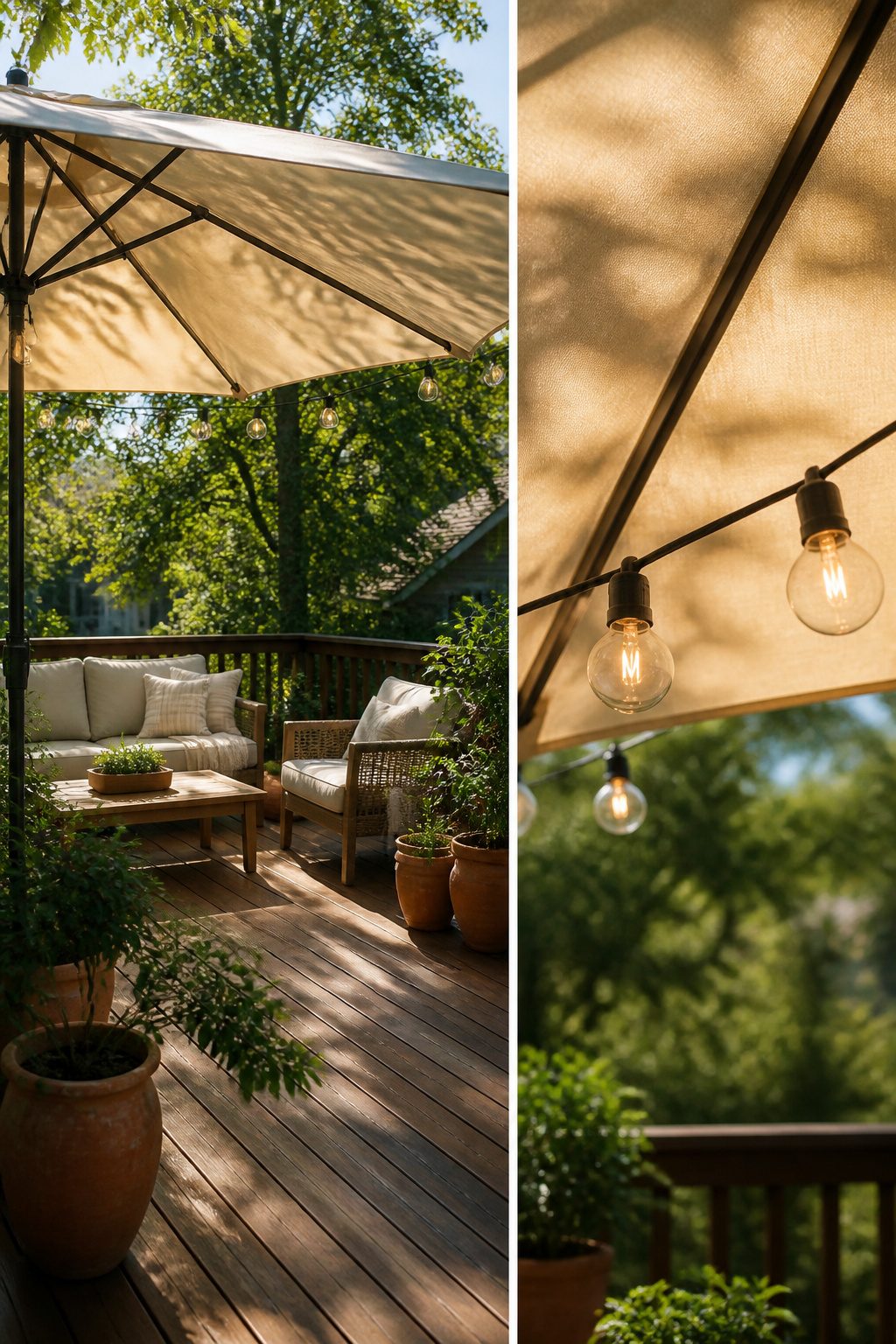
A string of rounded globe bulbs loses half its charm if the mounting hardware is lost behind a half-closed umbrella.
Before buying anything, I hold the two items up in my mind: position the umbrella arm so it clears the fixture, or match the light string to a mount that sits inside the canopy edge, not outside it.
An umbrella that tilts gives you afternoon shade and lets you dodge the pole around a light chain you already hung. Fixed awnings are harder.
The one I planned for my own porch, reading through how-to posts, would have boxed in the existing wall lantern. Some awnings come with a track for routing wiring, but many do not.
The budget-friendly path, under-$100 wall fixtures and all, is to swap the light first for something low-profile enough to live under the fabric, or run the string lights along the beam the awning itself attaches to.
That preserves the shade coverage without cutting a hole in the mood.
Seating That Survives Weather
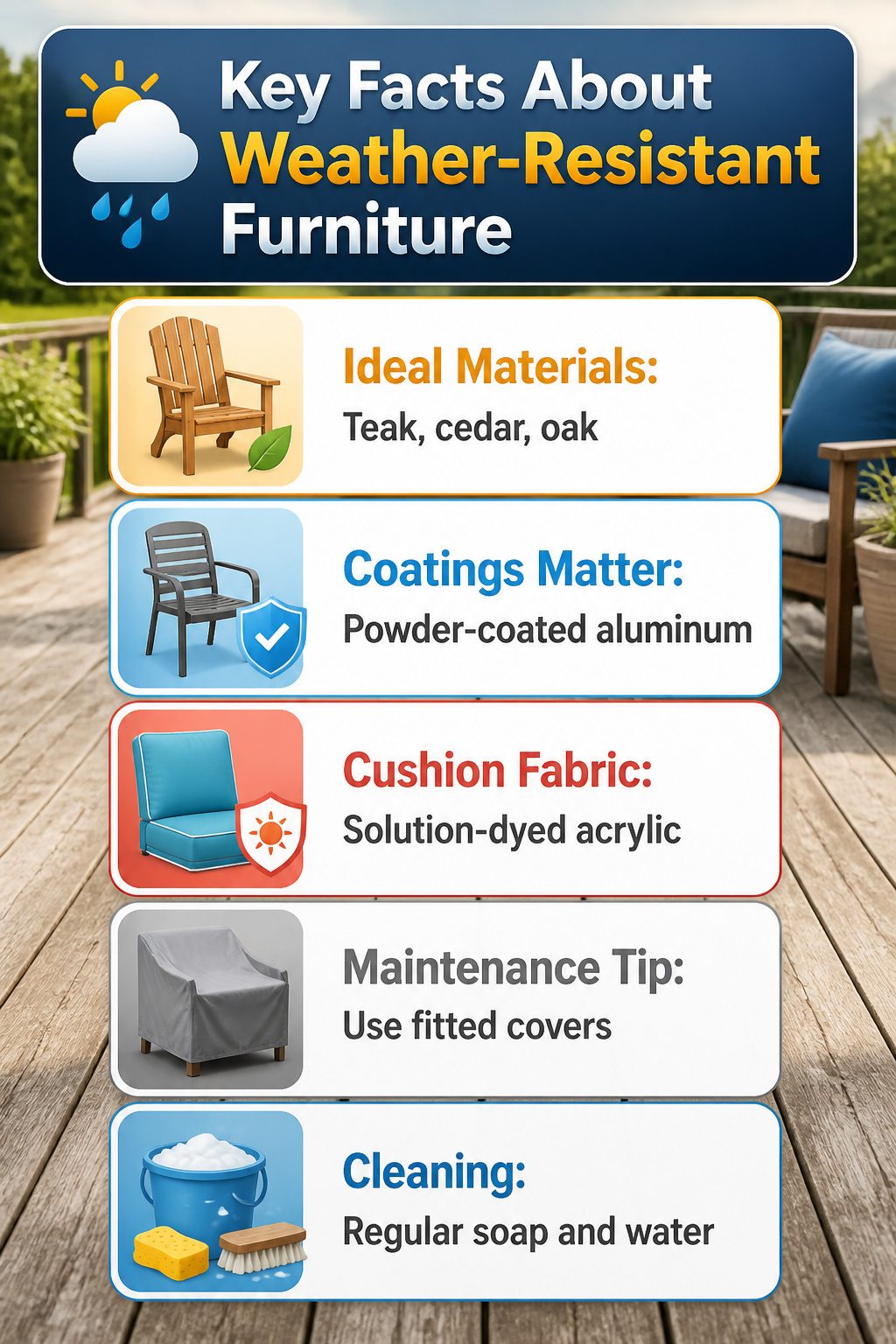
I learned my weather-resistant furniture lesson after a single winter left two unfinished wood chairs swollen and split. Now I check tags before I buy, and the material matters more than the style.
Here is what to look for and how to make it last:
- Teak, cedar, and white oak hold up without treatment because their natural oils repel water; acacia and pine cost less but need sealant within the first season or they gray and crack
- Powder-coated aluminum and marine-grade polyethylene wicker survive heavy rain without rust or rot; the coating is what you are paying for, so scratch a corner in the store and look for bare metal underneath
- Solution-dyed acrylic cushions shed water and resist sun-fade because the color runs through the fiber, not across the surface; store them dry or mold still finds the foam
- A fitted cover beats dragging chairs inside; I leave mine on through light rain and only pull the furniture under the eaves for storms
- Soap and water once a season removes pollen and sap that trap moisture; pressure washers strip finish, so a soft brush and hose do the honest work
Frequently Asked Questions
What are some budget-friendly back porch ideas?
Plants, outdoor rugs, and lighting give the most change for the least money. A flat-backed hanging planter runs under $7 versus over $30 for ceramic, and outdoor rugs cost much less than indoor ones while pulling the whole space together.
Swapping a corroded porch fixture for a clean-lined lantern under $100 takes ten minutes and pays off for years.
How can I create a comfortable seating area on my back porch?
Two chairs, a loveseat, and a coffee table form the classic conversation area, and woven sets with thin cushions dry fast after rain and store easily during pollen season.
Place chairs at one end, face them with the loveseat, and center the table between. Store cushions when heavy weather hits and the set should hold up fine.
What types of plants work best for a back porch?
Flat-backed hanging planters clip to brick mortar without drilling and work for both walls and rail-height herb gardens. Their self-watering design, an inner container with a wicking string inside an outer shell, keeps soil moist without daily attention.
Rio dipladenias split among several baskets give continuous bloom, while basil, thyme, and mint at rail height stay reachable from a chair.
How can I add shade to my back porch?
A 9-foot patio umbrella with a tilt mechanism follows the sun across the afternoon, while a cantilever umbrella on a side pole shades tables with no center hole.
Fixed awnings suit south- or west-facing porches where you use the space at the same hours daily, though they cost more upfront and stay put. Sizing runs simple: 7–9 feet handles two seats, a full table wants 9 feet or more.
What lighting options are best for outdoor spaces?
One clean-lined fixture plus two strands of globe string lights beats multiple fixtures or excess bulbs.
Run string lights at least nine feet up across a covered porch so the glow drops rather than blares; cluster them too low and you eat in a spotlight.
A matte black lantern under $100 swaps out in ten minutes with a screwdriver and lasts for years.