

A front porch refresh can run anywhere from the cost of a quart of paint to a full column-wrap overhaul, and the deciding factor is usually how much of the work you are willing to do yourself. The resin urns that frame a door well cost about $30 a pair, but only if you stop at two; add a third planter and the stoop starts to read as a staging area, not an entry. That same restraint, knowing when an idea has done its job and when it has tipped into clutter, is what separates the porches that hold up from the ones that look busy by July.
1. Use Large Planters
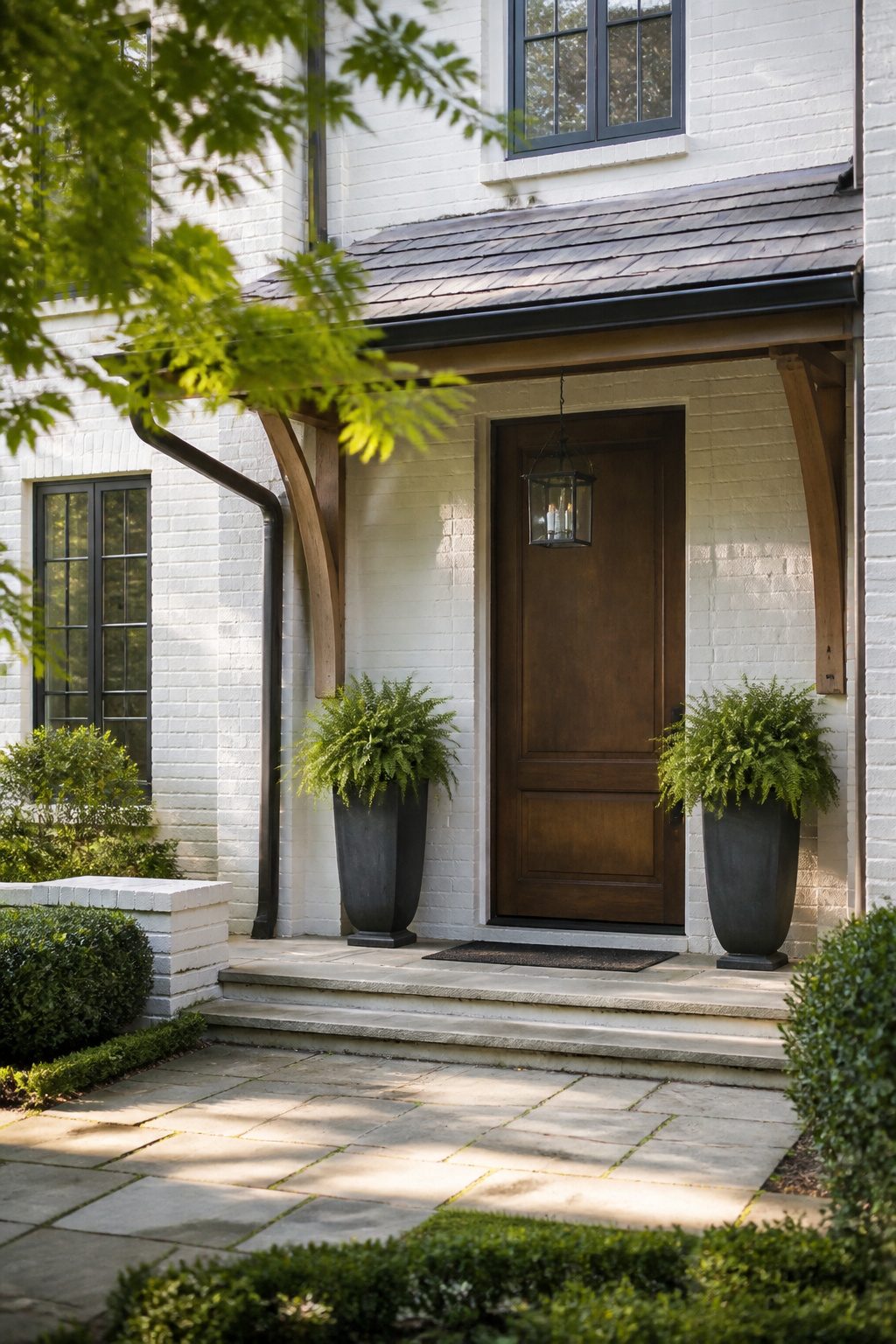
Oversized planters frame a door with the kind of weight that reads as deliberate, not accumulated. The trick is going big with fewer pieces rather than filling the stoop with small pots that shift and cluster every time the wind picks up. Heavy-duty planters hold their ground against a gust, and on a narrow porch that stability matters more than most people guess until they chase a terra-cotta shard down the driveway.
Resin urns run about $30 and carry the same visual heft as ceramic or concrete without the back-breaking move or the crack risk. A couple of cans of leftover spray paint can nudge them toward a faux-concrete finish if you want the weathered look without the actual weight. Either way, one pair flanking the door does the work of six scattered pots, and the eye reads the space as calm rather than busy.
Two large planters max is the rule for a standard stoop. Go beyond that and the porch starts to feel like a staging area, not an entry.
2. Create a Cozy Seating Area
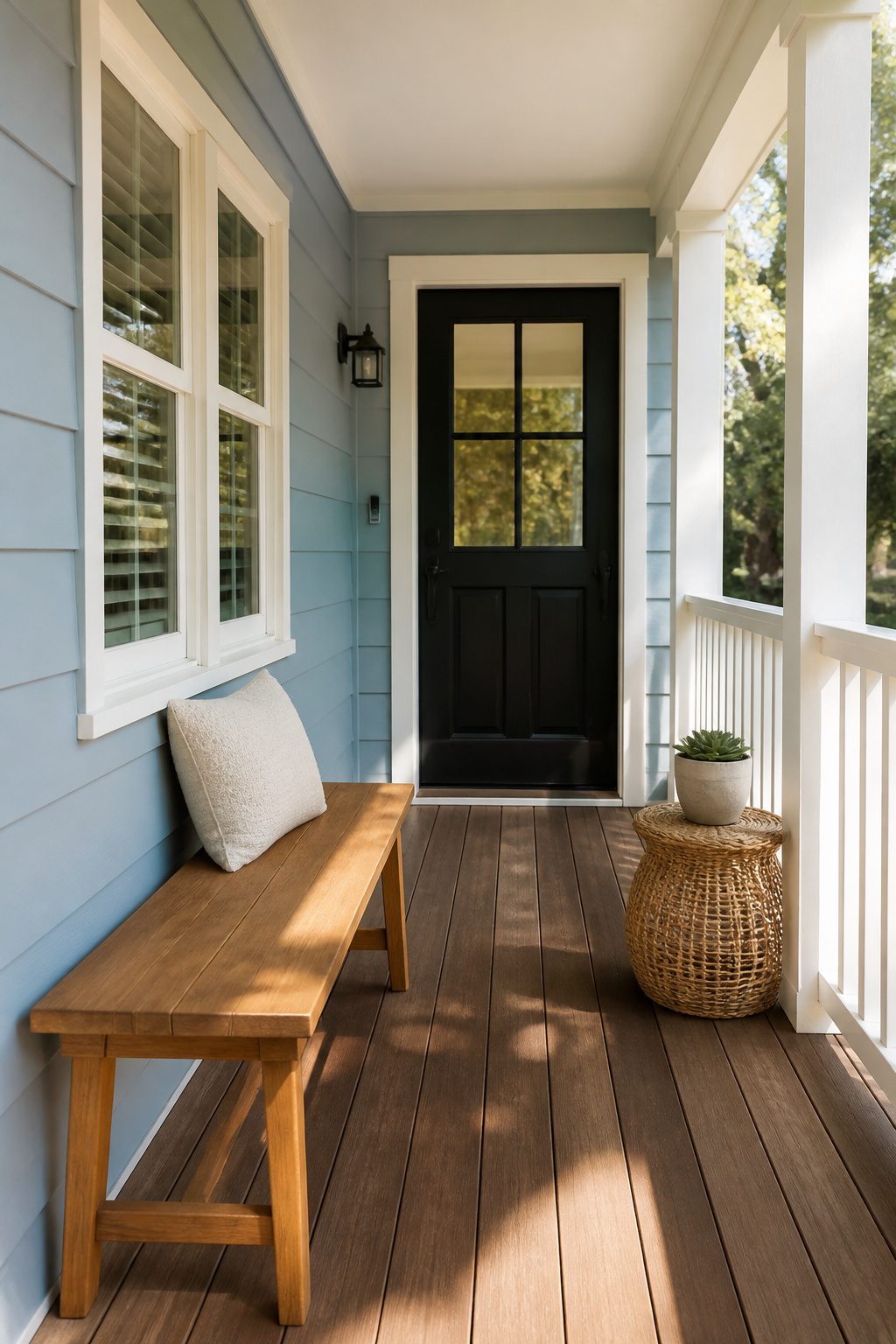
A bench or chair changes a porch from a pass-through to a place you actually use. The trick is picking pieces scaled to the depth you have. On a 4-foot-deep porch, a slim bench pushed to one wall leaves room to open the door without a shuffle-step. A 6-foot depth buys you a small chair and a side table, or two chairs angled toward each other, and still keeps the walkway clear.
Rocking chairs and accent tables work only when they do not block the door swing. I have seen porches where a single oversized chair turned the entry into an obstacle course, and the furniture sat unused because squeezing past it felt like a chore. A bench with open legs reads lighter than one with a solid skirt, and that visual space matters when every inch counts.
If the porch is too shallow even for a slim bench, the seating idea drops away entirely. Replace it with detail work instead: railing style, door color, a tailored doormat. Those small moves, taken together, do more than a cramped chair would.
3. Incorporate Greenery
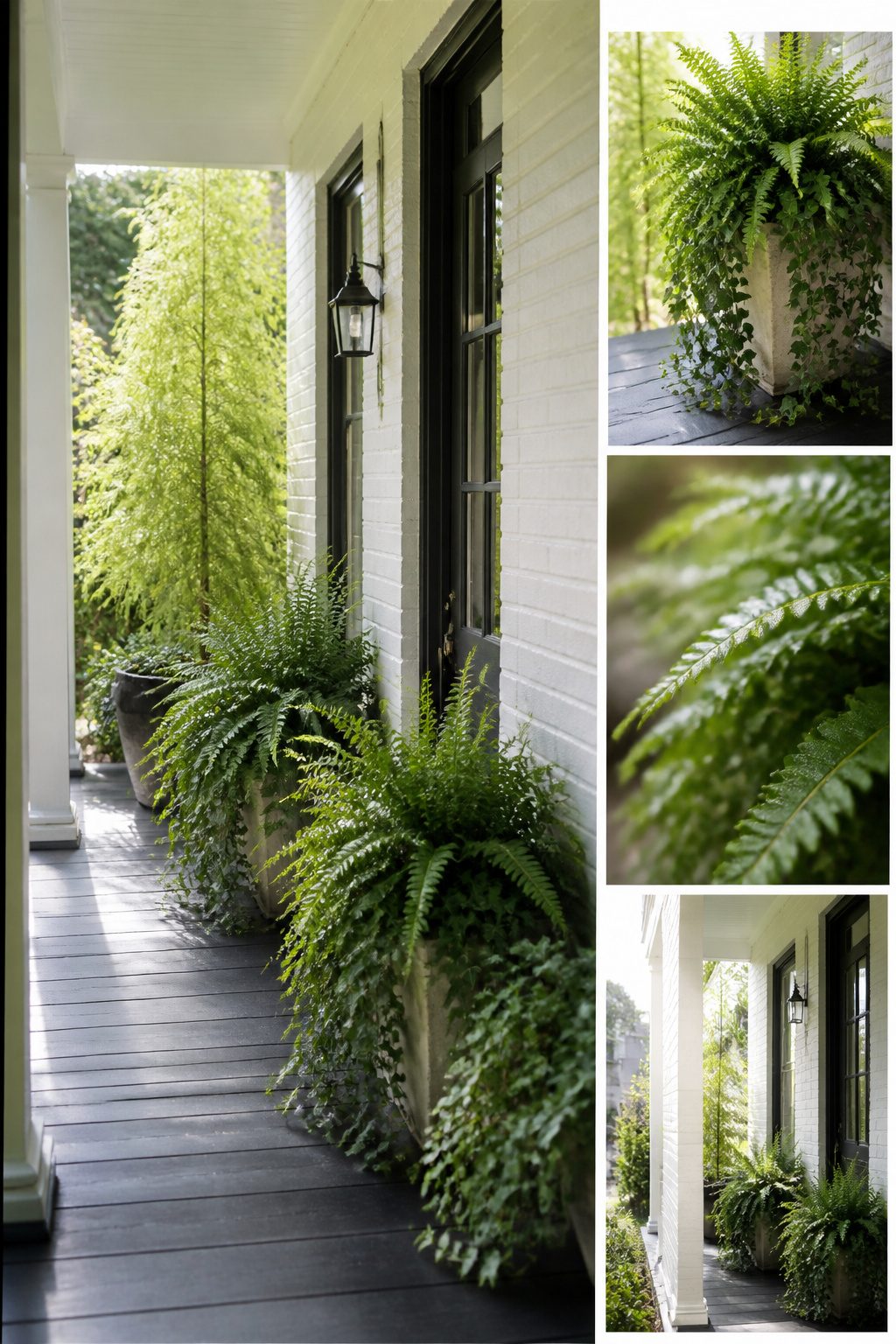
Potted plants and hanging baskets do the heavy lifting for most porches because they move with the light and the season. Real ferns in shaded spots or geraniums where the sun hits hard will carry a porch through spring and summer, but the upkeep matters. Last year I tried keeping a hydrangea happy on a north-facing step and learned the hard way that direction determines everything. The nursery saved the next attempt, pointing me toward shade-tolerant blooms.
For porches that bake, go dark, or face long droughts, UV-treated faux plants stay presentable for several seasons without the water or the wilt. Boxwood topiaries and fiddle leaf figs in heavier outer pots handle wind without toppling, and the better artificial sago palms pass for real at a few paces. Mixing the two, live with artificial, keeps some ambient tending without making the whole display fragile.
Varying heights matters more than the count of pots: a tall cedar or topiary at the back, mid-height blooms, trailing ferns or ivy below. The layered line draws the eye up and across the entry without crowding the door itself.
4. Add a Seasonal Wreath
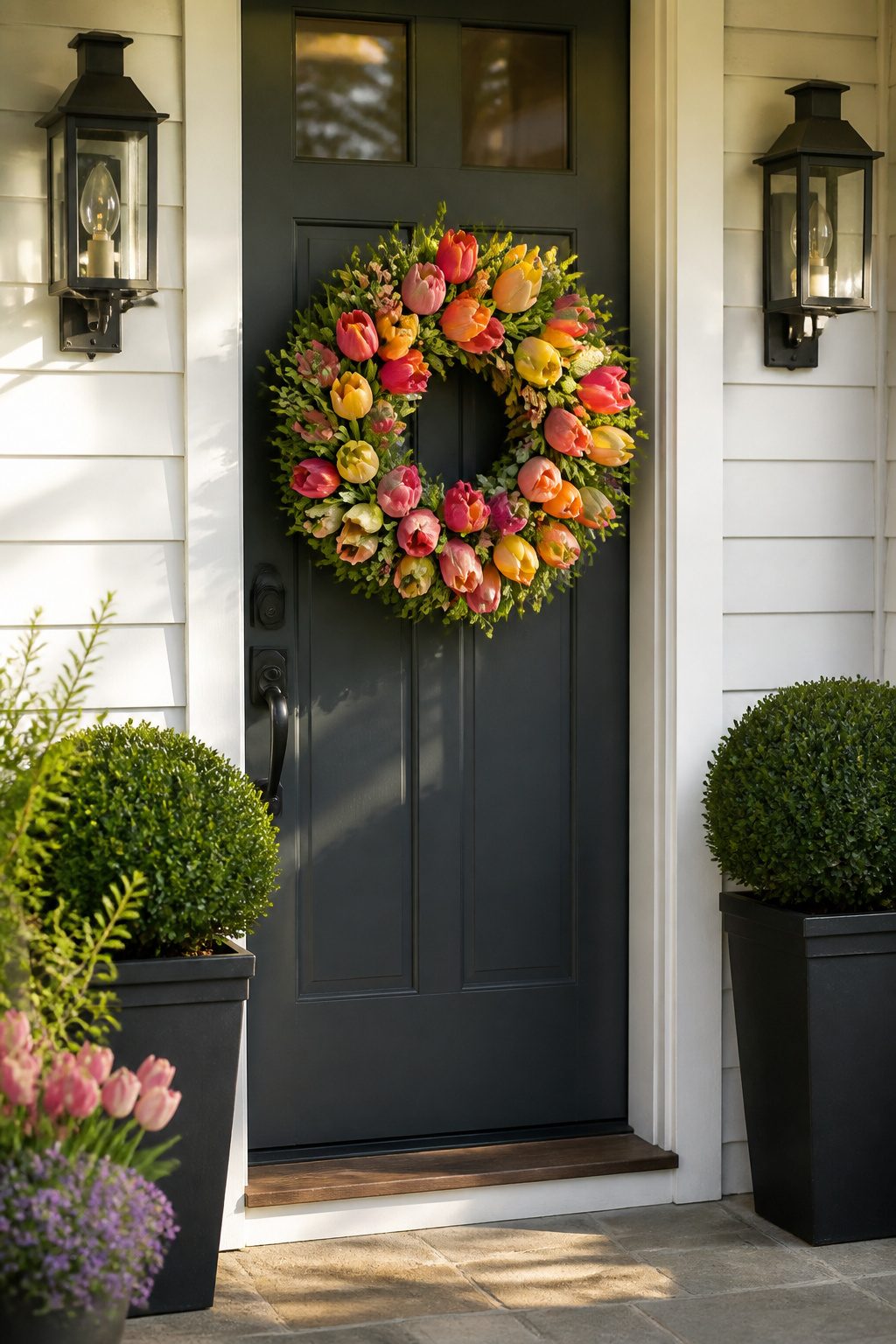
A wreath on the front door cuts through the noise of a whole block without asking much of you. Swap it four times a year, five minutes each rotation, and the porch reads as tended rather than staged. Spring carries tired silk tulips or the hoop-style embroidery wreaths that needlework shops stock by March. Summer leans into fresh florals, autumn into dried leaves, winter into plain greenery. The cheapest versions fray by season’s end and need replacing annually. Spend more on construction, and the same frame lasts through years of storage. Either route costs less than a single planter overhaul and demands no watering, no deadheading, no hardiness-zone arithmetic. For apartment renters especially, this is the one porch change you can pack and reuse. Store the off-season wreath in a grocery sack inside a closet shelf; it will not mildew or molt. If you want a single compromise piece, a dense green base works year-round and takes on character with a clipped sprig of whatever is blooming in your yard that week.
5. Layer Rugs
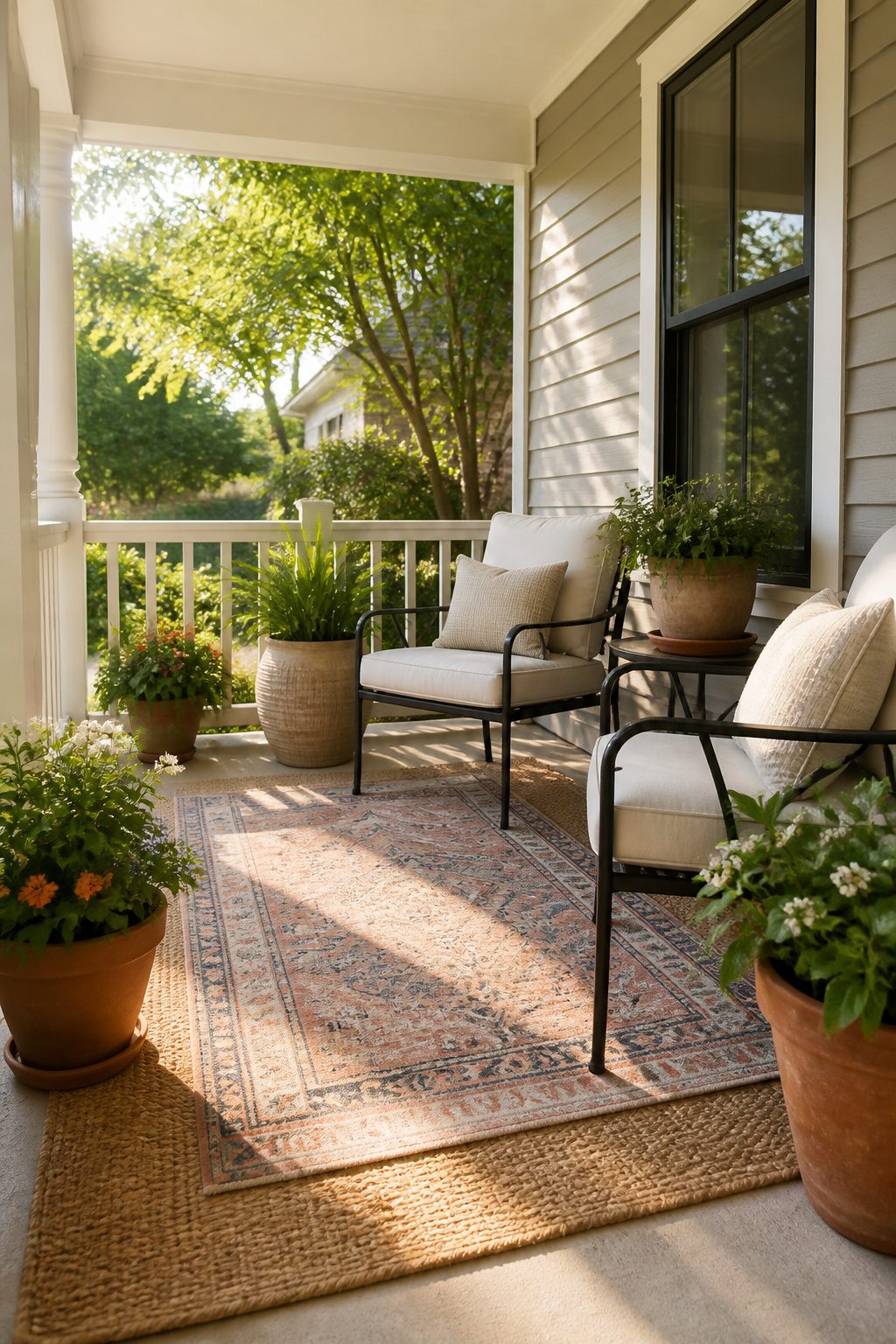
A water-resistant polypropylene rug changed how my porch felt underfoot the first season I tried one. Before that, I had treated the concrete as something to wipe my shoes on and forget. The polypropylene weave sheds rain and hose water without mildewing, and the price runs low enough that replacing one after a few hard winters does not sting.
The move that makes the small space read as intentional is layering. A larger neutral base, maybe a plain jute or a solid-tone polypropylene, grounds the area. A smaller patterned rug centered on top adds the texture a single piece never quite delivers on its own. Keep the base two feet wider than the top layer on every side so the border shows and the eye reads depth rather than clutter.
If your planters run terra cotta and sage, pull those tones into the top rug and let the bottom stay quiet. The combination reads finished in about the time it takes to roll them out.
6. Paint Your Front Door
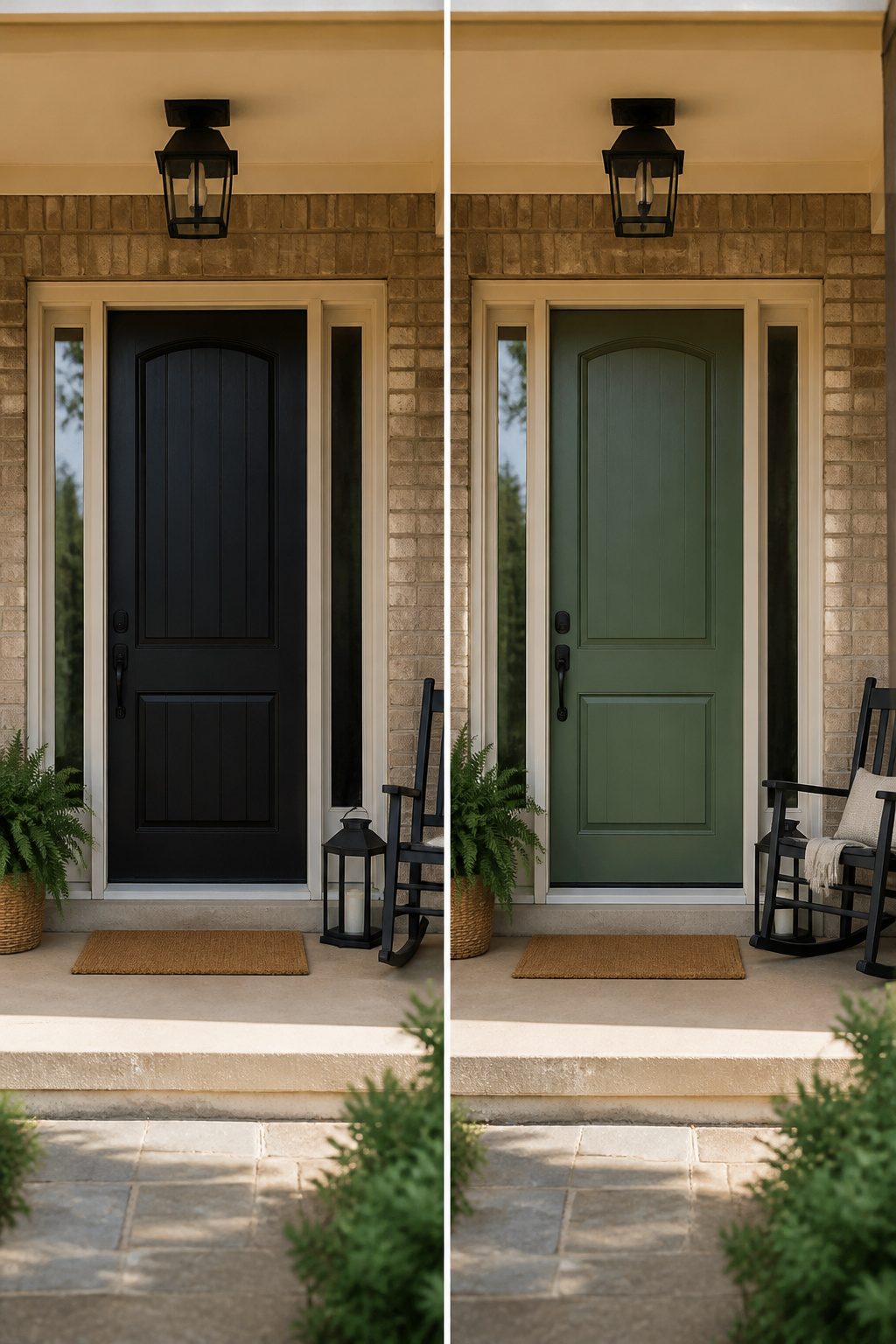
A bold door color refreshes the entire porch faster than almost any other change. Sherwin-Williams 2022 Color of the Year, Evergreen Fog, has worked well for homeowners with exteriors ranging from red brick to painted siding, giving a muted, livable green that reads as color without shouting. Pair the door tone with your porch decor so the palette holds together; a door that clashes with your planters or mat looks accidental rather than chosen. Reds, yellows, and blues can do the same job if green is not your direction, but the principle stays: one strong color, one coherent surrounding scheme. I have watched porches turn from forgettable to finished with nothing more than a Saturday, a brush, and a quart of exterior paint. The cost stays low because the surface is small and the labor is yours. The risk is almost none, and if the color fails, you paint again.
7. Enhance Lighting
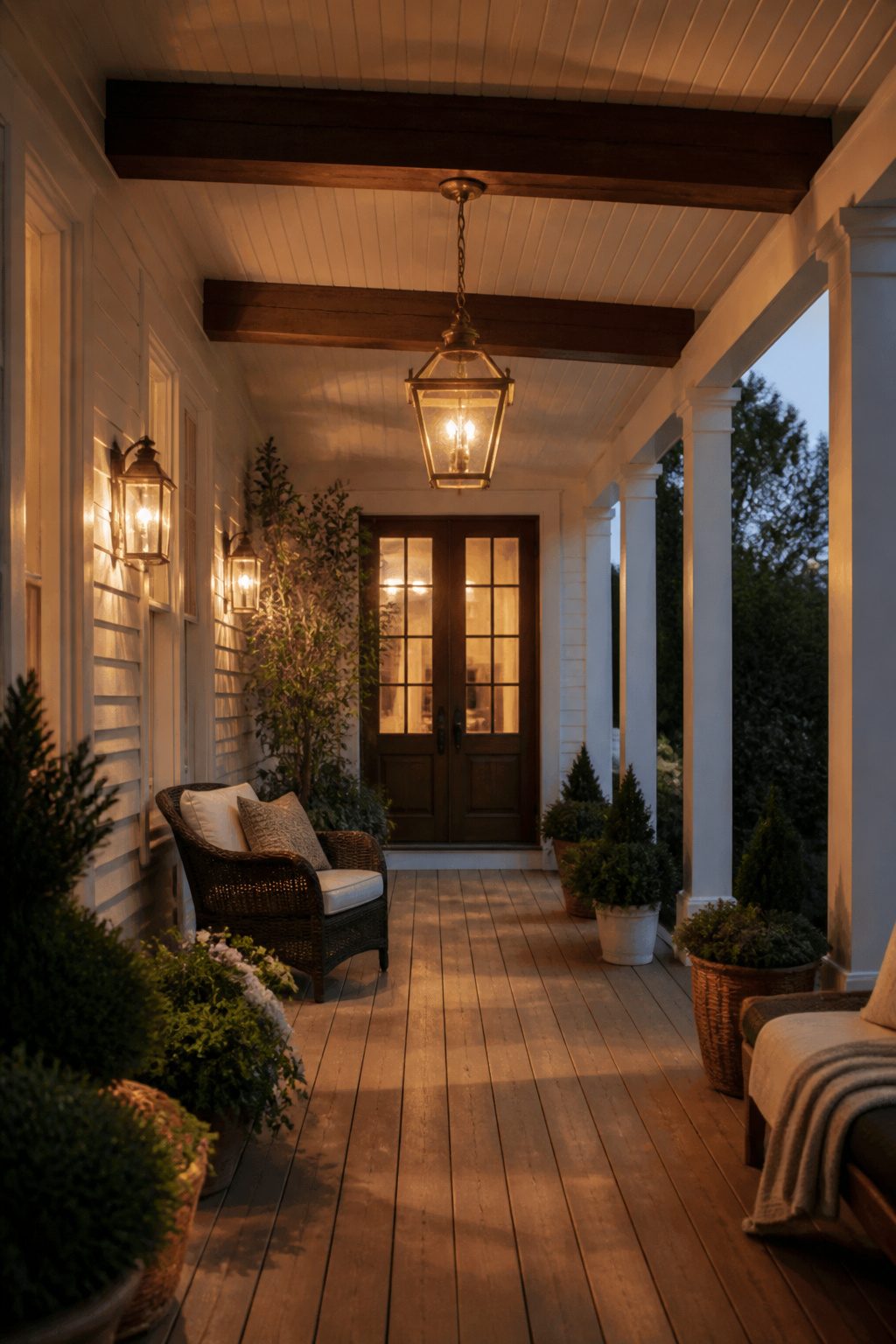
A front porch that goes dark after sunset might as well be a back wall. You lose the hour you need most, the one after dinner when the air finally cools and sitting outside feels like a privilege.
Three kinds of lighting actually work out here, and the difference between them is whether you own the porch or just borrow it.
Solar-powered lights are the friend of a renter or anyone whose porch has no outlet. Stick them in planters or line a pathway. The catch Terilyn Adams noted is the one I remember: solar cells that sit in shadow all day give you a half-hearted glow by eight o’clock. You end up replacing them more often than the package admits.
Gas-powered lanterns throw the warmest light, the kind that makes a narrow porch feel like a room. They need a propane line or tank, which rules them out for plenty of small rentals and puts them firmly on the homeowner side of the fence.
Standard electric lighting, run from an existing fixture or a new outdoor outlet, is the most reliable. An overhead pendant, wall sconces flanking the door, or simple string lights hung overhead. Control is the thing you buy: on when you want it, bright when you need it, not at the mercy of the afternoon cloud cover.
Match the fixture to your house’s style, modern or farmhouse or traditional, and the porch stops looking like an afterthought. That is the part that ties the whole entry together.
8. Keep It Tidy
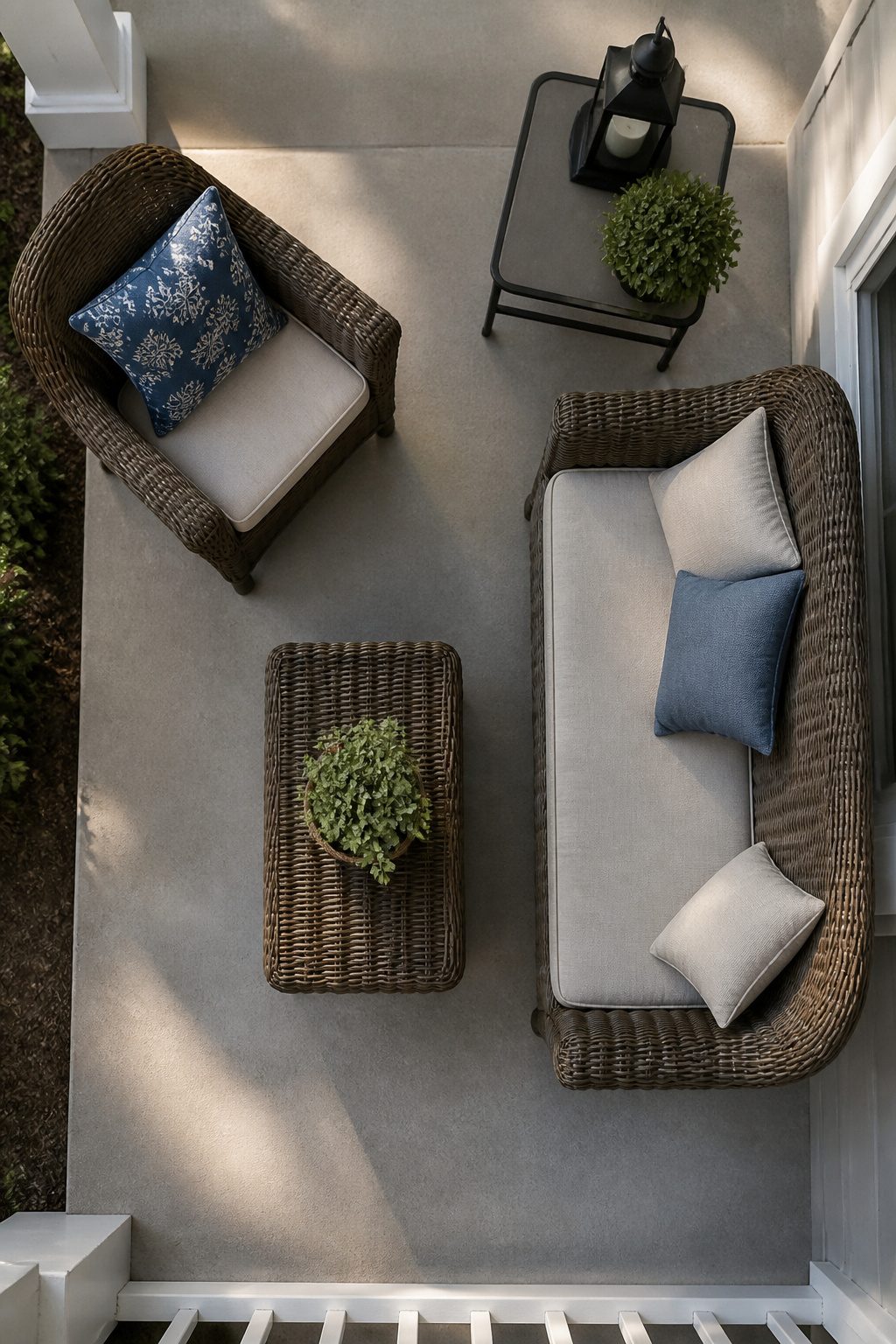
The leaves your neighbor tracked across your threshold three days ago are still there, because a porch collects debris the way a sink collects dishes : silently, until someone decides it is theirs to clear. I sweep mine twice a week in autumn, more after storms; the battery-powered leaf blower lives in the garage not because it is faster, but because I am lazy enough to grab whatever is easiest.
Surfaces matter as much as floors. Wicker keeps pollen in its weave, metal tables streak with pollen rain, glass lanterns fill with dead bugs that somehow defeat every gasket. I give the lantern a proper cleaning twice a year, though I still do not understand how they get inside. Pressure washing before the first doormat hits the floor is the blank slate every other idea in this article needs, or you are building on grime.
Off-season items earn their eviction. The boots, the tools, the hose that froze last January because I left it out: stored now, not displayed. A clean porch reads as spacious even when it is not; a cluttered one shrinks however large the footprint.
9. Add Unexpected Decor
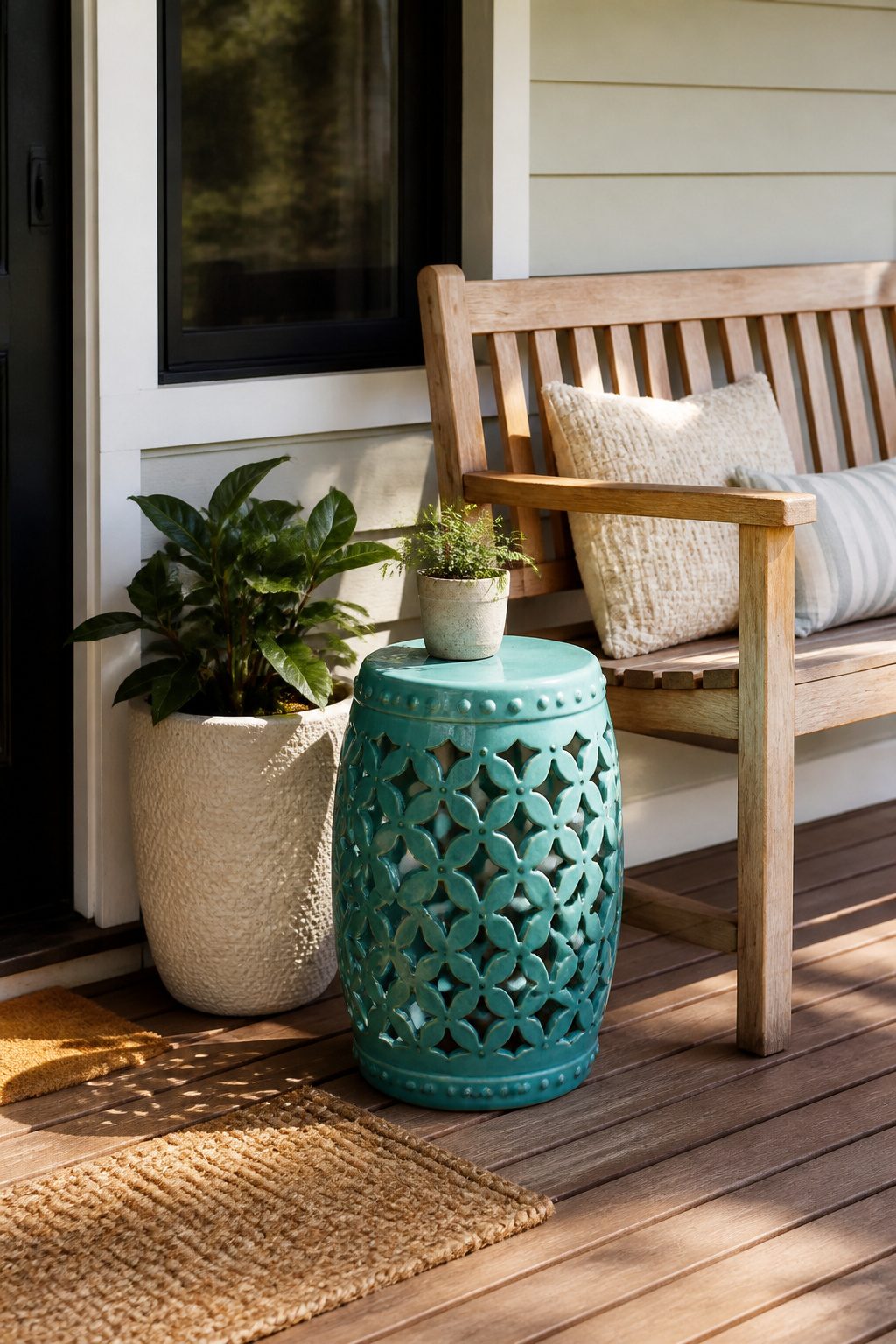
Garden stools that were never intended for porches make the best side tables out there. The ceramic ones hold up to weather, hose off clean, and the cutout patterns cast interesting shadows in late afternoon light. A navy blue stool with a pierced design runs about $75, which beats most outdoor end tables on price alone. Bar carts work the same way, though the math changes: a standard metal cart needs shelter from rain, while the newer weatherproof resin versions can sit out year-round. The trick is choosing something that looks like it wandered in from another room. A tropical bird stool, a rolling cart last seen at a dinner party, a garden seat in a glaze meant for a living room corner. Each piece suggests you found it, kept it, found a use for it, rather than buying a matched porch set in April. That gathered feeling is hard to manufacture on purpose, which is exactly why it reads as real.
10. Use Vertical Space
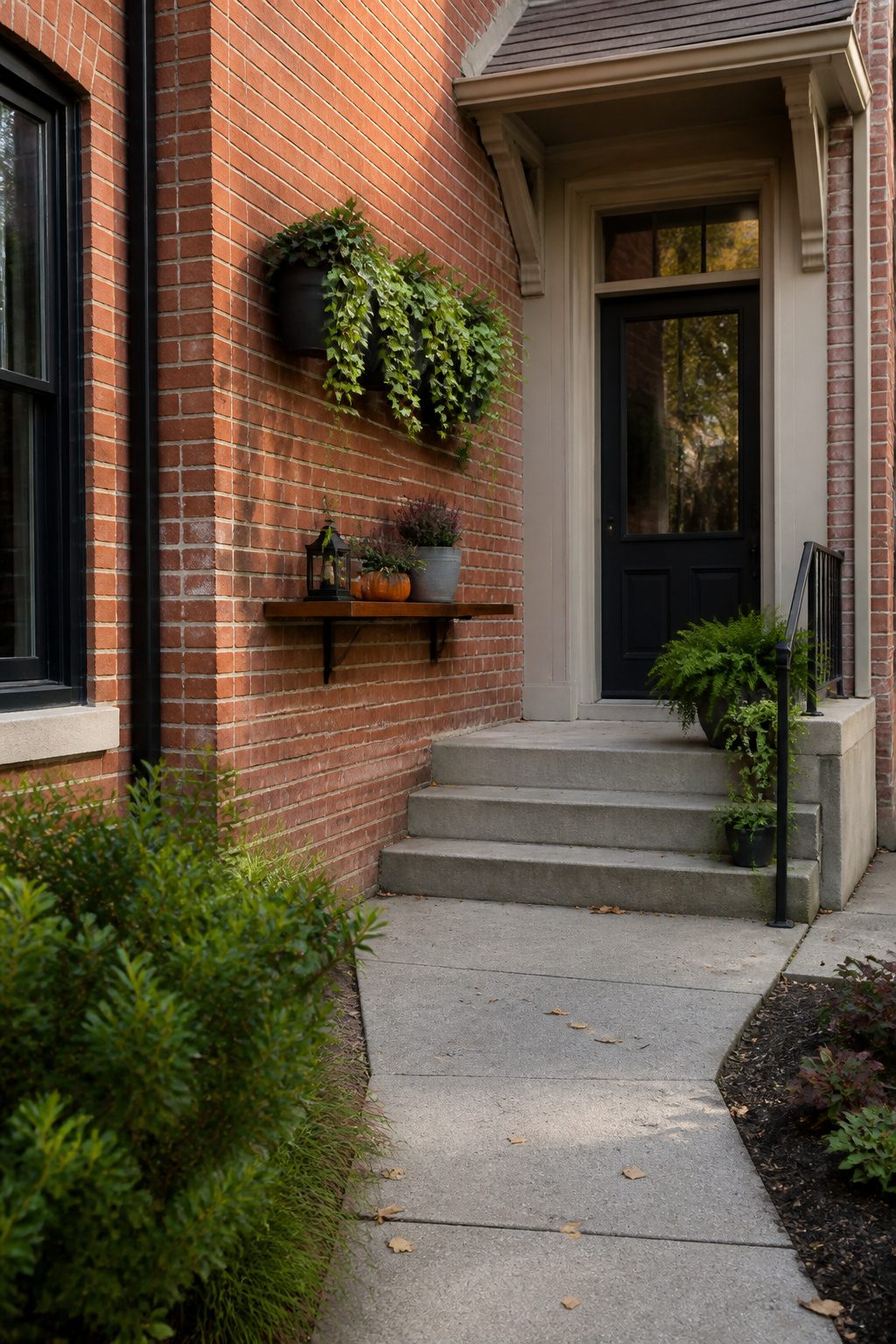
A small porch floor fills up faster than you think. One chair and a doormat later, you’re out of room for anything green. Wall hooks and mounted shelves let you keep plants in the air instead of underfoot, which is the only way to grow on a stoop that won’t hold a single pot.
Hanging baskets already pull some weight upward, but they’re only the start. Wall-mounted planters bolt straight to siding or brick and sit at eye level where trailing ivy or a compact fern gets noticed. Railing boxes clip over the top rail and run the length of it, adding six to eight inches of soil depth that annuals or a line of herbs will fill by midsummer.
I learned this the hard way at my second house, where the porch was so narrow there wasn’t room for a potted plant on the ground. The fix was moving everything vertical: a simple seasonal wreath, details on the railing, anything that added life without needing a footprint. Tall shelving or tiered stands work the same trick if you have a corner to spare, drawing the eye up so the space reads larger than its square footage. The goal is greenery you can walk past without stepping around it.
11. Upgrade Railings or Steps
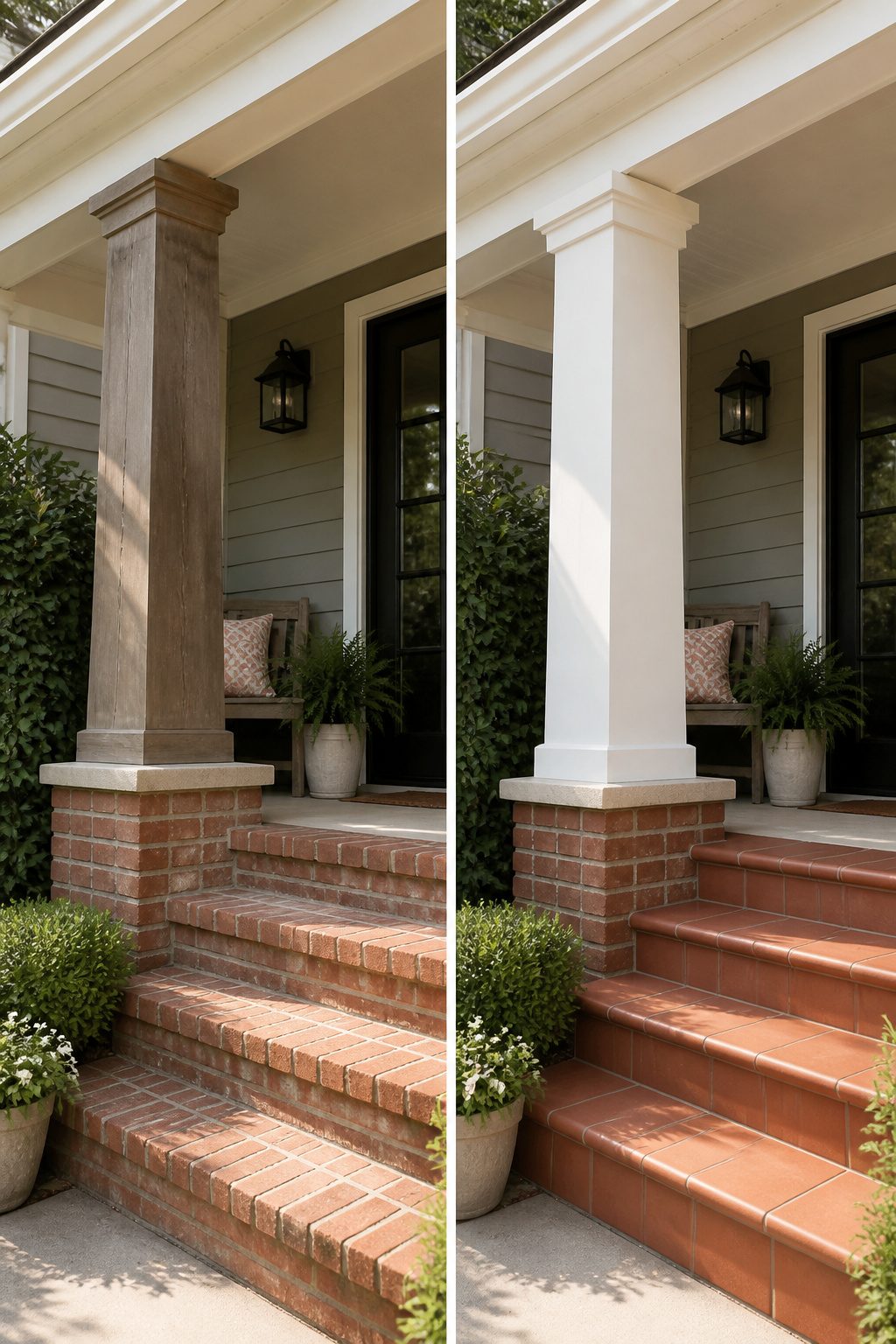
Railings and steps carry more visual weight than most porters realize. Paint flakes there first, and the eye goes straight to it. My own front posts looked tired for three years before I understood that wrapping existing columns in PVC column wraps changes the whole porch without demolition. Karen Ray in Fernandina Beach used Westlake Royal Column Wraps, cellular PVC with virtually no seams, which meant no caulking and no painting afterward. That kind of update reads as custom carpentry at a fraction of the labor. Steps can take tile or a fresh coat, but the posts anchor the look. Start there and the rest of the porch follows.
12. Incorporate Outdoor Art
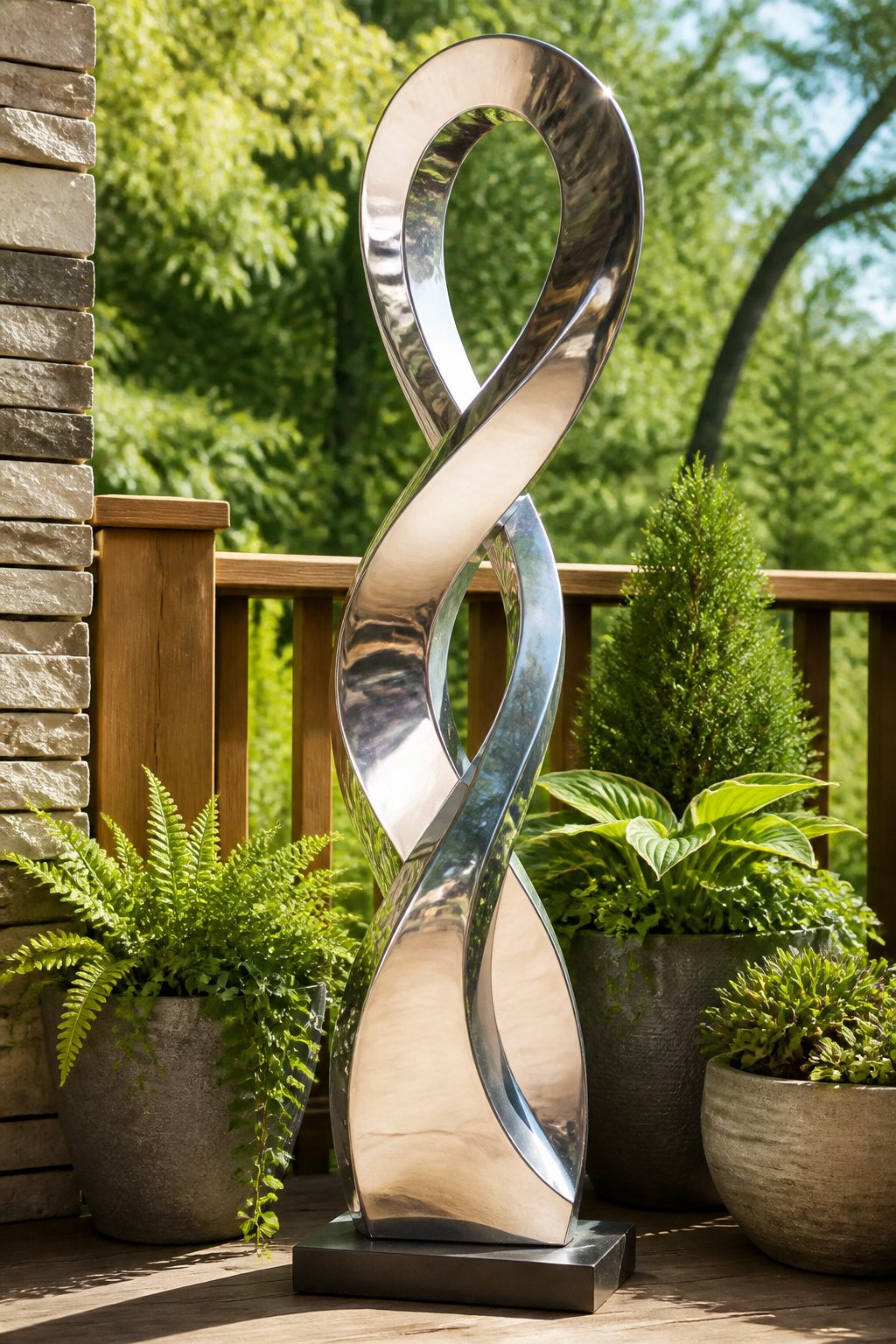
Metal wall art and weather-resistant sculptures add the kind of visual interest plants and cushions alone cannot quite reach. What actually survives a year on a porch, though, narrows the field fast.
Metal and sealed ceramic stand up to the weather; raw wood and untreated concrete do not. A heavy powder-coated steel piece I watched a neighbor install looked sharp through March, then bloomed rust spots from every joint where the coating had scratched during mounting. The treated woods that make it, the ones rated for exterior use with actual rot-resistant preservatives, cost more and still move seasonally. They split if you screw them tight without giving the boards room to swell.
The ceramic question surprised me: not all glazed pieces are equal. Reading through enough product pages, the ones that last are explicitly labeled for outdoor use, meaning the glaze and clay body were fired hot enough to become genuinely non-porous. Standard indoor ceramic absorbs freeze-thaw cycles like a sponge and cracks the first hard winter.
What failed is simpler than you might think. Fabric art marketed as outdoor-friendly, even with UV coating, fades to a different color by August. Reconstituted stone sculptures that looked substantial turned out to be concrete composite; water wicked in, froze, and flaked the facing off in pieces by year two. Stick to materials that either shed water entirely or handle saturation without cracking, and mount anything flat with a slight gap so it dries after rain.
13. Choose Comfy Outdoor Furniture
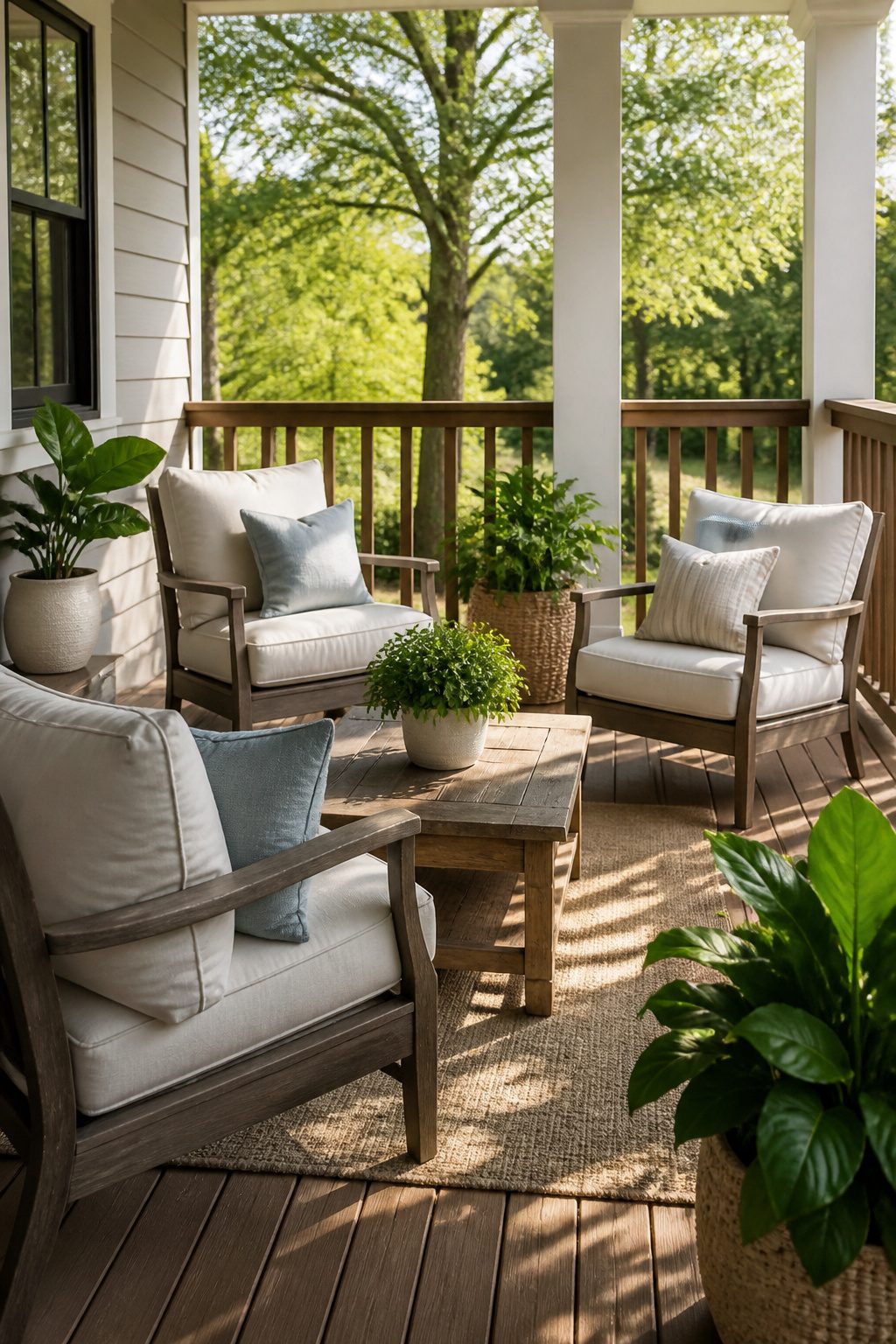
A front porch lives or dies by whether anyone sits there. I learned this after inheriting a wrought-iron set that turned out to be handsome torture devices: the seats pitched forward, the arms hit at the wrong height, and within a month the cushions had migrated to the garage. Comfort comes before style, full stop. A chair that looks good in photos but fights your spine will end up empty, and an empty porch reverts to decoration.
Test seating bottom-first. Sit for ten minutes, not ten seconds. Rockers need smooth motion without tipping; deep seats need enough depth for slouching without sliding out. The materials that survive sun and rain best, resin wicker and powder-coated aluminum, still fail fast if water sits on cushions. Budget for storage, whether that’s a bench that opens or a spot in the shed, because even all-weather foam rots if it stays wet. The chairs themselves can stay put three seasons; the cushions shouldn’t.
14. Add House Numbers
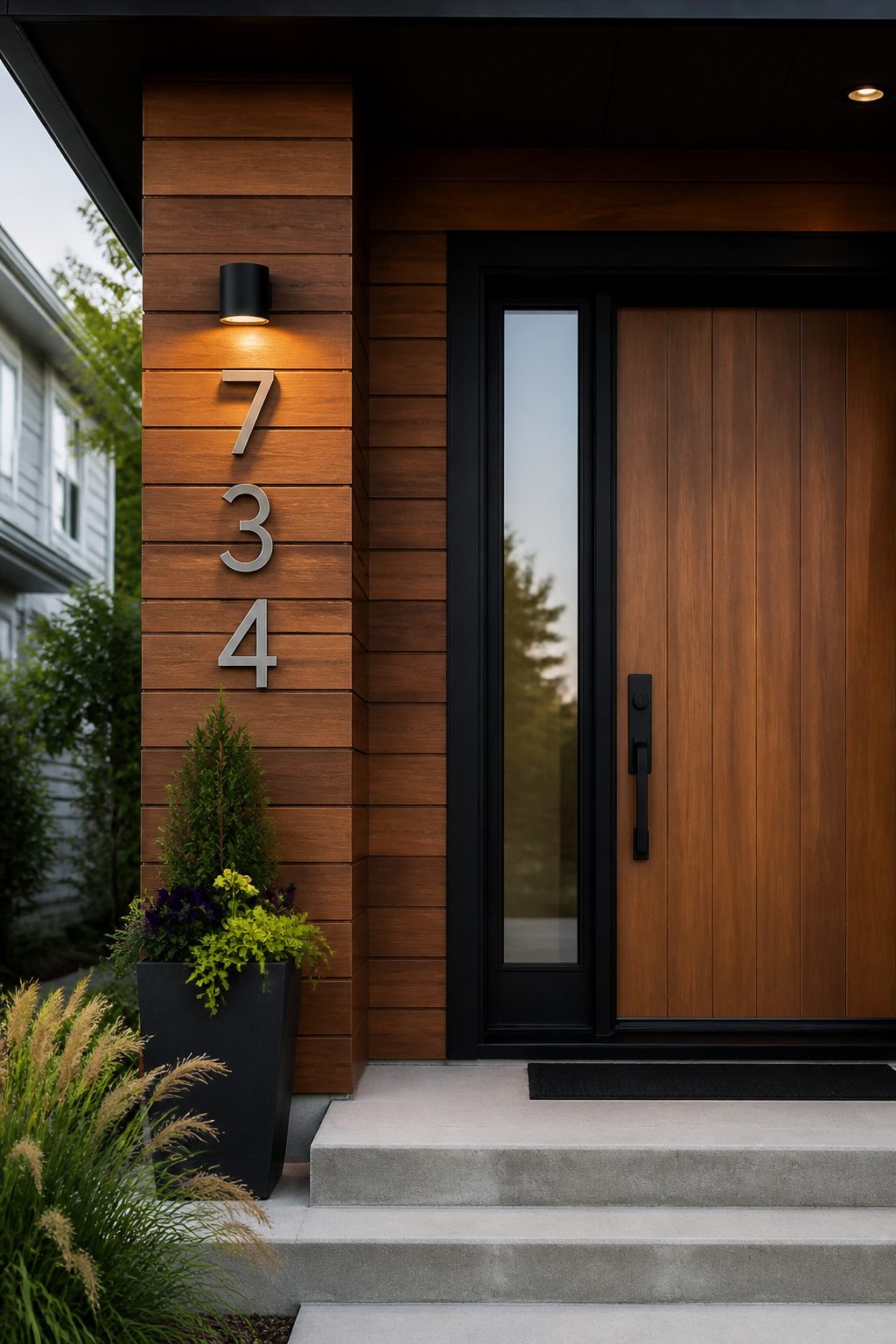
House numbers in a classic serif or sans-serif font read cleanly from the street without turning decorative at the expense of function. Brass, black, or stainless steel finishes tie into other porch hardware and weather differently, so the choice matters more than most people notice until mismatched metals sit side by side.
Four inches tall is the practical minimum for visibility from the curb, though larger faces help on deep porches or where approaching drivers need to spot the address from a moving car. Mount them to the left or right of the door light, never directly above it where glare washes the numbers out after dark. Shadow becomes part of the design at night, and placement that respects the light’s throw keeps the digits legible without adding anything extra.
15. Use Outdoor Storage
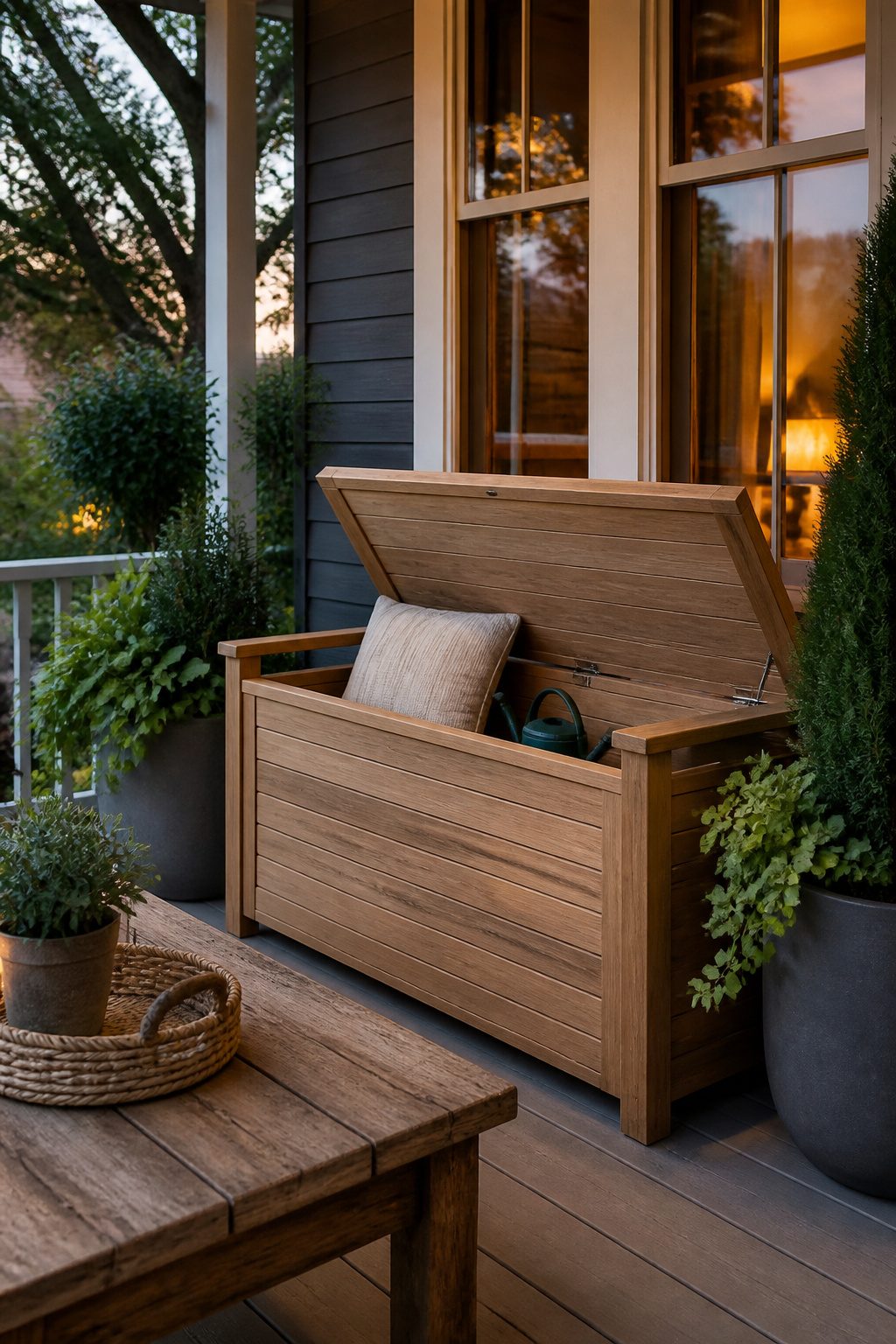
Benches with hidden compartments solve the cushion problem fast. I used to drag ours inside every time weather turned, which meant they mostly stayed in the garage and never got used. A hinged seat with about 20 inches of depth beneath stores two folded-up chair cushions plus a small watering can with room left over for the garden gloves that otherwise migrate to the kitchen counter.
Small deck boxes work on postage-stamp porches where a bench won’t fit. The resin ones sit right against the house without rotting the siding, and most lift open from the top so you aren’t kneeling in the flower bed to reach a trowel.
Wall-mounted crates keep floor space clear entirely. One above the door at standing height stores umbrellas and the dog leash that otherwise lives on the railing. Mount too low and you’ll knock it with a shoulder every single morning.
Seasonal Decor
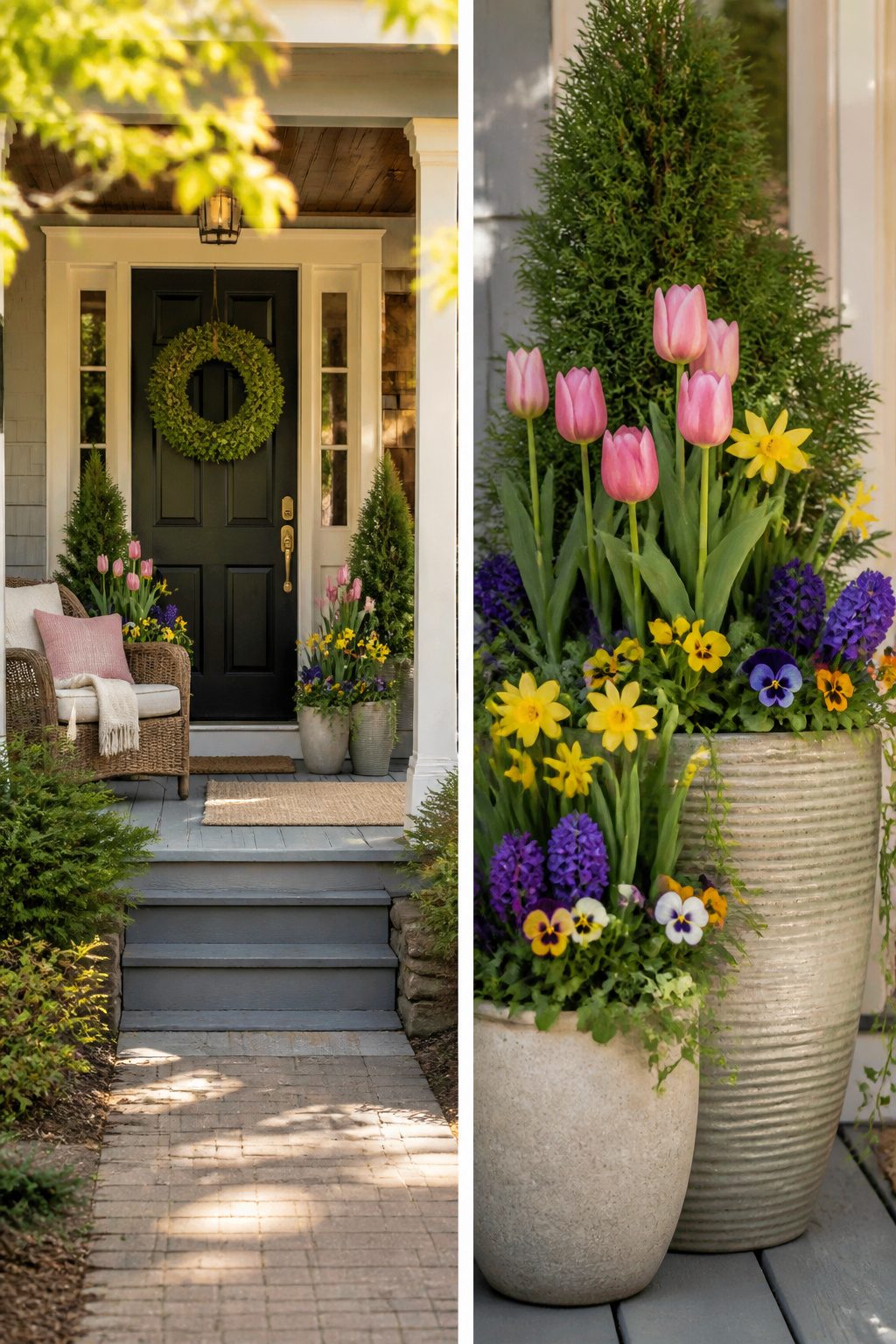
The trick to keeping a porch current without starting over every March is a base layer that stays put and a few small pieces that rotate in and out. My front door has a plain greenery wreath that hangs year-round, and the planters hold boxwoods or a simple cedar topiary that doesn’t fight any season. Against that steady backdrop, a swap of textiles or a temporary wreath reads as a full change even though it takes ten minutes.
For the warm months, I drop in potted flowers that face the right direction for the light; my own porch faces north, so shade-tolerant varieties like begonias or hydrangeas last longer than the sun-hungry ones I used to kill by June. A bright floral wreath on the door and a couple of outdoor pillows in a lighter color finish the look. When fall arrives, the flowers come out, pumpkins or a leaf-tone wreath step in, and the pillows switch to something heavier like plaid. Winter means evergreen wreaths and any lighted piece I feel like plugging in.
Storage is the part nobody plans for. I keep a single flat bin under the bench for off-season pillows and wreaths flattened flat; the faux florals last years if they are UV-treated, so the replacement cost stays low. Real plants obviously don’t store, but the faux ones cycle through three or four seasons before they fade.
Lighting Options Compared
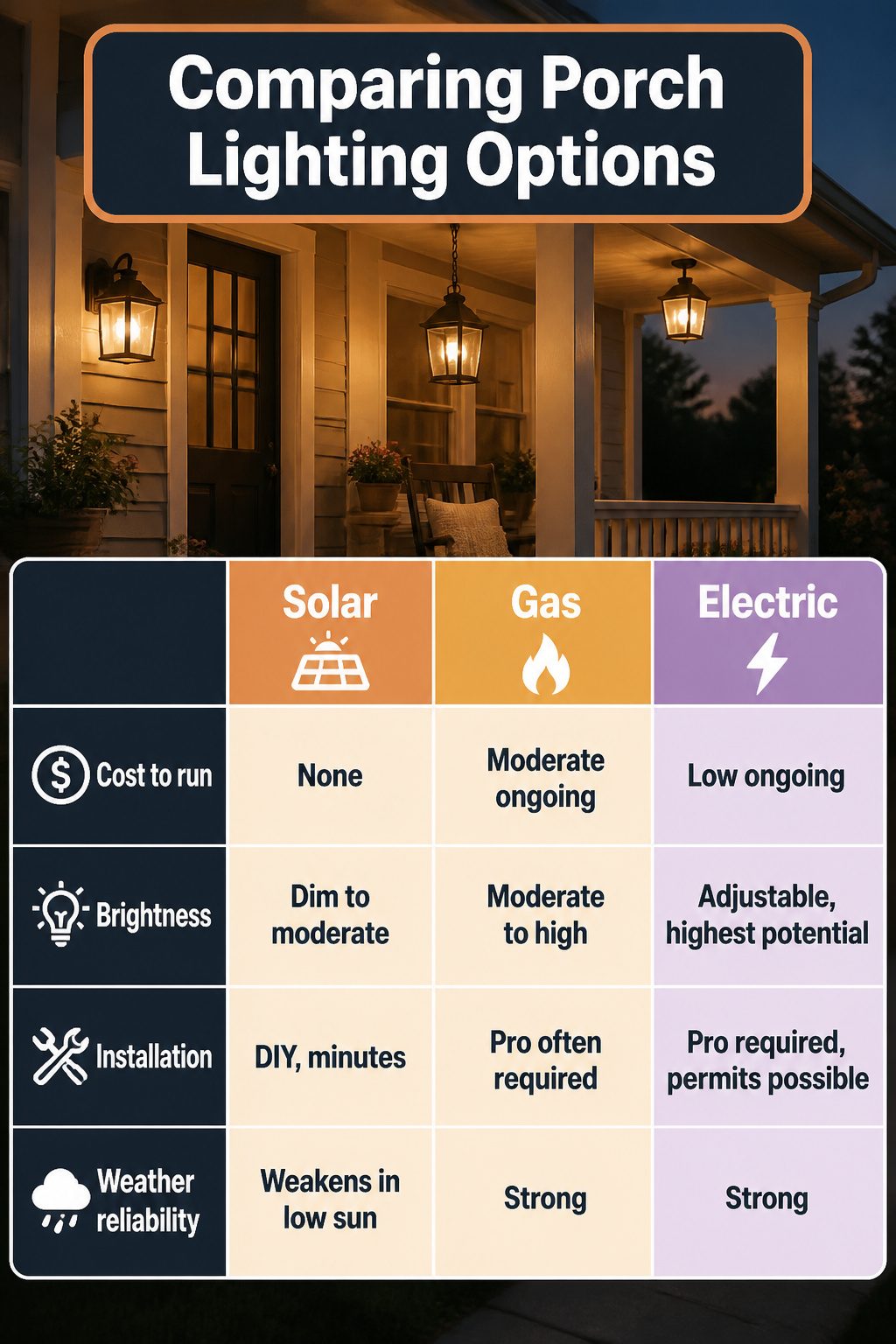
Porch lighting runs on three systems, and the choice matters more than the fixture style. Solar units cost nothing to run and snap into place without wiring, but their stored charge fades fast on cloudy weeks and the glow drops to a glimmer by midnight. Gas lanterns throw a warm, steady light that keeps working in storms and gives a porch real atmosphere, yet you are paying for fuel, checking lines, and the install needs a pro if you do not already have a gas stub. Hardwired electric lands in the middle on brightness and reliability, draws from the grid through rain or overcast, but the upfront work is real: a junction box, a switch, sometimes a permit.
| Solar | Gas | Electric | |
|---|---|---|---|
| Cost to run | None | Moderate ongoing | Low ongoing |
| Brightness | Dim to moderate | Moderate to high | Adjustable, highest potential |
| Installation | DIY, minutes | Pro often required | Pro required, permits possible |
| Weather reliability | Weakens in low sun | Strong | Strong |
For a small porch on that $500–800 yearly budget, solar works if your spot gets six hours of direct sun and you only need visibility, not reading light. If the porch faces north or sits under trees, solar becomes decoration you cannot read by. Electric wins for function per dollar long-term, but only if the house already has an exterior box; running new wire from the panel can eat a whole season’s budget. Gas makes sense when the line is already there and the look matters as much as the lumens.
Mosquito Control
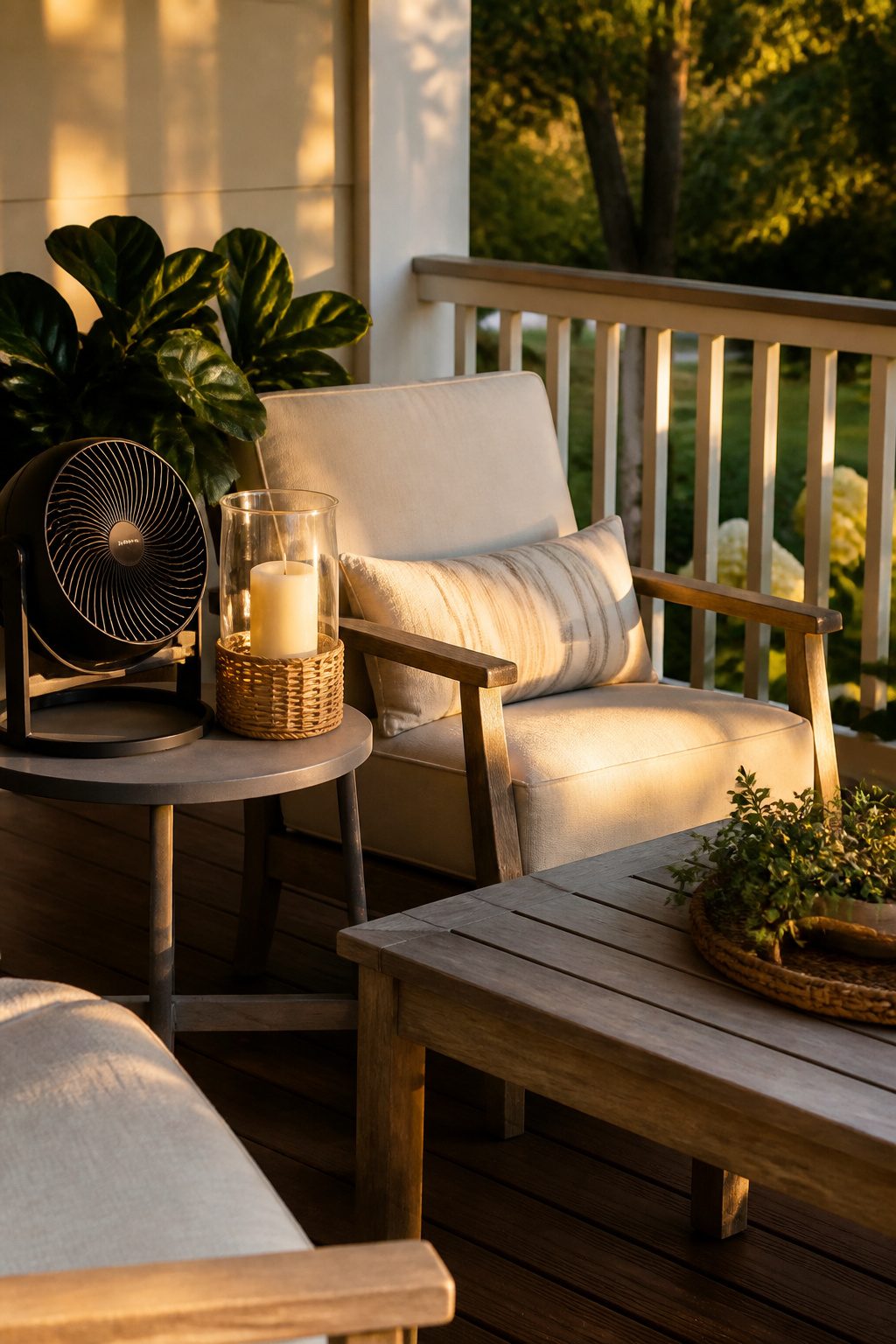
Mosquito control decides whether a porch gets used on summer evenings, and only a few front porch ideas bother to mention it. The Thermacell line runs on a small butane cartridge that heats a repellent mat, creating a fifteen-foot zone without cords or plugs. I keep one on the side table and light it the minute I sit down. The difference between swatting every thirty seconds and forgetting bugs exist is that small blue flame.
For coverage without buying anything, a basic box fan set on low does more than citronella ever managed. Mosquitoes are weak fliers, and steady air keeps them from landing. I aim mine across the seating area and let it run on battery if the outlet is across the porch.
Plant-based options that need no electricity include citronella candles in glass hurricanes, which add light while they work. The scent is strong, so I set them downwind of where I sit rather than beside me. Between the Thermacell zone, the fan’s current, and a candle at the porch edge, I have not reached for spray in two summers.
Layering Textures
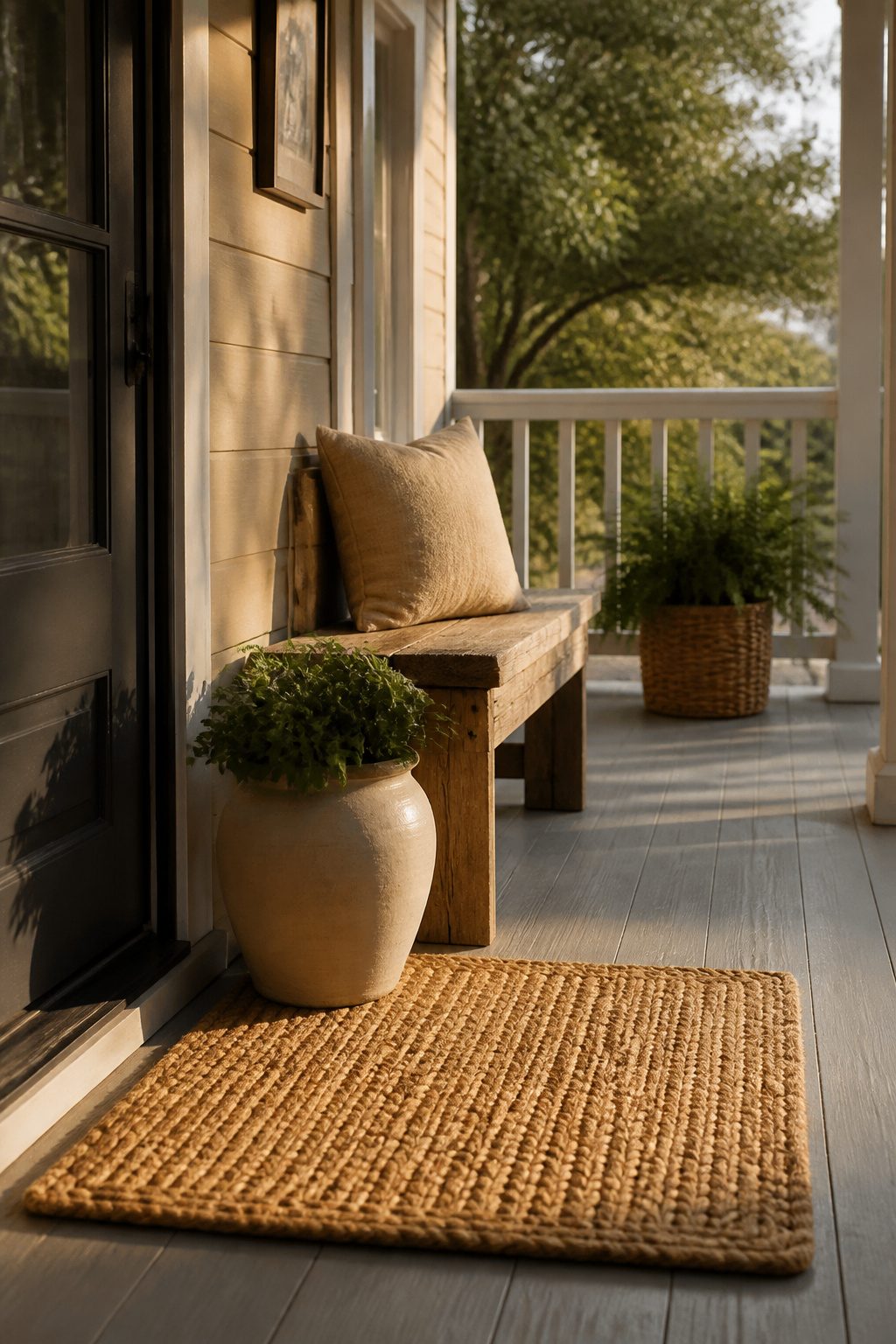
The polished front porches that hold up over a season are the ones built from mismatched materials that somehow agree. Woven doormats against metal planters, wood benches with cushions that have gone soft in the rain, a brick step catching the edge of a terracotta pot. Each piece carries its own texture, and the eye reads them as depth rather than clutter.
Mine is braided jute at the door, black metal urns flanking it, resin boxwoods that read as living from the street. The wreath rotates: forsythia branches now, boxwood later, nothing precious. The resin urns cost thirty dollars and look like cast concrete because they are fluted, not smooth, and because I leave the drip stains alone. A small porch compresses everything into one view, which means the textures have to talk to each other across eighteen inches, not across a lawn.
The limit is three materials, maybe four, and one of them has to repeat. Metal repeats in the urns and the sconce. Woven repeats in the mat and the seat cushion. Wood is the floor and the bench, so it counts as architecture, not accent. Add a fifth texture and the porch becomes a stall. Add a second woven thing in a different weave and it collapses into theme. My early attempt ran wicker, jute, seagrass, and twine in the same twelve square feet. It looked like a basket exploded. I kept the jute and burned the rest in the fire pit.
Small porches especially need this discipline. A few large pieces carry more weight than many small ones, and texture is one more way to make a single planter or a single bench do more than its size suggests.
Small Porch Layout
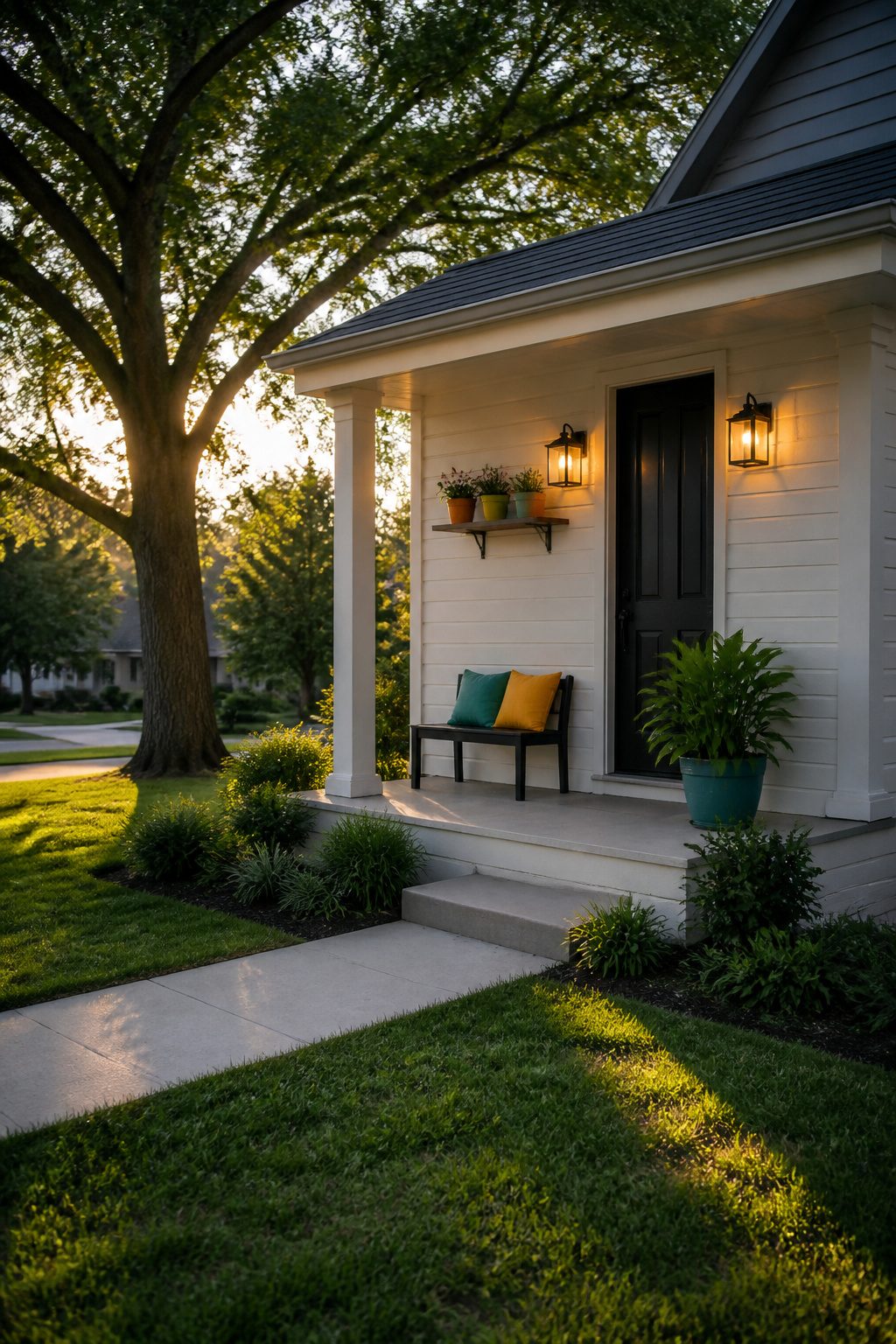
A small porch forces a choice that a wide one never does. Gutierrez’s advice to mount whatever you can is the rule that sorts the list of fifteen into a workable four or five. Wall sconces on either side of the door, a pendant above, even a skinny trellis for jasmine, all live vertically and leave the floor alone. That floor is your first cut. Skip anything that sits low and sprawls, including traditional planters that eat walking space; the galvanized tall narrow ones with boxwood or upright grasses replace them, sitting at the edges and drawing eyes up instead of out.
The bench is where you compress rather than cut. One long shallow bench tight against the wall with linen cushions gives you seating and a place to set a bag without a separate table. The vintage wrought-iron bistro set Fahmy suggests is charming, but on a truly small porch it is the thing you walk around. Choose the bench, and only if the wall allows it.
Color is your combining move. Pink and French blue on pots and trim, as one project used, unifies what little you have so the space reads as intentional rather than cramped. That leaves ground cover: stone or brick instead of siding adds visual weight without projecting into the room you do not have. Two moves up, one move solid underfoot. That is the order that matters.
Frequently Asked Questions
How do I decorate a small front porch?
Use large planters, incorporate greenery, and keep the space tidy. Two oversized planters flanking the door do the work of six scattered pots, and wall hooks or mounted shelves move plants off the floor. A bench only works if your porch is deep enough to open the door without a shuffle-step; otherwise, focus on railing style, door color, and a tailored doormat.
What plants are best for a front porch?
Choose plants that match your light conditions, or use high-quality faux plants for tricky spots. Real ferns suit shaded porches and geraniums handle sun, while UV-treated artificial boxwoods and fiddle leaf figs stay presentable for several seasons without water or wilt. Mixing live and artificial plants keeps some tending without making the whole display fragile.
How can I make my front porch look inviting?
Add comfortable seating scaled to your space, reliable lighting you can control, and seasonal decor that rotates against a steady base layer. A bench or chair turns a pass-through into a place you use, but only if it does not block the door swing. String lights or wall sconces keep the porch usable after dark, and a year-round greenery wreath with swapped pillows or a temporary seasonal wreath reads as a full change in ten minutes.