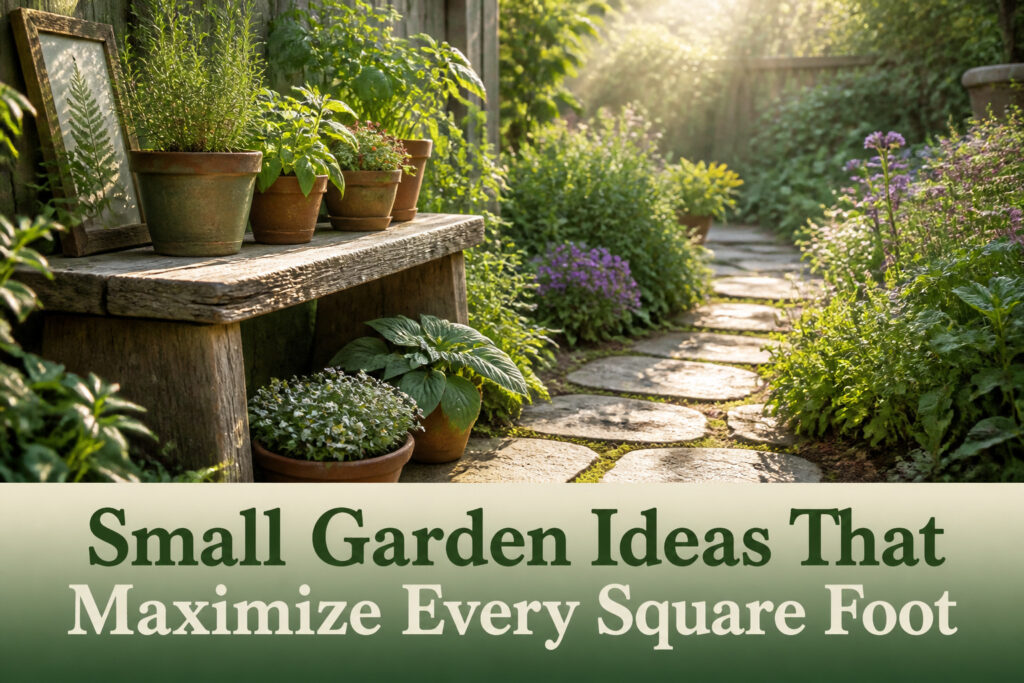
Small garden ideas range from a $35 solar fountain to a $180 storage bench, and the deciding factor is not budget but sequence: what you install first determines whether the space works or fights you.
The author learned this after twelve tomato plants took over a 10-by-12-foot plot and left her eating standing up through August.
1. Vertical Gardening to Maximize Space
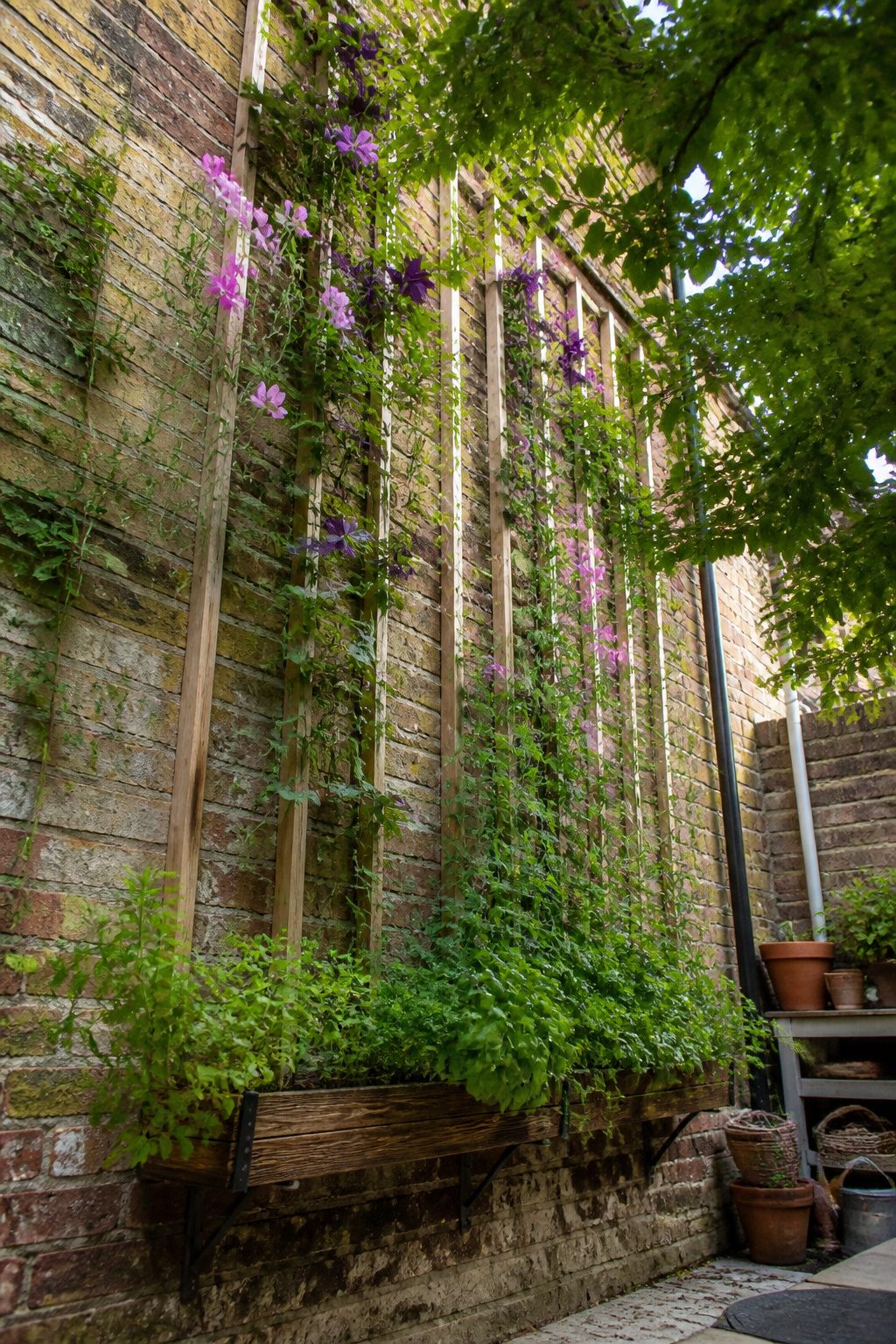
The first trellis I bought was a mistake: a six-foot painted wood frame I wedged against the apartment wall without a plan for what would climb it.
Morning glories took over in three weeks, smothered a window, and left me pulling seedlings out of the gutters for two years after.
Wall-mounted planters and narrow trellises work only when you match the plant to the support before you buy either.
A delicate clematis or sweet peas suit a slim Georgian-style wall trellis; vigorous climbers need a gap from the house and a heavier frame, or you will be cutting them back twice a week.
What grew well for me after that first mess was edibles on purpose: dwarf Borlotti beans up a balcony railing with a built-in trellis, annual vines that died clean in October and let the light back in.
Tomatoes on a short vine against the south wall gave me fruit the container tomatoes on the ground never matched, simply because the air circulated better and the foliage stayed dry.
What flopped was jasmine I tried to train flat; it wanted depth, not a two-dimensional plane, and looked sparse and sad all season.
For renters or anyone working a patio or balcony, a planter with a built-in trellis buys you the vertical layer without the landlord issue.
The ground footprint stays whatever the pot demands, and the upward growth gives you the screening or the green wall that makes a small space feel enclosed rather than cramped.
2. Container Gardening for Flexibility and Color
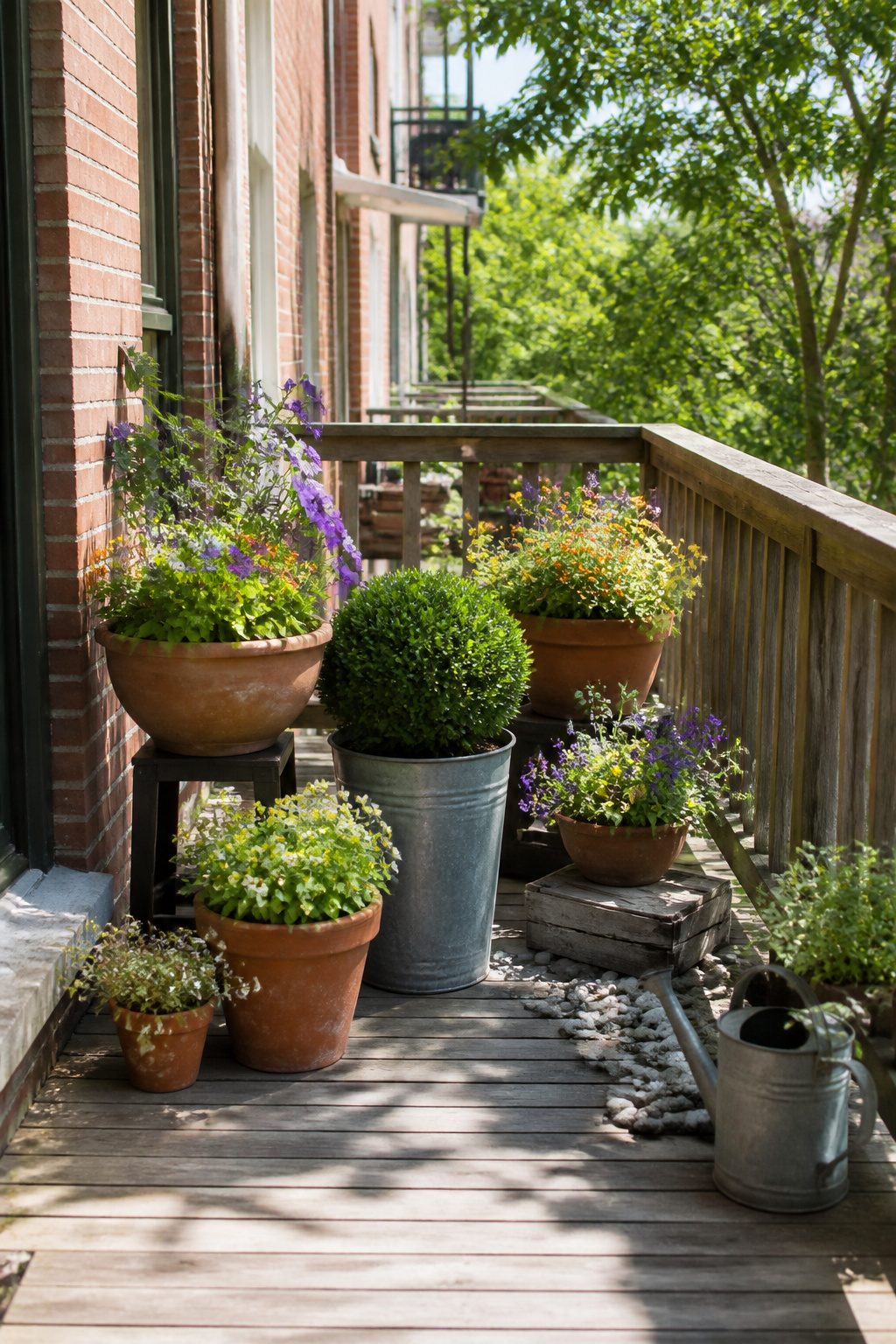
A patio or balcony becomes the main stage when floor space is the only space you have.
My first season, I bought a starter set of pots for about $45, two galvanized zinc planters and three terracotta bowls in graduated sizes, and that mix of heights did more for the look than any planting decision I made.
The zinc held boxwood for structure against the railing; the bowls filled with annuals I swapped out as the seasons turned.
What I had not expected was how much I would move them. A pot that sat full sun in June cooked by August, so I dragged the blue morning glories to the east corner where they lasted two extra weeks.
A heavy pot is an anchor you are stuck with; a light one is a tool you can redeploy.
The small space gardener learns to treat containers as modular pieces.
Herbs, a compact tomato, and trailing nasturtiums can share one large planter for a single-season kitchen garden, or you can split them into separate pots and rearrange the color blocks whenever the view from your window goes stale.
Fewer tomatoes per pot is the trade, but the flexibility earns it back.
3. Raised Beds for Easy Access and Organization
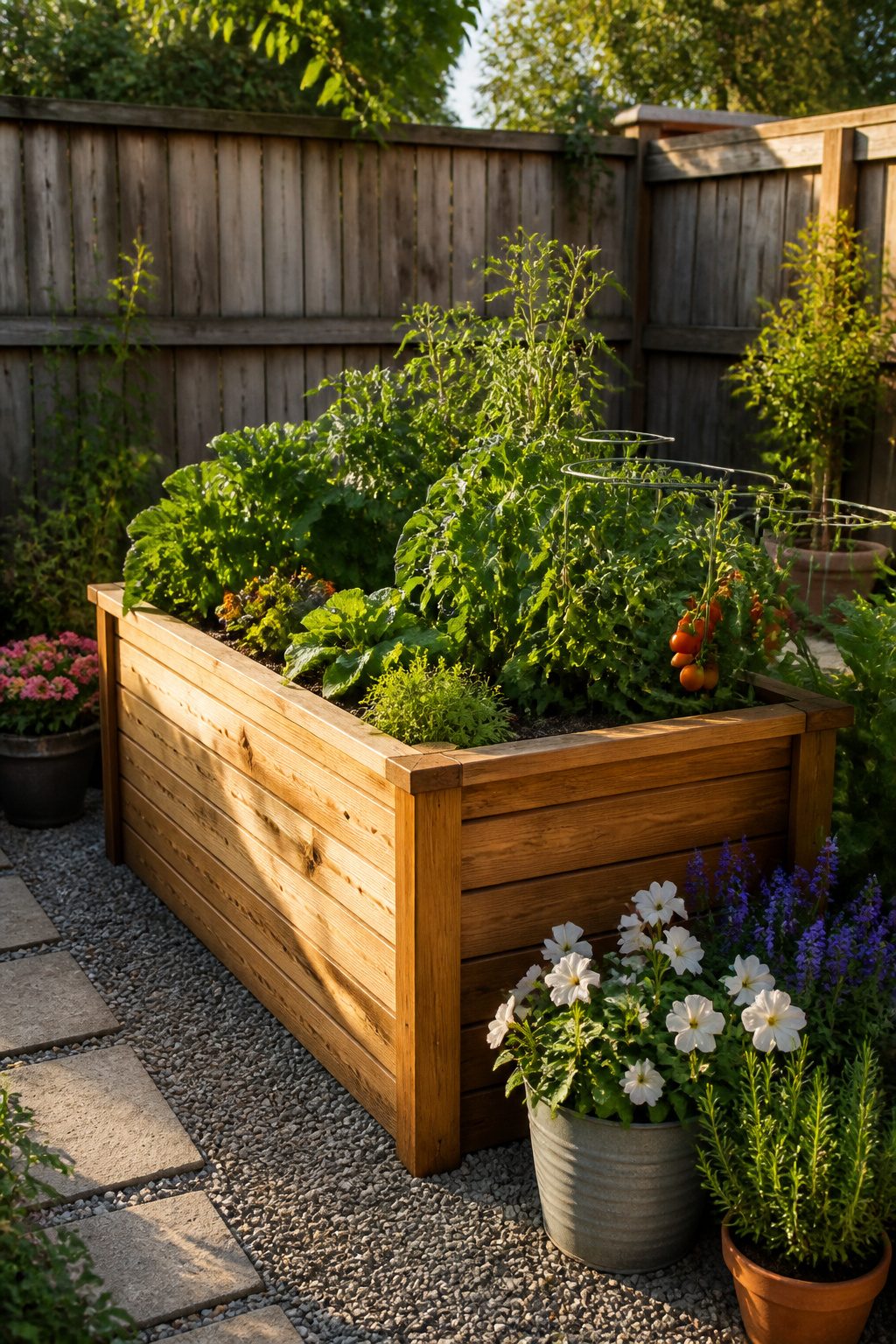
Raised beds solve the drainage problem that sinks small gardens in heavy soil.
Water doesn’t pool at the roots the way it does in compacted ground, because you fill the frame with loose, bought or amended mix above the native grade.
That control matters more in tight quarters, where every failed planting costs you a season you don’t have room to repeat.
The 4-by-4 bed I built sits at 32 inches high, the height of a standard kitchen counter. You build to the reach of your arms and back, not to a picture in a catalog.
At four feet square, I can leaning into the center from any side without stepping in and compacting the soil, which keeps the structure clean and the paths around it usable.
A taller frame means no bending to tend seedlings or pull the stray weed that shows up in March.
Raised beds also corral the chaos. In a small yard, the defined edge reads as deliberate; trailing herbs or a few compact flowers planted around the rim soften the box without letting the vegetable plot look like an afterthought.
Traffic stays on the path, plants stay in the soil, and the whole thing looks like you planned it that way.
4. Multi-Functional Furniture
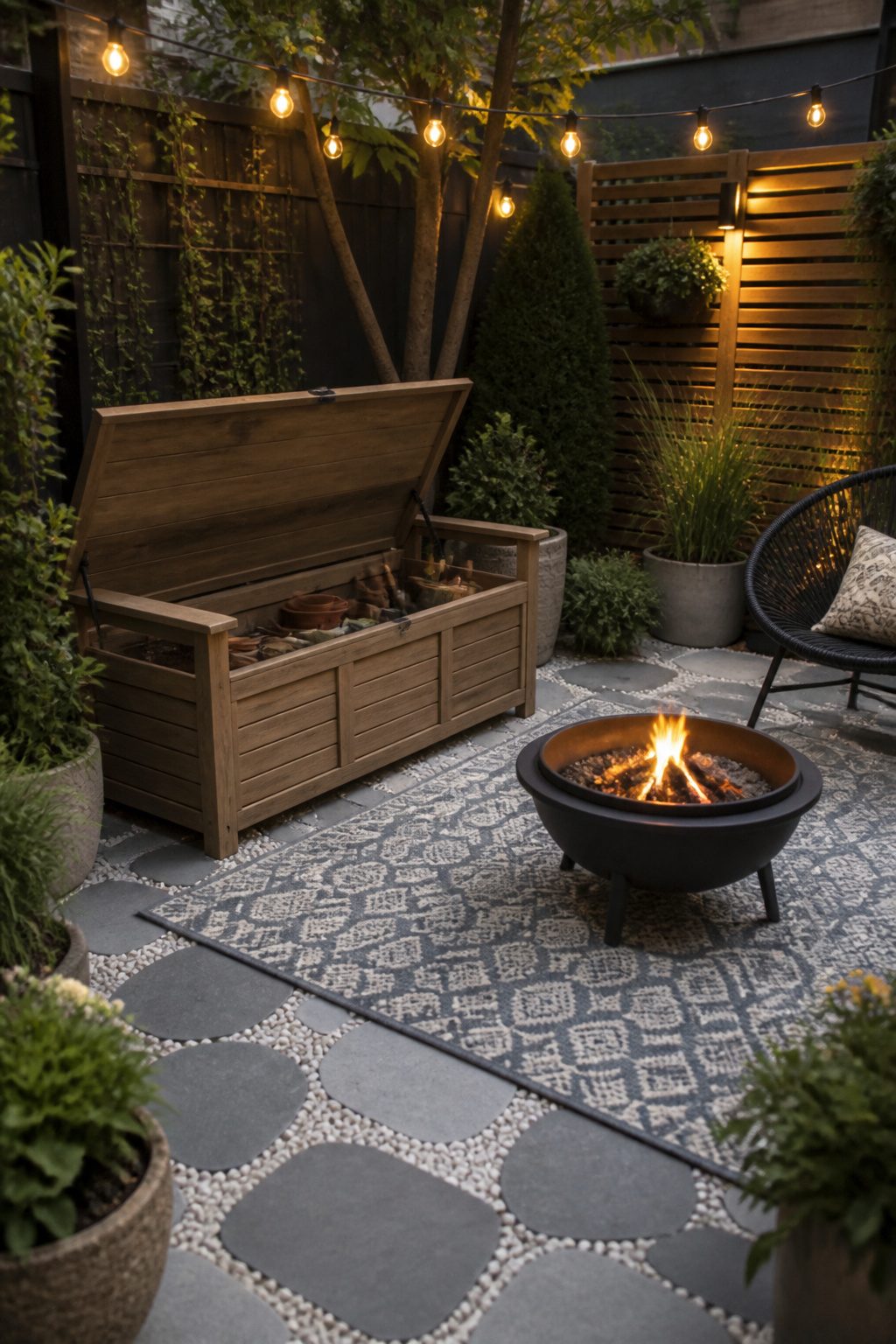
My folding table stays in the garage nine months of the year, but that is the point. For the two months I host dinner outside, it earns its shelf space by not occupying my patio the other ten.
The $180 storage bench I bought last spring does the opposite: it sits out in all weather and holds every hand tool I own under a lift-up seat that actually keeps them dry.
A bistro table and two chairs would have been cheaper up front, yet I would still be tripping over a separate toolbox every time I watered.
The gas fire pit doubling as a coffee table is the purchase I wish I had made first.
For two years I kept a glass-top table and a separate propane column; the pair ate up walking room I did not have.
The combined unit costs more than either alone, but it removes the choice of which footprint to tolerate. If your budget forces one or the other, the bench wins for daily use.
The fire pit wins if you actually sit out after dark more than twice a month.
5. Layered Planting for Depth and Interest
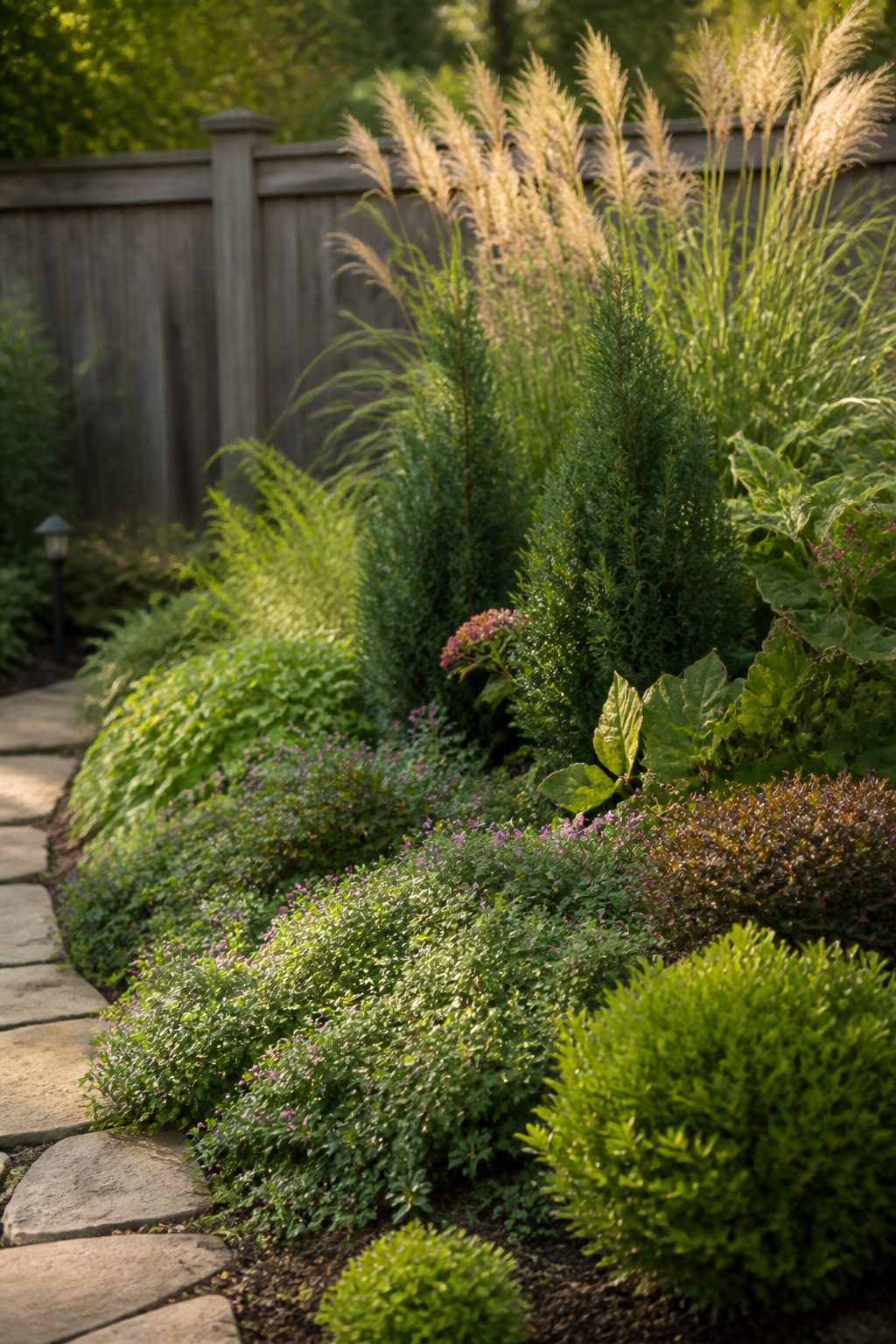
Layered planting builds depth from the ground up, and tall plants belong in back, short ones in front is the rule I mangled the first season out.
I put a young clematis trellis at the edge of my narrow bed, then filled forward with low sedum and creeping thyme.
By June the vine was a green wall blocking everything behind it, and the whole bed read as a flat mat with a screen on top. No foreground, no middle, no place for the eye to travel.
The fix is working in four actual layers. Groundcovers, edible or ornamental, form the floor.
Dwarf evergreens and deciduous shrubs sit just above that, functioning as low dividers or accent masses.
Taller grasses, small-scale trees, and screening shrubs carry the vertical structure; in a tight space these add privacy without eating square footage the way a spread shrub would.
Vines on a slim trellis hit the topmost layer, height with almost no ground commitment, something even a balcony planter can manage.
Seasonal interest comes from choosing specimens that do more than one job: a small tree with spring flowers and fall bark, a perennial that carries structure through winter.
The framework layer, those trees and evergreen shrubs, gives year-round bones so the bed never drops to bare soil. I still tuck a few annual vines for quick coverage, but the permanent layers handle the real spatial work.
6. Hardscaping to Define Areas
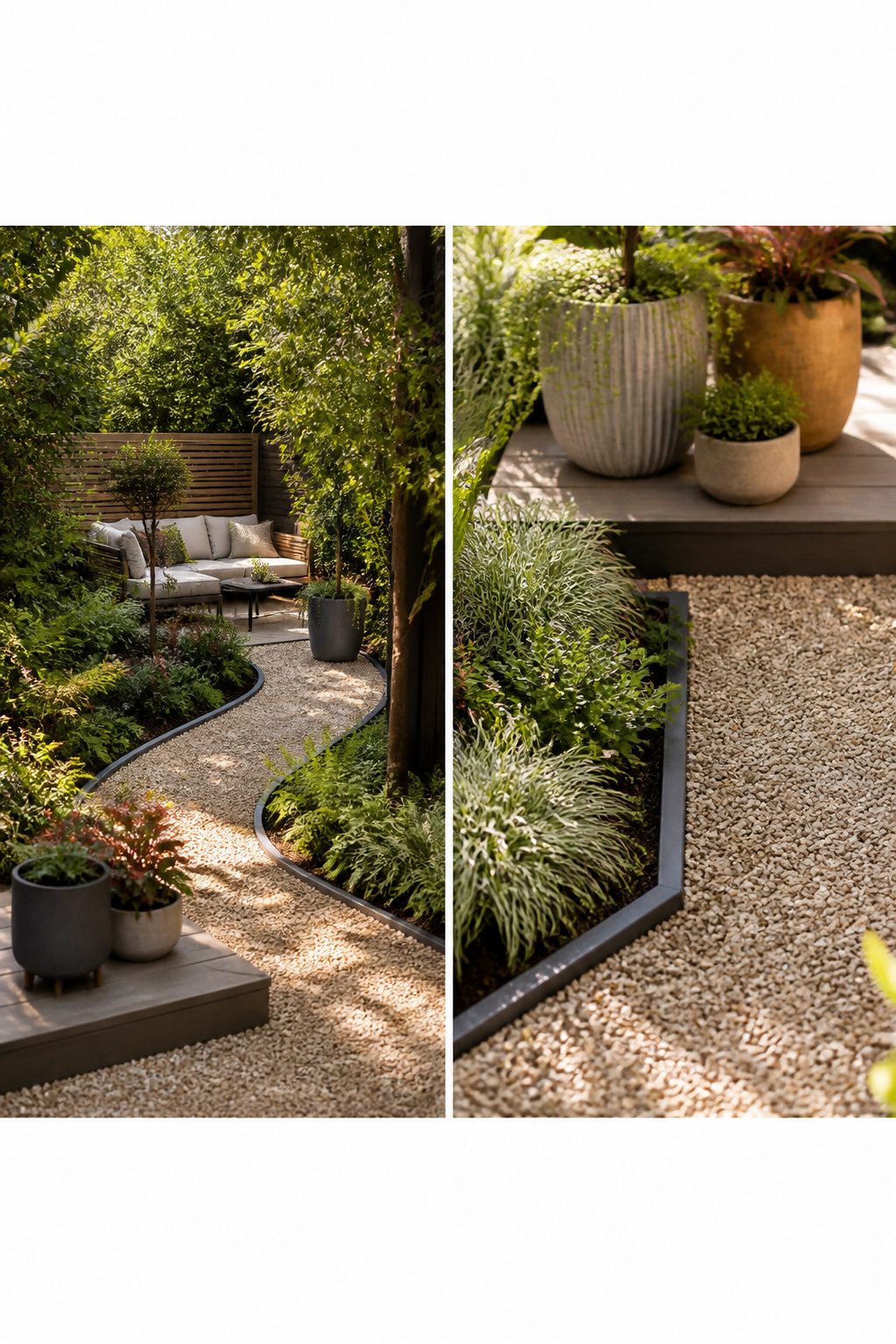
A path or gravel edge does more than guide your feet.
In my last rental, the whole backyard was 120 square feet of tired sod, and laying a strip of pavers from the door to the fence divided it into three zones without a single wall.
The sitting area read as one room, the beds on either side became separate planting rooms, and the eye stopped treating it as one cramped rectangle.
Pea gravel tracked everywhere. I tried it for the path first, figuring it was cheap and soft underfoot, but every rain sent it into the lawn and every shoe carried it onto the patio.
Switching to larger, angular gravel fixed it: the pieces lock together instead of rolling, and a sweeper keeps the edges clean in about thirty seconds. Clean lines between materials are what make a small yard feel organized and intentional.
Without them, even careful planting looks like it happened by accident.
7. Water Features for Ambiance
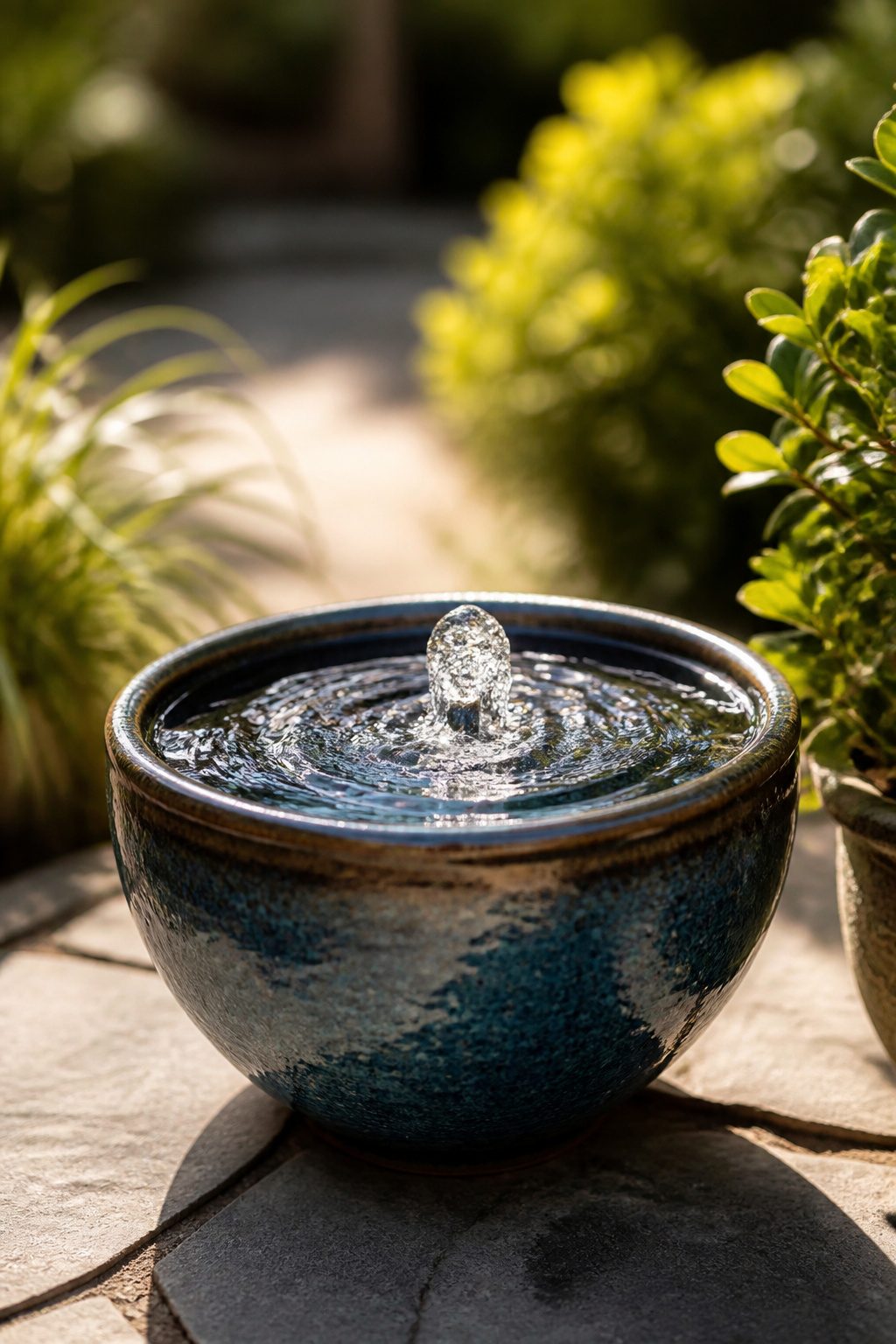
A solar fountain bought for thirty-five dollars ran for most of one summer before the pump choked on algae and the plastic basin cracked in a freeze I should have seen coming.
The sound while it lasted was worth more than the price: running water masks traffic and neighbor noise in a way nothing else quite manages, and warblers started showing up on the rim most mornings.
What replaced it sits in the same spot, a glazed ceramic bowl about sixteen inches across with a small submersible pump on a timer. No solar panel to fade, no battery to fail.
The ceramic will crack too eventually, but not from ordinary cold, and the pump costs twelve dollars to swap.
For attracting birds, still water works almost as well as moving if you keep it shallow; the fountain just brings them in faster and keeps mosquitoes from settling.
The bowl sits on the patio stones, not in ground, which matters on a rental.
A small water feature does not need a pond liner or a digging permit or much of anything except a level spot and a way to plug it in.
8. Outdoor Rooms for Different Activities
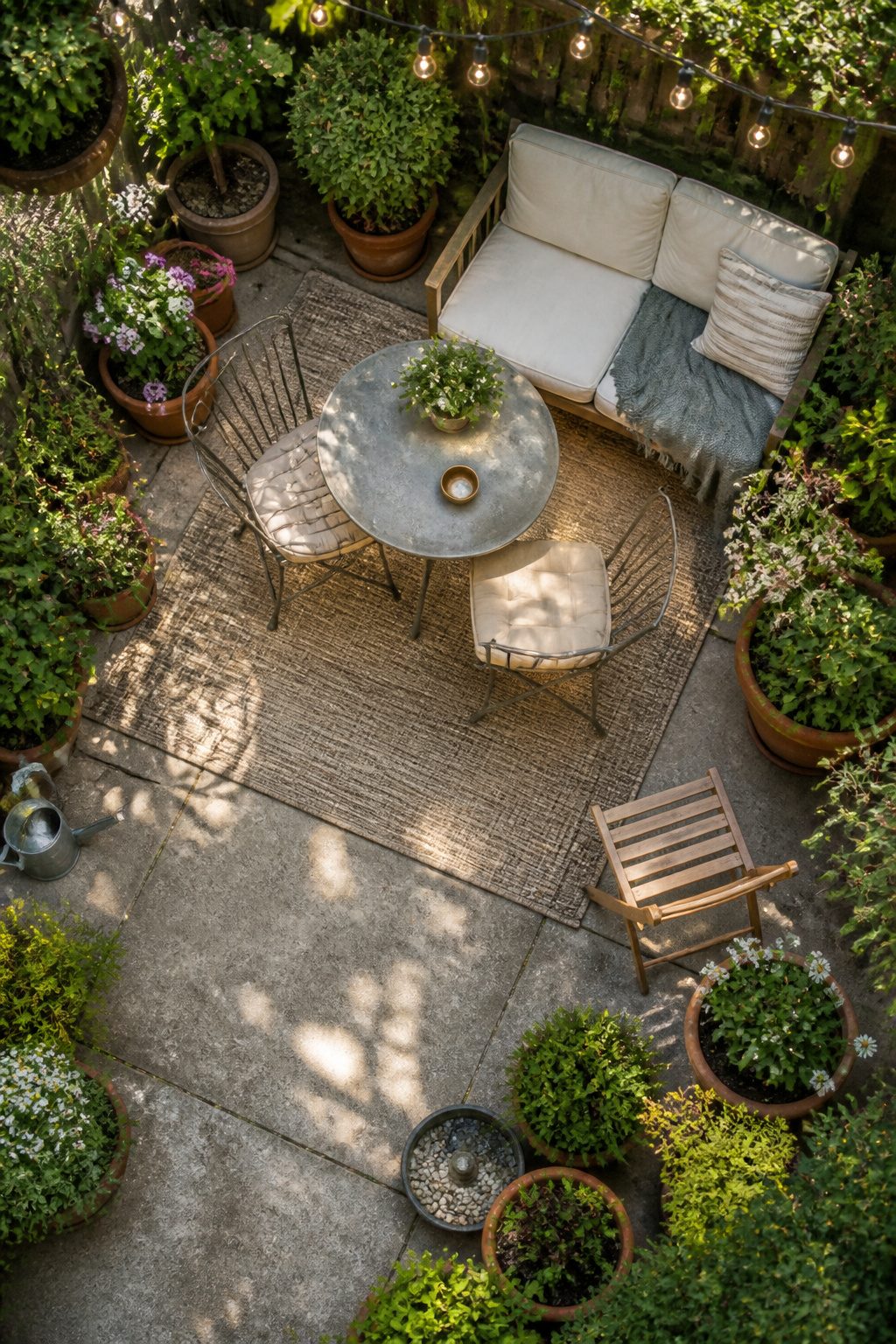
My small yard had to work harder once I stopped treating it like one open rectangle. The shift came when I laid a flat-woven outdoor rug under the bistro table and strung waterproof lights overhead at about eight feet.
That corner became the dining zone without a wall, just a soft boundary the eye reads instantly.
The lounging zone sits six feet away, marked by nothing but a single folding chair I drag back and forth.
Morning coffee happens there, angled toward the east light; by evening the same chair lives on the rug for dinner with friends.
Repeating the same terracotta pots in both areas keeps the two zones from feeling chopped up, even though the functions split cleanly.
String lights do the real evening work. Their glow collapses the distance between the zones and makes the whole space feel like one room that happens to do two jobs.
The folding chair is the secret, not the layout. One movable seat lets a 120-square-foot yard shift from solitary to social without buying twice the furniture.
9. Plants for Seasonal Interest and Low Maintenance
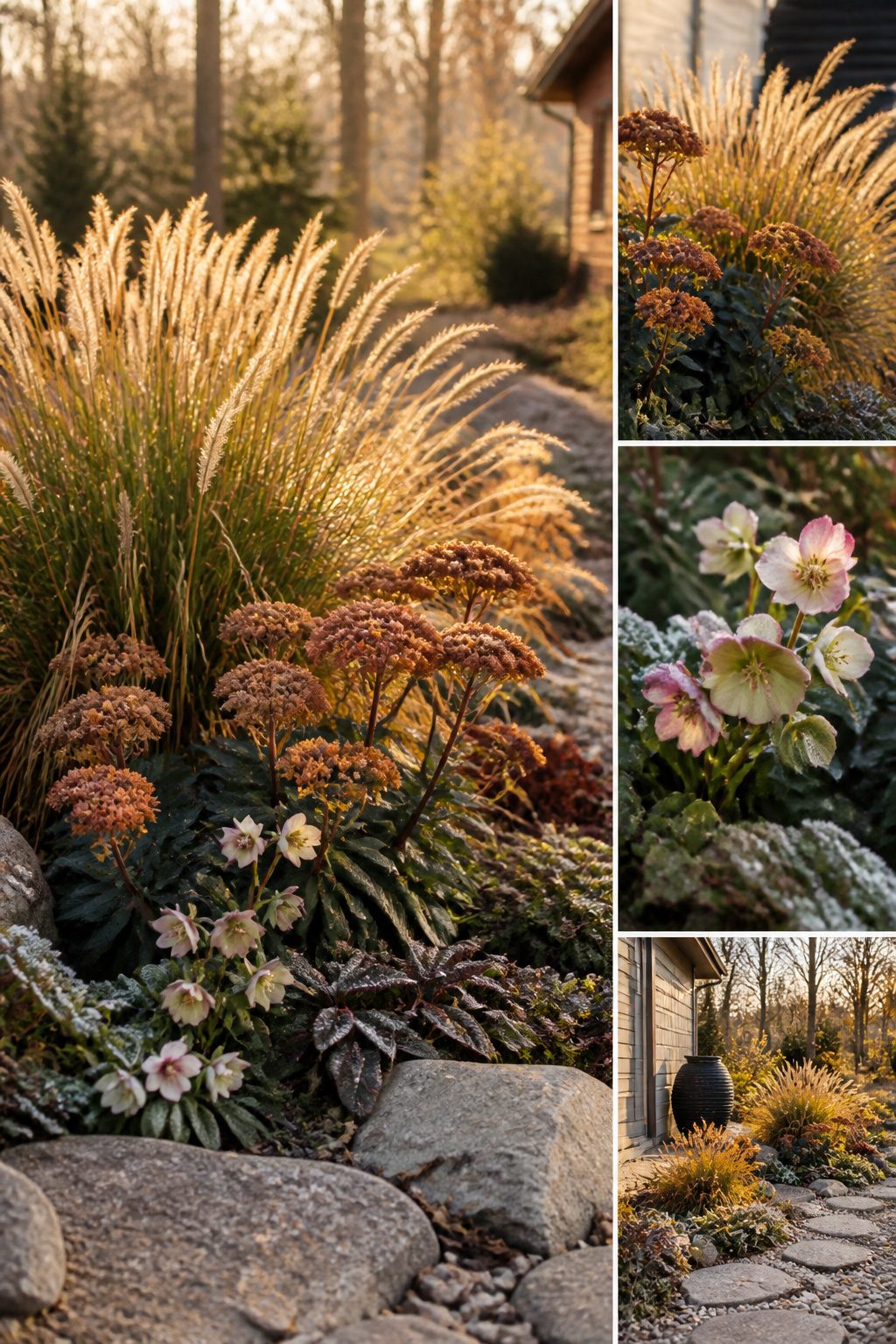
Compact plants earn their keep by covering more than one season. Dwarf fountain grass carries texture from early summer straight through winter, its seed heads catching frost while neighbors turn to mud.
Autumn Joy sedum flips from broccoli-green domes to rust-pink plates, then dried copper that holds until spring. Hellebores flower in February mud when nothing else dares, their leaves staying dark and present the rest of the year.
Pollinators find all three without my doing anything extra. The sedum in particular draws late bees so thick the stems bend.
My first July killed a tray of coral bells and two dwarf conifers. I had watered them exactly as the tag said, which in that heat meant root rot in the pots and baked soil in the ground.
The perennials that lived were the ones I had ignored: the hellebores planted on a slope where water drained fast, the sedum in gravel I had been too lazy to amend.
Designing for What You Actually Do Out There
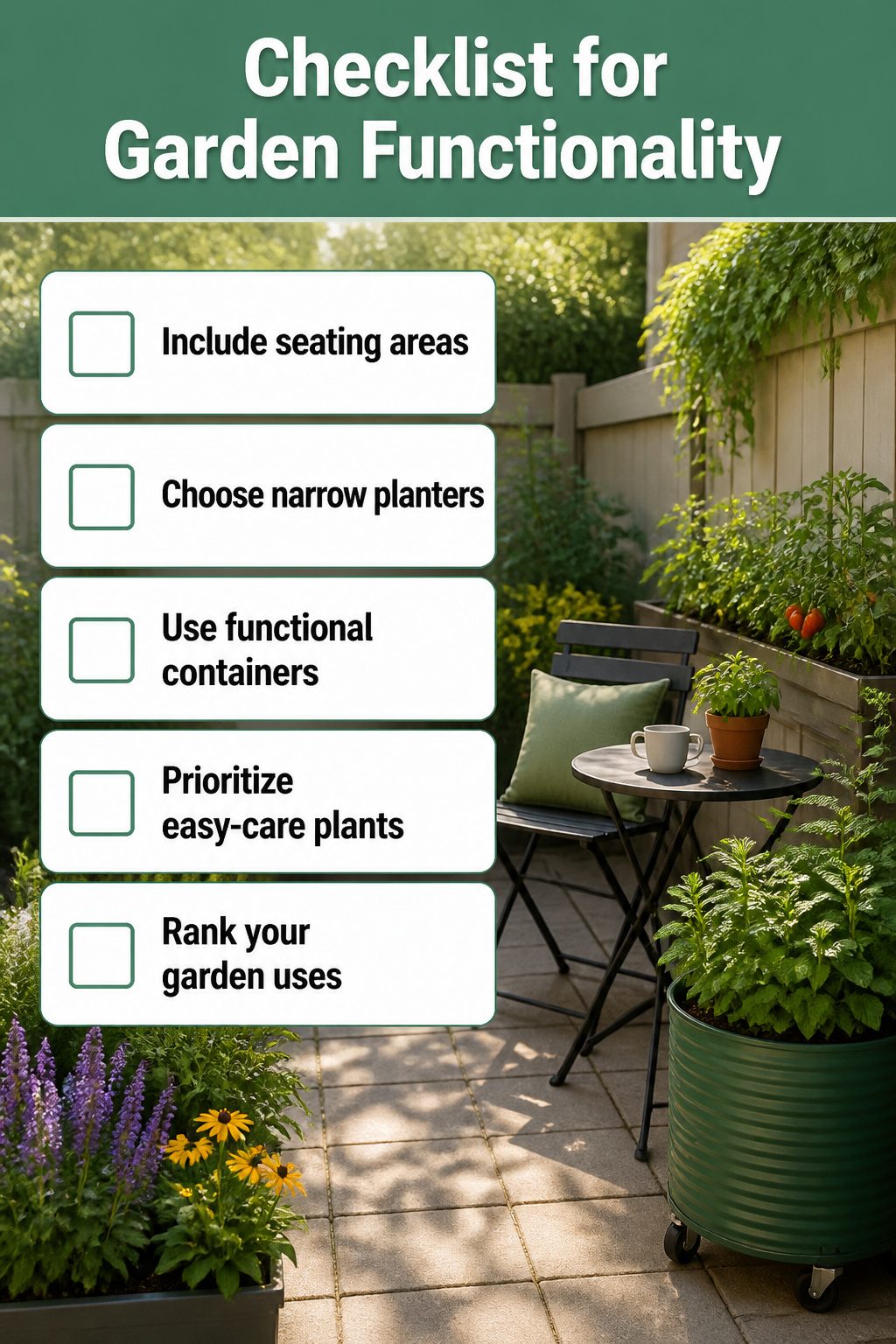
A small garden fails fastest when it tries to be everything at once. Write down what you actually do out there, then rank it.
My own list started with vegetables, then vegetables, then more vegetables. That first summer I had twelve tomato plants cramming a 10-by-12-foot plot and nowhere to sit that was not dirt.
The tomatoes did fine. I did not.
By August I was eating standing up, dodging afternoon sun with no shade in sight, and the whole space felt like a chore I had assigned myself. The next spring, "sit down" moved to the top of the list.
A single folding chair and a half-barrel of mint against the fence changed how often I walked out the door.
Function first, atmosphere second. That is the order the space itself enforces when every square foot has to earn its keep.
Container shapes matter more than people expect: wide round pots eat deck space, while rectangular or oval ones tuck against walls and railings. One tall container beats three small pots for impact and for watering efficiency.
Casters underneath let you roll them into sun or out of the way when company comes.
Vegetables, flowers, a place to eat, a place to breathe. Rank yours before buying anything.
The ranking will shift, probably after one season that teaches you what you actually use.
Compact Plants That Earn Their Square Footage
The first year I gardened, a nursery shrub labeled "compact" ate half my walkway by August. I had checked the tag, but not the mature size.
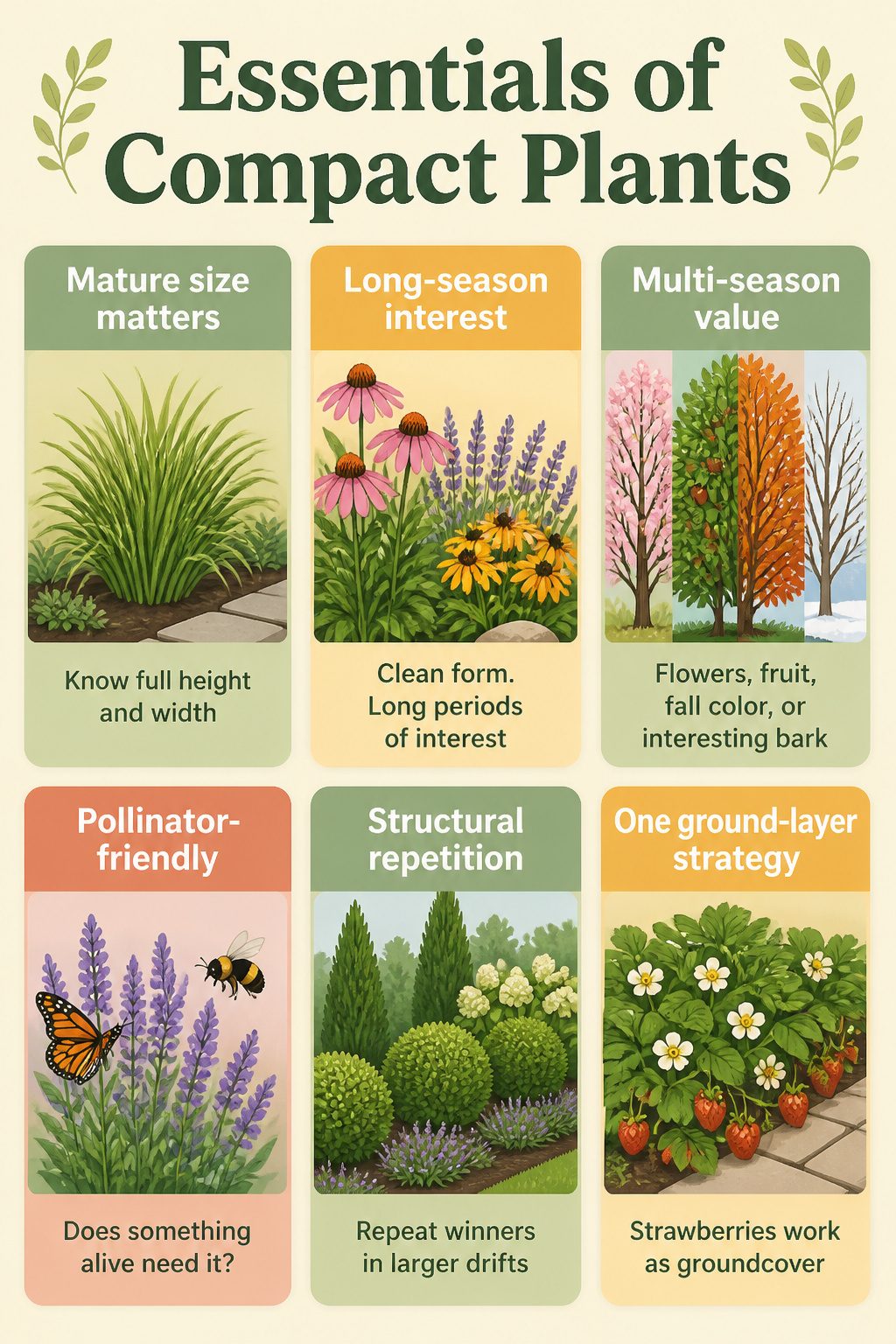
Now every plant answers three questions before it comes home: how tall and wide at full growth, what does it do after its main show ends, and does anything that needs pollen actually visit it.
The mature size is the only size that matters in a small garden. A clump-forming grass or repeat-flowering perennial often earns its spot better than a short-lived seasonal novelty.
I look for clean form and long periods of interest, then repeat those winners in larger drifts.
One or two focal plants, a handful of structural repeats, several long-season perennials, and one ground-layer strategy: that is usually enough for richness without clutter.
Multi-season value changes the math. A small-scale tree or compact evergreen with flowers, fruit, fall color, or interesting bark carries four seasons against a perennial’s six weeks.
Strawberries work as groundcover with flowers for pollinators and fruit for the gardener. Columnar apples like the Urban Apple can screen a patio while producing in a single plant’s footprint.
Herbs add fragrance and texture even if you never cook with them.
The three-question test runs fast once it is habit. Does it fit the space at maturity?
Does it earn its keep across seasons? Does something alive need it?
A no on any of these, and the pot stays at the nursery.
Privacy Without Walls
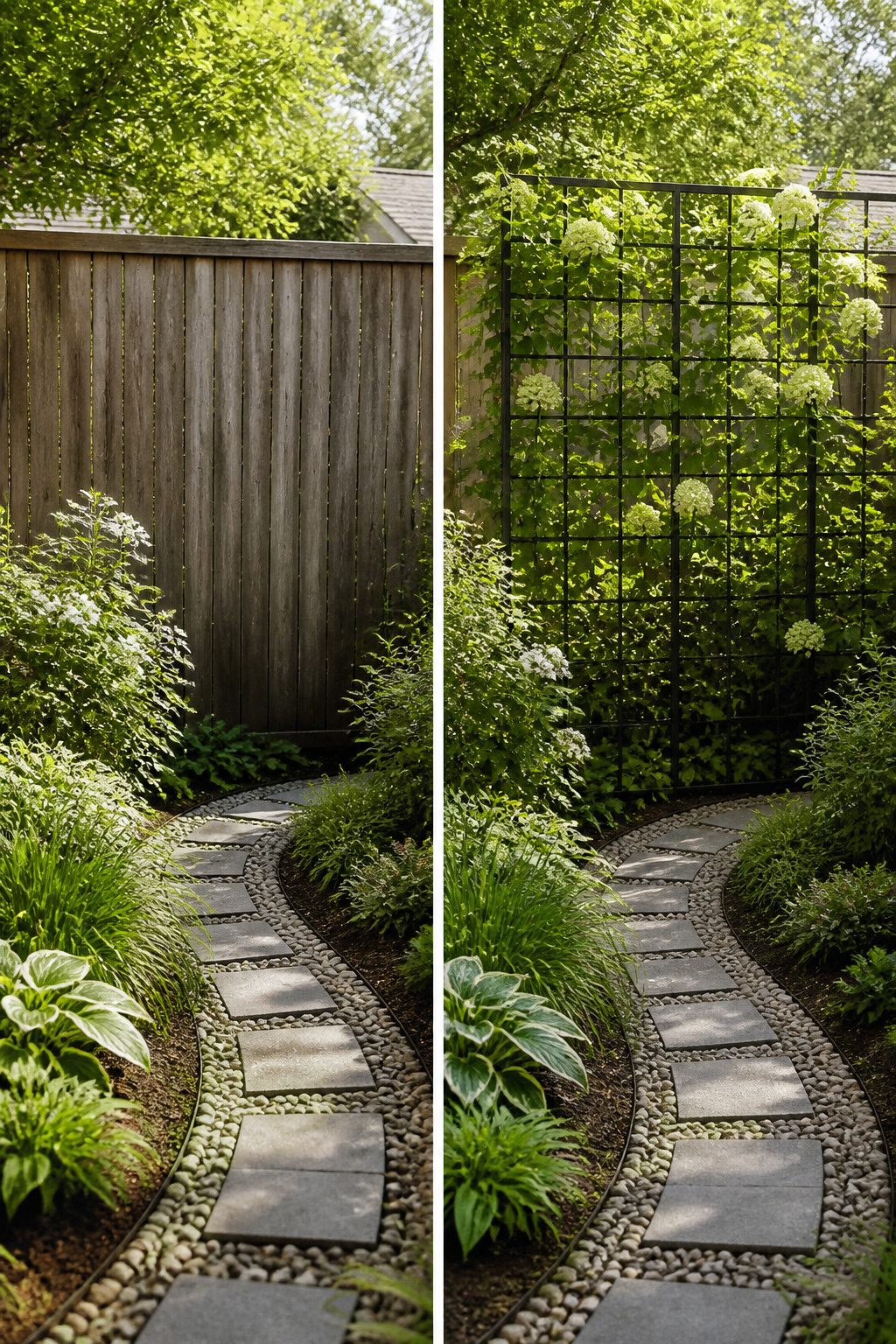
A solid hedge against the fence reads like a wall in a small yard, and walls shrink what little space you have. Layering does the opposite.
A trellis with clematis or sweet peas climbs up without spreading out, airy shrubs fill the middle, and a small tree or two gives you height where you actually need it.
The point is to block sightlines, not every inch of sky.
My neighbor’s second-story window looked straight down onto the one spot where I sit with coffee. I planted a climbing hydrangea on a basic trellis and waited.
The first year it did almost nothing. The second year it finally started to matter, and now it fills that angle without turning the whole bed into a green box.
Two years is the honest timeline for a climber to earn its keep, so plant something else you like at the base while you wait.
Ornamental grasses and mixed textures keep the screen from reading as defensive. If you rent, a planter with a built-in trellis moves with you.
The goal is shelter where you spend time, not a yard that feels hidden from itself.
Color and Placement Tricks That Expand the Space
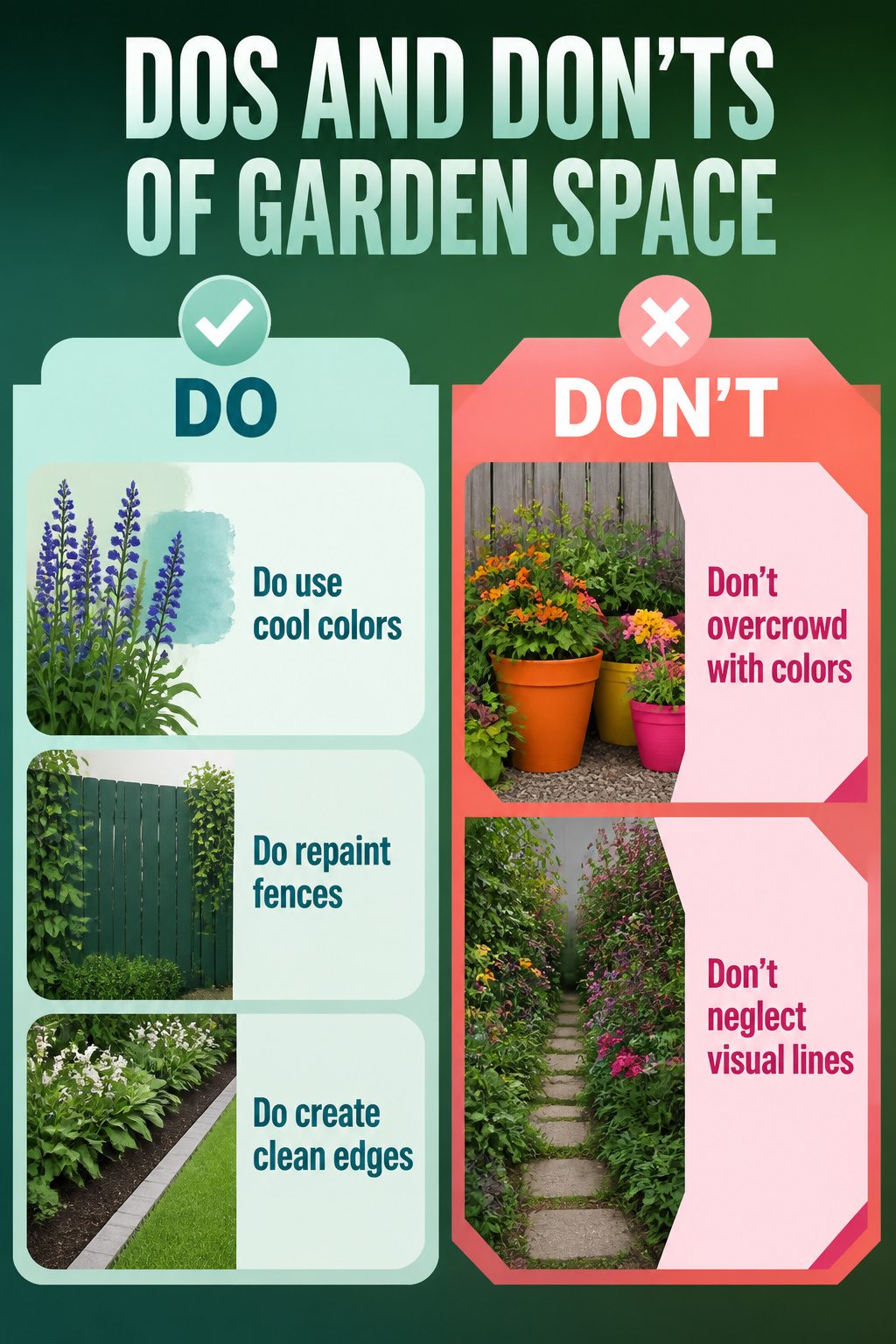
The first thing to go was the orange pot. I had three of them, terracotta, bright as traffic cones, and from the moment I set them down they shrank the whole balcony into a postage stamp.
Warm colors pull the walls in. Blue, green, violet do the opposite: they read as depth, as air you could walk into.
I repainted the fence a dark green that nearly disappears against the foliage, and the space opened up by a foot I cannot measure but can see.
Repetition does the actual work. One color repeated three times becomes a thread the eye follows, which makes the garden feel intentional rather than cramped.
I limit myself to two tones now, maybe three if one of them is white for evening. The first landing spot matters too.
I placed a cheap trellis at the far end, painted the same dark green as the fence, with a clematis that will climb to six feet.
Your eye goes there first, travels the distance, and the garden feels longer than it is.
Clean edges between bed and grass, or bed and paving, do the same as the paint: they define the space so precisely that the space itself seems to expand. Mess reads as small.
Lines read as room.
Frequently Asked Questions
What are some small garden ideas?
Vertical gardening with wall-mounted planters and trellises, container gardening with mixed heights and materials, raised beds at counter height for easy access, multi-functional furniture like storage benches, and layered planting from groundcovers up through vines all help squeeze more out of limited space.
The author spent about $45 on a starter set of zinc and terracotta pots that did more for the look than any planting decision.
A single folding chair and a half-barrel of mint against the fence changed how often they walked out the door.
How can I make my small garden feel bigger?
Cool colors like blue, green, and violet read as depth you could walk into, while warm colors pull walls inward. Repetition of one color three times creates a thread the eye follows, making the garden feel intentional rather than cramped.
Clean edges between bed and grass or paving define space so precisely that it seems to expand, and placing a tall trellis at the far end draws the eye through the distance.
The author repainted their fence dark green and felt the space open by a foot they could see but not measure.
What plants are best for small gardens?
Compact plants that earn their keep across multiple seasons, such as dwarf fountain grass, Autumn Joy sedum, and hellebores that flower in February.
The author killed coral bells and dwarf conifers by following watering tags too exactly, while plants they had ignored in well-drained spots survived.
Every plant must answer three questions before coming home: mature height and width, what it does after its main show ends, and whether pollinators need it.
Columnar apples like the Urban Apple can screen a patio while producing fruit in a single footprint.
How do I create privacy in a small garden?
Layered planting blocks sightlines without turning the whole yard into a green box: a trellis with clematis or sweet peas climbs up without spreading out, airy shrubs fill the middle, and a small tree gives height where needed.
The author planted a climbing hydrangea on a basic trellis to block a neighbor’s second-story window; it did almost nothing the first year but filled the angle by the second.
Two years is the honest timeline for a climber to earn its keep, so plant something you like at the base while waiting. A planter with a built-in trellis moves with renters.