Backyard patio ideas span from a $200 shade sail to a full outdoor kitchen that costs more than a used car, and the difference is not budget but how many hours you actually plan to spend outside. The mistake most people make is building for the party they throw once a year instead of the Tuesday evening they spend alone with a grill and a podcast.
A covered patio adds months of usable season, but only if you size it at 25–30 square feet per person; anything smaller and guests end up inside when the burgers are still smoking.
1. Covered Patios for All-Weather Use
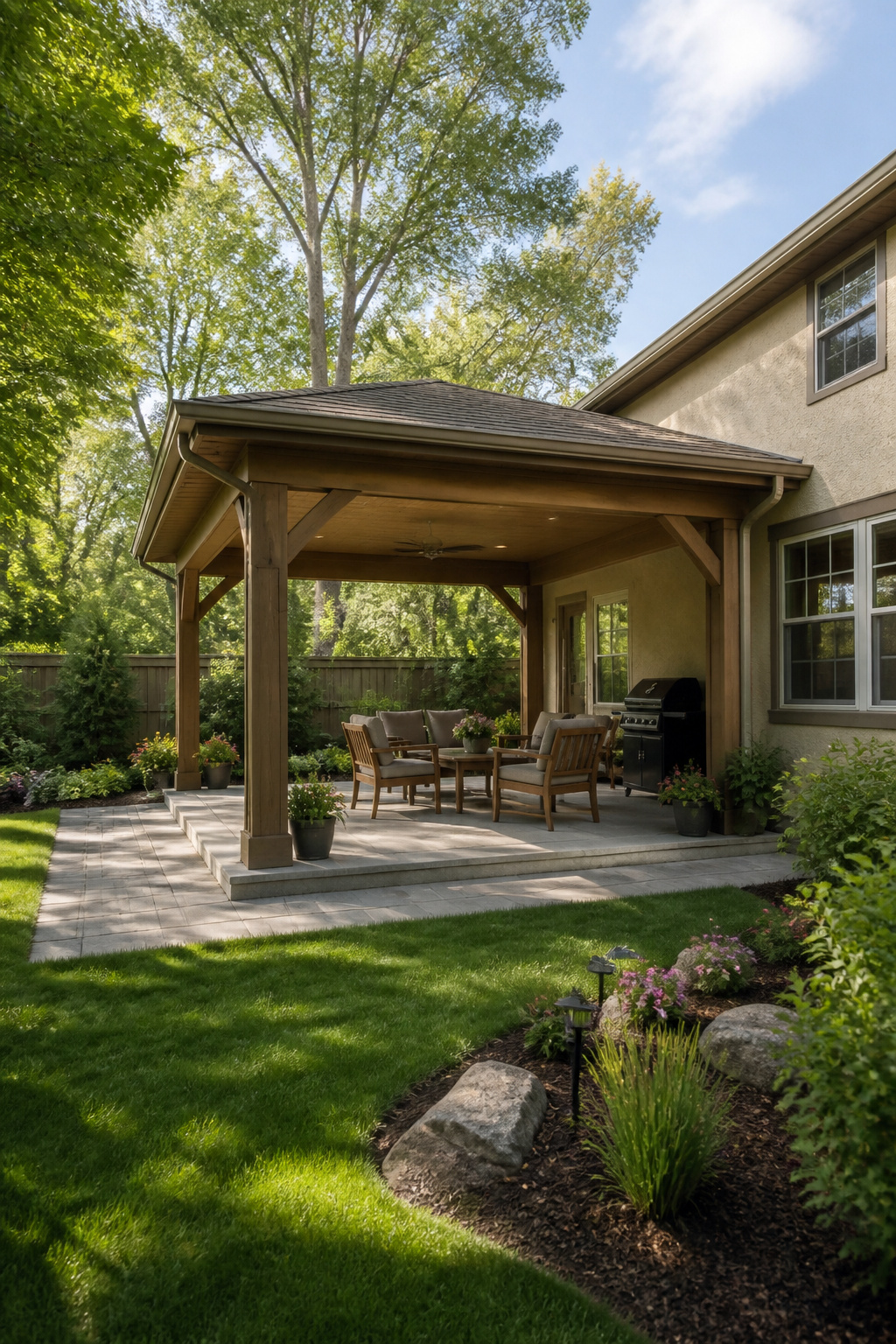
A roof over the patio buys you months. Last spring I watched a light drizzle send everyone scrambling inside while the burgers sat on the grill; a 10’×15′ covered space would have kept six of us dry and the coals going. That size works because each person needs 25–30 square feet to sit and move without knocking into chairs. A 12’×15′ frame hits the same six-person mark with a little breathing room.
The cover itself matters as much as the footprint. Fixed roofs block sun that bleaches wood and cracks plastic furniture over a single season. Shade sails or prefab metal kits run cheaper than timber framing but still stretch usable hours past noon. I lean toward materials that weather to match the house rather than fight it; a slightly dulled finish against stucco or siding looks intentional, not apologetic.
2. Outdoor Kitchens
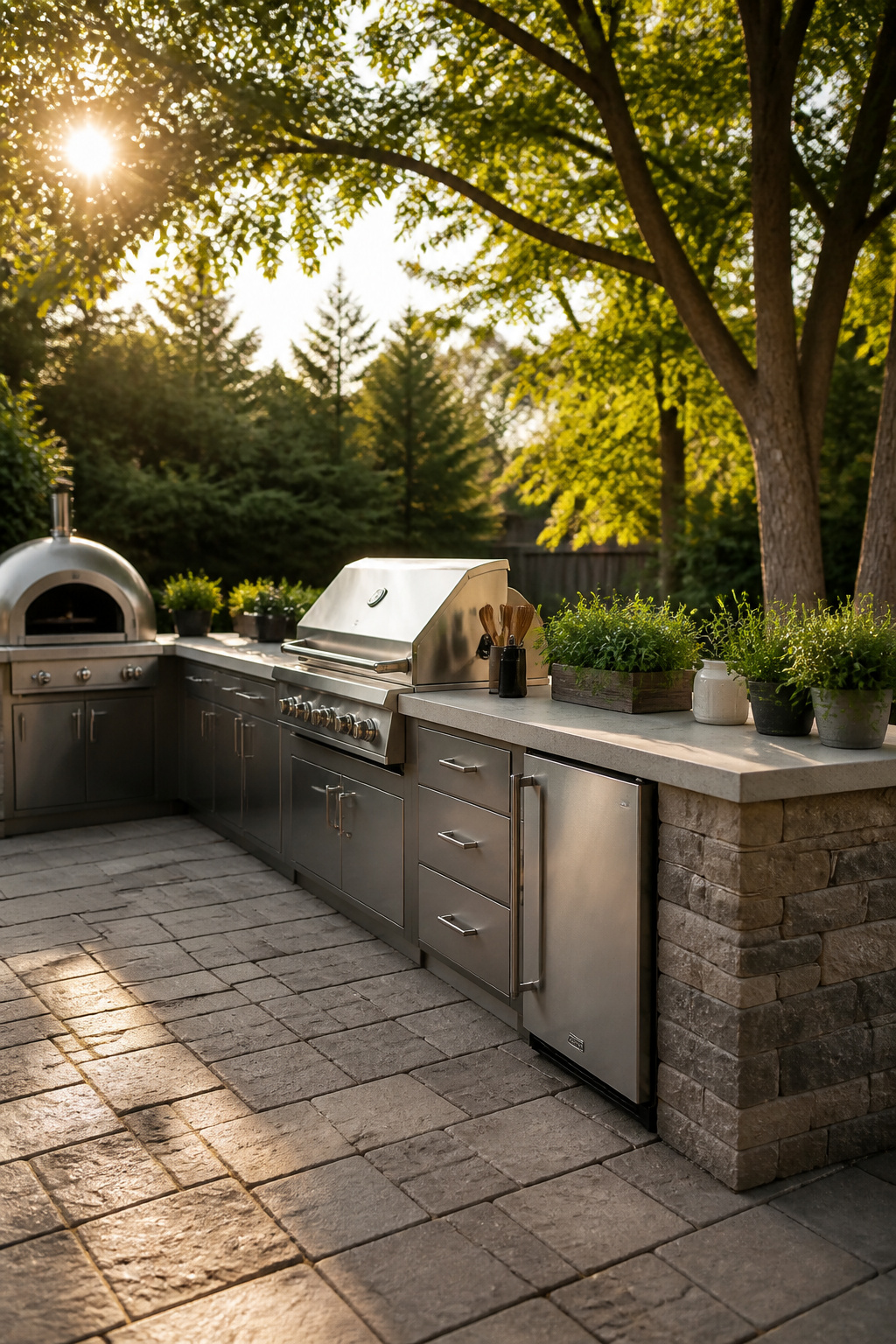
An outdoor kitchen built on a paver patio is the most function-driven feature you can add to a backyard, and it needs more deliberate planning than any other zone on this list. Concrete pavers handle foot traffic, spills, and heat well, which makes them a solid hardscape foundation for cooking and dining areas meant to last.
The range runs from a simple grilling station to a fully equipped setup with counters, refrigerators, and pizza ovens. Plumbing and electricity require coordination with contractors, and that step alone can stretch a timeline by weeks if it is not mapped early. I have watched friends rush the layout and end up with the grill too close to the seating path, or the fridge door blocking the main counter. The Belgard and Unilock systems both allow custom configurations through modular wall products or aluminum-framed cabinets, so the look can shift between textures and colors without rebuilding from scratch. U-Cara fascia panels in particular let you mix finishes without committing to a single face across the whole kitchen. The mistake to avoid is treating this like indoor kitchen shopping: outdoors, material expansion, drainage slope, and the path from flame to table all matter more than the cabinet style.
3. Fire Pits and Fireplaces

A portable fire pit and a built-in fireplace both pull people into a circle, but they do it differently. The portable one lets you shift the whole gathering spot from grass to patio depending on the night. A built-in fireplace, stone or paver-faced, fixes the room in place and gives the yard its architecture.
I learned about smoke the hard way with a bowl-style pit I thought I had placed cleverly. What I had actually done was set it where prevailing wind pushed every gust straight toward the one bench with cushions. The smoke followed a channel I had not noticed between my garage and fence. Wind reads your yard better than you do; test a portable pit in a few spots before you commit to any permanent layout, because a built-in fireplace cannot pivot when the breeze shifts.
Wood-burning pits carry the sound and smell that gas bowls trade for instant ignition. Either can anchor a seating circle, though sources suggest the fireplace wins for reading or morning coffee while the pit suits roasting marshmallows. For renters or anyone on a tight layout, the portable option keeps options open. For a paver patio you intend to keep, the built-in adds the continuity that makes the fire feel like it grew there.
4. Multi-Level Patios
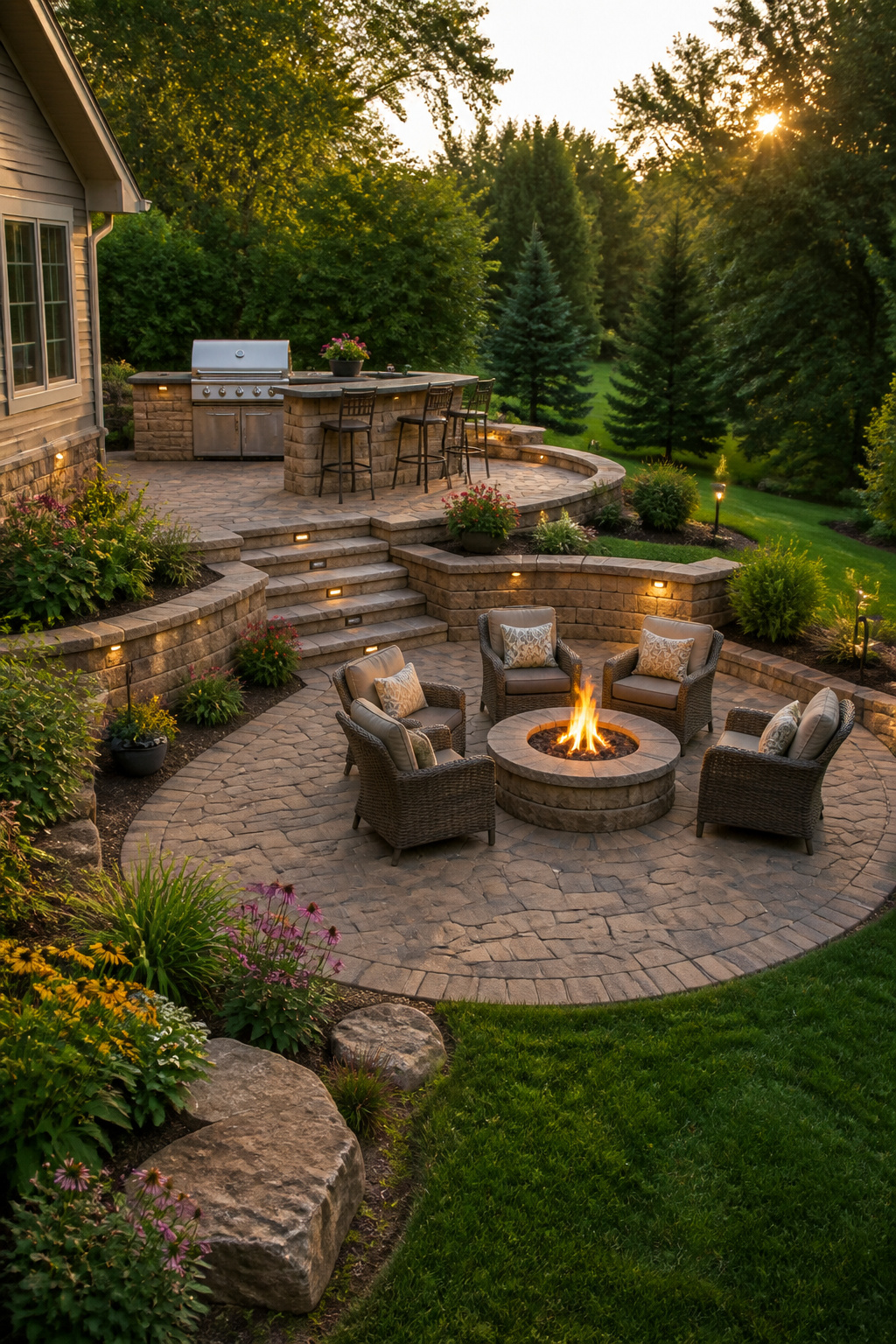
Changes in elevation do the work of walls without blocking light or breeze. A step up to a dining platform and a step down to a fire pit area turns one slab into two rooms, each with its own job. Retaining walls and step treads make this possible on ground that is not flat to begin with, and a slope turns the idea from nice-to-have into necessary.
The height of those steps matters more than I expected when I first read into this. A single step between 4 and 7 inches feels like a natural threshold, the kind your foot finds in twilight without thought. Anything lower reads as a trip hazard because the brain does not register it as a climb. Anything higher becomes a stair, and stairs demand railings, landings, and code compliance that a casual patio rarely needs. I have watched guests pause at an awkward 3-inch lip, that half-second of uncertainty that breaks the flow of a party.
A true slope makes the decision for you. Water runs where it runs, and a patio pitched wrong pools or erodes. Terracing with a retaining wall and proper treads channels that force instead of fighting it. The upper level becomes your kitchen and grill island, the lower your seating circle around the fire. The grade change that looked like a problem becomes the architecture that holds the whole design together.
5. Water Features
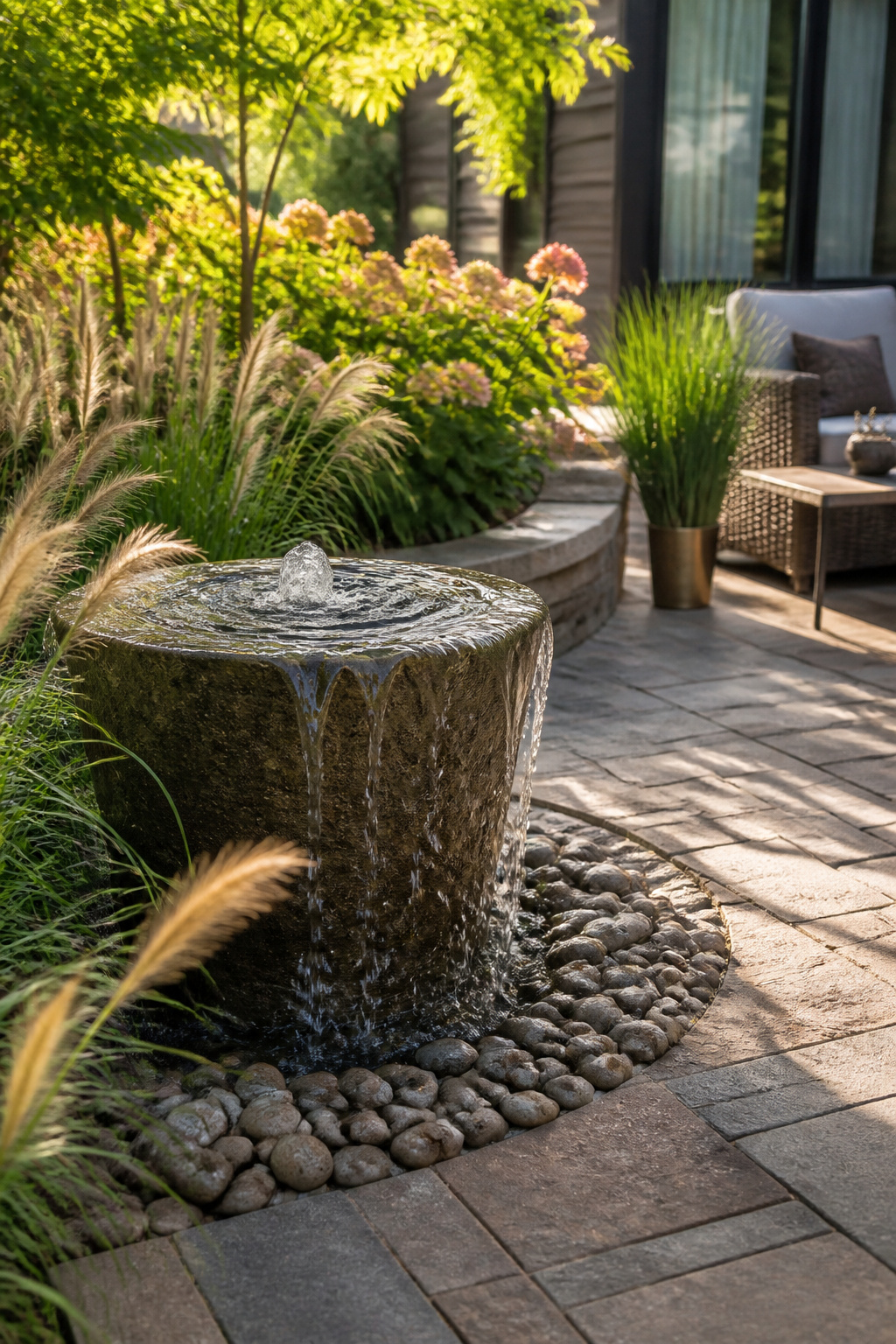
A bubbling stone or small fountain changes a patio from merely outside to somewhere you actually want to sit. The sound covers traffic, neighbor voices, the hum of a window unit; it gives the eye a place to rest that is not a screen. I thought the maintenance would be a spring setup and a fall teardown, but weekly or bi-weekly water treatments and pump checks turned out to be the real rhythm, plus keeping leaves from clogging the intake after every storm.
Winterizing was where my optimism cost me. I drained the basin, I pulled the pump, I thought that was thorough. What I missed was the residual water in the tubing and the porous surface of the stone itself, which held enough moisture to crack the housing when a freeze came early. Now I blow the lines out with a small air compressor and store the stone tilted on its side in the garage. The extra twenty minutes in November saves the replacement cost come April.
For a small yard, a self-contained fountain or a drilled stone on a recirculating base needs no plumbing tie-in and moves with you. The sound varies by height and splash surface; a lower, broader stone rumbles where a tall spout pings. Place it where you will hear it from your usual seat, not where it looks best from the kitchen window.
6. Natural Materials and Landscaping

Limestone won over concrete for my patio after watching a neighbor’s poured slab crack across its third freeze-thaw winter. Natural stone absorbs less water, weathers the cycle better, and gains character instead of losing it. The gaps between my pavers, though, became a classroom in overpromising. Ornamental grasses and creeping thyme looked romantic in the photos I studied, but the reality was dandelions establishing colonies by June of year two. Weeding between stones is quarterly work, not a one-time planting, and anyone selling ground cover as "low maintenance" has not met my clay soil.
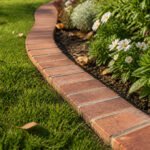
Wood edging and gravel paths help the patio read as part of the yard rather than a landing pad dropped onto it. The stone border wall I added does the same job as the surrounding woods did for a design I admired, extending the visual edge without expanding the footprint. Small spaces read larger when materials echo what grows nearby.
7. Pergolas and Shade Structures
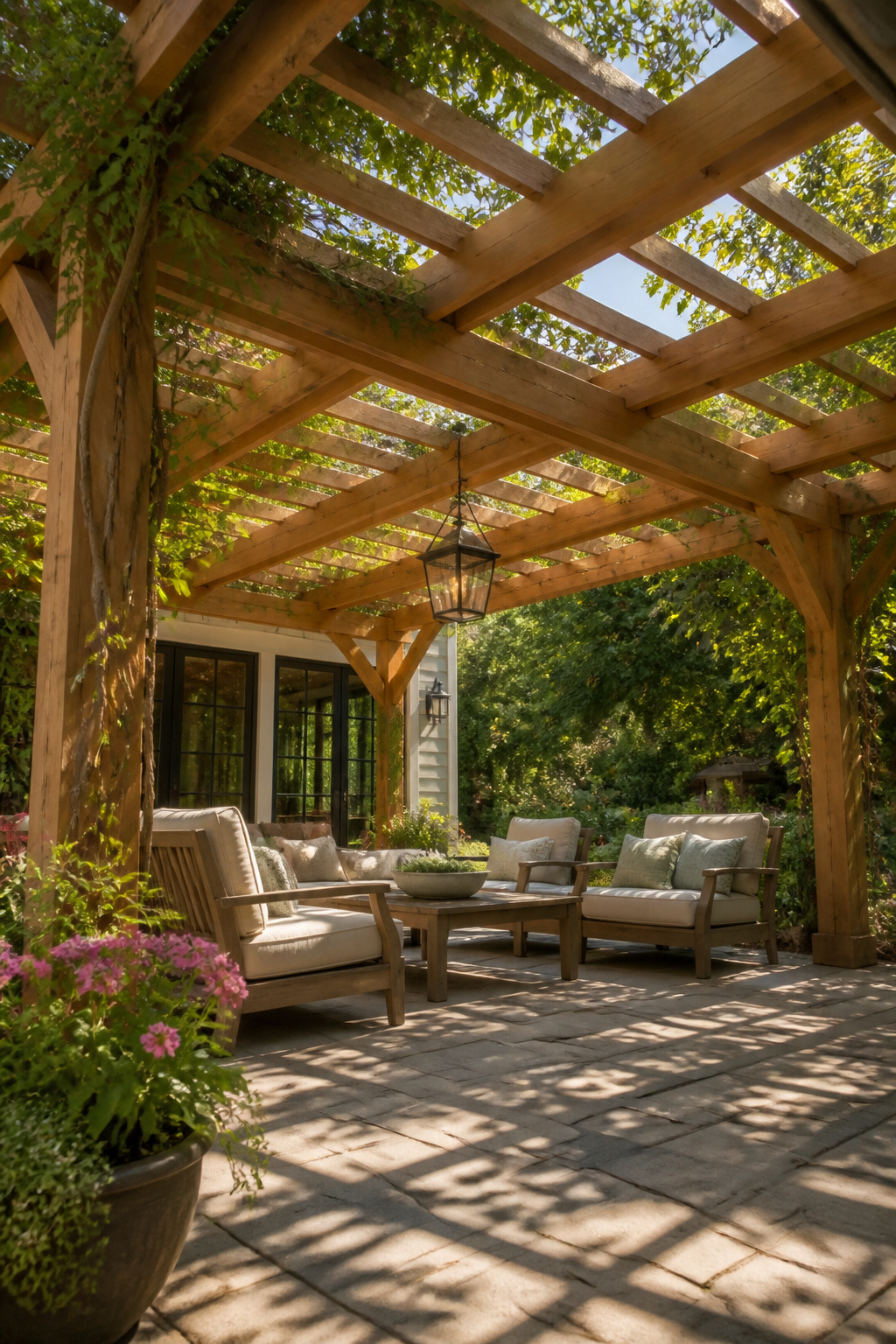
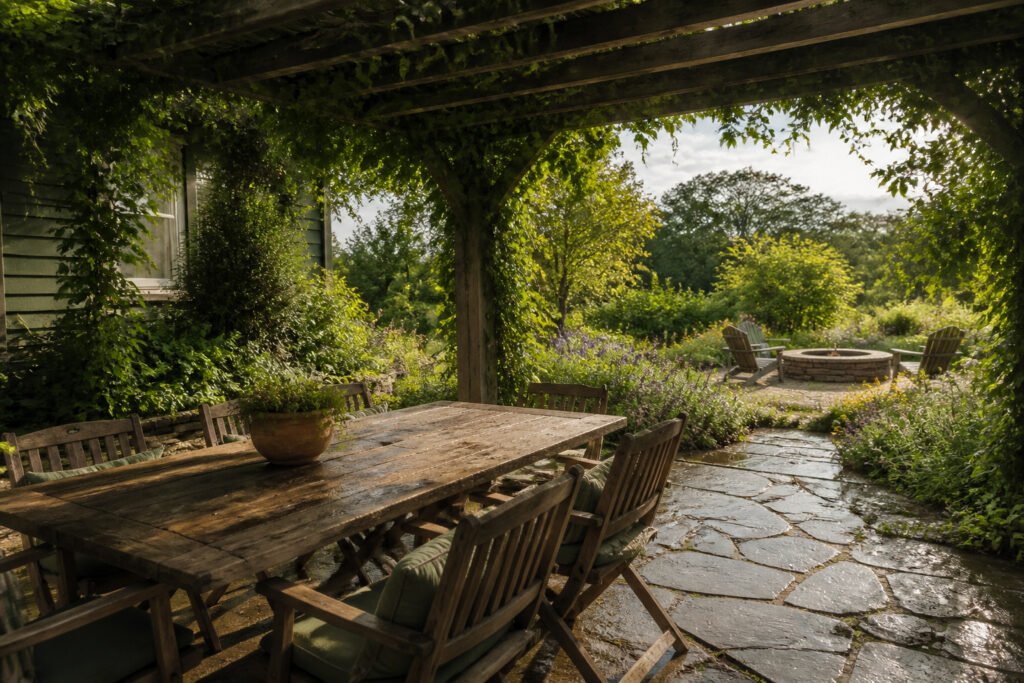
A pergola turns a bare slab of concrete into something that feels like a room. The trick is the scale. My first one was eight feet square, which looked generous on paper and ended up feeling like a hat rack over a picnic table. Twelve to fourteen feet is where the shift happens; suddenly you walk under it instead of past it.
The weight comes later, and it matters more than the plans suggest. After three years, a mature wisteria or grapevine can add several hundred pounds of living load, plus wind resistance. The posts and beam pockets need to handle that from day one, because retrofitting means taking the whole thing apart.
Plan for the vine you will have, not the one you plant. That means wider footings, heavier hardware, and spacing the rafters close enough that the young tendrils have something to grab before they drop.
8. Outdoor Seating Arrangements
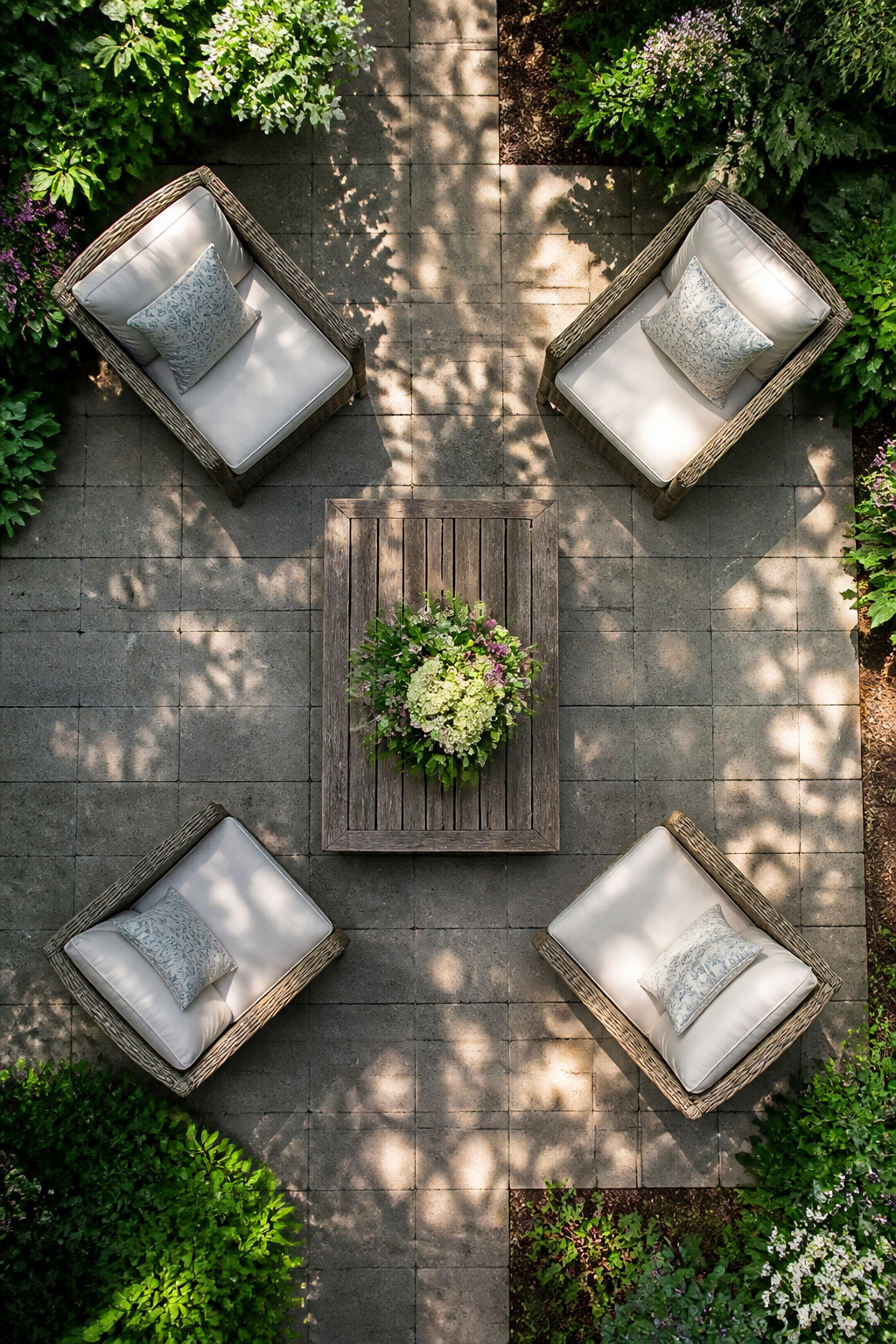
The first chairs I placed on my patio sat four feet apart, measured from arm to arm. That gap looked generous on the drawing I sketched, but once friends settled in with drinks, conversation split into two isolated pairs. Nobody leaned in; the distance made eavesdropping feel like shouting. I moved them to thirty inches, edge to edge, and the difference was immediate. Voices carried naturally across the circle without anyone craning forward.
Built-in seat walls solve this permanently. They anchor seating to the hardscape layout itself, so the distance is locked in from the start and the chairs cannot drift apart between gatherings. The finished look is cleaner too, with no legs to trip over and no stackable resin pieces sliding on pavers.
The first thing I bought was a low-slung conversation set with wide arms and thick cushions. It photographed well and died fast. The frame sagged after one wet spring, and the cushions held water for days. I replaced it with simpler chairs, slatted and slightly upright, that dry in an hour and stack against the wall when I need the space for something else. Thirty inches, edge to edge, is the measurement that matters.
9. Lighting and Ambiance
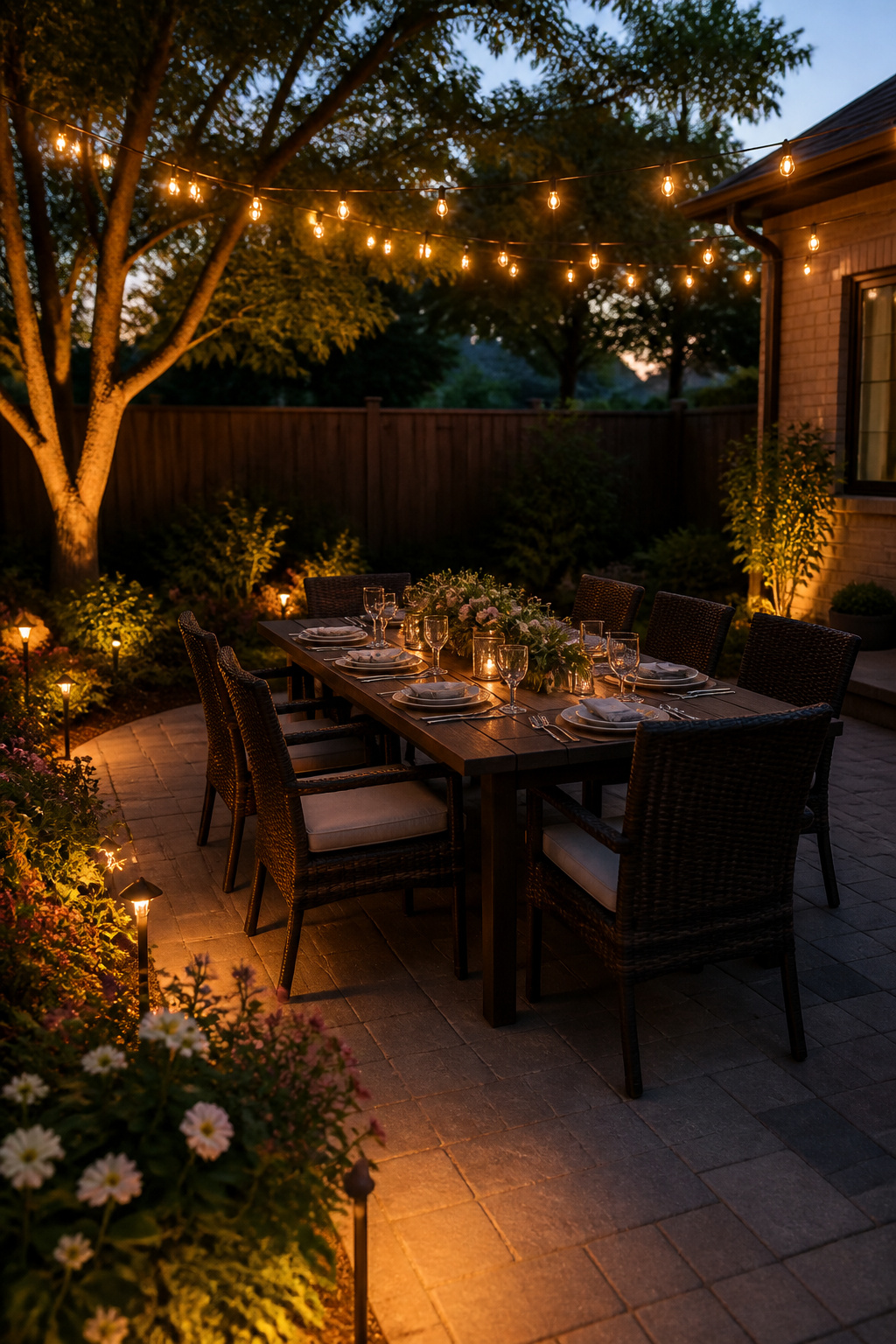
String lights draped overhead give enough light to find your drink but not to read by. That distinction matters more than most people think. A dining table needs about 20 lumens per square foot to eat comfortably; most string lights deliver half that, which is why my first summer out there felt romantic until I tried to actually see what I was cutting.
Path lights and uplighting on trees fall into the same trap. They outline where things are. They do not help you do anything. The uplight on my Japanese maple looks dramatic against the trunk and throws almost nothing onto the ground around it.
My real mistake was a wall-mounted fixture I installed above the table without checking the wattage equivalent. It was bright enough to grill under, harsh enough that guests squinted through dinner, and wired to a switch I did not want to re-run. The fix cost eight dollars: a lower-wattage LED bulb with a warmer color temperature, 2700K instead of the 5000K that had been in there. Dinner moved back to the table the same evening.
10. Paving Materials and Patterns
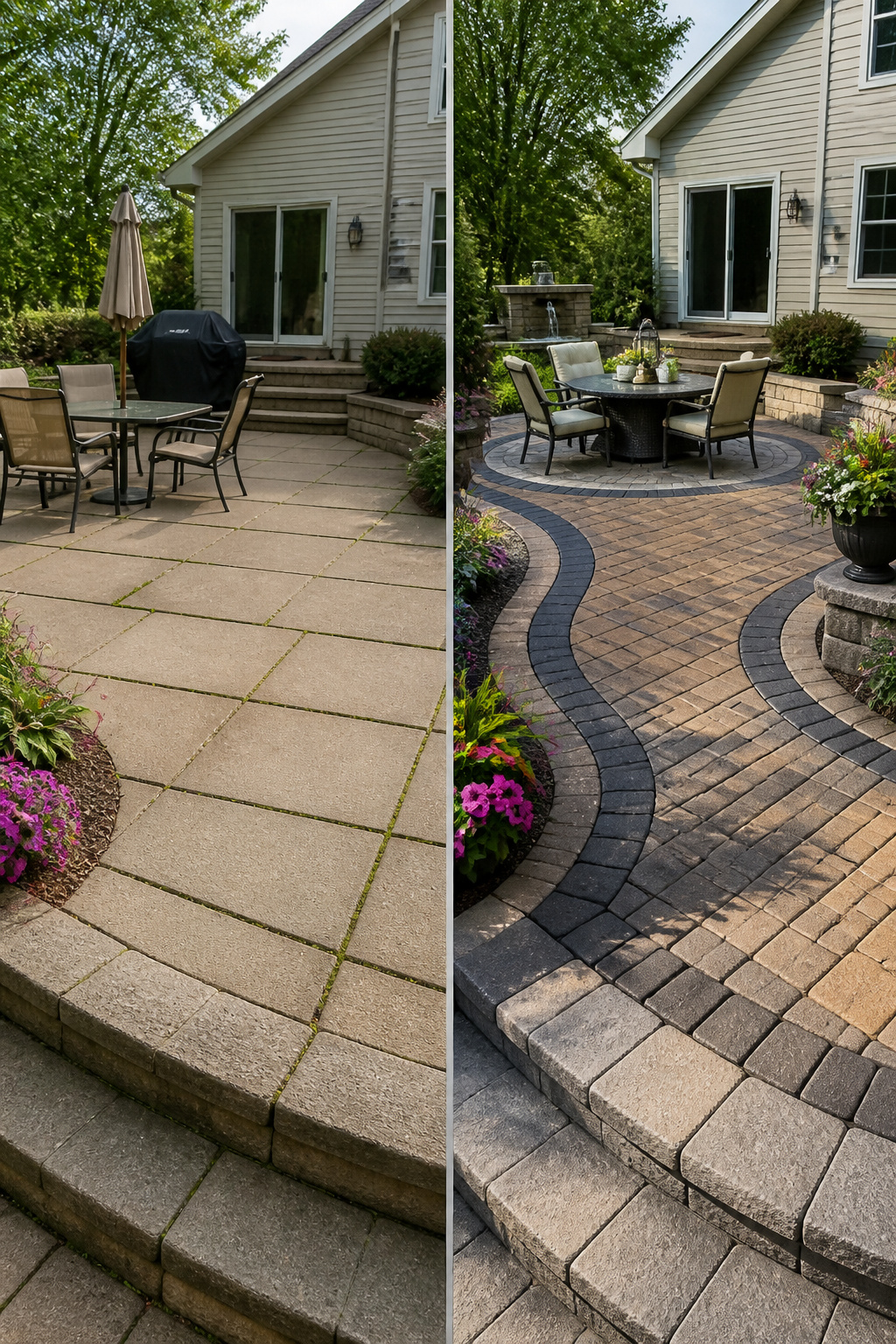
Stamped concrete runs about 15% less than laying pavers, which is why it gets pitched so hard to budget patio builds. The stamps can fake limestone, slate, or flagstone well enough from across the yard, and a darker gray keeps the midday glare down. But the pattern you pick matters more than the color. My mistake was going with a tight, smooth slate stamp in a climate where leaves drop nine months of the year. Every oak leaf and pine needle left a dark stain that showed up like a footprint on wet concrete. A deeper, more irregular pattern would have hidden the debris between cleanings.
Pavers and brick both handle that problem better. Their joints break up the surface so a single leaf never reads as a flaw. Natural stone like flagstone or slate chips at the edges over time, and without regular sealer it stains fast. Properly sealed smooth or stamped concrete, or concrete pavers, are virtually maintenance free by comparison, but the seal has to hold. In my case the stamped surface held up fine structurally; it just never looked clean. If I did it again, I would spring for pavers with a herringbone or basketweave pattern that locks against shifting and forgives a yard full of trees.
Defining Your Patio’s Purpose
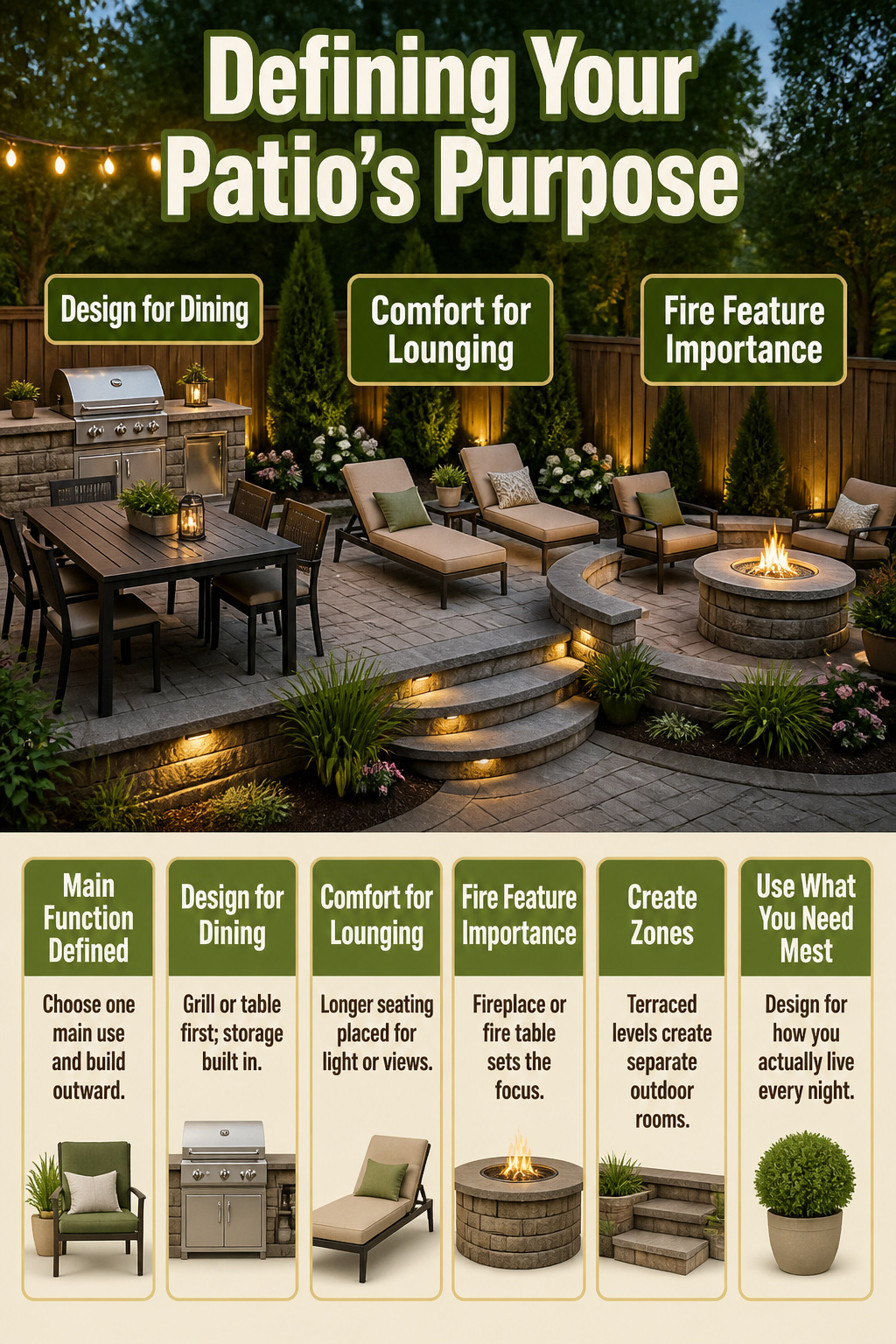
The less square footage you have, the more your patio’s primary function matters. On a compact yard or balcony, trying to do everything at once usually means nothing works well. Choose one main use and build outward from there.
A dining patio wants the grill or table placed first, with storage built in and the layout kept near the edge so traffic moves around it, not through it. A space for cooler nights starts with the fireplace or fire table, then layers in seating that fits the remaining room without crowding the heat source. Lounging calls for longer, reclined seating positioned to catch light or views.
If you want all three, you need enough square footage to create zones. Terraced levels help here; a retaining wall and steps can carve separate outdoor rooms for dining, relaxing, and entertaining without them bleeding together. Otherwise, pick the function you’ll actually use most evenings. The seating you choose first determines whether the rest of the design works for you or against you.
Materials and Their Maintenance

Properly sealed smooth or stamped concrete, plus concrete pavers, get sold as virtually maintenance free. That is not the same as actually being free of it. What the salesperson skips is the word "properly" and the schedule it hides. I reseal my concrete every two to three years, and the paver joints need fresh polymeric sand after hard winters where ice melt gets in. Sodium chloride, the common rock salt, chews at the surface over time. Permeable pavers cut that particular problem by sending water down into the subsoil instead of letting it freeze on top, but they still want joint attention and edge restraints spiked into the base to keep the whole field from creeping toward the lawn.
Natural stone like flagstone or slate outlasts the installer, yet the edges chip and the surface stains without sealer on the same rhythm as concrete. The real annual cost gap is not between concrete and stone; it is between materials that need resealing and materials that need resealing plus joint repair. My own upkeep runs toward the lower end of what I budget because I chose permeable pavers on a compacted base with invisible edge restraints, but I still spend something every spring on joint sand and a pressure wash. Call it the tax on "set it and forget it."
Privacy Without Walls
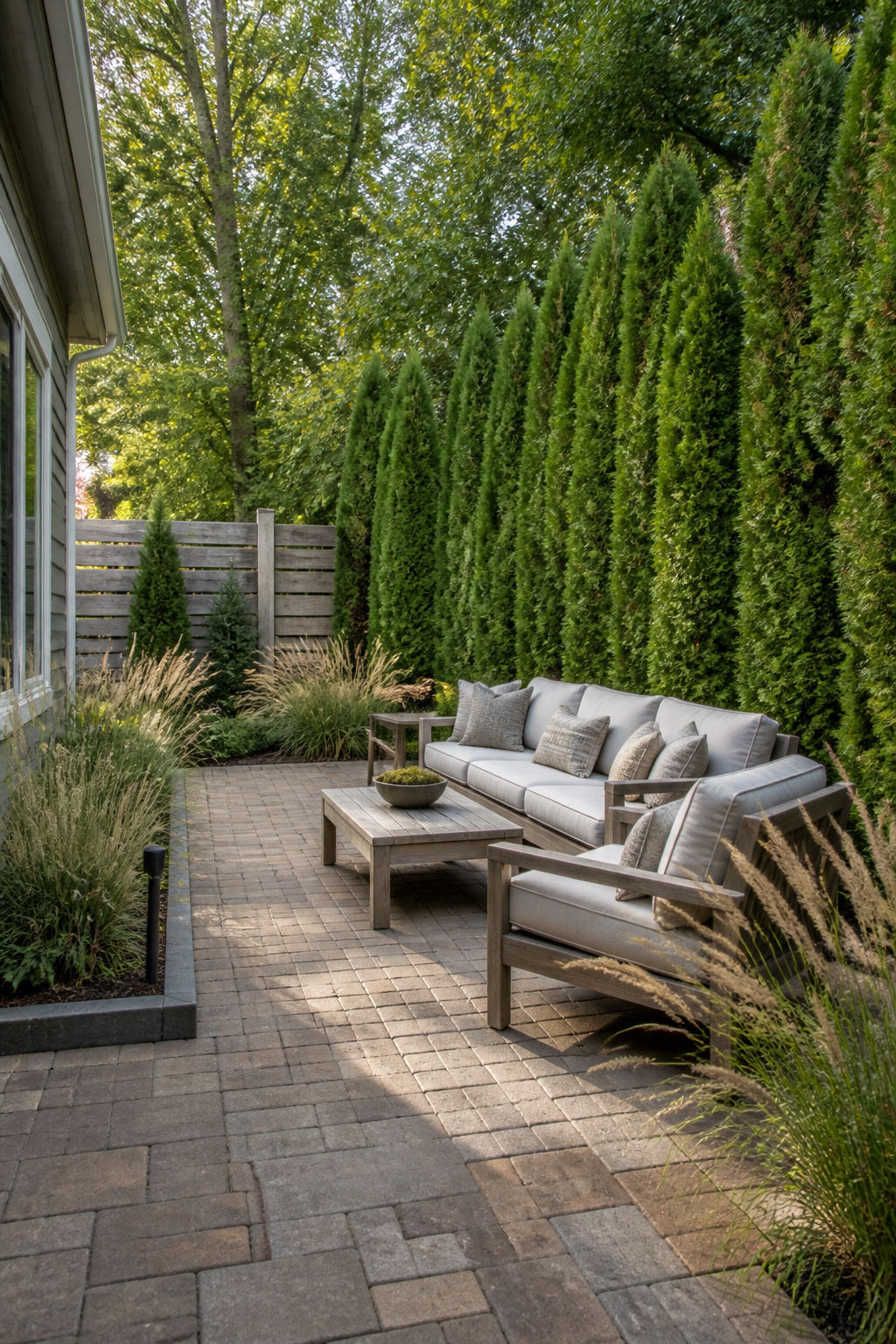
The first summer on my patio, I planted a row of arborvitae along the property line and waited for a wall of green that never came. Three years is the realistic timeline for most screening bushes to reach privacy height in zones 5–7, and I had budgeted for one. Sources agree on four methods: bushes, ornamental grasses, privacy screens, and fences. Grasses give the fastest visual softening, though they top out below true privacy height. Bamboo or slim evergreens can double as noise dampeners if you have the narrow vertical space. Screens are the immediate fix; you can buy them, or build from found material like old shutters. A fence is the only option that works the day it goes in. My own mistake was planting without measuring mature width; those arborvitae now crowd the bed by two feet on each side. For renters or anyone who might move, a screen or tall grass in containers wins over digging.
Biophilic Design for Small Patios
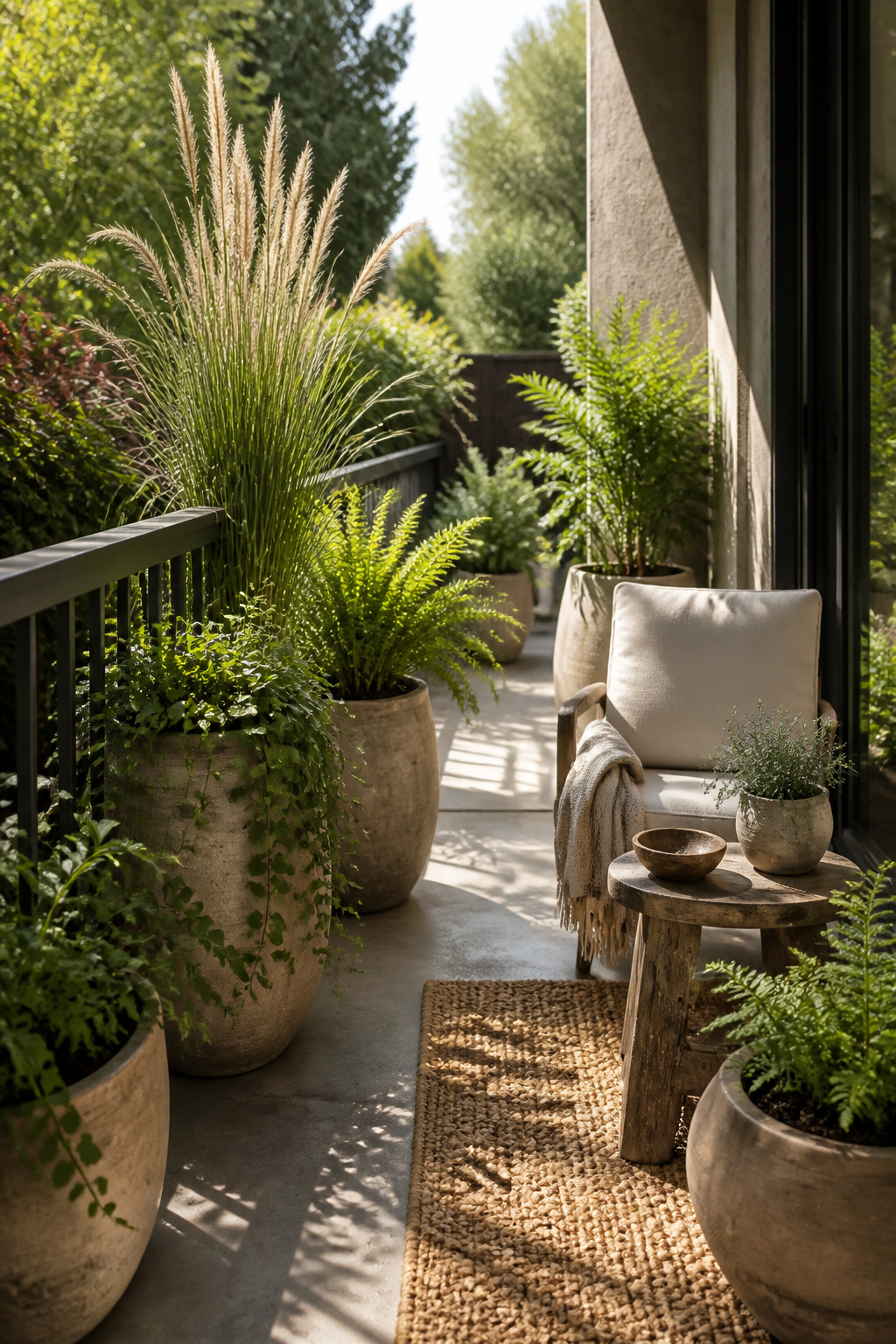
Biophilic design sounds grand until you measure your patio and realize you have maybe eight feet of concrete to work with. The idea is to let living things shape the space rather than treating plants as afterthoughts. On my narrow strip, that meant a row of containers along the railing, nothing on the ground that would trip someone carrying a drink.
I started with a mix that looked good in photos: a tall grass, a trailing vine, and a compact fern. The grass and the vine survived. The fern browned to nothing after I skipped watering for five days in July, which taught me that thirsty understory plants in small pots dry out faster than you think. Now I stick to plants that can handle a little neglect, and I cluster the containers so they shade each other and hold humidity. The effect is still green and layered, just with species that forgive a weekend away.
Frequently Asked Questions
How do you plan a backyard patio?
Start by choosing one main use and build outward from there. A dining patio wants the grill or table placed first, a fire-focused space starts with the heat source and layers in seating, and lounging calls for longer, reclined seating positioned for light or views. If you want multiple functions, you need enough square footage to create zones, or terraced levels that carve separate outdoor rooms.
What type of patio is easiest to maintain?
Properly sealed smooth or stamped concrete, plus concrete pavers, come closest to maintenance free. The real annual cost gap is not between concrete and stone; it is between materials that need resealing and materials that need resealing plus joint repair. Natural stone outlasts the installer but its edges chip and the surface stains without regular sealer.
How can I add privacy to my patio?
Plant bushes or grasses, deploy privacy screens, or build a fence. Grasses give the fastest visual softening, though they top out below true privacy height; bamboo or slim evergreens can double as noise dampeners if you have narrow vertical space. Screens work immediately and suit renters, while a fence is the only option that works the day it goes in.