
The best front yard landscaping ideas for 2026 span from gravel-and-synthetic setups that skip mowing entirely to layered native plantings that feed pollinators while you are at work.
What decides which is yours is how much weekend time you actually have, not how much you wish you had.
The catch is that even drought-tolerant Russian sage needs a full season of regular watering to set roots deep enough to survive on rainfall alone.
1. Low-Maintenance Plants
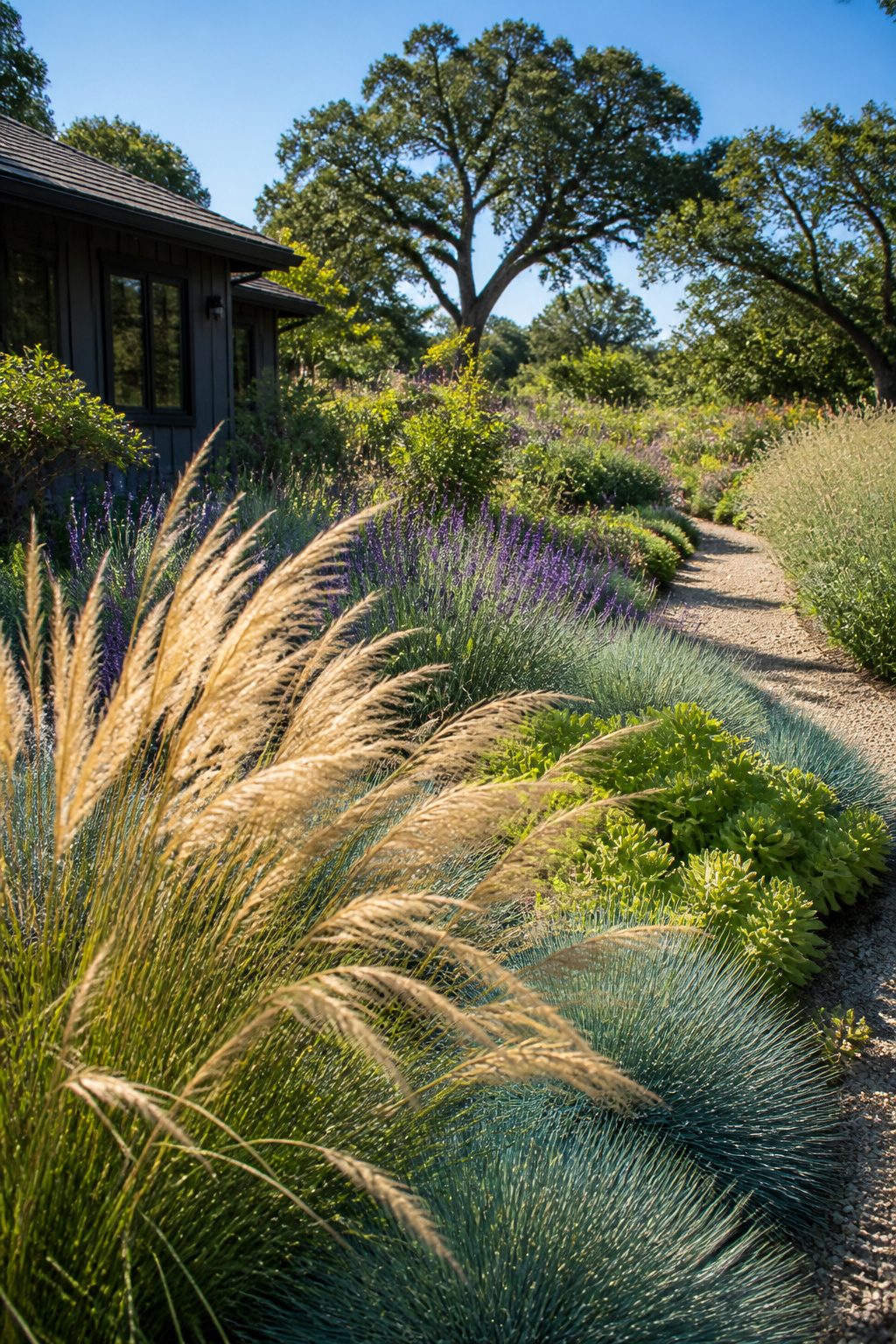
Native plants are the closest thing to a set-it-and-forget-it front yard because they already know how to live where you live.
Ornamental grasses like fountain grass and blue fescue, or drought-tolerant perennials like sedum, salvia, and yarrow, evolved to handle your soil and weather without begging for fertilizer or pesticide.
I spent my first gardening season wrestling with a hydrangea that wanted nothing to do with my clay soil; the switch to natives mostly ended that kind of defeat.
Matching the plant to the light matters just as much as choosing the right zip code. Spending one sunny Saturday timing where shadows fall lets you buy once.
I scribbled notes on a scrap of paper, morning versus afternoon, and still reference it at the nursery.
The payoff isn’t only fewer weekends spent watering. Native grasses and wildflowers feed the butterflies, bees, and birds that belong in your yard anyway.
A front landscape that looks tended even when you’ve been busy all week, and happens to hum with pollinators while you are not looking, is about as winsome as curb appeal gets.
2. Ground Cover Alternatives
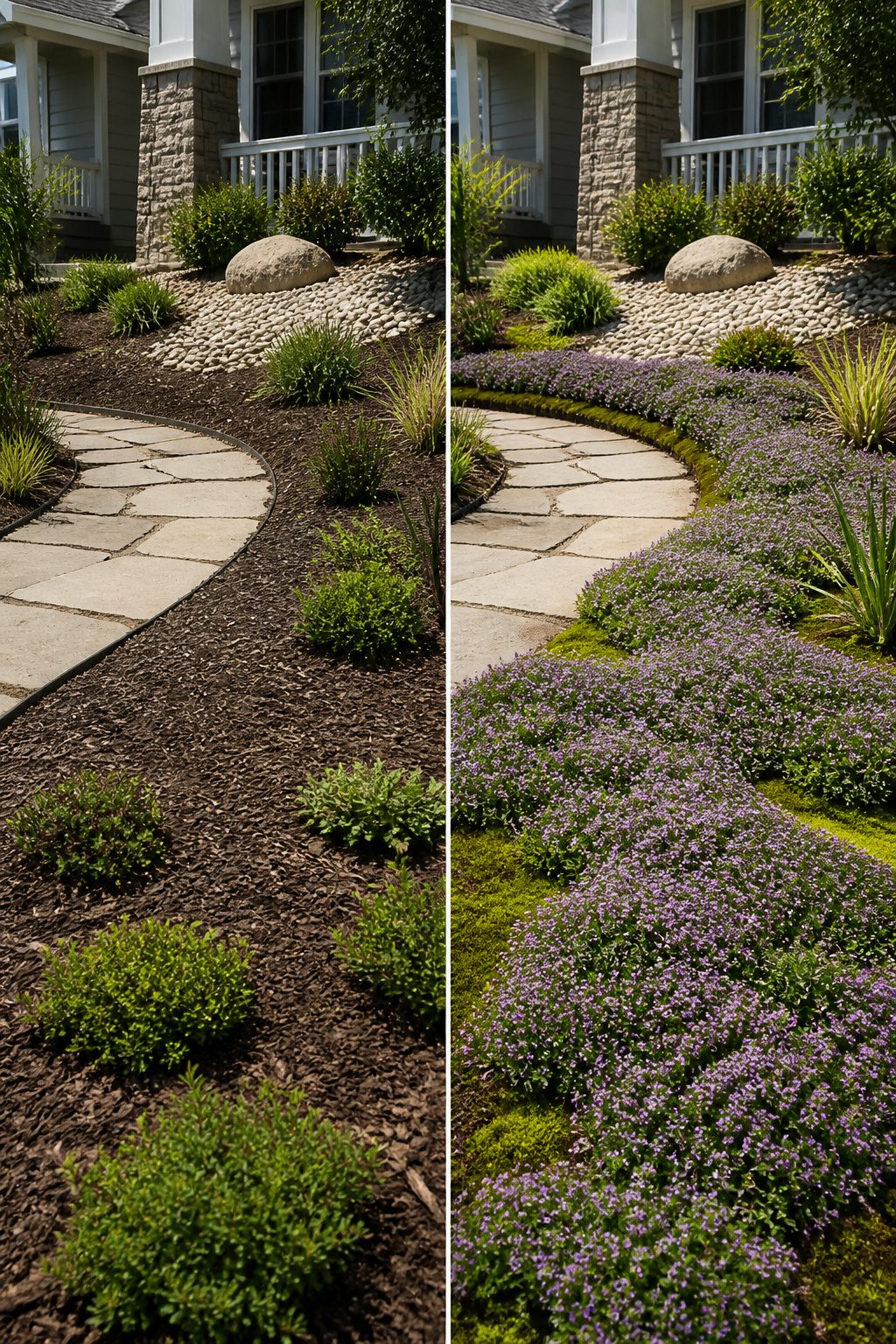
Ground cover plants replace the usual turf with something that needs far less mowing and watering while still reading green from the curb.
Creeping thyme spreads into a low mat that tolerates light foot traffic and puts up small purple blooms in summer; moss keeps that same dense carpet look in spots too shady for grass to hold.
Either one asks for a fraction of the maintenance once it fills in.
A few sources also put forward gravel and artificial turf for the no-water end of the spectrum.
Gravel suits modern or desert-adapted designs and drains without any irrigation setup; artificial turf has improved enough in the last sixty years that some brands bridge the gap between the look of grass and near-zero upkeep.
The tradeoff is upfront install cost versus years of skipped weekends behind a mower.
Where slopes or chronic bare patches already refuse grass, ground covers solve two problems at once. They stop erosion, they don’t demand reseeding every spring, and they give pollinators something to land on.
The thyme and moss route wins if you want living texture; gravel or synthetic turf fits when water restrictions or HOA limits make a traditional lawn impractical anyway.
3. Hardscaping Elements
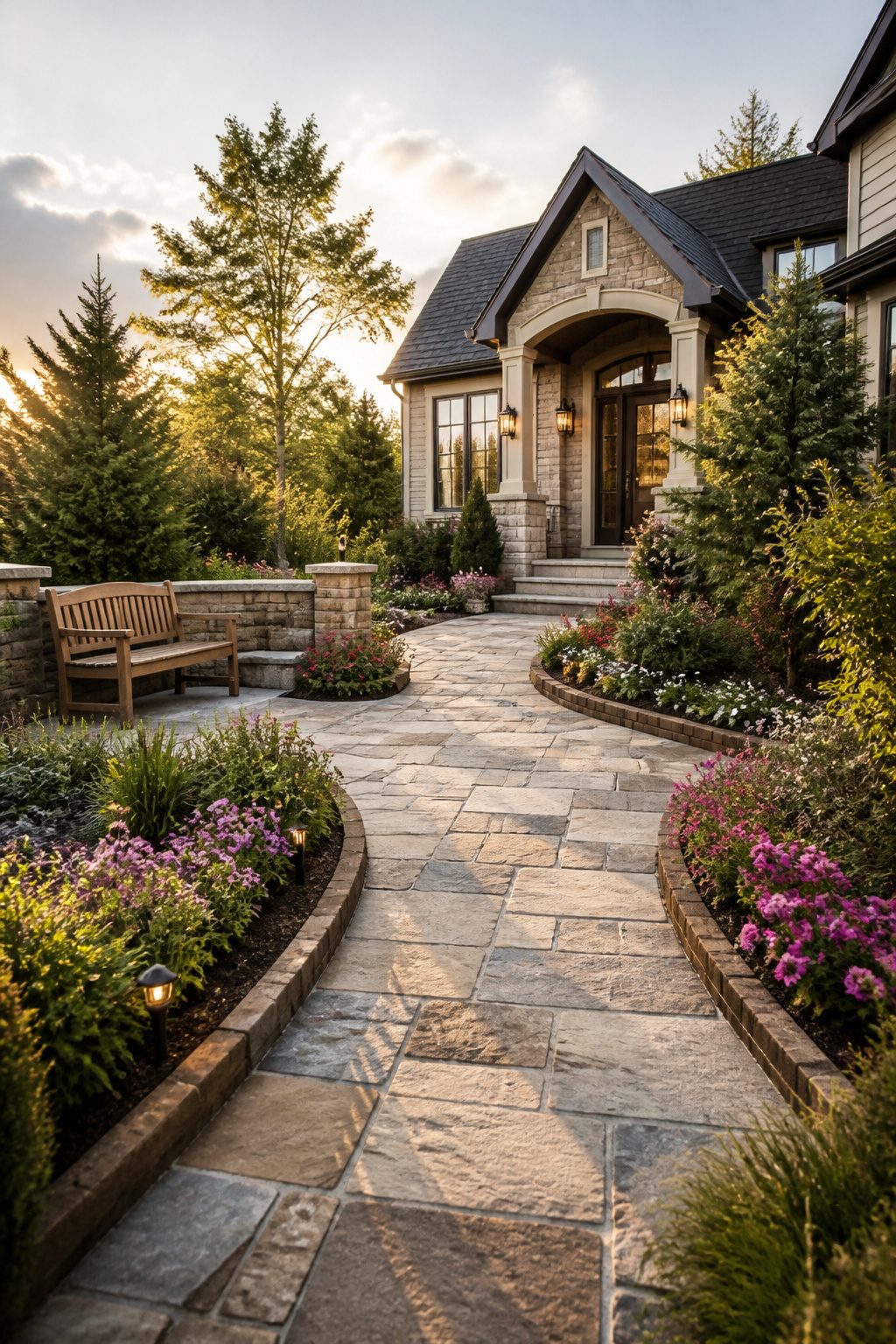
A wider stone or paver walkway replaces the cracked concrete path I inherited when we bought our house, and the difference is immediate.
Visitors no longer step gingerly around frost heaves or guess whether the front door is meant to be the destination. When hardscaping is done right, it moves people through the space without them noticing the guidance.
Low stone walls or brick borders around flower beds do the same work of definition. They keep the lawn from drifting into the mulch, and they cut the actual area that demands weeding and edging each season.
That reduced maintenance footprint matters when your Saturday morning is short and your annual garden budget sits around $600.
For materials, I follow the same rule I use inside the house: choose what will look worse slower. Hardwood like black locust or composite decking boards outlast pressure-treated pine that splinters and grays within a few seasons.
Vinyl fencing holds color where painted wood flakes. These materials cost more upfront, but the per-year math shifts quickly when replacement labor counts.
Placement is the piece I watch from the curb before deciding.
A walkway that dumps visitors at the driveway instead of the porch, or steps too narrow for two people to stand on while one finds their keys, defeats the purpose.
Walk the route yourself at dusk, the way a first-time guest would. Where your foot searches for the next step is where hardscaping has already failed.
4. Layered Planting
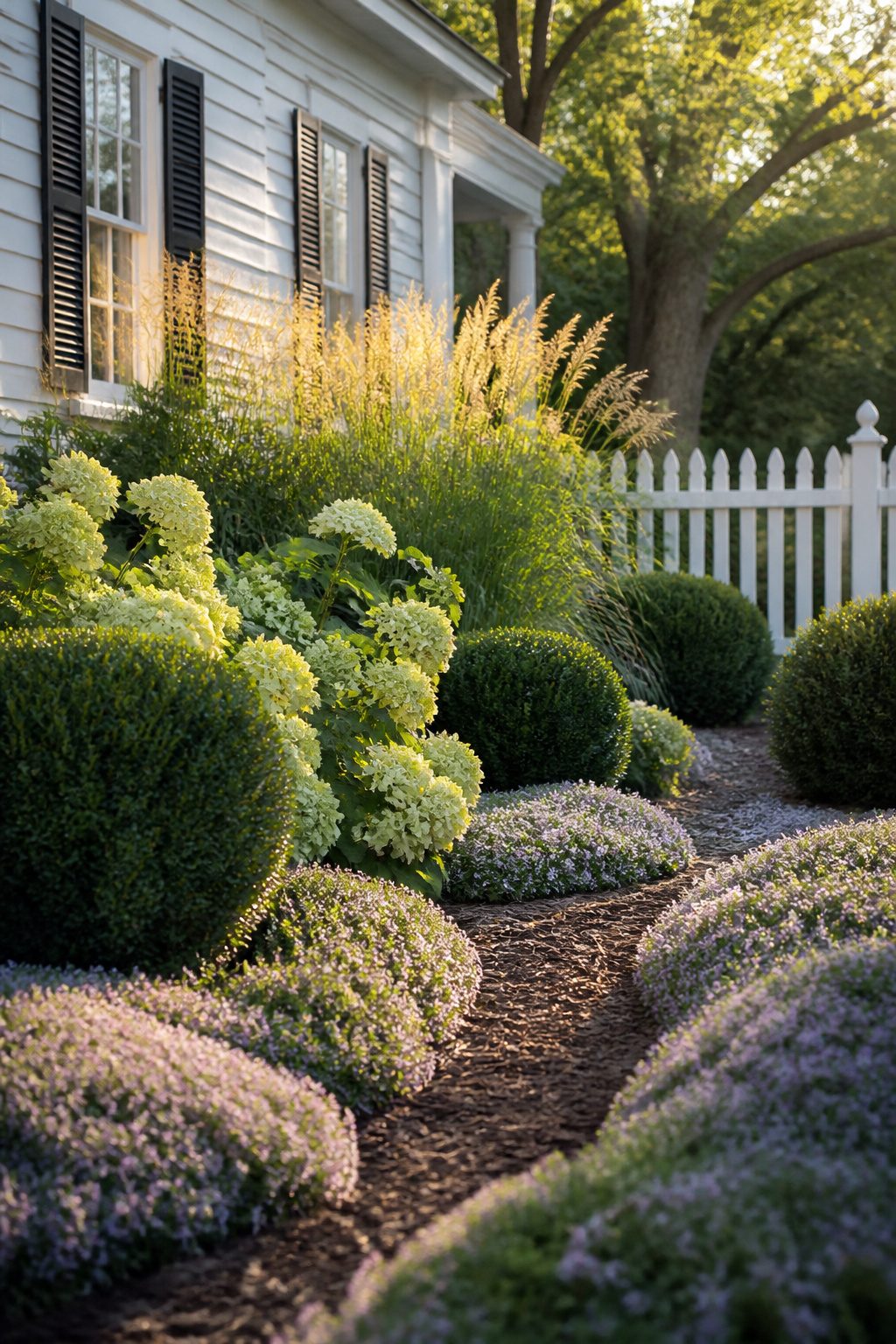
A flat row of the same-height plants reads as a hedge, and not in the good way. Depth comes from stacking three living tiers so the eye travels inward instead of skating across.
Start closest to the path or lawn with low groundcovers that stay under six inches: creeping thyme, sedum, or a low juniper that spills over edging.
These fill the foreground without asking for much, and they soften the hard lines of a walkway better than bare mulch.
Behind them, set medium shrubs in loose groups rather than evenly spaced soldiers. A boxwood or dwarf hydrangea at waist to shoulder height bridges the gap and starts the move upward.
Viewed from the street, this middle tier is what gives the bed body; skip it and the planting looks like a carpet interrupted by sticks.
Tall ornamental grasses or a narrow deciduous grass at the back complete the third layer.
Switchgrass or feather reed grass rising to eye level or above catches light and motion, and more importantly it lifts the gaze toward the house itself.
The framing happens naturally if you keep the tallest plants toward the corners of the lot and step heights down as you move toward the entry.
A large shrub or grass planted too near the door blocks it from view and makes the approach feel unwelcoming; the same plant set ten feet to the side reads as punctuation, not obstruction.
What you are building is a shallow thicket that leads the eye to the architecture, not a wall that hides it.
5. Focal Points
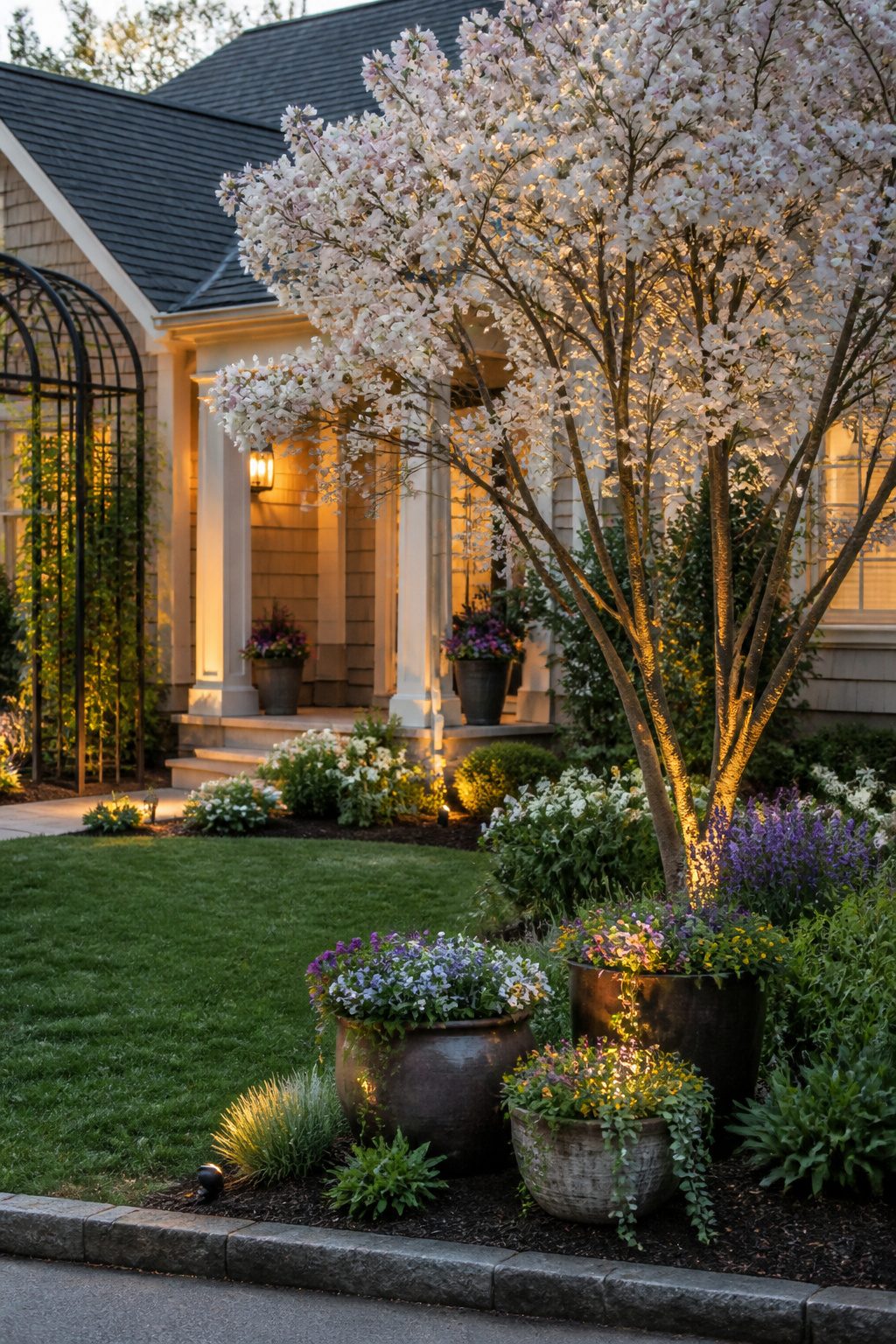
My front yard used to read like a scattered plant sale until I put one thing in charge. A single focal point organizes the eye and gives the whole yard purpose.
For a small space, an ornamental tree does this almost by itself. A compact maple or a flowering dogwood planted off-center near the entry pulls attention without blocking the walk.
If your ground space is limited, a decorative planter at the door can carry the same weight. Choose one large enough to matter, not a cluster of small pots that fight each other.
A trellis with climbing clematis or jasmine adds vertical interest where the ground is already spoken for. It breaks a flat facade and frames the entrance without demanding room you do not have.
The mistake is trying to make everything compete. One strong element decides where the eye lands first.
Everything else arranges itself around that.
6. Seasonal Interest
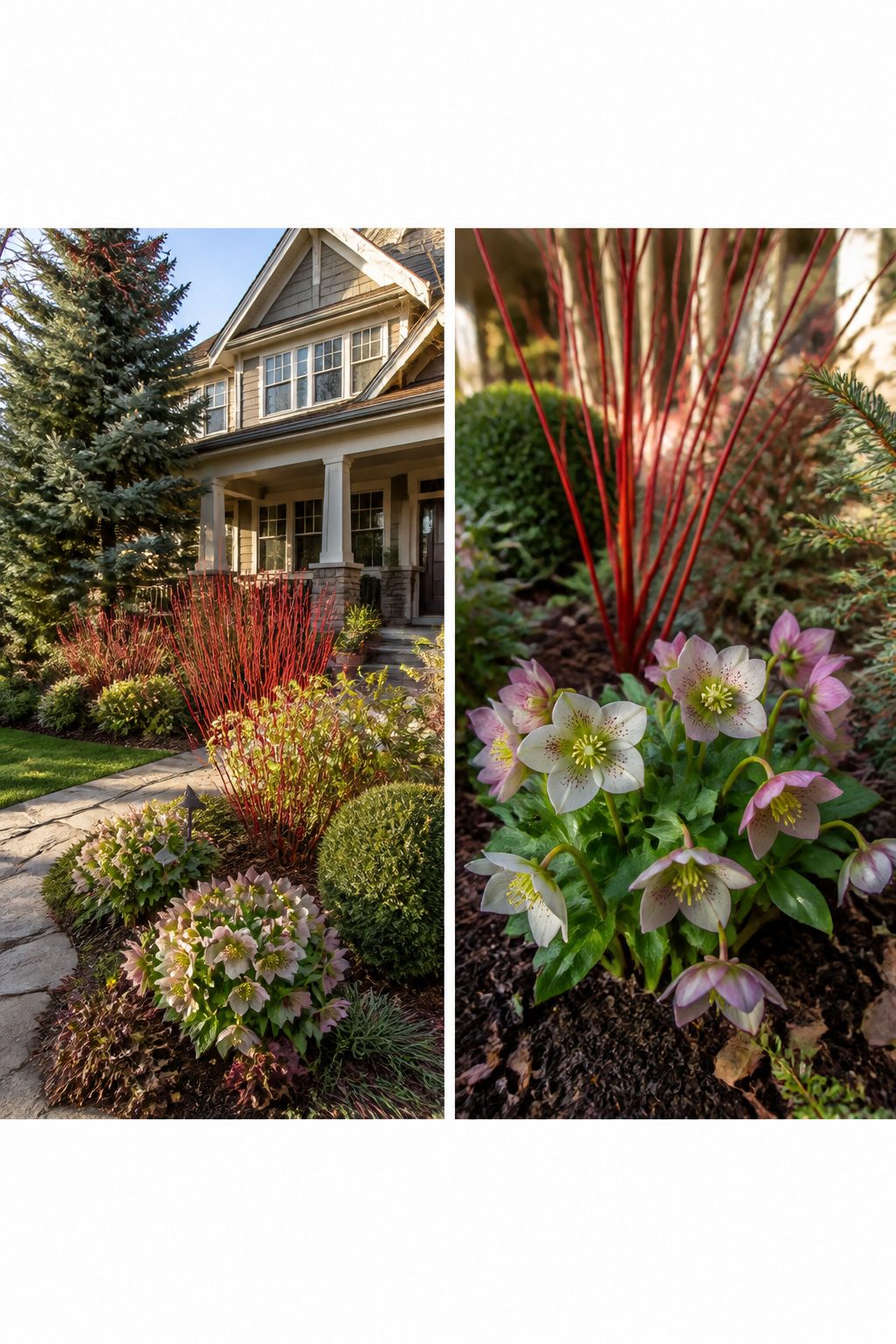
Three springs into my own front yard taught me the cost of betting everything on May bloomers. One fine week of azaleas and the rest of the year my beds sat there, green and waiting.
Year-round structure comes from pairing evergreens with perennials that speak in different months, not in a single shout. I plan now in waves, hellebores opening when nothing else will, then handed off to whatever comes next.
Smaller shrubs and trees matter more in a front yard where roots and branches tangle with pipes and wires. Red twig dogwood or winterberry carry the winter after the flowers quit, catching light against snow or bare ground.
Variety of bloom time does double duty; gaps in the sequence mean pollinators search elsewhere, so I overlap flowering periods by at least a couple of weeks.
The return on perennials builds slowly, fair enough by the third summer, but the structure underneath is what carries you through year one and two. Native plants in the mix hold up without the coddling that exhausts a small budget.
Plant evergreens for year-round color, perennials such as hellebores that bloom in late winter to early spring, and shrubs such as red twig dogwood or winterberry that show off beautifully against the snow.
The hellebore-to-winterberry handoff is the sequence that solved my empty-yard problem. Work backward from what your winter looks like, not forward from spring fever.
7. Drought-Tolerant Options
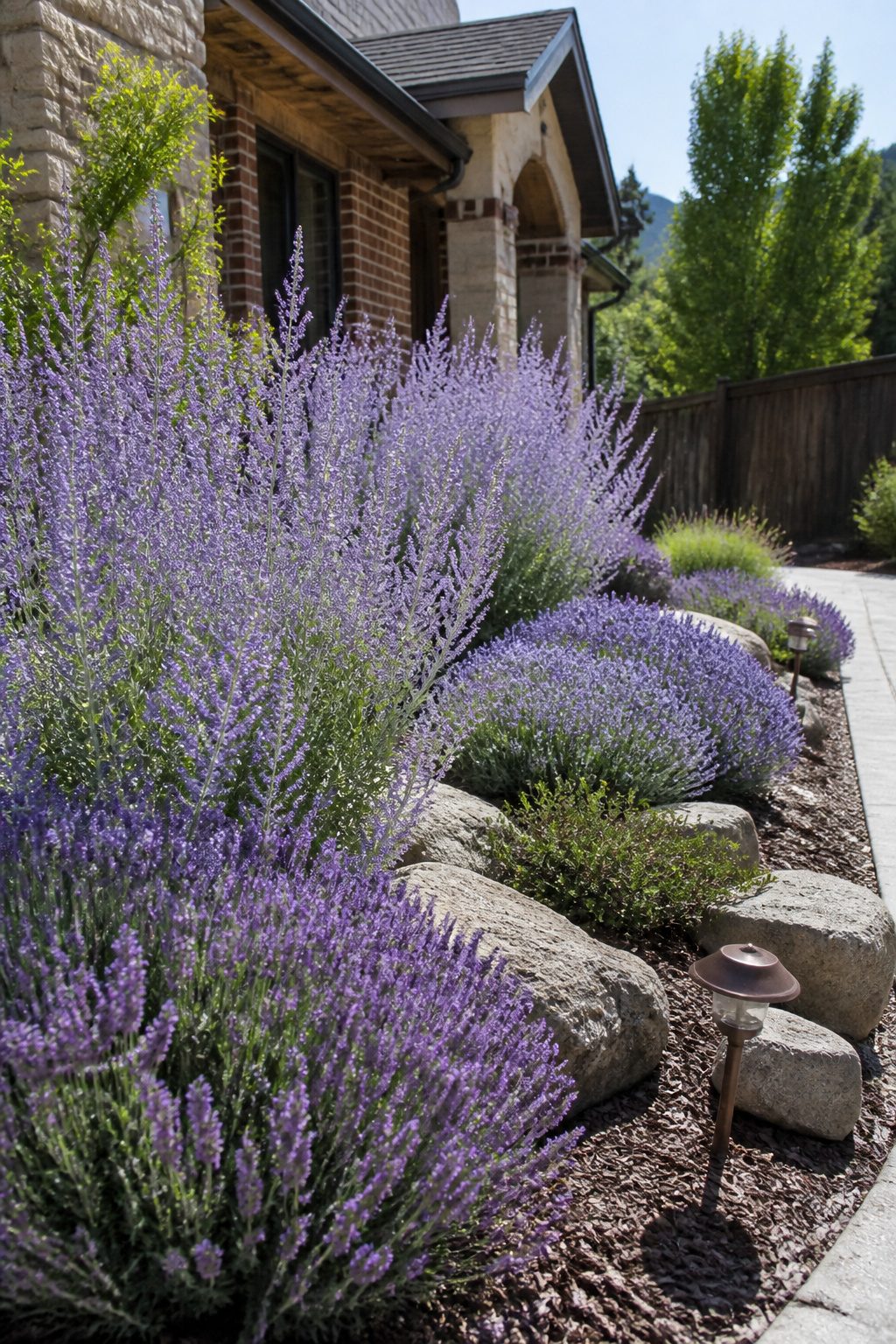
Russian sage and lavender are the plants I keep coming back to for beds that sit in harsh afternoon sun or bake against a south-facing wall.
Both read as soft purple haze from the curb once they hit their stride, and they bloom for weeks without asking you to haul the hose out every other day.
The payoff is structure even when water is tight.
Russian sage carries itself on woody, silver stems that stand four to five feet tall; plant it toward the back of a border and it reads as a full shrub behind lower companions.
Lavender does the opposite trick up front, its tight mounds staying knee-high and grey-green even when not in flower. Deer pass both by, and bees will make a case for them you can hear from the driveway.
The catch is establishment. These two need a season of regular water to set roots deep enough to fend for themselves.
A bed planted in spring will still need weekly attention that first year.
By the second, you can back off to what the sky delivers and rely on ** mulch or a gravel skim ** to keep the soil cool and weeds down between plants.
The result is a front yard that looks tended even when you have not touched it in weeks.
8. Vertical Elements
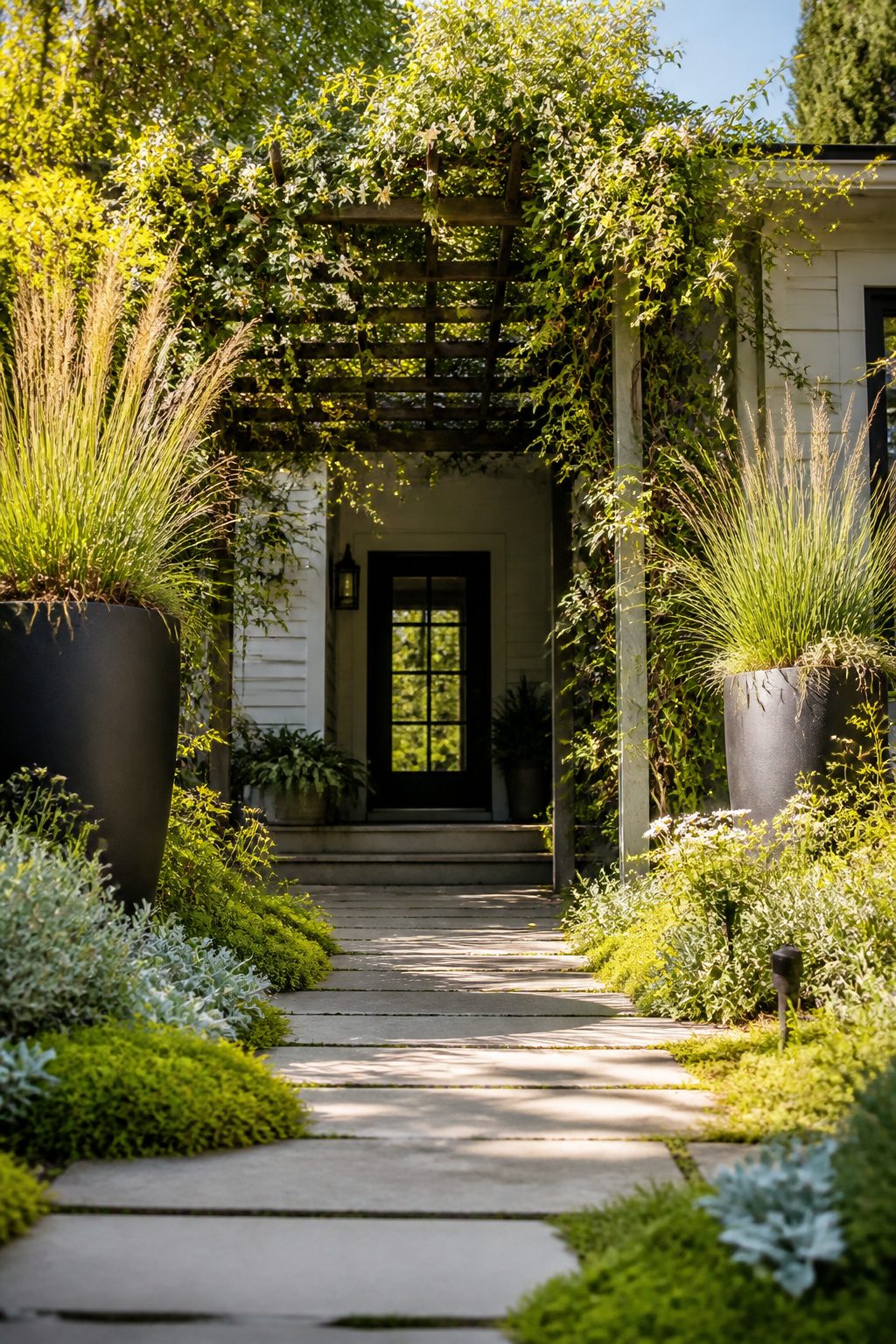
A flat front yard reads as one big plane of green, and small yards suffer most because there is nowhere for the eye to rest. Vertical elements break that plane upward so the space feels larger than its footprint.
A trellis against the front wall, a pair of tall planters flanking the door, or even a simple decorative screen gives the eye something tall to land on and turns the entry into a frame rather than a hole in the shrubbery.
Trellises especially earn their place on narrow lots. Ground space might only run a few feet from foundation to sidewalk, but climbing vines like clematis or jasmine do not need much horizontal room once they have something to grip.
The same structure that carries those climbers also blocks sightlines from the street, so a bench or a porch becomes a more private pause point without a fence that would close the yard off entirely.
What sold me on this approach, reading through the plans that actually work, is how vertical interest solves two problems at once: the yard feels bigger because the eye travels up, and it works better because the structure defines the space.
Tall planters with upright grasses or a narrow arbor can do the same job if a full trellis reads as too much.
Curb Appeal and First Impressions
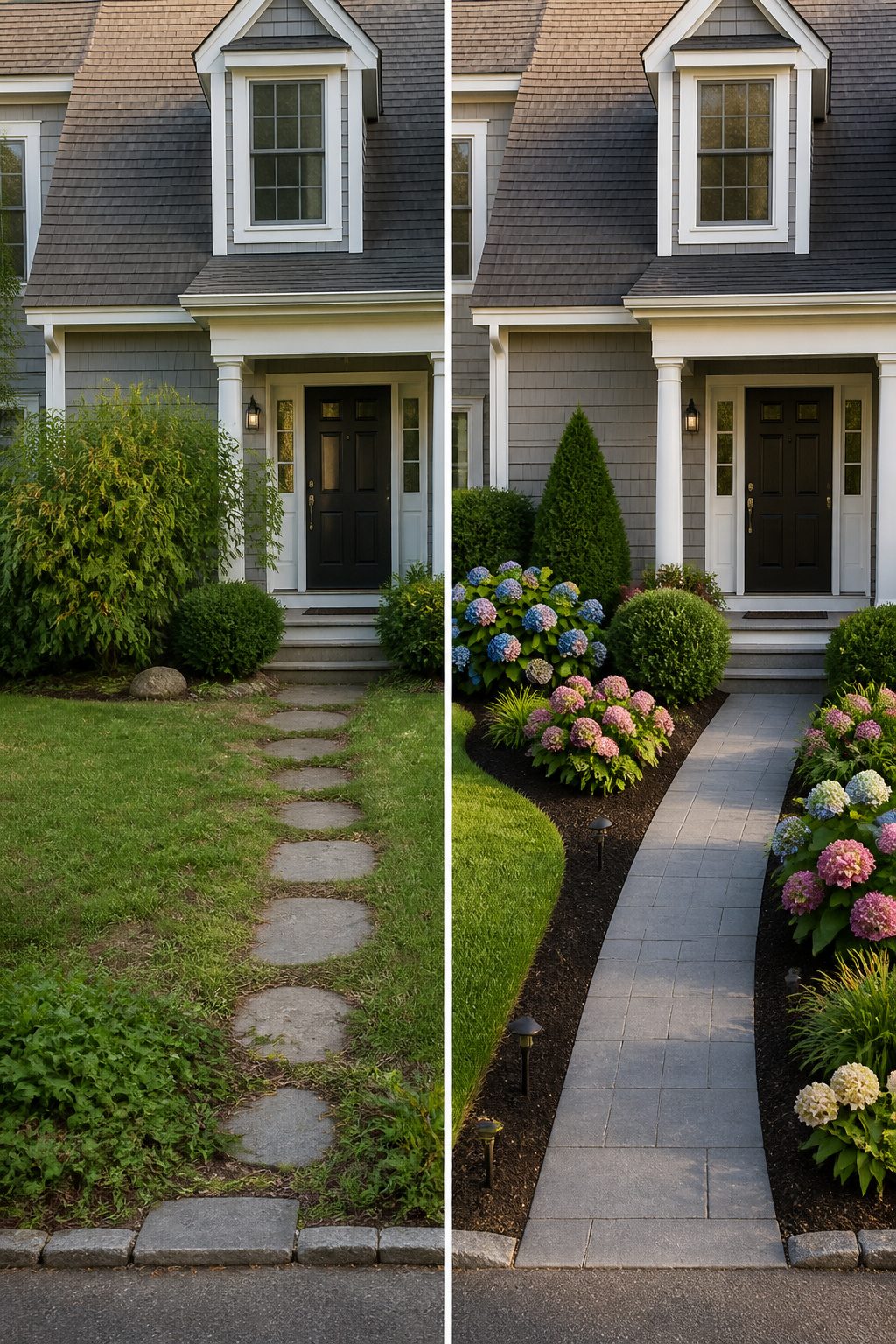
The front yard sets the tone before anyone reaches your door.
92% of real estate professionals consider curb appeal one of the most effective ways to attract buyers, and that same calculation applies every morning when you pull into your own driveway.
I used to treat my strip of grass as an afterthought. Then I noticed how long I spent at the kitchen window judging my neighbor’s hydrangea arrangement against their peeling porch paint.
The judgment goes both ways, and so does the quiet satisfaction of fixing what sits there.
Curb appeal isn’t about staging a property you plan to sell. It’s the difference between a house that looks like someone cares and one that looks half-abandoned.
A few intentional choices, the right plants for your zone, a path that reads as an invitation rather than a default; these accumulate into something neighbors slow down to notice.
The work pays back in your own arrival home, not in a future closing date.
Mulch and Weed Control
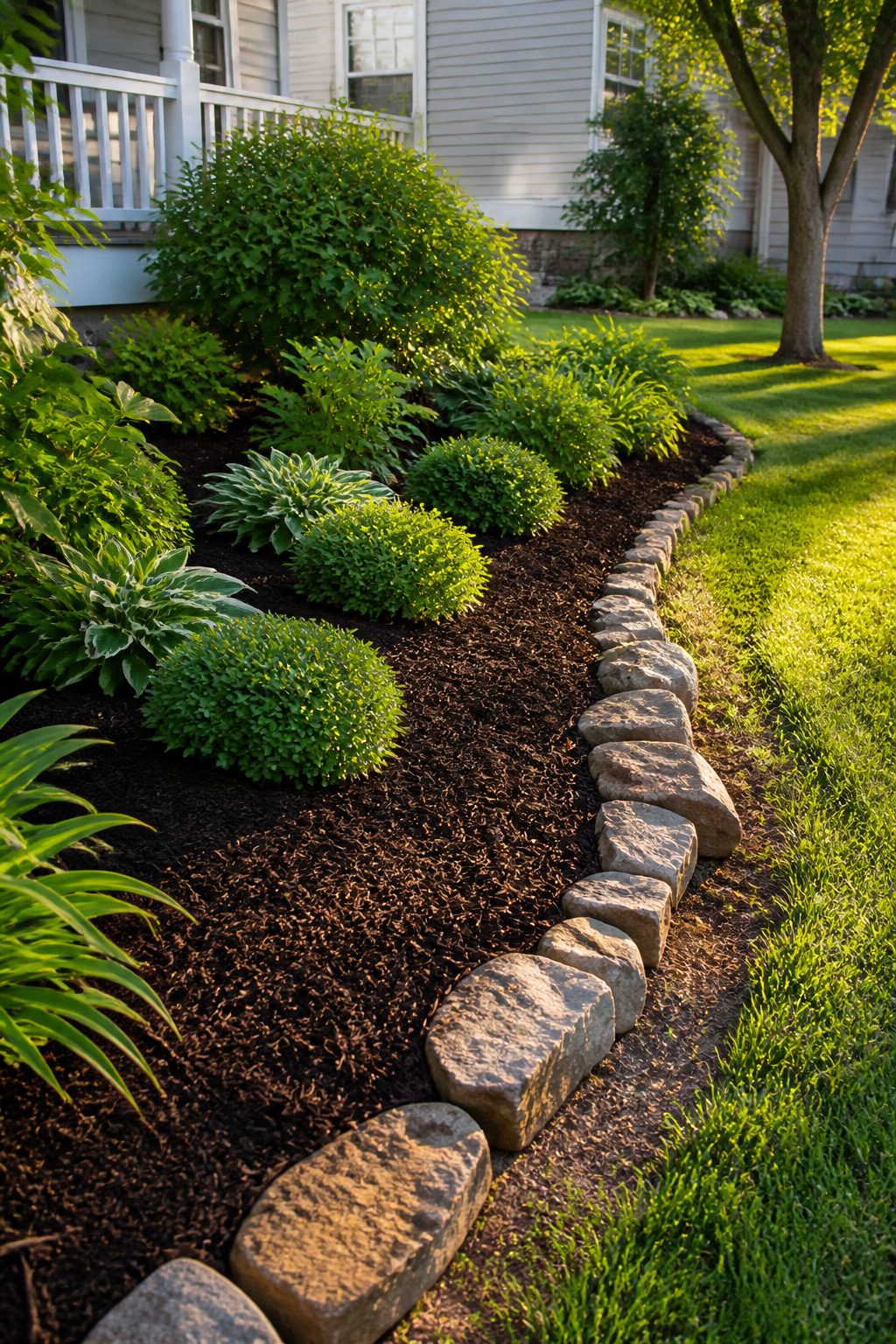
Fresh mulch changes how a front yard reads from the curb, but the real payoff is what it does underground.
A two- to three-inch layer of shredded hardwood or bark suppresses weeds by blocking the light that triggers their germination, and it keeps the soil beneath from baking in summer sun so water from the hose actually reaches plant roots instead of evaporating off the surface.
I refresh mine annually, and the difference is immediate: raw garden soil looks unfinished, and weeds colonize it within weeks.
For beds that need to stay clean longer, a woven weed barrier underneath the mulch is worth the extra step.
It comes in rolls, cuts to fit with ordinary scissors, and pins down with landscape staples so it does not shift as you work.
The barrier blocks persistent perennials that mulch alone will not stop, and the mulch layer on top hides the synthetic look entirely.
Two inches of mulch over the barrier is the minimum; less than that and sunlight penetrates, and the barrier itself becomes visible as the material settles.
Dense planting helps the system work. Where shrubs and perennials fill the space, their own canopy suppresses weeds alongside the mulch.
Sparse plantings demand a thicker, more uniform mulch layer to do the same job, and they reveal any thin spots quickly.
Design From the Street View
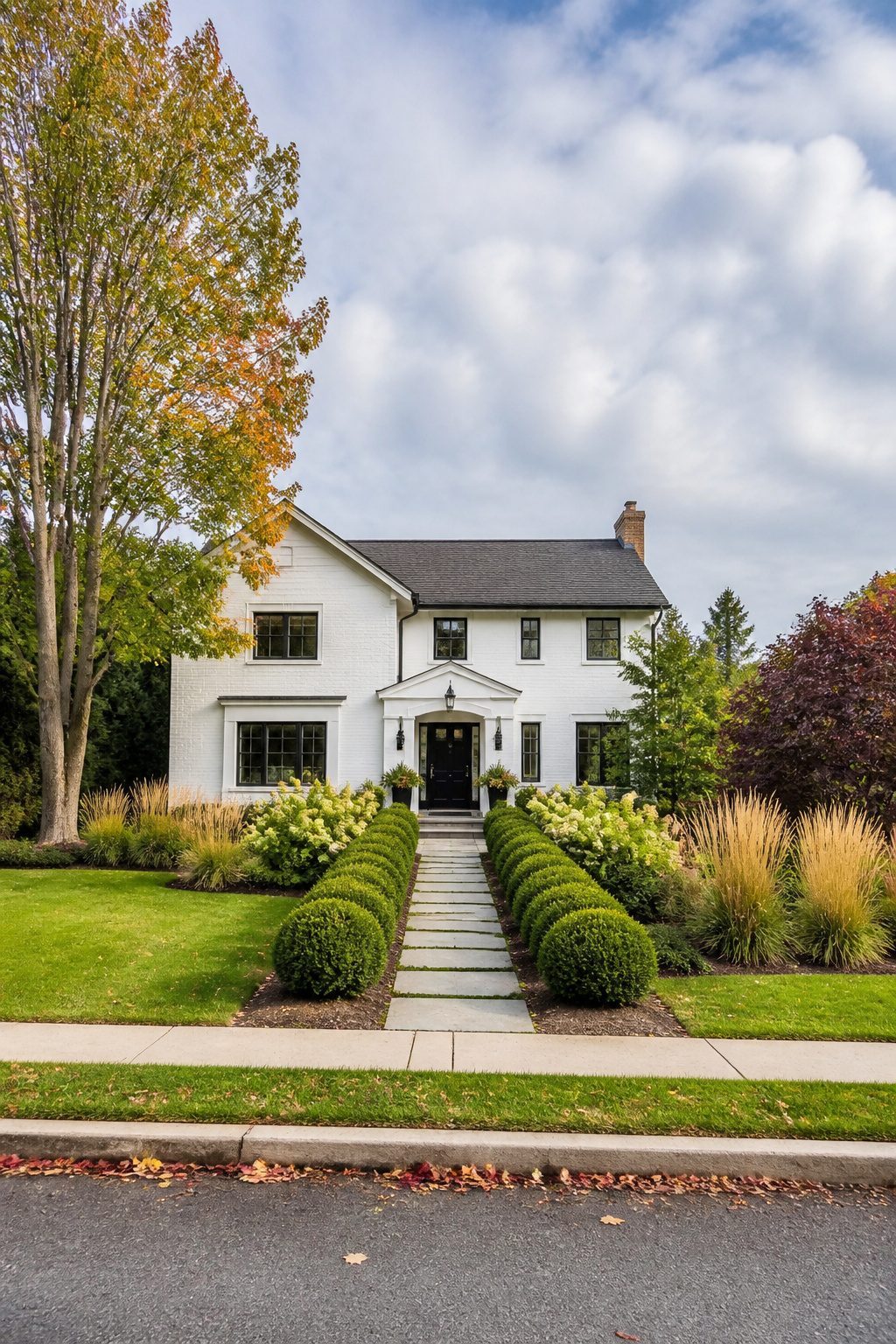
Stand across the street from your house on a quiet morning and look.
That first read, before your brain fills in what you meant to do, shows what actually registers: overgrown shrubs swallowing a window, a walkway cracked enough to trip a package delivery, paint gone dull on the door trim.
The fixes that follow are cheap and unglamorous. Power-wash the driveway and porch, pull what’s choking the beds, cut back anything crowding the walk.
That cleanup alone resets the entire stage.
Balance sits next. Both sides of the yard need to read as equal weight, even if the plantings themselves are not mirror images.
Repeat a color, a texture, a height rhythm from left to right so the eye moves across without catching on something that belongs somewhere else.
Layering helps here: groundcover below, shrubs at mid-height, one taller element like an ornamental grass or small tree to lift the roofline.
A modern house can carry the clean lines of grasses and succulents; a traditional one settles better with boxwood or hydrangea structure.
Function matters too. Rank what you actually do out there: kids playing, conversations with neighbors walking dogs, a chair to sit in.
The layout follows that list. A curb appeal picture that blocks the path to your door fails the first time you carry in groceries.
Pollinator-Friendly Choices
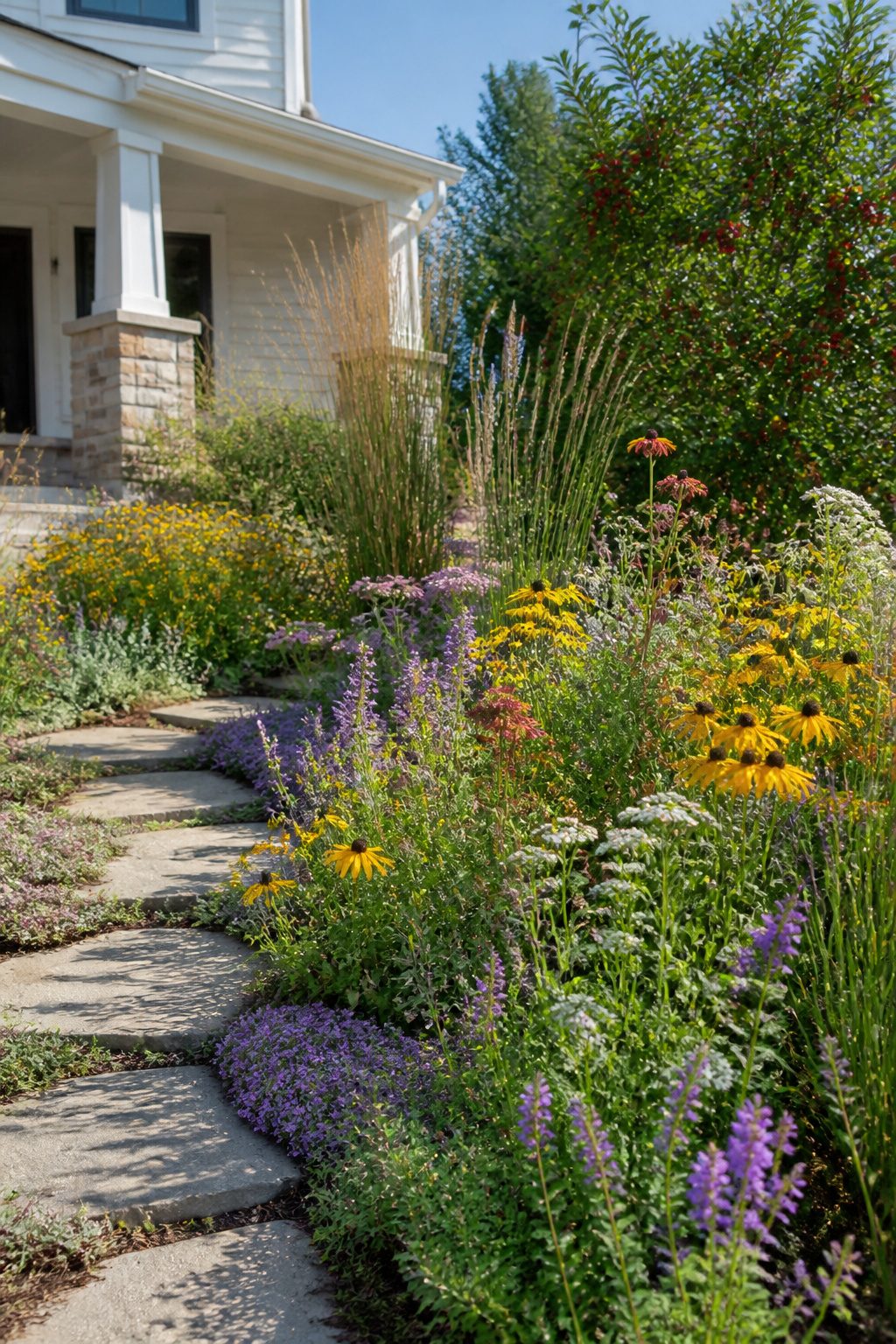
A pollinator front yard landscaping idea works best when someone walking by can actually see something alive.
Native wildflowers draw butterflies, bees, and hummingbirds that have already adapted to your state, and a nearby nursery that specializes in locals can help you line up bloom times so the patch looks deliberate rather than accidental.
The trick is staggering flowers from spring through fall. One flush in May means empty stems by August, which defeats the point for both you and the insects.
I lean on perennials for the backbone, then throw in annuals like zinnias where a color gap shows up mid-season. A few evergreens or plants with winter berries keep the bed from reading as abandoned once frost hits.
Ground covers such as clover or creeping thyme fill the lower story on slopes or shady spots where grass give up, and they still feed pollinators without the mowing schedule.
The overall shape can stay loose and meadow-like, or you can edge it sharply with a path and keep the natives inside a traditional frame.
Frequently Asked Questions
What are some low-maintenance plants for front yards?
Native plants, ornamental grasses, and drought-tolerant perennials are your best bets. Fountain grass, blue fescue, sedum, salvia, and yarrow all handle local soil and weather without demanding much fertilizer or pesticide.
Match any plant to your actual light conditions by tracking where shadows fall for a full day before you buy.
How can I improve my front yard’s curb appeal?
Start with cleanup, then layer your plantings and add one clear focal point. Power-wash hard surfaces, pull overgrowth, and cut back anything crowding the walk.
Stack plants in three tiers, low groundcover in front, medium shrubs in the middle, tall grasses at the back, and place one strong element like an ornamental tree or large planter to organize the eye.
What are some good alternatives to grass?
Ground covers, gravel, and artificial turf each replace lawn with less upkeep. Creeping thyme and moss stay green with little mowing; gravel drains without irrigation; modern artificial turf needs near-zero maintenance after install.
Pick living texture with ground covers, or go synthetic where water restrictions or HOA rules make grass impractical.
How do I create a focal point in my front yard?
Choose one element that commands attention and let everything else support it.
A compact maple or flowering dogwood planted off-center near the entry works for small yards; a single large planter at the door or a trellis with climbing clematis or jasmine carries the same weight. Avoid clusters of small competing pieces.
What should I consider when planning my front yard?
Map your sunlight patterns, test your soil, and decide how you will actually use the space. Spend one Saturday morning timing shadows across the yard so you buy plants suited to each spot.
Check whether your soil is compacted from old lawn and amend it before planting. Rank your real activities out front, kids playing, neighbor visits, a place to sit, and let the layout follow that list.